Integrative Biomedical Research

Integrative Biomedical Research (Journal of Angiotherapy) | Online ISSN  3068-6326
685
Citations
1.5m
Views
736
Articles
Your new experience awaits. Try the new design now and help us make it even better
Switch to the new experience
Figures and Tables
REVIEWS   (Open Access)

Dietary Bioactive Compounds in Cancer and Cardiovascular Health: A Systematic Review of Methylxanthines, Polyphenols, and Flavonoids

Nafiz Tareq Hasnain1*, Pallab Paul2

+ Author Affiliations

Integrative Biomedical Research 10 (1) 1-8 https://doi.org/10.25163/biomedical.10110513

Submitted: 10 February 2026 Revised: 14 April 2026  Published: 25 April 2026 


Abstract

Dietary bioactive compounds, including methylxanthines (MTXs), catechins, flavonoids, and polyphenols, have emerged as promising agents in the prevention and management of chronic diseases such as cancer and cardiovascular disorders. This review integrates evidence from epidemiological studies, randomized clinical trials, and mechanistic analyses to evaluate the impact of these compounds on colorectal and prostate cancer risk, endothelial function, and related health outcomes. Comprehensive literature searches were conducted across MEDLINE, Embase, Scopus, and Web of Science. The evidence for MTXs in colorectal cancer risk is mixed, with some studies suggesting modest protective effects while others report null associations, reflecting differences in study design, population characteristics, and lifestyle factors. In contrast, polyphenol-rich interventions consistently improved cardiovascular health, as indicated by significant enhancements in flow-mediated dilation across populations, including healthy adults and individuals with metabolic syndrome or coronary artery disease. Green tea catechins and consumption of citrus or cruciferous vegetables were associated with modest reductions in prostate, breast, and pancreatic cancer risk. Mechanistic investigations further support these outcomes, demonstrating anti-inflammatory, antioxidant, and anti-proliferative effects. Despite variability in dosing, compound bioavailability, and study duration, the collective evidence underscores the value of incorporating MTX- and polyphenol-rich foods—such as tea, citrus fruits, cruciferous vegetables, cocoa, and coffee—into habitual diets as a practical, accessible strategy to support cardiovascular and cancer prevention. Future research should emphasize long-term, controlled clinical trials, biomarker-driven exposure assessments, and dose-response analyses to refine recommendations and identify populations most likely to benefit.

Keywords: Bioactive compounds; Methylxanthines; Polyphenols; Cancer prevention; Cardiovascular health

1. Introduction

The global burden of chronic diseases—most notably cancer, cardiovascular disorders, and neurodegenerative conditions—continues to rise in a manner that is both anticipated and, to some extent, unresolved despite decades of biomedical progress (American Cancer Society [ACS], 2019). While advances in diagnostic tools and therapeutic interventions have undoubtedly improved survival and quality of life, conventional approaches such as chemotherapy, radiotherapy, and pharmacological management still face persistent limitations. These include treatment-associated toxicity, variable patient responses, and challenges related to long-term adherence (American Society of Clinical Oncology [ASCO], 2024). As a result, there has been a gradual but noticeable shift toward exploring complementary strategies that may enhance prevention and management while minimizing adverse effects.

Among these emerging strategies, dietary bioactive compounds derived from natural sources have attracted increasing scientific attention. These compounds—widely present in fruits, vegetables, beverages, and plant-based products—offer a unique combination of accessibility, relatively low toxicity, and diverse biological activities (Ahmed et al., 2021; Akinmoladun et al., 2020). Interestingly, what was once considered merely nutritional content is now being re-evaluated as a reservoir of pharmacologically active molecules. Classes such as methylxanthines (MTXs), catechins, flavonoids, and broader polyphenols are now recognized for their ability to modulate cellular pathways implicated in oxidative stress, inflammation, and disease progression (Aborziza et al., 2024; Ahmad et al., 2000; Ayaz et al., 2019).

Methylxanthines—primarily caffeine, theobromine, and theophylline—are among the most commonly consumed bioactive compounds worldwide, largely through coffee, tea, and cocoa products. Their biological relevance extends beyond their well-known stimulant effects. Experimental and clinical evidence suggests that these compounds may exert cardiometabolic and chemopreventive effects through mechanisms involving modulation of oxidative stress, inflammatory signaling, and metabolic regulation (Aborziza et al., 2024; Akash et al., 2014; Alves et al., 2010). For instance, caffeine has been shown to influence apoptotic pathways and cellular proliferation, potentially contributing to early-stage cancer prevention (Baig et al., 2015). Similarly, theobromine has demonstrated effects on angiogenic activity and cytokine production, further supporting its role in disease modulation (Barcz et al., 1998).

Parallel to methylxanthines, catechins—particularly epigallocatechin-3-gallate (EGCG) found in green tea—have been extensively studied for their anti-carcinogenic potential. These compounds appear to interfere with multiple hallmarks of cancer, including cell proliferation, angiogenesis, and inflammatory signaling pathways such as nuclear factor kappa B (NF-κB) (Ahmad et al., 2000; Adhami et al., 2009). Notably, their efficacy seems to depend on the stage of disease progression, with stronger effects observed in early or pre-neoplastic conditions (Adhami et al., 2009; Adamczyk et al., 2014). This stage-dependent activity introduces complexity but also suggests opportunities for targeted preventive strategies.

Polyphenols and flavonoids, abundant in plant-based foods and cocoa-derived products, have also been strongly associated with cardiovascular health benefits. These compounds contribute to improved endothelial function, enhanced nitric oxide bioavailability, and reduced oxidative stress, thereby supporting vascular homeostasis (Afoakwa, 2014; Bhaskaragoud et al., 2016). Additionally, their hypolipidemic and antioxidant properties have been linked to reduced cardiovascular risk factors in both experimental and clinical settings (Bhaskaragoud et al., 2016). Such findings align with the concept of nutritional hormesis, where moderate exposure to bioactive compounds induces adaptive cellular responses that enhance resilience and promote long-term health (Ademowo et al., 2019).

Beyond cardiometabolic effects, bioactive compounds also demonstrate promising neuroprotective properties. A growing body of evidence indicates that catechins, flavonoids, and other polyphenols can attenuate beta-amyloid toxicity, reduce oxidative damage, and modulate neuroinflammatory pathways associated with neurodegenerative diseases (Bastianetto et al., 2006; Angeloni et al., 2022). These effects are further complemented by their potential role in psychiatric health, where natural compounds have been shown to influence neurotransmitter pathways and mitigate oxidative stress-related neuronal damage (Akkol et al., 2021; Alawadi et al., 2022). Moreover, emerging research highlights the potential of plant- and microorganism-derived natural products in addressing neurological complications associated with infectious diseases such as COVID-19 (Almasi et al., 2022).

Coffee, as one of the most widely consumed beverages globally, represents a particularly rich and multifaceted source of bioactive compounds. Its primary constituents—caffeine and chlorogenic acid—have been shown to exhibit antioxidant, anti-inflammatory, and anti-cancer activities (Aborziza et al., 2024; Ali et al., 2022). Mechanistic studies suggest that these compounds may regulate apoptosis, inhibit angiogenesis, and modulate key cellular signaling pathways involved in disease progression. Additionally, recent interest has shifted toward the valorization of coffee by-products, such as spent coffee grounds, as sustainable sources of bioactive compounds with potential therapeutic applications (Abrahão et al., 2019; Alves et al., 2017; Angeloni et al., 2021). This intersection of health benefits and environmental sustainability further enhances the relevance of these compounds in contemporary research.

Despite these encouraging findings, the evidence base remains heterogeneous. Variations in study design, compound dosage, bioavailability, and population characteristics complicate the interpretation of results across epidemiological and clinical studies (Bakrim et al., 2022). Furthermore, discrepancies between in vitro, in vivo, and human studies highlight the challenges associated with translating mechanistic insights into clinically meaningful outcomes. Even foundational pharmacological discoveries, such as analgesic compounds derived from plant sources, illustrate the complexity of isolating and standardizing bioactive agents for therapeutic use (Ahmed et al., 2002).

In light of these considerations, there is a clear need for systematic synthesis and critical evaluation of existing evidence. Integrating data from diverse research domains—including molecular biology, clinical trials, and epidemiological studies—may help clarify dose–response relationships, identify the most effective compounds, and assess their translational potential. Additionally, broader nutritional frameworks and public health perspectives, such as those promoted by organizations focusing on diet and mental health, further emphasize the importance of dietary interventions in disease prevention (American Society for Nutrition, 2023).

Taken together, natural bioactive compounds—including methylxanthines, catechins, flavonoids, and polyphenols—represent a promising and multifaceted approach to addressing the growing burden of chronic diseases. Their ability to modulate oxidative stress, inflammation, cellular proliferation, and neurological pathways positions them as valuable complements to conventional therapies. However, their full therapeutic potential remains to be fully elucidated. This systematic review, therefore, aims to comprehensively evaluate the current body of evidence, integrating mechanistic, clinical, and epidemiological findings to provide a clearer understanding of the role of dietary bioactive compounds in disease prevention and management.

2. Methods

2.1 Literature Search Strategy

A comprehensive literature search was conducted to identify systematic reviews, meta-analyses, randomized clinical trials, and observational studies evaluating the effects of natural bioactive compounds—including methylxanthines (MTXs), catechins, flavonoids, and polyphenols—on chronic disease outcomes such as cancer and cardiovascular health. The databases searched included MEDLINE (via PubMed), Embase, Scopus, and Web of Science, covering publications from database inception to September 2020. Search terms combined keywords and Medical Subject Headings (MeSH) related to the bioactive compounds (e.g., “methylxanthines,” “caffeine,” “catechins,” “polyphenols”), outcomes of interest (e.g., “colorectal cancer,” “prostate cancer,” “cardiovascular disease,” “flow-mediated dilation”), and study design filters for systematic reviews, meta-analyses, and clinical trials. Boolean operators “AND” and “OR” were used to refine searches, and references of relevant articles were hand-searched to identify additional studies.

2.2 Inclusion and Exclusion Criteria

Studies were included if they met the following criteria: (i) peer-reviewed articles published in English; (ii) human or animal studies examining oral or dietary administration of natural MTXs or polyphenols; (iii) evaluation of chronic disease outcomes, including cancer incidence, recurrence, or cardiovascular endpoints; and (iv) quantitative or qualitative measures of compound intake or plasma/serum concentrations. Exclusion criteria encompassed in vitro studies, parenteral administration, synthetic MTXs, conference abstracts, narrative reviews, and studies lacking relevant outcome data.

2.3 Data Extraction and Organization

Two independent reviewers screened titles and abstracts for relevance, followed by full-text assessment. Discrepancies were resolved through discussion. Data were extracted using a standardized form, including study characteristics (author, year, country), study design, population demographics, sample size, exposure type, intervention or dietary intake, outcome measures, confounders adjusted, key findings, and bioactive compound concentrations where reported. Extracted data were organized according to compound type and disease outcome to facilitate narrative synthesis

3. Major Classes of Bioactive Compounds

A growing body of literature highlights those natural products—particularly those derived from plants—serve as rich reservoirs of bioactive compounds with profound health benefits. These compounds, most often classified as secondary metabolites, play ecological roles in plant defense, growth, and reproduction, yet they also exhibit potent pharmacological activities in humans (Dutta et al., 2019; Febriyanti et al., 2025). Across the reviewed sources, five major classes consistently emerge: phenolic compounds, alkaloids, terpenoids, polysaccharides, and organosulfur compounds. Together, these classes form a diverse chemical arsenal capable of combating oxidative stress, regulating inflammation, and modulating cancerous and neurodegenerative pathways (Faubert et al., 2020).

3.1 Phenolic Compounds

Phenolic compounds constitute the largest and most extensively studied group of plant secondary metabolites. Characterized by one or more hydroxyl groups attached to an aromatic ring, they arise from shikimic acid or phenylalanine pathways and include flavonoids, phenolic acids, stilbenes, and tannins (Dutta et al., 2019; Figueira et al., 2017).

3.1.1 Flavonoids

Flavonoids, built on a C6–C3–C6 backbone, represent one of the most widely distributed and therapeutically meaningful subclasses of polyphenols. They encompass several groups—including flavonols (quercetin, kaempferol), flavones (apigenin, luteolin), flavanones (hesperetin), anthocyanidins (cyanidin), and isoflavonoids (genistein).

Across the reviewed literature, flavonoids are consistently recognized for their broad-spectrum antioxidant, cardioprotective, anticancer, and neuroprotective activities (Dutta et al., 2019; Elumalai & Lakshmi, 2016). Their anticancer actions occur through antiproliferative and pro-apoptotic mechanisms, such as caspase activation, modulation of Bcl-2 family proteins, suppression of metastasis, and inhibition of angiogenesis (D’Arcy, 2019; Elmore, 2007). Several flavonoids can also effectively cross the blood–brain barrier, where they modulate oxidative stress and inflammatory signaling, including NF-κB, thereby protecting neurons against degenerative processes (Figueira et al., 2017).

3.1.2 Phenolic Acids

Phenolic acids—including hydroxybenzoic acids (e.g., gallic acid) and hydroxycinnamic acids (e.g., caffeic, ferulic, chlorogenic acids)—occur abundantly in tea, coffee, fruits, and whole grains. They exhibit strong antioxidant capacity and demonstrate significant anticancer effects by triggering apoptosis, blocking the PI3K/Akt and NF-κB pathways, and suppressing angiogenesis and metastasis through MMP and VEGF inhibition (D’Arcy, 2019; Faubert et al., 2020). Gallic acid enhances the neuroprotective action of EGCG, while chlorogenic acid protects dopaminergic neurons against mitochondrial dysfunction in Parkinsonian models (Figueira et al., 2017).

3.1.3 Stilbenes and Tannins

Among stilbenes, resveratrol stands out for its anti-diabetic, anticancer, and cardioprotective properties. It induces tumor cell apoptosis and inhibits growth and migration by modulating PI3K/Akt/mTOR and STAT3 signaling (Faubert et al., 2020). Tannins—particularly ellagic acid—further contribute to anticancer defenses by inhibiting proliferation and activating apoptosis (D’Arcy, 2019), while also exhibiting neuroprotective effects through MAO-B inhibition and Nrf2 activation (Figueira et al., 2017).

3.2 Alkaloids

Alkaloids are nitrogen-containing compounds with remarkable structural and functional diversity. Many are pharmacologically significant due to their potent physiological effects (Dutta et al., 2019).

3.2.1 Methylxanthines

Caffeine and theobromine, both methylxanthines, are naturally present in tea, coffee, and cocoa. They are well documented for their antioxidant, anti-inflammatory, cardioprotective, antitumor, and neuroprotective activities (Franco et al., 2013; Cova et al., 2019). Their anticancer potential is linked to modulation of MAP kinase 4, BCR-ABL kinase, and VEGFR2 signaling (Chen et al., 2014; Eini et al., 2015). Neurologically, caffeine’s antagonism of the A2A receptor reduces glutamate release and microglial inflammation, while theobromine mitigates oxidative stress and suppresses proinflammatory cytokines such as TNF-α and IL-6 (Cova et al., 2019; Franco et al., 2013).

3.2.2 Other Alkaloids

Several non-methylxanthine alkaloids have long-standing therapeutic value. Vinca alkaloids (vincristine, vinblastine) are clinically established anticancer drugs that disrupt microtubule formation (Dickens & Ahmed, 2018). Berberine exhibits antiviral, anti-inflammatory, and anticancer properties by inhibiting topoisomerase II and inducing DNA cleavage (Dutta et al., 2019). Thymoquinone, though sometimes categorized as a quinone rather than a strict alkaloid, demonstrates potent anticancer mechanisms, including topoisomerase II inhibition (Febriyanti et al., 2025).

3.3 Terpenes and Terpenoids

Terpenoids, formed from repeated isoprene units, represent the most structurally diverse natural product class. They include monoterpenes (e.g., perillyl alcohol), sesquiterpenes (e.g., artemisinin, parthenolide), diterpenoids (e.g., taxol), triterpenoids (e.g., betulinic and ursolic acid), and tetraterpenoids (carotenoids such as lycopene and lutein).

These compounds exhibit substantial anticancer, anti-inflammatory, antimicrobial, and immunomodulatory activities (Dutta et al., 2019). Taxol (paclitaxel), one of the most successful natural-product chemotherapeutics, halts cell division by stabilizing microtubules (Dickens & Ahmed, 2018). Parthenolide promotes apoptosis by suppressing NF-κB and increasing reactive oxygen species (D’Arcy, 2019), while triterpenoids such as betulinic acid induce mitochondrial-dependent apoptosis (Elmore, 2007). Carotenoids contribute antioxidant and anticancer effects, reducing the risk of chronic diseases through ROS scavenging and modulation of cell signaling (Figueira et al., 2017).

3.4 Other Bioactive Classes

3.4.1 Polysaccharides

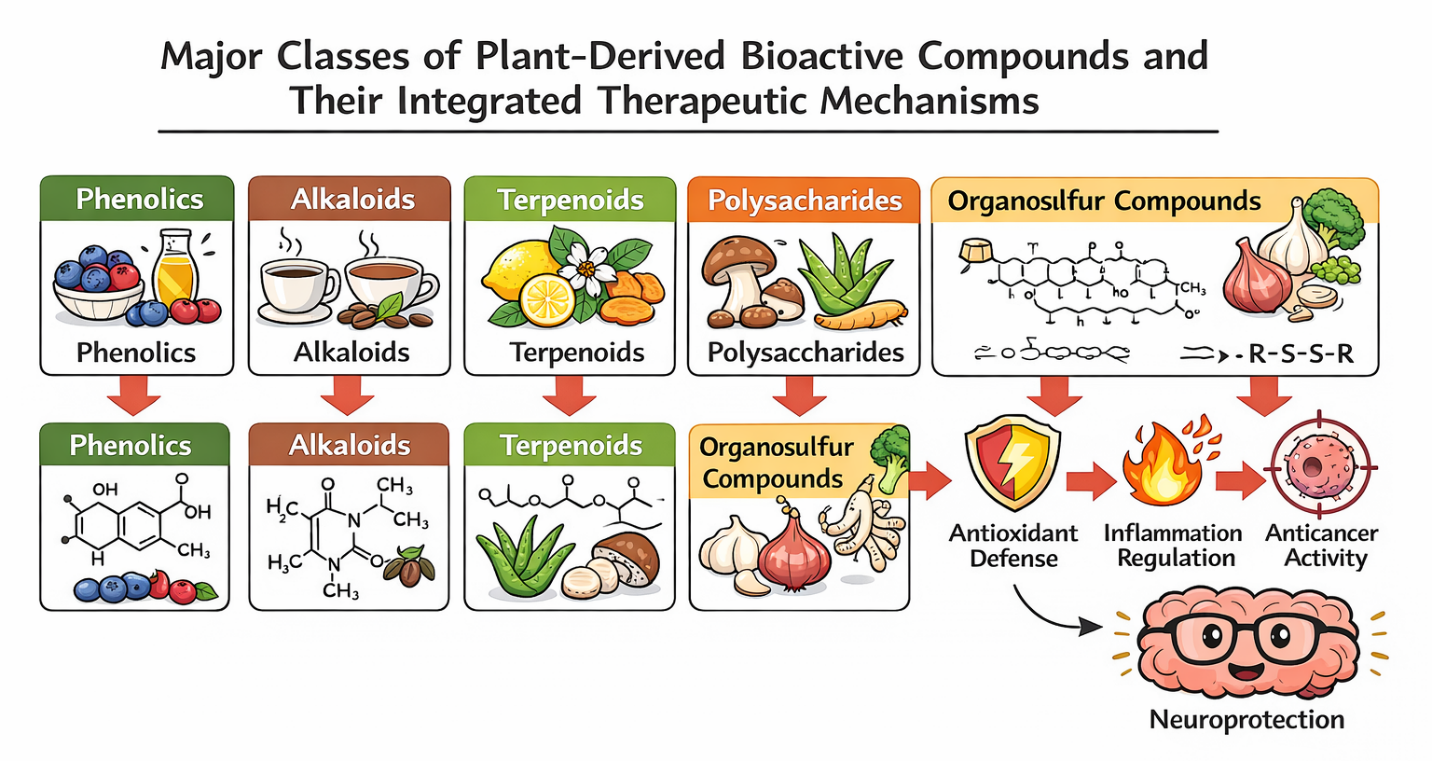
Biologically active polysaccharides from mushrooms, algae, and medicinal plants—including β-glucans and fucoidan—exert immunomodulatory, antitumor, and gut-health–promoting effects (Dutta et al., 2019). They enhance the activity of macrophages, NK cells, and T lymphocytes, thereby supporting antitumor immunity. Polysaccharides can also trigger apoptosis and cell cycle arrest in cancer cells, and mushroom β-glucans serve as immunostimulatory adjuvants during chemotherapy (Epstein et al., 2020). A schematic overview of the major classes of plant-derived bioactive compounds and their complementary mechanisms in antioxidant, anticancer, neuroprotective, and immunomodulatory pathways is presented in Figure 1.

3.4.2 Organosulfur Compounds

Sulfur-containing compounds found in Allium (garlic, onions) and Brassica vegetables possess diverse antioxidant, anti-inflammatory, antimicrobial, and anticarcinogenic properties (Dutta et al., 2019). Isothiocyanates such as sulforaphane regulate apoptosis and cell cycle progression, playing a prominent role in cancer chemoprevention (D’Arcy, 2019). Allicin demonstrates strong anti-atherogenic effects by reducing LDL oxidation and circulating lipid levels (Franco et al., 2013).

Collectively, these bioactive compounds can be viewed as a multi-tiered natural defense system. Polyphenols act as broad-spectrum protectors against oxidative and inflammatory damage; alkaloids intervene in highly specific cellular pathways; terpenoids provide both targeted anticancer effects and systemic antioxidant benefits; polysaccharides strengthen immune resilience; and organosulfur compounds contribute detoxification and cardioprotection (Dutta et al., 2019; Faubert et al., 2020). Their complementary mechanisms underscore why plant-derived metabolites remain at the forefront of anticancer and neuroprotective research.

4. Anticancer Mechanisms of Natural Bioactive Compounds

Natural bioactive compounds—drawn largely from plants—exert anticancer effects through a tapestry of interlocking mechanisms that map neatly onto the Hallmarks of Cancer framework (Hallmarks of Cancer; Hanahan, 2022; Hanahan & Weinberg, 2000, 2011). Rather than acting as single-target agents, these phytochemicals (flavonoids, methylxanthines, alkaloids, terpenoids, polysaccharides, and organosulfur compounds) engage multiple molecular nodes simultaneously, producing synergistic disturbances in cancer cell survival, proliferation, invasion, and the tumor microenvironment (Talib et al., 2024; Wang et al., 2012; Pratheeshkumar & Kuttan, 2012). Below, I synthesize the evidence by hallmark, highlighting common molecular patterns and exemplary compounds.

Figure 1: Bioactive Compounds and Their Mechanistic Roles in Disease Modulation

Figure 2: Multitarget Anticancer Mechanisms of Plant-Derived Bioactive Compounds


4.1 Resisting Cell Death — Induction of Apoptosis

Evasion of programmed cell death is central to tumor persistence, and many plant-derived compounds restore apoptotic competence by tipping mitochondrial and death-receptor balances back toward cell elimination (Pfeffer & Singh, 2018). At the mitochondrial (intrinsic) level, the BCL-2 family is a recurrent target: natural products often upregulate pro-apoptotic proteins (Bax, Bak) and downregulate anti-apoptotic members (Bcl-2, Bcl-xL), provoking cytochrome c release and caspase cascades (Talib et al., 2024; Vicinanza et al., 2013). Flavonoids such as quercetin and luteolin provide clear examples—modulating Bax/Bcl-2 ratios, activating caspases, and producing DNA fragmentation consistent with apoptosis (Wang et al., 2012; Vicinanza et al., 2013). EGCG activates both intrinsic and extrinsic pathways and promotes caspase activation (Prasad & Katiyar, 2015; Nandakumar et al., 2011). Alkaloids (e.g., berberine) and terpenoids also converge on mitochondrial depolarization and caspase-dependent death (Talib et al., 2024; Wang et al., 2012). Together, these findings show a consistent pattern: phytochemicals restore apoptosis through coordinated modulation of mitochondrial integrity, caspase activation, and, in some cases, death-receptor signaling.

4.2 Sustaining Proliferative Signaling & Evading Growth Suppressors

Uncontrolled proliferation is curtailed by phytochemicals through two complementary strategies: enforcing cell-cycle checkpoints and inhibiting dysregulated signal transduction. Many compounds arrest tumor cells at discrete cycle phases by modulating cyclins, CDKs, and CDK inhibitors (Talib et al., 2024; Vicinanza et al., 2013). Classical plant-derived chemotherapeutics—Vinca alkaloids and taxanes—illustrate the same concept clinically by disrupting microtubule dynamics and blocking mitosis (NIH, 2020; Rossi et al., 2017).

Concurrently, phytochemicals blunt proliferative signaling pathways frequently hijacked in cancer. Resveratrol, EGCG, and quercetin inhibit the RTK/PI3K/Akt/mTOR axis, lowering anabolic drive and sensitizing cells to death (Gao & Chen, 2015; Saiki et al., 2011). Other agents such as curcumin and resveratrol downregulate NF-κB and STAT3, transcriptional hubs that maintain proliferation and survival (Talib et al., 2024). By both enforcing checkpoints and dismantling growth signaling, natural products re-establish proliferative control.

4.3 Inducing Angiogenesis, Invasion, and Metastasis — Anti-Vascular and Anti-Metastatic Actions

Tumor expansion and dissemination depend on angiogenesis and extracellular matrix remodeling—two processes extensively targeted by phytochemicals (Wang et al., 2015; Pratheeshkumar & Kuttan, 2012). Polyphenols such as EGCG reduce VEGF production and interfere with EGFR-related pro-angiogenic signaling, while ellagic acid and sulforaphane downregulate VEGF/VEGFR2 signaling, curbing new vessel formation (Wang et al., 2015; Vicinanza et al., 2013). On invasion and metastasis, natural compounds attenuate matrix metalloproteinases and upregulate tissue inhibitors, blunt EMT-associated transcription factors, and suppress migration-promoting cascades (Pratheeshkumar & Kuttan, 2012). EGCG, luteolin, and quercetin exemplify this anti-metastatic profile (Talib et al., 2024).

4.4 Reprogramming Cellular Metabolism

Cancer cells rewire metabolism to meet biosynthetic and energetic demands; phytochemicals frequently counter these shifts. Resveratrol inhibits key glycolytic enzymes and reduces mitochondrial hexokinase II translocation, undermining glycolytic flux and sensitizing mitochondria to apoptosis (Gao & Chen, 2015). Meanwhile, compounds such as berberine disrupt lipid handling and fatty-acid synthesis through AMPK activation and metabolic modulation (Talib et al., 2024). These metabolic interventions convert cancer’s energetic adaptations into vulnerabilities.

4.5 Enabling Characteristics: Genomic Instability, Oxidative Stress, and Immune Modulation

Natural compounds exploit cancer’s fragile redox and genomic balance by toggling reactive oxygen species. Many phytochemicals act as selective pro-oxidants in tumor cells, elevating ROS beyond tolerable thresholds (Wang et al., 2019). Topoisomerase inhibition by bioactive compounds further induces DNA strand breaks that lethalize proliferating tumor cells (Prasad & Katiyar, 2015). Some agents, such as caffeine, additionally impair DNA repair mechanisms, augmenting genotoxic stress (Weber & Ryan, 2015; Xu et al., 2020).

Equally important, phytochemicals recalibrate tumor-immune interactions and inflammation. Caffeine’s A2A antagonism enhances antitumor immunity, while polysaccharides act as immunostimulants activating macrophages, NK cells, and T lymphocytes (Talib et al., 2024). Anti-inflammatory effects further reduce tumor-promoting chronic inflammation.

4.6 Epigenetic Reprogramming and miRNA Modulation

Phytochemicals influence non-mutational regulation of gene expression. EGCG can inhibit DNA methyltransferases and modify histone acetylation to reactivate silenced tumor suppressors (Nandakumar et al., 2011), while polyphenols modulate oncogenic and tumor-suppressor microRNAs, effecting durable shifts in gene networks relevant to proliferation and metastasis (Prasad & Katiyar, 2015).

Natural bioactive compounds attack cancer through a distributed, multi-targeted strategy that mirrors the multifactorial nature of tumor biology. By simultaneously enforcing apoptotic programs, arresting cell cycle progression, inhibiting pro-survival signaling and angiogenesis, reprogramming metabolism, and modulating immune and epigenetic landscapes, these phytochemicals offer complementary avenues that may help overcome the limitations of single-target therapies and drug resistance (Talib et al., 2024; Wang et al., 2012). Future translational work should prioritize mechanistic synergies, standardized dosing paradigms, and combinatorial strategies that leverage these natural compounds’ polypharmacology within the clinical oncology toolkit. Natural bioactive compounds attack cancer through a distributed, multi-targeted strategy that mirrors the multifactorial nature of tumor biology. The integrated mechanisms are summarized in Figure 2.

5. Cardiovascular and Metabolic Benefits, in the larger context of Natural Bioactive Compounds

Natural bioactive compounds, particularly methylxanthines and phenolic compounds, have shown substantial benefits in maintaining cardiovascular and metabolic health. These effects are primarily mediated through antioxidant, anti-inflammatory, and regulatory actions on glucose and lipid metabolism (Vella et al., 2023; Yang et al., 2019).

5.1 Cardiovascular Protection

Phytochemicals improve cardiovascular health by enhancing endothelial function, modulating lipid profiles, and reducing inflammatory and prothrombotic states (Vella et al., 2023). Polyphenols increase nitric oxide bioavailability and induce vasodilation, while methylxanthines like theobromine further support vascular function (Gil et al., 1993; Skopińska-Rózewska et al., 1998). These compounds also regulate blood pressure through ACE inhibition and NO-mediated mechanisms.

5.2 Lipid Modulation and Anti-Thrombotic Effects

Bioactive compounds such as catechins, caffeine, and theobromine exert antithrombotic actions and inhibit platelet aggregation (Guruvayoorappan & Kuttan, 2008). Additionally, phytochemicals positively modulate lipid profiles, supporting anti-atherogenic effects and overall vascular health (Vella et al., 2023).

5.3 Metabolic Regulation: Diabetes and Obesity

These compounds also play key roles in metabolic health by regulating glucose homeostasis and improving insulin sensitivity. Chlorogenic acids, catechins, and related compounds reduce hepatic glucose production and modulate metabolic enzymes (Yang et al., 2019). For obesity, caffeine and related compounds stimulate lipolysis and metabolic rate, contributing to reduced adiposity (Vella et al., 2023; Yan et al., 2018).

6. Neuroprotective Actions of Methylxanthines and Polyphenols in Neurodegenerative Diseases

Natural bioactive compounds—especially methylxanthines (MXs) and a wide array of polyphenols, including flavonoids and phenolic acids—have emerged as promising neuroprotective agents that target multiple overlapping pathways implicated in neurodegenerative diseases (NDDs) (Angeloni et al., 2022; Ayaz et al., 2019). Among these, Alzheimer’s disease (AD) and Parkinson’s disease (PD) remain the most intensely investigated due to their growing global prevalence. What makes these compounds particularly compelling is their ability to modulate diverse molecular and cellular processes simultaneously, offering a multi-target strategy well-suited for the complex pathology of NDDs (Akkol et al., 2021; Angeloni et al., 2021). This section synthesizes evidence on how these natural compounds act on major neuropathological mechanisms, emphasizing methylxanthines and polyphenols as dual modulators of oxidative stress, inflammation, protein aggregation, and neuronal signaling.

6.1. Neuroprotective Mechanisms of Methylxanthines

Methylxanthines—primarily caffeine, theobromine, and theophylline—are widely consumed through coffee, tea, and cocoa, and have long been recognized for their beneficial effects on the central nervous system (Franco et al., 2013; Vella et al., 2023). Recent work provides deeper insight into how these compounds modulate AD and PD pathologies at both molecular and functional levels (Yan et al., 2018; Yoneda et al., 2017).

6.1.1. Targeting Core Alzheimer’s Disease Pathology

One of the hallmark features of AD is the accumulation of amyloid-β (Aβ) peptides derived from abnormal processing of amyloid precursor protein (APP). Methylxanthines demonstrate the ability to shift APP processing toward a non-amyloidogenic route.

Beyond modulating APP processing, MXs influence Aβ aggregation. Theobromine has been shown to interfere with oligomer formation, decreasing the buildup of neurotoxic species that disrupt synaptic function (Cova et al., 2019). Together, these mechanisms suggest a coordinated action of methylxanthines against early and late stages of amyloid pathology.

6.1.2. Mechanisms Relevant to Parkinson’s Disease

PD is characterized primarily by dopaminergic neuron loss in the substantia nigra. Methylxanthines exhibit strong protective effects here as well, largely through adenosine receptor modulation and antioxidant mechanisms (Yan et al., 2018). By modulating neuronal signaling pathways, caffeine reduces neurodegeneration and improves motor outcomes in PD models. In addition, MXs mitigate oxidative stress and neuroinflammation, both central contributors to PD progression (Angeloni et al., 2022). Theobromine reduces oxidative markers and suppresses pro-inflammatory cytokines, while caffeine’s antioxidant properties further contribute to enhanced neuronal survival (Franco et al., 2013). Functionally, MXs improve cognitive and sensorimotor deficits, with evidence linking methylxanthine intake to improved cognitive performance (Vella et al., 2023).

6.2 Neuroprotection by Flavonoids and Phenolic Acids

Polyphenols—including catechins, flavonols, and phenolic acids—are increasingly recognized as multi-functional neuroprotectants. These compounds modulate oxidative damage, inflammation, protein aggregation, and neuronal signaling networks linked to AD and PD (Ayaz et al., 2019; Angeloni et al., 2021).

6.2.1 Anti-Amyloid, Anti-Oxidative, and Signaling Actions

Catechins, especially epigallocatechin-3-gallate (EGCG), exhibit wide-ranging protective effects, including inhibition of amyloidogenic pathways and reduction of neurotoxicity (Ahmad et al., 2000; Bastianetto et al., 2006). Phenolic acids also contribute significantly. Chlorogenic acid, a major coffee polyphenol, demonstrates neuroprotective and antioxidant effects and supports neuronal survival pathways (Yang et al., 2019; Aborziza et al., 2024). Flavonols, particularly quercetin, offer strong mitochondrial protection and reduce dopaminergic neuron loss while attenuating inflammation-induced apoptosis (Elumalai & Lakshmi, 2016; Ayaz et al., 2019).

6.2.2 Additional Targets: Inflammation, Oxidative Stress, and the Cholinergic System

Oxidative stress and neuroinflammation form a destructive feedback loop in NDDs. Polyphenols act as potent counter-regulators by reducing oxidative injury and inflammatory signaling (Angeloni et al., 2022). Some natural compounds interact with cholinergic signaling and improve cognitive function through enzyme modulation and neurotransmitter balance (Akkol et al., 2021).

6.3. Bioavailability and Delivery Challenges

Despite strong mechanistic evidence, many polyphenols suffer from poor bioavailability, limited stability, and rapid metabolism. However, several compounds derived from dietary sources can cross the blood-brain barrier and exert direct CNS effects (Figueira et al., 2017). Novel delivery systems such as nanocarriers and encapsulation strategies are being developed to enhance bioavailability and therapeutic efficacy (Abrahão et al., 2019). Overall, methylxanthines and polyphenols collectively target diverse neuropathological mechanisms, including amyloid accumulation, oxidative stress, neuroinflammation, mitochondrial dysfunction, and neurotransmitter imbalance (Angeloni et al., 2022; Ayaz et al., 2019). Their ability to modulate multiple pathways simultaneously positions them as promising candidates for multi-target therapeutic strategies in AD and PD. Continued refinement of delivery systems and translational studies will be essential to harness their full neuroprotective potential.

7. Quantitative Synthesis of Evidence on Natural Bioactive Compounds in Chronic Disease Modulation

7.1 Overview of Included Systematic Reviews

A total of eight systematic reviews and meta-analyses were identified, focusing on the effects of natural bioactive

Table 1. Cardiovascular Benefits of Natural Bioactive Compounds. This table summarizes key natural bioactive compounds and their cardiovascular effects, with a focus on endothelial function, blood pressure regulation, and vascular health. Mechanistic pathways such as nitric oxide (NO) bioavailability and ACE inhibition are highlighted alongside clinical outcomes. The findings collectively demonstrate the role of dietary phytochemicals in improving cardiovascular physiology.

Bioactive Compound

Source

Mechanism of Action

Measured Outcome

Key Findings

References

Epicatechin, Resveratrol

Cocoa, Red wine

↑ eNOS, ↑ NO bioavailability, vasodilation

Flow-mediated dilation (FMD)

Enhanced endothelial function, improved arterial compliance

Ó’Muircheartaigh & Rodrigues-González, 2024

Theobromine

Cocoa

↑ NO production, eNOS stimulation

FMD, vasorelaxation

Significant improvement in endothelial function; synergistic with flavanols

Cadoná et al., 2021; Rodríguez-Rodríguez et al., 2022

Quercetin

Fruits, Vegetables

ACE inhibition, antioxidant, anti-inflammatory

Blood pressure

Reduced systolic and diastolic BP in hypertensive subjects

Rysz et al., 2022; Edwards et al., 2007, Rysz et al., 2022

Chlorogenic Acids (CGAs)

Coffee

ACE inhibition, ↑ NO release

Blood pressure

Mild antihypertensive effects and improved endothelial responses

Yang et al., 2019

Garlic (allicin, gamma-glutamyl cysteine)

Allium sativum

ACE inhibition, anti-inflammatory

BP, endothelial function

Decreased BP and reduced LDL oxidation

Banerjee & Maulik, 2002, Pham et al., 2019

Table 2. Lipid Profile and Anti-Thrombotic Effects of Bioactive Compounds. This table presents bioactive compounds that influence lipid metabolism and platelet function, emphasizing their anti-atherogenic and anti-thrombotic roles. Mechanisms include inhibition of cholesterol absorption, antioxidant activity, and modulation of lipoprotein profiles. These compounds contribute to reduced cardiovascular disease (CVD) risk through improved lipid balance and vascular protection.

Bioactive Compound

Source

Mechanism of Action

Lipid/Platelet Effects

Key Findings

References

Caffeine

Coffee

Platelet aggregation inhibition, antioxidant

↓ Platelet adhesion

Anti-thrombotic and cardioprotective effects

Cadoná et al., 2021

Theobromine

Cocoa

↑ HDL, ↓ LDL

Lipid modulation

Improved lipid profile; cardiovascular protection

Martínez-Pinilla et al., 2015, Cadoná et al., 2021

Catechins (EGCG, ECG)

Green tea

Anti-thrombotic, antioxidant

↓ LDL, ↓ triglycerides

Reduces atherosclerosis risk and oxidative stress

Seifu et al., 2012, Payne et al., 2022

Phytosterols, Oryzanol

Plant oils, Rice bran

Cholesterol absorption inhibition

↓ Total cholesterol, ↓ LDL

Significant hypolipidemic effect and anti-atherogenic

Bhaskaragoud et al., 2016, Pham et al., 2019; Berger et al., 2004, Pham et al., 2019

Carotenoids (Lycopene, β-carotene)

Tomatoes, Carrots

Antioxidant, anti-inflammatory

↓ Carotid/femoral atherosclerosis

Inversely associated with CVD risk

Rysz et al., 2022

Table 3. Metabolic and Anti-Obesity Effects of Natural Bioactive Compounds. This table outlines bioactive compounds that regulate metabolic health, including glucose homeostasis, lipid metabolism, and adipogenesis. Mechanisms such as AMPK activation, enzyme inhibition, and modulation of adipocyte differentiation are highlighted. These compounds demonstrate promising anti-diabetic and anti-obesity effects through multi-target metabolic pathways.

Bioactive Compound

Source

Mechanism of Action

Metabolic Outcome

Key Findings

References

Chlorogenic Acids (CGAs)

Coffee

↓ Hepatic glucose output, inhibit glucose absorption

Blood glucose regulation

Reduced fasting glucose and improved insulin sensitivity

Shah & Kumar, 2020; Yang et al., 2019

Trigonelline

Coffee

Modulates glucose & lipid enzymes (AMPK, G6Pase)

Glycemic control

Improved glucose homeostasis and lipid metabolism

Yoshinari et al., 2009, Yang et al., 2019

EGCG, ECG

Green tea

Inhibits α-glucosidase, ↑ insulin sensitivity

↓ Blood glucose, ↓ LDL, ↓ triglycerides

Significant antidiabetic effects, improved β-cell function

Payne et al., 2022; Zhang et al., 2025

Caffeine

Coffee

↑ Lipolysis, ↑ metabolic rate

Weight management, ↓ adiposity

Stimulates fat breakdown and increases energy expenditure

Hoensch & Oertel, 2001, Pham et al., 2019

Theobromine

Cocoa

Inhibits adipogenesis, browning of fat cells

Obesity prevention

Reduces adipocyte differentiation, promotes fat catabolism

Rebollo-Hernanz et al., 2019; Tanaka et al., 2022, Ranganathan et al., 2022

Ginger Compounds (6-Gingerol, 6-Shogaol)

Ginger

↓ Adipogenesis markers (PPARγ, C/EBPα)

↓ Fat accumulation

Suppressed fat cell formation, improved insulin signaling

Isa et al., 2017, Ranganathan et al., 2022

Gallic Acid

Various plants

GLUT4 activation, antioxidant

↓ Blood glucose

Enhanced hypoglycemic effect and β-cell protection

Prasad et al., 2010, Rebollo-Hernanz et al., 2019; Oboh et al., 2020, Zhang et al., 2025

compounds on chronic disease outcomes, including cancer, cardiovascular disease, diabetes, and infectious diseases (Table 1). The majority of these reviews concentrated on cancer prevention, specifically evaluating the effects of green tea catechins, citrus fruits, cruciferous vegetables, and methylxanthines (MTXs) such as caffeine, theophylline, and theobromine (Dutta et al., 2019; Bakrim et al., 2022; Talib et al., 2024). Other reviews investigated cardiovascular health, with an emphasis on foods and nutrients including polyphenols, flavonoids, and caffeine (Vella et al., 2023; Bhaskaragoud et al., 2016). Notably, one review assessed the bleeding risk associated with omega-3 polyunsaturated fatty acids (PUFAs) in clinical trials, while another explored potential adjuvant roles of MTXs in disease treatment contexts.

7.2 Methylxanthines and Colorectal Cancer Risk

A focal point of this review was the relationship between dietary MTXs and colorectal cancer (CRC) risk. The systematic review and meta-analysis conducted by PROSPERO-registered study CRD42020157937 included 16 studies—8 animal models and 8 human epidemiological studies—meeting PRISMA guidelines for qualitative synthesis, with 6 human studies included in quantitative analyses (Table 2). Studies were restricted to peer-reviewed publications in English, involving oral administration of natural MTXs, either through dietary intake or quantified serum levels (Dutta et al., 2019). In vitro studies, parenteral administration, synthetic MTXs, and reviews were excluded. Statatistical analysis using a random-effects model evaluated the highest versus lowest consumption of MTXs. Relative risks (RR) were approximated using odds ratios (OR) and hazard ratios (HR). The pooled estimate revealed a modest protective trend against CRC after correction for potential publication bias using the trim-and-fill method. Risk-of-bias assessment categorized studies as low to moderate risk. Epidemiological evidence demonstrated heterogeneous results. Some studies reported no significant associations between MTX intake and colorectal cancer outcomes, while others observed modest reductions in risk (Dutta et al., 2019; Talib et al., 2024). These mixed findings highlight potential variability due to study design, population characteristics, and confounder adjustment. Most studies adjusted for age, sex, BMI, physical activity, dietary patterns, tobacco/alcohol use, and other lifestyle factors.

7.3 Cardiovascular Outcomes and Flow-Mediated Dilation

Polyphenol-rich interventions, particularly catechins, caffeine, quercetin, and resveratrol, were consistently associated with improved endothelial function, measured as flow-mediated dilation (FMD). Acute and chronic trials conducted in populations with metabolic syndrome, obesity, coronary artery disease, or healthy adults revealed modest but significant FMD improvements following polyphenol intake (Vella et al., 2023; Bhaskaragoud et al., 2016). Similarly, administration of tea extracts and polyphenol-rich beverages significantly enhanced FMD from baseline. Chronic interventions with resveratrol or chlorogenic acid-enriched coffee extract produced smaller yet significant increases in FMD compared to baseline or control groups (Aborziza et al., 2024; Yang et al., 2019). Collectively, these findings suggest that dietary polyphenols may improve vascular endothelial function, potentially reducing cardiovascular disease risk. The magnitude of effect appears dose-dependent, with higher polyphenol concentrations or catechin-rich interventions producing larger improvements in FMD outcomes.

7.4 Cancer Prevention: Green Tea, Citrus Fruits, and Cruciferous Vegetables

Green tea catechins (GTCs) were evaluated for prostate cancer prevention in randomized and observational settings. Supplementation with catechin-rich formulations significantly elevated plasma EGCG concentrations in intervention groups compared to controls, although cumulative incidence differences remained modest. These findings reinforce prior evidence suggesting potential chemopreventive effects of green tea, particularly in high-risk populations (Ahmad et al., 2000; Adhami et al., 2009). Citrus fruit intake was evaluated quantitatively in relation to cancer risk. Systematic evidence consistently suggested an inverse relationship, particularly for higher consumption, although effect sizes were modest and heterogeneity across studies was observed. Similarly, cruciferous vegetable consumption was associated with decreased cancer risk, although evidence was derived primarily from observational and cohort-based analyses (Bakrim et al., 2022).

7.5 Bioactive Compound Concentrations and Molecular Insights

Quantitative analyses of bioactive compounds revealed substantial variation in dietary intakes and molecular activity. Average caffeine intake in populations varied widely, while theobromine intake remained comparatively lower. In vitro and in silico studies demonstrated significant binding affinities of quercetin and related compounds to NF-κB signaling components, suggesting potential anti-inflammatory and chemopreventive mechanisms (Ahmad et al., 2000; Chen et al., 2014). Similarly, concentrations of phenolic acids extracted from plant-derived sources varied widely, indicating variable bioavailability and physiological relevance.

Furthermore, polyphenol content in beverages varied considerably, emphasizing the importance of standardized dosing in clinical trials. These molecular data support mechanistic links between dietary bioactive compounds and observed clinical outcomes, particularly in cardiovascular and cancer prevention contexts.

7.6 Synthesis of Evidence and Trends

Overall, the systematic review literature demonstrates consistent evidence supporting the role of natural bioactive compounds, including methylxanthines, polyphenols, catechins, and flavonoids, in modulating chronic disease risk (Dutta et al., 2019; Talib et al., 2024). While epidemiological studies of MTXs and CRC risk yielded mixed results, meta-analytic synthesis indicated a slight protective effect, warranting further investigation. Cardiovascular trials showed robust improvements in endothelial function with polyphenol-rich interventions, whereas green tea and citrus intake were associated with modest reductions in cancer incidence. Mechanistic and molecular analyses corroborated these findings, suggesting anti-inflammatory, antioxidant, and anti-carcinogenic pathways as key mediators (Faubert et al., 2020).

However, considerable heterogeneity exists across study designs, populations, dosing strategies, and compound quantification methods. These findings collectively underscore the multifaceted potential of dietary bioactive compounds as preventive or adjunctive agents in chronic disease management.

8. Interpreting Multimodal Evidence: Mechanistic Insights and Clinical Implications of Natural Bioactive Compounds

This systematic review synthesized evidence from epidemiological studies, clinical trials, and mechanistic investigations on the effects of natural bioactive compounds—including methylxanthines (MTXs), catechins, flavonoids, and polyphenols—on cancer prevention, cardiovascular health, and other chronic disease outcomes. Overall, the findings indicate that these compounds exhibit moderate to strong potential for disease modulation, although the magnitude of effects varies across populations, compound types, and study designs (Dutta et al., 2019; Talib et al., 2024).

8.1 Methylxanthines and Colorectal Cancer Risk

Epidemiological evidence regarding dietary MTXs remains mixed. Some studies reported no significant associations, while others observed reductions in risk. Prospective analyses similarly produced variable findings, resulting in a modest pooled protective effect after meta-analysis (Dutta et al., 2019). These inconsistencies likely reflect heterogeneity in study design, population characteristics, and confounder adjustment. Differences in caffeine metabolism, dietary patterns, and lifestyle factors may contribute to variability. Notably, the potential protective effect of MTXs aligns with preclinical evidence demonstrating anti-carcinogenic properties via modulation of signaling pathways, antioxidant activity, and apoptosis induction (Chen et al., 2014; Eini et al., 2015; Saiki et al., 2011).

8.2 Cardiovascular Effects of Polyphenols and Catechins

The cardiovascular benefits of polyphenol-rich interventions were more consistent, with multiple trials demonstrating improvements in endothelial function as measured by flow-mediated dilation (FMD). Metabolic and Anti-Obesity Effects of Natural Bioactive Compounds shown in Table 3. Significant FMD enhancement was observed with catechins, resveratrol, and chlorogenic acid-enriched interventions (Vella et al., 2023; Yang et al., 2019). Mechanistically, polyphenols enhance nitric oxide bioavailability, reduce oxidative stress, and modulate inflammatory pathways, thereby improving vascular function (Bhaskaragoud et al., 2016). These findings reinforce current dietary recommendations promoting consumption of polyphenol-rich foods and beverages for cardiovascular health.

8.3 Cancer Prevention: Green Tea, Citrus, and Cruciferous Vegetables

Green tea catechins demonstrated potential chemopreventive effects, particularly in prostate cancer contexts. While bioavailability of catechins is achievable through supplementation, longer-term follow-up may be required to observe clinically significant outcomes (Ahmad et al., 2000; Adhami et al., 2009). Citrus fruit intake exhibited inverse associations with cancer risk, likely mediated by flavonoids with anti-inflammatory and antioxidant properties (Bakrim et al., 2022). Similarly, cruciferous vegetables contribute protective effects through bioactive compounds that modulate carcinogen metabolism and apoptosis.

8.4 Mechanistic and Molecular Insights

Quantitative and molecular analyses provided mechanistic support for observed outcomes. MTXs, catechins, and polyphenols demonstrated interactions with key inflammatory and carcinogenic pathways such as NF-κB signaling (Ahmad et al., 2000; Faubert et al., 2020). These data support the hypothesis that dietary bioactive compounds exert multifaceted biological effects through antioxidant, anti-inflammatory, and anti-proliferative mechanisms.

8.5 Limitations and Future Directions

Several limitations should be considered, including heterogeneity in study design, dosing, and outcome measurement. Future research should prioritize standardized intervention protocols, precise quantification, and long-term follow-up. this systematic review underscores the potential of natural bioactive compounds in reducing the risk of chronic diseases, particularly through cardiovascular protection and cancer prevention. While MTXs show modest protective effects, polyphenols and catechins consistently improve endothelial function and may contribute to cancer chemoprevention. Mechanistic evidence supports antioxidant, anti-inflammatory, and anti-proliferative pathways as key mediators (Dutta et al., 2019; Talib et al., 2024; Faubert et al., 2020).


9. Conclusion

This review highlights the potential of natural bioactive compounds, including methylxanthines, catechins, flavonoids, and polyphenols, in modulating chronic disease risk. Evidence from epidemiological, clinical, and mechanistic studies suggests that these compounds may confer modest protective effects against colorectal and prostate cancers, while consistently improving cardiovascular function through enhanced endothelial performance. Mechanistic insights support antioxidant, anti-inflammatory, and anti-proliferative pathways as central mediators of these benefits. Despite heterogeneity across study designs, populations, and compound dosages, the overall findings underscore the value of incorporating polyphenol-rich foods—such as tea, citrus fruits, cruciferous vegetables, and cocoa—into regular dietary patterns as part of an integrated strategy for chronic disease prevention. Future research should focus on long-term, well-controlled clinical trials, standardized dosing, and biomarker-based assessments to clarify dose-response relationships and identify populations most likely to benefit. Collectively, these results reinforce the role of diet-based bioactive compounds in promoting health and preventing disease.

Author Contributions

N.T.H. conceptualized and designed the study and led the overall manuscript development. N.T.H. conducted the literature search, data screening, and synthesis. P.P. contributed to data interpretation, particularly in cardiovascular outcomes and clinical relevance, and provided critical revisions to the manuscript. Both authors contributed to drafting, reviewing, and final approval of the manuscript and agree to be accountable for all aspects of the work.

References


Aborziza, M., Amalia, R., Zuhrotun, A., Ikram, N. K. K., Novitasari, D., & Muchtaridi, M. (2024). Coffee bean and its chemical constituent caffeine and chlorogenic acid as promising chemoprevention agents: Updated biological studies against cancer cells. Molecules, 29(14), 3302. https://doi.org/10.3390/molecules29143302

Abrahão, F. R., Rocha, L. C. R., Santos, T. A., Carmo, E. L. d., Pereira, L. A. S., Borges, S. V., & Pereira, R. G. F. A. (2019). Microencapsulation of bioactive compounds from espresso spent coffee by spray drying. LWT, 103, 116–124.
https://doi.org/10.1016/j.lwt.2018.12.061

Adamczyk, P., Wolski, Z., Butkiewicz, R., Nussbeutel, J., & Drewa, T. (2014). Significance of atypical small acinar proliferation and extensive high-grade prostatic intraepithelial neoplasm in clinical practice. Central European Journal of Urology, 67(2), 136–141. https://doi.org/10.5173/ceju.2014.02.art4

Ademowo, O. S., Dias, H. K. I., Pararasa, C., & Griffiths, H. R. (2019). Nutritional hormesis in a modern environment. In S. I. S. Rattan & M. Kyriazis (Eds.), The science of hormesis in health and longevity (pp. 75–86). Academic Press.
https://doi.org/10.1016/B978-0-12-814253-0.00006-1

Adhami, V. M., Siddiqui, I. A., Sarfaraz, S., Khwaja, S. I., Hafeez, B. B., Ahmad, N., et al. (2009). Effective prostate cancer chemopreventive intervention with green tea polyphenols in the TRAMP model depends on the stage of the disease. Clinical Cancer Research, 15(6), 1947–1953. https://doi.org/10.1158/1078-0432.CCR-08-2332

Afoakwa, E. (2014). Cocoa production and processing technology (1st ed.). CRC Press.
https://doi.org/10.1201/b16546

Ahmad, N., Gupta, S., & Mukhtar, H. (2000). Green tea polyphenol epigallocatechin-3-gallate differentially modulates nuclear factor kappaB in cancer cells versus normal cells. Archives of Biochemistry and Biophysics, 376(2), 338–346.
https://doi.org/10.1006/abbi.2000.1742

Ahmed, J. U., Waziri, M., Dauda, A., & Bida, K. M. (2021). A short review of medicinal plants extract accompanied by potential antidepressant activity. Journal of Chemical Review, 3(3), 307–319.

Ahmed, M., Rahman, M. W., Rahman, M. T., & Hossain, C. (2002). Analgesic principle from the bark of Careya arborea. Pharmazie, 57(10), 698–701.

Akash, M. S. H., Rehman, K., & Chen, S. (2014). Effects of coffee on type 2 diabetes mellitus. Nutrition, 30(7–8), 755–763. https://doi.org/10.1016/j.nut.2013.11.020

Akinmoladun, A. C., Adetuyi, A. R., Komolafe, K., & Oguntibeju, O. O. (2020). Nutritional benefits, phytochemical constituents, ethnomedicinal uses and biological properties of miracle fruit plant (Synsepalum dulcificum Shumach. & Thonn. Daniell). Heliyon, 6(12), e05837. https://doi.org/10.1016/j.heliyon.2020.e05837

Akkol, E. K., Tatli Çankaya, I., Seker Karatoprak, G., Carpar, E., Sobarzo-Sánchez, E., & Capasso, R. (2021). Natural compounds as medical strategies in the prevention and treatment of psychiatric disorders seen in neurological diseases. Frontiers in Pharmacology, 12, 669638. https://doi.org/10.3389/fphar.2021.669638

Alawadi, A. A., Benedito, V. A., Skinner, R. C., Warren, D. C., Showman, C., & Tou, J. C. (2022). RNA-sequencing revealed apple pomace ameliorates expression of genes in the hypothalamus associated with neurodegeneration in female rats fed a western diet during adolescence to adulthood. Nutritional Neuroscience, 25(11), 1–13.

Ali, A., Zahid, H. F., Cottrell, J. J., & Dunshea, F. R. (2022). A comparative study for nutritional and phytochemical profiling of Coffea arabica from different origins and their antioxidant potential and molecular docking. Molecules, 27(15), 5126. https://doi.org/10.3390/molecules27165126

Almasi, F., Dang, W., Mohammadipanah, F., & Li, N. (2022). Neurological disorders of COVID-19: Insights to applications of natural products from plants and microorganisms. Archives of Pharmacal Research.
https://doi.org/10.1007/s12272-022-01420-3

Alves, R. C., Rodrigues, F., Nunes, M. A., Vinha, A. F., & Oliveira, M. B. P. P. (2017). Chapter 1—State of the art in coffee processing by-products. In Handbook of coffee processing by-products (pp. 1–26). Academic Press.
https://doi.org/10.1016/B978-0-12-811290-8.00001-3

Alves, R., Mendes, E., Oliveira, B., & Casal, S. (2010). Norharman and harman in instant coffee and coffee substitutes. Food Chemistry, 120(4), 1238–1241. https://doi.org/10.1016/j.foodchem.2009.11.070

American Cancer Society (ACS). (2020). Types of cancer treatment. https://www.cancer.org/treatment/treatments-and-side-effects/treat-ment-types.html

American Cancer Society. (2025). Prostate cancer: Detailed guide.
https://www.cancer.org/cancer/types/prostate-cancer.html

American Society for Nutrition. (2023, April). How to boost mental health through better nutrition. American Psychiatric Association.

American Society of Clinical Oncology (ASCO). (2024, January 14). Cancer screening.
https://www.cancer.net/navigating-cancer-care/prevention-and-healthy-living/cancer-screening#head-neck-cancers

Angeloni, C., Malaguti, M., Prata, C., Freschi, M., Barbalace, M. C., & Hrelia, S. (2022). Mechanisms underlying neurodegenerative disorders and potential neuroprotective activity of agrifood by-products. Antioxidants, 12(1), 94.
https://doi.org/10.3390/antiox12010094

Angeloni, S., Freschi, M., Marrazzo, P., Hrelia, S., Beghelli, D., Juan-García, A., Juan, C., Caprioli, G., Sagratini, G., & Angeloni, C. (2021). Antioxidant and anti-inflammatory profiles of spent coffee ground extracts for the treatment of neurodegeneration. Oxidative Medicine and Cellular Longevity, 2021, 6620913.
https://doi.org/10.1155/2021/6620913

Ayaz, M., Sadiq, A., Junaid, M., Ullah, F., Ovais, M., Ullah, I., Ahmed, J., & Shahid, M. (2019). Flavonoids as prospective neuroprotectants and their therapeutic propensity in aging associated neurological disorders. Frontiers in Aging Neuroscience, 11, 155. https://doi.org/10.3389/fnagi.2019.00155

Baig, S., Seevasant, I., Mohamad, J., Mukheem, A., Huri, H. Z., & Kamarul, T. (2015). Potential of apoptotic pathway-targeted cancer therapeutic research: Where do we stand? Cell Death & Disease, 6(10), e1498.

Bakrim, S., El Omari, N., El Hachlafi, N., Bakri, Y., Lee, L. H., & Bouyahya, A. (2022). Dietary phenolic compounds as anticancer natural drugs: Recent update on molecular mechanisms and clinical trials. Foods, 11(21), 3323.
https://doi.org/10.3390/foods11213323

Barcz, E., Sommer, E., Sokolnicka, I., Gawrychowski, K., Roszkowska-Purska, K., Janik, P., & Skopinska-Rózewska, E. (1998). The influence of theobromine on angiogenic activity and proangiogenic cytokines production of human ovarian cancer cells. Oncology Reports, 5(2), 517–520. https://doi.org/10.3892/or.5.2.517

Bastianetto, S., Yao, Z. X., Papadopoulos, V., & Quirion, R. (2006). Neuroprotective effects of green and black teas and their catechin gallate esters against beta-amyloid-induced toxicity. European Journal of Neuroscience, 23(1), 55–64.
https://doi.org/10.1111/j.1460-9568.2005.04532.x

Bhaskaragoud, G., Rajath, S., Mahendra, V. P., Kumar, G. S., Gopala Krishna, A. G., & Kumar, G. S. (2016). Hypolipidemic mechanism of oryzanol components—Ferulic acid and phytosterols. Biochemical and Biophysical Research Communications, 476(2), 82–89. https://doi.org/10.1016/j.bbrc.2016.05.053

Chen, Y., Chou, W. C., Ding, Y. M., & Wu, Y. C. (2014). Caffeine inhibits migration in glioma cells through the ROCK-FAK pathway. Cellular Physiology and Biochemistry, 33(6), 1888–1898.
https://doi.org/10.1159/000362966

Cinausero, M., Aprile, G., Ermacora, P., Basile, D., Vitale, M. G., Fanotto, V., Parisi, G., Calvetti, L., & Sonis, S. T. (2017). New frontiers in the pathobiology and treatment of cancer regimen-related mucosal injury. Frontiers in Pharmacology, 8, 354. https://doi.org/10.3389/fphar.2017.00354

Cova, I., Leta, V., Mariani, C., Pantoni, L., & Pomati, S. (2019). Exploring cocoa properties: Is theobromine a cognitive modulator? Psychopharmacology, 236(2), 561–572. https://doi.org/10.1007/s00213-019-5172-0

D’Arcy, M. S. (2019). Cell death: A review of the major forms of apoptosis, necrosis and autophagy. Cell Biology International, 43(6), 582–592. https://doi.org/10.1002/cbin.11137

Dickens, E., & Ahmed, S. (2018). Principles of cancer treatment by chemotherapy. Surgery (Oxford), 36(3), 134–138.
https://doi.org/10.1016/j.mpsur.2017.12.002

Drion, C. M., van Scheppingen, J., Arena, A., Geijtenbeek, K. W., Kooijman, L., van Vliet, E. A., Aronica, E., & Gorter, J. A. (2018). Effects of rapamycin and curcumin on inflammation and oxidative stress in vitro and in vivo-In search of potential anti-epileptogenic strategies for temporal lobe epilepsy. Journal of Neuroinflammation, 15(1), 212.
https://doi.org/10.1186/s12974-018-1247-9

Dutta, S., Mahalanobish, S., Saha, S., Ghosh, S., & Sil, P. C. (2019). Natural products: An upcoming therapeutic approach to cancer. Food and Chemical Toxicology, 128, 240–255. https://doi.org/10.1016/j.fct.2019.04.012

Eini, H., Frishman, V., Yulzari, R., Kachko, L., Lewis, E. C., Chaimovitz, C., & Douvdevani, A. (2015). Caffeine promotes anti-tumor immune response during tumor initiation: Involvement of the adenosine A2A receptor. Biochemical Pharmacology, 98(1), 110–118. https://doi.org/10.1016/j.bcp.2015.08.092

Elmore, S. (2007). Apoptosis: A review of programmed cell death. Toxicologic Pathology, 35(4), 495–516.
https://doi.org/10.1080/01926230701320337

Elumalai, P., & Lakshmi, S. (2016). Role of quercetin benefits in neurodegeneration. In Advances in Neurobiology (Vol. 12, pp. 229–245). https://doi.org/10.1007/978-3-319-28383-8_12

Epstein, R. S., Aapro, M. S., Basu Roy, U. K., Salimi, T., Krenitsky, J. A., Leone-Perkins, M. L., Girman, C., Schlusser, C., & Crawford, J. (2020). Patient burden and real-world management of chemotherapy-induced myelosuppression: Results from an online survey of patients with solid tumors. Advances in Therapy, 37(8), 3606–3618.
https://doi.org/10.1007/s12325-020-01419-6

Faubert, B., Solmonson, A., & DeBerardinis, R. J. (2020). Metabolic reprogramming and cancer progression. Science, 368(6498), eaaw5473. https://doi.org/10.1126/science.aaw5473

Febriyanti, R. M., Rafif, S. N., Mikdar, N. N., Hikmatiana, B. N., Maisyarah, I. T., Khatib, A., & Muhaimin, M. (2025). Anticancer potential of bioactive compounds in Premna serratifolia, Premna odorata, and Premna tomentosa: A review of in vitro evidence. Cancer Management and Research. https://doi.org/10.2147/CMAR.S516204

Figueira, I., Menezes, R., Macedo, D., Costa, I., & dos Santos, C. N. (2017). Polyphenols beyond barriers: A glimpse into the brain. Current Neuropharmacology, 15(4), 562–594. https://doi.org/10.2174/1570159X14666161026151545

Franco, R., Oñatibia-Astibia, A., & Martínez-Pinilla, E. (2013). Health benefits of methylxanthines in cacao and chocolate. Nutrients, 5(10), 4159–4173.https://doi.org/10.3390/nu5104159

Gao, J. L., & Chen, Y. G. (2015). Natural compounds regulate glycolysis in hypoxic tumor microenvironment. BioMed Research International, 2015, 354143. https://doi.org/10.1155/2015/354143

Gil, M., Skopinska-Rózewska, E., Radomska, D., Demkow, U., Skurzak, H., Rochowska, M., Beuth, J., & Roszkowski, K. (1993). Effect of purinergic receptor antagonists suramin and theobromine on tumor-induced angiogenesis in BALB/c mice. Folia Biologica (Praha), 39(2), 63–68.

Guruvayoorappan, C., & Kuttan, G. (2008). (+)-Catechin inhibits tumour angiogenesis and regulates the production of nitric oxide and TNF-alpha in LPS-stimulated macrophages. Innate Immunity, 14(3), 160–174.
https://doi.org/10.1177/1753425908093295

Hanahan, D. (2022). Hallmarks of cancer: New dimensions. Cancer Discovery, 12(1), 31–46.
https://doi.org/10.1158/2159-8290.CD-21-1059

Hanahan, D., & Weinberg, R. A. (2000). The hallmarks of cancer. Cell, 100(1), 57–70.
https://doi.org/10.1016/S0092-8674(00)81683-9

Hanahan, D., & Weinberg, R. A. (2011). Hallmarks of cancer: The next generation. Cell, 144(5), 646–674.
https://doi.org/10.1016/j.cell.2011.02.013

Nandakumar, V., Vaid, M., & Katiyar, S. K. (2011). (−)-Epigallocatechin-3-gallate reactivates silenced tumor suppressor genes, Cip1/p21 and p16INK4a, by reducing DNA methylation and increasing histones acetylation in human skin cancer cells. Carcinogenesis, 32(4), 537–544. https://doi.org/10.1093/carcin/bgq285

NIH. (2020). Types of cancer treatment. https://www.cancer.gov/about-cancer/treatment/types

Pfeffer, C. M., & Singh, A. T. K. (2018). Apoptosis: A target for anticancer therapy. International Journal of Molecular Sciences, 19(2), 448. https://doi.org/10.3390/ijms19020448

Prasad, R., & Katiyar, S. K. (2015). Polyphenols from green tea inhibit the growth of melanoma cells through inhibition of class I histone deacetylases and induction of DNA damage. Genes & Cancer, 6(1–2), 49–61.
https://doi.org/10.18632/genesandcancer.52

Pratheeshkumar, P., & Kuttan, G. (2012). Piperine inhibits tumor angiogenesis and metastasis in B16F-10 melanoma cells in vitro and in vivo. Anticancer Agents in Medicinal Chemistry, 12(10), 1159–1184.

Rossi, A., Fortuna, M. C., Caro, G., Pranteda, G., Garelli, V., Pompili, U., & Carlesimo, M. (2017). Chemotherapy-induced alopecia management: Clinical experience and practical advice. Journal of Cosmetic Dermatology, 16(4), 537–541. https://doi.org/10.1111/jocd.12308

Saiki, S., Sasazawa, Y., Imamichi, Y., Kawajiri, S., Fujimaki, T., Tanida, I., Kobayashi, H., Sato, F., Sato, S., Ishikawa, K., et al. (2011). Caffeine induces apoptosis by enhancement of autophagy via PI3K/Akt/mTOR/p70S6K inhibition. Autophagy, 7(2), 176–187. https://doi.org/10.4161/auto.7.2.14074

Skopinska-Rózewska, E., Janik, P., Przybyszewska, M., Sommer, E., & Bialas-Chromiec, B. (1998). Inhibitory effect of theobromine on induction of angiogenesis and VEGF mRNA expression in V-Raf transfectants of human urothelial cells HCV-29. International Journal of Molecular Medicine, 2(6), 649–652. https://doi.org/10.3892/ijmm.2.6.649

Talib, W. H., Abed, I., Raad, D., Alomari, R. K., Jamal, A., Jabbar, R., Alhasan, E. O. A., Alshaeri, H. K., Alasmari, M. M., & Law, D. (2024). Targeting cancer hallmarks using selected food bioactive compounds: Potentials for preventive and therapeutic strategies. Foods, 13(18), 2687. https://doi.org/10.3390/foods13172687

Vella, T., Iacobucci, D., Marino, V. N., Perilli, E., & Milia, A. M. (2023). Caffeine as a neuroprotective and weight-loss natural compound: Focus on the cardiovascular system. Pharmaceuticals, 16(5), 730.

Vicinanza, R., Zhang, Y., Henning, S. M., & Heber, D. (2013). Pomegranate juice metabolites, ellagic acid and urolithin A, synergistically inhibit androgen-independent prostate cancer cell growth via distinct effects on cell cycle control and apoptosis. Evidence-Based Complementary and Alternative Medicine, 2013, 247504.
https://doi.org/10.1155/2013/247504

Wang, H., Khor, T. O., Shu, L. M., Su, Z. Y., Fuentes, F., Lee, J. H., & Kong, A. N. T. (2012). Plants vs. cancer: A review on natural phytochemicals in preventing and treating cancers and their druggability. Anti-Cancer Agents in Medicinal Chemistry, 12(10), 1281–1305. https://doi.org/10.2174/187152012803833026

Wang, Z., Dabrosin, C., Yin, X., Fuster, M. M., Arreola, A., Rathmell, W. K., Generali, D., Nagaraju, G. P., El-Rayes, B., Ribatti, D., et al. (2015). Broad targeting of angiogenesis for cancer prevention and therapy. Seminars in Cancer Biology, 35, S224–S243. https://doi.org/10.1016/j.semcancer.2015.01.001

Wang, Z., Gu, C., Wang, X., Lang, Y., Wu, Y., Wu, X., Zhu, X., Wang, K., & Yang, H. (2019). Caffeine enhances the anti-tumor effect of 5-fluorouracil via increasing the production of reactive oxygen species in hepatocellular carcinoma. Medical Oncology, 36(12), 97. https://doi.org/10.1007/s12032-019-1323-8

Weber, A. M., & Ryan, A. J. (2015). ATM and ATR as therapeutic targets in cancer. Pharmacology & Therapeutics, 149, 124–138. https://doi.org/10.1016/j.pharmthera.2014.12.001

Xu, H., Wang, L., Shi, B., Hu, L., Gan, C., Wang, Y., Xiang, Z., Wang, X., & Sheng, J. (2020). Caffeine inhibits the anticancer activity of paclitaxel via down-regulation of β-tubulin acetylation. Biomedicine & Pharmacotherapy, 129, 110441. https://doi.org/10.1016/j.biopha.2020.110441

Yan, R., Zhang, J., Park, H.-J., Park, E. S., Oh, S., Zheng, H., Junn, E., Voronkov, M., Stock, J. B., & Mouradian, M. M. (2018). Synergistic neuroprotection by coffee components eicosanoyl-5-hydroxytryptamide and caffeine in models of Parkinson's disease and DLB. Proceedings of the National Academy of Sciences, 115(49), E12053–E12062. https://doi.org/10.1073/pnas.1813365115

Yang, H., Jiang, J., Lv, S., & Li, R. (2019). Chlorogenic acid: A comprehensive review of its multiple health benefits. Food & Function, 10(12), 8560–8580.

Yoneda, M., Sugimoto, N., Katakura, M., Matsuzaki, K., Tanigami, H., Yachie, A., & Shido, O. (2017). Theobromine up-regulates cerebral brain-derived neurotrophic factor and facilitates motor learning in mice. The Journal of Nutritional Biochemistry, 39, 110–116. https://doi.org/10.1016/j.jnutbio.2016.10.002