Microbial Bioactives

Microbial Bioactives | Online ISSN 2209-2161
295
Citations
193k
Views
157
Articles
Your new experience awaits. Try the new design now and help us make it even better
Switch to the new experience
Figures and Tables
REVIEWS   (Open Access)

Marine Cyanobacteria and Beneficial Microbes for Sustainable Agriculture and Bio-Applications: A Review

Shahadat Hossain 1*, Mohd Hasan Mujahid 2, Sameera Zafar 2, Salaman Ahamad 2, Shaista Fatima 2

+ Author Affiliations

Microbial Bioactives 9 (1) 1-8 https://doi.org/10.25163/microbbioacts.9110629

Submitted: 25 February 2026 Revised: 20 April 2026  Published: 28 April 2026 


Abstract

Marine cyanobacteria and their associated microbial partners represent a largely untapped biological resource with considerable relevance for sustainable agriculture, biotechnology, and environmental innovation. These ancient photosynthetic microorganisms, which emerged billions of years ago, have long shaped global biogeochemical cycles and continue to play essential roles in nutrient transformation, carbon fixation, and ecological stability. In recent years, growing attention has been directed toward their ability to produce diverse bioactive compounds and to interact with plants through beneficial symbiotic mechanisms. This review integrates current knowledge on the ecological functions and biotechnological potential of marine cyanobacteria and associated beneficial bacteria. In addition to synthesizing existing literature, a systematic review were conducted to evaluate the effects of microbial inoculation on plant growth and antioxidant defense systems. The quantitative synthesis revealed that microbial treatments significantly enhanced plant height and superoxide dismutase activity compared with uninoculated controls, suggesting that cyanobacteria-based bioinoculants can improve plant growth and stress resilience. Evidence further indicates that microbial consortia often produce stronger effects than individual strains, likely due to complementary metabolic interactions and improved nutrient cycling. Beyond agricultural applications, marine cyanobacteria are also recognized for their capacity to generate pigments, secondary metabolites, and renewable bio-products with pharmaceutical and industrial relevance. Collectively, the findings highlight the multifaceted role of marine microbial systems and underscore their potential as sustainable biological platforms for agriculture, biotechnology, and environmental solutions.

Keywords: Cyanobacteria, marine microbes, bioactive compounds, nitrogen-fixing bacteria, growth promotion, antioxidant activity, sustainable agriculture


1.Introduction

Marine ecosystems harbor an immense and still only partially understood diversity of microorganisms that have shaped Earth’s biogeochemical cycles for billions of years. Among these microbial pioneers, cyanobacteria occupy a particularly intriguing position. These photosynthetic prokaryotes, once broadly referred to as blue-green algae, are believed to have emerged early in the evolutionary history of life and played a decisive role in transforming the planet’s atmosphere through oxygenic photosynthesis. Geological evidence suggests that the metabolic activity of ancient cyanobacteria contributed to the rise of atmospheric oxygen during the Precambrian era, thereby enabling the evolution of aerobic organisms and complex ecosystems (Bekker et al., 2004). Although this transformation occurred billions of years ago, the ecological and technological relevance of cyanobacteria continues to expand in the present day.

Cyanobacteria are remarkably adaptable organisms capable of colonizing a wide spectrum of habitats, from open oceans and freshwater lakes to terrestrial soils and extreme environments. Their resilience, combined with metabolic flexibility, allows them to persist in environments characterized by fluctuations in temperature, salinity, and nutrient availability. Indeed, cyanobacterial communities have been reported in environments ranging from polar ecosystems to hypersaline and thermal habitats, underscoring their extraordinary ecological versatility (Comte et al., 2007). In marine systems, these microorganisms frequently form intricate associations with other organisms, including sponges, algae, and invertebrates. Such symbiotic interactions can create highly specialized microenvironments that facilitate nutrient exchange, enhance microbial stability, and support complex ecological networks within marine ecosystems (Freeman & Thacker, 2011).

Beyond their ecological significance, cyanobacteria have increasingly drawn attention as valuable resources for biotechnology and sustainable development. Their photosynthetic capabilities allow them to convert solar energy and carbon dioxide into biomass and a diverse array of metabolites, offering a renewable platform for the production of bioactive compounds and industrial materials. Early investigations into cyanobacterial biotechnology highlighted their potential for generating biofuels, bioplastics, and specialty chemicals, suggesting that these organisms could serve as sustainable alternatives to fossil-based production systems (Abed et al., 2009). Advances in metabolic engineering have further expanded these possibilities by enabling the design of cyanobacterial strains capable of synthesizing high-value products, ranging from pharmaceuticals to bioenergy precursors (Ducat et al., 2011).

Among the most compelling applications of cyanobacteria is their role in renewable energy production. Certain strains have demonstrated the capacity to generate hydrogen through photobiological processes under aerobic conditions, illustrating their potential as environmentally friendly energy platforms (Bandyopadhyay et al., 2010). Similarly, industrial initiatives have explored the feasibility of using engineered cyanobacteria to produce bioethanol and other biofuels directly from sunlight and carbon dioxide. Such approaches align with broader efforts to develop carbon-neutral energy systems and reduce reliance on conventional fossil fuels (Algenol, 2016). Although these technologies remain under active development, they highlight the versatility of cyanobacteria as biological factories capable of contributing to a more sustainable energy landscape.

Another dimension of cyanobacterial importance lies in their remarkable capacity to synthesize structurally diverse secondary metabolites. Marine cyanobacteria, in particular, have been recognized as prolific sources of natural products with potent biological activities. Many of these compounds arise from specialized biosynthetic pathways, including non-ribosomal peptide synthases and polyketide synthases, which generate molecules with unique chemical architectures and pharmacological properties (Burja et al., 2001). Research into marine cyanobacterial metabolites has led to the discovery of numerous compounds with promising therapeutic potential. For instance, apratoxins isolated from cyanobacterial strains have shown strong anticancer activity, demonstrating the capacity of these metabolites to inhibit tumor cell proliferation (Luesch et al., 2002). Likewise, gallinamide A represents another example of a bioactive peptide with antimalarial potential, further illustrating the pharmaceutical promise of marine cyanobacteria (Linington et al., 2009).

The biochemical diversity of cyanobacteria is not limited to therapeutic compounds. These microorganisms also produce a wide array of pigments and protective molecules that enable them to thrive in challenging environmental conditions. Pigments such as chlorophylls, carotenoids, and other photoprotective compounds allow cyanobacteria to efficiently capture light energy while minimizing damage from ultraviolet radiation. In addition, microbial pigments like melanin have attracted growing interest due to their protective properties and potential applications in medicine, cosmetics, and environmental technologies (Guo et al., 2023). These molecules not only enhance the survival of cyanobacteria in exposed habitats but also represent valuable resources for industrial innovation.

However, the ecological success of cyanobacteria is accompanied by certain environmental challenges. Under conditions of nutrient enrichment, particularly elevated concentrations of phosphorus and nitrogen, cyanobacterial populations can proliferate rapidly and form harmful algal blooms. These events, often referred to as CyanoHABs, can produce toxins that threaten aquatic ecosystems, drinking water quality, and public health (Carmichael, 2001). Decades of research have documented the increasing occurrence of toxic cyanobacterial blooms worldwide, highlighting the need for improved monitoring and management strategies (Carmichael, 2008). Despite these concerns, understanding the mechanisms underlying cyanobacterial toxin production has also provided valuable insights into microbial ecology and metabolic regulation.

In marine environments, cyanobacteria frequently interact with macroalgae and other microorganisms, forming complex ecological partnerships. Red seaweeds belonging to the Rhodophyta, for example, are known to coexist with diverse microbial communities and produce nutraceutical compounds with antioxidant and therapeutic properties (Cotas et al., 2020). Such interactions often facilitate nutrient exchange and may enhance the stability of coastal ecosystems exposed to environmental stress. The coexistence of cyanobacteria with other marine organisms therefore represents a dynamic interface where ecological functions and biochemical innovation intersect.

In recent years, the integration of advanced analytical technologies has significantly accelerated research into cyanobacterial biology and metabolite discovery. Techniques such as Raman spectroscopy provide powerful, non-invasive tools for analyzing cellular components, enabling researchers to monitor intracellular structures and metabolic processes in living cells (Allakhverdiev et al., 2022). Complementary approaches, including metabolomics and functional genomics, have further expanded our understanding of cyanobacterial metabolic pathways and biosynthetic capabilities. For instance, untargeted metabolomic studies have revealed previously unknown secondary metabolites, demonstrating the immense chemical diversity present within cyanobacterial genomes (Baran et al., 2013). These technologies are rapidly transforming the exploration of marine microorganisms and facilitating the identification of novel bioactive compounds.

Analytical imaging methods have also enabled the visualization of intracellular structures such as lipid droplets and pigment distributions in microalgal cells. Label-free spectroscopic techniques, for example, allow researchers to investigate metabolic dynamics in living cells without the need for chemical staining, thereby preserving cellular integrity during analysis (Jaeger et al., 2016). Such tools provide valuable insights into cellular physiology and contribute to the optimization of microbial systems for biotechnology and biofuel production.

Beyond their roles in medicine and industry, cyanobacteria have begun to influence innovative approaches to sustainable infrastructure and environmental design. One notable example is the Bio-Intelligent Quotient (BIQ) building in Hamburg, which incorporates microalgae into architectural facades to capture carbon dioxide and generate renewable energy. This project demonstrates how microbial biotechnology can be integrated into urban environments to support climate-responsive architecture and resource efficiency (IBA Hamburg, 2013). These developments illustrate the expanding intersection between microbial ecology, engineering, and sustainable design.

Collectively, these diverse lines of research highlight the growing recognition of cyanobacteria as multifunctional organisms with profound ecological and technological significance. Their evolutionary history, metabolic versatility, and capacity to produce biologically active molecules position them as promising agents for addressing challenges related to food security, environmental sustainability, and human health. In agricultural contexts, cyanobacteria and associated beneficial microbes have gained attention as potential biofertilizers capable of enhancing plant growth, improving soil fertility, and reducing dependence on synthetic chemical inputs. For instance, the production of auxin-like compounds such as indole-3-acetic acid can facilitate root colonization and promote plant development, demonstrating the cross-kingdom influence of microbial metabolites (Hussain et al., 2015).

Given the increasing demand for sustainable agricultural practices and environmentally friendly bio-products, exploring the potential of marine cyanobacteria and their associated microbial communities has become an important research priority. This review therefore aims to synthesize current knowledge regarding the ecological roles, metabolic capabilities, and practical applications of marine cyanobacteria and beneficial microbes. By integrating insights from microbiology, biotechnology, and environmental science, the present work seeks to highlight emerging opportunities for harnessing these microorganisms in sustainable agriculture and a wide range of bio-applications.
 

2. Materials and Methods

2.1 Study Design and Review Framework

This study was conducted as a systematic review and meta-analysis to evaluate the effects of marine cyanobacteria and associated beneficial microbes on plant growth promotion and antioxidant enzyme activity, particularly superoxide dismutase (SOD). The methodological framework followed the Preferred Reporting Items for Systematic Reviews and Meta-Analyses (PRISMA) guidelines to ensure transparency, reproducibility, and methodological rigor in the identification, screening, and inclusion of relevant studies (Page et al., 2021). The overall analytical design also followed established meta-analytic principles described in the Cochrane Handbook for Systematic Reviews of Interventions and standard statistical guidance for quantitative evidence synthesis (Higgins et al., 2022; Borenstein et al., 2009).

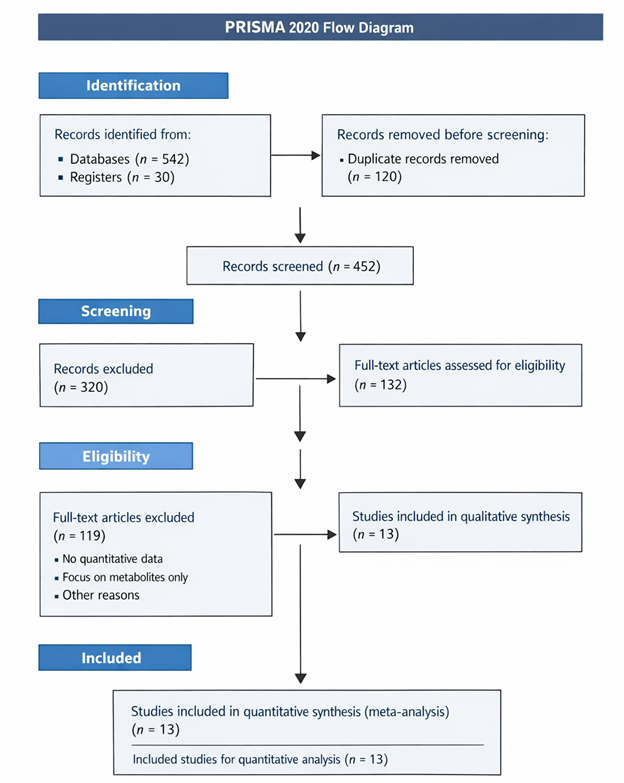
The workflow included systematic literature identification, screening, eligibility assessment, and final inclusion of studies, summarized through a PRISMA flow diagram (Figure 1). The methodological structure was consistent with approaches commonly applied in recent systematic reviews addressing emerging biotechnological and biomedical research areas (Amin et al., 2025; Setu et al., 2025).

Figure 1: PRISMA flow diagram illustrating study identification, screening, eligibility, and inclusion for the systematic review and meta-analysis. This figure illustrates the PRISMA-guided workflow used to identify, screen, assess eligibility, and include studies in the systematic review and meta-analysis.

2.2 Literature Search Strategy

A comprehensive literature search was conducted across multiple scientific databases, including PubMed, Scopus, Web of Science, and Google Scholar, covering publications up to December 2025. The search strategy incorporated combinations of keywords and controlled vocabulary related to marine cyanobacteria, marine microbes, nitrogen-fixing bacteria, plant growth promotion, antioxidant enzymes, melanin, chlorophyll, prodigiosin, bioactive metabolites, and microbial symbiosis. Boolean operators (AND, OR) and truncation techniques were applied to refine search results and capture relevant variations of key terms. To enhance search completeness, citation chaining and manual reference screening were also performed. Reference lists of relevant review papers and primary articles were examined to identify additional studies that met the eligibility criteria. This multi-step search strategy was implemented to minimize selection bias and ensure comprehensive coverage of relevant literature.

2.3 Study Selection and Eligibility Criteria

Studies were selected according to predefined inclusion and exclusion criteria. Eligible studies included experimental investigations that reported the effects of cyanobacteria or bacterial inoculants on plant growth parameters such as plant height, biomass, or antioxidant enzyme activities. Only studies providing quantitative data—including mean values, standard deviations, and sample sizes—along with clearly defined control groups were considered for inclusion. Studies focusing solely on metabolite characterization or laboratory-scale microbial analyses without plant growth data were excluded to maintain the agricultural relevance of the analysis. Following database searches, duplicate records were removed and remaining articles were screened based on titles and abstracts. Full-text evaluation was then conducted to determine final eligibility according to the predefined criteria.

2.4 Data Extraction and Data Management

Data extraction was performed independently by two reviewers using a structured data extraction template to minimize bias and ensure consistency. Extracted information included microbial species or microbial consortia, plant species, experimental conditions, treatment duration, environmental parameters, and quantitative outcome measures related to plant growth and antioxidant enzyme activity.

For meta-analysis, mean plant height was selected as the primary indicator of plant growth promotion, while SOD activity served as the key biomarker of antioxidant response. Quantitative values for experimental and control groups—including means, standard deviations, and sample sizes—were compiled and organized as shown in Tables 1 and 2. Data accuracy was cross-checked between reviewers, and any discrepancies were resolved through discussion or consultation with a third reviewer. In cases where numerical data were presented graphically, digital extraction tools were used to obtain precise quantitative values.

2.5 Statistical Analysis and Effect Size Estimation

Effect sizes were calculated using standardized mean differences (Hedges’ g) to account for variations in experimental design and small sample sizes across studies. The methodological framework for calculating and interpreting standardized effect sizes followed established statistical guidance for meta-analysis (Borenstein et al., 2009). A random-effects model was applied to integrate study outcomes, acknowledging the expected variability among microbial species, plant hosts, environmental conditions, and experimental methodologies.

Statistical heterogeneity among studies was evaluated using Cochran’s Q test and the I² statistic. I² thresholds of approximately 25%, 50%, and 75% were interpreted as low, moderate, and high heterogeneity, respectively (Higgins et al., 2003). Sensitivity analyses were performed by sequentially excluding individual studies to assess the robustness and stability of pooled effect estimates. Subgroup analyses were also conducted to compare the effects of single microbial inoculants with multi-species consortia, as well as differences between nitrogen-fixing bacteria and other plant growth-promoting microbes. All statistical analyses were performed using R software (version 4.3.1) with the metafor and meta packages to ensure reproducibility and adherence to contemporary meta-analytic standards.

2.6 Assessment of Publication Bias

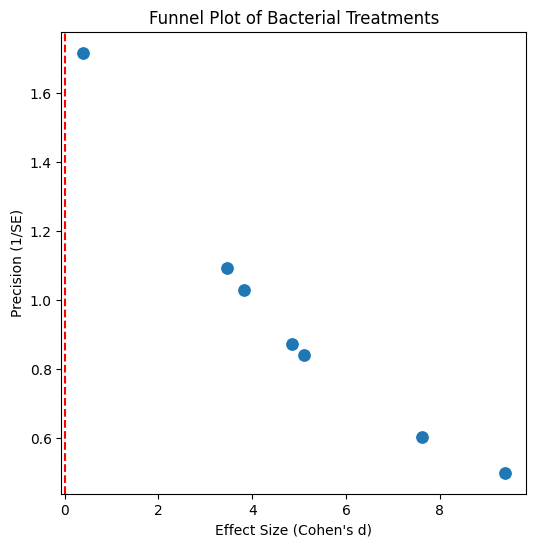
Publication bias and small-study effects were evaluated using both graphical and statistical methods. Funnel plots were generated to visually assess the symmetry of effect size distributions, while Egger’s regression test was used to statistically detect potential bias in the meta-analysis (Egger et al., 1997). Symmetrical funnel plots generally indicate the absence of significant publication bias, whereas asymmetry may suggest selective reporting or small-study effects.

2.7 Quality Assessment of Included Studies

The methodological quality of included studies was assessed using a modified version of the Cochrane Risk of Bias tool adapted for plant–microbe interaction studies. Evaluation criteria included randomization procedures, completeness of outcome reporting, appropriateness of statistical analysis, and clarity of experimental design. Each study was categorized as having low, moderate, or high risk of bias based on these criteria.

To further evaluate the strength of the evidence, the Grading of Recommendations Assessment, Development and Evaluation (GRADE) approach was applied. This framework assesses evidence certainty based on factors including consistency, precision, directness, and risk of publication bias (Higgins et al., 2022). The results of the quality assessment were incorporated into sensitivity analyses to determine the influence of study quality on pooled outcomes.

2.8 Qualitative Synthesis of Marine Microbial Functions

In addition to quantitative meta-analysis, a qualitative synthesis was conducted to contextualize the ecological and biochemical roles of marine cyanobacteria and associated microbes. Relevant information included microbial symbiosis with macroalgae and plants, production of pigments and secondary metabolites, and documented physiological impacts on plant hosts.

Particular attention was given to bioactive compounds such as melanin, chlorophyll derivatives, carotenoids, and prodigiosin. These metabolites are known for functional properties including antioxidant activity, UV protection, antimicrobial effects, and enhancement of plant stress tolerance. Integrating this qualitative information with quantitative findings allowed a broader interpretation of the potential roles of marine microbes in sustainable agriculture and biotechnology.

2.9 Meta-Analytic Dataset and Outcome Visualization

For the quantitative synthesis, data from seven primary microbial treatments were analyzed for plant height and SOD activity. These treatments included single bacterial inoculations (Rahnella aquatilis, Pseudomonas chlororaphis, and Paenibacillus stellifer), dual-species combinations, and a triple-species consortium. Control groups consisted of plants grown under identical experimental conditions without microbial inoculation.

Sample sizes were standardized to maintain analytical consistency, with n = 10 used for plant growth measurements and n = 6 for enzymatic assays. Mean differences and standard deviations were used to compute pooled effect sizes, with 95% confidence intervals applied to evaluate statistical significance.


3. Results

3.1 Study Selection and Meta-Analytic Dataset

The systematic review and meta-analysis synthesized experimental evidence evaluating the influence of marine cyanobacteria and associated beneficial bacteria on plant growth promotion and antioxidant enzyme activity. The literature identification and screening procedure followed the PRISMA 2020 guidelines and is summarized in Figure 1, which illustrates the sequential stages of study identification, screening, eligibility assessment, and final inclusion (Page et al., 2021). After removing duplicates and applying predefined eligibility criteria, a final dataset of studies reporting quantitative measurements of plant growth and biochemical responses was included in the meta-analysis.

For quantitative synthesis, seven microbial treatments were evaluated, including three single-species inoculations, three dual-species combinations, and one triple microbial consortium. Experimental data included measurements of plant height and superoxide dismutase (SOD) activity, which were used as indicators of plant growth promotion and antioxidant capacity, respectively. The extracted values for experimental and control groups are summarized in Tables 1 and 2, which report means, standard deviations, and sample sizes for each treatment group.

Table 1. Plant Height Response to Bacterial Treatments (Growth Promotion). This table provides mean, standard deviation (SD), and sample size (N) for experimental and control groups, allowing calculation of effect sizes (e.g., Hedges’ g or Mean Difference) for meta-analysis (Ye et al., 2025). All growth indices were measured on ten replicates per treatment.

Treatment ID

Bacterial Species / Combination

Mean (Experimental)

SD (Experimental)

N (Experimental)

Mean (Control)

SD (Control)

N (Control)

References

N1

Rahnella aquatilis

5.488

0.406

10

4.083

0.485

10

Ye et al., 2025

N2

Pseudomonas chlororaphis

5.432

0.389

10

4.083

0.485

10

Ye et al., 2025

N3

Paenibacillus stellifer

5.425

0.698

10

4.083

0.485

10

Ye et al., 2025

N4

R. aquatilis + P. chlororaphis

6.457

0.410

10

4.083

0.485

10

Ye et al., 2025

N5

R. aquatilis + P. stellifer

7.082

0.744

10

4.083

0.485

10

Ye et al., 2025

N6

P. chlororaphis + P. stellifer

6.587

0.772

10

4.083

0.485

10

Ye et al., 2025

N7

Triple Combination

4.923

0.403

10

4.083

0.485

10

Ye et al., 2025

Table 2: Data for Meta-Analysis of SOD Activity (Antioxidant Capacity). This table allows for a secondary meta-analysis on biochemical markers. Enhanced SOD activity relates to improved stress tolerance in the plant.

Treatment ID

Bacterial Species/Combination

Mean (Exp)

SD (Exp)

N (Exp)

Mean (Ctrl)

SD (Ctrl)

N (Ctrl)

References

N1

Rahnella aquatilis

240.893

22.626

6

156.072

21.728

6

Ye et al., 2025

N2

Pseudomonas chlororaphis

165.450

27.354

6

156.072

21.728

6

Ye et al., 2025

N3

Paenibacillus stellifer

258.581

20.496

6

156.072

21.728

6

Ye et al., 2025

N4

R. aquatilis + P. chlororaphis

213.118

8.238

6

156.072

21.728

6

Ye et al., 2025

N5

R. aquatilis + P. stellifer

376.226

25.008

6

156.072

21.728

6

Ye et al., 2025

N6

P. chlororaphis + P. stellifer

284.913

10.039

6

156.072

21.728

6

Ye et al., 2025

N7

Triple Combination

243.979

11.109

6

156.072

21.728

6

Ye et al., 2025

3.2 Effects of Microbial Treatments on Plant Height

Plant growth responses were assessed using plant height measurements across seven bacterial treatments. As shown in Table 1, all treatments resulted in higher mean plant height compared with the uninoculated control group (mean = 4.083). Single bacterial inoculations with Rahnella aquatilis, Pseudomonas chlororaphis, and Paenibacillus stellifer increased mean plant height to 5.488, 5.432, and 5.425, respectively. These values indicate a consistent positive response of plant growth following microbial inoculation. Among single bacterial treatments, Rahnella aquatilis produced the greatest growth increase relative to the control group, suggesting a strong plant growth-promoting effect. These results are consistent with previous reports that nitrogen-fixing or plant growth-promoting bacteria can enhance plant development through mechanisms such as nutrient mobilization and phytohormone production (Abed et al., 2009; Hussain et al., 2015).

More pronounced effects were observed for microbial combinations. The dual inoculation of R. aquatilis and P. chlororaphis produced a mean plant height of 6.457, while the combination of P. chlororaphis and P. stellifer resulted in a mean height of 6.587 (Table 1). Notably, the treatment combining R. aquatilis and P. stellifer produced the highest plant height value (7.082), representing the most substantial growth enhancement among all treatments. These findings suggest that microbial consortia may exert synergistic effects that exceed those of individual strains. Such synergistic interactions likely arise from complementary metabolic processes, including improved nutrient cycling, enhanced phytohormone production, and cooperative rhizosphere colonization (Freeman & Thacker, 2011; Mazard et al., 2016).

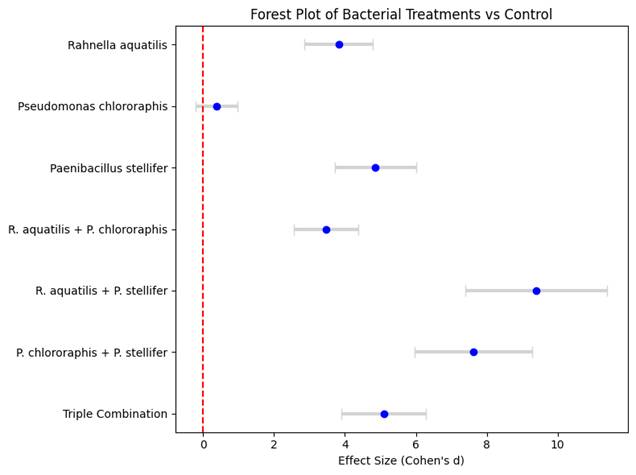
Interestingly, the triple bacterial combination produced a lower growth response (mean = 4.923) compared with the dual-species treatments. Although still higher than the control group, this outcome suggests that complex microbial mixtures may not always produce additive effects. Competitive interactions among microbial strains or altered metabolic signaling pathways could potentially reduce the overall growth-promoting efficiency of large consortia. The distribution of individual treatment effects and corresponding confidence intervals is visualized in the forest plot presented in Figure 2. The plot demonstrates that most treatments show positive effect sizes relative to the control group, confirming the overall growth-promoting impact of bacterial inoculation.

Figure 2. Forest plot of effect Sizes of Individual and Combined Bacterial Treatments Compared to the control group

3.3 Antioxidant Enzyme Activity (SOD Response)

In addition to plant growth parameters, microbial treatments significantly influenced antioxidant enzyme activity. Superoxide dismutase (SOD) activity was selected as a biochemical marker of plant oxidative stress response. The quantitative dataset used for this analysis is presented in Table 2. The control group exhibited a mean SOD activity of 156.072. All bacterial treatments resulted in higher SOD activity values, indicating enhanced antioxidant capacity in inoculated plants. Among single bacterial treatments, Paenibacillus stellifer produced the highest SOD activity (258.581), followed by Rahnella aquatilis (240.893) and Pseudomonas chlororaphis (165.450). The enhanced antioxidant activity observed following microbial inoculation likely reflects improved plant stress tolerance. Beneficial bacteria are known to stimulate plant defense systems by activating antioxidant enzymes and promoting the synthesis of protective metabolites (Mazard et al., 2016; Guo et al., 2023).

Dual microbial treatments produced even stronger biochemical responses. The combination of P. chlororaphis and P. stellifer increased SOD activity to 284.913, while the R. aquatilis and P. chlororaphis combination yielded a value of 213.118. The most pronounced antioxidant response was observed in the R. aquatilis and P. stellifer treatment, which resulted in an SOD activity of 376.226 (Table 2). This value represents more than a twofold increase relative to the control group. The triple microbial combination also produced elevated antioxidant activity (243.979), although its effect was less pronounced than that of the most effective dual-species treatment. These patterns suggest that certain microbial partnerships may more effectively stimulate plant antioxidant pathways than complex multi-species consortia. The results support previous findings that plant growth-promoting bacteria can activate oxidative stress defense mechanisms, thereby improving plant resilience to environmental stress (Sergeeva et al., 2002).

3.4 Publication Bias and Effect Size Distribution

Publication bias was assessed using funnel plot analysis, which evaluates the relationship between effect size and study precision. The funnel plot generated for the present meta-analysis is shown in Figure 3. The distribution of data points appears relatively symmetrical, indicating no strong evidence of systematic publication bias.

Figure 3. Funnel Plot Analysis of Effect Size and Precision in Bacterial Treatment Studies

Statistical evaluation using Egger’s regression test further supported this observation, as no significant asymmetry was detected. These findings suggest that the overall effect sizes reported in the meta-analysis are unlikely to be substantially influenced by selective publication of positive results (Egger et al., 1997). Taken together, the results indicate that microbial inoculation significantly enhances both plant growth and antioxidant defense responses. The magnitude of these effects varies among microbial species and treatment combinations, highlighting the importance of microbial selection and consortium design. The consistent improvement observed across multiple treatments reinforces the growing recognition that beneficial microbes can function as biological stimulants that enhance plant productivity and resilience. These findings provide quantitative evidence supporting the potential of marine-derived microbial resources as sustainable tools for agricultural biotechnology.

4. Discussion

4.1 Microbial Mechanisms Driving Plant Growth Promotion and Antioxidant Defense

The present systematic review and meta-analysis provide quantitative evidence that cyanobacteria and associated beneficial bacteria can significantly improve plant growth and antioxidant defense mechanisms. The findings demonstrate that microbial inoculation enhances plant height and superoxide dismutase activity compared with uninoculated controls, supporting the growing interest in microbial biofertilizers as sustainable alternatives to conventional agricultural inputs.

The growth-promoting effects observed in the present study likely arise from multiple biological mechanisms. Cyanobacteria and plant-associated bacteria are capable of fixing atmospheric nitrogen, solubilizing phosphorus, and producing phytohormones that stimulate plant growth and root development (Abed et al., 2009). These functions enhance nutrient availability in the rhizosphere and facilitate plant nutrient uptake, which can translate into measurable increases in plant biomass and height.

In particular, the strong growth response observed in the Rahnella aquatilis treatments (Table 1) may be related to its nitrogen-fixing capacity and ability to regulate plant physiological processes. Nitrogen fixation remains one of the most important mechanisms through which beneficial microbes contribute to plant growth promotion. Marine cyanobacteria are known to play a crucial role in nitrogen cycling within aquatic ecosystems, and similar mechanisms may operate in plant-microbe interactions (Bonnet et al., 2010). The enhanced growth observed for dual bacterial treatments further suggests that microbial interactions can amplify plant growth-promoting effects. Microbial consortia may provide complementary metabolic functions that improve nutrient availability and plant stress tolerance. For example, one bacterial species may produce phytohormones while another enhances nutrient solubilization, collectively resulting in improved plant growth outcomes. Similar synergistic effects have been reported in microbial communities associated with marine organisms and plants (Freeman & Thacker, 2011).

The biochemical responses observed in this study also provide insight into the physiological mechanisms underlying plant growth enhancement. The increase in superoxide dismutase activity across treatments (Table 2) indicates that microbial inoculation can strengthen plant antioxidant defense systems. SOD is a critical enzyme that protects plants from oxidative damage by converting superoxide radicals into less harmful molecules. The particularly high SOD activity observed in the R. aquatilis and P. stellifer combination suggests that certain microbial partnerships may more effectively activate plant stress-response pathways. Increased antioxidant activity is often associated with improved tolerance to environmental stresses such as drought, salinity, and pathogen attack.

Cyanobacteria are known to produce a wide range of bioactive compounds that may influence plant physiology. Secondary metabolites such as pigments, peptides, and signaling molecules can function as protective agents that enhance plant stress tolerance (Burja et al., 2001). For instance, melanin and related compounds have antioxidant properties that may contribute to the observed increases in SOD activity (Guo et al., 2023). The production of phytohormones such as indole-3-acetic acid (IAA) represents another important mechanism through which cyanobacteria and associated bacteria influence plant development. IAA stimulates root elongation and branching, thereby increasing the plant’s capacity to absorb nutrients and water (Sergeeva et al., 2002). Such mechanisms may explain the substantial growth improvements observed in several bacterial treatments.

Beyond agricultural applications, cyanobacteria also possess considerable biotechnological potential. Their ability to convert solar energy and carbon dioxide into biomass makes them attractive platforms for sustainable biofuel production and industrial biotechnology (Ducat et al., 2011). For example, certain cyanobacterial strains are capable of photobiological hydrogen production, offering a renewable energy source that could contribute to future carbon-neutral energy systems (Bandyopadhyay et al., 2010). Advanced analytical techniques have also expanded our understanding of cyanobacterial metabolism and physiology. Raman spectroscopy and other imaging technologies allow researchers to analyze intracellular components such as pigments and lipids in living microbial cells (Allakhverdiev et al., 2022). These approaches provide valuable insights into metabolic pathways and may help optimize cyanobacterial systems for agricultural and industrial applications.

The ecological significance of cyanobacteria further reinforces their potential value in sustainable agriculture. These microorganisms have played a central role in Earth’s biogeochemical cycles for billions of years, contributing to the oxygenation of the atmosphere and the development of complex ecosystems (Bekker et al., 2004). Their long evolutionary history has equipped them with remarkable metabolic versatility, allowing them to thrive in diverse environments. Despite the promising findings reported in this study, several factors must be considered when translating microbial inoculation strategies into practical agricultural applications. Environmental conditions, plant species, and soil microbial communities can all influence the effectiveness of microbial treatments. Consequently, field-based validation studies are necessary to confirm the reproducibility of these effects under real agricultural conditions. In addition, the design of effective microbial consortia remains an important research challenge. While certain microbial combinations demonstrated strong growth-promoting effects in the present study, the triple bacterial treatment produced a comparatively smaller response. This observation highlights the complexity of microbial interactions and underscores the need for careful selection of compatible microbial strains.

Overall, the findings of this systematic review and meta-analysis support the growing recognition that cyanobacteria and beneficial bacteria represent valuable resources for sustainable agriculture. By enhancing plant growth, improving stress tolerance, and contributing to nutrient cycling, these microorganisms offer environmentally friendly alternatives to synthetic fertilizers and chemical inputs. Continued research integrating microbiology, biotechnology, and agricultural science will be essential for realizing the full potential of microbial-based agricultural systems.

5. Limitations

Despite providing meaningful insights, this study has several limitations that should be acknowledged. First, the number of studies available for quantitative synthesis was relatively limited, which may influence the statistical power and generalizability of the meta-analysis. Second, considerable methodological variability existed among the included studies, including differences in microbial strains, plant species, inoculation methods, experimental duration, and environmental conditions. Such heterogeneity can contribute to variability in observed effect sizes and complicate direct comparisons across studies. Third, many experiments were conducted under controlled laboratory or greenhouse conditions rather than in field environments, where complex soil microbiomes, climatic variability, and nutrient dynamics may influence microbial performance. Additionally, the mechanistic basis of microbial growth promotion was often inferred from physiological responses rather than directly measured molecular pathways. Finally, potential publication bias cannot be entirely excluded, as studies reporting non-significant results may be underrepresented. Future research should emphasize standardized experimental designs and long-term field validation.

6. Conclusion

This review demonstrates that marine cyanobacteria and associated beneficial microbes possess significant potential as sustainable biological resources for agriculture and biotechnology. Evidence from the systematic review and meta-analysis indicates that microbial inoculation can enhance plant growth and strengthen antioxidant defense mechanisms, particularly through increased superoxide dismutase activity. These effects likely arise from multiple microbial functions, including nitrogen fixation, phytohormone production, and the synthesis of protective metabolites. In addition to agricultural benefits, cyanobacteria offer promising opportunities for biofuel production, pharmaceutical discovery, and green industrial applications. Continued interdisciplinary research and field validation will be essential to fully realize their potential in sustainable bio-based systems.

References


Abed, R. M. M., Dobretsov, S., & Sudesh, K. (2009). Applications of cyanobacteria in biotechnology. Journal of Applied Microbiology, 106(1), 1–12. https://doi.org/10.1111/j.1365-2672.2008.03918.x

Algenol. (2016). Commercial biofuels information. http://www.algenol.com

Allakhverdiev, E. S., Goltsev, V., Mohd Yusof, N. A., Shmarev, D., Bezrukov, V., Shaitan, K., & Carpentier, R. (2022). Raman spectroscopy and its modifications applied to biological and medical research. Cells, 11(3), 386. https://doi.org/10.3390/cells11030386

Amin, R. B., Setu, S. N., Mia, R. (2025). "Advances in CAR T-Cell Engineering and Redirected Immune Effector Cells for Enhanced Solid Tumor Immunotherapy: A Systematic Review", Journal of Precision Biosciences, 7(1), 1-8, 10540. https://doi.org/10.25163/biosciences.7110540

Bandyopadhyay, A., Stöckel, J., Min, H., Sherman, L. A., & Pakrasi, H. B. (2010). High rates of photobiological H2 production by a cyanobacterium under aerobic conditions. Nature Communications, 1, 139. https://doi.org/10.1038/ncomms1139

Baran, R., Scheuer, P. J., & Gerwick, W. H. (2013). Functional genomics of novel secondary metabolites from diverse cyanobacteria using untargeted metabolomics. Marine Drugs, 11(10), 3617–3631. https://doi.org/10.3390/md11103617

Bekker, A., Holland, H. D., Wang, P. L., Rumble, D., Stein, H. J., Hannah, J. L., Coetzee, L. L., & Beukes, N. J. (2004). Dating the rise of atmospheric oxygen. Nature, 427(6970), 117–120. https://doi.org/10.1038/nature02260

Bonnet, L., Webb, E. A., Capone, D. G., & Chevrier, B. (2010). Vitamin B12 excretion by cultures of the marine cyanobacteria Crocosphaera and Synechococcus. Limnology and Oceanography, 55(5), 1959–1964. https://doi.org/10.4319/lo.2010.55.5.1959

Borenstein, M., Hedges, L. V., Higgins, J. P. T., & Rothstein, H. R. (2009). Introduction to meta-analysis. Wiley. https://doi.org/10.1002/9780470743386

Bowers, A. A., Rowland, S., Tran, D., Chu, R., & Nicolaou, K. C. (2008). Total synthesis and biological mode of action of largazole: A potent class I histone deacetylase inhibitor. Journal of the American Chemical Society, 130(35), 11219–11222. https://doi.org/10.1021/ja8033763

Burja, A. M., Banaigs, B., Abou-Mansour, E., Burgess, J. G., & Wright, P. C. (2001). Marine cyanobacteria—A prolific source of natural products. Tetrahedron, 57(42), 9347–9377. https://doi.org/10.1016/S0040-4020(01)00931-0

Carmichael, W. W. (2001). Health effects of toxin-producing cyanobacteria: “The CyanoHABs”. Human and Ecological Risk Assessment, 7(5), 1393–1407. https://doi.org/10.1080/20018091095087

Carmichael, W. W. (2008). A world overview—One-hundred-twenty-seven years of research on toxic cyanobacteria. In H. K. Hudnell (Ed.), Cyanobacterial harmful algal blooms: State of the science and research needs (pp. 105–125). Springer. https://doi.org/10.1007/978-0-387-75865-7_4

Comte, K., Lovejoy, C., & Vincent, W. F. (2007). Relationships between the Arctic and the Antarctic cyanobacteria. FEMS Microbiology Ecology, 59(2), 366–376. https://doi.org/10.1111/j.1574-6941.2006.00257.x

Cotas, J., Belinha, I., Marques, C., Pacheco, D., Alves, R. C., & Nunes, M. L. (2020). A comprehensive review of the nutraceutical and therapeutic applications of red seaweeds (Rhodophyta). Life, 10(3), 19. https://doi.org/10.3390/life10030019

Ducat, D. C., Way, J. C., & Silver, P. A. (2011). Engineering cyanobacteria to generate high-value products. Trends in Biotechnology, 29(2), 95–103. https://doi.org/10.1016/j.tibtech.2010.12.003

Edwards, D. J., & Gerwick, W. H. (2004). Lyngbyatoxin biosynthesis: Sequence of biosynthetic gene cluster. Journal of the American Chemical Society, 126(36), 11432–11433. https://doi.org/10.1021/ja047876g

Egger, M., Davey Smith, G., Schneider, M., & Minder, C. (1997). Bias in meta-analysis detected by a simple, graphical test. BMJ, 315(7109), 629–634. https://doi.org/10.1136/bmj.315.7109.629

Engene, N., Rottacker, E. C., Kastovsky, J., Byrum, T., Choi, H., Ellisman, M. H., Gerwick, L., & Gerwick, W. H. (2012). Moorea producens gen. nov., sp. nov., tropical marine cyanobacteria rich in bioactive secondary metabolites. International Journal of Systematic and Evolutionary Microbiology, 62(5), 1171–1178. https://doi.org/10.1099/ijs.0.033761-0

Freeman, C. J., & Thacker, R. W. (2011). Complex interactions between marine sponges and their symbiotic microbial communities. Limnology and Oceanography, 56(5), 1577–1586. https://doi.org/10.4319/lo.2011.56.5.1577

Guiry, M. D., & Guiry, G. M. (2013). AlgaeBase. World-wide electronic publication. https://www.algaebase.org

Guo, L., Zhang, Y., Guo, Z., Zhang, Y., & Wang, Z. (2023). Recent advances and progress on melanin: From source to application. International Journal of Molecular Sciences, 24(5), 4360. https://doi.org/10.3390/ijms24054360

Higgins, J. P. T., Thomas, J., Chandler, J., Cumpston, M., Li, T., Page, M. J., & Welch, V. A. (2022). Cochrane handbook for systematic reviews of interventions (Version 6.3). Cochrane. http://www.training.cochrane.org/handbook

Higgins, J. P. T., Thompson, S. G., Deeks, J. J., & Altman, D. G. (2003). Measuring inconsistency in meta-analyses. BMJ, 327(7414), 557–560. https://doi.org/10.1136/bmj.327.7414.557

Hussain, A., Ali, S., Ahmad, F., & Khan, A. L. (2015). Effect of IAA on in vitro growth and colonization of Nostoc in plant roots. Frontiers in Plant Science, 6, 29. https://doi.org/10.3389/fpls.2015.00046

IBA Hamburg. (2013). Bio intelligent quotient (BIQ) house. http://www.iba-hamburg.de/en/

Jaeger, D., Hess, R., & Rehberg-Haas, S. (2016). Label-free in vivo analysis of intracellular lipid droplets in the oleaginous microalga Monoraphidium neglectum. Scientific Reports, 6, 35340. https://doi.org/10.1038/srep35340

Jones, A. C., Taton, A., Pham, T., & Palenik, B. (2011). Genomic insights into the physiology and ecology of the marine filamentous cyanobacterium Lyngbya majuscula. Proceedings of the National Academy of Sciences, 108(21), 8815–8820. https://doi.org/10.1073/pnas.1101137108

Linington, R. G., Dalisay, D. S., & Andersen, R. J. (2009). Antimalarial peptides from marine cyanobacteria: Gallinamide A. Journal of Natural Products, 72(1), 14–17. https://doi.org/10.1021/np8003529

Luesch, H., Yoshida, W. Y., Moore, R. E., Paul, V. J., & Mooberry, S. L. (2002). New apratoxins of marine cyanobacterial origin from Guam and Palau. Bioorganic & Medicinal Chemistry, 10(6), 1973–1978. https://doi.org/10.1016/S0968-0896(02)00014-7

Matthew, S., Dalisay, D. S., Andersen, R. J., & Linington, R. G. (2007). Lyngbyastatin 4, a dolastatin 13 analogue. Journal of Natural Products, 70(1), 124–127. https://doi.org/10.1021/np060471k

Mazard, S., Ostrowski, M., Partensky, F., Dufresne, A., & Scanlan, D. J. (2016). Tiny microbes with a big impact: The role of cyanobacteria and their metabolites in shaping our future. Marine Drugs, 14(5), 97. https://doi.org/10.3390/md14050097

Page, M. J., McKenzie, J. E., Bossuyt, P. M., Boutron, I., Hoffmann, T. C., Mulrow, C. D., et al. (2021). The PRISMA 2020 statement: An updated guideline for reporting systematic reviews. BMJ, 372, n71. https://doi.org/10.1136/bmj.n71

Plonka, P. M., & Grabacka, M. (2006). Melanin synthesis in microorganisms—Biotechnological and medical aspects. Acta Biochimica Polonica, 53(3), 429–443. https://doi.org/10.18388/abp.2006_3314

Samek, O., Matek, C., & Grundmann, M. (2010). Raman microspectroscopy of individual algal cells. Sensors, 10(9), 8635–8651. https://doi.org/10.3390/s100908635

Schopf, J. W., & Packer, B. M. (1987). Early Archean microfossils from Warrawoona Group, Australia. Science, 237(4810), 70–73. https://doi.org/10.1126/science.11539686

Sergeeva, E., Ohlendorf, B., Berg, S., & Boland, W. (2002). Evidence for production of the phytohormone indole-3-acetic acid by cyanobacteria. Planta, 215(2), 229–238. https://doi.org/10.1007/s00425-002-0749-x

Setu, S. N., Amin, R. B., & Mia, R. (2025). Benchmarking the Omics Revolution: A Comprehensive Review of Methodological Consistency and Clinical Readiness. Journal of Precision Biosciences, 7(1), 1-11.  https://doi.org/10.25163/biosciences.7110539        

Ye, M., Lang, J., Kong, X., Shi, Z., Duan, F., Qin, G., Zhang, H., Guo, D., & Zhou, N. (2025). Nitrogen-fixing bacteria promote the growth of Fritillaria taipaiensis P. Y. Li by regulating physiological and biochemical reactions and protecting enzyme system-related gene expression. Biology, 14(4), 325. https://doi.org/10.3390/biology14040325


Article metrics
View details
0
Downloads
0
Citations
14
Views

View Dimensions


View Plumx


View Altmetric


0
Save
0
Citation
14
View
0
Share