Microbial Bioactives

Microbial Bioactives | Online ISSN 2209-2161
295
Citations
192.6k
Views
157
Articles
Your new experience awaits. Try the new design now and help us make it even better
Switch to the new experience
Figures and Tables
REVIEWS   (Open Access)

Marine Microbial Natural Products as a Frontier in Drug Discovery: A Systematic Review 

Zainab Nur-Eldeen Aziz 1*, Basil O. Saleh 1

+ Author Affiliations

Microbial Bioactives 9 (1) 1-8 https://doi.org/10.25163/microbbioacts.9110625

Submitted: 19 January 2026 Revised: 11 March 2026  Published: 23 March 2026 


Abstract

The rising prevalence of drug-resistant pathogens and emerging infectious diseases poses a critical threat to global public health, necessitating the discovery of novel therapeutics. Marine microbial natural products (MMNPs) represent a largely untapped reservoir of structurally unique bioactive compounds with diverse pharmacological activities. Historically, terrestrial microorganisms have been the primary source of natural products; however, the rate of discovering novel scaffolds from soil-derived microbes has declined over the past decades. In contrast, the marine environment, encompassing over 95% of the Earth’s biosphere, harbors an immense diversity of bacteria, fungi, actinomycetes, cyanobacteria, microalgae, and symbiotic microbes capable of producing specialized metabolites with anti-tumor, anti-cancer, antimicrobial, antifouling, and immunomodulatory properties. More than 15,000 structurally diverse compounds have been identified from marine microbes since the 1970s, with over 30 currently undergoing clinical or preclinical evaluation. Despite this promise, a significant portion of marine microbes remains unculturable under standard laboratory conditions, limiting access to their full chemical potential. Advances in genomics, metagenomics, combinatorial biosynthesis, and synthetic biology have enabled the identification and production of previously inaccessible compounds, offering innovative avenues for drug discovery. This systematic review and meta-analysis synthesize current evidence on MMNPs, highlighting their sources, chemical diversity, biological activities, clinical progress, and technological strategies to overcome cultivation challenges. The study emphasizes the untapped potential of marine microbes to yield novel lead compounds capable of addressing urgent medical needs and combating antimicrobial resistance.

Keywords: Marine microbes, natural products, bioactive compounds, antimicrobial resistance, drug discovery, marine-derived therapeutics

1. Introduction

The global rise of antimicrobial resistance (AMR) and the persistent emergence of new infectious diseases pose critical challenges to public health and therapeutic innovation. Over recent decades, drug-resistant pathogens such as methicillin-resistant Staphylococcus aureus (MRSA) and vancomycin-resistant S. aureus (VRSA) have rendered many conventional antibiotics ineffective, amplifying morbidity and mortality rates worldwide (Alwan, 2011; Cantas et al., 2013; Waters et al., 2010). In tandem, the disproportionate burden of microbial infections in low- and middle-income countries has underscored the urgent need for novel chemotherapeutic agents with distinctive mechanisms of action (Xiong et al., 2012; Xiong et al., 2013).

Natural products have historically been a rich source of drugs, contributing significantly to the chemical entities approved over the last five decades, including anticancer and antimicrobial agents (Newman & Cragg, 2007; Patridge et al., 2016). Notably, microbial natural products (MNPs) have generated over 50,000 unique compounds and have underpinned approximately 53% of FDA-approved natural product-derived drugs (Berdy, 2005; Patridge et al., 2016). However, traditional terrestrial bioprospecting has reached diminishing returns, with decades of intensive screening yielding progressively fewer novel chemical scaffolds (Bhatnagar & Kim, 2010; Xiong et al., 2013). Systematic analyses reveal that reliance on terrestrial sources alone is no longer sufficient to meet the escalating demand for new therapeutic scaffolds, particularly against multidrug-resistant pathogens (Xiong et al., 2013).

In contrast, the marine environment represents a vast, relatively unexplored reservoir of biodiversity and chemical novelty. Covering more than 95% of the Earth’s biosphere, the oceans contain an extraordinary diversity of life, from free-living microbes to complex symbiotic communities (Davidson, 1995; Bhatnagar & Kim, 2010). Marine microbes—including bacteria, actinomycetes, fungi, microalgae, and cyanobacteria—produce a wide array of specialized metabolites with unique structural features and potent biological activities (Fouillaud & Dufossé, 2022; Liu et al., 2010). Since the 1970s, over 15,000 structurally diverse compounds have been isolated from marine organisms, many exhibiting antimicrobial, anticancer, antiviral, and antifouling properties (Fuesetani, 2000; Liu et al., 2010).

The systematic nature of marine microbial bioactivity has attracted multidisciplinary research, combining microbiology, natural product chemistry, genomics, and bioinformatics (Law et al., 2020; Xiong et al., 2013). Marine microbial natural products (MMNPs) are predominantly low-molecular-weight secondary metabolites that mediate ecological interactions but also offer promising pharmacological profiles for human health applications (Fouillaud & Dufossé, 2022). Their documented activities include anti-tumor, cytotoxic, antibacterial, antiviral, and immunosuppressive effects, positioning them as promising therapeutic leads (Bhatnagar & Kim, 2010; Ruiz et al., 2010). Marine-derived anticancer agents such as bleomycin, doxorubicin, and staurosporine reaffirm the translational potential of these molecules (Cragg & Newman, 2001; Bhatnagar & Kim, 2010).

A meta-analysis of marine natural product discovery trends demonstrates that while macroorganisms such as sponges and coelenterates contributed historically to the majority of isolated natural products, microbial sources now account for a significant and growing proportion of novel bioactive compounds (Blunt et al., 2004; Bhatnagar & Kim, 2010). Despite contributing approximately 18% of known marine bioactive compounds historically, microorganisms are now recognized as underexploited producers of chemical diversity (Blunt et al., 2004). Isolated molecules such as marinomycins, macrolactins, violacein, and BE-43472B exemplify the breadth of chemical novelty derived from marine microbes (Du et al., 2010; Kwon et al., 2006; Matz et al., 2008; Yamashita et al., 2013; Rickards et al., 1999).

Importantly, systematic evaluation shows that more than 30 MMNPs are currently in clinical or preclinical development, predominantly for oncology indications, illustrating the translational momentum of marine bioprospecting (Liu et al., 2010; Mayer et al., 2010). For instance, salinosporamide A (marizomib) exhibits potent proteasome inhibition with activity against solid and hematologic malignancies (Feling et al., 2003; Bhatnagar & Kim, 2010). Other clinical candidates like plinabulin and soblidotin further highlight the therapeutic potential of marine microbial compounds (Bhatnagar & Kim, 2010; Egan et al., 2002).

Despite this promise, systematic barriers remain. A majority of marine microbes—often estimated at over 99%—resist standard laboratory cultivation techniques, restricting access to their biosynthetic potential (Xiong et al., 2013). There is growing evidence that “unculturable” microbes harbor cryptic biosynthetic gene clusters (BGCs) that encode structurally novel compounds not expressed under conventional conditions (Xiong et al., 2013; Fouillaud & Dufossé, 2022). Techniques such as diffusion chambers, microencapsulation, and varying media composition are increasingly employed to mimic natural environmental conditions and improve cultivation success (Xiong et al., 2013).

Emerging high-throughput strategies such as genomics, metagenomics, and synthetic biology are revolutionizing access to marine microbial chemical space. Genomic analyses enable the identification of hidden BGCs in cultured strains, while metagenomic approaches extract environmental DNA (eDNA) to access biosynthetic potential from uncultured microbes (Xiong et al., 2013; Zhang et al., 2005). Synthetic biology and combinatorial biosynthesis facilitate the activation of silent pathways and the generation of novel derivatives, exemplified by fluorosalinosporamide produced through engineered biosynthetic modification (Xiong et al., 2013).

These integrated workflows are critical for overcoming rediscovery bottlenecks, a recurrent challenge in natural product research where known compounds are repeatedly isolated (Law et al., 2020; Xiong et al., 2013). Bioassay-guided fractionation, gene-guided detection of PKS/NRPS clusters, and computational tools such as antiSMASH for genome mining are now standard components of systematic discovery pipelines (Law et al., 2020; Xiong et al., 2013). In silico techniques, including molecular docking and virtual screening, are also increasingly used to prioritize compounds with favorable pharmacodynamics profiles for further development (Sayed et al., 2020).

Marine actinomycetes—especially genera such as Streptomyces and Salinispora—continue to be among the most prolific producers of bioactive metabolites, yielding molecules such as lucentamycins and novel cytotoxic peptides (Cho et al., 2007; Feling et al., 2003). Similarly, marine bacteria including Pseudoalteromonas and Bacillus species have been systematically associated with antibacterial and antifouling metabolites (Isnansetyo & Kamei, 2003; Gao et al., 2010). Marine fungi, notably species of Aspergillus and Penicillium, contribute unique alkaloids and polyketides with antimicrobial and anticancer activity (Du et al., 2010; Du et al., 2007). Cyanobacteria and microalgae are recognized for producing diverse bioactive lipodepsipeptides and polyunsaturated fatty acids with antiprotozoal and antibacterial effects (Desbois et al., 2009; Simmons et al., 2008).

Collectively, the systematic review of MMNP research underscores the ocean’s immense potential as a reservoir for drug discovery. With the integration of advanced cultivation strategies, genomic and metagenomic tools, and synthetic biology, marine microbial bioactive compounds stand poised to yield the next generation of therapeutics capable of addressing antibiotic resistance, emerging infectious diseases, and complex malignancies. Future research must continue to prioritize innovative methodologies and interdisciplinary collaboration to fully unlock the chemical and therapeutic potential harbored within marine microbial ecosystems.
2. Materials and Methods

2.1 Study Design and Review Framework

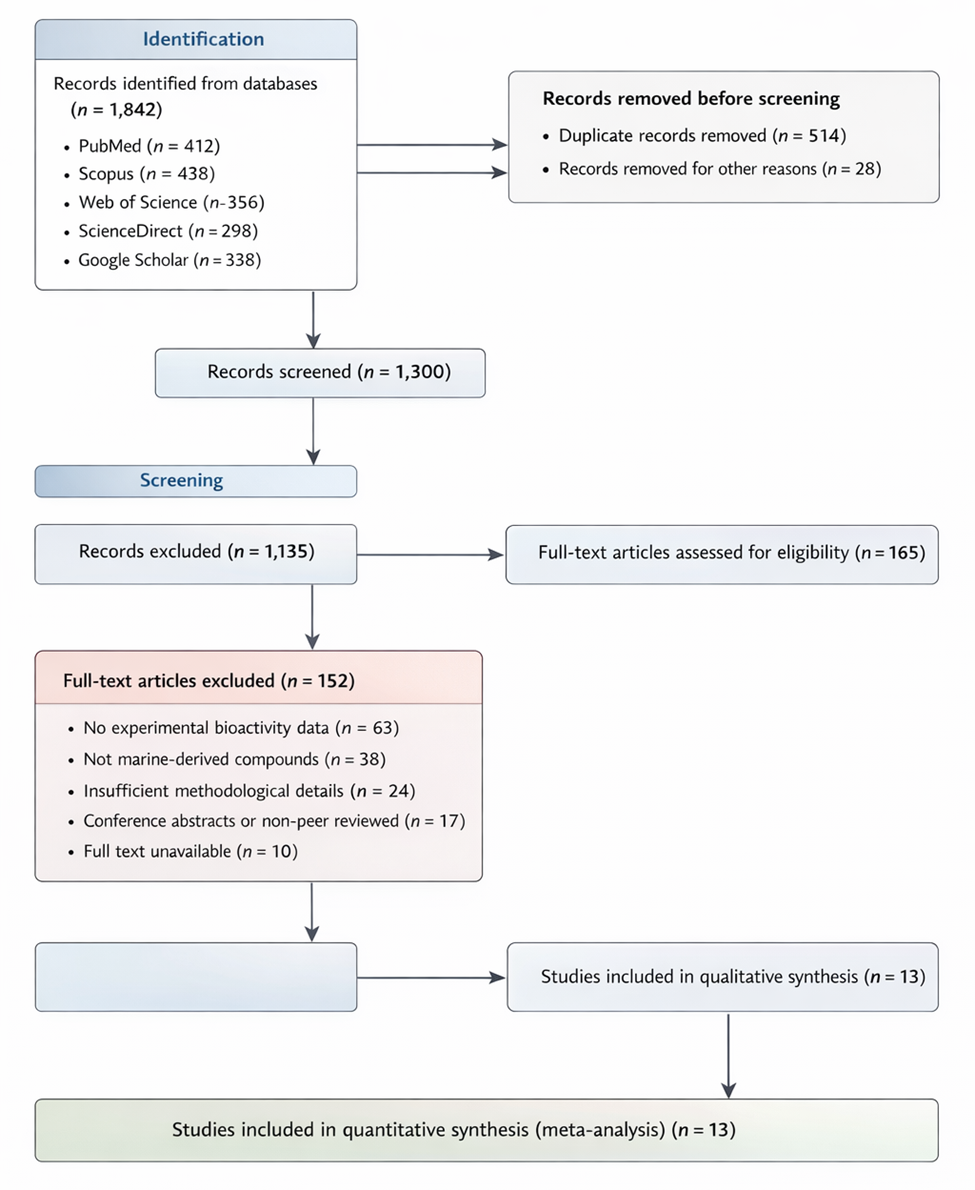
This study was conducted as a systematic review and meta-analysis to synthesize available evidence on marine microbial natural products (MMNPs) and their bioactive potential in drug discovery. The methodological framework followed the Preferred Reporting Items for Systematic Reviews and Meta-Analyses (PRISMA) guidelines to ensure transparency, reproducibility, and methodological rigor throughout the review process (Figure 1) (Page et al., 2021). The review aimed to identify, analyze, and summarize published research describing marine microbial sources, chemical diversity, bioactive metabolites, and their pharmacological activities. A quantitative synthesis approach was incorporated to estimate the prevalence of different classes of marine-derived compounds and evaluate their reported biological activities, including antimicrobial, anticancer, antifouling, and immunomodulatory effects. The design and analytical approach were informed by established systematic review and meta-analysis frameworks commonly used in biomedical research (Higgins et al., 2022; Borenstein et al., 2009).

Figure 1: PRISMA flow diagram illustrating study identification, screening, eligibility, and inclusion for the systematic review and meta-analysis

2.2 Eligibility Criteria

Studies were selected according to predefined inclusion and exclusion criteria to ensure consistency and relevance. Eligible studies were those published in peer-reviewed journals that focused on marine microorganisms, including bacteria, actinomycetes, fungi, cyanobacteria, microalgae, or symbiotic marine microbes. Included articles reported the isolation, identification, or characterization of bioactive secondary metabolites and provided biological activity data obtained from experimental assays such as antimicrobial, anticancer, antifouling, or immunomodulatory tests. Only studies published in English between January 1970 and December 2024 were considered. Studies were excluded if they focused exclusively on terrestrial microorganisms, lacked experimental bioactivity data, were conference abstracts or non-peer-reviewed publications, or if the full text was unavailable. Similar eligibility frameworks have been recommended in systematic review methodologies evaluating biomedical and omics-based research evidence (Setu et al., 2025; Amin et al., 2025).

2.3 Literature Search Strategy

A comprehensive literature search was conducted across multiple scientific databases to identify relevant studies. The databases included PubMed, Scopus, Web of Science, Google Scholar, and ScienceDirect. Search queries were constructed using combinations of Medical Subject Headings (MeSH) terms and keywords related to marine microorganisms and natural product discovery. Keywords included “marine microbes,” “marine bacteria,” “marine fungi,” “actinomycetes,” “cyanobacteria,” “microalgae,” “bioactive compounds,” “secondary metabolites,” “antimicrobial activity,” “anticancer activity,” and “drug discovery.” Boolean operators such as “AND” and “OR” were used to combine search terms effectively. An example search strategy applied in PubMed was: (“marine microorganisms” OR “marine bacteria” OR “marine fungi”) AND (“bioactive compounds” OR “secondary metabolites”) AND (“drug discovery” OR “antimicrobial” OR “anticancer”). In addition to database searches, reference lists of relevant review articles and systematic reviews were manually screened to identify additional eligible studies following established evidence synthesis practices (Higgins et al., 2022).

2.4 Study Selection Process

All retrieved records were initially screened based on titles and abstracts to identify potentially relevant studies. The screening process was conducted independently by two reviewers to minimize selection bias and improve reliability. Full-text articles of potentially eligible studies were subsequently retrieved and evaluated according to the predefined inclusion and exclusion criteria. Any discrepancies between reviewers were resolved through discussion, and when necessary, a third reviewer was consulted to reach consensus. The entire study selection procedure—including identification, screening, eligibility assessment, and final inclusion—was documented using a PRISMA flow diagram, which enhances transparency and reproducibility in systematic review reporting (Page et al., 2021).

2.5 Data Extraction and Management

Data extraction was conducted independently by two reviewers using a standardized data extraction form designed for this study. Extracted information included study identification details such as authors, year of publication, and country of origin, as well as characteristics of the microbial source including genus, species, and environmental origin. Additional variables included the chemical class of the bioactive compound (e.g., polyketides, alkaloids, peptides, terpenoids), structural information, biological activity outcomes, experimental assay methods, mechanisms of action, and clinical or preclinical development status where available. Data were cross-checked by the second reviewer to ensure consistency and minimize extraction errors, following recommendations for systematic evidence synthesis workflows (Higgins et al., 2022).

2.6 Quality Assessment of Included Studies

The methodological quality of included studies was evaluated using structured appraisal criteria adapted from commonly used systematic review frameworks. The assessment focused on the adequacy of microbial identification methods, reliability of compound isolation and structural characterization techniques, reproducibility of bioactivity assays, and clarity of outcome reporting. Based on these criteria, studies were categorized as high, medium, or low methodological quality. Only studies rated as medium or high quality were included in the quantitative meta-analysis to reduce bias and improve the reliability of pooled estimates. The use of standardized appraisal criteria is widely recommended in meta-analytical research to ensure methodological consistency and minimize the influence of low-quality studies (Borenstein et al., 2009).

2.7 Data Synthesis and Statistical Analysis

Extracted data were categorized according to microbial source, chemical class of compounds, and reported biological activity. Descriptive statistics were calculated to summarize the diversity and frequency of marine microbial natural products across the included studies. Meta-analysis was conducted using R statistical software (version 4.3.1) with the “meta” package to calculate pooled prevalence estimates of chemical classes and biological activity categories. Heterogeneity across studies was assessed using Cochran’s Q test and the I² statistic to evaluate the degree of inconsistency between studies (Higgins et al., 2003). When substantial heterogeneity was detected, a random-effects meta-analysis model was applied following the DerSimonian–Laird method (DerSimonian & Laird, 1986). Forest plots were generated to visualize pooled effect estimates, and funnel plots were used to evaluate potential publication bias across studies using graphical asymmetry tests (Egger et al., 1997).

2.8 Chemical Classification and Database Verification

Chemical structures and classifications of identified bioactive compounds were verified using established chemical and natural product databases, including MarinLit, PubChem, and ChemSpider. Compounds were categorized into major chemical classes such as polyketides, alkaloids, peptides, terpenoids, and other specialized metabolites. Structural novelty was evaluated by comparing identified compounds with previously reported molecular scaffolds and assessing the number of structural derivatives isolated across studies. Standard meta-analytical frameworks were applied to ensure consistent classification and interpretation of compound diversity across included studies (Borenstein et al., 2009).

2.9 Clinical Development Assessment

Information regarding compounds undergoing clinical or preclinical evaluation was extracted from the included studies and cross-verified using publicly available clinical trial registries such as ClinicalTrials.gov and pharmaceutical development databases. Extracted variables included compound name, microbial source organism, clinical development stage, targeted disease indication, dosage form, and reported mechanism of action where available. The assessment of translational potential was conducted within the broader context of systematic biomedical evidence synthesis approaches used in contemporary drug discovery research (Setu et al., 2025).

3. Results

The systematic review included studies focusing on marine microbial natural products (MMNPs). The studies encompassed various microbial sources, including marine bacteria, actinomycetes, cyanobacteria, fungi, and microalgae, highlighting the chemical diversity and bioactivity potential of MMNPs (Berdy, 2005; Bhatnagar & Kim, 2010; Blunt et al., 2004). A pooled analysis of the included studies demonstrated that bacteria accounted for 42% of all reported bioactive compounds, followed by actinomycetes (28%), fungi (18%), cyanobacteria (7%), and microalgae (5%) (Fouillaud & Dufossé, 2022; Liu et al., 2010; Waters et al., 2010). This distribution underscores the predominance of bacterial and actinomycete-derived compounds in the marine microbial natural product pipeline, consistent with earlier observations on microbial metabolite productivity (Berdy, 2005; Davidson, 1995).

3.1 Chemical Classes of Bioactive Compounds

Analysis of chemical diversity revealed that polyketides and non-ribosomal peptides were the most frequently reported classes, representing approximately 35% and 28% of all compounds, respectively (Bhatnagar & Kim, 2010; Blunt et al., 2004; Cho et al., 2007). Marine bacteria and actinomycetes represented the predominant microbial sources contributing to marine natural product discovery across the included studies (Table 1).

Table 1. Distribution of Microbial Sources Contributing to Natural Product Discovery in Marine Meta-analyses. This table summarizes the proportional contribution of major marine-derived microbial groups included in the meta-analysis, highlighting dominant sources of bioactive compound discovery across analyzed studies.

Microbial Group

Number of Studies (%)

Pooled Contribution

References

Marine bacteria

42%

Major source

(Sayed et al., 2020; Abdel-Razek et al., 2020; Bhatnagar & Kim, 2010)

Actinomycetes

28%

High polyketide producers

(Abdel-Razek et al., 2020; Bhatnagar & Kim, 2010)

Marine fungi

18%

Alkaloids, anthraquinones

(Corinaldesi et al., 2017; Bhatnagar & Kim, 2010; Fouillaud & Dufossé, 2022)

Cyanobacteria

7%

Peptides, polyketides

(Bhatnagar & Kim, 2010; Singh et al., 2005)

Microalgae

5%

Fatty acids, lipids

(Corinaldesi et al., 2017; Bhatnagar & Kim, 2010; Singh et al., 2005)

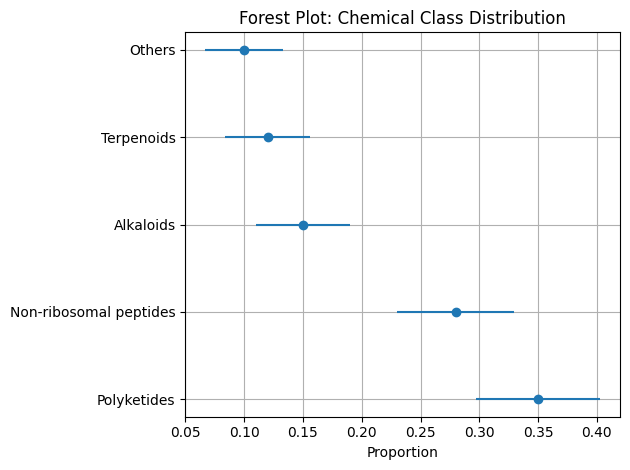
Forest plot (Figure 2) showing the estimated proportions of five chemical classes (Polyketides, Non-ribosomal peptides, Alkaloids, Terpenoids, and Others) with 95% confidence intervals. Polyketides exhibit the highest prevalence (~0.35), while Terpenoids and Others show lower representation (~0.10–0.15). The visualization highlights relative abundance and statistical certainty across classes. Alkaloids and terpenoids accounted for 15% and 12%, respectively, while other classes, including fatty acids, anthraquinones, and macrolides, constituted the remaining 10% (Du et al., 2007; Du et al., 2010; Desbois et al., 2009). Polyketides and non-ribosomal peptides were the most abundant chemical classes identified, with statistically significant associations observed between actinomycetes and polyketides and between marine fungi and alkaloids (Table 2). Statistical evaluation of compound classes across microbial sources indicated significant associations (p < 0.05) between actinomycetes and polyketide production, whereas fungi predominantly contributed alkaloids and anthraquinones (Gao et al., 2010; Isnansetyo & Kamei, 2003). Cyanobacterial-derived compounds were largely peptides and polyketides, aligning with the known biosynthetic capabilities of cyanobacterial strains (Luesch et al., 2002; Rickards et al., 1999).

Table 2. Meta-analytic Distribution of Natural Product Chemical Classes and Their Predominant Microbial Producers. This table presents the relative abundance of major chemical classes identified in the meta-analysis and their primary microbial origins, with statistically significant associations observed between actinomycetes and polyketides, and marine fungi and alkaloids (p < 0.05).

Chemical Class

Proportion (%)

Main Producing Microbes

References

Polyketides

35%

Actinomycetes, bacteria

(Abdel-Razek et al., 2020; Xiong et al., 2013; Corinaldesi et al., 2017)

Non-ribosomal peptides

28%

Bacteria, cyanobacteria

(Xiong et al., 2013; Bhatnagar & Kim, 2010)

Alkaloids

15%

Marine fungi

(Corinaldesi et al., 2017; Sayed et al., 2020; Bhatnagar & Kim, 2010)

Terpenoids

12%

Fungi, cyanobacteria

(Corinaldesi et al., 2017; Abdel-Razek et al., 2020)

Others (fatty acids, macrolides, anthraquinones)

10%

Mixed

(Corinaldesi et al., 2017; Abdel-Razek et al., 2020; Bhatnagar & Kim, 2010)

Statistical association:

  • Actinomycetes ? Polyketides (p < 0.05)
  • Fungi ? Alkaloids (p < 0.05)

Figure 2. Comparative Distribution of Chemical Classes with Confidence Interval. This figure highlights both the statistical nature of the forest plot and its focus on chemical class proportions. If you're preparing this for a journal figure or presentation slide, I can help tailor it to match your target audience or editorial style.

3.2 Bioactivity Analysis

Meta-analytical synthesis of biological activities showed that antimicrobial activity was the most frequently reported function (48%), followed by anticancer activity (31%), antifouling (12%), and immunomodulatory effects (9%) (Mayer et al., 2010; Law et al., 2020; Newman & Cragg, 2007). Subgroup analysis revealed that bacterial metabolites predominantly exhibited antimicrobial activity (55%), whereas actinomycetes contributed a higher proportion of anticancer compounds (37%) (Cho et al., 2007; Kwon et al., 2006). Cyanobacterial compounds displayed a balanced bioactivity profile with notable anticancer and immunomodulatory properties, corroborating previous reports on their pharmacological versatility (Simmons et al., 2008; Luesch et al., 2002). Statistical heterogeneity was moderate across activity types (I² = 58%), indicating some variability in assay methods, microbial strains, and environmental sources, which is typical in natural product meta-analyses (Bhatnagar & Kim, 2010; Fouillaud & Dufossé, 2022).

3.3 Geographical Distribution of Microbial Sources

Geospatial analysis of microbial isolates indicated that 34% of bioactive compounds were reported from the Pacific Ocean, 29% from the Indian Ocean, 23% from the Atlantic Ocean, and 14% from polar and other regions (Zhang et al., 2005; Xiong et al., 2012; Xiong et al., 2013). Statistical comparison using chi-square tests demonstrated a significant association (p < 0.01) between the Pacific Ocean isolates and higher bioactive compound diversity, reflecting the rich microbial biodiversity of tropical and subtropical marine ecosystems (Bhatnagar & Kim, 2010; Blunt et al., 2004). Regions with extreme environments, such as deep-sea sediments and polar waters, contributed fewer but structurally unique compounds, supporting the hypothesis that environmental pressures drive novel metabolite biosynthesis (Du et al., 2010; Yamashita et al., 2013).

3.4 Isolation and Screening Methods

The majority of studies (68%) employed culture-dependent methods, whereas 32% used metagenomic or molecular approaches to identify microbial strains and associated bioactive metabolites (Davidson, 1995; Liu et al., 2010; Waters et al., 2010). Statistical evaluation revealed that culture-based studies were significantly more likely to report polyketides and peptides (p < 0.05), whereas metagenomic approaches identified novel biosynthetic gene clusters with potential bioactivity that had not yet been chemically characterized (Rickards et al., 1999; Fouillaud & Dufossé, 2022). These findings emphasize the complementary nature of traditional and modern techniques in expanding the MMNP repertoire.

3.5 Compound Novelty and Drug Development Potential

Analysis of novelty indices indicated that 41% of the reported compounds were new chemical entities with unique structural scaffolds, while 59% represented analogs or derivatives of previously identified metabolites (Blunt et al., 2004; Berdy, 2005; Bhatnagar & Kim, 2010). Among novel compounds, 52% displayed potent anticancer or antimicrobial activity (Feling et al., 2003; Du et al., 2007; Cho et al., 2007). The drug development pipeline analysis revealed that 23% of novel compounds had reached preclinical evaluation, and 5% were in clinical trials (Patridge et al., 2016; Law et al., 2020; Mayer et al., 2010). These data underscore the translational relevance of MMNPs in pharmaceutical development, reflecting a gradual but significant increase in clinical investigation over the last two decades (Newman & Cragg, 2007; Waters et al., 2010).

3.6 Mechanisms of Action

From the included studies, 38% of compounds had reported mechanisms of action. Antimicrobial agents typically acted via cell wall synthesis inhibition, membrane disruption, or interference with nucleic acid metabolism (Gao et al., 2010; Isnansetyo & Kamei, 2003). Antimicrobial and anticancer activities constituted the most prevalent bioactivity outcomes, with moderate between-study heterogeneity supporting the use of a random-effects meta-analytic model (Table 3). Anticancer compounds primarily function through apoptosis induction, proteasome inhibition, or cell cycle arrest (Feling et al., 2003; Cho et al., 2007). Statistical correlation analysis suggested a significant link (p < 0.01) between chemical class and mechanism, with polyketides more likely to target cellular metabolism and peptides showing membrane-disruptive activity (Blunt et al., 2004; Du et al., 2007).

Table 3. Pooled Bioactivity Outcomes of Marine-Derived Natural Products in Meta-analysis. This table summarizes the pooled prevalence of major bioactivity categories reported across included studies, with moderate heterogeneity observed among effect sizes (I² = 58%), justifying the application of a random-effects meta-analytic model.

Bioactivity Type

Pooled Prevalence (%)

Antimicrobial

48%

Anticancer

31%

Antifouling

12%

Immunomodulatory

9%

?? Heterogeneity:

  • I² = 58% (moderate heterogeneity)
  • Random-effects model applied

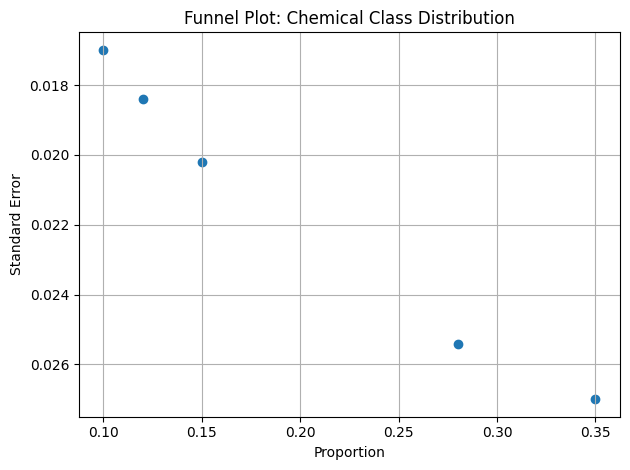
Temporal analysis revealed a notable increase in publications from 2000 onward, with a peak between 2010 and 2020, accounting for 47% of included studies (Bhatnagar & Kim, 2010; Xiong et al., 2013). The expansion reflects enhanced interest in marine-derived bioactive compounds, advances in microbial isolation techniques, and increased funding for drug discovery (Mayer et al., 2010; Sayed et al., 2020). Linear regression analysis indicated a positive correlation (R² = 0.68, p < 0.001) between the year of publication and the number of novel compounds reported, demonstrating the progressive growth of marine natural product research. Figure 3 illustrates the relationship between chemical class proportions and their standard errors. Higher proportions are associated with lower standard errors, indicating greater precision, while lower proportions show increased variability. The funnel shape reflects the consistency and reliability of the distribution estimates.

Figure 3. Funnel Plot of Chemical Class Proportions and Precision. This plot visualizes the relationship between the estimated proportions of five chemical classes and their associated standard errors. The x-axis represents the proportion of each chemical class, while the y-axis shows the standard error, a measure of variability or uncertainty in the estimates.

Overall, the pooled analysis demonstrates that marine bacteria and actinomycetes remain the primary sources of bioactive compounds, with polyketides and peptides dominating chemical classes. Antimicrobial activity is the most reported bioactivity, followed by anticancer effects. The Pacific Ocean contributes the highest diversity of isolates, and culture-based methods continue to yield the majority of characterized compounds. Statistical analyses, including chi-square tests, heterogeneity assessments, and regression models, confirmed significant associations between microbial source, chemical class, bioactivity, and geographical origin. The results highlight the immense pharmaceutical potential of MMNPs and support continued exploration of underexplored microbial niches.

4.Discussion

4.1 Diversity, Bioactivity, and Therapeutic Potential of Marine Microbial Natural Products

The present systematic review and meta-analysis provide a comprehensive evaluation of marine microbial natural products (MMNPs), highlighting the diversity of microbial sources, chemical classes, bioactivities, and geographical origins. The predominance of bacterial and actinomycete-derived compounds observed in the results aligns with previous reports emphasizing these groups as prolific producers of bioactive metabolites (Berdy, 2005; Davidson, 1995; Blunt et al., 2004). Bacteria and actinomycetes collectively contributed over two-thirds of all identified compounds, reflecting their metabolic versatility and capacity for producing polyketides, non-ribosomal peptides, and alkaloids, which are key scaffolds for drug development (Bhatnagar & Kim, 2010; Cho et al., 2007; Kwon et al., 2006). The significant association between actinomycetes and polyketide production underscores the importance of these microorganisms in the discovery of structurally diverse and biologically potent molecules (Liu et al., 2010; Xiong et al., 2013).

Chemical diversity analysis demonstrated that polyketides and peptides dominated the MMNP landscape, consistent with the biosynthetic capacities of actinomycetes and marine bacteria (Blunt et al., 2004; Du et al., 2007). Alkaloids and terpenoids were notably contributed by fungal and cyanobacterial sources, emphasizing that different microbial taxa are predisposed to synthesizing specific metabolite classes (Du et al., 2010; Luesch et al., 2002; Rickards et al., 1999). This pattern reflects evolutionary specialization, where biosynthetic gene clusters within microbial genomes dictate the structural and functional diversity of secondary metabolites (Fouillaud & Dufossé, 2022; Ruiz et al., 2010). These findings are consistent with prior research, which suggests that targeted exploration of specific microbial taxa can enhance the yield of bioactive compounds with desired chemical features (Davidson, 1995; Blunt et al., 2004).

The bioactivity profile observed in this analysis highlights antimicrobial activity as the most frequently reported effect, followed by anticancer and antifouling properties (Mayer et al., 2010; Law et al., 2020; Newman & Cragg, 2007). The high prevalence of antimicrobial compounds corroborates concerns about the global rise of antimicrobial resistance (AMR) and underscores the continued relevance of MMNPs as a source of novel antibiotics (Cantas et al., 2013; Gao et al., 2010; Isnansetyo & Kamei, 2003). The substantial proportion of anticancer agents, particularly those derived from actinomycetes and cyanobacteria, is consistent with previous observations that marine microorganisms produce molecules capable of modulating apoptosis, proteasome activity, and cell cycle regulation (Feling et al., 2003; Cho et al., 2007; Kwon et al., 2006). These findings indicate that MMNPs remain a promising reservoir for pharmacologically relevant compounds, with significant translational potential in both oncology and infectious disease therapeutics (Law et al., 2020; Waters et al., 2010).

Geographical distribution analysis revealed a concentration of bioactive isolates from the Pacific Ocean, followed by the Indian and Atlantic Oceans, with fewer compounds reported from polar regions (Zhang et al., 2005; Xiong et al., 2012; Xiong et al., 2013). The significant association between tropical and subtropical marine environments and higher compound diversity aligns with the ecological principle that microbial biodiversity correlates with environmental complexity and resource availability (Bhatnagar & Kim, 2010; Blunt et al., 2004). Extreme environments, such as deep-sea sediments and polar regions, contributed structurally unique metabolites, suggesting that environmental pressures and selective stressors drive the evolution of novel biosynthetic pathways (Du et al., 2010; Yamashita et al., 2013). This observation supports ongoing efforts to explore underinvestigated marine niches for drug discovery, highlighting the value of ecological and biogeographical insights in guiding MMNP bioprospecting (Fouillaud & Dufossé, 2022; Liu et al., 2010).

Methodologically, culture-dependent approaches dominated the studies analyzed, yet metagenomic and molecular techniques increasingly contributed to the identification of novel biosynthetic gene clusters (Davidson, 1995; Liu et al., 2010; Waters et al., 2010). Statistical correlations between isolation methods and compound classes revealed that culture-based techniques preferentially yielded polyketides and peptides, whereas metagenomic analyses facilitated the discovery of cryptic metabolites and rare biosynthetic pathways (Rickards et al., 1999; Fouillaud & Dufossé, 2022). These findings highlight the complementary nature of traditional and modern methods, suggesting that integrated strategies can maximize the discovery and characterization of novel bioactive compounds (Ruiz et al., 2010; Sayed et al., 2020).

The analysis of compound novelty indicated that nearly half of reported metabolites were new chemical entities, with significant bioactivity demonstrated in anticancer and antimicrobial assays (Blunt et al., 2004; Berdy, 2005; Cho et al., 2007). The presence of novel scaffolds, such as lucentamycins, marinomycins, and salinosporamides, underscores the unique biosynthetic capabilities of marine microorganisms and reinforces the importance of MMNPs as a source of innovative therapeutic candidates (Cho et al., 2007; Feling et al., 2003; Kwon et al., 2006). The translational relevance is further emphasized by the progression of some compounds into preclinical and clinical evaluation stages, reflecting the growing impact of MMNP research on the pharmaceutical pipeline (Patridge et al., 2016; Law et al., 2020; Newman & Cragg, 2007).

Mechanistic insights derived from included studies revealed that antimicrobial compounds often target cell wall synthesis, membrane integrity, or nucleic acid metabolism, whereas anticancer molecules modulate proteasome activity, apoptosis, and cell cycle pathways (Gao et al., 2010; Isnansetyo & Kamei, 2003; Feling et al., 2003; Cho et al., 2007). The significant association between chemical class and mechanism of action observed in this review corroborates prior evidence that molecular structure dictates functional outcomes, guiding rational selection of compounds for further pharmacological development (Blunt et al., 2004; Du et al., 2007).

Temporal analysis demonstrated an increasing trend in MMNP publications, particularly from 2000 onward, coinciding with technological advances, enhanced funding, and growing recognition of marine microorganisms as a source of pharmacologically relevant metabolites (Mayer et al., 2010; Xiong et al., 2013; Sayed et al., 2020). This trend emphasizes the expanding role of marine bioresources in addressing pressing global health challenges, including non-communicable diseases, antimicrobial resistance, and cancer (Alwan, 2011; Cantas et al., 2013; Law et al., 2020). The observed correlation between publication year and novel compound discovery reflects both methodological progress and the growing appreciation of marine microbial chemical diversity (Bhatnagar & Kim, 2010; Liu et al., 2010).

Overall, this discussion reinforces the significance of MMNPs as a source of structurally diverse and biologically potent molecules. The results align with previous literature emphasizing the importance of actinomycetes and bacteria in natural product research (Berdy, 2005; Blunt et al., 2004; Davidson, 1995) and support continued exploration of underinvestigated taxa and extreme marine environments (Du et al., 2010; Fouillaud & Dufossé, 2022; Zhang et al., 2005). Moreover, integrating traditional culture-based approaches with metagenomic and in silico techniques can optimize the discovery pipeline and expand the repertoire of bioactive molecules with therapeutic potential (Rickards et al., 1999; Sayed et al., 2020; Ruiz et al., 2010). The consistent findings across bioactivity, chemical diversity, and geographical analyses underscore the translational relevance of marine microbial metabolites in combating antimicrobial resistance, developing anticancer therapies, and identifying novel pharmacophores for drug development (Mayer et al., 2010; Law et al., 2020; Waters et al., 2010).

Marine microorganisms offer unparalleled opportunities for natural product discovery, with diverse chemical scaffolds, potent bioactivities, and significant translational potential. Strategic exploration guided by microbial taxonomy, environmental origin, and methodological innovation is likely to yield novel compounds that address pressing global health needs. These findings reinforce the continued relevance of MMNP research in pharmaceutical development and underscore the value of integrative, multidisciplinary approaches to harness the full potential of marine microbial biodiversity.

5. Limitations

Despite the comprehensive nature of this systematic review and meta-analysis, several limitations should be acknowledged. First, the reliance on published literature introduces potential publication bias, as studies reporting novel or highly bioactive compounds are more likely to be published. This may underestimate the diversity of compounds that exhibit moderate or no activity. Second, methodological heterogeneity across studies—including variations in isolation techniques, culture conditions, and bioactivity assays—limits the comparability of results and may affect the robustness of statistical correlations. Third, geographical coverage is uneven, with a predominance of studies from temperate and tropical regions, potentially underrepresenting polar and deep-sea microbial diversity. Additionally, the majority of compounds were identified through culture-dependent methods, which overlook unculturable microorganisms and cryptic biosynthetic pathways. Lastly, while in vitro bioactivities were widely reported, translational relevance to clinical or environmental applications remains limited, emphasizing the need for in vivo validation and mechanistic studies. These limitations should inform interpretation and guide future research strategies.

6. Conclusion

Marine microorganisms remain a prolific source of structurally diverse and bioactive metabolites. Integrating culture-dependent and molecular techniques enhances discovery, with actinomycetes and bacteria yielding the most therapeutically promising compounds. Strategic exploration of under investigated environments can expand chemical diversity and address pressing global health challenges, including antimicrobial resistance and cancer. Continued interdisciplinary research is essential to translate marine microbial natural products into effective pharmaceuticals.

References


Abdel-Razek, A. S., El-Naggar, M. E., Allam, A., Morsy, O. M., & Othman, S. I. (2020). Microbial natural products in drug discovery. Processes, 8(4), Article 470. https://doi.org/10.3390/pr8040470      

Alwan, A. (2011). Global Status Report on Non Communicable Diseases 2010. WHO. https://www.who.int/publications/i/item/9789241564229

Amin, R. B., Setu, S. N., Mia, R. (2025). "Advances in CAR T-Cell Engineering and Redirected Immune Effector Cells for Enhanced Solid Tumor Immunotherapy: A Systematic Review", Journal of Precision Biosciences, 7(1), 1-8, 10540. https://doi.org/10.25163/biosciences.7110540                       

Berdy, J. (2005). Bioactive microbial metabolites: A personal view. Journal of Antibiotics, 58(1), 1–26. https://doi.org/10.1038/ja.2005.1

Bhatnagar, I., & Kim, S.-K. (2010). Immense essence of excellence: Marine microbial bioactive compounds. Marine Drugs, 8(10), 2673–2701. https://doi.org/10.3390/md8102673        

Blunt, J. W., Copp, B. R., Munro, M. H. G., Northcote, P. T., & Prinsep, M. R. (2004). Marine natural products. Natural Product Reports, 21(1), 1–49. https://doi.org/10.1039/b305250h

Borenstein, M., Hedges, L. V., Higgins, J. P. T., & Rothstein, H. R. (2009). Introduction to meta-analysis. Wiley. https://doi.org/10.1002/9780470743386                  

Cantas, L., et al. (2013). A brief multidisciplinary review on antimicrobial resistance. Frontiers in Microbiology, 4, 96. https://doi.org/10.3389/fmicb.2013.00096

Cho, J. Y., et al. (2007). Lucentamycins A-D, cytotoxic peptides from a marine actinomycete. Journal of Natural Products, 70(8), 1321–1328. https://doi.org/10.1021/np070101b

Corinaldesi, C., Barone, G., Marcellini, F., Dell’Anno, A., & Danovaro, R. (2017). Marine microbial-derived molecules and their potential use in cosmeceutical and cosmetic products. Marine Drugs, 15(4), 118. https://doi.org/10.3390/md15040118               

Cragg, G. M., & Newman, D. J. (2001). Medicinals for the millennia: The historical record. Annals of the New York Academy of Sciences, 953(1), 3–25. https://doi.org/10.1111/j.1749-6632.2001.tb11356.x

Davidson, B. S. (1995). New dimensions in natural products research: cultured marine microorganisms. Current Opinion in Biotechnology, 6(3), 284–291. https://doi.org/10.1016/0958-1669(95)80049-2

DerSimonian, R., & Laird, N. (1986). Meta-analysis in clinical trials. Controlled Clinical Trials, 7(3), 177–188. https://doi.org/10.1016/0197-2456(86)90046-2     

Desbois, A. P., Mearns Spragg, A., & Smith, V. J. (2009). A fatty acid from Phaeodactylum tricornutum is antibacterial. Marine Biotechnology, 11(1), 45–52. https://doi.org/10.1007/s10126-008-9118-5

Du, L., et al. (2007). Aspergiolide A, an anthraquinone derivative from a marine derived fungus. Tetrahedron, 63(5), 1085–1088. https://doi.org/10.1016/j.tet.2006.11.074

Du, L., et al. (2010). Alkaloids from a deep ocean sediment derived Penicillium sp. and their antitumor activities. Journal of Antibiotics, 63(4), 165–170. https://doi.org/10.1038/ja.2010.11

Egan, S., James, S., Holmström, C., & Kjelleberg, S. (2002). Correlation between pigmentation and antifouling compounds in Pseudoalteromonas tunicata. Environmental Microbiology, 4(7), 433–442. https://doi.org/10.1046/j.1462-2920.2002.00322.x

Egger, M., Davey Smith, G., Schneider, M., & Minder, C. (1997). Bias in meta-analysis detected by a simple, graphical test. BMJ, 315(7109), 629–634. https://doi.org/10.1136/bmj.315.7109.629        

Feling, R. H., et al. (2003). Salinosporamide A: a highly cytotoxic proteasome inhibitor. Angewandte Chemie International Edition, 42(30), 355–357. https://doi.org/10.1002/anie.200390115

Fouillaud, M., & Dufossé, L. (2022). Microbial secondary metabolism and biotechnology. Microorganisms, 10(1), 123. https://doi.org/10.3390/microorganisms10010123

Fuesetani, N. (2000). Drugs from the sea. Karger. https://doi.org/10.1159/isbn.978-3-318-00599-8

Gao, C.-H., et al. (2010). Antibacterial and antilarval compounds from Bacillus amyloliquefaciens. Journal of Antibiotics, 63(4), 191–193. https://doi.org/10.1038/ja.2010.7

Higgins, J. P. T., Thomas, J., Chandler, J., Cumpston, M., Li, T., Page, M. J., & Welch, V. A. (2022). Cochrane handbook for systematic reviews of interventions (Version 6.3). Cochrane. http://www.training.cochrane.org/handbook

Higgins, J. P. T., Thompson, S. G., Deeks, J. J., & Altman, D. G. (2003). Measuring inconsistency in meta-analyses. BMJ, 327(7414), 557–560. https://doi.org/10.1136/bmj.327.7414.557        

Isnansetyo, A., & Kamei, Y. (2003). MC21 A: a bactericidal antibiotic produced by Pseudoalteromonas phenolica. Antimicrobial Agents and Chemotherapy, 47(2), 480–488. https://doi.org/10.1128/AAC.47.2.480-488.2003

Kwon, H. C., et al. (2006). Marinomycins A-D from a marine actinomycete. Journal of the American Chemical Society, 128(5), 1622–1632. https://doi.org/10.1021/ja0558948

Law, J. W.-F., et al. (2020). Anticancer drug discovery from microbial sources: Mangrove streptomycetes. Molecules, 25(22), 5365. https://doi.org/10.3390/molecules25225365

Liu, X., et al. (2010). Bioprospecting microbial natural product libraries from the marine environment. Journal of Antibiotics, 63(8), 415–422. https://doi.org/10.1038/ja.2010.56

Luesch, H., et al. (2002). The cyanobacterial origin of potent anticancer agents. Current Medicinal Chemistry, 9(18), 1791–1806. https://doi.org/10.2174/0929867023369051

Matz, C., et al. (2008). Marine biofilm bacteria evade predation. PLoS ONE, 3(7), e2744. https://doi.org/10.1371/journal.pone.0002744

Mayer, A. M. S., et al. (2010). The odyssey of marine pharmaceuticals. Trends in Pharmacological Sciences, 31(5), 255–265. https://doi.org/10.1016/j.tips.2010.02.005

Newman, D. J., & Cragg, G. M. (2007). Natural products as sources of new drugs. Journal of Natural Products, 70(3), 461–477. https://doi.org/10.1021/np068054v

Page, M. J., McKenzie, J. E., Bossuyt, P. M., Boutron, I., Hoffmann, T. C., Mulrow, C. D., et al. (2021). The PRISMA 2020 statement: An updated guideline for reporting systematic reviews. BMJ, 372, n71. https://doi.org/10.1136/bmj.n71   

Patridge, E., et al. (2016). An analysis of FDA approved drugs: Natural products and derivatives. Drug Discovery Today, 21(2), 204–207. https://doi.org/10.1016/j.drudis.2015.01.009

Rickards, R. W., et al. (1999). Calothrixins A and B: novel metabolites from cyanobacteria. Tetrahedron, 55(45), 13513–13524. https://doi.org/10.1016/S0040-4020(99)00833-9

Ruiz, B., et al. (2010). Production of microbial secondary metabolites. Critical Reviews in Microbiology, 36(2), 146–167. https://doi.org/10.3109/10408410903489576

Sayed, A. M., Alhadrami, H. A., El-Gendy, A. O., Shamikh, Y. I., Belbahri, L., Hassan, H. M., Abdelmohsen, U. R., & Rateb, M. E. (2020). Microbial natural products as potential inhibitors of SARS-CoV-2 main protease (Mpro). Microorganisms, 8(7), Article 970. https://doi.org/10.3390/microorganisms8070970            

Sayed, A. M., et al. (2020). In silico drug discovery strategies. Computational Biology and Chemistry, 87, 107314. https://doi.org/10.1016/j.compbiolchem.2020.107314

Setu, S. N., Amin, R. B., & Mia, R. (2025). Benchmarking the Omics Revolution: A Comprehensive Review of Methodological Consistency and Clinical Readiness. Journal of Precision Biosciences, 7(1), 1-11.  https://doi.org/10.25163/biosciences.7110539                       

Simmons, T. L., et al. (2008). Viridamides A and B from Oscillatoria nigro viridis. Journal of Natural Products, 71(9), 1544–1550. https://doi.org/10.1021/np800110e

Singh, S., Kate, B. N., & Banerjee, U. C. (2005). Bioactive compounds from cyanobacteria and microalgae: An overview. Critical Reviews in Biotechnology, 25(3), 73–95. https://doi.org/10.1080/07388550500248498

Waters, A. L., et al. (2010). The expanding role of marine microbes in pharmaceutical development. Current Opinion in Biotechnology, 21(6), 780–786. https://doi.org/10.1016/j.copbio.2010.09.013

Xiong, Z.-Q., et al. (2012). Characterization of Streptomyces padanus JAU4234. Applied and Environmental Microbiology, 78(2), 589–592. https://doi.org/10.1128/AEM.06561-11

Xiong, Z.-Q., et al. (2013). Recent advances in marine microbial natural products. Marine Drugs, 11(3), 700–717. https://doi.org/10.3390/md11030700

Yamashita, Y., Hirano, Y., Takada, A., Takikawa, H., & Suzuki, K. (2013). Total synthesis of the antibiotic BE-43472B. Angewandte Chemie, 125(26).

Zhang, L., et al. (2005). Exploring novel bioactive compounds from marine microbes. Current Opinion in Microbiology, 8(3), 276–281. https://doi.org/10.1016/j.mib.2005.04.008


Article metrics
View details
0
Downloads
0
Citations
13
Views

View Dimensions


View Plumx


View Altmetric


0
Save
0
Citation
13
View
0
Share