Aytürk, M., Bozkurt, E., Sari, A., & Tas, M. (2026). Serum ferritin and procalcitonin in relation to SOFA-2 score-based organ dysfunction severity in COVID-19-associated sepsis. Biomedicines, 14(6), Article 1413. https://doi.org/10.3390/biomedicines14061413
Baizhanova, A., et al. (2025). Integrated widely targeted metabolomics–machine learning workflow for discovery and stratification of sepsis-associated encephalopathy. Computational and Structural Biotechnology Journal, 27, 4459–4468. https://doi.org/10.1016/j.csbj.2025.08.012
Burnham, K. L., Milind, N., Lee, W., Kwok, A. J., Cano-Gamez, K., Mi, Y., . . . Davenport, E. E. (2024). eQTLs identify regulatory networks and drivers of variation in the individual response to sepsis. Cell Genomics, 4(7), Article 100587. https://doi.org/10.1016/j.xgen.2024.100587
Carcillo, J. A., Sward, K., Halstead, E. S., Telford, R., Jimenez-Bacardi, A., Shakoory, B., Simon, D., & Hall, M. (2017). A systemic inflammation mortality risk assessment contingency table for severe sepsis. Pediatric Critical Care Medicine, 18(2), 143–150. https://doi.org/10.1097/PCC.0000000000001043
Direito, J., Fernandes, C., Branquinho, R. G., Ramos, D. F., Dionísio, T., Oliveira, G. G., & Pinto, C. R. (2021). Secondary hepatic injury in pediatric intensive care: Risk factors and prognostic impact. Journal of Pediatric Gastroenterology and Nutrition, 73(4), 471–477. https://doi.org/10.1097/MPG.0000000000003201
Fang, T., Yuan, F., Chen, Y., Li, N., Zhang, Y., Liu, H., . . . Wang, X. (2026). Emerging role of metagenomic next-generation sequencing in infectious disease diagnostics: Clinical integration and future directions. mLife, 5(2), 148–163. https://doi.org/10.1002/mlf2.70078
Fleischmann-Struzek, C., Mellhammar, L., Rose, N., Cassini, A., Rudd, K. E., Schlattmann, P., . . . Reinhart, K. (2020). Incidence and mortality of hospital- and ICU-treated sepsis: Results from an updated and expanded systematic review and meta-analysis. Intensive Care Medicine, 46(8), 1552–1562. https://doi.org/10.1007/s00134-020-06151-x
Fratea, A., Riza, A. L., Dumitrescu, F., Dorobantu, S., Pirvu, A., Dragos, A., . . . Florescu, S. A. (2026). Integrated transcriptomic and proteomic profiling identifies an interferon-dependent inflammatory endotype in sepsis. Biomedicine & Pharmacotherapy, 195, Article 119014. https://doi.org/10.1016/j.biopha.2026.119014
Ghazal, P., Rodrigues, P. R. S., Chakraborty, M., Oruganti, S., & Woolley, T. E. (2022). Challenging molecular dogmas in human sepsis using mathematical reasoning. eBioMedicine, 80, Article 104031. https://doi.org/10.1016/j.ebiom.2022.104031
Gonzalez-Barbuzano, S., Suarez-Pajes, E., Bardají-Carrillo, M., Hernandez-Beeftink, T., & Flores, C. (2026). Molecular biomarkers and multi-omics integration for predicting sepsis prognosis and precision medicine. Annals of Intensive Care, 16(1), Article 100133. https://doi.org/10.1016/j.aicoj.2026.100133
Gürsoy Koca, T., Elmas, A., Altug, Ü., Akçay, G., Bayramoglu, H., & Akçam, M. (2026). Secondary hepatic dysfunction in critically ill children: Prognostic associations beyond PRISM III and PELOD-2 scores. Journal of Clinical Medicine, 15(1), Article 133. https://doi.org/10.3390/jcm1501133
Hakeem, A., et al. (2025). Ultrasonographic optic nerve sheath diameter for early prediction of sepsis-associated encephalopathy. Neurocritical Care, 43(1), 308–317. https://doi.org/10.1007/s12028-024-02112-x
Han, Y., et al. (2025). Machine learning models for early prediction of sepsis-associated encephalopathy in elderly ICU patients. Journal of Critical Care, 85, Article 154882. https://doi.org/10.1016/j.jcrc.2024.154882
Han, Z., Quan, Z., Zeng, S., Wen, L., & Wang, H. (2024). Utilizing omics technologies in the investigation of sepsis-induced cardiomyopathy. IJC Heart & Vasculature, 54, Article 101477. https://doi.org/10.1016/j.ijcha.2024.101477
Hu, H., Feng, Y., Zhou, Y., Peng, S., Li, D., Wu, S., . . . Zhu, W. (2026). Widely targeted metabolomics and machine learning identify succinate as a key metabolite in sepsis-associated encephalopathy. iScience, 29(1), Article 114520. https://doi.org/10.1016/j.isci.2025.114520
Hudu, S. A., et al. (2026). Integrated microbiome–metabolome multi-omics and AI-driven frameworks in infectious disease prognostic modeling. Journal of the Formosan Medical Association, 125(8), Article 102832. https://doi.org/10.1016/j.jfma.2026.08.032
Kang, Y. M., Kim, G. E., Park, M., Kim, J. D., Kim, M. J., Kim, Y. H., . . . Kim, S. Y. (2023). Role of serum bilirubin-to-albumin ratio as a prognostic index in critically ill children. Clinical and Experimental Pediatrics, 66(2), 85–87. https://doi.org/10.3345/cep.2022.00843
Kim, H., et al. (2026). Mitochondrial dysfunction, oxidative stress, and immunometabolic reprogramming in sepsis. International Journal of Molecular Sciences, 27(10), Article 5918. https://doi.org/10.3390/ijms271005918
Kim, M., Nikouee, A., Zou, R., Ren, D., He, Z., Li, J., . . . Wang, P. (2022). Age-independent cardiac protection by pharmacological activation of beclin-1 during endotoxemia and its association with energy metabolic reprogramming in myocardium—A targeted metabolomics study. Journal of the American Heart Association, 11(14), Article e025310. https://doi.org/10.1161/JAHA.121.025310
Langelier, C., Kalantar, K. L., Moazed, F., Wilson, M. R., Crawford, E. D., Deiss, T., . . . DeRisi, J. L. (2018). Integrating host response and unbiased microbe detection for lower respiratory tract infection diagnosis in critically ill adults. Proceedings of the National Academy of Sciences of the United States of America, 115(52), E12353–E12362. https://doi.org/10.1073/pnas.1809700115
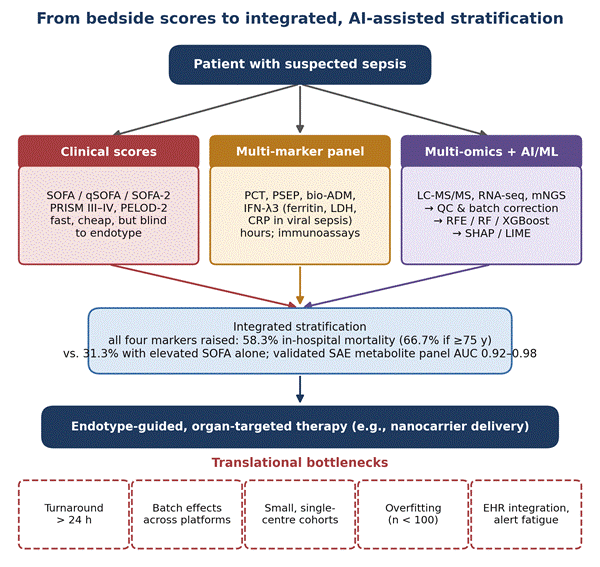
Lee, G. H., Park, M., Hur, M., Kim, H., Lee, S., Moon, H. W., & Yun, Y. M. (2026). Multi-marker approach in sepsis: A clinical role beyond SOFA score. Medicina, 62(2), Article 201. https://doi.org/10.3390/medicina62020201
Lei, J., Zhai, J., Qi, J., & Sun, C. (2024). Identification of sepsis-associated encephalopathy biomarkers through machine learning and bioinformatics approaches. Scientific Reports, 14(1), Article 31717. https://doi.org/10.1038/s41598-024-81717-3
Li, P., He, Y., Fan, Y., Jia, X., Pei, J., Liu, Y., Gu, X., & Li, L. (2026). Integrative multi-omics reveals that salvianolic acid A protects against septic liver injury by remodeling amino acid metabolism and redox homeostasis. Protein & Peptide Letters, 33(9), Article e202609002. https://doi.org/10.1016/j.ppl.2026.09.002
Li, Z., Luo, B., Chen, Y., Wang, L., Liu, Y., Chen, M., Yang, S., Shi, H., Dai, L., Huang, L., Wang, C., & Liu, J. (2025). Nanomaterial-based encapsulation of biochemicals for targeted sepsis therapy. Materials Today Bio, 33, Article 102054. https://doi.org/10.1016/j.mtbio.2025.102054
Liu, Y., Bao, D., She, H., Zhang, Z., Shao, S., Wu, Z., . . . Wang, X. (2024). Role of Hippo/ACSL4 axis in ferroptosis-induced pericyte loss and vascular dysfunction in sepsis. Redox Biology, 78, Article 103353. https://doi.org/10.1016/j.redox.2024.103353
Meghraoui-Kheddar, A., Chousterman, B. G., Guillou, N., Barone, S. M., Granjeaud, S., Vallet, H., . . . Boissonnas, A. (2022). Two new neutrophil subsets define a discriminating sepsis signature. American Journal of Respiratory and Critical Care Medicine, 205(1), 46–59. https://doi.org/10.1164/rccm.202104-1027OC
Min, S., Lee, B., & Yoon, S. (2017). Deep learning in bioinformatics. Briefings in Bioinformatics, 18(5), 851–869. https://doi.org/10.1093/bib/bbw068
Mogahed, E. A., Ghita, H., El-Raziky, M. S., El-Sherbini, S. A., Meshref, D., & El-Karaksy, H. (2020). Secondary hepatic dysfunction in pediatric intensive care unit: Risk factors and outcome. Digestive and Liver Disease, 52(8), 889–894. https://doi.org/10.1016/j.dld.2020.04.013
Mohsin, M., Zaki, A., Tabassum, G., Khan, S., Ali, S., Ahmad, T., . . . Rehman, S. (2025). Urolithin-A supplementation alleviates sepsis-induced acute lung injury by reducing mitochondrial dysfunction and modulating macrophage polarization. Mitochondrion, 84, Article 102047. https://doi.org/10.1016/j.mito.2025.102047
Na, A. Y., et al. (2023). Novel time-dependent multi-omics integration in sepsis-associated liver dysfunction. Genomics, Proteomics & Bioinformatics, 21(6), 1101–1116. https://doi.org/10.1016/j.gpb.2023.04.002
Palmowski, L., Weber, M., Bayer, M., Mi, Y., Schork, K., Eisenacher, M., . . . Rahmel, T. (2025). Mortality-associated plasma proteome dynamics in a prospective multicentre sepsis cohort. eBioMedicine, 111, Article 105508. https://doi.org/10.1016/j.ebiom.2024.105508
Pandey, S. (2025). Advances in metabolomics in critically ill patients with sepsis and septic shock. Clinical and Experimental Emergency Medicine, 12(1), 4–15. https://doi.org/10.15441/ceem.24.211
Predictors of PICU mortality and organ dysfunction in pediatric oncology patients. (2026). Children, 13(1), Article 58. https://doi.org/10.3390/children13010058
Rodríguez-Pérez, H., Ciuffreda, L., Hernández-Beeftink, T., Guillen-Guio, B., Domínguez, D., Corrales, A., . . . Flores, C. (2025). Tracheal aspirate metagenomics reveals association of antibiotic resistance with nonpulmonary sepsis mortality. American Journal of Respiratory Cell and Molecular Biology, 72(2), 219–222. https://doi.org/10.1165/rcmb.2024-0192LE
Ruiz-Sanmartín, A., Ribas, V., Suñol, D., Chiscano-Camón, L., Palmada, C., Bajaña, I., . . . Deu-Martin, M. (2022). Characterization of a proteomic profile associated with organ dysfunction and mortality of sepsis and septic shock. PLOS ONE, 17(12), Article e0278708. https://doi.org/10.1371/journal.pone.0278708
Saini, K., Bolia, R., & Bhat, N. K. (2022). Incidence, predictors and outcome of sepsis-associated liver injury in children. European Journal of Pediatrics, 181(4), 1699–1707. https://doi.org/10.1007/s00431-021-04352-2
Scarlatescu, F., Scarlatescu, E., Tomescu, D. R., & Bartos, D. (2025). The diagnosis of sepsis-associated encephalopathy using biomarkers: Are we there yet? Avicenna Journal of Medicine, 15(2), 51–63. https://doi.org/10.1055/s-0045-1234567
Scicluna, B. P., Cano-Gamez, K., Burnham, K. L., Davenport, E. E., Moore, A. R., Khan, S., . . . Knight, J. C. (2025). A consensus blood transcriptomic framework for sepsis. Nature Medicine, 31(12), 4119–4130. https://doi.org/10.1038/s41591-025-03964-5
She, H., Tan, L., Du, Y., Zhou, Y., Guo, N., Zhang, J., . . . Wang, X. (2023). VDAC2 malonylation participates in sepsis-induced myocardial dysfunction via mitochondrial-related ferroptosis. International Journal of Biological Sciences, 19(10), 3143–3158. https://doi.org/10.7150/ijbs.83143
Sheikhalishahi, S., Bhattacharyya, A., Celi, L. A., & Osmani, V. (2023). An interpretable deep learning model for time-series electronic health records: Case study of delirium prediction in critical care. Artificial Intelligence in Medicine, 144, Article 102659. https://doi.org/10.1016/j.artmed.2023.102659
Shen, H., Xie, K., Li, M., Yang, Q., & Wang, X. (2022). N6-methyladenosine (m6A) methyltransferase METTL3 regulates sepsis-induced myocardial injury through IGF2BP1/HDAC4 dependent manner. Cell Death Discovery, 8(1), Article 322. https://doi.org/10.1038/s41420-022-01112-9
Shimada, B. K., Boyman, L., Huang, W., Zhu, J., Yang, Y., Chen, F., . . . Lederer, W. J. (2022). Pyruvate-driven oxidative phosphorylation is downregulated in sepsis-induced cardiomyopathy: A study of mitochondrial proteome. Shock, 57(4), 553–564. https://doi.org/10.1097/SHK.0000000000001899
Singer, M., Deutschman, C. S., Seymour, C. W., Shankar-Hari, M., Annane, D., Bauer, M., Bellomo, R., Bernard, G. R., Chiche, J.-D., Coopersmith, C. M., Hotchkiss, R. S., Levy, M. M., Marshall, J. C., Martin, G. S., Opal, S. M., Rubenfeld, G. D., van der Poll, T., Vincent, J.-L., & Angus, D. C. (2016). The Third International Consensus Definitions for Sepsis and Septic Shock (Sepsis-3). JAMA, 315(8), 801–810. https://doi.org/10.1001/jama.2016.0287
Song, B., Liu, P., Liu, C., Fu, K., Zheng, X., & Liu, Y. (2025). Development and validation of a predictive model for continuous renal replacement therapy in sepsis patients using the MIMIC-IV database. Scientific Reports, 15(1), Article 21559. https://doi.org/10.1038/s41598-025-21559-w
Su, Y., Zhu, W., Su, T., Huang, L., Qin, M., Wang, Q., . . . Zhang, Z. (2025). Endothelial TREM-1 mediates sepsis-induced blood–brain barrier disruption and cognitive impairment via the PI3K/Akt pathway. Journal of Neuroinflammation, 22(1), Article 142. https://doi.org/10.1186/s12974-025-03142-8
Sun, B. B., Maranville, J. C., Peters, J. E., Stacey, D., Staley, J. R., Blackshaw, J., . . . Butterworth, A. S. (2018). Genomic atlas of the human plasma proteome. Nature, 558(7708), 73–79. https://doi.org/10.1038/s41586-018-0175-2
Tavris, B. S., Morath, C., Rupp, C., Szudarek, R., Uhle, F., Sweeney, T. E., . . . LTB Study Group. (2025). Complementary role of transcriptomic endotyping and protein-based biomarkers for risk stratification in sepsis-associated acute kidney injury. Critical Care, 29(1), Article 136. https://doi.org/10.1186/s13054-025-05361-3
Wang, Y., Deng, K., Lin, P., Huang, L., Hu, L., Ye, J., . . . Tan, L. (2025). Elevated total bile acid levels as an independent predictor of mortality in pediatric sepsis. Pediatric Research, 97(4), 1114–1121. https://doi.org/10.1038/s41390-024-03456-7
White, C. H., Martinelli, R., Norton, J. E., Killough, J. R., Sana, T. R., Beakes, C., Shyong, B., Zhang, R. N., Gutierrez, D. A., Filbin, M., Christiani, D. C., Therien, A. G., & Woelk, C. H. (2023). Systems immunology profiling reveals immunometabolic signatures of sepsis severity. iScience, 26(2), Article 105948. https://doi.org/10.1016/j.isci.2023.105948
Xie, W., Zhang, A., Huang, X., Zhou, H., Ying, H., Ye, C., . . . Wang, H. (2023). Silencing m6A reader Ythdc1 reduces inflammatory response in sepsis-induced cardiomyopathy by inhibiting Serpina3n expression. Shock, 59(5), 791–802.
Xu, Y., Zhang, S., Rong, J., Lin, Y., Du, L., Wang, Y., . . . Li, C. (2020). Sirt3 is a novel target to treat sepsis induced myocardial dysfunction by acetylated modulation of critical enzymes within cardiac tricarboxylic acid cycle. Pharmacological Research, 159, Article 104887. https://doi.org/10.1016/j.phrs.2020.104887
Yagin, F. H., Aygun, U., Algarni, A., Colak, C., Al-Hashem, F., & Ardigò, L. P. (2024). Platelet metabolites as candidate biomarkers in sepsis diagnosis and management using the proposed explainable artificial intelligence approach. Journal of Clinical Medicine, 13(17), Article 5002. https://doi.org/10.3390/jcm13175002
Yuan, L., Tang, Y., Yin, L., Lin, X., Luo, Z., Wang, S., . . . Zhang, Y. (2022). Microarray analysis reveals changes in tRNA-derived small RNAs (tsRNAs) expression in mice with septic cardiomyopathy. Genes, 13(12), Article 2341. https://doi.org/10.3390/genes13122341
Zhang, G., Dong, D., Wan, X., & Zhang, Y. (2022). Extracellular histones induce cardiomyocyte calcium overload and contractile dysfunction in sepsis. Molecular Medicine Reports, 26(4), Article 257. https://doi.org/10.3892/mmr.2022.12773
Zhang, L., Dai, Y., Li, Q., et al. (2026). Systems biology dissection of regulated cell death in human diseases through multi-omics and computational integration. Journal of Advanced Research, 87, 637–655. https://doi.org/10.1016/j.jare.2025.12.011