1. Introduction
There is a certain vertigo in trying to write about obesity care right now, because the ground keeps moving. A decade ago, a clinician counseling a patient with severe obesity had, realistically, diet, exercise, and perhaps a referral for bariatric surgery to offer; today, the same conversation might include a once-weekly injection capable of producing weight loss that rivals surgical outcomes. It is tempting to call this a revolution, and in many respects it is one. But revolutions are rarely tidy, and this one has left behind a trail of open questions that this review tries, however incompletely, to work through.
Obesity itself has been reframed. It is no longer adequate, clinically or scientifically, to describe it as simple caloric excess or a failure of willpower; it is now understood as a chronic, progressive, and relapsing multisystem disease that disrupts homeostatic regulation across nearly every organ system (Lempesis & Dalamaga, 2026; Abdallah et al., 2026). The numbers involved are, frankly, difficult to hold in one's head. The Global Burden of Disease Study 2021 estimated that 2.11 billion adults worldwide were living with overweight or obesity that year, and the trajectory projected forward suggests that close to two-thirds of adults over 25 will be affected by 2050 (Lempesis & Dalamaga, 2026). This is not a distant or abstract epidemiological curiosity-it is a burden that spans childhood through old age, and one that accelerates premature death through chronic cardiorenal disease, type 2 diabetes mellitus (T2DM), metabolic dysfunction-associated steatotic liver disease (MASLD), and a widening list of obesity-related malignancies (Salama et al., 2025; Podder et al., 2026; Abdallah et al., 2026). Behavioral and lifestyle interventions remain, at least in principle, the foundation of obesity management, yet their real-world performance is sobering; adherence erodes over time, and attrition from structured lifestyle programs is the rule rather than the exception (Salama et al., 2025; de Arriba Munoz et al., 2025). It was against this backdrop of limited, hard-won, and often disappointing behavioral efficacy that pharmacological innovation became less of an option and more of an imperative (Podder et al., 2026; Abdallah et al., 2026).
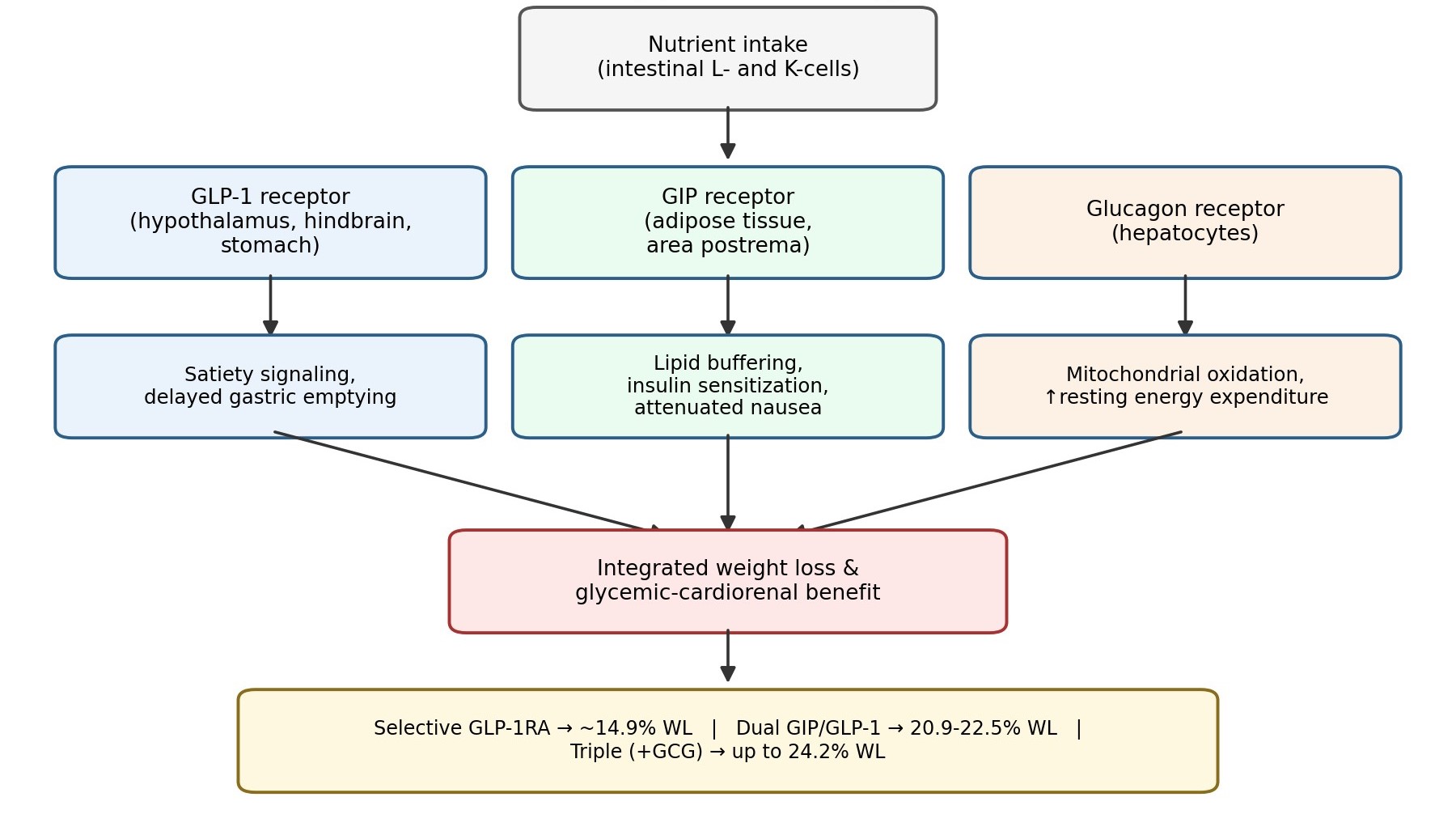
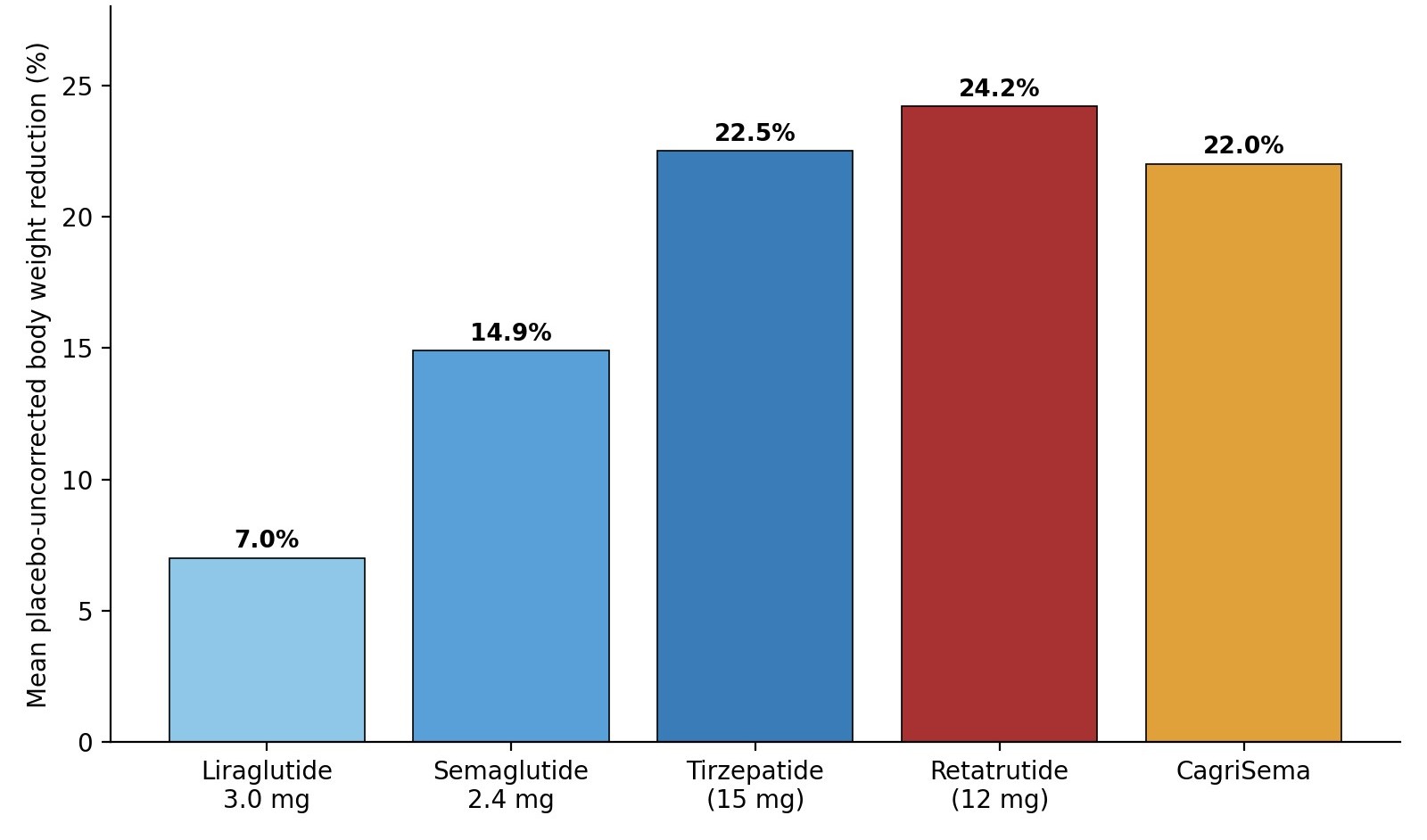
What has followed can reasonably be described as a pharmacological revolution, one centered on the therapeutic exploitation of incretin biology (Garcia-Gorrita et al., 2025; Abdallah et al., 2026). Glucagon-like peptide-1 receptor agonists (GLP-1RAs) and, more recently, multi-receptor co-agonists have pushed the ceiling of non-surgical weight loss to a place few clinicians would have predicted even five years ago (Sancho-Haro et al., 2026; Abdallah et al., 2026). The underlying biology is elegant, if not entirely simple: endogenous GLP-1 and glucose-dependent insulinotropic polypeptide (GIP) are released from the gut in response to a meal, and together they orchestrate a pleiotropic set of metabolic responses that extend well beyond glycemic control (La Vignera et al., 2026). Synthetic mimics of this system, such as once-weekly semaglutide 2.4 mg, act on hypothalamic satiety circuitry while also slowing gastric emptying, and in doing so achieve mean weight reductions of approximately 15% (Celebi et al., 2026; Pardali et al., 2026). Tirzepatide, which co-activates both the GIP and GLP-1 receptors, pushes further still, with trial-level weight reductions between 20.9% and 22.5% attributable to the way it recruits complementary neuroendocrine and adipose-tissue pathways simultaneously (Pardali et al., 2026; Abdallah et al., 2026). For the first time, pharmacotherapy is closing-not just narrowing, but genuinely closing-the historic efficacy gap with bariatric surgery, and doing so without the perioperative risk that surgery necessarily carries (La Vignera et al., 2026).
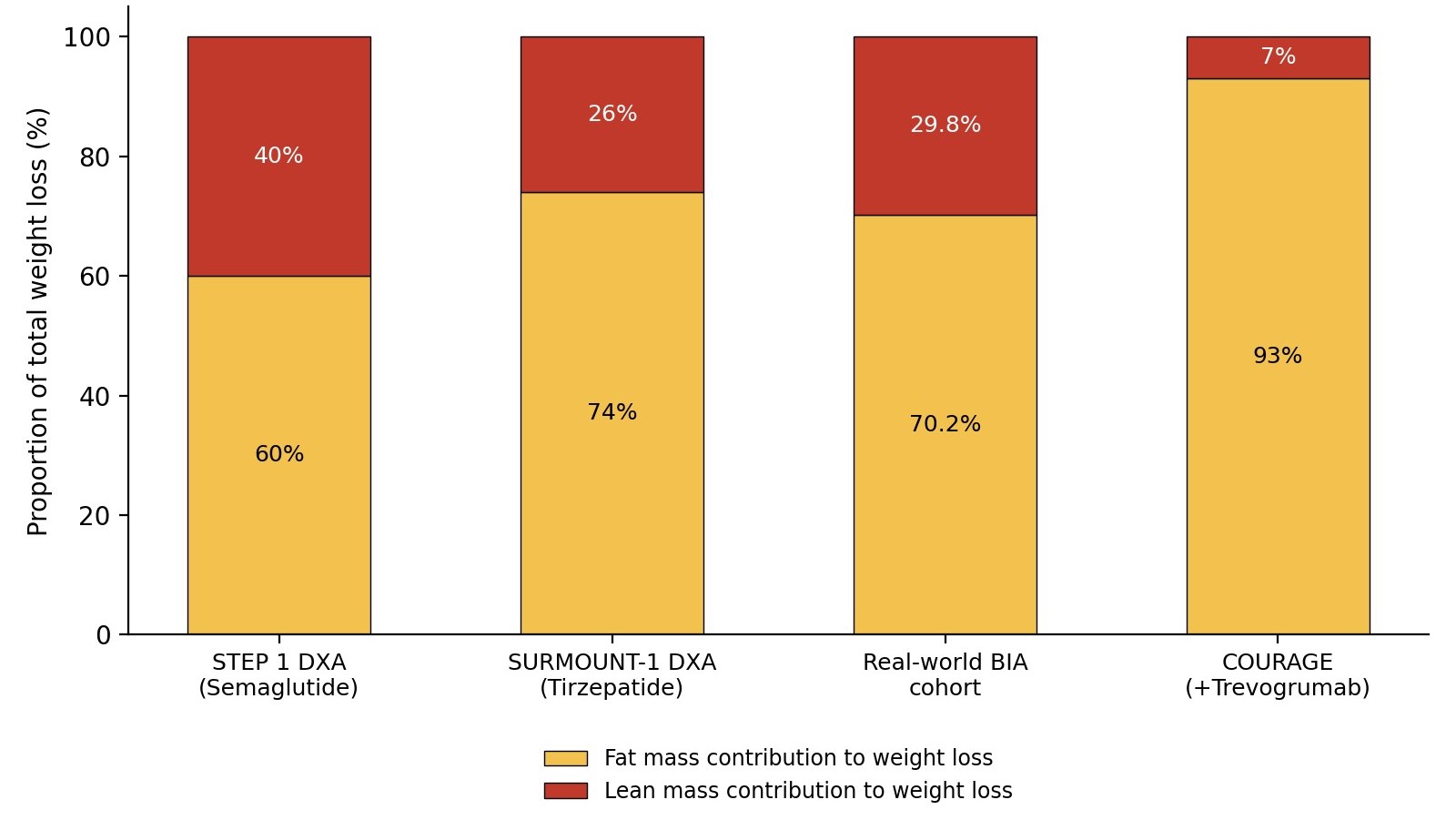
And yet. It would be a disservice to the field, and arguably a disservice to patients, to stop the story there. Underneath the striking topline efficacy numbers sit several biological and physiological limitations that are only now coming into full view (Lempesis & Dalamaga, 2026). Chief among these is the fact that obesity appears to be biologically defended with a tenacity that pharmacotherapy has not fully overcome; weight loss tends to plateau around 18 months, and stopping the drug does not simply freeze progress in place-it reverses it (Lempesis & Dalamaga, 2026; Abdallah et al., 2026). Within roughly a year of discontinuation, patients regain about two-thirds of the weight they had lost, and the cardiometabolic gains that had accompanied that loss tend to erode alongside it (Lasik & Ukleja-Sokolowska, 2026; Abdallah et al., 2026). Compounding this, the composition of the weight lost during treatment is not uniformly favorable: rapid pharmacologically induced energy restriction disproportionately strips lean tissue alongside fat, with skeletal muscle and lean mass accounting for somewhere between 25% and 40% of total weight reduction under GLP-1RA and dual co-agonist therapy (Lempesis & Dalamaga, 2026; Sancho-Haro et al., 2026). This raises legitimate concern about sarcopenic obesity, declining resting metabolic rate, and physical frailty-concerns that become sharper still in older adults and in patients who already carry metabolic comorbidities (Santic et al., 2026; Sancho-Haro et al., 2026).
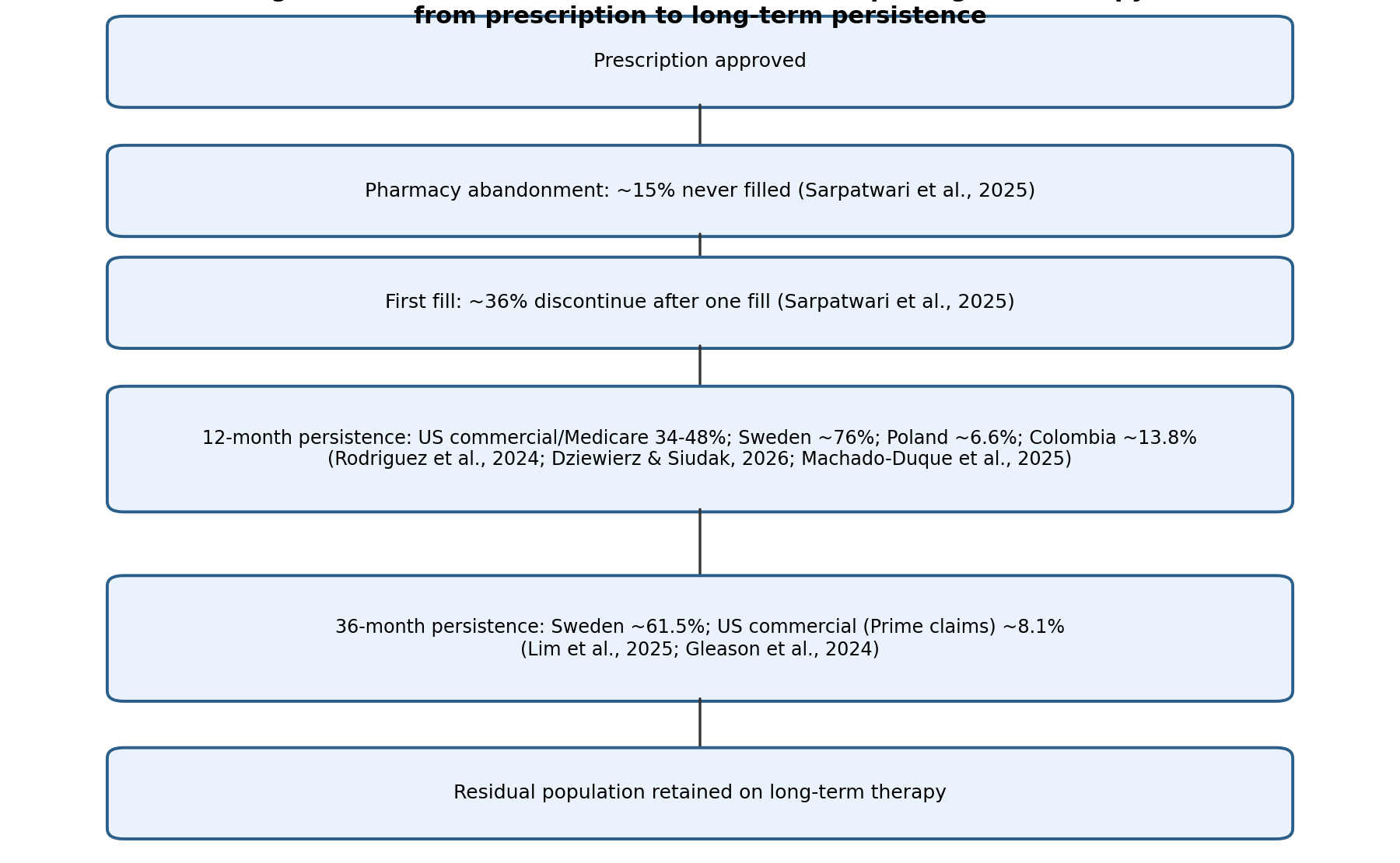
Tolerability presents its own set of complications. Gastrointestinal adverse events-nausea, vomiting, diarrhea, constipation, in varying combinations-affect up to 80% of treated individuals and represent, by most accounts, the single most common reason patients stop taking these drugs early (Pardali et al., 2026). These symptoms are usually transient and cluster around dose titration, but "usually transient" is cold comfort to a patient living through them, and real-world cohort data suggest that 46% to 65% of patients discontinue therapy within the first year regardless (Podder et al., 2026). Beyond the everyday tolerability burden, there are less common but more serious signals-modestly elevated risks of cholelithiasis and cholecystitis, and questions about interaction with pre-existing diabetic retinopathy-that warrant ongoing surveillance (Podder et al., 2026). And for the newer dual- and triple-receptor agonists now entering the pipeline, the honest answer is that we simply do not yet know what decades of sustained receptor activation will mean for thyroid C-cell biology, pancreatic health, or other outcomes that only reveal themselves over long follow-up (Lempesis & Dalamaga, 2026; Podder et al., 2026).
None of this occurs on a level playing field. Perhaps the starkest limitation of the incretin era is not biological at all, but economic. List prices for second-generation anti-obesity medications in the United States sit between $1,000 and $1,600 per month, a figure that effectively prices most eligible patients out of the market absent substantial insurance support (Podder et al., 2026). Coverage, when it exists, is inconsistent and often restrictive-Medicare, for instance, is statutorily barred from covering GLP-1RAs for obesity indications alone (Podder et al., 2026). The consequence is predictable, if no less troubling for being so: prescribing and fill rates track closely with socioeconomic status, insurance type, and geography, leaving Black, Hispanic, and socially vulnerable populations-groups that already carry a disproportionate share of the obesity burden-with disproportionately lower access (Podder et al., 2026). Absent deliberate policy intervention, it is difficult to see how the rapid diffusion of these high-cost therapies does anything but widen existing health disparities (Podder et al., 2026).
Finally, and perhaps most uncomfortably, many of these unknowns are amplified rather than resolved when the population in question is children. Childhood obesity has itself become epidemic in scope (Salama et al., 2025), and while semaglutide and liraglutide now carry FDA approval for adolescents aged 12 and older, younger children remain, for the most part, an evidence vacuum (Salama et al., 2025). What sustained pharmacological appetite suppression means for pubertal timing, physical development, and psychiatric wellbeing over years-not months-of exposure is genuinely unknown (Batra et al., 2026; Abdallah et al., 2026). Regulators have already flagged concerns about slowed growth velocity and delayed bone mineral density accrual with prolonged exposure, concerns serious enough to justify routine pediatric surveillance rather than reassurance (Abdallah et al., 2026).
It is this tension-extraordinary efficacy set against biological limitation, tolerability burden, inequitable access, and pediatric uncertainty-that motivates the present review. Rather than treating GLP-1-era pharmacotherapy as a solved problem, we approach it as a rapidly maturing but still incomplete story, and we structure the remainder of this review around three research questions and five objectives that, together, attempt to map both what is now well established and what still needs to be worked out.
Several open questions frame the analysis that follows. The first concerns phenotypic variation: how might different clinical presentations—what some clinicians informally describe as "slow burn" or "hungry gut" phenotypes—shape not just the rate of weight loss but its composition, particularly the ratio of fat to lean mass lost, in adults treated with dual GIP/GLP-1 agonists (Garcia-Gorrita et al., 2025; Santic et al., 2026)? A second, more structural question asks to what extent socioeconomic status and geographic variation in insurance-coverage policy independently predict real-world 12-month persistence with GLP-1RA therapy among racially diverse populations living with severe obesity (Podder et al., 2026). A third question turns toward the pediatric population and toward time horizons the current literature has barely begun to address: what is the long-term safety profile—specifically with respect to renal function and bone mineral density—and the developmental impact of sustained GLP-1 receptor activation in children aged 6 to 12, followed over five years (Salama et al., 2025; Abdallah et al., 2026)?
Building from these questions, this review pursues five interconnected objectives. The first is mechanistic: to elucidate the molecular and physiological basis of GLP-1, GIP, and glucagon receptor co-agonism, and to evaluate how synergistic pathway activation improves metabolic parameters relative to single-receptor agonism (Lempesis & Dalamaga, 2026; Podder et al., 2026). The second turns to real-world performance rather than trial efficacy, aiming to quantify the global persistence and adherence gap across modern obesity pharmacotherapies in diverse healthcare systems, and to identify the clinical, tolerability, and financial factors that most consistently drive early discontinuation (Podder et al., 2026; Dziewierz & Siudak, 2026). Third, the review examines the impact of rapid pharmacological weight loss on body composition, with particular attention to skeletal muscle quality, neuromuscular function, and the extent to which precision protein nutrition and structured resistance exercise can preserve lean mass during treatment (Santic et al., 2026; Sancho-Haro et al., 2026). Fourth, it appraises the clinical, ethical, and policy dimensions of this therapeutic era, specifically how high acquisition costs and restrictive insurance coverage contribute to racial, ethnic, and geographic inequity in access to evidence-based obesity care (Podder et al., 2026). Finally, the review works toward something more constructive than critique alone: a multidisciplinary clinical management framework that integrates structured dietetic support, pediatric monitoring protocols, and behavioral intervention, with the goal of helping patients move from pharmacologically supported appetite suppression toward durable, longer-term metabolic rehabilitation (Lasik & Ukleja-Sokolowska, 2026; Balasubaramaniam et al., 2026).