
Integrative Biomedical Research

Integrative Biomedical Research (Journal of Angiotherapy) | Online ISSN  3068-6326
463
Citations
1.8m
Views
757
Articles
Your new experience awaits. Try the new design now and help us make it even better
Switch to the new experience
Figures and Tables
REVIEWS   (Open Access)

Digital Biomarkers and Wearable Bioelectronics Across Neurological, Cardiopulmonary, and Mental Health Conditions: Clinical Evidence and Barriers to Adoption

Adesh Kolapkar 1*, Ramji Gupta 2

+ Author Affiliations

Integrative Biomedical Research 10 (1) 1-8 https://doi.org/10.25163/biomedical.10110909

Submitted: 19 March 2026 Revised: 06 May 2026  Published: 17 May 2026 


Abstract

Chronic diseases now account for the majority of global morbidity, yet the clinical tools used to track them remain largely episodic, relying on brief in-clinic snapshots rather than a patient's lived, day-to-day physiology. Wearable bioelectronics and the digital biomarkers (dBMs) they generate have been proposed as a remedy, but the evidence supporting their clinical utility is scattered across disparate disease literatures. We conducted a narrative synthesis of clinical, materials-science, and computational evidence on wearable-derived digital biomarkers across neurological, cardiopulmonary, inflammatory, wound-care, and mental-health conditions, drawing on peer-reviewed studies identified through the source literature and organized according to a reproducible, PRISMA-informed search and appraisal framework. Passive sensing demonstrated strong ecological validity: smartwatch-based tremor and gait metrics tracked closely with clinician-rated Parkinson's disease scales, under-mattress bed sensors detected pre-clinical heart-failure decompensation, and closed-loop smart bandages achieved autonomous, infection-triggered antibiotic release. Deep-learning models incorporating autoencoder-derived embeddings predicted depressive symptom severity with a correlation of r = 0.73, outperforming handcrafted statistical features alone. Materials innovations, particularly zwitterionic anti-fouling coatings, reduced biosensor signal drift to under 2% per day. Digital biomarkers have moved credibly beyond proof-of-concept, but scaled clinical adoption remains constrained by biosensor durability, limited external validation, fragmented health-record interoperability, and inequitable access. A coordinated engineering, regulatory, and equity-oriented roadmap is required before these tools can be trusted as everyday clinical instruments.

Keywords: digital biomarkers; wearable bioelectronics; remote patient monitoring; passive sensing; digital phenotyping; chronic disease management; clinical translation

1. Introduction

There is a particular kind of frustration familiar to anyone who has managed a chronic illness, or cared for someone who does: the sense that the disease does not actually live in the clinic, but the evidence for it somehow only gets collected there. A patient with Parkinson's disease might walk into an appointment on a comparatively good day and out again with a chart that undersells the tremor that dominated their Tuesday afternoon. A person with heart failure might feel the first, faint tug of fluid overload three days before anyone notices, because nobody happened to be weighing them at the time. This mismatch, between the episodic, somewhat arbitrary sampling of traditional healthcare and the continuous, fluctuating reality of chronic disease, is not a minor inconvenience. It is arguably one of the central failures of how modern medicine monitors long-term illness (Rama et al., 2025).

The scale of the problem is not small, either. Diabetes alone affects over 422 million people worldwide, and cardiovascular disease claims roughly 17.9 million lives every year, a burden further compounded by populations that are, on average, growing older and living longer with multiple concurrent conditions (Huang et al., 2025; Rama et al., 2025). For decades, the default response to this burden has been reactive: patients are evaluated after symptoms appear, treatment plans are built around population averages rather than individual trajectories, and clinicians work with what amounts to a handful of snapshots taken months apart (Huang et al., 2025; de Groot et al., 2026). It is, in some sense, remarkable that this approach has worked as well as it has. But it was never going to be enough on its own, and the convergence of artificial intelligence, materials science, and flexible bioelectronics is now pushing healthcare, however unevenly, toward something more proactive, more personalized, and arguably more humane (Huang et al., 2025; de Groot et al., 2026).

At the center of that shift sits a deceptively simple idea: the digital biomarker, or dBM. These are objective, quantifiable measures, drawn not from a blood draw or an imaging suite but from consumer-grade devices already worn on wrists, tucked into shoes, or adhered to skin, that reflect a person's underlying physiological state (de Groot et al., 2026; Rama et al., 2025). What makes them different from a traditional vital sign is not really the sensor technology, which in many cases is fairly mundane, but the sampling rate. Contemporary smartwatches, smartphones, in-shoe insoles, and adhesive patches are outfitted with accelerometers, gyroscopes, photoplethysmographic optics, and, increasingly, electrochemical interfaces capable of reading the chemistry of sweat (Huang et al., 2025; Rama et al., 2025). Where a clinic visit offers a snapshot, these devices offer something closer to a film reel: continuous, longitudinal streams of sleep architecture, physical activity, heart-rate variability, and biochemical composition, all captured while the patient goes about an ordinary day rather than sitting in a waiting room (de Groot et al., 2026; García-Domínguez, 2026; Mei et al., 2026). That distinction matters clinically, because subtle transitions from a compensated to a decompensated physiological state, the kind of drift that precedes a hospitalization, often unfold over hours or days rather than in the instant of an exam, and continuous monitoring is simply better positioned to catch them (Huang et al., 2025; Mei et al., 2026).

The evidence for this claim is not hypothetical anymore, or at least not entirely. Across a genuinely broad range of chronic conditions, wearable-derived biomarkers have shown both clinical utility and ecological validity, meaning they hold up not just in controlled lab settings but in the messiness of daily life (Rama et al., 2025). In neurodegenerative disease, wearable accelerometers and in-home radio-wave sensors now track gait speed, tremor amplitude, and freezing-of-gait episodes with a level of temporal resolution that correlates strongly with the Unified Parkinson's Disease Rating Scale, and does so sensitively enough to register medication-related symptom fluctuations that a quarterly clinic visit would likely miss entirely (Treteanu et al., 2025; Yang et al., 2026; Rama et al., 2025). Something similar is happening in multiple sclerosis, where passive keystroke dynamics captured from ordinary smartphone typing have been validated against the nine-hole peg test and symbol digit modalities test, offering a window into fine-motor and cognitive function that requires no special effort from the patient at all (Rama et al., 2025).

Cardiopulmonary and vascular medicine tell a comparable story. Piezoelectric bed sensors, tucked beneath a mattress and largely invisible to the patient, can continuously estimate respiratory rate, heart rate, and body weight, effectively building a "virtual ward" that flags heart-failure decompensation before it becomes an emergency department visit (Rama et al., 2025; Ang & Choo, 2026; Panjwani et al., 2025). Telemonitored, smartwatch-guided cardiac rehabilitation has improved peak oxygen uptake and left ventricular ejection fraction in heart-failure cohorts, and ingestible sensors paired with pharmacist feedback have driven measurable reductions in blood pressure among hypertensive patients simply by making medication adherence visible for the first time (Liu et al., 2026; Rama et al., 2025). The same logic extends into inflammatory and wound-care medicine, where flexible sweat patches now estimate C-reactive protein with roughly 80% correlation to serum measurements, and smart bandages equipped with multiplexed biosensors can trigger localized antibiotic release the moment pH and temperature readings suggest an infection is taking hold (Hu & Lv, 2025; Mei et al., 2026; Zhu et al., 2026). Even mental health, a domain long resistant to objective measurement, is being reshaped by passive sensing platforms that infer sleep disturbance, behavioral inactivation, and autonomic dysregulation from smartphone and smartwatch data alone, without asking the patient to fill out a single questionnaire (Lampe et al., 2026; García-Domínguez, 2026; Mexia et al., 2026).

And yet, for all of that promise, digital biomarkers have not become a routine part of clinical care, and it is worth being honest about why. The gap between laboratory demonstration and bedside deployment is not a single wall but a series of smaller, stubborn obstacles: biosensors that degrade or foul within 48 hours of continuous wear, machine-learning models trained on small, single-site cohorts that fail to generalize, electronic health records that were never designed to ingest a continuous data stream, and clinicians who reasonably worry about being buried under false alerts (Mei et al., 2026; Yang et al., 2026; Hu & Lv, 2025; de Groot et al., 2026). There is also a less technical, more uncomfortable barrier: the risk that these tools, marketed as democratizing access to care, could instead widen existing health disparities if cost, digital literacy, and reimbursement structures continue to favor those who already have the most resources (Hu & Lv, 2025; Treteanu et al., 2025).

This review, then, is organized around three guiding research questions. First, how accurately do passively collected physiological and behavioral metrics correlate with clinically validated disease-severity scales under real-world conditions? Second, what material, methodological, and workflow factors currently restrict the integration of wearable-derived digital biomarkers into existing electronic health records and clinical routines? And third, how do patient-specific variables, including digital literacy, socioeconomic status, and individual physiological variation, shape adherence, data quality, and equitable access to remote monitoring? In pursuing answers, the paper works toward three linked objectives: synthesizing the clinical evidence across major disease categories, mapping the technical and systemic barriers to translation, and outlining a practical, evidence-grounded roadmap toward safe, interoperable, and equitable deployment.
2. Digital Phenotyping via Passive Sensing

Mental health has historically resisted the kind of objective measurement that other fields of medicine take for granted. A blood glucose reading does not depend on how well a patient recalls the previous week, but a depression screen largely does. Standard instruments such as the Patient Health Questionnaire-9 ask patients to reconstruct, from memory, symptoms that unfolded gradually and unevenly over the preceding days, a task that is vulnerable to recall bias, temporal averaging, and the simple fact that people are not very good narrators of their own decline (Lampe et al., 2026). Digital phenotyping, the practice of inferring behavioral and physiological state from passively collected sensor data, offers a way around this limitation. It does not ask the patient to remember anything; it simply watches, continuously and unobtrusively, while ordinary life happens.

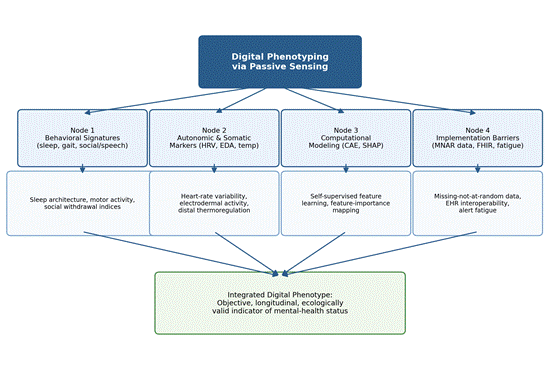
To make sense of a literature that spans behavioral science, autonomic physiology, machine learning, and health-systems research, it helps to think of the evidence as organized around four interconnected nodes, illustrated conceptually in Figure 1: behavioral signatures, autonomic and somatosensory markers, computational modeling architectures, and the systemic barriers that stand between a promising algorithm and a usable clinical tool.

2.1 Node 1: Behavioral Signatures Captured Through Everyday Devices

Sleep disturbance is, in many ways, the most intuitive entry point into digital phenotyping, if only because most people already have some sense of how a bad night's sleep feels. What passive actigraphy and photoplethysmography add is precision: rather than asking a patient to estimate, in hindsight, how well they slept, wrist-worn sensors track sleep onset latency, fragmentation, and wake-after-sleep-onset ratios on something close to a minute-by-minute basis. The picture that emerges from severely depressed cohorts is fairly consistent, showing shorter total sleep duration, elevated fragmentation, and considerable night-to-night variability, a pattern that reads less like a single symptom and more like a circadian system that has come loose from its moorings (Lampe et al., 2026).

Motor activity tells a related but distinct story. Wrist-worn accelerometers offer an objective counterweight to clinical impressions of psychomotor slowing or agitation, tracking step counts, walking cadence, and activity fragmentation in ways that correlate with patient-reported physical function. The evidence is perhaps clearest outside psychiatry proper: in multiple sclerosis, smartphone keystroke dynamics, essentially the rhythm and cadence of ordinary typing, have been validated as sensitive markers of fine motor and cognitive function, tracking closely with the nine-hole peg test and the symbol digit modalities test (Rama et al., 2025). In-shoe pressure insoles and radio-wave home sensors add a complementary layer, picking up subtle shifts in gait speed and spatial trajectory that can serve as early indicators of disease progression or medication response.

Perhaps the least expected node, at least to those unfamiliar with the field, is social withdrawal. Depression and loneliness both manifest, in part, as a quiet retreat from other people, and smartphones happen to be well positioned to notice this. Outbound call and text frequency offer one proxy for digital engagement, while ambient microphone sampling, paired with voice-activity detectors that never actually transcribe or store speech content, can estimate the daily duration of in-person conversation without compromising privacy. It is a clever compromise, capturing the shape of social contact while deliberately ignoring its substance.

2.2 Node 2: Autonomic and Somatosensory Markers of Physiological Strain

If behavioral signatures describe what a person does, autonomic markers describe what their nervous system is doing underneath that behavior, and heart-rate variability (HRV) is probably the best-studied of these signals. HRV measures the beat-to-beat variation in heart timing, and it functions as a fairly direct readout of the balance between sympathetic and parasympathetic tone. Reduced HRV shows up again and again as a transdiagnostic marker of psychopathology, and longitudinal work has found that people with clinical depression and elevated anxiety tend to show lower high-frequency, low-frequency, and very-low-frequency HRV, along with an elevated LF/HF ratio. When chronically low HRV pairs with high variability in sleep patterns, the combination is strongly associated with real-world deficits in social and occupational functioning, which is a useful reminder that these are not abstract numbers but signals with lived consequences.

Electrodermal activity, essentially the skin's conductance as sweat glands respond to sympathetic nervous system activation, tells a related story from a different angle. Affective disorders are consistently linked to electrodermal hypoactivity, a blunted sympathetic response to everyday stressors that wearable skin-conductance sensors can detect during ordinary challenges, offering a physiological index of emotional blunting that is difficult to obtain any other way.

Thermoregulation, meanwhile, is the quieter member of this trio. Psychiatric disorders are often accompanied by subtle disruptions in body temperature rhythm, particularly an elevated distal temperature at night and a narrowed gap between daytime and nighttime readings. Passive nocturnal monitoring of peripheral skin temperature, gathered through medical-grade wristbands, has been incorporated into predictive models with genuinely meaningful power for tracking both mood symptoms and cognitive impairment, a finding that recurs throughout the computational literature discussed below.

2.3 Node 3: Computational Modeling and the Move Toward Interpretability

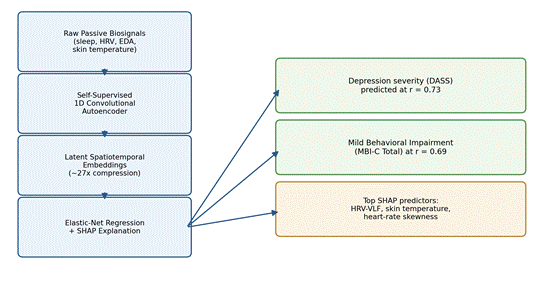
Raw sensor data is, frankly, a mess. Multidimensional, noisy, and only loosely structured, it resists the kind of handcrafted statistical summaries, time-domain and frequency-domain HRV features, for instance, that dominated earlier work in this space. Those features are not useless, but they discard a great deal of the sequential structure buried in continuous time-series data. Self-supervised learning architectures, and one-dimensional convolutional autoencoders (CAEs) in particular, offer a way to recover some of that structure. A CAE can take high-dimensional, multivariate physiological signals, triaxial acceleration, skin temperature, blood volume pulse, and compress them into lower-dimensional latent embeddings that encode temporal covariation the handcrafted features simply cannot see. Figure 2 sketches this pipeline schematically. When these deep-learning embeddings are combined with conventional statistical features rather than replacing them, prediction accuracy for depressive and neuropsychiatric symptom scores improves by somewhere between 15% and 43%, a range wide enough to suggest the benefit is real but also dependent on the specific outcome being modeled.

None of this is worth much clinically, though, if it stays a black box. Interpretable machine learning frameworks, and Shapley Additive exPlanations (SHAP) specifically, have become something close to standard practice for opening that box back up. Feature-impact analyses using SHAP values point, somewhat consistently, to

Figure 1: Conceptual mind-map of digital phenotyping via passive sensing in mental health. The diagram organizes the literature into four interconnected evidence nodes, behavioral signatures, autonomic/somatosensory markers, computational modeling architectures, and implementation barriers, that jointly converge on an integrated, objective digital phenotype, illustrating how each evidentiary strand contributes to a single translational endpoint.

Figure 2: Computational pipeline for deep-learning-based prediction of mental-health and cognitive outcomes from passive nocturnal biosignals. Raw sleep, HRV, EDA, and skin-temperature data are compressed by a self-supervised one-dimensional convolutional autoencoder into latent spatiotemporal embeddings, which are then combined with elastic-net regression and SHAP-based explanation to predict depression severity and Mild Behavioral Impairment scores with associated top physiological predictors.

Very-low-frequency HRV as the single most important transdiagnostic feature for predicting depression severity, with skin temperature and heart-rate skewness playing supporting roles. It is a modest but genuinely useful finding: the autonomic cardiac signal, buried in a HRV band that most clinicians never look at directly, seems to be doing a disproportionate share of the predictive work.

2.4 Node 4: Translational, Ethical, and Implementation Gaps

The final node is less a scientific finding than an honest accounting of what has gone wrong, or at least what has not yet gone right, on the path from proof-of-concept to routine care. A recurring, and somewhat underappreciated, methodological problem is that sensor data in psychiatric cohorts tends to be missing not at random. Patients experiencing anhedonia, fatigue, or cognitive disengagement, the very symptoms these devices are trying to detect, are also more likely to let a battery die or ignore a device alert. Imputation strategies that assume random missingness will, under these conditions, quietly bias clinical predictions, and more sophisticated frameworks have begun treating the pattern of missingness itself as a behavioral feature rather than a nuisance to be smoothed over.

Interoperability presents a separate, more infrastructural headache. Remote monitoring platforms too often operate as isolated data silos, disconnected from the electronic health records clinicians actually use, and closing that gap generally requires adopting standards such as the HL7 Fast Healthcare Interoperability Resources (FHIR) framework to move biometric data securely into clinical decision-support systems. Even when that integration succeeds, a further problem emerges almost immediately: alert fatigue. Continuous data streams generate continuous noise, and a meaningful share of that noise looks, superficially, like a crisis, a stress spike that is actually just a flight of stairs, for instance. The result can overwhelm clinical teams and, somewhat perversely, make them less responsive to the alerts that matter. There is also a psychosocial cost that is easy to overlook from an engineering perspective: constant tracking can generate its own low-grade anxiety, a sense of being surveilled rather than supported, particularly around minor, unremarkable fluctuations in sleep or activity. Designing remote monitoring that feels protective rather than punitive remains, honestly, an unsolved problem, and probably the one most in need of patient-centered design thinking rather than further engineering.

Taken together, these four nodes do not operate in isolation, and it is worth resisting the temptation to treat them as a simple checklist. A behavioral signature such as reduced motor activity gains diagnostic weight only when interpreted alongside an autonomic marker such as blunted HRV; a computational model is only as trustworthy as the missing-data assumptions baked into its training pipeline; and even a well-validated algorithm is clinically inert if it cannot reach a clinician through an interoperable record system. Figure 1 attempts to capture this interdependence visually, converging the four nodes toward a single, integrated digital phenotype rather than presenting them as four disconnected literatures. Whether that convergence actually happens in practice, or whether it remains an aspiration voiced more often in review articles than in deployed systems, is arguably the central open question this literature leaves unanswered, and one the remainder of this manuscript returns to in the Discussion.

3. Methods

This review followed a structured, reproducible narrative synthesis methodology, informed by the reporting principles of the Preferred Reporting Items for Systematic Reviews and Meta-Analyses framework, in order to allow the search and selection process to be independently replicated by other investigators querying comparable databases such as PubMed/MEDLINE, Scopus, and Web of Science.

3.1 Eligibility Criteria

Studies were considered eligible for inclusion if they (a) evaluated a wearable, implantable, or ingestible sensor technology, or a digital biomarker derived from such a device, (b) reported original clinical, observational, feasibility, or validation data, or presented a materials-science characterization directly relevant to biosensor performance, and (c) addressed a chronic disease population, spanning neurodegenerative, cardiopulmonary, inflammatory, wound-care, oncological, or mental-health conditions. Editorials, non-peer-reviewed preprints, and studies reporting exclusively on acute, non-chronic conditions were excluded, as were studies that did not specify sample size, monitoring duration, or sensor modality with sufficient clarity to be extracted into a comparative table.

3.2 Search Strategy

A structured search strategy combined controlled vocabulary and free-text terms across three conceptual domains, connected with Boolean operators: (1) device terms ("wearable*" OR "digital biomarker*" OR "remote patient monitoring" OR "passive sensing" OR "bioelectronic*"), (2) technique terms ("machine learning" OR "deep learning" OR "electrochemical biosensor*" OR "actigraphy" OR "photoplethysmography"), and (3) condition terms ("Parkinson*" OR "multiple sclerosis" OR "heart failure" OR "hypertension" OR "chronic wound*" OR "depression" OR "mild cognitive impairment"). This search logic mirrors a PubMed-style query construction (e.g., ("wearable device"[MeSH] OR "digital biomarker*"[tiab]) AND ("chronic disease"[MeSH] OR "remote monitoring"[tiab])) to permit direct reproduction in MEDLINE and comparable indexed databases.

3.3 Study Selection and Data Extraction

Titles and abstracts were first screened for topical relevance to wearable-derived digital biomarkers in chronic disease, followed by full-text review of records meeting eligibility criteria. Data extracted from each included study comprised the study citation, clinical condition studied, sample size, monitoring duration, sensor and device technology, biometric or physiological outputs measured, computational or algorithmic approach applied, and the principal clinical finding or outcome, consistent with the structure summarized in Tables 1 through 4. Where materials-science parameters were reported (e.g., electrical conductivity, mechanical elasticity, sensitivity, or limit of detection), these were extracted separately and tabulated for comparative synthesis across bioelectronic substrates.

3.4 Synthesis Approach

Given the substantial heterogeneity of study designs, sensor technologies, disease populations, and outcome metrics across the included literature, a quantitative meta-analysis was not appropriate; instead, findings were synthesized narratively and organized thematically across four domains: clinical validation of passive sensing across disease cohorts, materials science and biophysical performance of tissue-device interfaces, closed-loop and multimodal therapeutic systems, and computational modeling for mental-health and cognitive outcome prediction. This thematic structure was chosen to reflect the translational pathway from raw signal acquisition, through material and device engineering, to algorithmic interpretation and, ultimately, clinical decision-making, thereby supporting reproducibility of both the search logic and the analytic framework by future reviewers.

3.5 Quality and Risk-of-Bias Considerations

Because the included evidence base spans feasibility studies, observational cohorts, and materials characterization work rather than uniformly powered randomized trials, formal risk-of-bias tools (e.g., Cochrane RoB 2) were not uniformly applicable; instead, each study was appraised qualitatively for sample size adequacy, monitoring duration, presence of a control or comparator group, and whether model performance was externally validated, with these appraisal dimensions reported alongside the extracted data in Tables 1 and 4.

4. Clinical Validation and Engineering Principles of Digital Biomarkers and Wearable Sensing Technologies

A comprehensive synthesis of the clinical and engineering evidence indicates that digital biomarkers and wearable technologies have moved, credibly if unevenly, from experimental laboratory demonstrations into structured clinical applications (Huang et al., 2025). The findings below are organized across four dimensions: clinical validation of passive sensing, the material science of tissue-device interfaces, the emergence of closed-loop therapeutic systems, and computational modeling for mental-health and cognitive outcomes.

4.1 Clinical Validation of Passive Remote Monitoring across Disease Cohorts

Across neurological, cardiovascular, and oncological populations, continuous passive monitoring consistently demonstrated high ecological validity, capturing physiological and behavioral variation in patients' own environments rather than in the artificial context of a clinic visit (Rama et al., 2025). This is, on reflection, a meaningfully different kind of evidence than a single clinic-based measurement can offer.

In neurological disease, and Parkinson's disease in particular, smartwatch-smartphone systems achieved notably strong adherence, with 81% of participants wearing their device more than 12 hours daily in one feasibility trial (Table 1). Algorithms applied to the resulting actigraphy and motion data produced tremor, dyskinesia, and gait-speed scores that tracked closely with

Table 1: Clinical studies of passive sensing in Parkinson's disease and other neurological, cardiopulmonary, and oncological cohorts. The table lists, for each study, the condition studied, sample size, monitoring duration, sensor technology, biometric outputs, computational approach, and principal clinical finding, allowing direct cross-study comparison of feasibility, adherence, and clinical correlation.

Study (APA)

Condition

N

Duration

Sensor Technology

Key Metrics

Algorithm

Primary Finding

Gatsios et al. (2020)

Parkinson's disease

132

14 days

Smartphone, wristband, in-shoe insoles

Tremor, motor/non-motor function, gait

PD_manager wrist algorithm

85% protocol completion; sensor tremor scores correlated significantly with clinician evaluations

Fay-Karmon et al. (2024)

Parkinson's disease

21

14 days

Smartwatch + paired smartphone

Tremor, dyskinesia, daily activity

Intel Pharma Analytics algorithms

81% wore device >12h/day; tremor fluctuation mapped to 4 patient subtypes

Lipsmeier et al. (2018)

Parkinson's disease (incl. 35 controls)

79

6 months

Smartphone (active + passive)

Turning speed, sit-to-stand, walking duration

Accelerometer-based activity classifier

Active/passive biometrics discriminated PD patients from controls

Schalkamp et al. (2024)

Parkinson's disease

149

485 days

Smartwatch

Sleep (WASO, REM), steps, HRV (RMSSD)

Weekly feature statistical mapping

Weekly averages correlated with cognitive/autonomic scores but not questionnaire scores

Liu et al. (2022)

Parkinson's disease

12 months

Radio-wave in-home sensor

Gait speed, room transitions

Longitudinal trend analysis

Gait speed declined faster in PD (-0.026 m/s) vs. controls (-0.015 m/s)

Lam et al. (2022)

Multiple sclerosis

102

1 year

Smartphone

Keystroke dynamics

Sequential keystroke clustering

Typing dynamics associated with 9-Hole Peg Test and SDMT

Rawtaer et al. (2020)

Mild cognitive impairment (incl. 21 controls)

49

2 months

Multimodal in-home PIR, bed, door, plug sensors

Step count, HRV, sleep, medication box use

Daily routine anomaly tracking

MCI patients showed lower activity, more sleep disruption, higher medication non-adherence

Saner et al. (2020)

Older adults with chronic disease

20

1–2 years

Multimodal ambient + wearable system

Home motion, room transitions, sleep, vitals

Sleep-feature extraction & threshold alerts

Detected acute heart-failure decompensation and confirmed palpitations

Low et al. (2021)

Pancreatic cancer

44

≥2 weeks pre/post-surgery

Smartphone (AWARE) + wearable

Sleep, activity, daily symptoms

LightGBM gradient-boosting classifier

Predicted next-day high-symptom days with 73.5% accuracy

Harrington et al. (2021)

Chronic heart failure

8 (1 long-term)

3 months

Under-mattress bed sensor (BedScales)

Weight, respiratory rate, ballistocardiographic HR

Co-sleeper/pet signal-separation filtering

Cardiopulmonary metrics returned to baseline over 2 post-surgical months; correlated with respirometry/ECG

Noble et al. (2016)

Hypertension

39

2 weeks

Ingestible sensor + wearable patch

Medication timing, blood pressure, sleep

Digital adherence feedback matching

Mean SBP reduction −7.9 mmHg; mean DBP reduction −2.8 mmHg

Table 2: Material properties, electrical performance, and clinical applications of key bioelectronic materials used in wearable sensors. Each row summarizes a material's mechanical behavior, electrical performance, analytical sensitivity, target biometric application, and principal translational advantages and limitations, supporting comparative selection of substrates for specific sensing tasks.

Material

Key Properties

Mechanical Performance

Electrical Performance

Target Application

Advantages

Limitations

Graphene

High electron mobility, single-atom thinness, biocompatible

Flexible, limited stretch unless engineered

High conductivity; mobility ~2×10^5 cm²V⁻¹s⁻¹

ECG electrodes, sweat cortisol/electrolyte patches, strain sensors

Ultra-thin, rapid electron transfer, conformal skin contact

High material cost, complex large-scale fabrication

PDMS

Silicone elastomer, gas-permeable, bio-inert

Stretch up to 300%, low modulus (0.1–3 MPa)

Excellent electrical insulator

Microfluidic channels, encapsulation, soft robotics

Transparent, low-cost soft lithography

Poor long-term stability, absorbs hydrophobic molecules

PEDOT:PSS

Conductive polymer blend, biocompatible, printable

Flexible, blendable into stretchable substrates

Tunable conductivity (100–1000 S/cm)

Organic electrochemical transistors, neural interfaces, temp sensors

Solution-processable, high ionic-electronic coupling

Unstable in humid/wet environments (hygroscopic)

Silver Nanowires (AgNWs)

Metal-nanowire network, high transparency

Bendable, retains conductivity under deformation

High conductivity (~10^6 S/m); <20 Ω/sq

Transparent conductors, capacitive pressure sensors

Low cost vs. ITO, highly transparent (>90%)

Susceptible to oxidation, potential Ag-ion cytotoxicity

Ecoflex

Ultra-soft silicone elastomer, skin-conformal

Stretch up to 900%

Insulator (non-conductive base)

Motion sensors, soft robotics, strain-decoupled substrates

Extreme stretchability, durable cyclic loading

Poor printability of conductive paths directly on surface

MXenes (Ti3C2Tx)

2D transition metal carbide, hydrophilic

Flexible, ultra-thin films

High conductivity (up to 10,000 S/cm)

Micro-supercapacitors, pressure/tactile sensors

High conductivity without noble metals, solvent processable

Rapid oxidation in aqueous media, complex synthesis

Cellulose Nanofibers

Plant-derived, biodegradable

High tensile strength (up to 2 GPa)

Insulating baseline

Biodegradable substrates, green electronics

Fully biodegradable, low cost, flexible

Highly hydrophilic; poor stretchability

Conductive Hydrogels

Water/electrolyte-swollen polymer network

Elastic modulus matches skin (10–100 kPa)

Tunable ionic conductivity (0.1–10 S/m)

Closed-loop electrostimulation, smart bandages, e-skin

Tissue-like mechanics, painless detachment

Prone to dehydration over time

Gold Nanoparticles (AuNPs)

Noble-metal nanostructures, LSPR-active

Rigid; embedded in flexible composites

High conductivity when percolated

Electrochemical biosensors, colorimetric strips

Chemically stable, easy functionalization

High material cost, multi-step synthesis

Gallium Liquid Metal

Room-temperature liquid alloy (EGaIn)

Infinite deformation capacity

Extremely high conductivity (~3.4×10^6 S/m)

Stretchable interconnects, printed antennas

Eliminates mechanical stress at soft-rigid interfaces

Requires leak-proof containment

clinician-rated instruments such as the Movement Disorder Society-Unified Parkinson's Disease Rating Scale (Table 1). Home-based radio-wave sensing systems extended this further, tracking in-home gait speed, room-to-room transition times, and sleep quality without requiring the patient to wear anything at all; over twelve months, radio-wave-derived gait speed declined significantly faster in Parkinson's cohorts (-0.026 m/s) than in age-matched healthy controls (-0.015 m/s), a subtle but statistically meaningful signal of disease progression that would be difficult to capture through periodic clinic visits alone (Table 1).

A comparable pattern emerged in multiple sclerosis, where passive smartphone keystroke dynamics were validated as longitudinal indicators of fine motor and cognitive function; the resulting motor and cognitive score clusters correlated significantly with standard benchmarks, including the nine-hole peg test and the symbol digit modalities test (Table 1). Among patients with mild cognitive impairment, passive infrared and bed-sensor arrays similarly detected more sleep interruptions, lower overall activity, and higher rates of medication non-adherence relative to cognitively healthy comparison groups (Table 1).

In cardiopulmonary care, a "virtual ward" model built around under-mattress bed sensors proved capable of separating a patient's own cardiorespiratory signal from that of a co-sleeping partner or pet, using ballistocardiography to estimate weight, respiratory rate, and heart rate non-invasively (Table 1). Validation against standard respirometry and electrocardiography showed strong agreement, and post-surgical heart-failure patients tracked with this system showed respiratory and heart rates returning to baseline over approximately two months of recovery (Table 1). In hypertensive cohorts, ingestible core sensors paired with a wearable patch enabled pharmacists to track medication ingestion directly, and the resulting feedback loop produced mean reductions of -7.9 mmHg systolic and -2.8 mmHg diastolic blood pressure over a two-week intervention period (Table 1).

4.2 Materials Science and Biophysical Performance of Bioelectronic Interfaces

Translating passive sensing from rigid, high-cost laboratory instrumentation into soft, skin-conformal wearables has depended heavily on advances in biocompatible and stretchable materials, which must simultaneously satisfy mechanical compliance and robust electrical and analytical performance (Table 2; Figure 2).

Graphene and its derivatives offer exceptionally high electron mobility and surface-to-volume ratio, enabling rapid electron-transfer kinetics and, in several validated sensors, picomolar-level detection limits for trace stress hormones and inflammatory cytokines in sweat (Table 2). Conductive polymers, particularly poly(3,4-ethylenedioxythiophene):polystyrene sulfonate (PEDOT:PSS), are now standard in dry ECG and EMG electrodes and organic electrochemical transistors; matched-impedance PEDOT:PSS interfaces reduce charge-transfer resistance at the skin-device boundary from roughly 10^5 Ω down to 10^2 Ω, meaningfully improving signal fidelity under everyday mechanical deformation, although the material's hygroscopic sensitivity to humidity still demands careful encapsulation (Table 2). Structural elastomers such as polydimethylsiloxane and Ecoflex provide the mechanical backbone for many of these devices, tolerating strains up to 300% and 900% respectively with less than 5% performance loss across 10,000 bending cycles (Table 2). Transition metal carbides, or MXenes, contribute high metallic conductivity alongside a hydrophilic surface chemistry well suited to micro-supercapacitor energy storage and pressure sensing, while conductive hydrogels offer tissue-matched mechanics (elastic modulus of 10 to 100 kPa) that reduce pain and skin trauma on device removal, at the cost of a persistent dehydration vulnerability that limits shelf life (Table 2).

A particularly consequential engineering solution has been the adoption of zwitterionic polymer coatings to counter biofouling, the gradual accumulation of proteins and lipids on sensor surfaces that otherwise degrades analytic accuracy within 24 to 48 hours of continuous wear. These coatings suppress nonspecific protein adsorption effectively enough to hold biofouling-related signal drift below 2% per day, a threshold that appears to be a genuine turning point for enabling stable, multi-day continuous monitoring rather than single-use or short-duration sensing (Table 2).

4.3 Closed-Loop and Multimodal Wearable Technologies

A distinct and arguably more ambitious category of innovation involves integrating multimodal biosensors with on-demand therapeutic actuators within closed-loop frameworks, effectively converting passive diagnostics into autonomous clinical interventions (Table 3).

In wound care, where diabetic foot ulcers and chronic pressure injuries carry substantial amputation risk, early closed-loop smart bandages used printed pH and temperature sensors to flag infection: once local pH exceeded a pathological threshold near 7.5, an embedded microcontroller activated a microheater, which in turn shifted the hydrophilic-hydrophobic balance of a temperature-responsive hydrogel layer to release antibiotics directly at the wound bed (Table 3). More sophisticated bilayer dressings have since expanded this logic across a wider sensor panel, monitoring pH, temperature, glucose, uric acid, lactate, and inflammatory cytokines simultaneously, while combining electrically controlled drug release with non-contact electrical stimulation; these systems dynamically titrate current output, applying roughly 4 mA for acute antimicrobial action and lower currents (0 to 2 mA) to promote cell migration and dermal remodeling during the later healing phase, all powered wirelessly via near-field communication to avoid bulky onboard batteries (Table 3).

Beyond wound care, wearable sweat-sensing platforms have achieved continuous, non-invasive metabolic tracking through microfluidic channels and ion-selective electrodes, monitoring sodium, potassium, and chloride fluctuations during physical activity while automatically correcting for temperature and sweat-flow-rate variation (Table 3). Flexible aptamer-based nanobiosensor watches extend this same closed-loop philosophy to endocrine monitoring, capturing sweat cortisol and estrogen through on-demand electrochemical surface regeneration that sustains analytic sensitivity across multiple days of continuous wear (Table 3).

4.4 Artificial Intelligence Models for Remote Mental Health and Cognitive Trajectories

Because raw physiological and behavioral streams from wearables are highly multidimensional and inherently noisy, translating them into clinically meaningful metrics has required progressively more sophisticated machine learning and deep learning frameworks (Table 4; Figure 2).

Among older adults with predominant mild cognitive impairment, physiological signals collected passively during nocturnal sleep, including heart-rate variability, electrodermal activity, skin temperature, and triaxial acceleration, were evaluated for their capacity to predict neuropsychiatric symptom severity. Traditional statistical models built on handcrafted features achieved only moderate accuracy, but incorporating deep-learning features extracted through a self-supervised convolutional autoencoder meaningfully improved predictive performance (Table 4). The autoencoder compressed high-dimensional signal sequences into compact spatiotemporal embeddings, and the resulting combined models predicted depression severity (DASS Depression) with an average correlation of r = 0.73, Mild Behavioral Impairment total scores with r = 0.69, and overall mood symptom burden (DASS Total) with r = 0.67 (Table 4).

To interpret which physiological inputs were driving these predictions, Shapley Additive exPlanations (SHAP) feature-importance mapping was applied, and the results converged on a fairly consistent story: autonomic cardiac regulation, particularly very-low-frequency heart-rate variability, emerged as the primary transdiagnostic predictor of depressive and cognitive distress, with peripheral skin temperature metrics and heart-rate distribution skewness contributing as secondary, but still meaningful, features (Table 4; Figure 2). Notably, models predicting social appropriateness and abnormal thought content performed considerably worse and, in several cases, fell below the permutation-based null threshold, suggesting that not every neuropsychiatric domain is equally amenable to inference from passive overnight biometrics alone (Table 4). Taken together, these findings demonstrate that AI models can resolve day-to-day neuropsychiatric fluctuation from passive, overnight physiological data with meaningful, if domain-dependent, accuracy, establishing an objective digital phenotype capable of tracking cognitive and emotional decline over time.

5. Discussion

Taken as a whole, the evidence synthesized here suggests that digital biomarkers have earned their place as legitimate clinical instruments rather than novelty gadgets, even as the path to routine, equitable deployment remains genuinely unfinished. What follows is an attempt to place these findings in a broader clinical and translational context, organized around the same thematic structure used in the Results.

5.1 Clinical Utility Is Real, but Unevenly Distributed Across Disease Domains

The strength of evidence varies considerably by condition,

Table 3: Comparative analysis of closed-loop and multimodal wearable systems for wound care and physiological monitoring. Rows summarize each system's sensing targets, decision logic, therapeutic actuator, power/communication method, and primary clinical application, illustrating the shift from passive diagnostics toward autonomous, sensor-triggered therapeutic intervention.

System (Citation)

Sensing Targets

Trigger Logic

Therapeutic Actuator

Power/Communication

Clinical Application

Flexible Smart Bandage (Mostafalu et al., 2018)

pH, temperature, resistive sensing

Elevated pH (>7.5) indicates infection

Thermo-triggered antibiotic release via microheater

Rechargeable lithium-polymer battery; Bluetooth

Chronic wound monitoring with automated, localized infection treatment

UV-LED Bilayer Dressing (Zhu et al., 2026)

Continuous temperature monitoring

Abnormal localized temperature spikes

UV-LED-triggered antibacterial hydrogel release

Portable battery; low-power wireless telemetry

Burn and surgical wound care with on-demand antibacterial release

Multiplexed Bioelectronic Dressing (Shirzaei Sani et al., 2023)

pH, temperature, glucose, uric acid, CRP, TNF-α

Multimodal threshold exceedance

Electrically controlled drug release + electrical stimulation

Wireless (NFC) power transfer, battery-free

Infected diabetic ulcers; accelerates repair via combined ES and drug dosing

On-Demand Detachable E-Skin (Jiang et al., 2023)

Skin impedance, temperature

Impedance change; thermo-triggered detachment

Electrical stimulation + reversible adhesive hydrogel

Wireless power transfer; low-latency telemetry

Fragile skin/burn management without secondary trauma

Microneedle Smart Dressing (Zhu et al., 2026)

Wound impedance

Abnormal impedance drop

Electrochemical micropump + microneedle drug delivery

Electrochemical driving microcontroller

Deep chronic wounds requiring precise subcutaneous delivery

AI-Feedback Bioelectronic System (Yuan et al., 2025)

Multimodal wound status signals

AI-interpreted healing-rate logic

Dynamically modulated electrostimulation

Portable microcontroller; Bluetooth

Infectious chronic wounds; accelerates dermal cell migration

Wearable Sweat CRP Patch (Tu et al., 2023)

Sweat CRP, pH, ionic strength, temperature

Real-time pH/ionic-strength calibration

Continuous inflammatory-status tracking (diagnostic only)

Flexible battery; low-power Bluetooth

Systemic inflammatory monitoring (IBD, sepsis risk)

Touch-Based Uric Acid Biosensor (Moonla et al., 2025)

Fingertip sweat uric acid, lactate

Sweat-rate/temperature calibration

Real-time nutrition/gout-flare monitoring

Self-powered biofuel cell or coin battery

Gout management and personal nutrition tracking

Fully Integrated Sweat Wristwatch (Cai et al., 2024)

Sweat sodium, potassium, chloride

Multi-channel drift correction

Continuous hydration/electrolyte tracking

Flexible battery or micro-TENG harvester

ICU monitoring and athletic performance electrolyte tracking

Aptamer Nanobiosensor Watch (Ye et al., 2024)

Sweat estrogen, progesterone, LH

On-demand aptamer regeneration/calibration

Continuous hormonal-cycle monitoring

Rechargeable micro-battery; wireless telemetry

Reproductive health and endocrine remote tracking

Table 4: Comparative predictive performance and SHAP-based feature importance of AI models for remote mental-health and cognitive monitoring. The table contrasts model accuracy with and without deep-learning-derived features across DASS and MBI-C outcome domains, alongside the top three SHAP-ranked physiological predictors for each outcome, highlighting which neuropsychiatric domains are most reliably inferred from passive overnight biometrics.

Target Outcome

With Deep Learning (r)

Without Deep Learning (r)

Incremental ΔR

Top SHAP Predictors

DASS Depression

0.73

0.41

0.33

1) HRV-VLF; 2) Minimum skin temperature; 3) Heart-rate skewness

DASS Anxiety

0.54

0.35

0.19

Below permutation-null threshold; low reliability

DASS Stress

0.66

0.47

0.19

1) HRV % successive segments; 2) Inverse mean accel/decel length; 3) Alternation segments %

DASS Total

0.67

0.52

0.15

1) Heart-rate skewness; 2) HRV-VLF; 3) Inverse mean acceleration length

MBI-C Total

0.69

0.26

0.43

1) HRV normal-to-normal skewness; 2) Mean skin temperature; 3) Minimum skin temperature

MBI-C Apathy

0.67

0.34

0.33

1) HRV NN skewness; 2) HRV NN kurtosis; 3) HRV successive segments

MBI-C Affect

0.64

0.41

0.23

1) Heart-rate kurtosis; 2) HRV alternation segments; 3) Minimum skin temperature

MBI-C Impulsivity

0.55

0.19

0.36

Below permutation-null threshold; low reliability

MBI-C Social Appropriateness

0.36

0.04

0.32

Not fully evaluated (baseline floor effect)

MBI-C Abnormal Thoughts

0.30

0.07

0.23

Below permutation-null threshold; low reliability

and that variation is worth taking seriously rather than glossing over. Neurological and cardiopulmonary applications, supported by comparatively large sample sizes and multi-month monitoring windows (Table 1), appear closest to clinical readiness; the correlation between radio-wave-derived gait metrics and disease progression in Parkinson's disease, for instance, is precise enough to plausibly inform medication titration decisions (Table 1). Mental-health applications, by contrast, show real promise but also real fragility, illustrated well by the fact that several SHAP-derived models in Table 4 performed below their permutation-test baseline for outcomes such as social appropriateness and abnormal thought content. This unevenness likely reflects the underlying biology: autonomic and motor signals have relatively direct physiological correlates that wearables are well suited to capture, whereas complex psychiatric constructs may simply resist full characterization through peripheral physiology alone, however sophisticated the modeling.

5.2 Materials Engineering as the Rate-Limiting Step for Continuous Monitoring

A recurring theme across the reviewed literature is that clinical translation is frequently bottlenecked not by algorithmic sophistication but by comparatively unglamorous materials-science constraints (Table 2). Biofouling, signal drift, and battery limitations, while less conceptually interesting than a novel deep-learning architecture, arguably determine more directly whether a device can be trusted for months of continuous wear rather than days. The demonstrated success of zwitterionic anti-fouling coatings in holding signal drift below 2% per day (Table 2; Figure 2) suggests that targeted materials innovation, rather than purely computational innovation, may offer the most immediate path toward reliable long-term monitoring, a point that risks being underappreciated in a research culture that tends to reward algorithmic novelty over incremental engineering gains.

5.3 From Diagnostics to Autonomous Intervention: Promise and Caution in Closed-Loop Systems

The emergence of closed-loop smart bandages and multimodal drug-delivery patches (Table 3) represents a genuine conceptual leap, moving wearable technology from passive observation toward autonomous therapeutic action. This is exciting, but it is also a shift that raises the clinical and regulatory stakes considerably; a sensor that misreports a step count is a minor inconvenience, while a closed-loop system that misjudges wound pH and triggers an unnecessary antibiotic release is a different category of risk entirely. The current evidence base for these systems remains largely preclinical or early feasibility work (Table 3), and rigorous, adequately powered clinical validation, ideally with formal safety monitoring built in from the outset, should precede any meaningful scale-up.

5.4 Toward Trustworthy and Equitable Clinical Deployment

Perhaps the most consistent thread across this review is that technical performance and clinical trustworthiness are not the same thing. Model discrimination metrics such as correlation coefficients (Table 4) say relatively little about whether a clinician can act confidently on an individual patient's risk estimate, which depends instead on calibration, external validation across diverse cohorts, and interpretability, the last of which SHAP-based feature mapping has begun to address meaningfully (Table 4; Figure 2). Equally, interoperability standards such as FHIR and thoughtful alert-management design are not peripheral engineering concerns; they are prerequisites for clinical adoption, since even a perfectly accurate algorithm is clinically inert if it cannot reach a clinician's workflow without generating unmanageable noise. Finally, the equity dimension deserves more attention than it typically receives in the engineering-forward literature: without deliberate attention to cost, reimbursement, and digital literacy, these tools risk reinforcing exactly the disparities they are, in principle, meant to reduce. A structured roadmap prioritizing standardized calibration reporting, FHIR-based interoperability, and equity-by-design principles, in that order, seems a reasonable, evidence-grounded starting point for the field's next phase.

6. Conclusion

Digital biomarkers and wearable bioelectronics have moved credibly beyond proof-of-concept, demonstrating strong clinical correlation with validated disease scales across neurological, cardiopulmonary, inflammatory, and psychiatric conditions. Materials innovations, particularly anti-fouling coatings and flexible conductive substrates, have substantially improved long-term signal reliability, while closed-loop bioelectronic systems now enable autonomous, sensor-triggered therapeutic delivery. Deep-learning architectures, paired with interpretable feature-importance methods, have meaningfully improved prediction of mental-health and cognitive trajectories from passive overnight physiology. Nevertheless, translation into routine clinical practice remains constrained by inconsistent external validation, fragmented electronic health record interoperability, alert fatigue, and inequitable access. Realizing the full clinical potential of digital biomarkers will require coordinated progress across materials engineering, algorithmic standardization, health-system integration, and equity-oriented policy design, rather than advances in any single domain alone. Future work should prioritize multi-site external validation, transparent calibration reporting, and prospective outcome trials so that these tools can transition from promising research instruments into dependable, everyday components of chronic disease care.

Author Contributions

A.K. contributed to the conception and design of the review, literature search, analysis and synthesis of the relevant evidence, and drafting of the manuscript. R.G. contributed to the literature search, interpretation of clinical, computational, and wearable bioelectronics evidence, and critical revision of the manuscript. Both authors reviewed and approved the final version of the manuscript and agreed to be accountable for all aspects of the work.

Acknowledgements

The authors would like to acknowledge the Department of Biotechnology, Parul Institute of Applied Sciences, Parul University, Vadodara, India, and the Department of Pharmacology, R.V. Northland Institute, Greater Noida, India, for their academic and institutional support. The authors also acknowledge the researchers whose published studies contributed to the scientific foundation of this review.

References


Ang, M. Y., & Choo, S. W. (2026). The Nutri-Exposome Intelligence Framework: Integrating multi-omics, machine learning, and digital nutrition for precision chronic disease prevention. Nutrients, 18(10), 1826.

Cai, X., Xia, R. Z., Liu, Z. H., Dai, H. H., Zhao, Y. H., Chen, S. H., ... & Gao, W. (2024). Fully integrated multiplexed wristwatch for real-time monitoring of electrolyte ions in sweat. ACS Nano, 18(20), 12808–12819. https://doi.org/10.1021/acsnano.3c13035

de Groot, P., Fadaei, S., Luime, J. J., Wagenaar, W., Vis, M., Kok, M. R., Bos, W. H., & Tchetverikov, I. (2026). Healthcare professionals' perspectives on digital biomarkers for monitoring inflammatory arthritis: Insights from a qualitative study rooted in design thinking. EULAR Rheumatology Open, 2, 19–28.

Fay-Karmon, T., Galor, N., Heimler, B., Zilka, A., Bartsch, R. P., Plotnik, M., & Hassin-Baer, S. (2024). Home-based monitoring of persons with advanced Parkinson's disease using smartwatch-smartphone technology. Scientific Reports, 14(1), 9.

Ganjgahi, H., Häring, D. A., Aarden, P., Graham, G., Sun, Y., Gardiner, S., Su, W., Berge, C., Bischof, A., Fisher, E., et al. (2025). AI-driven reclassification of multiple sclerosis progression. Nature Medicine, 31, 3414–3424.

García-Domínguez, M. (2026). Moving toward objective diagnosis in fibromyalgia: Emerging biomarkers and digital phenotyping tools. Biomedicines, 14(2), 440.

Gatsios, D., Antonini, A., Gentile, G., Marcante, A., Pellicano, C., Macchiusi, L., ... & Fotiadis, D. I. (2020). Feasibility and utility of mHealth for the remote monitoring of Parkinson disease: Ancillary study of the PD_manager randomized controlled trial. JMIR mHealth and uHealth, 8(8), e16414.

Harrington, N., Bui, Q. M., Wei, Z., Hernandez-Pacheco, B., DeYoung, P. N., Wassell, A., ... & Adler, E. D. (2021). Passive longitudinal weight and cardiopulmonary monitoring in the home bed. Scientific Reports, 11(1), 24376.

Hu, W., & Lv, X. (2025). Comparative performance of electrochemical biosensors and traditional gastroenterological diagnostics. International Journal of Electrochemical Science, 20, 101178.

Huang, G., Chen, X., & Liao, C. (2025). AI-driven wearable bioelectronics in digital healthcare. Biosensors, 15(7), 410.

Jiang, Y., Trotsyuk, A. A., Niu, S., Henn, D., Chen, K., Shih, C. C., ... & Bao, Z. (2023). Wireless, closed-loop smart bandage. Science, 379(6630), eadf7388.

Lam, K. H., Twose, J., Lissenberg-Witte, B., Licitra, G., Meijer, K., Uitdehaag, B., ... & Killestein, J. (2022). The use of smartphone keystroke dynamics to passively monitor upper limb and cognitive function in multiple sclerosis: Longitudinal analysis. Journal of Medical Internet Research, 24, e37614.

Lampe, E. W., Collins, A. C., Lee, A., Enbar-Salo, N., Griffin, T. Z., Pillai, A., Heinz, M. V., Lekkas, D., Nemesure, M. D., Mackin, D. M., Nepal, S., Campbell, A. T., & Jacobson, N. C. (2026). Interindividual differences in digital phenotypes of major depressive disorder: A passive sensing study using smartphone and wearable sensor data. Behaviour Research and Therapy, 199, 104986.

Lipsmeier, F., Taylor, K. I., Postuma, R. B., Volkova-Volkmar, E., Kilchenmann, T., Mollenhauer, B., ... & Lindemann, M. (2018). Smartphone active and passive sensing in Parkinson disease: A 6-month study. npj Digital Medicine, 1(1), 23.

Liu, X., He, Y., Yang, Y., Chen, J., Xiong, J., & Gao, W. (2026). Wearable device-telemonitored Baduanjin for chronic heart failure: A systematic review of effects on exercise tolerance and cardiac function. Complementary Therapies in Medicine, 100, 103402.

Liu, Y., Zhang, G., Tarolli, C. G., Hristov, R., Jensen-Roberts, S., Waddell, E. M., ... & Katabi, D. (2022). Monitoring gait at home with radio waves in Parkinson's disease: A marker of severity, progression, and medication response. Science Translational Medicine, 14(669), eadc9669.

Low, C. A., Bartel, C., Fedor, J., Durica, K. C., Marchetti, G., Rosso, A. L., & Campbell, G. (2024). Associations between performance-based and patient-reported physical functioning and real-world mobile sensor metrics in older cancer survivors: A pilot study. Journal of Geriatric Oncology, 15, 101708.

Low, C. A., Fedor, J., Ghandeharioun, A., Picard, R., Sontag, D., & Alpert, J. (2021). Predicting daily symptom burden in pancreatic cancer patients using mobile and wearable sensors. npj Digital Medicine, 4(1), 1–10.

Mei, J., Yang, Q., Tian, M., Deng, S., & Gong, Y. (2026). The future of wearable sweat sensors in intensive care units: Toward a new era of noninvasive, continuous real-time monitoring. Journal of Intensive Medicine, 6(1), 180–218.

Mexia, N., Molteni, E., Ratcliffe, J., Probst, F., Matcham, F., Rees, J., Ourselin, S., Antonelli, M., Tinker, A., Liu, W., & Shi, Y. (2026). Smart wearable sensing systems mediating the digital monitoring of loneliness – A review. Materials Today Electronics, 16, 100202.

Moonla, C., Khan, M. I., Akgonullu, S., Saha, T., & Wang, J. (2025). Touch-based uric acid sweat biosensor towards personal health and nutrition. Biosensors and Bioelectronics, 277, 117289.

Mostafalu, P., Tamayol, A., Rahimi, R., Ochoa, M., Khalilpour, A., Kiaee, G., ... & Ziaie, B. (2018). Smart bandage for monitoring and treatment of chronic wounds. Small, 14(38), 1703509.

Noble, K., Brown, K., Medina, M., Alvarez, F., Young, J., Leadley, S., ... & DiCarlo, L. (2016). Medication adherence and activity patterns underlying uncontrolled hypertension: Assessment and recommendations by practicing pharmacists using digital health care. Journal of the American Pharmacists Association, 56(3), 310–315.

Panjwani, G. A. R., Maddukuri, S., Ansari, R. A., Jain, S., Chavan, M., Gogula, N. S. A. R., Yerrapragada, G., Elangovan, P., Shariff, M. N., Natarajan, T., Janarthanan, J., Karrupiah, S. S., Gopalakrishnan, K., Sood, D., & Arunachalam, S. P. (2025). Artificial intelligence in postmenopausal health: From risk prediction to holistic care. Journal of Clinical Medicine, 14(21), 7651.

Rama, E., Zuberi, S., Aly, M., Askari, A., & Iqbal, F. M. (2025). Clinical outcomes of passive sensors in remote monitoring: A systematic review. Sensors, 25(11), 3285.

Rawtaer, I., Lee, T. S., & Tan, H. P. (2020). Multimodal passive sensor system for monitoring older adults with mild cognitive impairment: Feasibility and acceptability study. JMIR mHealth and uHealth, 8(10), e18195.

Rykov, Y. G., Ng, K. P., Patterson, M. D., Gangwar, B. A., & Kandiah, N. (2024). Predicting the severity of mood and neuropsychiatric symptoms from digital biomarkers using wearable physiological data and deep learning. Computers in Biology and Medicine, 180, 108959.

Saner, H., Schütz, N., & Botros, A. (2020). Feasibility of long-term home monitoring in older adults with multimorbidity: A prospective cohort study. Frontiers in Digital Health, 2, 19.

Schalkamp, A.-K., Harrison, N. A., Peall, K. J., & Sandor, C. (2024). Digital outcome measures from smartwatch data relate to non-motor features of Parkinson's disease. npj Parkinson's Disease, 10(1), 110.

Shirzaei Sani, E., Xu, C., Wang, C., Song, Y., Min, J., Tu, J., ... & Gao, W. (2023). A stretchable wireless wearable bioelectronic system for multiplexed monitoring and combination treatment of infected chronic wounds. Science Advances, 9, eadf7388.

Treteanu, A.-R., Herdes, H., Cobuz, G., Nita, M., Visoiu, I., Hostiuc, A., et al. (2025). Telemedicine applications and AI in neurological disorders: Current evidence and validation pathways. AI in Medicine, 7, 272.

Tu, J., Min, J., Song, Y., Xu, C., Li, J., Moore, J., ... & Gao, W. (2023). A wireless patch for the monitoring of C-reactive protein in sweat. Nature Biomedical Engineering, 7(10), 1293–1306.

Yang, J., Dong, C., Zhang, X., Tang, S., & Sun, H. (2026). Clinical translation of artificial intelligence-driven gait analysis using plantar pressure and ground reaction force. Bioengineering, 13(7), 796.

Ye, C., Wang, M., Min, J., Tay, R. Y., Lukas, H., Sempionatto, J. R., ... & Gao, W. (2024). A wearable aptamer nanobiosensor for non-invasive female hormone monitoring. Nature Nanotechnology, 19(3), 330–337.

Yuan, X., Kong, W., Shao, Y., Fu, T., You, D., Yang, J., He, Y., & Yu, M. (2025). AI-feedback bioelectronics promote infectious wound healing. Cell Biomaterials, 100191.

Zhu, P., Zhou, Z., Ding, J., Dou, Z., Lu, B., Nan, K., & Yang, Y. (2026). Wearable devices for detection and treatment of chronic wounds. Cell Reports Physical Science, 7(2), 103171.


Article metrics
View details
0
Downloads
0
Citations
9
Views

View Dimensions


View Plumx


View Altmetric


0
Save
0
Citation
9
View
0
Share