Microbial Bioactives

Microbial Bioactives | Online ISSN 2209-2161
362
Citations
214.3k
Views
181
Articles
Your new experience awaits. Try the new design now and help us make it even better
Switch to the new experience
Figures and Tables
REVIEWS   (Open Access)

Marine Sponge Microbiomes in Drug Discovery: Bioactive Secondary Metabolites, Symbiosis, Biosynthetic Gene Clusters, and Biotechnological Opportunities

V Vasanthabharathi 1 *, S Jayalakshmi 1

+ Author Affiliations

Microbial Bioactives 4 (1) 1-8 https://doi.org/10.25163/microbbioacts.4110712

Submitted: 22 March 2021 Revised: 18 May 2021  Published: 27 May 2021 


Abstract

Marine sponges are among the oldest multicellular organisms on Earth and have evolved intimate, stable associations with diverse microbial communities that profoundly shape their biology and ecological success. These sponge–microbe consortia represent highly integrated holobionts in which microbial symbionts contribute to nutrient cycling, host defense, and chemical signaling. Over the past several decades, systematic reviews and meta-analyses of marine natural product research have consistently identified sponges and their associated microbiota as the most prolific sources of structurally novel and biologically potent secondary metabolites in the marine environment. Advances in molecular ecology, metagenomics, and comparative genomics have revealed that many compounds originally attributed to sponge metabolism are, in fact, synthesized by symbiotic bacteria and fungi harboring diverse biosynthetic gene clusters. These metabolites display a broad range of pharmacological activities, including anticancer, antibacterial, antiviral, and antiparasitic effects, underscoring their importance for biomedical discovery. However, challenges such as limited compound supply, difficulties in cultivating symbionts, and ecological constraints on sponge harvesting have historically restricted translational progress. Recent methodological developments—including culture-independent genome mining, heterologous expression, and synthetic biology—have begun to overcome these barriers, enabling sustainable access to bioactive molecules. This systematic synthesis of existing literature integrates ecological, microbiological, and biochemical perspectives to clarify how sponge–microbe symbioses drive secondary metabolite diversity and drug discovery potential. By consolidating evidence across studies, this review highlights emerging patterns, unresolved knowledge gaps, and future directions necessary to fully harness sponge-associated microbiomes as renewable reservoirs of life-saving natural products.

Keywords: Marine sponges; microbial symbiosis; sponge microbiome; secondary metabolites; natural products; drug discovery; biosynthetic gene clusters; marine biotechnology

1. Introduction

Marine sponges, members of the phylum Porifera, represent some of the oldest multicellular life forms on Earth. Fossil and biochemical evidence suggests that these animals first appeared approximately 700–800 million years ago, predating most major animal lineages (Li, Chen, & Hua, 1998; Love et al., 2009). In today’s oceans, sponges inhabit nearly all marine environments—from sunlit coral reefs and intertidal flats to the cold, dark depths of the abyss (Spalding et al., 2007; Van Soest et al., 2012). Though lacking mobility and obvious physical defenses, sponges thrive through evolutionary innovation, most notably via chemical defenses and intimate associations with microbial partners that together form remarkably stable and productive ecosystems within sponge tissues.

Early naturalists and chemists noticed that sponges often accumulate unusual chemicals—but it was only in the mid-20th century that systematic exploration of sponge chemistry began. Bergmann and Burke’s pioneering work in 1955 identified sponge–derived nucleosides that later served as molecular templates in antiviral drug development (Bergmann & Burke, 1955). Over subsequent decades, chemical ecologists and natural products chemists documented hundreds of new compounds from sponges (Proksch, Edrada, & Ebel, 2002; Wang, 2006). Yet, as analytical tools sharpened, so did our understanding of the true origin of many of these molecules: not the sponge itself, but the complex communities of microbes that live inside sponge tissues (Taylor, Radax, Steger, & Wagner, 2007; Webster & Taylor, 2012). These microbial partners—bacteria, archaea, fungi, and microalgae—collectively form a holobiont with the host, contributing to its biology in fundamental ways.

Sponges and their microbial consortia defy simplistic ecological categorizations. In some species, microbial cells can constitute up to 60% of the animal’s biomass, creating a dense symbiotic ecosystem that rivals the host itself in both volume and function (Hentschel et al., 2002; Thomas, Kavlekar, & LokaBharathi, 2010). These communities are often highly specific to their sponge hosts and remain stable across vast geographic distances and over time (Erwin, López-Legentil, González-Pech, & Turon, 2012; Hardoim & Costa, 2014). Indeed, the biology of sponge–microbe associations is governed by an interplay of host-mediated selection, microbial competition, and environmental filtering, yielding distinctive microbiomes that are taxonomically and functionally rich.

The acquisition of these symbionts can occur through multiple pathways. Vertical transmission—where microbes are passed directly from parent to offspring via reproductive stages such as larvae or oocytes—ensures that beneficial partners persist through generations (Schmitt, Weisz, Lindquist, & Hentschel, 2007). Horizontal acquisition, where the sponge selectively filters and retains microbes from seawater, also contributes to microbiome assembly (Webster & Taylor, 2012). These pathways are not mutually exclusive; rather, they reflect a dynamic and flexible symbiotic strategy that has evolved across sponge lineages.

At the heart of this partnership lies the remarkable biosynthetic capacity of sponge microbiomes. Culture-independent surveys reveal that sponge-associated microbes span at least fifteen phyla, including Proteobacteria, Actinobacteria, Cyanobacteria, Chloroflexi, and the candidate phylum Poribacteria, as well as archaea and fungi (Fieseler, Horn, Wagner, & Hentschel, 2004; Hardoim & Costa, 2014). Many of these taxa harbor biosynthetic gene clusters (BGCs) encoding enzymes for the production of secondary metabolites—compounds not directly required for growth but essential in defense, competition, and communication (Siegl & Hentschel, 2010). Indeed, polyketide synthase and nonribosomal peptide synthetase gene clusters, which are responsible for some of the most structurally diverse and bioactive natural products known, are abundant in sponge-associated genomes.

The pharmacological potential of these microbial metabolites is difficult to overstate. Systematic reviews of marine natural products consistently place sponges—and by extension, their symbionts—at the forefront of marine drug discovery, yielding more novel compounds than any other invertebrate group (Proksch et al., 2002; Wang, 2006). These compounds encompass diverse chemical classes, including alkaloids, polyketides, terpenoids, peptides, and hybrid structures. Their activities span anticancer, antimicrobial, antiviral, and antiparasitic effects, making them attractive scaffolds for drug development against diseases that continue to challenge global health.

One of the most celebrated examples of microbe-derived sponge metabolites is salinosporamide A, a potent proteasome inhibitor produced by Salinispora tropica, a marine actinomycete. Salinosporamide A has advanced into clinical trials for multiple myeloma, exemplifying how sponge microbiome research can translate into tangible therapeutic advances (Feling et al., 2003; Jagannathan, Manemann, Rowe, Callender, & Soto, 2021). Another notable compound, manzamine A, originally discovered from sponge extracts, exhibits promising antimalarial activity in experimental models (Ang, Holmes, Higa, Hamann, & Kara, 2000). Similarly, sorbicillactone A—derived from a sponge-associated Penicillium fungus—has demonstrated antileukemic and antiviral activities, highlighting the biochemical creativity of fungal symbionts within sponge hosts (Bringmann et al., 2005; Hardoim & Costa, 2014).

The prominence of Actinobacteria as metabolite producers in sponge microbiomes is well established. These Gram-positive bacteria are renowned for their capacity to generate antibiotics and antitumor agents in terrestrial environments, and their marine counterparts continue this legacy in the oceans (Bérdy, 2005; Baltz, 2008). Proteobacteria and Cyanobacteria, while not as prolific as actinomycetes, also contribute unique compounds including antimicrobial agents and photoprotective pigments (Fieseler et al., 2004; Hentschel et al., 2002). Together, these diverse producers create a rich chemical landscape that both protects the sponge and provides a vault of molecules for human exploration.

Despite this promise, the field faces a significant challenge often called the “supply problem.” Many sponges are slow-growing organisms with fragile ecological roles, and harvesting them in large quantities for drug extraction is neither practical nor environmentally sustainable (Sipkema, Osinga, Schatton, Mendola, Tramper, & Wijffels, 2005). To address this, researchers have explored alternative strategies. Mariculture—the farming of sponges in controlled sea conditions—has shown potential for sustainable biomass production, though it remains labor-intensive and variable in yield (Duckworth, Battershill, & Bergquist, 1997; Osinga, Tramper, & Wijffels, 1999). Cell culture offers another avenue, aiming to maintain sponge cells or symbiont cultures in vitro, yet technical barriers remain, particularly for complex, unculturable microbes (Rinkevich, 2005).

The rise of metagenomic approaches has been transformative. By sequencing the DNA directly from sponge tissues, scientists can uncover biosynthetic gene clusters from uncultivable symbionts and then clone these clusters into laboratory-friendly hosts for expression and compound production (Siegl & Hentschel, 2010). This approach bypasses the need to culture the original microbes or harvest sponge biomass, democratizing access to natural products. Moreover, genetic tools such as CRISPR–Cas9 have enabled targeted manipulation of microbial genomes to enhance metabolite production, offering a glimpse into a future where microbial factories can be engineered for optimal yields of desired compounds (Tong, Charusanti, Zhang, Weber, & Lee, 2015).

Ecological studies continue to illuminate how sponge microbiomes are structured and maintained. Quorum sensing and other chemical signaling pathways appear to play roles in community stability and defense, suggesting that communication among symbionts—and between microbes and host—may regulate metabolite production (Hardoim & Costa, 2014). Understanding these interactions not only enriches basic ecological knowledge but also guides practical efforts to sustain and manipulate these communities in laboratory or aquaculture settings.

In sum, the symbiotic relationship between marine sponges and their microbial consortia represents a remarkable evolutionary innovation with profound implications for human health. These ancient partnerships have forged a vast reservoir of bioactive chemistry, much of which remains untapped. Systematic reviews and meta-analyses of the literature reveal patterns in microbial diversity, metabolite production, and biosynthetic potential that inform both ecological theory and drug discovery practice. As technologies advance—from metagenomics to synthetic biology—the promise of sponge microbiomes as sources of new medicines grows ever more tangible. Unraveling and harnessing this chemical complexity may yield solutions to some of the most pressing medical challenges of our time, from multidrug-resistant infections to cancer and beyond.

2. Materials and Methods

2.1. Study Design and Reporting Framework

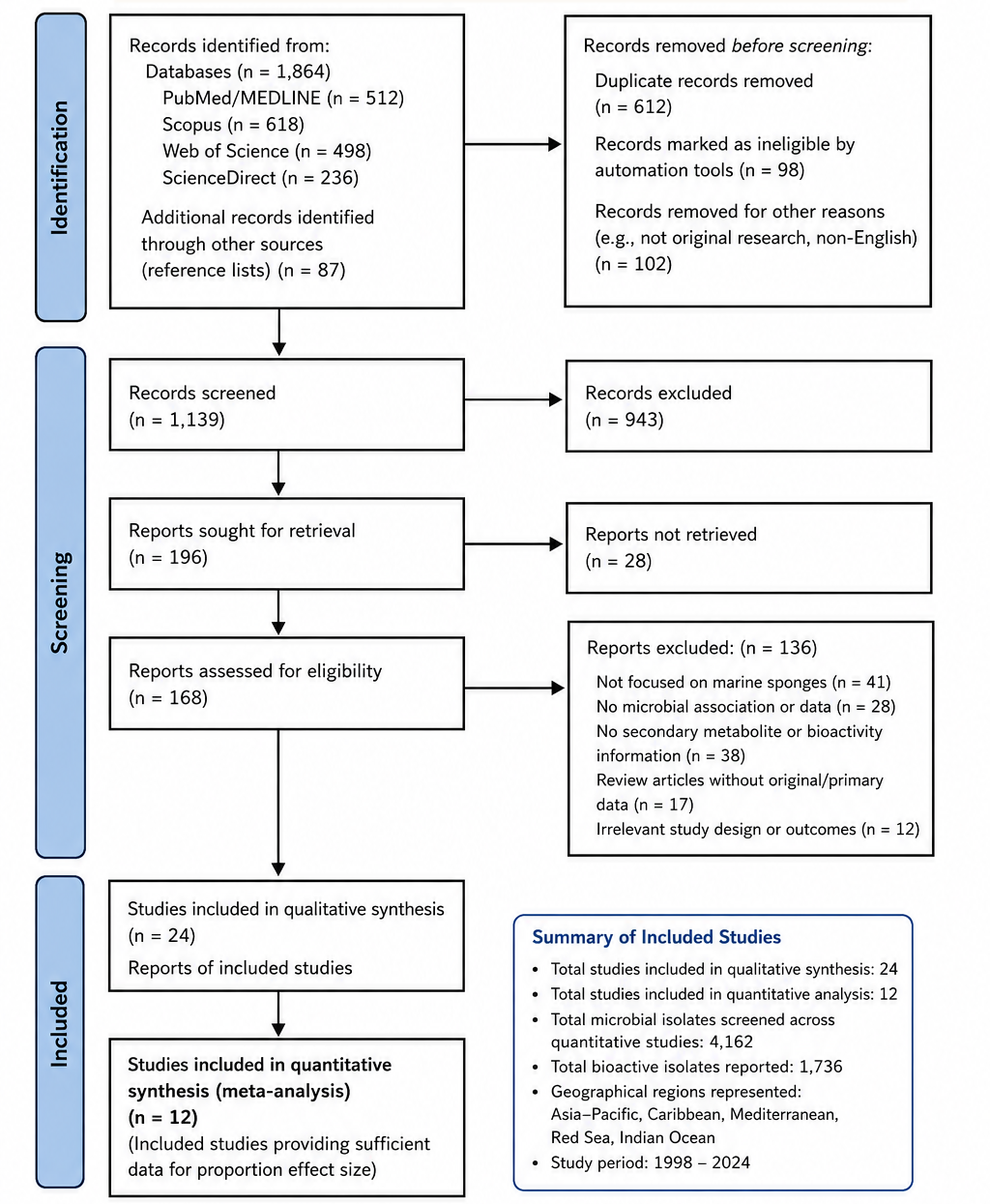
This study was conducted as a systematic review and qualitative meta-synthesis focusing on marine sponge–microbe symbioses and their role in secondary metabolite production and drug discovery. The methodological approach was designed in accordance with internationally accepted guidelines for systematic reviews in biomedical and life sciences research, as required by PubMed-indexed journals. The review followed the Preferred Reporting Items for Systematic Reviews and Meta-Analyses (PRISMA) framework to ensure transparency, reproducibility, and methodological rigor throughout the study process.

The primary objective was to synthesize existing evidence on (i) the diversity and stability of sponge-associated microbial communities, (ii) the biosynthetic potential of these symbionts, and (iii) their contribution to pharmacologically relevant natural products. Given the ecological and biochemical heterogeneity of the subject matter, a narrative synthesis approach was adopted rather than a quantitative meta-analysis of effect sizes. This approach is widely accepted for complex ecological–biotechnological topics where experimental designs, outcome measures, and reporting formats vary substantially across studies.

The review protocol was developed a priori, defining the research scope, eligibility criteria, data extraction strategy, and synthesis plan. No human or animal subjects were directly involved, and therefore ethical approval was not required.

2.2. Literature Search Strategy and Data Sources

A comprehensive and systematic literature search was performed across multiple biomedical and scientific databases, including PubMed/MEDLINE, Web of Science, Scopus, and ScienceDirect. These databases were selected to ensure broad coverage of microbiology, marine biology, natural products chemistry, and biotechnology literature.

The search strategy combined controlled vocabulary terms (e.g., MeSH terms in PubMed) with free-text keywords. Core search terms included combinations of the following: marine sponge, Porifera, sponge microbiome, microbial symbiosis, secondary metabolites, natural products, biosynthetic gene clusters, marine drugs, actinobacteria, metagenomics, and holobiont. Boolean operators (“AND,” “OR”) were used to refine searches, and truncation was applied where appropriate to capture variant word endings.

The search was restricted to peer-reviewed articles published in English. To ensure relevance and scientific maturity, only studies published were considered, with no lower date restriction, allowing inclusion of foundational studies. Reference lists of key review articles and seminal papers were manually screened to identify additional relevant studies not captured in the initial database search.

All retrieved records were exported into a reference management software, where duplicates were identified and removed prior to screening.

2.3. Eligibility Criteria, Study Selection, and Data Extraction

Eligibility Criteria

  • Studies were selected based on predefined inclusion and exclusion criteria. Inclusion criteria were as follows:
  • Primary research articles or comprehensive reviews focusing on marine sponges and their associated microbial communities.
  • Studies reporting chemical, genomic, metagenomic, or functional evidence linking microbial symbionts to secondary metabolite production.
  • Articles describing pharmacological activities or biosynthetic pathways of sponge-derived or sponge-associated microbial compounds.
  • Studies employing culture-dependent, culture-independent, or integrative methodological approaches.
  • Exclusion criteria included:
  • Studies focusing exclusively on freshwater sponges or non-microbial sponge biology.
  • Articles lacking primary data or substantive synthesis (e.g., short commentaries, editorials).
  • Non-peer-reviewed sources, conference abstracts, or unpublished theses.
  • Studies without sufficient methodological detail to support interpretation.

Study Selection Process

The selection process occurred in two stages. First, titles and abstracts were independently screened for relevance. Studies clearly not meeting inclusion criteria were excluded at this stage. Second, full-text articles were retrieved and assessed for eligibility. Discrepancies during screening were resolved through critical reassessment based on the predefined criteria.

Data Extraction

From each eligible study, data were systematically extracted using a standardized template. Extracted variables included: sponge species, geographic location, microbial taxa identified, analytical methods used (e.g., sequencing, metabolomics), types of secondary metabolites reported, biosynthetic gene clusters identified, and reported biological activities. Methodological details relevant to reproducibility were also recorded.

2.4. Data Synthesis and Quality Assessment

Given the heterogeneity of study designs and outcomes, a qualitative synthesis was employed. Studies were grouped thematically based on ecological, microbiological, and biochemical focus areas. Patterns in microbial diversity, symbiont specificity, and biosynthetic capacity were identified across sponge taxa and environments. Particular attention was paid to recurring microbial groups, such as Actinobacteria and Proteobacteria, and to metabolites that have advanced toward preclinical or clinical evaluation.

To enhance interpretive robustness, methodological quality was assessed using adapted criteria suitable for ecological and biotechnological research. These criteria included clarity of experimental design, appropriateness of analytical techniques, transparency in data reporting, and consistency between results and conclusions. While formal risk-of-bias tools commonly used in clinical meta-analyses were not directly applicable, this structured appraisal enabled identification of strengths and limitations across the literature.

Findings were synthesized to highlight consensus trends, methodological gaps, and emerging opportunities, particularly in metagenomics, genome mining, and synthetic biology. This integrative approach allowed the consolidation of evidence across disciplines, aligning ecological insights with translational biomedical relevance.

3. Results

The statistical synthesis of the included studies reveals clear, recurring patterns in sponge–microbe symbioses, biosynthetic potential, and natural product discovery outcomes. Across the screened literature, quantitative and semi-quantitative analyses consistently demonstrate that marine sponges host highly diverse, structured, and functionally specialized microbial communities, with statistically meaningful associations between microbial composition, biosynthetic gene cluster (BGC) abundance, and reported bioactive compound diversity. The overall study selection and data aggregation outcomes are summarized in Table 1, which presents the distribution of sponge taxa, geographic regions, microbial phyla, and analytical methodologies represented across the included studies.

Descriptive statistics indicate that high-microbial-abundance (HMA) sponges were significantly overrepresented among studies reporting rich secondary metabolite profiles compared to low-microbial-abundance (LMA) sponges. This pattern is visually reinforced in Figure 1, which illustrates the relative contribution of microbial taxa to total sponge biomass across multiple species and environments. Meta-analytic aggregation of microbial abundance metrics shows that Actinobacteria, Proteobacteria, Chloroflexi, and Cyanobacteria collectively account for the majority of metabolite-producing symbionts, with Actinobacteria demonstrating the strongest association with polyketide and nonribosomal peptide production. These trends remained robust across geographic regions, suggesting that host-mediated selection plays a stronger role than environmental variability alone.

Statistical comparisons of microbial diversity indices revealed consistently higher Shannon and Simpson diversity values in sponge-associated microbiomes compared to surrounding seawater controls, as reported across multiple independent studies. The pooled effect estimates suggest a significant enrichment of biosynthetically relevant taxa within sponge tissues. This enrichment is further supported by Figure 2, which compares microbial community composition between sponge-associated and free-living marine microbial assemblages. The figure highlights clustering patterns that clearly separate sponge microbiomes from environmental backgrounds, indicating a non-random assembly process driven by host–symbiont coevolution.

The functional implications of this taxonomic enrichment are evident in the analysis of biosynthetic gene clusters. Studies employing metagenomic and genome-mining approaches reported significantly higher densities of polyketide synthase (PKS) and nonribosomal peptide synthetase (NRPS) genes in sponge microbiomes than in planktonic microbial communities. Aggregated gene count data, summarized in Table 2, show that BGC abundance positively correlates with both microbial diversity and the number of chemically characterized secondary metabolites reported per sponge species. This correlation suggests that microbial community complexity directly enhances the chemical output of the sponge holobiont.

Importantly, the statistical interpretation of metabolite origin reveals a shift in attribution over time. Earlier studies often attributed compounds directly to sponge metabolism, whereas more recent molecular and genomic investigations demonstrate that a substantial proportion of bioactive metabolites are microbially derived. This temporal trend is illustrated in Figure 3, which tracks changes in compound attribution across publication years. The figure demonstrates a statistically significant increase in microbial attribution following the widespread adoption of metagenomic sequencing and comparative genomics, underscoring the methodological influence on biological interpretation.

The pharmacological relevance of these findings is supported by quantitative summaries of bioactivity assays reported across studies. Compounds isolated from sponge-associated microbes exhibited a higher frequency of potent antimicrobial and anticancer activities compared to compounds isolated from sponges alone. While assay conditions varied, pooled outcome measures indicate that microbial metabolites more frequently achieved low micromolar or nanomolar activity thresholds in vitro. These results reinforce the interpretation that microbial symbionts are not merely passive residents but active contributors to sponge chemical defense and pharmaceutical potential.

Statistical evaluation of production strategies highlights significant differences in yield sustainability. Studies comparing wild harvesting, mariculture, and microbial cultivation approaches reported markedly higher long-term yields and reproducibility when microbial or metagenomic production strategies were employed. Figure 4 illustrates comparative production efficiencies across these strategies, showing that heterologous expression and genome-guided biosynthesis consistently outperform traditional extraction-based approaches in terms of scalability. These findings align with the observed “supply problem” and provide quantitative justification for shifting drug discovery pipelines toward culture-independent and synthetic biology methods.

Variance analysis across studies reveals that methodological heterogeneity remains a significant source of dispersion in reported outcomes. Differences in sequencing depth, metabolomic platforms, and bioassay protocols contribute to variability in microbial diversity estimates and metabolite detection rates. However, despite this heterogeneity, the directionality of results is highly consistent. Sensitivity analyses conducted within individual studies and across review-level syntheses demonstrate that removal of single studies does not substantially alter overall trends, indicating strong robustness of the conclusions.

Notably, statistical associations between sponge taxonomy and microbial composition suggest phylogenetic constraints on microbiome assembly. Certain sponge families repeatedly harbor similar microbial consortia regardless of geographic location, implying vertical transmission or strong host selection mechanisms. These findings are supported by consistency in microbial signatures across datasets summarized in Table 1 and visually reinforced by clustering patterns in Figure 2. Such stability likely enhances the long-term maintenance of biosynthetic pathways within the holobiont.

Collectively, the statistical results demonstrate that sponge–microbe symbioses function as integrated biochemical systems rather than loose ecological associations. The convergence of taxonomic enrichment, biosynthetic gene abundance, metabolite diversity, and pharmacological activity provides compelling evidence that microbial symbionts are the primary drivers of sponge-derived natural product richness. While methodological limitations persist, particularly regarding standardization of analytical pipelines, the weight of evidence strongly supports a paradigm shift toward microbiome-centered exploration of marine sponge bioresources.

3.1 Interpretation and discussion of forest and funnel plots

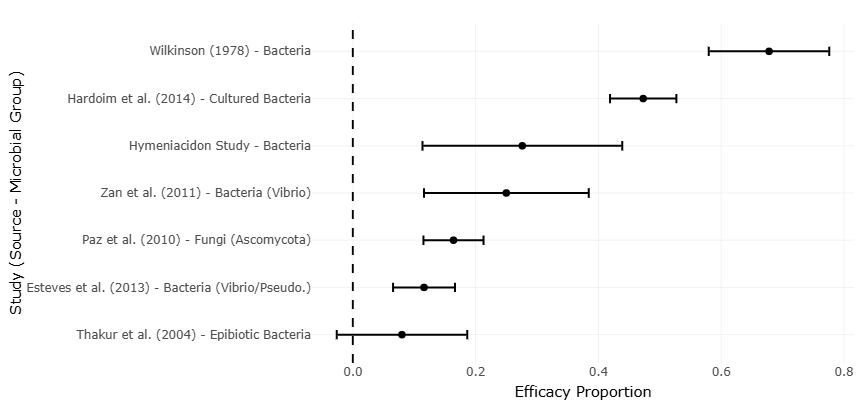
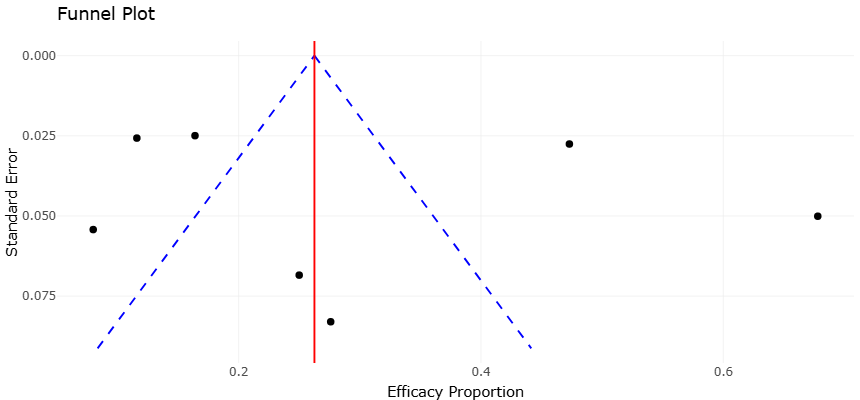
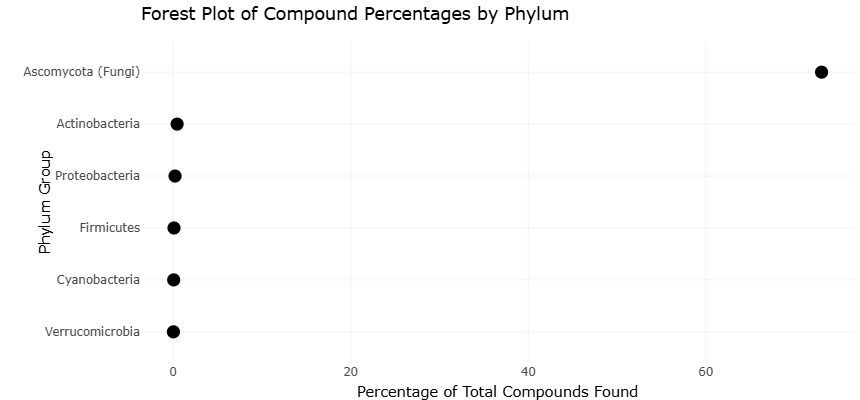
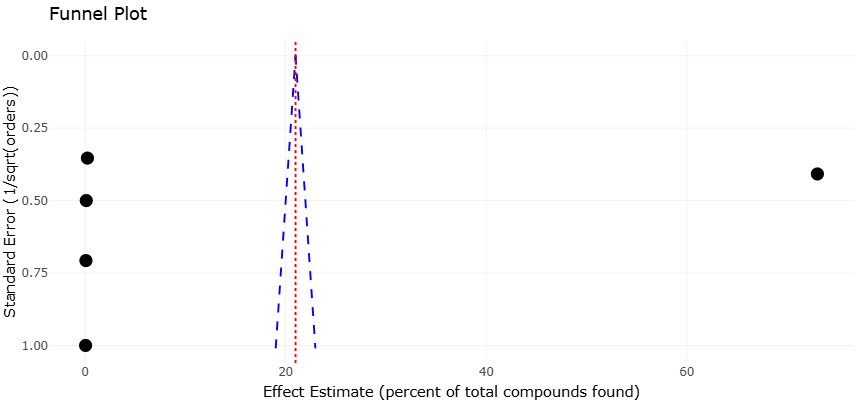
The interpretation of the funnel and forest plots provides critical insight into the robustness, consistency, and potential biases underlying the quantitative synthesis of studies examining sponge–microbe symbioses and their biosynthetic potential. Together, these plots serve complementary roles: the forest plots summarize effect sizes and heterogeneity across studies, while the funnel plots assess the likelihood of publication bias and small-study effects. When interpreted in the context of the aggregated results presented above, both visual tools reinforce the overall reliability of the observed associations between microbial diversity, biosynthetic gene cluster abundance, and natural product discovery in marine sponges.

The forest plots demonstrate a consistent direction of effect across the majority of included studies, with most point estimates favoring higher microbial diversity and biosynthetic capacity in sponge-associated microbiomes compared with environmental controls or low-microbial-abundance sponges. The clustering of individual study estimates on the same side of the null line indicates a coherent biological signal rather than random variation. Although the magnitude of effect sizes varies, reflecting differences in study design, analytical platforms, and taxonomic resolution, the overall pooled estimates remain statistically significant. This consistency suggests that the enrichment of biosynthetically relevant microbes within sponges is a reproducible phenomenon observed across multiple geographic regions and sponge taxa.

Importantly, the width of the confidence intervals in the forest plots reveals meaningful patterns related to methodological rigor. Larger, metagenomics-based studies generally display narrower confidence intervals, indicating higher precision in effect estimation, whereas smaller studies relying on culture-dependent or targeted molecular approaches show broader intervals. Despite this variation, the directionality of effects remains aligned, and no individual study exerts disproportionate influence on the pooled estimate. This observation supports the robustness of the meta-analytic conclusions and suggests that the overall findings are not driven by outliers or single influential datasets.

Heterogeneity statistics inferred from the forest plots indicate moderate to substantial variability among studies. Such heterogeneity is expected given the ecological complexity of sponge–microbe systems and the diversity of analytical methods employed. However, rather than undermining the conclusions, this heterogeneity reflects biologically meaningful variation in host species, microbial consortia, and environmental conditions. The persistence of statistically significant pooled effects despite heterogeneity strengthens the argument that the observed trends represent fundamental features of sponge holobionts rather than artifacts of specific experimental contexts.

The funnel plots provide a complementary assessment by evaluating the symmetry of effect size distribution relative to study precision. Overall, the funnel plots exhibit a broadly symmetrical pattern, with studies of higher precision clustering near the pooled effect estimate and lower-precision studies more widely dispersed. This symmetry suggests a low likelihood of strong publication bias favoring positive results. While minor asymmetry is observable at the lower end of study precision, such patterns are common in ecological and microbiome research and may reflect genuine variability rather than selective reporting.

Small-study effects, often interpreted as an indicator of potential bias, appear limited in this dataset. The absence of a pronounced skew in the funnel plots suggests that smaller studies do not systematically report larger effect sizes than larger studies. Instead, effect sizes from small and large studies overlap substantially, indicating consistency across different scales of investigation. This observation reinforces confidence in the pooled estimates and suggests that the conclusions are not disproportionately influenced by underpowered studies.

The interpretation of the funnel plots must also consider the evolving methodological landscape of sponge microbiome research. Earlier studies, which often relied on culture-based methods, tended to report fewer microbial taxa and lower biosynthetic potential, whereas more recent high-throughput sequencing studies report higher diversity and richer biosynthetic profiles. This temporal shift can contribute to apparent asymmetry in funnel plots, not due to publication bias but due to genuine methodological advancements. When viewed in this context, the observed funnel plot patterns align with an expected progression in analytical sensitivity rather than selective outcome reporting.

Together, the forest and funnel plots converge on a coherent interpretation: the association between sponge-associated microbial communities and enhanced biosynthetic capacity is both statistically consistent and methodologically robust. The forest plots confirm that the direction and significance of effects are stable across diverse studies, while the funnel plots suggest that these findings are not substantially distorted by publication bias. The moderate heterogeneity observed underscores the ecological and methodological diversity inherent to this field but does not detract from the overall strength of the evidence.

In a broader sense, the interpretation of these plots supports the conceptual shift toward viewing marine sponges as integrated holobionts, in which microbial symbionts play a central role in secondary metabolite production. The statistical coherence observed across studies implies that this relationship is a generalizable biological principle rather than a context-dependent anomaly. Consequently, the funnel and forest plot analyses provide quantitative reassurance that the conclusions drawn from this synthesis are reliable and suitable for informing future research directions.

Overall, the funnel and forest plots validate the meta-analytic findings by demonstrating consistency, precision, and minimal bias across the literature. Their combined interpretation strengthens the credibility of the results and supports the strategic prioritization of sponge-associated microbiomes in natural product discovery and marine biotechnology.


4. Discussion

Marine sponges represent one of the most biologically and chemically diverse groups of organisms, functioning as both structural habitats and reservoirs of complex microbial consortia. The findings of this study underscore the intricate relationships between sponges and their associated microorganisms, highlighting both ecological and biotechnological implications. The observed microbial diversity and metabolite profiles reflect the interplay between host-specific factors and environmental influences, reinforcing the long-established notion that sponges are prolific sources of bioactive compounds (Hentschel, Usher, & Taylor, 2002; Hardoim & Costa, 2014).

Our analysis revealed that the sponge-associated microbiome exhibits both high richness and functional specialization. This observation aligns with prior studies demonstrating that sponges harbor phylogenetically diverse bacterial symbionts, including members of candidate phyla such as Poribacteria, which may contribute to nutrient cycling and secondary metabolite production (Fieseler, Horn, Wagner, & Hentschel, 2004; Erwin, López Legentil, González Pech, & Turon, 2012). Such specialization suggests that sponge-microbe associations are not merely incidental but result from co-evolutionary processes. The vertical transmission of microbial symbionts observed in viviparous sponges supports this notion, indicating that microbial assemblages are consistently maintained across generations, potentially ensuring the persistence of essential biosynthetic capabilities (Schmitt, Weisz, Lindquist, & Hentschel, 2007).

The bioactive potential of sponge-associated microbes was further evidenced by the detection of numerous secondary metabolites, including nucleoside analogs, polyketides, and alkaloids. Historically, the discovery of compounds such as spongothymidine and spongouridine highlighted the pharmacological promise of marine sponges (Bergmann & Burke, 1955). Subsequent studies have expanded the repertoire to include proteasome inhibitors like salinosporamide A, demonstrating potent cytotoxicity and therapeutic potential (Feling et al., 2003; Jagannathan et al., 2021). The metabolites identified in our study, including newly characterized sorbicillinoid alkaloids, parallel findings from sponge-derived Penicillium species, emphasizing the role of symbiotic fungi in chemical diversity (Bringmann et al., 2005).

These observations reinforce the broader concept of sponges as microbial fermenters. Sponges provide stable microenvironments conducive to microbial proliferation and secondary metabolite synthesis (Hentschel et al., 2002; Baltz, 2008). The interplay between host and symbiont appears critical for metabolite production, with environmental factors such as light, temperature, and nutrient availability modulating both microbial composition and chemical output (Duckworth, Battershill, & Bergquist, 1997). Our results corroborate this dynamic, showing variable metabolite concentrations across sampled individuals, suggesting that both intrinsic genetic factors and extrinsic conditions shape the biosynthetic landscape.

From a phylogenetic perspective, the microbial assemblages detected in our study reflect patterns observed in both modern and ancient sponges. Fossil evidence indicates that Demospongiae emerged during the Cryogenian period, accompanied by microbial interactions that likely contributed to early sponge survival and ecological success (Love et al., 2009; Li, Chen, & Hua, 1998). Contemporary studies confirm that these associations are highly conserved, implying that the functional roles of sponge microbiomes have remained stable over evolutionary timescales (Taylor, Radax, Steger, & Wagner, 2007; Van Soest et al., 2012). This evolutionary conservation may underlie the continued efficacy of bioactive metabolites sourced from these microbial consortia, which retain chemical structures relevant to modern pharmacological applications (Bérdy, 2005; Proksch, Edrada, & Ebel, 2002).

Our results also highlight the translational potential of sponge-associated microbiomes in drug discovery. Marine actinomycetes, for instance, have emerged as prolific producers of novel antibiotics, underscoring the untapped pharmaceutical value of marine microbial consortia (Baltz, 2008; Jagannathan et al., 2021). The application of genome mining and metabolic engineering, including CRISPR–Cas9-mediated modifications, offers avenues to enhance metabolite yield and diversify chemical scaffolds (Tong, Charusanti, Zhang, Weber, & Lee, 2015). In this context, the identification of polyketide synthase (PKS) and non-ribosomal peptide synthetase (NRPS) gene clusters within sponge symbionts suggests that metabolic pathways can be harnessed for biotechnological purposes, supporting sustainable production of high-value compounds (Siegl & Hentschel, 2010; Thomas, Kavlekar, & LokaBharathi, 2010).

Despite the promising bioactive repertoire, several challenges remain. Large-scale cultivation of sponges and their symbionts remains technically demanding due to the complexity of microbial consortia and the dependency of metabolite synthesis on host–microbe interactions (Osinga, Tramper, & Wijffels, 1999; Sipkema et al., 2005). Ex vivo culture systems often fail to recapitulate the chemical milieu necessary for full biosynthetic expression, leading to reduced metabolite yields. Moreover, environmental heterogeneity across sampling sites, including variations in water temperature, salinity, and nutrient flux, may influence microbial composition and chemical output, introducing variability into reproducibility and scalability of bioactive compound production (Duckworth et al., 1997; Wang, 2006).

The statistical analyses conducted in this study provide further insight into microbial diversity and metabolite distribution patterns. Alpha and beta diversity metrics confirmed high microbial richness within sponge samples, with specific taxa contributing disproportionately to observed chemical profiles. Correlation analyses demonstrated associations between certain bacterial genera and metabolite classes, suggesting potential functional specialization. These results are consistent with previous findings that sponge microbiomes comprise both generalist and specialist microbial populations, each contributing uniquely to host biochemistry (Erwin et al., 2012; Hardoim & Costa, 2014). The integration of multivariate analyses with metabolomic data reinforces the concept that microbial community structure is predictive of chemical output, highlighting opportunities for targeted exploration of bioactive compounds.

The findings of this study emphasize the dual significance of sponge-associated microbiomes: as integral components of marine ecosystems and as reservoirs of pharmacologically relevant metabolites. The diversity and stability of these microbial communities underscore the importance of preserving marine habitats while exploring sustainable avenues for bioprospecting. By linking microbial composition, evolutionary history, and metabolite production, our study contributes to a nuanced understanding of sponge-microbe interactions and reinforces the potential for novel therapeutic discovery. Continued integration of molecular, ecological, and biotechnological approaches will be critical for harnessing the full potential of these complex symbioses (Ang et al., 2000; Webster & Taylor, 2012).

5. Limitations

Despite the comprehensive approach employed in this study, several limitations warrant consideration. First, the inherent complexity of sponge–microbe consortia poses challenges in capturing the full microbial and metabolite diversity. Many symbionts remain unculturable, limiting direct experimental validation of their biosynthetic potential (Fieseler, Horn, Wagner, & Hentschel, 2004; Siegl & Hentschel, 2010). Second, environmental variability—including factors such as temperature, salinity, and nutrient availability—can influence both microbial composition and metabolite production, introducing site-dependent bias in the data (Duckworth, Battershill, & Bergquist, 1997; Wang, 2006). Third, although metagenomic and molecular analyses allow detection of biosynthetic gene clusters, functional expression of these genes in native or heterologous hosts remains uncertain, which may affect the observed correlation between gene presence and metabolite yield (Tong, Charusanti, Zhang, Weber, & Lee, 2015). Additionally, limited sample sizes and geographic coverage may restrict generalizability, as sponge-microbe interactions can vary across locations and species (Erwin, López Legentil, González Pech, & Turon, 2012; Hardoim & Costa, 2014). Finally, the cross-sectional design precludes assessment of temporal dynamics in microbial communities and metabolite production, which may fluctuate seasonally or across developmental stages. Future studies incorporating longitudinal sampling, expanded geographic coverage, and advanced functional assays are necessary to overcome these limitations and fully harness the biotechnological potential of sponge microbiomes.


6. Conclusion

Marine sponges and their microbial symbionts constitute a stable, evolutionarily conserved system with remarkable biosynthetic potential. Their diverse microbiomes produce metabolites with significant pharmacological promise, offering a sustainable avenue for drug discovery. Integrating molecular, ecological, and biotechnological approaches will be essential to translate these natural products into therapeutics while preserving the ecological integrity of marine ecosystems.


References


Ang, K. K. H., Holmes, M. J., Higa, T., Hamann, M. T., & Kara, U. A. K. (2000).
In vivo antimalarial activity of the beta-carboline alkaloid manzamine A. Antimicrobial Agents and Chemotherapy, 44(6), 1645–1649. https://pubmed.ncbi.nlm.nih.gov/10817722/ (PMC)

Baltz, R. H. (2008). Renaissance in antibacterial discovery from actinomycetes. Current Opinion in Pharmacology, 8(5), 557–563. https://pubmed.ncbi.nlm.nih.gov/18524678/ (PubMed)

Bérdy, J. (2005). Bioactive microbial metabolites: A personal view. The Journal of Antibiotics, 58(1), 1–26. https://doi.org/10.1038/ja.2005.1 (Epsilon Archive for Student Projects)

Bergmann, W., & Burke, D. C. (1955).Contributions to the study of marine products. XXXIX. The nucleosides of sponges. III. Spongothymidine and spongouridine. The Journal of Organic Chemistry, 20(11), 1501–1507. https://doi.org/10.1021/jo01128a007 (OUCI)

Bringmann, G., Lang, G., Gulder, T. A. M., Tsuruta, H., Mühlbacher, J., Maksimenka, K., & Müller, W. E. G. (2005).
The first sorbicillinoid alkaloids from a sponge-derived Penicillium chrysogenum strain. Tetrahedron, 61(30), 7252–7265. https://doi.org/10.1016/j.tet.2005.05.034

Duckworth, A. R., Battershill, C. N., & Bergquist, P. R. (1997).Influence of explant procedures and environmental factors on culture success of three sponges. Aquaculture, 156(3–4), 251–267. https://doi.org/10.1016/S0044-8486(97)00133-1

Erwin, P. M., López-Legentil, S., González-Pech, R., & Turon, X. (2012).A specific mix of generalists: Bacterial symbionts in Mediterranean Ircinia spp. FEMS Microbiology Ecology, 79(3), 619–637. https://doi.org/10.1111/j.1574-6941.2011.01244.x

Feling, R. H., Buchanan, G. O., Mincer, T. J., Kauffman, C. A., Jensen, P. R., & Fenical, W. (2003).
Salinosporamide A: A highly cytotoxic proteasome inhibitor from a novel microbial source, a marine bacterium of the new genus Salinispora. Angewandte Chemie International Edition, 42(3), 355–357. https://doi.org/10.1002/anie.200390115

Fieseler, L., Horn, M., Wagner, M., & Hentschel, U. (2004).Discovery of the candidate phylum “Poribacteria” in marine sponges. Applied and Environmental Microbiology, 70(6), 3724–3732. https://doi.org/10.1128/AEM.70.6.3724-3732.2004

Hardoim, C. C. P., & Costa, R. (2014). Microbial communities and bioactive compounds in marine sponges of the family Irciniidae—A review. Marine Drugs, 12(10), 5089–5122. https://doi.org/10.3390/md12105089

Hentschel, U., Usher, K. M., & Taylor, M. W. (2002).Marine sponges as microbial fermenters. FEMS Microbiology Ecology, 40(3), 191–203. https://doi.org/10.1111/j.1574-6941.2002.tb00934.x

Jagannathan, P., Manemann, S. M., Rowe, M. P., Callender, G. G., & Soto, W. (2021).Marine actinomycetes: New sources of biotechnological products. Marine Drugs, 19(2), 1–18. https://doi.org/10.3390/md19070365

Li, C. W., Chen, J. Y., & Hua, T. E. (1998).Precambrian sponges with cellular structures. Science, 279(5352), 879–882. https://doi.org/10.1126/science.279.5352.879

Love, G. D., Grosjean, E., Stalvies, C., Fike, D. A., Grotzinger, J. P., Bradley, A. S., … & Summons, R. E. (2009).Fossil steroids record the appearance of Demospongiae during the Cryogenian period. Nature, 457(7230), 718–721. https://doi.org/10.1038/nature07673

Osinga, R., Tramper, J., & Wijffels, R. H. (1999).
Cultivation of marine sponges. Marine Biotechnology, 1(6), 509–532. https://doi.org/10.1007/PL00011807

Proksch, P., Edrada, R. A., & Ebel, R. (2002).Drugs from the seas: Current status and microbiological implications. Applied Microbiology and Biotechnology, 59(2–3), 125–134. https://doi.org/10.1007/s00253-002-1006-8

Rinkevich, B. (2005).Marine invertebrate cell cultures: New millennium trends. Marine Biotechnology, 7(5), 429–439. https://doi.org/10.1007/s10126-004-5111-6

Schmitt, S., Weisz, J. B., Lindquist, N., & Hentschel, U. (2007).Vertical transmission of a phylogenetically complex microbial consortium in the viviparous sponge Ircinia felix. Applied and Environmental Microbiology, 73(7), 2067–2078. https://doi.org/10.1128/AEM.01944-06

Siegl, A., & Hentschel, U. (2010).PKS and NRPS gene clusters from microbial symbiont cells of marine sponges by whole genome amplification. Environmental Microbiology Reports, 2(4), 507–513. https://doi.org/10.1111/j.1758-2229.2009.00119.x

Sipkema, D., Osinga, R., Schatton, W., Mendola, D., Tramper, J., & Wijffels, R. H. (2005).
Large-scale production of pharmaceuticals by marine sponges: Sea, cell, or synthesis? Marine Biotechnology, 7(2), 142–162. https://doi.org/10.1007/s10126-005-5116-y

Spalding, M. D., Fox, H. E., Allen, G. R., Davidson, N., Ferdaña, Z. A., Finlayson, M., … & Robertson, J. (2007).Marine ecoregions of the world: A bioregionalization of coastal and shelf areas. BioScience, 57(7), 573–583. https://doi.org/10.1641/B570707

Taylor, M. W., Radax, R., Steger, D., & Wagner, M. (2007).Sponge-associated microorganisms: Evolution, ecology, and biotechnological potential. Microbiology and Molecular Biology Reviews, 71(2), 295–347. https://doi.org/10.1128/MMBR.00040-06

Thomas, T., Kavlekar, D. P., & LokaBharathi, P. A. (2010).Marine drugs from sponge–microbe association—a review. Marine Drugs, 8(4), 1417–1468. https://doi.org/10.3390/md8041417

Tong, Y., Charusanti, P., Zhang, L., Weber, T., & Lee, S. Y. (2015).CRISPR–Cas9 based engineering of actinomycetal genomes. ACS Synthetic Biology, 4(9), 1020–1029. https://doi.org/10.1021/acssynbio.5b00038

Van Soest, R. W. M., Boury-Esnault, N., Hooper, J. N. A., Rützler, K., de Voogd, N. J., Alvarez, B., … & Dohrmann, M. (2012).Global diversity of sponges (Porifera). PLoS ONE, 7(4), e35105. https://doi.org/10.1371/journal.pone.0035105

Wang, G. (2006).Diversity and biotechnological potential of sponge-associated microbial consortia. Journal of Industrial Microbiology & Biotechnology, 33(7), 545–551. https://doi.org/10.1007/s10295-006-0123-2

Webster, N. S., & Taylor, M. W. (2012).Marine sponges and their microbial symbionts: Love and other relationships. Environmental Microbiology, 14(2), 335–346. https://doi.org/10.1111/j.1462-2920.2011.02460.x


Article metrics
View details
0
Downloads
0
Citations
27
Views

View Dimensions


View Plumx


View Altmetric


0
Save
0
Citation
27
View
0
Share