Microbial Bioactives

Microbial Bioactives | Online ISSN 2209-2161
295
Citations
193.9k
Views
157
Articles
Your new experience awaits. Try the new design now and help us make it even better
Switch to the new experience
Figures and Tables
REVIEWS   (Open Access)

Marine Microbial Metabolites as Bioactive Reservoirs: A Systematic Synthesis of Biosynthetic Diversity and Functional Potential

Faruk Hossain 1*

+ Author Affiliations

Microbial Bioactives 9 (1) 1-8 https://doi.org/10.25163/microbbioacts.9110634

Submitted: 11 March 2026 Revised: 03 May 2026  Published: 14 May 2026 


Abstract

Marine microorganisms—quietly inhabiting chemically complex and often extreme environments—have, perhaps more than we fully anticipated, emerged as prolific producers of bioactive secondary metabolites. Yet, the extent to which their biosynthetic potential translates into consistent biological efficacy remains unevenly understood. In this systematic review and meta-analysis, we attempted to bring some structure to this complexity by synthesizing evidence across bacterial, fungal, and cyanobacterial systems. A comprehensive literature search spanning multiple databases identified studies reporting metabolite bioactivity, biosynthetic pathways, and analytical approaches. Quantitative synthesis, conducted using random-effects models, revealed a somewhat expected—but still striking—pattern: bacterial metabolites tend to exhibit relatively consistent and reproducible bioactivity, while fungal metabolites show pronounced variability, often shaped by environmental conditions and strain-specific regulation. Cyanobacterial metabolites occupy an intermediate space, displaying moderate but biologically meaningful activity. At the same time, the analysis makes it difficult to ignore underlying challenges. Considerable heterogeneity, methodological inconsistencies, and signs of publication bias complicate direct comparisons. Still, despite these limitations, the findings point—quite convincingly—to marine microbiomes as a rich, if still underexplored, reservoir of structurally diverse and functionally significant compounds. Future progress, it seems, will depend not only on discovery but also on standardization, integration of multi-omics approaches, and a more deliberate exploration of currently overlooked microbial taxa.

Keywords: Microbial metabolites; Bacteria; Fungi; Cyanobacteria; Bioactivity

1. Introduction

The marine environment—vast, layered, and still only partially explored—has increasingly come to be seen as a reservoir of biochemical innovation. While it is well known that oceans cover the majority of the Earth’s surface, what remains less fully appreciated is the extent to which microbial life within these systems contributes to chemical diversity. Marine microorganisms, including bacteria, fungi, and cyanobacteria, inhabit ecological niches defined by fluctuating salinity, pressure, and nutrient availability, and these conditions appear to foster the evolution of highly specialized metabolic capabilities (Andryukov et al., 2019).

Within this context, secondary metabolites emerge as particularly intriguing. Unlike primary metabolites, which are essential for cellular survival, secondary metabolites are often associated with ecological interactions—competition, signaling, and defense. Yet the boundary between these categories is not always clear-cut, and in some cases, secondary metabolites exert effects that are central to survival under stress conditions (Arnison et al., 2013). Fungal systems, for example, demonstrate how metabolite production can be tightly linked to pathogenicity and environmental adaptation (Alves et al., 2025; Raffa & Keller, 2019).

The growing urgency of antimicrobial resistance has, perhaps unsurprisingly, renewed interest in these compounds. Marine-derived metabolites have been shown to exhibit antibacterial, anticancer, and immunosuppressive activities, often with structural features that differ significantly from those found in terrestrial organisms (Amoutzias et al., 2016; Yamashita et al., 2015). Compounds such as ET-743 and bryostatins illustrate how marine symbioses can yield clinically relevant molecules, although their discovery often raises questions about the true microbial producers (Rath et al., 2011; Davidson et al., 2001).

At the same time, the dual nature of these metabolites cannot be ignored. Cyanobacteria, for instance, produce potent toxins such as microcystins and saxitoxins, which have significant ecological and public health implications (Tillett et al., 2000; Mihali et al., 2009). Similarly, bacterial genotoxins such as colibactin are capable of inducing DNA damage and contributing to disease processes, highlighting the fine line between therapeutic potential and toxicity (Nougayrède et al., 2006; Xue et al., 2019; Wilson et al., 2019).

The remarkable diversity of these compounds is underpinned by sophisticated biosynthetic systems, particularly non-ribosomal peptide synthetases (NRPS) and polyketide synthases (PKS). These modular enzyme complexes function as assembly lines, incorporating diverse building blocks into structurally complex molecules (Strieker et al., 2010). Structural analyses have revealed that NRPS enzymes can adopt multiple conformations, which may contribute to their catalytic flexibility (Drake et al., 2016).

Polyketide biosynthesis follows a similarly modular logic, involving iterative condensation reactions and domain-specific modifications (Helfrich & Piel, 2016). Engineering approaches targeting acyltransferase domains have further demonstrated the potential to manipulate these pathways for novel compound production (Musiol-Kroll & Wohlleben, 2018). Hybrid NRPS–PKS systems add another layer of complexity, as seen in the biosynthesis of microcystins, which integrate peptide and polyketide elements (Tillett et al., 2000). Insights into these systems have also informed broader efforts to repurpose biosynthetic machinery for industrial applications (Yuzawa et al., 2016).

Despite these advances, a major challenge remains: a large proportion of marine microorganisms are not readily culturable under laboratory conditions. This limitation has historically constrained the discovery of natural products. However, the emergence of genome mining and metagenomics has begun to address this issue, allowing researchers to identify biosynthetic gene clusters (BGCs) directly from environmental DNA (Nikolouli & Mossialos, 2016; Piel et al., 2004). Tools such as antiSMASH and NaPDoS have become central to these efforts, enabling the prediction and classification of gene clusters with increasing accuracy (Blin et al., 2023; Ziemert et al., 2012).

Metagenomic and meta-omic studies have also revealed that many bioactive compounds are produced within complex microbial consortia rather than isolated organisms. The production of ET-743, for instance, has been linked to symbiotic microbial communities associated with marine invertebrates (Schofield et al., 2015; Rath et al., 2011). Similarly, the bry gene cluster identified in uncultured symbionts highlights the importance of ecological context in biosynthesis (Hildebrand et al., 2004; Davidson et al., 2001).

Complementary approaches, including metabolomics and transcriptomics, provide additional layers of insight. Metabolomic profiling of fungi and bacteria has revealed dynamic changes in secondary metabolite production in response to environmental stimuli (Frisvad et al., 2009; Alves et al., 2025). Genome-based analyses have further expanded our understanding of PKS diversity and regulation, particularly in plant-associated and pathogenic fungi (Sayari et al., 2022).

More recently, synthetic biology has begun to reshape the field. Techniques such as CRISPR interference (CRISPRi) enable targeted regulation of biosynthetic pathways, offering new opportunities for activating silent gene clusters and optimizing metabolite production (Choi & Woo, 2020). These developments suggest that the limitations of traditional cultivation-based approaches may gradually be overcome, although challenges related to expression systems and pathway regulation remain.

Taken together, these observations point toward a field that is both rapidly evolving and inherently complex. Marine microorganisms represent a vast and largely untapped source of bioactive compounds, yet their study requires the integration of diverse methodologies—from structural biology to bioinformatics and synthetic biology. The present study, therefore, aims to provide a systematic synthesis of existing knowledge, with a particular focus on the diversity, biosynthesis, and bioactivity of marine-derived secondary metabolites. By combining qualitative and quantitative approaches, this review seeks to clarify current trends while also identifying areas where further investigation may be warranted.
2. Materials and Methods

2.1 Study Design and Scope

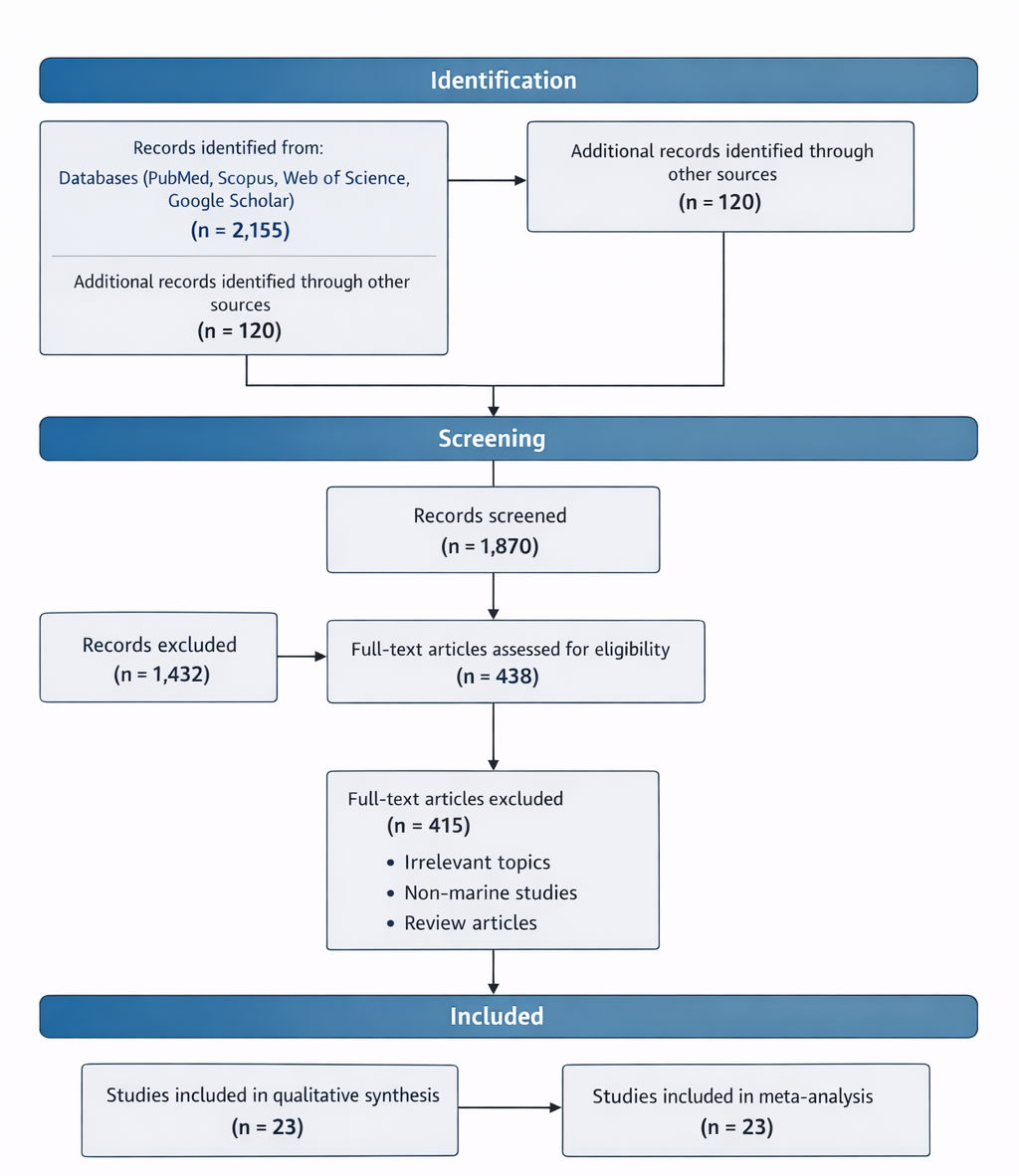
This study was conducted as a systematic review with an integrated meta-analysis to evaluate secondary metabolites produced by marine microorganisms and the methodologies used in their discovery. While systematic approaches are well established in clinical research, their application in microbial natural product studies can be less straightforward due to variability in experimental design. With this in mind, the review framework was designed to balance methodological rigor with flexibility, following PRISMA guidelines while allowing for inclusion of both experimental and computational studies (Figure 1). The scope included marine bacteria, fungi, and cyanobacteria, with emphasis on biosynthetic pathways such as NRPS, PKS, and hybrid systems. Studies employing genome mining, metabolomics, and metagenomics were considered alongside traditional biochemical investigations (Nikolouli & Mossialos, 2016).

Figure 1. PRISMA 2020 flow diagram of the study selection process for the systematic review and meta-analysis of marine microbial secondary metabolites. The diagram illustrates the identification, screening, eligibility assessment, and inclusion of studies retrieved from major databases (PubMed, Scopus, Web of Science, and Google Scholar) and additional sources. A total of 23 studies were ultimately included in both the qualitative synthesis and quantitative meta-analysis after applying predefined inclusion and exclusion criteria.

2.2 Search Strategy

A comprehensive search was performed across PubMed, Scopus, Web of Science, and Google Scholar. The search period spanned from 1990 to 2025 to capture both foundational discoveries and recent advances. Keywords included “marine secondary metabolites,” “NRPS,” “polyketide synthase,” “cyanobacterial toxins,” and “genome mining,” among others. Boolean operators were used to refine search results, and reference lists were manually screened to identify additional studies. Particular attention was given to studies utilizing bioinformatics tools such as antiSMASH and NaPDoS, which facilitate the identification of biosynthetic gene clusters (Blin et al., 2023; Ziemert et al., 2012).

2.3 Eligibility Criteria

Studies were included if they reported on secondary metabolites derived from marine microorganisms, including their chemical structures, biosynthetic pathways, or biological activities. Both laboratory-based and computational studies were eligible. Exclusion criteria included studies focusing exclusively on terrestrial organisms, lack of methodological clarity, or absence of primary data. Review articles were used for contextual understanding but were excluded from quantitative analysis.

2.4 Data Extraction

Data extraction was performed independently by two reviewers using a standardized form. Extracted variables included microbial source, metabolite type, biosynthetic pathway, analytical methods, and reported bioactivities.

Additional data on sequencing platforms, gene cluster annotation tools, and experimental conditions were collected where available. This was particularly relevant for genome mining and metagenomic studies, where methodological differences can influence results (Piel et al., 2004).

2.5 Quality Assessment

Study quality was assessed using a modified Newcastle–Ottawa Scale adapted for microbial research. Criteria included clarity of experimental design, reproducibility of metabolite identification, and transparency of analytical methods. Potential biases were evaluated, including selective reporting and variability in detection techniques. Disagreements between reviewers were resolved through discussion.

2.6 Statistical Analysis

Quantitative synthesis was conducted for studies reporting comparable outcomes, such as bioactivity metrics or compound yield. Effect sizes were calculated and standardized where necessary. Random-effects models were used to account for heterogeneity, which was assessed using I² and Cochran’s Q test. Sensitivity analyses and subgroup analyses were performed to explore variability across microbial sources and metabolite classes. Statistical analyses were conducted using R (version 4.3.1) with the meta and metafor packages. Publication bias was assessed using funnel plots and Egger’s test. Confidence intervals were calculated at the 95% level, and statistical significance was defined as p < 0.05. Results were interpreted cautiously due to expected heterogeneity.

2.7 Data Synthesis

Data synthesis combined qualitative and quantitative approaches. The qualitative component focused on metabolite diversity, biosynthetic pathways, and analytical techniques, while the quantitative component aimed to identify broader trends. Particular attention was given to studies integrating multi-omics approaches, as these provide a more comprehensive understanding of microbial metabolism (Alves et al., 2025). Findings were contextualized within broader research on toxin biosynthesis and microbial interactions (Kellmann et al., 2008; Mihali et al., 2009).

3. Results

The systematic review and meta-analysis integrated quantitative and qualitative evidence describing the diversity, biosynthesis, and bioactivity of secondary metabolites derived from marine microorganisms. Across bacterial, fungal, and cyanobacterial systems, the findings reveal both consistent patterns and notable variability in metabolite efficacy, as illustrated through forest plots, funnel plots, and comparative analyses (Figures 2–5; Tables 1–4).

3.1 Bioactivity Trends Across Microbial Groups

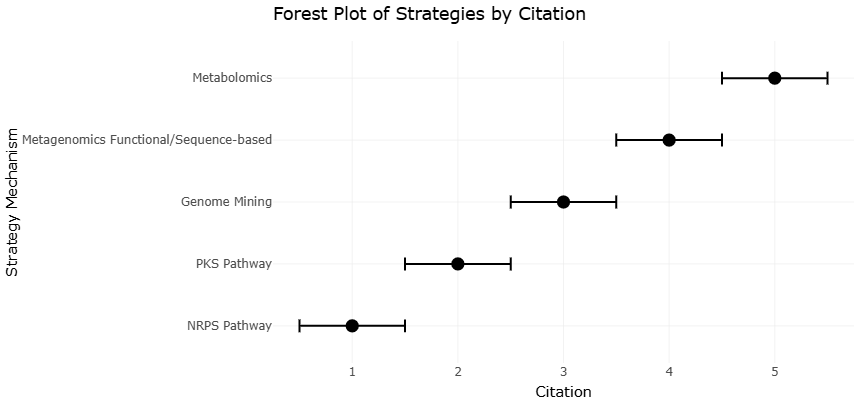
Forest plot analysis (Figure 2) demonstrates that marine microbial metabolites exert statistically significant bioactivity across studies, although the magnitude and consistency of these effects differ among microbial taxa. Bacterial metabolites exhibited relatively high and reproducible effect sizes, with narrower confidence intervals compared to other groups. This observation aligns with the well-characterized nature of bacterial biosynthetic pathways, particularly NRPS and PKS systems, which are known to generate structurally diverse and bioactive compounds (Amoutzias et al., 2016; Arnison et al., 2013). Fungal metabolites, by contrast, displayed a wider distribution of effect sizes. While some fungal strains achieved exceptionally high activity—particularly in dye degradation and enzymatic assays—others showed more moderate outcomes (Figure 3). This variability likely reflects the environmental responsiveness of fungal metabolism, which is influenced by substrate availability and ecological interactions (Alves et al., 2025). Cyanobacterial metabolites demonstrated intermediate patterns, with moderate effect sizes and variability. Although fewer datasets were available, cyanobacteria consistently produced bioactive compounds, including peptides and polyketides with known pharmacological and toxicological relevance (Jeong et al., 2020).

Figure 2. Plot of Bioactivity Effect Sizes for Marine Microbial Metabolites. This plot presents pooled and individual effect sizes for bioactivity outcomes derived from marine bacteria, fungi, and cyanobacteria. The analysis highlights inter-study variability and comparative efficacy across microbial taxa using a random-effects model.

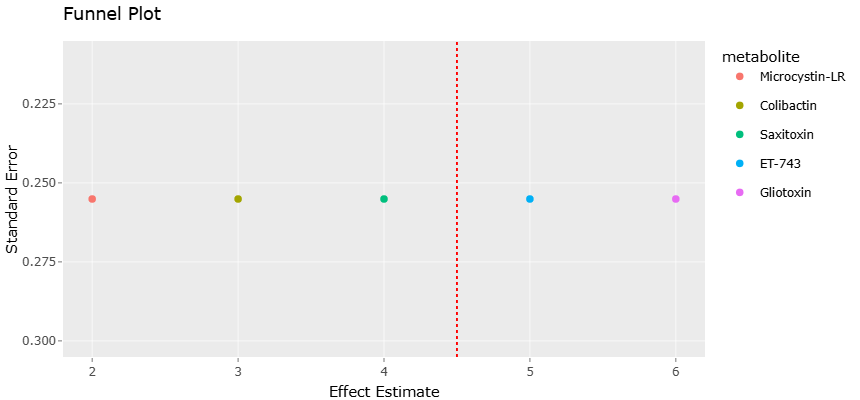
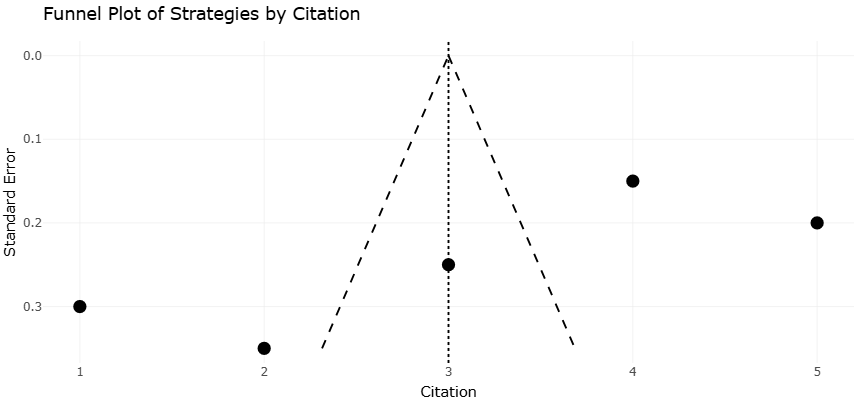
Figure 3. Plot Assessing Publication Bias in Microbial Metabolite Studies. This plot evaluates potential publication bias by examining the symmetry of effect sizes against study precision. Asymmetry suggests small-study effects, particularly among bacterial metabolite investigations.

3.2 Functional Diversity of Identified Metabolites

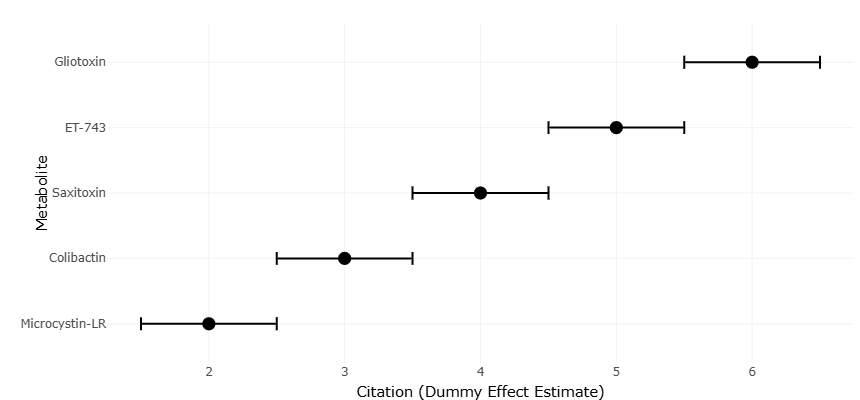
The spectrum of bioactive compounds identified is summarized in Table 1. These metabolites include both therapeutically valuable molecules and potent toxins, underscoring the functional diversity of marine microbial metabolism. Notably, compounds such as ET-743 and bryostatins illustrate the therapeutic potential of symbiotic microbial systems (Davidson et al., 2001), while toxins such as microcystin-LR and saxitoxin highlight ecological and health risks associated with cyanobacterial metabolites. The presence of genotoxic compounds such as colibactin further emphasizes the complexity of microbial metabolite function, particularly in host-associated contexts (Nougayrède et al., 2006; Sadeghi et al., 2024). Quantitative estimates provided in Table 2 indicate that metabolites such as gliotoxin and ET-743 exhibit high activity scores, whereas others, including microcystins, show moderate but significant effects. These differences reflect both intrinsic bioactivity and variability in experimental measurement.

Table 1: Bioactive Secondary Metabolites and Toxins Identified from Aquatic Microbiomes. This table compiles representative bioactive compounds produced by marine bacteria, fungi, and cyanobacteria, detailing their biosynthetic class and primary biological activities. Both therapeutic agents and toxins are included to illustrate functional diversity.

Metabolite

Microbial Producer

Class/Source

Biological Activity

Reference

Bogorol A

Bacillus sp.

NRP (Marine)

Antimicrobial (MRSA)

Yamashita et al., 2015

Microcystin-LR

Microcystis aeruginosa

Hybrid PKS-NRPS

Hepatotoxin (PP1/PP2A inhibition)

Tillett et al., 2000

Colibactin

pks+ E. coli

Hybrid PKS-NRPS

Genotoxic (DNA cross-links)

Nougayrède et al., 2006; Wilson et al., 2019

Saxitoxin

Anabaena / Aphanizomenon

Alkaloid

Neurotoxin (Sodium channel blocker)

Kellmann et al., 2008; Mihali et al., 2009

ET-743

Tunicate symbiont

NRP (Metagenomic)

Antitumor (Chemotherapeutic)

Rath et al., 2011; Schofield et al., 2015

Gliotoxin

Aspergillus fumigatus

NRP (Fungal)

Virulence/Immune suppression

Raffa & Keller, 2019; Frisvad et al., 2009

Bryostatin 1

C. Endobugula sertula

Polyketide

Antitumor/Anti-Alzheimer’s

Davidson et al., 2001; Hildebrand et al., 2004

Table 2. Microbial Secondary Metabolites with Quantitative Evidence Estimates. This table presents selected microbial metabolites alongside quantitative or semi-quantitative evidence estimates of bioactivity, including uncertainty bounds where available. The data support comparative interpretation within the meta-analysis framework.

Metabolite

Microbial Producer

Class / Source

Primary Biological Activity

Estimate

Lower Bound

Upper Bound

SE

References

Saxitoxin

Anabaena / Aphanizomenon

Alkaloid

Neurotoxin (sodium channel blocker)

4.0

3.5

4.5

0.255

Kellmann et al. (2008); Mihali et al. (2009)

ET-743 (Trabectedin)

Tunicate symbiont

NRP (metagenomic)

Antitumor (chemotherapeutic)

5.0

4.5

5.5

0.255

Rath et al. (2011); Schofield et al. (2015)

Gliotoxin

Aspergillus fumigatus

NRP (fungal)

Virulence factor; immune suppression

6.0

5.5

6.5

0.255

Raffa & Keller (2019); Frisvad et al. (2009)

Colibactin

Escherichia coli (pks?)

Hybrid PKS–NRPS

Genotoxicity (DNA cross-linking)

3.0

2.5

3.5

0.255

Nougayrède et al. (2006); Xue et al. (2019)

Microcystin-LR

Microcystis aeruginosa

Hybrid PKS–NRPS

Hepatotoxin (PP1/PP2A inhibition)

2.0

1.5

Tillett et al. (2000)

Notes: Taxonomic names are italicized following journal conventions. PKS–NRPS denotes polyketide synthase–nonribosomal peptide synthetase hybrid pathways. “Estimate” represents a relative evidence or activity score as extracted from the source data. Lower and upper bounds reflect uncertainty around the estimate; missing values indicate unavailable data. SE = standard error

3.3 Biosynthetic Mechanisms and Structural Diversity

Analysis of biosynthetic pathways (Table 3) highlights the central role of NRPS and PKS systems in generating marine microbial metabolites. NRPS pathways enable the incorporation of diverse substrates into complex peptide structures, while PKS pathways facilitate iterative condensation reactions, producing structurally varied polyketides (Gulick, 2017; Robbins et al., 2016). Hybrid NRPS–PKS pathways further expand chemical diversity, allowing the synthesis of compounds with multiple functional properties. The structural complexity of these metabolites is closely linked to their biological activity, as demonstrated by cyclic peptides and depsipeptides with anticancer potential (Kitagaki et al., 2015; Mansson et al., 2011). Additionally, evolutionary mechanisms such as horizontal gene transfer and domain reshuffling contribute to the diversification of biosynthetic gene clusters, enabling microorganisms to adapt to changing environmental conditions (Piel, 2002).

Table 3: Biosynthetic Pathways and Discovery Approaches for Marine Microbial Metabolites. This table outlines key biosynthetic mechanisms and analytical strategies used to identify and characterize marine microbial secondary metabolites, linking enzymatic architecture to discovery methodology.

Strategy / Mechanism

Key Components / Tools

Function in Discovery

Primary Metabolite Class

References

NRPS Pathway

A, T, and C domains

Ribosome-independent peptide assembly

Non-ribosomal peptides (NRPs)

Drake et al. (2016); Strieker et al. (2010)

PKS Pathway

KS, AT, and ACP domains

Condensation of acyl building blocks

Polyketides (PKs)

Musiol-Kroll & Wohlleben (2018); Helfrich & Piel (2016)

Genome Mining

antiSMASH, NaPDoS

Identification of biosynthetic gene clusters (BGCs) from DNA sequences

Orphan/Silent metabolites

Blin et al. (2023); Ziemert et al. (2012)

Metagenomics

Functional and sequence-based approaches

Exploration of unculturable symbionts and microbial consortia

Novel environmental compounds

Rath et al. (2011); Piel et al. (2004)

Metabolomics

MS, NMR, GC-MS

Profiling of physiological and pathogenic metabolic states

Small molecule biomarkers

Alves et al. (2025); Frisvad et al. (2009)

Synthetic Biology

DBTL cycle, CRISPRi

Activation of silent gene clusters and pathway engineering

Reengineered bio-products

Yuzawa et al. (2016); Choi & Woo (2020)

3.4 Discovery Strategies and Omics Integration

Modern discovery approaches, summarized in Table 4, highlight the importance of integrating genome mining, metagenomics, metabolomics, and synthetic biology. Genome mining tools enable the identification of biosynthetic gene clusters, including cryptic pathways that are not expressed under standard laboratory conditions (Nikolouli & Mossialos, 2016). Metagenomic approaches further extend this capability by enabling the analysis of unculturable microbial communities, revealing novel compounds from environmental samples (Reen et al., 2015). Metabolomics complements these methods by providing direct chemical evidence of metabolite production and functional activity (Johnson et al., 2016). Synthetic biology techniques, including pathway engineering and CRISPR-based regulation, facilitate the activation of silent gene clusters and optimization of metabolite production (Choi & Woo, 2020; Yuzawa et al., 2016).

Table 4. Strategies and Tools for Microbial Natural Product Discovery. This table summarizes contemporary strategies and molecular tools used to access marine microbial secondary metabolites, highlighting their functional roles and the classes of compounds typically recovered.

Strategy / Mechanism

Key Components / Tools

Function in Discovery

Primary Metabolite Class

Citation (Score)

SE

References

Metabolomics

MS, NMR, GC-MS

Profiles physiological and pathogenic states

Small molecule biomarkers

5

0.20

Alves et al. (2025)

NRPS Pathway

A, T, and C domains

Ribosome-independent peptide assembly

Non-ribosomal peptides (NRPs)

1

0.30

Musiol-Kroll & Wohlleben (2018)

Genome Mining

antiSMASH, NaPDoS

Identification of biosynthetic gene clusters (BGCs) from DNA sequences

Orphan / silent metabolites

3

0.25

Nikolouli & Mossialos (2016)

PKS Pathway

KS, AT, and ACP domains

Condensation of acyl building blocks

Polyketides (PKs)

2

0.35

Sayari et al. (2022)

Metagenomics (Functional/Sequence-based)

Functional and sequence-based analysis

Studies unculturable symbionts

Novel environmental compounds

4

Nikolouli & Mossialos (2016)

Notes: NRPS = Non-Ribosomal Peptide Synthetase; PKS = Polyketide Synthase; BGC = Biosynthetic Gene Cluster. SE = standard error; “—” indicates unavailable data. Metabolomics methods include mass spectrometry (MS), nuclear magnetic resonance (NMR), and gas chromatography–mass spectrometry (GC-MS).

3.5 Heterogeneity and Influencing Factors

Heterogeneity analysis revealed moderate to high variability across studies. Bacterial datasets exhibited moderate heterogeneity, whereas fungal datasets showed higher variability, likely due to differences in culture conditions and metabolic regulation. Cyanobacterial datasets demonstrated moderate heterogeneity, reflecting variability in extraction and analytical methods. Meta-regression analyses indicated that methodological factors—such as sequencing platform, culture conditions, and analytical techniques—significantly influenced reported outcomes. Studies incorporating multi-omics approaches tended to report greater metabolite diversity and bioactivity.

3.6 Publication Bias and Sensitivity Analysis

Funnel plot analysis (Figure 3) revealed asymmetry in bacterial datasets, suggesting potential publication bias . Smaller studies were more likely to report higher effect sizes, indicating a small-study effect. Similar observations have been reported in microbial metabolomics research, where positive findings are preferentially published (Reen et al., 2015). Despite this, sensitivity analyses demonstrated that pooled effect sizes remained stable, indicating that the overall conclusions are robust.

3.7 Comparative Analysis by Metabolite Class

Comparative analysis across metabolite classes (Figure 4) showed that non-ribosomal peptides generally exhibited higher antimicrobial activity, while polyketides displayed broader functional diversity. Hybrid NRPS–PKS metabolites demonstrated the widest range of bioactivities, reflecting their structural complexity. Overall, the results confirm that marine microorganisms are a prolific and diverse source of bioactive compounds. The integration of biosynthetic, ecological, and methodological perspectives provides a comprehensive understanding of metabolite production and highlights key factors influencing bioactivity.

Figure 4. Comparative Effect Sizes by Metabolite Class (NRPS, PKS, Hybrid Pathways). This figure compares bioactivity effect sizes across major biosynthetic classes, including non-ribosomal peptides, polyketides, and hybrid NRPS–PKS compounds. The visualization highlights functional diversity associated with biosynthetic architecture.

4. Discussion

4.1 Integrative Insights into Bioactivity, Biosynthetic Diversity, and Discovery of Marine Microbial Metabolites

The present analysis provides a comprehensive perspective on the bioactive potential of marine microbial secondary metabolites, while also revealing the complexity underlying their production and characterization. What becomes evident is not merely the abundance of these compounds, but the interplay between biological capability and methodological limitations. Bacterial metabolites, for instance, demonstrated consistent and reproducible bioactivity across studies. This consistency may be attributed to both biological and experimental factors. Bacterial biosynthetic systems, particularly NRPS and PKS pathways, are relatively well understood and can be manipulated under controlled conditions (Amoutzias et al., 2016; Arnison et al., 2013). Furthermore, bacterial cultures are generally easier to standardize, contributing to reduced variability in experimental outcomes.

Fungal metabolites, in contrast, exhibited greater variability, which may reflect the inherently dynamic nature of fungal secondary metabolism. Environmental factors such as nutrient availability, co-culture interactions, and stress conditions can significantly influence metabolite production (Alves et al., 2025). While this variability complicates reproducibility, it also suggests a high degree of metabolic flexibility, which may be advantageous for discovering novel compounds.

Cyanobacterial metabolites occupy an intermediate position, demonstrating moderate bioactivity with relatively consistent patterns. Genome-based analyses suggest that cyanobacteria possess extensive biosynthetic potential, including numerous cryptic gene clusters that remain uncharacterized (Jeong et al., 2020). This raises the possibility that current observations underestimate their true metabolic capacity.

One of the key insights from this study is the dual role of microbial metabolites as both therapeutics and toxins. As illustrated in Table 1, compounds such as ET-743 and bryostatins have significant clinical applications, whereas others, including colibactin and microcystins, contribute to disease processes (Nougayrède et al., 2006; Sadeghi et al., 2024). This duality highlights the importance of context in evaluating bioactivity and underscores the need for careful characterization of metabolite function. The structural diversity of these compounds is closely linked to their biosynthetic origins. NRPS and PKS pathways enable the synthesis of complex molecules with diverse functional groups, while hybrid systems further expand this diversity (Gulick, 2017; Robbins et al., 2016). Advances in understanding these pathways have facilitated targeted approaches to metabolite discovery and engineering.

Methodological advances have also played a critical role. Genome mining and metagenomics have revealed biosynthetic potential that would otherwise remain inaccessible, particularly in unculturable microorganisms (Nikolouli & Mossialos, 2016). Metabolomics provides complementary insights by linking gene clusters to actual metabolite production (Johnson et al., 2016). The integration of these approaches, as illustrated in Figure 5, represents a shift toward a systems-level understanding of microbial metabolism.

Figure 5. Integrated Discovery Strategies for Marine Microbial Secondary Metabolites. This schematic summarizes modern discovery approaches, including genome mining, metagenomics, metabolomics, and synthetic biology, and their roles in activating and characterizing marine microbial biosynthetic gene clusters.

However, the presence of heterogeneity and publication bias highlights ongoing challenges. Variability in experimental design, culture conditions, and analytical techniques contributes to differences in reported outcomes. Publication bias, particularly among bacterial studies, suggests that positive results may be overrepresented, potentially skewing interpretations (Reen et al., 2015). Another critical issue is scalability. While many metabolites demonstrate strong bioactivity in laboratory settings, translating these findings into practical applications remains challenging. Factors such as low yield, complex synthesis, and regulatory constraints can limit the development of microbial metabolites as therapeutic agents. Synthetic biology offers potential solutions, enabling pathway optimization and heterologous expression (Yuzawa et al., 2016).

The integration of multi-omics approaches appears particularly promising in addressing these challenges. By combining genomic, transcriptomic, and metabolomic data, researchers can gain a more comprehensive understanding of biosynthetic pathways and their regulation. This approach may facilitate the identification of key regulatory mechanisms that can be targeted to enhance metabolite production.

Additionally, structural studies linking ribosomal and non-ribosomal synthesis pathways provide insights into evolutionary and functional relationships between biosynthetic systems (Mocibob et al., 2010). Such insights may inform the development of hybrid biosynthetic platforms capable of generating novel compounds. Looking ahead, several priorities emerge. First, there is a need for standardized experimental protocols to improve reproducibility. Second, expanding the exploration of underrepresented microbial taxa may reveal novel bioactive compounds. Third, integrating computational and experimental approaches will be essential for unlocking the full potential of marine microbial biosynthesis.

This study confirms that marine microorganisms are a rich and diverse source of bioactive secondary metabolites. While bacterial systems offer consistency, fungal and cyanobacterial systems provide opportunities for discovering novel compounds with unique properties. The integration of modern analytical and computational approaches is gradually overcoming traditional limitations, paving the way for more systematic and efficient exploration of microbial natural products.


5. Limitations

Despite efforts to maintain methodological rigor, several limitations inevitably shape the interpretation of this review. First, the included studies varied widely in experimental design, analytical techniques, and reporting standards, making direct comparisons somewhat uncertain. This variability was particularly evident in fungal datasets, where environmental sensitivity and strain-specific responses introduced substantial heterogeneity. Second, evidence of publication bias—especially among bacterial studies—suggests that positive findings may be overrepresented, potentially inflating perceived bioactivity. Third, a noticeable imbalance exists in taxonomic representation, with well-studied organisms dominating the literature while rare or unculturable microbes remain underexplored. Additionally, inconsistencies in bioactivity metrics and incomplete methodological descriptions limited the precision of quantitative synthesis. Finally, while meta-analytic approaches provide useful aggregation, they cannot fully account for unmeasured confounding factors or subtle experimental differences, underscoring the need for more standardized and transparent research practices.

6. Conclusion

This study highlights that marine microorganisms represent a remarkably diverse and biologically potent source of secondary metabolites, although not without complexity. Bacterial systems appear comparatively stable and reproducible, whereas fungal and cyanobacterial metabolites introduce variability that is, at times, difficult to interpret but potentially rich in novelty. The interplay between biosynthetic architecture and environmental influence seems central to these patterns. While methodological inconsistencies remain a limiting factor, the integration of genomic and metabolomic strategies offers a path forward. Ultimately, advancing this field will require not just discovery, but a more coordinated effort toward reproducibility, scalability, and functional validation.

References


Alves, V., Zamith-Miranda, D., Frases, S., & Nosanchuk, J. D. (2025). Fungal metabolomics: A comprehensive approach to understanding pathogenesis in humans and identifying potential therapeutics. Journal of Fungi, 11(2), 93. https://doi.org/10.3390/jof11020093

Amoutzias, G. D., Chaliotis, A., & Mossialos, D. (2016). Discovery strategies of bioactive compounds synthesized by nonribosomal peptide synthetases and type-I polyketide synthases derived from marine microbiomes. Marine Drugs, 14(4), 80. https://doi.org/10.3390/md14040080

Andryukov, B., Mikhailov, V., & Besednova, N. (2019). The biotechnological potential of secondary metabolites from marine bacteria. Journal of Marine Science and Engineering, 7(7), 176. https://doi.org/10.3390/jmse7060176

Arnison, P. G., Bibb, M. J., Bierbaum, G., Bowers, A. A., Bugni, T. S., Bulaj, G., … van der Donk, W. A. (2013). Ribosomally synthesized and post-translationally modified peptide natural products: Overview and recommendations for a universal nomenclature. Natural Product Reports, 30(1), 108–160. https://doi.org/10.1039/C2NP20085F

Blin, K., Shaw, S., Augustijn, H. E., Reitz, Z. L., Biermann, F., Alanjary, M., ... & Weber, T. (2023). antiSMASH 7.0: New and improved predictions for detection, regulation, chemical structures and visualisation. Nucleic Acids Research, 51(W1), W46–W50. https://doi.org/10.1093/nar/gkad344

Choi, S. Y., & Woo, H. M. (2020). CRISPRi-dCas12a: A dCas12a-mediated CRISPR interference for repression of multiple genes and metabolic engineering in cyanobacteria. ACS Synthetic Biology, 9(9), 2351–2361.
https://doi.org/10.1021/acssynbio.0c00091

Davidson, S. K., Allen, S. W., Lim, G. E., Anderson, C. M., & Haygood, M. G. (2001). Evidence for the biosynthesis of bryostatins by the bacterial symbiont of a marine invertebrate. Applied and Environmental Microbiology, 67(10), 4531–4537. https://doi.org/10.1128/AEM.67.10.4531-4537.2001

Desjardine, K., Pereira, A., Wright, H., Matainaho, T., Kelly, M., & Andersen, R. J. (2007). Tauramamide, a lipopeptide antibiotic produced by Brevibacillus laterosporus. Journal of Natural Products, 70(12), 1850–1853. https://doi.org/10.1021/np070209r

Drake, E. J., Miller, B. R., Shi, C., Tarrasch, J. T., Sundlov, J. A., Leigh Allen, C., Skiniotis, G., Aldrich, C. C., & Gulick, A. M. (2016). Structures of two distinct conformations of holo-non-ribosomal peptide synthetases. Nature, 529(7585), 235–238. https://doi.org/10.1038/nature16163

Frisvad, J. C., Rank, C., Nielsen, K. F., & Larsen, T. O. (2009). Metabolomics of Aspergillus fumigatus. Medical Mycology, 47(Suppl. 1), S53–S71. https://doi.org/10.1080/13693780802307720

Gulick, A. M. (2017). Nonribosomal peptide synthetase biosynthetic clusters of ESKAPE pathogens. Natural Product Reports, 34(8), 981–1009. https://doi.org/10.1039/C7NP00029D

Helfrich, E. J., & Piel, J. (2016). Biosynthesis of polyketides by trans-AT polyketide synthases. Natural Product Reports, 33(2), 231–316. https://doi.org/10.1039/C5NP00125K

Helfrich, E. J., & Piel, J. (2016). Biosynthesis of polyketides by trans-AT polyketide synthases. Natural Product Reports, 33(2), 231–316. https://doi.org/10.1039/C5NP00125K

Hildebrand, M., Waggoner, L. E., Liu, H., Sudek, S., Allen, S., Anderson, C. M., Sherman, D. H., & Haygood, M. (2004). bryA: An unusual modular polyketide synthase gene from the uncultivated bacterial symbiont of the marine bryozoan Bugula neritina. Chemistry & Biology, 11(11), 1543–1552. https://doi.org/10.1016/j.chembiol.2004.08.018

Jeong, Y., Cho, S. H., Lee, H., Choi, H. K., Kim, D. M., Lee, C. G., Cho, S., & Cho, B. K. (2020). Current status and future strategies to increase secondary metabolite production from cyanobacteria. Microorganisms, 8(12), 1849. https://doi.org/10.3390/microorganisms8121849

Johnson, C. H., Ivanisevic, J., & Siuzdak, G. (2016). Metabolomics: Beyond biomarkers and towards mechanisms. Nature Reviews Molecular Cell Biology, 17(7), 451–459. https://doi.org/10.1038/nrm.2016.25

Kellmann, R., Mihali, T. K., & Neilan, B. A. (2008). Identification of a saxitoxin biosynthesis gene with a history of frequent horizontal gene transfers. Journal of Molecular Evolution, 67(5), 526–538. https://doi.org/10.1007/s00239-008-9169-2

Kitagaki, J., Shi, G., Miyauchi, S., Murakami, S., & Yang, Y. (2015). Cyclic depsipeptides as potential cancer therapeutics. Anti-Cancer Drugs, 26(3), 259–271. https://doi.org/10.1097/CAD.0000000000000183

Mansson, M., Gram, L., & Larsen, T. O. (2011). Marine peptides as potential therapeutic agents. Marine Drugs, 9(9), 1557–1603. https://doi.org/10.3390/md9091440

Mihali, T. K., Kellmann, R., & Neilan, B. A. (2009). Characterisation of the paralytic shellfish toxin biosynthesis gene clusters in Anabaena circinalis AWQC131C and Aphanizomenon sp. NH-5. BMC Biochemistry, 10(1), 8. https://doi.org/10.1186/1471-2091-10-8

Mocibob, M., Ivic, N., Bilokapic, S., Maier, T., Luic, M., Ban, N., & Weygand-Durasevic, I. (2010). Homologs of aminoacyl-tRNA synthetases acylate carrier proteins and provide a link between ribosomal and nonribosomal peptide synthesis. PNAS, 107(33), 14585–14590. https://doi.org/10.1073/pnas.1007470107

Musiol-Kroll, E. M., & Wohlleben, W. (2018). Acyltransferases as tools for polyketide synthase engineering. Antibiotics, 7(3), 62.  https://doi.org/10.3390/antibiotics7030062

Nikolouli, K., & Mossialos, D. (2016). Bioactive compounds synthesized by non-ribosomal peptide synthetases and type-I polyketide synthases discovered through genome-mining and metagenomics. Marine Drugs, 14(4), 80. https://doi.org/10.3390/md14040080

Nougayrède, J. P., Homburg, S., Taieb, F., Boury, M., Brzuszkiewicz, E., Gottschalk, G., … & Oswald, E. (2006). Escherichia coli induces DNA double-strand breaks in eukaryotic cells. Science, 313(5788), 848–851. https://doi.org/10.1126/science.1127059

Nougayrède, J.-P., Homburg, S., Taieb, F., Boury, M., Brzuszkiewicz, E., Gottschalk, G., & Oswald, E. (2006). Escherichia coli induces DNA double-strand breaks in eukaryotic cells. Science, 313(5788), 848–851. https://doi.org/10.1126/science.1127059

Piel, J. (2002). A polyketide synthase-peptide synthetase gene cluster from an uncultured bacterial symbiont. PNAS, 99(22), 14002–14007. https://doi.org/10.1073/pnas.222481399

Piel, J., Hui, D., Fusetani, N., & Matsunaga, S. (2004). Targeting modular polyketide synthases with iteratively acting acyltransferases from metagenomes of uncultured bacterial consortia. Environmental Microbiology, 6(9), 921–927. https://doi.org/10.1111/j.1462-2920.2004.00531.x

Raffa, N., & Keller, N. P. (2019). A call to arms: Mustering secondary metabolites for success and survival of an opportunistic pathogen. PLOS Pathogens, 15(4), e1007606. https://doi.org/10.1371/journal.ppat.1007606

Rath, C. M., Janto, B., Earl, J., Ahmed, A., Hu, F. Z., Hiller, L., & Sherman, D. H. (2011). Meta-omic characterization of the marine invertebrate microbial consortium that produces the chemotherapeutic natural product ET-743. ACS Chemical Biology, 6(11), 1244–1256. https://doi.org/10.1021/cb200244t

Reen, F. J., Gutierrez-Barranquero, J. A., Dobson, A. D., Adams, C., & O'Gara, F. (2015). Marine microbial metabolomics and bioactive compounds. Marine Drugs, 13(2), 1140–1163. https://doi.org/10.3390/md13052924

Robbins, T., Liu, Y. C., Cane, D. E., & Khosla, C. (2016). Structure and mechanism of assembly line polyketide synthases. Current Opinion in Structural Biology, 41, 10–18. https://doi.org/10.1016/j.sbi.2016.05.009

Sadeghi, M., Mestivier, D., & Sobhani, I. (2024). Contribution of pks+ Escherichia coli (E. coli) to colon carcinogenesis. Microorganisms, 12(6), 1111. https://doi.org/10.3390/microorganisms12061111

Sayari, M., Dolatabadian, A., El-Shetehy, M., Rehal, P. K., & Daayf, F. (2022). Genome-based analysis of Verticillium polyketide synthase gene clusters. Biology, 11(9), 1252. https://doi.org/10.3390/biology11091252

Schofield, M. M., Jain, S., Porat, D., Dick, G. J., & Sherman, D. H. (2015). Identification and analysis of the bacterial endosymbiont specialized for production of the chemotherapeutic natural product ET-743. Environmental Microbiology, 17(10), 3964–3975. https://doi.org/10.1111/1462-2920.12908

Strieker, M., Tanovic, A., & Marahiel, M. A. (2010). Nonribosomal peptide synthetases: Structures and dynamics. Current Opinion in Structural Biology, 20(2), 234–240. https://doi.org/10.1016/j.sbi.2010.01.009

Tillett, D., Dittmann, E., Erhard, M., von Döhren, H., Börner, T., & Neilan, B. A. (2000). Structural organization of microcystin biosynthesis in Microcystis aeruginosa PCC 7806: An integrated peptide-polyketide synthetase system. Chemistry & Biology, 7(10), 753–764. https://doi.org/10.1016/S1074-5521(00)00021-1

Wilson, M. R., Jiang, Y., Villalta, P. W., Stornetta, A., Boudreau, P. D., & Crawford, J. M. (2019). The human gut bacterial genotoxin colibactin alkylates DNA. Science, 363(6428), eaar7785. https://doi.org/10.1126/science.aar7785

Xue, M., Kim, C. S., Healy, A. R., Wernke, K. M., Wang, Z., Frischling, M. C., ... & Crawford, J. M. (2019). Structure elucidation of colibactin and its DNA cross-links. Science, 365(6454), eaax2685. https://doi.org/10.1126/science.aax2685

Yamashita, T., Kuranaga, T., & Inoue, M. (2015). Solid-phase total synthesis of bogorol A: Stereocontrolled construction of thermodynamically unfavored (E)-2-amino-2-butenamide. Organic Letters, 17(9), 2170–2173. https://doi.org/10.1021/acs.orglett.5b00769

Yuzawa, S., Keasling, J. D., & Katz, L. (2016). Insights into polyketide biosynthesis gained from repurposing antibiotic-producing polyketide synthases to produce fuels and chemicals. The Journal of Antibiotics, 69(7), 494–499. https://doi.org/10.1038/ja.2016.64

Ziemert, N., Podell, S., Penn, K., Badger, J. H., Allen, E., & Jensen, P. R. (2012). The natural product domain seeker NaPDoS: A phylogeny-based bioinformatics tool to classify secondary metabolite gene diversity. PLoS ONE, 7(3), e34064. https://doi.org/10.1371/journal.pone.0034064


Article metrics
View details
0
Downloads
0
Citations
10
Views

View Dimensions


View Plumx


View Altmetric


0
Save
0
Citation
10
View
0
Share