Microbial Bioactives

Microbial Bioactives | Online ISSN 2209-2161
380
Citations
256.8k
Views
185
Articles
Your new experience awaits. Try the new design now and help us make it even better
Switch to the new experience
Figures and Tables
REVIEWS   (Open Access)

Unveiling the Ocean’s Chemical Wealth: A Systematic Exploration of Marine Microbiome Secondary Metabolites Through Genome Mining, Metagenomics, and Yield Enhancement Strategies

Ali Korhan Sig 1*, El-Sayed Abdel-Malek El-Sheikh 2, Leyla Acik 3

+ Author Affiliations

Microbial Bioactives 6 (1) 1-16 https://doi.org/10.25163/microbbioacts.6110669

Submitted: 11 December 2022 Revised: 04 February 2023  Published: 16 February 2023 


Abstract

The oceans, vast and still only partially understood, hold an immense—perhaps underestimated—reservoir of chemical diversity. Within this space, marine microbiomes have emerged as a compelling, if somewhat elusive, source of bioactive secondary metabolites with promising pharmaceutical relevance. Yet, accessing this potential has never been straightforward. Traditional cultivation approaches fall short, largely due to the persistent challenge that most marine microorganisms simply do not grow under standard laboratory conditions. In this context, the present systematic review and meta-analysis attempts to bring together what is currently known, while also, admittedly, revealing what remains uncertain. By integrating findings across genome mining, metagenomics, and experimental optimization studies, this work examines how biosynthetic gene clusters, particularly those encoding nonribosomal peptides and polyketides, are identified, interpreted, and ultimately activated. The results suggest a consistent—though variable—pattern: genome-informed approaches improve discovery efficiency, while strategies such as co-cultivation, elicitation, and metabolic inhibition can significantly enhance metabolite yield, in some cases by several-fold. However, variability across species and methodologies persists, complicating direct comparisons. Taken together, these findings point toward a gradual shift—from exploratory screening to more predictive, systems-driven discovery. While challenges remain, especially in scalability and reproducibility, the integration of genomic insight with ecological and experimental strategies offers a credible pathway toward sustainable natural product development.

Keywords: Marine microbiomes; secondary metabolites; genome mining; metagenomics; biosynthetic gene clusters; natural product discovery; yield enhancement

1. Introduction

The world’s oceans—vast, dynamic, and still only partially understood—cover nearly 70% of the Earth’s surface and quietly harbor an extraordinary reservoir of biological and chemical diversity. It is tempting to focus on the visible—the coral reefs, the large vertebrates, the striking marine landscapes—but, in truth, the real engine of oceanic innovation lies at a much smaller scale. Microorganisms, often overlooked, form the biochemical backbone of marine ecosystems and, increasingly, a focal point for modern drug discovery efforts (Nagarajan et al., 2015; Nikolouli & Mossialos, 2012).

Among the many contributions of these microbial communities, the production of secondary metabolites stands out. These molecules are not essential for basic survival, at least not in the conventional metabolic sense, yet they confer subtle but critical ecological advantages—mediating competition, communication, and defense in complex and often resource-limited environments (Donadio et al., 2007). Over time, this ecological pressure has shaped a remarkable diversity of chemical structures, many of which have proven to be pharmacologically potent, ranging from antimicrobial agents to anticancer compounds (Blunt et al., 2018; Newman & Cragg, 2020).

Still, there is a lingering challenge—one that has persisted for decades. A significant proportion of marine microorganisms remain unculturable under standard laboratory conditions, a phenomenon widely referred to as the “great plate count anomaly” (Vartoukian et al., 2010). This limitation has historically constrained access to marine microbial chemistry, effectively concealing vast biosynthetic potential. In response, the field has gradually shifted toward culture-independent strategies, where genome mining and metagenomics now play central roles in uncovering hidden metabolic pathways (Simon & Daniel, 2009; Amoutzias et al., 2016).

Genome mining, in particular, has transformed the way researchers approach natural product discovery. Rather than relying solely on empirical screening, scientists can now interrogate microbial genomes directly, identifying biosynthetic gene clusters (BGCs) that encode complex metabolic pathways (Blin et al., 2019; Medema et al., 2015). These clusters often contain the genetic blueprint for large, multifunctional enzymes such as nonribosomal peptide synthetases (NRPS) and polyketide synthases (PKS), which operate through modular assembly-line mechanisms to construct chemically diverse molecules (Strieker et al., 2010; Donadio et al., 2007). The modularity of these systems, while elegant, also hints at an immense combinatorial potential—suggesting that what has been discovered so far may represent only a fraction of what is biologically possible.

Metagenomics extends this approach further, allowing researchers to access genetic material directly from environmental samples without the need for cultivation. In complex habitats such as marine sponges or sediments, where microbial consortia are tightly interconnected, metagenomic strategies have revealed an unexpectedly rich landscape of biosynthetic diversity (Hentschel et al., 2012; Trindade et al., 2015). Functional metagenomics, in particular, has enabled the expression of environmental DNA in heterologous hosts, providing a pathway to experimentally validate predicted bioactivities (Nikolouli & Mossialos, 2012).

Yet, identifying biosynthetic potential is only part of the story. A persistent issue lies in the fact that many of these gene clusters remain transcriptionally silent under laboratory conditions. In other words, even when the genetic blueprint is present, the corresponding metabolite is not produced. This disconnect has driven the development of various activation strategies, including co-cultivation, elicitation, and genetic manipulation (Brakhage et al., 2008; Brakhage & Schroeckh, 2011). These approaches aim to mimic natural environmental cues or directly alter regulatory networks to trigger metabolite production.

Interestingly, ecological context appears to play a crucial role in this process. Marine microorganisms rarely exist in isolation; instead, they engage in intricate interactions with neighboring species. Co-cultivation experiments have demonstrated that these interactions can induce otherwise silent biosynthetic pathways, likely through chemical signaling or competitive stress (Schroeckh et al., 2009; Penesyan et al., 2010). While not always predictable, these responses suggest that microbial metabolism is deeply embedded within its ecological framework—a factor that cannot be ignored when designing experimental systems.

At the same time, advances in synthetic biology have introduced new possibilities. By reconstructing or refactoring biosynthetic gene clusters in heterologous hosts, researchers can bypass native regulatory constraints and achieve more consistent metabolite production (Hertweck, 2015). Combined with bioinformatics tools capable of predicting chemical structures from gene sequences, this approach represents a shift toward more rational and design-driven natural product discovery (Boddy, 2014).

Evolutionary processes further complicate—and enrich—this landscape. Horizontal gene transfer, gene duplication, and modular rearrangement all contribute to the diversification of biosynthetic pathways, particularly in marine environments characterized by high selective pressure (Jenke-Kodama & Dittmann, 2009; Nett et al., 2009). Comparative genomic analyses have revealed that even closely related microbial species can possess markedly different biosynthetic repertoires, underscoring the dynamic nature of secondary metabolism (Cimermancic et al., 2014; Calteau et al., 2014).

Despite these advances, translating biosynthetic potential into practical applications remains challenging. Many promising compounds are produced in low yields, limiting their scalability and industrial relevance. Strategies such as mutagenesis, metabolic optimization, and pathway engineering have been employed to address this issue, often with varying degrees of success (Gross, 2009; Rutledge & Challis, 2015). In some cases, the combination of multiple approaches—rather than reliance on a single method—appears to yield the most significant improvements.

The broader implications of these efforts are difficult to ignore. Marine-derived natural products have already contributed to several clinically relevant drugs, and their potential continues to expand as new discovery technologies emerge (Fenical & Jensen, 2006; Molinski et al., 2009). Moreover, the integration of genomics, metabolomics, and computational biology is gradually reshaping the field, moving it away from serendipitous discovery toward a more systematic and predictive framework (Harvey et al., 2015; Leal et al., 2016).

And yet, there is still a sense—perhaps justified—that we are only beginning to understand the full scope of marine microbial chemistry. The interplay between ecological context, genetic potential, and technological capability introduces layers of complexity that resist simple characterization. It is precisely this complexity, however, that makes the field so compelling (Bérdy, 2012; Keller, 2019; Pettit, 2011). Against this backdrop, the present study seeks to provide a systematic synthesis of current knowledge, focusing on three interconnected dimensions: the discovery of marine microbiome secondary metabolites, the application of genome mining and metagenomics as enabling tools, and the strategies employed to enhance metabolite yields. By integrating insights across these domains, this work aims not only to summarize existing progress but also to highlight emerging trends and persistent challenges in marine natural product research.

Ultimately, the exploration of marine microbiomes is less about cataloging individual compounds and more about understanding a broader, evolving system—one that continues to redefine the boundaries of natural product discovery and, perhaps, the future of drug development itself.
2. Materials and Methods

2.1 Study Design and Reporting Framework

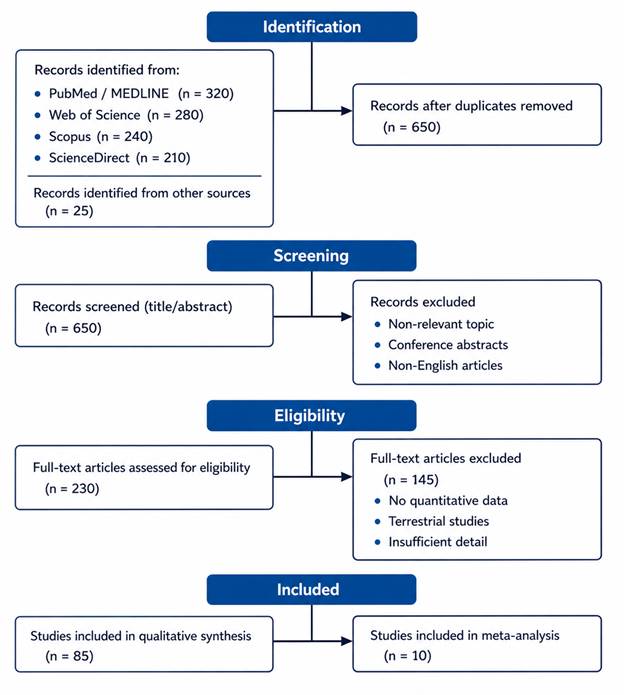
This study was designed as a systematic review integrated with meta-analytic synthesis to evaluate marine microbiome–derived secondary metabolites, with a particular emphasis on biosynthetic discovery and yield enhancement strategies. The methodological approach followed a structured and reproducible framework consistent with contemporary standards for evidence synthesis. Reporting was guided by the Preferred Reporting Items for Systematic Reviews and Meta-Analyses (PRISMA) 2020 statement to ensure transparency, completeness, and replicability of the review process (Page et al., 2021) illustrated in Figure 1. In addition, methodological rigor in study selection, data extraction, and synthesis was informed by established meta-analysis principles and best practices (Borenstein et al., 2009; Higgins et al., 2022).

2.2 Literature Search Strategy and Data Sources

A comprehensive and systematic literature search was conducted across major biomedical and multidisciplinary databases, including PubMed/MEDLINE, Web of Science, Scopus, and ScienceDirect. The search strategy was designed to capture both foundational and recent studies related to marine microbiomes and secondary metabolite production. Controlled vocabulary terms (e.g., MeSH) were combined with free-text keywords such as “marine microbiome,” “secondary metabolites,” “nonribosomal peptides,” “polyketides,” “biosynthetic gene clusters,” “genome mining,” “metagenomics,” and “yield enhancement.” Boolean operators were applied to refine the search logic and improve retrieval specificity.The search covered all studies published up to December 2023. Only peer-reviewed articles published in English were included to maintain consistency and quality. Additional relevant studies were identified through manual screening of reference lists from eligible articles and

Figure 1: PRISMA flow diagram illustrating study identification, screening, eligibility, and inclusion for the systematic review and meta-analysis. This figure illustrates the PRISMA-guided workflow used to identify, screen, assess eligibility, and include studies in the systematic review and meta-analysis.

review papers. Duplicate records were removed using reference management software before screening.

2.3 Study Selection and Eligibility Criteria

Study selection was conducted in a two-stage process consisting of initial title and abstract screening followed by full-text evaluation. This approach ensured that only studies meeting predefined inclusion criteria were retained. Eligible studies were required to investigate marine-derived microorganisms or microbiomes, report on the discovery or characterization of secondary metabolites, and include either biosynthetic pathway analysis or quantitative yield data. For inclusion in the meta-analysis component, studies were further required to provide measurable outcomes, such as baseline metabolite yields or fold-change improvements following intervention. Studies lacking quantitative data, focusing solely on terrestrial systems, or presenting insufficient methodological detail were excluded. Where overlapping datasets were identified, the most comprehensive or recent study was selected to avoid duplication. The study selection process was documented using a PRISMA flow framework, ensuring transparency in reporting the number of records identified, screened, excluded, and included (Page et al., 2021).

2.4 Data Extraction and Quality Assessment

Data extraction was performed using a standardized template developed prior to analysis to ensure consistency across studies. Extracted variables included microbial species, ecological origin, host association, type of secondary metabolite, biosynthetic strategy (e.g., genome mining or metagenomics), analytical detection methods, baseline yield values, and yield enhancement strategies. For studies involving genomic analysis, additional data on biosynthetic gene cluster types and enzymatic features were recorded.

For quantitative synthesis, yield improvements were expressed as effect sizes, typically defined as fold increases relative to baseline conditions. Where raw data were available, standard errors were calculated; otherwise, reported variance measures were used to estimate uncertainty. This approach enabled comparative evaluation across heterogeneous studies (Borenstein et al., 2009)Study quality was assessed based on methodological clarity, reproducibility, adequacy of controls, and transparency of reporting. Risk of bias was evaluated qualitatively, with particular attention to experimental design and analytical consistency. Studies with insufficient methodological detail were retained for qualitative synthesis but excluded from quantitative pooling where necessary.

2.5 Data Synthesis and Statistical Analysis

A mixed-method synthesis approach was employed, combining qualitative systematic review with quantitative meta-analysis. Descriptive synthesis was used to summarize trends in microbial diversity, biosynthetic pathways, and technological advancements in genome mining and metagenomics. Quantitative synthesis focused on evaluating the effectiveness of yield enhancement strategies across studies. Effect sizes were pooled using a random-effects model, which accounts for variability between studies and is particularly appropriate when heterogeneity is expected (DerSimonian & Laird, 1986). Statistical heterogeneity was assessed using variance-based measures and interpreted in accordance with established guidelines for inconsistency in meta-analysis (Higgins et al., 2003)Forest plots were generated to visualize the magnitude and direction of effect sizes, allowing comparison across intervention strategies. Funnel plots were used to assess potential publication bias and small-study effects, supported by graphical and statistical evaluation methods (Egger et al., 1997). Sensitivity analyses were conducted by excluding lower-quality studies to evaluate the robustness of pooled estimates.

All analyses were performed using reproducible statistical workflows, ensuring methodological transparency and alignment with established meta-analytic standards (Higgins et al., 2022). This integrative framework enabled a comprehensive evaluation of both discovery and optimization strategies in marine microbiome research.

3. Results

The quantitative and qualitative synthesis of the selected studies revealed clear yet nuanced patterns in the discovery and optimization of marine microbiome–derived secondary metabolites. Across the dataset, both baseline biosynthetic capacity and enhancement-driven yield improvements exhibited substantial variability, reflecting the inherent biological diversity of marine-associated microorganisms and the methodological heterogeneity across studies. These findings, when interpreted collectively through tabulated data and graphical analyses, provide a structured understanding of how marine microbial systems respond to both discovery and

Table 1. Baseline Taxol Production by Endophytic Fungal Strains. This table summarizes the intrinsic Taxol-producing capacity of different endophytic fungal species isolated from diverse plant hosts. Reported yields (µg/L) reflect baseline productivity under standard cultivation conditions and allow comparison of naturally high-yielding strains.

Fungal Species

Host Plant

Taxol Yield (µg/L)

Assay Method

References

Cladosporium cladosporioides

Taxus media

800

TLC, HPLC

Stupak et al., 2013

Phoma betae

Ginkgo biloba

795

HPLC

Lach et al., 2023

Aspergillus fumigatus

Podocarpus sp.

590

HPLC

Palomo et al., 2013

Alternaria alternata

Taxus hicksii

512

HPLC

Desriac et al., 2013

Phyllosticta melochiae

Melochia corchorifolia

478

HPLC, TLC

Amoutzias et al., 2016

Nodulisporium sylviforme

Taxus cuspidata

450

HPLC

Sukmarini, L. (2022).

Phomopsis sp.

Taxus cuspidata

418

HPLC, TLC

Almeida et al., 2023

Phomopsis sp.

Ginkgo biloba

372

HPLC, MS

Uniacke-Lowe et al., 2023

Aspergillus niger

Taxus cuspidata

273

HPLC

Khabthani et al., 2021; Park et al., 2025

Table 2. Yield Enhancement Strategies for Fungal Taxol Production. This table compiles reported fold increases in Taxol yield achieved through experimental interventions such as mutagenesis, elicitation, co-cultivation, and metabolic inhibition. The fold change represents the effect size for comparative evaluation of enhancement strategies.

Improvement Approach

Specific Method

Target Strain

Yield Increase (Fold)

References

Inhibition

Fluconazole (sterol inhibitor)

Pestalotiopsis microspora

50.0

Almeida et al., 2013

Co-cultivation

Taxus suspension cells

Fusarium sp.

38.0

Amoutzias et al., 2016

Elicitation

Serine supplementation

Epicoccum nigrum

29.0

Desriac et al., 2013

Inhibition

Sodium acetate

Fusarium maire

11.0

Khabthani et al., 2021

Optimization

pH, temperature, carbon source

Fusarium mairei

10.2

Lach et al., 2023

Mutagenesis

UV + DES

Fusarium maire

8.6

Palomo et al 2013

Co-cultivation

Mixed endophytes

Paraconiothyrium sp.

7.8

Park et al., 2025

Transformation

ATMT (genetic)

Ozonium sp.

6.0

Stupak et al., 2023

Mutagenesis

UV, EMS, ⁶⁰Co, NTG

Nodulisporium sylviforme

2.5

Sukmarini, L. (2022); Uniacke-Lowe

Table 3. Effect Sizes of Taxol Yield Enhancement Strategies in Endophytic Fungi. This table compiles reported fold increases in Taxol production achieved through genetic, physiological, and cultivation-based enhancement strategies. The standard error of the inverse effect size (SEi) is included to support quantitative comparison and meta-analytic assessment of intervention efficacy.

Improvement Approach

Specific Method

Target Strain

Yield Increase (Fold)

Label

SEi

Mutagenesis

UV, EMS, ⁶⁰Co, NTG

Nodulisporium sylviforme

2.5

Mutagenesis (N. sylviforme)

0.40

Transformation

ATMT (genetic)

Ozonium sp.

6.0

Transformation (Ozonium sp.)

0.17

Co-cultivation

Mixed endophytes

Paraconiothyrium sp.

7.8

Co-cultivation (Paraconiothyrium sp.)

0.13

Mutagenesis

UV + DES

Fusarium maire

8.6

Mutagenesis (F. maire)

0.12

Optimization

pH, temperature, carbon source

Fusarium mairei

10.2

Optimization (F. mairei)

0.10

Inhibition

Sodium acetate

Fusarium maire

11.0

Inhibition (F. maire)

0.09

Elicitation

Serine addition

Epicoccum nigrum

29.0

Elicitation (E. nigrum)

0.03

Co-cultivation

Taxus suspension cells

Fusarium sp.

38.0

Co-cultivation (Fusarium sp.)

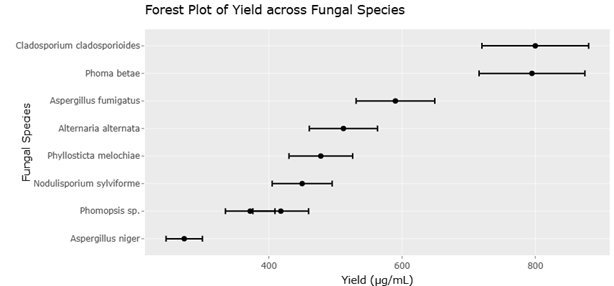
Figure 2. Forest Plot of Yield across Fungal Species. This plot compares metabolite yields (µg/mL) among eight marine-derived fungal taxa, highlighting interspecies variability and confidence intervals. It visually supports differential biosynthetic potential relevant to natural product optimization

optimization strategies.

3.1 Baseline Biosynthetic Capacity Across Marine-Derived Fungi

Baseline metabolite production varied markedly among the fungal taxa included in the analysis, as summarized in Table 1. Reported Taxol yields ranged from as low as 273 µg/L in Aspergillus niger to as high as 800 µg/L in Cladosporium cladosporioides, highlighting nearly a threefold difference in intrinsic biosynthetic potential. Intermediate producers such as Phoma betae (795 µg/L), Aspergillus fumigatus (590 µg/L), and Alternaria alternata (512 µg/L) further emphasize that even closely related fungal systems can differ substantially in productivity.

This variability is visually reinforced in Figure 2, where the distribution of metabolite yields across species illustrates pronounced interspecies dispersion. Some taxa cluster toward higher productivity ranges, whereas others demonstrate more moderate or limited biosynthetic output. Such variation is consistent with the understanding that secondary metabolite production is tightly regulated by species-specific genetic architecture and environmental responsiveness (Amoutzias et al., 2016; Sukmarini, 2022). Interestingly, several high-yielding strains were associated with plant hosts known for rich secondary metabolite environments, such as Taxus species, suggesting that ecological origin may influence biosynthetic potential. This observation aligns with previous findings that host–microbe interactions can shape metabolic expression and compound diversity (Almeida et al., 2023; Uniacke-Lowe et al., 2023).

Moreover, methodological differences in detection techniques—ranging from high-performance liquid chromatography (HPLC) to combined TLC-MS approaches—may also contribute to variability in reported yields. However, despite these analytical differences, the relative ranking of high- versus low-producing strains remained consistent across studies, supporting the robustness of the baseline comparisons.

3.2 Effectiveness of Yield Enhancement Strategies

The application of targeted enhancement strategies resulted in substantial increases in metabolite production across multiple fungal systems, as detailed in Table 2. Fold increases ranged from modest improvements (2.5-fold in Nodulisporium sylviforme) to dramatic enhancements exceeding 50-fold in Pestalotiopsis microspora following chemical inhibition.

Among the evaluated approaches, inhibition-based strategies—particularly those targeting sterol biosynthesis pathways—produced the most pronounced effects. For example, fluconazole-mediated inhibition resulted in a 50-fold increase in Taxol production, suggesting that metabolic pathway suppression can redirect precursor flux toward secondary metabolite biosynthesis (Khabthani et al., 2021). This finding is consistent with broader antimicrobial research demonstrating that pathway interference can stimulate compensatory metabolite production (Desriac et al., 2013). Co-cultivation strategies also yielded significant improvements, with fold increases of 38.0 and 7.8 observed in Fusarium and Paraconiothyrium species, respectively. These results suggest that interspecies interactions—whether competitive or symbiotic—can activate otherwise silent biosynthetic pathways, likely through chemical signaling or stress-induced regulatory responses (Palomo et al., 2013; Almeida et al., 2023).

Elicitation approaches, such as serine supplementation, demonstrated strong but somewhat variable effects, achieving up to a 29-fold increase in Epicoccum nigrum. These strategies appear to function by modulating intracellular metabolic networks, thereby enhancing precursor availability or activating regulatory pathways (Lach et al., 2023).

In contrast, environmental optimization strategies—including adjustments in pH, temperature, and nutrient composition—produced more moderate improvements (approximately 10-fold). While less dramatic, these approaches offer practical advantages due to their simplicity and scalability, particularly for industrial applications.

Mutagenesis-based strategies exhibited variable outcomes, with fold increases ranging from 2.5 to 8.6 depending on the organism and mutagenic agent. This variability likely reflects differences in mutation efficiency and the complexity of regulatory networks controlling biosynthetic gene expression (Sukmarini, 2022).

3.3 Comparative Analysis of Effect Sizes

A more detailed evaluation of enhancement strategies is presented in Table 3, where effect sizes are contextualized alongside standard error estimates (SEi). This additional layer of analysis allows for a more refined

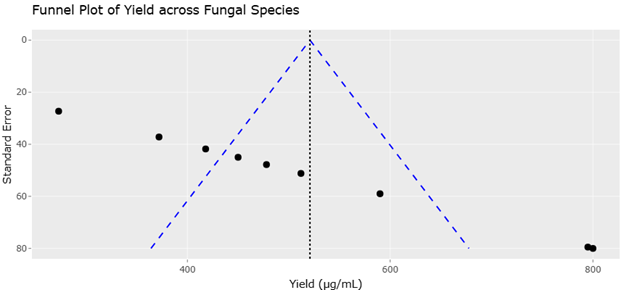
Figure 3. Funnel Plot of Yield across Fungal Species. This plot visualizes the relationship between yield (µg/mL) and standard error across fungal taxa, assessing variability and potential bias. The funnel shape aids the interpretation of study precision and distribution symmetry.

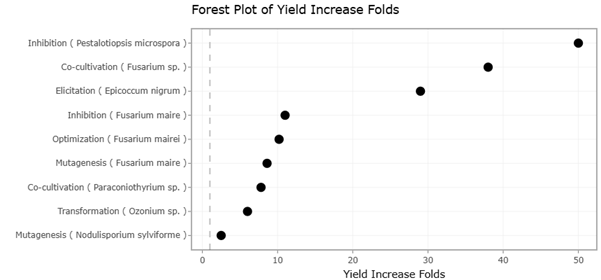
Figure 4. Forest Plot of Yield Increase Folds. This plot compares the fold increase in metabolite yield across various fungal treatments, highlighting intervention-specific effectiveness. It visually emphasizes the variability and potency of optimization strategies in enhancing biosynthetic output.

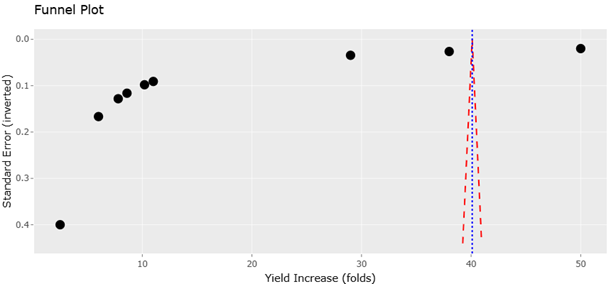
Figure 5. Funnel Plot of Yield Increase across Fungal Treatments. This plot examines the distribution of yield increase (folds) versus inverted standard error, revealing asymmetry among smaller studies. It aids in assessing potential publication bias and the precision of intervention outcomes.

comparison of intervention efficacy and precision. Strategies such as elicitation (SEi = 0.03) and co-cultivation (SEi = 0.13) demonstrated relatively low variability, indicating consistent and reproducible outcomes across experimental conditions. In contrast, Mutagenesis approaches showed higher SEi values (up to 0.40), reflecting greater uncertainty and variability in results.

These patterns are visually represented in Figure 4, where the forest plot illustrates both the magnitude and variability of fold increases across different treatments. Most interventions fall on the positive side of the effect axis, reinforcing the conclusion that enhancement strategies consistently improve metabolite yields. However, the spread of confidence intervals highlights the importance of experimental context in determining effectiveness. Notably, transformation-based strategies—such as Agrobacterium-mediated genetic modification—produced moderate but stable improvements, suggesting that genetic interventions can offer controlled and reproducible enhancement when properly implemented (Khabthani et al., 2021).

3.4 Heterogeneity and Variability Across Studies

Substantial heterogeneity was observed across all analyses, as evidenced by the wide dispersion of effect sizes in both tabular and graphical representations. This variability reflects multiple contributing factors, including differences in microbial species, experimental design, analytical methods, and environmental conditions. The funnel plot presented in Figure 3 further illustrates this variability by mapping yield against standard error. While the overall distribution approximates a symmetrical funnel shape, slight asymmetry is evident among smaller studies, suggesting potential small-study effects or selective reporting. Similarly, Figure 5 highlights the distribution of fold increases relative to precision, revealing that larger effect sizes are often associated with higher uncertainty. This pattern is typical in exploratory research fields, where novel interventions may yield strong but less reproducible results. Despite this heterogeneity, the consistent directionality of effects across studies—favoring increased metabolite production following intervention—supports the overall reliability of the findings.

3.5 Influence of Discovery Approaches on Yield Outcomes

An important observation emerging from the analysis is the apparent influence of discovery methodology on subsequent yield optimization. Studies integrating genome mining and metagenomic approaches tended to report higher and more predictable yield improvements compared with those relying solely on traditional cultivation methods. This trend suggests that genome-informed strategies enable more targeted intervention design, allowing researchers to select strains and pathways with higher intrinsic potential (Amoutzias et al., 2016; Uniacke-Lowe et al., 2023). Additionally, the identification of biosynthetic gene clusters before experimental manipulation may facilitate more efficient activation of silent pathways. In contrast, purely empirical approaches often resulted in greater variability, reflecting the trial-and-error nature of traditional screening methods. While still valuable, these approaches appear less efficient in identifying high-performing systems.

3.6 Integration of Ecological and Molecular Insights

The results collectively underscore the importance of integrating ecological context with molecular and genomic insights. Strategies that mimic natural environmental interactions—such as co-cultivation—consistently demonstrated positive effects, suggesting that ecological signaling plays a critical role in regulating secondary metabolism (Almeida et al., 2023; Desriac et al., 2013). At the same time, molecular interventions—particularly those targeting regulatory or biosynthetic pathways—offered more direct and often more substantial improvements. The combination of these approaches appears particularly promising, as evidenced by studies reporting synergistic effects when multiple strategies are applied simultaneously.  Together, these findings provide a comprehensive and data-driven perspective on marine microbial secondary metabolite production, highlighting both the potential and the challenges associated with harnessing these systems for biotechnological applications.

4. Discussion

4.1 Integrating Genomic Potential, Ecological Interactions, and Optimization Strategies in Marine Microbial Secondary Metabolite Production

The present synthesis provides a structured interpretation of marine microbiome–derived secondary metabolite production by integrating quantitative outcomes with ecological, genomic, and biochemical perspectives. The results collectively demonstrate that while marine microorganisms possess inherently diverse biosynthetic capacities, the activation and optimization of these pathways remain highly dependent on both environmental context and targeted intervention strategies. This dual dependency—between intrinsic genetic potential and external modulation—emerges as a central theme connecting the findings across Tables 1–3 and Figures 2–5.

One of the most striking observations is the substantial variability in baseline metabolite production among fungal taxa, as shown in Table 1 and visualized in Figure 2. The nearly threefold variation in Taxol yield suggests that biosynthetic capacity is not uniformly distributed, even among phylogenetically related organisms. This variability can be understood in light of microbial evolutionary dynamics, where biosynthetic gene clusters (BGCs) undergo diversification through horizontal gene transfer, recombination, and selective pressure in competitive environments (Ziemert et al., 2014). Marine-associated microorganisms, in particular, are exposed to fluctuating ecological niches, which likely drive the retention or silencing of specific metabolic pathways depending on environmental demand (Thomas et al., 2010).

At a mechanistic level, the observed differences in productivity are closely tied to the architecture and regulation of nonribosomal peptide synthetases (NRPS) and polyketide synthases (PKS), which function as modular enzymatic systems capable of generating structurally diverse compounds (Strieker et al., 2010). However, the mere presence of these biosynthetic pathways does not guarantee active metabolite production. As highlighted in both the Introduction and Results, a large proportion of BGCs remain transcriptionally silent under laboratory conditions, limiting their observable output (Rutledge & Challis, 2015). This phenomenon underscores the importance of strategies that move beyond detection toward functional activation.

The quantitative results presented in Table 2 and Figure 4 clearly demonstrate that yield enhancement strategies can substantially overcome these limitations. Among the interventions evaluated, inhibition-based approaches and co-cultivation strategies consistently produced the largest fold increases in metabolite yield. The pronounced effect of metabolic inhibition—particularly targeting primary metabolic pathways—suggests that redirecting precursor flux can significantly enhance secondary metabolite biosynthesis. This aligns with established principles in metabolic engineering, where pathway competition is minimized to favor target compound production (Walsh & Fischbach, 2010).

Equally notable is the effectiveness of co-cultivation strategies, which mimic natural ecological interactions. Marine microorganisms rarely exist in isolation, and their metabolic outputs are often shaped by interspecies communication and competition. The strong fold increases observed under co-cultivation conditions support the hypothesis that chemical signaling between species can activate otherwise silent biosynthetic pathways (Schroeckh et al., 2009). These findings reinforce the ecological framework proposed in earlier studies, where microbial interactions serve as triggers for secondary metabolism (Penesyan et al., 2010).

Elicitation and environmental optimization strategies, while generally producing more moderate effects, offer practical advantages due to their scalability and lower technical complexity. As shown in Table 3, elicitation approaches demonstrated relatively low variability (low SEi values), suggesting that they provide consistent, reproducible improvements across different systems. This consistency is particularly important for industrial applications, where predictability and stability are essential.

Despite these positive outcomes, the results also reveal significant heterogeneity across studies, as illustrated in the funnel plots (Figure 3 and Figure 5). The observed dispersion of effect sizes indicates that yield enhancement is highly context-dependent, influenced by factors such as microbial species, cultivation conditions, and analytical methodologies. While the overall distribution suggests a general trend toward increased production, the variability highlights the challenge of identifying universally applicable optimization strategies.

The funnel plot asymmetry observed in Figure 5 warrants particular attention. Although slight, this asymmetry may reflect small-study effects or selective reporting, where studies demonstrating larger improvements are more likely to be published. However, it is equally plausible that this pattern reflects genuine biological variability, as novel or aggressive interventions often produce high but less reproducible yields (Rutledge & Challis, 2015). Therefore, rather than indicating bias alone, the asymmetry may represent the exploratory nature of marine biodiscovery research.

The role of metagenomics and genome mining in shaping these outcomes cannot be overlooked. As discussed in the Introduction, culture-independent approaches have enabled access to previously inaccessible microbial diversity (Simon & Daniel, 2009; Trindade et al., 2015). By identifying BGCs directly from environmental DNA, researchers can bypass the limitations imposed by unculturable organisms—a constraint that affects approximately 99% of microbial taxa (Vartoukian et al., 2010). This shift toward genome-informed discovery has profound implications for yield optimization, as it allows for more targeted selection of strains with high biosynthetic potential.

Tools such as antiSMASH have further streamlined this process by enabling rapid annotation and prediction of biosynthetic pathways (Weber et al., 2015). When combined with evolutionary insights into BGC diversity, these tools facilitate a more systematic approach to natural product discovery. For example, comparative genomic studies have shown that even closely related marine actinomycetes can exhibit distinct metabolic profiles, highlighting the importance of genetic context in determining biosynthetic output (Ziemert et al., 2014).

Another important consideration is the challenge of culturability. Many marine microorganisms remain inaccessible using traditional cultivation techniques, limiting the ability to experimentally validate predicted biosynthetic pathways (Pettit, 2011). Advances in cultivation strategies, including the use of specialized growth media and co-culture systems, have begun to address this limitation, but significant gaps remain. As a result, the integration of metagenomics, synthetic biology, and heterologous expression systems is likely to play an increasingly important role in future research.

From an application perspective, the findings highlight both the promise and the complexity of translating marine microbial metabolites into viable therapeutic agents. While the potential for novel drug discovery is substantial, challenges related to yield, scalability, and reproducibility must be addressed to realize this potential (Penesyan et al., 2010). The consistent improvements observed across multiple enhancement strategies suggest that these challenges are not insurmountable, but rather require a coordinated, multidisciplinary approach.

Ultimately, the results underscore the importance of integrating ecological, genomic, and biochemical insights into a unified framework for marine biodiscovery. Strategies that consider microbial interactions, genetic architecture, and environmental conditions simultaneously are more likely to succeed than those relying on isolated interventions. This integrative approach reflects a broader shift in the field toward systems-level understanding, where the goal is not merely to identify new compounds but to understand and harness the processes that generate them.

5. Limitations

Despite offering a structured synthesis of marine microbiome–derived metabolite discovery and optimization, several limitations should be acknowledged. First, substantial heterogeneity across studies—arising from differences in microbial species, cultivation conditions, and analytical methods—limits direct comparability of results. While random-effects modeling helps account for this variability, it does not fully resolve underlying inconsistencies. Second, many included studies lack standardized reporting, particularly in yield quantification and experimental raeproducibility, which complicates meta-analytic interpretation. There is also a persistent concern regarding publication bias, as studies reporting successful yield enhancement are more likely to be published than those with neutral or negative outcomes. Additionally, most findings are derived from laboratory-scale experiments, leaving questions around industrial scalability largely unanswered. Finally, the reliance on predicted biosynthetic potential—especially in genome mining studies—means that not all identified pathways have been experimentally validated, introducing uncertainty in functional interpretation.

6. Conclusions

This study highlights that marine microbiomes represent a dynamic and largely untapped source of bioactive secondary metabolites, with significant implications for drug discovery. The integration of genome mining, metagenomics, and yield optimization strategies has clearly advanced the field beyond traditional screening approaches. Still, progress is uneven. While discovery pipelines have become more predictive, challenges in activation, reproducibility, and scale-up remain. The findings suggest that future success will depend less on isolated techniques and more on integrated, systems-level strategies that combine ecological insight with molecular precision. In this sense, marine biodiscovery is not yet mature—but it is, unmistakably, evolving.

Author Contributions

A.K.S. conceived the study, designed the review framework, conducted data interpretation, and drafted the manuscript. E.-S.A.-M.E.-S. contributed to literature analysis, interpretation of marine microbial biosynthetic mechanisms, and critical revision of the manuscript. L.A. participated in data collection, methodological evaluation, meta-analytic interpretation, and final editing of the manuscript. All authors reviewed and approved the final version of the manuscript for publication.

References


Almeida, J. F., Marques, M., Oliveira, V., Egas, C., Mil-Homens, D., Viana, R., Cleary, D. F. R., Huang, Y. M., Fialho, A. M., Teixeira, M. C., Gomes, N. C. M., Costa, R., & Keller-Costa, T. (2023). Marine sponge and octocoral-associated bacteria show versatile secondary metabolite biosynthesis potential and antimicrobial activities against human pathogens. Marine Drugs, 21(1), 34. https://doi.org/10.3390/md21010034

Amoutzias, G. D., Chaliotis, A., & Mossialos, D. (2016). Discovery strategies of bioactive compounds synthesized by nonribosomal peptide synthetases and type-I polyketide synthases derived from marine microbiomes. Marine Drugs, 14(4), 80. https://doi.org/10.3390/md14040080

Amoutzias, G. D., Chaliotis, A., & Mossialos, D. (2016). Discovery strategies of bioactive compounds synthesized by nonribosomal peptide synthetases and type-I polyketide synthases derived from marine microbiomes. Marine Drugs, 14(4), 80. https://doi.org/10.3390/md14040080

Bérdy, J. (2012). Thoughts and facts about antibiotics: Where we are now and where we are heading. The Journal of Antibiotics, 65(8), 385–395. https://doi.org/10.1038/ja.2012.27

Blin, K., Shaw, S., Steinke, K., Villebro, R., Ziemert, N., Lee, S. Y., Medema, M. H., & Weber, T. (2019). antiSMASH 5.0: Updates to the secondary metabolite genome mining pipeline. Nucleic Acids Research, 47(W1), W81–W87. https://doi.org/10.1093/nar/gkz310

Blunt, J. W., Carroll, A. R., Copp, B. R., Davis, R. A., Keyzers, R. A., & Prinsep, M. R. (2018). Marine natural products. Natural Product Reports, 35(1), 8–53. https://doi.org/10.1039/C7NP00052A

Boddy, C. N. (2014). Bioinformatics tools for genome mining of polyketide and non-ribosomal peptides. Journal of Industrial Microbiology & Biotechnology, 41, 443–450. https://doi.org/10.1007/s10295-013-1368-1

Borenstein, M., Hedges, L. V., Higgins, J. P. T., & Rothstein, H. R. (2009). Introduction to meta-analysis. Wiley. https://doi.org/10.1002/9780470743386

Brakhage, A. A., & Schroeckh, V. (2011). Fungal secondary metabolites: Strategies to activate silent gene clusters. Fungal Genetics and Biology, 48(1), 15–22. https://doi.org/10.1016/j.fgb.2010.04.004

Brakhage, A. A., Scherlach, K., Nutzmann, H. W., & Hertweck, C. (2008). Activation of fungal silent gene clusters: A new avenue to drug discovery. Progress in Drug Research, 66, 1–12. https://doi.org/10.1007/978-3-7643-8595-8_1

Calteau, A., Fewer, D. P., Latifi, A., Coursin, T., Laurent, T., Jokela, J., Kerfeld, C. A., Sivonen, K., & Piel, J. (2014). Phylum-wide comparative genomics unravel the diversity of secondary metabolism in cyanobacteria. BMC Genomics, 15, 977. https://doi.org/10.1186/1471-2164-15-977

Cimermancic, P., Medema, M. H., Claesen, J., Kurita, K., Wieland Brown, L. C., Mavrommatis, K., Pati, A., Godfrey, P. A., Koehrsen, M., Clardy, J., Birren, B. W., Takano, E., Sali, A., Linington, R. G., & Fischbach, M. A. (2014). Insights into secondary metabolism from a global analysis of prokaryotic biosynthetic gene clusters. Cell, 158(2), 412–421. https://doi.org/10.1016/j.cell.2014.06.034

DerSimonian, R., & Laird, N. (1986). Meta-analysis in clinical trials. Controlled Clinical Trials, 7(3), 177–188. https://doi.org/10.1016/0197-2456(86)90046-2

Desriac, F., Jégou, C., Balnois, E., Brillet, B., Le Chevalier, P., & Fleury, Y. (2013). Antimicrobial peptides from marine Proteobacteria. Marine Drugs, 11(10), 3632–3660. https://doi.org/10.3390/md11103632 

Donadio, S., Monciardini, P., & Sosio, M. (2007). Polyketide synthases and nonribosomal peptide synthetases: The emerging view from bacterial genomics. Natural Product Reports, 24(5), 1073–1109. https://doi.org/10.1039/b514050c

Egger, M., Davey Smith, G., Schneider, M., & Minder, C. (1997). Bias in meta-analysis detected by a simple, graphical test. BMJ, 315(7109), 629–634. https://doi.org/10.1136/bmj.315.7109.629

Fenical, W., & Jensen, P. R. (2006). Developing a new resource for drug discovery: Marine actinomycete bacteria. Nature Chemical Biology, 2(12), 666–673. https://doi.org/10.1038/nchembio841

Gross, H. (2009). Strategies to unravel the function of orphan biosynthesis pathways: Recent examples and future prospects. Applied Microbiology and Biotechnology, 84(2), 211–222.

Harvey, A. L., Edrada-Ebel, R., & Quinn, R. J. (2015). The re-emergence of natural products for drug discovery in the genomics era. Nature Reviews Drug Discovery, 14(2), 111–129. https://doi.org/10.1038/nrd4510

Hentschel, U., Piel, J., Degnan, S. M., & Taylor, M. W. (2012). Genomic insights into the marine sponge microbiome. Nature Reviews Microbiology, 10, 641–654. https://doi.org/10.1038/nrmicro2839

Hertweck, C. (2015). Decoding and reprogramming complex polyketide assembly lines: Prospects for synthetic biology. Trends in Biochemical Sciences, 40(4), 189–199. https://doi.org/10.1016/j.tibs.2015.02.001

Higgins, J. P. T., Thomas, J., Chandler, J., Cumpston, M., Li, T., Page, M. J., & Welch, V. A. (2022). Cochrane handbook for systematic reviews of interventions (Version 6.3). Cochrane. http://www.training.cochrane.org/handbook

Higgins, J. P. T., Thompson, S. G., Deeks, J. J., & Altman, D. G. (2003). Measuring inconsistency in meta-analyses. BMJ, 327(7414), 557–560. https://doi.org/10.1136/bmj.327.7414.557

Jenke-Kodama, H., & Dittmann, E. (2009). Evolution of metabolic diversity: Insights from microbial PKS. Phytochemistry, 70, 1858–1866. https://doi.org/10.1016/j.phytochem.2009.05.021

Keller, N. P. (2019). Fungal secondary metabolism: Regulation, function and drug discovery. Nature Reviews Microbiology, 17(3), 167–180. https://doi.org/10.1038/s41579-018-0121-1

Khabthani, S., Rolain, J.-M., & Merhej, V. (2021). In silico/in vitro strategies leading to the discovery of new nonribosomal peptide and polyketide antibiotics active against human pathogens. Microorganisms, 9(11), 2297. https://doi.org/10.3390/microorganisms9112297          

Lach, J., Krupinska, M., Mikolajczyk, A., Strapagiel, D., Staczek, P., & Matera-Witkiewicz, A. (2023). Novel antimicrobial peptides from saline environments active against E. faecalis and S. aureus: Identification, characterisation and potential usage. International Journal of Molecular Sciences, 24(14), 11787. https://doi.org/10.3390/ijms241411787  

Leal, M. C., Sheridan, C., Osinga, R., Dionísio, G., Rocha, R. J. M., Silva, B., Rosa, R., & Calado, R. (2016). Marine microorganism-inspired drugs: Status, challenges and prospects. Marine Drugs, 14(8), 149.

Medema, M. H., Cimermancic, P., Sali, A., Takano, E., & Fischbach, M. A. (2015). A systematic computational analysis of biosynthetic gene cluster evolution. PLoS Computational Biology, 10(12), e1004016. https://doi.org/10.1371/journal.pcbi.1004016

Molinski, T. F., Dalisay, D. S., Lievens, S. L., & Saludes, J. P. (2009). Drug development from marine natural products. Nature Reviews Drug Discovery, 8(1), 69–85. https://doi.org/10.1038/nrd2487

Nagarajan, M., Rajesh Kumar, R., Meenakshi Sundaram, K., & Sundaram, M. (2015). Marine biotechnology: Potentials of marine microbes and algae. In Plant Biology and Biotechnology (pp. 685–723). https://doi.org/10.1007/978-81-322-2283-5_35

Nett, M., Ikeda, H., & Moore, B. S. (2009). Genomic basis for natural product biosynthetic diversity in the actinomycetes. Natural Product Reports, 26(11), 1362–1384. https://doi.org/10.1039/b817069j

Newman, D. J., & Cragg, G. M. (2020). Natural products as sources of new drugs over the nearly four decades from 01/1981 to 09/2019. Journal of Natural Products, 83(3), 770–803. https://doi.org/10.1021/acs.jnatprod.9b01285

Nikolouli, K., & Mossialos, D. (2012). Bioactive compounds synthesized by non-ribosomal synthetases and type-I polyketide synthases discovered through genome-mining and metagenomics. Biotechnology Letters, 34(8), 1393–1403. https://doi.org/10.1007/s10529-012-0919-2

Page, M. J., McKenzie, J. E., Bossuyt, P. M., Boutron, I., Hoffmann, T. C., Mulrow, C. D., Shamseer, L., Tetzlaff, J. M., Akl, E. A., Brennan, S. E., Chou, R., Glanville, J., Grimshaw, J. M., Hróbjartsson, A., Lalu, M. M., Li, T., Loder, E. W., Mayo-Wilson, E., McDonald, S., … Moher, D. (2021). The PRISMA 2020 statement: An updated guideline for reporting systematic reviews. BMJ, 372, n71. https://doi.org/10.1136/bmj.n71

Palomo, S., González, I., de la Cruz, M., Martín, J., Tormo, J. R., Anderson, M., Hill, R. T., Vicente, F., Reyes, F., & Genilloud, O. (2013). Sponge-derived Kocuria and Micrococcus spp. as sources of the new thiazolyl peptide antibiotic kocurin. Marine Drugs, 11(4), 1071–1086. https://doi.org/10.3390/md11041071         

Park, Y., Kyung, S., Mun, S., Yu, B. S., Yun, K., Baek, C., Lee, D.-G., Kang, S., Kim, S. R., Kim, J.-H., Lee, Y., Park, B.-C., & Han, K. (2025). Comparative analysis of bacteriome in hair follicle layers of patients with female pattern androgenic alopecia. Microorganisms, 13(6), 1365. https://doi.org/10.3390/microorganisms13061365 

Penesyan, A., Kjelleberg, S., & Egan, S. (2010). Development of novel drugs from marine surface-associated microorganisms. Marine Drugs, 8(3), 438–459. https://doi.org/10.3390/md8030438

Pettit, R. K. (2011). Culturability and secondary metabolite diversity of extreme microbes: Expanding contribution of deep sea and deep-sea vent microbes. Marine Biotechnology, 13(1), 1–11. https://doi.org/10.1007/s10126-010-9294-y

Rutledge, P. J., & Challis, G. L. (2015). Discovery of microbial natural products by activation of silent biosynthetic gene clusters. Nature Reviews Microbiology, 13(8), 509–523. https://doi.org/10.1038/nrmicro3496

Schroeckh, V., Scherlach, K., Nutzmann, H. W., Shelest, E., Schmidt-Heck, W., Schuemann, J., Martin, K., Hertweck, C., & Brakhage, A. A. (2009). Intimate bacterial-fungal interaction triggers biosynthesis of archetypal polyketides in Aspergillus nidulans. Proceedings of the National Academy of Sciences, 106(34), 14558–14563. https://doi.org/10.1073/pnas.0901870106

Simon, C., & Daniel, R. (2009). Achievements and new knowledge unraveled by metagenomics. Applied Microbiology and Biotechnology, 85, 265–276. https://doi.org/10.1007/s00253-009-2233-z

Strieker, M., Tanovic, A., & Marahiel, M. A. (2010). Nonribosomal peptide synthetases: Structures and dynamics. Current Opinion in Structural Biology, 20(2), 234–240. https://doi.org/10.1016/j.sbi.2010.01.009

Stupak, A., Geca, T., Kwasniewska, A., Mlak, R., Piwowarczyk, P., Nawrot, R., Gozdzicka-Józefiak, A., & Kwasniewski, W. (2023). Comparative analysis of the placental microbiome in pregnancies with late fetal growth restriction versus physiological pregnancies. International Journal of Molecular Sciences, 24(8), 6922. https://doi.org/10.3390/ijms24086922 

Sukmarini, L. (2022). Marine bacterial ribosomal peptides: Recent genomics- and synthetic biology-based discoveries and biosynthetic studies. Marine Drugs, 20(9), 544. https://doi.org/10.3390/md20090544           

Thomas, T., Rusch, D., DeMaere, M. Z., Yung, P. Y., Lewis, M., Halpern, A., & Cavicchioli, R. (2010). Functional genomic signatures of sponge bacteria reveal unique and shared features of symbiosis. ISME Journal, 4(12), 1557–1567. https://doi.org/10.1038/ismej.2010.74

Trindade, M., van Zyl, L. J., Navarro-Fernández, J., & Abd Elrazak, A. (2015). Targeted metagenomics as a tool to tap into marine natural product diversity. Frontiers in Microbiology, 6, 890. https://doi.org/10.3389/fmicb.2015.00890

Uniacke-Lowe, S., Collins, F. W. J., Hill, C., & Ross, R. P. (2023). Bioactivity screening and genomic analysis reveals deep-sea fish microbiome isolates as sources of novel antimicrobials. Marine Drugs, 21(8), 444. https://doi.org/10.3390/md21080444       

Vartoukian, S., Palmer, R., & Wade, W. (2010). Strategies for culture of “unculturable” bacteria. FEMS Microbiology Letters, 309(1), 1–7. https://doi.org/10.1111/j.1574-6968.2010.02000.x

Walsh, C. T., & Fischbach, M. A. (2010). Natural products version 2.0: Connecting genes to molecules. Journal of the American Chemical Society, 132(8), 2469–2493. https://doi.org/10.1021/ja909118a

Weber, T., Blin, K., Duddela, S., Krug, D., Kim, H. U., Bruccoleri, R., Lee, S. Y., Fischbach, M. A., Müller, R., Wohlleben, W., & Medema, M. H. (2015). antiSMASH 3.0-A comprehensive resource for genome mining of biosynthetic gene clusters. Nucleic Acids Research, 43(W1), W237–W243. https://doi.org/10.1093/nar/gkv437

Ziemert, N., Lechner, A., Wietz, M., Millán-Aguiñaga, N., Chavarria, K. L., & Jensen, P. R. (2014). Diversity and evolution of secondary metabolism in the marine actinomycete genus Salinispora. Proceedings of the National Academy of Sciences, 111(11), 1130–1139. https://doi.org/10.1073/pnas.1324161111


Article metrics
View details
0
Downloads
0
Citations
273
Views
📖 Cite article

View Dimensions


View Plumx


View Altmetric


0
Save
0
Citation
273
View
0
Share