Microbial Bioactives

Microbial Bioactives | Online ISSN 2209-2161
295
Citations
185.9k
Views
157
Articles
Your new experience awaits. Try the new design now and help us make it even better
Switch to the new experience
Figures and Tables
REVIEWS   (Open Access)

Advancing Microbial Biofuel Production: Integrating Thermodynamic Principles, Carbon Partitioning, and Microbial Interactions

Anwar Ullah 1*, Shahadat Hossain 2*

+ Author Affiliations

Microbial Bioactives 9 (1) 1-8 https://doi.org/10.25163/microbbioacts.9110618

Submitted: 13 December 2026 Revised: 10 February 2026  Published: 19 February 2026 


Abstract

The growing urgency to transition toward sustainable energy systems has intensified interest in microbial biofuels, particularly those derived from microalgae and cyanobacteria. These microorganisms possess several attractive characteristics for renewable fuel production, including rapid growth, efficient carbon dioxide fixation, and the ability to accumulate energy-rich compounds without competing for agricultural land. Despite these advantages, the industrial viability of microbial biofuels remains constrained by relatively low volumetric yields and high production costs associated with cultivation, harvesting, and downstream processing. This review synthesizes current knowledge on microbial biofuel systems by examining three interconnected dimensions that shape productivity: thermodynamic regulation of microbial growth, metabolic carbon partitioning, and ecological interactions within microbial consortia. Emerging thermodynamic perspectives suggest that microbial proliferation is strongly influenced by electrochemical potential gradients, membrane energetics, and environmental conditions such as temperature and pH, which together determine how efficiently cells convert energy into biomass and metabolites. At the metabolic level, the distribution of fixed carbon among competing biochemical pathways significantly affects lipid accumulation, with enzymatic constraints—such as the cytosolic localization of enolase in green algae—representing potential bottlenecks in biofuel precursor synthesis. Ecologically, increasing evidence indicates that cooperative interactions between algae and associated microorganisms can enhance nutrient cycling, stabilize cultures, and improve lipid productivity compared with monocultures. Advances in synthetic biology, multi-omics technologies, and engineered microbial consortia further expand the potential for optimizing microbial cell factories. By integrating thermodynamic insights, metabolic engineering strategies, and ecological design principles, this review highlights emerging pathways for improving microbial biofuel productivity and outlines future directions for developing economically viable and environmentally sustainable bioenergy systems.

Keywords: Microbial biofuels; microalgae; thermodynamics; mutualism; carbon partitioning; lipid productivity; metabolic bottleneck

1. Introduction

The global search for sustainable energy sources has become increasingly urgent as fossil fuel reserves decline and the environmental costs of their continued use grow more evident. For decades, societies have relied heavily on petroleum-based energy systems, yet the consequences—ranging from greenhouse gas emissions to ecological degradation—have intensified calls for alternative solutions. Renewable energy technologies such as solar and wind power have expanded considerably, but they alone may not fully satisfy the rising global energy demand. In this context, biofuels have emerged as a complementary strategy, offering the possibility of converting biological resources into usable energy carriers. Among the different generations of biofuels, those derived from microorganisms—particularly microalgae—have attracted considerable attention because of their rapid growth rates, capacity for carbon fixation, and potential for high lipid productivity (Milo & Phillips, 2015; Enamala et al., 2018).

Yet, despite this promise, microbial biofuel systems remain far from straightforward. The idea of harnessing microorganisms to generate energy appears elegant, even intuitive: cultivate biomass, extract fuel precursors, and scale the process. But in practice, the biology underlying microbial productivity is deeply complex. Factors such as metabolic regulation, thermodynamic constraints, and environmental conditions all interact to shape microbial growth and biochemical output. Consequently, the efficiency of microbial biofuel production often falls short of expectations. Even when microalgae demonstrate impressive growth under laboratory conditions, translating that productivity into economically viable fuel yields has proven difficult (Musa et al., 2019). Understanding why these limitations occur—and how they might be overcome—requires a broader perspective that integrates physical, biochemical, and ecological processes.

One dimension that has received increasing attention is the thermodynamic foundation of microbial metabolism. Biological systems, although highly organized, remain subject to the same physical laws governing all energy transformations. From this viewpoint, microbial growth can be interpreted as a process of energy conversion in which chemical gradients, electron transfers, and membrane potentials collectively drive cellular functions. The theoretical framework of nonequilibrium thermodynamics provides a useful lens through which to interpret these processes. Early conceptual work suggested that living cells operate far from thermodynamic equilibrium, maintaining internal order by continuously exchanging matter and energy with their surroundings (Katchalsky & Currant, 1965). Such perspectives have gradually reshaped how researchers interpret microbial metabolism, emphasizing fluxes of energy rather than static biochemical pathways.

More recent analyses have expanded on these ideas by examining the role of electrochemical potential in microbial growth. The transmembrane potential and associated ion gradients effectively function as an energetic currency that powers numerous cellular processes, including nutrient transport and ATP synthesis. When viewed through a thermodynamic framework, microbial proliferation depends not only on nutrient availability but also on the capacity of cells to maintain and exploit these electrochemical gradients. In fact, theoretical studies suggest that variations in membrane potential and associated dissipation processes may significantly influence biomass formation and metabolic efficiency (Lucia & Grisolia, 2021). Although these concepts are still developing, they highlight the importance of integrating physical principles into biofuel research—an approach that may help explain why certain cultivation strategies succeed while others fail.

At the same time, thermodynamics alone cannot fully account for microbial productivity. Cellular metabolism ultimately determines how carbon and energy are distributed among competing biochemical pathways. In photosynthetic microorganisms such as green algae, carbon fixation through the Calvin cycle provides the initial substrate for a wide range of metabolic processes. However, the fate of this fixed carbon—whether directed toward lipid synthesis, carbohydrate storage, or protein production—depends on complex regulatory networks. This process, commonly described as carbon partitioning, represents a critical determinant of biofuel potential because lipid accumulation directly influences biodiesel yield (Polle et al., 2014).

The metabolic architecture underlying carbon partitioning is surprisingly intricate. Enzymes involved in central carbon metabolism operate within interconnected pathways that respond dynamically to environmental signals. For instance, the distribution of carbon between starch and lipid synthesis can shift dramatically depending on light intensity, nutrient availability, or cellular stress conditions. Investigations using model algae such as Chlamydomonas reinhardtii have revealed that increases in irradiance can trigger substantial changes in metabolic fluxes, altering both photosynthetic efficiency and growth dynamics (Mettler et al., 2014). These observations suggest that environmental conditions influence not only how much carbon is fixed but also how that carbon is ultimately stored or utilized.

Another layer of complexity arises from the organization of glycolytic pathways within different cellular compartments. Studies of plastidial metabolism indicate that certain steps of glycolysis may occur inside plastids rather than solely in the cytosol, affecting how intermediates are exchanged between compartments (Andriotis et al., 2010). Such compartmentalization can impose constraints on metabolic fluxes and may even create bottlenecks that limit lipid biosynthesis. Furthermore, enzymatic regulation—such as the activity of enolase enzymes involved in phosphoenolpyruvate formation—can influence how carbon moves between metabolic branches (Ruan et al., 2009). Mapping these metabolic networks remains a major challenge, yet doing so is essential for designing strategies that channel carbon more effectively toward biofuel precursors (Michal & Schomburg, 2013).

While metabolic engineering often focuses on individual organisms, microbial biofuel systems rarely operate in isolation. In natural environments, microorganisms typically exist within complex communities where interactions among species shape metabolic outcomes. These microbial consortia can involve exchanges of nutrients, signaling molecules, and metabolic byproducts that influence growth and productivity. For microalgae in particular, interactions with bacteria are often crucial for maintaining stable cultures and enhancing nutrient cycling (Ramanan et al., 2016). Such relationships may initially appear incidental, but they frequently have profound implications for biomass accumulation.

Research into algal–bacterial symbioses has revealed a variety of mechanisms through which microbial partnerships can influence biofuel production. Bacteria may provide essential vitamins, recycle nitrogen or phosphorus, or remove inhibitory metabolites from algal cultures. In return, algae supply oxygen and organic carbon compounds that sustain bacterial metabolism. These reciprocal exchanges create ecological networks that can improve overall system productivity. Reviews of microalgal cultivation systems increasingly emphasize the importance of these cooperative interactions, noting that microbial symbiosis can significantly enhance growth rates and lipid yields (Yao et al., 2018). Similarly, engineered microbial consortia have been proposed as a means of stabilizing large-scale biofuel production systems.

Experimental studies offer compelling examples of how such interactions can be harnessed. Mixed cultures of algae and yeast, for instance, have demonstrated enhanced lipid accumulation compared with monocultures. In one notable example, cocultivation of Spirulina platensis with Rhodotorula glutinis increased lipid productivity, suggesting that metabolic cooperation between microorganisms can redirect carbon toward biofuel-related compounds (Xue et al., 2010). More broadly, the deliberate design of microbial communities has emerged as an important research direction in biotechnology. By combining organisms with complementary metabolic capabilities, scientists may be able to overcome some of the limitations associated with single-species cultivation systems (Padmaperuma et al., 2018).

Beyond ecological interactions and metabolic regulation, environmental parameters also play a decisive role in microbial biofuel systems. Temperature, for instance, influences enzyme kinetics, membrane fluidity, and metabolic rates. Changes in temperature can therefore affect both biomass accumulation and the synthesis of biofuel precursors. Experimental work with Clostridium carboxidivorans has shown that shifts in cultivation temperature can alter both growth dynamics and the production of higher alcohols during syngas fermentation (Shen et al., 2020). Such findings highlight the importance of carefully optimizing environmental conditions in microbial bioprocesses.

Taken together, these diverse perspectives reveal that microbial biofuel production is not governed by a single controlling factor but rather by an intricate interplay of physical, metabolic, and ecological processes. Thermodynamic constraints shape the energetic landscape of microbial growth, carbon partitioning determines how biochemical resources are allocated, and microbial interactions influence overall system stability and productivity. Integrating these elements into a coherent framework remains a significant challenge, yet doing so is essential for advancing microbial biofuel technologies.

Ultimately, the future of microbial biofuels may depend on the ability to bridge disciplinary boundaries. Thermodynamics, systems biology, metabolic engineering, and microbial ecology each offer valuable insights, but their combined application may yield the most meaningful progress. By examining how energy flows through microbial systems, how carbon is distributed within metabolic networks, and how microorganisms cooperate within communities, researchers can begin to design cultivation strategies that are both efficient and scalable. Such an integrated approach does not guarantee immediate solutions, yet it provides a conceptual foundation for transforming microbial biofuels from an intriguing possibility into a viable component of the global renewable energy landscape.

2. Materials and Methods

2.1 Study Design

This study was conducted as a narrative review aimed at synthesizing existing knowledge on microbial biofuel production, with particular emphasis on microbial growth optimization, thermodynamic regulation, mutualistic interactions, and carbon partitioning. The narrative review approach was selected to provide a comprehensive conceptual overview of biological and physicochemical mechanisms influencing microbial biofuel synthesis. Unlike systematic reviews that focus on strict quantitative aggregation, the narrative approach allows integration of diverse experimental findings, theoretical models, and systems biology insights reported across microbiology, biotechnology, and bioenergy research.

2.2 Literature Search Strategy

A broad literature search was conducted using major scientific databases, including Google Scholar, Web of Science, Scopus, and PubMed. The search strategy employed combinations of keywords such as microbial biofuel production, microalgae biofuels, bacterial biofuel synthesis, microbial co-culture systems, thermodynamics of microbial metabolism, and carbon partitioning in algae. Additional terms such as lipid biosynthesis, metabolomics in bioenergy, and microbial metabolic engineering were also included to capture relevant studies from interdisciplinary research fields. Reference lists of key review articles and primary research papers were further examined to identify additional relevant publications.

2.3 Study Selection and Scope

Studies were selected based on their relevance to microbial biofuel production and related metabolic processes. The review prioritized peer-reviewed journal articles, experimental studies, and authoritative review papers that investigated microalgal and bacterial systems used for biofuel synthesis. Particular attention was given to studies involving organisms frequently reported in biofuel research, including species of Chlorella, Spirulina, Monoraphidium, Rhodospiridium toruloides, and Clostridium carboxidivorans. Research describing microbial growth dynamics, lipid and alcohol production, co-culture interactions, metabolic regulation, and thermodynamic modeling of microbial metabolism was considered especially relevant. Publications that provided mechanistic insights into metabolite fluxes, carbon allocation pathways, and environmental influences on microbial productivity were prioritized in the analysis.

2.4 Data Extraction and Thematic Organization

Relevant information from selected publications was extracted and organized according to major thematic areas related to microbial biofuel production. These themes included microbial cultivation strategies, environmental and physiological factors affecting microbial growth, biochemical pathways involved in lipid and alcohol synthesis, microbial interactions in co-culture systems, and thermodynamic aspects of microbial metabolism. Additional emphasis was placed on studies employing metabolomics, transcriptomics, and systems biology approaches to understand carbon partitioning and metabolic regulation. Extracted information was synthesized to identify recurring patterns, mechanistic explanations, and technological opportunities for improving microbial biofuel production.

2.5 Integration of Thermodynamic and Systems Biology Perspectives

The narrative synthesis incorporated theoretical and experimental studies linking microbial growth with thermodynamic principles, such as electrochemical potential gradients, membrane potential dynamics, and energy distribution within cells. Literature describing the role of environmental variables—including temperature, pH, and light availability—in shaping metabolic pathways and biofuel precursor production was analyzed. Studies utilizing multi-omics approaches, including metabolomics, transcriptomics, and enzyme activity analyses, were also examined to provide insights into metabolic regulation and carbon partitioning within microbial cells. This integrative perspective enabled the review to connect physiological processes with broader biochemical and thermodynamic frameworks.

2.6 Analytical Approach and Synthesis

The collected literature was analyzed qualitatively through narrative synthesis. Findings from different studies were compared to identify consistent trends, methodological differences, and knowledge gaps in microbial biofuel research. Particular attention was given to studies exploring co-cultivation strategies, metabolic bottlenecks, and regulatory mechanisms influencing lipid accumulation and alcohol production. Insights from microbial ecology, metabolic engineering, and bioenergetics were integrated to construct a comprehensive conceptual framework explaining how intrinsic cellular processes and extrinsic environmental conditions jointly determine microbial biofuel productivity.

2.7 Quality Assessment and Reliability

To ensure reliability of the synthesized information, priority was given to peer-reviewed articles published in reputable scientific journals. Studies with clear experimental design, robust analytical methods, and reproducible findings were emphasized in the narrative analysis. Cross-referencing among multiple studies was performed to validate key observations and reduce potential bias arising from individual experimental limitations. By incorporating evidence from multiple disciplines and research methodologies, the review aimed to provide a balanced and scientifically grounded overview of microbial biofuel production mechanisms.

3. Microbial Biofuel Production: Thermodynamic and Ecological Optimization

The accelerating demand for sustainable energy has prompted a renewed interest in microbial biofuels, particularly those derived from microalgae and cyanobacteria. These organisms—often categorized as sources of third-generation biofuels—are attractive because they can convert atmospheric or industrial carbon dioxide into energy-rich compounds while requiring comparatively limited arable land (Enamala et al., 2018). In theory, this makes them promising candidates for addressing both energy insecurity and climate change. Yet, despite this promise, the practical implementation of microbial biofuel systems remains uneven. Production costs, especially those associated with cultivation, harvesting, and lipid extraction, frequently exceed the economic value of the resulting fuel. Consequently, the central challenge is not simply demonstrating that microbial systems can produce biofuels—it is determining how these systems can be optimized thermodynamically, metabolically, and ecologically so that the yields approach economic feasibility.

3.1 Biophysical and Thermodynamic Levers for Microbial Growth

At first glance, improving microbial productivity might seem to be primarily a matter of refining cultivation methods. However, recent theoretical perspectives suggest that a deeper understanding of microbial energetics may be equally important. Traditional growth models often treat microbial metabolism as a relatively straightforward biochemical process, but nonequilibrium thermodynamic frameworks offer a more nuanced interpretation. In these frameworks, microbial growth is governed by electrochemical potentials that emerge from gradients in membrane voltage, proton concentration, and environmental temperature (Lucia & Grisolia, 2021).

These gradients collectively determine the energetic landscape in which cells operate. The membrane electric potential, in particular, appears to play a central regulatory role. Maintaining this potential requires a substantial metabolic investment because ATP-driven ion pumps continually stabilize the gradient across the membrane. In well-studied bacterial systems such as Escherichia coli, roughly half of the cellular energy budget may be devoted simply to maintaining these electrochemical conditions rather than to biomass synthesis itself (Lucia & Grisolia, 2021). When viewed from this thermodynamic perspective, microbial productivity becomes closely linked to how efficiently cells manage energy dissipation and resource allocation.

Environmental temperature also emerges as an influential variable within this framework. While temperature effects on microbial growth are widely recognized, thermodynamic analyses suggest that moderate increases in temperature—within physiological limits—can intensify metabolic fluxes and shorten lag phases. Experimental evidence supports this interpretation. For instance, during syngas fermentation by Clostridium carboxidivorans, ethanol production and biomass accumulation were substantially higher at 37 °C compared with 25 °C, indicating that temperature can alter metabolic efficiency and product formation rates (Shen et al., 2020). This observation hints that temperature optimization, when carefully controlled, could become a relatively simple yet powerful tool for improving microbial biofuel productivity. Empirical observations from microbial fermentation and metabolic studies confirm that temperature optimization can significantly influence product formation and metabolic efficiency in biofuel-producing microorganisms (Table 1).

Table 1: Influence of Temperature Optimization on Product Concentrations. This table focuses on the biophysical levers of environmental control, specifically comparing product yields at varying temperatures to validate thermodynamic models of microbial proliferation.

Study/Reference

Microorganism

Outcome Product

Optimized Temp (T1)

T1 Mean SD ()

Control Temp (T0)

T0 Mean SD ()

Shen et al. (2020)

Clostridium carboxidivorans P7

Ethanol


Shen et al. (2020)

Clostridium carboxidivorans P7

Acetate


Lucia & Grisolia (2021)

Escherichia coli

Energy Maintenance

N/A

~50% Total Energy Budget

N/A

N/A

Li et al. (2022)

S. elongatus

Lactic Acid

N/A

3.6x increase via cofactor shift

N/A

Baseline Production

3.2 Carbon Partitioning and Metabolic Engineering Constraints

Even when microbial growth conditions are optimized, another bottleneck emerges: the allocation of carbon within the cell. Microorganisms do not direct all fixed carbon toward biofuel precursors; instead, they partition it among numerous macromolecules such as proteins, carbohydrates, and lipids. The efficiency with which carbon flows toward desired metabolites therefore becomes a decisive factor in overall productivity.

In green algae, one particularly interesting metabolic constraint involves the enzyme enolase, a component of the glycolytic pathway. Genomic investigations suggest that many chlorophyte algae possess only a single enolase gene, typically localized in the cytosol rather than within the plastid where carbon fixation occurs (Polle et al., 2014). This spatial separation creates an unexpected metabolic detour. Carbon fixed in the plastid must be exported to the cytosol for glycolytic processing before some intermediates are transported back into the plastid for lipid synthesis. The process is functional, but it introduces additional transport steps and regulatory complexity.

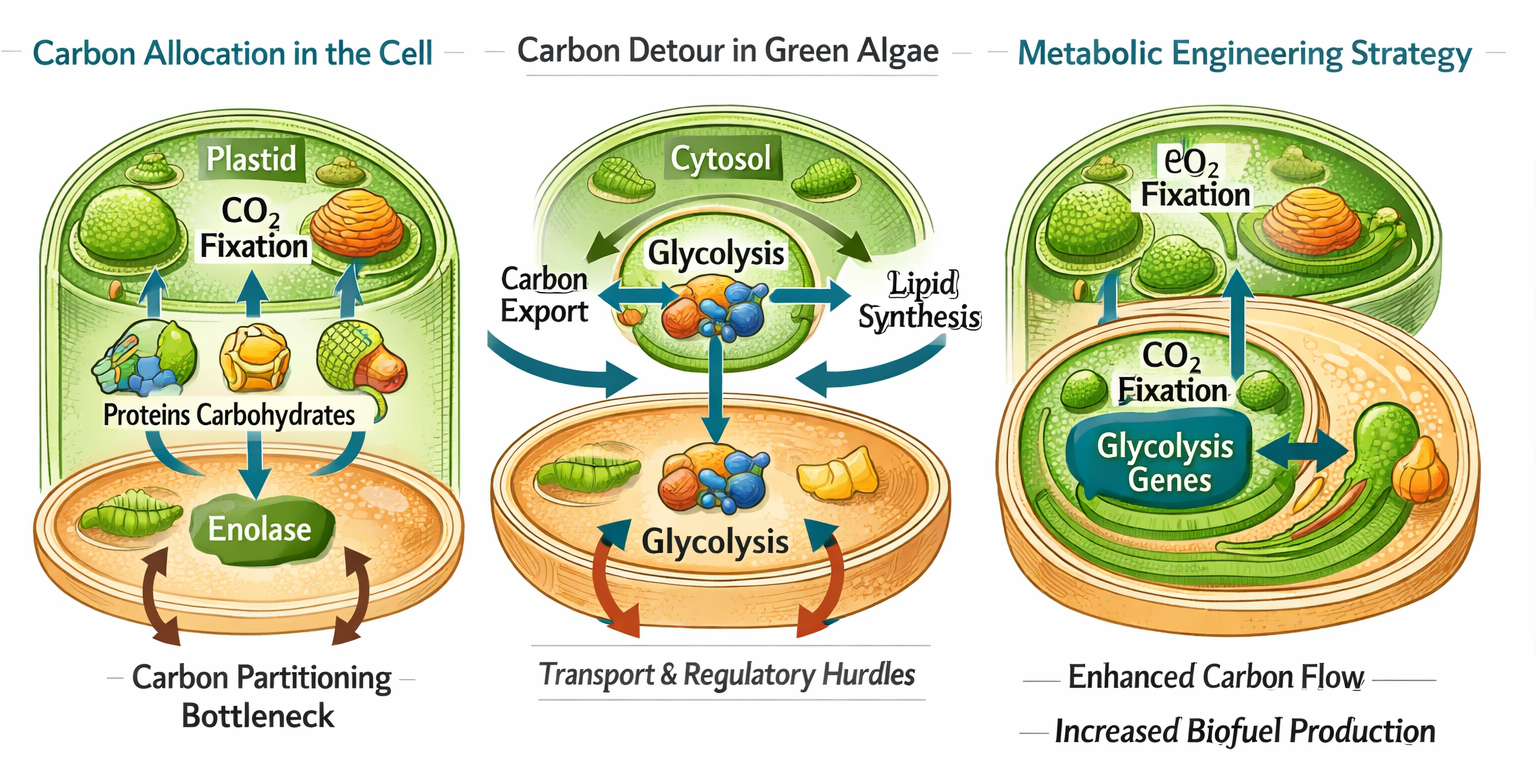
Metabolic engineering strategies have therefore focused on reducing this inefficiency. One proposed approach involves introducing segments of the lower glycolysis pathway directly into the plastid, effectively bypassing the need for repeated carbon transport across organellar membranes. By relocating these reactions closer to the site of carbon fixation, researchers hope to channel a greater proportion of carbon toward lipid synthesis—the primary feedstock for biodiesel production. Although such interventions remain experimentally challenging, they illustrate how subtle metabolic architecture can strongly influence biofuel yields. Conceptual framework illustrating in Figure 1 as carbon partitioning constraints and plastid-targeted metabolic engineering strategies in green algae for improved biofuel yield.

Figure 1: Optimizing Carbon Partitioning for Enhanced Microbial Biofuel Production. Carbon allocation within microalgal cells plays a critical role in determining biofuel productivity. Metabolic engineering strategies that redirect glycolytic pathways closer to the site of carbon fixation can reduce transport inefficiencies and improve lipid synthesis for biodiesel production.

3.3 Synergistic Microbial Interactions and Consortia

Another, somewhat less intuitive strategy for improving microbial biofuel production involves abandoning the assumption that monocultures are inherently optimal. In natural aquatic environments, microalgae rarely exist in isolation. Instead, they inhabit complex microenvironments known as phycospheres—microscopic regions surrounding algal cells where dense microbial interactions occur. Within these zones, mutualistic exchanges between algae and bacteria are common. Algae release oxygen and organic carbon compounds, while associated bacteria may provide nutrients such as nitrogen or essential vitamins, including cobalamin (vitamin B12).

Artificially recreating these interactions in laboratory cultures has yielded promising results. In coculture experiments, certain algal species appear to grow more efficiently when paired with compatible microbial partners. For example, cocultivation of Chlorella sp. with Monoraphidium sp. significantly enhanced lipid productivity compared with the yields obtained from either species grown alone (Zhao et al., 2014). Such improvements likely arise from complementary metabolic activities—one organism’s by-products effectively become another organism’s resources. Quantitative comparisons of several representative co-cultivation systems demonstrating improvements in lipid productivity and biofuel-related yields are summarized in Table 2.

Table 2: Effect of Microbial Mutualism (Co-cultivation) on Biofuel-Related Product Yields. This table illustrates the comparative results of artificial consortia (intervention) versus the highest-performing monocultures (control), focusing on lipid concentrations and productivity essential for biodiesel synthesis.

Study/Reference

Co-culture Species

Outcome Metric (Units)

Co-culture Result (Mean SD)

Baseline Monoculture Yield

Calculated Effect Size (Difference)

Ling et al. (2014)

C. pyrenoidosa + R. toruloides

Lipid Conc. ()

4.60 (SD N/A)

3.40

1.20

Xue et al. (2010)

S. platensis + R. glutinis

Lipid Conc. ()

0.467 (SD N/A)

0.135

0.332

Papone et al. (2012)

Chlorella sp. + Toluraspore

Lipid Conc. ()

2.42 (SD N/A)

1.141

1.279

Zhao et al. (2014)

Chlorella sp. U4341 + Monoraphidium sp. FXY-10

Lipid Prod. ()


11.53

Wei et al. (2020)

C. vulgaris + Mesorhizobium sangaii

Lipid Content/Biomass

2.2x and 1.5x increase

Axenic Algal Culture

120% – 50% growth boost


Chlamydomonas + Pseudomonas sp.

Hydrogen Prod.

22-fold increase

Pure Algal Culture

2100% increase


C. butyricum + R. palustris

H2 Yield ()

2.16

1.77 (C. butyricum)

0.39

In some cases, microbial partners may also create environmental conditions that activate otherwise dormant metabolic pathways. Bacteria capable of consuming dissolved oxygen, for instance, can help generate localized anaerobic microenvironments. These conditions are essential for activating algal hydrogenases, enzymes responsible for biological hydrogen production. Thus, microbial consortia not only redistribute nutrients but may also regulate redox conditions that determine which metabolic pathways become active.

Taken together, these thermodynamic, metabolic, and ecological perspectives suggest that optimizing microbial biofuel production requires more than a single technological intervention. Rather, it demands a systems-level understanding of microbial physiology—one that integrates energy gradients, metabolic network design, and cooperative microbial interactions. Only through such integrated strategies may microbial biofuels eventually transition from experimental promise to economically viable renewable energy sources (Enamala et al., 2018).

4. Biotechnological Applications in Microbial Biofuel Production and Interactions

4.1 Biotechnological Applications of Microbial Cell Factories

Within the broader framework of microbial biofuel production, biotechnology increasingly views microorganisms not merely as fuel producers but as versatile “cell factories.” Photosynthetic microorganisms, particularly cyanobacteria and microalgae, are central to this concept because they can convert solar energy and carbon dioxide directly into organic compounds. This capacity positions them as promising tools for building a sustainable bioeconomy in which biological systems replace fossil-derived industrial processes (Li et al., 2022). Still, the practical reality is somewhat more complicated. Third-generation biofuels derived from these organisms remain relatively expensive, largely due to cultivation, harvesting, and extraction costs that can exceed the economic value of the resulting fuel. Nevertheless, advances in synthetic biology, metabolic engineering, and microbial ecology are gradually improving the industrial feasibility of these systems (Lucia & Grisolia, 2021; Scognamiglio et al., 2021).

4.2 Advanced Biofuel and Bioenergy Synthesis

Cyanobacteria have attracted particular interest as platforms for advanced biofuel production because of their metabolic flexibility and relatively simple genetic architecture. Through metabolic engineering, several cyanobacterial species—including Synechococcus and Anabaena—have been modified to synthesize liquid fuels such as ethanol and isobutanol, as well as energy carriers like hydrogen (Li et al., 2022). Hydrogen production is especially intriguing in filamentous cyanobacteria, which possess specialized cells known as heterocysts. These cells create localized anaerobic conditions that protect oxygen-sensitive hydrogenase enzymes, thereby enabling biological hydrogen generation.

The development of modern genome editing technologies has significantly accelerated these efforts. Tools such as CRISPR-Cas9, zinc-finger nucleases (ZFNs), and transcription activator-like effector nucleases (TALENs) allow researchers to precisely modify metabolic pathways, redirect carbon flux, and eliminate competing biochemical routes. Through these strategies, engineered strains can allocate a larger proportion of fixed carbon toward energy-dense molecules suitable for fuel production (Li et al., 2022). Even so, optimizing these pathways remains challenging because metabolic rewiring often affects cellular growth, redox balance, and energy distribution. Key cyanobacterial model organisms used for light-driven biofuel production and metabolic engineering are summarized in Table 3.

Table 3: Physiological and Genomic Characteristics of Cyanobacterial Model Chassis. This table identifies the core properties of primary photosynthetic "cell factories" used for the light-driven synthesis of biofuels and high-value chemicals.

Host Chassis Species

DNA Delivery Approach

Genome Size

Doubling Time (h)

Industrial Advantage/Use

Synechocystis sp. PCC6803

Natural transformation

3.6 Mbp

6.6 h

High fixation; used for ethanol and ethylene

Synechococcus sp. PCC7002

Natural transformation / Conjugation

3.01 Mbp

2.27 h

Wide salt tolerance; used for biodiesel precursors

S. elongatus PCC7942

Natural transformation

2.7 Mbp

4.9 h

Well-studied genome; first report of engineered ethanol

S. elongatus UTEX2973

Conjugation

2.7 Mbp

1.93 h

Extremely fast growth; high light/temp tolerance

Anabaena sp. PCC7120

Conjugation

6.4 Mbp

14 h

Differentiated heterocysts for anaerobic production

Synechococcus sp. PCC11901

Natural transformation

N/A

~2 h

High biomass yield (33 )

4.3 Synergistic Consortia for Biomolecules and Bioplastics

Another promising strategy involves designing artificial microbial consortia rather than relying solely on monocultures. In natural aquatic environments, microalgae coexist with diverse bacterial communities in microenvironments known as phycospheres. Within these niches, organisms exchange nutrients, metabolites, and signaling molecules that support mutual growth. Laboratory studies have shown that recreating such interactions can improve biomass accumulation and lipid productivity in algal cultures (Calatrava et al., 2023; Scognamiglio et al., 2021).

One of the most well-known examples involves vitamin B12 exchange. Many algal species require vitamin B12 for essential metabolic reactions but cannot synthesize it themselves. Instead, they obtain the vitamin through symbiotic relationships with bacteria capable of producing it, often providing fixed carbon compounds in return (Croft et al., 2005). These cooperative interactions can stabilize microbial communities and enhance overall productivity.

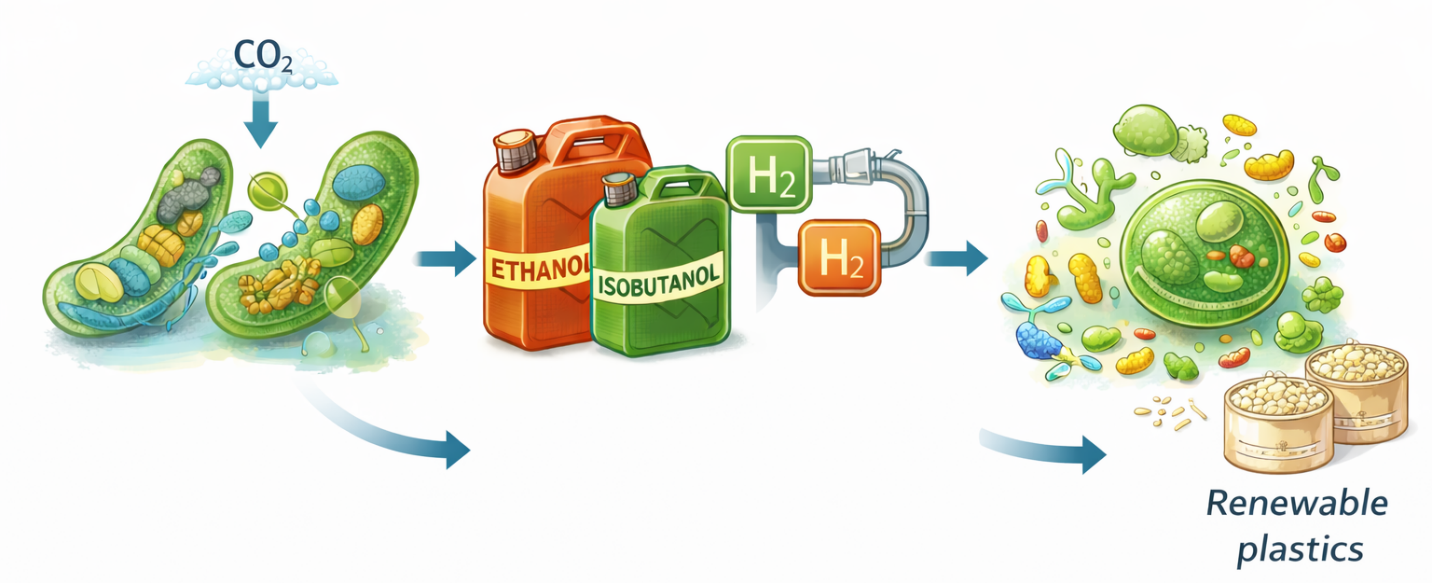
Beyond biofuels, such consortia also support the production of renewable biomaterials. Cyanobacteria and microalgae can be engineered to synthesize biodegradable polymers such as polyhydroxyalkanoates (PHA) and poly-ß-hydroxybutyrate (PHB), which are considered environmentally friendly alternatives to petroleum-based plastics (Scognamiglio et al., 2021; Zhang et al., 2015) Since polymer-based plastics (Habib et al., 2025a) and adsorbed contaminants (Habib et al., 2025b) are dangerous for ecosystems. Integrating these materials into microbial biorefineries could diversify product streams and improve economic viability. Figure 2 show the graphical overview illustrating microbial cell factories, engineered biofuel synthesis, and consortium-based biomaterial production in photosynthetic microorganisms.

Figure 2: Microbial Cell Factories for Biofuel and Bioplastic Production. Photosynthetic microorganisms such as cyanobacteria and microalgae can convert carbon dioxide and solar energy into valuable biofuels and biomaterials. Engineered metabolic pathways and cooperative microbial consortia further enhance the production of advanced fuels and biodegradable polymers.

4.4 Wastewater Valorization and Multi-Omics Optimization

Biotechnological systems also contribute to circular economy models by integrating biofuel production with wastewater treatment. In microalgae–bacteria consortia, algae produce oxygen through photosynthesis, reducing the need for mechanical aeration, while bacteria degrade organic pollutants and release nutrients that algae can reuse (Calatrava et al., 2023; Scognamiglio et al., 2021). The resulting biomass can then be converted into bio-crude oil through hydrothermal liquefaction, demonstrating a pathway that simultaneously treats wastewater and generates renewable energy products (Makut et al., 2020).

The optimization of these systems increasingly relies on multi-omics technologies. Metagenomics and transcriptomics enable the identification of unculturable microorganisms and reveal gene expression patterns during microbial interactions (Afridi et al., 2022; Valenzuela Ruiz et al., 2025). Meanwhile, metabolomics helps characterize the chemical signals and metabolites that regulate cooperation, competition, and community stability. These integrated approaches provide a systems-level understanding of microbial ecosystems, ultimately supporting the design of more efficient and resilient microbial biofuel production platforms (Tan, 2023; Valenzuela Ruiz et al., 2025).

5. Results

5.1 A Synthesis of Biophysical and Ecological Drivers in Microbial Biofuel Systems

The search for alternatives to fossil fuels has increasingly directed scientific attention toward microorganisms—especially microalgae and cyanobacteria—as potential biological “cell factories.” On paper, their promise is almost irresistible: they convert sunlight and carbon dioxide into organic molecules, grow relatively quickly, and can theoretically produce fuels without competing for arable land. Yet translating that promise into large-scale industrial reality has proven more complicated than early optimism suggested. Volumetric yields often remain modest, while cultivation, harvesting, and processing costs continue to present economic barriers. What emerges from the literature, however, is not simply a story of technical limitations but a noticeable shift in how researchers approach microbial productivity. Increasingly, studies are moving beyond empirical growth observations toward a more integrated framework that blends thermodynamic theory, metabolic regulation, and ecological interactions to better understand—and perhaps overcome—these constraints.

Traditional models of microbial growth have often emphasized nutrient availability as the principal limiting factor. More recent perspectives, though, suggest that the deeper constraints may be biophysical. In particular, nonequilibrium thermodynamic frameworks propose that microbial proliferation is governed by electrochemical potential gradients across cellular membranes. According to this view, the electrochemical potential acts as a central driver linking membrane voltage, proton gradients, and cellular metabolism, thereby shaping how efficiently microorganisms convert energy into growth (Lucia & Grisolia, 2021).

Seen this way, microbial life is not merely a set of biochemical reactions but a dynamic system that continually balances energy fluxes. Maintaining this balance carries a surprisingly high energetic cost. Estimates suggest that organisms such as Escherichia coli devote nearly half of their total energy budget simply to maintaining membrane electric potential through ATP-driven ion transport (Lucia & Grisolia, 2021). This observation hints at an intriguing possibility: improving microbial biofuel production may depend as much on optimizing energy distribution as on increasing biomass. If ion and metabolite fluxes across membranes can be enhanced without destabilizing cellular energetics, productivity might improve accordingly.

Temperature appears to play a subtle but important role in this process. Within an organism’s optimal range, increasing temperature tends to accelerate metabolic fluxes and shorten the lag phase preceding exponential growth. Experimental studies illustrate this relationship. For example, during syngas fermentation by Clostridium carboxidivorans, ethanol production increased markedly at 37 °C compared with cultures maintained at 25 °C, suggesting that thermal conditions can significantly influence both biomass accumulation and fuel output (Shen et al., 2020).

5.2 Metabolic Bottlenecks: Carbon Partitioning and the Enolase Constraint

Even when growth conditions are optimized, another challenge emerges: how microorganisms allocate carbon internally. The distribution of fixed carbon among cellular macromolecules determines whether a culture accumulates lipids suitable for biodiesel or diverts carbon into storage compounds such as starch. In green algae (Chlorophyta), genomic evidence indicates that a key bottleneck lies in the glycolytic enzyme enolase. Unlike higher plants, which typically possess multiple enolase genes localized in different cellular compartments, many green algae appear to encode only a single cytosolic variant (Polle et al., 2014).

This seemingly minor genetic detail has broader metabolic consequences. Because the enzyme operates in the cytosol, carbon fixed in the chloroplast must first be exported for conversion into phosphoenolpyruvate before intermediates can return to the plastid for lipid or isoprenoid synthesis. The additional transport steps create a metabolic detour that limits carbon flux, particularly under conditions of high light or environmental stress. As a result, carbon may accumulate as starch rather than being redirected toward lipid synthesis—an outcome that is less desirable for biodiesel production (Polle et al., 2014). Overcoming this constraint may require metabolic engineering strategies capable of relocating portions of the glycolytic pathway directly into the plastid, thereby shortening the metabolic route and increasing lipid productivity.

5.3 The Power of Consortia: Moving Beyond Monocultures

Another trend emerging from recent research is the growing recognition that monocultures may not represent the most efficient strategy for microbial production systems. In natural aquatic environments, algae coexist with diverse bacterial communities within microenvironments known as phycospheres—microscopic zones rich in nutrients and chemical signals (Seymour et al., 2017). Within these spaces, microorganisms engage in complex exchanges of metabolites and signaling molecules that influence growth and community stability.

Many of these interactions appear to be mutually beneficial. Algae release oxygen and organic carbon compounds during photosynthesis, while associated bacteria may provide nutrients such as nitrogen or essential vitamins. A well-documented example involves vitamin B12, which numerous algal species cannot synthesize themselves and must obtain through symbiosis with bacteria capable of producing it (Croft et al., 2005). These cooperative relationships can enhance biomass productivity and stabilize cultures under fluctuating environmental conditions.

Experimental evidence supports the practical benefits of such partnerships. Co-cultivation experiments involving Chlorella species and other microalgae have demonstrated measurable increases in lipid productivity compared with monoculture systems (Zhao et al., 2014). In addition, certain bacterial partners can consume dissolved oxygen, creating localized anaerobic conditions that activate algal hydrogenase enzymes and promote biohydrogen production (Scognamiglio et al., 2021). These findings suggest that microbial consortia may offer a more resilient and productive alternative to isolated cultures.

5.4 Precision Engineering and Multi-Omics Integration

Advances in synthetic biology are further expanding the potential of microbial biofuel systems. Cyanobacteria, in particular, have emerged as attractive engineering platforms due to their relatively compact genomes and genetic tractability. Genome-editing tools such as CRISPR-based systems allow researchers to modify metabolic pathways with increasing precision, redirecting carbon flux away from storage compounds and toward biofuel molecules such as ethanol or butanol (Li et al., 2022).

However, engineered microbial systems can quickly become complex, especially when multiple organisms interact. To navigate this complexity, researchers increasingly rely on multi-omics approaches. Metagenomic and transcriptomic analyses help identify which genes are active within microbial communities, while metabolomic studies reveal the chemical signals—sometimes referred to as “infochemicals”—that mediate interactions between species (Afridi et al., 2022). These signals can include quorum-sensing molecules, growth hormones, or antimicrobial metabolites that influence community structure and productivity.

Such integrated approaches also intersect with the emerging field of chemical ecology, which examines how microbial metabolites shape ecological interactions and influence the discovery of biologically active compounds (Tan, 2023). In combination with omics-driven bioprospecting strategies, these tools provide new opportunities to identify microbial functions that might otherwise remain hidden within complex ecosystems (Valenzuela Ruiz et al., 2025).

5.5 Industrial Challenges and Circular Economy Applications

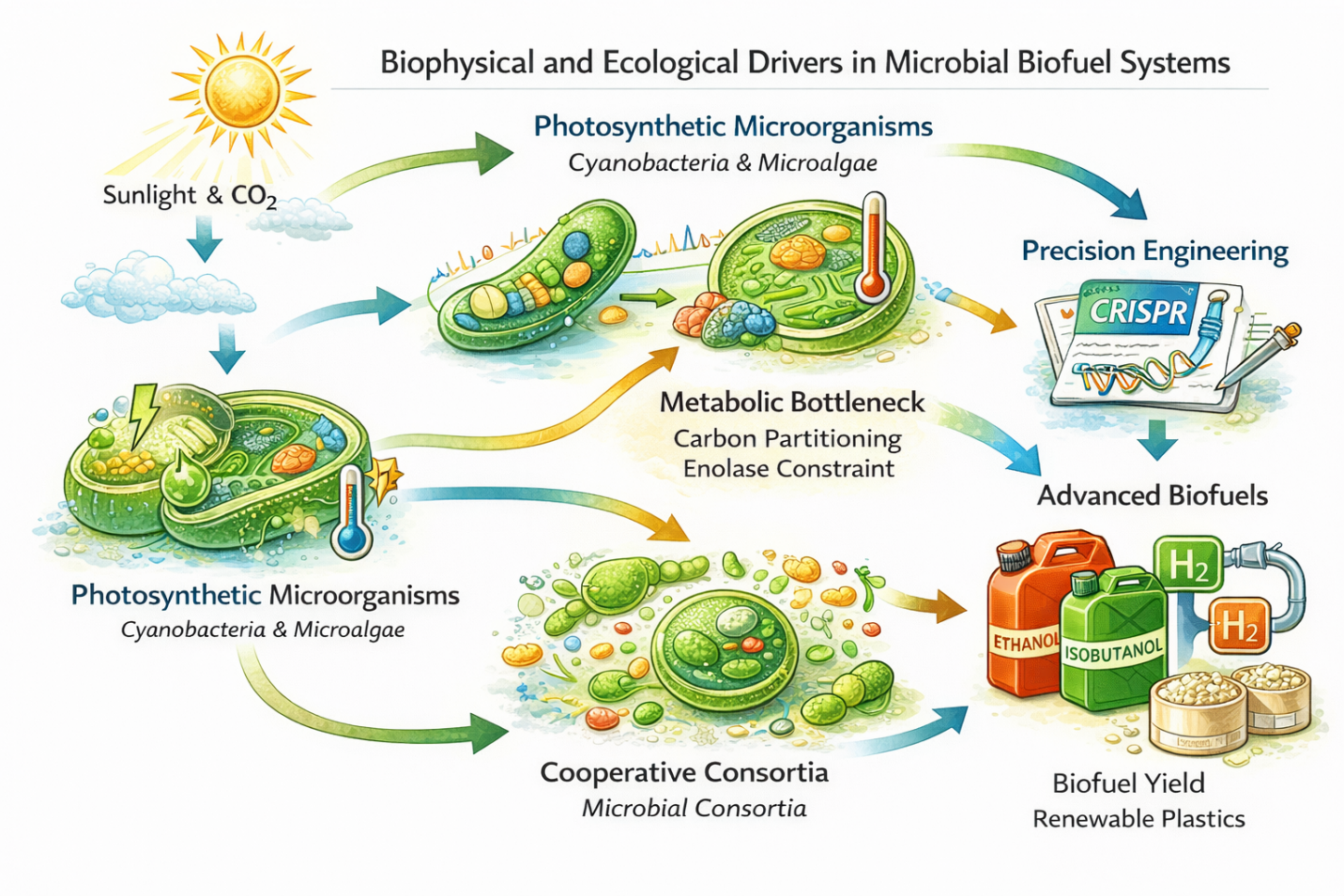
Beyond fuel production alone, microbial biotechnology is increasingly being considered within the framework of a circular bioeconomy. One promising application involves coupling biofuel production with wastewater treatment. In such systems, algal–bacterial consortia perform complementary roles: algae generate oxygen through photosynthesis, which supports bacterial degradation of organic pollutants, while bacteria release nutrients that sustain algal growth (Scognamiglio et al., 2021). The resulting biomass can then be converted into bio-crude oil using processes such as hydrothermal liquefaction, demonstrating a pathway that integrates environmental remediation with energy production (Makut et al., 2020). A graphical flow diagram illustrating in Figure 3 the integrated roles of cellular energetics, metabolic bottlenecks, microbial consortia, precision engineering, and circular bioeconomy strategies in microbial biofuel production.

Figure 3: Integrated Biophysical and Ecological Drivers in Microbial Biofuel Production. Microbial biofuel productivity is shaped by the interaction of cellular energetics, metabolic carbon partitioning, microbial community interactions, and synthetic biology. Integrating thermodynamic principles, metabolic engineering, and cooperative consortia offers a pathway toward more efficient and sustainable biofuel systems.

Despite these encouraging developments, several technical challenges remain. Large-scale cultivation ponds often suffer from self-shading effects that limit light penetration and reduce photosynthetic efficiency. Closed photobioreactors offer better control but are still costly to construct and operate. Moreover, genetically engineered strains may lose stability over extended production cycles, raising concerns about long-term industrial reliability (Li et al., 2022).

Taken together, the literature suggests that microbial biofuel production cannot rely on a single optimization strategy. Instead, progress appears to depend on a convergence of disciplines—thermodynamics, metabolic engineering, and microbial ecology. By aligning the energetic principles governing cellular metabolism with the cooperative resilience of microbial communities, researchers are gradually constructing systems that move closer to sustainable, carbon-neutral biofuel production.

6. A Synthesis of Biophysical and Ecological Drivers in Microbial Biofuel Systems

The urgency of transitioning away from fossil fuels has grown steadily in recent years, largely driven by the global commitment to limit atmospheric warming within the thresholds proposed by the Intergovernmental Panel on Climate Change. In this context, microorganisms—particularly microalgae and cyanobacteria—have attracted significant attention as potential biological platforms for renewable fuel production. Their capacity to convert carbon dioxide and sunlight into energy-rich compounds makes them appealing candidates for sustainable energy systems. Yet, despite the conceptual promise of third-generation biofuels, their commercial deployment remains constrained by relatively low volumetric productivity and the high cost of cultivation, harvesting, and extraction processes (Enamala et al., 2018; Lucia & Grisolia, 2021). What becomes apparent from the literature, however, is that the field itself is evolving. Rather than relying solely on empirical observations of microbial growth, researchers are increasingly approaching biofuel systems through a broader conceptual framework—one that integrates thermodynamic principles, metabolic regulation, and ecological interactions.

6.1 Biophysical Control: Thermodynamics and Environmental Levers

A recurring theme in recent studies is the recognition that microbial productivity cannot be understood purely through nutrient availability. Instead, the underlying biophysical environment appears to play a more decisive role than previously assumed. Nonequilibrium thermodynamics has been proposed as a useful framework for understanding microbial growth, suggesting that electrochemical potential gradients across cell membranes may function as a primary driver of cellular proliferation (Lucia & Grisolia, 2021). These gradients link membrane electric potential and proton balance to the broader metabolic state of the cell, effectively determining how efficiently microorganisms convert energy into biomass.

What makes this perspective particularly intriguing is the realization that maintaining biological order is energetically expensive. For instance, studies indicate that organisms such as Escherichia coli may allocate nearly half of their energy budget simply to preserving membrane potential through ATP-dependent ion transport (Lucia & Grisolia, 2021). This observation raises an important implication for biofuel systems: improving yields may require not only increasing biomass but also optimizing how cellular energy is distributed between maintenance and productive metabolism. Environmental parameters—especially temperature—appear to influence this balance. Experimental work with Clostridium carboxidivorans illustrates the effect clearly, showing that ethanol production increased substantially when cultivation temperature rose from 25 °C to 37 °C, likely due to enhanced metabolic flux and reduced lag phases (Shen et al., 2020).

6.2 Metabolic Bottlenecks: The Enolase Constraint

Even when the physical environment supports robust growth, the metabolic architecture of microorganisms can impose additional limitations. Carbon partitioning, in particular, determines whether fixed carbon is directed toward lipid synthesis or diverted into storage molecules such as starch. In green algae (Chlorophyta), a notable constraint arises from the glycolytic enzyme enolase. Genomic analyses suggest that many algal species possess only a single enolase gene located in the cytosol, unlike higher plants that contain multiple compartmentalized variants (Polle et al., 2014).

This structural arrangement creates an unexpected metabolic detour. Carbon fixed in the chloroplast must first exit the organelle to undergo conversion into phosphoenolpyruvate within the cytosol before intermediates are transported back for lipid biosynthesis. Under conditions of intense light or metabolic stress, this detour can redirect carbon toward starch accumulation rather than toward lipid production, thereby limiting biodiesel yields (Polle et al., 2014). Addressing this constraint may require metabolic engineering strategies that relocate portions of the glycolytic pathway directly into the plastid, effectively shortening the metabolic route and improving carbon flux toward desirable fuel precursors.

Another development reshaping the field is the growing appreciation of microbial interactions. Historically, laboratory studies relied heavily on axenic cultures, largely for the sake of experimental simplicity. Yet natural aquatic systems rarely function as isolated monocultures. Instead, algae coexist with diverse microbial partners within microenvironments known as phycospheres, where nutrient exchange and chemical signaling create dynamic ecological networks (Seymour et al., 2017).

Within these systems, many interactions appear to be mutually beneficial. Microalgae release organic carbon and oxygen through photosynthesis, while bacteria contribute nutrients such as nitrogen or vitamins required for algal metabolism. One widely cited example involves vitamin B12, which numerous algal species cannot synthesize independently and therefore acquire through symbiosis with bacteria capable of producing it (Croft et al., 2005). Experimental studies confirm that such partnerships can enhance productivity. Co-cultivation of different algal species has been shown to increase lipid accumulation and biomass yield relative to monoculture systems (Zhao et al., 2014). Additionally, certain bacterial partners act as oxygen scavengers, reducing dissolved oxygen levels and thereby creating the anaerobic microenvironments necessary for algal hydrogenase enzymes involved in biohydrogen production (Scognamiglio et al., 2021).

6.3 Precision Engi and Multi-Omics Integrationneering

The concept of “autotrophic cell factories” is also being advanced by rapid progress in synthetic biology. Cyanobacteria have become attractive platforms for genetic engineering due to their relatively small genomes and efficient carbon fixation capabilities. Recent studies describe the application of genome-editing systems such as CRISPR-based technologies to modify metabolic networks and redirect carbon flux away from storage compounds and toward fuel molecules such as ethanol or butanol (Li et al., 2022).

However, engineering microbial systems often introduces new layers of complexity. To better understand these interactions, researchers increasingly rely on integrated multi-omics approaches. Metagenomic and transcriptomic analyses allow scientists to identify gene expression patterns within microbial communities, while metabolomic studies reveal the signaling molecules that coordinate microbial interactions (Afridi et al., 2022). These approaches are particularly valuable for detecting the chemical signals and metabolites that stabilize microbial consortia or influence metabolic pathways, expanding opportunities for omics-driven microbial discovery and biotechnological innovation (Valenzuela Ruiz et al., 2025).

6.4 Industrial Challenges and the Circular Bioeconomy

Beyond direct fuel synthesis, microbial biotechnology is increasingly linked to broader circular bioeconomy strategies. One promising application involves coupling microalgal cultivation with wastewater treatment. In such systems, algae produce oxygen through photosynthesis, supporting bacterial degradation of organic pollutants, while bacterial metabolism releases nutrients that sustain algal growth (Scognamiglio et al., 2021). The resulting biomass can then be processed into bio-crude oil through hydrothermal liquefaction, providing a pathway that simultaneously treats wastewater and generates renewable energy feedstocks (Makut et al., 2020).

Despite these encouraging developments, several barriers remain before microbial biofuels can compete economically with conventional fuels. Large-scale cultivation ponds often experience self-shading effects that limit light penetration, reducing photosynthetic efficiency. Meanwhile, closed photobioreactors offer better environmental control but remain expensive to construct and maintain (Li et al., 2022). Nevertheless, the convergence of thermodynamic insights, metabolic engineering, and ecological design suggests that microbial biofuel systems are gradually becoming more sophisticated. By combining these approaches, the field is slowly moving closer to realizing sustainable, carbon-neutral biofuel production.


7. Limitations of the study

Although this review provides an integrated perspective on microbial biofuel production, several limitations should be acknowledged. First, the study relies primarily on previously published literature, and therefore the conclusions depend on the scope and quality of available studies. Variability among experimental systems, cultivation conditions, and microbial species may limit the direct comparability of findings across studies. Second, many reported results originate from laboratory-scale experiments, which may not fully represent the complexities and economic constraints of large-scale industrial cultivation. Finally, the narrative review approach emphasizes conceptual synthesis rather than quantitative meta-analysis, meaning that the conclusions highlight emerging trends rather than statistically validated effect estimates.

8. Conclusion

Microbial biofuels represent a promising component of future renewable energy systems, yet their widespread application requires overcoming several biological and technological constraints. This review highlights that microbial productivity is governed by a complex interplay of thermodynamic energetics, metabolic carbon allocation, and ecological interactions within microbial communities. Advances in synthetic biology, multi-omics analysis, and engineered microbial consortia are beginning to reveal strategies for optimizing these systems. By aligning cellular energetics with metabolic engineering and cooperative microbial networks, researchers can improve lipid yields and system stability. Continued interdisciplinary research will be essential to transform microbial biofuel technologies from experimental concepts into scalable and economically viable bioenergy solutions.

References


Afridi, M. S., Ali, S., Salam, A., César Terra, W., Hafeez, A., Sumaira, Ali, B., AlTami, M. S., Ameen, F., Ercisli, S., Marc, R. A., Medeiros, F. H. V., & Karunakaran, R. (2022). Plant microbiome engineering: Hopes or hypes. Biology, 11(12), 1782. https://doi.org/10.3390/biology11121782        

Andriotis, V. M. E., Kruger, N. J., Pike, M. J., & Smith, A. M. (2010). Plastidial glycolysis in developing Arabidopsis embryos. New Phytologist, 185, 649–662. https://doi.org/10.1111/j.1469-8137.2009.03113.x

Calatrava, V., Tejada-Jimenez, M., Sanz-Luque, E., Fernandez, E., Galvan, A., & Llamas, A. (2023). Chlamydomonas reinhardtii, a reference organism to study algal–microbial interactions: Why can’t they be friends? Plants, 12(4), 788. https://doi.org/10.3390/plants12040788                       

Croft, M. T., Lawrence, A. D., Raux-Deery, E., Warren, M. J., & Smith, A. G. (2005). Algae acquire vitamin B12 through a symbiotic relationship with bacteria. Nature, 438(7064), 90–93. https://doi.org/10.1038/nature04056       

Enamala, M. K., Enamala, S., Chavali, M., Donepudi, J., Yadavalli, R., Kolapalli, B., Aradhyula, T. V., Velpuri, J., & Kuppam, C. (2018). Production of biofuels from microalgae: A review on cultivation, harvesting, lipid extraction, and numerous applications of microalgae. Renewable and Sustainable Energy Reviews, 94, 49–68. https://doi.org/10.1016/j.rser.2018.05.012

Enamala, M. K., Enamala, S., Chavali, M., Donepudi, J., Yadavalli, R., Kolapalli, B., Aradhyula, T. V., Velpuri, J., & Kuppam, C. (2018). Production of biofuels from microalgae - A review on cultivation, harvesting, lipid extraction, and numerous applications of microalgae. Renewable and Sustainable Energy Reviews, 94, 49–68. https://doi.org/10.1016/j.rser.2018.05.059          

Habib, A., Nishi, S., Haque, M. M., Tauhiduzzaman, M., Khatun, K., Akter, M. S., & Ghosh, G. C. (2025b). Adsorption and desorption of methyl orange dye on environmentally aged polyethylene, polyethylene terephthalate and polystyrene microplastics in aquatic environment. Plos one, 20(7), e0323516. https://doi.org/10.1371/journal.pone.0323516

Habib, A., Rahman, M. A., Akter, M. S., Chakraborty, T. K., Zaman, S., & Ghosh, G. C. (2025a). Microplastics in Beach Sediments of the Northern Bay of Bengal, Bangladesh: Insights into Occurrence, Distribution, Pollution Indices, and ANN-Based Risk Modeling. Journal of Hazardous Materials: Plastics, 100008. https://doi.org/10.1016/j.hazmp.2025.100008

Katchalsky, A., & Currant, P. F. (1965). Nonequilibrium thermodynamics in biophysics. Harvard University Press. https://doi.org/10.4159/harvard.9780674494121

Li, C., Zhang, J., & Yang, D. (2022). Progresses and remaining challenges in light-driven cyanobacterial cell factory. Life, 12(10), 1537. https://doi.org/10.3390/life12101537                

Ling, J., Nip, S., Cheok, W. L., de Toledo, R. A., & Shim, H. (2014). Lipid production by a mixed culture of oleaginous yeast and microalga from distillery and domestic mixed wastewater. Bioresource Technology, 173, 132–139. https://doi.org/10.1016/j.biortech.2014.09.047

Lucia, U., & Grisolia, G. (2021). Biofuels from micro-organisms: Thermodynamic considerations on the role of electrochemical potential on micro-organisms growth. Applied Sciences, 11(6), 2591. https://doi.org/10.3390/app11062591                     

Makut, B. B., Goswami, G., & Das, D. (2020). Evaluation of bio-crude oil through hydrothermal liquefaction of microalgae-bacteria consortium grown in open pond using wastewater. Biomass Conversion and Biorefinery. https://doi.org/10.1007/s13399-020-00705-y                       

Mettler, T., Mühlhaus, T., Hemme, D., Schöttler, M. A., Rupprecht, J., Idoine, A., Veyel, D., Pal, S. K., Yaneva-Roder, L., Winck, F. V., et al. (2014). Systems analysis of the response of photosynthesis, metabolism, and growth to an increase in irradiance in the photosynthetic model organism Chlamydomonas reinhardtii. Plant Cell, 26, 3446–3467. https://doi.org/10.1105/tpc.114.124537

Michal, G., & Schomburg, D. (2013). Biochemical pathways: An atlas of biochemistry and molecular biology. Wiley & Sons. https://doi.org/10.1002/9781118657072

Milo, R., & Phillips, R. (2015). Cell biology by the numbers. Garland Science. https://doi.org/10.1201/9780429258770

Musa, M., Ayoko, G. A., Ward, A., Rösch, C., Brown, R. J., & Rainey, T. J. (2019). Factors affecting microalgae production for biofuels and the potentials of chemometric methods in assessing and optimizing productivity. Cells, 8, 815. https://doi.org/10.3390/cells8080851

Padmaperuma, G., Kapoore, R. V., Gilmour, D. J., & Vaidyanathan, S. (2018). Microbial consortia: A critical look at microalgae co-cultures for enhanced biomanufacturing. Critical Reviews in Biotechnology, 35, 690–703. https://doi.org/10.1080/07388551.2017.1390728

Papone, T., Kookkhunthod, S., & Leesing, R. (2012). Microbial oil production by monoculture and mixed cultures of microalgae and oleaginous yeasts using sugarcane juice as substrate. World Acad Sci Eng Technol, 64, 1127-1131.

Polle, J. E. W., Neofotis, P., Huang, A., Chang, W., Sury, K., & Wiech, E. M. (2014). Carbon partitioning in green algae (Chlorophyta) and the enolase enzyme. Metabolites, 4(3), 612–628. https://doi.org/10.3390/metabo4030612          

Ramanan, R., Kim, B., Cho, D., & Kim, H. (2016). Algae-bacteria interactions: Evolution, ecology and emerging applications. Biotechnology Advances, 34, 14–29. https://doi.org/10.1016/j.biotechadv.2015.12.003

Ruan, K., Duan, J. B., Bai, F., Lemaire, M., Ma, X., & Bai, L. (2009). Function of Dunaliella salina (Dunaliellaceae) enolase and its expression during stress. European Journal of Phycology, 44, 207–214. https://doi.org/10.1080/09670260802573105

Scognamiglio, V., Giardi, M. T., Zappi, D., Touloupakis, E., & Antonacci, A. (2021). Photoautotrophs–bacteria co-cultures: Advances, challenges and applications. Materials, 14(11), 3027. https://doi.org/10.3390/ma14113027

Seymour, J. R., Amin, S. A., Raina, J. B., & Stocker, R. (2017). Zooming in on the phycosphere: The ecological interface for phytoplankton–bacteria relationships. Nature Microbiology, 2(10), 17065. https://doi.org/10.1038/nmicrobiol.2017.65                            

Shen, S., Wang, G., Zhang, M., Tang, Y., Gu, Y., Jiang, W., Wang, Y., & Zhuang, Y. (2020). Effect of temperature and surfactant on biomass growth and higher-alcohol production during syngas fermentation by Clostridium carboxidivorans P7. Bioresources and Bioprocessing, 7, 56. https://doi.org/10.1186/s40643-020-00344-4

Tan, L. T. (2023). Impact of marine chemical ecology research on the discovery and development of new pharmaceuticals. Marine Drugs, 21(3), 174. https://doi.org/10.3390/md21030174                           

Valenzuela Ruiz, V., Cervantes Enriquez, E. P., Vázquez Ramírez, M. F., Bivian Hernández, M. d. l. Á., Cárdenas-Manríquez, M., Parra Cota, F. I., & de los Santos Villalobos, S. (2025). A new era in the discovery of biological control bacteria: Omics-driven bioprospecting. Soil Systems, 9(4), 108. https://doi.org/10.3390/soilsystems9040108

Wei, Z., Wang, H., Li, X., Zhao, Q., Yin, Y., Xi, L., Ge, B., & Qin, S. (2020). Enhanced biomass and lipid production by co-cultivation of Chlorella vulgaris with Mesorhizobium sangaii under nitrogen limitation. Journal of Applied Phycology, 32, 233–242. https://doi.org/10.1007/s10811-019-01924-4

Xue, F., Miao, J., Zhang, X., & Tan, T. (2010). A new strategy for lipid production by mix cultivation of Spirulina platensis and Rhodotorula glutinis. Applied Biochemistry and Biotechnology, 160, 498–503. https://doi.org/10.1007/s12010-008-8376-z

Yao, S., Liu, S., An, Y., Lu, J., Gjermansen, C., & Schramm, A. (2018). Microalgae-bacteria symbiosis in microalgal growth and biofuel production: A review. Journal of Applied Microbiology, 126, 359–368. https://doi.org/10.1111/jam.14095

Zhang, S., Liu, Y., & Bryant, D. A. (2015). Metabolic engineering of Synechococcus sp. PCC 7002 to produce poly-3-hydroxybutyrate and poly-3-hydroxybutyrate-co-4-hydroxybutyrate. Metabolic Engineering, 32, 174–183. https://doi.org/10.1016/j.ymben.2015.09.012       

Zhao, P., Yu, X., Li, J., Tang, X., & Huang, Z. (2014). Enhancing lipid productivity by co-cultivation of Chlorella sp. U4341 and Monoraphidium sp. FXY-10. Journal of Bioscience and Bioengineering, 118(1), 72–77. https://doi.org/10.1016/j.jbiosc.2013.12.014

Article metrics
View details
0
Downloads
0
Citations
16
Views

View Dimensions


View Plumx


View Altmetric


0
Save
0
Citation
16
View
0
Share