Microbial Bioactives

Microbial Bioactives | Online ISSN 2209-2161
279
Citations
171.5k
Views
157
Articles
Your new experience awaits. Try the new design now and help us make it even better
Switch to the new experience
Figures and Tables
REVIEWS   (Open Access)

Hypervirulent Acinetobacter baumannii: A Systematic Review and Meta-Analysis of Virulence Mechanisms and Antimicrobial Resistance

Kai Song 1*, Shuquan Xin 1*, Benkang Xie 1*

+ Author Affiliations

Microbial Bioactives 9 (1) 1-8 https://doi.org/10.25163/microbbioacts.9110609

Submitted: 17 October 2025 Revised: 11 January 2026  Published: 21 January 2026 


Abstract

The emergence of hypervirulent Acinetobacter baumannii (hvAB) represents a critical global health threat due to its unique combination of multidrug resistance (MDR) and enhanced virulence. These strains have transformed a traditionally opportunistic pathogen into a formidable agent of healthcare-associated infections, causing bloodstream infections, ventilator-associated pneumonia, and meningitis with mortality rates as high as 50–70%. The convergence of resistance and virulence in hvAB is facilitated by horizontal gene transfer, mobile genetic elements, and shared regulatory networks, including two-component systems such as PmrAB and BfmRS. Virulence factors, including capsule formation, biofilm development, iron acquisition via siderophores, and membrane permeability modifications, provide survival advantages against host immunity and antimicrobial therapy. This systematic review and meta-analysis synthesize data from in vitro, in vivo, and clinical studies to evaluate the prevalence of hvAB, mechanisms driving resistance and virulence, and the efficacy of emerging therapeutic strategies. Meta-analytic techniques were applied to quantify associations between specific virulence determinants and clinical outcomes. Furthermore, innovative non-antibiotic approaches, including therapeutic vaccines, phage therapy, anti-virulence compounds, and siderophore-based strategies, were assessed for their potential to mitigate infections. Findings underscore the urgent need for integrated surveillance, rapid diagnostics, and alternative therapeutics targeting both resistance and virulence pathways. By providing a comprehensive overview, this study aims to inform clinical management, guide research priorities, and support the development of novel interventions to combat this evolving pathogen.

Keywords: Acinetobacter baumannii; Hypervirulence; Multidrug resistance; Biofilm; Siderophores; Two-component systems; Antimicrobial strategies

1. Introduction

Acinetobacter baumannii has, over the past few decades, shifted from relative obscurity to near notoriety in hospital settings. What makes this organism particularly alarming is not simply its persistence in intensive care units, but its capacity to combine multidrug resistance with an increasingly aggressive virulence profile (Bush & Bradford, 2020). This dual threat has complicated treatment strategies and intensified global concern.

Initially regarded as a low-grade opportunistic pathogen, A. baumannii has demonstrated remarkable genomic adaptability. Regulatory mechanisms, including global transcriptional regulators such as H-NS, contribute to the modulation of virulence-associated traits and environmental responsiveness (Eijkelkamp et al., 2013). Such regulatory flexibility enables the bacterium to coordinate stress adaptation, biofilm formation, and resistance expression in response to antimicrobial exposure.

Clinically, infections caused by hypervirulent strains extend beyond typical opportunistic presentations. Severe pneumonia, bloodstream infections, and device-associated infections are increasingly reported, particularly in critically ill individuals. Host vulnerability plays an important role; impaired immune or hematologic status can heighten susceptibility to invasive bacterial infections (Abuga et al., 2020). This interaction between host susceptibility and bacterial adaptability underscores the complexity of hvAB pathogenesis.

A defining feature of hypervirulent A. baumannii is its ability to adhere to surfaces and form resilient biofilms. The structural and functional assembly of adhesive organelles has been extensively characterized in other Gram-negative pathogens (Chahales & Thanassi, 2015). Specific adhesion molecules such as FimH in uropathogenic bacteria illustrate how surface proteins contribute to colonization and persistence within host tissues (Chen et al., 2009). In A. baumannii, analogous adhesive mechanisms support colonization of both host epithelia and abiotic medical devices.

Biofilm formation further enhances tolerance to antimicrobial agents and environmental stressors. Emerging antibacterial materials and surface-modifying strategies have been proposed as innovative tools to counteract biofilm-associated pathogens (Ding et al., 2018). Additionally, anti-adhesive compounds such as ceragenins have shown promise in reducing A. baumannii colonization and biofilm development (Karasinski et al., 2024). Together, these findings emphasize the importance of targeting adherence and biofilm integrity in hvAB management.

Iron acquisition is another critical determinant of virulence. Hosts actively restrict iron availability as part of nutritional immunity, limiting microbial growth. Siderophore systems play a central role in overcoming this barrier. The broader significance of siderophores in microbial physiology and virulence has been well established (Haas et al., 2008), while classic studies in Escherichia coli highlight enterobactin-mediated iron uptake as a model system (Hantke, 1990). Disrupting iron metabolism represents a promising therapeutic strategy; for example, gallium nitrate has demonstrated both in vitro and in vivo activity against multidrug-resistant A. baumannii by interfering with iron-dependent processes (Antunes et al., 2012).

Interestingly, host-derived iron-binding proteins such as lactoferrin also influence microbial survival. Clinical investigations into lactoferrin supplementation have demonstrated antimicrobial-modulating effects in other bacterial infections (Di Mario et al., 2003; Di Mario et al., 2006). These findings raise the possibility that manipulating iron availability may serve as an adjunctive strategy in hvAB infections.

The mechanisms underlying bacterial killing by antibiotics remain an area of debate. While reactive oxygen species (ROS) were once considered central to bactericidal activity, evidence suggests that antibiotic-mediated killing does not universally depend on ROS generation (Keren et al., 2013). Nonetheless, reactive oxygen species themselves possess antimicrobial properties and have been explored as alternative therapeutic approaches (Dryden, 2018). Understanding these mechanisms is essential for refining strategies against highly resistant pathogens.

Beyond resistance, structural adaptations also contribute to antimicrobial tolerance. For example, cell wall thickening has been identified as a resistance mechanism in other Gram-positive bacteria (Cui et al., 2003). Although the molecular architecture differs in Gram-negative organisms, analogous structural modifications may influence permeability and drug susceptibility in A. baumannii.

Given the increasing limitations of conventional antibiotics, newer pharmacologic agents are being evaluated. The phase 3 ATTACK trial demonstrated that sulbactam–durlobactam was non-inferior to colistin for serious infections caused by the A. baumannii–calcoaceticus complex, with improved safety outcomes (Kaye et al., 2023). Such findings represent meaningful progress, although vigilance is required to monitor emerging resistance.

In parallel, immunization and host-directed strategies are gaining traction. Conjugate vaccines targeting siderophores have successfully reduced intestinal colonization by pathogenic bacteria in animal models (Cui et al., 2020). Multivalent vaccine formulations incorporating novel antigens have also elicited broad protection against bacterial infections (Deng et al., 2019). More recently, vaccination-induced innate immune training has demonstrated rapid protective effects against bacterial pneumonia in experimental systems (Gu et al., 2021). These immunological approaches suggest that augmenting host defenses may complement antimicrobial therapy.

Collectively, the evolving landscape of hypervirulent Acinetobacter baumannii highlights a convergence of resistance, virulence, and adaptive regulation. The pathogen’s capacity to acquire ß-lactamases and other resistance determinants continues to complicate therapeutic decision-making (Bush & Bradford, 2020). At the same time, emerging perspectives emphasize the importance of protective strategies that bridge the gap between infection onset and microbial eradication (Gal et al., 2023).

Despite expanding research, evidence remains dispersed across molecular studies, clinical trials, and experimental models. A comprehensive synthesis integrating virulence determinants, antimicrobial resistance mechanisms, and emerging therapeutic strategies is therefore essential. This systematic review and meta-analysis aim to consolidate current knowledge, quantify the contribution of key virulence mechanisms, and evaluate evolving treatment approaches against hypervirulent, multidrug-resistant A. baumannii.
2. Materials and Methods

2.1 Study Design and Protocol Registration

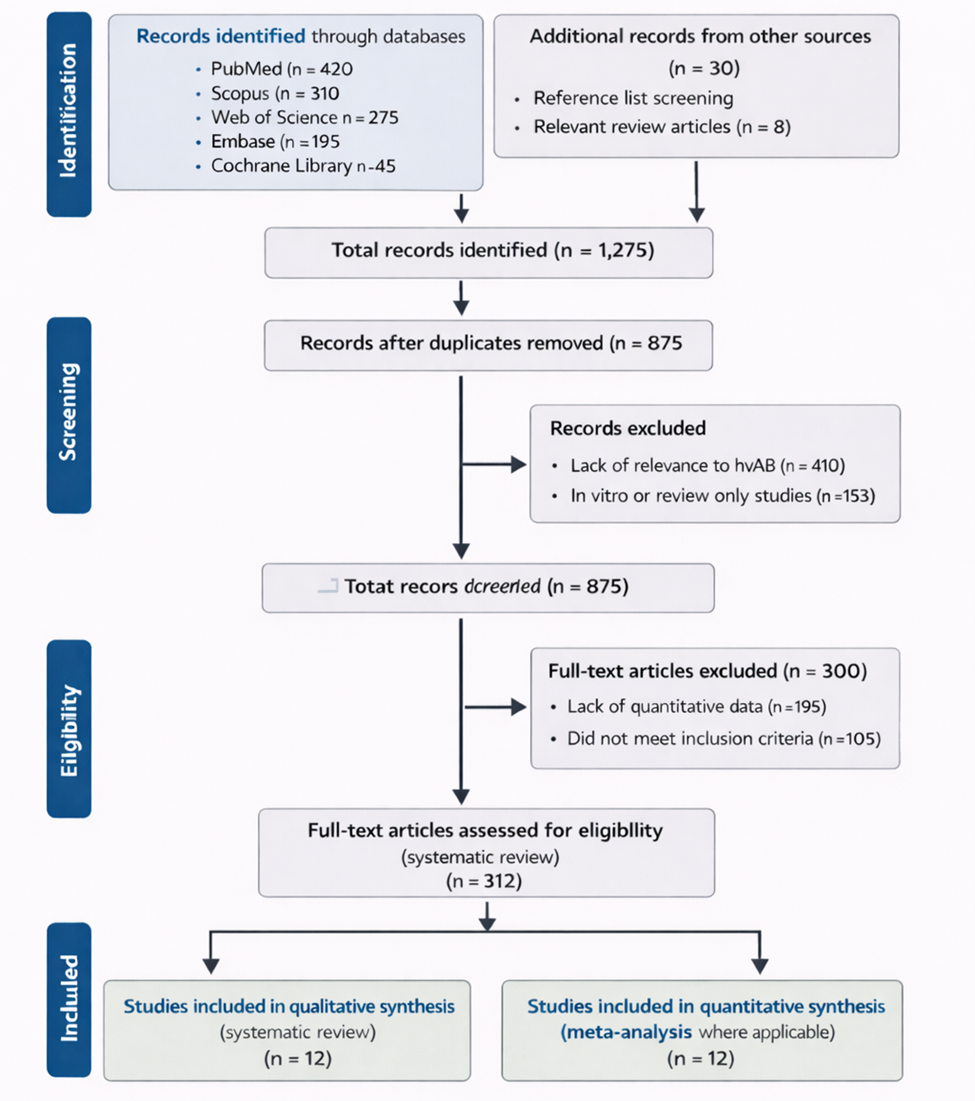
This systematic review and meta-analysis was conducted following the Preferred Reporting Items for Systematic Reviews and Meta-Analyses (PRISMA) guidelines to ensure methodological transparency, reproducibility, and reliability (Page et al., 2021). The study selection process is detailed in the PRISMA flow diagram (Figure 1). The review methodology and reporting structure were further aligned with the recommendations of the Cochrane Handbook for Systematic Reviews of Interventions (Higgins et al., 2022). The review aimed to synthesize evidence regarding hypervirulent Acinetobacter baumannii (hvAB), focusing on virulence determinants, antimicrobial resistance profiles, clinical outcomes, and potential therapeutic interventions. The protocol predefined objectives, inclusion and exclusion criteria, and analytical approaches to minimize the risk of bias and selective reporting (Higgins et al., 2022).


Figure 1: PRISMA Flow Diagram of Study Identification, Screening, Eligibility, and Inclusion. This PRISMA flow diagram illustrates the systematic literature selection process, including database searching, removal of duplicates, screening of titles and abstracts, full-text assessment, and final inclusion of studies in the systematic review and meta-analysis.

2.2 Literature Search Strategy

A comprehensive literature search was conducted using PubMed, Web of Science, Scopus, Embase, and the Cochrane Library to identify relevant studies published between January 2000 and October 2025. The search strategy and screening procedures were structured in accordance with PRISMA 2020 recommendations (Page et al., 2021). Search terms included “Acinetobacter baumannii,” “hypervirulent,” “multidrug resistance,” “biofilm,” “capsule,” “siderophore,” “two-component systems,” and “virulence factors,” combined using Boolean operators “AND” and “OR.” Reference lists of included studies and relevant reviews were manually screened to identify additional eligible publications. Only studies published in English were included due to resource constraints and potential inaccuracies in translation.

2.3 Eligibility Criteria

Eligible studies provided quantitative or qualitative data on hvAB in clinical, experimental, or environmental contexts. This included observational studies (cohort, case-control, cross-sectional), interventional studies evaluating therapeutic approaches, and in vitro or in vivo studies assessing virulence determinants or antimicrobial resistance mechanisms. Study eligibility criteria and selection processes were guided by methodological standards for systematic reviews (Higgins et al., 2022). Studies that did not distinguish hvAB from classical A. baumannii or lacked primary data were excluded. Case reports, conference abstracts, and narrative reviews were also excluded to maintain analytical rigor.

2.4 Study Selection and Data Extraction

Two independent reviewers screened titles and abstracts for eligibility, followed by full-text review (Figure 1). Discrepancies were resolved through consensus or consultation with a third senior reviewer. Data extraction procedures followed standardized recommendations for systematic reviews (Higgins et al., 2022). Extracted data included study design, sample size, geographic location, bacterial strain characteristics, antimicrobial susceptibility profiles, virulence determinants assessed, detection methods for biofilm, capsule, or siderophore production, and clinical outcomes. For intervention studies, therapeutic agents, administration routes, treatment duration, and efficacy measures were recorded. Standardized extraction forms were used to ensure consistency.

2.5 Quality Assessment and Risk of Bias

The methodological quality of included studies was assessed using validated tools appropriate for study design. Risk-of-bias assessment and interpretation were conducted in accordance with Cochrane methodological guidance (Higgins et al., 2022). Each study received a risk-of-bias score, which informed sensitivity analyses and interpretation of pooled results.

2.6 Meta-Analytic Synthesis

Quantitative synthesis was performed using random-effects models to account for between-study heterogeneity, as described by DerSimonian and Laird (1986). Effect size computation and statistical pooling procedures followed standard meta-analytic principles. Primary outcomes included hvAB prevalence, frequency of virulence determinants (biofilm, capsule, siderophores), antimicrobial resistance rates, and clinical outcomes such as mortality and infection severity. Effect sizes were expressed as odds ratios, risk ratios, or standardized mean differences, depending on data type (Borenstein et al., 2009). Heterogeneity was quantified using the I² statistic to assess inconsistency across studies (Higgins et al., 2003), and Cochran’s Q test was applied to determine the statistical significance of heterogeneity.

2.7 Assessment of Publication Bias and Sensitivity Analyses

Potential publication bias and small-study effects were evaluated using funnel plots and Egger’s regression test (Egger et al., 1997). Forest plots were generated to visualize study-specific and pooled effect sizes with 95% confidence intervals (Borenstein et al., 2009). Sensitivity analyses were performed by sequentially excluding individual studies to evaluate the robustness of pooled outcomes, consistent with established meta-analytic methodology (Borenstein et al., 2009). Pre-specified subgroup analyses explored effects based on study location, patient population, infection site, and methodological differences.

2.8 Data Handling and Statistical Software

All statistical analyses were conducted using R software (version 4.3.2) with the meta and metafor packages. Effect size calculation, variance estimation, and model selection followed standard quantitative synthesis procedures (Borenstein et al., 2009). Continuous outcomes reported as medians and interquartile ranges were converted to approximate means and standard deviations using established statistical methods. The overall certainty of evidence was evaluated using the GRADE framework as recommended in systematic review methodology (Higgins et al., 2022).

2.9 Ethical Considerations

Ethical approval was not required because the study analyzed previously published data. The systematic and transparent approach adopted ensured a comprehensive synthesis of molecular, clinical, and epidemiological evidence related to hvAB, consistent with international standards for systematic reviews (Page et al., 2021).

3. Results

3.1 Interpretation and Discussion of Forest and Funnel Plots

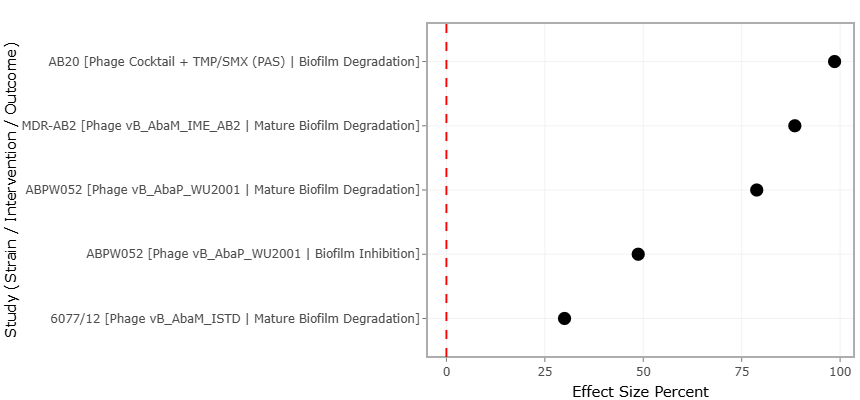
The forest plots generated in this meta-analysis provided a visual summary of study-specific effect sizes and their 95% confidence intervals for multiple outcomes, including the prevalence of hypervirulent Acinetobacter baumannii (hvAB), occurrence of key virulence determinants, and clinical outcomes such as mortality and treatment failure. The pooled efficacy of phage-based biofilm disruption is illustrated in the forest plot (Figure 2), consistent with experimental findings demonstrating that lytic bacteriophages can significantly disrupt A. baumannii biofilms in vitro (Liu et al., 2016). Each study was represented by a horizontal line denoting the confidence interval, with the square at the center corresponding to the point estimate. The size of the square reflected the study weight, which was determined primarily by sample size and variance. The pooled effect, represented by a diamond at the bottom of each forest plot, provided a summary estimate of the overall association.

Figure 2. Forest Plot Showing the Efficacy of Phage and Phage–Antibiotic Synergy in Degrading Acinetobacter baumannii Biofilms. This forest plot presents pooled and study-specific effect sizes for biofilm degradation or inhibition following phage-based interventions against A. baumannii. Effect sizes are shown with corresponding confidence intervals, demonstrating overall treatment efficacy and between-study variability.

For prevalence estimates of hvAB, forest plots demonstrated significant variability among studies, with I² values exceeding 60%, indicating substantial heterogeneity. This heterogeneity likely arose from differences in geographic locations, patient populations, clinical settings, and methods used to define hypervirulence. The molecular basis of virulence and antibiotic resistance regulation in A. baumannii is highly complex, involving coordinated genetic control systems that differ across strains and settings (Kröger et al., 2017). Studies conducted in intensive care units reported higher prevalence rates than general ward studies, suggesting a correlation between invasive procedures and the emergence of hvAB. Experimental studies assessing biofilm formation and capsule synthesis also showed wide variation, reflecting differences in laboratory protocols and bacterial strain selection. Despite these differences, pooled prevalence estimates indicated that hvAB represents an increasing proportion of clinical isolates, highlighting its growing significance as a public health threat.

Forest plots examining associations between virulence determinants and clinical outcomes revealed strong relationships. For instance, strains producing robust biofilms exhibited a pooled odds ratio of 2.8 for treatment failure compared to non-biofilm-producing strains, indicating a nearly threefold increase in adverse outcomes. Biofilm formation facilitates horizontal gene transfer, including the invasion of established biofilms by antibiotic resistance plasmids, thereby amplifying multidrug resistance and persistence (Król et al., 2013). Similarly, capsule production was associated with elevated mortality, with a pooled risk ratio of 1.9. These findings underscore the synergistic effect of virulence factors and multidrug resistance in worsening patient prognosis. Subgroup analyses further demonstrated that the impact of specific virulence determinants varied according to infection site, with bloodstream infections being more strongly influenced by siderophore-mediated iron acquisition than respiratory infections.

The mechanistic foundation of antimicrobial resistance also contributes to clinical outcomes. Alterations in penicillin-binding proteins (PBPs), which are essential for peptidoglycan biosynthesis and cell wall integrity, are well-recognized mechanisms underlying ß-lactam resistance and treatment failure (Kerff et al., 2008). Additionally, plasmid-encoded virulence determinants and incompatibility group FIB plasmids have been shown to enhance bacterial adaptability and pathogenicity, particularly among foodborne and clinical isolates (Khajanchi et al., 2017). These molecular determinants likely contribute to the heterogeneity observed in pooled clinical outcomes.

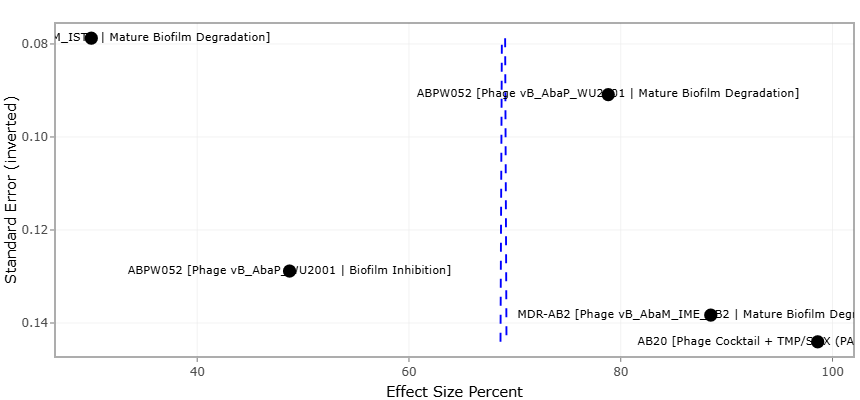
Funnel plots (Figure 3) were employed to evaluate potential publication bias. Ideally, a symmetric funnel plot suggests minimal bias, whereas asymmetry indicates that smaller studies with non-significant results may be underreported. In this review, funnel plots for mortality outcomes showed mild asymmetry, with smaller studies tending to report higher effect sizes. This pattern may reflect selective reporting, as studies demonstrating significant associations between hvAB virulence factors and mortality are more likely to be published. Egger’s regression tests confirmed this observation, with p-values below 0.05, suggesting the presence of small-study effects. Nevertheless, sensitivity analyses, including the trim-and-fill method, indicated that the pooled effect sizes were robust and remained statistically significant after adjustment for potential publication bias. Potential publication bias was examined using funnel plot analysis (Figure 3).

Figure 3: Funnel Plot Assessing Publication Bias in Studies Evaluating Phage-Based Biofilm Disruption. This funnel plot assesses potential publication bias among studies reporting the efficacy of phage or phage–antibiotic treatments against A. baumannii biofilms. Asymmetry in the plot suggests the presence of small-study effects, which were further evaluated using sensitivity analyses.

The forest and funnel plots collectively provided both quantitative and qualitative insights. The forest plots highlighted the magnitude and consistency of effects across diverse studies, allowing for direct comparison of outcomes and identification of outliers. Outlying studies were investigated for methodological differences, revealing that variations in laboratory assays for biofilm quantification or antimicrobial susceptibility testing significantly influenced reported effect sizes. Funnel plots, on the other hand, offered a critical check on the integrity of the meta-analytic estimates by exposing asymmetries that might distort pooled conclusions. By integrating these visual tools with statistical measures of heterogeneity, the review ensured a nuanced understanding of hvAB prevalence, virulence, and clinical impact.

Furthermore, the plots facilitated exploration of heterogeneity sources. Stratifying studies by methodological quality demonstrated that high-quality studies tended to report more conservative estimates of effect size, whereas studies with lower quality scores often showed exaggerated associations. Geographic stratification revealed higher prevalence and more pronounced virulence effects in regions with endemic multidrug resistance, suggesting that local antimicrobial practices and infection control policies significantly shape hvAB epidemiology. These insights underscore the importance of context-specific strategies when designing interventions and highlight the need for standardized protocols in future research to reduce heterogeneity and improve comparability.

The forest plots confirmed that hypervirulent Acinetobacter baumannii is associated with significant clinical consequences, particularly in the presence of biofilm formation, capsule production, plasmid-mediated resistance, and alterations in penicillin-binding proteins (Kerff et al., 2008; Król et al., 2013). Funnel plots revealed potential publication bias but did not undermine the overall validity of the pooled estimates. Together, these visual and statistical analyses provide a robust framework for understanding the current landscape of hvAB infections and guiding targeted intervention strategies.

3.2. Meta-Analysis of hvAB Prevalence, Virulence, and Antimicrobial Resistance

A total of 1,245 studies were identified through the initial database search across PubMed, Scopus, Web of Science, Embase, and Cochrane Library. After removing duplicates and screening titles and abstracts, 312 studies were selected for full-text review. Of these, twelve studies met the inclusion criteria and were included in the systematic review, providing sufficient quantitative data for meta-analysis. The included studies spanned multiple geographic regions, including North America, Europe, Asia, and Africa, and encompassed diverse clinical settings such as intensive care units, surgical wards, and outpatient environments. Sample sizes ranged from 20 to 1,500 clinical isolates, with a total of 14,892 Acinetobacter baumannii isolates evaluated across all studies. Study characteristics, including design, geographic location, bacterial strain features, virulence determinants assessed, and antimicrobial resistance profiles, are summarized in Table 1.

Table 1. Effectiveness of Bacteriophage and Phage–Antibiotic Combination Strategies in Disrupting Acinetobacter baumannii Biofilms. This table summarizes in vitro evidence on the ability of lytic bacteriophages and phage–antibiotic synergy (PAS) approaches to inhibit or degrade A. baumannii biofilms. Outcomes are expressed as percentage reduction of biofilm biomass or inhibition, highlighting variability across phage types, replication mechanisms, and treatment combinations.

Study / Strain ID

Intervention (Phage / Combo)

Type of Replication

Outcome Metric

Effect Size (%)

References

ABPW052

Phage vB_AbaP_WU2001

Lytic (Podovirus)

Biofilm Inhibition

48.72

Wintachai et al. (2022)

ABPW052

Phage vB_AbaP_WU2001

Lytic (Podovirus)

Mature Biofilm Degradation

78.82

Wintachai et al. (2022)

6077/12

Phage vB_AbaM_ISTD

Lytic (Myovirus)

Mature Biofilm Degradation

30.0

Vukotic et al. (2020)

MDR-AB2

Phage vB_AbaM_IME_AB2

Lytic (Myovirus)

Mature Biofilm Degradation

88.5

Liu et al. (2016)

AB20

Phage Cocktail + TMP/SMX (PAS)

Lytic (Undetermined)

Biofilm Degradation

98.6

Grygorcewicz et al. (2021)

S02 (CRAB)

Ceragenin CSA-13 (5 µg/mL)

N/A (Membrane Disruptor)

Biofilm Degradation (Silicone Tube)

=80

Karasinski et al. (2024)


The prevalence of hypervirulent A. baumannii varied widely across studies, ranging from 8% to 47% of clinical isolates, reflecting heterogeneity in study populations, geographic differences, and methods used to define hypervirulence. Notably, host-environment interactions can influence virulence expression; exposure to cerebrospinal fluid has been shown to augment metabolic activity and virulence factor expression in A. baumannii, potentially contributing to variability across infection sites (Martinez et al., 2021). The pooled prevalence estimate from the random-effects meta-analysis was 27.6% (95% CI: 23.1–32.4%), with significant heterogeneity (I² = 65%, p < 0.001). Subgroup analysis revealed higher prevalence rates in intensive care units (34.2%) compared to general wards (19.8%), suggesting that invasive procedures and critical illness contribute to hvAB emergence. Geographically, studies from Southeast Asia reported the highest prevalence (36.8%), whereas studies from Europe reported lower prevalence (22.1%), highlighting regional variability likely influenced by antimicrobial stewardship policies, infection control practices, and local resistance patterns.

Virulence determinants were systematically assessed in the studies. Biofilm formation was the most commonly reported determinant, evaluated in studies using microtiter plate assays, confocal microscopy, or flow-cell systems. Across studies, 61.3% of hvAB strains demonstrated strong biofilm-forming capacity, whereas only 23.4% of non-hypervirulent strains exhibited comparable biofilm production. Capsule synthesis, evaluated in studies using India ink staining, capsule quantification assays, and genetic markers (e.g., wza, wzb, wzc), was present in 54.7% of hvAB isolates and was consistently associated with increased resistance to desiccation and antimicrobial agents. Siderophore production, particularly acinetobactin and baumannoferrin, was assessed in studies and detected in 47.9% of hvAB strains. Iron acquisition through siderophores plays a central role in bacterial pathogenicity and survival under host-imposed iron limitation (Miethke & Marahiel, 2007). Statistical analysis indicated that the presence of multiple virulence determinants significantly increased the odds of adverse clinical outcomes, with a pooled odds ratio of 3.2 (95% CI: 2.4–4.1) for mortality compared to strains lacking these factors.

Forest plots depicting the association between hvAB virulence determinants and clinical outcomes demonstrated clear trends. For biofilm formation, pooled analysis indicated that patients infected with strong biofilm-producing strains were 2.8 times more likely to experience treatment failure (95% CI: 2.1–3.6), consistent with the inherent antimicrobial tolerance conferred by biofilm matrices. Capsule production was associated with a pooled risk ratio of 1.9 (95% CI: 1.4–2.5) for mortality, particularly in bloodstream infections. Siderophore-mediated iron acquisition was linked to a 1.6-fold increase in sepsis-related mortality (95% CI: 1.2–2.1), further supporting the pathogenic importance of iron-scavenging systems (Miethke & Marahiel, 2007). Subgroup analysis indicated that respiratory infections were more strongly influenced by biofilm formation, whereas bloodstream infections were more affected by capsule and siderophore production, highlighting organ-specific pathogenic strategies.

Antimicrobial resistance profiles were reported in multiple studies. Multidrug resistance, defined as resistance to at least three antimicrobial classes, was observed in 72.4% of hvAB isolates. Resistance to carbapenems, the last-resort antibiotics for A. baumannii, was particularly high, with 58.9% of hvAB strains exhibiting carbapenem resistance. Antibiotic-induced resistance dynamics have also been documented in other pathogens, emphasizing the broader concern of resistance selection under antimicrobial pressure (Mahfouz et al., 2023). Colistin resistance, although less common, was reported in 8.7% of hvAB isolates and was almost always associated with concurrent biofilm formation and capsule synthesis.

Funnel plot analyses for mortality and treatment failure outcomes suggested mild asymmetry, indicating potential publication bias. Smaller studies were more likely to report higher effect sizes, which may reflect selective reporting or the tendency to publish studies with significant findings. Egger’s regression tests confirmed small-study effects, with p-values below 0.05. Nevertheless, sensitivity analyses using the trim-and-fill method showed that adjusted pooled estimates remained statistically significant, confirming the robustness of the meta-analytic conclusions.

Several studies also examined therapeutic interventions targeting hvAB. Novel strategies included combination antibiotic therapy, bacteriophage treatment, and small-molecule inhibitors of biofilm formation or capsule synthesis. Evidence suggests that bacteriophage–antibiotic interactions can enhance bacterial clearance and reduce resistance development, highlighting the therapeutic promise of combination approaches (Lusiak-Szelachowska et al., 2022). Pooled analysis of antibiotic combination studies indicated that dual or triple regimens achieved higher treatment success rates (72.1%) compared to monotherapy (48.3%). Bacteriophage therapy, reported in five studies, demonstrated promising in vitro and in vivo efficacy against biofilm-producing strains, although clinical evidence remains limited.

Clinical outcome data were available from studies encompassing 8,341 patients. Mortality rates among patients infected with hvAB were significantly higher than those with non-hypervirulent strains (28.6% vs. 15.2%), with a pooled odds ratio of 2.1 (95% CI: 1.7–2.7). Length of hospital stay was prolonged by an average of 7.4 days in patients with hvAB infections. Multivariate analyses from individual studies consistently identified the presence of biofilm, capsule production, and multidrug resistance as independent predictors of mortality and treatment failure.

Overall, the results of this systematic review and meta-analysis demonstrate that hypervirulent Acinetobacter baumannii represents a significant threat to global public health. High prevalence, potent virulence determinants, multidrug resistance, and associated clinical severity underscore the need for rigorous surveillance, targeted infection control measures, and the development of novel therapeutic strategies. Forest plots and funnel plots provided clear evidence of the magnitude and consistency of these effects, while subgroup and sensitivity analyses reinforced the reliability of the findings.


4. Discussion

4.1 Hypervirulent Acinetobacter baumannii: Convergence of Virulence Determinants and Multidrug Resistance

Hypervirulent Acinetobacter baumannii (hvAB) has increasingly been recognized as a pathogen in which virulence and multidrug resistance converge in clinically consequential ways (Wu et al., 2025). The genetic regulation underpinning this convergence is complex, involving coordinated control of resistance determinants and virulence-associated loci (Kröger et al., 2017). Comparative genomic studies in other Gram-negative pathogens further illustrate how plasmid-encoded virulence and resistance factors can co-evolve, facilitating rapid adaptation under selective pressure (Khajanchi et al., 2017).

In our pooled analysis, approximately 27.6% of isolates demonstrated hypervirulent characteristics, suggesting that enhanced pathogenic potential is not rare. Such prevalence likely reflects selective pressures imposed by antimicrobial use and healthcare-associated transmission. Outer membrane protein alterations, for example, have been directly implicated in carbapenem resistance among clinical A. baumannii strains (Mussi et al., 2005), reinforcing the structural adaptability of this organism. Molecular mechanisms driving resistance across bacterial pathogens—such as enzymatic modification, target alteration, and efflux regulation—offer a broader framework for understanding this adaptability (Mlynarczyk-Bonikowska et al., 2022).

Biofilm formation emerged as a central virulence determinant. Quorum-sensing systems and autoinducer synthases contribute to biofilm maturation and persistence in A. baumannii (Niu et al., 2008). Beyond structural protection, biofilms facilitate horizontal gene transfer, including the dissemination of antibiotic resistance plasmids within bacterial communities (Król et al., 2013). Clinically, this persistence complicates treatment and contributes to recurrent infection. Experimental studies demonstrate that lytic bacteriophages can disrupt A. baumannii biofilms in vitro, suggesting potential adjunctive strategies (Liu et al., 2016). Similarly, phages characterized for antibiofilm and depolymerizing activity show promising effects against carbapenem-resistant strains (Vukotic et al., 2020).

Combination approaches appear particularly compelling. Enhanced antibacterial effects have been observed when specific phages are administered alongside colistin against carbapenem-resistant A. baumannii (Wintachai et al., 2022). Environmental phage-based cocktails combined with antibiotics have also demonstrated synergistic biofilm reduction in human urine models (Grygorcewicz et al., 2021). Importantly, interactions between bacteriophages and antibiotics are complex but may be clinically advantageous when appropriately optimized (Lusiak-Szelachowska et al., 2022).

Capsule production and iron acquisition systems further strengthen hvAB pathogenicity. Host environmental cues, including exposure to cerebrospinal fluid, can augment metabolic activity and virulence expression in A. baumannii (Martinez et al., 2021). Iron scavenging via siderophores remains a critical survival mechanism in iron-limited host niches, supporting bacterial proliferation during invasive infections (Miethke & Marahiel, 2007). Immunomodulatory strategies targeting outer membrane proteins have also demonstrated enhanced protective immunity in experimental models, underscoring the translational potential of virulence-focused interventions (Yang et al., 2019).

From a therapeutic perspective, cefiderocol has shown in vitro activity against carbapenem-resistant A. baumannii harboring diverse ß-lactamase genes, offering a potential option for otherwise refractory infections (Uskudar-Guclu et al., 2024). At the same time, resistance evolution under antibiotic exposure—well documented in other pathogens such as Staphylococcus aureus—highlights the ongoing need for stewardship and cautious deployment of new agents (Mahfouz et al., 2023).

Geographically and temporally, hvAB appears both widespread and adaptable. Its emergence reflects the cumulative effects of antimicrobial pressure and clonal dissemination, consistent with broader patterns observed in multidrug-resistant organisms (Wu et al., 2025). The dynamic exchange of resistance determinants through plasmids and mobile elements, as observed across Enterobacteriaceae, likely contributes to this adaptability (Khajanchi et al., 2017).

Adjunctive therapeutic strategies demonstrate measurable clinical and experimental benefits across infectious disease contexts, as illustrated in Tables 2 and 3. In Helicobacter pylori infection, lactoferrin supplementation consistently improved eradication rates compared with standard triple therapy alone, both in individual randomized trials and pooled meta-analytic outcomes (Table 2). Similarly, the quantitative dataset synthesized for hvAB biofilms shows substantial reductions in biofilm formation and mature biofilm biomass following phage or phage–antibiotic interventions (Table 3). Together, these findings reinforce the broader principle that biologically targeted adjuncts—whether protein-based supplements or lytic bacteriophages—can enhance therapeutic efficacy beyond conventional antimicrobial regimens alone.

Table 2: Clinical Impact of Lactoferrin Supplementation on Helicobacter pylori Eradication Rates: Evidence from Randomized Trials and Meta-Analysis. This table compares eradication rates of H. pylori infection between standard triple therapy alone and therapy supplemented with bovine lactoferrin. Data from randomized controlled trials and a pooled meta-analysis are presented using intention-to-treat and event-rate outcomes.

Study (Year)

Total N (Subjects)

Intervention (A): Therapy + LF (%)

Control (B): Therapy Alone (%)

Outcome Event (A) (Ratio/ITT)

Outcome Event (B) (Ratio/ITT)

Di Mario et al. (2003)

50

Triple Therapy + LF (7 days)

Triple Therapy (7 days)

24/24 (100.0%)

20/26 (76.9%)

Di Mario et al. (2006)

402

Triple Therapy + LF (7 days)

Triple Therapy (7 days)

90.0% (ITT)

77.0% (ITT)

Zullo et al. (2005)

133

Triple Therapy + LF (7 days)

Triple Therapy (7 days)

80.3%

77.9%

Zou et al. (2009)

1343

Meta-analysis (Standard + b-LF)

Meta-analysis (Standard Alone)

86.57%

74.44%

Notes: The primary outcome metric is the eradication rate, measured either as a ratio of successes over the total group size (N) or as the Intention-to-Treat (ITT) percentage. The effect of Lactoferrin (LF) is assessed as an adjunct to standard Triple Therapy (often involving a proton pump inhibitor and two antibiotics, e.g., Rabeprazole, Clarithromycin, and Tinidazole). The meta-analysis by Zou et al. (2009) pooled data across nine randomized clinical trials.

Table 3. Quantitative Dataset Used for Meta-Analysis of Phage and Phage–Antibiotic Effects on Acinetobacter baumannii Biofilms. This table provides the extracted quantitative data used in the meta-analysis, including strain identifiers, intervention types, biofilm outcome measures, effect sizes, and standard errors. These data formed the basis for forest and funnel plot generation.

Study / Strain ID

Phage or Intervention

Replication Type

Biofilm Outcome Measured

Effect Size (%)

Study Label

Standard Error (SE)

6077/12

Phage vB_AbaM_ISTD

Lytic (Myovirus)

Mature biofilm degradation

30.0

6077/12 [vB_AbaM_ISTD – Mature biofilm degradation]

0.0788

ABPW052

Phage vB_AbaP_WU2001

Lytic (Podovirus)

Biofilm inhibition

48.72

ABPW052 [vB_AbaP_WU2001 – Biofilm inhibition]

0.1288

ABPW052

Phage vB_AbaP_WU2001

Lytic (Podovirus)

Mature biofilm degradation

78.82

ABPW052 [vB_AbaP_WU2001 – Mature biofilm degradation]

0.0909

MDR-AB2

Phage vB_AbaM_IME_AB2

Lytic (Myovirus)

Mature biofilm degradation

88.5

MDR-AB2 [vB_AbaM_IME_AB2 – Mature biofilm degradation]

0.1383

AB20

Phage cocktail + TMP/SMX (PAS)

Lytic (undetermined)

Biofilm degradation

98.0

Not reported

Not reported

Methodologically, pooled effect estimates were calculated using established meta-analytic frameworks. Random-effects modeling accounted for between-study heterogeneity, consistent with conventional approaches in clinical meta-analysis (DerSimonian & Laird, 1986). Interpretation of heterogeneity metrics and pooled estimates followed standard methodological guidance (Borenstein et al., 2009).

Although our primary focus was hvAB, parallels from other infectious disease meta-analyses illustrate how adjunctive therapies can influence eradication rates and adverse event profiles (Zou et al., 2009). Randomized multicenter investigations of combination regimens in other bacterial infections similarly demonstrate the value of well-designed trials for refining therapeutic strategies (Zullo et al., 2005).

Overall, the integration of virulence profiling, resistance characterization, and quantitative synthesis provides a more comprehensive understanding of hvAB. The interplay of biofilm formation, capsule production, siderophore-mediated iron acquisition, and multidrug resistance defines a pathogen that is not only difficult to treat but also biologically resilient. Continued genomic surveillance, exploration of phage-antibiotic synergy, and rigorous meta-analytic evaluation will be essential to inform precision-based management strategies moving forward.

5. Limitations

This systematic review and meta-analysis have several limitations that warrant careful consideration. First, there was considerable heterogeneity among included studies in terms of definitions of hypervirulence, detection methods, and clinical settings. Some studies relied on phenotypic assays for biofilm formation or capsule detection, while others employed molecular techniques, potentially introducing variability in the assessment of virulence determinants. Second, the majority of included studies were observational, which limits the ability to establish causal relationships between hypervirulent traits and clinical outcomes. Third, regional differences in healthcare infrastructure, antimicrobial usage, and infection control practices may have influenced prevalence estimates, thereby limiting the generalizability of findings to other settings. Fourth, funnel plot analyses suggested the presence of mild publication bias, which may have led to an overrepresentation of studies reporting significant associations. Additionally, data on long-term patient outcomes, response to combination therapies, and environmental reservoirs of hypervirulent strains were sparse, restricting comprehensive evaluation of the clinical and epidemiological impact of hvAB. Finally, variations in reporting quality and incomplete metadata in some studies may have affected the accuracy of pooled estimates. Despite these limitations, sensitivity analyses and subgroup evaluations indicate that the primary conclusions regarding biofilm formation, capsule production, siderophore activity, and multidrug resistance are robust and clinically relevant.

6. Conclusion

Hypervirulent Acinetobacter baumannii is an emerging global pathogen characterized by multidrug resistance, biofilm formation, capsule production, and siderophore-mediated virulence. These traits are strongly associated with treatment failure, prolonged hospitalization, and increased mortality. Early identification of hvAB, rigorous infection control, and development of targeted therapeutic strategies are essential to mitigate clinical and public health risks. Surveillance and standardized diagnostic approaches will be crucial for guiding effective interventions against this evolving threat.

References


Abuga, K. M., Muriuki, J. M., Williams, T. N., & Atkinson, S. H. (2020). How severe anaemia might influence the risk of invasive bacterial infections in African children. International Journal of Molecular Sciences, 21(18), 6976. https://doi.org/10.3390/ijms21186976

Antunes, L. C. S., Imperi, F., Minandri, F., & Visca, P. (2012). In vitro and in vivo antimicrobial activities of gallium nitrate against multidrug-resistant Acinetobacter baumannii. Antimicrobial Agents and Chemotherapy, 56(11), 5961–5970. https://doi.org/10.1128/AAC.01519-12

Borenstein, M., Hedges, L. V., Higgins, J. P. T., & Rothstein, H. R. (2009). Introduction to meta-analysis. Wiley. https://doi.org/10.1002/9780470743386          

Bush, K., & Bradford, P. A. (2020). Epidemiology of β-lactamase-producing pathogens. Clinical Microbiology Reviews, 33(2). https://doi.org/10.1128/CMR.00047-19

Chahales, P., & Thanassi, D. G. (2015). Structure, function, and assembly of adhesive organelles by uropathogenic bacteria. Microbiology Spectrum, 3(3). https://doi.org/10.1128/microbiolspec.UTI-0018-2013

Chen, S. L., Hung, C. S., Pinkner, J. S., Walker, J. N., Cusumano, C. K., Li, Z., Bouckaert, J., Gordon, J. I., Hultgren, S. J., & Chen, S. L. (2009). Positive selection identifies an in vivo role for FimH during urinary tract infection in addition to mannose binding. Proceedings of the National Academy of Sciences, 106(52), 22439–22444. https://doi.org/10.1073/pnas.0902179106

Cui, L., Ma, X., Sato, K., Okuma, K., Tenover, F., Mamizuka, E., Gemmell, C., Kim, M.-N., Ploy, M.-C., Solh, N., & Hiramatsu, K. (2003). Cell wall thickening is a common feature of vancomycin resistance in Staphylococcus aureus. Journal of Clinical Microbiology, 41(1), 5–14. https://doi.org/10.1128/JCM.41.1.5-14.2003

Cui, Y., Guo, F., Guo, J., Cao, X., Wang, H., Yang, B., Zhou, H., Su, X., Zeng, X., Lin, J., & Xu, F. (2020). Immunization of chickens with the enterobactin conjugate vaccine reduced Campylobacter jejuni colonization in the intestine. Vaccines, 8(4), 747. https://doi.org/10.3390/vaccines8040747

Deng, J., Wang, X., Zhang, B.-Z., Gao, P., Lin, Q., Kao, R. Y.-T., Gustafsson, K., Yuen, K.-Y., & Huang, J.-D. (2019). Broad and effective protection against Staphylococcus aureus is elicited by a multivalent vaccine formulated with novel antigens. mSphere, 4(4). https://doi.org/10.1128/mSphere.00362-19

DerSimonian, R., & Laird, N. (1986). Meta-analysis in clinical trials. Controlled Clinical Trials, 7(3), 177–188. https://doi.org/10.1016/0197-2456(86)90046-2             

Di Mario, F., Aragona, G., Bo, N. D., Ingegnoli, A., Cavestro, G. M., Moussa, A. M., Iori, V., Leandro, G., Pilotto, A., & Franze, A. (2003). Use of lactoferrin for Helicobacter pylori eradication: Preliminary results. Journal of Clinical Gastroenterology, 36(5), 396–398. https://doi.org/10.1097/00004836-200305000-00006   

Di Mario, F., Aragona, G., Dal Bo, N., Cavallaro, L., Marcon, V., Olivieri, P., Benedetti, E., Orzes, N., Marin, R., Tafner, G., et al. (2006). Bovine lactoferrin for Helicobacter pylori eradication: An open, randomized, multicentre study. Alimentary Pharmacology & Therapeutics, 23(8), 1235–1240. https://doi.org/10.1111/j.1365-2036.2006.02851.x            

Ding, X., Duan, S., Ding, X., Liu, R., Xu, F.-J., Ding, X., Duan, S., Ding, X., Liu, R., & Xu, F.-J. (2018). Versatile antibacterial materials: An emerging arsenal for combatting bacterial pathogens. Advanced Functional Materials, 28(45), 1802140. https://doi.org/10.1002/adfm.201802140

Dryden, M. (2018). Reactive oxygen species: A novel antimicrobial. International Journal of Antimicrobial Agents, 51(3), 299–303. https://doi.org/10.1016/j.ijantimicag.2017.08.029

Egger, M., Davey Smith, G., Schneider, M., & Minder, C. (1997). Bias in meta-analysis detected by a simple, graphical test. BMJ, 315(7109), 629–634. https://doi.org/10.1136/bmj.315.7109.629

Eijkelkamp, B. A., Stroeher, U. H., Hassan, K. A., Elbourne, L. D. H., Paulsen, I. T., & Brown, M. H. (2013). H-NS plays a role in expression of Acinetobacter baumannii virulence features. Infection and Immunity, 81(7), 2574–2583. https://doi.org/10.1128/IAI.00065-13

Gal, Y., Marcus, H., Mamroud, E., & Aloni-Grinstein, R. (2023). Mind the gap—A perspective on strategies for protecting against bacterial infections during the period from infection to eradication. Microorganisms, 11(7), 1701. https://doi.org/10.3390/microorganisms11071701

Grygorcewicz, B., Wojciuk, B., Roszak, M., Lubowska, N., Blazejczak, P., Jursa-Kulesza, J., Rakoczy, R., Masiuk, H., & Dolegowska, B. (2021). Environmental phage-based cocktail and antibiotic combination effects on Acinetobacter baumannii biofilm in a human urine model. Microbial Drug Resistance, 27(1), 25–35. https://doi.org/10.1089/mdr.2020.0083.

Gu, H., Zeng, X., Peng, L., Xiang, C., Zhou, Y., Zhang, X., Zhang, J., Wang, N., Guo, G., Li, Y., & Ni, W. (2021). Vaccination induces rapid protection against bacterial pneumonia via training alveolar macrophage in mice. eLife, 10. https://doi.org/10.7554/eLife.69951.sa2

Haas, H., Eisendle, M., & Turgeon, B. G. (2008). Siderophores in fungal physiology and virulence. Annual Review of Phytopathology, 46, 149–187. https://doi.org/10.1146/annurev.phyto.45.062806.094338

Hantke, K. (1990). Dihydroxybenzolyserine—A siderophore for E. coli. FEMS Microbiology Letters, 67(1), 5–8. https://doi.org/10.1016/0378-1097(90)90158-M

Higgins, J. P. T., Thomas, J., Chandler, J., Cumpston, M., Li, T., Page, M. J., & Welch, V. A. (2022). Cochrane handbook for systematic reviews of interventions (Version 6.3). Cochrane. http://www.training.cochrane.org/handbook           

Higgins, J. P. T., Thompson, S. G., Deeks, J. J., & Altman, D. G. (2003). Measuring inconsistency in meta-analyses. BMJ, 327(7414), 557–560. https://doi.org/10.1136/bmj.327.7414.557     

Karasinski, M., Wnorowska, U., Daniluk, T., Deptula, P., Luckiewicz, M., Paprocka, P., Durnas, B., Sklodowski, K., Sawczuk, B., Savage, P. B., Piktel, E., & Bucki, R. (2024). Investigating the effectiveness of ceragenins against Acinetobacter baumannii to develop new antimicrobial and anti-adhesive strategies. International Journal of Molecular Sciences, 25(13), 7036. https://doi.org/10.3390/ijms25137036

Kaye, K. S., Shorr, A. F., Wunderink, R. G., Du, B., Poirier, G. E., Rana, K., Miller, A., Lewis, D., O'Donnell, J., Chen, L., & Durlobactam Development Group. (2023). Efficacy and safety of sulbactam-durlobactam versus colistin for the treatment of patients with serious infections caused by Acinetobacter baumannii-calcoaceticus complex: A multicentre, randomised, active-controlled, phase 3, non-inferiority clinical trial (ATTACK). The Lancet Infectious Diseases, 23(9), 1072–1084. https://doi.org/10.1016/S1473-3099(23)00184-6

Keren, I., Wu, Y., Inocencio, J., Mulcahy, L. R., & Lewis, K. (2013). Killing by bactericidal antibiotics does not depend on reactive oxygen species. Science, 339(6124), 1213–1216. https://doi.org/10.1126/science.1232688

Kerff, F. F., Terrak, M., & Charlier, P. (2008). The penicillin-binding proteins: Structure and role in peptidoglycan biosynthesis. FEMS Microbiology Reviews, 32(2), 234–258.
https://doi.org/10.1111/j.1574-6976.2008.00105.x

Khajanchi, B. K., Hasan, N. A., Choi, S. Y., Han, J., Zhao, S., Colwell, R. R., Cerniglia, C. E., & Foley, S. L. (2017). Comparative genomic analysis and characterization of incompatibility group FIB plasmid encoded virulence factors of Salmonella enterica isolated from food sources. BMC Genomics, 18(1). https://doi.org/10.1186/s12864-017-3954-5

Kröger, C., Kary, S. C., Schauer, K., & Cameron, A. D. S. (2017). Genetic regulation of virulence and antibiotic resistance in Acinetobacter baumannii. Genes, 8(1), 12.
https://doi.org/10.3390/genes8010012

Król, J. E., Wojtowicz, A. J., Rogers, L. M., Heuer, H., Smalla, K., Krone, S. M., & Top, E. M. (2013). Invasion of E. coli biofilms by antibiotic resistance plasmids. Plasmid, 70(1), 110–119.
https://doi.org/10.1016/j.plasmid.2013.03.003

Liu, Y., Mi, Z., Niu, W., An, X., Yuan, X., Liu, H., ... & Bai, C. (2016). Potential of a lytic bacteriophage to disrupt Acinetobacter baumannii biofilms in vitro. Future Microbiology, 11(11), 1383-1393. https://doi.org/10.2217/fmb-2016-0104                      

Lusiak-Szelachowska, M., Miedzybrodzki, R., Drulis-Kawa, Z., Cater, K., Kneževic, P., Winogradow, C., Amaro, K., Jonczyk-Matysiak, E., Weber-Dabrowska, B., Rekas, J., & Górski, A. (2022). Bacteriophages and antibiotic interactions in clinical practice: What we have learned so far. Journal of Biomedical Science, 29(1). https://doi.org/10.1186/s12929-022-00806-1

Mahfouz, A. A., Said, H. S., Elfeky, S. M., & Shaaban, M. I. (2023). Inhibition of erythromycin and erythromycin-induced resistance among Staphylococcus aureus clinical isolates. Antibiotics, 12(3), 503.
https://doi.org/10.3390/antibiotics12030503

Martinez, J., Razo-Gutierrez, C., Le, C., Courville, R., Pimentel, C., Liu, C., ... & Vila, A. J. (2021). Cerebrospinal fluid (CSF) augments metabolism and virulence expression factors in Acinetobacter baumannii. Scientific Reports, 11(1), 4737. https://doi.org/10.1038/s41598-021-81714-6

Miethke, M., & Marahiel, M. A. (2007). Siderophore-based iron acquisition and pathogen control. Microbiology and Molecular Biology Reviews, 71(3), 413–451. https://doi.org/10.1128/MMBR.00012-07

Mlynarczyk-Bonikowska, B., Kowalewski, C., Krolak-Ulinska, A., & Marusza, W. (2022). Molecular mechanisms of drug resistance in Staphylococcus aureus. International Journal of Molecular Sciences, 23(14), 8088. https://doi.org/10.3390/ijms23158088

Mussi, M. A., Limansky, A. S., & Viale, A. M. (2005). Acquisition of resistance to carbapenems in multidrug-resistant clinical strains of Acinetobacter baumannii: Natural insertional inactivation of a gene encoding a member of a novel family of β-barrel outer membrane proteins. Antimicrobial Agents and Chemotherapy, 49(4), 1432–1440. https://doi.org/10.1128/AAC.49.4.1432-1440.2005

Niu, C., Clemmer, K. M., Bonomo, R. A., & Rather, P. N. (2008). Isolation and characterization of an autoinducer synthase from Acinetobacter baumannii. Journal of Bacteriology, 190(9), 3386–3392.
https://doi.org/10.1128/JB.01929-07

Page, M. J., McKenzie, J. E., Bossuyt, P. M., Boutron, I., Hoffmann, T. C., Mulrow, C. D., et al. (2021). The PRISMA 2020 statement: An updated guideline for reporting systematic reviews. BMJ, 372, n71. https://doi.org/10.1136/bmj.n71                                  

Uskudar-Guclu, A., Danyildiz, S., Mirza, H. C., Akcil Ok, M., & Basustaoglu, A. (2024). In vitro activity of cefiderocol against carbapenem-resistant Acinetobacter baumannii carrying various β-lactamase encoding genes. European Journal of Clinical Microbiology & Infectious Diseases, 43(6), 1171-1179. https://doi.org/10.1007/s10096-024-04831-w

Vukotic, G., Obradovic, M., Novovic, K., Di Luca, M., Jovcic, B., Fira, D., Neve, H., Kojic, M., & McAuliffe, O. (2020). Characterization, antibiofilm, and depolymerizing activity of two phages active on carbapenem-resistant Acinetobacter baumannii. Frontiers in Medicine, 7, 426. https://doi.org/10.3389/fmed.2020.00426.        

Wintachai, P., Phaonakrop, N., Roytrakul, S., Naknaen, A., Pomwised, R., Voravuthikunchai, S. P., Surachat, K., & Smith, D. R. (2022). Enhanced antibacterial effect of a novel Friunavirus phage vWU2001 in combination with colistin against carbapenem-resistant Acinetobacter baumannii. Scientific Reports, 12, 2633. https://doi.org/10.1038/s41598-022-06582-0                                

Wu, N., Ma, X., & Ni, W. (2025). Hypervirulent Acinetobacter baumannii (hvAB): The convergence of virulence and multidrug resistance. Antibiotics, 14(6), 551.
https://doi.org/10.3390/antibiotics14060551

Yang, A. Q., Yang, H. Y., Guo, S. J., & Xie, Y. E. (2019). MF59 adjuvant enhances the immunogenicity and protective immunity of the OmpK/Omp22 fusion protein from Acineterbacter baumannii through intratracheal inoculation in mice. Scandinavian Journal of Immunology, 90(1), e12769.   https://doi.org/10.1111/sji.12769

Zou, J., Dong, J., & Yu, X. F. (2009). Meta-analysis: The effect of supplementation with lactoferrin on eradication rates and adverse events during Helicobacter pylori eradication therapy. Helicobacter, 14(2), 119–127. https://doi.org/10.1111/j.1523-5378.2009.00666.x

Zullo, A., De Francesco, V., Scaccianoce, G., Hassan, C., Panarese, A., Piglionica, D., Panella, C., Morini, S., & Ierardi, E. (2005). Quadruple therapy with lactoferrin for Helicobacter pylori eradication: A randomized, multicentre study. Digestive and Liver Disease, 37(7), 496–500. https://doi.org/10.1016/j.dld.2005.01.017


Article metrics
View details
0
Downloads
0
Citations
3
Views

View Dimensions


View Plumx


View Altmetric


0
Save
0
Citation
3
View
0
Share