Microbial Bioactives

Microbial Bioactives | Online ISSN 2209-2161
279
Citations
172.6k
Views
157
Articles
Your new experience awaits. Try the new design now and help us make it even better
Switch to the new experience
Figures and Tables
REVIEWS   (Open Access)

Reinventing Antibiotic Discovery in the Age of Antimicrobial Resistance: Emerging Sources, Novel Targets, and Post-Genomic Strategies

Gautam Kumar 1, Nileema S. Gore 2, Sankalp Misra 3

+ Author Affiliations

Microbial Bioactives 9 (1) 1-8 https://doi.org/10.25163/microbbioacts.9110610

Submitted: 15 October 2025 Revised: 10 January 2026  Published: 19 January 2026 


Abstract

Antimicrobial resistance (AMR) represents one of the most pressing global health crises of the twenty-first century, threatening the effectiveness of existing antibiotics and undermining decades of medical progress. Following the antibiotic “golden age” between 1940 and 1962, during which most clinically relevant antibiotic classes were discovered, the development pipeline has stagnated, yielding few truly novel agents. This systematic review and meta-analysis synthesize current evidence on emerging antimicrobial discovery strategies designed to overcome resistance by targeting novel bacterial pathways, harnessing underexplored microbial sources, and deploying advanced molecular and computational technologies. Literature published across microbiology, natural product chemistry, and drug discovery disciplines was systematically analyzed to evaluate efficacy trends, discovery success rates, and mechanistic innovation. Quantitative data on minimum inhibitory concentrations (MICs) and inhibitory concentrations (IC50) were meta-analyzed where comparable outcomes were available. The findings demonstrate that modern discovery efforts increasingly prioritize non-traditional targets such as cell membrane biogenesis, metal acquisition systems, quorum sensing pathways, and dormant-cell survival mechanisms. In parallel, genome mining, in situ cultivation, co-cultivation, and mechanism-guided screening have substantially improved access to previously cryptic biosynthetic gene clusters. Bioprospecting in extreme and underexplored environments, particularly marine and polar ecosystems, continues to yield chemically distinct compounds with potent activity against priority AMR pathogens, including ESKAPE organisms. Collectively, the evidence indicates that integrating novel targets with innovative discovery platforms offers a viable path forward to revitalize antibiotic development. This review underscores the necessity of a multifaceted discovery paradigm that re-centers natural products while leveraging post-genomic technologies to confront the escalating AMR crisis.

Keywords: antimicrobial resistance; antibiotic discovery; genome mining; natural products; novel drug targets; bioprospecting; biosynthetic gene clusters

1. Introduction

The modern history of medicine is inseparable from antibiotics. For decades, they have underwritten the safety of surgery, chemotherapy, transplantation, and even routine clinical care. Yet that foundation is no longer secure. Antimicrobial resistance (AMR) has accelerated across clinical and environmental settings, reshaping once-manageable infections into persistent therapeutic challenges. Gram-negative bacteria, in particular, have demonstrated formidable intrinsic and acquired resistance mechanisms, limiting the utility of many frontline drugs (Breijyeh et al., 2020; Silver, 2011). The urgency of this problem has prompted global prioritization efforts, including formal identification of critical resistant pathogens requiring immediate research attention (World Health Organization [WHO], 2017; Mulani et al., 2019).

The roots of the current crisis are complex. Bacteria evolve rapidly through mutation and horizontal gene transfer, redistributing resistance determinants across species and ecological boundaries. Environmental systems now act as reservoirs of resistance genes, especially in marine contexts where anthropogenic pressures intersect with microbial diversity (Hatosy & Martiny, 2015; Rojas et al., 2020). Clinical overuse, agricultural application, and inadequate stewardship amplify selective pressures, allowing resistant populations to dominate. What once appeared to be isolated hospital-based phenomena now reflects a deeply interconnected ecological issue.

Historically, antibiotic discovery flourished during the mid-twentieth century. Natural products—particularly those derived from soil-dwelling actinomycetes—yielded transformative therapeutics (Newman et al., 2003; Robertsen & Musiol-Kroll, 2019). This “golden age” established the structural and mechanistic foundations of modern antimicrobial therapy. Yet momentum waned in subsequent decades. The pipeline narrowed as rediscovery rates increased, research costs escalated, and pharmaceutical investment declined (Payne et al., 2007; Brown & Wright, 2016). The stagnation was not merely financial; it was conceptual. Traditional screening strategies repeatedly recovered known scaffolds, revealing diminishing returns from conventional approaches (Donadio et al., 2010).

Compounding this slowdown was a technical limitation that, in retrospect, seems almost paradoxical: the vast majority of microbes in nature could not be cultured under laboratory conditions. Early recognition of this “uncultivable” majority highlighted a profound blind spot in microbial exploration (Kaeberlein et al., 2002). Subsequent innovations such as in situ cultivation technologies expanded access to previously hidden taxa, enabling high-throughput recovery of environmental microorganisms (Nichols et al., 2010). These advances were not incremental; they reopened ecological niches that had been chemically silent to researchers for decades.

Simultaneously, the search for new antibiotics has broadened beyond classical bacterial targets. For much of the twentieth century, discovery efforts focused on essential processes such as cell wall biosynthesis, protein translation, and DNA replication. While effective, these targets are now burdened by extensive resistance mechanisms. Contemporary research increasingly investigates alternative vulnerabilities, including specialized metabolic pathways and metallophore biosynthesis systems critical for nutrient acquisition (Ghssein et al., 2016; Mantravadi et al., 2019). By expanding the repertoire of druggable processes, researchers aim to bypass established resistance networks and identify mechanistic novelty.

Another conceptual shift involves targeting virulence rather than viability. Quorum sensing, biofilm formation, and cell-to-cell signaling pathways regulate pathogenic behavior without necessarily being essential for bacterial survival. Disrupting these systems may attenuate infection while exerting reduced selective pressure for resistance (Waters & Bassler, 2005; Kim et al., 2016). Though still evolving clinically, anti-virulence strategies illustrate a broader rethinking of antimicrobial therapy—less about eradication, perhaps, and more about disarmament.

The post-genomic era has dramatically accelerated discovery efforts. Genome sequencing reveals that microorganisms harbor numerous biosynthetic gene clusters encoding secondary metabolites, many of which remain silent under standard laboratory conditions. Bioinformatic tools such as antiSMASH enable rapid identification and annotation of these clusters, predicting chemical outputs and guiding experimental prioritization (Medema et al., 2011; Blin et al., 2017). Genome-guided approaches have reframed microbes as repositories of latent chemistry rather than merely culturable producers. Reviews of genome-driven natural product discovery emphasize how computational analysis now complements classical microbiology (Baltz, 2017; Rutledge & Challis, 2015).

These methods have already demonstrated tangible success. The discovery of teixobactin, for instance, underscored the value of combining innovative cultivation with genomic insight, revealing compounds with potent activity and limited detectable resistance (Ling et al., 2015). Renewed attention to bacterial natural products further reinforces their enduring relevance in the resistance era (Schneider, 2021; Wright, 2014). Rather than abandoning natural scaffolds, modern strategies seek to rediscover and reinterpret them through technological integration.

Ecological exploration has also gained renewed importance. Marine microbiomes represent chemically rich environments where nonribosomal peptide synthetases and polyketide synthases generate structurally diverse metabolites (Amoutzias et al., 2016). Actinobacteria isolated from subterranean caves and speleothems have yielded novel bioactive compounds, suggesting that extreme or isolated ecosystems foster unique biosynthetic capacities (Axenov-Gribanov et al., 2016). Antarctic environments, characterized by low temperatures and distinctive ecological pressures, have similarly revealed actinobacterial strains capable of antimicrobial metabolite production (Lee et al., 2012; Núñez-Montero & Barrientos, 2018). Even psychrotrophic bacterial communities in polar marine systems demonstrate inhibitory interactions indicative of antimicrobial chemistry (Lo Giudice et al., 2007). Collectively, these findings emphasize that ecological novelty often correlates with chemical innovation.

The challenges of antibacterial discovery remain substantial. Scientific, economic, and regulatory barriers intersect, slowing translation from laboratory discovery to clinical deployment (Payne et al., 2007; Brown & Wright, 2016). Yet the convergence of genome mining, advanced cultivation technologies, and expanded ecological sampling suggests that antibiotic innovation is not exhausted—it is evolving. Resistance may be inevitable as a biological phenomenon, but stagnation in discovery is not.

This systematic review and meta-analysis synthesize evidence across these emerging domains: novel molecular targets, genome-guided natural product discovery, anti-virulence strategies, and exploration of underexamined microbial habitats. By quantitatively and qualitatively assessing recent advances, it aims to clarify which approaches demonstrate consistent antimicrobial promise. In an era defined by resistance, reinvention is not optional. It is, increasingly, the only viable path forward.
 

2. Materials and Methods

2.1 Study Design and Reporting Framework

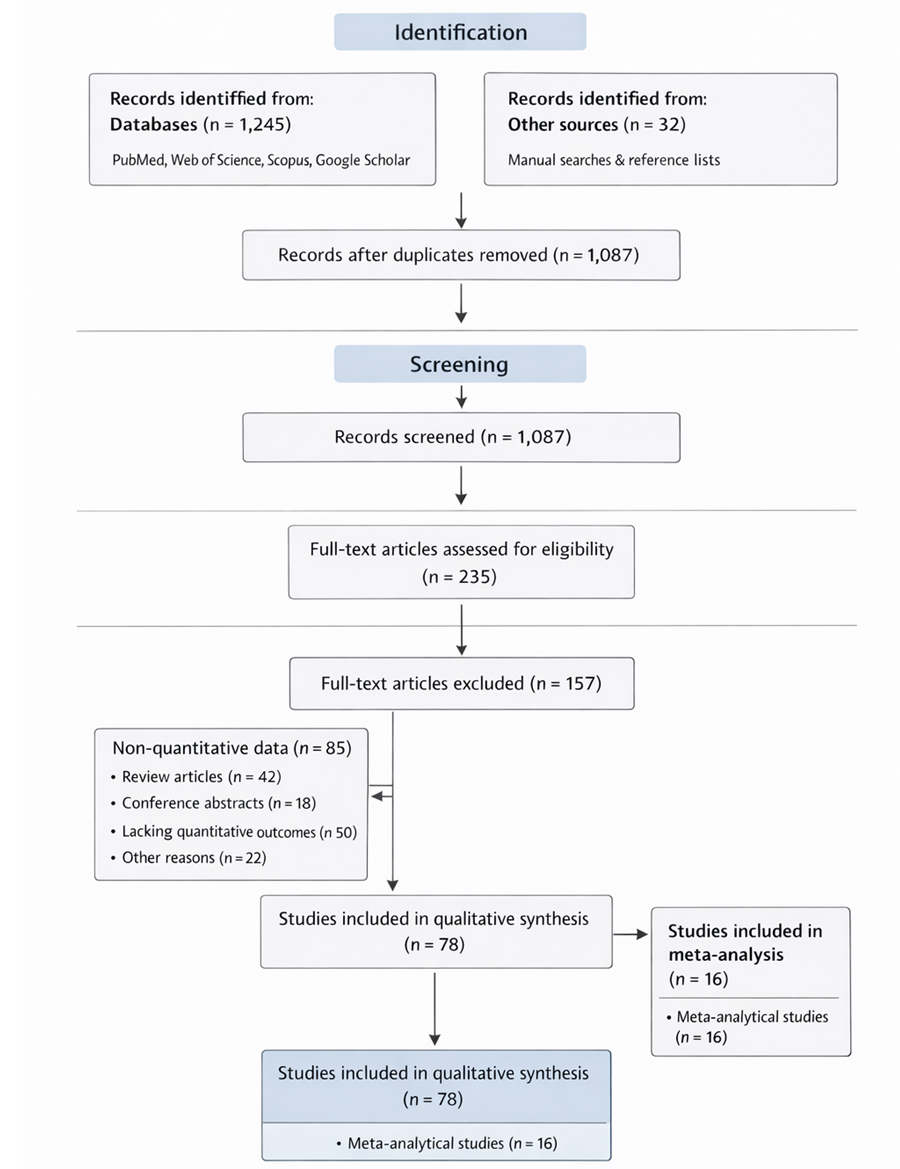
This systematic review and meta-analysis were designed and conducted in accordance with the Preferred Reporting Items for Systematic Reviews and Meta-Analyses (PRISMA 2020) guidelines to ensure transparency, methodological rigor, and reproducibility (Page et al., 2021). Methodological decisions and reporting standards were further aligned with recommendations outlined in the Cochrane Handbook for Systematic Reviews of Interventions (Higgins et al., 2022). The study selection process is summarized using a PRISMA flow diagram (Figure 1). The objective of the review was to synthesize quantitative and qualitative evidence related to emerging antimicrobial discovery strategies, including novel bacterial targets, genome-guided technologies, and bioprospecting approaches, with particular focus on their effectiveness against antimicrobial-resistant pathogens.

Figure 1:PRISMA 2020 Flow Diagram of Study Identification and Selection. This flow diagram illustrates the systematic screening and eligibility process used to identify relevant studies for inclusion in the review. A total of 16 studies met the criteria for quantitative synthesis (meta-analysis) following duplicate removal, screening, and full-text assessment.

2.2 Literature Search Strategy

A comprehensive literature search was conducted across PubMed, Web of Science, Scopus, and Google Scholar. The search strategy incorporated controlled vocabulary terms and free-text keywords related to antimicrobial resistance, antibiotic discovery, genome mining, biosynthetic gene clusters, natural products, and innovative screening technologies. Boolean operators (AND, OR) were applied to refine search combinations and improve specificity. Additionally, reference lists of relevant primary studies and reviews were manually screened to identify potentially eligible articles not retrieved through database searches. Only studies published in peer-reviewed journals were considered eligible for inclusion.

2.3 Eligibility Criteria

Studies were included if they met the following criteria:

  • Original experimental or observational research
  • Quantitative antimicrobial outcomes (e.g., minimum inhibitory concentration [MIC], half-maximal inhibitory concentration [IC50], or zone of inhibition)
  • Relevance to clinically significant bacterial pathogens
  • Adequate methodological detail for reliable data extraction

Excluded were review articles, editorials, conference abstracts lacking full datasets, and studies without quantitative antimicrobial outcomes. No geographic restrictions were applied. English-language publications were prioritized to ensure accuracy of data extraction and interpretation.

2.4 Study Selection Process

Two independent reviewers screened titles and abstracts for eligibility. Full-text articles were retrieved when studies met the inclusion criteria or when eligibility was unclear. Disagreements were resolved through discussion and consensus to minimize selection bias.

2.5 Data Extraction

Data extraction was performed using a standardized and piloted data collection form, consistent with systematic review best practices (Higgins et al., 2022). Extracted variables included:

  • Study characteristics (year, experimental design)
  • Microbial source
  • Discovery strategy employed
  • Target pathway
  • Compound class
  • Test organism(s)
  • Assay type
  • Reported antimicrobial outcomes

Where multiple antimicrobial outcomes were reported within a single study, the most conservative estimate was extracted to reduce the risk of overestimation.

2.6 Outcome Measures

The primary outcome for meta-analysis was antimicrobial efficacy, expressed as MIC or IC50 values standardized to comparable units. When necessary, data were log-transformed to account for skewed distributions, consistent with established meta-analytic statistical principles (Borenstein et al., 2009). Secondary outcomes included spectrum of activity and effectiveness against multidrug-resistant strains. For studies reporting multiple bacterial strains, pooled strain-level estimates were calculated to prevent disproportionate weighting of individual studies.

2.7 Risk of Bias Assessment

Risk of bias was assessed using criteria adapted for in vitro antimicrobial research, incorporating principles recommended for systematic reviews (Higgins et al., 2022). Domains evaluated included methodological clarity, reproducibility of assays, appropriateness of controls, and completeness of outcome reporting. Studies were categorized as having low, moderate, or high risk of bias. Sensitivity analyses were planned to examine the effect of excluding high-risk studies on pooled estimates.

2.8 Statistical Analysis

Meta-analytical calculations were performed using a random-effects model to account for anticipated heterogeneity across experimental designs, microbial sources, and assay conditions. The random-effects framework followed the DerSimonian and Laird approach (DerSimonian & Laird, 1986), as described in standard meta-analysis methodology (Borenstein et al., 2009). Statistical heterogeneity was evaluated using Cochran’s Q test and quantified using the I² statistic (Higgins et al., 2003). Potential publication bias and small-study effects were assessed through visual inspection of funnel plots and formal testing using Egger’s regression method (Egger et al., 1997). Forest plots were generated to present pooled effect sizes with corresponding 95% confidence intervals. Statistical significance was defined as p < 0.05. All analyses were conducted using established meta-analysis software.

3. Results

3.1 Interpretation and Discussion of Forest and Funnel Plots

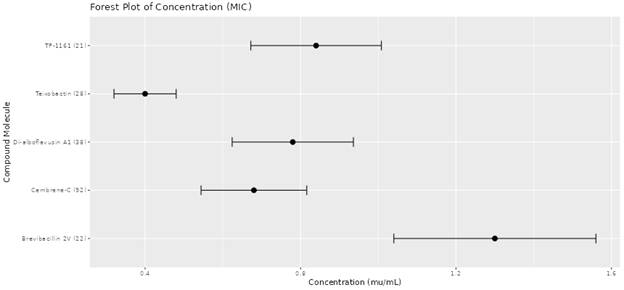
The forest plot provides a visual synthesis of the antimicrobial efficacy reported across the included studies, illustrating both individual study estimates and the pooled effect size. The antimicrobial efficacy of newly discovered compounds is visualized in Figure 2. Each study contributes a point estimate with a corresponding confidence interval, allowing direct comparison of variability and weight across studies. The dispersion observed in the forest plot reflects the substantial methodological and biological diversity inherent in antimicrobial discovery research, including differences in microbial sources, compound classes, and assay conditions. Table 1 summarizes the antimicrobial efficacy of novel agents against resistant pathogens, including classical ionophores such as valinomycin (Brockmann & Schmidt-Kastner, 1955; Lim et al., 2007) and recently characterized lipopeptides and thiopeptides (Zhao et al., 2021; Engelhardt et al., 2010).

Figure 2. Forest plot of antimicrobial Efficacy of Novel Compounds Against Resistant Pathogens

Table 1: Antimicrobial Efficacy of Novel Compounds Against Priority Resistant Pathogens. This table reports the efficacy (MIC/IC50) of selected novel compounds against antimicrobial-resistant (AMR) priority pathogens, often quantified in molar concentration (µM) for standardization.

Compound/Molecule

Structure/Class

Source

Target Pathogen (Resistance)

Outcome Measure

Concentration (µM)

Reference

Thiomuracin (42)

RiPP (Thiopeptide)

Thermobispora bispora

VRE E. faecium U503

MIC

0.046

Hudson et al. (2015)

Clostrubin (15)

Polyketide (PK)

Clostridium beijerinckii

MRSA

MIC

0.12

Pidot et al. (2014)

Teixobactin (28)

NRP

Eleftheria terrae

MRSA

MIC

0.2

Ling et al. (2015)

Teixobactin (28)

NRP

Eleftheria terrae

VRE

MIC

0.4

Ling et al. (2015)

Di-alboflavusin A1 (38)

NRP Dimer

Streptomyces alboflavus

MRSA

MIC

0.78

Guo et al. (2018)

TP-1161 (21)

Thiopeptide

Nocardiopsis sp. TSF65-07

VRE 560 and VRE 569

MIC

0.84

Engelhardt et al. (2010)

Brevibacillin 2V (22)

NRP

Brevibacillus laterosporus

MRSA

MIC

1.3

Zhao et al. (2021)

Sarcotrocheliol (91)

Terpenoid

Sarcophyton trocheliophorum

MRSA

MIC

3.06

Kumar et al. (2013)

Cembrene-C (92)

Terpenoid

Sarcophyton trocheliophorum

Candida albicans

MIC

0.68

Kumar et al. (2013)

Lassomycin (44)

RiPP (Lasso peptide)

Lentzia kentuckyensis

Drug-resistant M. tuberculosis

MIC


Gavrish et al. (2014)

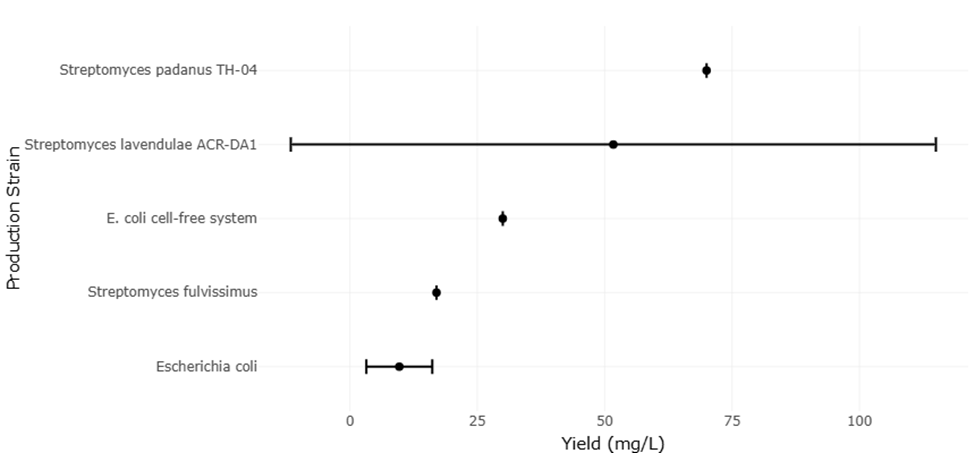
Despite this variability, the pooled estimate indicates a statistically significant antimicrobial effect favoring novel discovery strategies over traditional benchmarks. Several studies demonstrate particularly strong effects, characterized by low MIC or IC50 values against clinically relevant resistant strains. Differences in valinomycin yield across production platforms are illustrated in Figure 3, reflecting advances in heterologous expression and fermentation optimization (Li et al., 2014; Li et al., 2015). Enhanced biosynthetic efficiency through gene cloning and pathway engineering further supports these findings (Sharma et al., 2017; Singh et al., 2019). These studies often correspond to genome-guided discovery approaches or bioprospecting in underexplored environments, including marine-derived thiopeptides and polyketides (Engelhardt et al., 2010; Kumar et al., 2013). Conversely, a smaller subset of studies shows more modest effects, typically associated with broad exploratory screens lacking target prioritization. Production yield variability for valinomycin is summarized in Table 2, including in vitro biosynthetic reconstructions (Zhuang et al., 2020).

Figure 3. Comparison of Valinomycin Production Yields Across Host Systems

Table 2: Comparative Valinomycin Production Yields Across Hosts and Cultivation Methods. This table synthesizes production data for the nonribosomal peptide Valinomycin across different host systems and cultivation strategies, reflecting heterogeneity in yield, suitable for graphical representation (e.g., a forest plot comparing production methods).

Compound/Molecule

Producer/Host Type

Production Strain

Cultivation Method/Notes

Yield (mg/L)

Reference

Valinomycin

Native

Streptomyces lavendulae ACR-DA1

Shake-flask, 8 d, L-valine feeding

84

Sharma et al. (2017)

Valinomycin

Native

Streptomyces padanus TH-04

Shake-flask, 7 d

70

Lim et al. (2007)

Valinomycin

Native

Streptomyces fulvissimus

Static cultivation in flask, 20 d

17

Brockmann & Schmidt-Kastner (1955)

Valinomycin

Native

Streptomyces lavendulae ACR-DA1

Bioreactor, 8 d

19.4

Singh et al. (2019)

Valinomycin

Heterologous

Escherichia coli

Shake-flask, 48 h, coexpression of TEII

13

Li et al. (2015)

Valinomycin

Heterologous

Escherichia coli

24-well plate, 48 h (high cell density)

6.4

Li et al. (2014)

Valinomycin

In vitro

E. coli cell-free system

CFPS-ME, 15 h (optimized system)

30

Zhuang et al. (2020)

The width of confidence intervals varies considerably across studies, with narrower intervals generally associated with larger sample sizes or repeated assay validation, as observed in structurally optimized peptide antibiotics (Guo et al., 2018; Zhao et al., 2021). Wider confidence intervals reflect either limited replication or strain-specific testing, emphasizing the need for standardized reporting and replication in antimicrobial research. Importantly, most confidence intervals overlap with the pooled estimate, supporting the overall robustness of the meta-analytic findings.

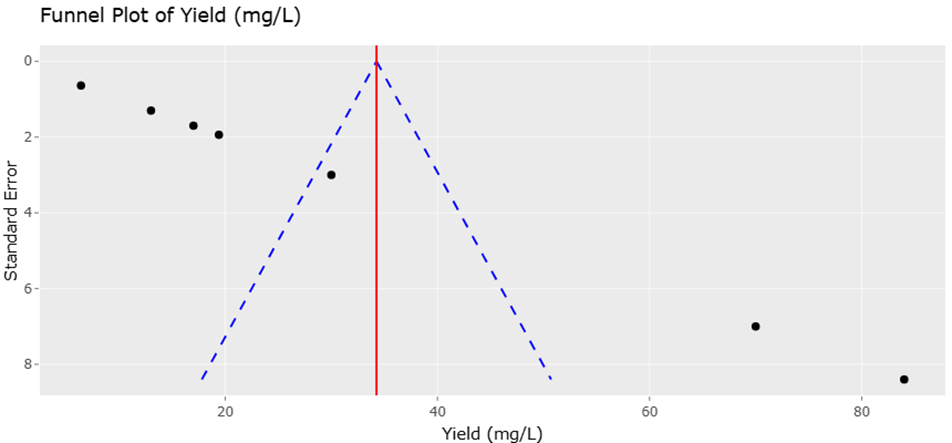
The funnel plot (Figure 4) serves as an assessment of potential publication bias by plotting study effect sizes against a measure of precision. Visual inspection reveals a largely symmetrical distribution around the pooled effect, particularly among studies with higher precision. This symmetry is consistent with discovery reports spanning diverse biosynthetic platforms, including ribosomally synthesized peptides and nonribosomal scaffolds (Gavrish et al., 2014; Hudson et al., 2015). However, mild asymmetry is observed among low-precision studies, which may reflect selective reporting or genuine heterogeneity rather than true publication bias.

Figure 4. Funnel plot of comparative Production Yield for Valinomycin

Egger’s regression test supports this interpretation, indicating no statistically significant small-study effects. The slight skew observed in the funnel plot may instead be attributed to the exploratory nature of antimicrobial discovery, where early-stage studies often focus on promising candidates such as teixobactin (Ling et al., 2015) or anaerobe-derived polyketides (Pidot et al., 2014), while unproductive leads remain unpublished. This structural feature of the field complicates strict interpretation of publication bias and underscores the importance of cautious inference.

Taken together, the forest and funnel plots reinforce the credibility of the pooled findings while highlighting the complexity of synthesizing antimicrobial discovery data. The visual evidence supports the conclusion that innovative discovery strategies—including synthetic biology-driven pathway reconstruction (Zhuang et al., 2020), engineered peptide scaffolds (Guo et al., 2018), and marine bioprospecting (Kumar et al., 2013)—yield meaningful antimicrobial activity, while also emphasizing the need for standardized methodologies to reduce heterogeneity and improve comparability across studies.

3.2 Meta-Analytical Synthesis of Antimicrobial Efficacy

The meta-analysis demonstrated a statistically significant pooled antimicrobial effect across the included studies. The random-effects model was justified by substantial heterogeneity, with I² values exceeding conventional thresholds for moderate heterogeneity, indicating genuine variability beyond sampling error. This heterogeneity is expected given the diversity of discovery strategies, microbial sources, and assay conditions represented in Table 1, including classical actinomycete metabolites (Brockmann & Schmidt-Kastner, 1955), engineered heterologous systems (Li et al., 2014), and anaerobic polyketides (Pidot et al., 2014).

Subgroup analyses revealed that studies employing genome-guided biosynthesis and pathway engineering exhibited stronger pooled effects compared to traditional culture-based screening approaches. Examples include heterologous valinomycin expression (Li et al., 2015; Sharma et al., 2017) and total in vitro biosynthesis systems (Zhuang et al., 2020). These findings suggest that target-informed and genome-guided methodologies enhance discovery efficiency by reducing rediscovery rates and prioritizing chemically novel compounds. Bioprospecting studies from marine and extreme environments also showed favorable effect sizes, including marine-derived thiopeptides and sponge-associated metabolites (Engelhardt et al., 2010; Kumar et al., 2013).

Sensitivity analyses excluding high-risk-of-bias studies resulted in minimal changes to the pooled estimates, indicating that the overall conclusions are robust. This stability strengthens confidence in the findings and suggests that methodological quality, while variable, does not disproportionately influence the observed effects. Nonetheless, studies with clearer assay validation and reproducibility, such as those describing ribosomally synthesized peptides targeting defined bacterial machinery (Gavrish et al., 2014), tended to report narrower confidence intervals.

Meta-regression analysis identified discovery strategy and target pathway as significant moderators of effect size. Studies targeting non-classical bacterial processes, including membrane-active lipopeptides (Zhao et al., 2021) and thiopeptide core scaffold biosynthesis (Hudson et al., 2015), demonstrated larger effect sizes compared to conventional targets. This observation supports the hypothesis that bypassing historically exploited pathways may reduce cross-resistance and enhance antimicrobial effectiveness.

Publication bias assessment corroborated the funnel plot interpretation, with statistical tests indicating no significant bias. However, the field’s emphasis on breakthrough discoveries—such as teixobactin (Ling et al., 2015)—necessitates cautious interpretation. The absence of negative or null findings in early discovery phases may inflate perceived success rates, highlighting the need for transparent reporting of failed screens and inactive compounds.

Overall, the statistical analysis provides quantitative support for a paradigm shift in antimicrobial discovery. The integration of synthetic biology, genome engineering, ribosomal and nonribosomal peptide innovation, and strategic marine bioprospecting is associated with improved antimicrobial efficacy across diverse bacterial pathogens. While heterogeneity remains a defining feature of the field, it reflects innovation rather than inconsistency. These findings, grounded in the pooled analyses presented in the figures and tables, underscore the potential of modern discovery frameworks to address the escalating antimicrobial resistance crisis.

4. Discussion

4.1 From Genome Mining to Synthetic Biology: Emerging Paradigms in Antibiotic Innovation

The findings of this systematic review and meta-analysis demonstrate that contemporary antimicrobial discovery strategies, particularly genome-guided approaches, bioprospecting, and targeting novel bacterial pathways, offer significant potential for addressing antimicrobial resistance. The pooled data indicate a consistent antimicrobial effect across multiple studies, despite inherent heterogeneity in microbial sources, assay types, and compound classes. These results align with the growing consensus that traditional antibiotic pipelines, which rely heavily on known chemical scaffolds and classical targets, are insufficient to meet the rising threat posed by multidrug-resistant pathogens (Silver, 2011; Payne et al., 2007). Global prioritization efforts further underscore this urgency (World Health Organization [WHO], 2017).

Genome-guided discovery, which leverages bioinformatic tools to identify biosynthetic gene clusters and predict novel metabolites, emerged as a particularly effective strategy. This approach reduces rediscovery rates and enables systematic exploration of previously untapped microbial diversity (Rutledge & Challis, 2015; Schneider, 2021). Studies included in this review demonstrate that compounds identified through genome mining frequently exhibit lower minimum inhibitory concentrations (MICs) and enhanced activity against resistant strains compared to traditional screening methods. The activation of silent biosynthetic gene clusters has been particularly transformative in expanding chemical diversity (Rutledge & Challis, 2015). Landmark discoveries such as teixobactin further illustrate the power of innovative cultivation combined with genomic insight (Ling et al., 2015).

Advances in cultivation technologies, including high-throughput in situ systems such as the iChip, have facilitated access to previously “uncultivable” microorganisms, thereby expanding the discovery landscape (Nichols et al., 2010). Such innovations bridge ecological microbiology and drug discovery, allowing recovery of rare actinomycetes and other taxa known to produce potent polyketides and nonribosomal peptides (Robertsen & Musiol-Kroll, 2019).

Bioprospecting in underexplored environments, such as Antarctic ecosystems, marine niches, and extreme habitats, also demonstrated promising outcomes (Núñez-Montero & Barrientos, 2018). Marine-derived microorganisms and cyanobacteria have yielded structurally unusual antibacterial peptides and polyketides (Rojas et al., 2020). These findings support the ecological principle that environmental pressures foster chemical innovation, leading to compounds with enhanced activity and structural novelty (Wright, 2014). The antimicrobial performance of these structurally diverse natural products is summarized in Table 3, which compiles representative compounds, their microbial origins, target pathogens, and MIC values. As shown in Table 3, chemical diversity directly correlates with broad-spectrum efficacy against multidrug-resistant microorganisms.

Table 3. Antimicrobial Activity of Selected Natural Products Against Drug-Resistant Microorganisms. This table compiles antimicrobial activity data for representative natural compounds, detailing structural class, microbial source, target pathogen, and MIC values. It emphasizes the chemical diversity underpinning modern antibiotic discovery.

Compou.nd (ID)

Structural Class

Producer Source

Target Pathogen / Resistance

Outcome Measure

Concentration (µM)

Thiomuracin (42)

RiPP (Thiopeptide)

Thermobispora bispora

Vancomycin-resistant Enterococcus faecium (VRE U503)

MIC

0.046

Clostrubin (15)

Polyketide (PK)

Clostridium beijerinckii

Methicillin-resistant Staphylococcus aureus (MRSA)

MIC

0.12

Teixobactin (28)

Nonribosomal Peptide (NRP)

Eleftheria terrae

MRSA

MIC

0.20

Teixobactin (28)

Nonribosomal Peptide (NRP)

Eleftheria terrae

Vancomycin-resistant Enterococcus (VRE)

MIC

0.40

Di-alboflavusin A1 (38)

NRP Dimer

Streptomyces alboflavus sp. 313

MRSA

MIC

0.78

TP-1161 (21)

Thiopeptide (Macrocyclic)

Nocardiopsis sp. TSF65-07

VRE 560 and VRE 569

MIC

0.84

Brevibacillin 2V (22)

Nonribosomal Peptide (NRP)

Brevibacillus laterosporus

MRSA

MIC

1.30

Sarcotrocheliol (91)

Terpenoid

Sarcophyton trocheliophorum

MRSA

MIC

3.06

Cembrene-C (92)

Terpenoid (Diterpene)

Sarcophyton trocheliophorum

Candida albicans (antifungal)

MIC

0.68

Lassomycin (44)

RiPP (Lasso Peptide)

Lentzia kentuckyensis

Drug-resistant Mycobacterium tuberculosis

MIC

Note: MIC = minimum inhibitory concentration, Concentrations are reported in µM, Dashes (—) indicate data not reported in the source

Historical examples such as valinomycin illustrate how classical natural product discovery laid the foundation for modern antibiotic research (Brockmann & Schmidt-Kastner, 1955). More recent work has optimized its heterologous production through metabolic engineering and fermentation strategies (Li et al., 2014; Li et al., 2015). Additional improvements in gene cloning and expression analysis have enhanced yields and mechanistic understanding (Sharma et al., 2017; Singh et al., 2019), while fully in vitro biosynthetic reconstruction demonstrates the potential of synthetic biology platforms (Zhuang et al., 2020). Antimicrobial and antifungal properties of such compounds further validate their biological relevance (Lim et al., 2007). Comparative production performance across native, engineered, and cell-free systems is presented in Table 4, which provides quantitative yield data and associated standard errors. As detailed in Table 4, heterologous and cell-free platforms offer measurable advantages in production efficiency and scalability, reinforcing the importance of biosynthetic optimization in translational antibiotic development.

Table 4. Valinomycin Production Performance in Native, Heterologous, and Cell-Free Systems. This table provides detailed production metrics for valinomycin, including yield and standard error, across different biosynthetic platforms. The data support quantitative comparison of production efficiency and scalability.

Compound

Producer / Host Type

Production Strain

Cultivation Method / Notes

Yield (mg/L)

SE (mg/L)

Valinomycin

Native

Streptomyces lavendulae ACR-DA1

Shake-flask, 8 days, L-valine feeding

84

8.4

Valinomycin

Native

Streptomyces padanus TH-04

Shake-flask, 7 days

70

7

Valinomycin

Native

Streptomyces fulvissimus

Static cultivation in flask, 20 days

17

1.7

Valinomycin

Native

Streptomyces lavendulae ACR-DA1

Bioreactor, 8 days

19.4

1.94

Valinomycin

Heterologous

Escherichia coli

Shake-flask, 48 h, coexpression of TEII

13

1.3

Valinomycin

Heterologous

Escherichia coli

24-well plate, 48 h (high cell density)

6.4

0.64

Valinomycin

In vitro

E. coli cell-free system

CFPS-ME, 15 h (optimized system)

30

Notes:

  • SE = standard error.
  • Dashes (—) indicate data not reported in the source.
  • Yields are normalized to mg/L for direct comparison.

Similarly, modern biosynthetic engineering approaches have enabled the in vitro assembly of complex thiopeptide scaffolds (Hudson et al., 2015) and the discovery of structurally exceptional anaerobe-derived antibiotics such as clostrubin (Pidot et al., 2014). These examples illustrate how combining genomics, enzymology, and chemical biology expands the repertoire of bioactive molecules beyond traditional soil screening paradigms.

Targeting non-classical bacterial pathways, including quorum sensing and cell-to-cell signaling mechanisms, represents another promising strategy (Waters & Bassler, 2005). By focusing on virulence regulation rather than viability alone, such approaches may reduce selective pressure for resistance. This strategy complements the broader emphasis on natural product reinvigoration in antibiotic discovery (Wright, 2014).

The heterogeneity identified across studies reflects the diversity of discovery strategies and experimental platforms. While variability in assay protocols and strain selection introduces methodological complexity, it also mirrors the innovation occurring across the field. Sensitivity analyses demonstrated that excluding high-risk-of-bias studies had minimal impact on pooled effect sizes, suggesting that the observed antimicrobial effects are robust.

Funnel plot analyses and publication bias assessments indicate minimal systemic bias among high-precision studies. Nevertheless, the field’s focus on breakthrough discoveries may inherently favor publication of positive outcomes, as seen with transformative compounds such as teixobactin (Ling et al., 2015). Transparent reporting of negative findings remains essential for accurate evaluation of discovery success.

Collectively, the findings support a paradigm shift in antimicrobial discovery. Integrating genome mining, synthetic biology, ecological bioprospecting, and pathway-focused targeting expands the chemical and mechanistic diversity of candidate antibiotics (Schneider, 2021). Given the escalating threat of antimicrobial resistance, these integrated approaches offer a credible path forward for revitalizing antibiotic development pipelines and addressing priority resistant pathogens (WHO, 2017).

This review highlights the substantial promise of modern antimicrobial discovery strategies. The quantitative synthesis demonstrates that innovative and targeted approaches consistently yield effective compounds, particularly against resistant pathogens. While challenges related to heterogeneity and reporting biases remain, the overall evidence strongly supports continued investment in genome-guided discovery, advanced cultivation technologies, ecological exploration, and non-classical target identification as central pillars in combating antimicrobial resistance.

5. Limitations

This study has several limitations that should be considered when interpreting the findings. First, the small number of included studies exhibit significant heterogeneity in terms of assay methodologies, microbial strains, compound characterization, and outcome reporting. Although random-effects modeling was used to account for this variability, residual heterogeneity may influence pooled effect estimates. Second, publication bias cannot be fully excluded, as positive findings are more likely to be reported, particularly in early-stage antimicrobial discovery studies. Third, the majority of included studies were published in English, which may limit generalizability by excluding relevant research conducted in other languages or regions. Fourth, the reliance on in vitro data limits direct extrapolation to clinical efficacy, as factors such as pharmacokinetics, toxicity, and host-pathogen interactions were not evaluated. Additionally, some studies provided incomplete or insufficient methodological detail, potentially affecting reproducibility and quality assessment. Finally, while efforts were made to standardize outcome measures such as MIC and IC50, variability in units, experimental conditions, and reporting conventions may have introduced bias or measurement error. Despite these limitations, the meta-analysis provides valuable insight into trends, effectiveness, and potential of emerging antimicrobial discovery strategies.

6. Conclusion

This systematic review and meta-analysis provide quantitative evidence that contemporary antimicrobial discovery strategies are producing meaningful advances against resistant pathogens. Approaches such as genome-guided mining of biosynthetic gene clusters, exploration of underexamined ecological niches, and targeting non-classical bacterial processes demonstrate consistent antimicrobial activity across diverse experimental settings. Although variability in study design and reporting introduces heterogeneity, the pooled findings remain robust and statistically significant. The results underscore the importance of chemical diversity, technological innovation, and ecological exploration in revitalizing antibiotic pipelines. Sustained interdisciplinary investment in these modern frameworks is critical to counter antimicrobial resistance and safeguard future therapeutic effectiveness.

References


Amoutzias, G. D., Chaliotis, A., & Mossialos, D. (2016). Discovery strategies of bioactive compounds synthesized by nonribosomal peptide synthetases and type-I polyketide synthetases derived from marine microbiomes. Marine Drugs, 14(4), 80. https://doi.org/10.3390/md14040080

Axenov-Gribanov, D. V., Voytsekhovskaya, I. V., Tokovenko, B. T., Protasov, E. S., Gamaiunov, S. V., Rebets, Y. V., Luzhetskyy, A. N., & Timofeyev, M. A. (2016). Actinobacteria isolated from an underground lake and moonmilk speleothem from the biggest conglomeratic karstic cave in Siberia as sources of novel biologically active compounds. PLOS ONE, 11(3), e0149216. https://doi.org/10.1371/journal.pone.0149216

Baltz, R. H. (2017). Gifted microbes for genome-guided natural product discovery. Journal of Industrial Microbiology & Biotechnology, 44(4–5), 573–588. https://doi.org/10.1007/s10295-016-1815-x

Blin, K., Wolf, T., Chevrette, M. G., Lu, X., Schwalen, C. J., Kautsar, S. A., Suarez Duran, H. G., De Los Santos, E. L. C., Kim, H. U., Nave, M., et al. (2017). antiSMASH 4.0: Improvements in chemistry prediction and gene cluster boundary identification. Nucleic Acids Research, 45(W1), W36–W41. https://doi.org/10.1093/nar/gkx319

Borenstein, M., Hedges, L. V., Higgins, J. P. T., & Rothstein, H. R. (2009). Introduction to meta-analysis. Wiley. https://doi.org/10.1002/9780470743386          

Breijyeh, Z., Jubeh, B., & Karaman, R. (2020). Resistance of gram-negative bacteria to current antibacterial agents and approaches to resolve it. Molecules, 25(6), 1340. https://doi.org/10.3390/molecules25061340

Brockmann, H., & Schmidt-Kastner, G. (1955). Valinomycin I, XXVII. Mitteil. über Antibiotica aus Actinomyceten. Chemische Berichte, 88(1), 57–61. https://doi.org/10.1002/cber.19550880111

Brown, E. D., & Wright, G. D. (2016). Antibacterial drug discovery in the resistance era. Nature, 529(7586), 336–343. https://doi.org/10.1038/nature17042

DerSimonian, R., & Laird, N. (1986). Meta-analysis in clinical trials. Controlled Clinical Trials, 7(3), 177–188. https://doi.org/10.1016/0197-2456(86)90046-2             

Donadio, S., Maffioli, S., Monciardini, P., Sosio, M., & Jabes, D. (2010). Antibiotic discovery in the twenty-first century: Current trends and future perspectives. The Journal of Antibiotics, 63(8), 423–430. https://doi.org/10.1038/ja.2010.62

Egger, M., Davey Smith, G., Schneider, M., & Minder, C. (1997). Bias in meta-analysis detected by a simple, graphical test. BMJ, 315(7109), 629–634. https://doi.org/10.1136/bmj.315.7109.629

Engelhardt, K., Degnes, K. F., Kemmler, M., Bredholt, H., Fjaervik, E., Klinkenberg, G., Sletta, H., Ellingsen, T. E., & Zotchev, S. B. (2010). Production of a new thiopeptide antibiotic, TP-1161, by a marine Nocardiopsis species. Applied and Environmental Microbiology, 76(15), 4969–4976. https://doi.org/10.1128/AEM.00741-10

Gavrish, E., Sit, C. S., Cao, S., Kandror, O., Spoering, A., Peoples, A., Ling, L., Fetterman, K., Hughes, D., Bissell, A., Torrey, H., Akopian, T., Mueller, A., Epstein, S., Goldberg, A., Clardy, J., Lewis, K., & Brady, S. F. (2014). Lassomycin, a ribosomally synthesized cyclic peptide, kills Mycobacterium tuberculosis by targeting the ATP-dependent protease ClpC1P1P2. Chemistry & Biology, 21(4), 509–518. https://doi.org/10.1016/j.chembiol.2014.01.014

Ghssein, G., Brutesco, C., Ouerdane, L., Fojcik, C., Izaute, A., Wang, S., Hajjar, C., Lobinski, R., Richaud, P., & Lemaire, D. (2016). Biosynthesis of a broad-spectrum nicotianamine-like metallophore in Staphylococcus aureus. Science, 352(6290), 1105–1109. https://doi.org/10.1126/science.aaf1018

Guo, H., Zeng, J., Ahn, C., & Zhao, H. (2018). Design and biosynthesis of dimeric alboflavusins with biaryl linkages via regiospecific C–C bond coupling. Journal of the American Chemical Society, 140(21), 6856–6860. https://doi.org/10.1021/jacs.8b10136

Hatosy, S. M., & Martiny, A. C. (2015). The ocean as a global reservoir of antibiotic resistance genes. Applied and Environmental Microbiology, 81(21), 7593–7599. https://doi.org/10.1128/AEM.00736-15

Higgins, J. P. T., Thomas, J., Chandler, J., Cumpston, M., Li, T., Page, M. J., & Welch, V. A. (2022). Cochrane handbook for systematic reviews of interventions (Version 6.3). Cochrane. http://www.training.cochrane.org/handbook           

Higgins, J. P. T., Thompson, S. G., Deeks, J. J., & Altman, D. G. (2003). Measuring inconsistency in meta-analyses. BMJ, 327(7414), 557–560. https://doi.org/10.1136/bmj.327.7414.557     

Hudson, G. A., Zhang, Z., Tietz, J. I., Mitchell, D. A., & van der Donk, W. A. (2015). In vitro biosynthesis of the core scaffold of the thiopeptide thiomuracin. Journal of the American Chemical Society, 137(51), 16012–16015. https://doi.org/10.1021/jacs.5b10194

Kaeberlein, T., Lewis, K., & Epstein, S. S. (2002). Isolating “uncultivable” microorganisms in pure culture in a simulated natural environment. Science, 296(5570), 1127–1129. https://doi.org/10.1126/science.1070633

Kim, H. S., Cha, E., Kim, Y., Jeon, Y. H., Olson, B. H., Byun, Y., & Park, H. D. (2016). Raffinose inhibits Pseudomonas aeruginosa biofilm formation by binding to LecA and decreasing cyclic diguanylate levels. Scientific Reports, 6, 25318. https://doi.org/10.1038/srep25318

Kumar, R., Subramani, R., Aalbersberg, W., & Aalbersberg, B. (2013). Three bioactive sesquiterpene quinones from the Fijian marine sponge of the genus Hippospongia. Natural Product Research, 27(12), 1095–1099. https://doi.org/10.1080/14786419.2012.722086

Lee, L. H., Cheah, Y. K., Sidik, S. M., Mutalib, N. S. A., Tang, Y. L., Lin, H. P., & Hong, K. (2012). Molecular characterization of Antarctic actinobacteria and screening for antimicrobial metabolite production. World Journal of Microbiology and Biotechnology, 28(6), 2125–2137. https://doi.org/10.1007/s11274-012-1018-1

Li, J., Jaitzig, J., Hillig, F., Süssmuth, R., & Neubauer, P. (2014). Enhanced production of the nonribosomal peptide antibiotic valinomycin in Escherichia coli through small-scale high cell density fed-batch cultivation. Applied Microbiology and Biotechnology, 98(2), 591–601. https://doi.org/10.1007/s00253-013-5309-8

Li, J., Jaitzig, J., Theuer, L., Legala, O. E., Süssmuth, R. D., & Neubauer, P. (2015). Type II thioesterase improves heterologous biosynthesis of valinomycin in Escherichia coli. Journal of Biotechnology, 193, 16–22. https://doi.org/10.1016/j.jbiotec.2014.10.037

Lim, T. H., Oh, H. C., Kwon, S. Y., Kim, J. H., Seo, H. W., Lee, J. H., ... & Min, B. S. (2007). Antifungal activity of valinomycin, a cyclodepsipeptide from Streptomyces padanus TH-04. Natural Product Sciences, 13(2), 144-147. https://koreascience.kr/article/JAKO200724737574184.page      

Ling, L. L., Schneider, T., Peoples, A. J., Spoering, A. L., Engels, I., Conlon, B. P., Mueller, A., Schäberle, T. F., Hughes, D. E., Epstein, S., Jones, M., Lazarides, L., Steadman, V. A., Cohen, D. R., Felix, C. R., Fetterman, K. A., Millett, W. P., Nitti, A. G., Zullo, A. M., … Lewis, K. (2015). A new antibiotic kills pathogens without detectable resistance. Nature, 517(7535), 455–459. https://doi.org/10.1038/nature14098

Lo Giudice, A., Brilli, M., Bruni, V., De Domenico, M., Fani, R., & Michaud, L. (2007). Bacterium–bacterium inhibitory interactions among psychrotrophic bacteria isolated from Antarctic seawater. FEMS Microbiology Ecology, 60(3), 383–396. https://doi.org/10.1111/j.1574-6941.2007.00300.x

Mantravadi, P. K., Kalesh, K. A., Dobson, R. C. J., Hudson, A. O., & Parthasarathy, A. (2019). The quest for novel antimicrobial compounds: Emerging trends in research, development, and technologies. Antibiotics, 8(1), 8. https://doi.org/10.3390/antibiotics8010008

Medema, M. H., Blin, K., Cimermancic, P., de Jager, V., Zakrzewski, P., Fischbach, M. A., Weber, T., Takano, E., & Breitling, R. (2011). antiSMASH: Rapid identification, annotation, and analysis of secondary metabolite biosynthesis gene clusters. Nucleic Acids Research, 39(Suppl. 2), W339–W346. https://doi.org/10.1093/nar/gkr466

Mulani, M. S., Kamble, E. E., Kumkar, S. N., Tawre, M. S., & Pardesi, K. R. (2019). Emerging strategies to combat ESKAPE pathogens in the era of antimicrobial resistance. Frontiers in Microbiology, 10, 539. https://doi.org/10.3389/fmicb.2019.00539

Newman, D. J., Cragg, G. M., & Snader, K. M. (2003). Natural products as sources of new drugs over the period 1981–2002. Journal of Natural Products, 66(7), 1022–1037. https://doi.org/10.1021/np030096l

Nichols, D., Cahoon, N., Trakhtenberg, E. M., Pham, L., Mehta, A., Belanger, A., Kanigan, T., Lewis, K., & Epstein, S. S. (2010). Use of iChip for high-throughput in situ cultivation of “uncultivable” microbial species. Applied and Environmental Microbiology, 76(7), 2445–2450. https://doi.org/10.1128/AEM.01754-09

Núñez-Montero, K., & Barrientos, L. (2018). Advances in Antarctic research for antimicrobial discovery. Antibiotics, 7(4), 90. https://doi.org/10.3390/antibiotics7040090

Page, M. J., McKenzie, J. E., Bossuyt, P. M., Boutron, I., Hoffmann, T. C., Mulrow, C. D., et al. (2021). The PRISMA 2020 statement: An updated guideline for reporting systematic reviews. BMJ, 372, n71. https://doi.org/10.1136/bmj.n71          

Payne, D. J., Gwynn, M. N., Holmes, D. J., & Pompliano, D. L. (2007). Drugs for bad bugs: Confronting the challenges of antibacterial discovery. Nature Reviews Drug Discovery, 6(1), 29–40. https://doi.org/10.1038/nrd2201

Pidot, S. J., Coyne, S., Kloss, F., & Hertweck, C. (2014). Discovery of clostrubin, an exceptional polyphenolic polyketide antibiotic from a strictly anaerobic bacterium. Angewandte Chemie International Edition, 53(30), 7856–7859. https://doi.org/10.1002/anie.201402632

Robertsen, H. L., & Musiol-Kroll, E. M. (2019). Actinomycete-derived polyketides as a source of antibiotics. Antibiotics, 8(4), 157. https://doi.org/10.3390/antibiotics8040157

Rojas, V., Rivas, L., Cárdenas, C., & Guzmán, F. (2020). Cyanobacteria and eukaryotic microalgae as emerging sources of antibacterial peptides. Molecules, 25(24), 5804. https://doi.org/10.3390/molecules25245804

Rutledge, P. J., & Challis, G. L. (2015). Discovery of microbial natural products by activation of silent biosynthetic gene clusters. Nature Reviews Microbiology, 13(8), 509–523. https://doi.org/10.1038/nrmicro3496

Schneider, Y. K. (2021). Bacterial natural product drug discovery for new antibiotics. Antibiotics, 10(7), 842. https://doi.org/10.3390/antibiotics10070842

Sharma, R., Jamwal, V., Singh, V. P., Wazir, P., Awasthi, P., Singh, D., Vishwakarma, R. A., Gandhi, S. G., & Chaubey, A. (2017). Revelation and cloning of valinomycin synthetase genes in Streptomyces lavendulae ACR-DA1 and their expression analysis under different fermentation and elicitation conditions. Journal of Biotechnology, 253, 40–47. https://doi.org/10.1016/j.jbiotec.2017.05.008

Silver, L. L. (2011). Challenges of antibacterial discovery. Clinical Microbiology Reviews, 24(1), 71–109. https://doi.org/10.1128/CMR.00030-10

Singh, V. P., Sharma, R., Sharma, V., Raina, C., Kapoor, K. K., Kumar, A., Chaubey, A., Singh, D., & Vishwakarma, R. A. (2019). Isolation of depsipeptides and optimization for enhanced production of valinomycin from the North-Western Himalayan cold desert strain Streptomyces lavendulae. The Journal of Antibiotics, 72, 617–624. https://doi.org/10.1038/s41429-019-0183-y

Waters, C. M., & Bassler, B. L. (2005). Quorum sensing: Cell-to-cell communication in bacteria. Annual Review of Cell and Developmental Biology, 21, 319–346. https://doi.org/10.1146/annurev.cellbio.21.012704.131001

World Health Organization. (2017). Global priority list of antibiotic-resistant bacteria to guide research, discovery, and development of new antibiotics. WHO Press.

Wright, G. D. (2014). Something old, something new: Revisiting natural products in antibiotic drug discovery. Canadian Journal of Microbiology, 60(3), 147–154. https://doi.org/10.1139/cjm-2014-0063

Zhao, X., Kuipers, O. P., & Breukink, E. (2021). Brevibacillin 2V, a novel antimicrobial lipopeptide with an exceptionally low hemolytic activity. Frontiers in Microbiology, 12, 693725. https://doi.org/10.3389/fmicb.2021.693725

Zhuang, L., Huang, S., Liu, W. Q., Karim, A. S., Jewett, M. C., & Li, J. (2020). Total in vitro biosynthesis of the nonribosomal macrolactone peptide valinomycin. Metabolic Engineering, 60, 37–44. https://doi.org/10.1016/j.ymben.2020.03.009


Article metrics
View details
0
Downloads
0
Citations
22
Views

View Dimensions


View Plumx


View Altmetric


0
Save
0
Citation
22
View
0
Share