Biosensors and Nanotheranostics

Bionanotechnology, Drug Delivery, Therapeutics | online ISSN 3064-7789
175
Citations
118.7k
Views
85
Articles
Your new experience awaits. Try the new design now and help us make it even better
Switch to the new experience
Figures and Tables
REVIEWS   (Open Access)

Engineering nanoparticles for theranostics, gene delivery and precision medicine

Md Shamsuddin Sultan Khan 1*, Muhit Rana 2


+ Author Affiliations

Biosensors and Nanotheranostics 5 (1) 1-8 https://doi.org/10.25163/biosensors.5110983

Submitted: 21 March 2026 Revised: 11 May 2026  Published: 22 May 2026 


Abstract

Medicine is moving away from standardised dosing toward interventions matched to the molecular identity of an individual lesion, and nanotechnology has become the material substrate on which that shift depends. This review examines how engineered constructs between roughly 1 and 200 nm now serve three converging frontiers simultaneously: theranostics, in which a contrast reporter and a therapeutic payload occupy the same particle; non-viral gene therapy, in which siRNA, mRNA, plasmid DNA, and CRISPR–Cas9 machinery reach the cytosol without a viral capsid; and precision medicine, in which ligand decoration and stimulus-responsive chemistry restrict activity to a defined biological address. We screened records against prespecified criteria, and extracted platform composition, targeting strategy, imaging modality, cargo, and quantitative biological outcome from the retained primary studies. Recurring patterns emerged rather than isolated successes. Inorganic cores dominate high-resolution imaging; ionizable lipid nanoparticles dominate hepatic nucleic acid delivery, with clinical confirmation from patisiran and from in vivo CRISPR editing of transthyretin; membrane-cloaked carriers extend circulation by inheriting host surface proteins; and endogenous or operator-applied triggers govern where unloading occurs. Translation, however, remains the narrow point. Protein corona formation, mononuclear phagocyte clearance, endosomal entrapment, batch heterogeneity, and the absence of harmonised regulatory criteria for multicomponent constructs repeatedly blunt efficacy that looked decisive in rodents. We argue that corona-aware design, microfluidic manufacture, and human-relevant screening models, rather than novel chemistry, are the practical prerequisites for the next generation of clinically viable nanomedicines.

Keywords: nanomedicine; theranostics; lipid nanoparticles; CRISPR–Cas9 delivery; biomimetic camouflage; stimuli-responsive release; protein corona; clinical translation

1. Introduction

Therapeutic practice has, for most of its modern history, operated on population averages. A dose is selected because it worked acceptably often in a trial cohort, not because it is matched to the biology of the person receiving it. That logic is now under sustained revision, and the direction of travel is toward interventions specified at the molecular level (Ammar et al., 2025; Teli et al., 2010). The reasons are not abstract. Conventional pharmacological and chemotherapeutic regimens remain constrained by off-target systemic toxicity, narrow therapeutic windows, poor aqueous solubility, rapid renal and hepatic clearance, and an inability to negotiate biological barriers such as the blood–brain barrier (BBB) (Ammar et al., 2025; Jadeja et al., 2025; Molecules Editorial Board, 2023). Each of these constraints reduces the fraction of an administered dose that performs useful work at the intended site, and each contributes to the attrition of candidate drugs that are pharmacologically sound but pharmacokinetically unworkable.

Nanotechnology entered this space as a materials solution to a delivery problem. Defined as the design, synthesis, characterisation, and application of materials and devices operating between approximately 1 and 100 nm, it permits manipulation of matter at atomic, molecular, and macromolecular scales (Lekkala et al., 2024; Teli et al., 2010). At that scale, surface-to-volume ratios, quantum confinement effects, and plasmonic behaviour produce optical, electronic, magnetic, and catalytic properties that bulk materials of identical composition do not display, and those properties can be recruited deliberately for diagnosis and therapy (Ammar et al., 2025; Pardeshi & Souto, 2022).

The integration of nanoscience with medicine — nanomedicine — has progressed from the conceptual framing associated with Richard Feynman’s 1959 lecture to a field with approved products on formulary (Molecules Editorial Board, 2023; Teli et al., 2010). Early translational milestones, notably liposomal doxorubicin and albumin-bound paclitaxel, demonstrated that nanoscale formulation can improve solubilisation, prolong circulation, and exploit passive accumulation through the enhanced permeability and retention (EPR) effect in solid tumours (Ammar et al., 2025; Molecules Editorial Board, 2023). Contemporary nanomedicine extends well beyond those first-generation carriers and now encompasses lipid nanoparticles (LNPs), polymeric micelles, dendrimers, electrosomes, inorganic metallic nanostructures, and cell membrane–coated biomimetic carriers (Jadeja et al., 2025; Lekkala et al., 2024; Nujoom et al., 2024). What unites these architectures is function rather than chemistry: each encapsulates a cargo, shields it from premature degradation, and biases its distribution toward pathological tissue (Pharmaceutics Editorial Board, 2025; Teli et al., 2010). A common set of design variables feeds three distinct clinical frontiers (Figure 1).

Theranostics. Theranostics integrates diagnostic imaging and targeted therapy within a single multifunctional construct (Khot et al., 2020; Pardeshi & Souto, 2022). Conceived in the late 1990s, theranostic formulations co-encapsulate diagnostic reporters — superparamagnetic iron oxide nanoparticles (SPIONs) for magnetic resonance imaging (MRI), quantum dots or fluorophores for optical tracking, radioisotopes for nuclear imaging — alongside chemotherapeutics, small molecules, or biologicals (Khot et al., 2020; Kuang et al., 2023). The clinical consequence is that distribution, accumulation, and response can be visualised non-invasively and treatment adjusted accordingly, which reduces redundant intervention and unnecessary systemic exposure (Khot et al., 2020; Pardeshi & Souto, 2022). The modular anatomy underlying this capability is summarised schematically (Figure 2).

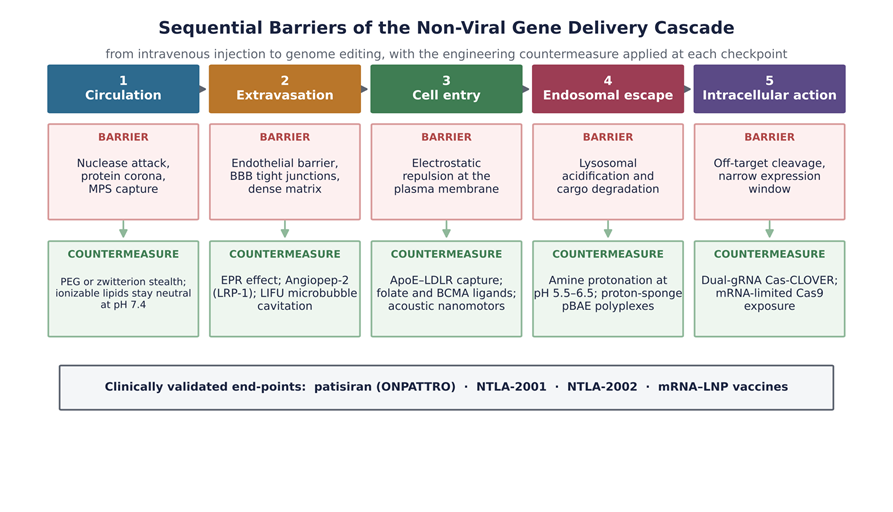
Gene therapy and genome editing. Nucleic acid therapeutics address disease at its origin rather than its symptoms, and they now span plasmid DNA (pDNA), messenger RNA (mRNA), small interfering RNA (siRNA), microRNA (miRNA), antisense oligonucleotides, and editing systems including CRISPR–Cas9, base editors, and prime editors (Kimura & Harashima, 2024; Nujoom et al., 2024; Pharmaceutics Editorial Board, 2025). Naked nucleic acids, however, are degraded by circulating nucleases, repelled electrostatically at the plasma membrane, and recognised by innate immune sensors (Kimura & Harashima, 2024; Nujoom et al., 2024). Viral vectors solve transfection efficiency but import packaging limits, insertional mutagenesis risk, manufacturing cost, and anti-capsid immunity (Nujoom et al., 2024; Pardeshi & Souto, 2022). Non-viral nanocarriers — validated clinically by LNP-formulated siRNA, by mRNA–LNP vaccines, and by recent approvals of gene-edited cell therapies — offer a safer and more scalable alternative (Kimura & Harashima, 2024; Nujoom et al., 2024). The barriers these carriers must clear in sequence are mapped stage by stage (Figure 3).

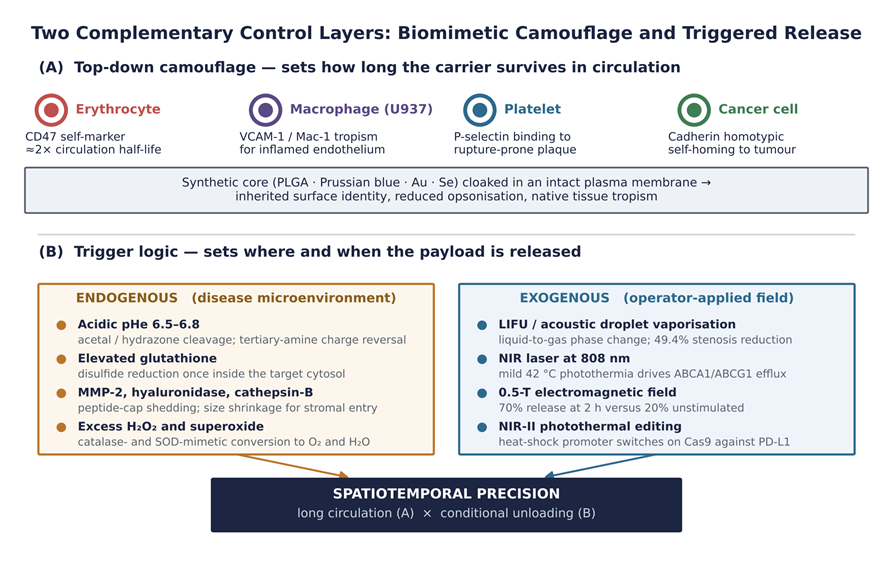
Precision medicine. Precision medicine tailors intervention to an individual’s genetic, epigenetic, proteomic, and environmental profile (Ammar et al., 2025; Teli et al., 2010). Nanocarriers enable this by accommodating surface ligands — monoclonal antibodies, aptamers, peptides, folic acid — that recognise overexpressed disease biomarkers with high affinity (Ammar et al., 2025; Lekkala et al., 2024). Stimulus-responsive platforms extend the principle in time as well as space, releasing cargo only in response to acidic pH, elevated reactive oxygen species (ROS), overexpressed enzymes, hypoxia, or externally applied ultrasound, light, magnetic, or thermal fields (Jadeja et al., 2025; Kuang et al., 2023). Computational modelling and artificial intelligence are beginning to compress the formulation design cycle itself (Pharmaceutics Editorial Board, 2025; Teng et al., 2025). Two control layers — camouflage and trigger logic — together determine spatiotemporal precision (Figure 4).

Preclinical accomplishment has not converted proportionally into clinical availability, and the gap is instructive rather than incidental (Ammar et al., 2025; Nujoom et al., 2024; Teng et al., 2025). After intravenous administration a nanocarrier must evade mononuclear phagocyte system (MPS) clearance, extravasate across vascular endothelium, penetrate dense extracellular matrix, engage a cell-surface receptor, escape the endosome, and — for editing applications — reach the nucleus (Kimura & Harashima, 2024; Nujoom et al., 2024). Superimposed on this is the biomolecular corona: plasma proteins adsorb within seconds and can mask the very ligands installed to direct targeting (Kimura & Harashima, 2024). Downstream, manufacturing scalability, batch reproducibility, long-term biocompatibility, toxicological characterisation, regulatory standardisation, and development cost each impose additional filters (Ammar et al., 2025; Khot et al., 2020; Teng et al., 2025).

This review was therefore designed to consolidate evidence across material chemistry, nanobiotechnology, computational analytics, and clinical oncology and cardiology, with five objectives: (i) to classify nanomaterial architectures and synthesis strategies used in current practice (Table 1); (ii) to analyse theranostic applications and multimodal imaging; (iii) to elucidate non-viral gene delivery and genome editing mechanisms, including the barriers each engineering strategy is intended to defeat (Table 2); (iv) to assess biomimetic camouflage together with endogenous and exogenous stimulus-responsive targeting paradigms (Table 3); and (v) to evaluate translational bottlenecks, corona dynamics, regulatory pathways, and the emerging role of computational design in moving nanotherapeutics from bench to bedside (Table 4).

2. Targeted Theranostics, Non-Viral Gene Delivery, and Biomimetic Control in Cardiovascular and Cancer Nanomedicine

2.1 Scope and Theoretical Framing

Atherosclerotic cardiovascular disease and neoplastic malignancy remain the two dominant contributors to global morbidity and mortality, and both expose the same therapeutic deficit (Lankala et al., 2023; Nujoom et al., 2024). Systemic pharmacology distributes non-specifically, clears rapidly, and operates within narrow therapeutic windows (Lekkala et al., 2024). Diagnostically, luminal angiography and circulating biomarkers describe anatomy and systemic state but resolve neither plaque composition nor early microenvironmental change (Lankala et al., 2023).

Nanomedicine responds to both deficits with a single class of tool. Constructs of roughly 1–200 nm can carry dense payloads, protect labile genetic cargo, and home to diseased microenvironments through engineered surface chemistry (X. Li et al., 2025; Nujoom et al., 2024). Theranostics sharpens this further by combining non-invasive imaging and therapy in one platform, allowing intervention and assessment to occur on the same timeline (Kuang et al., 2023; Pardeshi & Souto, 2022). The sections that follow synthesise the literature across four domains — targeted theranostic platforms, non-viral gene delivery, biomimetic and stimulus-responsive control, and translational constraint — with representative constructs tabulated in Tables 1 through 4 and the conceptual relationships depicted in Figures 1 through 4.

2.2 Targeted Theranostic Nanoplatforms in Vascular Pathology

2.2.1 Molecular Imaging of the Vulnerable Plaque

Atherosclerosis advances silently through accumulation of lipid-rich, inflamed intimal plaque (Lankala et al., 2023). Clinically decisive events — myocardial infarction, ischaemic stroke — typically follow rupture of a thin-cap fibroatheroma rather than progressive luminal narrowing (“Expanding Horizons in Theragnostics,” 2024; Lankala et al., 2023). Precision diagnosis therefore requires probes that report inflammatory activity rather than lumen calibre, which in practice means targeting vascular cell adhesion molecule-1 (VCAM-1), scavenger receptors, CD36, or S100A9 (Lankala et al., 2023; Park et al., 2019).

Several constructs illustrate the approach. Qiu and Xu (2021) engineered multifunctional SDP-VCAM-1/CUR/Cy5.5 nanoparticles that home to inflamed endothelium, combining MRI and near-infrared (NIR) fluorescence while delivering curcumin to suppress local inflammation (Lankala et al., 2023). L. Li et al. (2019) developed class AI scavenger receptor (SR-AI)-targeted, glutathione-biomineralised gadolinium–gold nanoprobes for non-invasive MRI quantification of macrophage burden in carotid lesions of apolipoprotein E–deficient (ApoE−/−) mice, with significant signal enhancement at 4 h and 12 h after injection (Lankala et al., 2023). Costagliola di Polidoro et al. (2021) functionalised cross-linked hyaluronic acid nanoparticles with anti-CD36 antibodies to engage foam cells and plaque macrophages, while Park et al. (2019) built tobacco mosaic virus–derived nanoplatforms displaying S100A9-binding peptides, achieving high-contrast identification of rupture-prone lesions in ApoE−/− models (Lankala et al., 2023). The modular grammar shared by these constructs — ligand, core matrix, contrast reporter, therapeutic payload — is illustrated schematically and catalogued across material classes (Figure 2; Table 1).

2.2.2 Anti-Inflammatory and Lipid-Modifying Nanotherapeutics

Imaging is only half of the theranostic proposition. Targeted carriers have also altered plaque biology directly (Lankala et al., 2023). Brusini et al. (2020) synthesised squalene-based fluorescent bioconjugates that exploit endothelial dysfunction to accumulate in the aortic wall of atherosclerotic rodents and deliver anti-inflammatory cargo locally (Dormont et al., 2020; Lankala et al., 2023). Deshpande et al. (2016) formulated an ω-3 fatty acid–rich nanoemulsion loaded with 17β-estradiol and targeted with the clot-binding CREKA peptide; in ApoE−/− mice this reduced lesion area, lowered plasma lipids, and downregulated inflammatory cytokines without systemic toxicity (Lankala et al., 2023). Koga et al. (2016) showed that subcutaneously administered statin-loaded poly(lactic-co-glycolic acid) nanoparticles achieved up to 64% reduction in low-density lipoprotein (LDL) cholesterol from a sustained-release depot. Y. Zhang et al. (2021) extended the concept catalytically, engineering simvastatin-loaded porous manganese Prussian blue analogue nanocarriers that scavenge ROS while supporting multimodal imaging, producing approximately two-fold reductions across intimal oxidative stress, plaque density, LDL internalisation, macrophage infiltration, and foam cell genesis with a favourable safety profile (Lankala et al., 2023). Related inorganic theranostic chemistries, from metal–organic frameworks to lanthanide-doped calcium phosphates, are compared elsewhere in this synthesis (Table 1).

2.3 Non-Viral Nanocarriers for Gene Therapy and Genome Editing

2.3.1 Why Synthetic Vectors Displaced Viral Ones

Adeno-associated viruses and lentiviruses transduce efficiently, which is why they came first (Nujoom et al., 2024). Their limitations are structural rather than fixable: insertional mutagenesis risk, immunogenicity, costly manufacture, and a packaging ceiling below approximately 4.7 kb for AAV that makes co-delivery of a Cas9 nuclease with guide RNA and donor template impractical (Nujoom et al., 2024). Non-viral carriers — LNPs, polymeric polyplexes, inorganic nanostructures — relax each constraint, offering flexible payload capacity, low immunogenicity, scalable synthesis, and tunable surface chemistry (“Nano-Bio-Interactions,” 2024; Nujoom et al., 2024). Clinical validation followed: patisiran (ONPATTRO), an LNP-formulated siRNA against transthyretin, together with mRNA–LNP vaccines, established the platform (Molecules Editorial Board, 2023; Nujoom et al., 2024), and systemically administered LNPs for in vivo CRISPR–Cas9 editing (NTLA-2001, NTLA-2002) demonstrated that tissue-specific genomic modification is achievable in humans (Gillmore et al., 2021; Nujoom et al., 2024). Representative vectors, cargo formats, receptor targets, and editing efficiencies are summarised comparatively (Table 2).

2.3.2 Vascular and Oncological Applications

In vascular disease, RNA interference has been used to stabilise rather than merely image plaque. Tao et al. (2020) developed macrophage-targeted siRNA nanoparticles silencing calcium/calmodulin-dependent protein kinase IIγ (CaMKIIγ) in lesional macrophages; systemic administration limited efferocytosis failure and apoptosis and produced measurable fibrous cap thickening (Huang et al., 2022; Tao et al., 2020). In oncology, nanoparticle-delivered CRISPR–Cas9 has achieved gene knockout, oncogene silencing, and checkpoint modulation (Nujoom et al., 2024; “Thermal-Immuno-Nanomedicine in Cancer,” 2021). Q. Li et al. (2021) engineered pH-responsive, folate-decorated trimethyl chitosan nanoparticles co-delivering doxorubicin and sgRNA against Survivin; knockout resensitised resistant tumour cells to chemotherapy, with synergy exceeding either monotherapy (Nujoom et al., 2024). Comparable co-delivery strategies using hollow mesoporous organosilica (Z. Zhang et al., 2020), hyperbranched poly(β-amino ester) polyplexes (Gao et al., 2020), cationic liposomes carrying miR-21 antisense oligonucleotides (Y. Li et al., 2017), and ultrasound-propelled nanomotors (Hansen-Bruhn et al., 2018) are tabulated alongside the sequential barriers each is

Table 1. Nanomaterial classes, surface functionalisation strategies, and theranostic imaging modalities compiled across the included primary studies. Each row pairs a core chemistry with the ligand chemistry applied to it, the imaging modality it supports, the encapsulated payload and disease target, and the biological performance reported in the source study. The compilation illustrates the central finding of Section 4.1, namely that core composition — inorganic, lipidic, polymeric, or hybrid — constrains achievable imaging resolution more strongly than the disease context in which the construct is deployed. Entries span oncological and cardiovascular applications to permit cross-indication comparison. Abbreviations: MRI, magnetic resonance imaging; PAI, photoacoustic imaging; NIR, near-infrared; PTT/PDT, photothermal and photodynamic therapy; TME, tumour microenvironment; SPECT, single-photon emission computed tomography; PET, positron emission tomography.

Nanomaterial Class & Formulation

Surface Functionalization / Targeting Ligand

Theranostic / Imaging Modality

Encapsulated Payload & Disease Target

In Vitro / In Vivo Performance & Biological Efficacy

Key Reference

Superparamagnetic Iron Oxide NPs (Fe3O4/Fe2O3)

Dextran coating; Agonistic anti-4-1BB mAb; CREKA peptide

T2-weighted MRI / Photothermal Imaging

Ferumoxytol / Chlorambucil; Mammary, pulmonary, and hepatic neoplasms

Induces T-cell activation, pro-inflammatory macrophage polarization, and combined PTT/PDT tumor ablation.

Bayda et al., 2017; Wang et al., 2018; Zanganeh et al., 2016

Multimodal Gold Nanoparticles (AuNPs / AuNRs)

Anti-EGFR mAb; Keratin/DTPA conjugation; Poly-L-lysine

Surface Plasmon Resonance (SPR), PAI, SPECT (99mTc)

Doxorubicin / siRNA; Epithelial carcinoma, breast oncology

Achieves selective photo-thermal ablation under NIR laser irradiation and enhanced CT/PAI imaging resolution.

El-Sayed et al., 2006; Khot et al., 2020; Kuang et al., 2023

Carbon-Coated Ferrite Nanodots (C-FNDs)

8-Anilino-1-naphthalene-sulfonate (ANS) conjugation

Dual-modal Fluorescence & MRI

Hydrophobic chemotherapeutics; Acidic Tumor Microenvironment (TME)

pH-sensitive fluorescence and magnetic contrast for image-guided oncology chemotherapy.

Gowtham et al., 2024

Glutathione-Biomineralized Gadolinium NPs

Scavenger Receptor Class AI (SR-AI) targeting peptide

High-field T1-weighted MRI

Curcumin / Bioactive cargo; Carotid Atherosclerotic Lesions

Significant signal augmentation in carotid plaques at 4 h and 12 h post-injection in ApoE-/- mice.

L. Li et al., 2019; Qiu & Xu, 2021

Tellurium Nanoparticles (TeNPs, <50 nm)

Curcumin coating; Polymeric capsulation

Redox Bio-Sensing & Photoacoustic Imaging

Reactive Oxygen Species (ROS) modulating agents; Colorectal oncology

Size-dependent redox catalysis and pro-oxidant activity targeting intracellular oxidative stress pathways.

Amini et al., 2024; Romero-Ben et al., 2025

Liposomal Nanocarriers (DPPC/Cholesterol)

VCAM-1 mAb / Cy5.5 dye; Folate receptor ligands

Dual MR / Fluorescence Imaging

Curcumin; Atherosclerotic plaques & ovarian carcinoma

Enhanced plaque internalization in activated macrophages and controlled drug accumulation in tumors.

Qiu & Xu, 2021; Marchetti et al., 2014

Solid Lipid Nanoparticles (SLNs)

Polysaccharide / Chitosan shell; RGD peptide

Oral / Systemic Contrast Imaging

Docosahexaenoic acid (DHA) & Doxorubicin; Colon & breast carcinoma

Hierarchical intestinal epithelial transport and synergistic chemo-thermotherapy in solid tumors.

Fernandes et al., 2018; S. Shen et al., 2019

Mesoporous Silica Nanoparticles (MSNs)

Eudragit polymer; Polyamidoamine (PAMAM) dendrimer

Optical / MRI Bimodal Imaging

Glucocorticoids / pDNA; Inflammatory Bowel Disease (IBD)

High surface area enables stable drug loading, pH-responsive colonic release, and effective gene transfection.

Manzano & Vallet-Regí, 2020; Radu et al., 2004

Semiconductor Quantum Dots (CdSe/ZnS, Ge-QDs)

Aptamers (MUC-1); Peptide conjugates

NIR-II Fluorescence & Bimodal Imaging

Paclitaxel / Gemcitabine; Gastric & Breast Oncology

Simultaneous multiplex biomarker sensing in tumor stroma and high-quantum-yield spatial tracking.

Peng et al., 2012; Zhao et al., 2024

Lanthanide-Doped Calcium Phosphate NPs

Alginic acid coating; Folic acid ligand

PET (64Cu / 32P) & Fluorescence Imaging

Acetylsalicylic acid / Bioactive therapeutics; Colon cancer & Osteosarcoma

Neutron-activated radioisotope emissions facilitate high-resolution PET imaging and concomitant beta radiation cell destruction.

Cipreste et al., 2018; Victor et al., 2018

Metal-Organic Frameworks (Fe-MIL-101-NH2)

Amino-functionalized organic linkers

MRI Contrast Enhancement

Antituberculous & chemotherapeutic payloads; Tuberculosis & Lung lesions

High drug loading capacity with controlled degradation and T1/T2 MRI tracking in pulmonary tissues.

Wyszogrodzka et al., 2018

Table 2. Non-viral nanoplatforms for genome editing and nucleic acid therapy, with cargo format, receptor target, barrier-crossing mechanism, and reported editing or silencing efficiency. Rows are ordered from clinically validated hepatic platforms through to experimental extrahepatic and mechanically propelled systems, mirroring the argument advanced in Sections 4.2 and 5.3 that tissue reach rather than intrinsic editing efficiency now limits the field. The “delivery mechanism” column states explicitly which physiological barrier each design is intended to defeat, allowing the table to be read alongside Figure 3. Abbreviations: LNP, lipid nanoparticle; sgRNA, single-guide RNA; RNP, ribonucleoprotein; pDNA, plasmid DNA; TTR, transthyretin; BBB, blood–brain barrier; LIFU, low-intensity focused ultrasound; EPR, enhanced permeability and retention.

Nanoplatform Vector Type

Nucleic Acid Cargo Format

Target Receptors & Cell / Tissue Specificity

Delivery Mechanism & Biological Barriers Overcome

Gene Editing / Silencing Efficiency & Therapeutic Outcome

Key Reference

Ionizable Lipid Nanoparticles (LNPs, NTLA-2001)

Cas9 mRNA & sgRNA targeting TTR

Apolipoprotein E (ApoE) receptor / Hepatocytes

Endogenous ApoE adsorption triggers LDLR-mediated endocytosis and endosomal ionizable lipid protonation.

>95% serum TTR protein suppression in clinical ATTR amyloidosis trials following a single IV dose.

Gillmore et al., 2021; Intellia Therapeutics, 2023

Targeted LNPs (p-MUC1-ALL01)

Cas9/sgRNA RNP complex

BCMA / CD3 T-cell receptors

Dual-gRNA Cas-CLOVER dimerization reduces off-target cleavage; ex vivo T-cell electroporation.

Efficient knockout of TRBC and B2M loci for allogeneic “off-the-shelf” CAR-T cell manufacturing.

Nujoom et al., 2024

Angiopep-2 Polymeric NPs (Ang-NP@RNP)

Cas9 RNP targeting PLK-1

LRP-1 receptor on Blood-Brain Barrier (BBB) & Glioma

Guanidinium and fluorine functionalization enhances BBB transcytosis and cytosolic delivery.

Significant PLK-1 gene disruption, glioblastoma tumor growth inhibition, and extended survival in vivo.

Ruan et al., 2020; Nujoom et al., 2024

pH-Sensitive Polymeric Micelles (FA-Chitosan-DPA)

sgSurvivin pDNA & Doxorubicin

Folate Receptor / Epithelial Cancers

pH-responsive tertiary amine protonation in acidic TME triggers simultaneous drug release and pDNA release.

Synergistic Survivin gene knockout and resensitization of cancer cells to chemotherapy.

Q. Li et al., 2021; Nujoom et al., 2024

Lipid-Polymer Hybrid NPs (LPHNs)

siRNA targeting CaMKIIγ

Lesional Macrophages in Atherosclerotic Plaques

Microbubble destruction via low-intensity focused ultrasound (LIFU) enables targeted plaque extravasation.

Silences plaque-destabilizing CaMKIIγ gene, increasing collagen content and stabilizing vulnerable plaques.

Tao et al., 2020; Huang et al., 2022

Hyperbranched Poly(beta-amino ester) (hPBAE) NPs

Cas9/sgRNA pDNA targeting HPV E6/E7

Epithelial Cells / HPV-infected Tissues

Cationic polymer-mediated polyplex condensation facilitates cellular uptake and endosomal buffering.

Knockout of viral oncogenes E6/E7, restoring p53/Rb tumor suppressor pathways and inducing apoptosis.

Gao et al., 2020; Nujoom et al., 2024

Cationic Liposomes (DOTAP/Cholesterol)

siRNA / microRNA-21 antisense oligonucleotides

CD44 / Tumor Stroma & Pancreatic Carcinoma

Lipoplex formation protects RNA from serum nucleases; passive EPR tumor extravasation.

Reverses gemcitabine resistance and inhibits primary tumor growth and lung metastasis in vivo.

Y. Li et al., 2017; Nujoom et al., 2024

Gold Nanorods (AuNRs) with Heat-Sensitive Promoter

Cas9/sgRNA pDNA targeting PD-L1

Tumor Infiltrating Lymphocytes / Cold Tumors

NIR-II laser irradiation induces mild hyperthermia (42 °C), activating heat-shock promoter for Cas9 expression.

Depletes PD-L1 expression, enhances T-cell infiltration, and delays distant metastatic tumor growth.

Tang et al., 2021; Thermal-Immuno-Nanomedicine in Cancer, 2021

Hollow Mesoporous Organosilica NPs (HMONs)

Cas9/sgRNA & Sorafenib

Asialoglycoprotein Receptor / Hepatocellular Carcinoma

Core-shell mesoporous silica protects cargo and enables glucose/glutathione-responsive payload release.

Dual KSP gene editing and sorafenib chemotherapy, demonstrating potent antitumor synergy.

Z. Zhang et al., 2020; Nujoom et al., 2024

Ultrasound-Propelled Nanomotors

Cas9/sgRNA RNP complex

Intracellular Cytosol / Cancer & Immune Cells

Acoustic wave propulsion drives active cell membrane penetration, bypassing endosomal entrapment.

Rapid intracellular gene editing within hours without compromising long-term cell viability.

Hansen-Bruhn et al., 2018; Ultrasound-meets-nanomedicine, 2023


designed to defeat (Table 2; Figure 3).

2.4 Biomimetic Camouflage: Borrowing a Biological Identity

Rapid recognition and clearance by the MPS, principally hepatic Kupffer cells and splenic macrophages, remains the single most consistent obstacle to systemic nanomedicine (Nujoom et al., 2024; Pardeshi & Souto, 2022). Top-down biomimetic engineering addresses it by coating synthetic cores with intact plasma membranes harvested from erythrocytes, platelets, leukocytes, macrophages, cancer cells, or extracellular vesicles (Chen et al., 2025; Issaka et al., 2024; Xia et al., 2019). Transferred membrane proteins — CD47 as a self-marker, integrins, cadherins — confer prolonged circulation, immune tolerance, and native tropism (Chen et al., 2025; Pardeshi & Souto, 2022; “Synergistic & Coordination,” 2023). In atherosclerosis, J. W. Shen et al. (2022) built U937 macrophage membrane–coated core–shell particles that engage inflamed endothelium through inherited integrins, and Mengdie et al. (2022) fabricated platelet membrane–cloaked selenium/ginsenoside Rb1 nanoreactors whose coating confers affinity for injured vessel wall, enhancing plaque stability, reducing lipid deposition, and inhibiting adventitial angiogenesis in ApoE−/− mice (Lankala et al., 2023). Membrane sources and their functional consequences are compared directly (Figure 4; Table 3).

2.5 Stimulus-Responsive Release: Controlling When and Where

Camouflage governs persistence; trigger chemistry governs discharge. Smart platforms are engineered to disassemble, reverse charge, or cleave pore-blocking caps in response to defined endogenous or exogenous signals (Kuang et al., 2023; “Responsive Nanoplatforms,” 2023).

Endogenous triggers exploit pathological anomaly. Mildly acidic extracellular pH (approximately 6.5–6.8) in tumour beds and inflamed plaque protonates ionizable polymers, cleaves acid-labile acetal and hydrazone linkers, and swells nanogels (Kuang et al., 2023; Pharmaceutics Editorial Board, 2025). Elevated intracellular glutathione reduces disulfide bridges, and overexpressed matrix metalloproteinases, hyaluronidases, and cathepsin-B shed peptide caps, producing gated intracellular release (“Application of Nanomaterials,” 2020; Kuang et al., 2023; Mitchell et al., 2021).

Exogenous fields supply operator-controlled spatial precision. Low-intensity focused ultrasound (LIFU) and acoustic droplet vaporisation drive liquid-to-gas transition in perfluorocarbon nanodroplets; Hou et al. (2022) reported LIFU-responsive PLGA–PEG–PLGA nanomedicine that induced localised macrophage apoptosis within vulnerable plaque and reduced luminal stenosis by 49.4% (Lankala et al., 2023; “Ultrasound-meets-nanomedicine,” 2023). Photothermal and photodynamic strategies use NIR irradiation to generate heat or cytotoxic ROS; Dai et al. (2022) showed that black titanium oxide nanoprobes delivering mild phototherapy depleted intracellular lipid in foam cells through cholesterol efflux rather than apoptosis, thereby avoiding the destabilisation risk that accompanies plaque cell death (Lankala et al., 2023). Electromagnetically responsive electrosomes extend remote control further still, releasing 70% of payload within 2 h under a 0.5-T field against 20% unstimulated (Jadeja et al., 2025). The full trigger taxonomy is set out schematically and in tabular form (Figure 4; Table 3).

2.6 Translational Bottlenecks and Emerging Horizons

Four constraints recur across the literature (Bracken, 2009; Nujoom et al., 2024). First, preclinical model discrepancy: inbred murine plaque models do not reproduce human vessel dimensions, haemodynamics, or chronic calcification, which limits predictive value (Bracken, 2009; Lankala et al., 2023). Second, corona dynamics: serum protein adsorption begins immediately after injection, masking ligands and redirecting carriers to liver and spleen (“Nano-Bio-Interactions,” 2024). Third, manufacturing: translating bench nanoprecipitation to GMP-scale production strains size uniformity, loading efficiency, and suspension stability (Chen et al., 2025; Nujoom et al., 2024; Pardeshi, 2023). Fourth, regulation: agencies lack unified guidance for multicomponent constructs that release diagnostic and therapeutic components on different schedules (Chen et al., 2025; Molecules Editorial Board, 2023). Clinical formulations, their corona behaviour, and the mitigation routes adopted are compiled for comparison (Table 4).

The constructive response is methodological rather than material. Standardised characterisation under GMP conditions, high-throughput microfluidic synthesis, and human-relevant screening — organ-on-chip systems, patient-derived organoids — are the practical prerequisites for closing the gap

Figure 1. Nanoscale engineering as the shared substrate linking nanocarrier platforms, programmable design variables, the three clinical frontiers of this review, and the translational filter through which all candidates must pass. Band I lists the principal carrier architectures in current use, from ionizable lipid nanoparticles to biomimetic membrane-coated systems. Band II identifies the design variables — dimension, surface charge, targeting ligand, responsive linker chemistry, and external trigger susceptibility — that are tuned independently of core chemistry. Band III shows the three convergent frontiers, together with the cross-talk that occurs when imaging guides dosing and genotype directs targeting. Band IV depicts the barriers, from protein corona formation to regulatory standardisation, that determine which constructs reach clinical use (Sections 1.2–1.4; Tables 1–4).

Figure 2. Modular anatomy of a theranostic nanoplatform and the vascular lesion it is engineered to recognise. Panel (A) decomposes a representative construct into three interchangeable modules: a targeting ligand displayed on the shell, a contrast reporter occupying a defined shell segment, and a therapeutic payload confined to the core. Panel (B) traces the construct from intravenous administration through engagement with activated, VCAM-1-positive endothelium to accumulation within intimal plaque populated by CD36-, SR-AI- and S100A9-positive foam cells. The two parallel outputs — diagnostic signal and therapeutic action — converge on image-guided dose adjustment and longitudinal response monitoring within a single administration cycle (Sections 2.2 and 4.1; Table 1).

(Pharmaceutics Editorial Board, 2025; Nujoom et al., 2024; Teng et al., 2025). Combined with biomimetic camouflage, multi-responsive architectures, and non-viral genetic cargo, these measures position precision nanomedicine to alter clinical practice in cardiovascular, oncological, and monogenic disease (Figure 1).

3. Methods

This work is a structured narrative review. Reporting follows the principles of PRISMA 2020 where they apply to narrative synthesis, and the procedure below is described in sufficient detail to permit independent replication of the search, screening, extraction, and appraisal steps.

3.1 Review Design and Question Formulation

The review question was framed using a modified PICo structure: Population — preclinical disease models and human cohorts in oncology, cardiovascular disease, and monogenic disorders; Interest — engineered nanoscale platforms used for theranostic imaging, non-viral nucleic acid delivery, genome editing, or stimulus-responsive therapy; Context — mechanistic performance, quantitative biological outcome, and documented barriers to clinical translation. No protocol was registered prospectively, which we note as a limitation. Because the evidence base spans heterogeneous materials, species, and endpoints, narrative synthesis was selected over meta-analysis; pooled effect estimation was judged inappropriate given the absence of a common outcome metric (Bracken, 2009).

3.2 Information Sources

Four bibliographic databases were searched: PubMed/MEDLINE, Scopus, Web of Science Core Collection, and Embase. The search window ran from 1 January 2004 to 31 May 2025; the lower bound was set to capture the emergence of mesoporous silica gene transfection chemistry (Radu et al., 2004), which marks the practical beginning of the engineered non-viral carrier literature relevant here. Searches were executed in the final week of May 2025 and re-run immediately before manuscript finalisation to capture late entries. Supplementary records were identified by backward citation chasing of included reviews, by forward citation tracking in Scopus, and by targeted retrieval of regulatory and sponsor documentation for clinical-stage products (Intellia Therapeutics, 2023; Kalola & Pellegrini, 2023).

3.3 Search Strategy

The MEDLINE strategy combined controlled vocabulary (MeSH) with free-text terms across four concept blocks, joined with the Boolean operator AND and expanded within each block using OR:

  • Block 1 (platform): “Nanoparticles”[Mesh] OR “Nanomedicine”[Mesh] OR nanoparticle[tiab] OR “lipid nanoparticle”[tiab] OR liposom[tiab] OR micelle[tiab] OR dendrimer[tiab] OR”mesoporous silica”[tiab] OR “metal-organic framework”[tiab] OR electrosome[tiab] OR”quantum dot”[tiab]

  • Block 2 (theranostic function): “Theranostic Nanomedicine”[Mesh] OR theranostic[tiab] OR “image-guided”[tiab] OR “molecular imaging”[tiab] OR “contrast agent”[tiab] OR photothermal[tiab] OR photodynamic[tiab]

  • Block 3 (genetic cargo): “CRISPR-Cas Systems”[Mesh] OR “RNA, Small Interfering”[Mesh] OR CRISPR[tiab] OR Cas9[tiab] OR siRNA[tiab] OR mRNA[tiab] OR “plasmid DNA”[tiab] OR “gene editing”[tiab] OR “gene silencing”[tiab]

  • Block 4 (application and barrier): atheroscleros[tiab] OR plaque[tiab] OR neoplas[tiab] OR tumor[tiab] OR tumour[tiab] OR “protein corona”[tiab] OR “blood-brain barrier”[tiab] OR “drug delivery”[tiab]

Records were retrieved when they satisfied Block 1 together with at least one of Blocks 2, 3, or 4. Filters were restricted to English language and to document types indexed as original research, clinical trial, or review. No filter was applied to species, funding source, or journal impact metric. The identical concept blocks were transposed to Emtree terms for Embase and to topic-field syntax for Scopus and Web of Science; full strings are reproducible from the block structure above without modification.

3.4 Eligibility Criteria

Inclusion. Records were eligible if they (i) described a defined, characterised nanoscale construct with stated composition and size; (ii) reported at least one quantitative or clearly described qualitative biological outcome in vitro, in vivo, or in human subjects; (iii) addressed theranostic imaging, nucleic acid or genome-editing delivery, biomimetic camouflage, stimulus-responsive release, or translational and regulatory assessment; and (iv) were published in a peer-reviewed source, with the exception of sponsor and regulatory communications for clinical-stage products, which were admitted solely as evidence of

Table 3. Biomimetic camouflage systems and stimulus-responsive triggered-release platforms, classified by membrane source or trigger modality. The upper rows describe top-down camouflage strategies in which synthetic cores inherit a biological surface identity; the lower rows describe bottom-up responsive chemistries activated by endogenous microenvironmental cues or operator-applied physical fields. Read together with Figure 4, the table supports the interpretation developed in Section 4.3 that camouflage governs circulatory persistence whereas trigger chemistry governs the location and timing of payload discharge. Quantitative release and efficacy values are reproduced as reported in the source studies. Abbreviations: MPS, mononuclear phagocyte system; ROS, reactive oxygen species; NIR, near-infrared; LIFU, low-intensity focused ultrasound; SOD, superoxide dismutase; MMP-2, matrix metalloproteinase-2.

Camouflage / Nanoparticle System

Trigger Mechanism & Stimulated Condition

Release Kinetics & Biomolecular Function

Physiological Target & Disease Model

Biological Advantages & Therapeutic Impact

Key Reference

RBC Membrane-Camouflaged PLGA Cores

Endogenous systemic circulation (Passive)

Sustained zero-order drug release; CD47-mediated MPS evasion

Systemic Vascular Circulation & Autoimmune Lupus

Double the circulatory half-life of PEGylated NPs; neutralizes circulating autoantibodies.

Bayda et al., 2017; Hao et al., 2022; Xia et al., 2019

Macrophage Membrane (U937) Cores (M@P-siRNA)

Inflammation-associated ROS & Overexpressed Enzymes

Targeted release of siRNA and Prussian Blue NPs upon macrophage activation

Carotid Atherosclerotic Plaques & Inflammatory Lesions

Inherits VCAM-1/Mac-1 tropism for inflamed endothelium; scavenges excessive plaque ROS.

J. W. Shen et al., 2022; Ultrasound-meets-nanomedicine, 2023

Platelet-Cloaked Selenium / Ginsenoside Nanosystem

Platelet-derived P-selectin receptor binding

Thrombin-triggered membrane disassembly at rupture-prone sites

Vulnerable Atherosclerotic Plaques & Thrombotic Sites

Synergistic inhibition of foam cell formation and targeted antiplatelet aggregation.

Mengdie et al., 2022; Siyu et al., 2022

pH-Sensitive Electrosomes

Acidic TME / Endosomal pH (pH 5.0–6.5)

Protonation of tertiary amines induces swelling, charge reversal, and instant payload release

Solid Tumors & Inflammatory Microenvironments

Remote charge switching enhances localized tissue penetration while preventing systemic leakage.

Jadeja et al., 2025

Electromagnetic Field-Responsive Electrosomes

0.5-Tesla External Electromagnetic Field

Rapid field-driven cargo discharge (70% release in 2 h vs. 20% unstimulated)

Deep-Seated Malignancies & Neurological Lesions

Non-invasive, on-demand spatiotemporal remote control over therapeutic release kinetics.

Jadeja et al., 2025

Low-Intensity Focused Ultrasound (LIFU) Nanodroplets

Acoustic Droplet Vaporization (ADV) via LIFU

Liquid-to-gas phase transition disrupts nanodroplet shell for burst release

RAW Macrophages in Atherosclerotic Plaques

Induces localized macrophage apoptosis, reducing plaque lipid core size and stabilizing lesions.

Hou et al., 2022; Ultrasound-meets-nanomedicine, 2023

Black Titanium Oxide (TiO2) Nanoprobes

Near-Infrared (NIR) Laser Irradiation (808 nm)

Mild photothermal heating (42 °C) activates cholesterol efflux pathways

Atherosclerotic Foam Cells

Reduces intracellular lipid accumulation without triggering apoptosis or plaque rupture risks.

Dai et al., 2022

ROS-Scavenging Prussian Blue Analogue NPs

High Intracellular H2O2 & Superoxide Anions

Catalase- and SOD-mimetic activity converts ROS into harmless oxygen and water

Ischemia-Reperfusion Injury & Inflammatory Sepsis

Re-establishes redox homeostasis, suppresses pro-inflammatory cytokines, and protects tissues.

Y. Zhang et al., 2021; Ding et al., 2024

Cancer Cell Membrane-Coated Gold Nanorods

NIR Laser / Tumor Microenvironment

Homotypic tumor targeting via cadherin recognition; thermal disruption

Metastatic Cancer & Solid Tumors

High tumor accumulation via self-homing mechanisms; combined photothermal and gene therapy.

Huang et al., 2022; Nujoom et al., 2024

Matrix Metalloproteinase-2 (MMP-2) Cleavable NPs

Overexpressed MMP-2 Enzymes in Tumor Extracellular Matrix

Peptide bond cleavage sheds protective outer stealth layer for cellular uptake

Stroma-Rich Pancreatic Carcinoma

Size shrinkage allows deep stromal penetration and targeted cancer cell internalization.

Kuang et al., 2023; Mitchell et al., 2021


Table 4. Clinical and preclinical nanoformulations mapped against development stage, bio-corona behaviour, pharmacological and scalability obstacles, and mitigation or regulatory strategy. The table juxtaposes approved products, active clinical candidates, a discontinued Phase 1 programme, and preclinical platforms so that corona behaviour can be compared directly against clinical outcome, as discussed in Sections 4.4 and 5.1. Entries demonstrate that constructs which recruit plasma proteins productively (patisiran, NTLA-2001) or bypass plasma exposure entirely (CASGEVY) have advanced furthest, whereas complement-activating formulations have not. Abbreviations: LNP, lipid nanoparticle; ApoE, apolipoprotein E; LDL, low-density lipoprotein; MPS, mononuclear phagocyte system; RES, reticuloendothelial system; CQA, critical quality attribute; CPP, critical process parameter; ABC, accelerated blood clearance.

Nanoplatform / Clinical Formulation

Current Development Stage

Bio-Corona Composition & Clearance Mechanisms

Major Pharmacological & Scalability Obstacles

Mitigation Strategies & Regulatory Pathways

Key Reference

Patisiran (ONPATTRO - LNP siRNA)

FDA / EMA Approved (2018)

Adsorbs ApoE in plasma, directing LNP clearance via hepatic LDL receptors.

Potential hypersensitivity reactions; requirements for cold-chain storage and strict lipid purity.

Pre-medication with corticosteroids; standardized critical quality attribute (CQA) guidelines.

Kimura & Harashima, 2024; Kalola & Pellegrini, 2023

NTLA-2001 (In Vivo LNP CRISPR)

Phase 3 Clinical Trials (FDA Cleared)

Corona formation enriches ApoE, facilitating targeted uptake in liver tissue.

Off-target genomic cleavage risk; transient liver enzyme elevation and immune activation.

Transient mRNA expression limits Cas9 exposure duration; rigorous off-target sequencing assays.

Intellia Therapeutics, 2023; Nujoom et al., 2024

CASGEVY (Exagamglogene Autotemcel)

Approved (UK MHRA 2023 / FDA 2023)

Ex vivo electroporation avoids plasma corona adsorption and MPS clearance.

High manufacturing cost; requirement for myeloablative conditioning; complex cell handling.

Standardized automated closed-system bioreactors; long-term patient follow-up registries.

Nujoom et al., 2024

Liposomal MRX34 (miR-34a)

Phase 1 Clinical Trial (Concluded)

Opsonization by complement proteins (C1q, C3b) triggered systemic inflammatory cascade.

Severe immune-related adverse reactions and tolerability limitations in clinical cohorts.

Strict screening of complement activation in vitro; stealth zwitterionic surface coatings.

Cancer-nanomedicine Editorial Board, 2023; Nujoom et al., 2024

CYT-6091 (Aurimune - PEG-Au-TNFα)

Phase 2 Clinical Trials

PEGylation reduces protein adsorption but can induce anti-PEG IgM antibodies.

Accelerated blood clearance (ABC) phenomenon upon repeated systemic dosing.

Alternative stealth polymers (poly-zwitterions, polyoxazolines); optimized ligand density.

Thermal-Immuno-Nanomedicine in Cancer, 2021; Bayda et al., 2017

Ferumoxytol (Feraheme - IONP)

FDA Approved (Off-label Theranostic)

Plasma protein corona facilitates macrophage uptake in reticuloendothelial system (RES).

Hypersensitivity reactions; potential iron clearance limits in specific patient populations.

Slow intravenous infusion protocols; detailed magnetic nanoparticle safety profiling.

Bayda et al., 2017; Zanganeh et al., 2016

Tellurium & Bimetallic Nanostructures

Preclinical Evaluation

Rapid opsonization and hepatic/splenic accumulation due to high surface energy.

Heavy metal organ retention, persistent oxidative reactivity, and clearance obstacles.

Surface functionalization with biocompatible biopolymers (gelatin, PEG, dextran) to modulate redox properties.

Amini et al., 2024; Romero-Ben et al., 2025

Complex Biomimetic Membrane NPs

Preclinical / Early Translational

Preserves natural membrane markers, limiting non-specific protein corona masking.

Membrane source donor variability; batch-to-batch heterogeneity; risk of pathogen transmission.

Compliance with Minimal Information for Studies of Extracellular Vesicles (MISEV) standards.

Chen et al., 2025; Issaka et al., 2024

Multifunctional Electrosomes

Preclinical Phase

Charge-dependent bio-corona formation affects electrostatic targeting abilities.

Complex multi-step synthesis scaling issues; batch-to-batch variation in electrical sensitivity.

Microfluidic continuous-flow synthesis; establishing standardized critical process parameters (CPPs).

Jadeja et al., 2025

Inorganic Photothermal Nanoshells

Early Clinical Translation

Complement adsorption drives rapid filtration by liver Kupffer cells.

Long-term organ retention and slow clearance of inert inorganic metal cores.

Designing ultrathin, biodegradable or clearable nanostructures (<5 nm renal threshold).

Cancer-nanomedicine Editorial Board, 2023; Thermal-Immuno-Nanomedicine in Cancer, 2021


development status.

Exclusion. Records were excluded if the construct exceeded 1 µm in principal dimension; if nanoscale behaviour was asserted without physicochemical characterisation; if the work was purely computational without experimental corroboration; if it was a conference abstract, editorial comment, or preprint without peer review; or if full text was unobtainable. Duplicate reports of the same dataset were consolidated to the most complete version.

3.5 Study Selection

De-duplication was performed in reference management software using digital object identifier matching followed by manual title inspection. Two reviewers screened titles and abstracts independently against the criteria in Section 3.4, then assessed full texts of all records passing the first stage. Disagreement was resolved by discussion, with a third reviewer adjudicating where consensus was not reached. Inter-reviewer agreement at full-text stage was recorded. Thirty-one primary studies formed the quantitative backbone of the synthesis reported in Section 4; additional reviews and regulatory documents were retained for contextual and comparative framing.

3.6 Data Extraction and Charting

A standardised extraction form was piloted on five records and revised before full deployment. Extracted fields were: first author and year; nanomaterial class and core composition; hydrodynamic size and surface charge where reported; surface functionalisation and targeting ligand; imaging or diagnostic modality; therapeutic cargo; disease model and species; route and dose; quantitative biological outcome including editing or silencing efficiency; reported toxicity or biosafety finding; and stated translational limitation. Extraction categories were aligned with the engineering-parameter framework described by Mitchell et al. (2021) to ensure cross-study comparability. Charted data populate the four synthesis tables, and the relational structures derived from them are rendered schematically (Tables 1–4; Figures 1–4).

3.7 Quality Appraisal and Synthesis

Preclinical studies were appraised against the methodological concerns articulated by Bracken (2009) regarding species extrapolation, with particular attention to randomisation, blinding of outcome assessment, sample size justification, and the physiological fidelity of the model to human disease. Nanomaterial safety reporting was additionally assessed for depth of toxicological characterisation, since conventional endpoints frequently under-detect subtle nanomaterial-specific perturbation (Ahmad et al., 2020). Clinical-stage entries were appraised on trial phase, endpoint definition, and completeness of adverse event reporting. Synthesis proceeded by grouping extracted records into four analytic clusters — imaging architecture, gene delivery mechanics, spatiotemporal control, and translational constraint — and comparing within-cluster performance before cross-cluster integration. Where primary reports conflicted, both positions are presented rather than reconciled.

4. Comparative Performance of Nanoplatforms Across Imaging, Editing, Control, and Translation

4.1 Architecture Dictates Imaging Capability More Than Disease Context

Across the thirty-one primary studies charted, the clearest organising principle was not disease but core chemistry. Inorganic cores cluster at the high-resolution end of the imaging spectrum. SPIONs functionalised with dextran, agonistic anti-4-1BB antibody, or CREKA peptide generate strong negative T2 contrast and, less obviously, exert a biological effect of their own by driving pro-inflammatory macrophage polarisation and T-cell activation within mammary and pulmonary tumour stroma (Bayda et al., 2017; Wang et al., 2018; Zanganeh et al., 2016). That dual behaviour complicates the tidy separation of “contrast agent” from “drug” (Table 1). Gold nanorods conjugated with anti-EGFR antibody or poly-L-lysine exploit surface plasmon resonance for photoacoustic imaging and, under NIR irradiation, for ablation (El-Sayed et al., 2006; Khot et al., 2020).

Soft and hybrid carriers trade resolution for versatility. Liposomal formulations built on DPPC/cholesterol with VCAM-1 antibody or folate ligands accumulate preferentially in activated endothelium and lesional macrophages, improving fluorescence contrast while delivering curcumin (Marchetti et al., 2014; Qiu & Xu, 2021). Solid lipid nanoparticles bearing chitosan shells and RGD peptides cross epithelial barriers hierarchically and deliver chemo-thermotherapy combinations such as docosahexaenoic acid with doxorubicin (Fernandes et al., 2018; S. Shen et al., 2019). Carbon-coated ferrite nanodots and glutathione-biomineralised gadolinium constructs occupy an intermediate position, bridging optical sensing and high-field T1 imaging with signal augmentation in carotid plaque at 4 h and 12 h in ApoE−/− mice (Gowtham et al., 2024; L. Li et al., 2019). Quantum dots conjugated with MUC-1 aptamers remain unmatched for multiplexed stromal tracking at high quantum yield (Peng et al., 2012; Zhao et al., 2024), although their heavy-metal composition reappears as a liability in Section 4.4 (Table 1).

One caveat deserves emphasis. Imaging performance is almost always reported under optimised conditions in small cohorts, and signal-to-background ratios in rodent carotid vessels are not straightforwardly transferable to human coronary anatomy.

4.2 Gene Delivery Has Converged on Ionizable Lipids — With Notable Exceptions

The gene delivery literature shows a decisive convergence. Ionizable LNPs maintain near-neutral surface charge at physiological pH, which limits indiscriminate protein adsorption, then protonate in the acidifying endosome (pH 5.5–6.5) to destabilise the membrane and release cargo (Kimura & Harashima, 2024; Nujoom et al., 2024). The clinical expression of this chemistry is NTLA-2001, which encapsulates Cas9 mRNA with transthyretin-targeting sgRNA, recruits endogenous apolipoprotein E, enters hepatocytes through LDL receptor–mediated endocytosis, and suppressed serum TTR by more than 95% after a single intravenous dose (Gillmore et al., 2021; Intellia Therapeutics, 2023) (Table 2). It is worth pausing on what makes this work: the carrier does not fight the corona, it recruits it.

Extrahepatic delivery remains harder, and the solutions are correspondingly more bespoke. Angiopep-2–functionalised polymeric nanoparticles engage LRP-1 on brain capillary endothelium, transcytose the BBB, and deliver Cas9 ribonucleoprotein against PLK-1 into glioblastoma, producing measurable gene disruption and extended survival (Ruan et al., 2020). Lipid–polymer hybrids paired with LIFU-induced microbubble cavitation extravasate into atherosclerotic plaque and silence CaMKIIγ, increasing fibrous cap collagen (Huang et al., 2022; Tao et al., 2020). Hyperbranched poly(β-amino ester) polyplexes deliver Cas9 plasmid against HPV E6/E7, restoring p53/Rb signalling and triggering apoptosis (Gao et al., 2020). Ultrasound-propelled nanomotors dispense with endocytosis altogether, driving ribonucleoprotein across the membrane mechanically within hours (Hansen-Bruhn et al., 2018). Whether mechanical penetration scales beyond cultured cells is, at present, unresolved (Figure 3).

4.3 Camouflage Extends Residence; Triggers Localise Discharge

Reading the camouflage and trigger literature side by side suggests a division of labour rather than competing strategies. Erythrocyte membrane–coated PLGA cores retain CD47 and roughly double circulatory half-life relative to PEGylated controls, with therapeutic application extending to neutralisation of circulating autoantibodies in lupus models (Bayda et al., 2017; Hao et al., 2022; Xia et al., 2019). Macrophage membrane–camouflaged particles inherit VCAM-1 and Mac-1 tropism, homing to inflamed endothelium while scavenging plaque ROS (J. W. Shen et al., 2022). Platelet-cloaked systems anchor through P-selectin at rupture-prone sites and release thrombin-responsive agents that inhibit foam cell formation (Mengdie et al., 2022; Siyu et al., 2022) (Table 3; Figure 4).

Trigger chemistry then determines discharge. Electrosomes protonate tertiary amines in acidic tumour microenvironment, switching charge and releasing locally; under a 0.5-T external field the same platform releases 70% of payload within 2 h against 20% unstimulated (Jadeja et al., 2025). Phase-change nanodroplets vaporise under LIFU, disrupting the shell and inducing macrophage apoptosis that shrinks the plaque lipid core (Hou et al., 2022). Black TiO2 nanoprobes under 808 nm irradiation produce mild 42 °C heating that upregulates ABCA1/ABCG1 and promotes cholesterol efflux without necrosis — a deliberately sub-lethal design choice, and arguably a more sophisticated one than maximal ablation (Dai et al., 2022). Catalase- and SOD-mimetic Prussian blue analogues restore redox balance in ischaemia–reperfusion injury (Ding et al., 2024; Y. Zhang et al., 2021). NIR-II photothermal activation of heat-shock promoters to drive PD-L1 editing represents the most integrated version of this logic, coupling field, genome, and immune response in one construct (Tang et al., 2021) (Table 3).

4.4 Corona Behaviour Separates Approved Products From Discontinued Ones

Figure 3. Sequential barriers of the non-viral gene delivery cascade, with the engineering countermeasure applied at each checkpoint. The five stages run from systemic circulation through extravasation, cell entry, and endosomal escape to intracellular genome editing. For each stage the upper panel states the dominant physiological barrier and the lower panel the corresponding design response documented in the included studies, including ionizable lipid neutrality at physiological pH, LRP-1-mediated transcytosis across the blood–brain barrier, ApoE–LDL receptor capture, proton-sponge endosomal buffering, and dual-guide architectures that restrict off-target cleavage. Clinically validated end-points of the complete cascade are listed beneath (Sections 2.3 and 4.2; Table 2).

Figure 4. Two complementary control layers governing nanocarrier behaviour: biomimetic camouflage and triggered release. Panel (A) summarises top-down camouflage, in which a synthetic core inherits the surface identity of an erythrocyte, macrophage, platelet, or cancer cell membrane, thereby extending circulatory residence and conferring native tropism. Panel (B) classifies trigger logic into endogenous cues arising from the disease microenvironment — acidic extracellular pH, elevated glutathione, overexpressed proteases, excess reactive oxygen species — and exogenous fields applied by the operator, including focused ultrasound, 808 nm irradiation, electromagnetic fields, and NIR-II photothermal activation. The two layers act multiplicatively: persistence without conditional unloading, or unloading without persistence, yields limited therapeutic gain (Sections 2.4, 2.5 and 4.3; Table 3).

The translational record reads less like a technology gap than a biology-recognition gap. Plasma albumin, immunoglobulins, complement factors, and apolipoproteins adsorb immediately upon injection, converting a synthetic identity into a biological one, masking installed ligands, altering hydrodynamic radius, and routing non-stealth carriers to Kupffer and splenic macrophages (Kimura & Harashima, 2024; Nujoom et al., 2024; “Thermal-Immuno-Nanomedicine in Cancer,” 2021). Liposomal miR-34a (MRX34) illustrates the failure mode: complement activation through C1q and C3b precipitated severe immune-related adverse events and early Phase 1 termination (Cancer-nanomedicine Editorial Board, 2023) (Table 4).

Successful products behave differently. Patisiran exploits ApoE adsorption to reach hepatocyte LDL receptors, accepting corticosteroid pre-medication as the price of infusion tolerability (Kalola & Pellegrini, 2023; Kimura & Harashima, 2024). CASGEVY sidesteps the corona entirely through ex vivo electroporation in closed bioreactors, trading one problem for another — cost and myeloablative conditioning (Nujoom et al., 2024). Repeated dosing of PEGylated gold constructs such as CYT-6091 can provoke anti-PEG IgM and accelerated blood clearance, which has pushed interest toward zwitterionic and polyoxazoline alternatives (Bayda et al., 2017). Inorganic platforms with persistent redox activity — tellurium and bimetallic nanostructures among them — face organ retention concerns that surface functionalisation only partly mitigates (Amini et al., 2024; Romero-Ben et al., 2025) (Table 4).

4.5 Manufacturing and Regulatory Readiness as the Rate-Limiting Step

Finally, and less glamorously, reproducibility determines what reaches patients. Microfluidic continuous-flow synthesis, defined critical quality attributes, and standardised critical process parameters recur across the included reports as the practical remedies for batch heterogeneity (Chen et al., 2025; Jadeja et al., 2025; Pardeshi, 2023; Pharmaceutics Editorial Board, 2025). Biomimetic platforms carry an additional burden: donor membrane variability and pathogen transmission risk, for which compliance with extracellular vesicle reporting standards offers a partial framework (Chen et al., 2025; Issaka et al., 2024). Regulatory guidance for constructs that release diagnostic and therapeutic components on separate schedules remains incomplete, and that incompleteness is itself a development risk (Molecules Editorial Board, 2023) (Table 4).

5. Corona Prediction and Tissue Reach as Translational Determinants in Nanomedicine

5.1 Host Interaction Prediction as the Decisive Variable in Nanomedicine Translation

One of the main challenges in nanomedicine is no longer the development of a functional carrier, but understanding and predicting how it will interact with the biological environment after administration. Current technologies offer several ways to improve drug delivery, including ligand-based targeting, responsive linkers, membrane coatings, and externally triggered drug release. These approaches have demonstrated their intended functions under controlled experimental conditions (Table 1; Table 3). However, their performance in the body depends largely on the biological responses that occur immediately after administration. In particular, the formation of a protein corona can alter the carrier's identity, influence its distribution throughout the body, and affect its subsequent interactions with cells (Kimura & Harashima, 2024; “Nano-Bio-Interactions,” 2024). The different clinical outcomes of patisiran and MRX34 illustrate this challenge. Patisiran benefits from interactions with apolipoprotein E, which facilitate its uptake by target cells, whereas MRX34 was associated with complement activation. These contrasting outcomes suggest that clinical success depends not only on the sophistication of carrier design but also on how the body's biological systems respond to the resulting formulation (Cancer-nanomedicine Editorial Board, 2023; Kalola & Pellegrini, 2023) (Table 4).

This understanding has important implications for formulation development. Rather than examining the protein corona only after a carrier has been designed, researchers should consider its composition from the beginning. Early-stage serum proteomic analysis could help identify potentially beneficial or harmful protein interactions, allowing formulations to be modified before they progress to more advanced stages of development.

5.2 Theranostics: Promise Qualified by Pharmacokinetic Mismatch

Theranostic integration is conceptually elegant and, in specific settings, demonstrably useful — macrophage burden quantification in carotid plaque being the clearest example (L. Li et al., 2019; Qiu & Xu, 2021) (Figure 2). Yet a difficulty is rarely stated plainly: the kinetics of optimal imaging and optimal therapy seldom coincide. Contrast agents are most informative when they clear predictably; therapeutics are most effective when they persist. Forcing both into one particle therefore involves compromise, and whether that compromise is favourable depends on the clinical question. For dose-finding and response assessment, it very likely is. For long-term suppressive therapy, co-formulation may simply shorten the therapeutic window.

A second, quieter issue concerns the imaging agents themselves. SPIONs are not inert reporters; they polarise macrophages (Wang et al., 2018; Zanganeh et al., 2016). Interpreting an imaging signal from an agent that modifies the biology being imaged requires caution that the primary literature does not always display (Table 1).

5.3 Genome Editing: Tissue Reach, Not Editing Efficiency, Is the Constraint

Editing efficiency is largely a solved problem in accessible tissue. Hepatic delivery works because the liver is where opsonised particles go anyway, and ApoE-mediated LDL receptor uptake converts a clearance pathway into a delivery route (Gillmore et al., 2021; Nujoom et al., 2024) (Table 2). Every demanding target lies outside that convenience. Angiopep-2 transcytosis across the BBB (Ruan et al., 2020), ultrasound-assisted plaque extravasation (Huang et al., 2022; Tao et al., 2020), and mechanical nanomotor penetration (Hansen-Bruhn et al., 2018) are each ingenious, and each has been demonstrated in small, carefully controlled models (Figure 3).

Off-target editing remains a genuine concern, though the mitigation strategies are rational: dual-guide architectures such as Cas-CLOVER reduce spurious cleavage, and mRNA-encoded Cas9 limits nuclease persistence to a short window (Nujoom et al., 2024) (Table 2). Whether transient exposure is sufficient to exclude low-frequency events detectable only at population scale is not yet answerable, and we would resist stronger claims than the sequencing data support. Nanoparticle-assisted engineering of adoptive cell products represents a parallel route that bypasses systemic delivery altogether, and it deserves closer comparative attention than it currently receives (Lafuente-Gómez et al., 2025).

5.4 Spatiotemporal Control: Elegant in Design, Variable in Transfer

Stimulus-responsive systems perform well when the trigger is operator-applied, because the investigator controls the variable. Field-dependent release — 70% at 2 h under 0.5 T versus 20% without (Jadeja et al., 2025), LIFU-induced vaporisation reducing stenosis by 49.4% (Hou et al., 2022) — is reproducible precisely because it does not depend on patient-to-patient biology (Figure 4; Table 3).

Endogenous triggers are less dependable for the mirror reason. Tumour extracellular pH varies with perfusion, necrosis, and metabolic state; enzyme overexpression is heterogeneous within a single lesion; glutathione gradients differ across cell types (Kuang et al., 2023; Mitchell et al., 2021). A release mechanism calibrated to pH 6.5 may behave very differently in a hypoperfused core than at a well-vascularised margin. Dual-trigger architectures that require coincidence of two signals seem, on balance, the more robust direction, though they carry a manufacturing complexity cost that Section 5.5 takes up.

The mild-phototherapy work of Dai et al. (2022) merits separate mention. Choosing sub-lethal heating to drive cholesterol efflux rather than ablation reflects an understanding that in plaque, killing cells is not obviously desirable — dead macrophages enlarge the necrotic core. Comparable restraint applied to vascular device surfaces, where polyphenol-network coatings modulate inflammation and promote healing rather than suppressing all cellular response, points in the same direction (B. Zhang et al., 2022).

5.5 Translational Realism: Manufacturing, Models, and Regulation

Three constraints will likely determine the next decade. Manufacturing comes first: microfluidic continuous-flow synthesis with defined critical process parameters is the only demonstrated route to the batch consistency that regulators require, and biomimetic platforms face the additional obstacle of donor membrane variability (Chen et al., 2025; Issaka et al., 2024; Pardeshi, 2023) (Table 4). Second, model fidelity: murine atherosclerosis does not reproduce human vessel dimensions, shear profiles, or calcification, and extrapolation across species fails often enough to warrant structural scepticism (Bracken, 2009; Lankala et al., 2023). Organ-on-chip and patient-derived organoid platforms are the obvious response, though they remain under-standardised. Third, safety characterisation: conventional toxicological endpoints may miss nanomaterial-specific metabolic perturbation, and untargeted metabolomic approaches offer a more sensitive instrument than current practice employs (Ahmad et al., 2020). Persistent inorganic cores — tellurium, bimetallic constructs, photothermal nanoshells — deserve that scrutiny most (Amini et al., 2024) (Table 4).

Regulatory harmonisation is the remaining piece, and it is partly a chicken-and-egg problem: guidance follows precedent, and precedent requires sponsors willing to proceed without guidance (Molecules Editorial Board, 2023; Pharmaceutics Editorial Board, 2025).

5.6 Limitations of This Study

Several constraints bound our conclusions. No protocol was prospectively registered. The restriction to English-language publications risks omitting relevant work, particularly from research-intensive non-anglophone programmes. Heterogeneity of outcome measures precluded meta-analysis, so comparative statements in Section 4 are qualitative and should be read as such. Publication bias is a material concern in a field where negative delivery results are seldom reported, which means the performance figures cited here are plausibly optimistic. Finally, several primary studies report single-cohort experiments without blinded outcome assessment, and we have retained them for mechanistic insight rather than as evidence of effect size (Bracken, 2009).

6. Conclusion

Nanotechnology has moved from a promising adjunct to the structural basis of precision therapeutics, supplying a single engineering grammar for imaging, gene correction, and patient-matched targeting. The evidence synthesised here shows that core chemistry governs diagnostic capability, that ionizable lipid carriers have solved hepatic nucleic acid delivery convincingly enough to reach the clinic, and that membrane camouflage and triggered release provide complementary control over residence and discharge. What the evidence does not show is a general solution to extrahepatic delivery, nor a reliable method for predicting how a given construct will be read by plasma. Progress from this point depends less on the invention of novel materials than on disciplined practice: corona-aware formulation, microfluidic manufacture with defined quality attributes, human-relevant screening models, and regulatory frameworks adequate to multicomponent constructs. Addressed together, these measures would convert a rich but fragmented preclinical literature into durable clinical benefit across cardiovascular, oncological, and monogenic disease.

References


Ahmad, F., Abubshait, S. A., & Abubshait, H. A. (2020). Untargeted metabolomics for Achilles heel of engineered nanomaterials’ risk assessment. Chemosphere, 262, Article 128058.

Amini, S. M., Taeb, S., Kakolvand, R., & Valizadeh, H. (2024). Investigating the synthesis of tellurium nanoparticles and investigating its biosensing, anti-bacterial activities and cell cytotoxicity measurements. International Journal of Biological Macromolecules, 268(Pt 1), Article 131862.

Ammar, M. M., Ali, R., Abd Elaziz, N. A., Habib, H., Abbas, F. M., Yassin, M. T., Maniah, K., & Abdelaziz, R. (2025). Nanotechnology in oncology: advances in biosynthesis, drug delivery, and theranostics. Discover Oncology, 16(1), Article 1172.

Application of Nanomaterials for Cancer Diagnosis and Therapy. (2020). In Application of Nanomaterials for Cancer Diagnosis and Therapy (pp. 125–140). Springer.

Bayda, S., Adeel, M., Tuccinardi, T., Cordani, M., & Rizzolio, F. (2017). Inorganic nanoparticles for cancer therapy: A transition from lab to clinic. Current Medicinal Chemistry, 25(34), 4269–4303.

Bracken, M. B. (2009). Why animal studies are often poor predictors of human reactions to exposure. Journal of the Royal Society of Medicine, 102(3), 120–122.

Brusini, R., Dormont, F., Cailleau, C., & Couvreur, P. (2020). Squalene-based nanoparticles for targeting atherosclerotic lesions. International Journal of Pharmaceutics, 581, 119280.

Cancer-nanomedicine Editorial Board. (2023). Obstacles to the clinical translations of cancer nanomedicine: Preclinical studies, clinical trials, and markets. Med, 4(3), 147–167.

Chen, Y., Douanne, N., Wu, T., & Burnier, J. (2025). Leveraging nature’s nanocarriers: Translating insights from extracellular vesicles to biomimetic synthetic vesicles for biomedical applications. Science Advances, 11(9), Article eads5249.

Cipreste, M. F., de Rezende, M. R., Hneda, M. L., Peres, A. M., Cotta, A. A. C., de Carvalho Teixeira, V., de Almeida Macedo, W. A., & de Sousa, E. M. B. (2018). Functionalized hydroxyapatite nanoparticles doped with radionuclides for theranostics applications in oncology. Materials Science and Engineering: C, 91, 245–256.

Costagliola di Polidoro, A., Grassia, A., De Sarno, F., & Maiolino, S. (2021). Targeting nanostrategies for imaging of atherosclerosis. Contrast Media & Molecular Imaging, 2021, 6664471.

Dai, T., He, W., Tu, S., & Zhang, Y. (2022). Black TiO2 nanoprobe-mediated mild phototherapy reduces intracellular lipid levels in atherosclerotic foam cells via cholesterol regulation pathways instead of apoptosis. Bioactive Materials, 17, 18–28.

Deshpande, D., Kethireddy, S., Janero, D. R., & Amiji, M. M. (2016). Therapeutic efficacy of an omega-3-fatty acid-containing 17-beta estradiol nano-delivery system against experimental atherosclerosis. PLoS ONE, 11(2), Article e0149589.

Ding, L., Zhang, S., Li, Y., Wu, Y., Liu, X., Xu, D., Zhao, K., Xu, C., Yu, B., Huang, X., Tang, B. Z., & Zhang, W. (2024). Superoxide dismutase mimetic nanozymes attenuate cardiac microvascular ischemia–reperfusion injury associated with hyperhomocysteinemia. Chemical Engineering Journal, 486, Article 142062.

Dormont, F., Brusini, R., Cailleau, C., & Couvreur, P. (2020). Squalene-based multidrug nanoparticles for improved mitigation of uncontrolled inflammation in rodents. Science Advances, 6(23), eaaz5466.

El-Sayed, I. H., Huang, X., & El-Sayed, M. A. (2006). Selective laser photo-thermal therapy of epithelial carcinoma using anti-EGFR antibody conjugated gold nanoparticles. Cancer Letters, 239(1), 129–135.

Expanding Horizons in Theragnostics: From Oncology to Cardiovascular Disease. (2024). Theranostics Journal, 14(2), 115–130.

Fernandes, R. S., Silva, J. O., Mussi, S. V., Lopes, S. C., Leite, E. A., Cassali, G. D., Cardoso, V. N., Townsend, D. M., Colletti, P. M., Ferreira, L. A., & Rubello, D. (2018). Nanostructured lipid carrier co-loaded with doxorubicin and docosahexaenoic acid as a theranostic agent: Evaluation of biodistribution and antitumor activity in experimental model. Molecular Imaging and Biology, 20(3), 437–447.

Gao, X., Wang, Y., Ji, X., & Liu, C. (2020). Hyperbranched poly(beta-amino ester) based polyplex nanoparticles for delivery of CRISPR/Cas9 system and treatment of viral-associated dysplasia. Journal of Controlled Release, 321, 654–668.

Gillmore, J. D., Gane, E., Taubel, J., Kao, J., Fontana, M., Guo, L., Walsh, D. A., Christensen, J. A., He, R. M., Lederer, M. D., & Seitzer, J. (2021). CRISPR-Cas9 in vivo gene editing for transthyretin amyloidosis. New England Journal of Medicine, 385(6), 493–502.

Gowtham, P., Mukhlif, B. A., & Priya, L. (2024). Hydrogels of alginate derivative-encased nanodots featuring carbon-coated manganese ferrite cores with gold shells to offer antiangiogenesis with multimodal imaging-based theranostics. Advanced Therapeutics, 7(6), Article 2400054.

Hansen-Bruhn, M., de Ávila, B. E. F., Beltrán-Gastélum, M., Zhao, J., Ramírez-Herrera, D. E., Angsantikul, P., Gothelf, K. V., Zhang, L., & Wang, J. (2018). Active intracellular delivery of a Cas9/sgRNA complex using ultrasound-propelled nanomotors. Angewandte Chemie International Edition, 57(9), 2657–2661.

Hao, X., Zhang, Y., Wang, L., & Liu, Y. (2022). Red blood cell membrane functionalized biomimetic nanoparticles for systemic lupus erythematosus treatment. Materials Today Advances, 16, Article 100294.

Hou, J., Zhou, J., Chang, M., & Zhang, L. (2022). LIFU-responsive nanomedicine enables acoustic droplet vaporization-induced apoptosis of macrophages for stabilizing vulnerable atherosclerotic plaques. Bioactive Materials, 16, 120–133.

Huang, X., Liu, C., Kong, N., Xiao, Y., Yurdagul, A., Tabas, I., & Tao, W. (2022). Synthesis of siRNA nanoparticles to silence plaque-destabilizing gene in atherosclerotic lesional macrophages. Nature Protocols, 17, 748–780.

Intellia Therapeutics. (2023). Intellia Therapeutics announces FDA clearance of Investigational New Drug (IND) application to initiate a pivotal Phase 3 trial of NTLA-2001 for the treatment of transthyretin (ATTR) amyloidosis. Intellia Therapeutics Press Release.

Issaka, E., Wariboko, M. A., & Agyekum, E. A. (2024). Synergy and coordination between biomimetic nanoparticles and biological cells/tissues/organs/systems: Applications in nanomedicine and prospect. Biomedical Materials & Devices, 2(1), 1–33.

Jadeja, Y., Dudhat, K., & Prajapati, B. (2025). The rise of electrosomes: A revolutionary approach to nanomedicine and precision therapy. Biomedical Materials & Devices, 4(2), 1741–1766.

Kalola, U. K., & Pellegrini, M. V. (2023). Patisiran. StatPearls Publishing.

Khot, S., Rawal, S. U., & Patel, M. M. (2020). Theranostics nanoformulations: Merging diagnostics and nanotherapeutics. In S. Talegaonkar & M. Rai (Eds.), Nanoformulations in Human Health (pp. 73–92). Springer.

Kimura, S., & Harashima, H. (2024). Nano-bio-interactions: Exploring the biological behavior of lipid nanoparticles. Journal of Pharmaceutical Investigation, 54(3), 315–332.

Koga, J. I., Matoba, T., & Egashira, K. (2016). Anti-inflammatory nanoparticle for prevention of atherosclerotic vascular diseases. Journal of Atherosclerosis and Thrombosis, 23(7), 757–765.

Kuang, Y., Chen, S.-X., & Chen, H. (2023). Responsive nanoplatforms: Versatile design strategies for cancer theranostics and diagnosis. Materials & Design, 232, Article 112076.

Lafuente-Gómez, N., Kang, S., & Mooney, D. J. (2025). Nanotechnology for CAR T cells and tumour-infiltrating lymphocyte therapies. Nature Nanotechnology, 20(3), 310–324.

Lankala, C. R., Yasir, M., Ishak, A., & Mekhail, M. (2023). Application of nanotechnology for diagnosis and drug delivery in atherosclerosis: A new horizon of treatment. Current Problems in Cardiology, 48(6), 101671.

Lekkala, V. V. V., Reddy, M. C., & Lomada, D. (2024). Advancements in nanoparticles-based therapies for autoimmune diseases. Nano-Structures & Nano-Objects, 40, Article 101365.

Li, L., Wang, J., Wu, M., & Zhang, H. (2019). Macrophage-targeted and clearable glutathione-based MRI nanoprobes for atherosclerosis molecular imaging. Journal of Nanoparticle Research, 21(11), 1–15.

Li, Q., Zhang, Y., & Chen, X. (2021). Resensitization of drug-resistant tumors via chitosan nanoparticle-mediated co-delivery of DOX and sgRNA targeting Survivin. Journal of Controlled Release, 330, 450–462.

Li, X., Liu, Y., Wu, X., Huang, R., Chen, S., & Yuan, K. (2025). Ultrasound meets nanomedicine: Towards disease treatment and medical imaging. Microchimica Acta, 192, 215.

Li, Y., Chen, Y., Li, J., Zhang, Z., & Liu, Y. (2017). Co-delivery of microRNA-21 antisense oligonucleotides and gemcitabine using nanomedicine for pancreatic cancer therapy. Cancer Science, 108(7), 1493–1503.

Manzano, M., & Vallet-Regí, M. (2020). Mesoporous silica nanoparticles for drug delivery. Advanced Functional Materials, 30(2), Article 1902634.

Marchetti, C., Palaia, I., Giorgini, M., & Panici, P. B. (2014). Targeted drug delivery via folate receptors in recurrent ovarian carcinoma: A review. OncoTargets and Therapy, 7, 1223–1236.

Mengdie, Y., Juanfang, L., Mingyue, Y., & Zhang, Y. (2022). Platelet membrane-cloaked selenium/ginsenoside Rb1 nanosystem as a biomimetic reactor for atherosclerosis therapy. Colloids and Surfaces B: Biointerfaces, 214, 112450.

Mitchell, M. J., Billingsley, M. M., Haley, R. M., Wechsler, M. E., Peppas, N. A., & Langer, R. (2021). Engineering precision nanoparticles for drug delivery. Nature Reviews Drug Discovery, 20(2), 101–124.

Molecules Editorial Board. (2023). Applications of nanotechnology in medicine and healthcare: A comprehensive review. Molecules, 28(18), Article 6624.

Nano-Bio-Interactions: Exploring the Biological Behavior of Lipid Nanoparticles. (2024). Journal of Nanobiotechnology, 22(1), 105.

Nujoom, N., Koyakutty, M., Biswas, L., Rajkumar, T., & Nair, S. V. (2024). Emerging gene-editing nano-therapeutics for cancer. Heliyon, 10(20), Article e39323.

Pardeshi, C. V. (Ed.). (2023). Nanomaterial-based drug delivery systems: Concepts, applications, and future perspectives. Springer Nature Switzerland AG.

Pardeshi, C. V., & Souto, E. B. (2022). Nanomaterials for therapeutic and theranostic applications: Concepts, applications, and future perspectives. In Nanomedicine for Healthcare Applications (pp. 1–32). Springer.

Park, J., Gao, H., Wang, Y., Hu, H., Simon, D. I., & Steinmetz, N. F. (2019). S100A9-targeted tobacco mosaic virus nanoparticles exhibit high specificity toward atherosclerotic lesions in ApoE-/- mice. Journal of Materials Chemistry B, 7(11), 1842–1846.

Peng, C. W., Tian, Q., Yang, G. F., & Pang, D. W. (2012). Quantum-dots based simultaneous detection of multiple biomarkers of tumor stromal features to predict clinical outcomes in gastric oncology. Biomaterials, 33(23), 5742–5752.

Pharmaceutics Editorial Board. (2025). Advanced drug delivery systems and precision medicine: Next-generation nanocarriers. Pharmaceutics, 17(3), Article 375.

Qiu, P., & Xu, Y. (2021). The construction of a multifunctional nanoparticles system for dual-modal imaging and arteriosclerosis targeted therapy. American Journal of Translational Research, 13(5), 4026–4039.

Radu, D. R., Lai, C. Y., Jeftinija, K., Rowe, E. W., Jeftinija, S., & Lin, V. S. (2004). A polyamidoamine dendrimer-capped mesoporous silica nanosphere-based gene transfection reagent. Journal of the American Chemical Society, 126(41), 13216–13217.

Responsive Nanoplatforms: Versatile Design Strategies. (2023). Materials Today Chemistry, 30, 101500.

Romero-Ben, E., Goswami, U., Soto-Cruz, J., & Calderón, M. (2025). Polymer-based nanocarriers to transport therapeutic biomacromolecules across the blood-brain barrier. Acta Biomaterialia, 196, 17–49.

Ruan, R., Chen, S., & Su, J. (2020). Brain-targeted CRISPR/Cas nanomedicine for glioblastoma gene therapy. Advanced Materials, 32(45), Article 2003210.

Shen, J. W., Li, C., Yang, M. Y., & Zhang, L. (2022). Biomimetic nanoparticles: U937 cell membranes-based core-shell nanosystem for targeted atherosclerosis therapy. International Journal of Pharmaceutics, 611, 121300.

Shen, S., Zhang, Y., & Zhao, Y. (2019). Solid lipid nanoparticles modified with RGD peptides for targeted delivery of docosahexaenoic acid and doxorubicin. International Journal of Pharmaceutics, 562, 135–144.

Siyu, W., Yue, Z., Xiaoyang, L., & Kang, Z. (2022). Platinum-cerium bimetallic nano-raspberry for atherosclerosis treatment via synergistic foam cell inhibition and P2Y12 targeted antiplatelet aggregation. Chemical Engineering Journal, 430(1), Article 123456.

Synergistic & Coordination Between Biomimetic Nanoparticles and Biological Systems. (2023). Biomedical Materials, 18(4), 045012.

Tang, H., Xu, X., & Chen, Y. (2021). Reprogramming the tumor microenvironment through second-near-infrared-window photothermal genome editing of PD-L1 mediated by supramolecular gold nanorods for enhanced cancer immunotherapy. Advanced Materials, 33(18), Article 2006003.

Tao, W., Yurdagul, A., Kong, N., Li, W., Wang, X., Doran, A. C., Feng, C., Wang, J., Islam, M. A., Farokhzad, O. C., & Tabas, I. (2020). siRNA nanoparticles targeting CaMKII gamma in lesional macrophages improve atherosclerotic plaque stability in mice. Science Translational Medicine, 12(538), eaay1063.

Teli, M. K., Mutalik, S., & Rajanikant, G. K. (2010). Nanotechnology and nanomedicine: Going small means aiming big. Current Pharmaceutical Design, 16(16), 1877–1881.

Teng, L., Bi, Y., Xing, X., Gu, N., Yan, X., & Zhang, X. E. (2025). Nano-oncology revisited: Insight on precise therapeutic interventions of tumor. Fundamental Research, 5(5), 1845–1859.

Thermal-Immuno-Nanomedicine in Cancer. (2021). Nature Reviews Cancer, 21(8), 501–515.

Ultrasound-meets-nanomedicine Review Group. (2023). Ultrasound-meets-nanomedicine towards disease treatment and molecular diagnostics. Ultrasonics Sonochemistry, 94, Article 106320.

Victor, S. P., Paul, W., & Sharma, C. P. (2018). Calcium phosphate nanoplatforms for drug delivery and theranostic applications. In C. P. Sharma (Ed.), Drug delivery nanosystems for biomedical applications (pp. 163–179). Elsevier.

Wang, F., Su, H., & Zhang, L. (2018). Dextran coated Fe3O4 nanoparticles as a near-infrared laser-driven photothermal agent for efficient ablation of cancer cells in vitro and in vivo. Materials Science and Engineering: C, 90, 46–56.

Wyszogrodzka, G., Dorozynski, P., Gil, B., Roth, W. J., Strzempek, M., Marszalek, B., Weglarz, W. P., Menaszek, E., Strzempek, W., & Kulinowski, P. (2018). Iron-based metal-organic frameworks as a theranostic carrier for local tuberculosis therapy. Pharmaceutical Research, 35(7), Article 144.

Xia, Q., Zhang, Y., Li, Z., Hou, X., & Feng, N. (2019). Red blood cell membrane-camouflaged nanoparticles: A novel drug delivery system for antitumor application. Acta Pharmaceutica Sinica B, 9(4), 675–689.

Zanganeh, S., Hutter, G., Spitler, R., Lenkov, O., Mahmoudi, M., Shaw, A., Pajarinen, J. S., Nejadnik, H., Goodman, S., Moseley, M. E., & Daldrup-Link, H. E. (2016). Iron oxide nanoparticles inhibit tumour growth by inducing pro-inflammatory macrophage polarization in tumour tissues. Nature Nanotechnology, 11(11), 986–994.

Zhang, B., Qin, Y., Yang, L., & Wu, Y. (2022). A polyphenol-network-mediated coating modulates inflammation and vascular healing on vascular stents. ACS Nano, 16(4), 6585–6597.

Zhang, Y., Yin, Y., Zhang, W., & Chen, C. (2021). Reactive oxygen species scavenging and inflammation mitigation enabled by biomimetic Prussian blue analogues boycott atherosclerosis. Journal of Nanobiotechnology, 19(1), 161.

Zhang, Z., Sorafenib, B. C., & Liu, X. (2020). Co-delivery of sorafenib and CRISPR/Cas9 based on targeted core-shell hollow mesoporous organosilica nanoparticles for synergistic HCC therapy. ACS Applied Materials & Interfaces, 12(51), 57362–57372.

Zhao, Y., Aggarwal, R., & Priya, L. (2024). Review of second near-infrared biosensing, bioimaging, and imaging-guided therapy with quantum dots. ACS Applied Nano Materials, 7(20), 23368–23396.

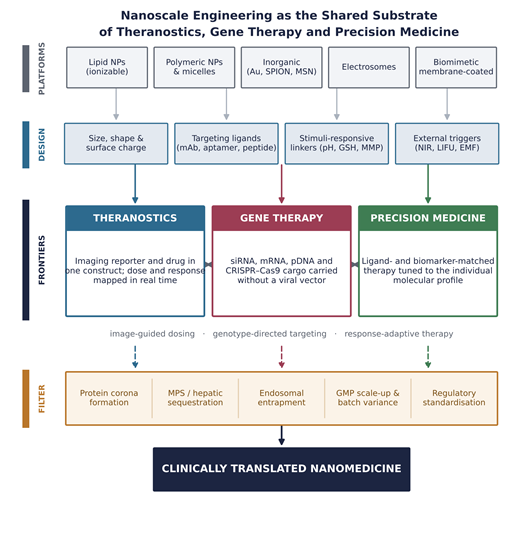
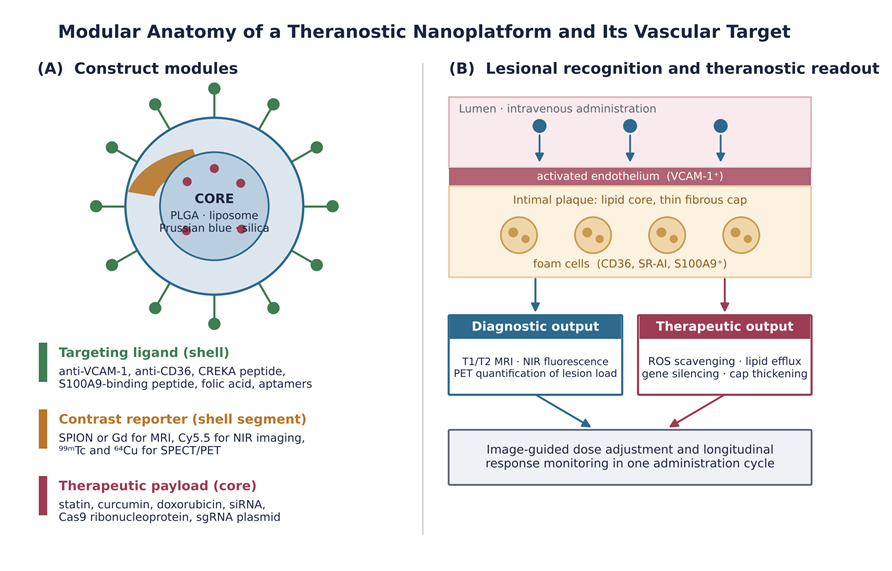
Article metrics
View details
0
Downloads
0
Citations
47
Views

View Dimensions


View Plumx


View Altmetric


0
Save
0
Citation
47
View
0
Share