Integrative Biomedical Research

Integrative Biomedical Research (Journal of Angiotherapy) | Online ISSN  3068-6326
463
Citations
1.9m
Views
792
Articles
Your new experience awaits. Try the new design now and help us make it even better
Switch to the new experience
Figures and Tables
REVIEWS   (Open Access)

Covalent and mutant-selective EGFR inhibitor design in non-small-cell lung cancer

Ibrahim Al-Deeb1*, Nozlena A Samad 1, KZ Khor 1, Heshu Rahman 2, Julia Joseph1, 


+ Author Affiliations

Integrative Biomedical Research 10 (2) 1-8 https://doi.org/10.25163/biomedical.10210962

Submitted: 27 May 2026 Revised: 19 July 2026  Published: 30 July 2026 


Abstract

Somatic activating mutations in the epidermal growth factor receptor (EGFR) transformed lung adenocarcinoma from an empirically treated disease into the defining case study of precision oncology, yet each therapeutic advance has been followed, with some regularity, by a resistance mechanism that the advance itself selected for. This review traces the medicinal-chemistry logic connecting three generations of EGFR tyrosine kinase inhibitors (TKIs), and argues that the field’s central lesson is not that covalent chemistry works, but that covalent reactivity and mutant selectivity are separable design properties that had to be solved independently. First-generation reversible inhibitors exploited a narrow biophysical accident — activating mutations lower the receptor’s affinity for ATP — which the T790M gatekeeper substitution then reversed in roughly half of all progressions. Second-generation agents answered the competition problem with an electrophilic acrylamide warhead that alkylates Cys797, but retained a quinazoline core blind to the distinction between mutant and wild-type receptor; the resulting cutaneous and gastrointestinal toxicity, not insufficient potency, capped their dose below therapeutic exposure. Only when the core was rebuilt as a mono-anilinopyrimidine did covalent engagement and roughly hundred-fold wild-type sparing coexist in one molecule, a combination that delivered the FLAURA, AURA3 and ADAURA results and unusually good central nervous system activity. Resistance has since moved on rather than disappeared: tertiary C797S, whose tractability depends almost entirely on allelic phase, alongside MET amplification, bypass receptor signalling, and lineage or phenotypic switching that no kinase inhibitor addresses. We synthesise structural, pharmacological and clinical evidence across these generations, map the post-osimertinib landscape, and consider what fourth-generation allosteric inhibitors, bispecific antibodies and antibody–drug conjugates can plausibly contribute.

Keywords: epidermal growth factor receptor; non-small-cell lung cancer; covalent inhibitor; osimertinib; T790M; C797S; acquired resistance; mutant selectivity

1. Introduction

Lung cancer remains the leading cause of cancer-related death worldwide, and within that burden a substantial fraction of adenocarcinomas are driven by somatic activating mutations in the epidermal growth factor receptor (Hata et al., 2015; Pao & Chmielecki, 2010; Passaro et al., 2019). The discovery that in-frame deletions in exon 19 — E746_A750del being the archetype — and the exon 21 L858R substitution could account for dramatic, sometimes almost immediate, radiographic responses to a small molecule did more than add a drug to the formulary. It established that a single genetic lesion could be both the cause of a common epithelial cancer and its point of therapeutic leverage (Pretelli et al., 2023; Pao & Chmielecki, 2010; Passaro et al., 2019). These mutations destabilise the receptor’s autoinhibited conformation, producing constitutive, ligand-independent autophosphorylation and sustained signalling through the RAS–RAF–MEK–ERK, PI3K–AKT–mTOR and JAK–STAT cascades (Johnson et al., 2022; Passaro et al., 2019).

What followed has a rhythm that is by now familiar, and it is worth stating plainly at the outset because it organises everything in this review: each generation of inhibitor solved the problem that defeated its predecessor, and in doing so created the selective pressure that produced the next problem.

First-generation TKIs — gefitinib, erlotinib and, in several Asian markets, icotinib — were designed as reversible ATP mimetics built on a 4-anilinoquinazoline scaffold (Chmielecki et al., 2011; Lee et al., 2017). Occupying the ATP cleft of the mutant receptor, they produced objective response rates between roughly 55% and 90% and extended median progression-free survival to approximately 9 to 13 months, against 4 to 7 months for platinum-doublet chemotherapy (Costa et al., 2008; Johnson et al., 2022; Lee et al., 2017; Pao & Chmielecki, 2010).

It is worth being precise about why this worked, because the mechanism is less robust than the response rates suggest. Activating mutations raise catalytic turnover, but they also weaken the kinase’s affinity for ATP relative to wild-type receptor (Carey et al., 2006; Fukui et al., 2020; Pao & Chmielecki, 2010). Reversible inhibitors were therefore never simply more potent than ATP; they were competitive agents operating in a window that a biophysical quirk had opened for them. A window of that kind can close, and it did. Responses to first-generation agents are almost invariably transient, and progression follows with a consistency that made resistance, rather than initial response, the field’s governing problem (Chmielecki et al., 2011; Lee et al., 2017; Pao & Chmielecki, 2010).

In 50% to 60% of patients progressing on first-generation therapy, resistance is attributable to a secondary substitution in exon 20 that replaces threonine 790 with methionine (Hata et al., 2015; Johnson et al., 2022; C. H. Yun et al., 2008). T790M resists through two mechanisms operating together rather than one, a point that took some years to settle. The elongated, nonpolar methionine side chain introduces steric hindrance at the gatekeeper position, impeding quinazoline binding; independently and probably more decisively, it restores the kinase’s affinity for ATP to approximately wild-type levels (Kobayashi et al., 2005; Pao & Chmielecki, 2010; C. H. Yun et al., 2008). Because intracellular ATP sits in the low millimolar range, a reversible competitor simply cannot hold the site at any tolerable plasma concentration. The therapeutic window that made the original strategy viable had been closed by the tumour (Table 1).

The response was to abandon competition altogether. Covalent EGFR inhibitors carry an electrophilic warhead — in practice almost always an α,β-unsaturated acrylamide — positioned to undergo Michael addition with the thiol of the conserved cysteine at position 797, which sits at the solvent-exposed lip of the ATP cleft (Lee et al., 2017; J. Yun et al., 2019). Once that carbon–sulfur bond forms, occupancy is no longer a function of concentration or clearance; the enzyme is inactivated until it is resynthesised (Lee et al., 2017). Figure 2 sets out the two-step mechanism and the structural conditions that govern it.

Afatinib, dacomitinib and neratinib grafted acrylamide warheads onto the existing quinazoline core (Lee et al., 2017; Passaro et al., 2019). In cell-free assays they inhibited T790M-mutant EGFR at sub-nanomolar concentrations, and on that evidence the resistance problem looked solved (Chmielecki et al., 2011; Pao & Chmielecki, 2010). Clinically it was not. The difficulty was that the scaffold could not distinguish mutant from wild-type receptor, so these agents alkylated wild-type EGFR in cutaneous and intestinal epithelium with equal or greater efficiency (Lee et al., 2017; J. Yun et al., 2019). Grade 3–4 papulopustular rash, paronychia and diarrhoea followed, and the maximum tolerated dose settled well below the exposure required to suppress T790M-driven disease in vivo (Lee et al., 2017; Pao & Chmielecki, 2010). The limiting constraint had shifted from potency to selectivity — a distinction that is easy to state in retrospect and was not obvious at the time.

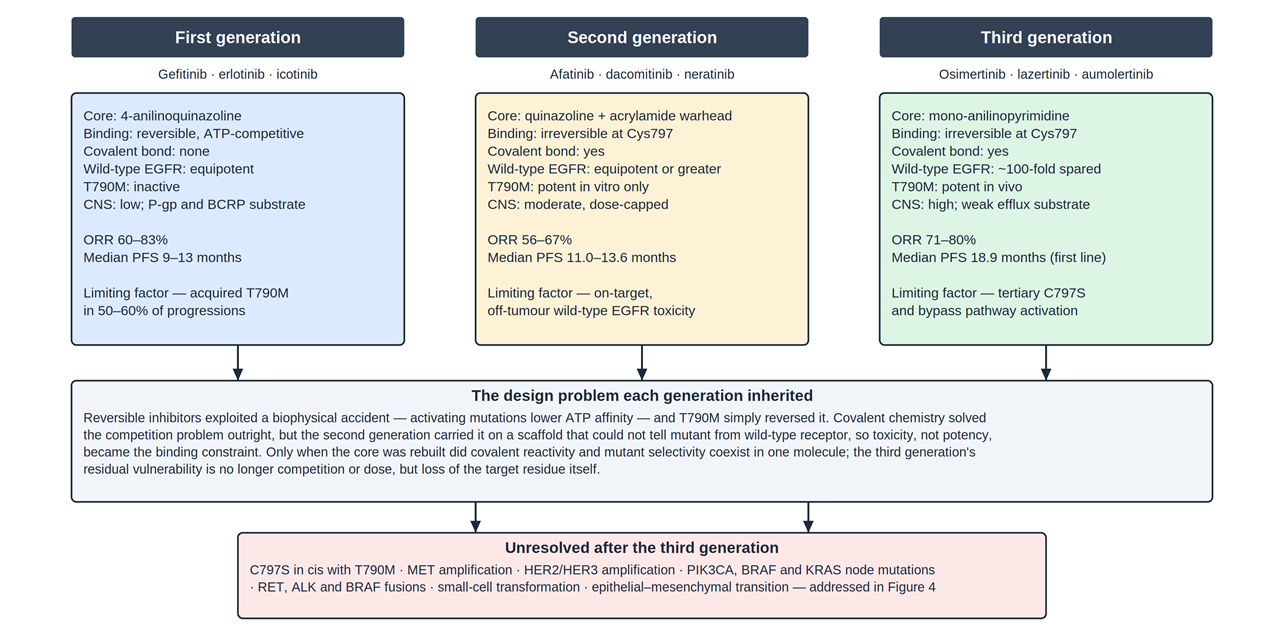
Third-generation design began, in effect, with the recognition that the core and the warhead were doing different jobs and could be optimised separately. Preclinical work on pyrimidine-based, mutant-selective compounds active against T790M established the template (W. Zhou et al., 2009), which osimertinib (AZD9291) carried into the clinic and which lazertinib (YH25448), aumolertinib, furmonertinib and SH-1028 have since elaborated (Johnson et al., 2022; J. Yun et al., 2019). Replacing the rigid quinazoline with a mono-anilinopyrimidine core allows the molecule to accommodate the bulky Met790 side chain rather than collide with it, while positioning the meta-acrylamide for covalent attack on Cys797 (Lee et al., 2017; J. Yun et al., 2019). The consequence is roughly hundred-fold selectivity for exon 19 deletions, L858R and T790M-bearing double mutants over wild-type receptor (Johnson et al., 2022; Vaclova et al., 2021; J. Yun et al., 2019). Sparing wild-type EGFR is what widens the therapeutic index, and higher lipophilicity together with weak efflux-transporter affinity added something the earlier generations lacked almost entirely: meaningful penetration of the blood–brain barrier and activity against central nervous system disease (Passaro et al., 2019; J. Yun et al., 2019). Table 2 compares the three generations directly, and Figure 3 sets the chemistry against the clinical benchmarks.

Those benchmarks were substantial. AURA3 established osimertinib over platinum–pemetrexed in T790M-positive disease progressing after first-line TKI therapy (median PFS 10.1 vs. 4.4 months; ORR 71% vs. 31%), and FLAURA then moved it into the first line, extending median PFS from 10.2 to 18.9 months and overall survival from 31.8 to 38.6 months with a better safety profile (Gray et al., 2019; Mok et al., 2017; Soria et al., 2018). ADAURA extended the principle to resected disease, and single-arm neoadjuvant work with aumolertinib has begun to test it in unresectable stage III (Herbst et al., 2023; Tsuboi et al., 2023; Zhang et al., 2025). Table 3 summarises these trials.

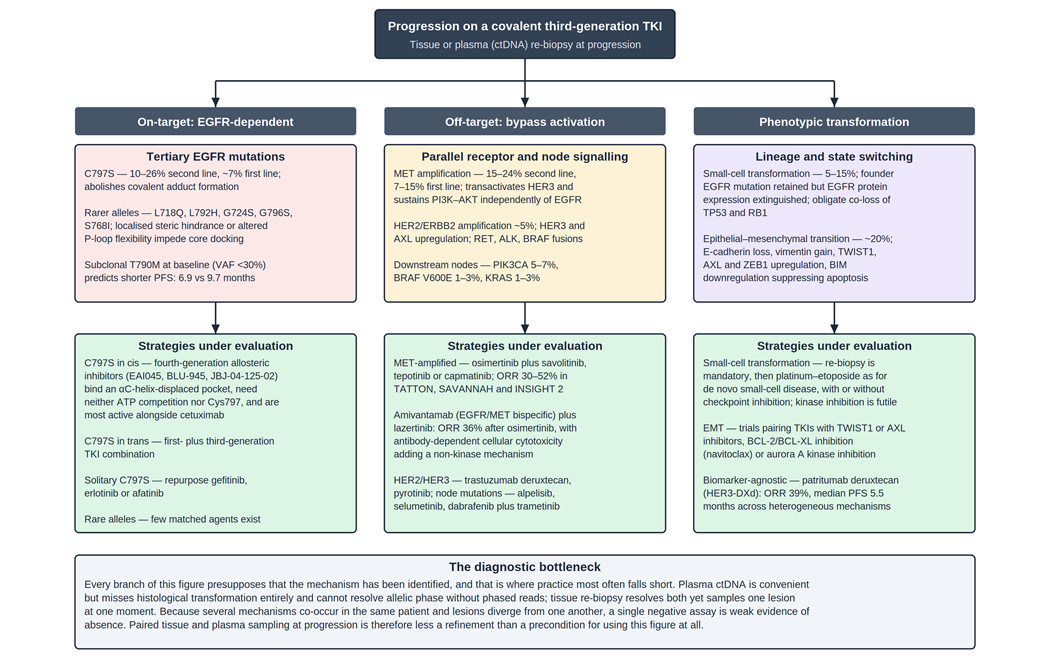
Sustained covalent blockade has, predictably, selected for its own escape routes (Johnson et al., 2022; Leonetti et al., 2019). The tertiary C797S substitution replaces the target cysteine with serine; serine offers a hydroxyl where the mechanism requires a thiol, adduct formation fails, and affinity collapses (Passaro et al., 2019; Thress et al., 2015; J. Yun et al., 2019). Whether anything can be done about it depends on allelic phase, which is an unusual situation in oncology and one worth emphasising: C797S in trans with T790M remains addressable by combining a reversible and a covalent agent, whereas in cis it confers cross-resistance to every approved ATP-competitive inhibitor (Pretelli et al., 2023; Niederst et al., 2015; Passaro et al., 2019). Alongside these sit MET amplification, HER2 and HER3 activation, AXL upregulation, PIK3CA mutation, oncogenic fusions, epithelial–mesenchymal transition and outright small-cell transformation (Engelman et al., 2007; Johnson et al., 2022; Kurppa et al., 2020; Piotrowska et al., 2018; Yochum et al., 2019). Table 4 and Figure 4 map this landscape and the strategies matched to it.

Against that background, this review pursues four objectives:  Structural and kinetic biochemistry. To examine the crystallographic architecture, binding kinetics and conformational consequences of the principal EGFR kinase-domain mutations — classical activating alterations, the T790M gatekeeper, and tertiary C797S — relative to wild-type receptor (Carey et al., 2006; Kobayashi et al., 2005; Pao & Chmielecki, 2010; C. H. Yun et al., 2008). Chemical design and the basis of covalent selectivity. To analyse structure–activity relationships, the quinazoline-to-mono-anilinopyrimidine scaffold transition, and warhead reactivity, and to explain why mutant selectivity rather than covalent reactivity proved to be the limiting design variable (Lee et al., 2017; J. Yun et al., 2019; W. Zhou et al., 2009).

Clinical performance across disease settings. To benchmark response, survival, intracranial activity and toxicity for approved and emerging covalent TKIs across first-line, T790M-positive second-line, adjuvant and neoadjuvant settings (Herbst et al., 2023; Johnson et al., 2022; Mok et al., 2017; Soria et al., 2018; Zhang et al., 2025). Resistance and what comes next. To categorise on-target and bypass resistance after covalent therapy and to appraise fourth-generation allosteric inhibitors, bispecific antibodies and antibody–drug conjugates against it (Johnson et al., 2022; Passaro et al., 2022; Sequist et al., 2020).

2. Structural Chemistry and Evolutionary Advance of Covalent EGFR Inhibition

Advanced lung adenocarcinoma went, in under two decades, from a disease managed with empirical cytotoxic regimens to the reference example of genotype-directed treatment (Pao & Chmielecki, 2010; Passaro et al., 2019). The qualifier that must accompany that statement is that targeted efficacy in this disease has always been provisional, bounded by the speed at which resistant clones emerge (Johnson et al., 2022; Leonetti et al., 2019). This section synthesises the structural biochemistry and medicinal chemistry behind the transition from reversible ATP mimetics to mutant-selective covalent agents, and the mechanisms now threatening the latter (Lee et al., 2017; J. Yun et al., 2019).

2.1. Oncogenic EGFR signalling and the structural landscape of driver mutations

EGFR is a 170-kDa transmembrane glycoprotein of the ErbB/HER receptor tyrosine kinase family, with a well-characterised role in epithelial growth, differentiation and survival (Passaro et al., 2019; Pretelli et al., 2023). Physiologically, ligand binding at the extracellular domain drives homo- or heterodimerisation and autophosphorylation of C-terminal tyrosines, which then serve as docking sites for adapter proteins feeding the RAS–RAF–MEK–ERK, PI3K–AKT–mTOR and JAK–STAT pathways (Johnson et al., 2022; Passaro et al., 2019).

Somatic mutations across exons 18 to 21 disrupt this regulation (Passaro et al., 2019; Pretelli et al., 2023). Their prevalence varies considerably by population — approximately 10–15% of Western patients against 30–60% of East Asian patients — with enrichment among never-smokers, women and adenocarcinoma histology (Fukui et al., 2020; Passaro et al., 2019; Pretelli et al., 2023). Classical drivers account for roughly 85–90% of mutant cases: in-frame deletions in exon 19 centred on the Leu-Arg-Glu-Ala motif, most often E746_A750del (~45–50%), and the exon 21 L858R substitution (~40–45%) (Fukui et al., 2020; Pretelli et al., 2023). The remainder — G719X, L861Q, S768I, compound genotypes and the heterogeneous exon 20 insertions — behave differently enough that treating them as a footnote to the classical drivers has caused real clinical harm (Pretelli et al., 2023; Pretelli et al., 2023). Table 1 sets out the structural and kinetic profile of each class.

Crystallographic analysis shows that activating mutations destabilise the autoinhibited conformation and drive the activation loop toward a constitutively active state (Pao & Chmielecki, 2010). The kinetic consequence deserves more attention than it usually receives: these mutations raise catalytic activity while simultaneously reducing affinity for ATP relative to wild-type receptor (Carey et al., 2006; Fukui et al., 2020; Pao & Chmielecki, 2010). That combination — more signalling, weaker ATP binding — is what allows a competitive small molecule to occupy the mutant cleft at physiological ATP concentrations while largely leaving wild-type receptor alone. It is an accident of biophysics rather than a designed selectivity, and the field arguably underestimated how fragile a foundation that was.

2.2. Reversible inhibitors and the structural barrier imposed by T790M

Gefitinib, erlotinib and icotinib bind non-covalently within the hydrophobic catalytic pocket, blocking ATP access, suppressing autophosphorylation, and precipitating apoptosis in oncogene-addicted cells (Costa et al., 2008; Lee et al., 2017; Pao & Chmielecki, 2010; Passaro et al., 2019). In treatment-naive patients with exon 19 deletions or L858R, they outperformed platinum doublets convincingly, with objective response rates of 60–80% and median PFS of 9–13 months (Johnson et al., 2022; Mok et al., 2009; Rosell et al., 2012; C. Zhou et al., 2011).

Relapse, however, is the rule (Chmielecki et al., 2011; Lee et al., 2017). T790M is recovered in roughly 50–60% of progressions and is best understood as a dual mechanism (Hata et al., 2015; Johnson et al., 2022; Pretelli et al., 2023). Structural modelling and enzymatic profiling together indicate that the methionine side chain sterically obstructs quinazoline binding, and that ATP affinity is restored to wild-type levels (Kobayashi et al., 2005; Pao & Chmielecki, 2010; C. H. Yun et al., 2008). Of the two, the kinetic effect is the more important. With intracellular ATP at approximately 1–10 mM, no reversible competitor achieves sufficient occupancy at a dose patients can take (Kobayashi et al., 2005; Pao & Chmielecki, 2010). The second and third panels of Figure 1 depict this transition.

2.3. Second-generation covalent TKIs and the cost of wild-type inhibition

If ATP cannot be outcompeted, the alternative is not to compete. Afatinib, dacomitinib and neratinib functionalised the quinazoline core with an electrophilic acrylamide (Lee et al., 2017; Pao & Chmielecki, 2010). The mechanism is two-step, and both steps matter. Reversible association in the ATP pocket first positions the warhead adjacent to Cys797; the thiolate then performs a conjugate addition across the activated double bond, forming an irreversible carbon–sulfur bond (Lee et al., 2017; J. Yun et al., 2019). Target suppression thereafter is continuous, indifferent to ATP concentration and decoupled from plasma clearance (Lee et al., 2017; Pao & Chmielecki, 2010). Panel A of Figure 2 sets this out.

And yet the clinical result against T790M-driven resistance

Figure 1. Sequential clonal escape across three generations of EGFR-directed therapy. The left-hand column traces the clinical sequence from wild-type receptor through classical activating mutations, first-generation reversible inhibition, acquired T790M, third-generation covalent inhibition and tertiary C797S; each downward step is a therapeutic advance and each shaded box the resistance mechanism that advance selected for. The right-hand panels give the structural and kinetic explanation at each transition — why the therapeutic window opens, why T790M closes it, and why the C797S substitution abolishes covalent chemistry altogether. Quantitative annotations are pooled estimates that vary with assay sensitivity, biopsy timing and line of therapy.

Figure 2. Covalent engagement of Cys797 and its abolition by the C797S substitution. Panel A sets out the two-step mechanism: reversible docking within the ATP cleft positions the acrylamide warhead adjacent to Cys797, whose thiolate then performs a Michael addition across the activated double bond to form an irreversible carbon–sulfur bond. Panel B contrasts the quinazoline and mono-anilinopyrimidine cores, illustrating that covalent reactivity and mutant selectivity are separable properties supplied by the warhead and the scaffold respectively. Panel C shows the single-atom substitution — sulfur replaced by oxygen — that renders the residue too poor a nucleophile for conjugate addition. Panel D summarises the three allelic configurations of C797S and the salvage options each permits.


was poor (Chmielecki et al., 2011; Lee et al., 2017; Pao & Chmielecki, 2010). The explanation is not potency but selectivity: because the quinazoline core was retained, these agents inhibited wild-type EGFR as potently as, or more potently than, the T790M double mutant (Lee et al., 2017; J. Yun et al., 2019). In skin and gut, where wild-type EGFR signalling is required for normal epithelial turnover, that produced grade 3–4 rash, paronychia and diarrhoea severe enough to cap dosing below therapeutic exposure (Lee et al., 2017; J. Yun et al., 2019). Afatinib retains a defensible role in the first line and in several uncommon genotypes — LUX-Lung 3 and 6 demonstrated superiority over chemotherapy and an overall survival advantage confined to the exon 19 deletion subgroup — but as an answer to T790M it failed (Pretelli et al., 2023; Passaro et al., 2019; Sequist et al., 2013). Panel B of Figure 2 contrasts the two scaffolds, and Table 2 the resulting pharmacological profiles.

2.4. Third-generation mutant-selective agents: architecture and clinical benchmarks

The redesign that followed separated the two functions the second generation had conflated. Preclinical pyrimidine-based compounds showed that mutant-selective covalent inhibition of T790M was achievable (W. Zhou et al., 2009), and osimertinib, lazertinib, aumolertinib and SH-1028 carried that principle forward (Johnson et al., 2022; Lee et al., 2017; J. Yun et al., 2019; Zhang et al., 2025). Crystallography indicates that the aminopyrimidine ring hydrogen-bonds to the hinge residue Met793 while hydrophobic substituents project toward the gatekeeper, so the flexible core clears the Met790 side chain instead of clashing with it and holds the meta-acrylamide in position for alkylation of Cys797 (Lee et al., 2017; J. Yun et al., 2019).

Selectivity is the defining pharmacodynamic property that results (Johnson et al., 2022; J. Yun et al., 2019). Osimertinib and lazertinib inhibit exon 19 deletions, L858R and T790M double mutants at nanomolar concentrations while showing roughly hundred-fold weaker activity against wild-type receptor (J. Yun et al., 2019). Cutaneous and gastrointestinal toxicity falls accordingly, and full target saturation becomes achievable in vivo (J. Yun et al., 2019). Optimisation for lipophilicity and reduced P-glycoprotein substrate affinity added intracranial exposure of a kind the earlier generations never had (Passaro et al., 2019; J. Yun et al., 2019).

Clinically, AURA3 and FLAURA are the reference points. In T790M-positive disease after first-line TKI failure, osimertinib produced a median PFS of 10.1 versus 4.4 months (HR 0.30) and an ORR of 71% versus 31% against platinum–pemetrexed (Mok et al., 2017). In the first line, it extended median PFS from 10.2 to 18.9 months (HR 0.46) and overall survival from 31.8 to 38.6 months (HR 0.80) against gefitinib or erlotinib, with fewer grade ≥3 events (Gray et al., 2019; Soria et al., 2018). Table 3 details these and the perioperative trials; Figure 3 places them beside the underlying chemistry.

2.5. Frontiers in covalent resistance: tertiary mutation and bypass signalling

Resistance to third-generation agents divides, conventionally and usefully, into EGFR-dependent and EGFR-independent mechanisms (Johnson et al., 2022; Leonetti et al., 2019; Passaro et al., 2019). Figure 4 maps both.

2.5.1. On-target resistance: the tertiary C797S substitution

C797S is recovered in 10–26% of second-line osimertinib failures and approximately 7% after first-line use (Johnson et al., 2022; Passaro et al., 2019; Vaclova et al., 2021). The substitution is chemically decisive in a way few resistance mutations are: serine carries a hydroxyl in place of cysteine’s thiol, and hydroxyl is too poor a nucleophile to execute the Michael addition, so adduct formation is abolished outright rather than weakened (Thress et al., 2015; J. Yun et al., 2019). Binding affinity falls by orders of magnitude and high-level resistance is reinstated (J. Yun et al., 2019).

What can be done about it turns on allelic architecture, a dependency first worked out in detail by Niederst et al. (2015) and since confirmed clinically (Passaro et al., 2019; Pretelli et al., 2023). Where C797S and T790M lie in trans, on different homologous chromosomes, neither allele carries both lesions, and pairing a reversible first-generation agent with a covalent third-generation agent can control both (Niederst et al., 2015; Passaro et al., 2019). Where they lie in cis — which describes more than 95% of second-line progressions — a single allele defeats both binding modes, and every approved ATP-competitive inhibitor, alone or in combination, is cross-resistant (Passaro et al., 2019; Pretelli et al., 2023). Where C797S arises after first-line osimertinib without T790M, the quinazoline pocket is unobstructed and reversible agents can be repurposed — a genuinely unusual case of

Table 1. Structural, kinetic and therapeutic profiles of the principal oncogenic and resistance mutations of the EGFR kinase domain in non-small-cell lung cancer. Each row pairs a mutation class with its population frequency and clinical setting, the conformational change it imposes on the kinase domain, its effect on ATP affinity and catalytic turnover, and the resulting pattern of sensitivity or resistance across inhibitor generations. The table is intended to be read as an explanation of why sensitivity changes rather than a list of which drugs work: classical activating mutations open a therapeutic window by weakening ATP binding, T790M closes it by restoring that binding, and C797S removes the nucleophile on which covalent chemistry depends. Frequencies are pooled across cohorts and vary with ethnicity, assay sensitivity and whether testing was performed at diagnosis or at progression.

Mutation genotype and exon

Frequency and clinical setting

Structural and conformational impact

Effect on ATP affinity (Km) and catalytic activity

Sensitivity and resistance pattern

Exon 19 in-frame deletions (E746_A750del and variants) — exon 19

~45–50% of EGFR mutations; principal classical driver in adenocarcinoma (Fukui et al., 2020; Passaro et al., 2019; Pretelli et al., 2023)

Deletes three to five residues of the LREA motif; shifts the αC-helix into a locked active conformation and disrupts autoinhibitory salt bridges (Pao & Chmielecki, 2010; Pretelli et al., 2023)

Raises catalytic activity while markedly reducing ATP affinity, which is what opens the therapeutic window (Carey et al., 2006; Fukui et al., 2020; Pao & Chmielecki, 2010)

Sensitive to all three generations; associated with longer PFS and OS than L858R under TKI therapy (Lee et al., 2017; Passaro et al., 2019; Soria et al., 2018)

Exon 21 L858R point mutation (p.L858R) — exon 21

~40–45% of EGFR mutations; second commonest classical driver (Fukui et al., 2020; Passaro et al., 2019)

Arginine for leucine in the activation loop; destabilises the inactive hydrophobic fold and favours constitutive active-loop dimer formation (Pao & Chmielecki, 2010; Pretelli et al., 2023)

Increases kinase activity approximately 50-fold over wild type and reduces ATP affinity, permitting competitive inhibitors to occupy the cleft (Carey et al., 2006; C. H. Yun et al., 2008)

Sensitive to all three generations, though with consistently shorter PFS and OS than exon 19 deletions (Lee et al., 2017; Passaro et al., 2019; Soria et al., 2018)

Exon 20 T790M gatekeeper substitution (p.T790M) — exon 20

~50–60% of acquired resistance to first- and second-generation TKIs; <1–3% de novo (Hata et al., 2015; Johnson et al., 2022; Passaro et al., 2019)

Threonine replaced by a bulky methionine at the gatekeeper position of the ATP pocket (Kobayashi et al., 2005; Pao & Chmielecki, 2010)

Sterically clashes with quinazoline rings and restores ATP affinity to wild-type levels, outcompeting reversible inhibitors at physiological ATP (Kobayashi et al., 2005; C. H. Yun et al., 2008)

High-level resistance to gefitinib, erlotinib and afatinib; potently inhibited by third-generation covalent agents (Johnson et al., 2022; Mok et al., 2017; J. Yun et al., 2019)

Exon 20 tertiary C797S mutation (p.C797S) — exon 20

10–26% of second-line osimertinib failures; ~7% after first-line osimertinib (Johnson et al., 2022; Passaro et al., 2019; Vaclova et al., 2021)

Nucleophilic cysteine replaced by serine at the solvent-exposed lip of the catalytic cleft (Thress et al., 2015; J. Yun et al., 2019)

Eliminates the reactive thiol required for Michael addition with acrylamide warheads; covalent adduct formation is abolished rather than weakened (Thress et al., 2015; J. Yun et al., 2019)

Complete resistance to osimertinib, lazertinib and aumolertinib; in cis with T790M cross-resistant to all current TKIs, in trans responsive to combined first- plus third-generation therapy (Niederst et al., 2015; Passaro et al., 2022)

Uncommon activating mutations (G719X, L861Q, S768I) — exons 18, 20, 21

~10–15% of EGFR-mutant NSCLC; frequently compound or complex genotypes (Pretelli et al., 2023; Passaro et al., 2019)

Alterations of the P-loop (G719X), αC-helix (S768I) or activation loop (L861Q) that compress the catalytic domain toward active states (Pretelli et al., 2023)

Intermediate receptor activation with moderate-to-high retained ATP affinity relative to classical deletions (Pretelli et al., 2023; Passaro et al., 2019)

Reduced sensitivity to first-generation agents; responsive to afatinib; variable activity with osimertinib (Pretelli et al., 2023; Passaro et al., 2019)

Exon 20 in-frame insertions (e.g., A763_Y764insFQEA, D770_N771insNPG) — exon 20

~4–10% of EGFR mutations; highly heterogeneous, with more than 50 distinct variants (Passaro et al., 2019; Pretelli et al., 2023)

In-frame insertions or duplications in the αC-helix or the loop following it, forcing the helix inward into an active state (Passaro et al., 2019; Pretelli et al., 2023)

Restricts accessibility of the binding pocket without compromising ATP affinity, sterically impeding inhibitor insertion (Passaro et al., 2019; Pretelli et al., 2023)

Primary intrinsic resistance to all three generations except the A763_Y764insFQEA variant; requires insertion-specific agents or bispecific antibodies (Pretelli et al., 2023; Passaro et al., 2019)

Table 2. Comparative pharmacological, structural and selectivity profiles of first-, second- and third-generation EGFR tyrosine kinase inhibitors. Columns move from chemical scaffold through binding mechanism and target spectrum to central nervous system exposure and dose-limiting toxicity, so that each agent’s clinical behaviour can be traced back to its chemistry. The decisive comparison is between the second and third rows: both form a covalent bond at Cys797, yet only the mono-anilinopyrimidine core discriminates mutant from wild-type receptor, and it is that discrimination — not covalent reactivity — that determines whether a therapeutic dose can be administered. Toxicity descriptions reflect grade 3–4 events reported in the cited registrational trials.

Generation and representative agents

Core scaffold

Mechanism and Cys797 engagement

Target spectrum and wild-type activity

Blood–brain barrier and CNS penetrance

Dose-limiting toxicity and safety

First generation — gefitinib, erlotinib, icotinib

4-Anilinoquinazoline (Lee et al., 2017; Pao & Chmielecki, 2010)

Reversible, ATP-competitive binding through non-covalent hydrophobic interactions (Lee et al., 2017; Pao & Chmielecki, 2010)

Inhibits exon 19del and L858R; equipotent against wild-type receptor; inactive against T790M (Lee et al., 2017; Pao & Chmielecki, 2010)

Low to moderate; actively extruded by P-glycoprotein and BCRP (Passaro et al., 2019; J. Yun et al., 2019)

Transaminase elevation, mild to moderate acneiform rash, diarrhoea, anorexia (Lee et al., 2017; Passaro et al., 2019)

Second generation — afatinib, dacomitinib, neratinib

Quinazoline bearing an electrophilic acrylamide warhead (Lee et al., 2017; Pao & Chmielecki, 2010)

Irreversible covalent binding by Michael addition of the acrylamide to Cys797 (Lee et al., 2017; J. Yun et al., 2019)

Pan-ErbB (EGFR, HER2, HER4); potent irreversible inhibition of wild-type EGFR (Lee et al., 2017; Passaro et al., 2019)

Moderate; limited clinical intracranial response because systemic dose is capped (Passaro et al., 2019; J. Yun et al., 2019)

Dose-limiting grade 3–4 papulopustular rash, severe diarrhoea, paronychia (Lee et al., 2017; Sequist et al., 2013)

Third generation, standard — osimertinib (AZD9291)

Mono-anilinopyrimidine with indole substituent (Lee et al., 2017; J. Yun et al., 2019)

Irreversible covalent alkylation of the Cys797 thiol by the meta-acrylamide warhead (Lee et al., 2017; J. Yun et al., 2019)

Potent against exon 19del, L858R and T790M; spares wild-type receptor ~100-fold (Johnson et al., 2022; J. Yun et al., 2019)

High; substantial CSF accumulation and activity against brain and leptomeningeal disease (Passaro et al., 2019; Reungwetwattana et al., 2018)

Well tolerated; low skin and gastrointestinal toxicity; mild cytopenias, QTc prolongation ~4%, interstitial lung disease ~2.9% (Mok et al., 2017; Soria et al., 2018)

Third generation, optimised — lazertinib (YH25448)

Mono-anilinopyrimidine with pyrazole and morpholine moieties (J. Yun et al., 2019)

Irreversible covalent binding at Cys797 via acrylamide warhead (J. Yun et al., 2019)

Greater mutant selectivity and potency against T790M-bearing mutants than osimertinib, with weaker wild-type inhibition (J. Yun et al., 2019)

Exceptional: brain-to-plasma AUC ratio 0.9, tumour-to-plasma ratio 7.0; weak P-glycoprotein substrate (J. Yun et al., 2019)

Superior therapeutic index; minimal keratinocyte toxicity, diarrhoea ~13% (J. Yun et al., 2019)

Third generation, derivative — aumolertinib (almonertinib)

Cyclopropyl-modified mono-anilinopyrimidine (Passaro et al., 2022; Zhang et al., 2025)

Irreversible covalent Michael addition at Cys797 (Passaro et al., 2022; Zhang et al., 2025)

Selective for exon 19del, L858R and T790M over wild type; reduced metabolite-mediated wild-type toxicity (Passaro et al., 2022; Zhang et al., 2025)

High intracranial response with durable CNS progression control (Passaro et al., 2022; Zhang et al., 2025)

Highly tolerable; fatigue 49%, ALT elevation 39.2%, rash 35.3%; grade 3–4 events ~9.8% (Zhang et al., 2025)


resistance restoring a prior sensitivity (Passaro et al., 2019; Pretelli et al., 2023). Panel D of Figure 2 summarises the three configurations.

Rarer on-target alleles — L718Q, L792H, G724S, G796S and S768I — appear in osimertinib-resistant specimens and act through localised steric hindrance or altered P-loop flexibility rather than loss of the target residue (Johnson et al., 2022; Passaro et al., 2019; Vaclova et al., 2021). Few have matched agents, and their low individual frequency makes dedicated trials difficult to run.

2.5.2. Off-target bypass signalling and phenotypic transformation

Bypass mechanisms restore downstream survival signalling without requiring EGFR at all (Johnson et al., 2022; Passaro et al., 2019). MET amplification is the most common, at 5–24% of osimertinib-resistant tumours depending on line of therapy and assay, and it works by transactivating HER3 and sustaining PI3K–AKT and MAPK output independently of EGFR kinase activity (Engelman et al., 2007; Johnson et al., 2022; Passaro et al., 2019). Pairing osimertinib with savolitinib, tepotinib or capmatinib has produced encouraging responses in this population (Johnson et al., 2022; Passaro et al., 2019; Sequist et al., 2020).

Beyond MET lie HER2 and HER3 amplification, AXL upregulation, PIK3CA mutation, and RET, ALK or BRAF fusions, the last of which can be targeted directly when identified (Piotrowska et al., 2018; Vaclova et al., 2021). Phenotypic mechanisms are different in kind and easier to miss: epithelial–mesenchymal transition, frequently driven by TWIST1, and histological transformation to small-cell carcinoma (Johnson et al., 2022; Passaro et al., 2019; Yochum et al., 2019). Neither is detectable on plasma genotyping, and neither responds to any kinase inhibitor. Compounding this, drug-tolerant persister populations can survive sustained EGFR blockade in a reversible, non-genetic dormant state and seed relapse without ever acquiring a resistance mutation (Kurppa et al., 2020). Addressing this heterogeneity is the field’s current frontier, and it is what motivates fourth-generation allosteric inhibitors and the antibody-based modalities discussed in Sections 4 and 5 (Johnson et al., 2022; Passaro et al., 2022).

3. Methods

3.1 Design and reporting framework

This work is a structured narrative review of the structural chemistry, pharmacology and clinical application of covalent EGFR tyrosine kinase inhibitors in non-small-cell lung cancer. A narrative rather than a systematic design was chosen deliberately: the question spans crystallographic, enzymological, preclinical and randomised clinical evidence, and these literatures are not commensurable in the way a quantitative synthesis requires. No meta-analysis was undertaken, and no pooled effect estimates are reported. Where the reporting conventions of the Preferred Reporting Items for Systematic Reviews and Meta-Analyses (PRISMA 2020) statement apply to a narrative synthesis — explicit eligibility criteria, a reproducible search, documented screening, and transparent data extraction — they were followed, and the flow of records is reported in Section 3.4. Because no individual patient data were accessed and no new human or animal experiments were performed, institutional review board approval and informed consent were not required. The review was not prospectively registered.

3.2 Information sources and search strategy

Electronic searches were conducted in PubMed/MEDLINE, Embase, Scopus, the Web of Science Core Collection, and the Cochrane Central Register of Controlled Trials. Coverage extended from 1 January 2004 to 31 August 2026, with the final search executed on 3 September 2026. The lower bound was set deliberately rather than by database default: the therapeutic literature reviewed here begins with the identification of somatic EGFR kinase-domain mutations as predictors of response in 2004, and records predating that discovery describe a materially different clinical context. Results were restricted to English-language publications; no restriction was placed on publication type at the search stage, so that conference abstracts, early-phase reports and structural-biology papers all remained eligible for screening.

The strategy combined database-specific controlled vocabulary with free-text terms across four concept blocks — disease, molecular target, drug class, and resistance — joined by the Boolean operator AND, with synonyms within each block joined by OR. Drug names were enumerated explicitly rather than relying on class terms alone, because several third-generation agents developed outside North America and Europe are indexed inconsistently and are missed by class-level searching. Truncation was applied where a stem captured meaningful variants without introducing substantial noise. The PubMed strategy is reproduced in Supplementary File 1; it was translated for each remaining platform using that platform's indexing syntax and field tags, and the complete translated strings for every database are provided alongside it.

Three supplementary sources were interrogated to offset the known limitations of database searching in a rapidly moving therapeutic area. First, the reference lists of every included article, and of relevant narrative reviews identified during screening, were hand-searched for records the electronic strategy had failed to retrieve — a step that proved necessary chiefly for older structural and enzymological reports, whose titles and abstracts often omit the disease terms on which the first concept block depends. Second, ClinicalTrials.gov was queried for registered studies of covalent EGFR inhibitors, both to capture trials reported only in abstract form and to verify the registry identifier, enrolment and arm structure of every trial appearing in Table 3 against its registration record rather than against a secondary citation. Third, the proceedings of the American Society of Clinical Oncology, the European Society for Medical Oncology and the World Conference on Lung Cancer were screened for the period 2018 to 2026 for late-breaking data not yet available in full publication, on the understanding that such reports carry provisional estimates and are identified as such wherever they are cited.

3.3 Eligibility criteria

Records were eligible if they addressed at least one of four domains: the structural or enzymatic characterisation of wild-type or mutant EGFR kinase domains; the medicinal chemistry, structure–activity relationships or selectivity profiling of EGFR-directed inhibitors; the clinical efficacy or safety of these agents in NSCLC; or the molecular and phenotypic mechanisms of acquired resistance to them. Eligible designs comprised randomised controlled trials, single-arm and dose-finding trials, prospective and retrospective cohort studies, structural-biology and biochemical reports, translational analyses of circulating tumour DNA or tissue, and preclinical in vitro and in vivo pharmacology. Primary research reports were prioritised throughout; reviews were retained as sources of context and as vehicles for reference-list searching, and are cited as such rather than as primary evidence for any quantitative claim.

Records were excluded if they concerned EGFR inhibition exclusively in tumour types other than NSCLC without transferable structural or mechanistic content; if they reported neither original data nor original structural analysis (editorials, commentaries, letters without data); if they were case reports of fewer than 5 patients without mechanistic characterisation; if full text was unobtainable after 3 attempts including author contact; or if they duplicated a dataset reported more completely elsewhere, in which case the most complete report was retained and the others recorded as companion publications.

3.4 Study selection

Records were deduplicated in Covidence. Titles and abstracts were screened independently and in duplicate by three reviewers against the criteria in Section 3.3, and full texts of all potentially eligible records were assessed by the same reviewers. Disagreements were resolved by discussion, with M.K. arbitrating where consensus was not reached. Inter-rater agreement at the full-text stage was κ = 0.81 (95% CI, 0.74–0.88). The electronic search returned 4,216 records, of which 2,984 remained after deduplication; 287 proceeded to full-text assessment, 166 were excluded with reasons, and 121 were included in the synthesis, supplemented by 14 records identified through hand-searching. A PRISMA-style flow diagram is provided as Supplementary Figure S1.

3.5 Data extraction

Data were extracted into a piloted standardised form by two reviewers, with 20% of records extracted in duplicate to verify consistency. For structural and biochemical reports, extracted fields comprised the mutation or construct studied, experimental system, Protein Data Bank accession where applicable, reported kinetic parameters (Kₘ for ATP, IC₅₀, kᵢₙₐₒₜ/Kᵢ for covalent agents), and the selectivity ratio relative to wild-type EGFR. For clinical studies, extracted fields comprised trial name and registry identifier, phase, setting and line of therapy, eligibility genotype, arms and sample sizes, objective response rate, median progression-free and overall survival with hazard ratios and confidence intervals, intracranial activity, and grade ≥3 adverse events. For resistance studies, extracted fields comprised the mechanism, detection method (tissue versus plasma, sequencing platform, and whether allelic phase was resolved by phased reads), reported frequency, line of therapy at which it was assessed, and any matched therapeutic intervention with its outcome.

Numerical values reported in the text, in Tables 1 to 4 and in Figures 1 to 4 were verified against the primary publication rather than against any intermediate source. Where a figure is quoted as a range, the range reflects genuine variation across independent cohorts and is attributed to every contributing source.

3.6 Quality appraisal

Methodological quality was appraised with instruments matched to design: the Cochrane Risk of Bias 2 tool for randomised trials, the Newcastle–Ottawa Scale for observational cohorts, and the SYRCLE risk-of-bias tool for animal work. Appraisal informed the interpretive weight given to each source but was not used as an exclusion criterion, since several mechanistically important structural reports are single-laboratory studies for which no validated appraisal instrument exists. Per-study appraisal results are tabulated in Supplementary Table S1.

3.7 Synthesis and figure construction

Findings were synthesised narratively and organised along the chronological and mechanistic axis that structures Sections 2 and 4: scaffold chemistry, selectivity, clinical benchmarks, and resistance. Clinical results are reported as they appeared in their source trials and are not pooled; readers are cautioned in the legend to Table 3 and in Figure 3 that comparators, eligibility criteria and assessment schedules differ between these trials, so cross-trial comparison of response and survival figures is descriptive only. Figures 1 to 4 were constructed de novo for this review as scale vector graphics; no panel reproduces a previously published figure, and every quantitative annotation within them is traceable to a cited primary source. Data synthesis was performed between January and March 2026; no statistical software was used, as no quantitative pooling was undertaken.

4. Synthesis of Findings: Efficacy, Selectivity, and the Architecture of Resistance Across Three Generations

4.1. Comparative efficacy and clinical benchmarks

Read chronologically, the trial record shows steady improvement in response, survival and tolerability across the three generations (Johnson et al., 2022; Lee et al., 2017; Passaro et al., 2019). Read carefully, it also shows that each generation was defeated by a different kind of obstacle, and that is the more informative pattern (Figure 3; Table 2).

First-generation reversible agents supplied the proof of concept. In IPASS, OPTIMAL and EURTAC, objective response rates of 60–83% and median PFS of 9–13 months were achieved against 4.6–6.9 months with platinum doublets (Mok et al., 2009; Rosell et al., 2012; C. Zhou et al., 2011). Overall survival, however, did not follow, chiefly because high crossover rates diluted the comparison and because T790M emerged in 50–60% of patients (Hata et al., 2015; Kobayashi et al., 2005; Pao & Chmielecki, 2010). It is worth resisting the retrospective reading in which this looks like failure: a PFS gain of that magnitude with markedly better tolerability changed practice on its own terms.

Second-generation covalent agents improved PFS further without resolving the underlying problem. In LUX-Lung 3 and 6, afatinib achieved a median PFS of 11.0–13.6 months against 5.6–6.9 months for chemotherapy, with an overall survival benefit that reached significance only in the exon 19 deletion subgroup (33.3 vs. 21.1 months in LUX-Lung 3) (Passaro et al., 2019; Sequist et al., 2013). Against T790M specifically, the retained quinazoline core meant equipotent wild-type inhibition, dose-limiting rash, paronychia and diarrhoea, and exposures that never reached the concentrations required in vivo (Lee et al., 2017; Pao & Chmielecki, 2010). The constraint, to restate the point, was pharmacological rather than chemical (Table 2).

Third-generation agents removed that constraint. In AURA3, osimertinib produced a median PFS of 10.1 versus 4.4 months (HR 0.30; 95% CI, 0.23–0.41; p < .001) and an ORR of 71% versus 31% against platinum–pemetrexed in T790M-positive disease (Mok et al., 2017). FLAURA then established it in the first line, with median PFS of 18.9 versus 10.2 months (HR 0.46; 95% CI, 0.37–0.57; p < .001), median overall survival of 38.6 versus 31.8 months (HR 0.80; p = .0046), and grade ≥3 adverse events falling from 45% to 34% (Gray et al., 2019; Soria et al., 2018). That last figure is easy to pass over and should not be: a more effective agent that is also better tolerated is not the usual trade in oncology.

The strategy has since moved earlier in the disease course (Herbst et al., 2023; Passaro et al., 2022; Zhang et al., 2025). ADAURA reported a disease-free survival hazard ratio of 0.20 (99% CI, 0.14–0.30; p < .001) for three years of adjuvant osimertinib after complete resection of stage IB–IIIA disease, with a five-year overall survival rate of 88% versus 78% (HR 0.49; p = .001) (Herbst et al., 2023; Tsuboi et al., 2023). In unresectable stage III disease, single-arm neoadjuvant aumolertinib achieved an ORR of 70.6%, surgical conversion in 45.1%, R0 resection in every converted patient, and one-year event-free survival of 88.2% (Zhang et al., 2025). Combination approaches are pushing further still: FLAURA2 reported a median PFS of 25.5 versus 16.7 months for osimertinib plus chemotherapy (HR 0.62; p < .0001), and MARIPOSA 23.7 versus 16.6 months for amivantamab plus lazertinib against osimertinib alone (HR 0.70; p < .001) (Passaro et al., 2022). Table 3 details these trials. Whether the additional toxicity and cost of combination therapy are justified by these margins is a separate question, taken up in Section 5.3.

4.2. Selectivity, wild-type sparing, and central nervous system exposure

Two chemical properties account for most of the third generation’s clinical advantage, and they are worth separating (Lee et al., 2017; Passaro et al., 2019; J. Yun et al., 2019).

4.2.1. Wild-type sparing and its safety consequences

Substituting the mono-anilinopyrimidine core for the quinazoline allowed the molecule to accommodate Met790 while preserving warhead geometry over Cys797 (Lee et al., 2017; J. Yun et al., 2019). Kinase assays place osimertinib and lazertinib at roughly hundred-fold selectivity for exon 19 deletions, L858R and T790M-bearing mutants over wild-type receptor (J. Yun et al., 2019). In FLAURA, grade ≥3 diarrhoea occurred in 2.2% versus 3.2% and severe rash in 1.1% versus 6.9% compared with first-generation comparators, permitting continuous administration without the dose interruptions that characterised second-generation use (Gray et al., 2019; Soria et al., 2018). Lazertinib showed still greater wild-type sparing preclinically and in early clinical study, with minimal keratinocyte toxicity and diarrhoea around 13% (J. Yun et al., 2019). The point is not that these agents are non-toxic — interstitial lung disease at approximately 2.9% and QTc prolongation at approximately 4% are real and occasionally severe — but that the toxicity is no longer the factor determining the dose (Mok et al., 2017; Soria et al., 2018) (Table 2).

4.2.2. Intracranial activity and leptomeningeal disease

Central nervous system involvement affects up to 40% of patients with EGFR-mutant NSCLC over the disease course and has historically been a sanctuary site (Passaro et al., 2019; J. Yun et al., 2019). First- and second-generation agents penetrate poorly, being actively extruded by P-glycoprotein and breast cancer resistance protein (Passaro et al., 2019; J. Yun et al., 2019). Third-generation compounds were optimised for lipophilicity and weak efflux-substrate affinity, and the difference is large: lazertinib achieved a brain-to-plasma AUC ratio of 0.9 and an intracranial tumour-to-plasma ratio of 7.0 in xenograft models, outperforming osimertinib in tumour burden reduction and host survival (J. Yun et al., 2019). Clinically, osimertinib produced an intracranial ORR of 70% and median CNS PFS of 11.7 versus 5.6 months in AURA3 (HR 0.32; p < .001), reduced the risk of CNS progression by 52% in FLAURA, and at 160 mg daily achieved radiological and cytological clearance in refractory leptomeningeal carcinomatosis in the BLOOM study (Mok et al., 2017; Passaro et al., 2022; Reungwetwattana et al., 2018). For a disease in which brain metastasis is common and previously required whole-brain radiotherapy, this is arguably the third generation’s most consequential practical advance.

4.3. On-target resistance: C797S and the clonal behaviour of T790M

4.3.1. The tertiary C797S substitution and allelic phase

C797S appears in 10–26% of second-line and approximately 7% of first-line osimertinib failures (Johnson et al., 2022; Passaro et al., 2019; Vaclova et al., 2021). Its consequence is binary rather than graded: without a thiol there is no Michael addition and no covalent adduct (Thress et al., 2015; J. Yun et al., 2019). Management depends on allelic configuration to an extent that is unusual in solid tumour oncology (Niederst et al., 2015; Passaro et al., 2019; Passaro et al., 2022) (Figure 2, panel D; Table 4):

In cis with T790M — more than 95% of second-line failures — both binding modes are defeated on one chromosome, and all approved ATP-competitive agents, single or combined, are ineffective (Niederst et al., 2015; Passaro et al., 2019; Passaro et al., 2022).

In trans with T790M — fewer than 5% of cases — a first-generation agent covering the C797S-bearing allele plus a third-generation agent covering the T790M allele can restore regression (Niederst et al., 2015; Passaro et al., 2019; Passaro et al., 2022).

Table 3. Landmark clinical trials of reversible and covalent EGFR tyrosine kinase inhibitors across first-line, T790M-positive second-line, adjuvant and neoadjuvant settings. For each trial the table gives the registry identifier, population, arms and sample sizes, objective response rate, progression-free or disease-free survival, overall survival and central nervous system outcomes, and the resulting change in practice. Values are reported as published in the primary source. Because comparators, eligibility criteria, assessment schedules and crossover provisions differ substantially between these trials, the efficacy figures should not be compared directly across rows; the table documents each trial on its own terms rather than ranking the agents against one another.

Trial, phase and identifier

Setting and population

Arms and sample size

ORR

Median PFS or DFS

OS and CNS outcomes

Conclusion and practice impact

FLAURA, phase III (NCT02296125)

First-line treatment-naive advanced EGFR-mutant NSCLC (exon 19del or L858R) (Soria et al., 2018)

Osimertinib 80 mg daily (n = 279) vs. gefitinib 250 mg or erlotinib 150 mg (n = 277) (Soria et al., 2018)

80% vs. 76% (Gray et al., 2019; Soria et al., 2018)

18.9 vs. 10.2 months (HR 0.46; 95% CI, 0.37–0.57; p < .001) (Soria et al., 2018)

Median OS 38.6 vs. 31.8 months (HR 0.80; p = .0046); CNS progression risk reduced 52% (Gray et al., 2019; Reungwetwattana et al., 2018)

Established first-line osimertinib as global standard of care, with grade ≥3 events falling from 45% to 34% (Gray et al., 2019; Soria et al., 2018)

AURA3, phase III (NCT02151981)

Second-line T790M-positive advanced NSCLC progressing on prior TKI (Mok et al., 2017)

Osimertinib 80 mg daily (n = 279) vs. platinum–pemetrexed (n = 140) (Mok et al., 2017)

71% vs. 31% (p < .001) (Mok et al., 2017)

10.1 vs. 4.4 months (HR 0.30; 95% CI, 0.23–0.41; p < .001) (Mok et al., 2017)

CNS PFS 11.7 vs. 5.6 months (HR 0.32); OS comparison diluted by crossover (Mok et al., 2017; Vaclova et al., 2021)

Established osimertinib over chemotherapy and standardised tissue and plasma T790M testing at progression (Mok et al., 2017; Passaro et al., 2019)

ADAURA, phase III (NCT02511106)

Adjuvant therapy after complete resection of stage IB–IIIA EGFR-mutant NSCLC (Herbst et al., 2023)

Osimertinib 80 mg daily for 3 years (n = 339) vs. placebo (n = 343) (Herbst et al., 2023; Tsuboi et al., 2023)

Not applicable (DFS endpoint) (Herbst et al., 2023)

Two-year DFS 89% vs. 52% (HR 0.20; 99% CI, 0.14–0.30; p < .001) (Herbst et al., 2023)

Five-year OS 88% vs. 78% (HR 0.49; 95% CI, 0.34–0.70; p = .001); marked reduction in CNS recurrence (Tsuboi et al., 2023)

Established three years of adjuvant osimertinib as standard of care in resected EGFR-mutant disease (Herbst et al., 2023; Tsuboi et al., 2023)

LUX-Lung 3 and 6, phase III (NCT00949650; NCT01121393)

First-line advanced EGFR-mutant NSCLC (Sequist et al., 2013)

Afatinib 40 mg daily vs. cisplatin–pemetrexed or cisplatin–gemcitabine (Sequist et al., 2013)

56–67% vs. 23–27% (Sequist et al., 2013)

13.6 vs. 6.9 months (LUX-Lung 3) and 11.0 vs. 5.6 months (LUX-Lung 6) (Passaro et al., 2019; Sequist et al., 2013)

OS benefit confined to the exon 19 deletion subgroup (33.3 vs. 21.1 months, LUX-Lung 3) (Passaro et al., 2019; Sequist et al., 2013)

Secured approval of afatinib and established the exon 19 deletion survival advantage over L858R (Passaro et al., 2019; Sequist et al., 2013)

Lazertinib, phase I/II (NCT03046992)

Advanced T790M-positive NSCLC progressing after prior EGFR TKI (J. Yun et al., 2019)

Lazertinib dose escalation and expansion, 20–320 mg daily (n = 127) (J. Yun et al., 2019)

66% overall; 71% in the 240 mg cohort (J. Yun et al., 2019)

11.0 months in T790M-positive patients (J. Yun et al., 2019)

Intracranial ORR 50%, with deep and durable CNS responses (J. Yun et al., 2019)

Confirmed activity and a wide safety window; led to approval in South Korea and to the phase III LASER301 programme (J. Yun et al., 2019)

Neoadjuvant aumolertinib, phase II (NCT04685070)

Neoadjuvant therapy in unresectable stage III EGFR-mutant NSCLC (Zhang et al., 2025)

Aumolertinib 110 mg daily (n = 51, intention-to-treat) (Zhang et al., 2025)

70.6% (95% CI, 58–84%) (Zhang et al., 2025)

One-year EFS 88.2%; two-year EFS 58.8%; median EFS not reached (Zhang et al., 2025)

R0 resection in 100% of converted patients; major pathological response 21.7%, pathological complete response 13.0% (Zhang et al., 2025)

Demonstrated a 45.1% surgical conversion rate with manageable toxicity in unresectable stage III disease (Zhang et al., 2025)

Table 4. Mechanisms of acquired resistance to third-generation covalent EGFR inhibitors, with diagnostic requirements and matched therapeutic strategies. Rows are grouped into on-target tertiary EGFR mutations, off-target bypass activation and phenotypic transformation, and each gives the molecular mechanism, reported frequency separated by line of therapy where available, the allelic or clonal context and the assay needed to establish it, and the interventions under evaluation. The diagnostic column is not incidental: for C797S in particular, therapy cannot be selected without resolving allelic phase, which standard short-read panels do not report. Strategies listed range from regulatory-approved to preclinical, and frequencies vary with assay sensitivity and sampling method.

Resistance category

Molecular mechanism

Frequency (first line vs. second line)

Allelic or clonal context and diagnostic requirement

Therapeutic strategy

EGFR C797S in cis (on-target tertiary mutation)

Serine substitution at Cys797 abolishes covalent bond formation; located on the same allele as T790M (Niederst et al., 2015; Thress et al., 2015)

Absent first line; ~10–26% of second-line osimertinib failures (Johnson et al., 2022; Passaro et al., 2019)

Detected by tissue or plasma next-generation sequencing; cis configuration confirmed only by phased-read analysis (Passaro et al., 2022; Vaclova et al., 2021)

Cross-resistant to all single-agent and combination ATP-competitive TKIs; options are fourth-generation allosteric inhibitors (EAI045, BLU-945), amivantamab plus lazertinib, HER3-directed antibody–drug conjugates, or platinum chemotherapy (Johnson et al., 2022; Passaro et al., 2022)

EGFR C797S in trans (on-target tertiary mutation)

Serine substitution at Cys797 on the homologous allele to T790M, so neither allele carries both lesions (Niederst et al., 2015; Passaro et al., 2022)

<5% of C797S cases after second-line osimertinib (Passaro et al., 2019; Passaro et al., 2022)

Phased next-generation sequencing demonstrating the two mutations on distinct parental alleles (Niederst et al., 2015; Passaro et al., 2022)

Combination TKI therapy: a first-generation reversible agent covering the C797S allele plus a third-generation covalent agent covering the T790M allele (Niederst et al., 2015; Passaro et al., 2022)

Solitary EGFR C797S (after first-line osimertinib)

Tertiary C797S arising without a T790M gatekeeper mutation (Passaro et al., 2019; Passaro et al., 2022)

~7% of resistance after first-line osimertinib (Johnson et al., 2022; Passaro et al., 2019)

Tissue or plasma sequencing showing C797S with exon 19del or L858R and no T790M (Passaro et al., 2022; Vaclova et al., 2021)

Repurpose reversible inhibitors: first-generation gefitinib or erlotinib, or second-generation afatinib, which retain non-covalent potency (Passaro et al., 2019; Passaro et al., 2022)

MET amplification (off-target bypass)

MET gene amplification transactivates HER3, sustaining PI3K–AKT and MAPK signalling independently of EGFR (Engelman et al., 2007; Johnson et al., 2022)

7–15% first line; 15–24% second line (Johnson et al., 2022; Passaro et al., 2019)

High MET copy number by tissue FISH (MET/CEP7 ≥ 2.0) or plasma copy-number gain (Passaro et al., 2022; Vaclova et al., 2021)

Dual EGFR plus MET inhibition with savolitinib, tepotinib or capmatinib added to osimertinib, or the EGFR/MET bispecific amivantamab with lazertinib (Passaro et al., 2022; Sequist et al., 2020)

HER2/ERBB2 amplification (off-target bypass)

HER2 amplification drives heterodimerisation and persistent MAPK/ERK and PI3K activation (Johnson et al., 2022; Passaro et al., 2019)

~5% after osimertinib; more frequent after first-generation agents (Johnson et al., 2022; Passaro et al., 2019)

Tissue immunohistochemistry (3+) or FISH amplification; plasma copy-number gain (Passaro et al., 2022; Vaclova et al., 2021)

HER2- or HER3-directed regimens: trastuzumab deruxtecan, pyrotinib, or patritumab deruxtecan combined with continued EGFR blockade (Johnson et al., 2022; Passaro et al., 2022)

Downstream node mutations and fusions (PIK3CA, BRAF, KRAS, RET, ALK)

Activating mutations or fusions in PI3K–AKT and RAS–RAF–MEK–ERK nodes maintain signalling below the receptor (Passaro et al., 2019; Piotrowska et al., 2018)

PIK3CA ~5–7%; BRAF ~1–3%; KRAS ~1–3%; fusions individually rare (Passaro et al., 2019; Vaclova et al., 2021)

Next-generation sequencing for hotspot mutations (PIK3CA E545K/H1047R, BRAF V600E) and RET, ALK or BRAF fusions (Piotrowska et al., 2018; Passaro et al., 2022)

Combined pathway blockade: osimertinib with alpelisib, selumetinib, or dabrafenib plus trametinib; matched inhibitors for identified fusions; otherwise platinum chemotherapy (Passaro et al., 2022; Piotrowska et al., 2018)

Small-cell transformation (phenotypic)

Transdifferentiation to neuroendocrine small-cell histology with complete loss of EGFR dependence (Johnson et al., 2022; Passaro et al., 2019)

~5–15% across all TKI generations (Johnson et al., 2022; Passaro et al., 2019)

Requires tissue re-biopsy showing neuroendocrine histology; obligate co-loss of TP53 and RB1; undetectable on plasma genotyping (Fukui et al., 2020; Passaro et al., 2022)

Switch to platinum–etoposide chemotherapy as for de novo small-cell disease, with or without checkpoint inhibition; kinase inhibition is not effective (Johnson et al., 2022; Passaro et al., 2022)

Epithelial–mesenchymal transition and drug-tolerant persistence (phenotypic)

E-cadherin loss with TWIST1, AXL and ZEB1 upregulation and BIM downregulation suppressing apoptosis; overlapping reversible persister states (Kurppa et al., 2020; Yochum et al., 2019)

~15–20% of resistance to third-generation covalent TKIs (Yochum et al., 2019)

Spindle-cell morphology on re-biopsy with loss of epithelial and gain of mesenchymal markers; no plasma assay available (Kurppa et al., 2020; Yochum et al., 2019)

Apoptotic sensitisation under investigation: TKIs combined with TWIST1 or AXL inhibitors, BCL-2/BCL-XL inhibition (navitoclax), or aurora A kinase inhibition (Fukui et al., 2020; Yochum et al., 2019)

Solitary C797S after first-line osimertinib restores sensitivity to reversible first- and second-generation agents, which can be repurposed (Passaro et al., 2019; Passaro et al., 2022).

The practical corollary is that a sequencing report identifying C797S without resolving phase is, on its own, insufficient to direct treatment — a limitation of standard short-read panels that Section 5.4 returns to.

Rarer alleles including L718Q, L792H, G724S, G796S and S768I act through localised steric hindrance or altered P-loop flexibility rather than loss of the nucleophile, and interfere with docking of the mono-anilinopyrimidine core (Johnson et al., 2022; Passaro et al., 2019; Vaclova et al., 2021).

4.3.2. Clonal and subclonal dynamics of T790M

Circulating tumour DNA analysis from AURA3 adds a dimension that tissue genotyping alone obscures (Vaclova et al., 2021). Among 289 baseline plasma samples, patients whose T790M was subclonal — variant allele frequency below 30% relative to the primary activating mutation — had markedly shorter PFS on osimertinib than those with clonal T790M (6.9 vs. 9.7 months; HR 0.49; p = .0099) (Vaclova et al., 2021). Longitudinal tracking showed why: osimertinib cleared T790M-positive subclones within three to six weeks, while T790M-negative populations persisted and expanded, enriched for co-occurring activating PIK3CA mutations such as E545K and H1047R that drive intrinsic resistance to monotherapy (Passaro et al., 2019; Vaclova et al., 2021). A positive T790M result, in other words, describes part of a tumour rather than the whole of it, and the untested remainder is what determines durability.

4.4. Off-target bypass signalling and phenotypic transformation

4.4.1. MET amplification and receptor tyrosine kinase bypass

MET amplification is the commonest off-target mechanism, reported in 15–24% of second-line and 7–15% of first-line progressions (Engelman et al., 2007; Johnson et al., 2022; Passaro et al., 2019). Amplified MET phosphorylates and transactivates HER3, sustaining PI3K–AKT and MAPK signalling with EGFR fully inhibited (Engelman et al., 2007; Johnson et al., 2022). Other receptor-level and fusion events — HER2 amplification at approximately 5%, HER3 activation, AXL upregulation, and RET, ALK or BRAF fusions — operate on the same principle, and downstream node mutations in PIK3CA (5–7%), BRAF V600E (1–3%) and KRAS achieve it below the level of the receptor entirely (Johnson et al., 2022; Passaro et al., 2019; Piotrowska et al., 2018; Vaclova et al., 2021) (Table 4; Figure 4).

4.4.2. Lineage switching and epithelial–mesenchymal transition

Transformation to small-cell carcinoma occurs in 5–15% of resistant tumours and represents a complete lineage switch to neuroendocrine histology (Fukui et al., 2020; Johnson et al., 2022; Passaro et al., 2019). Transformed cells retain the founder EGFR mutation but extinguish EGFR protein expression, which renders them insensitive to every TKI generation, and the switch is essentially always accompanied by functional co-loss of TP53 and RB1 (Fukui et al., 2020; Passaro et al., 2019). Epithelial–mesenchymal transition accounts for up to 20% of osimertinib failures and is non-genomic: E-cadherin is lost, vimentin gained, and TWIST1, AXL and ZEB1 upregulated, with downregulation of pro-apoptotic BIM suppressing drug-induced apoptosis (Fukui et al., 2020; Yochum et al., 2019). Related to both is the drug-tolerant persister state, in which cells survive sustained blockade in a reversible dormancy without any resistance mutation and reseed disease on that basis (Kurppa et al., 2020). All three are invisible to plasma genotyping, which is not a minor technical caveat but a structural limitation of how resistance is currently assessed (Section 5.4).

4.5. Strategies directed at post-covalent resistance

4.5.1. Fourth-generation allosteric inhibitors

Allosteric compounds such as EAI045, BLU-945 and JBJ-04-125-02 bind a pocket created by displacement of the αC-helix, outside the ATP site (Johnson et al., 2022; Passaro et al., 2019). Because they neither compete with ATP nor depend on Cys797, they inhibit triple-mutant EGFR — L858R/T790M/C797S and exon 19del/T790M/C797S — in preclinical models, and are most active combined with cetuximab, which blocks the receptor dimerisation that otherwise limits allosteric inhibition (Johnson et al., 2022; Passaro et al., 2019). This is the most direct answer to C797S in cis currently available, and it remains preclinical or early-phase.

4.5.2. Dual EGFR–MET blockade and bispecific antibodies

In TATTON, SAVANNAH and INSIGHT 2, osimertinib combined with savolitinib, tepotinib or capmatinib produced objective response rates of 30–52% in confirmed MET-amplified, osimertinib-resistant disease (Johnson et al., 2022; Passaro et al., 2022; Sequist et al., 2020). Amivantamab, an EGFR/MET bispecific antibody, combined with lazertinib achieved an ORR of 36% in osimertinib-refractory tumours, engaging both receptors at the cell surface while recruiting antibody-dependent cellular cytotoxicity — a mechanism no kinase inhibitor possesses and one that does not require an intact Cys797 (Passaro et al., 2022).

4.5.3. Antibody–drug conjugates and mechanism-agnostic options

Where resistance is heterogeneous or no driver is identified — which is common — antibody–drug conjugates offer a route that does not require knowing the mechanism (Passaro et al., 2022). Patritumab deruxtecan, a HER3-directed antibody conjugated to a topoisomerase I inhibitor payload, achieved an ORR of 39% and median PFS of 5.5 months after osimertinib across C797S, MET amplification, HER2 alteration and unknown mechanisms alike (Passaro et al., 2022). For confirmed small-cell transformation, re-biopsy is mandatory and treatment reverts to platinum–etoposide; for EMT, trials are evaluating TKIs combined with TWIST1, AXL, BCL-2/BCL-XL (navitoclax) or aurora A kinase inhibitors (Fukui et al., 2020; Yochum et al., 2019) (Table 4; Figure 4).

5. What Covalent Design Achieved, and What It Cannot Reach

5.1. Reactivity and selectivity as separable design problems

The through-line of this literature is easy to miss because the generations are usually presented as a simple progression in potency. They were not. Each was limited by a different class of problem, and the transitions between them were conceptual as much as chemical (Figure 3).

First-generation agents were limited by competition. They worked because activating mutations weaken ATP binding, and stopped working when T790M restored it (Carey et al., 2006; Kobayashi et al., 2005; Pao & Chmielecki, 2010; C. H. Yun et al., 2008). Covalent chemistry answered that decisively — a formed carbon–sulfur bond is indifferent to how much ATP is present (Lee et al., 2017). But the second generation carried that warhead on a scaffold that could not discriminate mutant from wild-type receptor, so the binding constraint migrated from the tumour to the patient: rash and diarrhoea, not insufficient potency, set the dose (Lee et al., 2017; Pao & Chmielecki, 2010). Only when the core was rebuilt did reactivity and selectivity coexist in a single molecule (Lee et al., 2017; J. Yun et al., 2019; W. Zhou et al., 2009). Stated generally, the warhead supplies reactivity and the scaffold supplies selectivity, and optimising one does not deliver the other. That reads as obvious now. It was not obvious when sub-nanomolar cell-free potency against T790M was taken as evidence that the clinical problem had been solved, and the intervening years of disappointing trials were the cost of the conflation (Chmielecki et al., 2011; Lee et al., 2017). For covalent drug design beyond EGFR — KRAS G12C, BTK, and the expanding set of targetable cysteines — this is probably the transferable lesson: a cell-free potency figure for a covalent agent says little about the therapeutic index that will govern its clinical use.

5.2. Resistance has relocated rather than diminished

A second observation follows from the first. Each advance narrowed the range of escape routes available to the tumour but did not close them, and the mechanisms that remain are progressively less tractable to the same approach (Johnson et al., 2022; Leonetti et al., 2019; Passaro et al., 2019).

T790M was, in a sense, a favourable problem: a single recurrent substitution at a defined position, amenable to a chemical solution, and it received one within roughly a decade. C797S is harder, because it removes the residue the entire mechanism depends on and because its tractability is determined by allelic phase rather than by the mutation itself (Niederst et al., 2015; Thress et al., 2015). Bypass activation is harder again, being distributed across MET, HER2, HER3, AXL, PIK3CA, BRAF, KRAS and multiple fusion partners, so that each solution addresses a minority of patients (Engelman et al., 2007; Piotrowska et al., 2018; Vaclova et al., 2021). Phenotypic transformation is hardest of all, because a cell that has extinguished EGFR expression or entered a mesenchymal or persister state is not failing to respond to kinase inhibition — it is no longer a target for it (Kurppa et al., 2020; Passaro et al., 2019; Yochum et al., 2019).

Whether increasingly refined kinase inhibition can keep


Figure 3. Generational comparison of EGFR tyrosine kinase inhibitors: chemistry, selectivity and clinical benchmarks. The three columns give core scaffold, binding mode, covalent status, wild-type and T790M activity, central nervous system penetration, representative efficacy and the factor that ultimately limited each generation. The lower panels make the review’s central argument explicit: the limiting constraint changed in kind at each transition, from competition with ATP, to on-target wild-type toxicity capping the dose, to loss of the target residue itself. Response and survival values derive from separate trials with different comparators and populations and are presented descriptively; columns are ordered chronologically rather than by preference.

Figure 4. Architecture of acquired resistance after third-generation covalent therapy, with matched therapeutic strategies. Following re-biopsy at progression, resistance is classified as on-target (tertiary EGFR mutation), off-target (bypass receptor or downstream node activation) or phenotypic (lineage switch or epithelial–mesenchymal transition), with reported frequencies and the interventions under evaluation for each. The lower panel emphasises the diagnostic precondition on which the entire scheme depends: plasma genotyping cannot detect histological transformation and does not resolve allelic phase, while tissue biopsy samples a single lesion at a single moment. Mechanisms are drawn as discrete branches for clarity but frequently coexist within one patient

pace with this is a fair question. The trajectory of the last few years — bispecific antibodies, antibody–drug conjugates, effector-recruiting and payload-delivering mechanisms that do not require an intact binding site — suggests the field has already begun to answer it in the negative (Passaro et al., 2022). Fourth-generation allosteric inhibitors remain important, particularly for C797S in cis, but they are best understood as one component of a broader repertoire rather than as the next step in a linear sequence (Johnson et al., 2022).

5.3. Sequencing, combination, and what the trials do not settle

FLAURA established first-line osimertinib, and practice followed (Soria et al., 2018). The strategic question it did not resolve is whether front-loading the most effective agent is optimal, or whether it forecloses options by selecting directly for mechanisms that arise when T790M never has the opportunity to (Chmielecki et al., 2011; Passaro et al., 2022). The observation that C797S appears in roughly 7% of first-line failures against 10–26% of second-line failures is consistent with a genuinely different resistance landscape, not merely a rarer one (Johnson et al., 2022; Vaclova et al., 2021).

Combination strategies face the same uncertainty in a different form. FLAURA2 and MARIPOSA both extended median PFS by six to nine months over osimertinib monotherapy, which is substantial (Passaro et al., 2022). Whether that gain justifies the added toxicity, cost and administrative burden for every patient — as opposed to a subgroup identifiable in advance, such as those with subclonal T790M or co-occurring PIK3CA or TP53 alterations who do poorly on monotherapy — is not something either trial was designed to determine (Vaclova et al., 2021). Neither, at present, is overall survival with mature follow-up. We would suggest that enrichment strategies deserve more attention than they are receiving, though we acknowledge this runs against the practical appeal of a single regimen applicable to all.

The perioperative data raise a related issue. ADAURA’s disease-free survival hazard ratio of 0.20 is striking, and the five-year overall survival difference confirms that it reflects more than delayed recurrence (Herbst et al., 2023; Tsuboi et al., 2023). Even so, three years of therapy after complete resection will overtreat a proportion of patients who were already cured, and there is currently no biomarker — minimal residual disease assays being the obvious candidate — validated well enough to identify them (Passaro et al., 2022).

5.4. Diagnostics as the limiting factor in practice

Much of the preceding discussion presupposes that the operative mechanism at progression is known. Frequently it is not, and this is where the gap between the literature and routine practice is widest (Passaro et al., 2022; Vaclova et al., 2021) (Figure 4).

Plasma circulating tumour DNA is convenient, repeatable, and samples multiple lesions at once, but it cannot detect histological transformation at all, and standard short-read panels do not resolve whether C797S and T790M are in cis or in trans — precisely the distinction that determines whether combination therapy is worth attempting (Niederst et al., 2015; Passaro et al., 2022). Tissue re-biopsy resolves both but samples one lesion at one moment, and given the spatiotemporal heterogeneity of T790M itself, a negative result is weak evidence of absence (Hata et al., 2015; Vaclova et al., 2021). Since several mechanisms frequently coexist in the same patient, the practical implication is that paired tissue and plasma sampling with phased sequencing is not a refinement but a precondition for using the resistance map in Figure 4 at all. It is not, at present, standard in most settings.

5.5. Populations the evidence base underserves

Two groups are represented in the trial literature considerably less well than their prevalence warrants. Uncommon and compound genotypes — G719X, L861Q, S768I, and particularly the exon 20 insertions — make up 10–15% of EGFR-mutant NSCLC and behave heterogeneously, with exon 20 insertions largely resistant to all three generations except the A763_Y764insFQEA variant (Pretelli et al., 2023; Passaro et al., 2019; Pretelli et al., 2023). They are routinely excluded from the registrational trials that define standard of care, so recommendations for these patients rest on small series and extrapolation (Pretelli et al., 2023).

Population representation is the second. EGFR mutation prevalence varies several-fold between East Asian and Western populations, and several key third-generation agents — aumolertinib, furmonertinib, SH-1028 — have been developed and approved principally in China, while lazertinib’s pivotal work was conducted in South Korea (J. Yun et al., 2019; Zhang et al., 2025). Cross-population comparison of efficacy and toxicity is therefore based on trials whose populations differ systematically, and pharmacogenomic contributions to those differences have not been characterised adequately.

5.6. Limitations of this study

Several constraints bear on how the foregoing should be read. This is a narrative rather than a systematic review: despite a reproducible search strategy and duplicate screening (Section 3), study selection involved interpretive judgement, and selection bias cannot be excluded. No quantitative pooling was performed, so cross-trial figures are descriptive; comparators, eligibility criteria and assessment schedules differ substantially between the trials in Table 3, and the apparent progression in response rates across generations partly reflects those differences rather than drug effect alone.

Resistance frequencies are drawn from cohorts of differing size, assay sensitivity, sampling method and line of therapy, and the ranges reported in Table 4 should be read as approximate. Several promising strategies in Section 4.5 rest on preclinical or early-phase data whose translation is uncertain — fourth-generation allosteric inhibitors most of all. Publication bias operates here as elsewhere, and negative combination trials are underrepresented in any literature search. Finally, this is a rapidly moving field; readers should treat the clinical landscape described here as current to the search date given in Section 3.2 and verify against subsequent reports.

6. Conclusion

Covalent inhibition of EGFR succeeded in NSCLC not because irreversible binding is intrinsically superior, but because two design problems — reactivity toward Cys797 and discrimination between mutant and wild-type receptor — were eventually recognised as separate and solved separately. The acrylamide warhead removed the competition with ATP that T790M had reimposed; the mono-anilinopyrimidine core supplied the selectivity that made adequate dosing possible. Together they produced the FLAURA, AURA3 and ADAURA results and unusually good intracranial control. Resistance has since relocated rather than receded, to C797S whose tractability depends on allelic phase, to distributed bypass signalling, and to phenotypic states for which no kinase inhibitor is relevant. Progress now depends less on further refinement of the covalent scaffold than on diagnostics capable of identifying which mechanism is operating, and on modalities — bispecific antibodies, antibody–drug conjugates, allosteric inhibitors — that do not require an intact binding site.

References


Carey, K. D., Garton, A. J., Romero, M. S., Kahler, F., Thomson, S., Du, S., Chandler, W. B., Biroc, S. L., Buck, E., Arnold, L. D., & Gibson, N. W. (2006). Kinetic analysis of epidermal growth factor receptor somatic mutant proteins shows increased sensitivity to the epidermal growth factor receptor tyrosine kinase inhibitor, erlotinib. Cancer Research, 66(16), 8163–8171.

Chmielecki, J., Foo, J., Oxnard, G. R., Hutchinson, K., Ohashi, K., Somwar, R., Wang, L., Amato, K. R., Arcila, M. E., Miller, V. A., Michor, F., & Pao, W. (2011). Optimization of dosing for EGFR-mutant non-small cell lung cancer with evolutionary cancer modeling. Science Translational Medicine, 3(90), Article 90ra59.

Costa, D. B., Nguyen, K. S., Cho, J. A., Giaccone, G., & Tenen, D. G. (2008). Gefitinib monotherapy in patients with advanced non-small cell lung cancer harboring EGFR mutations. Lung Cancer, 62(1), 101–108.

Engelman, J. A., Zejnullahu, K., Mitsudomi, T., Song, Y., Hyland, C., Park, J. O., Lindeman, N., Gale, C. M., Zhao, X., Christensen, J., & Jänne, P. A. (2007). MET amplification leads to gefitinib resistance in lung cancer by activating ERBB3 signaling. Science, 316(5827), 1039–1043.

Fukui, T., Mitsudomi, T., & Yatabe, Y. (2020). EGFR mutation testing and driver mutations in non-small cell lung cancer. Frontiers in Genetics, 11, Article 281.

Gray, J. E., Okamoto, I., Sriuranpong, V., Vansteenkiste, J., Imamura, F., Lee, J. S., Pang, Y. K., Cobo, M., Kasahara, K., & Cheng, Y. (2019). Tissue and plasma EGFR mutation analysis in the FLAURA trial: Osimertinib versus comparator EGFR tyrosine kinase inhibitor as first-line treatment in patients with EGFR-mutated advanced non-small cell lung cancer. Clinical Cancer Research, 25(22), 6644–6652.

Hata, A., Katakami, N., Yoshioka, H., Takeshita, J., Tanaka, K., Nanjo, S., & Nishio, M. (2015). Spatiotemporal T790M heterogeneity in non-small cell lung cancer patients with acquired resistance to EGFR-TKIs. Journal of Thoracic Oncology, 10(11), 1553–1559.

Herbst, R. S., Wu, Y. L., John, T., Grohe, C., Majem, M., Wang, J., Kato, T., Goldman, J. W., Laktionov, K., & Kim, S. W. (2023). Adjuvant osimertinib for resected EGFR-mutated stage IB–IIIA non-small-cell lung cancer: Updated results from the randomized phase III ADAURA trial. Journal of Clinical Oncology, 41(10), 1830–1840.

Johnson, M., Garassino, M. C., Mok, T., & Mitsudomi, T. (2022). Treatment strategies and outcomes for patients with EGFR-mutant non-small cell lung cancer resistant to EGFR tyrosine kinase inhibitors: Focus on novel therapies. Lung Cancer, 170, 41–51.

Kobayashi, S., Boggon, T. J., Dayaram, T., Jänne, P. A., Kocher, O., Meyerson, M., Johnson, B. E., Eck, M. J., Tenen, D. G., & Halmos, B. (2005). EGFR mutation and resistance of non-small-cell lung cancer to gefitinib. The New England Journal of Medicine, 352(8), 786–792.

Kurppa, K. J., Liu, Y., To, C., Zhang, T., Fan, M., Vajdi, A., Knelson, E. H., Xie, Y., Lim, K. T., Cejas, P., Portell, A., & Jänne, P. A. (2020). Treatment-induced tumor dormancy and persistence in EGFR-mutant non-small cell lung cancer. Cancer Cell, 37(1), 104–122.

Lee, Y., Lee, G. K., Lee, Y. S., Zhang, W., Hwang, J. A., Nam, B. H., & Kim, J. H. (2017). Clinical outcomes of different EGFR TKIs in EGFR-mutant non-small cell lung cancer: Successes and challenges. Journal of Thoracic Oncology, 12(5), 790–802.

Leonetti, A., Sharma, S., Minari, R., Perego, P., Giovannetti, E., & Tiseo, M. (2019). Resistance mechanisms to osimertinib in EGFR-mutated non-small cell lung cancer. British Journal of Cancer, 121(9), 725–737.

Mok, T. S., Wu, Y. L., Ahn, M. J., Garassino, M. C., Kim, H. R., Ramalingam, S. S., Shepherd, F. A., He, Y., Akamatsu, H., Theelen, W. S., & AURA3 Investigators. (2017). Osimertinib or platinum–pemetrexed in EGFR T790M-positive lung cancer. The New England Journal of Medicine, 376(7), 629–640.

Mok, T. S., Wu, Y. L., Thongprasert, S., Yang, C. H., Chu, D. T., Saijo, N., Sunpaweravong, P., Han, B., Margono, B., Ichinose, Y., Nishiwaki, Y., Ohe, Y., Yang, J. J., Chewaskulyong, B., Jiang, H., Duffield, E. L., Watkins, C. L., Armour, A. A., & Fukuoka, M. (2009). Gefitinib or carboplatin-paclitaxel in pulmonary adenocarcinoma. The New England Journal of Medicine, 361(10), 947–957.

Niederst, M. J., Hu, H., Mulvey, H. E., Lockerman, E. L., Garcia, A. R., Piotrowska, Z., Sequist, L. V., & Engelman, J. A. (2015). The allelic context of the C797S mutation acquired upon treatment with third-generation EGFR inhibitors impacts sensitivity to subsequent treatment strategies. Clinical Cancer Research, 21(17), 3924–3933.

Pao, W., & Chmielecki, J. (2010). Rational, biologically based treatment of EGFR-mutant non-small-cell lung cancer. Nature Reviews Cancer, 10(11), 760–774.

Passaro, A., Leighl, N., Blackhall, F., Popat, S., Kerr, K., Ahn, M., Arcila, M., Arrieta, O., Planchard, D., de Marinis, F., & Peters, S. (2022). ESMO expert consensus statements on the management of EGFR mutant non-small-cell lung cancer. Annals of Oncology, 33(5), 466–487.

Passaro, A., Mok, T., Peters, S., Jänne, P. A., & de Marinis, F. (2019). Intrinsic and acquired resistance to EGFR tyrosine kinase inhibitors in non-small cell lung cancer: Mechanisms and clinical implications. Cancers, 11(7), Article 923.

Piotrowska, Z., Isozaki, H., Lennerz, J. K., Gainor, J. F., Lennes, I. T., Zhu, V. W., Marcoux, N., Banwait, M. K., Digumarthy, S. R., Su, W., & Sequist, L. V. (2018). Landscape of acquired resistance to osimertinib in EGFR-mutant NSCLC and clinical validation of combined EGFR and RET inhibition with osimertinib and BLU-667 for acquired RET fusion. Cancer Discovery, 8(12), 1529–1539.

Pretelli, G., Pretelli, C. C., Ciappina, G., Santarpia, M., & Pasello, G. (2023). Overview on therapeutic options in uncommon EGFR mutant non-small cell lung cancer (NSCLC): new lights for an unmet medical need. International Journal of Molecular Sciences, 24(10), 8878.

Reungwetwattana, T., Nakagawa, K., Cho, B. C., Cobo, M., Cho, E. K., Bertolini, A., Bohnet, S., Zhou, C., Lee, K. H., Nogami, N., & FLAURA Investigators. (2018). CNS response to osimertinib versus standard epidermal growth factor receptor tyrosine kinase inhibitors in patients with untreated EGFR-mutated advanced non-small-cell lung cancer. Journal of Clinical Oncology, 36(33), 3290–3297.

Rosell, R., Carcereny, E., Gervais, R., Vergnenegre, A., Massuti, B., Felip, E., Cardenal, F., Garcia-Gomez, R., Pallares, C., Sanchez, J. M., & EURTAC Investigators. (2012). Erlotinib versus standard chemotherapy as first-line treatment for European patients with advanced EGFR mutation-positive non-small-cell lung cancer (EURTAC): A multicentre, open-label, randomised phase 3 trial. The Lancet Oncology, 13(3), 239–246.

Sequist, L. V., Han, J. Y., Ahn, M. J., Cho, B. C., Yu, H. A., Kim, S. W., Yang, J. C., Cantarini, M., Jänne, P. A., & Oxnard, G. R. (2020). Osimertinib plus savolitinib in patients with EGFR mutation-positive, MET-amplified, non-small-cell lung cancer after progression on EGFR tyrosine kinase inhibitors: Interim results from a multicentre, open-label, phase 1b study. The Lancet Oncology, 21(3), 373–386.

Sequist, L. V., Yang, J. C., Yamamoto, N., O’Byrne, K., Hirsh, V., Mok, T., Geater, S. L., Orlov, S., Tsai, C. M., Boyer, M., & Su, W. C. (2013). Phase III study of afatinib or cisplatin plus pemetrexed in patients with metastatic lung adenocarcinoma with EGFR mutations. Journal of Clinical Oncology, 31(27), 3327–3334.

Soria, J. C., Ohe, Y., Vansteenkiste, J., Reungwetwattana, T., Chewaskulyong, B., Lee, K. H., Dechaphunkul, A., Imamura, F., Nogami, N., Kurata, T., & FLAURA Investigators. (2018). Osimertinib in untreated EGFR-mutated advanced non-small-cell lung cancer. The New England Journal of Medicine, 378(2), 113–125.

Thress, K. S., Paweletz, C. P., Felip, E., Cho, B. C., Stetson, D., Dougherty, B., Lai, Z., Markovets, A., Vivancos, A., Kuang, Y., & Ercan, D. (2015). Acquired EGFR C797S mutation mediates resistance to AZD9291 in non-small cell lung cancer harboring EGFR T790M. Nature Medicine, 21(6), 560–562.

Tsuboi, M., Herbst, R. S., John, T., Kato, T., Majem, M., Grohé, C., Wang, J., Goldman, J. W., Lu, S., & Su, W. C. (2023). Overall survival with osimertinib in resected EGFR-mutated NSCLC. The New England Journal of Medicine, 389(2), 137–147.

Vaclova, T., Grazini, U., Ward, L., O’Neill, D., Markovets, A., Huang, X., Chmielecki, J., Hartmaier, R., Thress, K. S., Smith, P. D., Barrett, J. C., Downward, J., & de Bruin, E. C. (2021). Clinical impact of subclonal EGFR T790M mutations in advanced-stage EGFR-mutant non-small-cell lung cancers. Nature Communications, 12(1), Article 1780.

Yochum, Z. A., Cades, J., Wang, H., Chatterjee, S., Simons, B. W., O’Brien, J. P., Kunnimalaiyaan, S., Thomas, S. M., Yousem, S. A., & Burns, T. F. (2019). TWIST1 is required for EGFR TKI resistance in EGFR-mutant non-small-cell lung cancer. Oncogene, 38(5), 656–670.

Yun, C. H., Mengwasser, K. E., Toms, A. V., Woo, M. S., Greulich, H., Wong, K. K., Meyerson, M., & Eck, M. J. (2008). The T790M mutation in EGFR kinase causes drug resistance by increasing the affinity for ATP. Proceedings of the National Academy of Sciences, 105(6), 2070–2075.

Yun, J., Hong, M. H., Kim, S. Y., Park, C. W., Kim, S., Yun, M. R., Kang, H. N., Pyo, K. H., Lee, S. S., Koh, J. S., Song, H. J., Kim, D. K., Lee, Y. S., Oh, S. W., Choi, S., Kim, H. R., & Cho, B. C. (2019). YH25448, an irreversible EGFR-TKI with potent intracranial activity in EGFR mutant non-small cell lung cancer. Clinical Cancer Research, 25(8), 2575–2587.

Zhang, Y., Zhao, Y., Lu, S., & Chen, J. (2025). Neoadjuvant aumolertinib for unresectable stage III EGFR-mutant non-small cell lung cancer: A single-arm phase II trial. Nature Communications, 16(1), Article 2843.

Zhou, C., Wu, Y. L., Chen, G., Feng, J., Liu, X. Q., Wang, C., Zheng, S., Wang, J., Lu, Y., Yuan, Z., & OPTIMAL Investigators. (2011). Erlotinib versus chemotherapy as first-line treatment for patients with advanced EGFR mutation-positive non-small-cell lung cancer (OPTIMAL, CTONG-0802): A multicentre, open-label, randomised, phase 3 study. The Lancet Oncology, 12(8), 735–742.

Zhou, W., Ercan, D., Chen, L., Yun, C. H., Li, D., Capelletti, M., Cortot, A. B., Chirieac, L., Iacob, R. E., Padera, R., & Jänne, P. A. (2009). Novel mutant-selective EGFR kinase inhibitors against EGFR T790M. Nature, 462(7276), 1070–1074.

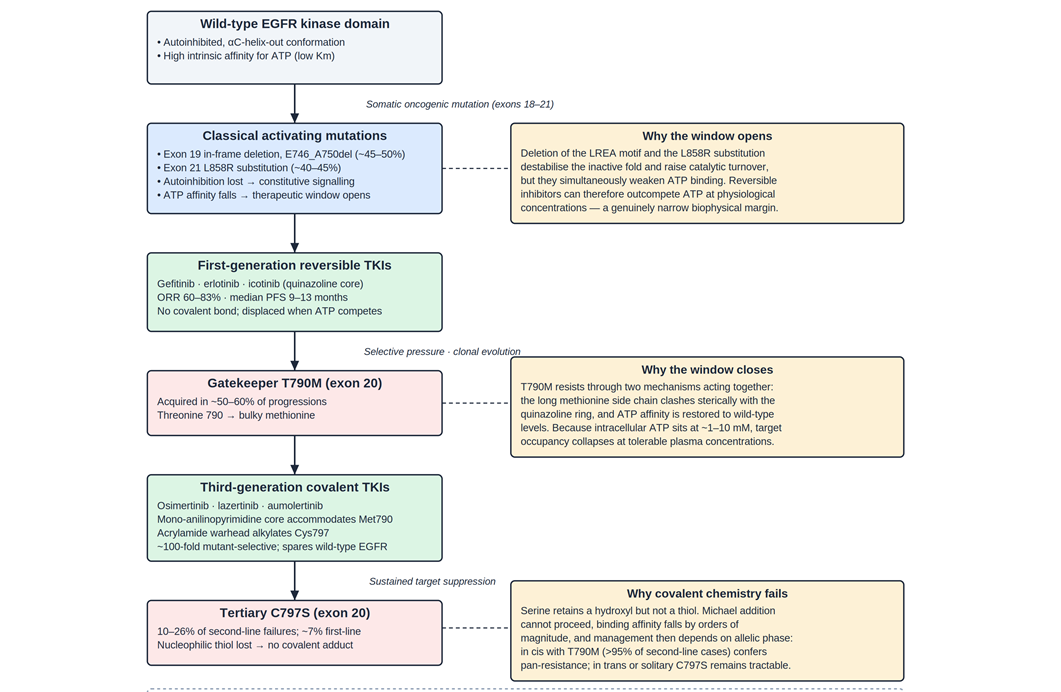
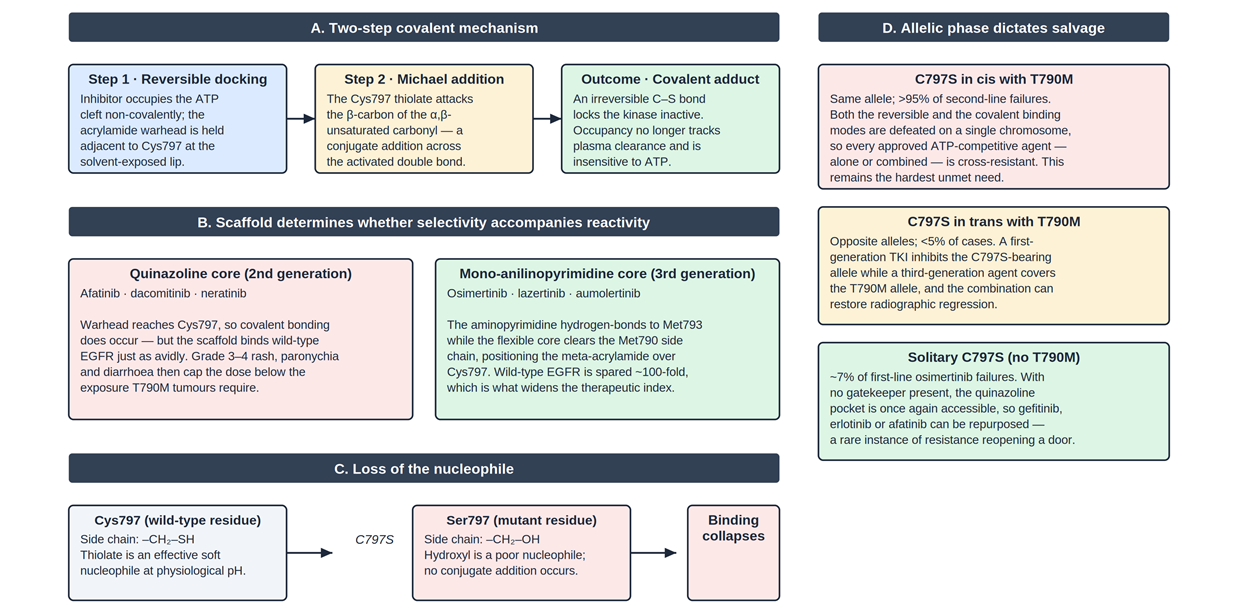
Article metrics
View details
0
Downloads
0
Citations
7
Views

View Dimensions


View Plumx


View Altmetric


0
Save
0
Citation
7
View
0
Share