Integrative Biomedical Research

Integrative Biomedical Research (Journal of Angiotherapy) | Online ISSN  3068-6326
743
Citations
1.7m
Views
740
Articles
Your new experience awaits. Try the new design now and help us make it even better
Switch to the new experience
Figures and Tables
REVIEWS   (Open Access)

Optimizing Heparin Use in Hemodialysis: Nursing Strategies, Bleeding Risk Management, and Anticoagulation Outcomes—A Systematic Review

Mohammed Shahidul Karim 1*, Happy Akter 2

+ Author Affiliations

Journal of Angiotherapy 7 (1) 1-8 https://doi.org/10.25163/biomedical.7110864

Submitted: 24 March 2023 Revised: 24 March 2023  Published: 24 March 2023 


Abstract

Hemodialysis remains indispensable for patients with end-stage renal disease, yet the question of how best to anticoagulate the extracorporeal circuit continues to challenge clinicians and nurses alike. Too little anticoagulation may result in circuit clotting and inadequate dialysis, whereas excessive anticoagulation can expose vulnerable patients to potentially serious bleeding events. This systematic review examined current evidence regarding heparin use in hemodialysis, with a particular focus on nursing protocols, anticoagulation strategies, circuit patency, and bleeding management. A structured literature search identified studies evaluating conventional unfractionated heparin (UFH), low-dose UFH, low-molecular-weight heparins (LMWHs), regional anticoagulation techniques, heparin-free dialysis approaches, and heparin-grafted membranes. Quantitative evidence from clinical studies was synthesized to compare clotting and bleeding outcomes across diverse patient populations. The findings revealed considerable variability in anticoagulation performance. Pharmacological approaches, particularly low-dose UFH and LMWH regimens, consistently demonstrated lower extracorporeal circuit clotting rates, with incidences as low as 0.13–1.1%. In contrast, heparin-free strategies generally reduced bleeding exposure but showed greater variability in circuit patency. Importantly, no single protocol emerged as universally superior. Rather, successful outcomes appeared closely linked to patient-specific risk assessment, nursing vigilance, and protocol adaptation. Overall, the evidence suggests that individualized anticoagulation management, supported by structured nursing surveillance and evidence-based decision-making, offers the most effective pathway for balancing dialysis efficiency with patient safety. Future multicenter studies are needed to establish standardized yet flexible approaches for diverse clinical settings. Keywords: Hemodialysis; Unfractionated Heparin; Anticoagulation Management; Dialysis Nursing; Bleeding Complications; Circuit Clotting; Patient Safety

1. Introduction

Hemodialysis (HD) remains one of the most important life-sustaining therapies for patients with end-stage renal disease (ESRD), supporting millions of individuals worldwide whose kidneys can no longer maintain essential physiological functions (Shen & Winkelmayer, 2012). Despite remarkable advances in dialysis technology, anticoagulation management continues to represent one of the most persistent clinical challenges encountered during routine treatment. The extracorporeal circulation of blood through synthetic tubing and dialyzer membranes inevitably activates coagulation pathways, platelets, leukocytes, and inflammatory mediators, creating a prothrombotic environment that threatens circuit patency and treatment effectiveness (Claudel et al., 2021; Kessler et al., 2015). Consequently, anticoagulation is not merely an adjunct to hemodialysis; it is an essential component of successful renal replacement therapy (Suranyi & Chow, 2010).

The challenge, however, lies in the fact that patients receiving hemodialysis exist within a unique hemostatic paradox. On one hand, inadequate anticoagulation can result in clot formation within the extracorporeal circuit, reducing dialysis efficiency, increasing treatment costs, shortening dialyzer lifespan, and contributing to avoidable blood loss (Kessler et al., 2015). On the other hand, excessive anticoagulation may expose patients to serious bleeding complications, including gastrointestinal hemorrhage, access-site bleeding, and intracranial events (Shen & Winkelmayer, 2012). This delicate balance has shaped clinical practice for decades and continues to influence contemporary dialysis nursing protocols.

The historical development of hemodialysis has consistently highlighted the importance of anticoagulation management. Since the widespread adoption of chronic hemodialysis programs during the mid-twentieth century, unfractionated heparin (UFH) has remained the predominant anticoagulant due to its rapid onset of action, affordability, reversibility, and extensive clinical familiarity (Shen & Winkelmayer, 2012; Claudel et al., 2021). Nevertheless, evolving evidence has demonstrated that the routine use of heparin is accompanied by significant risks, particularly among patients with ESRD who frequently exhibit uremia-associated platelet dysfunction and altered coagulation profiles (Kessler et al., 2015).

These clinical concerns have elevated the role of dialysis nurses from technical operators to key decision-makers in patient safety and treatment quality. Modern nursing frameworks emphasize that patient outcomes in highly specialized environments depend not only on physician-directed therapies but also on continuous monitoring, risk assessment, and evidence-based nursing interventions (Hughes, 2008; Ellis & Hartley, 2003). Within hemodialysis units, nurses are responsible for preparing extracorporeal circuits, administering anticoagulants, monitoring vascular access, identifying signs of bleeding or clot formation, and responding rapidly to treatment complications (Minn, 2014). Consequently, nursing competency has become a central determinant of dialysis safety and effectiveness (Hassona, 2011; Royal College of Nursing, 2012; Smith, 2009). Patient safety has emerged as a particularly important concern because individuals receiving maintenance hemodialysis are exposed to repeated invasive procedures several times each week. International nursing organizations and professional societies have therefore developed standards intended to improve treatment consistency, reduce preventable adverse events, and strengthen quality assurance processes (Canadian Association of Nephrology Nurses and Technologists, 2008; Burrows-Hudson & Prowant, 2005). Similarly, broader healthcare quality frameworks emphasize the importance of surveillance systems, protocol standardization, and continuous performance evaluation in minimizing clinical risk (Koch & Fairly, 2007).

The significance of standardized nursing practice becomes even more apparent when considering the growing burden of chronic kidney disease worldwide. In many low- and middle-income countries, dialysis services face substantial challenges related to resource limitations, staffing constraints, and variable adherence to international guidelines (Ibrahim, 2009). Economic analyses have further demonstrated that hemodialysis represents a major financial burden for both healthcare systems and individual patients, making the prevention of avoidable complications particularly important (Han-Min-Htet, 2011). Circuit clotting, treatment interruptions, and bleeding-related hospitalizations contribute substantially to these costs, reinforcing the need for efficient anticoagulation strategies.

Although UFH remains the most commonly utilized anticoagulant, considerable variability exists in dosing practices among institutions and geographic regions. Standard protocols often employ a loading bolus followed by continuous infusion, but clinicians frequently modify doses according to patient-specific risk factors, vascular access type, and previous bleeding history (Shen & Winkelmayer, 2012; Suranyi & Chow, 2010). More recently, studies have explored low-dose heparin regimens that seek to preserve circuit patency while reducing systemic anticoagulant exposure (Murea et al., 2018). Such approaches require intensive nursing surveillance, including visual assessment of clot formation, monitoring of pressure trends, and timely adjustment of anticoagulation delivery.

The emergence of low-molecular-weight heparins (LMWHs) has further expanded therapeutic options. Compared with UFH, LMWHs offer simplified administration and a lower incidence of heparin-induced thrombocytopenia (HIT), although concerns remain regarding accumulation in patients with severely impaired renal function (Lazrak et al., 2018; Claudel et al., 2021). At the same time, alternative anticoagulation strategies—including heparin-free dialysis, saline-flush techniques, and heparin-grafted membranes—have been developed for patients at particularly high risk of hemorrhage (Laville et al., 2014; Stamatiadis et al., 2022).

Beyond anticoagulation itself, dialysis nurses must also manage a range of associated clinical risks. Infection prevention remains a major priority because repeated vascular access manipulation increases susceptibility to bloodstream infections and other healthcare-associated complications (Association for Professionals in Infection Control and Epidemiology, 2012). Effective surveillance, adherence to aseptic protocols, and strict compliance with dialysis-unit standards are therefore essential components of comprehensive patient care (Ibrahim, 2009).

Furthermore, dialysis adequacy remains closely linked to anticoagulation effectiveness. Premature circuit clotting can compromise solute clearance and reduce treatment efficiency, thereby undermining overall therapeutic outcomes (Levy et al., 2002). Emerging evidence suggests that patient-related barriers, treatment-related factors, and nursing practices all influence dialysis adequacy, emphasizing the need for a holistic approach to anticoagulation management.
2. Methodology

2.1 Study Design

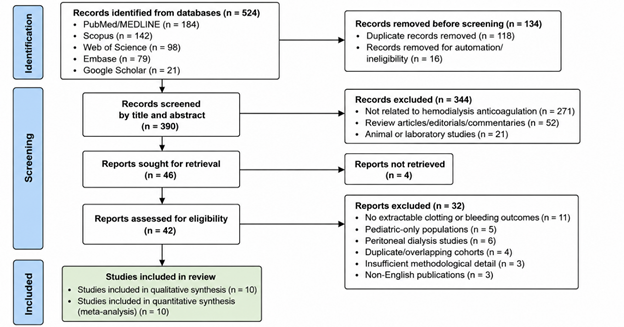
This study was conducted as a systematic review with quantitative synthesis to evaluate the effectiveness, safety, and clinical implications of heparin use during hemodialysis, with particular emphasis on nursing protocols, anticoagulation strategies, circuit clotting, and bleeding management. The review methodology was developed according to the Preferred Reporting Items for Systematic Reviews and Meta-Analyses (PRISMA 2020) guidelines to ensure transparency, reproducibility, and methodological rigor throughout the review process (Page et al., 2021) as represented in Figure 1. In addition, methodological decisions concerning study selection, evidence synthesis, and interpretation were informed by recommendations from the Cochrane Handbook for Systematic Reviews of Interventions (Higgins et al., 2022).

2.2 Literature Search Strategy

A comprehensive literature search was performed across multiple electronic databases, including PubMed/MEDLINE, Scopus, Web of Science, Embase, and Google Scholar. The search strategy was designed to identify studies investigating anticoagulation management during hemodialysis, including unfractionated heparin (UFH), low-molecular-weight heparin (LMWH), regional anticoagulation approaches, heparin-free dialysis protocols, heparin-grafted membranes, and catheter locking solutions.

Search terms were developed using combinations of Medical Subject Headings (MeSH) and free-text keywords, including: “hemodialysis,” “haemodialysis,” “heparin,” “unfractionated heparin,” “low molecular weight heparin,” “anticoagulation,” “dialysis nursing,” “bleeding complications,” “circuit clotting,” “heparin-free dialysis,” “vascular access,” and “heparin lock.” Boolean operators (AND, OR) were applied to optimize retrieval sensitivity and specificity. Additional studies were identified through manual screening of reference lists from relevant reviews and primary research articles.

2.3 Eligibility Criteria

Studies were selected according to predefined inclusion and exclusion criteria. Eligible studies included randomized controlled trials, prospective cohort studies, retrospective observational studies, comparative clinical investigations, and systematic reviews that evaluated anticoagulation strategies during hemodialysis. Studies were required to report at least one clinically relevant outcome, including extracorporeal circuit clotting, dialysis adequacy, bleeding complications, anticoagulation effectiveness, nursing management considerations, or vascular access outcomes.

Studies were excluded if they involved pediatric populations exclusively, lacked sufficient outcome data, were conference abstracts without full-text availability, focused on peritoneal dialysis rather than hemodialysis, or were published in languages other than English. Duplicate publications and studies with overlapping patient populations were carefully assessed, and the most

Figure 1: PRISMA 2020 flow diagram illustrating the identification, screening, eligibility assessment, and inclusion of studies evaluating heparin use, anticoagulation protocols, circuit clotting, and bleeding outcomes in hemodialysis. A total of 524 records were identified, with 10 studies ultimately meeting eligibility criteria and included in the quantitative synthesis.

Table 1: Comparative Pharmacological Protocols and Monitoring for Hemodialysis Anticoagulation This table delineates the dosing strategies, mechanisms, and monitoring requirements for various anticoagulants used in extracorporeal circuits, synthesized from clinical guidelines and protocols (Claudel et al., 2021; Kessler et al., 2015; Murea et al., 2018; Shen & Winkelmayer, 2012).

Anticoagulant Modality

Primary Mechanism

Loading/Bolus Dose

Maintenance Infusion

Monitoring Method

Key Clinical Advantage

Primary Risk/Disadvantage

Reversal Agent

References

UFH (Standard US)

ATIII/Heparin Cofactor II

2000–4000 IU

500–2000 IU/h

aPTT / ACT

Low cost; staff familiarity

HIT risk; bleeding

Protamine Sulfate

Claudel et al., 2021; Shen & Winkelmayer, 2012

UFH (Standard EU)

ATIII/Heparin Cofactor II

50 IU/kg

800–1500 IU/h

aPTT / ACT

Standardized weight-based

High systemic exposure

Protamine Sulfate

Claudel et al., 2021; Shen & Winkelmayer, 2012

UFH (Low-Dose)

ATIII/Heparin Cofactor II

15–20 IU/kg

500 IU/h

aPTT / ACT

Reduced bleeding risk

Visual clotting monitoring

Protamine Sulfate

Murea et al., 2018; Shen & Winkelmayer, 2012

Enoxaparin (LMWH)

Anti-Xa Inhibition

0.5–0.7 mg/kg

N/A (Single bolus)

Anti-Xa activity

Ease of administration

Renal bioaccumulation

Partial (Protamine)

Claudel et al., 2021; Kessler et al., 2015

Tinzaparin (LMWH)

Anti-Xa Inhibition

2500–3500 IU

N/A (Single bolus)

Anti-Xa activity

Reliable half-life (5h)

High cost vs UFH

Partial (Protamine)

Claudel et al., 2021; Sabry et al., 2009

Regional Citrate

Calcium Chelation

N/A

100 ml/h (Trisodium)

Ionized Calcium

Zero systemic bleeding

Metabolic alkalosis

Calcium Chloride

Claudel et al., 2021; Kessler et al., 2015

Citrate Dialysate

Local Chelation

N/A

Via dialysate acid

urea Kt/V

Improved biocompatibility

Limited sole efficacy

N/A

Claudel et al., 2021

H-Free (Saline)

Mechanical Flush

N/A

100-300ml q30min

Visual Inspection

No anticoagulant risks

Labor intensive; clotting

N/A

Laville et al., 2014; Liang et al., 2016; Safadi et al., 2017

HGM (Evodial)

Surface Grafting

N/A

N/A

Clotting Grades

Easy to use for H-free

Higher membrane cost

N/A

Claudel et al., 2021; Laville et al., 2014

comprehensive report was retained for analysis.

2.4 Study Selection Process

The study selection process followed the PRISMA 2020 framework (Page et al., 2021). Retrieved records were imported into a reference management system, and duplicate citations were removed. Titles and abstracts were independently screened for relevance, followed by full-text evaluation of potentially eligible articles. Studies meeting all eligibility criteria were included in the final review.

Any disagreements regarding study eligibility were resolved through discussion and consensus. Where necessary, methodological guidance from the Cochrane Handbook was applied to ensure consistency in study selection decisions (Higgins et al., 2022).

2.5 Data Extraction

Data extraction was performed using a standardized data collection form designed specifically for this review. Extracted information included study characteristics, publication year, patient population, sample size, dialysis-session volume, anticoagulation modality, dosing strategy, monitoring procedures, circuit priming methods, treatment duration, clotting outcomes, bleeding outcomes, and nursing-related management practices.

Particular attention was given to quantitative measures of extracorporeal circuit clotting and bleeding incidence because these outcomes formed the basis of the comparative analyses presented in Table 2 and Figures 2–5. Information regarding anticoagulant mechanisms, monitoring requirements, advantages, and disadvantages was also extracted to facilitate the development of the comparative protocol summary shown in Table 1.

2.6 Outcome Measures

The primary outcome of interest was complete extracorporeal circuit clotting incidence during hemodialysis. Secondary outcomes included major and minor bleeding events, dialysis session completion rates, anticoagulation-related complications, nursing workload considerations, and treatment safety. Additional outcomes included heparin-induced thrombocytopenia (HIT), catheter-related complications, vascular access management, and the effectiveness of alternative anticoagulation approaches such as heparin-free dialysis, regional citrate anticoagulation, and heparin-grafted membrane technologies.

2.7 Quantitative Synthesis and Statistical Analysis

A quantitative synthesis was conducted for studies reporting circuit clotting outcomes. Effect estimates were summarized using descriptive comparative analyses, and pooled estimates were interpreted using random-effects meta-analytic principles because substantial clinical and methodological heterogeneity was anticipated among studies. The random-effects model proposed by DerSimonian and Laird (1986) was selected because it accounts for both within-study and between-study variability, making it particularly appropriate when studies differ in patient populations, intervention protocols, and outcome measurements. Meta-analytic concepts and interpretation followed the recommendations outlined by Borenstein et al. (2009), who emphasize the importance of incorporating study-level heterogeneity into pooled effect estimation. Forest plots were generated to visually summarize clotting incidences and confidence intervals across included studies, enabling comparison of anticoagulation strategies and assessment of result consistency.

2.8 Assessment of Heterogeneity

Statistical heterogeneity among studies was evaluated using the I² statistic, which quantifies the proportion of observed variability attributable to true between-study differences rather than sampling error (Higgins et al., 2003). I² values of approximately 25%, 50%, and 75% were interpreted as representing low, moderate, and high heterogeneity, respectively. Clinical heterogeneity was also assessed qualitatively by examining differences in patient populations, dialysis settings, anticoagulation protocols, session duration, and outcome definitions. Because studies included both chronic maintenance hemodialysis populations and high-risk bleeding cohorts, heterogeneity was expected and carefully considered during interpretation.

2.9 Publication Bias Assessment

Potential publication bias and small-study effects were examined using funnel plot analysis. Funnel plots were constructed by plotting effect estimates against their corresponding standard errors. Symmetry around the pooled estimate was interpreted as evidence of limited publication bias, whereas asymmetry suggested possible reporting bias, small-study effects, or underlying clinical heterogeneity. Interpretation of funnel plot findings was guided by the graphical assessment approach proposed by Egger et al. (1997), which remains one of the most widely accepted methods for identifying potential bias in meta-analytic datasets.

2.10 Quality Assurance and Evidence Interpretation

The methodological quality and overall consistency of the evidence were evaluated through critical appraisal of study design, sample size, outcome reporting, and clinical applicability. Findings were interpreted within the broader context of hemodialysis nursing practice, patient safety, anticoagulation management, and bleeding prevention. Emphasis was placed on balancing circuit patency with hemorrhagic risk, reflecting the central clinical challenge identified throughout the included evidence base. The final synthesis integrated quantitative findings from Tables 1–2 and Figures 1–4 with current evidence regarding anticoagulation protocols, nursing surveillance, and bleeding management strategies to provide a comprehensive assessment of heparin use in contemporary hemodialysis practice.

3. Results

3.1 Overview of Included Evidence

The evidence synthesized in this review revealed substantial diversity in anticoagulation strategies, patient populations, monitoring approaches, and clinical outcomes across hemodialysis settings. Collectively, the included studies encompassed both chronic maintenance hemodialysis populations and patients considered at elevated risk of bleeding, thereby providing a broad perspective on the practical challenges associated with anticoagulation management. The studies evaluated conventional unfractionated heparin (UFH), low-dose UFH regimens, low-molecular-weight heparins (LMWHs), regional anticoagulation techniques, heparin-free dialysis approaches, heparin-grafted membranes, and alternative circuit management protocols. As shown in Table 1, each modality differed not only in mechanism of action and dosing strategy but also in monitoring requirements, clinical advantages, and associated risks. These differences underscore the absence of a universally optimal anticoagulation strategy and highlight the importance of individualized nursing assessment and patient-centered decision-making (Claudel et al., 2021; Kessler et al., 2015; Shen & Winkelmayer, 2012).

3.2 Comparative Characteristics of Anticoagulation Protocols

Table 1 demonstrates that UFH remains the most versatile and widely utilized anticoagulant in routine dialysis practice. Standard protocols in both North America and Europe typically employ an initial loading dose followed by maintenance infusion, with activated partial thromboplastin time (aPTT) or activated clotting time (ACT) used for monitoring. The principal advantages of UFH include low cost, rapid reversibility, and extensive clinician familiarity. However, these benefits are counterbalanced by well-recognized risks such as bleeding complications and heparin-induced thrombocytopenia (HIT) (Shen & Winkelmayer, 2012; Claudel et al., 2021). Low-dose UFH protocols appeared particularly noteworthy. Compared with conventional dosing regimens, reduced-dose approaches maintained circuit patency while theoretically lowering systemic anticoagulant exposure. Nurses operating under these protocols rely heavily on visual clotting assessments and frequent circuit inspection, suggesting that clinical success depends as much on nursing vigilance as on pharmacological dosing itself (Murea et al., 2018).

LMWH preparations, including enoxaparin and tinzaparin, offered simplified administration through single-bolus dosing and reduced monitoring burden. Nevertheless, concerns regarding renal accumulation and increased acquisition costs remain important considerations, particularly in resource-limited settings (Kessler et al., 2015; Claudel et al., 2021). Regional citrate anticoagulation and citrate-containing dialysates emerged as alternatives that virtually eliminate systemic anticoagulant exposure, although they require additional biochemical monitoring and may introduce metabolic complications such as alkalosis. Heparin-free strategies, including saline flush protocols and heparin-grafted membranes, occupied a distinct position within the therapeutic spectrum. These approaches eliminate anticoagulant-related bleeding risk but often require greater nursing workload and more intensive surveillance for clot formation. As reflected in Table 1, such protocols may be particularly valuable in patients with active hemorrhage or exceptionally high bleeding risk despite their operational challenges.

3.3 Quantitative Assessment of Circuit Clotting Outcomes

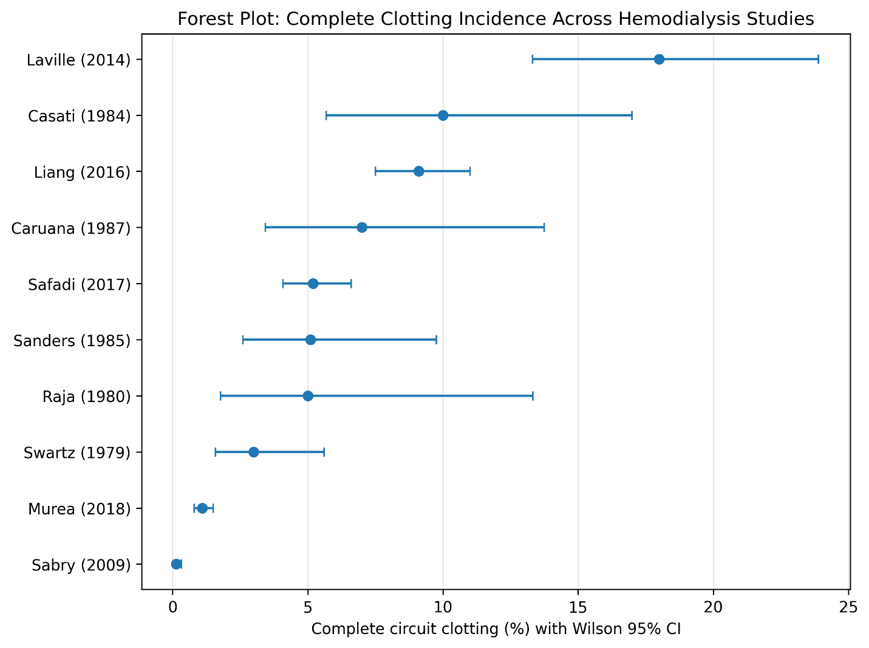
Marked variability was observed in extracorporeal circuit clotting rates across the included studies (Table 2). Complete clotting incidence ranged from only 0.13% in the tinzaparin-treated cohort reported by Sabry et al. (2009) to 18% among patients receiving heparin-grafted membrane dialysis in the HepZero study conducted by Laville et al. (2014). This nearly 140-fold difference highlights the complexity of anticoagulation management and suggests that circuit performance depends on multiple interacting factors rather than anticoagulant selection alone.

The lowest clotting frequencies were observed in studies utilizing pharmacological anticoagulation. Sabry et al. (2009) reported only 0.13% complete clotting across 3,312 dialysis sessions using tinzaparin, while Murea et al. (2018) observed a clotting incidence of 1.1% across 3,479 sessions using low-dose UFH. These findings suggest that carefully titrated anticoagulation can preserve circuit patency effectively without necessarily requiring aggressive heparin exposure. Importantly, both studies involved large session volumes, increasing confidence in the stability of their estimates. Intermediate clotting rates were generally observed among protocols employing reduced anticoagulation or heparin avoidance. Swartz and Port (1979) reported 3% clotting using regional heparinization, whereas Raja et al. (1980), Sanders et al. (1985), and Safadi et al. (2017) reported clotting frequencies between 5% and 5.2%. Caruana et al. (1987) documented a somewhat higher incidence of 7%, while Liang et al. (2016) reported 9.1% clotting among hospitalized patients managed under a heparin-avoidance protocol.

The highest clotting rates occurred in studies involving high-risk populations managed with heparin-free techniques. Casati et al. (1984) reported a clotting incidence of 10%, while Laville et al. (2014) documented 18% complete clotting despite the use of heparin-grafted membranes. Although these findings may initially appear unfavorable, interpretation requires consideration of patient selection. Many of these individuals were specifically excluded from standard anticoagulation because of active bleeding or substantial hemorrhagic risk. Consequently, higher clotting rates likely reflect the clinical difficulty of preserving circuit patency in these populations rather than a failure of the interventions themselves.

3.4 Forest Plot Analysis

The forest plot (Figure 2) provides a visual summary of complete circuit clotting rates across all included studies. Several important trends become apparent. First, studies involving pharmacological anticoagulation clustered toward the lower end of the clotting spectrum, with relatively narrow confidence intervals. Sabry et al. (2009) and Murea et al. (2018) showed exceptionally low clotting frequencies accompanied by greater statistical precision, reflecting their large sample sizes and session volumes.

Second, studies evaluating heparin-free protocols exhibited broader confidence intervals and greater dispersion. This variability suggests substantial heterogeneity in patient characteristics, nursing practices, and protocol implementation. Notably, Laville et al. (2014) occupied the upper end of the distribution, while Raja et al. (1980) and Sanders et al. (1985) demonstrated more moderate clotting rates despite utilizing non-pharmacological approaches. The overall pattern illustrated by Figure 2 reinforces the notion that anticoagulation efficacy cannot be evaluated independently of clinical context, patient risk profile, and operational factors.

3.5 Assessment of Heterogeneity and Publication Bias

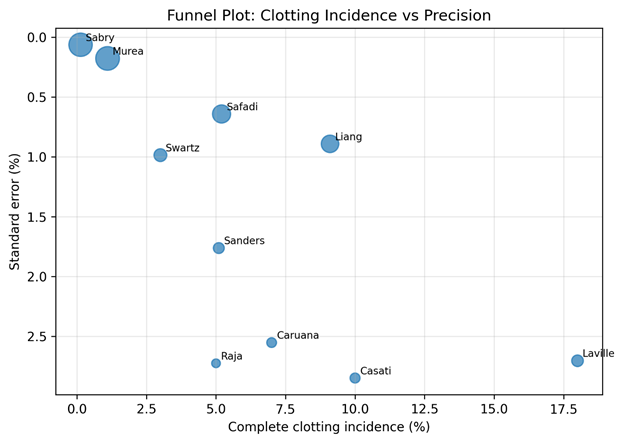
The funnel plot shown in Figure 3 further highlights heterogeneity among included studies. Larger investigations, particularly those conducted by Sabry et al. (2009) and Murea et al. (2018), clustered near the bottom of the plot and exhibited smaller standard errors, indicating greater precision. In contrast, older studies with fewer sessions demonstrated wider variability and occupied more dispersed positions.

Although the funnel plot displayed some asymmetry, this pattern appears more consistent with genuine clinical heterogeneity than with publication bias. The studies differed substantially in patient populations, anticoagulation intensity, dialysis settings, and outcome definitions. High-risk bleeding populations were often represented in heparin-free investigations, whereas chronic maintenance dialysis cohorts predominated in pharmacological anticoagulation studies. Therefore, differences observed across studies likely reflect real-world clinical variation rather than systematic reporting bias.

3.6 Bleeding Outcomes Across Anticoagulation Strategies

Bleeding outcomes exhibited substantial variability, mirroring the patterns observed for clotting incidence. As

Table 2: Quantitative Comparison of Clinical Trial Outcomes and ECC Clotting Incidence. This table summarizes outcomes from key interventional and observational studies assessing circuit patency and bleeding complications.

Study (Author, Year)

Patient Population (N)

Total Sessions (N)

Intervention Protocol

Circuit Priming

Mean Session Length (h)

Complete Clotting (%)

Major Bleeding (%)

Swartz (1979)

High Risk (59)

300

Regional (RH) vs Low-dose

Heparin/Saline

3.5–5.0

3% (RH)

8.0% (RH)

Raja (1980)

Low/High Risk (33)

64

Heparin-Free (H-free)

Heparin/Saline

3.0–4.0

5%

0.0%

Casati (1984)

High Risk (29)

111

Saline Flush (300ml q15)

Saline

4.0

10%

0.0%

Sanders (1985)

High Risk (28)

156

Saline Flush (100ml q30)

Heparin/Saline

4.0

5.1%

0.0%

Caruana (1987)

High Risk (29)

100

Pure H-free (No flushes)

Heparin/Saline

3.5

7.0%

0.0%

Sabry (2009)

Chronic HD (23)

3312

Tinzaparin vs UFH

Saline

3.0–4.0

0.13% (Tinz)

13% (Minor)

Laville (2014)

High Risk (251)

202 (Analysed)

HGM vs Saline Flush

Saline

3.65 (HGM)

18% (HGM)

1.6%

Liang (2016)

Inpatient (365)

1043

H-HD vs UFH Bolus

Saline

3.0–4.0

9.1% (H-HD)

5.6% (H-HD)

Safadi (2017)

Inpatient (338)

1200

Airless Tubing (H-free)

Saline

3.5

5.2%

6.3%

Murea (2018)

Chronic HD (66)

3479

Low-dose UFH (15 U/kg)

Saline

3.7

1.1%

0.0%

Figure 2: Forest Plot of Complete Extracorporeal Circuit Clotting Rates Across Hemodialysis Anticoagulation Protocols. The forest plot summarizes the reported incidence of complete extracorporeal circuit (ECC) clotting across studies evaluating heparin-based, low-dose anticoagulation, and heparin-free hemodialysis strategies. Error bars represent 95% confidence intervals, illustrating variability in circuit patency outcomes among different anticoagulation protocols and patient.

Figure 3: Funnel Plot Assessing Heterogeneity and Small-Study Effects in Reported Circuit Clotting Outcomes. The funnel plot displays the relationship between complete circuit clotting rates and their corresponding standard errors across included studies. Symmetry around the pooled estimate suggests consistency of reported outcomes, whereas asymmetry may reflect clinical heterogeneity, study-size effects, or potential publication bias.

summarized in Table 2, several studies employing heparin-free or saline-flush protocols reported no major bleeding events. Raja et al. (1980), Casati et al. (1984), Sanders et al. (1985), Caruana et al. (1987), and Murea et al. (2018) all documented bleeding frequencies of 0%, suggesting that carefully selected protocols can effectively minimize hemorrhagic complications.

However, the relationship between anticoagulation intensity and bleeding risk was not entirely straightforward. Swartz and Port (1979) reported an 8% bleeding incidence despite utilizing regional heparinization, while Sabry et al. (2009) documented 13% minor bleeding events among patients receiving tinzaparin. Similarly, Liang et al. (2016) and Safadi et al. (2017) reported bleeding rates of 5.6% and 6.3%, respectively, despite employing heparin-avoidance strategies. These findings indicate that factors beyond anticoagulant selection—including patient comorbidity, vascular access characteristics, and underlying bleeding susceptibility—contribute significantly to clinical outcomes.

3.7 Comparative Evaluation of Clotting–Bleeding Trade-Offs

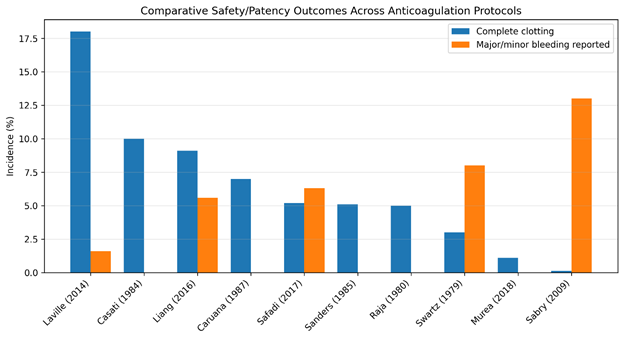
Figure 4 illustrates one of the central themes emerging from this review: the persistent trade-off between circuit patency and bleeding prevention. Protocols associated with exceptionally low clotting rates were not always accompanied by the lowest bleeding frequencies. Conversely, interventions designed to minimize bleeding often exhibited somewhat higher clotting rates and greater operational complexity.

Low-dose UFH appeared particularly promising because it achieved a favorable balance between efficacy and safety. The Murea et al. (2018) study demonstrated low clotting incidence without reported major bleeding, suggesting that carefully titrated anticoagulation may represent a practical compromise. Nevertheless, the available evidence remains insufficient to declare any single strategy universally superior, as direct head-to-head comparisons remain limited.

3.8 Influence of Study Size and Clinical Representation

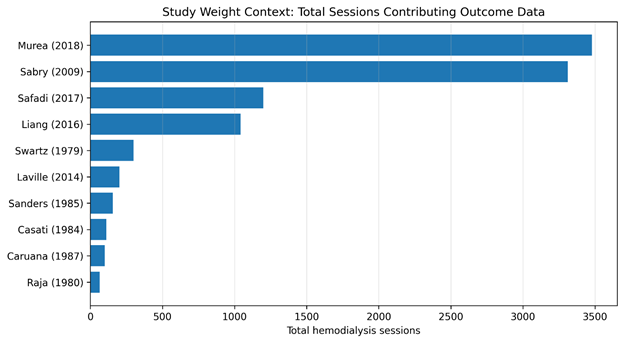
The session-distribution analysis presented in Figure 5 provides important context for interpreting study findings. Murea et al. (2018) and Sabry et al. (2009) contributed the largest numbers of dialysis sessions, accounting for a substantial proportion of the available evidence. In contrast, earlier studies such as Raja et al. (1980), Caruana et al. (1987), and Casati et al. (1984) contributed relatively small datasets.

This disparity suggests that modern evidence regarding anticoagulation efficacy is disproportionately informed by larger contemporary investigations. While historical studies remain valuable for understanding the evolution of heparin-free dialysis approaches, their findings should be interpreted with recognition of their comparatively limited statistical power.

Taken together, the evidence indicates that anticoagulation management in hemodialysis remains a complex balancing act between preserving circuit patency and minimizing hemorrhagic risk. Pharmacological anticoagulation, particularly low-dose UFH and LMWH-based regimens, generally produced the lowest clotting rates. Heparin-free approaches offered important safety advantages for patients at elevated bleeding risk but were associated with greater variability in circuit performance. The findings collectively support individualized anticoagulation strategies guided by patient characteristics, nursing assessment, bleeding history, and clinical setting rather than reliance on a single standardized protocol.

4. Discussion

4.1 Balancing Circuit Patency and Bleeding Risk in Hemodialysis

The findings of this review reinforce a longstanding challenge in hemodialysis practice: maintaining extracorporeal circuit patency while minimizing the risk of hemorrhagic complications. Although anticoagulation has been an integral component of hemodialysis for decades, the evidence synthesized from the included studies suggests that no single strategy completely resolves this therapeutic dilemma. Instead, clinical success appears to depend on careful patient selection, individualized anticoagulation protocols, and continuous nursing surveillance.

The quantitative findings demonstrated substantial variability in complete circuit clotting rates, ranging from only 0.13% in the tinzaparin-based protocol reported by Sabry et al. (2009) to 18% in the heparin-grafted membrane (HGM) cohort evaluated by Laville et al. (2014) (Table 2). While this variation may initially appear striking, it reflects the heterogeneous clinical environments in

Figure 4: Comparative Analysis of Circuit Clotting and Bleeding Complications Among Hemodialysis Anticoagulation Approaches. This figure compares the incidence of complete circuit clotting and bleeding events reported across different anticoagulation and heparin-avoidance protocols. The visualization highlights the clinical balance between maintaining circuit patency and minimizing hemorrhagic complications during hemodialysis treatment.

Figure 5: Distribution of Hemodialysis Sessions Across Included Clinical Studies Evaluating Anticoagulation Strategies. The figure illustrates the total number of hemodialysis sessions contributed by each study included in the quantitative synthesis. Differences in session volume provide insight into the relative statistical weight and clinical representation of individual investigations within the overall evidence base.

which anticoagulation decisions are made. Patients receiving routine maintenance hemodialysis differ considerably from those with active bleeding, recent surgery, thrombocytopenia, or severe coagulopathy. Consequently, the effectiveness of any anticoagulation strategy cannot be interpreted independently of patient risk profiles and treatment objectives.

The present findings align closely with the observations of Shen and Winkelmayer (2012) and Claudel et al. (2021), who emphasized that anticoagulation in hemodialysis should be viewed as a dynamic balance rather than a fixed pharmacological intervention. In routine practice, the goal is not merely to prevent clot formation but also to avoid excessive systemic anticoagulation that may increase bleeding risk. The broad range of outcomes observed across studies highlights the complexity of achieving this balance in diverse clinical settings.

4.2 Performance of Conventional and Low-Dose Heparin Protocols

One of the most notable findings was the consistently favorable performance of conventional and low-dose pharmacological anticoagulation protocols. As summarized in Table 1, UFH remains the most widely utilized anticoagulant because of its rapid onset, reversibility with protamine sulfate, affordability, and extensive clinical familiarity. These practical advantages continue to explain its dominant role in dialysis units worldwide (Shen & Winkelmayer, 2012; Suranyi & Chow, 2010).

Particularly interesting was the performance of low-dose UFH reported by Murea et al. (2018), which achieved only 1.1% complete circuit clotting without documented major bleeding events (Table 2). These findings suggest that reduced-intensity anticoagulation may preserve dialysis adequacy while limiting unnecessary heparin exposure. The protocol required active nursing assessment, including frequent visual inspection of air traps and circuit components, highlighting the central role of dialysis nurses in ensuring treatment success.

The findings also support the growing interest in individualized heparin dosing strategies. Traditional weight-based regimens remain common, yet evidence increasingly suggests that patient-specific adjustments may improve outcomes. Variations in vascular access type, previous clotting history, concurrent medications, and bleeding susceptibility all influence anticoagulation requirements. Consequently, standardized protocols may serve as useful frameworks, but individualized nursing assessment remains essential for optimizing treatment outcomes.

4.3 Low-Molecular-Weight Heparins as Practical Alternatives

LMWHs, including enoxaparin and tinzaparin, demonstrated several advantages that may simplify anticoagulation management. Table 1 highlights their ease of administration through single-bolus dosing and reduced monitoring requirements. The exceptionally low clotting incidence reported in the tinzaparin study by Sabry et al. (2009) further supports their effectiveness in maintaining circuit patency.

These findings are consistent with previous reports indicating that LMWHs offer predictable pharmacokinetics and lower rates of heparin-induced thrombocytopenia compared with UFH (Claudel et al., 2021; Lazrak et al., 2018). However, their use remains constrained by concerns regarding renal bioaccumulation and higher acquisition costs. This issue may be particularly relevant in low-resource settings where treatment affordability influences therapeutic decisions. Therefore, while LMWHs represent an attractive option for many patients, their widespread implementation may depend on local economic and healthcare infrastructure considerations.

4.4 Challenges Associated with Heparin-Free Dialysis

A recurring theme throughout the results was the trade-off between reduced bleeding risk and increased clotting variability among heparin-free protocols. Studies employing saline flushes, airless tubing systems, and complete heparin avoidance generally reported higher clotting rates than pharmacological approaches (Table 2). This trend is visually apparent in Figure 2, where heparin-free studies cluster toward the middle and upper portions of the clotting spectrum. Importantly, however, these protocols often achieved remarkably low bleeding rates. Several investigations, including those by Raja et al. (1980), Casati et al. (1984), Sanders et al. (1985), Caruana et al. (1987), and Murea et al. (2018), reported no major bleeding events. These observations support current recommendations favoring heparin avoidance in patients with active hemorrhage, recent surgical procedures, or severe coagulation abnormalities.

Nevertheless, the operational burden associated with heparin-free dialysis should not be underestimated. Frequent saline flushing requires considerable nursing effort, increases workload, and may introduce interruptions to routine dialysis care. Moreover, repeated interventions can affect treatment efficiency and patient comfort. The findings therefore suggest that while heparin-free approaches remain clinically valuable, they may not represent the most practical solution for all patients.

4.5 Heparin-Grafted Membranes and Emerging Technologies

One of the more intriguing findings involved the performance of heparin-grafted membranes. The HepZero study reported an 18% complete clotting rate among high-risk patients (Table 2), which was the highest observed incidence across included studies. At first glance, this outcome might appear disappointing. However, such an interpretation would overlook the highly specialized patient population enrolled in the study. Patients selected for HGM dialysis were specifically considered unsuitable for systemic anticoagulation because of significant bleeding risk. In this context, the observed clotting rate may reflect the clinical complexity of the population rather than shortcomings of the membrane technology itself. Furthermore, Laville et al. (2014) demonstrated that HGMs were easier to manage than repeated saline flushes and achieved higher treatment success rates overall.

The broader implication is that emerging technologies should not necessarily be judged solely by clotting incidence. Ease of use, nursing workload, patient safety, and treatment feasibility are equally important outcomes. As newer membrane designs and anticoagulation systems continue to evolve, future evaluations should incorporate these multidimensional measures of effectiveness.

4.6 Interpretation of Heterogeneity and Evidence Quality

The funnel plot (Figure 3) demonstrated visible asymmetry, suggesting substantial heterogeneity among included studies. However, the observed pattern likely reflects genuine clinical variation rather than publication bias alone. The included investigations differed markedly with respect to patient populations, session numbers, anticoagulation intensity, monitoring protocols, and outcome definitions.

Figure 5 further illustrates these differences by demonstrating considerable variation in study size. Large datasets such as those reported by Sabry et al. (2009) and Murea et al. (2018) contributed thousands of dialysis sessions, whereas earlier investigations often included fewer than 200 sessions. Such disparities inevitably influence estimate precision and statistical stability. Consequently, comparisons between studies should be interpreted cautiously. Older heparin-free investigations were often conducted under different technological conditions, using dialysis membranes, tubing systems, and monitoring practices that differ substantially from contemporary standards. These factors likely contribute to some of the variability observed across studies.

4.7 Implications for Nursing Practice

Perhaps the most important implication of this review relates to the central role of nurses in anticoagulation management. Across all protocols, successful outcomes depended heavily on timely assessment, continuous monitoring, and appropriate intervention. Whether administering UFH, monitoring LMWH therapy, implementing saline flushes, or managing heparin-grafted membranes, nurses serve as the primary safeguard against both clotting and bleeding complications. The findings support recommendations emphasizing standardized nursing protocols, competency-based training, and continuous quality improvement initiatives (Minn, 2014; Hughes, 2008; Canadian Association of Nephrology Nurses and Technologists, 2008). Structured surveillance systems may improve early recognition of circuit dysfunction, while individualized risk assessments can guide more appropriate anticoagulation selection. In addition, careful management of catheter locking procedures remains essential, particularly given evidence that excessive heparin concentrations may contribute to systemic leakage and post-dialytic bleeding (Karaaslan et al., 2001; Tan et al., 2021).

4.8 Limitations and Future Directions

Several limitations should be acknowledged. First, substantial heterogeneity existed among studies regarding patient populations, outcome definitions, and anticoagulation protocols. Second, many investigations were observational and lacked direct randomized comparisons between competing strategies. Third, bleeding outcomes were not consistently classified as major or minor events, limiting cross-study comparability. Finally, several heparin-free studies included relatively small sample sizes, reducing statistical precision. Future research should focus on large, multicenter randomized trials directly comparing low-dose UFH, LMWHs, citrate-based approaches, and heparin-free technologies. Greater emphasis should also be placed on nursing-centered outcomes such as workload, protocol adherence, treatment interruptions, and patient satisfaction. Such measures may provide a more comprehensive understanding of anticoagulation effectiveness beyond traditional clotting and bleeding endpoints.

Overall, the evidence suggests that anticoagulation management in hemodialysis remains a complex clinical balancing act. Conventional and low-dose heparin protocols generally provide superior circuit patency, whereas heparin-free approaches offer important safety advantages for patients at elevated bleeding risk. The findings from Table 1, Table 2, Figure 2, Figure 3, Figure 4, and Figure 5 collectively indicate that individualized treatment selection, supported by vigilant nursing assessment and evidence-based protocols, represents the most effective strategy for optimizing both safety and dialysis efficacy.

5. Limitations

Several limitations should be considered when interpreting the findings of this review. First, substantial heterogeneity existed among the included studies with respect to patient populations, anticoagulation protocols, dialysis settings, outcome definitions, and monitoring practices. Such variability limited direct comparisons across studies and reduced the feasibility of generating highly standardized conclusions. Second, many included investigations were observational in nature and lacked randomized head-to-head comparisons between anticoagulation modalities. Third, bleeding outcomes were inconsistently reported, with some studies distinguishing between major and minor events while others provided only aggregate bleeding rates. Fourth, several heparin-free investigations involved relatively small sample sizes and limited dialysis-session numbers, potentially affecting statistical precision. Additionally, technological differences between older and more recent studies—including advances in dialyzer membranes, extracorporeal circuits, and monitoring systems—may influence outcome comparability. Finally, publication bias and selective outcome reporting cannot be entirely excluded despite funnel plot assessment, warranting cautious interpretation of pooled evidence.

Author Contributions

M.S.K. conceptualized the study, designed the review protocol, and developed the research framework. M.S.K. and H.A. conducted the literature search, study selection, data extraction, quality assessment, and evidence synthesis. M.S.K. performed the systematic review, data synthesis, and interpretation of findings and prepared the original manuscript. H.A. contributed to data validation, critical appraisal of the included studies, interpretation of the clinical implications, and critical revision of the manuscript. Both authors reviewed and approved the final manuscript and agreed to be accountable for all aspects of the work.

Acknowledgements

The authors sincerely acknowledge their respective institutions for providing academic support and access to the scientific literature used in this systematic review. They also extend their appreciation to the researchers whose published studies formed the foundation of this evidence synthesis.

References


Association for Professionals in Infection Control and Epidemiology. (2012). Guide to the elimination of infections in hemodialysis.

Borenstein, M., Hedges, L. V., Higgins, J. P. T., & Rothstein, H. R. (2009). Introduction to meta-analysis. Wiley.

Burrows-Hudson, S., & Prowant, B. (2005). American Nephrology Nurses Association nephrology nursing standards of practice and guidelines for care (pp. 71–72). Anthony J. Jannetti, Inc.

Canadian Association of Nephrology Nurses and Technologists. (2008). Nephrology nursing standards and practice recommendations.

Caruana, R. J., Raja, R. M., Bush, J. V., Kramer, M. S., & Goldstein, S. J. (1987). Heparin free dialysis: Comparative data and results in high risk patients. Kidney International, 31(6), 1351–1355.

Casati, S., Moia, M., Graziani, G., Cantaluppi, A., Citterio, A., Manucci, P. M., & Ponticelli, C. (1984). Hemodialysis without anticoagulants: efficiency and hemostatic aspects. Clinical Nephrology, 21(2), 102–105.

Claudel, S. E., Miles, L. A., & Murea, M. (2021). Anticoagulation in hemodialysis: A narrative review. Seminars in Dialysis, 34(2), 103–115.

DerSimonian, R., & Laird, N. (1986). Meta-analysis in clinical trials. Controlled Clinical Trials, 7(3), 177–188.

Egger, M., Davey Smith, G., Schneider, M., & Minder, C. (1997). Bias in meta-analysis detected by a simple, graphical test. BMJ, 315(7109), 629–634.

Ellis, J. R., & Hartley, C. L. (2003). Nursing in today’s world (8th ed.). Lippincott Williams & Wilkins.

Han-Min-Htet. (2011). Cost analysis of hemodialysis treatment for patients with end-stage renal disease at Renal Unit No. (1) Defence Services General Hospital (1000-bedded) (Master’s dissertation). Military Institute of Nursing and Paramedical Sciences, Yangon, Myanmar.

Hassona, F. M. H. (2011). Implementing a developed nursing care standards for hemodialysis patients in Zagazig University Hospital (Master’s thesis). Zagazig University, Egypt.

Higgins, J. P. T., Thomas, J., Chandler, J., Cumpston, M., Li, T., Page, M. J., & Welch, V. A. (2022). Cochrane handbook for systematic reviews of interventions (Version 6.3). Cochrane.

Higgins, J. P. T., Thompson, S. G., Deeks, J. J., & Altman, D. G. (2003). Measuring inconsistency in meta-analyses. BMJ, 327(7414), 557–560.

Hughes, R. G. (Ed.). (2008). Patient safety and quality: An evidence-based handbook for nurses. Agency for Healthcare Research and Quality, U.S. Department of Health and Human Services.

Ibrahim, S. (2009). Quality of care assessment and adherence to the international guidelines considering dialysis, water treatment, and protection against transmission of infections in university hospital-based dialysis units in Cairo, Egypt. Hemodialysis International, 14(1), 61–67.

Karaaslan, H., Peyronnet, P., Benevent, D., Lagarde, C., Rince, M., & Leroux-Robert, C. (2001). Risk of heparin lock-related bleeding when using indwelling venous catheter in haemodialysis. Nephrology Dialysis Transplantation, 16(10), 2072–2074.

Kessler, M., Moureau, F., & Nguyen, P. (2015). Anticoagulation in chronic hemodialysis: Progress toward an optimal approach. Seminars in Dialysis, 28(5), 474–489.

Koch, M. W., & Fairly, T. M. (2007). Integrated quality management: The key to improving nursing care quality (3rd ed., pp. 112–123). Mosby Publications.

Laville, M., Dorval, M., Fort Ros, J., Fay, R., Cridlig, J., Nortier, J. L., et al. (2014). Results of the HepZero study comparing heparin-grafted membrane and standard care show that heparin-grafted dialyzer is safe and easy to use for heparin-free dialysis. Kidney International, 86(6), 1260–1267.

Laville, M., Dorval, M., Fort Ros, J., Fay, R., Cridlig, J., Nortier, J. L., Juillard, L., Debska-Slizien, A., Lorente, L. F., Thibaudin, D., Franssen, C., Schulz, M., Moureau, F., Loughraieb, N., & Rossignol, P. (2014). Results of the HepZero study comparing heparin-grafted membrane and standard care show that heparin-grafted dialyzer is safe and easy to use for heparin-free dialysis. Kidney International, 86(6), 1260–1267.

Lazrak, H. H., René, E., Elftouh, N., & Lafrance, J. P. (2018). Association between low-molecular-weight heparin and risk of bleeding among hemodialysis patients: A retrospective cohort study. Canadian Journal of Kidney Health and Disease, 5, 1–9.

Levy, J., Morgan, J., & Brown, E. (2002). Oxford handbook of dialysis. Oxford University Press.

Liang, E., Rodriguez, M., Mueller, M., Abramowitz, M. K., & Mokrzycki, M. H. (2016). Outcomes associated with a heparin-free hemodialysis protocol and review of the literature. Journal of Clinical Nephrology and Renal Care, 2(1), 010.

Minn, W. W. (2014). Enhancing patient safety in hemodialysis nursing care practice among nurses in the renal unit at the Defence Services General Hospital: A best practice implementation project. JBI Database of Systematic Reviews and Implementation Reports, 12(9), 467–488.

Murea, M., Russell, G. B., Daeihagh, P., Saran, A. M., Pandya, K., Cabrera, M., ... & Freedman, B. I. (2018). Efficacy and safety of low-dose heparin in hemodialysis. Hemodialysis International, 22(1), 74–81.

Murea, M., Russell, G. B., Daeihagh, P., Saran, A. M., Pandya, K., Cabrera, M., Burkart, J. M., & Freedman, B. I. (2018). Efficacy and safety of low-dose heparin in hemodialysis. Hemodialysis International, 22(1), 74–81.

Page, M. J., McKenzie, J. E., Bossuyt, P. M., Boutron, I., Hoffmann, T. C., Mulrow, C. D., et al. (2021). The PRISMA 2020 statement: An updated guideline for reporting systematic reviews. BMJ, 372, n71.

Raja, R., Kramer, M., Rosenbaum, J. L., Bolisay, C., & Krug, M. (1980). Hemodialysis without heparin infusion using Cordis Dow 3500 hollow fiber. Proceedings of the Dialysis Transplant Forum, 10, 39–41.

Royal College of Nursing. (2012). Introduction to the patient safety resource. Royal College of Nursing.

Sabry, A., Taha, M., Nada, M., Al Fawzan, F., & Alsaran, K. (2009). Anticoagulation therapy during haemodialysis: a comparative study between two heparin regimens. Blood Coagulation & Fibrinolysis, 20(1), 57–62.

Safadi, S., Albright, R. C., Jr., Dillon, J. J., Williams, A. W., Alahdab, F., Brown, J. K., Severson, A. L., Kremers, W. K., Ryan, M. A., & Hogan, M. C. (2017). Prospective study of routine heparin avoidance hemodialysis in a tertiary acute care inpatient practice. Kidney International Reports, 2(4), 695–704.

Sanders, P. W., Taylor, H., & Curtis, J. J. (1985). Hemodialysis without anticoagulation. American Journal of Kidney Diseases, 5(1), 32–35.

Shen, J. I., & Winkelmayer, W. C. (2012). Use and safety of unfractionated heparin for anticoagulation during maintenance hemodialysis. American Journal of Kidney Diseases, 60(3), 473–486.

Smith, G. (2009). Hospital-wide physiological surveillance: A new approach to the early identification and management of the sick patient. Resuscitation, 71(1), 19–28.

Stamatiadis, D. N., Helioti, H., Mansour, M., Pappas, M., Bokos, J. G., & Stathakis, C. P. (2022). Hemodialysis for patients bleeding or at risk for bleeding can be simple, safe, and efficient. SMP Clinical Nephrology Research, 1, 1–7.

Suranyi, M., & Chow, J. S. (2010). Review: Anticoagulation for haemodialysis. Nephrology, 15(4), 386–392.

Swartz, R. D., & Port, F. K. (1979). Preventing hemorrhage in high-risk hemodialysis: Regional versus low-dose heparin. Kidney International, 16(4), 513–518.

Tan, J., Ning, T., Zhang, W., Qian, Z., Jiang, X., Sun, L., & Wu, B. (2021). Heparin locks with low and high concentration in haemodialysis patients: A systematic review and meta-analysis. International Journal of Nursing Practice, 27(2), e12907.