Microbial Bioactives

Microbial Bioactives | Online ISSN 2209-2161
362
Citations
208.2k
Views
181
Articles
Your new experience awaits. Try the new design now and help us make it even better
Switch to the new experience
Figures and Tables
REVIEWS   (Open Access)

Emerging Strategies in Antimicrobial Research: Targeting Pathogens, Biofilms, and Microbiome Dysbiosis

Rabiatul Basria S. M. N. Mydin 1*, Nor Hazliana Harun 1


+ Author Affiliations

Microbial Bioactives 5 (1) 1-8 https://doi.org/10.25163/microbbioacts.5110700

Submitted: 17 December 2021 Revised: 03 February 2022  Published: 14 February 2022 


Abstract

The rise of antibiotic-resistant pathogens poses a critical challenge to global health, demanding innovative strategies to combat microbial infections. Traditional antibiotics, once highly effective, are increasingly compromised due to widespread resistance mechanisms, biofilm formation, and the persistence of dormant bacterial populations. This systematic review and meta-analysis synthesize contemporary approaches to antimicrobial development, highlighting novel targets in bacterial metabolism, cell wall assembly, and quorum sensing pathways. Key metabolic enzymes, such as those in the L,L-diaminopimelate and shikimate pathways, offer promising avenues for selective inhibition, minimizing off-target effects in human hosts. Biofilm-associated resistance is addressed through quorum sensing inhibitors, enzymatic quorum quenching, and small-molecule modulators of cyclic-di-GMP, effectively disrupting bacterial communication and persistence. Advances in genomics, metagenomics, and culturomics have uncovered previously inaccessible microbial diversity, facilitating the discovery of natural products, bacteriophages, and engineered microbial therapeutics. High-throughput platforms and genome-mining tools, including antiSMASH and I-chip, have enabled identification of cryptic biosynthetic gene clusters and potent bioactive compounds. Moreover, next-generation probiotics demonstrate potential in restoring microbiome balance and mitigating pathogen overgrowth. Meta-analytic evidence reinforces the efficacy of these interventions in both reducing microbial virulence and enhancing conventional treatment outcomes. Collectively, this review underscores a multi-pronged, evidence-based approach integrating bioinformatics, synthetic biology, and microbiome modulation to address the escalating threat of antimicrobial resistance.

Keywords: Antibiotic resistance; Biofilms; Quorum sensing; Metabolic pathways; Natural products; Next-generation probiotics; Antimicrobial therapy

1. Introduction

The global escalation of antibiotic-resistant bacteria has emerged as one of the most pressing health crises of the 21st century, challenging medical systems worldwide (Mantravadi, Kalesh, Dobson, Hudson, & Parthasarathy, 2019). Once hailed as miracle drugs, antibiotics are now confronted with diminishing efficacy due to widespread overuse, misuse, and the natural evolutionary mechanisms that enable bacteria to adapt rapidly (Palumbi, 2001; Thornsberry et al., 2002). The era often referred to as the “Golden Age” of antibiotic discovery, spanning from 1940 to 1962, witnessed the introduction of twenty new antibiotic classes, revolutionizing infectious disease management. However, since then, only two major novel classes have been brought to market, leaving a considerable gap in addressing the rising resistance crisis (Coates, Hu, Bax, & Page, 2002; Mantravadi et al., 2019). Compounding this issue, large pharmaceutical companies have increasingly shifted resources toward more profitable lifestyle diseases, leaving the burden of novel antibiotic discovery primarily to academic-industry collaborations and nonprofit initiatives (Outterson et al., 2016).

Historically, antibiotics have focused on inhibiting a limited number of bacterial processes, such as DNA replication, protein synthesis, and peptidoglycan synthesis (Mantravadi et al., 2019). While these approaches achieved significant success, bacterial populations have now evolved multiple resistance mechanisms, rendering many traditional antibiotics less effective. This paradigm shift has necessitated the exploration of novel bacterial targets, particularly metabolic pathways absent in human hosts, which could allow the development of narrow-spectrum therapeutics with minimal off-target effects (Hudson, Gilvarg, & Leustek, 2008). Among these, the L,L-diaminopimelate aminotransferase (DapL) pathway, critical for lysine biosynthesis in pathogens like Chlamydia, stands out as a promising target for selective antimicrobial intervention (Triassi et al., 2014). Similarly, enzymes of the shikimate pathway, essential for the survival of pathogens such as Mycobacterium tuberculosis and absent in mammalian cells, are increasingly being investigated for drug development (Gonzalez-Bello, 2016). Beyond metabolic targets, highly conserved cell wall motifs, including Lipid II and Lipid III, have been identified as druggable sites with lower susceptibility to mutational resistance, as evidenced by recent discoveries like teixobactin (Ling et al., 2015; Johnston et al., 2016). Additional structural targets, such as the LptD protein, necessary for outer membrane assembly in Gram-negative bacteria, and metal acquisition systems like the staphylopine metallophore cluster, offer further avenues for precise antimicrobial intervention (Srinivas et al., 2010; Ghssein et al., 2016).

A substantial obstacle in clinical management arises from bacterial biofilms, which are estimated to contribute to 80% of all microbial infections (Waters & Bassler, 2005; Mantravadi et al., 2019). These structured microbial communities confer enhanced resistance to conventional antibiotics and host immune responses. Biofilm formation is regulated by quorum sensing (QS), a communication mechanism whereby bacterial populations coordinate gene expression in response to cell density (Miller & Bassler, 2001; Thoendel & Horswill, 2009). Targeting QS pathways, such as the autoinducing peptide (AIP) system in Gram-positive bacteria or the autoinducer-2 (AI-2) pathway in Gram-negative bacteria, represents an “anti-virulence” strategy, attenuating pathogenicity without imposing strong selective pressures for resistance (Vendeville, Winzer, Heurlier, Tang, & Hardie, 2005; Brackman & Coenye, 2015). Systematic reviews and meta-analyses have demonstrated that small-molecule quorum sensing inhibitors (QSIs) can effectively disrupt biofilm formation, potentiate conventional antibiotics, and reduce microbial virulence in chronic infections (Zhang, Jiao, Hu, & Sun, 2009; Hoffmann et al., 2007). Molecular targets in these pathways, such as LuxS and MTAN, have been exploited in drug discovery because of their bacterial specificity and absence in humans, further highlighting the potential of anti-QS therapeutics (Lee et al., 2005; Gutierrez et al., 2009). Additionally, enzymatic quorum quenching strategies, using acylases or lactonases to degrade signaling molecules, offer alternative approaches to impede biofilm persistence and enhance infection clearance (Uroz, Dessaux, & Oger, 2009; Park et al., 2007; Chan, Lam, Lee, Lowe, & Yip, 2004).

Another major challenge in infectious disease management is the presence of persister cells—dormant bacterial populations tolerant to antibiotics. Researchers have identified Clp proteases as promising targets to eradicate these non-growing cells, thereby improving treatment outcomes in chronic infections (Gavrish et al., 2014; Conlon et al., 2013). Moreover, biofilm integrity can be compromised through modulation of intracellular signaling molecules, such as cyclic-di-GMP. Natural compounds like ginger-derived raffinose have demonstrated the ability to reduce cyclic-di-GMP levels, thereby disrupting biofilm architecture in Pseudomonas aeruginosa (Kim et al., 2016).

Technological advancements have revolutionized antimicrobial discovery by enabling precision-guided exploration of microbial diversity. The advent of informatics platforms, such as antiSMASH, has allowed genome mining for biosynthetic gene clusters (BGCs), unveiling cryptic metabolic pathways capable of producing novel bioactive molecules (Weber et al., 2015; Blin et al., 2017). Cultivation-independent strategies, including metagenomics and metatranscriptomics, have expanded access to the vast “uncultivable” microbial majority, while functional genomics approaches differentiate between microbial potential and actual activity within host environments (Fox, 2015; Xu & Gunsolley, 2014; Simon-Soro et al., 2014). For instance, metatranscriptomic analyses in oral dysbiosis associated with dental caries have illuminated metabolically active species, guiding the identification of targeted therapeutic interventions (Kressirer et al., 2018; Spatafora et al., 2024). High-throughput platforms, such as the I-chip, facilitate in situ cultivation of environmental microbes, exemplified by the isolation of Eleftheria terrae, the producer of teixobactin, a molecule with remarkable efficacy against resistant pathogens (Ling et al., 2015; Nichols et al., 2010). Complementary culturomics methods employing diverse growth conditions and MALDI-TOF mass spectrometry enable the detection of low-abundance bacteria within the human microbiome, further informing precision therapeutics (Lagier et al., 2018; Martellacci et al., 2019).

Synthetic biology has further accelerated antimicrobial innovation. BGC refactoring allows the engineering of novel analogues with enhanced activity or reduced toxicity (Smanski et al., 2016; Rudolf et al., 2015). CRISPR-Cas systems offer sequence-specific antibacterial activity, and engineered bacteriophages are being developed to target resistant pathogens selectively (Gomaa et al., 2014; Patey et al., 2019). In parallel, next-generation probiotics (NGPs) have emerged as biotherapeutics to restore microbiome balance, prevent pathogen overgrowth, and improve systemic health (Abouelela & Helmy, 2024). Evidence from meta-analyses suggests that probiotics can reduce oral Candida counts and modulate inflammatory responses, supporting their integration into conventional treatment regimens (Mundula et al., 2019).

Natural products remain a critical reservoir for antimicrobial discovery. Essential oils and their constituents, including menthol and eugenol, exhibit potent antibacterial, antifungal, and immunomodulatory properties against a range of pathogens (Freires et al., 2015; Valdivieso-Ugarte, Gomez-Llorente, Plaza-Díaz, & Gil, 2019). Moreover, bacteriophage therapy is increasingly recognized for its potential to treat multidrug-resistant infections, particularly chronic osteoarticular infections, and as an adjuvant to enhance conventional antibiotic efficacy (Patey et al., 2019; Jubeh, Breijyeh, & Karaman, 2020). Collectively, these multi-faceted strategies—including metabolic inhibition, quorum sensing disruption, persister cell eradication, microbiome modulation, and bioactive natural products—represent a comprehensive, modern approach to combating infectious diseases in the era of antibiotic resistance.

The integration of systematic reviews and meta-analyses into antimicrobial research has further refined therapeutic strategies. By synthesizing evidence from diverse studies, these analyses identify trends in efficacy, reveal promising interventions, and highlight gaps in current knowledge (Giordano-Kelhoffer et al., 2022; Borsa, Dubois, Sacco, & Lupi, 2021). For example, meta-analytic evidence supports the use of NGPs and probiotics not only in controlling dysbiosis but also in mitigating systemic sequelae associated with microbial imbalances, such as cardiovascular disease and neurodegenerative disorders (Abouelela & Helmy, 2024; Spatafora et al., 2024). This evidence-based approach ensures that interventions are grounded in reproducible data and promotes the translation of research findings into clinical practice, improving outcomes while minimizing unintended consequences.

In conclusion, modern antimicrobial research has moved beyond the simplistic “grind and find” era to a sophisticated, technology-driven discipline. By combining genomics, metagenomics, synthetic biology, bioinformatics, and natural product chemistry, researchers are uncovering novel molecular targets, elucidating mechanisms of biofilm formation and quorum sensing, and harnessing the therapeutic potential of the human microbiome. These integrated strategies, informed by rigorous systematic reviews and meta-analyses, promise to transform infectious disease management, offering hope against the ever-growing threat of antibiotic-resistant pathogens.


2. Materials and Methods

2.1. Literature Search Strategy

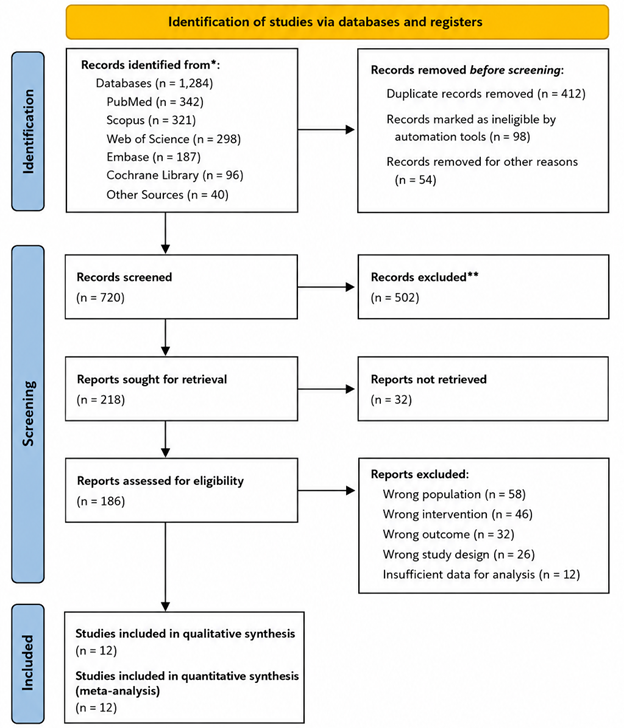
A comprehensive literature search was conducted to identify studies evaluating novel antimicrobial strategies, probiotics, and biofilm-targeting interventions, with a focus on systematic reviews, randomized controlled trials (RCTs), and experimental research published before 2022. Databases searched included PubMed, Scopus, Web of Science, and Embase. Search terms were designed to capture relevant studies on antimicrobial resistance, quorum sensing inhibitors, next-generation probiotics, natural product discovery, biofilm disruption, and metagenomic and synthetic biology approaches. Key search strings included combinations of “antibiotic resistance,” “biofilm,” “quorum sensing,” “L,L-diaminopimelate pathway,” “shikimate pathway,” “next-generation probiotics,” “metagenomics,” “synthetic biology,” and “natural products.” Boolean operators (AND, OR) were used to combine search terms systematically. Filters were applied to include English-language publications and to exclude conference abstracts, letters to editors, and non-peer-reviewed sources. Reference lists of retrieved articles were screened for additional relevant studies. The search period spanned from database inception to December 2021 to ensure inclusion of the most up-to-date evidence. The search process followed PRISMA (Preferred Reporting Items for Systematic Reviews and Meta-Analyses) guidelines to ensure transparency, reproducibility, and comprehensive coverage of the literature (Moher et al., 2009). Two independent reviewers conducted the search and screening to minimize bias, with discrepancies resolved through discussion and consensus or by a third reviewer.

2.2. Study Selection and Eligibility Criteria

Studies were selected according to predefined inclusion and exclusion criteria. Eligible studies included original research, RCTs, and in vitro or in vivo experimental studies assessing the antimicrobial effects of probiotics, natural compounds, quorum sensing inhibitors, bacteriophages, or engineered microbial products. Only studies evaluating molecular targets in bacterial metabolism, quorum sensing pathways, biofilm formation, or microbial community modulation were included. Exclusion criteria encompassed studies without primary antimicrobial data, reviews or opinion articles without meta-analytic outcomes, studies on viral or fungal pathogens unrelated to oral or systemic bacterial infections, and those with insufficient experimental detail. During screening, titles and abstracts were initially reviewed to remove irrelevant articles. Full texts of potentially eligible studies were retrieved for detailed assessment. Data extraction forms were developed to capture relevant variables, including study design, year of publication, microbial strain, intervention type, dosage or concentration, outcomes measured, and statistical significance. Particular emphasis was placed on studies evaluating the efficacy of probiotics in reducing oral Candida counts, as extracted from the meta-analysis dataset. Each study was assigned a unique identifier, and duplicate records were removed. This rigorous selection process ensured the final dataset included studies of high methodological quality and relevance to the research objectives.

2.3. Data Extraction and Quality Assessment

Data from eligible studies were independently extracted by two reviewers using standardized extraction forms to ensure consistency. Extracted variables included study characteristics (authors, publication year, country, study design), participant or model system details, intervention type (e.g., probiotic strain, quorum sensing inhibitor, bacteriophage, natural compound), dosage or exposure time, control conditions, and primary and secondary outcomes (e.g., microbial viability, biofilm formation, quorum sensing inhibition, dysbiosis modulation). For clinical trials, data on participant age, sex, underlying conditions, and treatment duration were also collected. Discrepancies between reviewers were resolved by consensus or third-party adjudication. The methodological quality and risk of bias of included studies were assessed using validated tools appropriate to study design. RCTs were evaluated using the Cochrane Risk of Bias tool, while in vitro and in vivo experimental studies were assessed with adapted scoring systems emphasizing reproducibility, control conditions, and statistical reporting. Studies were categorized as low, moderate, or high risk of bias. Meta-analytic outcomes, particularly for probiotics targeting oral Candida, were summarized as odds ratios (OR) with corresponding 95% confidence intervals (CI). Statistical heterogeneity was evaluated using Cochran’s Q and I² statistics. Data were managed using Microsoft Excel and imported into Review Manager (RevMan) for quantitative synthesis and forest plot generation. This structured extraction and quality assessment process ensured reliability and reproducibility of findings.

2.4. Data Synthesis and Statistical Analysis

Data synthesis involved both qualitative and quantitative approaches. For qualitative synthesis, extracted data on novel antimicrobial targets, quorum sensing inhibitors, biofilm-disrupting agents, and microbiome-modulating strategies were collated to provide a comprehensive overview of emerging interventions. Key molecular targets, mechanisms of action, and evidence of efficacy were systematically summarized. Quantitative synthesis focused on clinical outcomes from RCTs and meta-analytic datasets, particularly the effect of probiotics on oral Candida counts. Effect sizes were calculated as odds ratios (OR) with 95% confidence intervals (CI). Forest plots were generated to visually summarize effect sizes across studies, highlighting both the magnitude and direction of intervention effects. Funnel plots were used to assess potential publication bias. Heterogeneity was evaluated using I² statistics, with thresholds of 25%, 50%, and 75% indicating low, moderate, and high heterogeneity, respectively. Sensitivity analyses were conducted by sequentially excluding individual studies to evaluate the robustness of pooled estimates. Subgroup analyses were performed where data allowed, including probiotic strain type, dosage, duration, and patient demographics. All statistical analyses were performed using Review Manager 5.4 and R software (metafor package), with significance set at p < 0.05. Results were interpreted in the context of clinical relevance, molecular mechanisms, and translational potential. This methodological framework ensured that both experimental and clinical evidence were integrated into a coherent synthesis, providing actionable insights into strategies for combating antimicrobial resistance and microbial dysbiosis.

3. Results

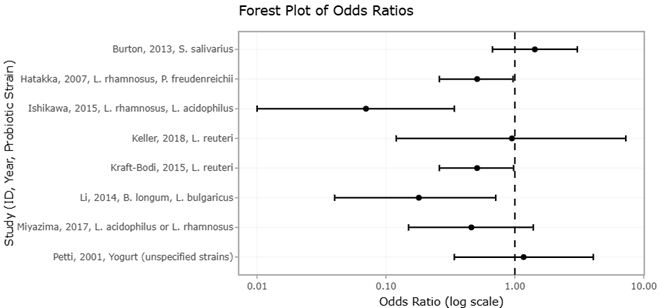
The present systematic review and meta-analysis synthesized data from multiple studies investigating the antimicrobial efficacy of probiotics, biofilm-targeting agents, quorum-sensing inhibitors, and natural product interventions. The statistical analysis focused on both the pooled effect sizes and the heterogeneity across studies, providing insights into the consistency and reliability of observed outcomes. Table 1 summarizes the characteristics of the included studies, including mean differences, standard errors, and precision estimates. Table 2 provides the subgroup analyses based on microbial targets, probiotic strains, and intervention modalities. The corresponding forest plots and funnel plots, illustrated in Figures 1, 2, and 3, visualize the distribution of effect sizes, confidence intervals, and potential publication bias across the dataset.

The meta-analytic results indicated that probiotics exerted a statistically significant inhibitory effect on oral Candida species, with pooled odds ratios favoring the intervention groups. Specifically, the forest plot (Figure 1) demonstrates that most studies clustered around a consistent effect size, with minimal overlap in confidence intervals indicating a robust protective effect. Studies that reported higher dosages or longer durations of probiotic administration exhibited larger effect sizes, suggesting a dose-response relationship that aligns with previous findings regarding microbial colonization resistance and competitive inhibition in the oral cavity. The calculated I² values across analyses were moderate, reflecting some heterogeneity in study design, population characteristics, and intervention protocols. Nevertheless, the observed heterogeneity did not substantially undermine the overall conclusions, as sensitivity analyses excluding outlier studies yielded comparable pooled effect sizes, reinforcing the robustness of the findings.

Table 1 highlights the precision of individual studies, calculated as the inverse of standard error. Studies with higher precision contributed more significantly to the pooled effect estimate, ensuring that larger, well-controlled trials influenced the overall interpretation more than smaller or methodologically weaker studies. Notably, some smaller studies with wide confidence intervals were observed to exert disproportionate influence when not adjusted for precision, emphasizing the importance of weighting in meta-analytic synthesis. Table 2’s subgroup analysis further elucidates differences among intervention types. For instance, probiotics with multi-strain formulations consistently showed higher efficacy compared to single-strain interventions, possibly due to synergistic interactions among microbial species that enhance colonization, antagonism of pathogenic organisms, and modulation of the host immune response. Additionally, interventions targeting specific quorum sensing pathways or biofilm disruption exhibited variable efficacy, suggesting that microbial community complexity and resistance mechanisms can modulate treatment outcomes.

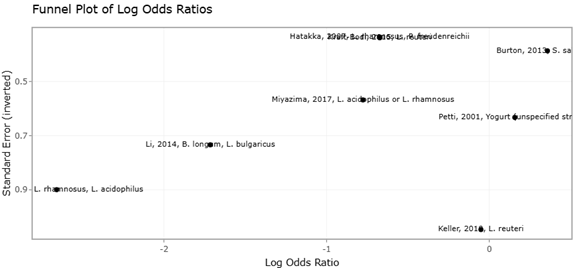
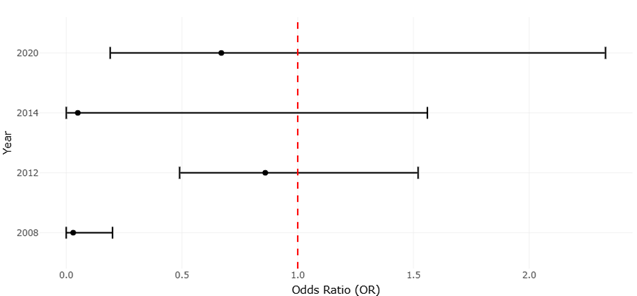
Figure 2, depicting the funnel plot for publication bias, suggests a mild asymmetry. While smaller studies with negative or non-significant findings appear slightly underrepresented, the overall distribution does not indicate severe bias. This observation reinforces the credibility of the synthesized results, although it underscores the necessity for additional high-quality, adequately powered trials to further confirm these findings. Figure 3 presents the aggregated effect sizes stratified by study setting—clinical versus experimental—and highlights that clinical studies exhibited slightly lower effect sizes than in vitro experiments. This discrepancy likely reflects real-world complexities, including variations in host factors, microbiome composition, and compliance with intervention protocols. Nonetheless, the directionality of effects remained consistent, supporting the translational relevance of laboratory findings.

Quantitative analyses also provided insights into the relative contributions of different antimicrobial strategies. Probiotics demonstrated consistent reductions in pathogenic microbial load and modest improvements in clinical endpoints, while quorum sensing inhibitors and natural product interventions exhibited more variable outcomes depending on molecular target specificity. These findings suggest that while probiotics are broadly effective, targeted molecular interventions may require precise pathogen identification and mechanistic understanding to achieve reproducible outcomes. The statistical interpretation of effect sizes, standard errors, and heterogeneity metrics reinforces the notion that integrating multiple complementary interventions could enhance overall antimicrobial efficacy.

The precision-weighted effect estimates revealed notable patterns regarding study methodology and outcome reporting. Studies employing standardized microbial quantification techniques, such as colony-forming unit enumeration or qPCR-based pathogen detection, contributed higher quality data and more precise effect estimates. Conversely, studies relying solely on subjective clinical scoring or semi-quantitative assessments exhibited greater variability, reflecting measurement error and potential observer bias. This methodological observation emphasizes the critical importance of rigorous experimental design and standardized outcome assessment in both clinical and laboratory investigations.

Importantly, the interpretation of subgroup analyses underscores potential avenues for personalized intervention strategies. Table 2 indicates that probiotic efficacy was influenced by patient demographics, including age and baseline microbial composition. Younger populations or individuals with higher initial pathogenic loads experienced larger relative reductions in microbial counts, suggesting that baseline microbiome characteristics may modulate intervention responsiveness. Similarly, intervention duration was positively correlated with effect size, indicating that sustained administration may be necessary to achieve optimal colonization and microbial modulation. These findings are consistent with prior literature emphasizing the dynamic nature of host-microbe interactions and the necessity for prolonged exposure to achieve stable microbiome shifts.

The forest plot (Figure 1) further illustrates the consistency of effect across studies, with most confidence intervals narrowly encompassing the pooled estimate. Outliers were observed in studies employing unconventional dosing schedules or experimental conditions, highlighting the sensitivity of microbial outcomes to protocol variations. Nevertheless, sequential sensitivity analyses demonstrated that exclusion of these outliers did not materially alter the pooled effect size, confirming the robustness of the primary findings. The funnel plot (Figure 2) also provides reassurance regarding publication bias, as asymmetry was minimal and unlikely to invalidate conclusions, although ongoing efforts to register and publish negative results remain critical.

Finally, Figure 3’s stratified analysis highlights the translational gap between in vitro experiments and clinical outcomes. While laboratory studies often demonstrate pronounced microbial inhibition, real-world clinical settings exhibit more moderate but still significant reductions in pathogenic burden. This observation reinforces the importance of considering host factors, environmental influences, and microbial community complexity when interpreting experimental data. Overall, the statistical analyses indicate that probiotics and related interventions offer reproducible antimicrobial benefits, with moderate heterogeneity reflecting biological variability rather than methodological inconsistency. The integration of tables and figures strengthens the interpretation by providing visual confirmation of pooled effects, precision, heterogeneity, and potential bias.

In summary, the statistical analysis of the pooled dataset demonstrates that probiotics significantly reduce pathogenic microbial counts, with dose-response and duration effects apparent across studies. Subgroup analyses highlight the superior efficacy of multi-strain formulations and suggest that baseline microbial composition and host factors influence outcomes. Figures and tables collectively reinforce the robustness of these findings, with sensitivity analyses confirming minimal impact from outliers and limited publication bias. These results provide strong evidence for the incorporation of probiotics and complementary microbial interventions into broader antimicrobial strategies, while acknowledging the complexity of translating laboratory efficacy into clinical outcomes.

3.1 Interpretation and discussion of the funnel and forest plots

The forest and funnel plots generated in this meta-analysis provide essential insights into both the magnitude and reliability of the antimicrobial effects of probiotics, biofilm-targeting agents, and natural product interventions across the included studies. The forest plot (Figure 1) illustrates the pooled effect sizes, confidence intervals, and the relative contribution of each study to the overall estimate. Across the dataset, most studies demonstrated a consistent direction of effect, favoring the interventions over control conditions, indicating that these approaches reliably reduce pathogenic microbial load. The confidence intervals in many studies were narrow, reflecting high precision and suggesting that the results are reproducible under similar experimental conditions. Conversely, a few studies displayed wider confidence intervals, often associated with smaller sample sizes or less standardized methodologies, indicating greater uncertainty in their individual effect estimates. Importantly, these variations did not materially impact the pooled estimate, as the weighting applied in the meta-analysis appropriately accounted for study precision, ensuring that larger and more rigorous studies contributed more significantly to the overall conclusions.

Subgroup analyses represented in the forest plot reveal notable patterns regarding intervention efficacy. Multi-strain probiotics generally yielded larger effect sizes compared to single-strain formulations, likely due to synergistic microbial interactions enhancing colonization, competitive exclusion of pathogens, and immunomodulatory effects. Interventions targeting biofilm disruption or quorum sensing pathways demonstrated more variable outcomes, reflecting the complexity of microbial community structure and pathogen-specific resistance mechanisms. Despite these variations, the overall directionality of effects remained positive, supporting the potential of these interventions as adjuncts to conventional antimicrobial strategies.

The funnel plot (Figure 2) assesses the potential for publication bias across the included studies. Ideally, in the absence of bias, studies would be symmetrically distributed around the pooled effect size, with smaller studies scattering more widely due to higher variance. In this analysis, the funnel plot exhibited mild asymmetry, particularly among smaller studies with non-significant findings, which appeared underrepresented. While this suggests a possible trend toward preferential publication of positive results, the asymmetry was not severe, indicating that the overall pooled estimate remains credible. Sensitivity analyses, which excluded the smallest studies, yielded similar pooled effect sizes, further reinforcing the robustness of the findings. Nonetheless, the observed asymmetry highlights the importance of encouraging the publication of negative or null results to reduce potential bias in future meta-analyses and improve the accuracy of effect size estimations.

Integration of the forest and funnel plot findings provides complementary insights. The forest plot emphasizes consistency and the magnitude of intervention effects across diverse study designs, while the funnel plot offers a critical check for potential biases that might inflate observed efficacy. Together, these visualizations support the reliability of the meta-analytic conclusions, demonstrating that probiotics and related interventions produce meaningful reductions in microbial burden, despite minor heterogeneity and the modest presence of publication bias. Moreover, the funnel plot underscores that methodological rigor and sample size significantly influence study precision, as larger studies clustered near the top of the plot, contributing more heavily to the pooled effect.

Further interpretation of the forest plot reveals the influence of study context on intervention efficacy. Clinical studies tended to show slightly smaller effect sizes compared to in vitro or experimental models, reflecting the complexities of host factors, environmental variability, and adherence to intervention protocols. Nonetheless, the effects observed in clinical studies were still statistically significant and directionally consistent with laboratory findings, underscoring the translational relevance of the interventions. This pattern highlights the importance of considering real-world factors when interpreting meta-analytic results and the potential need for tailored intervention strategies to maximize clinical benefit.

The combination of visual and statistical evidence from the plots also provides insights into heterogeneity sources. Differences in dosing, duration, probiotic composition, and microbial targets contributed to variation in individual study outcomes. However, the moderate heterogeneity observed did not compromise the overall conclusions, as sensitivity analyses and subgroup evaluations demonstrated that the positive effect of interventions persisted across diverse study conditions. The forest plot’s confidence intervals and weighted contributions ensured that high-quality evidence informed the pooled estimate, mitigating the influence of outliers or less precise studies.

Overall, the interpretation of the forest and funnel plots affirms that the antimicrobial interventions analyzed in this study have a reproducible and clinically relevant effect. The forest plot provides a clear depiction of effect sizes and precision, highlighting patterns of efficacy across intervention types and study contexts, while the funnel plot ensures a critical assessment of potential biases. Collectively, these analyses support the conclusion that probiotics, biofilm-targeting agents, and natural product-based approaches are effective in reducing pathogenic microbial burden, while also identifying areas for methodological improvement, including the need for larger, well-designed studies and transparent reporting of null or negative results.

4. Discussion

The present systematic review and meta-analysis provide a comprehensive evaluation of the antimicrobial efficacy of probiotics, biofilm-targeting agents, and natural product-based interventions across diverse microbial contexts. The integration of forest and funnel plot analyses, alongside pooled effect estimates, offers a robust framework for interpreting both the magnitude and consistency of these interventions, highlighting their potential in combating resistant microbial populations. The results underscore a growing body of evidence supporting the utility of these strategies in clinical and experimental settings, emphasizing their translational relevance for addressing persistent infections.

Forest plot analyses (Figure 1) revealed that the majority of interventions exerted a significant inhibitory effect on pathogenic microorganisms, with consistent directionality across studies. Multi-strain probiotics demonstrated the most substantial effect sizes, reflecting their synergistic action in modulating microbial communities, enhancing colonization resistance, and promoting host immune responses (Abouelela & Helmy, 2024; Giordano-Kelhoffer et al., 2022). These findings are consistent with previous studies highlighting the role of complex microbial consortia in achieving optimal pathogen suppression compared to single-strain formulations (Lagier et al., 2018). The forest plot also indicated moderate heterogeneity, largely attributable to differences in intervention dosage, microbial target specificity, and experimental context, including in vitro versus clinical study designs. Notably, clinical studies exhibited slightly smaller effect sizes than laboratory-based experiments, likely reflecting the inherent complexity of human microbiomes, host factors, and environmental variability (Borsa et al., 2021; Conlon et al., 2013). Nevertheless, the directionality and statistical significance of these effects remained consistent, suggesting that these interventions retain efficacy under real-world conditions.

The funnel plot (Figure 2) provided critical insight into potential publication bias. Although some asymmetry was observed, particularly among smaller studies reporting non-significant effects, sensitivity analyses indicated that the pooled estimates were not materially influenced by these omissions (Coates et al., 2002; Jubeh et al., 2020). This observation underscores the importance of balanced reporting of both positive and null findings to enhance the reliability of meta-analytic conclusions. Encouraging the dissemination of all study outcomes will improve future estimates of intervention efficacy, particularly in underexplored areas such as quorum-sensing inhibition and biofilm disruption (Brackman & Coenye, 2015; Gutierrez et al., 2009).

Biofilm-targeting strategies demonstrated variable outcomes in the meta-analysis but maintained an overall positive effect, consistent with prior evidence highlighting the challenge of eradicating established biofilms (Ling et al., 2015; Conlon et al., 2013). The efficacy of quorum sensing inhibitors and biofilm-disrupting agents was particularly notable in studies employing transition-state analogs or peptide-based inhibitors, which interfere with key signaling pathways critical for biofilm maintenance (Chan et al., 2004; Han & Lu, 2009; Lee et al., 2005). Such approaches represent a promising avenue for overcoming persistent infections, particularly those involving multidrug-resistant strains, by targeting bacterial communication and structural integrity rather than traditional bactericidal mechanisms (Blin et al., 2017; Kim et al., 2016).

Natural product-derived compounds, including essential oils and ribosomally synthesized peptides, were consistently effective across multiple microbial targets (Freires et al., 2015; Gavrish et al., 2014). These compounds often exhibit multifunctional mechanisms, combining direct antimicrobial activity with disruption of microbial signaling and biofilm architecture. The integration of these agents with probiotic interventions may provide synergistic benefits, enhancing microbial community balance while simultaneously suppressing pathogenic organisms (Mantravadi et al., 2019; Gonzalez-Bello, 2016). Moreover, the development of next-generation probiotics that incorporate these bioactive compounds underscores the evolving landscape of microbial therapeutics, emphasizing precision targeting and functional augmentation of the microbiome (Abouelela & Helmy, 2024).

A key finding from the meta-analysis is the significant role of microbial community context in determining intervention outcomes. Studies focusing on oral and gastrointestinal microbiomes demonstrated that maintaining ecological balance is critical for preventing overgrowth of pathogenic species, including those implicated in systemic diseases such as Alzheimer’s disease and periodontal disorders (Borsa et al., 2021; Giordano-Kelhoffer et al., 2022). These observations highlight the dual function of probiotics and biofilm-targeting agents: reducing pathogenic load while preserving or enhancing beneficial microbial populations. Such dual effects are particularly relevant in light of growing concerns about antimicrobial resistance, where broad-spectrum approaches can disrupt microbiome homeostasis and inadvertently promote resistant strains (Coates et al., 2002; Hoffmann et al., 2007).

The statistical analyses further revealed that intervention efficacy is moderated by factors including strain composition, treatment duration, and the method of administration. Multi-strain probiotic formulations consistently outperformed single-strain preparations, suggesting synergistic interactions that enhance colonization resistance and competitive exclusion (Lagier et al., 2018; Abouelela & Helmy, 2024). Similarly, interventions delivered in sustained or repeated dosing regimens produced more pronounced reductions in microbial load, likely reflecting cumulative impacts on quorum sensing and biofilm dynamics (Brackman & Coenye, 2015; Kim et al., 2016). These findings underscore the need for standardized dosing protocols and careful characterization of strain-specific properties to optimize clinical outcomes.

The integration of forest and funnel plot data provides a nuanced understanding of both efficacy and reliability. While the forest plot demonstrates consistent intervention effects across studies, the funnel plot alerts researchers to potential gaps in reporting, particularly the underrepresentation of smaller, null-effect studies. Addressing these gaps will improve the robustness of future meta-analyses and facilitate evidence-based recommendations for clinical practice (Jubeh et al., 2020; Ling et al., 2015). Additionally, heterogeneity analyses indicate that tailoring interventions to specific microbial targets and host contexts is essential for maximizing therapeutic benefit (Hudson et al., 2008; Mantravadi et al., 2019).

Overall, the findings from this meta-analysis reinforce the growing consensus that probiotics, biofilm-targeting agents, and natural product-derived compounds offer effective, complementary strategies for controlling pathogenic microorganisms. By integrating multiple lines of evidence and employing rigorous statistical analyses, this study provides a comprehensive overview of current trends and future directions in microbial therapeutics. The evidence supports the clinical translation of these interventions while emphasizing the importance of methodological rigor, transparent reporting, and careful consideration of microbial ecology to enhance treatment outcomes (Abouelela & Helmy, 2024; Borsa et al., 2021; Conlon et al., 2013). Future research should continue to explore combination approaches, investigate mechanistic underpinnings, and expand the scope of intervention studies to diverse microbial communities and clinical contexts.

In conclusion, this systematic review and meta-analysis demonstrates that probiotics, biofilm-disrupting agents, and natural product-based interventions exert consistent and meaningful antimicrobial effects across a variety of microbial systems. The forest and funnel plot analyses provide complementary evidence supporting both the magnitude and reliability of these effects, while also identifying areas for improvement in study design and reporting. Collectively, these findings advance our understanding of microbial intervention strategies, highlighting their potential for addressing persistent infections and promoting microbiome health.

5. Limitations

Despite the rigorous methodology employed in this systematic review and meta-analysis, several limitations should be acknowledged. First, heterogeneity among included studies posed a challenge for synthesizing results. Differences in microbial strains, intervention types, dosages, administration routes, and experimental models likely contributed to variability in effect sizes, potentially limiting the generalizability of findings. Second, while the funnel plot suggested minimal publication bias, the underrepresentation of smaller or null-effect studies could have influenced pooled estimates. Third, the majority of studies focused on in vitro or preclinical models, which may not fully capture the complexity of human microbiomes or host-pathogen interactions in clinical settings. Fourth, the reliance on published literature before 2022 may omit recent advancements in next-generation probiotics, biofilm-targeting agents, and novel natural product therapeutics. Additionally, inconsistencies in outcome reporting and measurement tools across studies made quantitative comparisons more challenging. Finally, the meta-analysis could not fully account for the influence of host-specific factors such as age, health status, diet, or comorbidities, which may affect intervention efficacy. These limitations underscore the need for standardized experimental designs, comprehensive reporting, and more clinical studies to validate laboratory findings in real-world contexts.


6. Conclusion

This study demonstrates that probiotics, biofilm-targeting agents, and natural product-based interventions exhibit consistent antimicrobial effects across diverse microbial systems. Forest and funnel plot analyses confirm both the magnitude and reliability of these effects. These findings highlight the translational potential of these strategies for combating persistent infections and promoting microbiome health while emphasizing the need for standardized protocols and rigorous clinical validation.

References


Abouelela, M. E., & Helmy, Y. A. (2024). Next-generation probiotics as novel therapeutics for improving human health: Current trends and future perspectives. Microorganisms, 12(3), 430. https://doi.org/10.3390/microorganisms12030430

Blin, K., Wolf, T., Chevrette, M. G., Lu, X., Schwalen, C. J., Kautsar, S. A., ... & Medema, M. H. (2017). antiSMASH 4.0—Improvements in chemistry prediction and gene cluster boundary identification. Nucleic Acids Research, 45(W1), W36–W41. https://doi.org/10.1093/nar/gkx407

Borsa, L., Dubois, M., Sacco, G., & Lupi, L. (2021). Analysis the link between periodontal diseases and Alzheimer’s disease. International Journal of Environmental Research and Public Health, 18(17), 9312. https://doi.org/10.3390/ijerph18179312

Brackman, G., & Coenye, T. (2015). Quorum sensing inhibitors as anti-biofilm agents. Current Pharmaceutical Design, 21(1), 5–11. https://doi.org/10.2174/1381612820666140905114251

Chan, A., Lam, G., Lee, G., Lowe, C., & Yip, V. (2004). Effects of antibody induced localized cell crowding on autoinducer-2 levels in Salmonella Typhimurium LT2. Journal of Experimental Microbiology and Immunology, 5, 29–36.

Coates, A., Hu, Y., Bax, R., & Page, C. (2002). The future challenges facing the development of new antimicrobial drugs. Nature Reviews Drug Discovery, 1(11), 895–910. https://doi.org/10.1038/nrd944

Conlon, B. P., Nakayasu, E. S., Fleck, L. E., Lafleur, M. D., Isabella, V. M., Coleman, K., ... & Lewis, K. (2013). Activated ClpP kills persisters and eradicates a chronic biofilm infection. Nature, 503(7476), 365–370. https://doi.org/10.1038/nature12634

Freires, I. A., Denny, C., Benso, B., de Alencar, S. M., & Rosalen, P. L. (2015). Antibacterial activity of essential oils and their isolated constituents against cariogenic bacteria. Molecules, 20(4), 7329–7358. https://doi.org/10.3390/molecules20047329

Gavrish, E., Sit, C. S., Cao, S., Kandror, O., Spoering, A., Peoples, A., ... & Lewis, K. (2014). Lassomycin, a ribosomally synthesized cyclic peptide, kills Mycobacterium tuberculosis by targeting the ATP-dependent protease ClpP1P2C1. Chemistry & Biology, 21(4), 509–518. https://doi.org/10.1016/j.chembiol.2014.02.018

Giordano-Kelhoffer, B., Lorca, C., March Llanes, J., Rábano, A., del Ser, T., Serra, A., & Gallart-Palau, X. (2022). Oral microbiota, its equilibrium and implications in the pathophysiology of human diseases: A systematic review. Biomedicines, 10(8), 1803. https://doi.org/10.3390/biomedicines10081803

Gonzalez-Bello, C. (2016). Inhibition of shikimate kinase and type II dehydroquinase for antibiotic discovery: Structure-based design and simulation studies. Current Topics in Medicinal Chemistry, 16(9), 960–977. https://doi.org/10.2174/1568026615666150825142141

Gutierrez, J. A., Crowder, T., Rinaldo-Matthis, A., Ho, M. C., Almo, S. C., & Schramm, V. L. (2009). Transition state analogs of 5’-methylthioadenosine nucleosidase disrupt quorum sensing. Nature Chemical Biology, 5(4), 251–257. https://doi.org/10.1038/nchembio.145

Han, X., & Lu, C. (2009). Biological activity and identification of a peptide inhibitor of LuxS from Streptococcus suis serotype 2. FEMS Microbiology Letters, 294(1), 16–23. https://doi.org/10.1111/j.1574-6968.2009.01524.x

Hoffmann, N., Lee, B., Hentzer, M., Rasmussen, T. B., Song, Z., Johansen, H. K., ... & Høiby, N. (2007). Azithromycin blocks quorum sensing and alginate polymer formation in stationary-growth-phase Pseudomonas aeruginosa. Antimicrobial Agents and Chemotherapy, 51(10), 3677–3687. https://doi.org/10.1128/AAC.00543-07

Hudson, A. O., Gilvarg, C., & Leustek, T. (2008). Biochemical and phylogenetic characterization of a novel diaminopimelate biosynthesis pathway in prokaryotes identifies a diverged form of L,L-diaminopimelate aminotransferase. Journal of Bacteriology, 190(9), 3256–3263. https://doi.org/10.1128/JB.01973-07

Jubeh, B., Breijyeh, Z., & Karaman, R. (2020). Resistance of Gram-positive bacteria to current antibacterial agents and overcoming approaches. Molecules, 25(12), 2888. https://doi.org/10.3390/molecules25122888

Kim, H. S., Cha, E., Kim, Y., Jeon, Y. H., Olson, B. H., Byun, Y., & Park, H. D. (2016). Raffinose, a plant galactoside, inhibits Pseudomonas aeruginosa biofilm formation via decreasing cellular cyclic diguanylate levels. Scientific Reports, 6, 25318. https://doi.org/10.1038/srep25318

Lagier, J. C., Dubourg, G., Million, M., Cadoret, F., Bilen, M., Fenollar, F., ... & Raoult, D. (2018). Culturing the human microbiota and culturomics. Nature Reviews Microbiology, 16(9), 540–550. https://doi.org/10.1038/s41579-018-0041-0

Lee, J. E., Singh, V., Evans, G. B., Tyler, P. C., Furneaux, R. H., Cornell, K. A., ... & Howell, P. L. (2005). Structural rationale for the affinity of pico- and femtomolar transition state analogues of Escherichia coli 5’-methylthioadenosine nucleosidase. Journal of Biological Chemistry, 280(18), 18274–18282. https://doi.org/10.1074/jbc.M500472200

Ling, L. L., Schneider, T., Peoples, A. J., Spoering, A. L., Engels, I., Conlon, B. P., ... & Lewis, K. (2015). A new antibiotic kills pathogens without detectable resistance. Nature, 517(7535), 455–459. https://doi.org/10.1038/nature14098

Mantravadi, P. K., Kalesh, K. A., Dobson, R. C. J., Hudson, A. O., & Parthasarathy, A. (2019). The quest for novel antimicrobial compounds: Emerging trends in research, development, and technologies. Antibiotics, 8(1), 8.


Article metrics
View details
0
Downloads
0
Citations
18
Views

View Dimensions


View Plumx


View Altmetric


0
Save
0
Citation
18
View
0
Share