1. Introduction
Premature coronary artery disease (pCAD) is, in many ways, an unsettling diagnosis. When coronary pathology appears before the age of 45 in men or 55 in women, it challenges not only clinical expectations but also the assumption that atherosclerotic burden is a disease of later life. The epidemiological footprint may seem numerically modest when compared with overall coronary artery disease (CAD) prevalence, yet its consequences are disproportionately severe. Patients often present at the height of their socioeconomic productivity, and the long-term burden of morbidity can be profound. Recent syntheses of emerging biomarkers and biosensing strategies suggest that earlier and more nuanced detection may be within reach, though the path forward is not entirely straightforward (Mageswaran et al., 2025).
At the heart of this effort lies a deceptively simple idea: disease leaves molecular traces before it leaves anatomical scars. Biomarkers—whether proteins, nucleic acids, metabolites, or inflammatory mediators—function as measurable bioindicators of underlying physiological disturbance (Ahmad et al., 2023; Kaushal et al., 2022). In theory, their detection could allow clinicians to identify vascular dysfunction long before luminal narrowing becomes angiographically visible. In practice, however, biomarker discovery and validation are iterative, sometimes uneven processes, requiring analytical rigor and reproducibility across platforms (Ahmad et al., 2023).
The conceptual appeal of biomarker-based diagnostics has, of course, been explored extensively in oncology and other systemic diseases, where early detection substantially alters prognosis (Asci Erkocyigit et al., 2023; Kaushal et al., 2022). Cardiovascular disease—particularly pCAD—poses its own complexities. The molecular signatures are often subtle, overlapping with inflammatory or metabolic pathways common to multiple disorders. This overlap complicates specificity and challenges single-analyte approaches. Nonetheless, cardiac troponins, C-reactive protein (CRP), homocysteine, soluble vascular adhesion molecules, and cytokines remain central candidates for early stratification (Mageswaran et al., 2025).
Traditional laboratory-based assays, while analytically robust, are not always optimized for rapid, decentralized screening. Venipuncture, centralized instrumentation, and turnaround times measured in hours or days are poorly aligned with preventive cardiology models that emphasize accessibility and timeliness. The search for portable, sensitive, and cost-effective platforms has therefore intensified. Among these, electrochemical biosensors (ECBs) have emerged as particularly compelling. Their operational principle—translating a biological recognition event into a measurable electrical signal—offers inherent simplicity, scalability, and compatibility with miniaturized electronics (Grabowska et al., 2018).
Electrochemical techniques such as differential pulse voltammetry, impedance spectroscopy, and square wave voltammetry are capable of resolving minute changes at electrode interfaces. This sensitivity is not merely theoretical. Nitrogen-doped graphene electrodes, for example, have demonstrated highly sensitive detection of cardiac troponin I in complex matrices such as serum and saliva (Chekin et al., 2018). Similarly, CRISPR/Cas12a-based electrochemical systems have pushed detection limits further, suggesting that enzymatic signal amplification can coexist with electrochemical transduction in clinically meaningful ways (Chen et al., 2022). These innovations, while promising, still require validation in broader and more heterogeneous patient cohorts.
An additional shift—arguably more transformative—has been the integration of aptamers as biorecognition elements within electrochemical architectures. Aptamers, short single-stranded nucleic acids selected through the Systematic Evolution of Ligands by Exponential Enrichment (SELEX), can bind targets with high affinity and specificity (Ellington & Szostak, 1990). Unlike antibodies, they are chemically synthesized, thermally stable, and amenable to structural modification. Their versatility has fueled a surge of aptamer-based sensors across biomedical fields (Farid et al., 2023; Kim et al., 2021).
In cardiovascular diagnostics, electrochemical aptasensors have shown notable promise. Early demonstrations of aptamer-functionalized electrodes for cardiac troponin I achieved rapid detection with impressive sensitivity (Jo et al., 2015). Subsequent refinements—such as gold nanoparticle-modified substrates—have improved surface chemistry and electron transfer kinetics, further lowering detection thresholds (Lopa et al., 2019). Reviews of electrochemical aptamer platforms underscore their adaptability across multiple cardiac biomarkers and transduction strategies (Grabowska et al., 2018). Still, despite analytical sophistication, translation into routine clinical workflows remains incomplete.
One of the persistent criticisms of biomarker-based diagnostics is the reliance on single analytes. Cardiovascular pathology is rarely monolithic; it is a networked process involving inflammation, endothelial dysfunction, thrombosis, and metabolic dysregulation. Consequently, multiplex detection—simultaneous quantification of several biomarkers—has gained increasing attention. Multi-analyte electrochemical aptasensors attempt to address this need by spatially or electrochemically resolving distinct targets on a single platform (Grabowska et al., 2022). Such strategies may provide a composite molecular fingerprint rather than a solitary signal.
Recent experimental systems exemplify this direction. Multiplexed aptasensors designed for acute myocardial infarction biomarkers demonstrate that simultaneous detection of troponins and ancillary proteins is technically feasible (Beduk et al., 2024). Beyond serum, saliva-based electrochemical platforms have emerged as attractive non-invasive alternatives, capitalizing on the biofluid’s diagnostic richness (Ilea et al., 2019). Indeed, EGaIn-modified paper-based electrochemical devices have shown the capacity to detect homocysteine and CRP concurrently in saliva, hinting at a future in which cardiovascular risk screening may extend beyond traditional clinical settings (Diao et al., 2024).
Yet, enthusiasm should be tempered with realism. Multiplexing introduces new variables: signal overlap, surface crowding, cross-reactivity, and calibration complexity. Nanotechnological approaches—ranging from structured nanomaterials to engineered redox labels—have been proposed to mitigate these challenges (Karimzadeh et al., 2020). Lessons drawn from multiplex bioassays in oncology and immunology further emphasize the importance of rigorous validation (Karachaliou & Livaniou, 2023). The technical feasibility of multiplex electrochemical aptasensors does not automatically guarantee clinical reliability.
The broader landscape of aptamer technology also continues to evolve. Emerging strategies in other disease contexts, including colorectal cancer and inflammatory disorders, highlight how aptamer engineering and surface chemistry refinements can enhance analytical performance (Lobo-Castañón & Díaz-Fernández, 2025; Kim et al., 2021). Insights from point-of-care aptasensor development underscore the value of simplicity and robustness, especially when targeting decentralized healthcare environments (Citartan & Tang, 2019). These cross-disciplinary advances inevitably inform cardiovascular applications, though translation remains contingent on clinical validation.
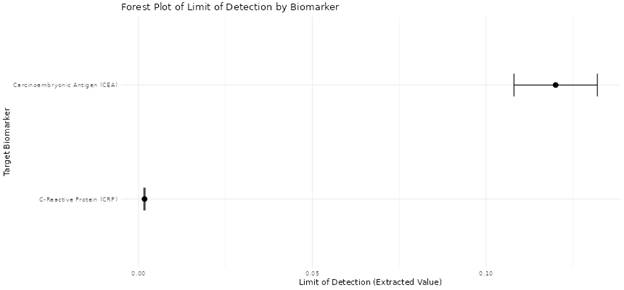
In this context, the early detection of pCAD stands at an intersection. On one side lies the expanding catalogue of cardiovascular biomarkers; on the other, the rapid evolution of electrochemical and aptamer-based sensing technologies. Recent analyses suggest that electrochemical biosensors are capable of detecting most clinically relevant pCAD biomarkers with ultralow limits of detection (Mageswaran et al., 2025). What is less clear—and warrants systematic scrutiny—is how consistently these platforms perform across studies, whether multiplex strategies genuinely improve predictive value, and how close such technologies are to practical deployment.
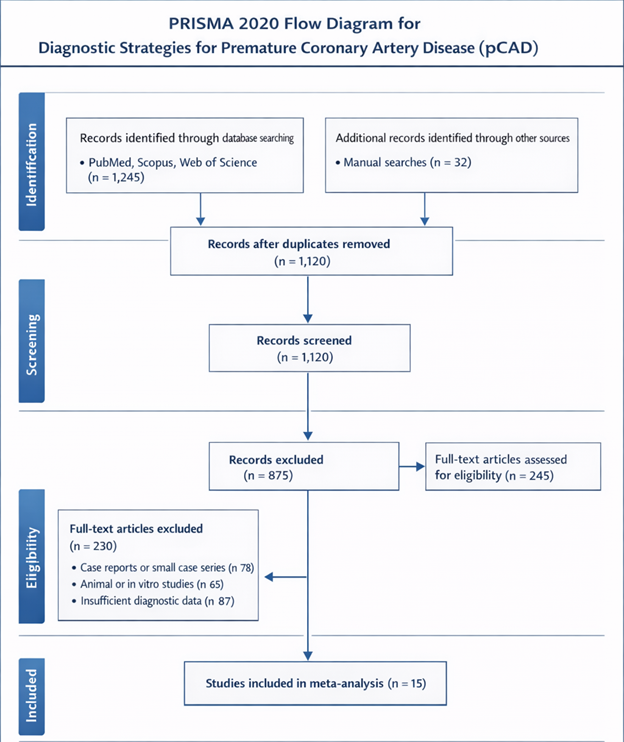
This systematic review therefore, seeks to critically examine electrochemical biosensors and aptasensors for early detection of premature coronary artery disease. By synthesizing evidence on biomarker selection, electrochemical transduction methods, multiplex configurations, and clinical applicability, we aim to clarify both the promise and the remaining uncertainties. The goal is not simply to catalogue innovations, but to interrogate their readiness for translation—recognizing that technological elegance must ultimately align with clinical utility.