The human gastrointestinal tract, it turns out, is colonized by something considerably more complex than "a lot of bacteria." Trillions of microorganisms make up the gut microbiota, and their collective genomic repertoire outnumbers the host genome by at least two orders of magnitude (Sutanto & Fetarayani, 2026). Over the past several decades, research on this ecosystem has moved — not always smoothly, but steadily — from basic descriptive association toward deeper mechanistic inquiry, establishing the gut microbiota as a malleable, functionally integrated "virtual organ" central to nutrient extraction, metabolic homeostasis, xenobiotic biotransformation, and immune education (Puig-Castellví et al., 2023; Sutanto & Fetarayani, 2026). Disruption of this ecological balance — dysbiosis, characterized by diminished functional diversity and the loss of keystone taxa — has been causally implicated in a long list of chronic disorders, from inflammatory bowel disease and metabolic syndrome to neuropsychiatric conditions, chronic kidney disease, and gastrointestinal cancers (Kharb & Zhu, 2026; Puig-Castellví et al., 2023).
Translating these mechanistic insights into something clinically usable requires, first, a comprehensive and spatiotemporally resolved picture of host-microbiome crosstalk (Sutanto & Fetarayani, 2026), and it is this requirement that has pushed the field toward data-driven, precision interventions rather than the one-size-fits-all supplementation strategies of the past (Alexandrescu et al., 2025; Gibbons et al., 2022). The sections that follow synthesize this landscape across four broad strands: the multi-omics hierarchy needed to move past taxonomy alone; the computational platforms — both statistical and mechanistic — used to make sense of the resulting data; the clinical biotherapeutic modalities, synthetic and nanotechnological alike, now being engineered for targeted delivery; and, finally, the translational bottlenecks and demographic biases that still stand between this science and equitable global implementation.
2.1 The Multi-Omics Hierarchy: Resolving Taxonomic and Functional Realities
Traditional 16S rRNA amplicon sequencing remains, in a sense, the workhorse of microbiome characterization — cost-effective, widely accessible, and adequate for a coarse fingerprint of community structure via hypervariable genomic regions (Cai et al., 2023; Sharma et al., 2026). Its limitations, however, are not trivial: PCR amplification bias is a persistent problem, species- and strain-level resolution is often out of reach, and non-bacterial kingdoms — viruses, fungi, archaea — fall largely outside its view, as do the community's active metabolic outputs (Cai et al., 2023; Sharma et al., 2026). Whole-metagenome shotgun (WMS) sequencing sidesteps most of these constraints by reading essentially all genomic DNA in a sample, which permits high-resolution, multi-kingdom taxonomic profiling alongside the reconstruction of metagenome-assembled genomes (MAGs) and the detection of population-level single-nucleotide polymorphisms (Cai et al., 2023; Kharb & Zhu, 2026).
Even so, metagenomics alone only tells you what a community could do — its genetic potential — not what it is actually doing at a given moment (Kharb & Zhu, 2026). Capturing that real-time, context-dependent behavior requires layering in additional omics tiers (Gibbons et al., 2022), summarized in Figure 1: metatranscriptomics, which uses high-throughput RNA sequencing of microbial mRNA to reveal which pathways are being actively transcribed under specific pressures such as dietary shifts or drug exposure (Cai et al., 2023; Sharma et al., 2026); metaproteomics, which characterizes the community's actual expressed protein complement — modern data-independent acquisition methods, such as diaPASEF, can confidently resolve tens of thousands of microbial and host proteins (mucins, defensins, secretory IgA) from a single fecal or biopsy sample, offering a direct window into barrier status and active enzyme classes such as carbohydrate-active enzymes, or CAZymes (Sharma et al., 2026); and metabolomics, which quantifies the low-molecular-weight end products of host-microbe co-metabolism — short-chain fatty acids, secondary bile acids, amino acid derivatives — that arguably sit closest to the clinical phenotype of any omics layer (Puig-Castellví et al., 2023; Sharma et al., 2026).
Large cohort studies have underscored just how tightly these layers are coupled. Mass-spectrometry metabolite profiling paired with fecal metagenomics across thousands of deeply phenotyped individuals found that microbiome composition alone explains up to 46% of the variance in circulating plasma metabolites (Puig-Castellví et al., 2023) — a figure that, again, is difficult to dismiss as biologically trivial. Taken together, this body of work makes a fairly persuasive case that no single omics layer, examined in isolation, can adequately capture host-microbiome interaction; the whole genuinely appears to exceed the sum of its parts (Sharma et al., 2026; Sutanto & Fetarayani, 2026).
2.2 Computational Architectures: Deciphering High-Dimensional Biology
The central practical difficulty in personalized microbiome medicine is not, in the end, a shortage of data — it is what to do with the flood of it that multi-omics platforms now generate (Rajak et al., 2026). This data carries its own peculiar statistical baggage: sequencing reads reflect relative, not absolute, abundances, a "compositional constraint" that violates the feature-independence assumptions built into most standard statistical tests (Puig-Castellví et al., 2023). Bioinformatic pipelines address this, at least partially, through preprocessing transformations such as the centered log-ratio (clr) transform combined with Bayesian-multiplicative zero imputation, which restores something closer to scale-invariant feature independence before any modeling begins (Alexandrescu et al., 2025; Puig-Castellví et al., 2023). Downstream integration frameworks then tend to split along a fairly clean conceptual line: data-driven (statistical and machine-learning) approaches on one side, knowledge-driven (systems-biology and mechanistic) approaches on the other (Puig-Castellví et al., 2023; Sharma et al., 2026), a division illustrated schematically in Figure 2.
Data-Driven and Artificial Intelligence Models. Machine learning excels precisely where traditional correlation-based statistics struggle — recognizing complex, nonlinear structure buried in high-dimensional data (Kharb & Zhu, 2026; Puig-Castellví et al., 2023). Supervised algorithms such as Random Forest and support vector machines are now used routinely to classify patient cohorts, predict clinical parameters like body mass index or HbA1c, and identify robust diagnostic biomarkers (Alexandrescu et al., 2025; Jeyavelkumaran et al., 2026). In colorectal cancer diagnostics specifically, multi-omics classifiers combining Random Forest or graph convolutional networks with fecal metagenomic, metabolomic, and host transcriptomic data have achieved area-under-the-curve values as high as 0.98, compared with just 0.61 for models relying on taxonomic profiles alone (Jeyavelkumaran et al., 2026) — a gap large enough to suggest that taxonomy alone is simply the wrong resolution for this kind of diagnostic task. Unsupervised methods, meanwhile — Partition Around Medoids, hierarchical clustering with complete linkage — are used to stratify patients into reproducible gut enterotypes and co-abundance gene groups (Alexandrescu et al., 2025; Jeyavelkumaran et al., 2026), while deep unsupervised architectures such as variational and denoising autoencoders compress high-dimensional multi-omics profiles into dense latent spaces without discarding biological context (Alexandrescu et al., 2025; Rahimah et al., 2026). Chemometric and multi-block integration tools round out this toolkit: DIABLO maximizes shared information across data matrices, while MOFA applies Bayesian regularization to capture both shared and layer-specific variation across host and microbiome data (Jeyavelkumaran et al., 2026).
2.3 Knowledge-Driven and Systems Biology PlatformsStatistical models, for all their predictive power, remain bound by whatever training data they happened to see, and their internal logic tends to stay somewhat opaque to mechanistic interpretation (Gibbons et al., 2022). Systems biology fills much of that gap by leaning on curated physiological databases and mechanistic modeling instead (Sutanto & Fetarayani, 2026). At the gene-to-metabolite level, tools such as gutSMASH scan genome assemblies to predict biosynthetic gene clusters encoding specialized microbial metabolites (Kharb & Zhu, 2026), while functional annotation servers like KAAS (the KEGG Automatic Annotation Server) and manually curated resources such as the Gut Metabolic Modules map
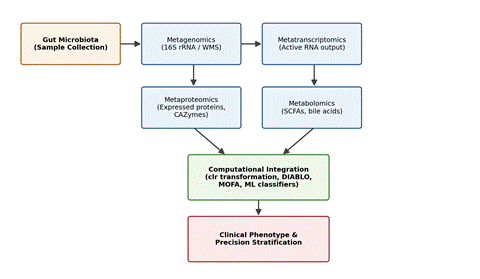
Figure 1. Layered multi-omics hierarchy used to resolve gut microbiome taxonomy and function, progressing from metagenomic sampling through metatranscriptomic, metaproteomic, and metabolomic profiling to computational integration and clinical phenotyping. Each downstream layer captures information the layer above it cannot (e.g., active transcription, expressed protein, or metabolic output), and centered log-ratio-transformed multi-omics integration (via DIABLO/MOFA) links these layers to host clinical phenotype. Adapted from Cai et al. (2023), Puig-Castellví et al. (2023), and Sharma et al. (2026).
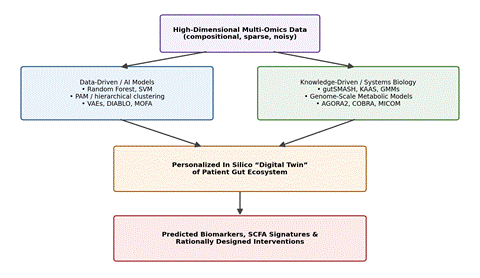
Figure 2. Computational architectures used to interpret high-dimensional, compositional multi-omics data, divided into data-driven/artificial-intelligence approaches (Random Forest, clustering, autoencoders, DIABLO, MOFA) and knowledge-driven/systems-biology approaches (gutSMASH, KAAS, AGORA2, COBRA, MICOM), converging on a personalized digital-twin simulation from which predicted biomarkers and interventions are derived. Adapted from Puig-Castellví et al. (2023), Sharma et al. (2026), and Jeyavelkumaran et al. (2026).
metagenomic reads directly onto biochemical reactions and enzymatic pathways (Puig-Castellví et al., 2023; Sharma et al., 2026).
At the ecosystem scale, genome-scale metabolic models (GSMMs) — full stoichiometric reconstructions of a species' biochemical reaction network, built from genome annotation — allow researchers to simulate the metabolic behavior of entire microbial communities rather than single organisms in isolation (Sharma et al., 2026; Sutanto & Fetarayani, 2026). The expansion of resources such as AGORA2, which curates high-quality metabolic reconstructions for 7,302 human gut microorganisms, has made it feasible to construct personalized, in silico "digital twins" of an individual patient's microbiota (Sharma et al., 2026; Sutanto & Fetarayani, 2026). Constraint-based optimization toolboxes — COBRA and the MICOM framework, among others — then allow researchers to simulate community-level resource allocation, metabolic flux, and inter-species cross-feeding under personalized dietary or prebiotic constraints (Gibbons et al., 2022; Sharma et al., 2026). Bauer and Thiele (2018) offer what is probably still the clearest demonstration of this approach in practice: using the BacArena framework, they integrated pediatric Crohn's disease metagenomic data into personalized in silico microbiotas, accurately predicting patient-specific SCFA signatures and rationally designing dietary glycan supplements — pectin, in particular — capable of restoring homeostatic butyrate and propionate production.
2.4 Synthetic Biology and Engineered "Sense-and-Respond" Chassis
Synthetic biology has taken precision biotherapeutics a step further still, converting commensal bacteria into something closer to programmable living devices (Sutanto & Fetarayani, 2026). Probiotic chassis such as Escherichia coli Nissle 1917 (EcN) and Lactococcus lactis have been reprogrammed with synthetic gene circuits and modular plasmids that express therapeutic enzymes or anti-inflammatory cytokines locally within the gut (Sutanto & Fetarayani, 2026). EcN engineered to express phenylalanine ammonia-lyase (PAL) or L-amino acid deaminase, for instance, can degrade excess systemic phenylalanine in patients with phenylketonuria or reduce toxic metabolites implicated in insulin resistance (Sutanto & Fetarayani, 2026); engineered L. lactis secreting glucagon-like peptide-1 (GLP-1) under glucose-responsive promoters, meanwhile, offers an autonomous, diet-sensitive route to blood glucose homeostasis (Sutanto & Fetarayani, 2026).
Perhaps the more ambitious frontier here is the "sense-and-respond" living therapeutic — a strain engineered to combine sensing modules that detect localized pathological cues (low luminal pH, reactive oxygen species, nitrate, pro-inflammatory cytokines such as TNF-alpha or IL-6) with genetic logic gates that trigger synthesis and release of a therapeutic payload only where and when it is needed (Sutanto & Fetarayani, 2026). The appeal is fairly intuitive: anti-inflammatory cytokines such as IL-10, or gut-healing metabolites such as butyrate, can in principle be delivered strictly at sites of active tissue injury, sidestepping the systemic side effects that plague conventional immunosuppressants and broad-spectrum biologics (Sutanto & Fetarayani, 2026).
2.5 Nanotechnology and Stimuli-Responsive Targeted Delivery
Delicate, often oxygen-sensitive probiotic strains and volatile postbiotic metabolites face a genuinely hostile journey through gastric acid and bile salts before ever reaching the colon, and nanobiotechnology has developed increasingly sophisticated microencapsulation strategies to help them survive it (Hussain et al., 2026; Nair et al., 2026). Biocompatible, biodegradable polymer carriers — alginate, chitosan, pectin, gelatin — are formulated to shield microbial membranes throughout processing, storage, and gastric transit (Hussain et al., 2026; Nair et al., 2026); alginate-chitosan microgels encapsulating Lactobacillus species, for example, have shown markedly improved survival and colonization in vivo, promoting faster microbiome restoration and barrier repair (Nair et al., 2026).
Smart nanomaterials extend this idea further by enabling stimuli-responsive release rather than passive protection alone (Hussain et al., 2026). Mesoporous silica nanoparticles and polymeric carriers can be engineered to respond to specific chemical cues within the colonic microenvironment (Nair et al., 2026): azoreductase-responsive carriers exploit the high azo-bond cleavage activity of Clostridiales and Bacteroidales in the distal colon (Nair et al., 2026); beta-glucuronidase-responsive vehicles release glucuronide-prodrug conjugates specifically where colonic bacterial enzyme activity is highest (Nair et al., 2026); and SCFA-responsive nanocarriers use pH-sensitive cores that dissolve within the slightly acidic pH range (6.5–6.8) characteristic of high-SCFA niches occupied by Bifidobacterium and Lactobacillus (Nair et al., 2026). More recently, "exosome-nanoparticle hybrid" platforms have refined targeting further still, coating synthetic nanoparticles with bacterial outer membrane vesicles to co-opt native bacterial communication pathways and guide therapeutic cargo toward specific taxonomic niches with minimal off-target consequence (Nair et al., 2026). Figure 3 synthesizes this precision-biotherapeutic pipeline, from next-generation probiotics and synthetic circuits through nanoscale delivery to targeted clinical outcomes.
2.6 Precision Clinical Bioactive Design: From Empirical Supplementation to Engineered Consortia
Armed with high-resolution metagenomic data and reasonably predictive computational models, the clinical field is shifting — unevenly, but visibly — from empirical dietary supplementation toward genuine precision microbiome engineering (Alexandrescu et al., 2025; Sutanto & Fetarayani, 2026). This shift spans a tiered spectrum of functional agents designed to modify or replace dysbiotic ecosystems (Sutanto & Fetarayani, 2026). Conventional probiotics have historically leaned on a fairly narrow set of dairy-associated Lactobacillus and Bifidobacterium strains, useful for broad, non-specific immunological benefit but often unable to engraft stably within a highly competitive resident gut ecosystem (Sutanto & Fetarayani, 2026). Next-generation probiotics (NGPs) and live biotherapeutic products (LBPs) depart from this model by using strictly anaerobic, human-derived commensal strains — Akkermansia muciniphila, Faecalibacterium prausnitzii, Eubacterium hallii, Bacteroides fragilis — rationally selected against specific functional deficits rather than general wellness claims (Abdul Manan, 2025; Sutanto & Fetarayani, 2026). A. muciniphila, for instance, has been shown in clinical pilots to enhance gut-barrier function, upregulate colonic histone deacetylase-3, stimulate brown adipose tissue lipid oxidation, and meaningfully improve metabolic biomarkers in insulin-resistant, overweight volunteers (Abdul Manan, 2025; Sharma et al., 2026); trials using donor-derived clonal cell banks such as VE303, or rationally defined multi-strain consortia, have similarly demonstrated efficacy and safety in preventing recurrent Clostridioides difficile infection and mitigating mucosal inflammation in ulcerative colitis (Abdul Manan, 2025; Sutanto & Fetarayani, 2026).
2.7 Methodological Barriers, Translational Gaps, and Socio-Demographic Bias
For all this momentum, several fundamental translational and ethical challenges continue to restrict routine bench-to-bedside application of precision microbiome medicine (Alexandrescu et al., 2025; Gibbons et al., 2022), summarized alongside potential remedies in Figure 4.
Methodological Heterogeneity and the Causality Gap. At the bench level, the absence of standardized protocols remains a substantial obstacle to reproducibility (Cai et al., 2023; Sharma et al., 2026). Small variations in sample collection, stabilization buffers, DNA/RNA extraction methods (the presence or absence of mechanical bead-beating being a common culprit), sequencing platforms, and reference database choice can introduce batch effects severe enough to generate contradictory findings across otherwise comparable cohorts (Alexandrescu et al., 2025; Sharma et al., 2026). Compounding this, a large share of published clinical microbiome studies remain cross-sectional and observational, which — as is so often the case in biomedical research — invites the conflation of correlation with causation (Cai et al., 2023; Puig-Castellví et al., 2023). Bridging this causality gap increasingly relies on in vitro and ex vivo models (anaerobic bioreactors, continuous-culture "gut-on-a-chip" systems, 3D organoids) alongside germ-free, gnotobiotic, and antibiotic-treated animal models, all used to validate in silico predictions of microbe-metabolite-host interaction under controlled conditions (Cai et al., 2023; Gibbons et al., 2022; Puig-Castellví et al., 2023).Socio-Demographic and Ethnic Database Bias. A less frequently discussed, but arguably more consequential, bottleneck concerns who is actually represented in reference genomic databases. Over 71% of publicly available human metagenomic datasets originate from highly industrialized nations, with the United States and Europe contributing the overwhelming majority (Cai et al., 2023; Gibbons et al., 2022). This skew is not a minor statistical footnote — it directly compromises the generalizability of predictive machine-learning models and personalized nutrition algorithms, since gut microbiome composition, host genetics, and habitual diet are so tightly interlinked; models trained predominantly on Western cohorts simply do not perform as robustly when applied to indigenous, non-industrialized, or rural populations elsewhere (Cai et al., 2023; Gibbons et al., 2022). Expanding participant recruitment, standardizing metadata reporting across multi-site global trials, and adopting
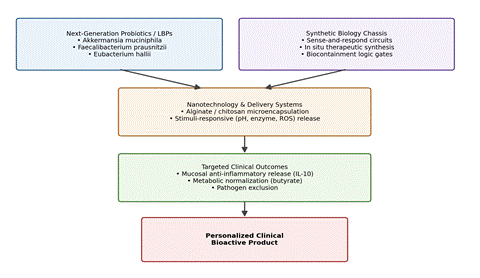
Figure 3. Precision biotherapeutic design pipeline linking next-generation probiotics and synthetic-biology sense-and-respond chassis to stimuli-responsive nanotechnology delivery and targeted clinical outcomes such as mucosal anti-inflammatory release, metabolic normalization, and pathogen exclusion. Adapted from Sutanto and Fetarayani (2026), Hussain et al. (2026), and Nair et al. (2026).
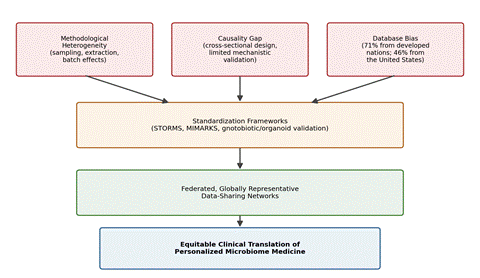
Figure 4. Translational roadmap addressing methodological heterogeneity, the causality gap, and geographic/demographic database bias, and the standardization and data-sharing pathways proposed to resolve them en route to equitable clinical translation. Adapted from Cai et al. (2023), Gibbons et al. (2022), and Nair et al. (2026).
secure, decentralized data-sharing frameworks such as federated learning are, at this point, urgent rather than aspirational priorities if the benefits of precision medicine are to be distributed equitably (Alexandrescu et al., 2025; Cai et al., 2023; Gibbons et al., 2022).
Taken as a whole, precision gut medicine represents a genuinely transformative shift in modern healthcare — one integrating high-throughput multi-omics sequencing, machine learning, genome-scale systems modeling, and biomimetic delivery systems (Sharma et al., 2026; Sutanto & Fetarayani, 2026). By moving past static, correlation-based taxonomic surveys toward dynamic, causally grounded, and structurally resolved models of host-microbiome interaction, researchers are increasingly able to design personalized biotherapeutic consortia, engineered sense-and-respond therapeutics, and targeted nanoprobiotics with genuine clinical intent (Jeyavelkumaran et al., 2026; Nair et al., 2026; Sutanto & Fetarayani, 2026). Realizing this at global scale, however, will require rigorous standardization of bioinformatic pipelines, systematic in vivo validation of in silico predictions, and a sustained, coordinated effort to dismantle socio-demographic bias in genomic databases (Cai et al., 2023; Gibbons et al., 2022; Sharma et al., 2026).
