
Data Modeling

Mathematical and Computational Data Modeling
0
Citations
4.5k
Views
29
Articles
Your new experience awaits. Try the new design now and help us make it even better
Switch to the new experience
Figures and Tables
RESEARCH ARTICLE   (Open Access)

Exploring the Impact of Gamified Approaches on Bangla Language Learning for English Medium School Students in Bangladesh: Necessity, Challenges, and Futurology

Sheikh Saad Sristy

+ Author Affiliations

Data Modeling 4 (1) 1-8 https://doi.org/10.25163/data.4110804

Submitted: 22 October 2023 Revised: 10 December 2023  Published: 20 December 2023 


Abstract

In recent decades, the proliferation of English medium schools has led to a remarkable surge in English language usage among the younger generation. However, this trend has inadvertently resulted in a deficiency of proficiency in their mother language, Bangla. In response, this research paper advocates for the introduction of a novel learning module to rectify this linguistic imbalance. The paper's focus lies in addressing the challenges faced by English medium school students in attaining proficiency in Bangla. Drawing from the emergent field of gamification, the study pioneers an adaptive VARK learning approach, further enriched by the incorporation of machine learning algorithms. This innovative model not only tackles the complexities stemming from English language dominance and inadequate co-curricular activities but also holistically accounts for the diverse learning styles and preferences of students. Delving into the scholarly discourse, the paper sheds light on the potential benefits and inherent challenges of gamified language learning methodologies tailored specifically for young learners. By seamlessly integrating machine learning, the proposed model dynamically adapts the learning trajectory, ensuring an optimal balance between challenge and advancement. Moreover, the paper envisions the transformative role of burgeoning technologies, including virtual reality and mixed reality, in augmenting the gamified learning experience. In essence, this research paper stands as a rallying point for a much-needed paradigm shift in language education, presenting a pioneering route towards fostering profound proficiency in Bangla while maintaining a fluency in English, thereby ensuring a more culturally enriched and linguistically adept generation.

Keywords:  Artificial intelligence, Bangla language learning, Cultural identity, Cultural relevance, Language development, Mother tongue proficiency, Role-playing games.

1. Introduction

Walk into almost any English medium classroom in Dhaka—or Chittagong, or Sylhet, for that matter—and you will likely hear far more English than Bangla, even during the few minutes between classes when students are simply chatting with one another. This is not, in itself, a bad thing. English medium education has opened doors: international universities, global job markets, a kind of linguistic capital that many parents see as essential for their children's futures. But there is a quieter cost to this arrangement, one that does not show up neatly on report cards or standardized tests. It is the slow erosion of fluency, comfort, and even affection toward Bangla, the language that carries the bulk of these students' cultural inheritance.

This tension—between the practical pull of English and the cultural anchor of Bangla—is not unique to Bangladesh, of course. Scholars have longed how bilingual and multilingual learners navigate competing language demands, and how the language of instruction shapes not just academic outcomes but identity itself (Celik & Kozikoğlu, 2016; Kecskes & Papp, 2000a, 2000b). What does seem more specific to the Bangladeshi context, though, is the scale of the imbalance: an entire generation of students who can discuss complex topics fluently in English yet stumble over basic Bangla composition, or who feel a kind of embarrassment when asked to write a formal letter in their mother tongue. Nur (2021) documented this phenomenon directly, identifying several recurring obstacles—chief among them the dominance of English as the primary medium of communication, a relative lack of engaging Bangla lessons, minimal co-curricular activity in Bangla, and an entertainment landscape (television, films, social media) that is overwhelmingly English-language. Add to this a general sense that institutions and teachers simply do not prioritize Bangla the way they do English, and the picture that emerges is one of quiet, structural neglect rather than any single dramatic failure.

Why should this matter, though? Why not simply let English medium students become more English-dominant, if that is where the world seems to be heading? Here is where the literature on mother-tongue proficiency becomes important—and, frankly, somewhat compelling. Nishanthi (2020) synthesizes a body of research suggesting that proficiency in one's first language is not merely a cultural nicety but is tied to broader intellectual development; children who are strong in their mother tongue tend to show accelerated cognitive growth and, somewhat counterintuitively, often perform better academically even in subjects taught through a second language (Table 1). There is also the matter of identity—a sense of belonging, of connection to one's heritage—which mother tongue proficiency seems to nurture in ways that a second language, however fluently spoken, cannot fully replicate (Kramsch, 1993). And from a purely linguistic standpoint, a solid foundation in one's first language appears to make acquiring additional languages easier, not harder, by providing a kind of cognitive scaffolding (Anil, 2017; Sauro, 2005). So the question is not whether Bangla matters—it clearly does—but how to make it matter to students who have, perhaps without quite realizing it, drifted away from it.

This is where gamification enters the picture, and it is worth pausing on why this particular approach has gained so much traction in language education over the past decade or so. At its core, gamification refers to the application of game-design elements—points, levels, badges, narratives, competition, immediate feedback—to non-game contexts, with the goal of increasing motivation and engagement (Hamari et al., 2014; Luo, 2023). The appeal is intuitive enough: if students are willing to spend hours mastering the mechanics of a video game, perhaps some of that energy can be redirected toward language learning. And the evidence, on balance, is encouraging. Alomair and Hammami (2019) found that gamified techniques tend to boost motivation, engagement, and retention across a range of foreign language learning contexts. Similarly, Alsawaier (2018) reported measurable gains in both motivation and engagement when gamified elements were introduced into otherwise conventional coursework. Studies focused specifically on language classrooms—Cruaud's (2016) work on a French-as-a-foreign-language course, or Baber's (2015) course-level gamification model for TEFL in Japan—suggest that these benefits are not confined to any one linguistic or cultural setting.

Yet gamification is not a panacea, and it would be naïve—maybe even a little irresponsible—to present it as one. The literature is reasonably clear-eyed about the pitfalls. Harviainen (2014) raises critical concerns about what happens when gamification is implemented carelessly: it can introduce irregularities, provoke objections from students who feel the competitive framing is unfair, stretch lesson time in ways that crowd out other content, or simply create a noisy, chaotic classroom environment that undermines the very engagement it was meant to foster. Dicheva et al. (2015), in their systematic mapping of gamification in education, similarly note that while the field has grown rapidly, the quality and rigor of implementation vary enormously—some efforts amount to little more than slapping a leaderboard onto an existing curriculum, with predictably shallow results. Chang (2015) makes a related point in the context of massive open online courses, observing that engagement mechanics only work when they are meaningfully tied to learning objectives rather than bolted on as decoration (Islam & Hossain 2021).

There is also the question of culture—something that, in a context like Bangladesh's, cannot be treated as an afterthought. Storytelling, role-play, and narrative immersion appear repeatedly in the literature as mechanisms through which gamified learning can carry cultural weight rather than existing in a kind of culturally neutral vacuum (Kramsch, 1993; Garland, 2015). Berns et al. (2014), for instance, describe how gamified mobile applications can incorporate peer assessment and community-driven content in ways that reflect the social fabric of the learners themselves. Holden and Sykes (2011) push this further with place-based mobile games, situating language learning within recognizable, locally meaningful environments—an idea that seems particularly promising for Bangla, where so much of the language's richness is tied to place, festival, and everyday social ritual.

Several popular platforms—Duolingo, Kahoot, FluentU among them—have already demonstrated, at least anecdotally, that gamified language apps can be engaging for younger learners, even if critics argue (not entirely unfairly) that such apps tend to emphasize vocabulary and grammar drills over deeper communicative competence (Gangaiamaran & Pasupathi, 2017). Still, as a supplement rather than a replacement for classroom instruction, their value seems hard to dismiss outright.

What remains comparatively underexplored, however, is how these ideas might be adapted specifically for Bangla, and specifically for English medium students in Bangladesh—a population with a fairly distinct linguistic profile and set of needs. Existing studies on gamification in the Bangladeshi context (Heil et al., 2022) tend to focus on primary education broadly, rather than on the particular tension between English dominance and Bangla proficiency that this paper is concerned with. Nor has much attention been paid to individual differences in how students learn—a gap that seems worth addressing, given that learners process information through quite different channels (Goh et al., 2019). The VARK framework—visual, aural, read/write, and kinesthetic learning preferences—offers one way of accounting for this diversity, and when paired with adaptive, machine-learning-driven progression (Li et al., 2021), it becomes possible to imagine a gamified Bangla curriculum that does not treat all learners as interchangeable.

It is this gap—between the demonstrated potential of gamification, the well-documented importance of mother-tongue proficiency, and the specific, somewhat under-examined needs of English medium students in Bangladesh—that this paper attempts to address. Drawing on design research methodology (Blessing & Chakrabarti, 2009) and instructional design frameworks such as ADDIE (Hess & Greer, 2016), and informed by human factors considerations relevant to training and simulation environments (Hancock et al., 2008), the present study proposes an adaptive, VARK-informed, gamified learning model for Bangla. The remainder of this paper reviews relevant literature in greater depth, outlines the proposed model's design, and considers—admittedly somewhat speculatively—how emerging technologies such as virtual and mixed reality (Figueroa-Flores, 2015; Denny, 2013; Rapp & Güller, 2019) might extend this approach further into the future.
2. Methodology

2.1. Research Design

This study adopts a sequential explanatory mixed-methods research design to investigate the impact of gamified approaches on Bangla language learning for English medium school students in Bangladesh. The research design consists of two distinct phases: a quantitative phase followed by a qualitative phase. This design allows for a comprehensive exploration of the research objectives, combining statistical analysis with in-depth qualitative insights.

2.2. Phase 1: Quantitative Phase

Sample Selection: The target population for this study comprises English medium school students in Bangladesh. A purposive sampling technique will be employed to select participants who meet specific criteria, such as grade level, language proficiency, and exposure to gamified language learning. The sample size will be determined based on the principle of saturation, aiming to include a diverse representation of students.

2.2.1 Data Collection Methods:

Surveys: A structured questionnaire will be developed to collect quantitative data. The survey will comprise validated scales and items related to language proficiency, attitudes towards gamified learning, perceptions of its effectiveness, and demographic information. The survey will be administered electronically to ensure ease of access and data collection efficiency.

Data Analysis: The quantitative data collected through surveys will be analyzed using appropriate statistical techniques. Descriptive statistics, including means, standard deviations, and frequencies, will be computed to summarize the data. Inferential statistics, such as t-tests or correlation analysis, will be used to examine relationships between variables and determine statistical significance. Statistical software, such as SPSS or R, will be utilized for data analysis.

2.3. Phase 2: Qualitative Phase

Sample Selection: Following the quantitative phase, a purposeful sampling approach will be employed to select participants for qualitative data collection. Participants will include English language teachers, students, and experts in language education who have experience with gamified language learning.

2.3.1 Data Collection Methods:

Interviews: Semi-structured interviews will be conducted with teachers, students, and experts. The interviews will allow for an in-depth exploration of their experiences, perceptions, challenges, and suggestions regarding gamified language learning. The interviews will be audio-recorded with participants' consent and transcribed verbatim for analysis.

Classroom Observations: Observations will be carried out in selected classrooms where gamified approaches are implemented. The observations will focus on student engagement, interaction, language learning activities, and the role of gamified elements. Detailed field notes will be taken during the observations to capture relevant data.

Data Analysis: Thematic analysis will be employed to analyze the qualitative data collected through interviews and classroom observations. The transcribed interview data and field notes will be coded, categorized into themes, and sub-themes. Patterns and connections within the data will be identified to derive meaningful interpretations and insights. The analysis will be conducted manually, using a systematic approach to ensure rigor and reliability.

Ethical Considerations: Ethical guidelines will be strictly followed throughout the research process. Informed consent will be obtained from all participants, and their identities will be anonymized to ensure confidentiality. Privacy and data protection measures will be implemented during data collection, storage, and analysis.

Limitations: This study acknowledges several potential limitations, including the relatively small sample size, which may limit the generalizability of the findings. The reliance on self-reported data may introduce response biases, and the study's context-specific nature may restrict the transferability of the results to other settings.

By implementing this comprehensive mixed-methods research design, the study aims to provide a nuanced understanding of the impact of gamified approaches on Bangla language learning for English medium school students. The integration of quantitative and qualitative data will enable a comprehensive exploration of the research objectives, ensuring robust and meaningful findings.

3. Results and Discussion

It seems fitting to begin this section not with conclusions but with a kind of admission: the picture that emerged from the existing research on English medium students and Bangla proficiency was, frankly, more discouraging than one might have hoped. Drawing on the work of Nur (2021), five recurring difficulties surfaced again and again. Taken together, the body of work summarized in Table 2 illustrates a fairly consistent, if still emerging, consensus: gamified approaches hold real promise for language learning generally, even as the specific question of Bangla proficiency among English medium students in Bangladesh remains comparatively underexamined. English, unsurprisingly, dominates as the primary medium of communication in these schools—not just in formal instruction but in the informal exchanges that, in many ways, shape a student's linguistic instincts more than the curriculum does. Bangla classes, meanwhile, were repeatedly described as lacking the kind of engaging delivery that might otherwise compensate for this imbalance; lectures and presentations in Bangla simply did not hold students' attention the way English-medium content did. Co-curricular activity in Bangla was similarly thin—almost an afterthought, really—while entertainment, whether television, film, or increasingly social media, skews heavily toward English. And perhaps most

Table 1. Importance of Mother-Tongue Proficiency and Its Educational Implications. This table Summarizes the documented benefits of mother-tongue proficiency for English-medium learners. The table synthesizes findings from the literature highlighting the role of first-language competence in cognitive development, cultural identity formation, cultural continuity, and multilingual language acquisition. These findings provide the theoretical rationale for strengthening Bangla language learning among English-medium school students in Bangladesh.

Importance of Mother Tongue

Key Findings

Intellectual Development

Accelerated cognitive and intellectual growth.

Cultural and Personal Identity

Fosters a sense of belonging and heritage connection.

Cultural Connection

Enhances the connection with cultural roots and traditions.

Foundation for Multilingualism

Eases the process of language acquisition and enhances cognitive flexibility.

Table 2. Overview of Studies Informing the Proposed Gamified Learning Framework. Representative studies reviewed in this research and their primary areas of focus. The selected literature encompasses gamification in language education, language-learning challenges, digital learning applications, and Bangla language acquisition in English-medium educational contexts. Together, these studies establish the conceptual and empirical foundation for the proposed adaptive gamified Bangla learning model.

Study

Focus

Rahman & Hossain

Gamification in ESOL context of Bangladesh

Alomair & Hammami

Review of gamified techniques for foreign language learning

Islam & Hossain

Challenges in English language learning skills

The Edvocate

Effectiveness of gamified language learning apps

Nur, N.

Challenges of learning Bangla in English medium schools

Table 3. Major Challenges Hindering Bangla Language Acquisition among English-Medium Students. Key barriers to Bangla language proficiency identified in the literature on English-medium education in Bangladesh. The challenges include English-dominant communication environments, limited engagement in Bangla classroom activities, inadequate co-curricular opportunities, English-oriented entertainment consumption, and insufficient institutional support for Bangla language development. These factors collectively contribute to reduced exposure to and proficiency in the mother tongue.

Challenge

Description

Main Media of Communication

English

Lectures and Presentations in Bangla Classes

Not Good

Co-curricular Activities in Bangla

Not Good

Language for Entertainment

English

Institutional Encouragement

Low

troublingly, institutional encouragement for Bangla proficiency appeared consistently low, suggesting that the imbalance is not merely a byproduct of student preference but is, to some extent, structurally reinforced (Table 3).

What to make of this? One could read these findings as simply confirming what many educators in Bangladesh already suspect, anecdotally at least. But taken together with the broader literature on mother-tongue proficiency—Nishanthi's (2020) synthesis comes to mind, particularly the points summarized in Table 1 regarding intellectual development, cultural identity, and the foundation multilingualism requires—the findings take on a slightly different character. They stop looking like isolated classroom quirks and start looking like the visible symptoms of something more systemic: a quiet erosion of the conditions under which Bangla proficiency might naturally develop. Whether this erosion is reversible, and how, became the central question this study tried to address.

Here is where things get, admittedly, a bit more speculative—not because the proposed model lacks grounding, but because much of what follows represents a design proposal rather than an implemented and tested intervention. With that caveat acknowledged, the model we propose rests on two pillars: the VARK framework for learning-style classification, and machine-learning-driven adaptive progression layered on top of gamified content delivery.

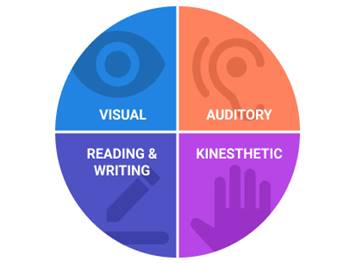
The VARK model (Figure 1) categorizes learners into four broad styles—visual, aural, read/write, and kinesthetic—and while it is something of an oversimplification to suggest that any student fits neatly into a single category (most people, in our experience and in the literature, exhibit some blend), the framework nonetheless offers a useful starting point for differentiation (Figure 1). The value of VARK, as we see it, is less about rigid categorization and more about giving the gamified system something to calibrate against. A student who responds well to visual stimuli is not going to be equally engaged by a wall of text, however well-written; conversely, a kinesthetic learner may find passive video content somewhat tedious, no matter how dynamic the visuals. Goh et al. (2019) make a related point in their work on individual differences and interactive learning environments—that maximizing engagement requires acknowledging, rather than flattening, these differences.

So, what does this look like in practice? The customized learning modules we propose attempt to address each VARK category somewhat distinctly, though—and this is worth emphasizing—not in isolation from one another. Visual learners are offered interactive videos and visual aids that illustrate the nuances of Bangla vocabulary, grammar, and idiom; aural learners receive audio exercises, podcasts, and recorded lectures; read/write learners are given access to a fairly extensive library of texts, eBooks, and writing prompts; and kinesthetic learners engage with hands-on, scenario-based activities—navigating, for instance, a simulated Bangladeshi marketplace where language use is tied directly to action. This last component draws loosely on the kind of place-based, scenario-driven design that Holden and Sykes (2011) describe in their work on mobile games for language learning, and there is something intuitively appealing about grounding abstract vocabulary in concrete, culturally recognizable settings.

Before any of this can be tailored, though, students undergo a VARK assessment—not a one-time gatekeeping exercise, but more of an initial calibration point. The adaptive system then uses this information, in combination with ongoing performance data, to shape each student's trajectory through the material. This is where the machine learning component becomes central, and it is also, perhaps, the part of the model that required the most care in design. Rather than presenting a fixed difficulty curve, the system continuously analyzes performance and adjusts the difficulty of subsequent tasks—a principle that echoes the challenge-based gamification approach described by Li et al. (2021), where quizzing difficulty is dynamically tuned to maintain an optimal balance between challenge and competence. The goal, in our case, is not simply to avoid frustration (though that matters) but to keep students within something like a productive struggle zone—difficult enough to require effort, not so difficult as to provoke disengagement.

Rewards and recognition form another layer of the model, and here we tried to be deliberate about avoiding a one-size-fits-all approach to motivation. Visual learners who excel at interpreting infographics receive recognition tailored to that strength; kinesthetic learners are recognized for project-based accomplishments; aural and read/write learners receive analogous forms of acknowledgment suited to their respective modes of engagement. This design choice is informed, in part, by

Figure 1. VARK-Based Adaptive Gamified Learning Model for Bangla Language Education. This Figure conceptual representation of the VARK (Visual, Aural, Read/Write, and Kinesthetic) learning framework integrated into the proposed adaptive gamified Bangla language learning system. The model illustrates how learners are initially profiled according to their dominant learning preferences and subsequently provided with customized learning activities. Performance data are continuously analyzed through machine-learning-driven adaptation mechanisms to personalize content difficulty, reward structures, and learning pathways, thereby enhancing engagement, motivation, and Bangla language proficiency among English-medium school students.

Hamari et al.'s (2014) broader observation that gamification's effectiveness depends heavily on how rewards are structured and perceived—badges and points alone do not guarantee motivation, and may even backfire if they feel arbitrary or disconnected from genuine accomplishment (see also Alsawaier, 2018).

Collaborative challenges represent, in some ways, our attempt to respond directly to one of the more troubling findings from Table 3—the scarcity of co-curricular activity in Bangla. Rather than treating collaboration as a bonus feature, we positioned it as a core mechanism, asking students to work together on real-world Bangla language projects. This serves a dual purpose: it reinforces language skills while also cultivating teamwork and communication, echoing the community-driven peer assessment models discussed by Berns et al. (2014).

Finally, the "language in entertainment" component attempts something perhaps a little unconventional—leaning into, rather than fighting against, students' existing affinity for English-language media. By designing interactive language games inspired by popular TV shows, the model tries to create a kind of crossover space where English-language familiarity becomes a bridge into Bangla rather than a barrier against it. Whether this approach proves effective in practice remains an open question, and one that would benefit from the kind of empirical testing that Cruaud (2016) and Baber (2015) conducted in their respective gamified language classrooms.

Taken as a whole, the model represents what we might describe as a synthesis rather than an innovation in any single component—gamification, VARK, and adaptive machine learning are each, individually, well-established ideas (Dicheva et al., 2015; Hamari et al., 2014). What feels distinctive, at least to us, is the combination of these elements specifically in service of Bangla proficiency among a population whose linguistic habits have been shaped so heavily by English. Whether this combination proves sufficient to meaningfully shift the patterns documented in Table 3 is, of course, a question for future implementation and evaluation—one we hope to take up directly in subsequent work.

4. Conclusion

In the realm of language education, the challenges faced by English medium school students in acquiring Bangla proficiency have spurred the creation of a novel paradigm. Our proposed adaptive gamified learning approach, underpinned by the VARK model and empowered by machine learning integration, presents a transformative solution that caters to diverse learning styles. This holistic approach has the potential to revolutionize the way language learning is perceived and practiced. To further enhance the effectiveness of our gamified model, we suggest the development of interactive language learning games. These games, tailored to specific learning styles, will not only reinforce language acquisition but also infuse an element of enjoyment into the learning process. By immersing students in a virtual world where Bangla language skills are honed through interactive challenges, we envision a future where learning is not just effective but also engaging and captivating. Looking ahead, emerging technologies like virtual reality (VR) and mixed reality (MR) stand as promising avenues for refining the gamified learning approach. VR and MR could transport students into immersive linguistic environments, allowing them to practice Bangla in real-world scenarios. The gamified model, coupled with these technologies, can unlock a new dimension of language education, transcending conventional boundaries and empowering students with practical language skills. As we stand on the cusp of educational transformation, the fusion of gamification, personalized learning, and cutting-edge technologies holds immense potential. Through our pioneering approach, we anticipate a future where language learning becomes an exciting journey, where challenges are conquered through play, and where emerging technologies amplify the impact of innovative pedagogical methods. In the pursuit of an education that transcends the ordinary, our proposed model beckons us toward a horizon where language learning is not just a task, but an adventure that fosters lifelong proficiency and a profound cultural connection.


References


Alomair, Y., & Hammami, S. (2019). A review of gamified techniques for foreign language learning. Journal of Educational Research and Reviews, 7(11), 223–238.

Alsawaier, R. (2018). The effect of gamification on motivation and engagement. International Journal of Information and Learning Technology.

Anil, B. (2017). Applying innovative teaching methods in a second language classroom. International Journal of Research in Engineering and Education, 2, 1–9. https://doi.org/10.18869/acadpub.ijree.2.2.1

Baber, W. (2015). Course level gamification for higher education TEFL in Japan. AGON: International Journal of Cultural, Linguistics and Literary Studies, 3, 188–209.

Berns, A., Palomo-Duarte, M., Dodero, J. M., & Cejas, A. (2014). Guess it! Using gamificated apps to support students’ foreign language learning by organic driven community peer assessment. In Lecture Notes in Computer Science (Vol. 8719). Springer. https://doi.org/10.1007/978-3-319-11200-8_46

Blessing, L., & Chakrabarti, A. (2009). DRM, a design research methodology. Springer.

Celik, S., & Kozikoglu, I. (2016). A comparative study of language learning strategies used by monolingual and bilingual learners. European Scientific Journal, 12(26), 1–20. https://doi.org/10.19044/esj.2016.v12n26p1

Chang, J. (2015). Exploring engaging gamification mechanics in massive online open courses. Educational Technology & Society.

Cruaud, C. (2016). The playful frame: Gamification in a French-as-a-foreign-language class. Innovation in Language Learning and Teaching. https://doi.org/10.1080/17501229.2016.1213268

Denny, P. (2013). The effect of virtual achievements on student engagement. In Proceedings of the SIGCHI Conference on Human Factors in Computing Systems (pp. 763–772). ACM.

Dicheva, D., Dichev, C., Agre, G., & Angelova, G. (2015). Gamification in education: A systematic mapping study. Journal of Educational Technology & Society, 18(3), 75–88.

Figueroa-Flores, J. (2015). Using gamification to enhance second language learning (Vol. 27).

Gangaiamaran, R., & Pasupathi, M. (2017). Review on use of mobile apps for language learning. International Journal of Applied Engineering Research, 12(21), 11242–11251.

Garland, C. (2015). Gamification and implications for second language education: A meta-analysis [Master’s thesis, St. Cloud State University]. St. Cloud State University Repository. https://repository.stcloudstate.edu/engl_etds/40

Goh, J., Truman, B., & Barber, D. (2019). Exploring individual differences as factors to maximize interactive learning environments for future learning. Interactive Learning Environments, 27(4), 497–507. https://doi.org/10.1080/10494820.2018.1484775

Hamari, J., Koivisto, J., & Sarsa, H. (2014). Does gamification work? – A literature review of empirical studies on gamification. In 2014 47th Hawaii International Conference on System Sciences (pp. 3025–3034). IEEE.

Hancock, P., Vincenzi, D., Wise, J. A., & Mouloua, M. (2008). Human factors in simulation and training. CRC Press.

Harviainen, J. T. (2014, May 22–23). Critical challenges to gamifying education [Conference presentation]. Game On Conference, Moscow, Russia.

Heil, R. C., Wu, J., Lee, J., & Schmidt, H. (2022). Discrete primary education curriculum in Bangladesh: Implications of gamification for quality education. ResearchGate.

Hess, A. N., & Greer, K. (2016). Designing for engagement: Using the ADDIE model to integrate high-impact practices into an online information literacy course. Communications in Information Literacy, 10(2), 264–282. https://doi.org/10.15760/comminfolit.2016.10.2.27

Holden, C., & Sykes, J. (2011). Leveraging mobile games for place-based language learning. International Journal of Game-Based Learning, 1(2), 1–18. https://doi.org/10.4018/ijgbl.2011040101

Islam, M. A., & Hossain, M. M. (2021). English vs Bangla medium students: A study on the problems and probable solutions regarding English language learning skills in context of Bangladesh. International Journal of English Language Education, 9(1), 1–16.

Kecskes, I., & Papp, T. (2000). Foreign language and mother tongue. Lawrence Erlbaum Associates.

Kramsch, C. (1993). Context and culture in language teaching. Oxford University Press.

Li, N., Wijekumar, K. J., Meyer, B. J. F., Lei, P., & Warschauer, M. (2021). Capturing potential impact of challenge-based gamification on gamified quizzing in the classroom. Journal of Educational Computing Research, 59(4), 626–655.

Luo, Z. (2023). The effectiveness of gamified tools for foreign language learning (FLL): A systematic review. Behavioral Sciences, 13(4), 331. https://doi.org/10.3390/bs13040331

Nishanthi, R. (2020). Understanding of the importance of mother tongue learning. International Journal of Trend in Scientific Research and Development, 5(1), 77–80.

Nur, N. (2021). The challenges of learning Bangla in English medium schools of Bangladesh [Unpublished doctoral dissertation]. Brac University.

Rapp, A., & Güller, J. (2019). Exploring gamification effects in the context of language learning. Computers & Education, 141, 103609. https://doi.org/10.1016/j.compedu.2019.103609

Sauro, S. (2005). English language learning and technology: Lectures on applied linguistics in the age of information and communication technology. Studies in Second Language Acquisition, 27(3), 486–487.


Article metrics
View details
0
Downloads
0
Citations
32
Views

View Dimensions


View Plumx


View Altmetric


0
Save
0
Citation
32
View
0
Share