Microbial Bioactives

Microbial Bioactives | Online ISSN 2209-2161
380
Citations
244k
Views
182
Articles
Your new experience awaits. Try the new design now and help us make it even better
Switch to the new experience
Figures and Tables
REVIEWS   (Open Access)

Hidden Microbial Ecosystems in Traditional Chinese Fermented Foods: Multi-Omics Insights Into Fermentation, Gut Health, and Food Safety Risks

Ravi Goyal 1*, Rajni Bala 1, Reecha Madaan 1

+ Author Affiliations

Microbial Bioactives 8 (1) 1-12 https://doi.org/10.25163/microbbioacts.8110656

Submitted: 20 November 2024 Revised: 18 January 2025  Published: 28 January 2025 


Abstract

Traditional Chinese fermented foods (TCFFs) have long occupied a complicated, almost paradoxical place within both cultural history and nutritional science. They are simultaneously ancient and remarkably contemporary—foods shaped by centuries of empirical knowledge yet increasingly interpreted through the lens of microbiome research and omics-driven biotechnology. This review synthesizes current evidence regarding the hidden microbial ecology of TCFFs, with particular attention to microbial succession, viable but non-culturable (VBNC) microorganisms, fermentation-associated metabolites, and the evolving role of multi-omics technologies in decoding these complex systems. Across products such as sufu, Baijiu, Huangjiu, soy sauce, and fermented vegetables, fermentation appears less like a simple preservation method and more like a dynamic ecological process governed by cooperative microbial interactions. Metagenomics and metaproteomics increasingly reveal that low-abundance and uncultured microorganisms may exert disproportionate influence on flavor development, substrate conversion, and fermentation stability. At the same time, this biological richness introduces important safety concerns, including biogenic amine accumulation, mycotoxin production, and potential dissemination of antibiotic resistance genes. Emerging evidence further suggests that fermented foods may influence gut microbial homeostasis, immune regulation, and metabolic resilience, although these benefits remain context-dependent and incompletely understood. Ultimately, TCFFs represent a convergence of cultural heritage, microbial ecology, and food biotechnology, highlighting the need for precision fermentation strategies capable of balancing artisanal authenticity with safety, sustainability, and industrial reproducibility.

Keywords: Traditional Chinese fermented foods; microbial ecology; metagenomics; viable but non-culturable microorganisms; lactic acid bacteria; food safety; gut microbiota

1. Introduction

Traditional Chinese fermented foods occupy a unique position at the intersection of culinary heritage, microbial ecology, and preventive health science. Across several thousand years of Chinese civilization, fermentation has functioned not merely as a preservation strategy but as a sophisticated cultural technology that transformed grains, legumes, vegetables, seafood, and meat into products with enhanced flavor, digestibility, and perceived medicinal value. Archaeological evidence from Jiahu in the Yellow River basin suggests that fermented beverages composed of rice, honey, and fruit were already being produced around 7000 BC, indicating that fermentation practices emerged alongside some of the earliest settled communities in East Asia (Ray & Joshi, 2014). Over time, these traditions evolved into highly specialized regional fermentation systems that produced foods such as Baijiu, Huangjiu, soy sauce, vinegar, sufu, douchi, fermented sausages, pickled vegetables, and fermented bean pastes. Even today, these foods remain deeply embedded in social rituals, family traditions, and therapeutic dietary practices throughout China (Li & Hsieh, 2004).

Unlike many industrialized fermentation systems that depend on tightly controlled starter cultures, traditional Chinese fermentation often relies on spontaneous or semi-spontaneous microbial succession. The fermentation starter, commonly referred to as “Qu” or “Koji,” acts as a living microbial reservoir composed of molds, yeasts, and bacteria that interact dynamically throughout fermentation. This microbial complexity contributes to the characteristic aroma, texture, nutritional composition, and sensory depth of traditional products (Yang et al., 2022). Yet, despite centuries of empirical knowledge surrounding these foods, the underlying microbial ecology has historically remained only partially understood. Much of what occurs during fermentation takes place within intricate microbial networks that are difficult to culture, monitor, or reproduce under laboratory conditions.

For many years, research into fermented food microbiology depended heavily on culture-based methods. These approaches undoubtedly contributed foundational insights into the identification of dominant fermentative organisms such as Aspergillus oryzae, Saccharomyces cerevisiae, Rhizopus species, and diverse lactic acid bacteria (LAB). However, conventional culturing methods also imposed substantial limitations because many microorganisms either exist in low abundance, enter viable but non-culturable (VBNC) states, or require ecological interactions that cannot easily be replicated in vitro (Wang et al., 2023). Consequently, a significant proportion of microbial diversity in traditional Chinese fermented foods remained effectively “hidden.” This limitation may have caused researchers to underestimate the functional contributions of uncultured organisms to flavor biosynthesis, metabolite transformation, and fermentation stability.

The emergence of next-generation sequencing (NGS) and multi-omics technologies has gradually reshaped this landscape. Metagenomics, metatranscriptomics, metaproteomics, and metabolomics now allow investigators to examine microbial communities directly within fermentation ecosystems without requiring prior cultivation (Yang et al., 2020). Through these technologies, fermentation is increasingly understood not as the activity of isolated strains but as a coordinated ecological process involving microbial succession, metabolic cooperation, and competitive adaptation. Zhang et al. (2019) argued that understanding the microbial ecology of traditional Chinese fermented foods requires integrative analytical strategies capable of capturing both taxonomic diversity and functional interactions. In many respects, recent omics-driven discoveries have confirmed what traditional food artisans may have long recognized intuitively: the quality of fermented food depends not on a single organism, but on the balance and evolution of entire microbial consortia.

Current evidence suggests that uncultured and VBNC microorganisms may play more influential roles in fermentation than previously assumed. Wang et al. (2023) demonstrated that these hidden microbial populations contribute substantially to flavor formation, metabolite conversion, and environmental adaptation within traditional fermentation systems. In broad bean paste, fermented soybean products, and solid-state alcoholic fermentations, uncultured microorganisms appear to participate in ester synthesis, amino acid degradation, phenolic compound transformation, and aromatic compound regulation. Such findings complicate the long-standing assumption that dominant culturable organisms alone determine fermentation quality. Instead, microbial interactions appear to operate through layered ecological networks where even low-abundance taxa may exert disproportionate metabolic influence (McCredie et al., 1999).

Lactic acid bacteria represent one particularly important component of these ecosystems. LAB contribute not only to acidification and preservation but also to nutritional enhancement, antimicrobial peptide production, and probiotic activity (Li et al., 2023). Their presence has been associated with improved gastrointestinal health, immune modulation, and the production of beneficial metabolites such as short-chain fatty acids (SCFAs). In products such as suansun and fermented vegetables, LAB-driven fermentation may simultaneously improve shelf life and reduce pathogen growth (Hu et al., 2021). Increasingly, researchers have begun to explore how microbial diversity within traditional fermented foods could influence gut microbiota composition and broader metabolic health outcomes (Xing et al., 2023).

At the same time, enthusiasm surrounding the health-promoting potential of fermented foods must be approached with some caution. Traditional fermentation systems are biologically complex and not inherently risk-free. The same microbial diversity that enables flavor complexity can also generate undesirable or hazardous metabolites under poorly controlled conditions. One of the most significant concerns involves the accumulation of biogenic amines (BAs), including histamine, tyramine, putrescine, and cadaverine, which are formed primarily through microbial amino acid decarboxylation (Fong et al., 2021). Elevated concentrations of these compounds have been associated with headaches, hypertension, allergic reactions, and, more concerningly, the formation of carcinogenic N-nitroso compounds. Studies on fermented fish and meat products have repeatedly shown that fermentation temperature, storage conditions, microbial composition, and oxygen availability substantially influence BA accumulation (Křížek et al., 2004; Ran & Chen, 2017).

These concerns become particularly relevant when considering the longstanding epidemiological association between certain preserved and fermented foods and nasopharyngeal carcinoma (NPC) in Southern China and Southeast Asia. Multiple epidemiological investigations have linked frequent consumption of preserved foods, especially salt-preserved fish and certain fermented products, with elevated NPC risk (Yu et al., 1988; Yuan et al., 2000). McDermott et al. (2001) noted that dietary nitrosamines generated during traditional preservation and fermentation processes may contribute to carcinogenesis, particularly in genetically susceptible populations. Additional studies examining high-risk Chinese populations identified preserved food intake as a significant nonviral risk factor for NPC alongside Epstein–Barr virus infection and genetic predisposition (Guo et al., 2009; Hildesheim et al., 2002). Although the causal pathways remain incompletely resolved, these findings highlight the need to balance cultural appreciation of fermented foods with rigorous food safety assessment (Tsang, & Tsao, 2015).

Interestingly, the relationship between traditional fermented foods and health outcomes appears neither uniformly beneficial nor uniformly harmful. Xu et al. (2022), through large-scale meta-analytical assessment, described fermented foods as possessing “two sides of the same coin.” On one side, microbial metabolites and probiotic organisms may support metabolic regulation, immune resilience, and gut homeostasis. On the other, uncontrolled fermentation environments may facilitate toxin accumulation, antibiotic resistance gene transfer, or carcinogenic metabolite formation. This duality perhaps explains why contemporary research increasingly focuses on precision fermentation strategies that preserve traditional sensory qualities while minimizing toxicological risks.

The complexity of microbial interactions in Chinese fermented foods also raises broader questions regarding modernization and industrial scalability. Traditional methods often depend on region-specific environmental microbiota, artisanal expertise, and seasonal variability that are difficult to standardize industrially. Jin et al. (2024) emphasized that solid-state fermentation engineering must integrate microbial ecology, environmental control, and intelligent manufacturing systems to maintain product authenticity while improving reproducibility and safety. Similarly, Mao et al. (2024) demonstrated that microbial succession patterns strongly influence flavor formation in fermented meat and fish products, suggesting that even subtle ecological disruptions may alter product quality.

Another emerging dimension involves the integration of traditional Chinese dietary philosophy with modern microbiome science. Historically, Chinese medicine conceptualized food as a therapeutic instrument capable of regulating internal physiological balance. Although these ideas originated outside contemporary biomedical frameworks, some researchers now speculate that traditional dietary principles may partially reflect empirical observations of gut microbiota modulation and metabolic health. The possibility of systematically linking ancient dietary theories to measurable microbiome signatures represents a fascinating, albeit still preliminary, research frontier.

Despite substantial advances, important gaps remain unresolved. The ecological roles of many uncultured microorganisms remain poorly characterized, and the mechanisms governing microbial cooperation during solid-state fermentation are still only partially understood. Moreover, while omics technologies generate enormous datasets, translating these findings into practical fermentation management strategies remains challenging. Questions surrounding microbial resilience, synthetic microbial consortia, VBNC revival through culturomics, and targeted degradation of hazardous metabolites continue to drive current investigation.

Accordingly, this review aims to synthesize current knowledge regarding the hidden microbial world of traditional Chinese fermented foods from a multi-omics perspective. Particular emphasis is placed on microbial diversity, uncultured and VBNC microorganisms, microbial succession, probiotic functionality, fermentation-associated health risks, and future industrial innovation. By examining both the benefits and limitations of traditional fermentation systems, this review seeks to bridge ancient fermentation knowledge with modern microbial science, contributing to safer, more sustainable, and biologically informed fermentation practices for future food systems.

2. Materials and Methods

2.1 Literature Search Strategy

This narrative review was designed to synthesize current knowledge regarding the microbial ecology, nutritional significance, safety concerns, and emerging biotechnological applications of traditional Chinese fermented foods (TCFFs). A comprehensive literature search was conducted using major scientific databases, including PubMed, Scopus, Web of Science, ScienceDirect, and Google Scholar. The search process focused on peer-reviewed articles, review papers, book chapters, and relevant reports published primarily in English. Keywords and Boolean combinations used during the search included “traditional Chinese fermented foods,” “microbial ecology,” “metagenomics,” “metaproteomics,” “fermentation microbiology,” “viable but non-culturable microorganisms,” “lactic acid bacteria,” “food safety,” “biogenic amines,” “solid-state fermentation,” and “gut microbiota.” Additional searches were performed using the names of specific fermented products such as sufu, Baijiu, Huangjiu, soy sauce, paocai, and fermented soybean products to ensure broader thematic coverage.

Because this study was structured as a narrative review rather than a systematic review or meta-analysis, the literature selection process emphasized conceptual relevance, methodological quality, and thematic contribution rather than strict quantitative inclusion criteria. Nevertheless, efforts were made to include studies representing diverse methodological approaches, including classical microbiology, next-generation sequencing (NGS), metagenomics, metabolomics, and fermentation engineering research. Foundational studies discussing microbial succession, fermentation biotechnology, and food safety risks were also prioritized to provide historical and scientific continuity across the review (Ray & Joshi, 2014; Zhang et al., 2019).

2.2 Selection and Organization of Literature

Retrieved studies were screened manually based on title relevance, abstract content, methodological rigor, and direct applicability to the review objectives. Particular attention was given to studies investigating microbial diversity, uncultured and viable but non-culturable (VBNC) microorganisms, fermentation-associated metabolites, probiotic functionality, and toxicological concerns associated with traditional fermentation systems. Research discussing multi-omics approaches, including metagenomics and metaproteomics, was included to reflect recent advances in microbial characterization technologies (Yang et al., 2020; Wang et al., 2023).

The selected literature was subsequently categorized into several thematic sections to facilitate analytical interpretation. These sections included: (i) cultural and historical dimensions of Chinese fermented foods, (ii) microbial architecture and ecological succession during fermentation, (iii) nutritional and probiotic significance of fermentative microorganisms, (iv) food safety concerns associated with biogenic amines, mycotoxins, and antibiotic resistance genes, and (v) emerging developments in intelligent fermentation engineering and precision biotechnology. Studies with overlapping themes were comparatively analyzed to identify recurring patterns, contradictions, and knowledge gaps.

2.3 Data Interpretation and Narrative Synthesis

The synthesis process adopted an integrative narrative approach aimed at connecting microbiological findings with nutritional, ecological, and technological perspectives. Rather than focusing exclusively on quantitative outcomes, this review emphasized conceptual interpretation and interdisciplinary linkage across microbial ecology, food science, and human health research. Comparative analysis of fermentation systems was performed using information extracted from published studies and summarized in thematic tables describing fermented food classifications, microbial functions, nutritional benefits, and amino acid transformations.

Where appropriate, evidence from omics-based studies was interpreted alongside traditional culture-dependent findings to provide a broader understanding of microbial functionality within fermentation ecosystems. Particular emphasis was placed on the ecological significance of microbial interactions, including metabolic cooperation, microbial succession, and the functional roles of uncultured microorganisms during solid-state fermentation (Fan et al., 2023; Mao et al., 2024).

3. Unlocking the Hidden Microbial World in Traditional Chinese Fermented Foods

3.1 Fermentation as Cultural Memory and Biological Innovation

Traditional Chinese fermented foods represent far more than culinary artifacts preserved through history; they are dynamic biological systems shaped by centuries of environmental adaptation, empirical experimentation, and cultural continuity. Long before the emergence of microbiology as a scientific discipline, communities across China were already manipulating microbial processes to preserve food, enhance flavor, and support health. Archaeological findings from Jiahu suggest that fermented beverages derived from rice, honey, and fruits were produced as early as 7000 BC, making fermentation one of humanity’s earliest forms of biotechnology (Ray & Joshi, 2014). In many ways, these early fermentation practices reflected necessity—food preservation in unstable climates, seasonal scarcity, and the need to transform raw agricultural products into more digestible forms. Yet over time, fermentation evolved into something more sophisticated and culturally embedded.

Traditional fermented products such as Baijiu, soy sauce, sufu, douchi, paocai, and fermented rice wines became deeply integrated into regional identity and dietary customs. Their production was rarely standardized in the modern industrial sense. Instead, fermentation depended on local climate, indigenous microbial populations, artisanal knowledge, and inherited sensory judgment. This variability, once viewed as inconsistency, is now increasingly recognized as part of the ecological richness that defines traditional fermentation systems. What contemporary science is beginning to uncover is that these foods harbor remarkably complex microbial ecosystems whose biological interactions shape not only flavor and texture but also nutritional and therapeutic potential.

Recent advances in microbiome science have further complicated our understanding of fermentation. The microbial communities within traditional Chinese fermented foods are not static assemblages of isolated organisms. Rather, they are evolving ecological networks characterized by cooperation, competition, metabolic exchange, and environmental adaptation. Zhang et al. (2019) argued that the microbial ecology of traditional Chinese fermented foods should be approached as a systems-level phenomenon rather than a collection of independent fermentative strains. This perspective has become increasingly important as researchers attempt to bridge traditional fermentation knowledge with modern omics technologies and precision food engineering. Figure 1 summarizes the conceptual transition of traditional Chinese fermentation from ancient culturally inherited practices to contemporary microbiome-driven food innovation, emphasizing the ecological complexity and systems-level interactions within fermented food ecosystems.

3.2 The Philosophical and Biomedical Intersection: Food as Medicine

One of the more intriguing aspects of traditional Chinese fermented foods is the longstanding belief that food and medicine are fundamentally interconnected. Within traditional Chinese medicine (TCM), the spleen–stomach system is often described as the “foundation of postnatal existence,” responsible for transforming food into qi, blood, and bodily nourishment. Fermented foods such as Suan Cai, Dou Chi, and Jiu Niang have historically been consumed not simply for taste but also for digestive regulation, immune support, and restoration of internal balance.

For a long time, these interpretations were largely regarded through philosophical or symbolic frameworks. However, contemporary microbiome research has begun to identify possible physiological mechanisms underlying some of these traditional observations. Lim et al. (2025) suggested that fermented foods may function as mediators between ancient Eastern dietary wisdom and modern gut microbiota science. What traditional medicine conceptualized as “digestive imbalance” or “stagnant qi” increasingly resembles what biomedical science now describes as microbial dysbiosis. Alterations in gut microbial composition have been associated with obesity, inflammatory bowel disease, metabolic syndrome, depression, and immune dysfunction, and fermented
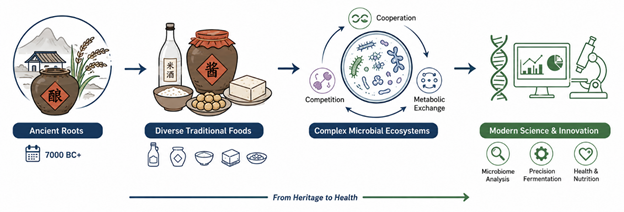
 

Figure 1: Traditional Chinese Fermentation as Cultural Memory and Biological Innovation. This figure illustrates the historical evolution and systems-level complexity of traditional Chinese fermented foods, beginning from ancient fermentation practices and progressing toward modern microbiome science, precision fermentation, and health-oriented food innovation. The figure highlights the interconnected roles of cultural heritage, indigenous microbial ecology, metabolic exchange, and emerging omics technologies in shaping the nutritional, sensory, and therapeutic properties of fermented food systems.
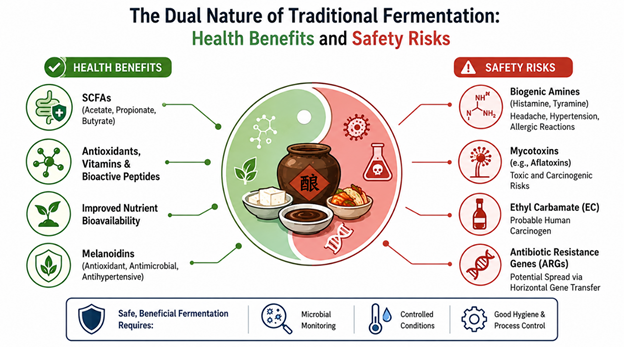
Figure 2: The Dual Nature of Traditional Fermentation: Balancing Functional Health Benefits and Microbial Safety Risks. This figure summarizes the beneficial effects of traditional fermented foods, including SCFA production, antioxidant activity, and improved nutrient bioavailability, alongside major safety concerns such as biogenic amines, mycotoxins, ethyl carbamate, and antibiotic resistance genes. The figure highlights the importance of microbial monitoring and controlled fermentation practices for maintaining safe and functional fermentation ecosystems

foods may help modulate these microbial environments through probiotics, prebiotic substrates, and microbial metabolites.

This does not necessarily mean that traditional theories directly predicted modern microbiome science. The relationship is likely more nuanced and indirect. Nevertheless, the overlap is difficult to ignore. Fermented foods contain bioactive peptides, organic acids, vitamins, enzymes, and microbial metabolites that may influence gut barrier integrity, inflammatory signaling, and metabolic regulation (Xing et al., 2023). Increasingly, researchers are exploring whether traditional dietary patterns rich in fermented products contributed historically to microbial resilience and metabolic adaptability in East Asian populations.

3.3 The Microbial Architecture of Traditional Fermentation

At the center of traditional Chinese fermentation lies the fermentation starter, commonly known as Qu or Koji. Unlike industrial fermentation systems that rely on monocultures or highly controlled starter inocula, traditional starters are biologically heterogeneous and environmentally derived. They contain diverse assemblages of molds, yeasts, and bacteria that collectively initiate and sustain fermentation processes (Yang et al., 2022).

Molds, particularly filamentous fungi such as Aspergillus, Rhizopus, and Mucor, play foundational roles during early fermentation stages. These organisms produce hydrolytic enzymes—including amylases, cellulases, and proteases—that degrade complex carbohydrates and proteins into fermentable substrates. In soy sauce and rice wine production, Aspergillus oryzae is especially important because it catalyzes starch saccharification and amino acid release, creating substrates that support downstream microbial succession (Nout & Aidoo, 2010).

Yeasts contribute primarily through alcoholic fermentation and aroma development. Species such as Saccharomyces cerevisiae metabolize sugars into ethanol while simultaneously generating volatile esters, aldehydes, and aromatic alcohols that define the sensory complexity of products like Huangjiu and Baijiu (Chen et al., 2020). However, yeasts rarely function independently. Their metabolic activity often depends on nutrient availability generated by molds and bacteria earlier in fermentation.

Lactic acid bacteria (LAB), including Lactobacillus plantarum, Pediococcus, and Leuconostoc species, contribute acidification, pathogen suppression, and flavor stabilization (Li et al., 2023). Through lactic acid production and bacteriocin synthesis, LAB establish environmental conditions that inhibit spoilage organisms while extending product shelf life. In fermented vegetables such as paocai and suansun, LAB-driven acidification also shapes characteristic sourness and textural changes (Hu et al., 2021).

What is increasingly evident, however, is that these organisms operate not as isolated agents but as members of highly interactive ecological communities. Fan et al. (2023) demonstrated that synergistic microbial fermentation improves both safety and sensory quality through cooperative metabolic relationships. Nutrient cross-feeding, environmental modification, and signaling interactions appear essential for maintaining fermentation stability. Consequently, removing organisms from their ecological context may oversimplify their functional significance.

3.4 From Culture-Based Microbiology to the Omics Era

Historically, fermentation microbiology depended heavily on culture-based techniques. Researchers isolated microorganisms using agar media, characterized colony morphology, and identified strains through biochemical testing. While these methods remain useful for industrial applications, they capture only a fraction of microbial diversity present in traditional fermented foods.

Many microorganisms enter viable but non-culturable (VBNC) states during fermentation because of environmental stressors such as ethanol accumulation, osmotic pressure, nutrient limitation, or acidic conditions. Although these organisms remain metabolically active, they fail to grow under standard laboratory conditions (Wang et al., 2023). As a result, substantial microbial diversity remained effectively invisible for decades.

The development of next-generation sequencing (NGS) and multi-omics technologies fundamentally changed this situation. Metagenomics now allows direct sequencing of microbial DNA from food matrices without prior cultivation, enabling researchers to identify both dominant and low-abundance taxa simultaneously. Metaproteomics and metabolomics extend this approach by revealing active protein expression and metabolite production during fermentation (Yang et al., 2020).

These technologies have revealed that uncultured microorganisms often contribute significantly to flavor biosynthesis and metabolic regulation. In Shaoxing-jiu fermentation, metagenomic analysis demonstrated that microbial diversity in JIUYAO starters strongly influences the formation of volatile compounds and fermentation dynamics (Chen et al., 2020). Similarly, shotgun metagenomic analysis of suansun identified carbohydrate and amino acid metabolism as key drivers of flavor development (Hu et al., 2021). Such findings suggest that fermentation outcomes depend not merely on microbial presence but on coordinated metabolic interactions occurring across entire microbial ecosystems.

3.5 The Dual Nature of Traditional Fermentation: Health Benefits and Safety Risks

Traditional fermented foods are often celebrated for their probiotic and nutritional benefits, yet their biological complexity also introduces important safety concerns. This tension has been described as “two sides of the same coin” (Xu et al., 2022). Fermentation can simultaneously generate beneficial metabolites and hazardous compounds depending on microbial composition, environmental conditions, and process control.

On the beneficial side, fermented foods are important sources of short-chain fatty acids (SCFAs), antioxidants, vitamins, and bioactive peptides. SCFAs such as acetate, propionate, and butyrate contribute to gut barrier integrity, immune modulation, and inflammatory regulation (Xing et al., 2023). Fermentation may also improve nutrient bioavailability and reduce anti-nutritional compounds in plant-based foods. Melanoidins, formed during Maillard reactions in products such as soy sauce and vinegar, represent another biologically active component. Yang, Fan, and Xu (2022) reported that melanoidins exhibit antioxidant, antimicrobial, and antihypertensive activities, suggesting that fermentation-associated browning reactions may contribute functional health benefits beyond flavor enhancement. Nevertheless, uncontrolled fermentation conditions may also facilitate the production of hazardous metabolites. Biogenic amines (BAs), including histamine and tyramine, are among the most significant concerns in protein-rich fermented foods. These compounds arise primarily through microbial amino acid decarboxylation and may trigger headaches, hypertension, allergic reactions, and gastrointestinal disturbances when consumed excessively (Fong et al., 2021).

Mycotoxin contamination represents another major issue. Although molds are essential for many traditional fermentations, certain species such as Aspergillus flavus may produce aflatoxins under inappropriate environmental conditions. Ethyl carbamate (EC), classified as a probable human carcinogen, can also accumulate during alcoholic fermentation and distillation processes. The coexistence of probiotic functionality and microbial safety concerns highlights the ecological complexity of traditional fermented foods and the need for controlled fermentation strategies (Figure 2). Perhaps more concerning in recent years is the recognition that fermented foods may act as reservoirs for antibiotic resistance genes (ARGs). Anal et al. (2019) emphasized that horizontal gene transfer within fermentation ecosystems could facilitate the spread of resistance determinants into human-associated microbial communities. Although the magnitude of this risk remains under investigation, it underscores the need for improved microbial monitoring and fermentation control.

3.6 Toward Intelligent and Sustainable Fermentation Systems

As demand for traditional fermented foods continues to expand globally, the challenge increasingly lies in preserving artisanal authenticity while ensuring industrial reproducibility and safety. Traditional semi-manual fermentation systems often suffer from inconsistent product quality, contamination risk, and inefficient energy use. Consequently, researchers are now exploring how modern fermentation engineering can support safer and more sustainable production systems.

Jin et al. (2024) proposed that solid-state fermentation (SSF) engineering represents a critical future direction for traditional Chinese fermented food manufacturing. Technologies such as hyperspectral imaging, near-infrared spectroscopy, and automated environmental monitoring allow real-time assessment of fermentation parameters including moisture, acidity, and biomass accumulation. Mathematical modeling further enables prediction of microbial growth kinetics, heat transfer, and metabolite production during industrial scale-up. At the same time, synthetic microbial consortia are emerging as promising tools for precision fermentation. Rather than relying exclusively on uncontrolled spontaneous fermentation, researchers can design microbial communities with targeted functions such as toxin degradation, pathogen inhibition, or enhanced aroma synthesis. Mao et al. (2024) demonstrated that microbial succession strongly influences flavor formation in fermented meat and fish products, suggesting that carefully engineered microbial interactions could preserve traditional sensory characteristics while minimizing safety risks.

Ultimately, the future of traditional Chinese fermented foods likely depends on maintaining this balance between heritage and innovation. Fermentation is not merely a biochemical process; it is also a cultural practice shaped by history, ecology, and human adaptation. As omics technologies continue to uncover the hidden microbial world within these ancient foods, they may provide opportunities not only for safer food production but also for more personalized and microbiome-informed nutritional strategies.

4. Microbial Diversity, Functional Interactions, and Nutritional Remodeling in Traditional Chinese Fermented Foods

4.1 Diversity and Structural Complexity of Traditional Fermented Food Systems

The synthesis of findings across traditional Chinese fermented foods revealed a remarkably diverse fermentation landscape shaped by regional practices, substrate availability, and microbial adaptation. Rather than functioning as isolated culinary products, these foods appear to operate as dynamic ecological systems in which microbial succession continuously modifies biochemical composition, sensory properties, and nutritional functionality. The comparative classification presented in Table 1 demonstrates that fermentation strategies vary considerably according to substrate type and cultural context, ranging from fungal-dominated soybean fermentations such as sufu to mixed alcoholic fermentations associated with Baijiu and Huangjiu production. These observations reinforce the idea that traditional fermentation is not a uniform technological process but rather a collection of biologically distinct ecosystems that evolved independently over centuries under local environmental conditions (Ray & Joshi, 2014).

The products summarized in Table 1 further illustrate how fermentation pathways are strongly influenced by the dominant microbial groups involved in each process. For instance, fungal fermentation systems, including sufu and soy sauce, rely heavily on molds such as Mucor, Actinomucor, and Aspergillus, whereas vegetable fermentations like kimchi and paocai are primarily governed by lactic acid bacteria (LAB). Alcoholic products, meanwhile, exhibit more complex multistage interactions involving molds, yeasts, and bacteria that collectively coordinate starch hydrolysis, sugar conversion, and flavor generation. These distinctions suggest that microbial specialization is closely tied to substrate chemistry and fermentation objectives, whether preservation, ethanol synthesis, texture modification, or aroma development (Nout & Aidoo, 2010).

Interestingly, despite the apparent diversity among fermented foods, certain functional patterns emerged repeatedly across systems. Many products shared overlapping microbial taxa, particularly LAB and filamentous fungi, indicating that some fermentative mechanisms may be conserved across geographically distinct food traditions. This recurring microbial presence may partially explain why many fermented foods exhibit similar preservative and nutritional characteristics despite major differences in ingredients and production methods.

4.2 Functional Microorganisms as Drivers of Biochemical Transformation

The microbial genera identified in Table 2 functioned as central biochemical architects within traditional fermentation ecosystems. Their roles extended well beyond simple preservation and appeared deeply integrated into substrate transformation, nutrient release, and sensory development. Among these microorganisms, filamentous fungi demonstrated particularly strong contributions during the early stages of solid-state fermentation.

Aspergillus species, especially Aspergillus oryzae, emerged as dominant saccharifying organisms in soy sauce and related koji-based fermentations. Through secretion of extracellular proteases and amylases, these molds hydrolyzed complex proteins and polysaccharides into fermentable peptides and sugars, thereby establishing the biochemical foundation for downstream microbial activity (Nout & Aidoo, 2010). Similar observations were reported for Rhizopus species during Baijiu production, where starch degradation represented a critical first step in alcoholic fermentation.

At the same time, yeasts such as Saccharomyces appeared essential for ethanol synthesis and volatile aroma formation. Their contribution, however, seemed highly dependent on the metabolic groundwork established by molds and bacteria earlier in the process.

Table 1. General Classification and Characteristics of Traditional Fermented Foods. This table summarizes representative traditional fermented foods from different geographical regions, highlighting their primary raw materials, dominant fermentative microorganisms, physical forms, and principal applications. The diversity of fermentation substrates and microbial consortia illustrates how regional environmental conditions and cultural practices shape fermentation strategies and product functionality across Asia and Africa.

Product Name

Country/Region of Origin

Main Ingredient

Core Microorganisms

Shape/Form

Primary Usage

Fermentation Category

Reference

Sufu (Furu)

China

Soybean (Tofu)

Actinomucor, Mucor

Solid cubes

Side dish

Fungal/Bean Fermentation

Han et al. (2001)

Baijiu

China

Kaoliang/Wheat

Rhizopus, Mucor

Liquid spirit

Beverage

Alcoholic Fermentation

Nout & Aidoo (2010)

Huangjiu

China

Rice/Millet

Aspergillus, Pichia

Liquid wine

Beverage

Alcoholic Fermentation

Nout & Aidoo (2010)

Kimchi

Korea

Cabbage/Radish

Leuconostoc, LAB

Fresh/Solid

Side dish

Vegetable Fermentation

Ray & Joshi (2014)

Tempeh

Indonesia

Soybeans

Rhizopus oligosporus

Solid cake

Main meal

Fungal/Bean Fermentation

Ray & Joshi (2014)

Idli

India

Rice/Black gram

Leuconostoc, Yeasts

Steamed cake

Breakfast

Cereal/Legume Fermentation

Ray & Joshi (2014)

Soy Sauce

East Asia

Soybean/Wheat

Aspergillus, Yeasts

Liquid

Seasoning

Koji-Based Fermentation

Nout & Aidoo (2010)

Ogi

Nigeria

Maize/Sorghum

Lactobacillus plantarum, Yeasts

Porridge

Staple meal

Cereal Fermentation

Ray & Joshi (2014)

Gari

West Africa

Cassava root

LAB, Yeasts

Granular/Dry

Staple meal

Rhizome Fermentation

Ray & Joshi (2014)

Table 2. Functional Microorganisms and Their Biochemical Roles in Traditional Fermentation Systems. This table highlights the major microbial genera involved in traditional fermented food production and summarizes their biochemical activities during fermentation. The coordinated metabolic interactions among molds, yeasts, bacteria, and acetic acid producers are essential for substrate degradation, flavor formation, preservation, and product stability.

Microbial Genus

Product Example

Functional Role

Metabolic Action

Primary Substrate

Fermentation Stage

Geographical Area

Reference

Aspergillus

Soy Sauce

Saccharification

Protease and amylase production

Soybean/Wheat

Initial (Koji stage)

East Asia

Nout & Aidoo (2010)

Rhizopus

Baijiu

Amylolysis

Starch breakdown

Kaoliang

Primary fermentation

China

Nout & Aidoo (2010)

Monascus

Red Rice

Colorant/Aroma Production

Pigment synthesis

Rice

Post-steaming stage

China

Nout & Aidoo (2010)

Mucor

Sufu

Proteolysis

Protein hydrolysis

Tofu

Pehtze preparation

China

Han et al. (2001)

Saccharomyces

Huangjiu

Ethanol Synthesis

Alcohol production

Rice

Main fermentation

International

Nout & Aidoo (2010)

Lactobacillus

Paocai

Acidification

Lactic acid production

Vegetables

Spontaneous fermentation

China

Ray & Joshi (2014)

Pediococcus

Pickles

Preservation

Bacteriocin production

Cucumber

Curing stage

International

Ray & Joshi (2014)

Acetobacter

Vinegar

Acetification

Ethanol-to-acetic acid conversion

Cereal mash

Post-alcoholic stage

Asia

Nout & Aidoo (2010)

Bacillus

Natto

Alkalinization

Protein-to-ammonia conversion

Soybeans

Aerobic fermentation

Japan

Nout & Aidoo (2010)

This sequential cooperation highlights the ecological interdependence that characterizes traditional fermentation systems. Rather than acting independently, microorganisms participate in layered metabolic interactions where the activity of one group creates conditions necessary for the survival and function of another.

The findings summarized in Table 2 also revealed that bacterial functions extend beyond acidification alone. Pediococcus and Lactobacillus species contributed antimicrobial protection through bacteriocin production, while Acetobacter converted ethanol into acetic acid during vinegar fermentation. Meanwhile, Bacillus species in natto fermentation facilitated alkalinization and protein degradation through ammonia production. Collectively, these interactions created fermentation environments that continuously evolved throughout processing.

Recent metaproteomic and metagenomic studies further complicated this picture by demonstrating that microbial abundance does not always correspond directly with metabolic influence. Yang et al. (2020) reported that although certain bacterial taxa may numerically dominate fermentation systems, molds such as Aspergillus often contribute disproportionately to the active proteome responsible for flavor-associated biochemical pathways. This discrepancy suggests that microbial functionality cannot be inferred solely from taxonomic abundance and highlights the importance of multi-omics approaches in understanding fermentation ecology.

4.3 Lactic Acid Bacteria and the Preservation of Food Quality

One of the most consistent findings across the reviewed literature was the multifunctional importance of lactic acid bacteria in maintaining product quality, safety, and nutritional value. As demonstrated in Table 3, LAB contributed not only to fermentation itself but also to pathogen inhibition, shelf-life extension, nutrient enhancement, and detoxification processes.

Species such as Lactococcus lactis and Lactobacillus plantarum were particularly important in biological preservation systems because of their capacity to produce bacteriocins and organic acids. These compounds suppressed the growth of spoilage microorganisms and foodborne pathogens, thereby improving microbial stability in fermented foods (Ray & Joshi, 2014). The acidification process additionally altered environmental pH, creating conditions unfavorable for many harmful bacteria.

Beyond preservation, LAB appeared closely associated with nutritional enhancement. Certain strains facilitated vitamin synthesis, particularly folate and vitamin B compounds, while others contributed to peptide release and anti-nutritional factor degradation. Table 3 demonstrates that Lactobacillus helveticus was associated with the production of bioactive peptides possessing angiotensin-converting enzyme (ACE)-inhibitory activity, suggesting potential antihypertensive effects. Similarly, Lactobacillus plantarum reduced phytic acid and tannin content in soy-based products, potentially improving mineral bioavailability and digestive tolerance.

Another notable finding involved the production of short-chain fatty acids (SCFAs) by fermentative bacteria. SCFAs such as acetate, propionate, and butyrate have increasingly been linked to gut barrier integrity, anti-inflammatory activity, and metabolic regulation (Xing et al., 2023). Their presence supports the broader hypothesis that traditional fermented foods may influence host health partly through microbiome-mediated pathways.

Importantly, Table 3 also highlighted the emerging role of LAB in food detoxification. Certain strains demonstrated the capacity to reduce biogenic amines and mycotoxins during fermentation. Given growing concerns regarding carcinogenic compounds and fermentation-associated toxicity, this detoxification potential may represent one of the most significant practical applications of functional starter cultures in future fermentation engineering systems (Fan et al., 2023).

4.4 Nutritional Remodeling During Soybean Fermentation

Among the fermented products examined, sufu demonstrated one of the most striking examples of nutritional and biochemical transformation during fermentation. The amino acid composition presented in Table 4 revealed substantial increases in free amino acids relative to unfermented tofu, indicating extensive microbial proteolysis during ripening stages.

Glutamic acid, aspartic acid, leucine, lysine, and alanine emerged as dominant amino acids across different sufu varieties. The elevated glutamic acid concentration was especially noteworthy because of its strong association with umami flavor perception. These biochemical modifications likely contribute to the characteristic sensory complexity of fermented soybean products and may

Table 3. Nutritional and Technological Advantages of Functional Starter Cultures in Fermented Foods. This table presents the diverse functional benefits associated with lactic acid bacteria and related starter cultures used in traditional fermented foods. Beyond fermentation itself, these microorganisms contribute to food preservation, nutritional enhancement, flavor development, detoxification, and gastrointestinal health, demonstrating the multifunctional significance of microbial starter cultures in food biotechnology.

Advantage Category

Functionality

Functional Microorganism

Food Product

Nutritional Impact

Technological Benefit

Safety Outcome

Reference

Preservation

Bacteriocin production

Lactococcus lactis

Dairy products

Extended shelf-life

Pathogen inhibition

Safe bio-preservation

Ray & Joshi (2014)

Organoleptic Improvement

Amylase production

Lactobacillus spp.

Cereal porridges

Improved digestibility

Aroma generation

Enhanced texture

Ray & Joshi (2014)

Technological Stability

Over-acidification control

Lactobacillus bulgaricus

Yogurt

Texture stabilization

Phage resistance

Quality control

Ray & Joshi (2014)

Nutritional Enhancement

Vitamin production

Streptococcus thermophilus

Dairy/Cereal products

Folate enrichment

Vitamin B synthesis

Enhanced health benefits

Ray & Joshi (2014)

Bioactive Peptide Production

ACE inhibition

Lactobacillus helveticus

Fermented milk

Bioactive peptide release

Peptide generation

Hypertension reduction

Ray & Joshi (2014)

Anti-Nutritional Reduction

Phytic acid degradation

Lactobacillus plantarum

Soy products

Reduced tannins and phytates

Improved mineral bioavailability

Nutritional improvement

Ray & Joshi (2014)

SCFA Production

Acetate and butyrate generation

Propionibacterium

Cheese/Sourdough

Energy metabolism support

SCFA production

Gut health promotion

Ray & Joshi (2014)

Safety Improvement

Biogenic amine reduction

Enterococcus spp.

Diverse fermented foods

Reduced histamine levels

Amine degradation

Toxicity prevention

Ray & Joshi (2014)

Detoxification

Mycotoxin removal

LAB strains

Cereal grains

Mold suppression

Detoxification activity

Reduced carcinogenic risk

Ray & Joshi (2014)

Table 4. Amino Acid Composition of Traditional Chinese Sufu Varieties Compared with Unfermented Tofu. This table compares the free amino acid composition of different sufu varieties and unfermented tofu, illustrating how fermentation substantially modifies protein structure and amino acid availability. The elevated concentrations of glutamic acid, leucine, lysine, and other amino acids contribute not only to enhanced nutritional quality but also to the characteristic umami flavor and sensory complexity of fermented tofu products.

Amino Acid

Red Sufu

Chou Sufu

White Sufu

Sufu (g/100 g Protein)

Tofu (Base)

Unit

Reference

Alanine

0.32

0.70

7.00

10.0

0.15

g/100 g

Li et al. (2004)

Aspartic acid

1.00

0.66

13.7

5.10

0.40

g/100 g

Li et al. (2004)

Glutamic acid

2.15

2.08

22.0

0.60

0.95

g/100 g

Li et al. (2004)

Glycine

0.54

0.42

7.00

4.40

0.22

g/100 g

Li et al. (2004)

Histidine

0.20

0.18

1.90

1.40

0.10

g/100 g

Li et al. (2004)

Isoleucine

0.88

0.58

4.50

4.80

0.35

g/100 g

Li et al. (2004)

Leucine

0.81

0.95

7.60

8.80

0.45

g/100 g

Li et al. (2004)

Lysine

0.59

0.29

7.30

7.00

0.25

g/100 g

Li et al. (2004)

Tyrosine

0.54

0.25

1.00

2.20

0.18

g/100 g

Li et al. (2004)

Valine

0.16

0.58

5.20

5.30

0.20

g/100 g

Li et al. (2004)

partially explain their longstanding culinary significance within East Asian food systems (Li et al., 2004).

The transformation of soybean proteins into smaller peptides and free amino acids also appeared nutritionally significant. Fermentation effectively pre-digested complex macromolecules, potentially improving digestibility and amino acid availability. This observation aligns with earlier findings suggesting that traditional fermentation enhances nutrient accessibility while simultaneously generating bioactive compounds with antioxidant and physiological activity.

Interestingly, differences among red sufu, chou sufu, and white sufu suggested that fermentation conditions and microbial composition strongly influence final amino acid profiles. White sufu consistently exhibited higher amino acid concentrations than other varieties, indicating more extensive protein hydrolysis during maturation. Such variability may reflect differences in microbial succession, environmental conditions, or fermentation duration.

The reviewed studies additionally indicated that microbial enzymes contribute to the conversion of soybean isoflavone glycosides into more bioavailable aglycone forms. These transformations have been associated with enhanced antioxidant activity and improved physiological functionality (Li et al., 2004). Consequently, fermentation appears not merely to preserve soybean substrates but to fundamentally restructure their nutritional and biochemical composition.

4.5 Hidden Risks Within Spontaneous Fermentation Ecosystems

Despite the substantial nutritional and technological advantages associated with traditional fermentation, the results also revealed persistent concerns regarding food safety and microbial unpredictability. Because many traditional Chinese fermentations remain spontaneous or semi-controlled processes, microbial composition can fluctuate significantly across batches and environmental conditions.

One major concern involves the accumulation of biogenic amines and mycotoxins during uncontrolled fermentation. Xu et al. (2022) described this phenomenon as the “two sides of the same coin,” where beneficial microbial metabolism coexists alongside potential toxicological risk. High-protein fermented products are particularly susceptible to biogenic amine accumulation through microbial amino acid decarboxylation pathways.

Another increasingly important issue involves antibiotic resistance genes (ARGs). Studies cited within the reviewed literature detected ARG prevalence in fermented vegetables and soybean products, raising concerns regarding horizontal gene transfer within the human gut microbiota. Although the clinical implications remain incompletely understood, these findings underscore the need for improved fermentation monitoring and microbial management strategies (Anal, 2019).

Finally, the results highlighted the importance of uncultured and viable but non-culturable (VBNC) microorganisms within traditional fermentation ecosystems. Wang et al. (2023) demonstrated that many metabolically active organisms remain undetectable using conventional culture-dependent techniques. Through metagenomic analysis, researchers identified previously overlooked taxa involved in amino acid metabolism, aroma synthesis, and fermentation stabilization. In suansun fermentation, for example, core microbial populations were shown to regulate specific metabolic pathways linked to flavor generation (Hu et al., 2021).

Overall, these findings reinforce the idea that traditional Chinese fermented foods represent biologically sophisticated ecosystems whose microbial complexity simultaneously drives both nutritional enrichment and fermentation-associated risk. The challenge moving forward will likely involve balancing artisanal authenticity with scientific standardization through advanced fermentation engineering and microbiome-guided production strategies.

5. Bridging Ancient Fermentation Practices with Modern Microbiome Science: Ecological, Nutritional, and Safety Perspectives

5.1 Reconsidering Traditional Fermentation as a Dynamic Biological System

The findings synthesized from the introduction, results, and the four comparative tables collectively suggest that traditional Chinese fermented foods (TCFFs) should no longer be viewed merely as culturally preserved food products or simple preservation technologies. Instead, they appear to represent highly adaptive microbial ecosystems shaped by centuries of environmental selection, human intervention, and biochemical co-evolution. The diversity summarized in Table 1 demonstrates that these fermentation systems evolved in response to regional substrates, climatic conditions, and local dietary demands, resulting in distinct yet functionally interconnected fermentation traditions. Products such as sufu, Huangjiu, soy sauce, and Baijiu differ substantially in composition and processing methods, yet they all rely on complex microbial interactions that govern substrate transformation, flavor generation, and preservation (Nout & Aidoo, 2010).

What becomes increasingly evident through modern microbiome-based research is that these foods are biologically far more sophisticated than previously assumed. Traditional fermentation systems appear to function as self-regulating ecological networks in which molds, yeasts, and bacteria occupy shifting metabolic niches throughout fermentation. This ecological perspective aligns with the growing recognition that fermentation outcomes are rarely controlled by single microorganisms. Rather, microbial succession, metabolic cooperation, and environmental adaptation collectively determine product quality and biochemical composition (Yang et al., 2020). In some respects, traditional fermentation may represent an early form of empirical systems biology, developed long before the underlying microbial principles were scientifically understood.

5.2 Ancient Dietary Philosophy and the Emerging Gut Microbiome Paradigm

One of the more intriguing implications of the present findings is the apparent convergence between traditional Chinese dietary philosophy and modern microbiome science. Historically, Chinese medicine conceptualized the spleen and stomach as the “foundation of postnatal existence,” emphasizing digestion as central to vitality, immunity, and physiological balance. Although such concepts emerged within philosophical rather than molecular frameworks, contemporary evidence increasingly suggests that fermented foods may indeed exert broad systemic effects through modulation of gut microbial ecology.

The prevalence of LAB species such as Lactobacillus plantarum and Lactococcus lactis, highlighted in Table 3, supports this possibility. These microorganisms contribute to the production of short-chain fatty acids (SCFAs), organic acids, and antimicrobial metabolites that influence gut barrier integrity, inflammatory signaling, and metabolic homeostasis (Xing et al., 2023). Lim et al. (2025) proposed that fermented foods may function as an important bridge between traditional Eastern dietary practices and modern microbiome-centered health models. What earlier medical traditions interpreted as “digestive imbalance” or disrupted qi may, in contemporary biological terms, partially correspond to microbial dysbiosis and impaired intestinal function.

At the same time, it would perhaps be overly simplistic to suggest that traditional theories directly anticipated microbiome science. The relationship is more nuanced than a straightforward validation narrative. Nevertheless, the overlap between historical dietary practices and modern microbial findings is difficult to dismiss entirely. Fermented foods contain diverse bioactive compounds, including peptides, enzymes, vitamins, and microbial metabolites, many of which appear capable of influencing metabolic and immunological pathways. These observations raise important questions regarding how long-term dietary exposure to fermented products may have shaped population-level microbial resilience and nutritional adaptation over time.

5.3 Microbial Synergy and the Ecological Complexity of “Qu”

The microbial interactions summarized in Table 2 illustrate the remarkable degree of ecological orchestration present within traditional fermentation systems. The fermentation starter, commonly known as Qu or Koji, functions not merely as an inoculum but as a dynamic microbial consortium whose composition continuously evolves throughout fermentation. Molds such as Aspergillus oryzae and Rhizopus initiate saccharification and proteolysis by secreting extracellular enzymes that hydrolyze starches and proteins into smaller fermentable molecules (Nout & Aidoo, 2010). These early biochemical transformations subsequently create ecological conditions favorable for the growth of yeasts and bacteria.

The sequential nature of this microbial succession appears particularly important. Yeasts such as Saccharomyces cerevisiae depend heavily on the simpler carbohydrates generated by molds during initial fermentation stages, while LAB further modify environmental pH and microbial competition through acidification. Such interactions suggest that traditional fermentation systems operate through layered metabolic cooperation rather than isolated microbial activity.

Interestingly, recent metaproteomic studies complicate the assumption that microbial abundance directly reflects functional importance. Yang et al. (2020) demonstrated that some low-abundance organisms contribute disproportionately to the active proteome responsible for flavor and aroma biosynthesis. This finding is especially relevant in spontaneous fermentation systems where many microorganisms exist in viable but non-culturable (VBNC) states. Wang et al. (2023) further argued that uncultured microorganisms may play central roles in flavor development, stress adaptation, and fermentation stability despite remaining largely invisible to traditional culture-dependent techniques.

This hidden microbial dimension may partially explain why industrial monoculture fermentation often struggles to replicate the sensory complexity of traditional products. Simplified starter cultures can reproduce certain biochemical functions, but they may fail to capture the ecological interactions and metabolic diversity inherent in traditional fermentation ecosystems.

5.4 Nutritional Transformation Through Microbial Bioprocessing

The nutritional remodeling observed in fermented soybean products, particularly sufu, provides one of the clearest demonstrations of the transformative capacity of microbial fermentation. The amino acid profiles presented in Table 4 indicate substantial increases in free amino acids following fermentation, especially glutamic acid, leucine, lysine, and aspartic acid. These changes are not merely biochemical curiosities; they significantly influence both nutritional quality and sensory perception.

The elevated glutamic acid concentrations associated with fermented sufu contribute strongly to umami flavor development, while the broader increase in free amino acids suggests enhanced protein digestibility and bioavailability (Li et al., 2004). Fermentation effectively acts as a form of biological pre-digestion in which microbial enzymes partially hydrolyze complex soybean proteins into smaller peptides and amino acids that are more readily absorbed.

This transformation may also extend beyond nutrition into broader physiological functionality. Fermented soy products contain increased concentrations of bioactive aglycones formed through microbial β-glucosidase activity during ripening. These compounds have been associated with antioxidant, anti-inflammatory, and potentially anti-proliferative effects. In addition, melanoidins generated through Maillard reactions during aging and fermentation may exhibit antioxidant and antihypertensive activities (Yang, Fan, & Xu, 2022).

The nutritional implications of these findings are particularly important given the growing global interest in functional foods and personalized nutrition. Traditional fermented foods may provide a naturally derived platform for delivering bioactive compounds and microbiome-supportive metabolites without extensive industrial processing. However, the extent to which these benefits translate consistently across populations remains incompletely understood and likely depends on individual gut microbiota composition, dietary background, and fermentation variability.

5.5 The Persistent Challenge of Fermentation Safety

Despite the substantial technological and nutritional advantages associated with traditional fermentation, the findings also underscore persistent concerns regarding food safety and microbial unpredictability. As emphasized in both the results and previous literature, spontaneous fermentation systems are inherently variable. This variability contributes not only to sensory diversity but also to fluctuations in microbial composition and metabolite production.

One of the most significant concerns involves the accumulation of biogenic amines (BAs) in protein-rich fermented foods such as sufu and douchi. These compounds, including histamine and tyramine, arise primarily through microbial amino acid decarboxylation and may induce headaches, hypertension, allergic responses, and gastrointestinal symptoms when present at elevated concentrations (Fong et al., 2021). The fact that beneficial microbial fermentation can coexist alongside toxic metabolite generation reinforces the “two sides of the same coin” concept described by Xu et al. (2022).

Equally concerning is the potential presence of antibiotic resistance genes (ARGs) within fermented food ecosystems. Metagenomic studies increasingly suggest that traditional fermented foods may serve as reservoirs for transferable resistance determinants. Although the actual clinical implications remain uncertain, the possibility of horizontal gene transfer to human gut microbiota represents a significant emerging issue in food microbiology (Anal, 2019).

The existence of VBNC microorganisms further complicates safety assessment. Many metabolically active organisms involved in fermentation remain undetectable using conventional microbiological methods, making accurate microbial monitoring difficult. Modern omics approaches are beginning to address this gap, but translating high-throughput sequencing data into practical safety management strategies remains challenging.

5.6 Toward Precision Fermentation and Sustainable Industrialization

The future sustainability of traditional Chinese fermented foods likely depends on achieving a careful balance between artisanal authenticity and scientific standardization. Traditional semi-manual fermentation systems often exhibit unstable quality, inconsistent safety profiles, and substantial energy demands. Consequently, there is increasing interest in transitioning from empirical production toward more controlled solid-state fermentation (SSF) engineering systems. Jin et al. (2024) proposed that integrating real-time monitoring technologies, kinetic modeling, and automated environmental control could substantially improve fermentation reproducibility while preserving traditional sensory characteristics. Hyperspectral imaging, near-infrared spectroscopy, and intelligent sensor systems may eventually allow continuous monitoring of moisture, acidity, microbial growth, and metabolite formation during fermentation. At the same time, synthetic microbial consortia represent an especially promising direction for future fermentation biotechnology. Rather than relying exclusively on uncontrolled spontaneous fermentation, carefully designed microbial communities could be assembled to optimize flavor development while minimizing toxin accumulation and pathogen growth (Fan et al., 2023). Such approaches may help preserve the ecological richness of traditional fermentation while improving industrial scalability and safety assurance.

Ultimately, the discussion surrounding traditional Chinese fermented foods extends beyond microbiology alone. These products embody a convergence of culture, ecology, nutrition, and biotechnology. As modern science continues to uncover the hidden microbial world underlying these ancient foods, it becomes increasingly clear that fermentation represents not only a preservation strategy but also a sophisticated biological partnership between humans and microorganisms developed across millennia.

7. conclusion

Traditional Chinese fermented foods represent far more than preserved dietary products; they are biologically intricate ecosystems shaped through centuries of cultural adaptation and microbial evolution. Advances in multi-omics technologies have revealed that fermentation depends on highly interactive microbial communities involving both culturable and previously hidden microorganisms. These ecosystems contribute to flavor complexity, nutritional enhancement, and potential gut microbiota modulation, while also posing important safety challenges related to toxic metabolites and microbial instability. The future of traditional fermentation likely depends on integrating microbial ecology, precision fermentation engineering, and intelligent food manufacturing systems capable of preserving artisanal authenticity while improving reproducibility, sustainability, and food safety. Continued interdisciplinary research will be essential for translating ancient fermentation knowledge into scientifically informed and globally relevant food innovation strategies.

Author Contributions

R.G. conceptualized the study, designed the review framework, and drafted the original manuscript. R.B. conducted literature analysis, contributed to data synthesis, and assisted in manuscript preparation. R.M. contributed to interpretation of findings, critical analysis, and revision of the manuscript for important intellectual content.  All authors read and approved the final version of the manuscript.

6. Limitations

Although this review synthesizes current findings on traditional Chinese fermented foods from microbiological, nutritional, and omics-based perspectives, several limitations should be acknowledged. First, much of the available literature remains highly heterogeneous in terms of fermentation conditions, analytical methods, microbial identification strategies, and reporting standards, making direct comparison between studies difficult. Many investigations rely heavily on metagenomic sequencing without corresponding metabolomic or functional validation, which limits interpretation of actual microbial activity during fermentation. Additionally, several fermentation systems discussed in the literature are region-specific and influenced by environmental variables such as climate, substrate quality, artisanal practices, and indigenous microbial reservoirs that are difficult to reproduce experimentally. Another important limitation involves the incomplete characterization of viable but non-culturable (VBNC) and uncultured microorganisms, whose ecological roles remain only partially understood. Finally, while growing evidence links fermented foods to gut health and metabolic regulation, many proposed health benefits are still based on associative or preliminary findings rather than large-scale longitudinal clinical studies. Consequently, caution remains necessary when extrapolating laboratory observations into broader nutritional or therapeutic claims.

References


Anal, A. K. (2019). Quality ingredients and safety concerns for traditional fermented foods and beverages from Asia: A review. Fermentation, 5(1), 8. https://doi.org/10.3390/fermentation5010008

Chen, C., Liu, Y., Tian, H., Ai, L., & Yu, H. (2020). Metagenomic analysis reveals the impact of JIUYAO microbial diversity on fermentation and the volatile profile of Shaoxing-jiu. Food Microbiology, 86, 103326. https://doi.org/10.1016/j.fm.2019.103326

Fan, J., Qu, G., Wang, D., Chen, J., Du, G., & Fang, F. (2023). Synergistic fermentation with functional microorganisms improves safety and quality of traditional Chinese fermented foods. Foods, 12(14), 2892. https://doi.org/10.3390/foods12152892

Fong, F. L. Y., El-Nezami, H., & Sze, E. T. P. (2021). Biogenic amines - Precursors of carcinogens in traditional Chinese fermented food. NFS Journal, 23, 52–57. https://doi.org/10.1016/j.nfs.2021.04.002

Guo, X., et al. (2009). Evaluation of nonviral risk factors for nasopharyngeal carcinoma in a high-risk population of southern China. International Journal of Cancer, 124(12), 2942–2947. https://doi.org/10.1002/ijc.24293

Han, B. Z., Rombouts, F. M., & Nout, M. J. R. (2001). A Chinese fermented soybean food. International Journal of Food Microbiology, 65(1–2), 1–10. https://doi.org/10.1016/S0168-1605(00)00523-7

Hildesheim, A., et al. (2002). Association of HLA class I and II alleles and extended haplotypes with nasopharyngeal carcinoma in Taiwan. Journal of the National Cancer Institute, 94(23), 1780–1789. https://doi.org/10.1093/jnci/94.23.1780

Hu, Y., Chen, X., Zhou, J., Jing, W., & Guo, Q. (2021). Metagenomic analysis of Suansun, a traditional Chinese unsalted fermented food. Processes, 9(9), 1669. https://doi.org/10.3390/pr9091669

Jin, G., Zhao, Y., Xin, S., Li, T., & Xu, Y. (2024). Solid-state fermentation engineering of traditional Chinese fermented food. Foods, 13(18), 3003. https://doi.org/10.3390/foods13183003

Krížek, M., et al. (2004). Biogenic amines in vacuum-packed and non-vacuum-packed flesh of carp (Cyprinus carpio) stored at different temperatures. Food Chemistry, 88(2), 185–191. https://doi.org/10.1016/j.foodchem.2003.12.040

Li, H., Zhu, J., Xiao, Y., Zhang, S., Sun, Y., Liu, Z., Chu, C., Hu, X., & Yi, J. (2023). Biodiversity of lactic acid bacteria in traditional fermented foods in Yunnan Province, China, and comparative genomics of Lactobacillus plantarum. Fermentation, 9(4), 402. https://doi.org/10.3390/fermentation9040402

Li, J. R., & Hsieh, Y. H. P. (2004). Traditional Chinese food technology and cuisine. Asia Pacific Journal of Clinical Nutrition, 13(2), 147–155.

Li, L., Yin, L., & Saito, M. (2004). Function of traditional foods and food culture in China. JARQ, 38(4), 213–220. https://doi.org/10.6090/jarq.38.213

Lim, E. C. N., Yu, W. T. S., & Lim, C. E. D. (2025). Integrative gut health: How fermented foods bridge ancient Eastern wisdom and modern microbiome science. Journal of Traditional Chinese Medical Sciences, 12, 499–508. https://doi.org/10.1016/j.jtcms.2025.07.002

Mao, J., Wang, X., Chen, H., Zhao, Z., Liu, D., Zhang, Y., & Nie, X. (2024). The contribution of microorganisms to the quality and flavor formation of Chinese traditional fermented meat and fish products. Foods, 13(4), 608. https://doi.org/10.3390/foods13040608

McCredie, M., Williams, S., & Coates, M. (1999). Cancer mortality in East and Southeast Asian migrants to New South Wales, Australia, 1975–1995. British Journal of Cancer, 79(7–8), 1277–1282. https://doi.org/10.1038/sj.bjc.6690205

McDermott, A. L., Dutt, S. N., & Watkinson, J. C. (2001). The aetiology of nasopharyngeal carcinoma. Clinical Otolaryngology and Allied Sciences, 26(2), 82–92. https://doi.org/10.1046/j.1365-2273.2001.00449.x

Nout, M. J. R., & Aidoo, K. E. (2010). Asian fungal fermented food. In M. Hofrichter (Ed.), Industrial Applications: The Mycota X (pp. 29–58). Springer-Verlag. https://doi.org/10.1007/978-3-642-11458-8_2

Ran, C. X., & Chen, G. J. (2017). Research progress of biogenic amines in Chinese traditional fermented meat products. Food and Fermentation Industries, 43(3), 285–294.

Ray, R. C., & Joshi, V. K. (2014). Fermented foods: Past, present and future. In Fermented Foods: Part I: Biochemistry and Biotechnology. CRC Press.

Tsang, C. M., & Tsao, S. W. (2015). The role of Epstein-Barr virus infection in the pathogenesis of nasopharyngeal carcinoma. Virologica Sinica, 30(2), 107–121. https://doi.org/10.1007/s12250-015-3592-5

Wang, J., Hao, S., & Ren, Q. (2023). Uncultured microorganisms and their functions in the fermentation systems of traditional Chinese fermented foods. Foods, 12(14), 2691. https://doi.org/10.3390/foods12142691

Xing, Y., Huang, M., Olovo, C. V., Mgbechidinma, C. L., Yang, Y., Liu, J., Li, B., Zhu, M., Yu, K., Zhu, H., et al. (2023). Traditional fermented foods: Challenges, sources, and health benefits of fatty acids. Fermentation, 9(2), 110. https://doi.org/10.3390/fermentation9020110

Xu, M., Su, S., Zhang, Z., Jiang, S., Zhang, J., Xu, Y., & Hu, X. (2022). Two sides of the same coin: Meta-analysis uncovered the potential benefits and risks of traditional fermented foods at a large geographical scale. Frontiers in Microbiology, 13, 1045096. https://doi.org/10.3389/fmicb.2022.1045096

Yang, L., Fan, W., & Xu, Y. (2020). Metaproteomics insights into traditional fermented foods and beverages. Comprehensive Reviews in Food Science and Food Safety, 19(5), 2506–2529. https://doi.org/10.1111/1541-4337.12601

Yang, Q., Yao, H., Liu, S., & Mao, J. (2022). Interaction and application of molds and yeasts in Chinese fermented foods. Frontiers in Microbiology, 12, 664850. https://doi.org/10.3389/fmicb.2021.664850

Yang, S., Fan, W., & Xu, Y. (2022). Melanoidins present in traditional fermented foods and beverages. Comprehensive Reviews in Food Science and Food Safety, 21(3), 2506–2529. https://doi.org/10.1111/1541-4337.13022

Yu, M. C., et al. (1988). Preserved foods and nasopharyngeal carcinoma: A case-control study in Guangxi, China. Cancer Research, 48(7), 1954–1959.

Yuan, J. M., et al. (2000). Preserved foods in relation to risk of nasopharyngeal carcinoma in Shanghai, China. International Journal of Cancer, 85(3), 358–363. https://doi.org/10.1002/(SICI)1097-0215(20000201)85:3<358::AID-IJC11>3.0.CO;2-E

Zhang, X. J., Lu, Z. M., Chai, L. J., Shi, J. S., & Xu, Z. H. (2019). Research strategies for microbial ecology of traditional Chinese fermented foods. Scientia Sinica Vitae, 49(5), 575–584. https://doi.org/10.1360/N052018-00255


Article metrics
View details
1
Downloads
0
Citations
395
Views
📖 Cite article

View Dimensions


View Plumx


View Altmetric


1
Save
0
Citation
395
View
0
Share