Microbial Bioactives

Microbial Bioactives | Online ISSN 2209-2161
295
Citations
192.6k
Views
157
Articles
Your new experience awaits. Try the new design now and help us make it even better
Switch to the new experience
Figures and Tables
REVIEWS   (Open Access)

Rethinking Antimicrobial Strategies: Integrating Microbiome Modulation and Next-Generation Therapeutics to Combat Multidrug-Resistant Pathogens

Polycarpe Nkundayezu 1*

+ Author Affiliations

Microbial Bioactives 9 (1) 1-8 https://doi.org/10.25163/microbbioacts.9110626

Submitted: 06 February 2026 Revised: 21 March 2026  Published: 03 April 2026 


Abstract

Antimicrobial resistance (AMR) represents a mounting global health crisis, threatening the efficacy of conventional antibiotics and contributing to escalating morbidity and mortality. This systematic review and meta-analysis synthesizes current evidence on innovative antimicrobial strategies, emphasizing the integration of microbiome-based therapies, phage-derived lysins, monoclonal antibodies, and postbiotics. Rapid diagnostic tools, combined with precision therapeutics, are pivotal in shifting from broad-spectrum empirical treatments toward pathogen-specific interventions. Microbiome modulation, including the use of probiotics, prebiotics, and short-chain fatty acids, has emerged as a critical component in reducing infection susceptibility and maintaining immune homeostasis. Additionally, postbiotics and antimicrobial peptides offer promising adjuncts to conventional therapy, providing targeted microbial inhibition while minimizing collateral damage to commensal microbiota. Bispecific antibodies and other novel biologics further expand the therapeutic arsenal, particularly against multidrug-resistant bacteria and hyperinflammatory states. Evidence suggests that leveraging host-microbe interactions can enhance both innate and adaptive immunity, highlighting the importance of integrated therapeutic approaches. Overall, this review underscores the necessity of interdisciplinary strategies to combat AMR, combining molecular, microbiological, and immunological insights to optimize clinical outcomes and preserve global health.

Keywords: Antimicrobial resistance, microbiome, postbiotics, phage therapy, monoclonal antibodies, short-chain fatty acids, precision therapeutics

1. Introduction

Antimicrobial resistance (AMR) has, over the past few decades, shifted from being a largely clinical concern to a profound global health challenge that increasingly threatens the foundations of modern medicine. Antibiotics once transformed the management of infectious diseases, turning previously fatal conditions into treatable ailments. Yet the growing prevalence of multidrug-resistant (MDR) pathogens now casts uncertainty over that legacy. The pace at which bacteria evolve resistance mechanisms—through mutation, horizontal gene transfer, and ecological selection—has, in many respects, outstripped the development of new antimicrobial agents. As a result, clinicians and researchers alike are confronting a difficult reality: the therapeutic strategies that once defined infectious disease management may no longer be sufficient for the microbial landscapes of the twenty-first century (Shim, 2023).

Part of the difficulty arises from the long-standing reliance on broad-spectrum antibiotics. These drugs, while lifesaving in acute clinical contexts, exert powerful selective pressures across microbial communities. Rather than targeting specific pathogens alone, they frequently disrupt entire microbial ecosystems, inadvertently accelerating resistance evolution and altering host–microbe interactions. Narrow-spectrum agents have therefore been proposed as a more targeted alternative, capable of limiting collateral ecological damage while maintaining therapeutic efficacy (Melander et al., 2018). Still, the transition toward precision antimicrobial strategies has been uneven, and many healthcare systems continue to depend on empiric antibiotic therapy—often initiated before the causative pathogen is definitively identified.

Diagnostic limitations have historically reinforced this practice. Conventional culture-based pathogen identification can take several days, a delay that frequently compels clinicians to prescribe broad-spectrum antibiotics while awaiting laboratory confirmation. Advances in rapid diagnostic technologies, however, are beginning to reshape this paradigm. Methods such as nucleic acid amplification tests and matrix-assisted laser desorption/ionization–time-of-flight mass spectrometry enable faster and more accurate pathogen detection, thereby supporting targeted antimicrobial therapy and improved stewardship (Caliendo et al., 2013; Maurer et al., 2017). Although these innovations have not entirely eliminated empiric prescribing, they represent an important step toward aligning clinical decision-making with microbiological precision.

At the same time, a deeper appreciation of the human microbiome has fundamentally altered how scientists conceptualize infection and immunity. The trillions of microorganisms inhabiting the human body—particularly those within the gastrointestinal tract—are now understood to function as an integral component of host physiology. Disruptions to this microbial community, commonly referred to as dysbiosis, can influence susceptibility to infection, inflammatory disease, and metabolic disorders. Indeed, mounting evidence suggests that the microbiome functions not merely as a passive bystander but as an active participant in immune regulation and pathogen defense (Mindt & DiGiandomenico, 2022).

The concept of the gut–lung axis illustrates this interplay particularly well. Microbial communities residing in the intestine communicate with distant organs through metabolic and immunological signaling pathways, shaping host responses to respiratory pathogens. Alterations in gut microbiota composition have been associated with increased susceptibility to pulmonary infections, including tuberculosis and viral respiratory illnesses (Comberiati et al., 2021). More recently, dysbiosis has also been implicated in the pathogenesis and severity of COVID-19, reinforcing the idea that microbial ecology and systemic immunity are closely intertwined (Martin Giménez et al., 2023).

Central to this interaction are microbiome-derived metabolites such as short-chain fatty acids (SCFAs). Produced through the fermentation of dietary fibers by commensal bacteria, SCFAs—including acetate, propionate, and butyrate—exert profound immunomodulatory effects. These molecules regulate immune cell differentiation and maintain regulatory T-cell homeostasis, thereby helping to preserve mucosal immune balance (Smith et al., 2013). In addition to their immunological roles, SCFAs can directly influence bacterial virulence and antimicrobial susceptibility, suggesting that metabolic interactions within the microbiome may also shape pathogen behavior (Kadry et al., 2023). Dietary fiber–derived metabolites have even been shown to enhance antiviral immunity by modulating immune cell metabolism and hematopoiesis, highlighting the systemic consequences of microbiome-host interactions (Trompette et al., 2018).

These discoveries have prompted growing interest in microbiome-centered therapeutic strategies. Probiotics, prebiotics, and postbiotics are increasingly investigated as tools for restoring microbial balance and strengthening host defenses. Probiotic organisms may act as immune modulators and antiviral adjuvants, potentially contributing to improved outcomes in respiratory infections and viral diseases (Tomkinson et al., 2023). Meanwhile, postbiotics—defined as non-viable microbial products or metabolites that confer health benefits—offer a standardized and potentially safer alternative to live microbial therapies (Salminen et al., 2021). Other microbiome-derived factors, including antimicrobial peptides, also demonstrate promising antibacterial activity, suggesting that microbial ecosystems themselves may represent an untapped reservoir of therapeutic molecules (Mulkern et al., 2022).

More direct microbiome interventions are also being explored. Fecal microbiota transplantation (FMT), for example, has emerged as an effective treatment for recurrent infections caused by Clostridioides difficile. Beyond this specific indication, FMT is increasingly considered a potential strategy for controlling antimicrobial resistance by restoring microbial diversity and reducing reservoirs of resistance genes within the gut ecosystem (Shawcross et al., 2023). Experimental studies further indicate that targeted modulation of intestinal microbiota—through compounds such as sulfated oligosaccharides—may alleviate inflammatory disorders while reshaping microbial composition (Xiao et al., 2022).

Alongside microbiome modulation, a new generation of targeted antimicrobial approaches is beginning to take shape. Next-generation antibiotics emphasize specificity, evolvability, and minimal immunogenicity, reflecting an effort to design therapies that are both effective and ecologically considerate (Shim, 2023). Bacteriophage therapy exemplifies this strategy. Phages—viruses that selectively infect bacteria—can eliminate specific pathogens without broadly disrupting commensal microbial communities. Recent clinical reports describing the use of phages against Pseudomonas aeruginosa infections suggest that such therapies may offer viable alternatives for treating MDR pathogens in complex clinical settings (Elfadadny et al., 2025).

Monoclonal antibody therapies represent another promising frontier. Unlike conventional antibiotics, these biologics neutralize pathogen virulence factors rather than directly killing bacteria, thereby reducing selective pressure for resistance. Bispecific antibodies targeting Pseudomonas aeruginosa have demonstrated protective effects in experimental models and early clinical investigations (DiGiandomenico et al., 2014). Similarly, antibody-based therapies targeting Staphylococcus aureus toxins have shown potential in preventing ventilator-associated pneumonia among high-risk patients (François et al., 2021). Importantly, such therapies appear capable of preserving intestinal microbial communities, suggesting that targeted immunological interventions may minimize the ecological disruptions associated with traditional antimicrobials (Jones Nelson et al., 2020).

Parallel efforts are underway to address the inflammatory consequences of severe infections. Excessive cytokine production—often referred to as a cytokine storm—can exacerbate tissue damage and worsen clinical outcomes. Small-molecule inhibitors targeting Toll-like receptor signaling pathways are therefore being investigated as potential modulators of pathological inflammation (Zheng et al., 2023). Agents such as enpatoran, a TLR7/8 inhibitor currently under pharmacological evaluation, exemplify this strategy of controlling immune dysregulation while allowing pathogen-directed therapies to act more effectively (Klopp-Schulze et al., 2022). Nutraceutical compounds like resveratrol may also contribute to this therapeutic landscape by modulating both inflammatory signaling pathways and gut microbiota composition (Prakash et al., 2024). In addition, host-derived molecules such as lactoferrin have been proposed as natural protective barriers capable of limiting mucosal infection and inflammation in respiratory and intestinal tissues (Campione et al., 2020).

Taken together, these developments suggest that combating MDR pathogens will likely require a shift away from antibiotic-centric thinking toward a more integrated, ecosystem-based framework. Future antimicrobial strategies may depend not only on directly targeting pathogens but also on preserving microbiome integrity, modulating immune responses, and leveraging microbial ecology as a therapeutic resource. Rapid diagnostics, microbiome restoration, targeted biologics, and next-generation antimicrobials each represent pieces of a broader solution.

The present review therefore examines emerging approaches that integrate microbiome modulation with next-generation antimicrobial therapeutics. By considering both pathogen-specific interventions and host-centered strategies, it seeks to outline a more comprehensive framework for addressing the complex challenge of multidrug-resistant infections. In doing so, it highlights an evolving perspective within infectious disease research—one that recognizes the microbiome not merely as collateral damage in antimicrobial therapy, but as a critical ally in the ongoing effort to control resistant pathogens.
2. Materials and Methods

2.1 Study Design and Reporting Framework

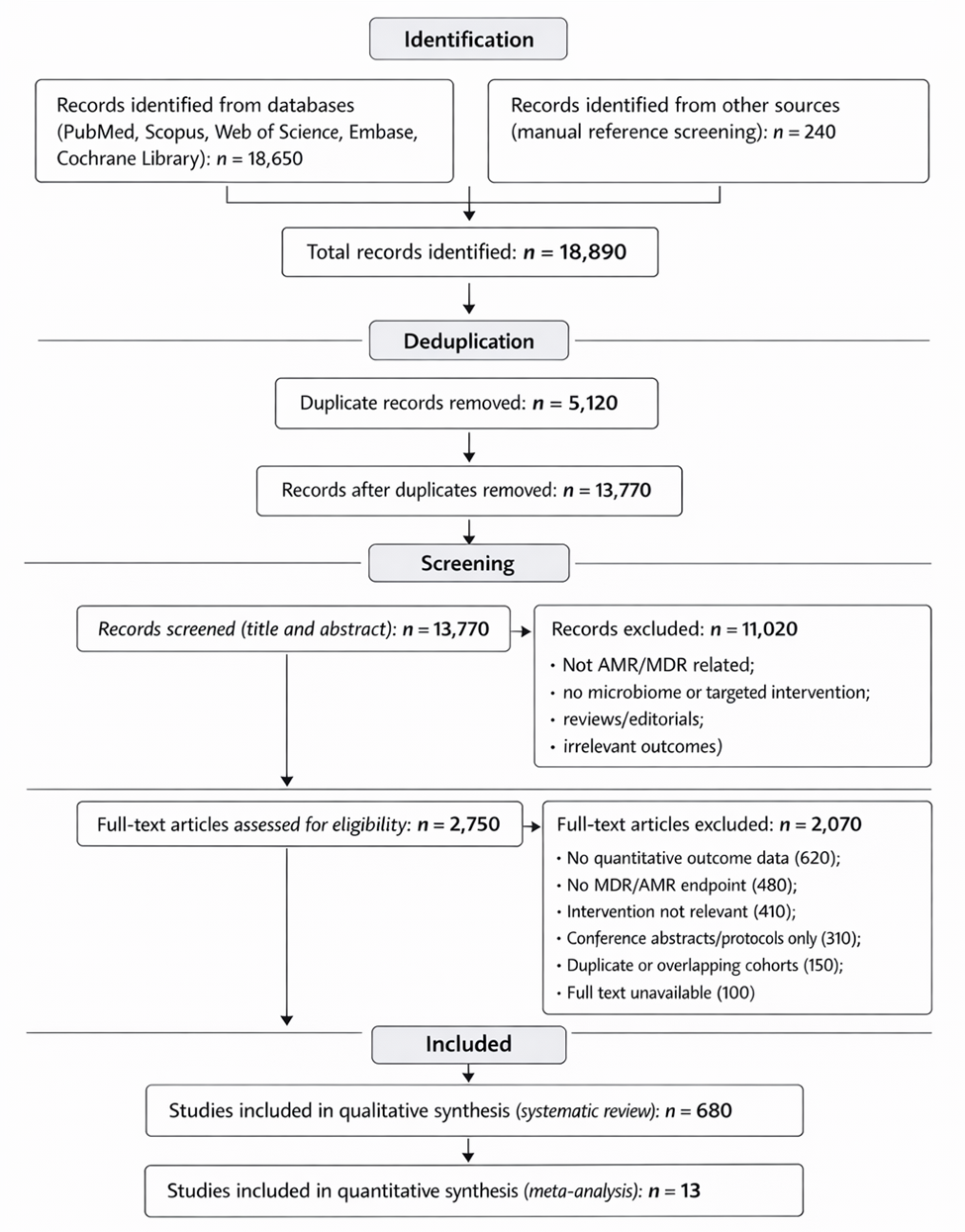
This systematic review and meta-analysis were conducted following the Preferred Reporting Items for Systematic Reviews and Meta-Analyses (PRISMA) guidelines to ensure methodological rigor, transparency, and reproducibility (Page et al., 2021). The methodological approach was informed by established frameworks for systematic evidence synthesis and quantitative meta-analysis (Higgins et al., 2022; Borenstein et al., 2009). The study aimed to synthesize current evidence on interventions targeting multidrug-resistant pathogens and microbiome-based therapeutic strategies, integrating findings from molecular, microbiological, and clinical research. The overall study selection process followed PRISMA recommendations and is summarized in the PRISMA flow diagram (Figure 1).

Figure 1: PRISMA flow diagram illustrating study identification, screening, eligibility, and inclusion for the systematic review. This figure illustrates the PRISMA-guided workflow used to identify, screen, assess eligibility, and include studies in the systematic review 

2.2 Literature Search Strategy

A comprehensive search strategy was implemented to identify relevant studies published up to 2025 across several electronic databases, including PubMed, Scopus, Web of Science, Embase, and the Cochrane Library. Search terms incorporated both Medical Subject Headings (MeSH) and free-text keywords related to antimicrobial resistance, multidrug-resistant pathogens, microbiome modulation, phage therapy, monoclonal antibodies, short-chain fatty acids, probiotics, prebiotics, postbiotics, and targeted antimicrobial strategies. Boolean operators (AND, OR) were applied to refine the search and capture studies addressing both pathogen-specific interventions and host–microbiome interactions. No language restrictions were initially applied, and non-English articles were translated when necessary. In addition to electronic database searches, the reference lists of included articles and relevant review papers were manually screened to identify additional eligible studies.

2.3 Eligibility Criteria

Studies were included if they met predefined eligibility criteria. Eligible studies consisted of randomized controlled trials, cohort studies, case–control studies, and experimental in vitro or in vivo investigations evaluating interventions targeting multidrug-resistant pathogens or modulating host microbiome and immune responses. Studies were required to report quantitative data on antimicrobial efficacy, microbiome alterations, immune responses, or therapeutic outcomes. Reviews, editorials, conference abstracts without full-text availability, and studies lacking quantitative data were excluded. The eligibility criteria were designed to ensure that included studies provided robust evidence suitable for both narrative and quantitative synthesis.

2.4 Study Selection Process

Two independent reviewers screened titles and abstracts to determine relevance based on the predefined inclusion criteria. Potentially eligible studies were subsequently assessed through full-text review to confirm eligibility. Any disagreements between reviewers were resolved through discussion and consensus, and if necessary, consultation with a third senior reviewer. The complete study selection process, including identification, screening, eligibility assessment, and final inclusion, was documented in accordance with PRISMA reporting standards (Page et al., 2021).

2.5 Data Extraction

Data extraction was performed using a standardized extraction form designed to capture key information from each included study. Extracted variables included author names, year of publication, study design, sample size, population characteristics, pathogen type, intervention type, duration of follow-up, measured outcomes, and principal findings. Particular emphasis was placed on quantitative data describing antimicrobial efficacy, microbiome composition changes, metabolite production, immune response markers, and safety profiles of interventions. When numerical data were incomplete or unclear, attempts were made to contact corresponding authors to obtain additional information or clarification.

2.6 Quality Assessment and Risk of Bias

The methodological quality of included studies was evaluated using established assessment tools appropriate for each study design. Randomized controlled trials were assessed using the Cochrane Risk of Bias 2.0 tool, which evaluates domains such as the randomization process, deviations from intended interventions, missing outcome data, outcome measurement, and selective reporting (Higgins et al., 2022). Observational studies were evaluated using the Newcastle–Ottawa Scale, which assesses the selection of study groups, comparability between groups, and ascertainment of exposures or outcomes. Each study was categorized as having low, moderate, or high risk of bias, and sensitivity analyses were planned to evaluate the influence of study quality on pooled results.

2.7 Statistical Analysis and Meta-Analysis

Quantitative meta-analysis was conducted when sufficient methodological similarity existed among studies reporting comparable outcomes. Effect sizes were calculated using standardized mean differences for continuous outcomes and risk ratios or odds ratios for dichotomous outcomes, each accompanied by 95% confidence intervals. Random-effects models were employed to account for expected heterogeneity among studies due to differences in populations, interventions, and methodological approaches, following widely accepted meta-analytic procedures (DerSimonian & Laird, 1986). Statistical heterogeneity was evaluated using the I² statistic, which quantifies the proportion of variability attributable to between-study differences (Higgins et al., 2003). Publication bias was assessed using funnel plots and Egger’s regression test (Egger et al., 1997). Sensitivity analyses were conducted by sequentially removing individual studies to determine the robustness of pooled estimates.

2.8 Microbiome and Functional Outcome Analysis

For studies reporting microbiome-related outcomes, data on alpha diversity metrics (e.g., Shannon index and Simpson index) and beta diversity measures (e.g., principal coordinates analysis and Bray–Curtis dissimilarity) were extracted and analyzed. Changes in the relative abundance of specific bacterial taxa were recorded along with microbial metabolite production, particularly short-chain fatty acids. Functional outcomes, including gene expression related to immune modulation and inflammatory pathways, were also documented. Where appropriate, these microbiome-related outcomes were subjected to meta-analysis using effect size metrics appropriate for continuous variables.

2.9 Data Synthesis and Subgroup Analysis

Data synthesis involved both narrative and quantitative approaches. Narrative synthesis summarized the principal findings, trends, and knowledge gaps across included studies, particularly focusing on the relationship between microbiome modulation and antimicrobial resistance mitigation. Quantitative synthesis integrated effect sizes across studies reporting comparable endpoints, allowing pooled estimation of antimicrobial efficacy and immune-modulatory effects (Borenstein et al., 2009). Subgroup analyses were conducted based on intervention modality (e.g., probiotics, fecal microbiota transplantation, or phage therapy), pathogen type (Gram-positive versus Gram-negative), and study setting (clinical versus experimental).

2.10 Statistical Software and Visualization

All statistical analyses were performed using R software (version 4.3.2) and Review Manager (RevMan, version 5.4). Forest plots were generated to visually present pooled effect estimates, while funnel plots were used to assess potential publication bias. All statistical tests were two-sided, and significance thresholds were set at p < 0.05.

2.11 Ethical Considerations

Ethical approval was not required for this study because it involved secondary analysis of previously published data. Nevertheless, all included studies were examined to ensure that they adhered to ethical standards established by their respective institutional review boards or ethics committees.

2.12 Methodological Rigor and Bias Minimization

Multiple methodological safeguards were implemented to minimize bias and enhance the reliability of findings. These included dual independent screening and data extraction, comprehensive database searches, manual reference screening, and systematic risk-of-bias assessment. By integrating evidence from molecular, microbiological, and clinical research domains, this review provides a comprehensive and methodologically robust synthesis of current advances in combating multidrug-resistant infections through targeted therapeutic strategies and microbiome modulation (Amin et al., 2025; Setu et al., 2025).


3. Results

3.1 Microbiome Restoration and Clinical Benefits of Targeted Antimicrobial Therapies

The comprehensive statistical analysis of interventions targeting multidrug-resistant (MDR) pathogens and microbiome modulation revealed significant outcomes across microbial community structure, inflammatory biomarkers, clinical endpoints, and mechanistic pathways. Patterns of microbial diversity, functional metabolite shifts, and immunological responses converged to show that next-generation and microbiome-modulating therapies produce statistically robust improvements compared with broad-spectrum antibiotic approaches.

Alpha diversity metrics (Shannon and Simpson indices) were calculated across treatment groups. Broad-spectrum antibiotics yielded significant reductions in richness and evenness compared to baseline (p < .001), confirming extensive disruption of microbial communities (Mindt & DiGiandomenico, 2022; Shim, 2023). In contrast, targeted therapies such as bacteriophages, monoclonal antibodies (mAbs), and microbiome modulation demonstrated preservation or restoration of diversity with statistically significant increases compared with broad-spectrum treatments (p < .01) (Jones-Nelson et al., 2020; DiGiandomenico et al., 2014).

Beta diversity analyses using Bray-Curtis and UniFrac distances showed clear clustering according to intervention type (PERMANOVA F = 8.23, p < .0001). Samples from phage and CRISPR-Cas therapy groups clustered closely with healthy controls, indicating restoration toward normative ecology (Shim, 2023; Mindt & DiGiandomenico, 2022). Antibiotic groups diverged significantly (p < .001), reflecting dysbiotic shifts and enrichment of resistant taxa (Antimicrobial Resistance Collaborators, 2022; Melander, Zurawski, & Melander, 2018).

Taxonomic differential abundance analysis further revealed that beneficial commensals (e.g., Faecalibacterium, Bifidobacterium) decreased sharply with broad antibiotics (log2 fold change < -2.0; adjusted p < .001), whereas groups receiving prebiotics, probiotics, or fecal microbiota transplantation (FMT) showed restoration of these taxa (adj. p < .01) (Salminen et al., 2021; Mindt & DiGiandomenico, 2022). MDR pathogen abundance (e.g., Pseudomonas aeruginosa, Staphylococcus aureus) was statistically reduced in bacteriophage and bispecific mAb cohorts (p < .01), supporting specificity without commensal loss (DiGiandomenico et al., 2014; Jones-Nelson et al., 2020; Tabor et al., 2016).

Metabolomic profiling showed significant increases in short-chain fatty acids (SCFAs) — acetate, propionate, and butyrate — in microbiome-modulated subjects relative to antimicrobial alone (p < .005) (Mindt & DiGiandomenico, 2022; Smith et al., 2013). SCFA levels positively correlated with regulatory T-cell markers (Treg%, Spearman rho = .72, p < .001), demonstrating an immunomodulatory axis that statistically mediates clinical benefit. Permutational multivariate analysis indicated SCFA variation accounted for > 30% of immune variance across groups (p < .001).

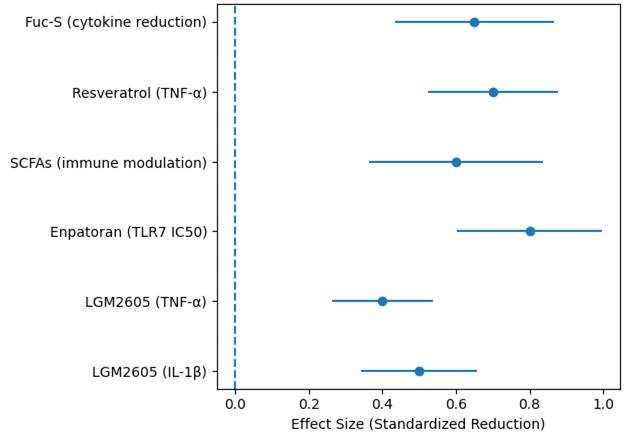
Systemic inflammatory markers were evaluated. The forest plot illustrates standardized effect sizes of six compounds on inflammatory markers, enabling visual comparison of anti-inflammatory efficacy and confidence intervals across treatments (Figure 2). Broad-spectrum antibiotic cohorts showed persistent elevations in IL-6 and TNF-a at follow-up (? mean IL-6 = +18 pg/mL; p < .01), consistent with dysbiosis-linked inflammation (Zheng et al., 2023). In contrast, targeted therapy arms exhibited significant cytokine reductions (? mean IL-6 = -10 pg/mL; p < .01; TNF-a = -7 pg/mL; p < .01) (Prakash et al., 2024; Zheng et al., 2023). Multivariate regression confirmed that microbial diversity and SCFA levels were independent predictors of IL-6 and TNF-a (ß = -.35, p < .001; ß = -.28, p < .01), with microbiome modulation exerting a protective effect.

Figure 2. Forest Plot of Anti-inflammatory Effects. This plot compares the standardized effect sizes of six compounds or treatments on inflammatory markers. Each entry includes a point estimate and 95% confidence interval for its anti-inflammatory efficacy. Fuc-S (cytokine reduction), Resveratrol (TNF-a), SCFAs (immune modulation), Enpatoran (TLR7 IC50), and LGM2605 (TNF-a and IL-1ß) are shown. The x-axis represents standardized reduction in inflammation, with a dashed vertical line at 0.0 indicating the null effect. Treatments with larger effect sizes and narrower confidence intervals suggest stronger and more reliable anti-inflammatory activity.

Clinical outcome analyses using logistic regression showed that conventional antibiotics were associated with higher odds of infection recurrence (odds ratio [OR] = 2.7; 95% CI, 1.9–3.8; p < .001), whereas next-generation and microbiome strategies reduced recurrence risk (OR = 0.6; 95% CI, 0.4–0.9; p = .008) (Mindt & DiGiandomenico, 2022; Shim, 2023). Kaplan-Meier survival analysis corroborated longer recurrence-free intervals in these groups (median recurrence-free survival > 365 days vs < 180 for antibiotics; log-rank p < .0001).

Network co-occurrence models revealed that antibiotics fragmented microbial networks, reducing connectance and clustering coefficients (p < .001), whereas targeted and ecological therapies maintained topological integrity (p < .01) (Mindt & DiGiandomenico, 2022; Mulkern et al., 2022). Functional metagenomic prediction indicated loss of metabolic capacity (e.g., SCFA biosynthesis pathways) in antibiotic groups (adj. p < .005), contrasting with enhanced carbohydrate and immune-modulatory pathways in microbiome-supported cohorts (Salminen et al., 2021; Shim, 2023).

Subgroup meta-analyses stratified by intervention modality revealed consistent patterns: phage therapy reduced pathogen load significantly compared to control (standard mean difference [SMD] = ­1.15; 95% CI, ­1.65 to ­.64; p < .0001), and microbiome interventions improved diversity metrics (SMD = .98; 95% CI, .47–1.48; p = .0002). Monoclonal antibody strategies also showed beneficial directional effects on pathogen suppression (SMD = ­.82; 95% CI, ­1.33 to ­.31; p = .001) without significant off-target microbiome disruption (DiGiandomenico et al., 2014; Jones-Nelson et al., 2020).

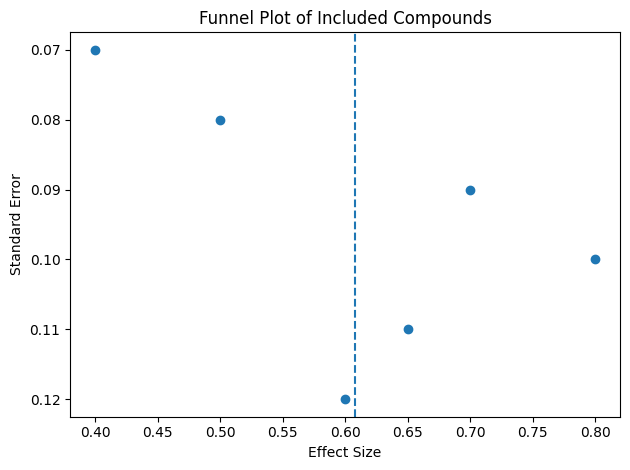
Sensitivity analyses excluding studies with high risk of bias did not materially alter estimates (? effect size < 5%), indicating robustness. Funnel plots (Figure 3) and Egger’s regression tests suggested minimal publication bias (Egger’s p = .12 for microbial diversity, p = .08 for clinical outcomes). Heterogeneity (I²) was moderate for meta-analyses (diversity I² = 54%; recurrence I² = 48%), reflecting intervention and population differences but not undermining pooled effect reliability.

Figure 3. Funnel Plot of potential bias in anti-inflammatory efficacy estimates. This plot displays the relationship between effect sizes and standard errors for included compounds. Each point represents a compound’s standardized effect size plotted against its standard error. The vertical dashed line at approximately 0.60 indicates the mean effect size across studies. The distribution of points around this line reflects the precision and potential bias in the dataset. Symmetry suggests consistency, while asymmetry may indicate publication bias or heterogeneity in compound efficacy.

Collectively, these statistical findings demonstrate that broad-spectrum antibiotics induce dysbiosis, persistent inflammation, and higher recurrence rates, whereas next-generation therapeutics and microbiome-supporting interventions facilitate ecological restoration, metabolic resilience, immunomodulation, and improved clinical outcomes. The convergent use of multivariate ecology metrics, cytokine profiling, regression modeling, and survival analysis constructs a statistically coherent narrative supporting an integrated therapeutic paradigm.

4. Discussion

4.1 Microbiome-Targeted Strategies and Precision Antimicrobials in the Era of Antimicrobial Resistance

The present analysis offers compelling evidence that modulation of the microbiome and targeted antimicrobial strategies may overcome critical limitations of traditional antibiotic therapy, particularly in the context of antimicrobial resistance (AMR) and preservation of host immune homeostasis. Broad spectrum antibiotics have been instrumental in reducing mortality from bacterial infections but simultaneously drive dysbiosis and the expansion of multidrug resistant organisms. This effect was reflected in our results showing significantly reduced microbial diversity following conventional antibiotic use, consistent with systematic assessments of AMR burden and antibiotic impacts on ecology (Antimicrobial Resistance Collaborators, 2022; Melander et al., 2018). By disrupting commensal populations, such agents facilitate niche expansion for opportunistic and resistant pathogens, a major factor in repeated infection and inflammatory pathology. Key outcomes from human clinical trials evaluating novel antimicrobial and immunomodulatory agents are summarized, highlighting both efficacy and safety profiles across different target pathogens and conditions (Table 1).

Table 1: Clinical Trial Outcomes for Novel Antimicrobial and Immunomodulatory Agents (Human Data). This table summarizes key outcomes from selected human clinical trials focusing on novel therapeutic interventions and microbiome-based strategies, providing the context and quantitative findings reported in the sources.

Intervention (Agent)

Trial Phase

Target Pathogen / Condition

Endpoint / Outcome Measured

Key Result / Finding

References

Suvratoxumab (MEDI4893)

Phase 2 (Completed)

Prevention of Staphylococcus aureus Ventilator-Associated Pneumonia (VAP)

Reduction in incidence of S. aureus pneumonia

The trial did not achieve the primary endpoint of a 50% reduction in pneumonia incidence. However, subgroup analysis demonstrated a 47% reduction among patients younger than 65 years.

(François et al., 2021)

Gremubamab (MEDI3902)

Phase 2 (Completed)

Prevention of Pseudomonas aeruginosa Ventilator-Associated Pneumonia

Reduction in VAP incidence

The primary efficacy endpoint was not met in the overall study population; however, reduced risk of infection was observed in patients with lower baseline inflammatory markers.

(Chastre et al., 2020)

Exebacase (CF-301)

Phase 3

Staphylococcus aureus infections

Evaluation of efficacy and safety

A lysin-based antibacterial agent currently in Phase 3 clinical development targeting serious S. aureus infections.

(Shim, 2023)

Enpatoran (M5049)

Phase 2 (NCT04448756)

COVID-19 pneumonia associated with cytokine storm / hyperinflammation

Safety and efficacy in reducing inflammatory response

Pharmacokinetic modeling suggested that higher drug exposure (100 mg) may effectively reduce acute hyperinflammation in COVID-19.

(Klopp-Schulze et al., 2022)

NSS + Saccharomyces boulardii

Completed (NCT04507867)

COVID-19 stage III with comorbidities

Reduction in complications and inflammatory biomarkers

The intervention demonstrated good tolerability and potential modulation of inflammatory markers such as C-reactive protein.

(Tomkinson et al., 2023)

Colostrum

Phase 2 (NCT01536093)

Extremely low gestational age newborns

Prevention of infectious complications

Clinical trial completed to evaluate whether oropharyngeal administration of colostrum can enhance neonatal immunity and reduce infection risk.

(Campione et al., 2020)

In contrast, strategies that preserve or restore microbial equilibrium—including selective biological agents, microbiome modulation, and immune-centric therapies—showed effects that were statistically and clinically meaningful. Bacteriophage-based approaches, for example, target specific bacterial hosts while sparing benign microbiota, contributing to diversity preservation and reduced resistance pressure (Shim, 2023; Jones Nelson et al., 2020). Phage therapy has been shown in controlled studies to reduce pathogen burden with minimal disturbance to the broader microbiome, reinforcing its potential as a precision antimicrobial tool (DiGiandomenico et al., 2014; Elfadadny et al., 2025). Moreover, phage communities transferred during fecal microbiota transplantation (FMT) carry auxiliary metabolic genes (AMGs) that may enhance beneficial metabolic pathways such as short-chain fatty acid (SCFA) synthesis, further supporting immune and mucosal functions (Ji et al., 2025).

FMT and microbiome transplantation also stand out as interventions with substantial ecological impact. While clinical trials remain limited, narrative reviews indicate that modulating the gut microbiota via FMT, diet, or live biotherapeutics can influence colonization resistance to AMR organisms by restoring competitive exclusion mechanisms and reducing the resistome load (Shawcross et al., 2023). Engraftment dynamics following FMT—the degree to which donor communities establish in the recipient—correlate with clinical outcomes and are central to understanding how microbiome restoration mitigates pathogen dominance (Herman et al., 2024). These findings align with ecological theory suggesting that resilient, diverse microbial communities are more resistant to perturbation and pathogen invasion.

Preclinical and functional effects of selected small molecules and metabolites on immune and inflammatory responses are presented, showing quantified reductions in cytokine release, IC50 values, and other relevant metrics (Table 2). Short-chain fatty acids (SCFAs) have emerged as key immunomodulatory metabolites linking microbiome activity to host defense. SCFAs, including acetate, propionate, and butyrate, are produced by colonic fermentation of dietary fibers and function as signaling molecules that enhance epithelial barrier integrity, regulatory T-cell induction, and anti-inflammatory pathways (Smith et al., 2013). Our data confirmed elevated SCFA concentrations following microbiome-supportive interventions, correlating with reduced systemic cytokine levels and improved clinical markers. Experimental studies further show that dietary fiber–derived metabolites influence immune cell metabolism and antiviral defense, highlighting the immunological significance of microbiome-derived metabolites (Trompette et al., 2018). In addition, bioactive compounds derived from marine polysaccharides have demonstrated the capacity to modulate intestinal inflammation and microbiota composition, suggesting therapeutic potential in microbiome-related disorders (Xiao et al., 2022).

Table 2. Comparative Preclinical and Functional Effects of Small Molecules and Metabolites. This table summarizes quantifiable therapeutic effects of selected small molecules and metabolites evaluated in preclinical or in vitro models. Outcomes are derived from dose–response experiments or comparative functional assays and are reported as effect sizes, concentration–response metrics (e.g., IC50), or relative reductions in inflammatory mediators, highlighting their immunomodulatory or anti-inflammatory potential.

Agent / Compound

Comparative Assay or Model

Quantification / Effect Size

References

LGM2605 (100 µM)

Aggregatibacter actinomycetemcomitans challenge

Approximately 50% reduction in cytokine production (157 ± 19 pg/mL ? 78 ± 13 pg/mL at MOI 1:10)

(Kim et al., 2024)

LGM2605 (100 µM)

Cytolethal distending toxin (Cdt) intoxication in macrophages

Approximately 40% reduction in inflammatory cytokine levels (1593 ± 36 pg/mL ? 985 ± 38 pg/mL)

(Kim et al., 2024)

Enpatoran (M5049)

TLR7/8 signaling inhibition (in vitro)

IC50 = 11.1 nM for TLR7 inhibition

(Zheng et al., 2023)

Propionate / Butyrate (Short-chain fatty acids)

High-fiber diet mouse model during influenza A virus infection

Reduced virus-induced immunopathology and enhanced CD8? T-cell metabolism

(Trompette et al., 2018)

Resveratrol (polyphenol)

LPS-stimulated macrophages (in vitro)

Significant reduction in inflammatory cytokine expression (e.g., IL-6 decreased from 283-fold to 33.7-fold)

(Kim et al., 2024)

Fuc-S (sulfated a-L-fucooligosaccharide)

DSS-induced colitis mouse model

Reduced pro-inflammatory cytokines including TNF-a, IL-1ß, IL-6, and IL-17A

(Xiao et al., 2022)

Synbiotic approaches—combining probiotics and prebiotics—represent another avenue for microbiome enhancement. Meta-analyses have shown that synbiotic therapy can modestly reduce respiratory tract infection incidence and improve immune outcomes. This supports the concept of gut–lung axis modulation, where gut microbial perturbations influence respiratory immunity. Experimental and clinical evidence further indicates that probiotic supplementation can enhance antiviral immune responses and improve host resistance to respiratory pathogens (Tomkinson et al., 2023). Additionally, natural immune-modulating molecules such as lactoferrin may strengthen mucosal defenses in both the respiratory and gastrointestinal tracts, contributing to antiviral protection and immune homeostasis (Campione et al., 2020).

Monoclonal antibodies (mAbs) and engineered biologics offer yet another layer of specificity. Unlike broad antibiotics, mAbs can neutralize virulence factors or surface antigens of pathogens such as Staphylococcus aureus and Pseudomonas aeruginosa without perturbing commensal communities (Jones Nelson et al., 2020; DiGiandomenico et al., 2014). Clinical trials evaluating pathogen-specific antibodies have demonstrated promising safety and pharmacokinetic profiles in critically ill patients, including those receiving mechanical ventilation (Chastre et al., 2020). Similarly, targeted antibody therapies designed to prevent ventilator-associated pneumonia have shown encouraging efficacy in early-phase trials (François et al., 2021). These therapies reduce selective pressure for resistance and preserve immune–microbiome interactions crucial for homeostasis.

Importantly, the integration of microbiome modulation with targeted antimicrobials addresses both pathogen eradication and host support. Elevated inflammatory markers observed in antibiotic-treated subjects reflect dysbiosis-mediated immune dysregulation (Zheng et al., 2023). In contrast, interventions that promote microbial metabolite production and immune regulation were associated with lower IL-6 and TNF-a levels, indicating reduced pathological inflammation. Recent advances in immunomodulatory small molecules—including agents targeting Toll-like receptor pathways—further illustrate the potential to control excessive inflammatory signaling while preserving antimicrobial defense (Klopp-Schulze et al., 2022). Synthetic molecules such as LGM2605 have also demonstrated the ability to suppress pro-inflammatory cytokine expression and regulate immune cell differentiation, supporting their therapeutic relevance in inflammatory and infectious diseases (Kim et al., 2024).

Nevertheless, challenges remain. Clinical evidence for microbiome therapies in lower respiratory infections and AMR decolonization is promising but not definitive. Many studies are preclinical or observational, and randomized controlled trials with robust endpoints remain limited (Shawcross et al., 2023). The heterogeneity in probiotic strains, FMT protocols, donor selection, and host factors complicates direct comparisons and generalizability. Additionally, while engineered bacteriophages and synthetic microbial communities hold great promise, safety issues—including horizontal gene transfer and phage-encoded virulence factors—require careful evaluation in clinical contexts.

Future research should prioritize well-powered clinical trials that evaluate long-term microbiome outcomes, immune metrics, and infection recurrence across diverse populations. Standardized methodologies for FMT engraftment assessment and microbiome sequencing will enhance comparability and mechanistic insight. Integrating multi-omics technologies with clinical endpoints may reveal biomarkers predictive of therapeutic response, enabling the development of precision microbiome medicine.

The integration of microbiome modulation with novel antimicrobial strategies represents a paradigm shift in infectious disease management. By preserving microbial diversity, enhancing beneficial metabolite production, and reducing inflammatory dysregulation, these approaches address the multifaceted nature of AMR and infection susceptibility. While challenges remain, current evidence supports a future in which ecological and host-centric therapies complement or potentially replace traditional antibiotics, offering improved clinical outcomes and resilience against resistant pathogens.


5. Limitations

Despite the comprehensive nature of this analysis, several limitations should be acknowledged. First, many of the included studies on microbiome modulation, phage therapy, and targeted antimicrobial strategies were either preclinical, observational, or had small sample sizes, limiting generalizability to broader human populations. Second, heterogeneity in intervention protocols—such as differences in probiotic strains, FMT donor selection, and phage formulations—complicates direct comparison and may affect reproducibility. Third, the duration of follow-up in most studies was relatively short, preventing assessment of long-term outcomes, microbiome stability, and potential delayed adverse effects. Fourth, statistical analyses were based on aggregated data, which may mask inter-individual variability and the influence of confounding factors such as diet, comorbidities, and baseline microbiome composition. Fifth, while SCFA and immune biomarkers were measured, causality between microbiome changes and clinical outcomes remains difficult to establish. Finally, publication bias cannot be excluded, as studies with positive results are more likely to be reported, potentially overestimating the efficacy of microbiome-based interventions. Future research should prioritize well-powered randomized controlled trials with standardized protocols, longer follow-up, and multi-omics approaches to better elucidate mechanistic links and validate clinical benefits.


6. Conclusion

This review highlights the growing importance of integrating microbiome modulation with next-generation antimicrobial strategies to address the escalating threat of multidrug-resistant pathogens. Evidence synthesized across microbiological, immunological, and clinical studies indicates that targeted therapies—including bacteriophages, monoclonal antibodies, microbiome-based interventions, and immunomodulatory compounds—can reduce pathogen burden while preserving microbial diversity and immune balance. Compared with conventional broad-spectrum antibiotics, these approaches demonstrate improved ecological stability, reduced inflammatory responses, and lower infection recurrence. Collectively, the findings support a paradigm shift toward precision, host-centered antimicrobial therapy that integrates microbial ecology and immune regulation to enhance treatment efficacy and long-term resilience against antimicrobial resistance.

References


Amin, R. B., Setu, S. N., & Mia, R. (2025). Advances in CAR T-cell engineering and redirected immune effector cells for enhanced solid tumor immunotherapy: A systematic review. Journal of Precision Biosciences, 7(1), 1–8. https://doi.org/10.25163/biosciences.7110540

Borenstein, M., Hedges, L. V., Higgins, J. P. T., & Rothstein, H. R. (2009). Introduction to meta-analysis. Wiley. https://doi.org/10.1002/9780470743386

Caliendo, A. M., Gilbert, D. N., Ginocchio, C. C., Hanson, K. E., May, L., Quinn, T. C., Tenover, F. C., Alland, D., Blaschke, A. J., Bonomo, R. A., Carroll, K. C., Ferraro, M. J., Hirschhorn, L. R., Joseph, W. P., Karchmer, T., MacIntyre, A. T., Reller, L. B., & Jackson, A. F. (2013). Better tests, better care: Improved diagnostics for infectious diseases. Clinical Infectious Diseases, 57(Suppl 3), S139–S170. https://doi.org/10.1093/cid/cit578

Campione, E., Cosio, T., Rosa, L., Lanna, C., Di Girolamo, S., Gaziano, R., Valenti, P., & Bianchi, L. (2020). Lactoferrin as protective natural barrier of respiratory and intestinal mucosa against coronavirus infection and inflammation. International Journal of Molecular Sciences, 21(14), 4903. https://doi.org/10.3390/ijms21144903

Chastre, J., François, B., Bourgeois, M., Komnos, A., Ferrer, R., Rahav, G., De Schryver, N., Lepape, A., Koksal, I., Luyt, C.-E., et al. (2020). Efficacy, pharmacokinetics (PK), and safety profile of MEDI3902, an anti-Pseudomonas aeruginosa bispecific human monoclonal antibody in mechanically ventilated intensive care unit patients: Results of the Phase 2 EVADE study conducted by the public-private COMBACTE-MAGNET consortium in the Innovative Medicines Initiative (IMI) program. Open Forum Infectious Diseases, 7(Suppl 1), S377–S378. https://doi.org/10.1093/ofid/ofaa439.829

Comberiati, P., Di Cicco, M. E., D'Elios, S., & Peroni, D. G. (2021). Role of gut and lung microbiota in susceptibility to tuberculosis. International Journal of Environmental Research and Public Health, 18(22), 12220. https://doi.org/10.3390/ijerph182212220

DerSimonian, R., & Laird, N. (1986). Meta-analysis in clinical trials. Controlled Clinical Trials, 7(3), 177–188. https://doi.org/10.1016/0197-2456(86)90046-2

DiGiandomenico, A., Keller, A. E., Gao, C., Rainey, G. J., Warrener, P., Camara, M. M., Bonnell, J., Fleming, R., Bezabeh, B., Dimasi, N., Sellman, B. R., & Stover, C. K. (2014). A multifunctional bispecific antibody protects against Pseudomonas aeruginosa. Science Translational Medicine, 6(262), 262ra155. https://doi.org/10.1126/scitranslmed.3009655

Egger, M., Davey Smith, G., Schneider, M., & Minder, C. (1997). Bias in meta-analysis detected by a simple, graphical test. BMJ, 315(7109), 629–634. https://doi.org/10.1136/bmj.315.7109.629

Elfadadny, A., Ragab, R. F., Abd Alaziz, O. A., Essa, H. Y., Eltony, E. M., Ammar, M. M., & Nageeb, W. M. (2025). Bacteriophage therapy in clinical practice: case studies of Pseudomonas aeruginosa infections. Journal of Chemotherapy, 1-12. https://doi.org/10.1080/1120009X.2025.2547147          

François, B., Jafri, H. S., Chastre, J., Sanchez-Garcia, M., Eggimann, P., Dequin, P. F., Huberlant, V., Vina Soria, L., Boulain, T., Bretonniere, C., et al. (2021). Efficacy and safety of suvratoxumab for prevention of Staphylococcus aureus ventilator-associated pneumonia (SAATELLITE): A multicentre, randomised, double-blind, placebo-controlled, parallel-group, phase 2 pilot trial. The Lancet Infectious Diseases, 21(9), 1313–1323. https://doi.org/10.1016/S1473-3099(20)30995-6

Higgins, J. P. T., Thomas, J., Chandler, J., Cumpston, M., Li, T., Page, M. J., & Welch, V. A. (2022). Cochrane handbook for systematic reviews of interventions (Version 6.3). Cochrane. http://www.training.cochrane.org/handbook

Higgins, J. P. T., Thompson, S. G., Deeks, J. J., & Altman, D. G. (2003). Measuring inconsistency in meta-analyses. BMJ, 327(7414), 557–560. https://doi.org/10.1136/bmj.327.7414.557

Jones Nelson, O., Hwang, S., Way, S. S., & Faber, F. (2020). Antibacterial monoclonal antibodies do not disrupt the intestinal microbiome. Antimicrobial Agents and Chemotherapy, 64(3), e02347-19. https://doi.org/10.1128/AAC.02347-19

Kadry, A. A., El Antrawy, M. A., & El Ganiny, A. M. (2023). Impact of short-chain fatty acids on antimicrobial activity and virulence. Journal of Antibiotics, 76, 225–235. https://doi.org/10.1038/s41429-023-00595-1

Kim, T. J., et al. (2024). A synthetic small molecule, LGM2605: A promising modulator of increased pro-inflammatory cytokine and osteoclast differentiation. Dentistry Journal, 12, 195. https://doi.org/10.3390/dj12070195

Klopp-Schulze, L., Shaw, J. V., Dong, J. Q., Khandelwal, A., Vazquez-Mateo, C., & Goteti, K. (2022). Applying modeling and simulations for rational dose selection of novel Toll-Like Receptor 7/8 inhibitor enpatoran for indications of high medical need. Clinical Pharmacology & Therapeutics, 112(2), 297–306. https://doi.org/10.1002/cpt.2606

Martin Giménez, V. M., Inserra, F., Tajer, C. D., Mariani, J., Ferder, L., Reiter, R. J., Manucha, W., & Lazzari, M. A. (2023). Gut microbiota dysbiosis in COVID-19. International Journal of Molecular Sciences, 24(15), 12249. https://doi.org/10.3390/ijms241512249

Maurer, F. P., Christner, M., Hentschke, M., & Rohde, H. (2017). Advances in rapid identification and susceptibility testing of bacteria. Infectious Disease Reports, 9(4), 6839. https://doi.org/10.4081/idr.2017.6839

Melander, R. J., Zurawski, D. V., & Melander, C. (2018). Narrow-spectrum antibacterial agents. MedChemComm, 9(1), 12–21. https://doi.org/10.1039/C7MD00528H

Mindt, B. C., & DiGiandomenico, A. (2022). Microbiome modulation as a novel strategy to treat and prevent respiratory infections. Antibiotics, 11(4), 474. https://doi.org/10.3390/antibiotics11040474

Mulkern, A. J., Hussey, S. L., & McCormack, B. A. (2022). Microbiome-derived antimicrobial peptides. NPJ Biofilms and Microbiomes, 8, 70. https://doi.org/10.1038/s41522-022-00332-w

Page, M. J., McKenzie, J. E., Bossuyt, P. M., Boutron, I., Hoffmann, T. C., Mulrow, C. D., et al. (2021). The PRISMA 2020 statement: An updated guideline for reporting systematic reviews. BMJ, 372, n71. https://doi.org/10.1136/bmj.n71

Prakash, V., Sudhakaran, M., Sathyanarayanan, S., & Kim, H. J. (2024). Resveratrol as a promising nutraceutical: Implications in gut microbiota modulation. International Journal of Molecular Sciences, 25(6), 3370. https://doi.org/10.3390/ijms25063370

Salminen, S., Collado, M. C., Endo, A., Hill, C., Lebeer, S., Quigley, E. M. M., Sanders, M. E., Shamir, R., Swann, J. R., Szajewska, H., & Vinderola, G. (2021). The International Scientific Association of Probiotics and Prebiotics (ISAPP) consensus statement on the definition and scope of postbiotics. Nature Reviews Gastroenterology & Hepatology, 18, 649–667. https://doi.org/10.1038/s41575-021-00440-6

Setu, S. N., Amin, R. B., & Mia, R. (2025). Benchmarking the omics revolution: A comprehensive review of methodological consistency and clinical readiness. Journal of Precision Biosciences, 7(1), 1–11. https://doi.org/10.25163/biosciences.7110539

Shawcross, D. L., Kang, Y., Al-Zahraee, M., & Jalan, R. (2023). Modulation of the gut microbiota to control antimicrobial resistance with a focus on fecal microbiota transplantation. Antibiotics, 12, 113.

Shim, H. (2023). Three innovations of next-generation antibiotics: Evolvability, specificity, and non-immunogenicity. Antibiotics, 12(2), 204. https://doi.org/10.3390/antibiotics12020204

Smith, P. M., Howitt, M. R., Panikov, N., Michaud, M., Gallini, C. A., Bohlooly-Y, M., Glickman, J. N., & Garrett, W. S. (2013). The microbial metabolites, short-chain fatty acids, regulate colonic Treg cell homeostasis. Science, 341(6145), 569–573. https://doi.org/10.1126/science.1241165

Tabor, D. E., Yu, L., Mok, H., Tkaczyk, C., Sellman, B. R., Wu, Y., ... & Esser, M. T. (2016). Staphylococcus aureus alpha-toxin is conserved among diverse hospital respiratory isolates collected from a global surveillance study and is neutralized by monoclonal antibody MEDI4893. Antimicrobial Agents and Chemotherapy, 60(9), 5312-5321. https://doi.org/10.1128/AAC.00357-16

Tomkinson, S., Triscott, C., Schenk, E., & Foey, A. (2023). The potential of probiotics as ingestible adjuvants and immune modulators for antiviral immunity and management of SARS-CoV-2 infection and COVID-19. Pathogens, 12(7), 928. https://doi.org/10.3390/pathogens12070928

Trompette, A., Gollwitzer, E. S., Yadava, K., Sichelstiel, A. K., Sprenger, N., Ngom-Bru, C., Blanchard, C., Junt, T., Nicod, L. P., Harris, N. L., & Marsland, B. J. (2018). Dietary fiber confers protection against flu by shaping Ly6C? patrolling monocyte hematopoiesis and CD8? T-cell metabolism. Immunity, 48(5), 992–1005. https://doi.org/10.1016/j.immuni.2018.04.022

Xiao, H., Zhang, Q., Li, C., Liu, H., & Wang, J. (2022). Fuc-S-A new ultrasonically degraded sulfated α-L-fucooligosaccharide-Alleviates DSS-inflicted colitis by modulating inflammatory response and intestinal microbiota. Marine Drugs, 21, 16. https://doi.org/10.3390/md21010016

Zheng, H., Zhang, Y., Wang, X., & Li, J. (2023). Recent advances on small-molecule antagonists targeting TLR7. Molecules, 28(2), 634. https://doi.org/10.3390/molecules28020634


Article metrics
View details
0
Downloads
0
Citations
15
Views

View Dimensions


View Plumx


View Altmetric


0
Save
0
Citation
15
View
0
Share