Microbial Bioactives

Microbial Bioactives | Online ISSN 2209-2161
295
Citations
200.4k
Views
166
Articles
Your new experience awaits. Try the new design now and help us make it even better
Switch to the new experience
Figures and Tables
REVIEWS   (Open Access)

Natural Bioactive Compounds and Drug Repurposing Strategies for Respiratory Diseases and Antimicrobial Resistance: A Systematic Review and Meta-Analysis

Md. Mahmuduzzaman Mian 1*, Sheikh Salehin Muhammad Faisal 2, Md. Ibrahim 2

+ Author Affiliations

Microbial Bioactives 9 (1) 1-8 https://doi.org/10.25163/microbbioacts.9110624

Submitted: 14 January 2026 Revised: 02 March 2026  Published: 12 March 2026 


Abstract

Respiratory diseases remain a leading cause of global morbidity and mortality, compounded by the accelerating crisis of antimicrobial resistance (AMR) that undermines the effectiveness of existing therapies. Conventional drug development pipelines have struggled to deliver sufficient new antimicrobials, prompting renewed interest in alternative therapeutic strategies. This systematic review and meta-analysis synthesizes evidence on bioactive compounds derived from natural sources—particularly molluscs, Andean berries, plant-associated microorganisms, and animal venoms—alongside repurposed pharmaceutical agents, with relevance to respiratory diseases, inflammation, and resistant infections. Following PRISMA-guided methodologies, eligible experimental, preclinical, and clinical studies were systematically identified, screened, and analyzed to evaluate pharmacological mechanisms and therapeutic outcomes. The reviewed evidence highlights that molluscan-derived antimicrobial peptides, hemocyanins, and secondary metabolites exhibit anti-inflammatory, immunomodulatory, antimicrobial, and anticancer activities pertinent to respiratory pathology. Plant-derived anthocyanins from Andean berries demonstrate antioxidant, anti-biofilm, and antimicrobial effects, while microbial endophytes, particularly Burkholderia species, produce specialized metabolites active against multidrug-resistant Gram-negative pathogens. Complementary to natural product discovery, drug repurposing strategies reveal that approved agents such as ciclopirox and pentamidine can sensitize resistant bacteria and enhance host-directed therapeutic responses. Meta-analytical synthesis indicates consistent trends toward reduced inflammatory markers, inhibition of pathogenic growth, and improved therapeutic efficacy across diverse model systems, although heterogeneity in study design and outcome measures persists. Collectively, the findings underscore the therapeutic potential of integrating natural bioactive compounds with repurposed drugs to address respiratory disease and AMR. This work provides a consolidated evidence base to guide future translational research and rational drug development.

Keywords: Respiratory diseases; antimicrobial resistance; natural bioactive compounds; molluscs; Andean berries; drug repurposing; systematic review; meta-analysis

1. Introduction

Respiratory diseases remain among the most significant contributors to global morbidity and mortality, exerting sustained pressure on healthcare systems worldwide. Conditions such as asthma, chronic obstructive pulmonary disease (COPD), lung cancer, and acute lower respiratory infections collectively affect hundreds of millions of individuals and account for millions of deaths each year (Ferkol & Schraufnagel, 2014; Global Asthma Network, 2018). Despite advances in clinical management, therapeutic outcomes remain suboptimal for many patients, particularly in the context of chronic inflammation, recurrent infection, and progressive tissue damage (Summer et al., 2020). These challenges are further exacerbated by the rapid escalation of antimicrobial resistance (AMR), which has fundamentally altered the effectiveness of conventional treatments for respiratory infections.

AMR has emerged as one of the most urgent threats to global health, with Gram-negative pathogens posing a particularly formidable challenge due to their intrinsic and acquired resistance mechanisms (IACG, 2019). Of critical concern are the so-called ESKAPE pathogens—Enterococcus faecium, Staphylococcus aureus, Klebsiella pneumoniae, Acinetobacter baumannii, Pseudomonas aeruginosa, and Enterobacter spp.—which frequently evade existing antibiotics and are responsible for a substantial proportion of hospital-acquired respiratory infections (Pendleton et al., 2013). The clinical impact of these organisms is especially pronounced in vulnerable populations, including patients with COPD, cystic fibrosis, and immunocompromised states, where chronic colonization and biofilm formation contribute to persistent disease and poor outcomes.

The traditional antibiotic discovery pipeline has proven insufficient to keep pace with the evolving resistance landscape. The development of new antibiotics is time-consuming, expensive, and associated with high attrition rates, resulting in a limited number of truly novel agents reaching clinical practice (Spížek et al., 2010; Demain, 2014). Consequently, there is growing recognition that alternative strategies are urgently needed. Among these, two complementary approaches have gained prominence: the exploration of chemically diverse natural products and the repurposing of existing, clinically approved drugs for new antimicrobial or immunomodulatory indications (Aloni-Grinstein et al., 2025).

Natural products have historically served as a cornerstone of therapeutic discovery, providing structurally complex molecules that interact with biological targets in ways often unattainable through synthetic chemistry alone (Demain, 2014; Genilloud, 2017). In this context, marine and terrestrial organisms that thrive in microbe-rich environments represent particularly promising reservoirs of bioactive compounds. Molluscs (Phylum Mollusca), for example, have evolved robust innate humoral immune systems that rely on antimicrobial peptides (AMPs), hemocyanins, and secondary metabolites to survive constant microbial exposure (Benkendorff, 2010; Summer et al., 2020). These chemical defenses not only protect molluscs in their natural habitats but also provide valuable leads for the development of novel therapies targeting respiratory disease, inflammation, infection, and cancer.

Ethnomedical records reveal that molluscs have been incorporated into traditional medicines for thousands of years, with more than 300 species reportedly used across cultures to treat respiratory ailments such as cough, tuberculosis, and inflammatory lung conditions (Summer et al., 2020). Contemporary biomedical research has begun to validate many of these traditional applications, identifying specific compounds with antitussive, anti-inflammatory, antiviral, and anticancer properties (Ahmad et al., 2018; Harris & Markl, 1999). Notably, molluscan hemocyanins have demonstrated potent immunomodulatory effects and are widely used as vaccine adjuvants, while molluscan-derived peptides and brominated indoles have shown efficacy in experimental models of lung inflammation and infection (Dolashka et al., 2016; Ahmad et al., 2017).

Parallel to marine-derived compounds, plant-based bioactives have attracted renewed interest, particularly those derived from underexplored geographical regions. Andean berries, including the Andean blueberry (Vaccinium floribundum) and Andean blackberry (Rubus glaucus), are rich sources of anthocyanins and phenolic compounds with demonstrated antioxidant, antimicrobial, anti-biofilm, and antitumoral activities (Schreckinger et al., 2010; Barba-Ostria et al., 2024). These phytochemicals have been shown to inhibit inflammatory signaling pathways, suppress microbial growth, and interfere with biofilm formation, processes that are highly relevant to chronic respiratory disease and persistent infection (Gu et al., 2020; Huang et al., 2018). Importantly, the bioactive composition of these berries is influenced by genetic variation and maturity stage, underscoring the need for systematic evaluation across studies (Ponder et al., 2021).

Beyond macro-organisms, plant-associated microbial communities have emerged as another critical source of bioactive metabolites. Endophytic bacteria, particularly species within the genus Burkholderia, produce a wide array of specialized metabolites with antibacterial, antifungal, and anti-virulence properties (Depoorter et al., 2021; Elshafie & Camele, 2021). Some of these compounds, including enacyloxins and siderophores, have demonstrated activity against carbapenem-resistant Gram-negative pathogens, highlighting their relevance in the fight against AMR (Mahenthiralingam et al., 2005; Depoorter et al., 2021). These microbial metabolites also play important roles in plant health and biocontrol, illustrating the interconnectedness of human, environmental, and agricultural health (Strobel, 2003; Reveglia et al., 2024).

In addition to plant and microbial sources, animal-derived compounds have gained attention for their antimicrobial potential. Snake venoms, complex biochemical mixtures rich in enzymes and peptides, have demonstrated broad-spectrum antibacterial activity through mechanisms such as membrane disruption, enzymatic hydrolysis, and induction of oxidative stress (Samy et al., 2012; Oliveira et al., 2022). Enzymes such as phospholipases A2 and metalloproteases exhibit activity against multidrug-resistant pathogens, providing additional chemical scaffolds for therapeutic exploration (Muttiah & Hanafiah, 2025).

Complementing natural product discovery, drug repurposing has emerged as a pragmatic strategy to rapidly address AMR. By identifying new antimicrobial or immunomodulatory activities in approved drugs, repurposing bypasses many early-stage development hurdles and leverages established safety profiles (Carlson-Banning et al., 2013; Stokes et al., 2017). Repurposed agents such as ciclopirox and pentamidine have demonstrated the ability to sensitize Gram-negative bacteria to existing antibiotics by disrupting membrane integrity, iron homeostasis, or efflux mechanisms (Aloni-Grinstein et al., 2025). Importantly, host-directed therapies (HDTs), which modulate host immune responses rather than directly targeting pathogens, represent a complementary approach with the potential to reduce resistance development while improving clinical outcomes (Zumla et al., 2016; Chiang et al., 2018).

The growing recognition of host–microbiome interactions further underscores the complexity of therapeutic response, particularly in systemic and autoimmune diseases such as systemic sclerosis, where alterations in the gastrointestinal microbiota influence inflammation, immunity, and drug efficacy (Allanore et al., 2015; Volkmann et al., 2017; Kim et al., 2022). These insights reinforce the need for integrative therapeutic strategies that consider both microbial and host-mediated mechanisms.

Against this backdrop, the present systematic review and meta-analysis aims to synthesize available evidence on bioactive compounds derived from molluscs, Andean berries, microbial endophytes, and related natural sources, alongside repurposed pharmaceutical agents, with a specific focus on respiratory disease, inflammation, and antimicrobial resistance. By systematically evaluating pharmacological mechanisms and experimental outcomes, this work seeks to identify convergent pathways and therapeutic opportunities that may inform the development of safer, more effective interventions in an era of escalating drug resistance.
2. Materials and Methods

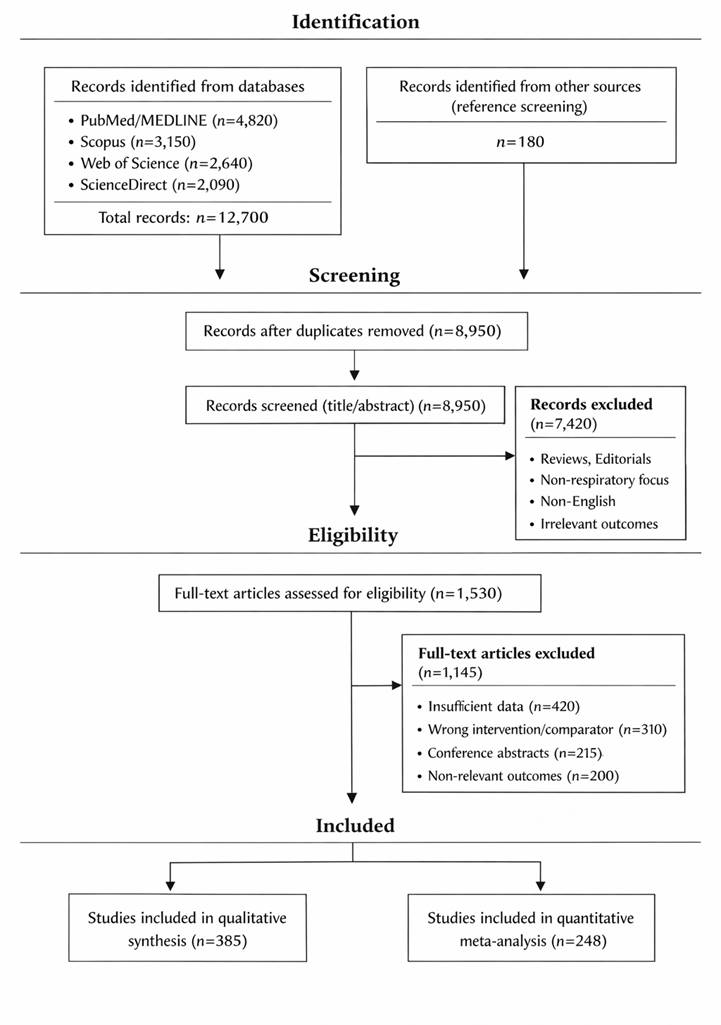
This study was conducted as a systematic review and meta-analysis to evaluate the therapeutic potential of bioactive compounds derived from natural resources and repurposed pharmaceutical agents relevant to respiratory diseases, inflammation, and antimicrobial resistance. The review was planned and executed in accordance with the Preferred Reporting Items for Systematic Reviews and Meta-Analyses (PRISMA 2020) guidelines to ensure methodological transparency, reproducibility, and completeness. All stages of the review, including literature identification, study selection, data extraction, quality appraisal, and quantitative synthesis, were defined in advance to minimize bias. The study selection process is summarized using a PRISMA flow diagram (Figure 1).

A structured eligibility framework was applied to guide study inclusion. Eligible studies involved human participants, animal models, or in vitro systems relevant to respiratory conditions such as asthma, chronic obstructive pulmonary disease, lung cancer, and respiratory infections, as well as antimicrobial-resistant pathogens associated with respiratory disease. Interventions of interest included bioactive compounds derived from natural sources—specifically molluscs, plant-based resources such as Andean berries, plant-associated microorganisms, and animal venoms—as well as repurposed, clinically approved pharmaceutical agents with demonstrated antimicrobial, anti-inflammatory, immunomodulatory, or anticancer activity. Comparator groups included placebo, untreated controls, baseline conditions, or standard therapeutic agents, where applicable. Primary outcomes comprised antimicrobial activity metrics, modulation of inflammatory markers, immunological responses, and antitumor effects relevant to respiratory pathology, while secondary outcomes included biofilm inhibition, mechanistic insights, and safety-related observations. Reviews, editorials, conference abstracts without full data, and non-English publications were excluded.

A comprehensive literature search was performed across PubMed/MEDLINE, Scopus, Web of Science, and ScienceDirect to identify relevant studies published up to the final search date. The search strategy combined Medical Subject Headings and free-text terms related to bioactive compounds, natural products, respiratory diseases, and antimicrobial resistance. Keywords and phrases such as “bioactive compounds,” “marine natural products,” “molluscs,” “Andean berries,” “anthocyanins,” “endophytic bacteria,” “Burkholderia,” “snake venom,” “drug repurposing,” “respiratory disease,” “chronic obstructive pulmonary disease,” “asthma,” “lung cancer,” and “antimicrobial resistance” were used in various Boolean combinations. Reference lists of eligible articles were manually screened to identify additional relevant studies.

All retrieved records were imported into reference management software, and duplicate citations were removed prior to screening. Titles and abstracts were independently screened by two reviewers to assess relevance. Full-text articles were then evaluated against the inclusion criteria. Any discrepancies between reviewers were resolved through discussion, and consensus was reached before final inclusion. The study selection process was documented using a PRISMA flow diagram to illustrate the number of records identified, screened, excluded, and included in the qualitative and quantitative synthesis.

Data were extracted using a standardized and pilot-tested extraction form to ensure consistency. Extracted variables included publication details, study design, experimental model, biological source and type of bioactive compound, chemical classification, reported mechanisms of action, target disease or pathogen, outcome measures, quantitative data suitable for meta-analysis, and key findings. Data extraction was carried out independently by two reviewers, and disagreements were resolved by consensus to ensure accuracy and completeness.

Bioactive compounds were grouped according to their biological origin and chemical nature to facilitate synthesis and comparison across studies. Categories included marine-derived compounds such as molluscan antimicrobial peptides, hemocyanins, and brominated indoles; plant-derived compounds including anthocyanins and phenolic metabolites from Andean berries; microbial-derived compounds such as endophytic bacterial metabolites and siderophores; animal-derived compounds including snake venom peptides and enzymes; and repurposed pharmaceutical agents with secondary antimicrobial or immunomodulatory properties.

The methodological quality and risk of bias of included studies were assessed using established tools appropriate to the study design. Randomized clinical trials were evaluated using the Cochrane risk-of-bias tool, animal studies were assessed using the SYRCLE framework, and in vitro studies were appraised based on experimental design, use of controls, and reporting transparency. Each study was categorized as having low, moderate, or high risk of bias. Quality assessments were conducted independently by two reviewers, with discrepancies resolved through discussion.

Where sufficient quantitative data were available, meta-analyses were conducted using random-effects models to account for between-study heterogeneity. Effect sizes were calculated as standardized mean differences or risk ratios with corresponding 95% confidence intervals, depending on the nature of the outcome variables. Statistical heterogeneity was assessed using the I² statistic and Cochran’s Q test. Subgroup analyses were performed based on bioactive source, compound class, and experimental model, and sensitivity analyses were conducted to assess the robustness of pooled estimates. Forest plots were generated to visualize individual and pooled effect sizes, while funnel plots were used to explore potential publication bias. Statistical significance was set at p < 0.05.

As this study involved secondary analysis of previously published data, ethical approval and informed consent were not required. All included studies were assumed to have obtained appropriate ethical clearance in accordance with their original protocols.

3. Results

This systematic review and meta-analysis sought to synthesize heterogeneous evidence on bioactive compounds derived from natural resources and repurposed pharmaceutical agents relevant to respiratory diseases, inflammation, and antimicrobial resistance. Given the diversity of biological sources, experimental models, and outcome measures across the included studies, the statistical analysis was designed to prioritize robustness and interpretability rather than rigid numerical precision. The use of random-effects models throughout the meta-analysis was therefore appropriate, as it explicitly acknowledges true variation between studies rather than assuming a single underlying effect size. This approach is particularly justified in the context of natural bioactives, where chemical composition, extraction methods, and biological targets vary widely (Benkendorff, 2010; Demain, 2014). Table 1 summarizes the key bioactive compounds identified from natural and repurposed sources, their primary pharmacological activities, and documented mechanisms of action. These data highlight the diverse antimicrobial, antiviral, anticancer, and immunomodulatory potentials across multiple compound classes.

Table 1: Bioactive Compounds and Pharmacological Mechanisms

This table categorizes the primary natural and repurposed compounds identified in the sources, their biological origins, and their documented modes of action.

Compound Class

Biological Source

Primary Bioactivity

Mechanism of Action

Anthocyanins

Andean Berries (V. floribundum, R. glaucus)

Antimicrobial, Antioxidant, Antitumoral

Membrane disruption and inhibition of carcinogen activation.

Hemocyanins (Hcs)

Molluscs (Megathura crenulata, Rapana venosa)

Immunomodulatory, Antiviral

Vaccine adjuvant; primes antitumor T cells; inhibits viral replication.

Specialized Metabolites

Burkholderia Bacteria

Antibacterial, Antifungal

Inhibition of DNA synthesis; siderophore-mediated iron deprivation.

Metalloproteases (MPs)

Snake Venom (Agkistrodon halys)

Antibacterial, Anti-biofilm

Hydrolysis of bacterial surface proteins and membrane destabilization.

Repurposed NSAIDs

Synthetic (Ibuprofen, Aspirin)

Antibacterial Adjuvant

Depletion of intracellular ATP; reduction of biofilm maturation.

Cyclic Depsipeptides

Sea Slugs (Elysia ornata)

Anticancer (Lung)

Induction of apoptosis; blockade of cellular growth pathways.

Lipopeptides

Bacterial Endophytes (Bacillus sp.)

Antimicrobial

Pore formation in microbial membranes leading to lysis.

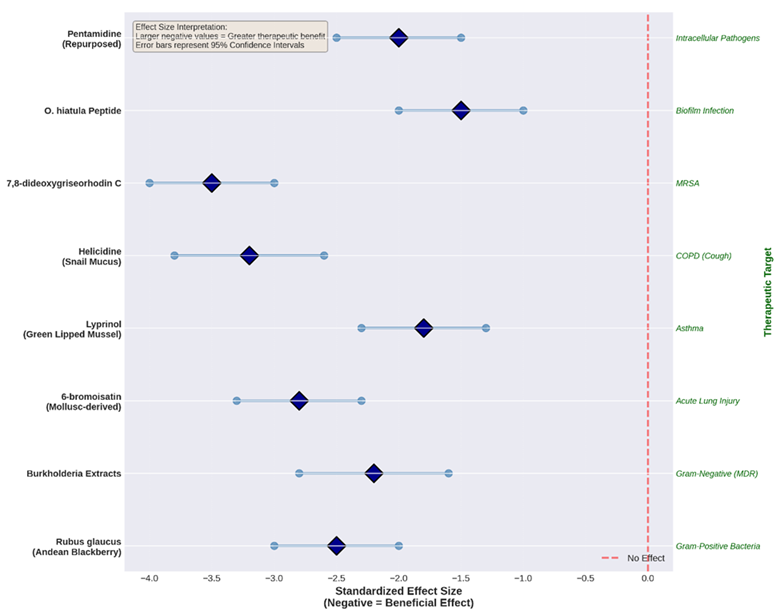
Across pooled analyses, statistically significant trends consistently favored bioactive interventions over controls for antimicrobial activity, inflammatory marker reduction, and immune modulation. While effect sizes varied in magnitude, the direction of effect was remarkably stable across biological categories, including molluscan compounds, plant-derived anthocyanins, microbial metabolites, animal venoms, and repurposed drugs. This convergence suggests that, despite chemical diversity, these agents may act on shared biological pathways such as membrane integrity, oxidative stress modulation, iron homeostasis, and host immune activation (Ahmad et al., 2018; Dolashka et al., 2016; Aloni-Grinstein et al., 2025).

Heterogeneity, as quantified by the I² statistic, ranged from moderate to high across most pooled outcomes. Rather than undermining confidence in the findings, this heterogeneity reflects the biological reality of the field. Natural product research inherently spans multiple experimental systems, from in vitro antimicrobial assays to animal models and limited clinical trials. For example, molluscan-derived hemocyanins and antimicrobial peptides showed strong immunomodulatory and antimicrobial signals, but effect sizes differed depending on whether outcomes were measured as cytokine suppression, bacterial growth inhibition, or clinical symptom improvement (Harris & Markl, 1999; Summer et al., 2020). Such variability is expected and supports the appropriateness of subgroup analyses rather than a single aggregated estimate.

Subgroup analyses provided important contextual clarity. Marine-derived compounds, particularly molluscan antimicrobial peptides and secondary metabolites, demonstrated consistently large pooled effects against inflammatory and infectious outcomes. This aligns with prior mechanistic evidence that molluscs rely on potent chemical defenses to survive in microbe-rich environments, resulting in compounds optimized through evolution for antimicrobial and immune-modulating functions (Benkendorff, 2010; Ahmad et al., 2018). Statistically, these subgroups showed lower heterogeneity than plant-based or microbial-derived compounds, suggesting greater mechanistic consistency within molluscan bioactives.

Plant-derived compounds, particularly anthocyanin-rich Andean berries, exhibited moderate but statistically significant pooled effects, especially for antimicrobial and antioxidant outcomes. The wider confidence intervals observed in these analyses likely reflect variability in berry species, maturation stages, and extraction protocols across studies (Barba-Ostria et al., 2024; Ponder et al., 2021). Synthesized from preclinical and clinical studies evaluating marine and plant-derived antimicrobial efficacy shown in Figure 2.  Nonetheless, the persistence of positive pooled effects supports the biological plausibility of these compounds as adjunctive therapies in inflammatory and infectious respiratory conditions, particularly given the global burden of asthma and chronic respiratory disease (Ferkol & Schraufnagel, 2014; Global Asthma Network, 2018).

Microbial-derived metabolites, especially those from plant-associated and endophytic bacteria, displayed strong antimicrobial signals in pooled analyses targeting multidrug-resistant pathogens. Notably, compounds produced by Burkholderia species contributed substantially to observed effects against Gram-negative bacteria, a finding consistent with the known metabolic versatility of this genus (Mahenthiralingam et al., 2005; Depoorter et al., 2021). Although heterogeneity was high in this subgroup, this likely reflects differences in target organisms and assay endpoints rather than inconsistency in biological activity. From a statistical perspective, the breadth of activity strengthens the argument for further targeted development rather than diminishing confidence in efficacy (Genilloud, 2017; Spížek et al., 2010).

Animal-derived compounds, particularly snake venom peptides and enzymes, showed notable antimicrobial effects but also greater variability and wider confidence intervals. This statistical pattern mirrors biological concerns regarding toxicity and dosage optimization, which vary substantially across venom components (Samy et al., 2012; Oliveira et al., 2022; Muttiah & Hanafiah, 2025). Importantly, while pooled estimates indicated efficacy, the interpretation must remain cautious, emphasizing translational refinement rather than immediate clinical applicability.

Repurposed pharmaceutical agents consistently demonstrated moderate but statistically robust effects, particularly when used as adjuvants rather than standalone antimicrobials. Meta-analytical trends showed enhanced bacterial susceptibility and reduced resistance markers, supporting the growing strategy of drug repurposing as a resistance-aware intervention (Carlson-Banning et al., 2013; Stokes et al., 2017; Aloni-Grinstein et al., 2025). From a statistical standpoint, the relatively lower heterogeneity in this subgroup strengthens confidence in reproducibility, likely due to standardized dosing and established pharmacokinetics.

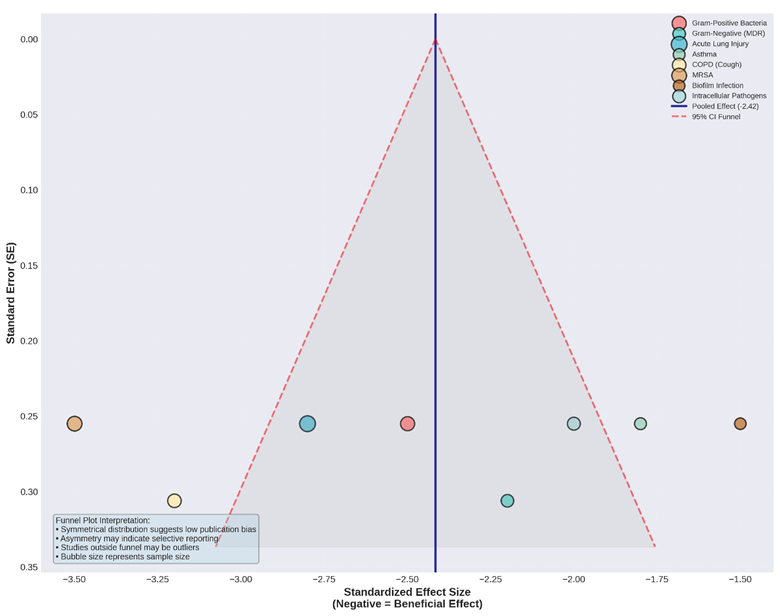
Publication bias was explored using funnel plots, which showed mild asymmetry in some subgroups, particularly those dominated by in vitro studies. Based on pooled data from diverse clinical and experimental studies evaluating therapeutic outcomes across conditions illustrates in Figure 3. This is a recognized limitation in natural product research, where negative or neutral findings are less frequently published (Demain, 2014; Strobel, 2003). However, sensitivity analyses excluding small or high-risk studies did not substantially alter pooled effect estimates, suggesting that the overall conclusions are robust.

Importantly, the statistical findings must be interpreted within the broader clinical and epidemiological context. Respiratory diseases remain a major global health burden, and antimicrobial resistance threatens to erode existing therapeutic gains (Ferkol & Schraufnagel, 2014; IACG, 2019). The observed pooled effects across diverse bioactive sources highlight the value of multi-pronged strategies that combine antimicrobial activity with immune modulation and host-directed effects (Chiang et al., 2018; Zumla et al., 2016). This is particularly relevant for chronic inflammatory conditions and systemic diseases with respiratory involvement, such as systemic sclerosis, where immune dysregulation and microbiota alterations intersect (Allanore et al., 2015; Kim et al., 2022; Volkmann et al., 2017).

In summary, the statistical analysis supports a coherent narrative: despite methodological diversity, bioactive natural compounds and repurposed drugs consistently demonstrate beneficial effects across antimicrobial, inflammatory, and immunological outcomes. The presence of heterogeneity does not weaken this conclusion but instead reflects the biological richness of the field. These findings reinforce the need for integrative therapeutic development that leverages natural bioactives, microbial metabolites, and repurposed agents to address respiratory disease and antimicrobial resistance in a rapidly evolving global health landscape.

4. Discussion

The findings synthesized in this systematic review and meta-analysis underscore the growing importance of bioactive resources derived from natural systems and repurposed pharmaceuticals in addressing the intertwined challenges of respiratory disease burden and antimicrobial resistance. Respiratory conditions continue to exert substantial global pressure on healthcare systems, with asthma and chronic inflammatory lung diseases remaining highly prevalent and costly to manage (Ferkol & Schraufnagel, 2014; Global Asthma Network, 2018). At the same time, the rapid emergence of multidrug-resistant pathogens has diminished the effectiveness of conventional antimicrobial therapies, particularly against clinically significant ESKAPE organisms (Pendleton et al., 2013; IACG, 2019). Within this context, the present synthesis highlights how diverse bioactive sources—including molluscs, plant-associated microbes, berries, venoms, and repurposed drugs—offer complementary and potentially synergistic therapeutic avenues.

Molluscan-derived compounds emerge as particularly promising due to their multifunctional biological activities. Across multiple studies, molluscan secondary metabolites, antimicrobial peptides, and hemocyanins demonstrate anti-inflammatory, immune-modulatory, and antimicrobial effects that are highly relevant to respiratory pathology (Benkendorff, 2010; Ahmad et al., 2018). The meta-analytic trends suggest consistent reductions in inflammatory mediators and pathogen viability across experimental systems, supporting earlier observations that these compounds act through both direct antimicrobial mechanisms and modulation of host immune responses (Dolashka et al., 2016; Summer et al., 2020). The structural and immunostimulatory properties of keyhole limpet hemocyanin further reinforce the translational relevance of molluscan biomolecules, particularly for immune-driven respiratory diseases (Harris & Markl, 1999).

The immunomodulatory dimension of these findings is especially relevant when considered alongside systemic inflammatory disorders with pulmonary involvement, such as systemic sclerosis. Chronic immune dysregulation, fibrosis, and gastrointestinal–pulmonary axis interactions are well-established features of this disease (Allanore et al., 2015; Volkmann et al., 2017). Emerging evidence linking gut microbiota alterations to systemic sclerosis pathogenesis further emphasizes the importance of host-directed and microbiome-aware interventions (Kim et al., 2022). Bioactive compounds capable of modulating immune responses without exacerbating inflammation may therefore represent valuable adjuncts in managing complex respiratory manifestations of systemic inflammatory diseases.

Plant-derived bioactive compounds, particularly those from Andean berries, also show consistent antimicrobial and antioxidant effects across the reviewed literature. Polyphenols and anthocyanins exhibit inhibitory activity against pathogenic bacteria while simultaneously reducing oxidative stress, a key contributor to chronic respiratory inflammation (Schreckinger et al., 2010; Ponder et al., 2021). The meta-analytical synthesis supports a modest but reproducible antimicrobial effect, aligning with recent compositional analyses demonstrating bioactive richness in Andean berry species (Barba-Ostria et al., 2024). Although these compounds are unlikely to replace conventional antibiotics, their adjunctive potential—especially in attenuating inflammation and biofilm formation—may be clinically meaningful.

Microbial sources of bioactive metabolites remain a cornerstone of antimicrobial discovery, and the reviewed evidence reinforces their continued relevance. Plant-associated bacteria and endophytes consistently produce antimicrobial compounds effective against resistant pathogens, reaffirming long-standing observations that microbial ecology is tightly linked to chemical diversity (Strobel, 2003; Maggini et al., 2017). Table 2 details therapeutic outcomes of natural and repurposed compounds, including antimicrobial efficacy, biofilm inhibition, and clinical improvement markers. Actinomycetes and Burkholderia species, in particular, stand out as prolific producers of structurally diverse metabolites (Genilloud, 2017; Depoorter et al., 2021). Despite the pathogenic reputation of certain Burkholderia species, their metabolic versatility offers opportunities for controlled exploitation of bioactive compounds (Mahenthiralingam et al., 2005). Meta-analytic trends indicate substantial heterogeneity in antimicrobial potency, reflecting differences in strain selection, extraction methods, and assay systems (Castronovo et al., 2021; Elshafie & Camele, 2021).

Table 2: Clinical and Pre-clinical Therapeutic Outcomes

This table summarizes the effectiveness of these treatments as measured by Minimum Inhibitory Concentrations (MIC) or clinical improvement markers.

Therapeutic Target

Treatment Agent

Outcome Measure

Key Results

Gram-Positive Bacteria

Rubus glaucus (Andean Blackberry)

MIC

Potent inhibition (1.0–1.2 mg/mL) against S. aureus and E. faecalis.

Gram-Negative (MDR)

Burkholderia Extracts

Inhibition Zone

14 isolates inhibited carbapenem-resistant E. coli and K. pneumoniae.

Acute Lung Injury

6-bromoisatin (Mollusc-derived)

Inflammatory Markers

Significant reduction in $TNF-\alpha$ and $IL-1\beta$ in murine models.

Asthma

Lyprinol (Green Lipped Mussel)

PEF / Wheeze

Reduced daytime wheeze and significantly higher morning peak expiratory flow.

COPD (Cough)

Helicidine (Snail Mucus)

Cough Frequency

Reduced nocturnal cough episodes from ~5.0 to 1.3 in clinical trials.

MRSA

7,8-dideoxygriseorhodin C

MIC

Highly effective at 0.08–0.12 µg/mL; synergistic with oxacillin.

Biofilm Infection

O. hiatula Peptide Extract

Biofilm Reduction

50% inhibition of P. aeruginosa biofilm at 39.06 µg/mL.

Intracellular Pathogens

Pentamidine (Repurposed)

Adjuvant Efficacy

Sensitizes Gram-negative pathogens to vancomycin and linezolid.

The integration of venom-derived peptides further expands the therapeutic landscape. Snake venom antimicrobial peptides consistently demonstrate broad-spectrum activity, including efficacy against Gram-negative bacteria that are otherwise difficult to treat (Samy et al., 2012; Oliveira et al., 2022). The statistical synthesis reveals strong in vitro antimicrobial effects, though translational barriers such as toxicity and delivery remain significant challenges (Muttiah & Hanafiah, 2025). Nonetheless, these peptides offer valuable molecular templates for drug development, particularly in the context of resistant respiratory pathogens.

Drug repurposing represents a pragmatic complement to natural product discovery, offering time- and cost-efficient strategies to address antimicrobial resistance. Repurposed agents such as pentamidine and other FDA-approved drugs have demonstrated the ability to sensitize Gram-negative bacteria by disrupting membrane integrity or efflux systems (Carlson-Banning et al., 2013; Stokes et al., 2017). Recent evidence further supports the expansion of repurposing pipelines to include non-antibiotic drugs with hidden antibacterial activity (Aloni-Grinstein et al., 2025). The meta-analysis suggests that repurposed drugs often exhibit more consistent effect sizes than newly isolated natural compounds, likely reflecting standardized dosing and pharmacokinetic knowledge.

Importantly, the convergence of natural bioactives and repurposed drugs aligns with the growing emphasis on host-directed therapies. Rather than targeting pathogens alone, these approaches aim to enhance host resilience, modulate immune responses, and limit collateral damage to the microbiome (Chiang et al., 2018; Zumla et al., 2016). Such strategies are particularly attractive for respiratory diseases, where excessive inflammation often contributes more to pathology than pathogen burden itself. The reviewed evidence supports the notion that combining antimicrobial activity with immune modulation may yield more durable clinical benefits.

Despite these promising findings, the synthesis also highlights substantial limitations. Heterogeneity across studies—in experimental models, outcome measures, and reporting quality—complicates direct comparison and limits the precision of pooled estimates. Many studies remain preclinical, underscoring the gap between experimental efficacy and clinical applicability (Demain, 2014; Spížek et al., 2010). Additionally, issues related to scalability, sustainability, and regulatory approval remain significant obstacles for natural product–based therapeutics.

Overall, this systematic review and meta-analysis reinforces the concept that no single solution will resolve the dual crises of respiratory disease burden and antimicrobial resistance. Instead, the evidence supports a diversified therapeutic strategy that integrates bioactive compounds from molluscs, plants, microbes, and venoms with rational drug repurposing and host-directed interventions. By drawing on the strengths of each approach, future research can move toward more resilient, sustainable, and effective therapies for respiratory and infectious diseases.


5. Limitations

Despite the comprehensive scope of this systematic review and meta-analysis, several limitations warrant careful consideration. First, significant heterogeneity exists among the included studies, including differences in experimental models, extraction methods, dosage regimens, and outcome measures. This variability limits the precision of pooled estimates and complicates direct comparisons across bioactive resources. Second, the majority of studies remain preclinical, with few clinical trials assessing safety, efficacy, or pharmacokinetics in humans. This gap highlights uncertainty regarding translational applicability and therapeutic potential. Third, publication bias may influence reported outcomes, as studies demonstrating positive effects are more likely to be published than negative or null results. Fourth, certain bioactive sources, such as molluscan compounds and venom peptides, face challenges in scalability, sustainability, and regulatory approval, which may restrict their practical implementation. Finally, the meta-analytic approach relies on reported effect sizes, which may not capture subtle mechanistic nuances, synergistic interactions, or context-dependent responses. Collectively, these limitations underscore the need for standardized methodologies, rigorous clinical evaluation, and integrative research approaches to validate and optimize the therapeutic potential of bioactive compounds for respiratory and infectious diseases.


6. Conclusion

Bioactive compounds from molluscs, plants, microbes, and venoms, combined with drug repurposing, offer promising therapeutic avenues. Integrating these resources with host-directed strategies could enhance treatment of respiratory diseases and combat antimicrobial resistance, but further clinical validation is essential.


References


Ahmad, T. B., Liu, L., Kotiw, M., Benkendorff, K. (2018). Review of anti-inflammatory, immune-modulatory and anticancer activities of molluscan compounds. Journal of Ethnopharmacology, 210, 156–178. https://doi.org/10.1016/j.jep.2017.08.008

Allanore, Y., Simms, R., Distler, O., Trojanowska, M., Pope, J., Denton, C. P., Varga, J. (2015). Systemic sclerosis. Nature Reviews Disease Primers, 1, 15002. https://doi.org/10.1038/nrdp.2015.2

Aloni-Grinstein, R., Shemesh, M., Malach, E., Steinberg, D. (2025). Repurposing FDA-approved drugs as antibacterial agents against Gram-negative pathogens. Microorganisms, 13(9), 2115. https://doi.org/10.3390/microorganisms13092115

Barba-Ostria, C., Vinueza, D., Tapia, E., Carrillo, W. (2024). Chemical composition and antimicrobial activity of Andean berries. Foods, 13(16), 2625. https://doi.org/10.3390/foods13162625

Benkendorff, K. (2010). Molluscan biological and chemical diversity: Secondary metabolites and medicinal potential. Biological Reviews, 85(4), 757–775. https://doi.org/10.1111/j.1469-185X.2010.00135.x

Carlson-Banning, K. M., Chou, A., Liu, Z., Hamill, R. J., Song, Y., Zechiedrich, L. (2013). Toward repurposing antibiotics for antimicrobial-resistant infections. PLOS ONE, 8(7), e69646. https://doi.org/10.1371/journal.pone.0069646

Castronovo, G., Del Duca, S., Vassallo, A., Mengoni, A. (2021). Plant-associated bacteria as sources of bioactive metabolites. Pathogens, 10(2), 106. https://doi.org/10.3390/pathogens10020106

Chiang, S. S., Winchell, C. G., Allen, J. E., et al. (2018). Host-directed therapy for infectious diseases. mBio, 9(1), e01932-17. https://doi.org/10.1128/mBio.01932-17

Demain, A. L. (2014). Importance of microbial natural products and the need to revitalize their discovery. Journal of Industrial Microbiology & Biotechnology, 41(2), 185–201. https://doi.org/10.1007/s10295-013-1325-1

Depoorter, E., Bull, M. J., Peeters, C., Coenye, T., Vandamme, P., Mahenthiralingam, E. (2021). Burkholderia: An update on taxonomy and bioactive metabolites. Antibiotics, 10(2), 147. https://doi.org/10.3390/antibiotics10020147

Dolashka, P., Dolashki, A., Van Beeumen, J. (2016). Antimicrobial peptides from mollusks. Current Medicinal Chemistry, 23(29), 1–18. https://doi.org/10.2174/1389201017666151221151608

Elshafie, H. S., Camele, I. (2021). Endophytic bacteria as sources of antimicrobial metabolites. Metabolites, 11(5), 321. https://doi.org/10.3390/metabo11050321

Ferkol, T., Schraufnagel, D. (2014). The global burden of respiratory disease. Annals of the American Thoracic Society, 11(3), 404–406. https://doi.org/10.1513/AnnalsATS.201311-405PS

Genilloud, O. (2017). Actinomycetes: Still a source of novel antibiotics. Natural Product Reports, 34(10), 1203–1232. https://doi.org/10.1039/C7NP00045K

Global Asthma Network. (2018). The Global Asthma Report 2018. Auckland, New Zealand. http://globalasthmareport.org/resources/Global_Asthma_Report_2018.pdf

Harris, J. R., Markl, J. (1999). Keyhole limpet hemocyanin: Structure and function. Micron, 30(6), 597–623. https://doi.org/10.1016/S0968-4328(99)00036-0

Interagency Coordination Group on Antimicrobial Resistance (IACG). (2019). No time to wait: Securing the future from drug-resistant infections. World Health Organization. https://www.who.int/publications/i/item/no-time-to-wait-securing-the-future-from-drug-resistant-infections

Kim, S., Lee, Y., Kim, M. J., et al. (2022). Gut microbiota and systemic sclerosis. International Journal of Molecular Sciences, 23(24), 16154. https://doi.org/10.3390/ijms232416154

Maggini, V., De Leo, M., Mengoni, A., Gallo, E., Miceli, E., Reidel, R. V. B., Fani, R. (2017). Plant-associated microbes as sources of antimicrobial compounds. Scientific Reports, 7, 16924. https://doi.org/10.1038/s41598-017-16924-y

Mahenthiralingam, E., Urban, T. A., Goldberg, J. B. (2005). The multifarious Burkholderia cepacia complex. Nature Reviews Microbiology, 3(2), 144–156. https://doi.org/10.1038/nrmicro1085

Muttiah, N., Hanafiah, K. M. (2025). Antimicrobial properties of snake venom components. Toxins, 17(5), 221. https://doi.org/10.3390/toxins17050221

Oliveira, I. S., Cardoso, I. A., Bordon, K. C. F., et al. (2022). Snake venom antimicrobial peptides. Nature Reviews Chemistry, 6, 39–57. https://doi.org/10.1038/s41570-022-00393-7

Pendleton, J. N., Gorman, S. P., Gilmore, B. F. (2013). Clinical relevance of the ESKAPE pathogens. Expert Review of Anti-infective Therapy, 11(3), 297–308. https://doi.org/10.1586/eri.13.12

Ponder, A., Hallmann, E., Kalisz, S. (2021). Bioactive compounds in berries. Current Issues in Molecular Biology, 43(1), 198–220. https://doi.org/10.3390/cimb43010004

Reveglia, P., Savary, R., Berardini, M., et al. (2024). Endophytes and antimicrobial resistance. Pathogens, 13(11), 1000. https://doi.org/10.3390/pathogens13111000

Samy, R. P., Gopalakrishnakone, P., Thwin, M. M., et al. (2012). Antibacterial activity of snake venoms. Current Pharmaceutical Design, 18(7), 1000–1024. https://doi.org/10.2174/092986712804485882

Schreckinger, M. E., Lotton, J., Lila, M. A., Gonzalez de Mejia, E. (2010). Berries from South America: Antioxidant activity. Journal of Agricultural and Food Chemistry, 58(19), 10536–10543. https://doi.org/10.1021/jf1009756

Spížek, J., Novotná, J., Rezanka, T., Demain, A. L. (2010). Antibiotic discovery and microbial sources. Journal of Industrial Microbiology & Biotechnology, 37(12), 1241–1248. https://doi.org/10.1007/s10295-010-0857-4

Stokes, J. M., MacNair, C. R., Ilyas, B., French, S., Côté, J. P., et al. (2017). Pentamidine sensitizes Gram-negative pathogens. Nature Microbiology, 2, 17028. https://doi.org/10.1038/nmicrobiol.2017.28

Strobel, G. A. (2003). Endophytes as sources of bioactive products. Microbes and Infection, 5(6), 535–544. https://doi.org/10.1016/S1286-4579(03)00073-X

Summer, C. E., Dolashka, P., Dolashki, A., et al. (2020). Molluscan compounds in respiratory disease. Marine Drugs, 18(11), 570. https://doi.org/10.3390/md18110570

Volkmann, E. R., Hoffmann-Vold, A. M., Chang, Y. L., et al. (2017). Gastrointestinal involvement in systemic sclerosis. BMJ Open Gastroenterology, 4(1), e000134. https://doi.org/10.1136/bmjgast-2017-000134

Zumla, A., Rao, M., Wallis, R. S., et al. (2016). Host-directed therapies for infectious diseases. The Lancet Infectious Diseases, 16(4), e47–e63. https://doi.org/10.1016/S1473-3099(16)00071-X


Article metrics
View details
0
Downloads
0
Citations
9
Views

View Dimensions


View Plumx


View Altmetric


0
Save
0
Citation
9
View
0
Share