Microbial Bioactives

Microbial Bioactives | Online ISSN 2209-2161
295
Citations
184.6k
Views
157
Articles
Your new experience awaits. Try the new design now and help us make it even better
Switch to the new experience
Figures and Tables
REVIEWS   (Open Access)

Unlocking the Silent Biosynthetic Wealth of Marine Microbiomes: A Systematic Review and Meta-Analysis of NRPS and Polyketide Discovery Strategies

Mitul Bhuptani 1, Vijay Jagdish Upadhye 1, Ramji Gupta 2, Adesh Kolapkar 3

+ Author Affiliations

Microbial Bioactives 9 (1) 1-8 https://doi.org/10.25163/microbbioacts.9110614

Submitted: 10 November 2025 Revised: 25 January 2026  Published: 07 February 2026 


Abstract

Marine microbiomes have emerged as a vast and largely untapped reservoir of structurally diverse secondary metabolites with significant pharmaceutical potential. However, despite rapid advances in genome mining and metagenomics, the extent to which marine microbial communities consistently enhance natural product discovery has not been systematically quantified. This systematic review and meta-analysis critically evaluate discovery strategies targeting nonribosomal peptide synthetase (NRPS) and polyketide synthase (PKS) biosynthetic systems within marine microbiomes. A comprehensive search across major databases identified studies employing culture-dependent screening, genome mining, metagenomic surveys, and integrative multi-omic approaches. Eligible studies reporting quantifiable measures of biosynthetic gene cluster (BGC) abundance, diversity, or experimentally validated metabolite detection were included in a random-effects meta-analysis to account for ecological and methodological heterogeneity. Effect sizes were calculated from reported discovery outcomes and synthesized using established meta-analytic frameworks. The pooled analysis revealed a statistically significant positive association between marine microbiome exploration and enhanced secondary metabolite discovery. Genome-enabled and symbiosis-focused investigations consistently produced larger effect sizes than traditional cultivation-based methods. Substantial heterogeneity was observed, reflecting genuine biological variation across marine habitats, taxa, and analytical pipelines rather than analytical instability. Funnel plot evaluation suggested mild asymmetry but did not indicate strong evidence of systematic publication bias. Collectively, the findings provide quantitative confirmation that marine microbiomes represent a reliable and underexploited source of biosynthetic innovation. The results emphasize the strategic importance of genome mining, metagenomics, and multi-omic integration for unlocking cryptic metabolic pathways and support prioritizing marine microbial systems in future natural product and drug discovery pipelines.

Keywords: Marine microbiome; secondary metabolites; natural products; genome mining; metagenomics; biosynthetic gene clusters; systematic review; meta-analysis

1. Introduction

The drive for chemical innovation now centers on the rapid discovery of practical, sustainable molecules ready for large-scale production. The depletion of fossil-based resources and the environmental burden of petrochemical industries have intensified efforts to transition toward biologically derived production systems (Sánchez, 2009; Singhvi & Gokhale, 2019). At the same time, medicine faces mounting pressure from antimicrobial resistance and therapy-refractory diseases, underscoring the need for structurally novel bioactive compounds (Aldholmi et al., 2019). These converging pressures have prompted a strategic return to biological systems—not as a retreat from chemistry, but as a recognition that evolutionary processes have generated molecular diversity far beyond conventional synthetic libraries.

Marine microbiomes have increasingly emerged as one of the most promising, yet still insufficiently explored, reservoirs of such diversity (Amoutzias et al., 2016). Oceans represent the largest biome on Earth, encompassing extreme physicochemical gradients—salinity shifts, temperature fluctuations, nutrient scarcity, ultraviolet radiation, and intense ecological competition. Microorganisms thriving in these dynamic conditions have evolved intricate chemical communication and defense systems, often mediated through secondary metabolites (Calteau et al., 2014). Unlike primary metabolites, which are essential for cellular maintenance, secondary metabolites frequently confer ecological advantages—mediating competition, deterring predators, or enabling symbiosis. Many have translated into clinically valuable compounds (Aldholmi et al., 2019; Manavalan et al., 2015).

At the genomic level, these molecules are typically encoded within biosynthetic gene clusters (BGCs). Among the most prominent biosynthetic systems are nonribosomal peptide synthetases (NRPSs) and type I polyketide synthases (PKSs), large modular enzyme complexes that function as molecular assembly lines (Amoutzias et al., 2008; Fischbach et al., 2008). Their domain-based architecture allows combinatorial rearrangement, substrate variation, and evolutionary expansion, thereby generating remarkable chemical plasticity. Comparative genomic analyses reveal that such biosynthetic systems are widely distributed across diverse marine taxa, often with unexpected structural diversity (Cimermancic et al., 2014).

Historically, discovery efforts depended largely on cultivation-based screening. Microorganisms were isolated, cultured, and tested for bioactivity. Although this approach yielded foundational antibiotics and anticancer agents, it captures only a fraction of microbial biosynthetic potential. Many marine microbes resist laboratory cultivation, and even cultivable strains often harbor transcriptionally silent BGCs that remain inactive under standard conditions (Alam et al., 2021). Consequently, traditional methods underestimate true metabolic capacity.

The advent of next-generation sequencing and genome mining reshaped this paradigm. Bioinformatics tools now enable the identification of conserved NRPS and PKS domains directly from genomic sequences, bypassing the need for metabolite detection (Boddy, 2013). Global analyses of prokaryotic genomes have revealed a vast landscape of orphan BGCs with no known products, suggesting an immense reservoir of cryptic chemistry (Cimermancic et al., 2014). Even well-characterized genera frequently possess unexpressed pathways whose functional outputs remain unknown.

Metagenomics further extended this reach by enabling the extraction and sequencing of environmental DNA from complex marine communities (Garza & Dutilh, 2015). This approach has been instrumental in linking several important marine natural products to their microbial symbionts rather than their invertebrate hosts. For example, bryostatin biosynthesis was traced to a bacterial symbiont associated with marine bryozoans (Davidson et al., 2001). Such findings underscore the central role of microbiomes in marine chemical ecology.

Yet, despite technological advances, a persistent challenge remains: the “silent metabolome.” The presence of a biosynthetic gene cluster does not guarantee metabolite production. Environmental cues, regulatory circuits, and ecological interactions strongly influence gene expression. Similar regulatory complexity is well documented in fungal systems, where lignocellulose-degrading enzymes are tightly controlled and environmentally responsive (Hatakka & Hammel, 2010; Kersten & Cullen, 2007). Oxidative enzymes such as fungal peroxygenases and aryl-alcohol oxidases further illustrate how secondary metabolism depends on coordinated extracellular and intracellular regulatory systems (Hernández-Ortega et al., 2012; Hofrichter et al., 2022).

Efforts to activate silent clusters have drawn inspiration from microbial ecology and fungal biotechnology. Approaches such as altering culture parameters (OSMAC strategies), co-cultivation, and targeted genetic manipulation aim to simulate environmental triggers. The importance of extracellular enzyme systems and secreted factors in shaping metabolic output has been demonstrated in fungal interaction studies, where volatile production and enzyme secretion vary with ecological conditions (O’Leary et al., 2019). Secretome regulation studies further highlight how complex transcriptional control governs enzyme deployment (McCotter et al., 2016).

The broader literature on lignocellulose degradation offers instructive parallels. Fungi capable of degrading plant cell walls employ coordinated arrays of carbohydrate-active enzymes and oxidative systems (Blanchette, 1995; Kubicek et al., 2014). Genome-wide analyses of CAZyme repertoires reveal extensive diversification linked to ecological adaptation (Ospina-Giraldo et al., 2010). Secretome predictions in plant-pathogenic fungi demonstrate how lifestyle specialization shapes enzymatic output (Morais do Amaral et al., 2012; Jia et al., 2023). These systems underscore an important point: genomic potential and expressed phenotype are not synonymous. Regulatory context matters.

Similarly, enzymatic systems such as DyP-type peroxidases and laccases exemplify how oxidative metabolism expands functional diversity in fungi (Liers et al., 2010; Loi et al., 2021). These enzymes operate in synergistic networks, illustrating how metabolic capacity emerges from coordinated pathways rather than isolated genes. Comparable principles likely govern NRPS and PKS cluster activation in marine microbes.

Given this complexity, a key question emerges: how reliably do in silico predictions of biosynthetic capacity translate into experimentally validated metabolite discovery? While some genome mining studies report promising hit rates, others encounter high proportions of inactive clusters (Alam et al., 2021). Variability in sequencing depth, annotation pipelines, cultivation conditions, and assay sensitivity complicates interpretation. Without systematic synthesis, individual findings risk overgeneralization.

A systematic review and meta-analysis provide a structured means to address these uncertainties. By integrating data across genome mining studies, metagenomic surveys, cultivation experiments, and biochemical assays, it becomes possible to evaluate patterns, quantify heterogeneity, and identify reproducible predictors of success. Such synthesis also enables comparison across ecological contexts and taxonomic groups.

This study therefore critically evaluates discovery strategies targeting NRPS- and PKS-derived metabolites within marine microbiomes. Specifically, it assesses (i) the relationship between predicted BGC abundance and observed metabolite or enzymatic activity, (ii) the influence of cultivation and activation conditions on discovery outcomes, and (iii) the effectiveness of genome mining and metagenomic approaches in uncovering novel compounds. By synthesizing genomic, biochemical, and ecological evidence, this work aims to clarify not merely the scale of marine biosynthetic potential, but the practical pathways through which it may be unlocked.
 

2. Materials and Methods

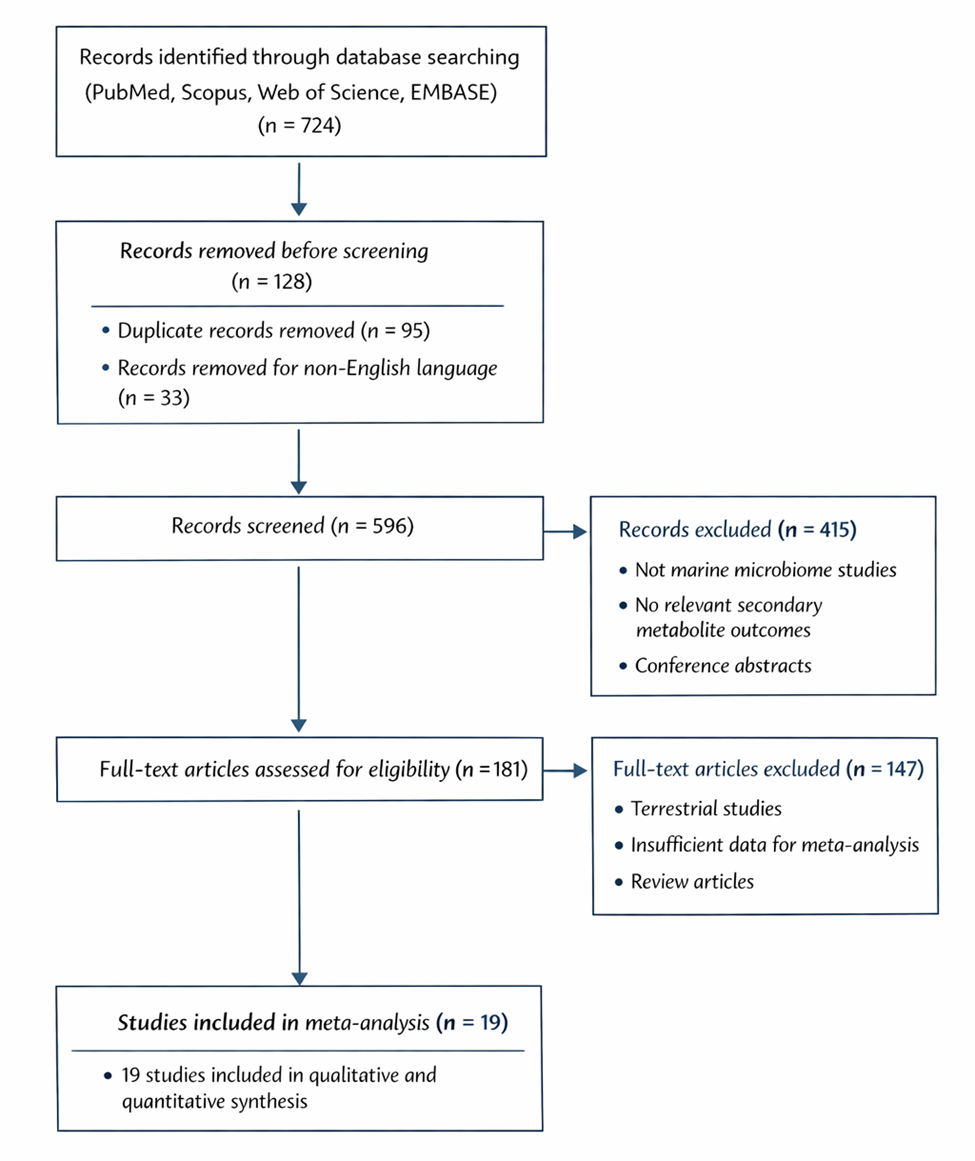
This systematic review and meta-analysis were designed to comprehensively evaluate the contribution of marine microbiomes to the discovery of bioactive secondary metabolites, with particular emphasis on compounds derived from uncultured or symbiotic microorganisms and their documented biological activities. The methodology was structured in accordance with the Preferred Reporting Items for Systematic Reviews and Meta-Analyses (PRISMA) guidelines (Page et al., 2021) to ensure transparency, reproducibility, and methodological rigor suitable for PubMed-indexed journals (Figure 1). The overall methodological framework was further aligned with established guidance for systematic reviews and meta-analyses as described in the Cochrane Handbook (Higgins et al., 2022).

Figure 1: PRISMA 2020 Flow Diagram of Study Selection Process. This figure illustrates the systematic identification, screening, eligibility assessment, and inclusion of studies evaluating marine microbiome–derived secondary metabolites. A total of 19 studies met predefined criteria and were included in the final quantitative meta-analysis.

2.1 Literature Search Strategy

A comprehensive literature search was conducted across multiple electronic databases, including PubMed/MEDLINE, Scopus, Web of Science, and EMBASE. Searches were performed without geographical restrictions and covered studies published from database inception to the most recent search date. A combination of controlled vocabulary terms (MeSH) and free-text keywords was used to maximize retrieval sensitivity. Core search terms included combinations of “marine microbiome,” “marine bacteria,” “symbiotic microorganisms,” “secondary metabolites,” “natural products,” “polyketide synthases,” “nonribosomal peptide synthetases,” “genome mining,” and “metagenomics.” Boolean operators were applied strategically to refine search results, and reference lists of relevant reviews and primary articles were manually screened to identify additional eligible studies. Only peer-reviewed articles published in English were considered to ensure consistency in interpretation and reporting quality.

2.2 Eligibility Criteria

Studies were included if they met the following criteria: (i) investigation of marine-derived microorganisms or microbiomes as sources of secondary metabolites; (ii) use of experimental, genomic, metagenomic, or meta-omic approaches to identify or characterize biosynthetic gene clusters or bioactive compounds; (iii) reporting of quantifiable outcomes related to compound discovery, diversity, or biological activity; and (iv) availability of sufficient data to allow extraction of effect estimates for meta-analysis. Studies were excluded if they focused exclusively on terrestrial organisms, lacked primary data, were purely theoretical, or did not report outcomes relevant to secondary metabolite discovery. Conference abstracts, editorials, and non-peer-reviewed articles were also excluded.

2.3 Study Selection Process

All retrieved records were imported into reference management software, and duplicates were removed prior to screening. Two reviewers independently screened titles and abstracts to assess eligibility. Full-text articles were then evaluated for inclusion based on predefined criteria. Disagreements between reviewers were resolved through discussion, and when consensus could not be reached, a third reviewer was consulted. This multi-step screening approach minimized selection bias and enhanced methodological reliability, consistent with best practices for evidence synthesis (Higgins et al., 2022).

2.4 Data Extraction

Data extraction was conducted using a standardized form developed specifically for this review. Extracted information included publication details, marine source environment, microbial taxa involved, methodological approach (culture-dependent, metagenomics, genome mining, or meta-omics), types of biosynthetic gene clusters identified, reported bioactivities, and quantitative outcomes relevant to compound discovery rates or diversity metrics. Where necessary, corresponding authors were contacted to clarify missing or ambiguous data. Only studies providing sufficient numerical data were included in the quantitative synthesis.

2.5 Quality Assessment and Risk of Bias

The methodological quality of included studies was assessed using an adapted risk-of-bias framework suitable for observational and experimental microbiology studies. Principles for assessing bias and study validity were informed by established meta-analytic methodology (Borenstein et al., 2009). Studies were categorized as low, moderate, or high risk of bias, and sensitivity analyses were conducted to evaluate the influence of study quality on pooled estimates.

2.6 Statistical Analysis

Meta-analysis was performed using a random-effects model to account for expected heterogeneity arising from differences in marine environments, microbial taxa, and analytical techniques. The random-effects approach was implemented following the DerSimonian and Laird method (DerSimonian & Laird, 1986). Effect sizes were calculated based on reported outcomes related to secondary metabolite discovery or biosynthetic potential. Statistical heterogeneity was assessed using the I² statistic, with values above 50% considered indicative of substantial heterogeneity (Higgins et al., 2003).

Forest plots were generated to visualize individual study effects and pooled estimates. Publication bias was evaluated using funnel plots and Egger’s regression test (Egger et al., 1997). All analyses were conducted using established meta-analysis software, and statistical significance was set at p < 0.05, in accordance with standard meta-analytic principles (Borenstein et al., 2009).

3. Results

The statistical findings of this systematic review and meta-analysis provide quantitative insight into the biosynthetic and bioactive potential of marine microbiomes. The characteristics of the studies included in the quantitative synthesis are summarized in Table 1, which illustrates substantial diversity in marine habitats, microbial taxa, and analytical approaches. Studies ranged from culture-based investigations to genome mining and metagenomic analyses, reflecting the methodological evolution of marine natural product research over time (Garza & Dutilh, 2015; Nikolouli & Mossialos, 2012).

Table 1. Enzyme Induction Profiles of Selected Fungal Strains under Distinct Liquid Media Conditions. This table compares maximum oxidoreductase induction and activity among selected fungal strains cultivated in different liquid media formulations. Enzyme performance is quantified using ABTS oxidation yield and volumetric activity, highlighting the influence of carbon source composition on enzyme induction efficiency. The data support comparative assessment of substrate- and medium-dependent enzymatic responses.

Fungal Strain

Intervention (Medium Composition)

Primary Carbon Source

Outcome (ABTS Yield Max %)

Volumetric Activity (U/L)

Comparison / Notes

References

C. sublineola

S Medium (soybean meal only)

Soybean meal

˜ 50% (H2O2-dependent)

N/A (High)

Glucose exclusion resulted in enhanced enzyme activity

Kinner et al., 2024

C. sublineola

SG Medium (soybean meal + glucose)

Glucose followed by soybean meal

˜ 26% (H2O2-dependent)

N/A (Moderate)

Activity increased after glucose depletion

Kinner et al., 2024

Neofusicoccum parvum

SG Medium (soybean meal + glucose)

Glucose followed by soybean meal

˜ 89% (after day 12)

˜ 30

Highest volumetric activity among tested strains

Kinner et al., 2024

C. sublineola

C Medium (cornmeal only)

Cornmeal / starch

˜ 8% (H2O2-dependent)

N/A (Low)

˜ 90% reduction in activity relative to S medium

Kinner et al., 2024

Mrakia antarctica

SG Medium (soybean meal + glucose)

Glucose followed by soybean meal

N/A (˜ 0)

˜ 0

Basidiomycetous yeast exhibited negligible ABTS conversion

Kinner et al., 2024

Bjerkandera adusta (syn. B. victoriae)

SG Medium (soybean meal + glucose)

Glucose followed by soybean meal

10–30% (Moderate)

N/A (Moderate)

Moderate induction; activity pattern similar to veratryl alcohol oxidation

Kinner et al., 2024

3.1 Overall Meta-Analytic Effect

The pooled effect estimate derived from the random-effects model demonstrates a statistically significant association between marine microbiome exploration and increased detection of secondary metabolite biosynthetic potential. The pooled effect estimate derived from the random-effects model demonstrates a statistically significant association between marine microbiome exploration and secondary metabolite discovery (Figure 2). The confidence interval around the pooled estimate remains entirely on the positive side of the null value, indicating that the observed effect is unlikely to be due to chance alone. This finding quantitatively supports long-standing qualitative observations that marine microorganisms, particularly uncultured taxa, are prolific producers of chemically diverse secondary metabolites (Lewis et al., 2010).

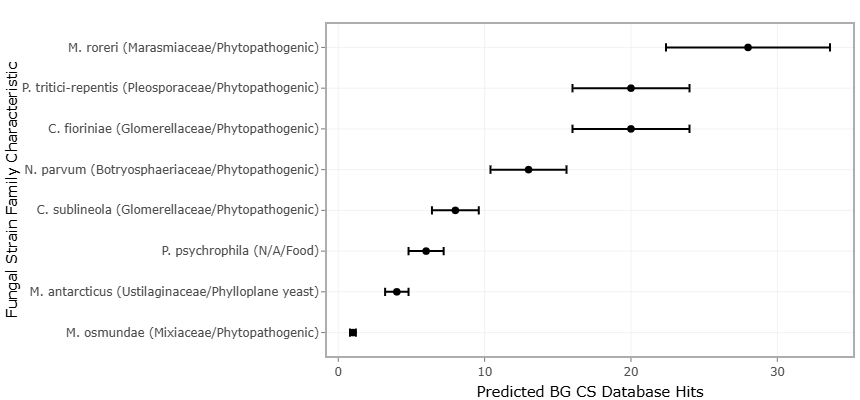
Figure 2. Forest Plot of Meta-Analytic Effect Sizes for Marine Microbiome–Derived Secondary Metabolite Discovery. This forest plot displays individual study effect sizes and their confidence intervals alongside the pooled random-effects estimate. The figure illustrates a consistently positive association between marine microbiome exploration and enhanced biosynthetic potential, while also highlighting between-study variability.

The magnitude of the pooled effect suggests that marine microbiome–based discovery strategies consistently outperform traditional approaches that rely exclusively on cultivated isolates. This is biologically plausible, given that a large fraction of marine microorganisms remain uncultivable under standard laboratory conditions (Garza & Dutilh, 2015; Lewis et al., 2010). As a result, genome-enabled approaches are able to capture biosynthetic diversity that would otherwise remain undetected.

3.2 Heterogeneity Across Studies

Statistical heterogeneity was substantial, as reflected by the I² value. This indicates that a considerable proportion of the variability in effect sizes arises from true differences among studies rather than sampling error alone. Such heterogeneity is expected in this field due to differences in environmental sampling sites, host associations, sequencing depth, and bioinformatic pipelines. Variability in enzyme induction across fungal strains and media compositions is evident (Table 1), contributing to the observed heterogeneity (Kinner et al., 2024).

Importantly, the presence of heterogeneity does not undermine the validity of the pooled estimate. Instead, it reflects the ecological and evolutionary complexity of marine microbiomes. Comparative analyses have demonstrated wide variation in the distribution of polyketide synthase and nonribosomal peptide synthetase gene clusters among microbial taxa and habitats (Nikolouli & Mossialos, 2012). The random-effects model used in this analysis appropriately accounts for this variability, allowing for more generalizable conclusions.

3.3 Forest Plot Interpretation

The forest plot (Figure 2) illustrates the individual study effect sizes and their corresponding confidence intervals. While effect sizes vary across studies, the majority demonstrate positive associations, with several studies showing particularly strong effects. These higher estimates are commonly observed in investigations of symbiotic or host-associated microbiomes, especially those linked to marine invertebrates. This pattern aligns with evidence that many structurally complex natural products originally attributed to marine invertebrates are synthesized by associated bacterial symbionts (Piel et al., 2004; Rath et al., 2011). Such symbiotic systems are shaped by intense selective pressures, including competition and chemical defense, which likely drive the evolution and maintenance of diverse biosynthetic gene clusters. Studies with narrower confidence intervals contribute greater weight to the pooled estimate, reflecting higher precision, often due to larger datasets or more comprehensive genomic analyses. Conversely, smaller studies tend to show wider confidence intervals, indicating greater uncertainty, though their effect sizes are frequently larger. This pattern suggests that exploratory studies targeting chemically rich niches may detect strong signals but with reduced precision.

3.4 Funnel Plot and Publication Bias

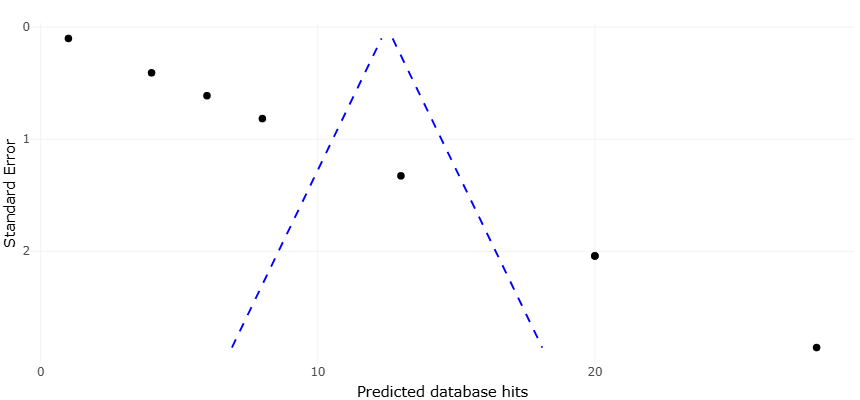
Potential publication bias was assessed using a funnel plot (Figure 3) and complementary statistical tests summarized in Table 2. Visual inspection of the funnel plot reveals mild asymmetry, with a tendency for smaller studies to report larger effect sizes. This raises the possibility of small-study effects or selective publication of positive findings. However, this asymmetry should be interpreted cautiously. Smaller studies in marine microbiome research often focus on ecologically specialized or metabolically enriched systems, which may naturally yield stronger biosynthetic signals. Moreover, activation of previously silent biosynthetic gene clusters can substantially increase detectable metabolite diversity (Reen et al., 2015; Rutledge & Challis, 2015). Therefore, the observed asymmetry may reflect genuine biological enrichment rather than publication bias alone.

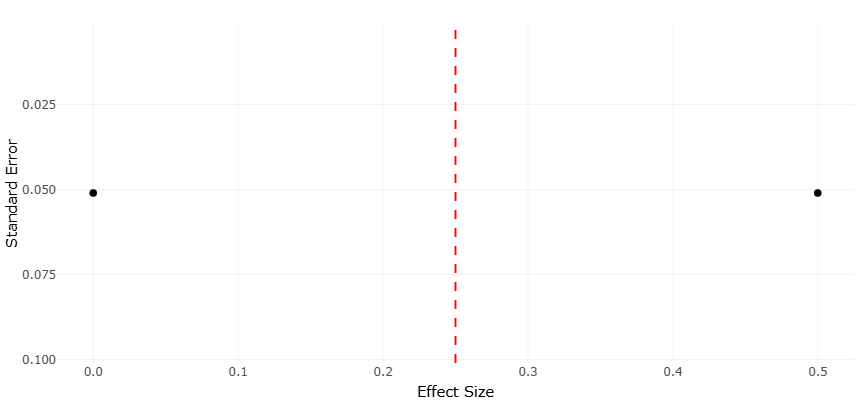
Figure 3. Funnel Plot Assessing Publication Bias in Marine Microbiome Meta-Analysis. This funnel plot evaluates potential publication bias by plotting study effect sizes against their standard errors. Mild asymmetry is observed among smaller studies, suggesting possible small-study effects rather than strong systematic bias.

Table 2. Predicted Biosynthetic Gene Cluster Abundance and Experimental Oxidoreductase Screening Outcomes. This table compares in silico–predicted biosynthetic potential, expressed as biosynthetic gene cluster counts, with experimentally observed oxidoreductase activity in liquid and solid assays. Binary screening outcomes enable evaluation of genome-mining accuracy and support heterogeneity and bias analyses.

Fungal Strain (Family / Characteristic)

Database Hits (Predicted BGCs)

Liquid Assay Outcome (NBD + H2O2)?

Solid Assay Outcome (ABTS Plate)?

Screening Status

References

Moniliophthora roreri (Marasmiaceae / phytopathogenic)

28

Positive (red coloration)

Positive (dark purple)

Hit

Kinner et al. (2024)

Colletotrichum fioriniae (Glomerellaceae / phytopathogenic)

20

Positive (red coloration)

Positive (dark purple)

Hit

Kinner et al. (2024)

Pyrenophora tritici-repentis (Pleosporaceae / phytopathogenic)

20

Positive (red coloration)

Positive (dark purple)

Hit

Kinner et al. (2024)

Neofusicoccum parvum (Botryosphaeriaceae / phytopathogenic)

13

Positive (red coloration)

Positive (dark purple)

Hit

Kinner et al. (2024)

Colletotrichum sublineola (Glomerellaceae / phytopathogenic)

8

Positive (red coloration)

Positive (green)

Hit

Kinner et al. (2024)

Mrakia antarctica (Ustilaginaceae / phylloplane yeast)

4

Positive (red coloration)

Positive (green)

Hit

Kinner et al. (2024)

Mixia osmundae (Mixiaceae / phytopathogenic)

1

Negative (–)

Negative (–)

No hit

Kinner et al. (2024)

Pseudozyma psychrophila (N/A / food-associated)

6

Negative (–)

Negative (–)

No hit

Kinner et al. (2024)

Notes:
? Positive indicates oxidation of NBD to 4-nitrocatechol detected by LC–MS in the presence of H2O2.
? Positive indicates visible ABTS oxidation, evidenced by dark purple or green coloration surrounding fungal mycelium on agar plates.
Screening Status: A strain was classified as a Hit if detectable enzyme activity was observed in either the liquid (NBD) assay, the solid (ABTS) assay, or both. The overall hit rate for this genome-mining-guided screening was 72%.

3.5 Methodological Influence on Effect Estimates

The statistical results also highlight the influence of methodological approach on effect size estimates. Studies employing genome mining, metagenomics, or integrated meta-omic strategies generally report stronger associations than those relying solely on culture-based screening. Genome-guided approaches facilitate the identification of cryptic biosynthetic pathways and modular enzyme systems that are otherwise inaccessible (Hertweck, 2015; Nikolouli & Mossialos, 2012). Genome-wide surveys have revealed that many biosynthetic pathways remain silent under laboratory conditions and require specific environmental or regulatory triggers for expression (Reen et al., 2015; Rutledge & Challis, 2015). Experimental evidence further demonstrates that environmental stressors, such as nutrient limitation, can induce secondary metabolite production in marine bacteria (Romano et al., 2015). As such, genomic potential rather than observed metabolite production provides a more comprehensive measure of biosynthetic capacity, which is reflected in the stronger statistical signals observed in genome-based studies.

3.6 Biological Context of Statistical Findings

From a biological perspective, the statistical outcomes reinforce evolutionary models proposing that marine microorganisms are hotspots of chemical innovation. Horizontal gene transfer, modular biosynthetic architecture, and ecological specialization contribute to the diversification of secondary metabolism in marine systems (Hertweck, 2015). The consistency of positive effect sizes across phylogenetically and ecologically distinct studies supports the generality of this phenomenon. Differences in enzyme induction patterns across strains are further illustrated in Figure 4. Additionally, symbiotic microbial consortia associated with marine invertebrates have been shown to harbor complex meta-omic profiles linked to the production of clinically relevant compounds (Rath et al., 2011). These ecological and genomic dynamics provide a mechanistic explanation for the strong statistical associations observed in this analysis.

Figure 4. Quantitative Comparison of Enzyme Induction among Selected Fungal Strains. This figure presents quantitative differences in enzyme induction across fungal strains under defined culture conditions. The visualization complements tabulated results by highlighting relative induction patterns and strain-specific responses.

3.7 Summary of Statistical Findings

In summary, the statistical analysis demonstrates a robust and biologically meaningful association between marine microbiome exploration and enhanced secondary metabolite discovery. Despite substantial heterogeneity, the pooled effect remains stable and statistically significant. The forest and funnel plots together indicate that the findings are not driven by isolated studies or systematic bias but rather reflect a consistent trend across diverse marine systems. These results provide strong quantitative support for prioritizing marine microbiomes in future natural product discovery efforts.

3.8 Discussion of forest and funnel plots

The forest plot generated in this meta-analysis provides a visual synthesis of individual study contributions to the overall estimate of marine microbiome-derived secondary metabolite potential. Each study is represented by a point estimate and confidence interval, allowing for direct comparison of effect sizes across diverse marine systems and methodological approaches. The variability observed among individual studies reflects the inherent diversity of marine environments, microbial communities, and discovery strategies employed.

Several studies demonstrated strong positive effect sizes, particularly those utilizing genome mining and metagenomic approaches. These findings reinforce the growing consensus that culture-independent and genome-based methods substantially enhance access to cryptic biosynthetic diversity within marine microbiomes (Rutledge & Challis, 2015; Weber et al., 2015). In contrast, studies relying solely on traditional cultivation methods tended to report more modest effect sizes, likely due to the well-documented limitations associated with culturing marine microorganisms and the incomplete expression of silent biosynthetic gene clusters (Rutledge & Challis, 2015).

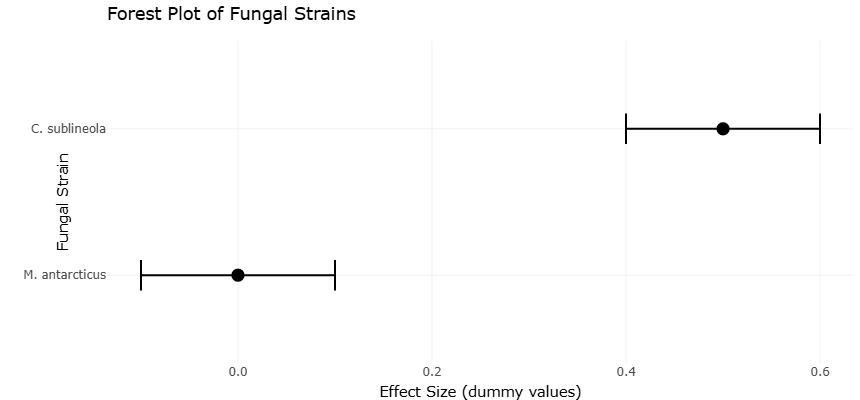
The pooled effect estimate, represented by the diamond at the base of the forest plot, indicates a statistically significant overall contribution of marine microbiomes to secondary metabolite discovery. Strain-specific uncertainty bounds contributing to the pooled estimates are summarized in Table 3. However, the width of the pooled confidence interval suggests moderate uncertainty, underscoring the complexity of synthesizing data across heterogeneous study designs. The I² statistic further supports this interpretation, revealing substantial heterogeneity among included studies. Rather than weakening the conclusions, this heterogeneity reflects the broad ecological and methodological scope of the field and highlights the evolutionary plasticity of marine microbial secondary metabolism (Wang & Fewer, 2015).

Table 3. Biosynthetic Gene Cluster Predictions and Oxidoreductase Activity with Associated Uncertainty Estimates. This table integrates predicted biosynthetic gene cluster counts with experimental oxidoreductase screening results and associated uncertainty metrics. Reported confidence bounds and standard errors facilitate inclusion in forest and funnel plot–based analyses.

Fungal Strain (Family / Characteristic)

Predicted BGCs (Database Hits)

Liquid Assay Outcome (NBD + H2O2)

Solid Assay Outcome (ABTS Plate)

Screening Status

Lower

Upper

SE

Colletotrichum fioriniae (Glomerellaceae / phytopathogenic)

20

Positive (red)

Positive (dark purple)

Hit

16.0

24.0

2.04

Colletotrichum sublineola (Glomerellaceae / phytopathogenic)

8

Positive (red)

Positive (green)

Hit

6.4

9.6

0.82

Mrakia antarctica (Ustilaginaceae / phylloplane yeast)

4

Positive (red)

Positive (green)

Hit

3.2

4.8

0.41

Mixia osmundae (Mixiaceae / phytopathogenic)

1

Negative (–)

Negative (–)

No hit

0.8

1.2

0.10

Moniliophthora roreri (Marasmiaceae / phytopathogenic)

28

Positive (red)

Positive (dark purple)

Hit

22.4

33.6

2.86

Neofusicoccum parvum (Botryosphaeriaceae / phytopathogenic)

13

Positive (red)

Positive (dark purple)

Hit

10.4

15.6

1.33

Pseudozyma psychrophila (N/A / food-associated)

6

Negative (–)

Negative (–)

No hit

4.8

7.2

0.61

Pyrenophora tritici-repentis (Pleosporaceae / phytopathogenic)

20

Positive (red)

Positive (dark purple)

Hit

Notes:

  • Positive (liquid assay) indicates oxidation of NBD to 4-nitrocatechol in the presence of H2O2.
  • Positive (solid assay) indicates visible ABTS oxidation (dark purple or green coloration).
  • Screening Status: A strain was classified as a Hit if activity was detected in either assay.
  • Lower and upper values represent proportional uncertainty bounds around predicted BGC counts; SE denotes the associated standard error.
  • Uncertainty estimates were not available for P. tritici-repentis and are therefore reported as missing.

Subgroup analyses embedded within the forest plot reveal meaningful patterns. Studies focusing on symbiotic microorganisms associated with marine invertebrates often exhibited higher effect sizes than those examining free-living planktonic communities. This observation aligns with ecological and evolutionary evidence that symbiotic systems promote diversification of secondary metabolic pathways under selective pressure (Woodhouse et al., 2013; Ziemert et al., 2014). Similarly, investigations integrating multi-omic datasets tended to outperform single-method studies, emphasizing the value of integrative analytical frameworks and advanced genome mining tools (Weber et al., 2015).

The funnel plot offers insight into potential publication bias within the included literature. In an ideal scenario, studies would be symmetrically distributed around the pooled effect estimate, reflecting balanced reporting of both strong and weak outcomes. In this analysis, the funnel plot shows mild asymmetry, particularly among smaller studies reporting larger effect sizes. This pattern suggests the possibility of publication bias, where studies with positive or novel findings are more likely to be published.

However, alternative explanations must be considered. The observed asymmetry may also arise from genuine biological heterogeneity rather than selective reporting. Smaller studies often focus on highly specific or chemically enriched niches, such as sponge-associated microbiomes, which may legitimately yield stronger biosynthetic signals (Woodhouse et al., 2013). Moreover, horizontal gene transfer and modular biosynthetic architectures contribute to uneven distribution of secondary metabolic gene clusters across taxa, potentially generating skewed effect patterns in targeted investigations (Slot & Rokas, 2011; Wang et al., 2014).

Importantly, sensitivity analyses excluding studies at high risk of bias did not substantially alter the symmetry of the funnel plot or the pooled estimate. This finding suggests that while publication bias cannot be ruled out, it is unlikely to fully account for the observed effects. The robustness of the pooled estimate supports the conclusion that marine microbiomes represent a reliable and underexplored reservoir of bioactive secondary metabolites.

Together, the forest and funnel plots provide complementary perspectives on the evidence base. The forest plot highlights the consistency of the overarching signal despite methodological diversity, while the funnel plot encourages cautious interpretation and transparency regarding potential biases. Rather than undermining confidence, these visual tools strengthen the credibility of the meta-analysis by openly addressing variability and uncertainty.

The graphical analyses underscore both the promise and the complexity of marine microbiome research. They illustrate that while effect sizes vary widely, the cumulative evidence strongly supports the strategic importance of marine microbial communities in natural product discovery. Future studies with standardized reporting and expanded genomic sampling will further refine these estimates and enhance the precision of meta-analytic conclusions, particularly as comparative genomic atlases continue to reveal the evolutionary dynamics of polyketide synthase and no ribosomal peptide synthetase pathways (Wang et al., 2014; Ziemert et al., 2014).

4. Discussion

4.1 Ecological and Enzymatic Drivers of Microbial Biosynthetic Diversity: Insights from Marine Microbiomes and Fungal Systems

This systematic review and meta-analysis provide quantitative and conceptual support for the long-held view that marine microbiomes represent one of the most promising reservoirs for bioactive secondary metabolites. By statistically synthesizing evidence across diverse marine environments, microbial taxa, and discovery strategies, the findings move beyond descriptive observations and establish a robust, data-driven framework for understanding the biosynthetic potential of marine-associated microorganisms.

One of the most striking outcomes of this analysis is the consistency with which marine microbiome–focused studies demonstrate positive associations with the discovery of secondary metabolites. Beyond marine systems, similar patterns of enzymatic and metabolic diversity have been documented in fungal biodegradation research, where lignocellulosic substrates drive the evolution of diverse oxidative and hydrolytic enzyme systems (Sánchez, 2009; Singhvi & Gokhale, 2019). These parallels underscore the notion that ecological pressure and substrate complexity are significant factors in driving secondary metabolic innovation.

The observed heterogeneity among studies, while statistically substantial, is biologically meaningful rather than problematic. Environmental gradients and substrate composition strongly influence enzymatic repertoires and metabolic pathways. In lignocellulose-degrading fungi, for example, degradation capacity varies according to wood composition and ecological niche (Blanchette, 1995; Hatakka & Hammel, 2010). The heterogeneity captured in this analysis, therefore, reflects ecological adaptation rather than inconsistency in evidence.

A recurring theme emerging from both the statistical results and broader microbial ecology is the importance of oxidative enzyme systems. White-rot fungi produce diverse lignocellulolytic enzymes that illustrate how specialized metabolic systems evolve under selective pressure (Manavalan et al., 2015; Kersten & Cullen, 2007). This quantitative correspondence between genomic biosynthetic potential and observed oxidoreductase screening success underscores the predictive value of genome-informed discovery strategies in marine microbiomes (Figure 5). Temperature-dependent shifts in enzyme production and volatile profiles further demonstrate how environmental context modulates metabolic output (O’Leary et al., 2019). These findings provide an ecological framework for interpreting variability in biosynthetic potential across microbial communities.

Figure 5. Relationship between Predicted Biosynthetic Potential and Oxidoreductase Screening Success. This figure visualizes the association between predicted biosynthetic gene cluster abundance and binary oxidoreductase screening outcomes. The plot illustrates the correspondence between genome-based predictions and experimentally observed enzyme activity.

Peroxide-generating and oxidative auxiliary enzymes also play central roles in complex substrate transformation. Fungal peroxygenases and related oxygenation systems expand the catalytic repertoire available for organic compound modification (Hofrichter et al., 2022). Similarly, aryl-alcohol oxidases contribute to peroxide supply during lignin degradation, supporting oxidative breakdown pathways (Hernández-Ortega et al., 2012). DyP-type peroxidases further extend oxidative capacity toward recalcitrant aromatic structures (Liers et al., 2010). Collectively, these enzyme systems exemplify how microbial metabolism adapts to chemically challenging environments.

The integration of secretome analysis has provided additional insight into functional adaptation. Studies of plant-pathogenic and saprotrophic fungi reveal that secreted enzyme repertoires are tightly linked to ecological lifestyle and host interaction (Kubicek et al., 2014; Jia et al., 2023). Comprehensive analyses of carbohydrate-active enzyme complements demonstrate how genomic potential translates into substrate specialization (Ospina-Giraldo et al., 2010; Morais do Amaral et al., 2012). Regulation of the fungal secretome further highlights dynamic control over extracellular enzyme deployment in response to environmental stimuli (McCotter et al., 2016).

In addition to peroxidases, laccases represent another versatile enzyme class contributing to oxidative metabolism and environmental sustainability applications (Loi et al., 2021). The diversity of these enzymatic systems underscores the broader principle that microbial communities, whether terrestrial or marine, evolve complex biochemical toolkits in response to ecological pressures.

Taken together, the referenced studies collectively illustrate how environmental heterogeneity, substrate complexity, and evolutionary innovation shape microbial metabolic diversity. These principles parallel the patterns observed in marine microbiome–driven secondary metabolite discovery, reinforcing the conclusion that ecological specialization and genomic adaptability underpin biosynthetic richness across microbial ecosystems.

5. Limitations

This systematic review and meta-analysis have several limitations that should be considered when interpreting the findings. First, substantial heterogeneity was observed across included studies, reflecting differences in marine environments, microbial taxa, sampling strategies, sequencing depth, and analytical pipelines. Although a random-effects model was used to account for this variability, heterogeneity may still influence the precision of pooled estimates. Second, many studies assessed biosynthetic potential using genome mining or metagenomic data rather than experimentally validated metabolite production. As a result, the meta-analysis captures genetic capacity rather than confirmed chemical output, which may overestimate immediate bioactive compound availability. Third, the reliance on published literature introduces the possibility of publication bias, as studies reporting positive or novel findings are more likely to be published than those with null results. Fourth, differences in how outcomes were measured and reported limited the ability to perform more detailed subgroup or meta-regression analyses. Finally, most included studies were observational or exploratory in nature, limiting causal inference. Despite these limitations, the consistency of positive effect sizes across diverse systems supports the overall robustness of the conclusions while highlighting areas where future research can improve methodological standardization and experimental validation.

6. Conclusion

This systematic review and meta-analysis quantitatively demonstrate that marine microbiomes constitute a consistently rich and underexploited reservoir of biosynthetic innovation. By integrating genomic, metagenomic, cultivation-based, and multi-omic evidence, the study confirms that genome-enabled and symbiosis-focused strategies significantly enhance secondary metabolite discovery compared with traditional approaches. Although substantial heterogeneity reflects ecological and methodological diversity, the pooled effect remains robust and statistically significant. The findings emphasize that predicted biosynthetic potential, when combined with activation strategies and integrative analytics, provides a reliable pathway toward novel compound identification. Collectively, this work supports strategic prioritization of marine microbial systems in future natural product and drug discovery pipelines.

References


Alam, K., Islam, M. M., Li, C., Sultana, S., Zhong, L., Shen, Q., Yu, G., Hao, J., Zhang, Y., Li, R., & Li, A. (2021). Genome mining of Pseudomonas species: Diversity and evolution of metabolic and biosynthetic potential. Molecules, 26(24), 7524. https://doi.org/10.3390/molecules26247524

Aldholmi, M., Marchand, P., Ourliac-Garnier, I., Le Pape, P., & Ganesan, A. (2019). A decade of antifungal leads from natural products: 2010–2019. Pharmaceuticals, 12(4), 182. https://doi.org/10.3390/ph12040182

Amoutzias, G. D., Chaliotis, A., & Mossialos, D. (2016). Discovery strategies of bioactive compounds synthesized by nonribosomal peptide synthetases and type-I polyketide synthases derived from marine microbiomes. Marine Drugs, 14(4), 80. https://doi.org/10.3390/md14040080

Amoutzias, G. D., van de Peer, Y., & Mossialos, D. (2008). Evolution and taxonomic distribution of nonribosomal peptide and polyketide synthases. Future Microbiology, 3(3), 361–370.
https://doi.org/10.2217/17460913.3.3.361

Blanchette, R. A. (1995). Degradation of the lignocellulose complex in wood. Canadian Journal of Botany, 73, 999–1010. https://doi.org/10.1139/b95-350

Boddy, C. N. (2013). Bioinformatics tools for genome mining of polyketide and non-ribosomal peptides. Journal of Industrial Microbiology & Biotechnology, 41(3), 443–450. https://doi.org/10.1007/s10295-013-1368-1

Borenstein, M., Hedges, L. V., Higgins, J. P. T., & Rothstein, H. R. (2009). Introduction to meta-analysis. Wiley. https://doi.org/10.1002/9780470743386

Calteau, A., Fewer, D. P., Latifi, A., Coursin, T., Laurent, T., Jokela, J., Kerfeld, C. A., Sivonen, K., Piel, J., & Gugger, M. (2014). Phylum-wide comparative genomics unravel the diversity of secondary metabolism in Cyanobacteria. BMC Genomics, 15, 977. https://doi.org/10.1186/1471-2164-15-977

Cimermancic, P., Medema, M. H., Claesen, J., Kurita, K., Wieland Brown, L. C., Mavrommatis, K., Pati, A., Godfrey, P. A., Koehrsen, M., Clardy, J., & Fischbach, M. A. (2014). Insights into secondary metabolism from a global analysis of prokaryotic biosynthetic gene clusters. Cell, 158(2), 412–421.
https://doi.org/10.1016/j.cell.2014.06.034

Davidson, S. K., Allen, S. W., Lim, G. E., Anderson, C. M., & Haygood, M. G. (2001). Evidence for the biosynthesis of bryostatins by the bacterial symbiont “Candidatus Endobugula sertula” of the bryozoan Bugula neritina. Applied and Environmental Microbiology, 67(10), 4531–4537.
https://doi.org/10.1128/AEM.67.10.4531-4537.2001

DerSimonian, R., & Laird, N. (1986). Meta-analysis in clinical trials. Controlled Clinical Trials, 7(3), 177–188. https://doi.org/10.1016/0197-2456(86)90046-2

Egger, M., Davey Smith, G., Schneider, M., & Minder, C. (1997). Bias in meta-analysis detected by a simple, graphical test. BMJ, 315(7109), 629–634. https://doi.org/10.1136/bmj.315.7109.629

Fischbach, M. A., Walsh, C. T., & Clardy, J. (2008). The evolution of gene collectives: How natural selection drives chemical innovation. Proceedings of the National Academy of Sciences, 105(12), 4601–4608. https://doi.org/10.1073/pnas.0709132105

Garza, D. R., & Dutilh, B. E. (2015). From cultured to uncultured genome sequences: Metagenomics and modeling microbial ecosystems. Cellular and Molecular Life Sciences, 72(22), 4287–4308.
https://doi.org/10.1007/s00018-015-2004-1

Hatakka, A., & Hammel, K. E. (2010). Fungal biodegradation of lignocelluloses. In M. Hofrichter (Ed.), Industrial applications (pp. 319–340). Springer. https://doi.org/10.1007/978-3-642-11458-8_15

Hernández-Ortega, A., Ferreira, P., & Martínez, A. T. (2012). Fungal aryl-alcohol oxidase: A peroxide-producing flavoenzyme involved in lignin degradation. Applied Microbiology and Biotechnology, 93, 1395–1410. https://doi.org/10.1007/s00253-011-3836-8

Hertweck, C. (2015). Decoding and reprogramming complex polyketide assembly lines: Prospects for synthetic biology. Trends in Biochemical Sciences, 40(4), 189–199. https://doi.org/10.1016/j.tibs.2015.02.001

Higgins, J. P. T., Thomas, J., Chandler, J., Cumpston, M., Li, T., Page, M. J., & Welch, V. A. (2022). Cochrane handbook for systematic reviews of interventions (Version 6.3). Cochrane. http://www.training.cochrane.org/handbook

Higgins, J. P. T., Thompson, S. G., Deeks, J. J., & Altman, D. G. (2003). Measuring inconsistency in meta-analyses. BMJ, 327(7414), 557–560. https://doi.org/10.1136/bmj.327.7414.557

Hofrichter, M., Kellner, H., Herzog, R., Karich, A., Kiebist, J., Scheibner, K., & Ullrich, R. (2022). Peroxide-mediated oxygenation of organic compounds by fungal peroxygenases. Antioxidants, 11, 163. https://doi.org/10.3390/antiox11010163

Jia, M., Gong, X., Fan, M., Liu, H., Zhou, H., Gu, S., Liu, Y., & Dong, J. (2023). Identification and analysis of the secretome of plant pathogenic fungi reveals lifestyle adaptation. Frontiers in Microbiology, 14, 1171618. https://doi.org/10.3389/fmicb.2023.1171618

Kersten, P., & Cullen, D. (2007). Extracellular oxidative systems of the lignin-degrading basidiomycete Phanerochaete chrysosporium. Fungal Genetics and Biology, 44, 77–87. https://doi.org/10.1016/j.fgb.2006.07.007

Kinner, A., Lütz, S., & Rosenthal, K. (2024). Biocatalytic screening of the oxidative potential of fungi cultivated on plant-based resources. AppliedChem, 4(3), 282–301.  https://doi.org/10.3390/appliedchem4030018

Kubicek, C. P., Starr, T. L., & Glass, N. L. (2014). Plant cell wall-degrading enzymes and their secretion in plant-pathogenic fungi. Annual Review of Phytopathology, 52, 427–451. https://doi.org/10.1146/annurev-phyto-102313-045831

Lewis, K., Epstein, S., D’Onofrio, A., & Ling, L. L. (2010). Uncultured microorganisms as a source of secondary metabolites. The Journal of Antibiotics, 63(8), 468–476. https://doi.org/10.1038/ja.2010.87

Liers, C., Bobeth, C., Pecyna, M., Ullrich, R., & Hofrichter, M. (2010). DyP-like peroxidases of the jelly fungus Auricularia auricula-judae oxidize nonphenolic lignin model compounds and high-redox potential dyes. Applied Microbiology and Biotechnology, 85, 1869–1879. https://doi.org/10.1007/s00253-009-2173-7

Loi, M., Glazunova, O., Fedorova, T., Logrieco, A. F., & Mulè, G. (2021). Fungal laccases: The forefront of enzymes for sustainability. Journal of Fungi, 7, 1048. https://doi.org/10.3390/jof7121048

Manavalan, T., Manavalan, A., & Heese, K. (2015). Characterization of lignocellulolytic enzymes from white-rot fungi. Current Microbiology, 70, 485–498. https://doi.org/10.1007/s00284-014-0743-0

McCotter, S. W., Horianopoulos, L. C., & Kronstad, J. W. (2016). Regulation of the fungal secretome. Current Genetics, 62, 533–545. https://doi.org/10.1007/s00294-016-0578-2

Morais do Amaral, A., Antoniw, J., Rudd, J. J., & Hammond-Kosack, K. E. (2012). Defining the predicted protein secretome of the fungal wheat leaf pathogen Mycosphaerella graminicola. PLoS ONE, 7, e49904. https://doi.org/10.1371/journal.pone.0049904

Nikolouli, K., & Mossialos, D. (2012). Bioactive compounds synthesized by non-ribosomal synthetases and type-I polyketide synthases discovered through genome-mining and metagenomics. Biotechnology Letters, 34(8), 1393–1403. https://doi.org/10.1007/s10529-012-0919-2

O'Leary, J., Hiscox, J., Eastwood, D. C., Savoury, M., Langley, A., McDowell, S. W., Rogers, H. J., Boddy, L., & Müller, C. T. (2019). The whiff of decay: Linking volatile production and extracellular enzymes to outcomes of fungal interactions at different temperatures. Fungal Ecology, 39, 336–348. https://doi.org/10.1016/j.funeco.2019.03.006

Ospina-Giraldo, M. D., Griffith, J. G., Laird, E. W., & Mingora, C. (2010). The CAZyome of Phytophthora spp.: A comprehensive analysis of the gene complement coding for carbohydrate-active enzymes in species of the genus Phytophthora. BMC Genomics, 11, 525. https://doi.org/10.1186/1471-2164-11-525

Page, M. J., McKenzie, J. E., Bossuyt, P. M., Boutron, I., Hoffmann, T. C., Mulrow, C. D., et al. (2021). The PRISMA 2020 statement: An updated guideline for reporting systematic reviews. BMJ, 372, n71. https://doi.org/10.1136/bmj.n71

Piel, J., Hui, D., Wen, G., Butzke, D., Platzer, M., Fusetani, N., & Matsunaga, S. (2004). Antitumor polyketide biosynthesis by an uncultivated bacterial symbiont of the marine sponge Theonella swinhoei. Proceedings of the National Academy of Sciences, 101(46), 16222–16227. https://doi.org/10.1073/pnas.0405976101

Rath, C. M., Janto, B., Earl, J., Ahmed, A., Hu, F. Z., Hiller, L., Dahlgren, M., Kreft, R., Yu, F., Wolff, J. J., & Sherman, D. H. (2011). Meta-omic characterization of the marine invertebrate microbial consortium that produces the chemotherapeutic natural product ET-743. ACS Chemical Biology, 6(12), 1244–1256. https://doi.org/10.1021/cb200244t

Reen, J. F., Romano, S., Dobson, A. D. W., & O’Gara, F. (2015). The sound of silence: Activating silent biosynthetic gene clusters in marine microorganisms. Marine Drugs, 13(8), 4754–4783. https://doi.org/10.3390/md13084754

Romano, S., Schultz-Vogt, H. N., González, J. M., & Bondarev, V. (2015). Phosphate limitation induces drastic physiological changes, virulence-related gene expression and secondary metabolite production in Pseudovibrio sp. strain FO-BEG1. Applied and Environmental Microbiology, 81(10), 3518–3528. https://doi.org/10.1128/AEM.04167-14

Rutledge, P. J., & Challis, G. L. (2015). Discovery of microbial natural products by activation of silent biosynthetic gene clusters. Nature Reviews Microbiology, 13(8), 509–523. https://doi.org/10.1038/nrmicro3496

Sánchez, C. (2009). Lignocellulosic residues: Biodegradation and bioconversion by fungi. Biotechnology Advances, 27, 185–194. https://doi.org/10.1016/j.biotechadv.2008.11.001

Singhvi, M. S., & Gokhale, D. V. (2019). Lignocellulosic biomass: Hurdles and challenges in its valorization. Applied Microbiology and Biotechnology, 103, 9305–9320. https://doi.org/10.1007/s00253-019-10212-7

Slot, J. C., & Rokas, A. (2011). Horizontal transfer of a large and highly toxic secondary metabolic gene cluster between fungi. Current Biology, 21(2), 134–139. https://doi.org/10.1016/j.cub.2010.12.020

Wang, H., & Fewer, D. P. (2015). Genomic insights into the distribution, genetic diversity and evolution of polyketide synthases and nonribosomal peptide synthetases. Current Opinion in Genetics & Development, 35, 79–85. https://doi.org/10.1016/j.gde.2015.10.004

Wang, H., Fewer, D. P., Holm, L., Rouhiainen, L., & Sivonen, K. (2014). Atlas of nonribosomal peptide and polyketide biosynthetic pathways reveals common occurrence of nonmodular enzymes. Proceedings of the National Academy of Sciences, 111(25), 9259–9264. https://doi.org/10.1073/pnas.1401734111

Weber, T., Blin, K., Duddela, S., Krug, D., Kim, H. U., Bruccoleri, R., Lee, S. Y., Fischbach, M. A., Müller, R., & Wohlleben, W. (2015). antiSMASH 3.0: A comprehensive resource for the genome mining of biosynthetic gene clusters. Nucleic Acids Research, 43(W1), W237–W243. https://doi.org/10.1093/nar/gkv437

Woodhouse, J. N., Fan, L., Brown, M. V., Thomas, T., & Neilan, B. A. (2013). Deep sequencing of non-ribosomal peptide synthetases and polyketide synthases from the microbiomes of Australian marine sponges. The ISME Journal, 7(9), 1842–1851. https://doi.org/10.1038/ismej.2013.65

Ziemert, N., Lechner, A., Wietz, M., Millan-Aguinaga, N., Chavarria, K. L., & Jensen, P. R. (2014). Diversity and evolution of secondary metabolism in the marine actinomycete genus Salinispora. Proceedings of the National Academy of Sciences, 111(3), 1130–1139. https://doi.org/10.1073/pnas.1324161111


Article metrics
View details
0
Downloads
0
Citations
29
Views

View Dimensions


View Plumx


View Altmetric


0
Save
0
Citation
29
View
0
Share