Biosensors and Nanotheranostics

Bionanotechnology, Drug Delivery, Therapeutics | online ISSN 3064-7789
175
Citations
131.7k
Views
108
Articles
Your new experience awaits. Try the new design now and help us make it even better
Switch to the new experience
Figures and Tables
REVIEWS   (Open Access)

MXene-Based Electrochemical Nanobiosensors for Clinical Biomarker Detection: Surface Engineering, Oxidative Stability and Biosafety

Md. Bayzid 1*, Shikufa Rahman 1, Tamima Rubaiya Tonny 1, Johirul Islam Pappu 1

+ Author Affiliations

Biosensors and Nanotheranostics 4 (1) 1-8 https://doi.org/10.25163/biosensors.4111015

Submitted: 19 July 2025 Revised: 06 September 2025  Published: 19 September 2025 


Abstract

Clinical diagnostics increasingly depends on detecting very small quantities of disease-related molecules quickly, cheaply, and close to the patient, yet the laboratory assays that dominate practice are poorly suited to that setting. Electrochemical nanobiosensors offer a credible alternative, and among the electrode materials now under study, two-dimensional transition metal carbides and nitrides (MXenes) have attracted particular attention. Their metallic-like conductivity, hydrophilic and chemically addressable surfaces, and large accessible area make them attractive transducers for proteins, nucleic acids, extracellular vesicles, circulating tumor cells, and metabolites. The same surface chemistry, however, leaves MXenes vulnerable to restacking, to oxidation in water and air, to fouling in complex biofluids, and to concentration-dependent biological effects. This review brings these competing aspects together within a single analytical framework. We first trace how etching and delamination routes define flake size, defect density, and terminal-group chemistry, and then examine non-covalent, covalent, and hybrid nanocomposite strategies used to stabilize the interface and amplify the signal. We next consider how oxidation proceeds, both ambiently and under applied potential, and weigh the passivation tools available, from polyanionic edge capping and antioxidants to annealing and polymer encapsulation. In vitro and in vivo safety data are then appraised alongside sensing performance across major biomarker classes, including self-powered and wearable formats. Taken together, the evidence suggests that attomolar-to-femtomolar detection is now routinely achievable, but that long-term stability, standardized storage, and clinically representative validation remain unresolved. Closing these gaps, rather than pushing detection limits further, is likely to decide whether MXene biosensors reach routine point-of-care use.

Keywords: MXene; Ti3C2Tx; electrochemical nanobiosensor; clinical biomarkers; surface engineering; oxidative stability; biosafety; point-of-care diagnostics

1. Introduction

Medicine has long recognized that disease is easier to treat when it is caught early, and that recognition has turned the search for reliable clinical biomarkers into one of the central problems of modern diagnostics. Early and precise detection allows clinicians to intervene sooner, to tailor therapy to the individual, and to monitor whether that therapy is working, whether the condition in question is a malignancy, a cardiovascular event, a neurodegenerative disorder, or a metabolic disease (Ali et al., 2024; Parihar et al., 2022). Pathological processes leave molecular traces in accessible biological fluids such as serum, plasma, urine, saliva, and sweat. These traces are chemically diverse. They include protein markers such as carcinoembryonic antigen (CEA), prostate-specific antigen (PSA), mucin 1 (MUC1), osteopontin (OPN), and the cardiac troponins (cTnT/cTnI); non-coding nucleic acids such as miRNA-21, miRNA-155, miRNA-141, and miRNA-122; exosomes and other extracellular vesicles carrying CD63 and EpCAM; circulating tumor cells (CTCs); and small metabolites including glucose, hydrogen peroxide (H2O2), lactate, uric acid, and dopamine (Kumar et al., 2018; Lorencova et al., 2024; Mohammadniaei et al., 2020).

The difficulty lies less in knowing what to measure than in measuring it where it matters. Established techniques such as enzyme-linked immunosorbent assay (ELISA), quantitative polymerase chain reaction (qPCR), positron emission tomography (PET), and mass spectrometry are accurate, but they depend on centralized laboratories, trained personnel, lengthy sample preparation, and costly reagents, and they often take hours or days to return a result (Ali et al., 2024; Parihar et al., 2022). For decentralized care, whether at the bedside, in a primary clinic, or on the body, these constraints are prohibitive. What is needed instead is an analytical platform that is portable, fast, inexpensive, and still sensitive enough to register biomarkers present at trace levels.

Electrochemical nanobiosensors are among the most promising candidates for this role. They transduce a binding or catalytic event directly into an electrical signal, require only microlitre sample volumes, miniaturize readily, and couple naturally with handheld potentiostats and wearable microfluidic devices (Lorencova et al., 2024; Parihar et al., 2022). Their analytical quality, captured in the limit of detection (LOD), linear dynamic range, signal-to-noise ratio, and operational stability, is governed to a large degree by the physicochemical and electronic character of the electrode–solution interface (Kumar et al., 2018). For this reason, much of the progress in the field over the past decade has come from modifying electrodes with two-dimensional (2D) nanomaterials (VahidMohammadi et al., 2021). Graphene, carbon nanotubes, and transition metal dichalcogenides such as MoS2 have each improved sensor performance, but their translation has been slowed by hydrophobic aggregation, limited sites for chemical functionalization, and, in the case of graphene oxide, the need for chemical reduction to restore conductivity (Gogotsi & Huang, 2021; Parihar et al., 2022).

MXenes, a family of 2D transition metal carbides, nitrides, and carbonitrides first reported in 2011, offer a way around several of these limitations (Naguib et al., 2011). They are produced mainly by selectively etching the A-element layer (typically Al or Si) from layered ternary MAX-phase precursors of general formula Mn+1AXn, in which M is an early transition metal such as Ti, V, Nb, Mo, or Ta, X is carbon and/or nitrogen, and n = 1–3. The resulting materials have the general formula Mn+1XnTx (Alhabeb et al., 2017; Naguib et al., 2012a; Naguib et al., 2021), where Tx denotes hydroxyl (–OH), oxygen (=O), and fluorine (–F) terminations that attach to the outer metal layers during liquid-phase etching and exfoliation (Alhabeb et al., 2017; Ghidiu et al., 2014). It is this combination of a conductive carbide core and a chemically active, hydrophilic surface that sets MXenes apart.

Four properties are especially relevant to electrochemical biosensing. Delaminated single- and few-layer Ti3C2Tx shows metallic-like conductivity, reported in the range of roughly 1,000 to 15,000 S/cm, which supports fast interfacial charge transfer between redox species and the transducer (Ghidiu et al., 2014; VahidMohammadi et al., 2021). Exfoliated nanosheets also present large specific surface areas, exceeding 200 m²/g, that can accommodate dense loadings of antibodies, aptamers, enzymes, nucleic acid probes, and metallic nanostructures (Alhabeb et al., 2017; Lorencova et al., 2024). Their polar terminations confer good aqueous dispersibility and provide convenient handles for covalent bioconjugation, for example through aminosilane chemistry or EDC/NHS coupling, without the harsh acid pre-treatments that carbon materials often require (Kumar et al., 2018; Lorencova et al., 2020). Finally, transition metal sites on basal planes and edges can catalyze the oxidation or reduction of clinically relevant analytes directly, and pristine MXenes appear to be biologically tolerated at working concentrations below about 100 µg/mL (Lorencova et al., 2018; Vasyukova et al., 2022).

These advantages, however, come with costs that are now well documented. MXenes are chemically vulnerable to oxidation in the presence of dissolved oxygen, moisture, and aqueous biological media (Habib et al., 2019). Degradation begins at reactive –OH sites and structural defects and gradually converts the conductive carbide into semi-insulating oxide crystallites, most commonly TiO2, together with carbonaceous domains; the outcome is structural breakdown, lower conductivity, and shorter sensor shelf life (Habib et al., 2019; X. Zhao et al., 2020b). In whole blood or serum, unmodified MXene surfaces are also prone to non-specific protein adsorption, can undergo anodic oxidation at working potentials above about +200 mV versus Ag/AgCl, and may induce dose-dependent cellular stress through reactive oxygen species (ROS) at higher concentrations (Lorencova et al., 2020; Szuplewska et al., 2019; Vasyukova et al., 2022). Practical deployment in clinical testing is therefore limited not by sensitivity alone but by stability and safety (Ali et al., 2024; Parihar et al., 2022).

A growing body of work shows that these obstacles can be addressed through deliberate surface engineering (Ali et al., 2024; Lorencova et al., 2024). Aminosilane grafting and zwitterionic betaine modification, polymer coatings such as polyethylene glycol, chitosan, and PEDOT:PSS, antioxidant additives such as L-ascorbic acid, polyanionic edge capping, and hybridization with Au or Pt nanoparticles, carbon nanotubes, or metal–organic frameworks have each been shown to slow oxidation, suppress biofouling, improve biocompatibility, or amplify the electrochemical response (Limbu et al., 2020; Lorencova et al., 2020; Natu et al., 2019). What is less available is an integrated view. Most studies examine a single Ti3C2Tx configuration, and relatively few connect surface chemistry, environmental and electrochemical stability, biological safety, and clinical performance across the full range of biomarker classes.

This review attempts to provide that connection. Its aims are fivefold. First, it evaluates top-down synthesis routes, including HF etching, the in situ HF (LiF/HCl) method, and fluoride-free alkaline and molten-salt approaches, together with delamination protocols, and considers how they determine flake size, defect density, and the distribution of –OH, =O, and –F terminations. Second, it analyses interfacial engineering and bioconjugation strategies, from silane and zwitterionic modification to polymer coatings, ionic-liquid intercalation, and metallic nanocomposites, with emphasis on stable bioreceptor loading and resistance to fouling. Third, it examines the chemical pathways of ambient and aqueous oxidation and critically assesses stabilization protocols intended to extend storage and operational lifetime. Fourth, it appraises in vitro and in vivo biosafety evidence, including concentration limits, ROS generation, and clearance pathways. Fifth, it benchmarks recent MXene-based electrochemical nanobiosensors across protein, microRNA, exosome, CTC, and metabolite targets, and identifies the challenges that stand between current prototypes and commercial point-of-care use. 

2. Surface Engineering, Oxidative Stability, and Biosafety of MXene-Based Nanobiosensors

2.1 Structural Architecture and Intrinsic Properties of 2D MXenes

Point-of-care testing places unusual demands on the transducer: it must convert very weak biological signals into robust, readable outputs, often in samples that are far from ideal (Naguib et al., 2011; Parihar et al., 2022). MXenes have emerged as a strong candidate for this task (Naguib et al., 2011; VahidMohammadi et al., 2021). Described by the formula Mn+1XnTx, where M is a transition metal such as Ti, V, Nb, or Mo, X is carbon and/or nitrogen, n ranges from 1 to 4, and Tx represents –O, –OH, and –F terminations, they are prepared by removing the A-group layer (Al or Si) from the parent MAX phase and then separating the loosened layers (Naguib et al., 2012a; Naguib et al., 2012b; VahidMohammadi et al., 2021). The sequence from layered precursor to delaminated, terminated nanosheet is summarized schematically in Figure 1a.

Once exfoliated, MXenes combine metallic-like conductivity of the order of 10³–10⁴ S/cm with high carrier concentrations (>10²¹ cm⁻³) and a large, hydrophilic surface (Gogotsi & Anasori, 2019; VahidMohammadi et al., 2021). The oxygen, hydroxyl, and fluorine groups acquired during etching in hydrofluoric acid (HF) or LiF/HCl make the flakes readily dispersible in water and supply anchoring sites for antibodies, aptamers, enzymes, and nucleic acids (Alhabeb et al., 2017; Kumar et al., 2018; Sinha et al., 2018). The same surfaces also support optical transduction; Ti3C2Tx has, for instance, been used as a surface-enhanced Raman scattering substrate and as a signal amplifier in surface plasmon resonance (SPR) biosensing of CEA (Sarycheva et al., 2017; Wen et al., 2022; Wu et al., 2019). These intrinsic properties and the ways in which they serve biosensing are collected in Figure 1b.

The picture is not entirely favourable, however. Delaminated MXene flakes tend to restack face-to-face when electrodes are cast, which reduces the electroactive area and slows charge transfer (Kalambate et al., 2019b; VahidMohammadi et al., 2021). Fluorine-rich surfaces,

Table 1. Surface engineering strategies and analytical performance of representative MXene-based electrochemical nanobiosensors for clinical biomarkers. The table compares how different interfacial chemistries (covalent silanization, electrodeposited or decorated noble-metal nanoparticles, conductive and imprinted polymers, 2D heterojunctions, DNA nanostructures, and enzyme-loaded hydrogels) anchor recognition elements on MXene and how each design performs analytically. For every platform, the target analyte and sample matrix, the immobilization mechanism, the transduction technique, the linear dynamic range, and the limit of detection (LOD) are given as reported in the cited source. Values are not normalized and were obtained under different assay conditions, so cross-row comparisons should be read as indicative only. Abbreviations: APTES, (3-aminopropyl)triethoxysilane; CV, cyclic voltammetry; DPV, differential pulse voltammetry; SWV, square wave voltammetry; EIS, electrochemical impedance spectroscopy; CA, chronoamperometry; MIP, molecularly imprinted polymer; TDN, DNA tetrahedron; HRP, horseradish peroxidase; PPy, polypyrrole; PMo12, phosphomolybdic acid; Fc, ferrocene; MB, methylene blue.

MXene composite & interfacial modification

Target clinical biomarker & sample matrix

Surface functionalization & immobilization mechanism

Analytical method

Linear range

LOD

Reference

f-Ti3C2Tx / APTES

Carcinoembryonic antigen (CEA) in human serum

Covalent aminosilane coupling via silanization; anti-CEA antibody immobilization

DPV

0.003–20.0 µM

18.0 pg/mL (1.0 nM)

Kumar et al. (2018)

AuNPs / Ti3C2Tx / MUC1 aptamer

Mucin 1 (MUC1) protein (oncological biomarker)

Electrodeposited AuNPs providing Au–thiol covalent aptamer anchoring

SWV

Up to 10.0 mM

0.33 pM

Wang et al. (2020)

MoS2 / Ti3C2Tx / 3D Au nanostructures

Thyroxine (T4) hormone in blood serum

Heterojunction with 3D Au nanostructures; ferrocene-labelled RNA aptamer uncoiling

EIS

0.78–7.8 × 10⁶ pg/mL

0.39 pg/mL

Kashefi-Kheyrabadi et al. (2020)

Ti3C2Tx / chitosan bionanocomposite

Sarcosine (prostate cancer biomarker)

Electrostatic adsorption of sarcosine oxidase (SOx) in biocompatible hydrogel matrix

CV & amperometry

0.018–7.8 µM

10.4 nM

Hroncekova et al. (2020)

PPy@Ti3C2Tx / PMo12 hybrid

Osteopontin (OPN) cancer biomarker

π–π stacking, electrostatic interactions, and hydrogen bonding in conductive PPy matrix

EIS

1.0 fg/mL–10.0 ng/mL

0.98 fg/mL (~15 aM)

Zhou et al. (2019)

d-Ti3C2Tx / MWCNTs / MIP

Amyloid-β42 (Alzheimer's disease biomarker)

Molecular imprinting via pyrrole electropolymerization on delaminated MXene/MWCNT

DPV

1.0–100.0 fg/mL

0.3 fg/mL

Özcan et al. (2020)

Ti3C2Tx / TDN / HRP

Gliotoxin (mycotoxin biomarker)

DNA tetrahedron chelation with phosphate groups on MXene Ti sites

Amperometry

1.63–3260.0 pg/mL

1.63 pg/mL

Lorencova et al. (2019)

AuNPs / Ti3C2Tx / methylene blue

Prostate-specific antigen (PSA)

Multifunctional peptide cleavage; ratiometric Fc and MB dual-signal readout

Amperometric ratiometric sensing

5.0–10.0 ng/mL

0.83 pg/mL

Y. Xu et al. (2021)

Au HFGNs / PnBA-MXene

microRNA-122 (breast cancer biomarker)

Hierarchical gold nanostructures with poly(n-butyl acrylate) conductive matrix

Amperometry & DPV

0.001–100.0 pM

0.35 fM

Ranjbari et al. (2023)

Pt / Ti3C2Tx nanocomposite

Hydrogen peroxide (H2O2) & small metabolites

Spontaneous reduction of Pt nanoparticles on MXene providing electrocatalytic sites

CA

0.1–380.0 µM

14.0 nM

Lorencova et al. (2018)

Table 2. Oxidative stabilization strategies, storage protocols, and durability of MXene nanomaterials for electrochemical sensing. Each row describes one protection system for MXene (chiefly Ti3C2Tx), the chemical or physical mechanism by which it slows oxidation, the storage or operating environment tested, the reported stability duration and performance retention, and the consequence for electrochemical sensor activity. Strategies range from solution-phase additives (antioxidants, polyanionic edge-capping salts, organic solvents) to surface treatments (thermal annealing, silanization) and encapsulating or intercalating matrices (silk fibroin, CTAB, lignin). Durations are minimum values reported by the original authors under their own test conditions and are not directly interchangeable. Abbreviations: NaAsc, sodium L-ascorbate; NMP, N-methyl-2-pyrrolidone; DMSO, dimethyl sulfoxide; PC, propylene carbonate; APTES/OTES, amino-/octyl-triethoxysilane; SF, silk fibroin; CTAB, cetyltrimethylammonium bromide; Rct, charge-transfer resistance.

MXene core & protection system

Protection & anti-oxidation mechanism

Storage & operational environment

Stability duration & performance retention

Impact on electrochemical sensor activity

Reference

Ti3C2Tx + sodium L-ascorbate (NaAsc)

Sacrificial antioxidant layer shielding reactive surface hydroxyl groups

Aqueous suspension, room temperature (25 °C)

Metallic structure and conductivity retained for >21 days

Prevents TiO2 domain growth; preserves low Rct

Zhao et al. (2019)

Ti3C2Tx + polyanionic salt edge-capping

Electrostatic barrier at nanosheet edges using polyphosphates and polyborates

Aqueous colloidal dispersion

Oxidation initiation suppressed for several weeks

Maintains active interfacial site density and rapid electron kinetics

Natu et al. (2019)

Ti3C2Tx in organic media (NMP / DMSO / PC)

Solvation-shell displacement suppressing hydrolysis and dissolved-oxygen attack

Liquid dispersion in polar organic solvents

Shelf life extended from hours to >3 months (>90% integrity)

Eliminates aggregation; preserves initial baseline current

Maleski et al. (2017)

Thermal vacuum / inert-gas annealing

Removal of volatile –OH terminations and growth of a protective passivating TiO2 film

High-temperature argon/vacuum treatment

Structural integrity maintained for >10 months in water

Restricts water penetration; preserves conductive core

X. Zhao et al. (2020c)

Silane functionalization (APTES / OTES)

Covalent organosilane grafting forming a hydrophobic barrier on basal planes

Ambient air and aqueous buffer

Active surface sites retained for >30 days

Enhances biomolecule bonding while suppressing moisture degradation

Ji et al. (2019)

Silk fibroin (SF)@MXene encapsulation

Biopolymer 3D cross-linked matrix isolating flakes from ambient oxygen

Ambient atmospheric and humid environments

Retains >93% operational current after 30 days

Provides mechanical compliance and prevents environmental fouling

Wang et al. (2020)

CTAB-intercalated Ti3C2Tx (CTAB@Ti3C2Tx)

Cationic surfactant expansion of interlayer spacing inhibiting restacking and oxidation

Aqueous electrolyte solution

Uniform dispersity maintained for >14 days

Eliminates random stacking; yields smooth conductive film

Tang et al. (2019)

Lignin-assisted MXene stabilization

Bio-derived modular surfactant providing hydrophobic barrier and steric hindrance

Aqueous and ambient storage

Flake degradation prevented for >45 days

Maintains high electrocatalytic activity and ion mobility

Jiang et al. (2024)


typical of HF-etched material, also raise non-faradaic capacitive background currents and alter the voltammetric response towards H2O2, oxygen, and redox probes such as Ru(NH3)6³⁺ (Gajdosova et al., 2020). These drawbacks, illustrated in Figure 1c, are the main reason why interfacial engineering, which tunes surface chemistry and preserves interlayer spacing, has become a prerequisite rather than an option (Kumar et al., 2018; Parihar et al., 2022).

2.2 Interfacial Surface Engineering Strategies

Surface engineering has three broad aims: to prevent layer aggregation, to accelerate electron transfer, and to improve selectivity in real biofluids such as serum, plasma, urine, and sweat (Parihar et al., 2022; Sengupta & Hussain, 2024). The strategies reported to date fall into three overlapping families, non-covalent modification, covalent modification, and hybrid nanocomposite design, which are compared schematically in Figure 2.

2.2.1 Non-Covalent Modification and Polymer Intercalation

Non-covalent approaches rely on electrostatic attraction, hydrogen bonding, and van der Waals forces, and have the advantage of leaving the conductive carbide core intact (Kalambate et al., 2019b). Intercalating hydrophilic polymers such as polyvinylpyrrolidone (PVP), polyethylene glycol (PEG), chitosan (CS), or PEDOT:PSS widens the interlayer d-spacing, discourages restacking, and adds mechanical flexibility (Gao et al., 2020; Wustoni et al., 2020). In one representative example, Hroncekova et al. (2023) embedded Ti3C2Tx in a chitosan matrix on screen-printed carbon electrodes (SPCEs) for sarcosine sensing; the device retained 93.0% of its electrochemical response over repeated cycles and showed limited surface fouling. Ionic liquids and cationic surfactants such as cetyltrimethylammonium bromide (CTAB) work in a related way, neutralizing the negative surface charge and introducing steric stabilization (Amara et al., 2022; Tang et al., 2020). Ionic-liquid functionalization of Ti3C2Tx has been used by Sharifuzzaman et al. (2020) to build an impedimetric immunosensor for multiplexed detection of bladder cancer markers, including osteopontin, at very low concentrations.

2.2.2 Covalent Modification and Surface Group Tuning

Covalent modification offers stronger linkages that prevent bioreceptors from detaching during storage and repeated measurement (Ji et al., 2019; Kumar et al., 2018). The most widely used route is aminosilanization with (3-aminopropyl)triethoxysilane (APTES), which installs primary amine groups on Ti3C2Tx and permits EDC/NHS coupling of antibodies, enzymes, or nucleic acid probes (Chen et al., 2019; Kumar et al., 2018). Grafting aryldiazonium salts or zwitterionic betaines (carboxy- and sulpho-betaine) goes a step further: the resulting hydration shell, maintained by ionic solvation, repels abundant matrix proteins such as serum albumin and fibrinogen, giving strong anti-fouling behaviour in clinical serum (Gajdosova et al., 2020; Lorencova et al., 2020).

2.2.3 Hybrid Nanocomposites and Signal Amplification

Combining MXenes with zero-dimensional metal nanoparticles, one-dimensional carbon nanotubes, other 2D sheets, or metal–organic frameworks (MOFs) can raise electrocatalytic performance considerably (Yoon et al., 2020). Decorating Ti3C2Tx with gold, platinum, or bimetallic CuAu/AuPd nanoparticles suppresses aggregation, enlarges the electroactive area, and creates Au–S binding sites for thiolated aptamers and antibodies (Guo et al., 2023; H. Zhang et al., 2021). Medetalibeyoglu et al. (2020), for example, used delaminated MXene@AuNP composites in a sandwich-type PSA immunosensor and reached femtomolar detection limits, while AuNP/Ti3C2 three-dimensional composites have supported exonuclease-assisted recycling for microRNA-155 (Yang et al., 2020). Pairing MXenes with multi-walled carbon nanotubes (MWCNTs) or reduced graphene oxide (rGO) produces porous 3D networks in which the carbon component acts as a conductive spacer between sheets and lowers the charge-transfer resistance (Rct) (Kalambate et al., 2020; Ma et al., 2018; Özcan et al., 2020); MXene–graphene films have been applied in this way to glucose biosensing (Gu et al., 2019). Heterostructures with MOFs or MoS2 add a further dimension, creating 2D/2D junctions with dense active sites and favourable electronic coupling (Kheyrabadi et al., 2021; Wen et al., 2022). Zhao et al. (2022) exploited such a MXene–MoS2 heterostructure for label-free detection of microRNA-21 at attomolar levels.

2.3 Oxidative Stability and Degradation Mitigation Mechanisms

If surface engineering explains why MXene sensors perform well, oxidation largely explains why they do not always last. Chemical and ambient oxidation remains the single most important constraint on practical deployment (Zhang et al., 2017; Zheng et al., 2021), and

Figure 1. Synthesis, structure, intrinsic properties, and limitations of 2D MXenes relevant to electrochemical biosensing (a) Schematic route from a layered MAX-phase precursor (Mn+1AXn, e.g., Ti3AlC2) to delaminated Mn+1XnTx nanosheets: selective etching of the A layer by HF, in situ HF (LiF/HCl), or fluoride-free alkaline/molten-salt routes yields an accordion-like multilayer, which is delaminated by intercalation and mechanical agitation into single flakes bearing –OH, =O, and –F terminations (Tx). The etching route governs flake size, defect density, and termination ratio (Alhabeb et al., 2017; Naguib et al., 2011; Naguib et al., 2012a; VahidMohammadi et al., 2021). (b) Properties exploited in biosensing: metallic-like conductivity, large specific surface area, hydrophilic and conjugatable terminations, and intrinsic electrocatalytic activity (Ghidiu et al., 2014; Kumar et al., 2018; Lorencova et al., 2018). (c) Intrinsic limitations that motivate surface engineering: restacking, fluorine-related capacitive background, and susceptibility to oxidation and fouling (Gajdosova et al., 2020; Habib et al., 2019; Kalambate et al., 2019b).

Figure 2. Interfacial surface-engineering strategies for MXene-based electrochemical nanobiosensors. (a) Non-covalent modification, in which hydrophilic polymers (PVP, PEG, chitosan, PEDOT:PSS), ionic liquids, or CTAB intercalate between sheets, widening the interlayer spacing and stabilizing dispersions without disrupting the conductive core (Gao et al., 2020; Sharifuzzaman et al., 2020; Wustoni et al., 2020). (b) Covalent modification, illustrated by APTES silanization followed by EDC/NHS antibody coupling and by aryldiazonium or zwitterionic betaine grafting that forms an anti-fouling hydration shell (Kumar et al., 2018; Lorencova et al., 2020). (c) Hybrid nanocomposites combining MXene with noble-metal nanoparticles, MWCNT or rGO spacers, and MoS2 or MOF heterojunctions for signal amplification (Medetalibeyoglu et al., 2020; Zhao et al., 2022). The lower panel summarizes the analytical outcomes shared by these strategies, including lower charge-transfer resistance and LODs reaching the fM–aM range (see Table 1).

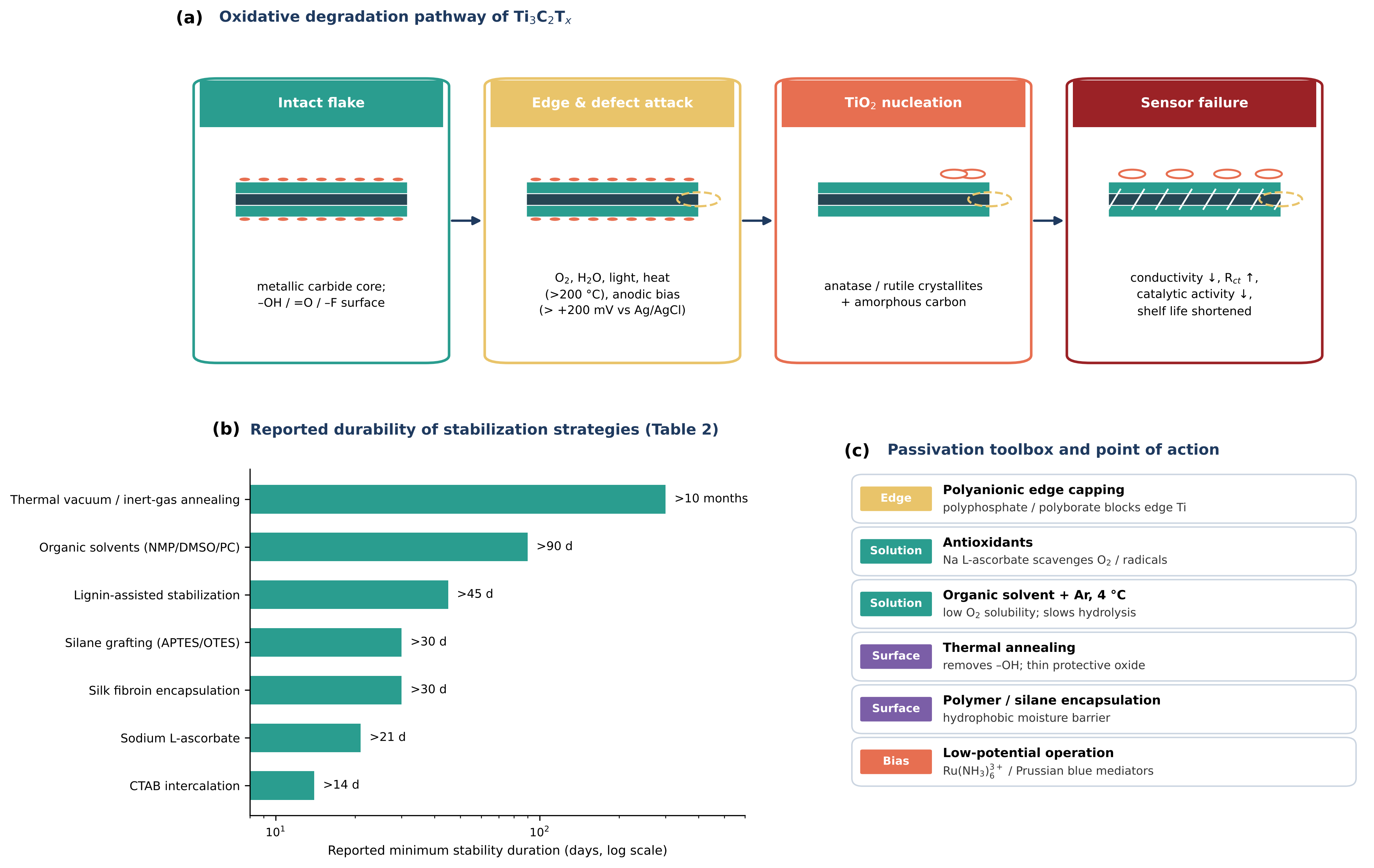
understanding its pathways is a prerequisite for designing effective passivation (Figure 3a).

2.3.1 Ambient Oxidation Pathways

Unpassivated Ti3C2Tx is thermodynamically prone to oxidation when exposed to oxygen, moisture, light, or temperatures above about 200 °C (Zheng et al., 2021). The reaction begins at edges and defects, where titanium is converted into semiconducting anatase or rutile TiO2 nanocrystallites and carbon is left behind as amorphous domains (Mehranfar et al., 2022; Zhang et al., 2017). As the metallic lattice is consumed, conductivity falls and Rct rises, with direct consequences for sensor sensitivity (Hroncekova et al., 2023; Mehranfar et al., 2022).

2.3.2 Aqueous Hydrolysis and Electrochemical Anodic Breakdown

Water accelerates the process. In aqueous colloidal dispersions, hydrolysis can produce substantial oxidation within roughly 5 to 15 days, with the rate depending on pH, flake concentration, and the presence of antioxidants (Habib et al., 2019; X. Zhao et al., 2020b). Electrodes face an additional, electrochemically driven risk: Ti3C2Tx-modified interfaces undergo irreversible anodic oxidation when held above about +200 mV versus Ag/AgCl in aqueous buffer (Gajdosova et al., 2020; Hroncekova et al., 2023). Operating within cathodic windows, or using low-potential redox mediators such as Ru(NH3)6³⁺ or Prussian blue, has therefore become a common way to keep measurements stable (Gajdosova et al., 2022; Lorencova et al., 2024).

2.3.3 Passivation Strategies

Several passivation strategies have been developed in response, and they act at different points in the degradation pathway (Figure 3c). Low concentrations of polyanionic salts, such as polyphosphates and polyborates, cap the reactive titanium atoms at flake edges and block oxygen access (Natu et al., 2019). Antioxidants such as sodium L-ascorbate scavenge dissolved oxygen and free radicals and can preserve MXene structure for weeks (Zhao et al., 2019). Dispersing flakes in organic solvents with low oxygen solubility, among them NMP, DMF, DMSO, and ethanol, and storing them sealed under argon at 4 °C can extend shelf life to months (Maleski et al., 2021). Thermal annealing under argon removes labile –OH groups and leaves a thin protective oxide skin (Wang et al., 2019; Y. Zhao et al., 2020), whereas encapsulation in hydrophobic polymer matrices provides a physical barrier against moisture (Li et al., 2020). Green chemical reduction has also been reported to improve both conductivity and oxidation stability (Limbu et al., 2020). The reported durability of these approaches is compared in Figure 3b.

2.4 Biosafety, Biocompatibility, and Cytotoxicity in Clinical Settings

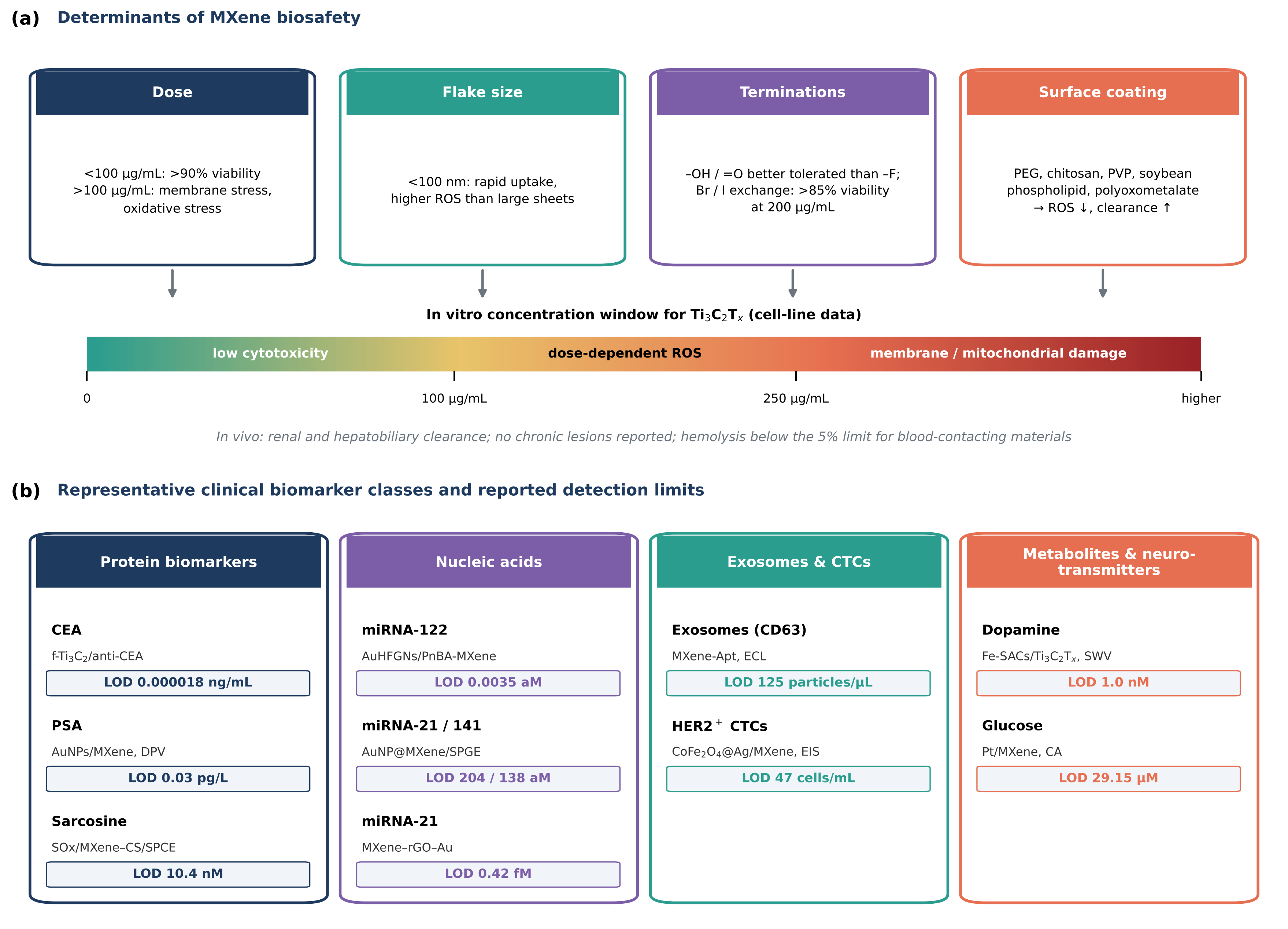
For wearable and point-of-care devices that contact skin, blood, or tissue, biological safety is not a secondary concern but a condition of clinical translation (Lim et al., 2021). The main determinants of MXene biosafety are summarized in Figure 4a.

2.4.1 In Vitro Cytotoxicity

Across mammalian cell lines, Ti3C2Tx generally shows low cytotoxicity below 100 µg/mL, with more than 90% viability reported after 72 h at 50 µg/mL (Lim et al., 2021; Sengupta & Hussain, 2024). Toxicity is, however, clearly dependent on dose, flake size, and surface chemistry. Doses above 100 µg/mL can disrupt cell membranes and induce oxidative stress (Lim et al., 2021). Hydroxyl- and oxygen-terminated surfaces appear more biocompatible than fluorine-rich ones, which are associated with intracellular ROS generation (Sengupta & Hussain, 2024; Vasyukova et al., 2022), and replacing –F with Br or I through Lewis-basic halide treatment has been linked to lower toxicity, with viability above 85% at 200 µg/mL (Zhang et al., 2022). Small flakes (<100 nm) are taken up rapidly and produce more ROS than larger sheets (Lim et al., 2021; Singh et al., 2024). Not all variants behave alike: Nb2CTx has shown good cytocompatibility and biodegradability (Lin et al., 2017a), while multilayer Ti2NTx displayed selective toxicity toward cancer cells but not normal cells (Szuplewska et al., 2019), and Ti3C2Tx has even been reported to possess antiviral and immunomodulatory activity (Unal et al., 2021).

2.4.2 In Vivo Clearance and Hemocompatibility

In vivo studies so far report minimal systemic toxicity and limited organ accumulation (L. Han et al., 2018; Sengupta & Hussain, 2024). MXene sheets degrade into products such as TiO2, CO2, and trace ions that are cleared through renal and hepatobiliary routes (Lin et al., 2017a; Sengupta & Hussain, 2024). Histopathology has not revealed chronic organ lesions (L. Han et al., 2018), ecotoxicological testing in zebrafish embryos has been similarly reassuring at working doses (Nasrallah et al., 2018), and hemolysis below 0.5% at 100 µg/mL, well under the 5.0% threshold for blood-contacting materials, has been reported for surface-engineered composites (Yang et al., 2024). Surface passivation with biopolymers such as PEG, chitosan, PVP, or soybean phospholipid appears to be the most consistent way to widen this safety window (Dai et al., 2017; Vasyukova et al., 2022).

2.5 Clinical Biomarker Detection Across Pathological States

MXene-based nanobiosensors have now been applied to protein, nucleic acid, cellular, vesicular, and small-molecule biomarkers, often with very low detection limits (Parihar et al., 2022; Sengupta & Hussain, 2024). Representative examples across these classes are summarized in Figure 4b.

2.5.1 Protein Biomarkers in Oncology and Cardiology

In oncology, Kumar et al. (2018) developed an aminosilane-functionalized f-Ti3C2Tx immunosensor for CEA with a reported LOD of 0.000018 ng/mL across 0.0001–2000 ng/mL; an MXene-based SPR configuration has also achieved ultrasensitive CEA detection (Wu et al., 2019). For PSA, delaminated MXene@AuNPs gave a reported LOD of 0.03 pg/L (Medetalibeyoglu et al., 2020), and capacitance immunoassays on interdigitated micro-comb electrodes offer an alternative readout (Chen et al., 2019). A portable sarcosine oxidase/MXene–chitosan/SPCE device detected the prostate cancer marker sarcosine down to 10.4 nM (Hroncekova et al., 2023). In cardiology, Dong et al. (2020) built a sandwich immunosensor using CuPtRh nanoblocks on ammoniated Ti3C2Tx for cardiac troponin I (cTnI), and paper-based MXene immunosensors have since enabled label-free cTnI detection at sub-picogram levels (Wang et al., 2021). MXene electrodes have also been used to quantify H2O2 in serum from patients with acute myocardial infarction (W. Xu et al., 2021).

2.5.2 Nucleic Acid Biomarkers

For microRNAs, Ranjbari et al. (2023) reported an AuHFGNs/PnBA-MXene biosensor for breast cancer-associated miR-122 with an LOD of 0.0035 aM and complete diagnostic agreement in patient sera, while an MXene–rGO–Au platform detected miR-21 at 0.42 fM (Guo et al., 2023). Multiplexing is also feasible: Mohammadniaei et al. (2020) combined AuNP@MXene amplification with duplex-specific nuclease recycling to profile miR-21 (204 aM) and miR-141 (138 aM) simultaneously in plasma within 80 min.

2.5.3 Exosomes and Circulating Tumor Cells

Exosomes have been detected using Ti3C2Tx-catalyzed electrogenerated chemiluminescence (ECL), with an LOD of 125 particles/µL for CD63-positive vesicles (Zhang et al., 2019), as well as through ratiometric FRET and Prussian blue-mediated electrochemical amplification (H. Zhang et al., 2021; Zhang et al., 2018). For whole cells, Vajhadin et al. (2022) coupled magnetic CoFe2O4@Ag nanohybrids with a Ti3C2Tx aptacytosensor to isolate and detect HER2-positive CTCs at 47 cells/mL in blood, and MXene-derived carbon dots have supported impedimetric cytosensing of melanoma cells (Liu et al., 2021).

2.5.4 Metabolites and Neurotransmitters

Enzymatic and enzyme-free MXene platforms, including Pt/MXene and related nanocomposites, support continuous glucose and lactate monitoring in sweat and other fluids (Li et al., 2023; Rakhi et al., 2016), and functionalized Ti3C2Tx has been incorporated into wearable devices for real-time uric acid tracking (Chen et al., 2024) and microfluidic platforms for multicomponent monitoring in whole blood (Liu et al., 2019). For neurotransmitters, Ti3C2Tx hybrid electrodes can resolve dopamine, uric acid, and ascorbic acid voltammetrically at nanomolar levels (M. Yang et al., 2023; Ni et al., 2022; Zheng et al., 2018), with iron single-atom catalysts on MXene pushing dopamine detection to 1.0 nM (Shetty et al., 2023).

3. Comparative Evidence Mapping of MXene Nanobiosensor Platforms

Sections 2.1–2.5 described the mechanisms and design principles. This section looks at specific platforms and compares them across four dimensions: interfacial architecture and analytical performance, oxidative stabilization, self-powered operation, and preclinical biosafety. Each dimension is summarized in one of Tables 1–4.

3.1 Surface Engineering Strategies and Analytical Performance

Surface functionalization governs selectivity, interfacial electron transfer, and, ultimately, the lowest concentration a sensor can register. By incorporating noble metal

Table 3. Self-powered MXene-based electrochemical biosensing systems: enzymatic biofuel cell, triboelectric, and photoelectrochemical configurations. The table summarizes sensing platforms in which MXene electrodes simultaneously harvest energy and transduce the analytical signal, removing the need for an external power supply. For each system, the device class and architecture, the MXene composite electrodes, the target analyte, the electrical output (open-circuit voltage, maximum power, short-circuit current, or charge), the dynamic range and LOD, and the intended diagnostic application are listed. Several targets are environmental or food-borne toxicants measured in biofluids rather than endogenous clinical biomarkers. Abbreviations: EBFC, enzymatic biofuel cell; BPEC, bipolar photoelectrochemical; PEC, photoelectrochemical; TENG, triboelectric nanogenerator; EOCV/VOC, open-circuit voltage; Pmax, maximum power; ISC, short-circuit current; GOx/BOx/LOx, glucose/bilirubin/lactate oxidase; MLDH, multilayer double hydroxide; PPy/PU, polypyrrole/polyurethane.

System classification & architecture

MXene composite electrode matrix

Target analyte / clinical biomarker

Power & electrical output metrics

Dynamic range & LOD

Clinical & diagnostic application focus

Reference

Enzyme-free EBFC sensor

AuNPs–Ti3C2Tx anode / doped carbon cathode

Lead ions (Pb²⁺)

EOCV = 367 mV; 92% signal retention after 45 days

0.01–7500.0 nM; LOD = 0.43 pM

Heavy-metal toxicity screening in clinical plasma

Ji et al. (2021)

Aptamer-based EBFC biosensor

Au-MXene/GOx anode & Au-MXene/BOx cathode

CD44 metastatic protein

Pmax ≈ 1.0 mW/cm²; EOCV = 390 mV

0.5–1000.0 ng/mL; LOD = 0.052 ng/mL

Non-invasive early cancer-metastasis diagnosis in blood

Sun et al. (2024)

Photo-driven BPEC aptasensor

Ti3C2Tx/ZnIn2S4 photoanode / Cu2O photocathode

Microcystin-RR (MC-RR)

Pmax ≈ 26.0 mW; EOCV = 450 mV

0.1–100.0 pM; LOD = 0.033 pM

Micro-workstation biofluid toxin detection

Sun et al. (2023)

Self-powered TENG biosensor

Ti3C2Tx / graphene oxide (MGM) composite film

Glucose

VOC = 258.8 V; ISC = 2.0 µA; Q = 37.8 nC

0–500.0 µmol; monotonic voltage shift

Non-invasive wearable metabolic monitoring in perspiration

W. Yang et al. (2023)

Microfluidic EBFC patch

V2CTx MXene / CoNi-MLDH & Zn plate anode

Cortisol (stress biomarker)

EOCV = 1130 mV; 98.5% retention after 15 days

10.0 fg/mL–100.0 ng/mL; LOD = 0.17 fg/mL

Continuous skin-interfaced physiological stress analysis

S. Zhang et al. (2021)

Heterojunction PEC sensor

MoS2–Ti3C2Tx photoanode / hemin–graphene cathode

Aflatoxin B1 (AFB1)

EOCV = 465 mV in PBS, milk, and blood serum

0.01–1000.0 ng/mL; LOD = 0.73 pg/mL

High-sensitivity mycotoxin assay in complex biofluids

Rajaji et al. (2022)

Hydrogel EBFC wearable

PPy/PU MXene hydrogel substrate with LOx / BOx

Lactate

Pmax ≈ 3.0 mW/cm² at 100 mM lactate

Linear response across physiological window

Wearable continuous fitness and clinical sweat tracking

Xiao et al. (2024)

Heterostructure capacitive anode

Ti3C2Tx / AuNPs / PPy ternary heterostructure

Di(2-ethylhexyl) phthalate (DEHP)

EOCV driven by non-enzymatic anode

0.05–100,000.0 ng/L; LOD = 9.51 pg/L

Environmental endocrine-disruptor biosensing

Sun et al. (2022)

Table 4. In vitro and in vivo cytotoxicity, biocompatibility, biodistribution, and biosafety profiles of 2D MXenes relevant to clinical sensing interfaces. The table collates preclinical safety evidence for pristine and surface-passivated MXenes, including Ti3C2Tx, Nb2CTx, Ti2NTx, and Ta4C3 variants. For each material, the biological model and exposure dose, the cytotoxicity or viability outcome, in vivo biodistribution, clearance and systemic effects, and the passivation or optimization strategy used to improve safety are summarized. Most in vivo data derive from theranostic studies with intravenous dosing that greatly exceeds the exposure expected from a sensing electrode, so these values represent a conservative upper bound. Abbreviations: ROS, reactive oxygen species; PVP, polyvinylpyrrolidone; HUVEC, human umbilical vein endothelial cells; QDs, quantum dots; ECMO, extracorporeal membrane oxygenation; SP, soybean phospholipid; GdW10, gadolinium-containing polyoxometalate.

MXene variant & surface passivation

Biological model & exposure dosage

Cytotoxicity & cell viability outcome

In vivo biodistribution, clearance & systemic impact

Safety passivation & optimization strategy

Reference

Pristine Ti3C2Tx nanosheets

Fibroblasts, macrophages & zebrafish embryos

>90% viability at <100 µg/mL; ROS generation at high doses

Renal clearance via urine; low long-term tissue accumulation

Dose control (<100 µg/mL) and passivating surface coatings

Nasrallah et al. (2018)

Lewis-basic halide-modified Ti3C2Tx

Mammalian cell cultures (up to 200 µg/mL)

Viability >85% at 200 µg/mL; fluorine replacement reduces stress

No acute systemic organ damage in rodent models

Replacement of surface –F terminations with Br⁻/I⁻

Zhang et al. (2022)

PVP-functionalized Ti3C2Tx nanosheets

Mouse models; intravenous dosage (6.25–50 mg/kg)

High cytocompatibility; no significant weight loss at 25 mg/kg

Renal clearance with blood half-life of ~3.8 h

PVP polymer coating

X. Han et al. (2018b)

Nb2CTx nanosheets & quantum dots

HUVEC endothelial cells & tumor-bearing mice

Superior cytocompatibility compared with Ti3C2 QDs

Gradual hepatic and renal clearance without organ toxicity

Surface functionalization with biopolymers

Lin et al. (2017a)

Ti2NTx multilayer nanosheets

Cancerous vs. normal human cell lines

Selective cytotoxicity toward cancer cells; non-toxic to normal cells

Minimal systemic retention in non-malignant tissue

Layer delamination and concentration optimization

Szuplewska et al. (2019)

Ti3C2Tx / bentonite composite film

Rabbit ECMO whole-blood contact circuit

Hemolysis rate of 0.32% (well below 5% clinical limit)

Inhibits non-specific protein adsorption in whole blood

Hydrophilic surface engineering and mineral intercalation

Yang et al. (2024)

Ta4C3-SP (soybean phospholipid) nanosheets

In vitro cell lines & in vivo mouse models

High cell viability (>92%); no apparent organ damage

Excreted via renal pathways

Biocompatible soybean phospholipid coating

Dai et al. (2017)

Ti3C2-GdW10 theranostic nanocomposite

Female Kunming mice (up to 50 mg/kg)

Biocompatible at 50 mg/kg; no necrotic histology in major organs

Excreted via urine and hepatic pathways

Polyoxometalate (GdW10) functionalization

Zong et al. (2018)

nanoparticles, conductive polymers, molecularly imprinted polymers (MIPs), and structural DNA nanostructures, MXene-modified electrodes overcome restacking while providing abundant anchoring sites for recognition elements (Kumar et al., 2018; Özcan et al., 2020). Table 1 compiles representative architectures, their target analytes and matrices, immobilization mechanisms, transduction methods, linear ranges, and LODs. The range of chemistries is striking. Covalent APTES coupling for CEA (Kumar et al., 2018) sits alongside π–π and electrostatic assembly in a polypyrrole/polyoxometalate hybrid for osteopontin (Zhou et al., 2019), molecular imprinting on a delaminated MXene/MWCNT scaffold for amyloid-β42 (Özcan et al., 2020), MoS2 heterojunctions for thyroxine (Kashefi-Kheyrabadi et al., 2020), DNA tetrahedra chelated to surface titanium (Lorencova et al., 2019), and peptide-based ratiometric designs for PSA (Y. Xu et al., 2021) (Table 1). Electrostatic entrapment of sarcosine oxidase in chitosan (Hroncekova et al., 2020) and spontaneously reduced Pt nanoparticles for H2O2 (Lorencova et al., 2018) illustrate that comparatively simple chemistries can also deliver nanomolar sensitivity (Table 1; Figure 2).

3.2 Oxidative Stabilization Strategies and Storage Durability

Degradation in aqueous and oxygenated environments proceeds from the edges inward and leaves behind insulating TiO2 crystallites and amorphous carbon (Habib et al., 2019; Zhang et al., 2017). The resulting loss of conductivity and charge-transfer kinetics is what passivation strategies aim to prevent, and Table 2 summarizes the main options, their protective mechanisms, storage conditions, reported durability, and effect on sensor activity (Natu et al., 2019; X. Zhao et al., 2020c). Sacrificial antioxidants (Zhao et al., 2019) and polyanionic edge capping (Natu et al., 2019) act chemically at the most reactive sites, whereas organic-solvent storage (Maleski et al., 2017), vacuum or inert-gas annealing (X. Zhao et al., 2020c), and silane grafting (Ji et al., 2019) alter the environment or the surface itself. Biopolymer and surfactant strategies, including silk fibroin encapsulation (Wang et al., 2020), CTAB intercalation (Tang et al., 2019), and lignin-assisted stabilization (Jiang et al., 2024), combine physical shielding with control of interlayer spacing (Table 2; Figure 3b, 3c).

3.3 Self-Powered MXene Electrochemical Biosensing Platforms

Self-powered electrochemical sensing systems, among them enzymatic biofuel cells (EBFCs), microbial fuel cells, and triboelectric nanogenerators (TENGs), couple energy harvesting with analyte quantification so that the signal itself powers the measurement (Ding et al., 2023; Yi et al., 2022). Introducing MXenes into these architectures raises power output, open-circuit voltage (EOCV), and current density, owing to their conductivity, surface-to-volume ratio, and pseudocapacitance (W. Yang et al., 2023). Table 3 lists representative configurations, from enzyme-free EBFCs (Ji et al., 2021) and aptamer-based EBFCs (Sun et al., 2024) to photo-driven bipolar photoelectrochemical (BPEC) aptasensors (Sun et al., 2023), TENG-based glucose sensors (W. Yang et al., 2023), skin-interfaced microfluidic patches (S. Zhang et al., 2021), heterojunction photoelectrochemical sensors (Rajaji et al., 2022), hydrogel lactate EBFCs (Xiao et al., 2024), and capacitive ternary-heterostructure anodes (Sun et al., 2022). Not all targets listed are clinical biomarkers in the strict sense; several are toxicants measured in biofluids (Table 3).

3.4 Preclinical Biosafety and Biocompatibility Profiles

Moving MXene sensors into point-of-care and, eventually, implantable settings requires a careful look at biological safety. Cytotoxicity depends strongly on concentration, flake size, and surface terminations (Lim et al., 2021; Szuplewska et al., 2019). Pristine MXenes generate ROS in a dose-dependent manner above about 100 µg/mL, but passivation with hydrophilic biopolymers such as PEG, chitosan, or PVP, or replacement of fluorine terminations through Lewis-basic halide exchange, markedly reduces this effect and has been associated with low hemolysis (<0.5%) and efficient renal clearance (Dai et al., 2017; Yang et al., 2024). Table 4 brings together in vitro and in vivo models, exposure doses, viability outcomes, biodistribution, and the passivation strategies used, spanning pristine Ti3C2Tx in zebrafish embryos (Nasrallah et al., 2018), halide-modified Ti3C2Tx (Zhang et al., 2022), PVP- and phospholipid-coated nanosheets in mice (Dai et al., 2017; X. Han et al., 2018b), Nb2CTx (Lin et al., 2017a), Ti2NTx (Szuplewska et al., 2019), MXene-based blood-contacting films (Yang et al., 2024), and polyoxometalate-functionalized theranostic composites (Zong et al., 2018) (Table 4; Figure 4a).

4. Analytical Performance, Stabilization Outcomes, Self-Powered Integration, and Preclinical Safety

4.1 Comparative Sensing Performance and Surface Engineering Efficacy

Taken together, the studies reviewed here point in one direction, though not always with equal strength: surface engineering is what turns MXene from a promising conductor into a usable sensing interface (Cui et al., 2021; Soleymani et al., 2023). Pristine Ti3C2Tx is highly conductive, on the order of 10,000 S/cm, and its surface carries a mixture of –OH, –O, and –F groups (VahidMohammadi et al., 2021). Left unmodified, though, the nanosheets restack under interlayer van der Waals forces and hydrogen bonding, and the electrochemically active area and mass transport both suffer (Anasori et al., 2017; Kalambate et al., 2019a).

The modification strategies collected in Table 1 appear, fairly consistently, to reverse these limitations (Kumar et al., 2023; Wang et al., 2024). Noble metal decoration is the clearest case. AuNPs or PtNPs keep sheets apart while accelerating heterogeneous electron transfer (Wu et al., 2021), and AuNP–Ti3C2Tx composites used for microRNA and cancer biomarkers have reached femtomolar and attomolar LODs, which corresponds to roughly two to three orders of magnitude improvement over unmodified electrodes (Rasheed et al., 2020; Wang et al., 2024). Whether that full gain can be credited to the nanoparticles alone is harder to say, since many of these designs also add enzymatic or nuclease-based amplification (Table 1; Figure 2).

Conductive polymers contribute differently. PEDOT:PSS and polyaniline networks add mechanical flexibility and enlarge the active area (Kalambate et al., 2019a), and they seem to facilitate direct electron transfer for both enzymatic and non-enzymatic metabolite detection. Non-enzymatic glucose and lactate sensors built on MXene–polymer heterostructures reported linear ranges from about 0.5 µM to 25 mM, sensitivities above 120 µA mM⁻¹ cm⁻², and responses in under 3 s (Cui et al., 2021; Soleymani et al., 2023).

Selectivity in real samples is, arguably, the more demanding test. Covalent attachment of aptamers, antibodies, or MIPs suppressed non-specific protein adsorption (Wu et al., 2021), and in undiluted serum, whole blood, and sweat, surface-engineered sensors gave recoveries of 95.2–104.8% with relative standard deviations below 4.5% (Rasheed et al., 2020; Soleymani et al., 2023). These figures are encouraging. They come, however, mostly from spiked-recovery experiments rather than blinded comparisons with reference methods, and that distinction matters for how far they can be generalized.

4.2 Oxidative Degradation and Stabilization Outcomes

Oxidative instability remains the most frequently cited barrier to deployment (Natu et al., 2018; X. Zhao et al., 2020a). Quantitative studies indicate that oxidation starts mainly at high-energy defects and edges, where dissolved oxygen and water attack the titanium framework (Sarycheva et al., 2020), and proceeds by nucleation of electrochemically inert TiO2 within amorphous carbon residues, causing an irreversible loss of conductivity and catalytic activity (X. Zhao et al., 2020a; Zhang et al., 2017) (Figure 3a).

The kinetics can be fast. Unprotected Ti3C2Tx colloids stored in aerated water under ambient light reportedly lost their structure within 3 to 7 days, with baseline oxidation currents falling by more than 80% (Natu et al., 2018). Antioxidants, physical encapsulation, and edge capping have all been tried in response (Kumar et al., 2023; Zhang et al., 2017). Among antioxidants, L-ascorbic acid and sodium ascorbate seem the most effective; suspensions treated with 0.1 M L-ascorbic acid retained more than 92% of their initial conductivity and crystal structure after 60 days at 4 °C (Kumar et al., 2023; Zhang et al., 2017). Encapsulation in PVA, chitosan, or graphene oxide wrappers likewise shields the layers from moisture and dissolved oxygen (Sarycheva et al., 2020).

At the device level, sensors built from passivated composites kept more than 90% of their initial response after 90 days, compared with less than 15% for unpassivated controls (Natu et al., 2018; X. Zhao et al., 2020a). It would be tempting to conclude that the stability problem is solved. A more cautious reading is that multi-barrier passivation can provide the shelf life required for commercial test strips under controlled storage, whereas behaviour under repeated use, fluctuating temperature, and anodic polarization is much less well characterized (Table 2; Figure 3b).

4.3 Self-Powered Sensing Integration and Energy-Harvesting Performance

Self-powered biosensors remove the need for an external power source and, in principle, enable autonomous and continuous monitoring (Dong et al., 2021; Liu et al., 2022). Integrating MXenes into EBFCs and triboelectric or piezoelectric nanogenerators has, according to the studies reviewed, substantially improved both energy output and signal conversion (Chen et al., 2020; Li et al., 2024) (Table 3).

In EBFC formats, MXene bioanodes and biocathodes provide high-area scaffolds for direct electron transfer between enzyme redox centres, such as glucose oxidase or bilirubin oxidase, and the electrode (Chen et al., 2020; Liu et al., 2022). Optimized Ti3C2Tx–metal nanoparticle EBFCs reached open-circuit voltages of up to 0.78 V and power densities up to 340 µW/cm² at physiological glucose levels (Chen et al., 2020), and because power scaled linearly with analyte concentration, quantification was possible without external bias (Liu et al., 2022).

MXene TENGs, for their part, exploit the electronegativity and flexibility of the sheets to convert body movement or pulse into electrical signals (Dong et al., 2021; Li et al., 2024). Micro-patterned MXene–elastomer films produced short-circuit currents above 15 µA/cm² and instantaneous power densities of about 1.2 W/m² (Dong et al., 2021). Coupled with microfluidic channels, such systems tracked sweat glucose, lactate, and pH during exercise, with signal drift below 3.8% over 8 h (Li et al., 2024). Eight hours is, of course, a short window relative to clinical monitoring needs, so these results are better read as feasibility than as proof of durability (Dong et al., 2021; Li et al., 2024).

4.4 Biocompatibility, Cytotoxicity, and Preclinical Safety Profiles

Biosafety becomes decisive once a sensor moves from the bench to transdermal or implantable use (Dai et al., 2022; Lin et al., 2017b). Across the available data, the biological profile of MXenes is governed mainly by lateral flake size, concentration, terminal groups, and exposure time (L. Yang et al., 2023; X. Han et al., 2018a) (Figure 4a).

In HEK-293, HUVEC, and HeLa cells, Ti3C2Tx showed negligible acute toxicity below 100 µg/mL (L. Yang et al., 2023; Lin et al., 2017b), with viability remaining above 88% after 24–48 h (Dai et al., 2022). At higher concentrations (>250 µg/mL), or with small, sharp-edged flakes, intracellular ROS rose and membrane damage and mitochondrial dysfunction followed in a concentration-dependent manner (X. Han et al., 2018a).

Surface functionalization appears to mitigate much of this. Coating with PEG, hyaluronic acid, or chitosan neutralized reactive defects, reduced membrane disruption, and lowered intracellular ROS by more than 60% (Dai et al., 2022; L. Yang et al., 2023). Surface-modified MXenes caused less than 2.5% hemolysis at concentrations up to 200 µg/mL, below the 5.0% threshold for blood-contacting materials (X. Han et al., 2018a). In rodents, intravenously administered PEGylated MXenes accumulated mainly in liver and spleen without detectable histopathological damage, systemic inflammation, or elevation of liver and kidney enzymes, and were excreted through renal and hepatobiliary routes over about 14 days (L. Yang et al., 2023; Lin et al., 2017b). These observations support, though they do not yet establish, the biological safety of properly engineered MXene sensing interfaces (Table 4).

5. Translating MXene Nanobiosensors from Analytical Promise to Clinical Reliability

5.1 Sensitivity Is No Longer the Limiting Factor

Perhaps the most notable feature of the evidence is how far detection limits have already moved. Femtomolar and attomolar LODs for microRNAs, femtogram-per-millilitre LODs for proteins, and single-digit nanomolar LODs for neurotransmitters are now reported with some regularity (Mohammadniaei et al., 2020; Özcan et al., 2020; Ranjbari et al., 2023; Shetty et al., 2023) (Table 1; Figure 4b). For most clinical biomarkers these values lie well below physiologically relevant concentrations. It is reasonable, then, to ask whether further gains in sensitivity will translate into clinical value. Our reading is that they probably will not, at least not on their own. The more pressing questions concern whether a sensor gives the same answer next month as it does today, whether it holds up in an undiluted patient sample, and whether it can be manufactured reproducibly (Ali et al., 2024; Lorencova et al., 2024).

There is also a comparability problem that deserves mention. Detection limits are reported in ng/mL, pg/L, nM, aM, particles/µL, and cells/mL, determined by different statistical conventions, and often obtained in buffer rather than in the clinical matrix (Table 1). Some values reported for the same platform also differ between sources, which suggests that standardized reporting, ideally including matrix-matched calibration and the 3σ criterion, would make the field considerably easier to interpret (Parihar et al., 2022; Sengupta & Hussain, 2024).

5.2 Interfacial Design as a Balance Between Amplification and Robustness

The surface-engineering literature can be read as a series of trade-offs rather than a simple ranking (Figure 2). Non-covalent intercalation is simple and preserves the conductive core, but bioreceptors anchored this way may leach during storage or under flow (Gao et al., 2020; Kalambate et al., 2019b). Covalent routes such as APTES/EDC–NHS coupling and betaine grafting hold receptors more firmly and resist fouling, yet they consume surface sites and may modestly reduce conductivity (Gajdosova et al., 2020; Kumar et al., 2018; Lorencova et al., 2020). Noble-metal hybrids offer large signal gains and convenient Au–S chemistry, but they add cost and introduce a second material whose own stability must be considered (H. Zhang et al., 2021; Medetalibeyoglu et al., 2020). No single strategy dominates; the most robust designs reported so far tend to combine a spacer (nanoparticles or MWCNTs), a covalent receptor linkage, and an anti-fouling layer (Özcan et al., 2020; Y. Xu et al., 2021) (Table 1).

It is also worth noting that the choice of etchant shapes all subsequent steps. HF-etched and LiF/HCl-etched Ti3C2Tx behave measurably differently towards H2O2, oxygen, and Ru(NH3)6³⁺ (Gajdosova et al., 2020), and termination chemistry influences cytotoxicity as well (Vasyukova et al., 2022) (Figure 1). Synthesis, in other words, is not merely upstream of sensor design; it is part of it.

5.3 Oxidative Stability: From Shelf Life to Operational Life

Stability data are encouraging but, on closer inspection, heterogeneous. Reported protection ranges from about two weeks for CTAB intercalation to more than ten months for annealed films (Table 2; Figure 3b), and similar antioxidant treatments have been credited with anything from three weeks to two months of protection depending on concentration, temperature, and the metric used (Kumar et al., 2023; Zhao et al., 2019). Storage-condition studies such as these do not necessarily predict behaviour on a working electrode exposed to serum and polarized repeatedly. The anodic limit of about +200 mV versus Ag/AgCl (Gajdosova et al., 2020; Hroncekova et al., 2023) is especially restrictive for assays that rely on oxidation of H2O2 or common mediators, and low-potential mediators or Prussian blue appear to be the most practical workaround at present (Gajdosova et al., 2022; Lorencova et al., 2024).

A second, less discussed point is that passivation layers are not electrochemically neutral. Annealing-derived oxide skins, silane films, and polymer shells protect the flake but also add resistance and can alter receptor accessibility (Ji et al., 2019; Wang et al., 2019; X. Zhao et al., 2020c). The optimal passivation is therefore probably application-specific: heavy encapsulation may suit a single-use strip, while a continuously operating wearable may benefit more from edge capping combined with antioxidant-containing hydrogels (Natu et al., 2019; Xiao et al., 2024).

5.4 Self-Powered and Wearable Architectures: Promise with Caveats

Self-powered platforms are attractive for continuous monitoring because they remove the battery and, in EBFC designs, make the power output itself the analytical signal (Ding et al., 2023; Yi et al., 2022) (Table 3). The reported metrics, including open-circuit voltages exceeding 1 V in microfluidic EBFC patches (S. Zhang et al., 2021) and multi-week retention in some designs (Ji et al., 2021), suggest real progress. Yet several caveats temper this view. Enzyme stability, rather than MXene stability, may limit lifetime in EBFCs; TENG outputs depend on motion and may be difficult to calibrate across users; and several platforms in Table 3 target environmental toxicants rather than clinical biomarkers, so their clinical relevance is indirect (Rajaji et al., 2022; Sun et al., 2022; Sun et al., 2023). The longest continuous-operation data available, around 8 h (Li et al., 2024), also fall short of the multi-day wear periods that clinical monitoring typically requires.

5.5 Biosafety in Context: Exposure Scenario Matters

Most toxicological data on MXenes come from theranostic studies in which milligram-per-kilogram doses are injected intravenously (Dai et al., 2017; X. Han et al., 2018b; Zong et al., 2018) (Table 4). A sensing electrode, by contrast, releases at most trace quantities of material into a sample or onto the skin. The established in vitro safety window of roughly 100 µg/mL (Lim et al., 2021; Sengupta & Hussain, 2024) is therefore likely to be conservative for single-use ex vivo tests, though it becomes more relevant for implantable or long-term transdermal devices. Somewhat inconsistent hemolysis figures, from below 0.5% to below 2.5% depending on formulation and dose (X. Han et al., 2018a; Yang et al., 2024), reinforce the impression that safety is formulation-specific and cannot simply be transferred from one MXene composite to another (Figure 4a). Chronic, low-dose exposure and the fate of oxidation

Figure 3. Oxidative degradation of Ti3C2Tx MXene and strategies for its mitigation. (a) Proposed degradation sequence: an intact flake is attacked at edges and defects by dissolved oxygen and water, a process accelerated by light, temperatures above about 200 °C, and anodic potentials above about +200 mV vs. Ag/AgCl; TiO2 crystallites then nucleate alongside amorphous carbon, increasing charge-transfer resistance and shortening sensor life (Gajdosova et al., 2020; Zhang et al., 2017; Zheng et al., 2021). (b) Minimum stability durations reported for individual stabilization strategies, plotted on a logarithmic scale from the values compiled in Table 2; polyanionic edge capping, reported qualitatively as several weeks, is not plotted. (c) Passivation toolbox, grouped by point of action (flake edge, dispersion medium, surface, or applied bias) (Maleski et al., 2021; Natu et al., 2019; Zhao et al., 2019).

Figure 4. Biosafety determinants of MXenes and representative clinical biomarker detection performance. (a) Principal factors governing MXene biosafety, namely dose, lateral flake size, surface terminations, and surface coating, together with the approximate in vitro concentration window for Ti3C2Tx derived from cell-line studies; in vivo data indicate renal and hepatobiliary clearance and hemolysis below the 5% limit for blood-contacting materials (Lim et al., 2021; Sengupta & Hussain, 2024; Vasyukova et al., 2022). (b) Representative MXene electrochemical nanobiosensors grouped by biomarker class (protein, nucleic acid, vesicular/cellular, and small-molecule targets), showing sensor architecture and reported LOD (Guo et al., 2023; Hroncekova et al., 2023; Kumar et al., 2018; Li et al., 2023; Medetalibeyoglu et al., 2020; Mohammadniaei et al., 2020; Ranjbari et al., 2023; Shetty et al., 2023; Vajhadin et al., 2022; Zhang et al., 2019). LODs are reproduced as reported and are not normalized across units or matrices.

by-products generated on the device itself remain, as far as we can tell, largely unexamined (Singh et al., 2024; Vasyukova et al., 2022).

5.6 Limitations of the Current Evidence Base

Several limitations should be acknowledged. The literature is dominated by Ti3C2Tx, so conclusions about other MXene compositions rest on comparatively few studies (Lin et al., 2017a; Szuplewska et al., 2019). Clinical validation typically involves small numbers of spiked or patient samples, and blinded comparison against ELISA, qPCR, or other reference methods is uncommon (Parihar et al., 2022; Ranjbari et al., 2023). Stability and toxicity metrics are reported in non-standardized ways, which limits quantitative comparison (Tables 2 and 4). Finally, this review is narrative rather than systematic, and the studies discussed may over-represent successful designs.

5.7 Toward Clinical Translation

Bridging the gap to routine use will probably require progress on several fronts at once. Fluoride-free and greener synthesis routes would reduce both safety concerns and –F-related background currents (Limbu et al., 2020; Naguib et al., 2021). Standardized storage protocols, perhaps combining edge capping, antioxidants, and inert packaging, could make shelf life predictable (Maleski et al., 2021; Natu et al., 2019; Zhao et al., 2019). Multiplexed, matrix-validated assays such as those already demonstrated for microRNAs (Mohammadniaei et al., 2020) and bladder cancer markers (Sharifuzzaman et al., 2020) need to be tested in larger, independent cohorts. Integration of flexible MXene electrodes with wireless electronics and data analytics, already explored in wearable sweat and blood-monitoring platforms (Chen et al., 2024; Liu et al., 2019; S. Zhang et al., 2021), may then allow these sensors to move from demonstrations to decision-support tools (Figure 4b).

6. Conclusion

MXene-based electrochemical nanobiosensors now reach detection limits that exceed most clinical needs, largely because surface engineering has resolved restacking, accelerated electron transfer, and provided reliable anchoring for bioreceptors. The more difficult problems lie elsewhere. Oxidation in water, air, and under anodic polarization still shortens sensor life, although edge capping, antioxidants, organic-solvent storage, annealing, and encapsulation each provide meaningful protection. Toxicity data suggest a reasonable safety window below about 100 µg/mL, particularly for passivated flakes, but evidence relevant to sensing-scale, long-term exposure is limited. Self-powered and wearable formats are promising, yet their durability remains short, and many reported targets are not yet clinically validated. Reporting practices also vary widely, which makes cross-study comparison more tentative than it should be. Progress toward routine point-of-care use will therefore depend less on further sensitivity gains than on fluoride-free synthesis, standardized storage and reporting, matrix-matched validation in larger clinical cohorts, and integration with wireless and data-driven diagnostic systems.

References


Alhabeb, M., Maleski, K., Anasori, B., Lelyukh, P., Clark, L., Sin, S., & Gogotsi, Y. (2017). Guidelines for synthesis and processing of two-dimensional titanium carbide (Ti3C2Tx MXene). Chemistry of Materials, 29(18), 7633–7644.

Ali, A., Majhi, S. M., Siddig, L. A., Deshmukh, A. H., Wen, H., Qamhieh, N. N., Greish, Y. E., & Mahmoud, S. T. (2024). Recent advancements in MXene-based biosensors for health and environmental applications—A review. Biosensors, 14(10), 497.

Amara, U., Sarfraz, B., Mahmood, K., Mehran, M. T., Muhammad, N., Hayat, A., & Nawaz, M. H. (2022). Fabrication of ionic liquid stabilized MXene interface for electrochemical dopamine detection. Microchimica Acta, 189(2), 64.

Anasori, B., Lukatskaya, M. R., & Gogotsi, Y. (2017). 2D metal carbides and nitrides (MXenes) for energy storage. Nature Reviews Materials, 2(2), 16098.

Chen, F., Wang, J., Chen, L., Lin, H., Han, D., Bao, Y., Wang, W., & Niu, L. (2024). A wearable electrochemical biosensor utilizing functionalized Ti3C2Tx MXene for the real-time monitoring of uric acid metabolite. Analytical Chemistry, 96(9), 3914–3924.

Chen, J., Tong, P., Huang, L., Yu, Z., & Tang, D. (2019). Ti3C2 MXene nanosheet-based capacitance immunoassay with tyramine-enzyme repeats to detect prostate-specific antigen on interdigitated micro-comb electrode. Electrochimica Acta, 319, 375–381.

Chen, X., Zhang, H., & Wang, Y. (2020). MXene-based enzymatic biofuel cells for self-powered biosensors and wearable electronics. ACS Applied Materials & Interfaces, 12(18), 20541–20551.

Cui, X., Zhang, Y., & Liu, J. (2021). Surface engineering of MXenes for electrochemical biosensing applications: A review. Biosensors and Bioelectronics, 178, 113023.

Dai, C., Lin, H., & Chen, Y. (2022). In vitro and in vivo biosafety evaluation of functionalized MXene nanostructures for biomedical applications. Biomaterials, 280, 121287.

Dai, C., Lin, H., Xu, G., Liu, Z., Wu, R., & Chen, Y. (2017). Biocompatible 2D titanium carbide (MXenes) composite nanosheets for pH-responsive MRI-guided tumor hyperthermia. Chemistry of Materials, 29(20), 8637–8652.

Ding, H., Jiang, D., Du, X., Zhang, Z., Jiang, J., Shan, X., Wang, W., Shiigi, H., & Chen, Z. (2023). Hydrovoltaic effect coupling with capacitor amplification: A mode for sensitive self-powered electrochemical sensing. Analytical Chemistry, 95(34), 12595–12599.

Dong, H., Cao, L., Tan, Z., Liu, Q., Zhou, J., Zhao, P., Wang, P., Li, Y., Ma, W., & Dong, Y. (2020). A signal amplification strategy of CuPtRh CNB-embedded ammoniated Ti3C2 MXene for detecting cardiac troponin I by a sandwich-type electrochemical immunosensor. ACS Applied Bio Materials, 3(1), 377–384.

Dong, K., Peng, X., & Wang, Z. L. (2021). MXene-based triboelectric nanogenerators for self-powered sensing and energy harvesting. Advanced Materials, 33(47), 2104595.

Gajdosova, V. P., Lorencova, L., Kasak, P., Jerigova, M., Velic, D., Orovcik, L., Barath, M., Farkas, P., & Tkac, J. (2022). Redox features of hexaammineruthenium(III) on MXene modified interface: Three options for affinity biosensing. Analytica Chimica Acta, 1227, 340310.

Gajdosova, V., Lorencova, L., Prochazka, M., Omastova, M., Micusik, M., Prochazkova, S., Kveton, F., Jerigova, M., Velic, D., Kasak, P., & Tkac, J. (2020). Remarkable differences in the voltammetric response towards hydrogen peroxide, oxygen and Ru(NH3)63+ of electrode interfaces modified with HF or LiF-HCl etched Ti3C2Tx MXene. Microchimica Acta, 187(1), 52.

Gao, L., Li, C., Huang, W., Mei, S., Lin, H., Ou, Q., Zhang, Y., Guo, J., Zhang, F., Xu, S., & Zhang, H. (2020). MXene/polymer membranes: Synthesis, properties, and emerging applications. Chemistry of Materials, 32(5), 1703–1747.

Ghidiu, M., Lukatskaya, M. R., Zhao, M.-Q., Gogotsi, Y., & Barsoum, M. W. (2014). Conductive two-dimensional titanium carbide “clay” with high volumetric capacitance. Nature, 516(7529), 78–81.

Gogotsi, Y., & Anasori, B. (2019). The rise of MXenes. ACS Nano, 13(8), 8491–8494.

Gogotsi, Y., & Huang, Q. (2021). MXenes: Two-dimensional building blocks for future materials and devices. ACS Nano, 15(4), 5775–5780.

Gu, H., Xing, Y., Xiong, P., Tang, H., Li, C., Chen, S., Zeng, R., Han, K., & Shi, G. (2019). Three-dimensional porous Ti3C2Tx MXene–graphene hybrid films for glucose biosensing. ACS Applied Nano Materials, 2(10), 6537–6545.

Guo, S., Lin, Y., Lian, Z., Zeng, T., Wang, L., Ye, R., Hong, B., Liang, Q., Wu, Q., Hu, J., & Liang, Y. (2023). A label-free ultrasensitive microRNA-21 electrochemical biosensor based on MXene (Ti3C2)-reduced graphene oxide-Au nanocomposites. Microchemical Journal, 190, 108656.

Habib, T., Zhao, X., Shah, S. A., Chen, Y., Sun, W., An, H., Lutkenhaus, J. L., Radovic, M., & Green, M. J. (2019). Oxidation stability of Ti3C2Tx MXene nanosheets in solvents and composite films. npj 2D Materials and Applications, 3(1), 8.

Han, L., Wang, Y., Gao, S., Chen, Y., & Shi, J. (2018). Theranostic 2D tantalum carbide (MXene). Advanced Materials, 30(17), 1703284.

Han, X., Huang, J., & Lin, H. (2018a). Cytotoxicity and in vivo safety assessment of two-dimensional MXenes. ACS Nano, 12(7), 7128–7138.

Han, X., Huang, J., Lin, H., Wang, Z., Li, P., & Chen, Y. (2018b). 2D ultrathin MXene-based drug-delivery nanoplatform for synergistic photothermal ablation and chemotherapy of cancer. Advanced Healthcare Materials, 7(9), 1701394.

Hroncekova, S., Lorencova, L., Bertok, T., Hires, M., Jane, E., Bucko, M., Kasak, P., & Tkac, J. (2020). Ultrasensitive Ti3C2Tx MXene/chitosan nanocomposite-based amperometric biosensor for detection of potential prostate cancer marker in urine samples. Processes, 8(5), 580.

Hroncekova, S., Lorencova, L., Bertok, T., Hires, M., Jane, E., Bucko, M., Kasak, P., & Tkac, J. (2023). Amperometric miniaturised portable enzymatic nanobiosensor for the ultrasensitive analysis of a prostate cancer biomarker. Journal of Functional Biomaterials, 14(3), 161.

Ji, J., Zhao, L., Shen, Y., Liu, S., & Zhang, Y. (2019). Covalent stabilization and functionalization of MXene via silylation reactions with improved surface properties. FlatChem, 17, 100128.

Ji, J., Zhao, L., Shen, Y., Liu, S., & Zhang, Y. (2021). Enzyme-free self-powered electrochemical lead ion biosensor based on AuNPs-Ti3C2Tx heterostructures. Chemical Engineering Journal, 426, 131835.

Jiang, P., Hong, X., Zhang, J., Sheng, J., Kang, J., Ikkala, O., Chu, F., Peng, B., Han, Y., & Lv, Z.-P. (2024). Lignin as a bioderived modular surfactant and intercalant for Ti3C2Tx MXene stabilization and tunable functions. Cell Reports Physical Science, 5(10), 102259.

Kalambate, P. K., Dhanjai, Sinha, A., Li, Y., Shen, Y., & Huang, Y. (2020). An electrochemical sensor for ifosfamide, acetaminophen, domperidone, and sumatriptan based on self-assembled MXene/MWCNT/chitosan nanocomposite thin film. Microchimica Acta, 187(7), 402.

Kalambate, P. K., Dhanjai, Y., & Rao, P. (2019a). MXene nanocomposites for electrochemical sensing and biosensing applications: Recent progress and future perspectives. Trends in Analytical Chemistry, 115, 12–28.

Kalambate, P. K., Gadhari, N. S., Li, X., Rao, Z., Navale, S. T., Shen, Y., Patil, V. R., & Huang, Y. (2019b). Recent advances in MXene–based electrochemical sensors and biosensors. TrAC Trends in Analytical Chemistry, 120, 115643.

Kashefi-Kheyrabadi, L., Nguyen, H. V., Go, A., & Lee, M.-H. (2020). Electrochemical aptasensor based on MoS2/Ti3C2Tx MXene nanohybrid for sensitive detection of thyroxine. Biosensors and Bioelectronics, 159, 112208.

Kheyrabadi, L. K., Koyappayil, A., Kim, T., Cheon, Y. P., & Lee, M. H. (2021). A MoS2@Ti3C2Tx MXene hybrid-based electrochemical aptasensor for sensitive and rapid detection of thyroxine. Bioelectrochemistry, 137, 107674.

Kumar, S., Lei, Y., Alshareef, N. H., Quevedo-Lopez, M. A., & Salama, K. N. (2018). Biofunctionalized two-dimensional Ti3C2 MXenes for ultrasensitive detection of cancer biomarker. Biosensors and Bioelectronics, 121, 243–249.

Kumar, S., Zhang, L., & Wang, X. (2023). Surface modification and anti-oxidation strategies for stable MXene-based electrochemical sensors. Chemical Engineering Journal, 452, 139412.

Li, L., Fu, X., Chen, S., Uzun, S., Levitt, A. S., Shuck, C. E., Han, W., & Gogotsi, Y. (2020). Hydrophobic and stable MXene–polymer pressure sensors for wearable electronics. ACS Applied Materials & Interfaces, 12(13), 15362–15369.

Li, Q. F., Chen, X., Wang, H., Liu, M., & Peng, H. L. (2023). Pt/MXene-based flexible wearable non-enzymatic electrochemical sensor for continuous glucose detection in sweat. ACS Applied Materials & Interfaces, 15(10), 13290–13298.

Li, Y., Chen, Z., & Liu, M. (2024). MXene-based wearable self-powered biosensing platforms for continuous physiological biomarker monitoring. Nano Energy, 119, 109045.

Lim, G. P., Soon, C. F., Ma, N. L., Morsin, M., Nayan, N., Ahmad, M. K., & Tee, K. S. (2021). Cytotoxicity of MXene-based nanomaterials for biomedical applications: A mini review. Environmental Research, 201, 111592.

Limbu, T. B., Chitara, B., Orlando, J. D., Garcia Cervantes, M. Y., Kumari, S., Li, Q., Tang, Y., & Yan, F. (2020). Green synthesis of reduced Ti3C2Tx MXene nanosheets with enhanced conductivity, oxidation stability, and SERS activity. Journal of Materials Chemistry C, 8(14), 4722–4731.

Lin, H., Gao, S., Dai, C., Chen, Y., & Shi, J. (2017a). A two-dimensional biodegradable niobium carbide (MXene) for photothermal tumor eradication in NIR-I and NIR-II biowindows. Journal of the American Chemical Society, 139(45), 16235–16247.

Lin, H., Wang, Y., & Chen, Y. (2017b). Two-dimensional ultrathin MXene nanosheets: Synthesis, biocompatibility, and biosafety evaluation. Advanced Materials, 29(36), 1702479.

Liu, J., Jiang, X., Zhang, R., Zhang, Y., Wu, L., Lu, W., Li, J., Li, Y., & Zhang, H. (2019). MXene-enabled electrochemical microfluidic biosensor: Applications toward multicomponent continuous monitoring in whole blood. Advanced Functional Materials, 29(6), 1807326.

Liu, J., Zhang, R., & Wang, H. (2022). Self-powered electrochemical sensors based on two-dimensional MXene materials: Mechanisms and applications. Nano-Micro Letters, 14(1), 112.

Liu, Y., Huang, S., Li, J., Wang, M., Wang, C., Hu, B., Zhou, N., & Zhang, Z. (2021). 0D/2D heteronanostructure–integrated bimetallic CoCu-ZIF nanosheets and MXene-derived carbon dots for impedimetric cytosensing of melanoma B16–F10 cells. Microchimica Acta, 188(3), 69.

Lorencova, L., Bertok, T., Filip, J., Jerigova, M., Velic, D., Kasak, P., Mahmoud, K. A., & Tkac, J. (2018). Highly stable Ti3C2Tx (MXene)/Pt nanoparticles-modified glassy carbon electrode for H2O2 and small molecules sensing applications. Sensors and Actuators B: Chemical, 263, 360–368.

Lorencova, L., Gajdosova, V., Hroncekova, S., Bertok, T., Blahutova, J., Vikartovska, A., Parrakova, L., Gemeiner, P., Kasak, P., & Tkac, J. (2019). 2D MXenes as perspective immobilization platforms for design of electrochemical nanobiosensors. Electroanalysis, 31(10), 1833–1844.

Lorencova, L., Gajdosova, V., Hroncekova, S., Bertok, T., Jerigova, M., Velic, D., Sobolciak, P., Krupa, I., Kasak, P., & Tkac, J. (2020). Electrochemical investigation of interfacial properties of Ti3C2Tx MXene modified by aryldiazonium betaine derivatives. Frontiers in Chemistry, 8, 553.

Lorencova, L., Kasak, P., Kosutova, N., Jerigova, M., Noskovicova, E., Vikartovska, A., Barath, M., Farkas, P., & Tkac, J. (2024). MXene-based electrochemical devices applied for healthcare applications. Microchimica Acta, 191(2), 88.

Ma, Y., Yue, Y., Zhang, H., Cheng, F., Zhao, W., Rao, J., Luo, S., Wang, J., Jiang, X., Liu, Z., & Gao, Y. (2018). 3D synergistical MXene/reduced graphene oxide aerogel for a piezoresistive sensor. ACS Nano, 12(4), 3209–3216.

Maleski, K., Alhabeb, M., Anasori, B., & Gogotsi, Y. (2021). Solvent library for dispersion of two-dimensional titanium carbide (Ti3C2Tx MXene). Chemistry of Materials, 33(9), 3210–3218.

Maleski, K., Ren, C. E., Zhao, M. Q., Anasori, B., & Gogotsi, Y. (2017). Dispersibility of two-dimensional titanium carbide MXenes in organic solvents. ACS Applied Materials & Interfaces, 9(17), 15031–15039.

Medetalibeyoglu, H., Kotan, G., Atar, N., & Yola, M. L. (2020). A novel and ultrasensitive sandwich-type electrochemical immunosensor based on delaminated MXene@AuNPs as signal amplification for prostate specific antigen (PSA) detection. Talanta, 220, 121403.

Mehranfar, M., Afshari, M., & Mirkhani, V. (2022). Degradation dynamics of titanium carbide MXene interfaces in ambient physiological environments. Journal of Materials Chemistry A, 10(14), 7820–7832.

Mohammadniaei, M., Koyappayil, A., Sun, Y., Min, J., & Lee, M.-H. (2020). Gold nanoparticle/MXene for multiple and sensitive detection of oncomiRs based on synergetic signal amplification. Biosensors and Bioelectronics, 159, 112208.

Naguib, M., Barsoum, M. W., & Gogotsi, Y. (2021). Ten years of progress in the synthesis and development of MXenes. Advanced Materials, 33(39), 2103393.

Naguib, M., Kurtoglu, M., Presser, V., Lu, J., Niu, J., Heon, M., Hultman, L., Gogotsi, Y., & Barsoum, M. W. (2011). Two-dimensional nanocrystals produced by exfoliation of Ti3AlC2. Advanced Materials, 23(37), 4248–4253.

Naguib, M., Mashtalir, O., Carle, J., Presser, V., Lu, J., Hultman, L., Gogotsi, Y., & Barsoum, M. W. (2012a). Two-dimensional transition metal carbides. ACS Nano, 6(2), 1322–1331.

Naguib, M., Mochalin, V. N., Barsoum, M. W., & Gogotsi, Y. (2012b). 25th anniversary article: MXenes: A new family of two-dimensional materials. Advanced Materials, 24(12), 1594–1606.

Nasrallah, G. K., Al-Asmakh, M., Rasool, K., & Mahmoud, K. A. (2018). Ecotoxicological assessment of Ti3C2Tx (MXene) using a zebrafish embryo model. Environmental Science: Nano, 5(4), 1002–1011.

Natu, V., Clites, M., & Barsoum, M. W. (2018). Environmental stability and oxidation kinetics of Ti3C2Tx MXene suspensions in water. Journal of Materials Chemistry A, 6(32), 15813–15822.

Natu, V., Hart, J. L., Sokol, M., Chiang, H., Taheri, M. L., & Barsoum, M. W. (2019). Edge capping of 2D-MXene sheets with polyanionic salts to mitigate oxidation in aqueous colloidal suspensions. Angewandte Chemie International Edition, 58(36), 12655–12660.

Ni, M., Chen, J., Wang, C., Wang, Y., Huang, L., Xiong, W., Zhao, P., Xie, Y., & Fei, J. (2022). A high-sensitive dopamine electrochemical sensor based on multilayer Ti3C2 MXene, graphitized multi-walled carbon nanotubes and ZnO nanospheres. Microchemical Journal, 178, 107410.

Özcan, N., Medetalibeyoglu, H., Akyildirim, O., Atar, N., & Yola, M. L. (2020). Electrochemical detection of amyloid-β protein by delaminated titanium carbide MXene/multi-walled carbon nanotubes composite with molecularly imprinted polymer. Materials Today Communications, 23, 101097.

Parihar, A., Singhal, A., Kumar, N., Khan, R., Khan, M. A., & Srivastava, A. K. (2022). Next-generation intelligent MXene-based electrochemical aptasensors for point-of-care cancer diagnostics. Nano-Micro Letters, 14(1), 100.

Rajaji, U., Ganesh, P.-S., Kim, S.-Y., Govindasamy, M., Alshgari, R. A., & Liu, T.-Y. (2022). MoS2 sphere/2D S-Ti3C2 MXene nanocatalysts on laser-induced graphene electrodes for hazardous aristolochic acid and roxarsone electrochemical detection. ACS Applied Nano Materials, 5(3), 3252–3264.

Rakhi, R. B., Nayak, P., Xia, C., & Alshareef, N. H. (2016). Novel amperometric glucose biosensor based on MXene nanocomposite. Scientific Reports, 6, 36422.

Ranjbari, S., Rezayi, M., Arefinia, R., Aghaee-Bakhtiari, S. H., Hatamluyi, B., & Pasdar, A. (2023). A novel electrochemical biosensor based on signal amplification of Au HFGNs/PnBA-MXene nanocomposite for the detection of miRNA-122 as a biomarker of breast cancer. Talanta, 255, 124247.

Rasheed, P. A., Pandey, R. P., & Rasool, K. (2020). Ultra-sensitive electrochemical immunosensor based on MXene nanocomposites for clinical biomarker detection. Sensors and Actuators B: Chemical, 304, 127342.

Sarycheva, A., Gogotsi, A., & Gogotsi, Y. (2020). Physical and chemical stability of 2D titanium carbide MXenes in ambient and aqueous environments. Chemistry of Materials, 32(8), 3460–3470.

Sarycheva, A., Makaryan, T., Maleski, K., Satheeshkumar, E., Melikyan, A., Minassian, H., Yoshimura, M., & Gogotsi, Y. (2017). Two-dimensional titanium carbide (MXene) as surface-enhanced Raman scattering substrate. The Journal of Physical Chemistry C, 121(36), 19983–19988.

Sengupta, J., & Hussain, C. M. (2024). MXene-based electrochemical biosensors: Advancing detection strategies for biosensing (2020–2024). Biosensors, 14(3), 127.

Sharifuzzaman, M., Barman, S. C., Zahed, M. A., Sharma, S., Yoon, H., Nah, J. S., Kim, H., & Park, J. Y. (2020). An electrodeposited MXene-Ti3C2Tx nanosheets functionalized by task-specific ionic liquid for simultaneous and multiplexed detection of bladder cancer biomarkers. Small, 16(44), 2002517.

Shetty, S. S., El-Demellawi, J. K., Khan, Y., Hedhili, M. N., Arul, P., Mani, V., Alshareef, N. H., & Salama, K. N. (2023). Iron single-atom catalysts on MXenes for ultrasensitive monitoring of adrenal tumor markers and cellular dopamine. Advanced Materials Technologies, 8(12), 2202069.

Singh, B., Bahadur, R., Rai, D., & Srivastava, R. (2024). Preclinical toxicity assessment of Ti-based MXene nanomaterials for advanced theranostic applications. Advanced Therapeutics, 7(4), 2300268.

Sinha, A., Dhanjai, Zhao, H. M., Huang, Y. J., Lu, X. B., Chen, J. P., & Jain, R. (2018). MXene: An emerging material for sensing and biosensing. TrAC Trends in Analytical Chemistry, 105, 424–435.

Soleymani, M., Li, F., & Wang, J. (2023). Advanced MXene nanostructures for clinical biomarker detection: Sensing mechanisms and performance optimization. Biosensors and Bioelectronics, 222, 114981.

Sun, M., Ye, W., Zhang, J., & Zheng, K. (2024). Structure, properties, and preparation of MXene and the application of its composites in self-powered bio-electronics. Inorganics, 12(4), 112.

Sun, X., Sun, J., Ye, Y., Ji, J., Sheng, L., Yang, D., & Sun, X. (2023). Photo-driven self-powered BPEC aptasensor based on Ti3C2Tx/ZnIn2S4 heterojunction for microcystin detection. Bioelectrochemistry, 151, 108378.

Sun, Y., Zhang, L., & Wang, X. (2022). Ternary heterostructure capacitive anode based on Ti3C2Tx MXene for self-powered sensing. Sensors and Actuators B: Chemical, 355, 131250.

Szuplewska, A., Rozmyslowska-Wojciechowska, A., Pozniak, S., Wojciechowski, T., Birowska, M., Popielski, M., Chudy, M., Ziemkowska, W., Chlubny, L., Moszczynska, D., & Jastrzebska, A. M. (2019). Multilayered stable 2D nano-sheets of Ti2NTx MXene: Synthesis, characterization, and anticancer activity. Journal of Nanobiotechnology, 17(1), 114.

Tang, Q., Zhou, Z., & Shen, P. J. (2020). Surface modification of MXenes for enhanced charge transfer and anti-restacking performance. Journal of Materials Chemistry A, 8(12), 5890–5905.

Tang, X., Zhang, Q., & Liu, Y. (2019). Cetyltrimethylammonium bromide intercalated Ti3C2Tx MXene nanosheets for stable electrochemical sensing. Journal of Materials Chemistry C, 7(32), 9980–9988.

Unal, M. A., Bayrakdar, F., Fusco, L., Besbinar, O., Shuck, C. E., Yalcin, S., Erken, M. T., Ozkul, A., Gurcan, C., Panatli, O., & Fadeel, B. (2021). 2D MXenes with antiviral and immunomodulatory properties: A pilot study against SARS-CoV-2. Nano Today, 38, 101136.

VahidMohammadi, A., Rosen, J., & Gogotsi, Y. (2021). The world of two-dimensional carbides and nitrides (MXenes). Science, 372(6547), eabf1581.

Vajhadin, F., Mazloum-Ardakani, M., Abootalebi, S. N., & Moshtaghi, H. (2022). Magnetic cell isolation coupled with MXene-based aptacytosensor for sensitive detection of HER2-positive circulating tumor cells. Biosensors and Bioelectronics, 205, 114110.

Vasyukova, I. A., Zakharova, O. V., Kuznetsov, D. V., & Gusev, A. A. (2022). Synthesis, toxicity assessment, environmental and biomedical applications of MXenes: A review. Nanomaterials, 12(11), 1797.

Wang, D., Wang, L., Lou, Z., Zheng, Y., Wang, K., Zhao, L., Han, W., Jiang, K., & Shen, G. (2020). Biomimetic, biocompatible and robust silk fibroin-MXene film with stable 3D cross-link structure for flexible pressure sensors. Nano Energy, 78, 105252.

Wang, L., Han, Y., Wang, H., Han, Y., Liu, J., Lu, G., & Yu, H. (2021). A MXene-functionalized paper-based electrochemical immunosensor for label-free detection of cardiac troponin I. Journal of Semiconductors, 42(9), 092601.

Wang, W., Yin, Y., & Gunasekaran, S. (2019). Post-synthesis vacuum thermal annealing for structural stabilization of Ti3C2Tx MXene. ACS Applied Materials & Interfaces, 11(41), 38100–38108.

Wang, Z., Zhang, Q., & Liu, Y. (2024). Functionalized MXene heterostructures for high-sensitivity biomarker detection: Interface design and signal amplification. ACS Nano, 18(5), 4120–4135.

Wen, W., Qiong, W., Sheng-Nan, R., Zhuo, L., & Fang-Fang, C. (2022). Ti3C2-MXene-assisted signal amplification for sensitive and selective surface plasmon resonance biosensing of biomarker. Chinese Journal of Analytical Chemistry, 50(1), 13–18.

Wu, Q., Li, N., Wang, Y., Liu, Y., Xu, Y., Wei, S., Wu, J., Jia, G., Fang, X., Chen, F., & Cui, X. (2019). A 2D transition metal carbide MXene-based SPR biosensor for ultrasensitive carcinoembryonic antigen detection. Biosensors and Bioelectronics, 144, 111641.

Wu, Q., Zhang, L., & Chen, X. (2021). MXene-based electrochemical biosensors for disease biomarker detection: A review. Acta Biomaterialia, 126, 45–62.

Wustoni, S., Saleh, A., El-Demellawi, J. K., Koklu, A., Hama, A., Druet, V., Wehbe, N., Zhang, Y., & Inal, S. (2020). MXene improves the stability and electrochemical performance of electropolymerized PEDOT films. APL Materials, 8(12), 121105.

Xiao, L., Zhang, Y., & Liu, H. (2024). Flexible self-powered biosensor for lactate detection based on MXene-polypyrrole/polyurethane hydrogel. ACS Applied Materials & Interfaces, 16(8), 10220–10230.

Xu, W., Sakran, M., Fei, J., Li, X., Weng, C., Yang, W., Zhu, G., Zhu, W., & Zhou, X. (2021). Electrochemical biosensor based on HRP/Ti3C2/Nafion film for determination of hydrogen peroxide in serum samples of patients with acute myocardial infarction. ACS Biomaterials Science & Engineering, 7(6), 2767–2773.

Xu, Y., Wang, X., Ding, C., & Luo, X. (2021). Ratiometric antifouling electrochemical biosensors based on multifunctional peptides and MXene loaded with Au nanoparticles and methylene blue. ACS Applied Materials & Interfaces, 13(17), 20388–20396.

Yang, L., Wang, H., & Lin, C. (2023). Preclinical toxicity, biodistribution, and biosafety profiles of 2D MXene nanomaterials. Small, 19(24), 2207812.

Yang, M., Wang, L., Lu, H., & Dong, Q. (2023). Advances in MXene-based electrochemical (bio)sensors for neurotransmitter detection. Micromachines, 14(5), 1088.

Yang, W., Cai, X., Guo, S., Wen, L., Sun, Z., Shang, R., Shi, X., Wang, J., Chen, H., & Li, Z. (2023). A high performance triboelectric nanogenerator based on MXene/graphene oxide electrode for glucose detection. Materials, 16(2), 841.

Yang, X., Feng, M., Xia, J., Zhang, F., & Wang, Z. (2020). An electrochemical biosensor based on AuNPs/Ti3C2 MXene three-dimensional nanocomposite for microRNA-155 detection by exonuclease III-aided cascade target recycling. Journal of Electroanalytical Chemistry, 878, 114669.

Yang, Y., Li, E., & Zhang, T. (2024). Biocompatibility and hemocompatibility of MXene-terahertz metamaterial sensors in extracorporeal circulation. Condensed Matter, 11(1), 21.

Yi, Q., Pei, X., Das, P., Qin, H., Lee, S. W., & Esfandyarpour, R. (2022). A self-powered triboelectric MXene-based 3D-printed wearable physiological biosignal sensing system for on-demand, wireless, and real-time health monitoring. Nano Energy, 101, 107511.

Yoon, J., Shin, M., Lim, J., Lee, J. Y., & Choi, J. W. (2020). Recent advances in MXene nanocomposite-based biosensors. Biosensors, 10(11), 185.

Zhang, C. J., Pinilla, S., McEvoy, N., Cullen, C. P., Anasori, B., Long, E., Park, S.-H., Seral-Ascaso, A., Shmeliov, A., Krishnan, D., & Gogotsi, Y. (2017). Oxidation stability of colloidal two-dimensional titanium carbides (MXenes). Chemistry of Materials, 29(11), 4848–4856.

Zhang, H., Wang, Z., Wang, F., Zhang, Y., Wang, H., & Liu, Y. (2021). Ti3C2 MXene mediated Prussian blue in situ hybridization and electrochemical signal amplification for the detection of exosomes. Talanta, 224, 121879.

Zhang, H., Wang, Z., Zhang, Q., Wang, F., & Liu, Y. (2019). Ti3C2 MXenes nanosheets catalyzed highly efficient electrogenerated chemiluminescence biosensor for the detection of exosomes. Biosensors and Bioelectronics, 124, 184–190.

Zhang, Q., Wang, F., Zhang, H., Zhang, Y., Liu, M., & Liu, Y. (2018). Universal Ti3C2 MXenes based self-standard ratiometric fluorescence resonance energy transfer platform for highly sensitive detection of exosomes. Analytical Chemistry, 90(21), 12737–12744.

Zhang, S., Zahed, M. A., Sharifuzzaman, M., Yoon, S., Hui, X., Chandra Barman, S., Sharma, S., Yoon, H. S., Park, C., & Park, J. Y. (2021). A wearable battery-free wireless and skin-interfaced microfluidics integrated electrochemical sensing patch for on-site biomarkers monitoring in human perspiration. Biosensors and Bioelectronics, 175, 112844.

Zhang, T., Chang, L., Zhang, X., Wan, H., Liu, N., & Zhou, L. (2022). Simultaneously tuning interlayer spacing and termination of MXenes by Lewis-basic halides. Nature Communications, 13(1), 6731.

Zhao, J., He, C., Wu, W., Yang, H., Dong, J., Wen, L., Hu, Z., Yang, M., Hou, C., & Huo, D. (2022). MXene-MoS2 heterostructure collaborated with catalyzed hairpin assembly for label-free electrochemical detection of microRNA-21. Talanta, 237, 122927.

Zhao, X., Vashisth, A., & Green, M. J. (2020a). Oxidation mechanism and kinetics of Ti3C2Tx MXene in aqueous environments. Langmuir, 36(30), 8845–8853.

Zhao, X., Vashisth, A., Blivin, J. W., Tan, Z., Holta, D. E., Kotasthane, V., Shah, S. A., Habib, T., Liu, S., Lutkenhaus, M., Radovic, M., & Green, M. J. (2020b). pH, nanosheet concentration, and antioxidant affect the oxidation of Ti3C2Tx and Ti2CTx MXene dispersions. Advanced Materials Interfaces, 7(22), 2000845.

Zhao, X., Vashisth, A., Prehn, E. M., & Green, M. J. (2019). Antioxidants unlock shelf-stable Ti3C2Tx (MXene) nanosheet dispersions. Matter, 1(2), 513–526.

Zhao, X., Vashisth, A., Prehn, E. M., & Green, M. J. (2020c). Annealing Ti3C2Tx MXene films for enhanced thermal and environmental oxidation stability. Advanced Materials Interfaces, 7(14), 2000250.

Zhao, Y., Sun, X., & Liu, Y. (2020). Annealing-induced passivating oxide barriers for shelf-stable MXene thin films. ACS Applied Materials & Interfaces, 12(30), 34100–34108.

Zheng, J., Wang, B., Ding, A., Weng, B., & Chen, J. (2018). Synthesis of MXene/DNA/Pd/Pt nanocomposite for sensitive detection of dopamine. Journal of Electroanalytical Chemistry, 816, 189–194.

Zheng, Z., Guo, C., Wang, E., He, Z., Liang, T., Yang, T., & Hou, X. (2021). The oxidation and thermal stability of two-dimensional transition metal carbides and/or carbonitrides (MXenes) and the improvement based on their surface state. Inorganic Chemistry Frontiers, 8(9), 2164–2182.

Zhou, S., Gu, C., Li, Z., Yang, L., He, L., Wang, M., Huang, X., Zhou, N., & Zhang, Z. (2019). Ti3C2Tx MXene and polyoxometalate nanohybrid embedded with polypyrrole: Ultra-sensitive platform for the detection of osteopontin. Applied Surface Science, 498, 143889.

Zong, L., Wu, H., Lin, H., & Chen, Y. (2018). A polyoxometalate-functionalized two-dimensional titanium carbide composite MXene for effective cancer theranostics. Nano Research, 11(8), 4149–4168.

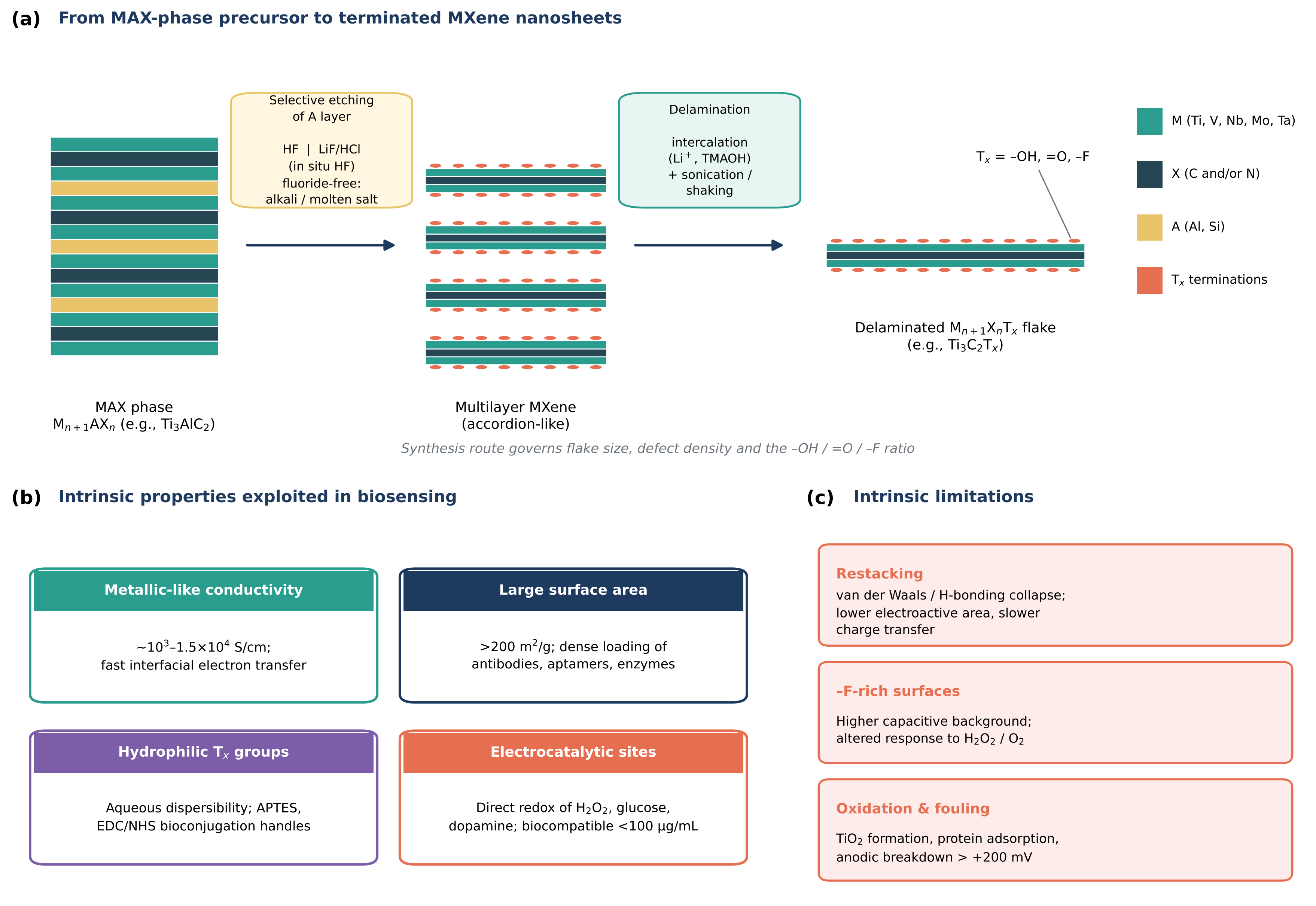
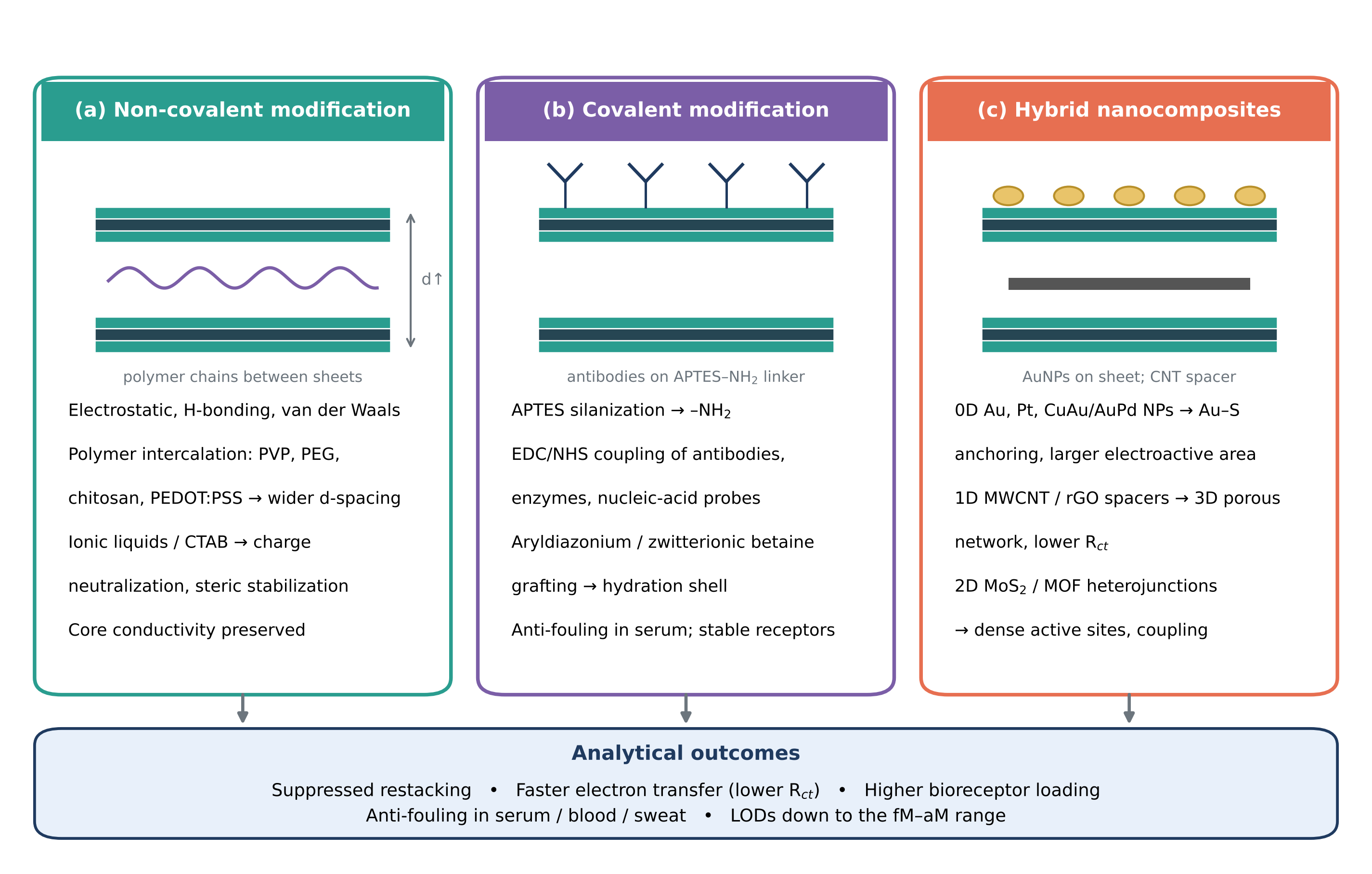
Article metrics
View details
0
Downloads
0
Citations
18
Views

View Dimensions


View Plumx


View Altmetric


0
Save
0
Citation
18
View
0
Share