1. Introduction
There is something quietly urgent about children's mental health that tends to get lost amid more visible public health priorities. A child who struggles silently with anxiety or depression rarely produces the kind of dramatic, attention-grabbing statistic that mobilizes funding or policy — and yet the consequences, left unaddressed, tend to compound over a lifetime, shaping social relationships, academic trajectories, and, eventually, a country's broader productivity and economic stability. Mentally healthy children, by most accounts, go on to build steadier families, do better in school, and participate more fully in their communities. The reverse is also true, if less often said aloud: family strain, difficult living environments, and unsupportive educational settings can leave psychiatric footprints that persist well into adulthood, and a great many of these cases are never formally recognized, let alone treated.
Bangladesh illustrates this gap starkly. Despite what appears to be a substantial burden of childhood mental health difficulty, the issue remains, for lack of a better phrase, under-prioritized nationally. Meanwhile, a number of higher-income countries have taken a rather different path, actively researching and building games around secific mental health conditions, to the point that psychiatrists in some of these settings have begun incorporating such games into standard treatment protocols. That contrast — games as an established clinical tool in one context, and mental health services that are simply hard to reach in another — is really the starting point for this review.
It would be a mistake, of course, to treat games as uniformly beneficial. Whether playing games helps or harms a child's mental state seems to depend heavily on how much time is spent playing and, perhaps more importantly, on what is actually being played. This ambiguity is precisely why a growing body of researchers has begun asking a more targeted question: not simply whether games are good or bad, but whether particular games, designed or repurposed with specific therapeutic aims, can meaningfully treat particular mental health conditions.
Video games, whatever their reputation, are cognitively demanding in ways that are easy to underestimate. Titles built around strategy, memory, or problem-solving exercise the same mental faculties that more traditional “brain training” activities target, and there is a reasonable case — even if it sounds almost too simple to be true — that regularly playing a handful of such games could help keep the mind active and, over time, guard somewhat against cognitive decline. Chess remains perhaps the clearest example: its demands on strategic foresight are well documented, and regular practice appears to sharpen exactly the kind of thinking it draws on. Sudoku occupies similar territory today, requiring sustained logical reasoning without necessarily looking like “therapy” to the person playing it. Interestingly, some online multiplayer games seem to serve an additional, somewhat unexpected function: they offer a low-pressure social channel for children who struggle with social anxiety, a role quite different from the purely cognitive exercise that games like chess and Sudoku provide.
Several converging social trends appear to be driving a rise in childhood mental health difficulty more broadly — the growth of nuclear (as opposed to extended) family structures, both parents working outside the home, and, somewhat more diffusely, fewer opportunities for children to simply play or talk things through with peers. In Bangladesh specifically, awareness of children's mental health needs remains limited, particularly outside urban centers, and treatment or guidance services are concentrated heavily in Dhaka, leaving rural families with comparatively few options. The net effect is a substantial number of children whose difficulties go unaddressed not for lack of concern, necessarily, but for lack of accessible pathways to help.
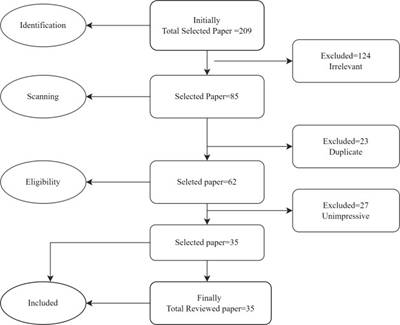
This review is organized around a fairly practical aim: to introduce parents, educators, and clinicians to applied games as a treatment avenue that does double duty — offering genuine entertainment value while also engaging a child's capacity to think, strategize, and recall information. One appeal of this approach is that it is not narrowly therapeutic; games that support mental health treatment in clinical populations can, in principle, also benefit children without diagnosed conditions who simply want to keep their minds sharp and, perhaps, reduce their own future risk. By systematically reviewing the existing literature on games and mental health treatment, we hope to make it somewhat easier for readers to identify which specific games might suit which specific needs.
A reasonably diverse literature has begun to accumulate here, spanning several distinct game formats. Tablet-based cognitive and socio-emotional games have been evaluated in resource-constrained educational settings: Rojas-Barahona et al. (2022), for instance, tested a tablet game across sixteen schools serving socioeconomically disadvantaged preschoolers in Chile, assessing outcomes across early literacy, pre-numeracy, cognitive skills, socio-emotional recognition, and mental health symptoms. Narrative-based emotion-regulation games have also drawn attention: David and Magurean (2022) evaluated the REThink game, in which children aged 10 to 16 practiced rapidly identifying happy faces among angry ones, and found modestly faster recovery from dysfunctional negative emotions relative to comparison conditions. Kowal et al. (2021) took a broader, narrative-review approach, surveying commercial titles — Portal 2, World of Warcraft, Pokémon, Final Fantasy, Mario Kart, Candy Crush, Angry Birds, and Boson X among them — for their effects on depressive symptoms and cognitive outcomes, while noting that The Magic Marker, MindLight, and Max appeared specifically to reduce social anxiety.
Physically active games have their own evidence base. Santos et al. (2021) synthesized 17 reviews and meta-analyses examining active video games (AVGs) such as the Wii Balance, Aerobics, Boxing, Golf, Tennis, and Basketball titles, reporting benefits not only for physical fitness — energy expenditure, oxygen intake, heart rate — but also for socializing and self-esteem. Virtual reality has been evaluated somewhat more cautiously: Halldorsson et al. (2021) reviewed VR and applied-game interventions for children and adolescents under 18, finding that applied games generally outperformed VR specifically for anxiety symptoms, with VR showing comparatively limited effect on anxiety and fear outcomes. Head-to-head comparisons with established therapy exist as well: Schoneveld et al. (2020) compared cognitive behavioral therapy against the applied game MindLight over a six-week course, finding CBT somewhat stronger for externalizing symptoms (aggression, hyperactivity, concentration difficulty) but MindLight roughly comparable for internalizing symptoms such as anxiety and low self-efficacy. Kuzu and Durna (2020) conducted a meta-analysis spanning ages 7 to 80, ultimately recommending SPARX for depression, Tetris for post-traumatic stress symptoms, Let's Face It! and the Junior Detective Training Program for autism spectrum disorder, Braingame Brian for ADHD, Lumosity and path-finding tasks for general cognitive functioning, and Guardian Angel for alcohol use disorder. A broader industry perspective, offered by the Financial Times (2019), concluded that exergames suit behavioral activation and social engagement, VR suits exposure-based therapy, CBT- and positive-psychology-based serious games suit structured psychoeducation, and biofeedback games suit relaxation training.
Taken together, this literature suggests that applied games occupy a genuinely distinct niche relative to both conventional entertainment gaming and conventional clinical treatment — neither purely recreational nor purely medical, but something in between that borrows credibility and evidence from both. What remains less clear, and what this review sets out to examine more systematically, is which specific game formats work best for which specific conditions, how strong the underlying evidence actually is, and what a scalable, low-resource-appropriate application of this research might look like — a question of particular relevance in settings such as Bangladesh, where conventional mental health infrastructure remains thin.