Microbial Bioactives

Microbial Bioactives | Online ISSN 2209-2161
402
Citations
321.7k
Views
188
Articles
Your new experience awaits. Try the new design now and help us make it even better
Switch to the new experience
Figures and Tables
REVIEWS   (Open Access)

Last-Resort Antibiotic Resistance: Mechanisms, Environmental Spread, and Detection Tools — A Narrative Review

Md Javed Alam 1*, Afia Ibnath 2

+ Author Affiliations

Microbial Bioactives 9 (1) 1-8 https://doi.org/10.25163/microbbioacts.9110891

Submitted: 08 June 2026 Revised: 13 August 2026  Published: 25 August 2026 


Abstract

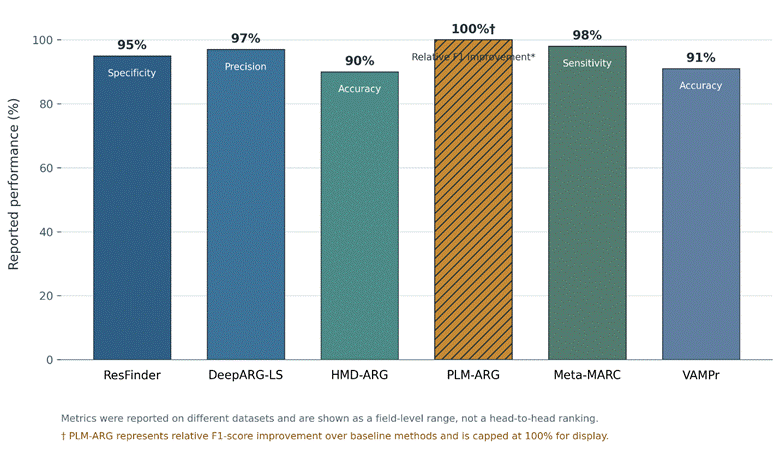
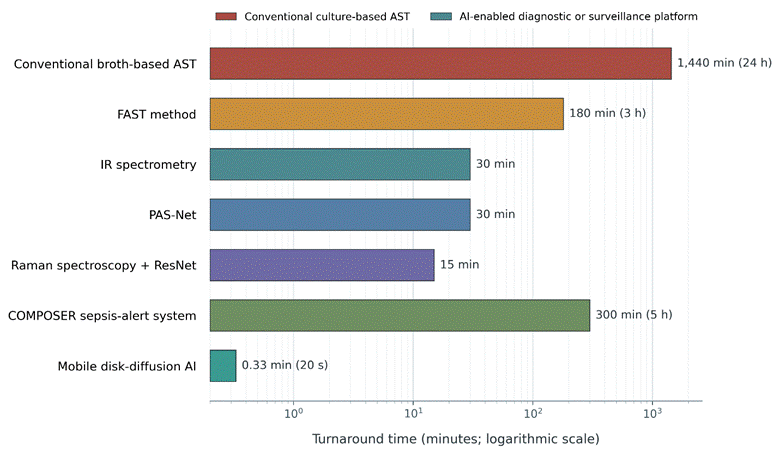
Background: Antimicrobial resistance (AMR) has narrowed the antibiotic arsenal for critically ill patients to a shrinking set of last-resort agents — polymyxins, carbapenems, glycopeptides, oxazolidinones, and glycylcyclines — and even these are now eroding under sustained selective pressure (Wahnou et al., 2026). Whether artificial intelligence (AI) can meaningfully close the gap between the emergence of resistance and its clinical recognition remains, we think, an open and worthwhile question.Methods: We conducted a narrative literature review of peer-reviewed articles, indexed preprints, and surveillance reports published between 2007 and 2026, retrieved from PubMed, Scopus, and Google Scholar using structured keyword combinations and supplemented by hand-searching of reference lists.Results: Resistance to last-resort agents arises through convergent mechanisms — mcr-mediated colistin resistance, carbapenemase production, van-gene peptidoglycan remodeling, and efflux-driven tigecycline resistance — disseminated via horizontal gene transfer across clinical, agricultural, and environmental reservoirs (Solanki & Kumar Das, 2024). AI-based annotation tools such as DeepARG and PLM-ARG now identify divergent resistance genes with precision exceeding 97% (Arango-Argoty et al., 2018; Wu et al., 2023), while optical and microfluidic platforms compress susceptibility testing from 24–72 hours to under 30 minutes in several validated systems (Liao et al., 2025). Generative models have also identified candidate antimicrobials, including halicin and abaucin (Bagdad & Miteva, 2024).Conclusion: AI is accelerating both detection and discovery, but database bias, limited interpretability, and pharmacokinetic translation failure remain substantial barriers. Integrating environmental metagenomic surveillance with clinical decision support, under a coordinated One Health framework, appears to be the most promising path toward preserving last-resort antibiotic efficacy.

Keywords: antimicrobial resistance; last-resort antibiotics; horizontal gene transfer; artificial intelligence; One Health surveillance

References


Abavisani, M., Khoshrou, A., Karbas Foroushan, S., & Sahebkar, A. (2024). Chatting with artificial intelligence to combat antibiotic resistance: Opportunities and challenges. Current Research in Biotechnology, 7, 100197. https://doi.org/10.1016/j.crbiot.2024.100197

Alem, K. (2025). Environmental antimicrobial resistance and its drivers: A potential threat to public health. MicrobiologyOpen, 14(5), e70067. https://doi.org/10.1002/mbo3.70067

Arango-Argoty, G., Garner, E., Pruden, A., Heath, L. S., Vikesland, P., & Zhang, L. (2018). DeepARG: A deep learning approach for predicting antibiotic resistance genes from metagenomic data. Microbiome, 6(1), 23. https://doi.org/10.1186/s40168-018-0401-z

Arredondo-Alonso, S., Rogers, M. R., Braat, J. C., Verschuuren, T. D., Top, J., Corander, J., Apweiler, R., & Schürch, A. C. (2018). mlplasmids: A user-friendly tool to predict plasmid- and chromosome-derived sequences for single species. Microbial Genomics, 4(11), e000224. https://doi.org/10.1099/mgen.0.000224

Bagdad, Y., & Miteva, M. A. (2024). Recent applications of artificial intelligence in discovery of new antibacterial agents. Advances and Applications in Bioinformatics and Chemistry, 17, 139–157. https://doi.org/10.2147/AABC.S484321

Branda, F., & Scarpa, F. (2024). Implications of artificial intelligence in addressing antimicrobial resistance: Innovations, global challenges, and healthcare's future. Antibiotics, 13(6), 502. https://doi.org/10.3390/antibiotics13060502

Cunha-Ferreira, L., Krüger, R. H., & Kapinusova, G. (2025). Antibiotic resistance, bioprospecting, and the role of artificial intelligence in the modern pipeline. Environmental Microbiology Reports, 17(2), e70267. https://doi.org/10.1111/1758-2229.70267

Dong, Y., Quan, H., Ma, C., Shan, L., & Deng, L. (2024). TGC-ARG: Anticipating antibiotic resistance via transformer-based modeling and contrastive learning. International Journal of Molecular Sciences, 25(13), 7228. https://doi.org/10.3390/ijms25137228

Gupta, R., Singh, P., Ravi, K., Abomughaid, M. M., Lakhanpal, S., Sharma, R., Kumar, N., & Jha, N. K. (2026). In silico drug discovery pipelines targeting antibiotic resistance: From genomes to leads. Frontiers in Bioinformatics, 6, 1839606. https://doi.org/10.3389/fbinf.2026.1839606

Hussain, A., Najeeb, A., & Ali, S. A. (2025). Antimicrobial resistance: A modern plague. In AI-Driven Breakthroughs in Antimicrobial Resistance (pp. 27–74). IGI Global. https://doi.org/10.4018/979-8-3693-7550-1.ch002

Inamdar, A., Beeraka, N. M., Vikhram, H. P. R., Gurupadayya, B., Sanathan, S. R., Prashant, A., Kumar, T. P., Nikolenko, V. N., Reddy, Y. P., Kandula, D. R., & Basappa, B. (2026). Next-generation hybrid bioanalytical platforms and clinical integration of TDM technologies for precision monitoring to optimize last-resort antibiotic therapy. Frontiers in Pharmacology, 17, 1761582. https://doi.org/10.3389/fphar.2026.1761582

Inglis, T. J. J., Paton, T. F., Kopczyk, M. K., Mulroney, K. T., & Carson, C. F. (2020). Same-day antimicrobial susceptibility test using acoustic-enhanced flow cytometry visualized with supervised machine learning. Journal of Medical Microbiology, 69(5), 657–669. https://doi.org/10.1099/jmm.0.001092

Krawczyk, P., Lipinski, L., & Dziembowski, A. (2018). PlasFlow: Predicting plasmid sequences in metagenomic data using genome signatures. Nucleic Acids Research, 46(6), e35. https://doi.org/10.1093/nar/gkx1321

Lakin, S. M., Kuhnle, A., Alipanahi, B., Noyes, N. R., Dean, C. J., Muggli, M. D., & Zhang, L. (2019). Hierarchical hidden Markov models enable accurate and diverse detection of antimicrobial resistance sequences. Communications Biology, 2(1), 294. https://doi.org/10.1038/s42003-019-0545-9

Lechowicz, L., Urbaniak, M., Adamus-Bialek, W., & Kaca, W. (2013). The use of infrared spectroscopy and artificial neural networks for detection of uropathogenic Escherichia coli strains' susceptibility to cephalothin. Acta Biochimica Polonica, 60(4), 713–718. https://doi.org/10.18388/abp.2013_2039

Legba, B., Satola, S. W., Read, T. D., & de Abreu, V. (2026a). Genomic prediction of antimicrobial resistance patterns: Opportunities, validation, and clinical translation in Acinetobacter baumannii. Journal of Clinical Microbiology, 64(1), e01805-25. https://doi.org/10.1128/JCM.01805-25

Legba, B. B., Dube, S., Meštrovic, T., Dashnyam, K., Saktiawati, A. M. I., Maurelli, F., Matsuyama, R., Dougnon, V., & Enany, S. (2026b). Sepsis early warning and AI application in infection control and hospital surveillance: A systematic review. Journal of Medical Systems, 48(1), 71. https://doi.org/10.1007/s10916-024-02089-5

Li, Y., Xu, Z., Han, W., Cao, H., Umarov, R., Yan, A., Arango-Argoty, G., & Zhang, L. (2021). HMD-ARG: Hierarchical multi-task deep learning for annotating antibiotic resistance genes. Microbiome, 9(1), 40. https://doi.org/10.1186/s40168-021-01002-3

Liao, H., Xie, L., Zhang, N., Lu, J., & Zhang, J. (2025). Advancements in AI-driven drug sensitivity testing research. Frontiers in Cellular and Infection Microbiology, 15, 1560569. https://doi.org/10.3389/fcimb.2025.1560569

Liu, G., Catacutan, D. B., Rathod, K., Swanson, K., Jin, W., Mohammed, J. C., Chiappino-Pepe, A., Syed, S. A., Fragis, M., Rachwalski, K., & Collins, J. J. (2023). Deep learning-guided discovery of an antibiotic targeting Acinetobacter baumannii. Nature Chemical Biology, 19(11), 1342–1350. https://doi.org/10.1038/s41589-023-01349-8

Lu, J., Chen, J., Liu, C., Zeng, Y., Sun, Q., Li, J., Shen, Z., Chen, S., & Zhang, R. (2022). Identification of antibiotic resistance and virulence-encoding factors in Klebsiella pneumoniae by Raman spectroscopy and deep learning. Microbial Biotechnology, 15(4), 1270–1280. https://doi.org/10.1111/1751-7915.13977

Millar, B. C., Cates, M. J., Torrisi, M. S., Round, A. J., Warde, A., Lowery, C. J., & Moore, J. E. (2026). Antimicrobial resistance: The answers. British Journal of Biomedical Science, 83, 15559. https://doi.org/10.3389/bjbs.2026.15559

Mudenda, S., Hakayuwa, C. M., Lubanga, A. F., Kasanga, M., Daka, V., Salachi, K. I., Mwaba, M., Chileshe, C., Champo, M., Kamayani, M., Harawa, G., Bwanali, A., Sinyawa, T., Hangoma, J., Simweene, C., Kanaan, M. H. G., Mugenyi, N., Chizimu, J. Y., Mohamed, S., Mufwambi, W., & Muma, J. B. (2025). Global antimicrobial stewardship, surveillance, and infection prevention and control programs: Leveraging One Health, nanotechnology, and artificial intelligence to combat antimicrobial resistance in a climate-impacted world. Pharmacology & Pharmacy, 16(7), 197–291. https://doi.org/10.4236/pp.2025.167014

Olatunji, I., Bardaji, D. K. R., Miranda, R. R., Savka, M. A., & Hudson, A. O. (2024). Artificial intelligence tools for the identification of antibiotic resistance genes. Frontiers in Microbiology, 15, 1437602. https://doi.org/10.3389/fmicb.2024.1437602

Sertaz Islam, S. M., Chowdhury, M. N., Supty, S. I., Tanoy, N. M., Yadav, D. N., Roy, S., Riea, A. T. M., Obaydullah, M., Tasnim, Z., Zaman, M. S., Rahman, M. A., Sabuj, M. S. S., Islam, M. S., Hossain, M. A., Islam, M. S., & Akanda, M. R. (2026). Molecular and environmental drivers of antimicrobial resistance: A global review. Archives of Microbiology, 208, 544. https://doi.org/10.1007/s00203-026-05107-x

Solanki, R., & Kumar Das, S. (2024). Molecular and environmental drivers of antimicrobial resistance: Global epidemiological patterns, resistome dynamics, and One Health-based intervention strategies. Archives of Microbiology, 208, 544. https://doi.org/10.1007/s00203-024-04123-x

Stokes, J. M., Yang, K., Swanson, K., Jin, W., Cubillos-Ruiz, A., Donghia, N. M., MacNair, C. R., French, S., Carfrae, L. A., Bloom-Ackermann, Z., & Collins, J. J. (2020). A deep learning approach to antibiotic discovery. Cell, 180(4), 688–702. https://doi.org/10.1016/j.cell.2020.01.021

Wahnou, H., El Kebbaj, R., Demoré, B., & Limami, Y. (2026). Current state of the fight against antimicrobial resistance: What are the different strategies for tomorrow? Antibiotics, 15, 564. https://doi.org/10.3390/antibiotics15060564

Wong, F., Zheng, E. J., Valeri, J. A., Donghia, N. M., Anahtar, M. N., Omori, S., Li, A., Cubillos-Ruiz, A., Krishnan, A., Jin, W., & Collins, J. J. (2024). Discovery of a structural class of antibiotics with explainable deep learning. Nature, 626(7997), 177–185. https://doi.org/10.1038/s41586-023-06887-8

Wu, J., Ouyang, J., Qin, H., Zhou, J., Roberts, R., Siam, R., & Wu, Y. (2023). PLM-ARG: Antibiotic resistance gene identification using a pretrained protein language model. Bioinformatics, 39(10), btad690. https://doi.org/10.1093/bioinformatics/btad690

Zankari, E., Hasman, H., Cosentino, S., Vestergaard, M., Rasmussen, S., Lund, O., & Aarestrup, F. M. (2012). Identification of acquired antimicrobial resistance genes. Journal of Antimicrobial Chemotherapy, 67(11), 2640–2644. https://doi.org/10.1093/jac/dks261


Article metrics
View details
0
Downloads
0
Citations
8
Views

View Dimensions


View Plumx


View Altmetric


0
Save
0
Citation
8
View
0
Share