1. Introduction
It's tempting to open a cybersecurity paper with a jarring statistic — some number meant to manufacture urgency before the argument has even started. And in this particular field, the statistics are genuinely jarring: cybercrime is estimated to have cost the global economy over a trillion dollars in a single year (Ballard, 2021). But scale isn't really the interesting part here; shape is. Cyberattacks aren't one phenomenon wearing different masks. They range from indiscriminate, almost accidental probing to something far more deliberate — patient, well-funded, and purposeful — and it's that latter category this review is concerned with.
The internet's openness has always been something of a double-edged convenience. The same connectivity that lets an organization extend services to users anywhere in the world extends, in a kind of mirror image, an open invitation to anyone probing for a way in (Jouini & Rabai, 2019). As networks interlink further across cloud providers, partner organizations, and — increasingly — a sprawl of internet-connected devices whose security posture varies wildly (Brown et al., 2022), the practical boundary of what even counts as "inside" a system becomes harder to draw, and correspondingly harder to defend. This erosion of a clean perimeter is more or less exactly what advanced persistent threat (APT) actors are positioned to exploit.
Cyberattacks are conventionally split into two broad categories. Untargeted attacks are, in a sense, indifferent — the attacker casts a wide net, and whichever machines happen to be vulnerable become victims. Targeted attacks work differently: the attacker selects a specific organization and directs sustained effort toward it. APT sits within this second category, but represents, arguably, its more extreme and deliberate expression. The term rewards being taken apart. "Advanced" points to a willingness to vary technique rather than lean on a single static exploit. "Persistent" gestures at something more patient still — the attacker prefers to slip in quietly, remain embedded for as long as the objective requires, and avoid detection rather than force entry. "Threat" signals purposefulness, often backed by institutional or state sponsorship, and pursued through processes deliberate enough that researchers have begun modeling the attacker's strategic reasoning, not just their technical footprint (Ahmad et al., 2019; Beuhring & Salous, 2014).
Two incidents illustrate this better than any abstract definition could. The 2020 SolarWinds compromise embedded malicious code within a trusted software update pipeline, letting the intrusion spread quietly across thousands of downstream organizations before it was ever noticed (Alkhadra et al., 2021). Stuxnet, years earlier, demonstrated something arguably more unsettling still — that a sufficiently resourced actor could use these same patient, multi-stage techniques to reach into physical infrastructure and industrial control systems, not just data (Ahmad et al., 2024). Both cases point at the same underlying property: APT campaigns are designed from the outset to look, for as long as possible, like nothing at all.
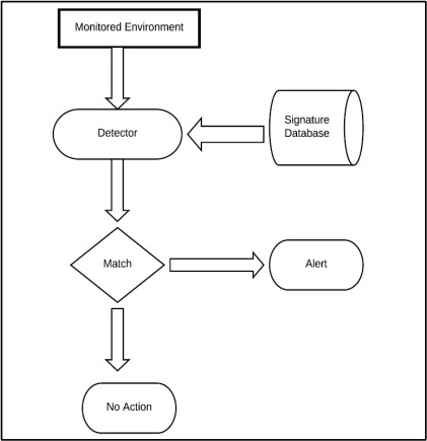
That combination — patience, funding, specificity — is precisely what makes APT campaigns so hard to counter with conventional tooling. Traditional intrusion detection systems were built largely on the premise that malicious traffic resembles previously observed malicious traffic, an assumption that holds up reasonably well against commodity malware but breaks down against actors who deliberately vary their tools to dodge that exact kind of recognition (Liu et al., 2019). This isn't a minor technical gap, and it's worth resisting the urge to describe it as one. It looks more like a structural mismatch between the defense model most organizations still lean on and the threat model APT actors actually present.
The consequences aren't abstract, either. Threat-intelligence reporting has tracked a steady rise in both the frequency and cost of significant intrusions, alongside a growing recognition that the most damaging incidents tend to involve sustained, targeted campaigns rather than single opportunistic breaches (Bell, 2019). Ransomware operators, for their part, increasingly borrow techniques — careful reconnaissance, staged deployment, evasive behavior — that overlap substantially with the APT playbook, which has the effect of blurring what used to be a cleaner line between "commodity" and "targeted" threats (Homayoun et al., 2017). Critical infrastructure sectors, where a successful compromise can translate into physical or operational disruption rather than mere data loss, have proven particularly attractive targets; the literature on supervisory control and data acquisition (SCADA) environments reflects a similar unease about how poorly legacy detection holds up against patient, well-resourced adversaries (Ghosh & Sampalli, 2019), a concern serious enough that dedicated cyber-range scenarios now exist specifically to train defenders against simulated APT campaigns (Bierwirth et al., 2024).
Detection research, in response, has leaned hard into machine learning over the past decade — and it's worth pausing on that shift, since it reshapes what "detection" even means in this context. Ensemble methods and selective kernel-learning approaches now catch subtler behavioral anomalies than earlier rule-based systems could manage (Liu et al., 2019), while feature-engineering pipelines built specifically for encrypted and tunneled traffic have improved classification of otherwise opaque network flows (Abbas et al., 2023). Purpose-built detectors have emerged for adjacent threat types too — automated feature extraction for distributed denial-of-service traffic (Abu Bakar et al., 2023), deep learning applied to phishing, which so often supplies the initial-compromise stage of an APT chain (Adebowale et al., 2023), and, more recently, generative models used not to detect attacks but to synthesize realistic attack data where real examples are too scarce or too sensitive to share (Agrawal et al., 2024). Deep architectures more broadly — convolutional networks, recurrent and LSTM-based sequence models capable of learning from the kind of long, drawn-out behavioral patterns an APT campaign produces — have become close to a default toolkit for this kind of work (Al-Selwi et al., 2024; Alzubaidi et al., 2021), with model-fusion approaches offering a further step toward flagging anomalies that any single architecture might miss on its own (AlDahoul et al., 2021).
That sophistication has introduced a problem of its own, though — the more accurate these models become, the less legible their reasoning tends to be, and a genuinely opaque detector is a hard thing to trust in an environment where a missed detection has real operational consequences. Explainable AI has emerged largely in response to that tension, and the surrounding literature has grown substantial enough to warrant its own systematic reviews (Ali et al., 2023; Angelov et al., 2021). Some of that work is domain-general — layer-wise relevance propagation for tracing how a classifier reaches its decision (Bach et al., 2015), Shapley-value methods for attributing an anomaly score back to the input features that drove it (Antwarg et al., 2021), or systematic comparison of perturbation-based saliency techniques (Brunke et al., 2020) — while other strands apply directly to network security, using explainability methods to make intrusion-detection output auditable rather than opaque (Barnard et al., 2022). Even fields as distant as clinical medicine, where interpretability carries obvious stakes of its own, have converged on broadly similar interpretability techniques (Band et al., 2023), which is a reasonably strong signal that this isn't a security-specific fad so much as a genuine gap in how machine learning is currently deployed.
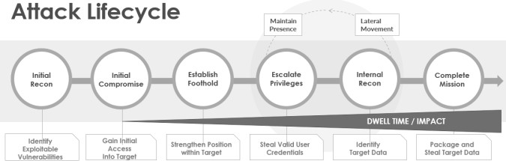
Given all this, the aim of the present review is a fairly modest one — not to propose a new detection algorithm, but to take stock of how APT campaigns actually unfold, how existing detection paradigms (both classical and learning-based) hold up against them, and where the harder, still largely unresolved problems remain. The paper proceeds roughly in step with the attacker's own process.
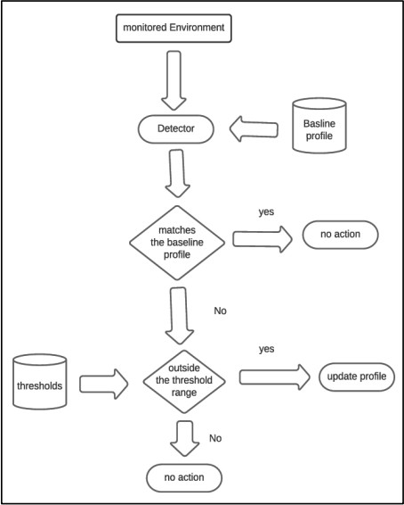
None of this is meant to suggest the field has stood still. Detection research has grown considerably more sophisticated, and industry frameworks have pushed organizations toward combining network-, payload-, and endpoint-level visibility rather than betting everything on a single vantage point (Gartner, 2013). Still, and this is more or less the throughline of the review that follows, these advances — whether classical signature matching, statistical anomaly detection, or the newer wave of deep and explainable learning models (Bodström & Hämäläinen, 2019) — have tended to sharpen individual detection techniques without fully resolving the deeper structural problem underneath them: an APT attack is not one event but a loosely connected sequence of them, and detecting each stage in isolation is a rather different task from recognizing the campaign as a whole.