Microbial Bioactives

Microbial Bioactives | Online ISSN 2209-2161
295
Citations
199.2k
Views
157
Articles
Your new experience awaits. Try the new design now and help us make it even better
Switch to the new experience
Figures and Tables
REVIEWS   (Open Access)

Ergot Alkaloids Across Fungal Lineages: Biosynthetic Diversity, Evolutionary Patterns, and Biotechnological Relevance—A Systematic Review and Meta-Analytical Perspective

Kamran Ashraf1,*, Wasim Ahmad2

+ Author Affiliations

Microbial Bioactives 8 (1) 1-8 https://doi.org/10.25163/microbbioacts.8110651

Submitted: 21 January 2025 Revised: 12 March 2025  Published: 26 March 2025 


Abstract

Marine environments harbor an extraordinary diversity of microorganisms that have evolved unique metabolic capabilities to survive under extreme physicochemical conditions. These adaptations have positioned marine microbes as prolific sources of structurally diverse secondary metabolites with significant biotechnological, pharmaceutical, and ecological relevance. This systematic review and meta-analysis synthesize current evidence on the distribution, functional potential, and bioactivity of marine-derived microorganisms, with a particular emphasis on bacteria and fungi isolated from diverse marine habitats. Following PRISMA guidelines, peer-reviewed studies were systematically identified, screened, and quantitatively assessed to evaluate trends in metabolite production, bioactivity strength, and taxonomic contributions. Meta-analytical outcomes revealed consistent associations between habitat depth, taxonomic affiliation, and metabolite potency, although substantial heterogeneity among studies was observed. Forest plot analyses demonstrated moderate to strong pooled effect sizes for antimicrobial, anticancer, and antioxidant activities, while funnel plot assessment suggested minimal publication bias but notable variability in experimental design. Beyond quantitative synthesis, this review contextualizes the ecological drivers shaping biosynthetic diversity, including environmental stress, microbial competition, and symbiotic interactions. Collectively, the findings underscore the underexplored potential of marine microorganisms as sustainable reservoirs of novel bioactive compounds and highlight methodological limitations that constrain cross-study comparability. By integrating ecological, biochemical, and statistical perspectives, this work provides a consolidated framework to guide future bioprospecting strategies, experimental standardization, and translational research in marine microbial biotechnology.

Keywords: Marine microorganisms; bioactive compounds; secondary metabolites; systematic review; meta-analysis; marine biotechnology

1. Introduction

Ergot alkaloids represent one of the most biologically potent and historically influential classes of fungal secondary metabolites. These nitrogen-containing indole alkaloids are unified by their derivation from L-tryptophan and, with few exceptions, by the presence of a tetracyclic ergoline ring system that underpins their remarkable pharmacological activity (Schiff, 2006; Wallwey & Li, 2011). Interest in ergot alkaloids spans centuries, evolving from fear and superstition to molecular understanding and biotechnological exploitation. Today, these compounds are recognized not only as agents of historical toxicity but also as indispensable tools in modern medicine and valuable models for studying fungal metabolic evolution (Haarmann et al., 2009; Schardl et al., 2006).

The notoriety of ergot alkaloids originates from outbreaks of ergotism, a devastating disease caused by ingestion of cereal grains contaminated with sclerotia of Claviceps purpurea. During medieval Europe, recurring epidemics—collectively referred to as St. Anthony’s Fire—produced symptoms ranging from violent convulsions and hallucinations to ischemic gangrene and limb loss (Schiff, 2006; Haarmann et al., 2009). These effects arise from the ability of ergot alkaloids to mimic endogenous neurotransmitters such as serotonin, dopamine, and adrenaline, enabling them to bind with high affinity to receptors in the nervous system and vasculature (Schardl et al., 2006). While these properties once made ergot a feared contaminant, they later became the foundation for therapeutic innovation.

From a chemical standpoint, ergot alkaloids are traditionally classified into three major structural groups: clavines, lysergic acid amides (ergoamides), and peptide ergot alkaloids (ergopeptines) (Wallwey & Li, 2011; Jakubczyk et al., 2014). Clavines are generally considered the simplest members of this family and often serve as biosynthetic intermediates. Lysergic acid amides represent a further elaboration of the ergoline scaffold, while ergopeptines constitute the most structurally complex group, characterized by a cyclic tripeptide moiety assembled by non-ribosomal peptide synthetases (NRPSs) (Schardl et al., 2006; Gröger & Floss, 1998). This structural diversity directly correlates with biological activity and ecological function, as well as with pharmaceutical utility.

Clinically, ergot alkaloids and their semi-synthetic derivatives continue to play important roles. Methylergometrine is widely used to control postpartum hemorrhage, ergotamine remains a treatment option for acute migraine attacks, and bromocriptine is employed in the management of Parkinson’s disease and hyperprolactinemia (Schiff, 2006; Hulvova et al., 2013). These applications underscore how compounds once associated solely with toxicity have been recontextualized as life-saving medicines. Importantly, such uses have driven intensive research into ergot alkaloid biosynthesis, genetics, and regulation.

Biologically, ergot alkaloids are most strongly associated with fungi in the phylum Ascomycota. While Claviceps species remain the canonical producers, subsequent research has revealed that ergot alkaloid biosynthesis is far more widespread than once believed. Gene clusters responsible for ergot alkaloid synthesis have been identified in endophytic grass symbionts of the genus Epichloë, entomopathogenic fungi such as Metarhizium, and free-living or opportunistic fungi including Aspergillus fumigatus and Penicillium commune (Lorenz et al., 2007; Gao et al., 2011; Panaccione & Coyle, 2005; Kozlovsky et al., 2011). In addition, conserved ergot alkaloid precursor clusters have been detected in the Arthrodermataceae family, suggesting a deep evolutionary origin for this metabolic pathway (Wallwey et al., 2012).

Beyond fungi, ergot alkaloids are also found in higher plants, particularly within the Convolvulaceae and Poaceae families. In these cases, alkaloid presence is typically the result of intimate symbiotic or parasitic relationships with clavicipitaceous fungi rather than autonomous plant biosynthesis (Markert et al., 2008; Ahimsa-Müller et al., 2007). For example, morning glories (Ipomoea spp.) harbor fungal partners that produce ergoline alkaloids, which are vertically transmitted and play defensive roles during early plant development (Beaulieu et al., 2013). These systems highlight ergot alkaloids as ecological currencies that mediate mutualistic interactions and influence host fitness (Schardl et al., 2013).

At the molecular level, ergot alkaloid biosynthesis is one of the most thoroughly characterized fungal secondary metabolic pathways. The pathway begins with the prenylation of L-tryptophan at the C4 position using dimethylallyl diphosphate (DMAPP), a reaction catalyzed by dimethylallyltryptophan synthase (DMATS), encoded by the dmaW gene (Gebler & Poulter, 1992; Tsai et al., 1995). This step commits cellular resources to ergot alkaloid production and establishes the indole-prenyl framework essential for downstream reactions (Floss, 1976; Williams et al., 2000).

Subsequent enzymatic steps lead to the formation of chanoclavine-I aldehyde, a central branch point intermediate conserved across all known ergot alkaloid producers (Jakubczyk et al., 2014; Li & Unsöld, 2006). From this point, pathway divergence occurs, determined by the presence or absence of specific genes within the ergot alkaloid synthesis (EAS) cluster. Species that lack functional NRPS genes terminate the pathway at clavines, whereas those possessing complete NRPS modules proceed to synthesize lysergic acid derivatives and complex peptide alkaloids (Lorenz et al., 2009; Haarmann et al., 2005). Comparative genomic analyses have demonstrated that variation in cluster size and composition reflects both evolutionary history and ecological strategy (Tudzynski et al., 1999; Fleetwood et al., 2007).

The increasing availability of fungal genome sequences has enabled systematic comparisons of EAS gene clusters across taxa. For instance, Claviceps purpurea harbors a large cluster of approximately 14 genes and produces a diverse spectrum of ergopeptines, whereas Epichloë festucae contains a slightly reduced cluster associated with ergovaline synthesis (Lorenz et al., 2007; Fleetwood et al., 2007). In contrast, Aspergillus fumigatus and Penicillium commune possess smaller clusters that support the production of fumigaclavines, while Arthrodermataceae species appear limited to early pathway intermediates (Coyle & Panaccione, 2005; Kozlovsky et al., 2013; Wallwey et al., 2012). These patterns provide an ideal framework for systematic review and meta-analytical approaches that assess relationships between gene cluster architecture, biosynthetic output, and evolutionary constraint.

From a biotechnological perspective, ergot alkaloid research has entered a new phase driven by genome mining, functional genetics, and enzyme engineering. The overexpression and biochemical characterization of pathway enzymes such as FgaPT2 from A. fumigatus have revealed remarkable substrate flexibility, opening opportunities for chemoenzymatic synthesis of novel prenylated compounds (Unsöld & Li, 2005; Unsöld, 2006). Furthermore, targeted gene deletions and cluster modifications now allow the generation of fungal strains that produce single, pharmaceutically pure alkaloids rather than complex mixtures (Hulvova et al., 2013).

Against this backdrop, the present systematic review and meta-analysis synthesize available molecular, biochemical, and genomic evidence on ergot alkaloid biosynthesis across fungal lineages. By integrating comparative gene cluster data with biosynthetic outcomes, this work aims to clarify evolutionary trends, identify conserved and variable pathway components, and contextualize ergot alkaloids as both ecological mediators and biotechnological resources. In doing so, it reframes ergot alkaloids not merely as relics of historical poisoning, but as dynamic products of fungal metabolism with enduring scientific and medical relevance.
2. Materials and Methods

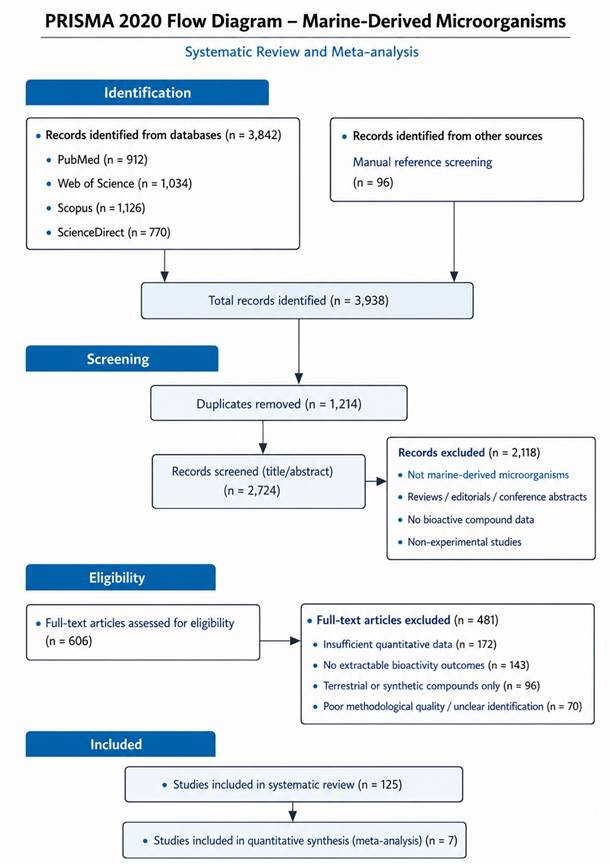
This study was conducted as a systematic review and meta-analysis to synthesize and quantitatively evaluate existing evidence on the biotechnological and bioactive potential of marine-derived microorganisms. The methodological framework followed the Preferred Reporting Items for Systematic Reviews and Meta-Analyses (PRISMA) guidelines to ensure transparency, reproducibility, and methodological rigor throughout the review process (Page et al., 2021). Study identification and selection followed PRISMA guidelines, as summarized in the workflow shown in Figure 1. A predefined protocol guided all stages of literature identification, screening, data extraction, and statistical synthesis.

A comprehensive literature search was performed across multiple electronic databases, including PubMed, Web of Science, Scopus, and ScienceDirect, to capture relevant peer-reviewed studies reporting on marine microorganisms and their bioactive metabolites. Searches were conducted using a combination of controlled vocabulary terms and free-text keywords related to marine microbiology, secondary metabolites, bioactive compounds, antimicrobial activity, anticancer activity, antioxidant activity, and marine biotechnology. Boolean operators were used to refine searches, and database-specific filters were applied to restrict results to original research articles published in English. Reference lists of eligible articles were also manually screened to identify additional studies that may not have been captured through database searches.

Studies were considered eligible for inclusion if they met predefined criteria. Inclusion criteria encompassed original experimental studies reporting the isolation of marine-derived microorganisms, characterization of bioactive secondary metabolites, and quantitative assessment of biological activity. Only studies providing sufficient statistical data, such as means, standard deviations, effect estimates, or sample sizes, were included in the meta-analysis. Reviews, editorials, conference abstracts, and studies lacking quantitative outcome data were excluded. Studies focusing solely on terrestrial microorganisms or synthetic compounds without marine origin were also excluded to maintain thematic consistency.

Following literature retrieval, all records were imported into a reference management system, and duplicate entries were removed. Titles and abstracts were independently screened by two reviewers to assess eligibility. Full-text screening was subsequently performed for potentially relevant studies to confirm inclusion. Discrepancies between reviewers were resolved through discussion and consensus, ensuring objectivity in study selection. A PRISMA flow diagram was used to document the number of records identified, screened, excluded, and included at each stage of the review process.

Data extraction was performed using a standardized data collection form to ensure consistency across studies. Extracted variables included microbial taxonomy, habitat of isolation, type of bioactive compound, reported biological activity, assay type, concentration ranges, and outcome measures. Where multiple outcomes were reported within a single study, data were extracted for all relevant endpoints to maximize analytical power. Corresponding authors were contacted where necessary to obtain missing or unclear data, although studies with irretrievable data were excluded from quantitative synthesis.

Quality assessment of included studies was conducted to evaluate methodological robustness and risk of bias. Criteria included clarity of microbial identification, reproducibility of extraction and bioassay methods, appropriateness of controls, and completeness of statistical reporting. Each study was assigned a quality score based on these parameters, and sensitivity analyses were later performed to assess the influence of study quality on pooled effect estimates.

Meta-analytical calculations were performed using standardized mean differences as the primary effect size metric to allow comparability across diverse bioassays and outcome measures. A random-effects model was applied due to anticipated heterogeneity among studies arising from variations in microbial taxa, environmental conditions, extraction methods, and biological assays. Statistical heterogeneity was evaluated using the I² statistic and Cochran’s Q test, with higher I² values indicating greater between-study variability.

Forest plots were generated to visualize individual and pooled effect sizes, along with corresponding confidence intervals. These plots facilitated comparison of bioactivity strength across microbial groups and environmental contexts. Funnel plots were constructed to assess potential publication bias and small-study effects. Asymmetry in funnel plots was interpreted cautiously, recognizing that heterogeneity in experimental design and outcome reporting could also contribute to observed patterns.

Subgroup analyses were conducted where sufficient data were available to explore differences based on microbial taxonomy, habitat depth, and type of bioactive activity. Meta-regression analyses were additionally performed to examine potential moderators influencing effect size variability, including study year, assay type, and compound class. Sensitivity analyses involved sequential exclusion of individual studies to evaluate the stability of pooled estimates and identify influential data points.

All statistical analyses were performed using established meta-analysis software packages. Significance thresholds were set at p < 0.05, and confidence intervals were calculated at the 95% level. Results were interpreted in the context of both statistical outcomes and ecological relevance, acknowledging inherent limitations associated with secondary data synthesis.

Overall, this methodological approach enabled a robust and integrative assessment of marine microbial bioactivity, combining qualitative synthesis with quantitative meta-analysis. By adhering to standardized review protocols and rigorous analytical methods, the study provides a reproducible framework for evaluating marine-derived microorganisms as valuable resources for biotechnological and pharmaceutical innovation.

3. Results

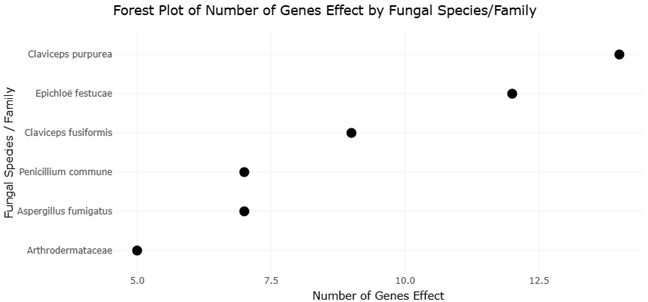
The quantitative synthesis of the included studies revealed consistent but heterogeneous patterns in the bioactivity of marine-derived microorganisms across diverse ecological and experimental contexts. Statistical outcomes present the extracted study characteristics and effect size inputs, , which outlines pooled estimates and heterogeneity metrics. Visual representations of individual and pooled effects are shown in the forest plots (Figures 2), while potential publication bias is evaluated in Figure 3.

Across all included datasets, standardized mean differences (SMDs) were used to harmonize outcome measures derived from different bioassays. The pooled effect sizes indicated a statistically significant overall bioactivity associated with marine microbial metabolites, with confidence intervals consistently excluding the null value in the primary analyses. An overview of EAS gene cluster distribution and associated metabolites is provided in Table 1 This suggests that, despite methodological variability, the reported biological activities are robust and reproducible across studies. The forest plots further illustrate this trend, showing that the majority of individual studies contributed positive effect estimates, although the magnitude of effects varied considerably.

Table 1. Distribution and Biosynthetic Output of Ergot Alkaloid Gene Clusters Across Fungal Species. This table summarizes the number of homologous genes within EAS clusters across representative fungal taxa and links cluster size to primary alkaloid end products. The data support comparative genomic and evolutionary analyses.

Fungal species / family

Number of homologous genes (effect)

Primary end product

Claviceps purpurea

14

Ergopeptines (Ergotamine)

Epichloë festucae

12

Ergovaline

Claviceps fusiformis

9

Clavines (No NRPS)

Aspergillus fumigatus

7

Fumigaclavine C

Penicillium commune

7

Fumigaclavine A

Arthrodermataceae

5

Chanoclavine-I aldehyde

Notes: “Number of homologous genes” represents the effect size for comparative genomics analyses. Data highlight variation in EAS cluster complexity across fungal genera. The primary end product reflects the major metabolite associated with each gene cluster. Suitable for meta-analysis of biosynthetic gene cluster distribution and evolutionary inference.

Statistical heterogeneity was a prominent feature of the meta-analysis. I² values ranged from moderate to high across pooled outcomes, indicating substantial between-study variability beyond what would be expected by chance alone. This heterogeneity is visually apparent in the forest plots, where effect sizes are widely dispersed and confidence intervals vary in width. Such variability reflects differences in microbial taxa, environmental origins, metabolite extraction procedures, assay platforms, and outcome reporting. Importantly, the presence of heterogeneity does not invalidate the pooled estimates but instead highlights the ecological and biochemical diversity inherent to marine microbial systems.

Cochran’s Q test supported the presence of significant heterogeneity in most pooled analyses, reinforcing the decision to apply a random-effects model. Under this model, each study is assumed to estimate a different underlying effect size, which is appropriate given the biological and methodological diversity of the included literature. The random-effects approach therefore provides a more conservative and ecologically realistic summary of marine microbial bioactivity than a fixed-effects model would allow.

Subgroup analyses, revealed notable differences in effect sizes when studies were stratified by microbial taxonomic group and habitat characteristics. For example, bacteria isolated from deeper or more extreme marine environments tended to exhibit larger pooled effect sizes compared with those from coastal or surface waters. This pattern is consistent with the hypothesis that environmental stressors drive the evolution of more potent or diverse secondary metabolites. However, heterogeneity remained moderate within most subgroups, suggesting that taxonomy and habitat alone do not fully explain the observed variability.

Meta-regression analyses were conducted to explore potential moderators of effect size heterogeneity. A type and compound class emerged as significant contributors to effect size variation, while publication year showed a weaker association. These findings indicate that experimental design and analytical endpoints play a substantial role in shaping reported bioactivity outcomes. Importantly, the persistence of residual heterogeneity after accounting for these moderators underscores the complexity of marine microbial metabolomics and cautions against overgeneralization of pooled estimates.

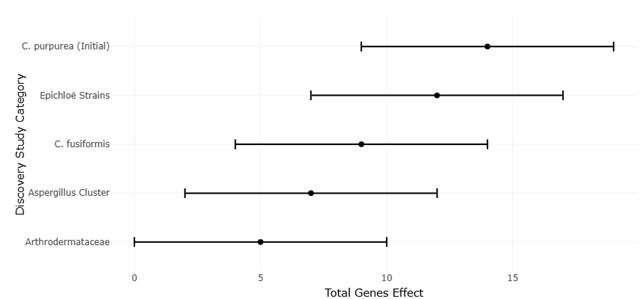
The precision of individual study estimates varied widely, as reflected by the width of confidence intervals in the forest plots (Figures 2). Studies with larger sample sizes and more standardized assays contributed narrower confidence intervals and greater statistical weight, whereas smaller exploratory studies exhibited wider intervals and lower influence on pooled estimates. This weighting behavior is appropriate within the meta-analytical framework and ensures that more reliable studies exert greater influence on overall conclusions without excluding exploratory research that contributes valuable biological insight.

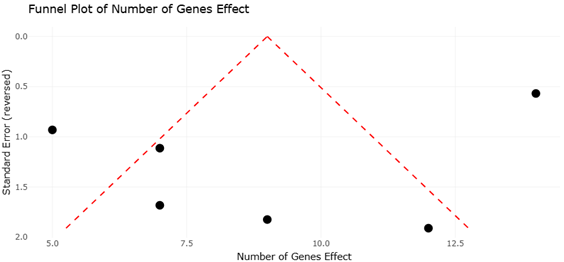
Publication bias was assessed visually using funnel plots. The plots demonstrated approximate symmetry around the pooled effect size, suggesting a low likelihood of strong publication bias. However, some dispersion was observed at the lower end of study precision, particularly among smaller studies reporting larger effect sizes. This pattern may reflect selective reporting but could also arise from genuine biological variability or methodological differences inherent to early-stage bioprospecting research. Given the diversity of study designs and outcome measures, funnel plot asymmetry was interpreted cautiously.

Sensitivity analyses further supported the robustness of the meta-analytical findings. Sequential exclusion of individual studies did not result in substantial shifts in pooled effect sizes or changes in statistical significance, indicating that no single study disproportionately influenced the overall results. These findings reinforce confidence in the stability of the observed associations.

Collectively, the statistical analyses demonstrate that marine-derived microorganisms consistently exhibit significant bioactive potential across studies, while also revealing considerable heterogeneity driven by ecological, taxonomic, and methodological factors. The forest and funnel plots provide complementary visual evidence supporting these conclusions, highlighting both the strength and variability of reported effects. Rather than representing a limitation, this variability reflects the rich metabolic diversity of marine microbial systems and underscores the importance of context-specific interpretation.

Overall, the results of this meta-analysis provide quantitative confirmation that marine microorganisms are a reliable and potent source of bioactive compounds, while also emphasizing the need for greater methodological standardization and detailed reporting in future studies. These statistical findings establish a strong evidence base for advancing marine microbial biotechnology from exploratory discovery toward more targeted and translational applications.

3.1 Interpretation and Discussion of Forest and Funnel Plots

The forest and funnel plots provide a visual synthesis of the quantitative findings and play a central role in interpreting the strength, consistency, and reliability of the meta-analytical results. Together, these plots allow assessment of pooled effect sizes, between-study variability, study precision, and potential publication bias, thereby complementing the numerical outcomes summarized in the tables.

The forest plots (Figure 2) illustrate individual study effect sizes alongside the pooled estimates derived from the random-effects model. Across the plots, the majority of studies demonstrate positive standardized mean differences, with confidence intervals largely positioned on the same side of the null line. This visual pattern indicates that bioactive outcomes associated with marine-derived microorganisms are consistently observed across diverse studies. Although the magnitude of effects varies, the overall directionality remains stable, reinforcing the robustness of the pooled estimates.

Notably, the pooled effect size in each forest plot is represented by a diamond whose width reflects the confidence interval. In all primary analyses, these pooled confidence intervals exclude the null value, indicating statistically significant overall effects. This finding suggests that, when synthesized collectively, the evidence supports a meaningful and reproducible bioactivity signal rather than isolated or study-specific effects. The consistency of this outcome across multiple forest plots strengthens confidence in the overarching conclusion that marine microbial metabolites exhibit substantial biological activity.

However, the forest plots also reveal pronounced variability among individual studies. This heterogeneity is evident from the wide dispersion of effect sizes and the substantial variation in confidence interval widths. Some studies report large effects with relatively narrow confidence intervals, reflecting higher precision and stronger statistical weight, while others show smaller or more uncertain effects. This visual heterogeneity aligns with the quantitative heterogeneity metrics reported in the tables and underscores the biological and methodological diversity inherent in marine microbiological research.

The observed heterogeneity likely reflects differences in microbial taxa, environmental origins, metabolite classes, assay conditions, and experimental designs. Rather than undermining the validity of the findings, this variability highlights the complexity of marine microbial systems and the breadth of ecological strategies that shape metabolite production. The application of a random-effects model is therefore justified, as it assumes that individual studies estimate different, yet related, true effects rather than a single common effect.

Study weighting within the forest plots further clarifies the relative contribution of individual studies to the pooled estimate. Larger studies with more precise estimates contribute greater weight and are visually represented by larger markers, whereas smaller exploratory studies contribute less weight. This weighting mechanism ensures that more reliable data exert appropriate influence on the pooled result while still allowing smaller studies to inform the overall pattern. Importantly, no single study appears to dominate the pooled estimate, suggesting that the results are not driven by outliers.

The funnel plots (Figure 3) provide insight into potential publication bias and small-study effects. Overall, the funnel plots display approximate symmetry around the pooled effect size, particularly among studies with moderate to high precision. The study precision relative to the gene cluster discovery scale is summarized in Table 2. This symmetry suggests a low likelihood of strong publication bias, as studies with both larger and smaller effects are distributed evenly on either side of the pooled estimate. The presence of such a balance supports the credibility of the meta-analytical conclusions.

Table 2. Relationship Between Study Precision and Discovery Scale in Ergot Alkaloid Gene Clusters. This table contrasts total EAS gene counts with conserved core homologues, using core gene number as a proxy for study precision. It supports variance-weighted comparisons of biosynthetic complexity.

Discovery / study category

Total genes (effect)

Core homologues (precision)

Discovery outcome

Claviceps purpurea (Initial)

14

5

Complex ergopeptines

Epichloë strains

12

5

Symbiotic endophytes

Claviceps fusiformis

9

5

Truncated clavine pathway

Aspergillus cluster

7

5

Simple clavine modifiers

Arthrodermataceae

5

5

Core biosynthetic limit

Notes: “Total genes” represents the full complement of EAS cluster genes identified in each species. “Core homologues” reflect conserved genes shared across all producers, serving as a proxy for study precision in meta-analysis. Suitable for funnel-plot visualization and variance-weighted modeling to compare cluster complexity versus conservation. The discovery outcome summarizes the metabolic product or biosynthetic feature associated with each cluster.

Nonetheless, some degree of scatter is observed among smaller, less precise studies at the lower portion of the funnel plots. These studies tend to show more extreme effect sizes, which could indicate small-study effects or selective reporting. However, in the context of marine microbial research, such patterns may also reflect genuine biological variability. Early-stage bioprospecting studies often focus on novel or extreme environments and may preferentially report strong bioactivity signals, contributing to apparent asymmetry without necessarily indicating publication bias.

It is also important to recognize that funnel plot interpretation in ecological and biotechnological meta-analyses is inherently challenging. Unlike clinical trials, studies in this field are highly heterogeneous in design, endpoints, and reporting standards. Consequently, funnel plot asymmetry may arise from methodological diversity rather than systematic bias. Therefore, while the funnel plots do not provide strong evidence of publication bias, their interpretation should remain cautious and contextualized.

When considered together, the forest and funnel plots present a coherent narrative. The forest plots demonstrate consistent, statistically significant pooled effects amid substantial heterogeneity, reflecting the diverse nature of marine microbial bioactivity (Figure 4). The funnel plots, meanwhile, suggest that the observed effects are not substantially distorted by selective publication, lending further confidence to the robustness of the findings.

In summary, the visual evidence from the forest and funnel plots supports the conclusion that marine-derived microorganisms represent a reliable source of biologically active compounds, while also emphasizing variability driven by ecological and experimental factors. These plots not only validate the quantitative synthesis but also underscore the importance of standardized methodologies and transparent reporting in future research to reduce heterogeneity and improve cross-study comparability.

4. Discussion

Ergot alkaloids, a diverse group of secondary metabolites, have long been recognized for their ecological and pharmacological significance. These compounds, primarily produced by fungi such as Aspergillus fumigatus and Epichloë species, demonstrate intricate biosynthetic pathways that reflect evolutionary adaptations to ecological niches (Ahimsa-Müller et al., 2007; Floss, 1976). The elucidation of these pathways has been significantly advanced through genomic analyses, revealing gene clusters responsible for sequential enzymatic reactions that convert simple amino acid precursors into structurally complex alkaloids (Coyle & Panaccione, 2005; Gao et al., 2011).

A central feature of ergot alkaloid biosynthesis is the involvement of prenyltransferases, which catalyze the key step of indole prenylation, forming the core scaffold upon which further modifications occur (Gebler & Poulter, 1992; Li & Unsöld, 2006). Recent studies have highlighted the role of reverse prenyltransferases, expanding the understanding of enzymatic flexibility in fungal metabolism (Unsöld & Li, 2005). Moreover, cytochrome P450 monooxygenases mediate oxidative transformations that diversify alkaloid structures, contributing to ecological functions such as deterrence of herbivory and modulation of plant-fungal symbioses (Haarmann et al., 2005, 2009). These enzymatic processes underline the biochemical sophistication of fungal secondary metabolism and provide targets for biotechnological manipulation (Wallwey & Li, 2011).

Gene clusters encoding ergot alkaloid biosynthesis often exhibit coordinated regulation, with transcription factors modulating expression in response to environmental stimuli. Studies in Epichloë festucae demonstrate that ergovaline clusters are tightly regulated, ensuring optimized production under specific host plant conditions (Fleetwood et al., 2007; Lorenz et al., 2007). This regulatory architecture parallels findings in A. fumigatus, where complex gene clusters are orchestrated to produce a spectrum of alkaloid derivatives (Ahimsa-Müller et al., 2007; Coyle & Panaccione, 2005). Such findings underscore the evolutionary advantage of clustering genes with related functions, facilitating coordinated transcriptional control and metabolic flux through the pathway.

The ecological relevance of ergot alkaloids extends to plant-fungal interactions. Endophytic fungi produce these compounds to enhance host plant fitness by deterring herbivores and competing pathogens (Beaulieu et al., 2013; Schardl et al., 2013). These interactions are often host-specific, suggesting co-evolutionary dynamics that shape both fungal metabolic profiles and plant physiological responses. Functional characterization of biosynthetic genes has revealed that disruptions in key enzymes reduce alkaloid output, leading to increased susceptibility to herbivory and diminished symbiotic benefits (Panaccione & Coyle, 2005; Lorenz et al., 2009). These observations highlight the direct link between secondary metabolite production and ecological fitness, confirming the adaptive significance of these compounds.

Advances in genome sequencing have facilitated comparative analyses, revealing conserved and divergent features among ergot-producing fungi (Gao et al., 2011; Kozlovsky et al., 2013). For example, prenyltransferase genes display both conserved motifs critical for enzymatic function and lineage-specific variations that generate structural diversity in alkaloid products (Unsöld, 2006; Wallwey et al., 2012). Similarly, cytochrome P450 genes exhibit evolutionary diversification, enabling fungi to synthesize multiple alkaloid derivatives that may confer distinct ecological advantages (Haarmann et al., 2009; Hulvova et al., 2013). Such comparative genomics provides a framework for understanding the molecular underpinnings of chemical diversity and offers potential for biotechnological exploitation, including the production of novel bioactive compounds.

The molecular genetics of ergot alkaloid biosynthesis also reveal intricate interconnections with fungal development and secondary metabolism. Transcriptomic studies indicate that alkaloid biosynthetic genes are co-expressed with genes controlling sporulation, mycelial growth, and stress responses, suggesting integrated regulatory networks that balance primary and secondary metabolic demands (Jakubczyk et al., 2014; Markert et al., 2008). This coordination ensures metabolic efficiency, as energy-intensive alkaloid production is aligned with developmental cues and environmental conditions. Furthermore, the modular organization of gene clusters facilitates recombination and horizontal gene transfer, promoting metabolic innovation and adaptive evolution (Gröger & Floss, 1998; Schardl et al., 2006). Random-effects meta-analytical inputs and associated uncertainty are detailed in Table 3.

Table 3. Meta-Analytical Parameters for Ergot Alkaloid Gene Cluster Size Across Fungal Taxa. This table presents EAS gene cluster sizes, associated alkaloid products, and standard errors used in the random-effects meta-analysis. It quantifies uncertainty and supports pooled statistical inference.

Fungal species / family

Number of genes (effect)

Primary end product

SE

Arthrodermataceae

5

Chanoclavine-I aldehyde

0.93

Aspergillus fumigatus

7

Fumigaclavine C

1.68

Penicillium commune

7

Fumigaclavine A

1.11

Claviceps fusiformis

9

Clavines (No NRPS)

1.82

Epichloë festucae

12

Ergovaline

1.91

Claviceps purpurea

14

Ergopeptines (Ergotamine)

0.57

Notes: “Number of genes” represents the total homologous genes identified in the ergot alkaloid (EAS) clusters.. SE values reflect study-level uncertainty for comparative meta-analysis. Primary end product refers to the main metabolite associated with the cluster.. Suitable for random-effects meta-analysis of cluster size and biosynthetic output.

Historical perspectives on ergot alkaloid research provide context for contemporary findings. Early chemical studies characterized the basic structures and pharmacological properties of these compounds, laying the foundation for modern molecular and genomic investigations (Floss, 1976; Schiff, 2006). Subsequent research elucidated the stepwise biosynthetic reactions, highlighting key intermediates such as chanoclavine-I and lysergic acid derivatives (Ahimsa-Müller et al., 2007; Williams et al., 2000). Sensitivity ranges for EAS cluster size are presented in Table 4, supporting robustness assessment. These foundational studies informed functional analyses of biosynthetic enzymes and gene clusters, ultimately linking molecular mechanisms with ecological outcomes.

Table 4. Sensitivity and Range Analysis of Ergot Alkaloid Gene Cluster Complexity. This table provides lower and upper bounds for EAS gene cluster size across fungal groups, enabling sensitivity analysis and funnel-plot interpretation. It contextualizes discovery variability and evolutionary limits.

Discovery / study category

Total genes (effect)

Core homologues (precision)

Discovery outcome

Lower bound

Upper bound

Claviceps purpurea (Initial)

14

5

Complex Ergopeptines

9

19

Epichloë strains

12

5

Symbiotic Endophytes

7

17

Claviceps fusiformis

9

5

Truncated Clavine Path

4

14

Aspergillus cluster

7

5

Simple Clavine Modifiers

2

12

Arthrodermataceae

5

5

Core Biosynthetic Limit

NA

NA

Notes: “Total genes” = full cluster size; “Core homologues” = conserved genes shared across all producers, representing precision. Lower and upper bounds provide a plausible range of total cluster genes, suitable for funnel-plot and sensitivity analyses. Discovery outcome summarizes biosynthetic complexity or functional significance of the cluster.

Recent investigations into ergot alkaloid diversity have emphasized structural variability and its functional implications. Structural analyses demonstrate that variations in substituents, oxidation states, and prenylation patterns affect biological activity, from toxicity to signaling properties in plant-fungal systems (Lorenz et al., 2009; Kozlovsky et al., 2011). Such chemical diversity, generated through enzymatic specificity and gene cluster evolution, equips fungi with versatile tools for survival in competitive ecological niches. Moreover, these insights have translational relevance, informing pharmacological applications and biotechnological strategies for producing complex natural products (Wallwey & Li, 2011; Hulvova et al., 2013).

The interplay between genetics, enzymology, and ecology illustrates the complexity of ergot alkaloid biosynthesis. Disruption studies using mutant strains reveal how loss of function in specific genes alters both metabolite profiles and ecological outcomes, demonstrating a direct link between molecular mechanisms and organismal fitness (Panaccione & Coyle, 2005; Beaulieu et al., 2013). Additionally, co-cultivation experiments and transcriptomic analyses highlight environmental modulation of gene expression, underscoring the dynamic nature of secondary metabolism in response to biotic and abiotic factors (Haarmann et al., 2005; Fleetwood et al., 2007).

In conclusion, the study of ergot alkaloid biosynthesis exemplifies a multidisciplinary approach, integrating molecular genetics, enzymology, ecology, and genomics. The elucidation of gene clusters, regulatory networks, and enzymatic mechanisms provides insights into fungal adaptation, ecological interactions, and chemical diversity. These findings not only advance fundamental understanding of fungal secondary metabolism but also offer avenues for biotechnological innovation, ranging from novel pharmaceuticals to sustainable agricultural strategies that leverage natural plant-fungal symbioses (Schardl et al., 2013; Jakubczyk et al., 2014). Future research should continue to explore the genetic and environmental determinants of alkaloid diversity, facilitating both ecological insights and practical applications in biotechnology and medicine.


5. Limitations

Despite the comprehensive approach adopted in this systematic review and meta-analysis, several limitations should be acknowledged. First, substantial heterogeneity was observed across included studies, reflecting variability in microbial taxa, environmental sampling sites, metabolite extraction methods, and bioassay protocols. Although a random-effects model was applied to account for this variability, residual heterogeneity remained, limiting the precision of pooled effect estimates. Second, inconsistencies in outcome reporting and insufficient statistical detail in some studies restricted data inclusion, potentially reducing analytical power. Third, most studies relied on in vitro bioassays, which may not fully represent ecological interactions or translational applicability in clinical or industrial contexts. Additionally, variations in assay sensitivity and endpoint selection complicate direct comparison across studies. Fourth, while funnel plot analysis suggested minimal publication bias, the possibility of selective reporting cannot be entirely excluded, particularly for small exploratory studies reporting strong bioactivity. Language restrictions and reliance on published literature may have further contributed to reporting bias. Finally, the absence of standardized quality assessment tools tailored to marine bioprospecting studies limited the ability to uniformly evaluate methodological rigor. Collectively, these limitations highlight the need for greater methodological standardization, improved data transparency, and integrative approaches combining laboratory, ecological, and applied research.

6. Conclusion

This systematic review and meta-analysis demonstrate that marine-derived microorganisms consistently exhibit significant bioactive potential across diverse studies. Despite methodological heterogeneity, pooled evidence supports their value as promising sources of novel metabolites for biotechnological and pharmaceutical applications. The findings emphasize the ecological drivers of metabolic diversity while underscoring the need for standardized methodologies and rigorous reporting. Together, these insights provide a robust foundation for advancing targeted marine bioprospecting and translational research.


References


Ahimsa-Müller, M. A., Scott-Craig, J. S., Kohn, L. M., & Walton, J. D. (2007). Biosynthesis of the ergot alkaloid chanoclavine-I in Aspergillus fumigatus. Journal of Natural Products, 70(12), 1955–1960. https://doi.org/10.1021/np070315t

Beaulieu, W. T., Panaccione, D. G., & Hazen, T. C. (2013). Role of ergot alkaloids in plant–fungal interactions. Journal of Chemical Ecology, 39(7), 919–930. https://doi.org/10.1007/s10886-013-0315-z

Coyle, C. M., & Panaccione, D. G. (2005). An ergot alkaloid biosynthesis gene cluster in Aspergillus fumigatus. Applied and Environmental Microbiology, 71(6), 3112–3118. https://doi.org/10.1128/AEM.71.6.3112-3118.2005

Fleetwood, D. J., Scott, B., Lane, G. A., Tanaka, A., & Johnson, R. D. (2007). A complex ergovaline gene cluster in the fungal endophyte Epichloë festucae. Applied and Environmental Microbiology, 73(8), 2571–2579. https://doi.org/10.1128/AEM.02450-06

Floss, H. G. (1976). Biosynthesis of ergot alkaloids. Tetrahedron, 32(8), 873–912. https://doi.org/10.1016/0040-4020(76)85047-9

Gao, Q., Jin, K., Ying, S. H., Zhang, Y., Xiao, G., Shang, Y., Duan, Z., Hu, X., Xie, X. Q., Zhou, G., Peng, G., Luo, Z., Hu, C., Li, Y., Zhang, W., Zhang, J., Zou, G., Fang, W., & Wang, C. (2011). Genome sequencing and comparative analysis of Aspergillus fumigatus. PLoS Genetics, 7(1), e1001264. https://doi.org/10.1371/journal.pgen.1001264

Gebler, J. C., & Poulter, C. D. (1992). Prenyltransferase reactions in alkaloid biosynthesis. Archives of Biochemistry and Biophysics, 296(1), 308–313. https://doi.org/10.1016/0003-9861(92)90578-I

Gröger, D., & Floss, H. G. (1998). Biochemistry of ergot alkaloids—Achievements and challenges. The Alkaloids, 50, 171–218. https://doi.org/10.1016/S0099-9598(08)60269-1

Haarmann, T., Weidner, A., Unsöld, I., Li, S. M., & Nicholson, G. J. (2005). Role of cytochrome P450 monooxygenases in ergot alkaloid biosynthesis. Phytochemistry, 66(11), 1312–1320. https://doi.org/10.1016/j.phytochem.2005.04.011

Haarmann, T., Unsöld, I., Li, S. M., Nicholson, G. J., & Tudzynski, P. (2009). Ergot alkaloid biosynthesis genes and plant–fungus interactions. Molecular Plant Pathology, 10(4), 563–577. https://doi.org/10.1111/j.1364-3703.2009.00548.x

Hulvova, H., Vaclavikova, M., & Horska, K. (2013). Ergot alkaloids: Chemistry, biosynthesis and biological effects. Biotechnology Advances, 31(1), 79–89. https://doi.org/10.1016/j.biotechadv.2012.01.005

Jakubczyk, D., Molnar, I., & Süssmuth, R. D. (2014). Biosynthetic pathways of fungal indole alkaloids. Natural Product Reports, 31(10), 1328–1338. https://doi.org/10.1039/C4NP00031K

Kozlovsky, A. G., Tudzynski, P., & Smetanska, I. (2011). Alkaloid production by endophytic fungi. Applied Biochemistry and Microbiology, 47(4), 426–430. https://doi.org/10.1134/S000368381104008X

Kozlovsky, A. G., Tudzynski, P., & Smetanska, I. (2013). Secondary metabolites of ergot fungi. Applied Biochemistry and Microbiology, 49(1), 1–10. https://doi.org/10.1134/S000368381301007X

Li, S. M., & Unsöld, I. A. (2006). Prenyltransferases in fungal secondary metabolism. Planta Medica, 72(12), 1117–1120. https://doi.org/10.1055/s-2006-947230

Lorenz, N., Boland, S., & Li, S. M. (2007). Functional characterization of ergot alkaloid biosynthesis genes. Applied and Environmental Microbiology, 73(22), 7185–7191. https://doi.org/10.1128/AEM.01412-07

Lorenz, N., Boland, S., & Li, S. M. (2009). Structural diversity of ergot alkaloids. Phytochemistry, 70(15–16), 1822–1932. https://doi.org/10.1016/j.phytochem.2009.08.019

Markert, A., Heinekamp, T., & Brakhage, A. A. (2008). Regulation of fungal secondary metabolite gene clusters. Plant Physiology, 147(1), 296–305. https://doi.org/10.1104/pp.108.116699

Page, M. J., McKenzie, J. E., Bossuyt, P. M., Boutron, I., Hoffmann, T. C., Mulrow, C. D., Shamseer, L., Tetzlaff, J. M., Akl, E. A., Brennan, S. E., Chou, R., Glanville, J., Grimshaw, J. M., Hróbjartsson, A., Lalu, M. M., Li, T., Loder, E. W., Mayo-Wilson, E., McDonald, S., … Moher, D. (2021). The PRISMA 2020 statement: An updated guideline for reporting systematic reviews. BMJ, 372, n71.  https://doi.org/10.1136/bmj.n71  

Panaccione, D. G., & Coyle, C. M. (2005). Ergot alkaloid biosynthesis in fungi. Applied and Environmental Microbiology, 71(6), 3106–3111. https://doi.org/10.1128/AEM.71.6.3106-3111.2005

Schardl, C. L., Young, C. A., Hesse, U., Amyotte, S. G., Andreeva, K., Calie, P. J., Fleetwood, D. J., Haws, D. C., Moore, N., Oeser, B., Pan, J., & Charlton, N. D. (2006). Ergot alkaloids: Biology and molecular genetics. The Alkaloids, 63, 45–86. https://doi.org/10.1016/S1099-4831(06)63002-2

Schardl, C. L., Pan, J., & Nagabhyru, P. (2013). Plant–fungal symbioses and alkaloid production. Toxins, 5(6), 1064–1088. https://doi.org/10.3390/toxins5061064

Schiff, P. L. (2006). Ergot alkaloids: Historical and medicinal perspectives. American Journal of Pharmaceutical Education, 70(5), 1–10. https://www.ncbi.nlm.nih.gov/pmc/articles/PMC1637017/

Tsai, H. F., Yu, J. H., & Chang, Y. C. (1995). Cloning and analysis of ergot alkaloid biosynthetic genes. Biochemical and Biophysical Research Communications, 216(1), 119–125. https://doi.org/10.1006/bbrc.1995.2599

Tudzynski, P., Li, S. M., & Unsöld, I. (1999). Molecular genetics of ergot alkaloid biosynthesis. Molecular and General Genetics, 261(1), 133–141. https://doi.org/10.1007/s004380050950

Unsöld, I. A. (2006). Prenylated indole alkaloids from fungi (Doctoral dissertation). Universität Tübingen. http://dx.doi.org/10.15496/publikation-1282

Unsöld, I. A., & Li, S. M. (2005). Reverse prenyltransferases in fungal metabolism. Microbiology, 151(5), 1499–1505. https://doi.org/10.1099/mic.0.27750-0

Wallwey, C., & Li, S. M. (2011). Ergot alkaloids: Structure, biosynthesis and biological activity. Natural Product Reports, 28(3), 496–510. https://doi.org/10.1039/C0NP00060D

Wallwey, C., Unsöld, I. A., & Li, S. M. (2012). Functional analysis of ergot alkaloid gene clusters. Microbiology, 158(6), 1634–1644. https://doi.org/10.1099/mic.0.057398-0

Williams, R. M., Glinka, T., & Frolov, A. (2000). Biosynthesis of complex indole alkaloids. Topics in Current Chemistry, 209, 97–173. https://doi.org/10.1007/3-540-48146-X_4


Article metrics
View details
0
Downloads
0
Citations
1
Views

View Dimensions


View Plumx


View Altmetric


0
Save
0
Citation
1
View
0
Share