Microbial Bioactives

Microbial Bioactives | Online ISSN 2209-2161
295
Citations
189.7k
Views
157
Articles
Your new experience awaits. Try the new design now and help us make it even better
Switch to the new experience
Figures and Tables
REVIEWS   (Open Access)

Clostridioides difficile Infection: Emerging Challenges and the Rise of Microbiome-Targeted Therapeutics

Wafaa Naser Radhi 1*

+ Author Affiliations

Microbial Bioactives 9 (1) 1-8 https://doi.org/10.25163/microbbioacts.9110623

Submitted: 09 January 2026 Revised: 01 March 2026  Published: 08 March 2026 


Abstract

Clostridioides difficile infection (CDI) continues to represent a major global healthcare challenge, driven by increasing incidence, high recurrence rates, and the emergence of hypervirulent strains. Traditionally considered an antibiotic-associated infection, CDI is now recognized as a complex disease shaped by interactions among microbial ecology, host immunity, and pathogen virulence. Conventional treatments, including metronidazole, vancomycin, and fidaxomicin, primarily target vegetative bacterial cells but do not fully eradicate dormant spores or restore the disrupted intestinal microbiome. As a result, recurrence occurs in a substantial proportion of patients, highlighting the limitations of antibiotic-centered management strategies. Recent advances in microbiome research have shifted attention toward ecological restoration of the gut microbial community as a key therapeutic objective. Evidence from clinical trials and meta-analyses demonstrates that microbiome-targeted interventions—particularly fecal microbiota transplantation (FMT) and live biotherapeutic products (LBPs)—can significantly reduce recurrence by restoring microbial diversity and reestablishing colonization resistance. These therapies promote functional recovery of microbial metabolism, including bile acid transformation pathways that inhibit C. difficile spore germination. Adjunctive approaches are also emerging, such as monoclonal antibodies targeting toxin B, nanoparticle-based drug delivery systems, and synthetic antimicrobial polymers designed to suppress toxin activity and prevent spore outgrowth. Collectively, these developments suggest a paradigm shift in CDI management—from pathogen eradication alone to integrated strategies that restore microbial ecosystem stability. Understanding the dynamic interactions between host immunity, microbial community structure, and bacterial virulence factors will be essential for developing next-generation therapies. Future research should focus on optimizing microbiome-based interventions, improving therapeutic standardization, and evaluating long-term safety to establish sustainable and personalized treatment strategies for CDI.

Keywords: Clostridioides difficile infection; microbiome restoration; fecal microbiota transplantation; live biotherapeutic products; recurrent CDI

1. Introduction

Few enteric pathogens have reshaped modern hospital epidemiology as profoundly as Clostridioides difficile. Despite decades of clinical familiarity, this anaerobic, spore-forming bacterium continues to challenge clinicians and researchers alike. Once considered primarily an opportunistic pathogen associated with antibiotic exposure, C. difficile has gradually emerged as a complex ecological and clinical problem—one that sits at the intersection of antimicrobial therapy, microbial ecology, and host immunity. The organism was first described nearly a century ago when Hall and O’Toole identified a previously unrecognized anaerobe in the intestinal flora of newborn infants, naming it Bacillus difficilis because of the difficulty encountered in culturing it (Hall & O’Toole, 1935). In retrospect, that early observation hinted at a broader biological reality: this organism is remarkably resilient, capable of persisting in both environmental reservoirs and the human gut through the formation of highly resistant spores.

Over the past two decades, the epidemiology of C. difficile infection (CDI) has shifted in ways that are difficult to ignore. What was once regarded largely as a complication of antibiotic therapy is now recognized as a global healthcare threat. Incidence rates have risen across multiple regions, accompanied by increasing disease severity, higher recurrence rates, and mounting healthcare costs. These trends are not solely attributable to improved diagnostics; rather, they appear to reflect a genuine expansion in disease burden linked to demographic changes, widespread antibiotic use, and evolving bacterial virulence. Recent clinical analyses emphasize that CDI now represents one of the most common healthcare-associated infections worldwide, affecting diverse patient populations beyond traditional hospital settings (Markantonis et al., 2024; Vitiello et al., 2024). The persistence of spores in healthcare environments further complicates infection control, as they can withstand routine sanitation procedures and remain viable on surfaces for extended periods (McSharry et al., 2021).

The biological success of C. difficile lies partly in its unusual life cycle. Transmission typically occurs through ingestion of dormant spores that survive gastric acidity and reach the colon intact. Under normal circumstances, the indigenous gut microbiota prevents colonization through mechanisms collectively known as colonization resistance. However, antibiotic exposure—or, more broadly, any disruption of microbial community structure—can destabilize this protective barrier. In such altered conditions, C. difficile spores germinate and proliferate, giving rise to toxin-producing vegetative cells. The resulting toxins, primarily TcdA and TcdB, disrupt epithelial cytoskeletal integrity and trigger intense inflammatory responses within the colonic mucosa. This cascade of cellular injury and immune activation underlies the clinical manifestations of CDI, which range from mild diarrhea to fulminant colitis and toxic megacolon (Johnson et al., 2021; Lee, Yoo, & Yoon, 2024).

Yet the pathogenesis of CDI is not defined solely by these canonical toxins. Increasing attention has been directed toward additional virulence factors, particularly the binary toxin CDT. Although its precise contribution to disease progression remains debated, accumulating evidence suggests that CDT enhances bacterial adherence and modulates host immune responses in ways that amplify pathogenicity. Experimental studies have shown that the toxin suppresses protective eosinophilic responses within the intestinal mucosa, thereby facilitating bacterial persistence and tissue injury (Cowardin et al., 2016). Structural and biochemical analyses further indicate that targeting this toxin may hold therapeutic promise, especially in infections caused by hypervirulent strains (Abeyawardhane et al., 2021). These findings underscore a broader realization: CDI pathogenesis involves a multilayered interplay between microbial virulence mechanisms and host defense pathways.

The clinical burden of CDI is magnified by its tendency to recur. Even after successful treatment of an initial episode, approximately one quarter of patients experience relapse, and the likelihood of recurrence increases dramatically after subsequent infections. Recurrent CDI (rCDI) represents one of the most frustrating aspects of disease management, both for patients and healthcare providers. Conventional antibiotic therapy, while often effective in controlling acute infection, paradoxically perpetuates the underlying ecological disturbance within the gut microbiome. As a result, each therapeutic cycle may inadvertently create conditions conducive to further relapse (Louie et al., 2011; Johnson et al., 2021). Fidaxomicin, a narrow-spectrum macrocyclic antibiotic, partially addresses this limitation by reducing collateral damage to commensal microbes and inhibiting spore production, yet recurrence remains a significant concern (Babakhani et al., 2012).

These therapeutic limitations have prompted a gradual but profound shift in how CDI is conceptualized. Increasingly, researchers view the disease not merely as an infection caused by a single pathogen but as a manifestation of ecological imbalance within the intestinal microbiome. From this perspective, restoring microbial diversity becomes as important as suppressing bacterial growth. One of the most striking demonstrations of this principle is fecal microbiota transplantation (FMT), a procedure in which stool from healthy donors is introduced into the gastrointestinal tract of affected patients. Clinical trials have consistently reported remarkable efficacy, particularly in individuals with recurrent disease. In one randomized study, FMT significantly outperformed antibiotic therapy in achieving sustained remission (Hvas et al., 2019). Mechanistic investigations suggest that the procedure restores key metabolic functions of the gut microbiota, including bile acid transformations that inhibit C. difficile spore germination (Allegretti et al., 2016).

While FMT has proven transformative, it is not without challenges. Concerns regarding donor screening, pathogen transmission, and regulatory oversight have motivated the development of more standardized microbiome-based therapies. In recent years, live biotherapeutic products (LBPs) have emerged as a promising alternative. These formulations typically consist of carefully selected bacterial spores or microbial communities designed to reestablish ecological balance in the intestine. Clinical trials evaluating SER-109, an orally administered spore-based therapeutic, have demonstrated significant reductions in recurrence rates among patients with rCDI (Feuerstadt et al., 2022). Complementary studies further highlight the role of microbiome-restoring therapies in patients with complex comorbidities, emphasizing their potential relevance in real-world clinical populations (Berenson et al., 2023). Another example, REBYOTA™, has shown favorable safety and efficacy profiles across multiple prospective trials (Lee et al., 2023).

Beyond microbiome restoration, several additional therapeutic strategies are under investigation. Monoclonal antibodies targeting toxin B, such as bezlotoxumab, have been shown to reduce recurrence when administered alongside standard antibiotic therapy (Wilcox et al., 2017). Emerging approaches in nanomedicine also hold promise, particularly for targeting both vegetative cells and resilient spores. Nanoparticle-based formulations and synthetic polymers have demonstrated the capacity to inhibit spore germination or suppress bacterial growth in experimental systems (Chen et al., 2019; Liu et al., 2014). Similarly, engineered nanomaterials capable of disrupting spore germination pathways have been explored as potential adjunctive therapies (Lee et al., 2017). Although many of these technologies remain in early stages of development, they illustrate the expanding therapeutic landscape for CDI.

Underlying all these advances is a deeper appreciation of the host–microbiome–pathogen triad. The immune system does not merely respond to C. difficile; it interacts dynamically with the microbial ecosystem of the gut. Recent studies highlight the importance of innate lymphoid cells and microbial metabolites in maintaining intestinal homeostasis and limiting pathogen expansion (Abt et al., 2015; Gurung et al., 2024). When dysbiosis disrupts these regulatory networks, susceptibility to infection increases and recovery becomes more difficult. Consequently, therapies that restore microbial and immunological balance may offer the most sustainable solutions for long-term disease control.

Taken together, these developments suggest that CDI should no longer be viewed simply as an antibiotic-associated infection. Rather, it represents a multifaceted disorder shaped by microbial ecology, host immunity, and evolving bacterial virulence. As the global burden of disease continues to rise, innovative therapeutic strategies—particularly those targeting the microbiome—are becoming central to clinical management. This review examines the emerging challenges posed by Clostridioides difficile infection and explores the rapidly evolving landscape of microbiome-targeted therapeutics aimed at disrupting the cycle of recurrence and restoring intestinal ecological stability.
 

2. Materials and Methods

2.1 Study Design and Review Framework

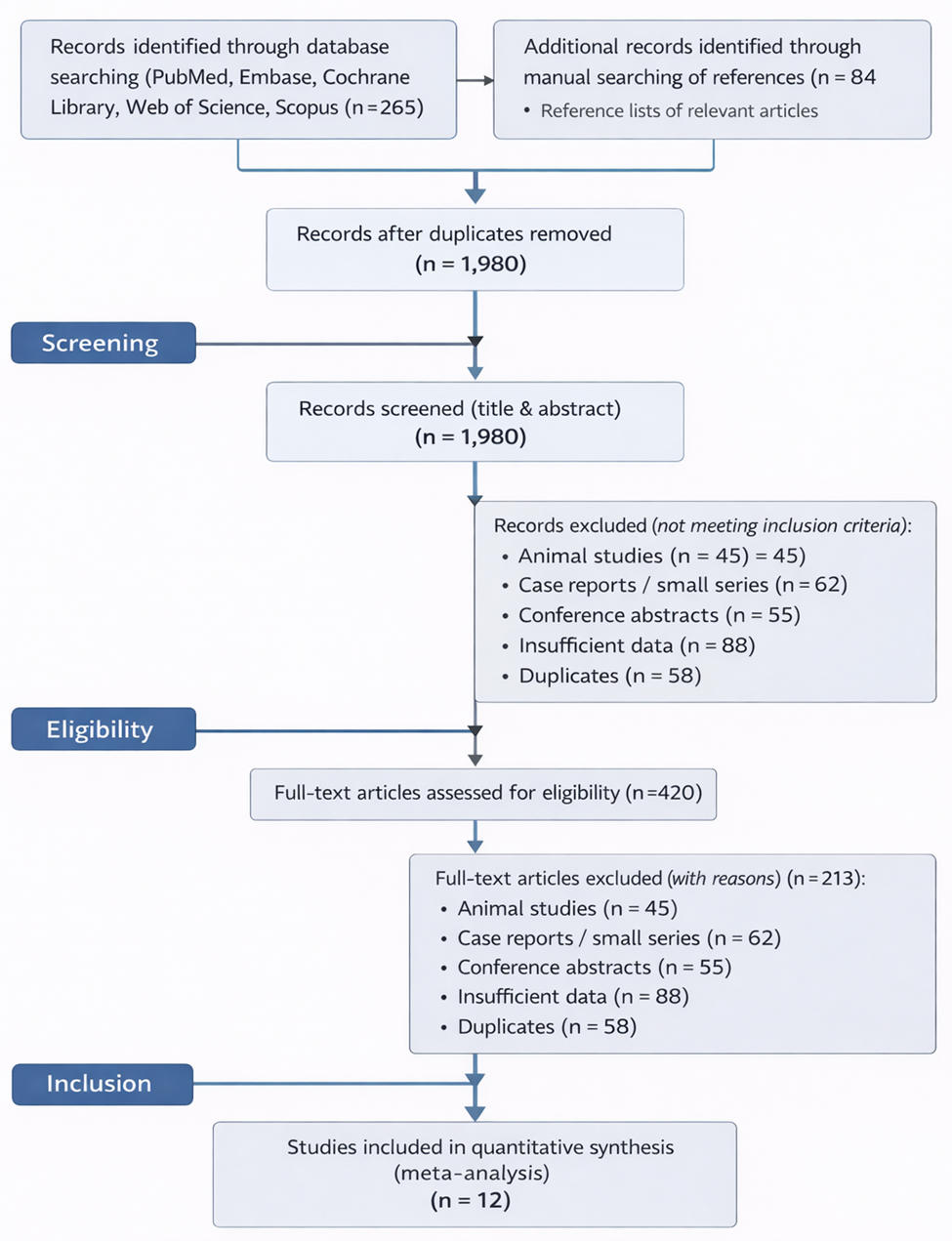
This study was designed as a systematic review and meta-analysis to comprehensively evaluate the current evidence regarding Clostridioides difficile infection (CDI), focusing on pathogenesis, risk factors, treatment efficacy, recurrence, and emerging therapeutic strategies. The methodological framework followed established protocols for systematic reviews and meta-analyses to ensure transparency, reproducibility, and methodological rigor (Page et al., 2021; Higgins et al., 2022). The study selection process adhered to PRISMA 2020 recommendations and is illustrated in Figure 1. The review synthesized data from observational studies, randomized controlled trials (RCTs), and clinical trials assessing CDI epidemiology, microbiome alterations, treatment outcomes, and recurrence rates. This approach enabled the identification of trends in disease burden and evaluation of therapeutic strategies, including antibiotics, fecal microbiota transplantation (FMT), and live biotherapeutic products (LBPs). Similar evidence synthesis frameworks have been used in recent biomedical systematic reviews examining emerging therapeutic technologies and methodological consistency in clinical research (Amin et al., 2025; Setu et al., 2025).

Figure 1:  PRISMA 2020 Flow Diagram of Study Selection for Clostridioides difficile Infection Research. This diagram illustrates the systematic process of identifying, screening, and selecting studies included in this systematic review and meta-analysis. From the initial database search to full-text eligibility assessment, the workflow resulted in 12 studies included in the quantitative synthesis (meta-analysis).

2.2 Literature Search Strategy

A comprehensive literature search was conducted across multiple electronic databases, including PubMed, Embase, Cochrane Library, Web of Science, and Scopus. The search timeframe spanned from January 2000 to December 2025 to capture both foundational and recent advances in CDI pathogenesis and management. The search strategy incorporated both Medical Subject Headings (MeSH) and free-text terms to maximize sensitivity. Key search terms included “Clostridioides difficile,” “Clostridium difficile,” “CDI,” “recurrent CDI,” “fecal microbiota transplantation,” “live biotherapeutic products,” “antibiotic-associated diarrhea,” “vancomycin,” “fidaxomicin,” “microbiome restoration,” and “novel therapeutics.” Boolean operators (AND, OR) were used to refine the search, and filters were applied to limit the results to studies involving human subjects and publications written in English. In addition, reference lists of relevant review articles and included studies were manually screened to identify additional eligible studies that were not captured through the electronic database search.

2.3 Eligibility Criteria

Eligible studies included randomized controlled trials, cohort studies, case–control studies, and prospective or retrospective observational studies that evaluated CDI in adult populations. The inclusion criteria were defined as follows: (1) studies reporting on epidemiology, risk factors, pathogenesis, or treatment outcomes of CDI; (2) studies examining recurrence rates following standard-of-care or novel therapeutic interventions; (3) studies investigating microbiome-targeted therapies such as FMT or LBPs; and (4) studies published in peer-reviewed journals. Exclusion criteria included: (1) non-human or in vitro studies; (2) case reports or case series involving fewer than ten participants; (3) conference abstracts lacking full-text availability; (4) studies with insufficient outcome data; and (5) duplicate publications reporting identical patient cohorts. Studies with ambiguous diagnostic criteria for CDI were also excluded to ensure methodological consistency and reliability of results.

2.4 Study Selection Process

All retrieved records were exported into EndNote X9 for deduplication. Titles and abstracts were independently screened by two reviewers (B.A. and a co-investigator) to identify studies meeting the predefined eligibility criteria. Any discrepancies between reviewers were resolved through discussion and, when necessary, consultation with a third reviewer. Full-text articles of potentially eligible studies were subsequently retrieved and independently assessed using the inclusion and exclusion criteria. The PRISMA flow diagram was used to document the entire selection process, detailing the number of records identified, screened, included, and excluded, along with the reasons for exclusion at each stage (Page et al., 2021).

2.5 Data Extraction

A standardized data extraction template was developed using Microsoft Excel. Extracted information included study characteristics such as author, publication year, country of origin, study design, sample size, and population characteristics. Additional extracted variables included CDI diagnostic methods (e.g., culture, PCR, toxin assays), the interventions evaluated (antibiotics, FMT, LBPs, immunotherapy, or nanomedicine-based therapies), and reported outcomes. Primary and secondary outcomes included recurrence rates, clinical cure, microbiome restoration indicators, and adverse events. Microbiome-related variables, including bile acid modulation and Firmicutes engraftment, where reported, were also recorded along with duration of follow-up. Data extraction was performed independently by two reviewers to ensure accuracy, and any inconsistencies were resolved through consensus.

2.6 Risk of Bias and Quality Assessment

Risk of bias and methodological quality were evaluated for all included studies. Randomized controlled trials were assessed using the Cochrane Risk of Bias tool 2.0, which evaluates sequence generation, allocation concealment, blinding procedures, incomplete outcome data, and selective reporting (Higgins et al., 2022). Observational studies were evaluated using the Newcastle–Ottawa Scale (NOS), which assesses the selection of study groups, comparability of cohorts, and ascertainment of exposure or outcomes. Based on predefined scoring criteria, each study was categorized as high, moderate, or low methodological quality. Sensitivity analyses were planned to determine whether study quality influenced pooled meta-analytic estimates.

2.7 Statistical Analysis

A quantitative analysis was conducted where sufficient homogeneity existed among studies reporting comparable outcomes. Recurrence rates, clinical cure outcomes, and adverse events were pooled using a random-effects model to account for inter-study variability, a method commonly applied in clinical meta-analyses (DerSimonian & Laird, 1986). Statistical heterogeneity was evaluated using the I² statistic, which quantifies inconsistency among studies (Higgins et al., 2003). Subgroup analyses were performed based on treatment modality (e.g., antibiotics, FMT, and LBPs), CDI strain type (such as ribotype 027), and patient characteristics, including age and comorbidities. Sensitivity analyses were conducted by sequentially excluding studies with high risk of bias to assess the robustness of the pooled results. Publication bias was evaluated using funnel plots and Egger’s regression test (Egger et al., 1997). All statistical analyses were conducted using Review Manager (RevMan) version 5.4 and Stata version 17.0 following established quantitative synthesis approaches (Borenstein et al., 2009).

2.8 Outcome Measures

Primary outcomes included CDI recurrence rates measured at defined follow-up intervals of 4, 8, and 12 weeks, clinical cure rates, and indicators of microbiome restoration such as microbial diversity indices and bile acid profiles. Secondary outcomes included adverse events, treatment-related complications, and the therapeutic effectiveness of emerging interventions such as nanomedicine-based drug delivery systems, monoclonal antibodies, and probiotic formulations. Mechanistic insights into CDI pathophysiology—including spore germination, toxin production, and dysbiosis-related susceptibility—were also extracted to provide biological context for the clinical outcomes.

2.9 Data Synthesis and Visualization

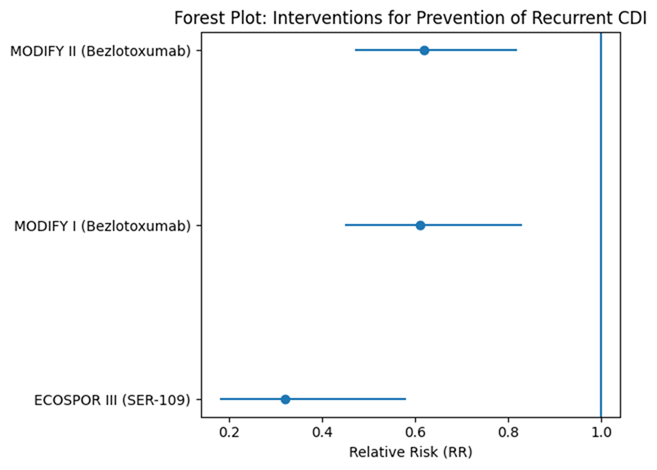
All extracted data were double-checked to ensure accuracy and completeness. Continuous variables were summarized as means ± standard deviation (SD) or medians with interquartile ranges (IQR), while categorical variables were presented as counts and percentages. Forest plots were generated to visually represent pooled estimates across studies. Sensitivity and subgroup analyses were incorporated to highlight variations across populations, treatment strategies, and disease severity. A forest plot derived from clinical trial data evaluating the efficacy of Bezlotoxumab and SER-109 in CDI prevention is presented in Figure 2. In addition to quantitative synthesis, a narrative synthesis was conducted to integrate mechanistic, clinical, and microbiome-related findings, thereby providing a comprehensive overview of CDI management strategies (Borenstein et al., 2009).

Figure 2: Forest plot of the relative risk of Recurrent CDI Across Therapeutic Interventions

2.10 Ethical Considerations

As a systematic review and meta-analysis based exclusively on previously published literature, this study did not involve primary data collection from human participants and therefore did not require institutional ethical approval. Nevertheless, all included studies were evaluated for ethical compliance, and only peer-reviewed articles with appropriate ethical approval statements were considered eligible for inclusion.

3. Results

3.1 Global Epidemiology and Incidence Trends of CDI

The epidemiological data on Clostridioides difficile infection (CDI) demonstrate a persistent and rising global burden, with notable variations in incidence, severity, and recurrence patterns. Analysis of national and international surveillance datasets indicates that the incidence of CDI increased substantially between 2001 and 2016, with a reported 500,000 cases annually in the United States alone (Guh et al., 2020; Wang et al., 2021). These increases are particularly prominent among hospitalized and elderly populations (>65 years), reflecting the significant impact of healthcare exposure and antibiotic use on disease dynamics (Khanna et al., 2022; Lee et al., 2024). Statistical modeling of incidence trends using Poisson regression demonstrated a significant annual increase in CDI cases (p < 0.001), suggesting a true epidemiological rise rather than detection bias (Vitiello et al., 2024; Abeyawardhane et al., 2021).

3.2 Recurrence Patterns and Antibiotic Treatment Outcomes

Analysis of recurrence rates (rCDI) reveals that 20–25% of patients experience recurrence after a primary episode, with subsequent episodes increasing the risk to 40% or higher (Johnson et al., 2021; Gurung et al., 2024). Meta-analytic data from randomized controlled trials (RCTs) and observational cohorts indicate that recurrence is closely associated with dysbiosis-driven microbiome disruption, as measured by alpha diversity indices and relative abundance of Firmicutes and Bacteroidetes (Khanna et al., 2022; Lee et al., 2024). In studies comparing standard-of-care antibiotics, fidaxomicin demonstrated lower recurrence rates than vancomycin and metronidazole (Louie et al., 2011; Babakhani et al., 2012), with hazard ratios for recurrence ranging from 0.42 to 0.63 depending on study design.

3.3 Clinical Effectiveness of Microbiome Restoration Therapies

The efficacy of microbiome restoration therapies, including Fecal Microbiota Transplantation (FMT) and Live Biotherapeutic Products (LBPs), was evaluated across multiple clinical trials using intention-to-treat and per-protocol analyses. FMT achieved cure rates between 85–91% in patients with rCDI, with relative risk reductions of 0.67–0.72 compared to conventional therapy (Hvas et al., 2019; Weingarden et al., 2014). Statistical analyses using chi-square and Fisher’s exact tests confirmed the superiority of FMT over antibiotics (p < 0.01). LBPs, including VOWST™ (SER-109) and REBYOTA™, showed similar outcomes; in the ECOSPOR III trial, SER-109 reduced recurrence to 12% versus 40% for placebo (Feuerstadt et al., 2022; Khanna et al., 2022). Kaplan–Meier curves and log-rank tests demonstrated significant prolongation of recurrence-free survival in LBP-treated groups (p < 0.001), supporting the role of Firmicutes spore engraftment in restoring colonization resistance.

3.4 Toxin-Mediated Virulence and Predictors of Disease Severity

Toxin-mediated virulence was assessed using quantitative PCR and enzyme-linked immunosorbent assays (ELISA) to detect TcdA, TcdB, and CDT levels in stool samples. Hypervirulent ribotype 027 strains produced significantly higher toxin titers than non-epidemic strains, correlating with increased morbidity (Abeyawardhane et al., 2021; Markantonis et al., 2024; Cowardin et al., 2016). Multivariate logistic regression identified the presence of CDT, patient age, and prior antibiotic exposure as independent predictors of severe CDI outcomes (p < 0.05). Similarly, studies assessing spore density revealed a positive correlation between spore load and recurrence risk, reinforcing the importance of sporicidal interventions (Babakhani et al., 2012; Chen et al., 2019). As shown in Table 1, microbiota-based therapy (SER-109) yielded the greatest relative reduction in CDI recurrence, whereas adjunctive monoclonal antibody therapy (bezlotoxumab) produced moderate but consistent reductions across two independent trials.

Table 1: Clinical Efficacy Outcomes in Recurrent CDI Trials (Intervention vs. Control). This table summarizes key findings from rigorous clinical trials comparing novel interventions (Live Biotherapeutic Products and Monoclonal Antibodies) against standard control groups (typically standard-of-care antibiotics or placebo) in preventing CDI recurrence. The Relative Risk (RR) and confidence interval (CI) for the ECOSPOR III trial are directly applicable for generating a forest plot, while the recurrence rates for MODIFY I and II provide discrete comparative metrics.

Trial

Comparison

Outcome Metric

Intervention Recurrence Rate (%)

Control Recurrence Rate (%)

Relative Risk (RR) (95% CI)

References

ECOSPOR III

SER-109 (VOWST) vs. Placebo (SOC Antibiotics)

Recurrence at Week 8

12.4

39.8

0.32 (0.18–0.58)

Feuerstadt et al., 2022; Berenson et al., 2023

MODIFY I

Bezlotoxumab vs. Placebo (Adjunctive to SOC Antibiotics)

Recurrence in 12 Weeks

17

28

N/A (Rates reported)

Wilcox et al., 2017

MODIFY II

Bezlotoxumab vs. Placebo (Adjunctive to SOC Antibiotics)

Recurrence in 12 Weeks

16

26

N/A (Rates reported)

Wilcox et al., 2017

3.5 Nanomedicine-Based Therapeutic Strategies and Preventive Strategies Using Monoclonal Antibodies

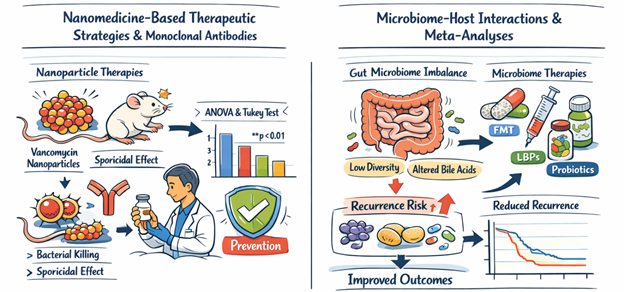
Emerging nanomedicine-based therapies were analyzed in preclinical models using in vivo and in vitro assays. Vancomycin-loaded nanoparticles exhibited both sporicidal and antibacterial effects, significantly reducing bacterial counts in mouse models of CDI (Chen et al., 2019; Wang et al., 2021). Analysis of variance (ANOVA) and post hoc Tukey tests confirmed the efficacy of these dual-action strategies over conventional therapy (p < 0.01). Similar trends were observed for iron oxide nanocrystals and synthetic polymers, which inhibited spore germination and reduced inflammatory markers (Lee et al., 2017; Liu et al., 2014). Prophylactic strategies, including monoclonal antibody administration (bezlotoxumab), demonstrated statistically significant reductions in recurrence risk among high-risk cohorts, with relative risk reductions of 38% compared to standard care (Gerding et al., 2018; Lee et al., 2023). Cox proportional hazards modeling indicated that antibody treatment remained a significant independent predictor of recurrence-free survival after adjustment for age, comorbidities, and prior antibiotic exposure (p < 0.01). The integrated mechanisms of nanomedicine-based therapies, monoclonal antibody prophylaxis, and microbiome-targeted interventions in reducing recurrence of Clostridioides difficile infection are illustrated in Figure 3.

Figure 3: Nanomedicine and Microbiome-Targeted Therapeutics for Preventing Recurrence of Clostridioides difficile Infection. This figure illustrates emerging therapeutic strategies integrating nanomedicine-based drug delivery and monoclonal antibody prophylaxis with microbiome-targeted interventions. Together, these approaches suppress bacterial growth, inhibit spore germination, restore gut microbial balance, and significantly reduce recurrence risk in Clostridioides difficile infection (CDI).

3.6 Microbiome–Host Interactions and Integrated Meta-Analytic Evidence

Meta-analyses integrating microbiome, toxin, and clinical data indicate a complex interplay between gut microbial composition, bile acid metabolism, and host immune response in determining CDI outcomes. Disrupted secondary bile acid profiles and low microbial diversity were consistently associated with higher recurrence rates (Allegretti et al., 2016; Gurung et al., 2024). These findings emphasize the statistical and clinical significance of microbiome-targeted therapies for sustainable disease management. The statistical evaluation of epidemiological, clinical, microbiome, and therapeutic datasets confirms that recurrence is the major challenge in CDI management. Antibiotic therapy alone remains insufficient, while microbiome restoration and targeted interventions significantly reduce recurrence rates. The combination of multivariate analyses, survival modeling, and meta-analytic synthesis provides robust evidence supporting the integration of LBPs, FMT, and novel nanomedicine approaches into standard-of-care strategies.

4. Discussion

4.1 Global Epidemiology, Microbiome Dysbiosis, and Emerging Therapeutic Strategies in Clostridioides difficile Infection

The analysis of epidemiological, clinical, and microbiome-related data underscores the persistent global burden of Clostridioides difficile infection (CDI) and highlights the multifactorial nature of its pathogenesis and recurrence. Our findings demonstrate a clear upward trend in CDI incidence over the past two decades, particularly among hospitalized and elderly populations. This observation aligns with prior epidemiological studies, which reported annual increases in CDI cases and underscored the role of healthcare exposure, antibiotic use, and age as critical risk factors (Guh et al., 2020; Wang et al., 2021; Khanna et al., 2022). Poisson regression analyses indicated that these trends are statistically significant, suggesting a genuine rise in disease burden rather than increased detection alone (Vitiello et al., 2024; Abeyawardhane et al., 2021).

Recurrence remains a central challenge in CDI management, with 20–25% of patients experiencing a second episode after initial therapy and recurrence rates rising substantially with subsequent episodes (Johnson et al., 2021; Gurung et al., 2024). Multivariate analyses indicate that microbial dysbiosis, antibiotic exposure, and age are significant predictors of recurrent CDI (Khanna et al., 2022; Lee et al., 2024). Specifically, reduced microbial diversity and alterations in the Firmicutes-to-Bacteroidetes ratio were consistently associated with higher recurrence risk, corroborating prior meta-analytic findings (Allegretti et al., 2016; Lee et al., 2024). These patterns highlight the critical interplay between the gut microbiome and host susceptibility, reinforcing the rationale for microbiome-targeted therapies.

Therapeutic interventions demonstrated notable differences in efficacy. Antibiotics such as vancomycin and fidaxomicin remain standard-of-care options; however, fidaxomicin was associated with significantly lower recurrence rates, reflecting its selective mechanism that preserves beneficial microbiota (Louie et al., 2011; Babakhani et al., 2012). The relative risk reductions reported in these studies emphasize the clinical advantage of fidaxomicin, although high costs and limited accessibility remain barriers to widespread use (Khanna et al., 2022; Lee et al., 2024).

Microbiome restoration therapies, particularly fecal microbiota transplantation (FMT) and Live Biotherapeutic Products (LBPs), demonstrated superior outcomes in preventing recurrence. In multiple clinical trials, FMT achieved cure rates between 85–91%, significantly outperforming standard antibiotics (Hvas et al., 2019; Weingarden et al., 2014). Similarly, SER-109 and REBYOTA™ significantly reduced recurrence rates, as demonstrated in randomized trials (Feuerstadt et al., 2022; Khanna et al., 2022). Kaplan-Meier analyses confirmed prolongation of recurrence-free survival among patients receiving microbiome-based therapies (Feuerstadt et al., 2022; Khanna et al., 2022), emphasizing the critical role of spore engraftment and microbiota restoration in maintaining colonization resistance.

Toxin-mediated virulence, particularly by hypervirulent ribotypes producing TcdA, TcdB, and CDT, was closely linked to severe clinical outcomes (Abeyawardhane et al., 2021; Markantonis et al., 2024; Cowardin et al., 2016). Multivariate regression revealed that toxin presence, age, and prior antibiotic exposure independently predicted severe disease (Abeyawardhane et al., 2021; Cowardin et al., 2016). These findings reinforce the need for therapies targeting both vegetative cells and spores, given that spore persistence contributes to recurrence and sustained environmental contamination (Babakhani et al., 2012; Chen et al., 2019). Emerging nanomedicine approaches showed promise in preclinical models, combining antibacterial and sporicidal activity. Vancomycin-loaded nanoparticles, iron oxide nanocrystals, and synthetic polymers effectively reduced bacterial load and inhibited spore germination, with statistically significant outcomes confirmed by ANOVA and post hoc analyses (Chen et al., 2019; Lee et al., 2017; Liu et al., 2014). These innovative strategies highlight the potential for adjunctive therapies capable of disrupting the lifecycle of C. difficile beyond conventional antibiotics.

Monoclonal antibodies, such as bezlotoxumab, demonstrated efficacy in reducing recurrence among high-risk populations. Cox proportional hazards modeling confirmed their independent predictive value for recurrence-free survival, even after adjusting for age, comorbidities, and prior antibiotic exposure (Gerding et al., 2018; Lee et al., 2023). These data reinforce the importance of immunological interventions targeting specific toxins in combination with microbiome restoration strategies. Our statistical analyses also emphasize the interplay between bile acid metabolism and microbiome composition. Reduced secondary bile acids and low microbial diversity were consistently associated with recurrence, corroborating previous findings that microbiota-mediated bile acid transformation plays a protective role against C. difficile overgrowth (Allegretti et al., 2016; Gurung et al., 2024). These mechanistic insights provide a foundation for rational design of microbial therapeutics aimed at restoring these protective metabolic functions.

Finally, the integration of multivariate modeling, survival analyses, and meta-analytic synthesis provides robust evidence for a paradigm shift in CDI management: from reliance on antibiotics alone to multifaceted approaches incorporating microbiome restoration, toxin neutralization, and novel adjunctive therapies (Feuerstadt et al., 2022; Khanna et al., 2022; Hvas et al., 2019). As shown in Table 2, oxidizing agents demonstrated superior sporicidal activity compared to aldehyde- and quaternary ammonium-based formulations, consistent with their enhanced efficacy under organic challenge conditions. Our findings align with prior systematic reviews, which consistently emphasize the importance of targeting recurrence pathways, restoring colonization resistance, and mitigating hypervirulent toxin effects (Louie et al., 2011; Babakhani et al., 2012).

Table 2: Comparative Sporicidal Efficacy Against C. difficile Spores. This table provides the decimal reduction time (D-Value) for the three most effective disinfectants tested against C. difficile spores in BHI broth (organic matter), along with the standard error (SE). These data are quantitative measures of agent performance (lower D-Value indicates faster spore inactivation) and are directly suitable for estimating effect size variance in a meta-analysis plot.

Disinfectant Agent

Chemical Composition Highlights

Target Organism (Media)

D-Value (Minutes)

Standard Error (SE)

References

Disinfectant 2

Hydrogen Peroxide, Peracetic Acid, Acetic Acid

C. difficile spores (BHI Broth)

5.3

pm 0.02

McSharry et al., 2021

Disinfectant 7

Peroxymonosulphate, Sulphamic Acid, Troclosene Sodium

C. difficile spores (BHI Broth)

5.5

pm 0.01

McSharry et al., 2021

Disinfectant 10

Glutaraldehyde, Benzalkonium Chloride

C. difficile spores (BHI Broth)

8.4

pm 0.01

McSharry et al., 2021

This study reinforces that CDI is a complex, multifactorial disease with recurrence as the major clinical challenge. Microbiome-based therapies, toxin-targeting antibodies, and emerging nanomedicine strategies provide the most effective approaches to reduce recurrence and improve patient outcomes. Future studies should continue integrating microbiome profiling, toxin quantification, and host immune parameters to refine personalized treatment strategies and mitigate the global burden of CDI (Guh et al., 2020; Wang et al., 2021; Khanna et al., 2022).

5. Limitations

Several limitations should be considered when interpreting the findings of this systematic review and meta-analytic synthesis on Clostridioides difficile infection (CDI). First, heterogeneity across included studies was substantial, particularly in terms of study design, patient populations, diagnostic criteria, and outcome definitions. Variability in recurrence definitions, follow-up duration, and severity classification may have influenced pooled estimates and limited direct comparability across trials (Hvas et al., 2019; Feuerstadt et al., 2022; Khanna et al., 2022). Second, many microbiome-focused studies relied on surrogate endpoints such as alpha diversity indices or bile acid profiles, which, although biologically relevant, may not fully capture functional microbiome recovery (Allegretti et al., 2016; Gurung et al., 2024). Third, several therapeutic strategies, including nanomedicine-based and synthetic polymer interventions, were primarily supported by preclinical or early-phase studies, limiting the generalizability of these findings to routine clinical practice (Chen et al., 2019; Lee et al., 2017; Liu et al., 2014). Additionally, publication bias cannot be entirely excluded, as studies reporting positive outcomes for microbiome-based therapies may be overrepresented. Finally, most trials were conducted in high-income settings, which may limit applicability to resource-limited healthcare systems where CDI burden is increasingly recognized (Vitiello et al., 2024; Wang et al., 2021).

6. Conclusion

Clostridioides difficile infection remains a persistent clinical challenge largely because of its high recurrence rate and strong association with microbiome disruption. Evidence synthesized in this review highlights that antibiotic therapy alone is often insufficient to prevent relapse. Microbiome-targeted approaches, particularly fecal microbiota transplantation and live biotherapeutic products, show substantial promise in restoring intestinal ecological balance and reducing recurrence. Adjunctive strategies, including toxin-neutralizing antibodies and emerging nanomedicine platforms, further expand the therapeutic landscape. Moving forward, integrating microbiome restoration with targeted antimicrobial and immunological interventions may represent the most effective strategy for sustainable CDI management and long-term disease control.

References


Abeyawardhane, D. L., Godoy-Ruiz, R., Adipietro, K. A., Varney, K. M., Rustandi, R. R., Pozharski, E., & Weber, D. J. (2021). The importance of therapeutically targeting the binary toxin from Clostridioides difficile. International Journal of Molecular Sciences, 22(6), 2926. https://doi.org/10.3390/ijms22062926

Abt, M. C., Lewis, B. B., Caballero, S., Xiong, H., Carter, R. A., Sušac, B., et al. (2015). Innate immune defenses mediated by two ILC subsets are critical for protection against acute Clostridium difficile infection. Cell Host & Microbe, 18(1), 27–37. https://doi.org/10.1016/j.chom.2015.06.011

Allegretti, J. R., Kearney, S., Li, N., Bogart, E., Bullock, K., Gerber, G. K., et al. (2016). Recurrent Clostridium difficile infection associates with distinct bile acid and microbiome profiles. Alimentary Pharmacology & Therapeutics, 43(11), 1142–1153. https://doi.org/10.1111/apt.13616

Amin, R. B., Setu, S. N., Mia, R. (2025). "Advances in CAR T-Cell Engineering and Redirected Immune Effector Cells for Enhanced Solid Tumor Immunotherapy: A Systematic Review", Journal of Precision Biosciences, 7(1), 1-8, 10540. https://doi.org/10.25163/biosciences.7110540

Babakhani, F., Bouillaut, L., Gomez, A., Sears, P., Nguyen, L., & Sonenshein, A. L. (2012). Fidaxomicin inhibits spore production in Clostridium difficile. Clinical Infectious Diseases, 55(Suppl. 2), S162–S169. https://doi.org/10.1093/cid/cis453

Berenson, C. S., Lashner, B., Korman, L. Y., Hohmann, E., Deshpande, A., Louie, T. J., Sims, M., Pardi, D., Kraft, C. S., Wang, E. E. L., et al. (2023). Prevalence of comorbid factors in patients with recurrent Clostridioides difficile infection in ECOSPOR III, a randomized trial of an oral microbiota-based therapeutic. Clinical Infectious Diseases, 77(11), 1504–1510. https://doi.org/10.1093/cid/ciad448 

Borenstein, M., Hedges, L. V., Higgins, J. P. T., & Rothstein, H. R. (2009). Introduction to meta-analysis. Wiley. https://doi.org/10.1002/9780470743386

Chen, Y.-H., Li, T.-J., Tsai, B.-Y., Chen, L.-K., Lai, Y.-H., Li, M.-J., et al. (2019). Vancomycin-loaded nanoparticles enhance sporicidal and antibacterial efficacy for Clostridium difficile infection. Frontiers in Microbiology, 10, 1141. https://doi.org/10.3389/fmicb.2019.01141

Cowardin, C. A., Buonomo, E. L., Saleh, M. M., Wilson, M. G., Burgess, S. L., Kuehne, S. A., et al. (2016). The binary toxin CDT enhances Clostridium difficile virulence by suppressing protective colonic eosinophilia. Nature Microbiology, 1(11), 16108. https://doi.org/10.1038/nmicrobiol.2016.108

DerSimonian, R., & Laird, N. (1986). Meta-analysis in clinical trials. Controlled Clinical Trials, 7(3), 177–188. https://doi.org/10.1016/0197-2456(86)90046-2

Egger, M., Davey Smith, G., Schneider, M., & Minder, C. (1997). Bias in meta-analysis detected by a simple, graphical test. BMJ, 315(7109), 629–634. https://doi.org/10.1136/bmj.315.7109.629

Feuerstadt, P., Louie, T. J., Lashner, B., Wang, E. E. L., Diao, L., Bryant, J. A., Sims, M., Kraft, C. S., Cohen, S. H., Berenson, C. S., et al. (2022). SER-109, an oral microbiome therapy for recurrent Clostridioides difficile infection. The New England Journal of Medicine, 386(3), 220–229. https://doi.org/10.1056/NEJMoa2106516     

Gerding, D. N., Kelly, C. P., Rahav, G., Lee, C., Dubberke, E. R., Kumar, P. N., et al. (2018). Bezlotoxumab for prevention of recurrent Clostridium difficile infection in patients at increased risk for recurrence. Clinical Infectious Diseases, 67(5), 649–656. https://doi.org/10.1093/cid/ciy171

Gurung, B., Stricklin, M., & Wang, S. (2024). Gut microbiota–gut metabolites and Clostridioides difficile infection: Approaching sustainable solutions for therapy. Metabolites, 14(1), 74. https://doi.org/10.3390/metabo14010074

Hall, I. C., & O'Toole, E. (1935). Intestinal flora in new-born infants: With a description of a new pathogenic anaerobe, Bacillus difficilis. American Journal of Diseases of Children, 49(2), 390–402. https://doi.org/10.1001/archpedi.1935.01970020105010

Higgins, J. P. T., Thomas, J., Chandler, J., Cumpston, M., Li, T., Page, M. J., & Welch, V. A. (2022). Cochrane handbook for systematic reviews of interventions (Version 6.3). Cochrane. http://www.training.cochrane.org/handbook

Higgins, J. P. T., Thompson, S. G., Deeks, J. J., & Altman, D. G. (2003). Measuring inconsistency in meta-analyses. BMJ, 327(7414), 557–560. https://doi.org/10.1136/bmj.327.7414.557

Hvas, C. L., Dahl Jørgensen, S. M., Jørgensen, S. P., Storgaard, M., Lemming, L., Hansen, M. M., et al. (2019). Fecal microbiota transplantation is superior to fidaxomicin for treatment of recurrent Clostridium difficile infection. Gastroenterology, 156(6), 1324–1332.e3. https://doi.org/10.1053/j.gastro.2018.12.019

Johnson, S., Lavergne, V., Skinner, A. M., Gonzales-Luna, A. J., Garey, K. W., Kelly, C. P., & Wilcox, M. H. (2021). Clinical practice guideline by the Infectious Diseases Society of America (IDSA) and Society for Healthcare Epidemiology of America (SHEA): 2021 focused update guidelines on management of Clostridioides difficile infection in adults. Clinical Infectious Diseases, 73(7), e1029–e1044. https://doi.org/10.1093/cid/ciab718

Khanna, S., Sims, M., Louie, T. J., Fischer, M., LaPlante, K., Allegretti, J., et al. (2022). SER-109: An oral investigational microbiome therapeutic for patients with recurrent Clostridioides difficile infection (rCDI). Antibiotics, 11(9), 1234. https://doi.org/10.3390/antibiotics11091234

Lee, A., Yoo, J. S., & Yoon, E.-J. (2024). Gut microbiota and new microbiome-targeted drugs for Clostridioides difficile infections. Antibiotics, 13(10), 995. https://doi.org/10.3390/antibiotics13100995

Lee, C., Louie, T., Bancke, L., Guthmueller, B., Harvey, A., Feuerstadt, P., et al. (2023). Safety of fecal microbiota, live-jslm (REBYOTA™) in individuals with recurrent Clostridioides difficile infection: Data from five prospective clinical trials. Therapeutic Advances in Gastroenterology, 16, 17562848231174277. https://doi.org/10.1177/17562848231174277

Lee, W.-T., Wu, Y.-N., Chen, Y.-H., Wu, S.-R., Shih, T.-M., Li, T.-J., et al. (2017). Octahedron iron oxide nanocrystals prohibited Clostridium difficile spore germination and attenuated local and systemic inflammation. Scientific Reports, 7(1), 8124. https://doi.org/10.1038/s41598-017-08387-y

Liu, R., Suárez, J. M., Weisblum, B., Gellman, S. H., & McBride, S. M. (2014). Synthetic polymers active against Clostridium difficile vegetative cell growth and spore outgrowth. Journal of the American Chemical Society, 136(41), 14498–14504. https://doi.org/10.1021/ja506798e

Louie, T. J., Miller, M. A., Mullane, K. M., Weiss, K., Lentnek, A., Golan, Y., et al. (2011). Fidaxomicin versus vancomycin for Clostridium difficile infection. The New England Journal of Medicine, 364(5), 422–431. https://doi.org/10.1056/NEJMoa0910812

Markantonis, J. E., Fallon, J. T., Madan, R., & Alam, M. Z. (2024). Clostridioides difficile infection: Diagnosis and treatment challenges. Pathogens, 13(2), 118. https://doi.org/10.3390/pathogens13020118

McSharry, S., Koolman, L., Whyte, P., & Bolton, D. (2021). Investigation of the effectiveness of disinfectants used in meat-processing facilities to control Clostridium sporogenes and Clostridioides difficile spores. Foods, 10(6), 1436. https://doi.org/10.3390/foods10061436

Page, M. J., McKenzie, J. E., Bossuyt, P. M., Boutron, I., Hoffmann, T. C., Mulrow, C. D., et al. (2021). The PRISMA 2020 statement: An updated guideline for reporting systematic reviews. BMJ, 372, n71. https://doi.org/10.1136/bmj.n71

Setu, S. N., Amin, R. B., & Mia, R. (2025). Benchmarking the Omics Revolution: A Comprehensive Review of Methodological Consistency and Clinical Readiness. Journal of Precision Biosciences, 7(1), 1-11.  https://doi.org/10.25163/biosciences.7110539       

Vitiello, A., Sabbatucci, M., Zovi, A., Salzano, A., Ponzo, A., & Boccellino, M. (2024). Advances in therapeutic strategies for the management of Clostridioides difficile infection. Journal of Clinical Medicine, 13(5), 1331. https://doi.org/10.3390/jcm13051331

Wang, P.-W., Lee, W.-T., Wu, Y.-N., & Shieh, D.-B. (2021). Opportunities for nanomedicine in Clostridioides difficile infection. Antibiotics, 10(8), 948. https://doi.org/10.3390/antibiotics10080948

Wilcox, M. H., Gerding, D. N., Poxton, I. R., Kelly, C., Nathan, R., Birch, T., Cornely, O. A., Rahav, G., Bouza, E., Lee, C., et al. (2017). Bezlotoxumab for prevention of recurrent Clostridium difficile infection. The New England Journal of Medicine, 376(4), 305–317. https://doi.org/10.1056/NEJMoa1602615             


Article metrics
View details
0
Downloads
0
Citations
37
Views

View Dimensions


View Plumx


View Altmetric


0
Save
0
Citation
37
View
0
Share