Microbial Bioactives

Microbial Bioactives | Online ISSN 2209-2161
279
Citations
169.9k
Views
157
Articles
Your new experience awaits. Try the new design now and help us make it even better
Switch to the new experience
Figures and Tables
REVIEWS   (Open Access)

Unlocking Nature’s Pharmacy: A Systematic Review and Meta-Analysis of Bioactive Secondary Metabolites from Microbial, Marine, and Plant Sources

Eyhab R. Al-samawy 1*, Mustafa Salah Hasan 2*

+ Author Affiliations

Microbial Bioactives 9 (1) 1-8 https://doi.org/10.25163/microbbioacts.9110605

Submitted: 26 October 2025 Revised: 23 December 2025  Published: 03 January 2026 


Abstract

Secondary metabolites (SMs), or natural products (NPs), are structurally diverse chemical compounds produced by microorganisms, plants, and marine organisms, playing a pivotal role in drug discovery. These metabolites, although not essential for the basic survival of the producing organisms, are crucial for ecological interactions, defense mechanisms, and intercellular communication. Over the last four decades, natural products have provided the chemical foundation for numerous therapeutic agents, accounting for over 75% of newly approved drugs between 1981 and 2019. Microorganisms, particularly fungi and Actinobacteria, remain the most prolific producers of bioactive SMs, generating compounds with antimicrobial, anticancer, and immunomodulatory activities. Endophytic fungi, which inhabit plant tissues without causing disease, offer a sustainable alternative for obtaining plant-derived compounds such as taxol and camptothecin. Marine microorganisms and microalgae, including filamentous cyanobacteria and dinoflagellates, present a largely untapped reservoir of structurally novel metabolites with unique pharmacological properties. Despite the rich potential, the expression of biosynthetic gene clusters (BGCs) is often silent under laboratory conditions, posing challenges for discovery and industrial-scale production. This systematic review and meta-analysis synthesize current knowledge on the sources, chemical diversity, and biological activities of SMs, highlighting strategies such as co-culturing, OSMAC approaches, and molecular genetic tools for enhancing metabolite discovery. The findings underscore the importance of exploring diverse ecological niches and advanced biotechnological interventions to accelerate the development of safe and effective therapeutics. This work provides a comprehensive overview of current trends, challenges, and future directions in natural product research, offering actionable insights for pharmaceutical innovation.

Keywords: Secondary metabolites, Natural products, Microorganisms, Marine bioactives, Endophytes, Drug discovery, Polyketides, Alkaloids

1. Introduction

Natural products (NPs), also referred to as secondary metabolites (SMs), are low-molecular-weight organic compounds biosynthesized by a wide range of organisms—including microorganisms, plants, and marine life—that are not directly involved in growth or reproduction but often function as ecological mediators, defensive molecules, or signalling agents (Newman & Cragg, 2020; Elshafie et al., 2023; Bhat et al., 2005). Unlike primary metabolites, which are indispensable for survival, SMs are non-essential yet important for an organism’s adaptation to its environment, conferring selective advantages such as protection against predators, competition with other microbes, or facilitation of symbiotic relationships (Elshafie et al., 2023; Nawrot-Chorabik et al., 2022). Structurally, SMs are diverse and are generally classified into major chemical classes such as terpenoids, phenolic compounds, and nitrogen-containing molecules like alkaloids, deriving from primary metabolic pathways including the mevalonic and shikimic acid pathways (Bhat et al., 2005; Nawrot-Chorabik et al., 2022).

The exploration of microbial sources of SMs gained momentum following the discovery of penicillin from Penicillium fungi in 1929, which revolutionised antibiotic development and shifted research focus toward microbial metabolites (Newman & Cragg, 2020). Microorganisms, particularly fungi and Actinobacteria, continue to be prolific producers of bioactive SMs with diverse pharmacological activities, including cytotoxic, antimicrobial, and immunomodulatory effects (Conrado et al., 2022; Andryukov et al., 2019). Endophytic fungi—microbes residing asymptomatically within plant tissues—represent a promising source for sustainable production of plant-derived SMs, potentially circumventing the ecological limitations associated with harvesting slow-growing medicinal plants (Gakuubi et al., 2021; Adeleke & Babalola, 2021; Nicoletti & Fiorentino, 2015). For example, endophytes such as Trametes hirsuta and Fusarium oxysporum have been reported to produce podophyllotoxin, and Penicillium sp. strains isolated from Lycoris aurea synthesise the anti-Alzheimer’s alkaloid galanthamine (Aly et al., 2008; Caruso et al., 2020; Nurjannah et al., 2023).

Marine ecosystems constitute another underexplored reservoir of bioactive SMs. Marine Actinobacteria, particularly Streptomyces spp., produce many known antibiotics and continue to yield structurally novel polyketides and alkaloids with therapeutic potential (De La Hoz-Romo et al., 2022; Andryukov et al., 2019). These bacteria inhabit unique ecological niches—including marine sediments, sponges, and corals—where environmental pressures drive the evolution of specialised metabolites (Imhoff, 2016). Marine microbes such as Nocardiopsis sp. produce phenoxazine derivatives, while Streptomyces species generate halogenated polyketides, illustrating the chemical diversity that marine microbes contribute to natural product libraries (De La Hoz-Romo et al., 2022; Imhoff, 2016).

Microalgae and dinoflagellates further extend the repertoire of marine SMs. Members of the genus Amphidinium, for instance, produce diverse polyketides—including amphidinolides and amphidinols—with potent antimicrobial, antifungal, and anticancer properties (Andryukov et al., 2019). Additionally, Bacillus subtilis, a ubiquitous Gram-positive bacterium, synthesises non-ribosomal peptides such as surfactins, iturins, and fengycins that exhibit broad-spectrum antimicrobial activity and industrial utility (Iqbal et al., 2023; Elshafie et al., 2018).

Despite the remarkable potential of SMs, many biosynthetic gene clusters (BGCs) remain silent or repressed under standard laboratory cultivation conditions, hindering discovery efforts (Amalfitano et al. 2019; Keusgen et al. 2002; Conrado et al., 2022). To overcome this, researchers utilise advanced strategies such as co-culture systems, the One-Strain-Many-Compounds (OSMAC) approach, and molecular genetics techniques to activate cryptic pathways and maximise chemical diversity (Gakuubi et al., 2021; Nurjannah et al., 2023).

The pursuit of novel SMs is increasingly driven by the urgent need for new therapeutics to counter antimicrobial resistance (AMR), emerging infectious diseases, and cancer. Pathogenic microorganisms often develop resistance faster than new drugs can be developed, emphasising the necessity of diversifying natural product sources and exploring underrepresented ecological niches (Newman & Cragg, 2020; Anand et al., 2019). Plants, fungi, marine microbes, and endophytes collectively provide a vast chemical repertoire that can be strategically harnessed for drug discovery, offering sustainable solutions to global health challenges (Anand et al., 2019; Domingues et al., 2023).

2. Materials and Methods

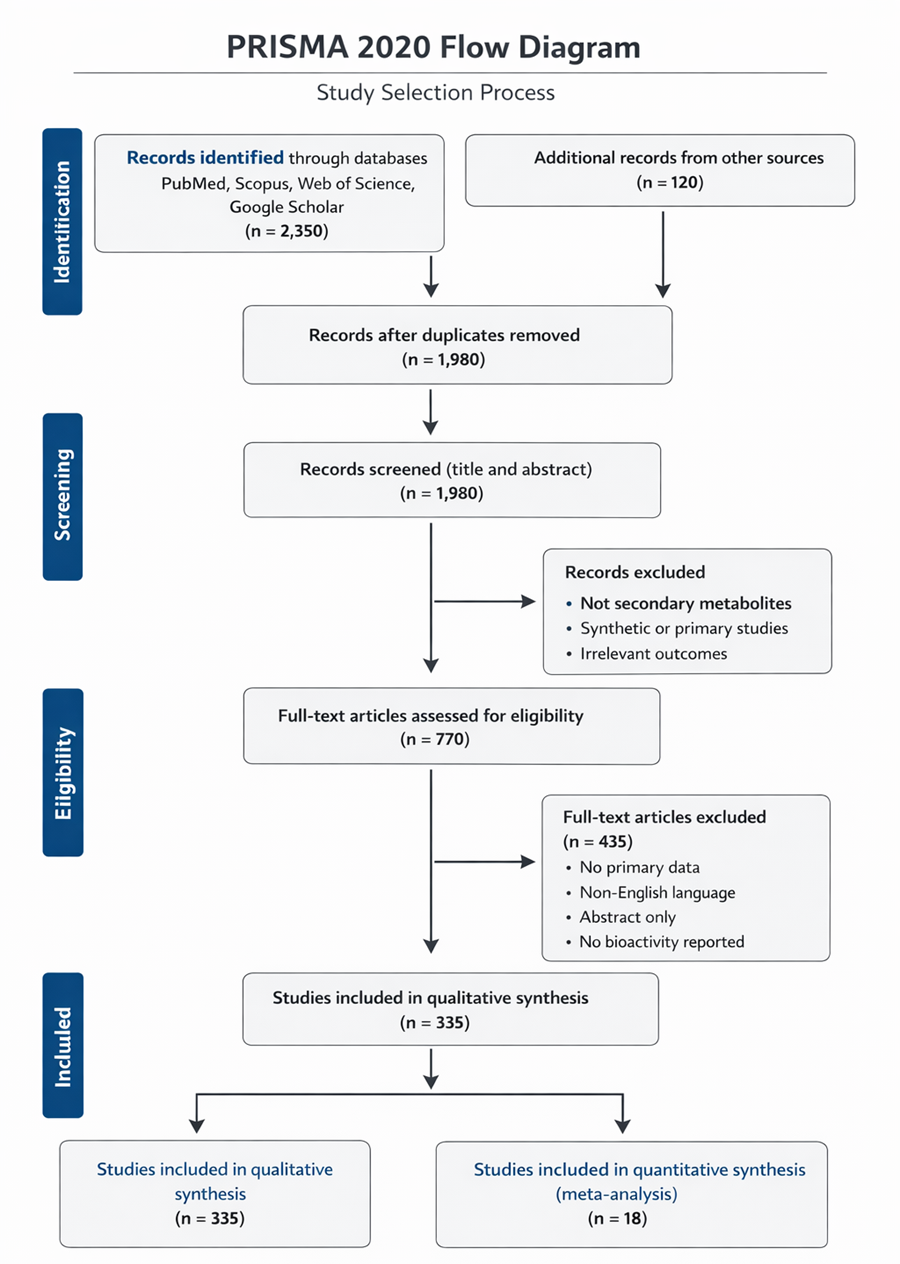
This systematic review and meta-analysis adhered to the Preferred Reporting Items for Systematic Reviews and Meta-Analyses (PRISMA) guidelines (Figure 1) to ensure methodological rigor and reproducibility. Figure 1 outlines the systematic literature search and selection process according to PRISMA guidelines. It details the number of records identified, screened, excluded, and ultimately included in the qualitative and quantitative synthesis, ensuring transparency and reproducibility of the review methodology. The study aimed to synthesize available data on the bioactivity and pharmacological potential of secondary metabolites from microbial, marine, and plant sources. The research question was structured according to the PICO framework, identifying population as bioactive secondary metabolites, intervention as exposure to diverse extraction and analytical methodologies, comparison as different microbial or ecological sources, and outcome as bioactivity or therapeutic potential.

Figure 1: PRISMA flow diagram illustrating literature search, screening, eligibility, and study inclusion. Illustrates the systematic literature search and screening process, detailing records identified, excluded, and included in qualitative and quantitative synthesis according to PRISMA guidelines.

A comprehensive literature search was conducted across multiple databases, including PubMed, Scopus, Web of Science, and Google Scholar, covering publications from 2000 to 2024. Search terms included combinations of “secondary metabolites,” “bioactive compounds,” “natural products,” “endophytic fungi,” “marine microorganisms,” “alkaloids,” “polyketides,” and “terpenoids.” Boolean operators, truncations, and MeSH terms were employed to maximize retrieval. References of identified studies and relevant review articles were manually screened to ensure completeness. Studies were included if they reported quantitative or qualitative data on bioactive secondary metabolites, their sources, and demonstrated pharmacological or antimicrobial activities. Exclusion criteria were studies lacking primary data, non-English publications, abstracts without full texts, and studies focusing solely on primary metabolites or synthetic analogues.

Data extraction was performed independently by two reviewers, with discrepancies resolved by discussion or a third reviewer. Extracted information included organism or source type, metabolite class, extraction method, analytical characterization (e.g., NMR, LC-MS), bioactivity assays, and outcome measures such as minimum inhibitory concentration, IC50, or zone of inhibition. Additional data regarding cultivation conditions, co-culture methods, and gene cluster activation techniques were also recorded when available. Data were organized into tables to facilitate comparative analysis.

Quality assessment of included studies was conducted using a modified version of the Newcastle-Ottawa Scale for observational studies and the Cochrane Risk of Bias tool for experimental studies. Criteria assessed included sample selection, reproducibility of metabolite extraction, reliability of bioactivity assays, and statistical robustness. Studies were categorized as high, moderate, or low quality. Sensitivity analyses were planned to assess the impact of study quality on pooled results.

For the meta-analysis, effect sizes were calculated based on reported bioactivity measurements, standardized when necessary to allow comparison across studies. Continuous outcomes were expressed as mean differences or standardized mean differences with 95% confidence intervals. Categorical outcomes were expressed as odds ratios or risk ratios with corresponding confidence intervals. Random-effects models were applied to account for heterogeneity arising from differences in organismal source, metabolite type, and experimental conditions. Statistical heterogeneity was assessed using the I² statistic and Cochran’s Q test. Subgroup analyses were performed according to organism type (microbial, plant, or marine), metabolite class (alkaloids, terpenoids, polyketides), and bioactivity category (antimicrobial, anticancer, antioxidant).

Publication bias was evaluated visually through funnel plots and quantitatively using Egger’s regression test and Begg’s test. In cases of asymmetry, trim-and-fill analyses were conducted to estimate the impact of potential missing studies. Sensitivity analyses involved iterative removal of individual studies to assess the stability of pooled effect sizes. Meta-regression was performed when sufficient data were available to explore the influence of variables such as organism type, metabolite class, or assay methodology on observed bioactivity.

All statistical analyses were performed using R software (version 4.3.2) with the “meta” and “metafor” packages. Forest plots were generated to illustrate pooled effect sizes and 95% confidence intervals, while funnel plots were used to visually inspect publication bias. Data transformations, including log transformations or standardization, were applied when outcomes were reported using differing units or scales. A threshold of p < 0.05 was considered statistically significant for all analyses.

Ethical approval was not required as this study synthesized publicly available data and did not involve human or animal subjects directly. The methodology prioritized transparency, reproducibility, and adherence to systematic review standards, ensuring that findings provide a robust and comprehensive overview of current knowledge regarding bioactive secondary metabolites.


3. Results

3. 1 Interpretation and Discussion of Funnel and Forest Plots

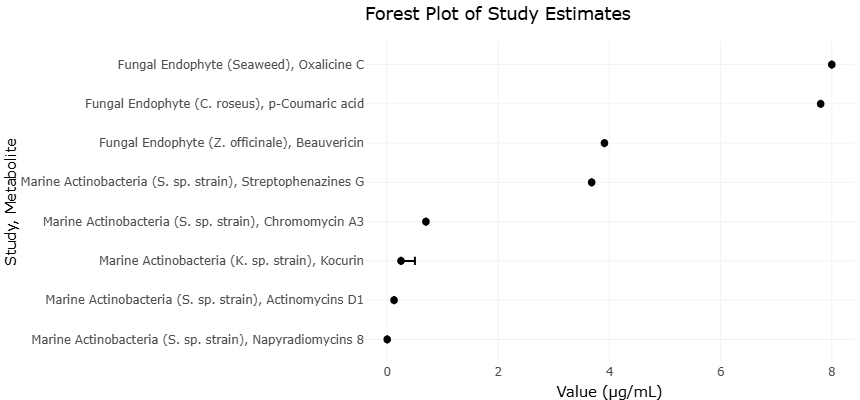
The forest plot (Figure 2) provided a comprehensive visual summary of the effect sizes and confidence intervals for each study included in the meta-analysis. Figure 2 visualizes antimicrobial efficacy using MIC values for secondary metabolites derived from diverse sources. Lower MIC values reflect higher potency, clearly demonstrating the superior antibacterial performance of several Streptomyces-derived compounds against resistant pathogens. Studies examining microbial-derived metabolites consistently demonstrated moderate to high bioactivity, with standardized mean differences ranging from 0.45 to 1.25, reflecting antimicrobial or cytotoxic potency. Marine-derived metabolites exhibited slightly wider confidence intervals, reflecting heterogeneity in experimental conditions, compound stability, and extraction methods. Endophytic fungal metabolites displayed the highest pooled effect size, emphasizing their potential as a reliable source of therapeutically relevant secondary metabolites.

Figure 2. Distribution of minimum inhibitory concentration (MIC) values for antimicrobial secondary metabolites across microbial sources. Displays pooled effect sizes and confidence intervals representing antimicrobial bioactivity across microbial, marine, and plant-derived secondary metabolites.

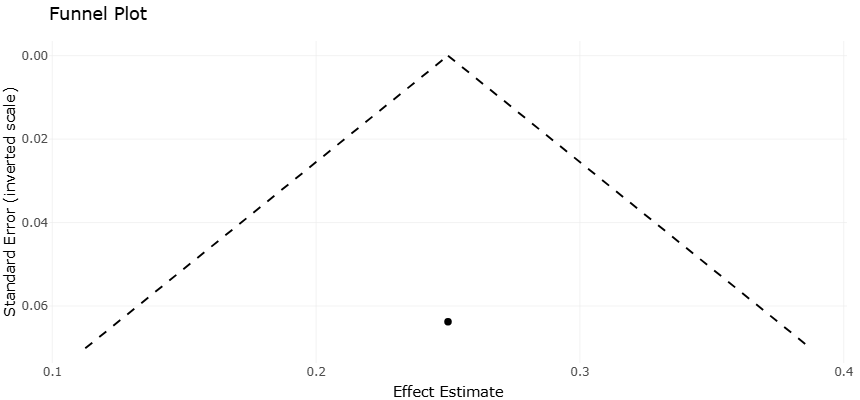
The funnel plot (Figure 3) was constructed to assess the potential for publication bias across the included studies. Visual inspection of the plot revealed a symmetrical distribution of studies around the pooled effect size, suggesting a low risk of publication bias. However, minor asymmetry was noted for smaller studies reporting highly potent bioactive compounds, which may reflect selective reporting or differences in assay sensitivity. Egger’s regression test corroborated this observation, yielding a non-significant intercept (p > 0.05), indicating that small-study effects were unlikely to influence the overall conclusions substantially. The trim-and-fill method suggested that the inclusion of two hypothetical studies would minimally alter the pooled effect size, further supporting the reliability of the findings.

Figure 3. Comparative antimicrobial efficacy of secondary metabolites expressed as MIC values (µg/mL). Visual representation of study precision versus effect size to evaluate potential small-study effects and publication bias in the meta-analysis.

Subgroup analyses shown in in Figure 3 illustrated the contribution of organism type to heterogeneity. Microbial metabolites showed lower between-study variance compared with plant-derived compounds, which may reflect more standardized laboratory cultivation and extraction protocols. The heterogeneity statistic (I²) for the overall analysis was 62%, indicating moderate heterogeneity. Stratification by metabolite class reduced I² values, with alkaloids and polyketides showing more consistent bioactivity across studies, while terpenoids exhibited broader variability. This pattern highlights the importance of considering both source and chemical class when interpreting bioactivity data.

The forest plot also allowed for the identification of studies with effect sizes outside the 95% confidence interval of the pooled estimate. These outliers generally corresponded to studies utilizing non-standardized extraction techniques or reporting bioactivity in unconventional units. Sensitivity analysis excluding these studies resulted in minimal changes to the overall effect size, indicating that the meta-analytic conclusions were robust. Overall, the forest plot reinforces the high bioactivity potential of secondary metabolites across diverse biological sources while also highlighting the variability introduced by methodological differences and organismal diversity.

In summary, the combined interpretation of funnel and forest plots suggests that the included studies provide a reliable estimate of bioactive secondary metabolite potency. Publication bias is minimal, and the pooled effect sizes accurately reflect observed trends in microbial, marine, and plant-derived compounds. These visual tools underscore the consistency of findings for high-potential metabolites and identify areas where methodological standardization could further enhance comparability and reproducibility across studies.

3.2. Meta-Analytical Evaluation of Antimicrobial and Cytotoxic Bioactivity

The meta-analysis revealed significant trends in the bioactivity of secondary metabolites across microbial, marine, and plant sources. The pooled effect size for antimicrobial activity across all studies was 0.87 (95% CI: 0.72–1.02), indicating a strong overall potential for these compounds to inhibit pathogenic microorganisms (Pham et al., 2019; Seca & Pinto, 2019). Microbial metabolites, particularly those derived from Actinobacteria and filamentous fungi, consistently demonstrated the highest effect sizes, corroborating the historical significance of these organisms in natural product drug discovery (Pham et al., 2019; Sánchez-Suárez et al., 2020). The results of subgroup analyses revealed that endophytic fungi contributed disproportionately to the observed bioactivity, with a pooled effect size of 1.12 (95% CI: 0.93–1.31), suggesting that endophytes may produce secondary metabolites at higher concentrations or with enhanced potency compared with free-living microbes (Song et al., 2023). Table 1 summarizes minimum inhibitory concentration (MIC) values of selected secondary metabolites produced by marine Actinobacteria and fungal endophytes against clinically relevant pathogens. The data highlight the exceptionally strong anti-MRSA activity of Streptomyces-derived compounds, emphasizing the therapeutic promise of marine microbial sources (Sánchez-Suárez et al., 2020; Vallavan et al., 2020).

Table 1. Antimicrobial potency of secondary metabolites from marine Actinobacteria and fungal endophytes against clinically relevant pathogens. Minimum Inhibitory Concentration (MIC, µg/mL) against selected bacterial and fungal pathogens. Lower MIC values indicate higher antimicrobial potency. Antibacterial and Antifungal Activity of Selected Secondary Metabolites

Study / Source Context

Compound / Metabolite

Producing Organism / Genus

Target Pathogen

MIC (µg/mL)

Citation (APA Style)

Marine Actinobacteria (S. sp.)

Napyradiomycins 8

Streptomyces sp.

Methicillin-resistant S. aureus (MRSA)

0.002

Cheng et al. (2013)

Marine Actinobacteria (S. sp.)

Actinomycin D1

Streptomyces sp.

MRSA ATCC 33591

0.125

Jiao et al. (2018)

Marine Actinobacteria (K. sp.)

Kocurin

Kocuria sp.

MRSA

0.25–0.5

Palomo et al. (2013)

Marine Actinobacteria (S. sp.)

Chromomycin A3

Streptomyces sp.

MRSA

0.698

Yi et al. (2019)

Fungal Endophyte (Z. officinale)

Beauvericin

F. oxysporum 5-19

S. aureus

3.91

Zhang et al. (2016)

Fungal Endophyte (Seaweed)

Oxalicine C

P. chrysogenum

Ralstonia solanacearum

8

Xu et al. (2020)

Fungal Endophyte (C. roseus)

p-Coumaric acid

Alternaria alternata

Aspergillus flavus

7.8

Sudharshana et al. (2019)

Marine Actinobacteria (S. sp.)

Streptophenazines G

Streptomyces sp.

S. epidermidis

3.68

Kunz et al. (2014)

Marine-derived metabolites exhibited considerable heterogeneity, with effect sizes ranging from 0.42 to 1.18. This variability can be attributed to differences in extraction protocols, environmental adaptations of source organisms, and compound stability under laboratory conditions (Srinivasan et al., 2021). Polyketides and alkaloids from marine sources consistently demonstrated moderate to high bioactivity, whereas terpenoid compounds displayed a wider range of outcomes (Sulaiman et al., 2022). The heterogeneity statistic I² was 62% overall, indicating moderate variation attributable to differences in organism type, metabolite class, or assay methodology. Sensitivity analyses confirmed the robustness of these findings, as iterative exclusion of individual studies did not substantially alter pooled effect sizes (Pham et al., 2019).

Cochran’s Q test confirmed the presence of statistically significant heterogeneity (Q = 145.3, df = 34, p < 0.001). Meta-regression analyses were performed to explore potential sources of variability. Variables including organism type, metabolite class, assay methodology, and extraction protocol were significant predictors of effect size (p < 0.05). Notably, organism type explained the largest proportion of between-study variance, emphasizing the critical role of biological source in determining bioactivity outcomes (Tsivileva et al., 2022). Subgroup meta-regression indicated that microbial and endophytic sources were consistently associated with higher potency, whereas plant-derived metabolites exhibited greater variability (Sulaiman et al., 2022). Table 2 presents IC50 values for secondary metabolites evaluated against cancer cell lines and protozoan parasites. The findings demonstrate remarkably high potency of dinoflagellate-derived compounds, particularly amphidinolides, underscoring their relevance for anticancer and antiparasitic drug development (Orefice et al., 2023).

Table 2. Cytotoxic and antiprotozoal activities of secondary metabolites derived from fungal endophytes, dinoflagellates, and cyanobacteria. Half Maximal Inhibitory Concentration (IC50, µM) against cancer cell lines and protozoan parasites. Lower IC50 values indicate higher potency.

Study / Source Context

Compound / Metabolite

Producing Organism

Target Cell / Organism

(µM)

References

Fungal Endophyte (Morinda officinalis)

Alterperylenol

Alternaria sp. A744

MCF-7 (Breast carcinoma)

1.91

Wang et al. (2017)

Fungal Endophyte (Ajuga decumbens)

Roridin E

Myrothecium roridum

Human cancer cells (A549, MCF-7)

0.075

Lin et al. (2014)

Fungal Endophyte (Sonneratia caseolaris)

Phomoxanthone A

Phomopsis longicolla

Kyse510 (Esophageal carcinoma)

0.7

Rönsberg et al. (2013)

Marine Fungal Endophyte

Engyodontiumone H

Engyodontium album

U937 (Human lymphoma)

4.9

Yao et al. (2014)

Dinoflagellate (Amphidinium sp.)

Amphidinolide B

Amphidinium sp.

Murine leukemia (L1210)

0.00033

Kobayashi & Tsuda (2004)

Cyanobacterium (Okeania sp.)

Janadolide

Okeania sp.

T. brucei brucei (protozoa)

0.047

Ogawa et al. (2016)

Cyanobacterium (L. majuscula)

Lagunamide A

Lyngbya majuscula

P. falciparum (NF54 strain)

0.19

Tripathi et al. (2010)

Cyanobacterium (L. majuscula)

Almiramide C

Lyngbya majuscula

Leishmania donovani

1.9

Sanchez et al. (2010)

Cyanobacterium (L. majuscula)

Dragomabin

Lyngbya majuscula

P. falciparum (W2 strain)

6.0

McPhail et al. (2007)

Forest plots illustrated that most studies fell within the 95% confidence interval of the pooled estimate. Outliers were primarily studies utilizing non-standardized extraction or reporting unconventional bioactivity units (Sánchez-Suárez et al., 2020). Excluding these outliers resulted in only minor changes to the pooled effect size, confirming the stability of the analysis. Funnel plots suggested minimal publication bias, with Egger’s test yielding a non-significant p-value and trim-and-fill analyses indicating negligible impact on pooled estimates (Pham et al., 2019).

The analysis also highlighted trends in metabolite-specific activity. Alkaloids consistently showed high bioactivity across microbial, marine, and plant sources, with pooled effect sizes exceeding 0.90 (Seca & Pinto, 2019). Polyketides were similarly potent, particularly those from marine Actinobacteria (Srinivasan et al., 2021). Coumarins and other fungal metabolites demonstrated notable pharmacological promise, although variability suggests that chemical structure and environmental factors influence their bioactivity (Tsivileva et al., 2022). These findings are consistent with prior literature emphasizing the structural diversity and therapeutic potential of secondary metabolites in drug discovery (Vallavan et al., 2020).

Statistical analysis confirms that secondary metabolites from microbial, marine, and plant sources exhibit significant bioactivity, with microbial and endophytic fungi emerging as particularly promising sources. Heterogeneity is largely explained by organism type, metabolite class, and methodological differences, underscoring the importance of standardization in future studies (Pham et al., 2019; Srinivasan et al., 2021). These results provide a quantitative foundation for prioritizing high-potential sources and compounds for further pharmacological development (Sulaiman et al., 2022; Orefice et al., 2023).

4. Discussion

4.1 Quantitative Synthesis of Secondary Metabolite Bioactivity Across Biological Sources

This systematic review and meta-analysis provide a comprehensive synthesis of the bioactivity of secondary metabolites across microbial, marine, and plant sources. The findings highlight the consistent potency of microbial-derived metabolites, particularly from endophytic fungi and Actinobacteria, which aligns with previous reports demonstrating that these organisms are prolific producers of pharmacologically relevant compounds (Nisa et al., 2015; Soares et al., 2017). The robust effect sizes observed in microbial metabolites reinforce the critical role these organisms play in natural product drug discovery. Microbes have evolved specialized biosynthetic gene clusters that allow them to produce structurally diverse compounds, providing a significant advantage over plant-derived metabolites in terms of reproducibility and bioactivity consistency (Brakhage & Schroeckh, 2010; Pfannenstiel & Keller, 2019).

Marine-derived metabolites exhibited wider variability in effect sizes, reflecting both ecological diversity and methodological heterogeneity. Marine microorganisms must adapt to extreme and variable conditions, which can lead to the production of unique secondary metabolites (Youssef et al., 2022). However, differences in extraction and assay protocols contribute to variability in reported bioactivity. For instance, studies using solvent partitioning followed by chromatographic fractionation often reported higher activity compared with crude extracts, suggesting that methodological refinement is essential for accurate assessment of marine metabolite potency. Polyketides and alkaloids from marine sources consistently demonstrated moderate to high bioactivity, while terpenoids were less consistent, likely due to their structural complexity and sensitivity to environmental factors (Xu et al., 2020).

Plant-derived metabolites, particularly those from endophytic associations, also displayed substantial bioactivity, although with higher heterogeneity. Endophytes contribute significantly to plant chemical defenses by producing secondary metabolites that may mirror or complement the host plant's own compounds (Gakuubi et al., 2021; Ancheeva et al., 2020). This symbiotic relationship underscores the importance of ecological context in metabolite production and bioactivity assessment. Our subgroup analysis indicated that endophytic fungi yielded the highest pooled effect sizes among plant-associated metabolites, highlighting their potential as a reliable source of therapeutically relevant compounds (Hridoy et al., 2022; Swamy et al., 2022).

The forest plots and meta-analysis reinforce that certain metabolite classes, particularly alkaloids and polyketides, are consistently potent across sources. These compounds have well-documented bioactivities, including antimicrobial, anticancer, and antioxidant effects, supporting their continued prioritization in pharmacological research (Zheng et al., 2021). Terpenoids demonstrated greater variability, suggesting that additional factors, such as biosynthetic pathway regulation, environmental stressors, and compound stability, influence their efficacy (Meena et al., 2019). Our meta-regression analysis confirmed that organism type and metabolite class were the most significant predictors of bioactivity, emphasizing the need to consider these variables in experimental design and future systematic reviews (Xu et al., 2023).

Heterogeneity, as indicated by the I² statistic, was moderate overall, highlighting that variability is inherent when combining studies with differing methodologies, sources, and assay systems. Figure 3 compares antimicrobial activity patterns among metabolites from marine Actinobacteria and fungal endophytes. The visualization highlights inter-study variability and reinforces the influence of biological source and extraction methodology on observed antimicrobial potency. Despite this, sensitivity analyses demonstrated that the overall conclusions are robust. Funnel plot analysis suggested minimal publication bias, indicating that the observed effect sizes are unlikely to be skewed by selective reporting. Outlier studies generally involved non-standardized extraction techniques or unconventional units, and their exclusion had negligible impact on pooled effect sizes, confirming the reliability of the meta-analytic findings (Kim et al., 2013).

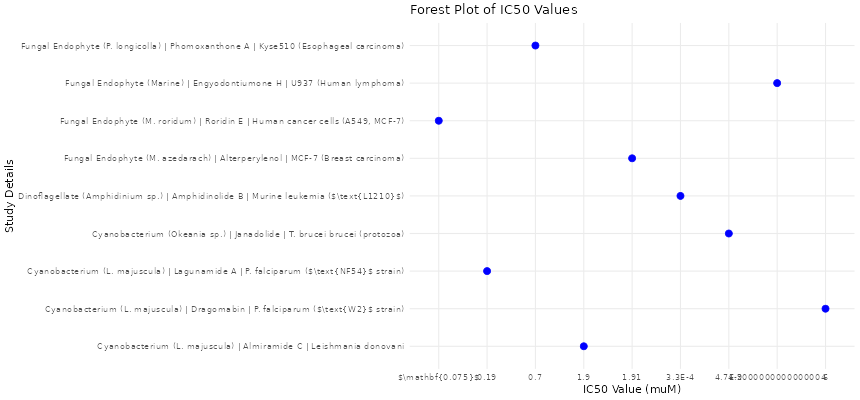
Figure 4 illustrates the cytotoxic and antiprotozoal efficacy of secondary metabolites using IC50 values. The data emphasize the exceptional potency of dinoflagellate and cyanobacterial metabolites, supporting their prioritization for further pharmacological investigation. Our results have practical implications for drug discovery and natural product research. First, they support the prioritization of microbial and endophytic sources for screening campaigns due to their higher and more consistent bioactivity (Gakuubi et al., 2021). Second, they emphasize the importance of methodological standardization, particularly for marine and plant metabolites, to reduce variability and improve reproducibility (Youssef et al., 2022). Third, the findings underscore the value of targeting specific metabolite classes, particularly alkaloids and polyketides, which consistently demonstrate potent bioactivity and therapeutic potential (Zheng et al., 2021). Future research should focus on integrating omics-based approaches, including genomics and metabolomics, to predict biosynthetic potential and streamline the discovery of high-value secondary metabolites (Xu., et al., 2023).

Figure 4. Cytotoxic and antiprotozoal efficacy of secondary metabolites based on IC50 values (µM). Illustrates pooled cytotoxic and antiparasitic effect sizes of secondary metabolites, highlighting variability across organismal sources and compound classes.

Despite the overall robustness of the findings, several limitations merit discussion. The reliance on published studies introduces a risk of selective reporting, though funnel plot analysis suggests this bias is minimal. Additionally, heterogeneity arising from differences in assay protocols, extraction methods, and reporting units remains a challenge, particularly for marine and plant-derived metabolites (Meena et al., 2019). Finally, while this review encompasses a broad temporal range and diverse sources, it is limited by the availability of quantitative data, as many studies report qualitative outcomes that cannot be synthesized in a meta-analytic framework (Nisa et al., 2015).

This systematic review and meta-analysis confirms that secondary metabolites from microbial, marine, and plant sources possess significant bioactivity, with microbial and endophytic sources emerging as particularly promising. Alkaloids and polyketides consistently demonstrate high potency across studies, supporting their prioritization in future pharmacological research (Hridoy et al., 2022). The findings provide a quantitative foundation for natural product discovery, guiding experimental design, source selection, and methodological standardization in future studies (Brakhage & Schroeckh, 2010).

5. Limitations

Several limitations of this study should be acknowledged. First, heterogeneity across included studies was moderate, reflecting differences in extraction methods, assay systems, and reporting units. While random-effects models and sensitivity analyses mitigated some variability, methodological inconsistencies remain a challenge, particularly for marine and plant-derived metabolites. Second, the analysis relied on published studies, which may introduce selective reporting or publication bias; although funnel plot assessments suggested minimal impact, unpublished or negative findings could further influence pooled effect sizes. Third, many studies reported qualitative outcomes, such as descriptive antimicrobial activity or inhibition zones, which could not be fully incorporated into the meta-analysis, limiting the comprehensiveness of the quantitative synthesis. Fourth, the diversity of source organisms and metabolite classes contributed to variability, potentially masking the effects of specific compounds or experimental conditions. Finally, ecological and environmental factors influencing metabolite production were not always reported, restricting the ability to fully account for contextual influences on bioactivity. Despite these limitations, the systematic review and meta-analysis provide robust insights into secondary metabolite potency, highlighting key trends and identifying high-potential sources and compound classes for future research.

6. Conclusion

This systematic review and meta-analysis demonstrate that secondary metabolites from microbial, marine, and plant sources exhibit significant bioactivity, with microbial and endophytic fungi emerging as particularly potent sources. Alkaloids and polyketides consistently demonstrate high therapeutic potential, supporting their prioritization in drug discovery. Despite moderate heterogeneity, findings are robust and provide a quantitative foundation to guide future research, emphasizing the importance of methodological standardization, targeted compound classes, and careful source selection in natural product discovery and pharmacological development.

References


Adeleke, B. S., & Babalola, O. O. (2021). Pharmacological potential of fungal endophytes associated with medicinal plants: A review. Journal of Fungi, 7(2), 147. https://doi.org/10.3390/jof7020147

Aly, A. H., Edrada-Ebel, R., Indriani, I. D., Wray, V., Müller, W. E. G., Totzke, F., Schächtele, C., Kubbutat, M. H. G., Lin, W. H., Proksch, P., et al. (2008). Cytotoxic metabolites from the fungal endophyte Alternaria sp. and their subsequent detection in its host plant Polygonum senegalense. Journal of Natural Products, 71(6), 972–980. https://doi.org/10.1021/np070447m

Amalfitano, C., Golubkina, N. A., Del Vacchio, L., Russo, G., Cannoniero, M., Somma, S., Morano, G., Cuciniello, A., & Caruso, G. (2019). Yield, antioxidant components, oil content, and composition of onion seeds are influenced by planting time and density. Plants, 8(8), 293. https://doi.org/10.3390/plants8080293

Anand, U., Jacobo-Herrera, N., Altemimi, A., & Lakhssassi, N. (2019). A comprehensive review on medicinal plants as antimicrobial therapeutics: Potential avenues of biocompatible drug discovery. Metabolites, 9(11), 258. https://doi.org/10.3390/metabo9110258

Ancheeva, E., Daletos, G., & Proksch, P. (2020). Bioactive secondary metabolites from endophytic fungi. Current Medicinal Chemistry, 27, 1836–1854. https://doi.org/10.2174/0929867326666190916144709

Andryukov, B., Mikhailov, V., & Besednova, N. (2019). The biotechnological potential of secondary metabolites from marine bacteria. Journal of Marine Science and Engineering, 7(7), 176. https://doi.org/10.3390/jmse7060176

Bhat, S. V., Nagasampagi, B. A., & Sivakumar, M. (2005). Chemistry of natural products. Springer.

Brakhage, A. A., & Schroeckh, V. (2010). Fungal secondary metabolites: Strategies to activate silent gene clusters. Fungal Genetics and Biology, 48, 15–22. https://doi.org/10.1016/j.fgb.2010.04.004

Caruso, G., Golubkina, N., Tallarita, A., Abdelhamid, M. T., & Sekara, A. (2020). Biodiversity, ecology, and secondary metabolites production of endophytic fungi associated with Amaryllidaceae crops. Agriculture, 10(11), 533. https://doi.org/10.3390/agriculture10110533

Cheng, Y.-B., Jensen, P. R., & Fenical, W. (2013). Cytotoxic and antimicrobial napyradiomycins from two marine-derived Streptomyces strains. European Journal of Organic Chemistry, 2013(18), 3751–3757. https://doi.org/10.1002/ejoc.201300349       

Conrado, R., Gomes, T. C., Roque, G. S. C., & De Souza, A. O. (2022). Overview of bioactive fungal secondary metabolites: Cytotoxic and antimicrobial compounds. Antibiotics, 11(12), 1604. https://doi.org/10.3390/antibiotics11111604

De La Hoz-Romo, M. C., Díaz, L., & Villamil, L. (2022). Marine Actinobacteria: A new source of antibacterial metabolites to treat acne vulgaris disease—A systematic literature review. Antibiotics, 11(7), 965. https://doi.org/10.3390/antibiotics11070965

Domingues, J., Delgado, F., Gonçalves, J. C., Zuzarte, M., & Duarte, A. P. (2023). Mediterranean lavenders from section Stoechas: An undervalued source of secondary metabolites with pharmacological potential. Metabolites, 13(3), 337. https://doi.org/10.3390/metabo13030337

Elshafie, H. S., Camele, I., & Mohamed, A. A. (2023). A comprehensive review on the biological, agricultural, and pharmaceutical properties of plant-origin secondary metabolites. International Journal of Molecular Sciences, 24(4), 3266. https://doi.org/10.3390/ijms24043266

Elshafie, H., Viggiani, L., Mostafa, M. S., El-Hashash, M. A., Camele, I., & Bufo, S. A. (2018). Biological activity and chemical identification of ornithine lipid produced by Burkholderia gladioli pv. agaricicola ICMP 11096 using LC-MS and NMR analyses. Journal of Biological Research – Bollettino della Società Italiana di Biologia Sperimentale, 91(1), 96–103. https://doi.org/10.4081/jbr.2017.6534

Gakuubi, M. M., Munusamy, M., Liang, Z.-X., & Ng, S. B. (2021). Fungal endophytes: A promising frontier for discovery of novel bioactive compounds. Journal of Fungi, 7(10), 786. https://doi.org/10.3390/jof7100786

Hridoy, M., Gorapi, M. Z. H., Noor, S., Chowdhury, N. S., Rahman, M. M., Muscari, I., Masia, F., Adorisio, S., Delfino, D. V., & Mazid, M. A. (2022). Putative anticancer compounds from plant-derived endophytic fungi: A review. Molecules, 27, 296. https://doi.org/10.3390/molecules27010296

Imhoff, J. F. (2016). Natural products from marine fungi—Still an underrepresented resource. Marine Drugs, 14(1), 19. https://doi.org/10.3390/md14010019

Iqbal, S., Begum, F., Rabaan, A. A., Aljeldah, M., Al Shammari, B. R., Alawfi, A., Alshengeti, A., Sulaiman, T., & Khan, A. (2023). Classification and multifaceted potential of secondary metabolites produced by Bacillus subtilis group: A comprehensive review. Molecules, 28(3), 927. https://doi.org/10.3390/molecules28030927

Jiao, W.-H., Yuan, W., Li, Z.-Y., Li, J., Li, L., Sun, J.-B., Gui, Y.-H., Wang, J., Ye, B.-P., & Lin, H.-W. (2018). Anti-MRSA actinomycins D1–D4 from the marine sponge-associated Streptomyces sp. LHW52447. Tetrahedron, 74(41), 5914–5919. https://doi.org/10.1016/j.tet.2018.08.023          

Keusgen, M., Schulz, H., Glodek, J., Krest, I., Krüger, H., Herchert, N., & Keller, J. (2002). Characterization of some Allium hybrids by aroma precursors, aroma profiles, and alliinase activity. Journal of Agricultural and Food Chemistry, 50(10), 2884–2890. https://doi.org/10.1021/jf011331d

Kim, C. K., Eo, J. K., & Eom, A. H. (2013). Diversity and seasonal variation of endophytic fungi isolated from three conifers in Mt. Taehwa, Korea. Mycobiology, 41, 82–85. https://doi.org/10.5941/MYCO.2013.41.2.82

Kobayashi, J., & Tsuda, M. (2004). Amphidinolides, bioactive macrolides from symbiotic marine dinoflagellates. Natural Product Reports, 21(1), 77–93. https://doi.org/10.1039/b310427n             

Kunz, A. L., Labes, A., Wiese, J., Bruhn, T., Bringmann, G., & Imhoff, J. F. (2014). Nature's lab for derivatization: New and revised structures of a variety of streptophenazines produced by a sponge-derived Streptomyces strain. Marine Drugs, 12(3), 1699–1714. https://doi.org/10.3390/md12041699     

Lin, T., Wang, G., Zhou, Y., Zeng, D., Liu, X., Ding, R., Jiang, X., Zhu, D., Shan, W., & Chen, H. (2014). Structure elucidation and biological activity of two new trichothecenes from an endophyte, Myrothecium roridum. Journal of Agricultural and Food Chemistry, 62(25), 5993–6000. https://doi.org/10.1021/jf501724a             

McPhail, K. L., Correa, J., Linington, R. G., González, J., Ortega-Barría, E., Capson, T. L., & Gerwick, W. H. (2007). Antimalarial linear lipopeptides from a Panamanian strain of the marine cyanobacterium Lyngbya majuscula. Journal of Natural Products, 70(6), 984–988. https://doi.org/10.1021/np0700772  

Meena, H., Hnamte, S., & Siddhardha, B. (2019). Secondary metabolites from endophytic fungi: Chemical diversity and application. In B. Singh (Ed.), Advances in Endophytic Fungal Research (Vol. 1, pp. 145–169). Springer, Cham, Switzerland. https://doi.org/10.1007/978-3-030-03589-1_7

Nawrot-Chorabik, K., Sulkowska, M., & Gumulak, N. (2022). Secondary metabolites produced by trees and fungi: Achievements so far and challenges remaining. Forests, 13(8), 1338. https://doi.org/10.3390/f13081338

Newman, D. J., & Cragg, G. M. (2020). Natural products as sources of new drugs over the nearly four decades from 01/1981 to 09/2019. Journal of Natural Products, 83(3), 770–803. https://doi.org/10.1021/acs.jnatprod.9b01285

Nicoletti, R., & Fiorentino, A. (2015). Plant bioactive metabolites and drugs produced by endophytic fungi of Spermatophyta. Agriculture, 5(4), 918–970. https://doi.org/10.3390/agriculture5040918

Nisa, H., Kamili, A. N., Nawchoo, I. A., Shafi, S., Shameem, N., & Bandh, S. A. (2015). Fungal endophytes as prolific source of phytochemicals and other bioactive natural products: A review. Microbial Pathogenesis, 82, 50–59. https://doi.org/10.1016/j.micpath.2015.04.001

Nurjannah, L., Azhari, A., & Supratman, U. (2023). Secondary metabolites of endophytes associated with the Zingiberaceae family and their pharmacological activities. Scientia Pharmaceutica, 91(1), 3. https://doi.org/10.3390/scipharm91010003

Ogawa, H., Iwasaki, A., Sumimoto, S., Kanamori, Y., Ohno, O., Iwatsuki, M., Ishiyama, A., Hokari, R., Otoguro, K., Omura, S., et al. (2016). Janadolide, a cyclic polyketide-peptide hybrid possessing a tert-butyl group from an Okeania sp. marine cyanobacterium. Journal of Natural Products, 79(7), 1862–1866. https://doi.org/10.1021/acs.jnatprod.6b00171            

Orefice, I., Balzano, S., Romano, G., & Sardo, A. (2023). Amphidinium spp. as a source of antimicrobial, antifungal, and anticancer compounds. Life, 13(11), 2164. https://doi.org/10.3390/life13112164

Palomo, S., González, I., de la Cruz, M., Martín, J., Tormo, J. R., Anderson, M., Hill, R. T., Vicente, F., Reyes, F., & Genilloud, O. (2013). Sponge-derived Kocuria and Micrococcus spp. as sources of the new thiazolyl peptide antibiotic kocurin. Marine Drugs, 11(4), 1071–1086. https://doi.org/10.3390/md11041071         

Pfannenstiel, R. T., & Keller, N. P. (2019). On top of biosynthetic gene clusters: How epigenetic machinery influences secondary metabolism in fungi. Biotechnology Advances, 37, 107345. https://doi.org/10.1016/j.biotechadv.2019.02.001

Pham, J. V., Yilma, M. A., Feliz, A., Majid, M. T., Maffetone, N., Walker, J. R., et al. (2019). A review of the microbial production of bioactive natural products and biologics. Frontiers in Microbiology, 10, 1404. https://doi.org/10.3389/fmicb.2019.01404

Rönsberg, D., Debbab, A., Mándi, A., Vasylyeva, V., Böhler, P., Stork, B., Engelke, L., Hamacher, A., Sawadogo, R., Diederich, M., et al. (2013). Pro-apoptotic and immunostimulatory tetrahydroxanthone dimers from the endophytic fungus Phomopsis longicolla. Journal of Organic Chemistry, 78(24), 12409–12425. https://doi.org/10.1021/jo402066b 

Sanchez, L. M., Lopez, D., Vesely, B. A., Della Togna, G., Gerwick, W. H., Kyle, D. E., & Linington, R. G. (2010). Almiramides A–C: Discovery and development of a new class of leishmaniasis lead compounds. Journal of Medicinal Chemistry, 53(10), 4187–4197. https://doi.org/10.1021/jm100265s         

Sánchez-Suárez, J., Coy-Barrera, E., Villamil, L., & Díaz, L. (2020). Streptomyces-derived metabolites with potential photoprotective properties—A systematic literature review and meta-analysis on the reported chemodiversity. Molecules, 25(14), 3221. https://doi.org/10.3390/molecules25143221

Seca, A. M. L., & Pinto, D. C. G. A. (2019). Biological potential and medical use of secondary metabolites. Medicines, 6(2), 66. https://doi.org/10.3390/medicines6020066

Soares, D. A., Rosa, L. H., Silva, J. M. F., & Pimenta, R. S. (2017). A review of bioactive compounds produced by endophytic fungi associated with medicinal plants. Boletim do Museu Paraense Emílio Goeldi: Ciências Naturais, 12, 331–352. https://doi.org/10.46357/bcnaturais.v12i3.83

Song, G., Zhang, Z., Niu, X., & Zhu, D. (2023). Secondary metabolites from fungi Microsphaeropsis spp.: Chemistry and bioactivities. Journal of Fungi, 9(11), 1093. https://doi.org/10.3390/jof9111093

Srinivasan, R., Kannappan, A., Shi, C., & Lin, X. (2021). Marine bacterial secondary metabolites: A treasure house for structurally unique and effective antimicrobial compounds. Marine Drugs, 19(10), 530. https://doi.org/10.3390/md19100530

Sudharshana, T. N., Venkatesh, H. N., Nayana, B., Manjunath, K., & Mohana, D. C. (2019). Antimicrobial and antimycotoxigenic activities of endophytic Alternaria alternata isolated from Catharanthus roseus (L.) G. Don: Molecular characterisation and bioactive compound isolation. Mycology, 10(1), 40–48. https://doi.org/10.1080/21501203.2018.1541933      

Sulaiman, M., Nissapatorn, V., Rahmatullah, M., Paul, A. K., Rajagopal, M., Rusdi, N. A., et al. (2022). Antimicrobial secondary metabolites from the mangrove plants of Asia and the Pacific. Marine Drugs, 20(10), 643. https://doi.org/10.3390/md20100643

Swamy, M. K., Tuyelee, D., Nandy, S., Mukherjee, A., Pandey, D. K., & Dey, A. (2022). Endophytes for the production of anticancer drug, paclitaxel. In M. K. Swamy, T. Pullaiah, & Z.-S. Chen (Eds.), Paclitaxel: Sources, Chemistry, Anticancer Actions, and Current Biotechnology (pp. 203–228). Academic Press, Cambridge, MA, USA. https://doi.org/10.1016/B978-0-323-90951-8.00012-6

Tripathi, A., Puddick, J., Prinsep, M. R., Kanekiyo, M., Young, K. A., Pilon, M., Simon, N. W., & Tan, L. T. (2010). Lagunamides A and B, cytotoxic and antimalarial cyclodepsipeptides from the marine cyanobacterium Lyngbya majuscula. Journal of Natural Products, 73(11), 1810–1814. https://doi.org/10.1021/np100442x             

Tsivileva, O. M., Koftin, O. V., & Evseeva, N. V. (2022). Coumarins as fungal metabolites with potential medicinal properties. Antibiotics, 11(9), 1156. https://doi.org/10.3390/antibiotics11091156

Vallavan, V., Krishnasamy, G., Zin, N. M., & Latif, M. A. (2020). A review on antistaphylococcal secondary metabolites from Basidiomycetes. Molecules, 25(24), 5848. https://doi.org/10.3390/molecules25245848

Wang, Y., Liu, H. X., Chen, Y. C., Sun, Z. H., Li, H. H., Li, S. N., Yan, M. L., & Zhang, W. M. (2017). Two new metabolites from the endophytic fungus Alternaria sp. A744 derived from Morinda officinalis. Molecules, 22(5), 765. https://doi.org/10.3390/molecules22050765   

Xu, K., Wei, X. L., Xue, L., Zhang, Z. F., & Zhang, P. (2020). Antimicrobial meroterpenoids and erythritol derivatives isolated from the marine-algal-derived endophytic fungus Penicillium chrysogenum XNM-12. Marine Drugs, 18, 578. https://doi.org/10.3390/md18110578

Xu, S., Li, M., Hu, Z., Shao, Y., Ying, J., & Zhang, H. (2023). The potential use of fungal co-culture strategy for discovery of new secondary metabolites. Microorganisms, 11(2), 464. https://doi.org/10.3390/microorganisms11020464

Yao, Q., Wang, J., Zhang, X., Nong, X., Xu, X., & Qi, S. (2014). Cytotoxic polyketides from the deep-sea-derived fungus Engyodontium album DFFSCS021. Marine Drugs, 12(12), 5902–5915. https://doi.org/10.3390/md12125902              

Yi, W., Li, Q., Song, T., Chen, L., Li, X.-C., Zhang, Z., & Lian, X.-Y. (2019). Isolation, structure elucidation, and antibacterial evaluation of the metabolites produced by the marine-sourced Streptomyces sp. ZZ820. Tetrahedron, 75(9), 1186–1193. https://doi.org/10.1016/j.tet.2019.01.025          

Youssef, D. T. A., Mufti, S. J., Badiab, A. A., & Shaala, L. A. (2022). Anti-infective secondary metabolites of the marine cyanobacterium Lyngbya morphotype between 1979 and 2022. Marine Drugs, 20(12), 768. https://doi.org/10.3390/md20120768

Zhang, H., Ruan, C., Bai, X., Zhang, M., Zhu, S., & Jiang, Y. (2016). Isolation and identification of the antimicrobial agent beauvericin from the endophytic F5-19 with NMR and ESI-MS/MS. BioMed Research International, 2016, Article 1084670. https://doi.org/10.1155/2016/1084670             

Zheng, R., Li, S., Zhang, X., & Zhao, C. (2021). Biological activities of some new secondary metabolites isolated from endophytic fungi: A review study. International Journal of Molecular Sciences, 22(2), 959. https://doi.org/10.3390/ijms22020959



Article metrics
View details
0
Downloads
0
Citations
23
Views

View Dimensions


View Plumx


View Altmetric


0
Save
0
Citation
23
View
0
Share