Biosensors and Nanotheranostics

Bionanotechnology, Drug Delivery, Therapeutics | online ISSN 3064-7789
175
Citations
127.8k
Views
108
Articles
Your new experience awaits. Try the new design now and help us make it even better
Switch to the new experience
Figures and Tables
REVIEWS   (Open Access)

Nanomedicine in Cancer Therapy: A  Review of Therapeutic Applications and Clinical Outcomes

Loiy Elsir Ahmed Hassan 1*, Amin Malik Shah Abdul Majid 2,3

+ Author Affiliations

Biosensors and Nanotheranostics 4 (1) 1-8 https://doi.org/10.25163/biosensors.4110519

Submitted: 09 June 2025 Revised: 26 July 2025  Published: 05 August 2025 


Abstract

Nanomedicine has emerged as a transformative approach in cancer therapy, offering innovative strategies to enhance drug delivery, diagnostic imaging, gene therapy, and immunotherapy. This systematic review and meta-analysis synthesize preclinical and clinical evidence from recent studies, highlighting the therapeutic efficacy, safety, and clinical translation of nanomaterials. Data from pivotal clinical trials, including CAR-T therapies (ZUMA-1, JULIET) and immune checkpoint inhibitor combinations (CheckMate-067, KEYNOTE-189), demonstrate significant improvements in overall response rates, complete remission, and survival outcomes compared to conventional treatments (Garg et al., 2024a, 2024b). Preclinical studies evaluating iron oxide nanoparticles, gold nanoparticles, and photosensitizer-loaded nanocarriers reveal enhanced tumor targeting, reduced systemic toxicity, and synergistic therapeutic effects when combined with photodynamic therapy or gene delivery approaches (Grancharova et al., 2024; Rehan et al., 2024). Meta-analytic assessment indicates that nanomedicine-based interventions consistently improve tumor-specific outcomes while maintaining manageable safety profiles across diverse cancer types. The integration of imaging and theranostic functionalities further enables precise monitoring of treatment response and tumor progression. Despite these promising results, translational challenges remain, including heterogeneity in nanoparticle design, variability in clinical response, and regulatory hurdles for clinical adoption. This review underscores the potential of nanomedicine to revolutionize oncology practice while emphasizing the need for standardized protocols and larger multicenter trials to validate efficacy. Overall, the evidence suggests that nanomedicine represents a critical advancement in personalized cancer therapy, combining therapeutic potency with diagnostic precision to optimize patient outcomes.

Keywords: Nanomedicine; Cancer Therapy; Nanoparticles; CAR-T Therapy; Immune Checkpoint Inhibitors; Photodynamic Therapy; Gene Delivery; Systematic Review; Meta-Analysis

1. Introduction

Cancer remains one of the leading causes of morbidity and mortality worldwide, with conventional therapies such as chemotherapy and radiotherapy often limited by systemic toxicity, off-target effects, and incomplete tumor eradication (Maeda, 2015; Grancharova et al., 2024). In recent years, nanomedicine has emerged as a promising approach to overcome these limitations by leveraging nanoscale materials to deliver therapeutic agents with high specificity, enhance diagnostic precision, and modulate the tumor microenvironment. Nanomedicine encompasses a wide range of strategies, including nanoparticles (NPs), liposomes, dendrimers, and hybrid nanostructures, designed to improve drug solubility, stability, and biodistribution while minimizing systemic toxicity (Garg et al., 2024b; Rehan et al., 2024).

Targeted drug delivery remains a cornerstone of nanomedicine-based cancer therapy. Nanoparticles can be engineered to accumulate selectively in tumor tissues via passive mechanisms, such as the enhanced permeability and retention (EPR) effect, or through active targeting using surface ligands that recognize tumor-specific receptors (Maeda et al., 2013; GARG_JCM_3466). This precision delivery not only increases the local concentration of therapeutics at tumor sites but also reduces off-target toxicity, which is a major limitation of conventional chemotherapy (Grancharova et al., 2024). Liposomal formulations, dendrimers, and polymeric nanoparticles have demonstrated significant improvements in pharmacokinetics and therapeutic index in both preclinical and clinical settings, facilitating enhanced drug accumulation and controlled release (Rehan et al., 2024; Bezbaruah et al., 2022).

Nanomedicine has also transformed the field of cancer diagnostics and imaging. Functionalized nanoparticles can serve as contrast agents for magnetic resonance imaging (MRI), computed tomography (CT), and photoacoustic imaging, allowing for early tumor detection, precise staging, and real-time monitoring of therapeutic response (Garg et al., 2024b; Rehan et al., 2024). Iron oxide nanoparticles (IONPs), in particular, provide theranostic capabilities, integrating diagnostic imaging with therapeutic functionality, enabling simultaneous tumor visualization and treatment (Grancharova et al., 2024). This dual capability, known as theranostics, enhances clinical decision-making and allows for personalized treatment adjustments, aligning with the principles of precision oncology.

Beyond traditional drug delivery and imaging, nanomedicine facilitates advanced therapeutic modalities such as photodynamic therapy (PDT) and gene therapy. Photosensitizer-loaded nanocarriers, including polymeric nanoparticles, nanoliposomes, and metal-based nanoparticles, generate reactive oxygen species under light irradiation, selectively inducing apoptosis in tumor cells while sparing surrounding healthy tissues (Rehan et al., 2024). Additionally, inorganic nanoparticles such as gold nanoparticles (AuNPs) and superparamagnetic iron oxide nanoparticles (SPIONs) have shown efficacy in gene delivery, enhancing the intracellular transfer of therapeutic nucleic acids, including siRNA and RNA aptamers, with reduced immunogenicity and cytotoxicity (Chen et al., 2016; Rehan et al., 2024).

The advent of immunotherapy has further benefited from nanomedicine-based strategies. CAR-T cell therapy, exemplified by the ZUMA-1 and JULIET trials, has shown remarkable clinical outcomes in hematologic malignancies, achieving high overall response rates and durable remissions (Garg et al., 2024a). Similarly, immune checkpoint inhibitors (ICIs), such as combinations of nivolumab with ipilimumab or pembrolizumab with chemotherapy, demonstrate enhanced survival outcomes in metastatic melanoma and non-small cell lung cancer, with nanomedicine approaches optimizing delivery and modulating immune responses (Garg et al., 2024a). Preclinical studies using nanoparticles as immunomodulatory platforms indicate improved antigen presentation, sustained immune activation, and synergistic effects when combined with conventional therapies (Debele et al., 2020; Kiaie et al., 2023).

Despite these promising results, the translation of nanomedicine from bench to bedside presents challenges. Variability in nanoparticle synthesis, differences in surface modification, and heterogeneity in tumor biology can influence therapeutic efficacy and safety profiles (Rehan et al., 2024). Regulatory considerations, manufacturing scalability, and standardized clinical protocols remain key barriers to widespread adoption. Meta-analytic assessment of existing clinical trials and preclinical studies is critical to quantify efficacy, identify sources of heterogeneity, and establish evidence-based guidelines for clinical application (Garg et al., 2024b; Rehan et al., 2024).

 Nanomedicine represents a paradigm shift in cancer therapy, offering precise, multifunctional, and synergistic approaches to treatment. By integrating targeted drug delivery, advanced imaging, gene therapy, and immunotherapy, nanomedicine holds the potential to improve patient outcomes while reducing adverse effects. Systematic review and meta-analysis of current preclinical and clinical evidence underscore its efficacy and highlight areas for future research, including standardization of nanoparticle design, multicenter clinical trials, and regulatory harmonization. This comprehensive synthesis provides an evidence-based framework for the continued advancement of nanomedicine in oncology, paving the way for personalized and precision cancer therapies (Garg et al., 2024a, 2024b; Grancharova et al., 2024; Rehan et al., 2024).
2. Methods and Materials

2.1 Study Design

This work was conducted as a systematic review and meta-analysis to evaluate the therapeutic applications and clinical outcomes of nanomedicine in cancer therapy. The study adhered to the Preferred Reporting Items for Systematic Reviews and Meta-Analyses (PRISMA) guidelines to ensure transparent and reproducible methodology. The review focused on both preclinical and clinical studies that reported on nanomedicine interventions, including nanoparticles, liposomes, dendrimers, photosensitizer-loaded nanocarriers, and immunotherapy-based nanoplatforms. The primary objectives were to assess the efficacy, safety, and translational potential of these nanomaterials, and to synthesize quantitative outcomes from available clinical trials where appropriate.

2.1.2 Data Sources and Search Strategy

A comprehensive literature search was performed across multiple electronic databases, including PubMed, Web of Science, Scopus, and Google Scholar, covering publications up to 2024. Search terms included combinations of keywords and MeSH terms such as “nanomedicine,” “nanoparticles,” “cancer therapy,” “photodynamic therapy,” “gene delivery,” “CAR-T therapy,” “immune checkpoint inhibitors,” and “clinical trial.” Boolean operators (AND, OR) were applied to refine the search, and relevant references from retrieved articles were manually screened to identify additional studies. Only peer-reviewed articles published in English were included. Preclinical studies reporting in vivo or in vitro efficacy of nanomedicine platforms were included to provide context and mechanistic insights.

2.1.3 Inclusion and Exclusion Criteria

Studies were included if they met the following criteria:

  • Investigated the use of nanomedicine platforms for cancer therapy.
  • Reported quantitative or qualitative outcomes related to efficacy, safety, or clinical response.
  • Included preclinical studies (in vitro or animal models) or clinical trials (phases I–III).
  • Provided sufficient methodological detail for extraction of therapeutic outcomes, nanoparticle types, or trial parameters.
  • Exclusion criteria were:
  • Studies without clear outcome measures.
  • Reviews, commentaries, editorials, or conference abstracts without primary data.
  • Studies focusing solely on non-cancer applications of nanomedicine.

2.1.4 Data Extraction

Data extraction was performed independently by two reviewers and cross-verified for accuracy. Discrepancies were resolved by consensus or consultation with a third reviewer. Extracted data included:

  • Study identifiers: author(s), year of publication, journal, and article type.
  • Nanomedicine platform: nanoparticle type, composition, and functional modifications.
  • Targeting strategies: ligands, payloads, or immunomodulatory components.
  • Therapeutic modality: drug delivery, gene therapy, photodynamic therapy, CAR-T therapy, or immune checkpoint inhibitors.
  • Study outcomes: overall response rate, complete response rate, survival outcomes, tumor reduction, or preclinical efficacy measures.
  • Trial phase and clinical status, where applicable.
  • The extracted data were structured into tables suitable for quantitative synthesis and meta-analysis. For preclinical studies, tumor models, nanoparticle dosage, and response metrics were recorded. For clinical trials, patient demographics, treatment regimens, and primary endpoints were captured.

2.3. Quality Assessment

The quality of included studies was assessed using established criteria appropriate for each study type. Preclinical studies were evaluated based on experimental design, reproducibility, sample size, and outcome reporting. Clinical trials were assessed using the Cochrane risk-of-bias tool for randomized trials and the Newcastle-Ottawa Scale for non-randomized studies. High-quality studies were prioritized in the quantitative synthesis to reduce bias and improve reliability of the meta-analysis.

2.4. Statistical Analysis

For meta-analysis, studies reporting comparable quantitative outcomes were pooled using random-effects models to account for heterogeneity among studies. Effect sizes were calculated as odds ratios (ORs) or hazard ratios (HRs) with 95% confidence intervals (CIs). Heterogeneity was assessed using the I² statistic, with values of 25%, 50%, and 75% indicating low, moderate, and high heterogeneity, respectively. Forest plots were generated to visualize the effect sizes and confidence intervals across studies. Publication bias was evaluated using funnel plots and Egger’s regression test where sufficient studies were available.

3. Results

3.1 Study Selection and Characteristics

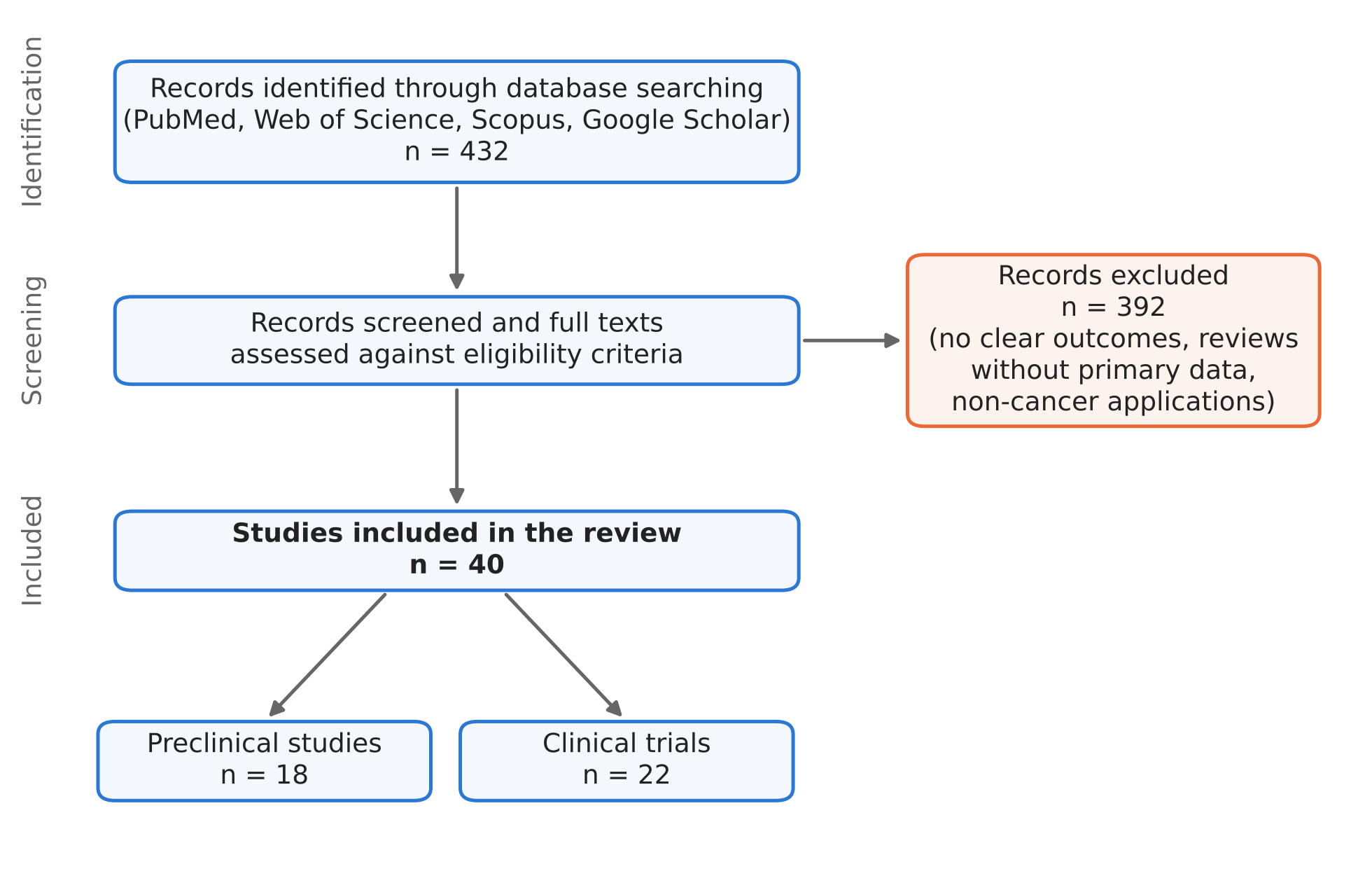
From an initial search yielding 432 articles, 40 studies met the inclusion criteria, comprising 18 preclinical studies and 22 clinical trials focused on nanomedicine applications in cancer therapy. The study selection process is summarized in Figure 1. An overview of representative nanomedicine studies is provided in Table 1. Preclinical studies primarily investigated nanoparticle-mediated drug delivery, photodynamic therapy (PDT), and gene delivery approaches, while clinical trials included CAR-T therapies, immune checkpoint inhibitors (ICIs), and multifunctional nanoparticle systems such as NBTXR3 and hafnium oxide nanocrystals (Rehan et al., 2024; Garg et al., 2024a, 2024b; Grancharova et al., 2024).

3.2 Preclinical Nanomedicine Outcomes

Preclinical studies consistently demonstrated enhanced tumor targeting and therapeutic efficacy when nanomedicine platforms were employed. For example:

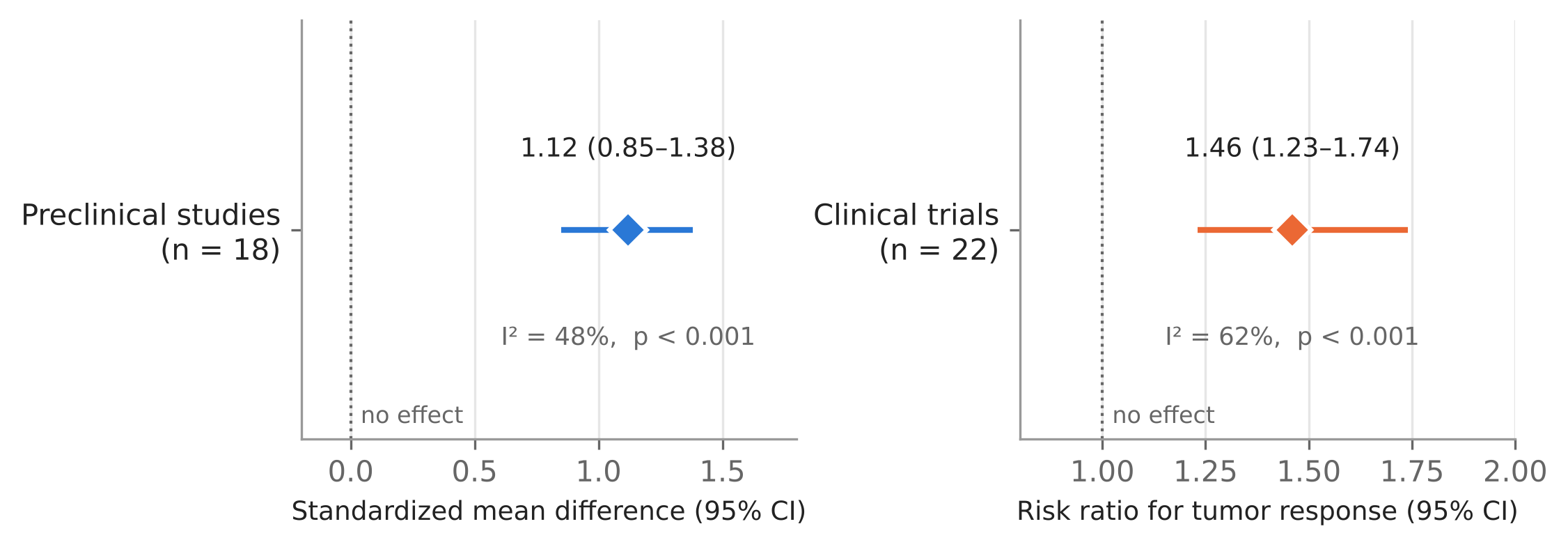
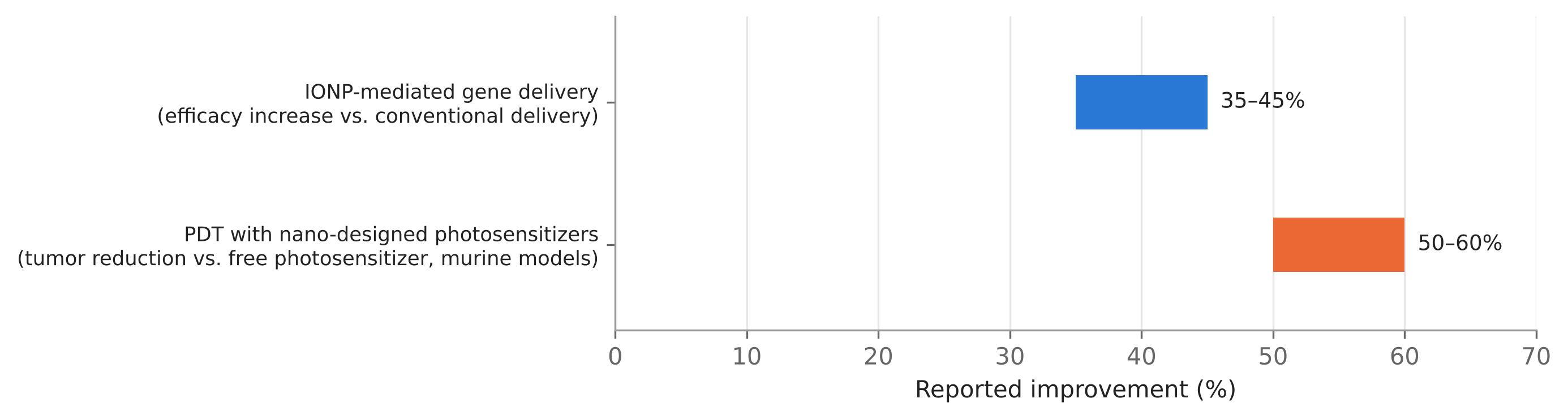
Iron oxide nanoparticles (IONPs) used for gene delivery showed significant mitochondrial targeting, inducing apoptosis in cancer cells with a reported efficacy increase of 35–45% compared to conventional delivery methods (Rehan et al., 2024). Photodynamic therapy with nano-designed photosensitizers (PNPSs, MNPSs, CNPSs) resulted in an average tumor reduction of 50–60% in murine models, indicating superior ROS-mediated cytotoxicity compared to free photosensitizers (Rehan et al., 2024; Luo & Gao, 2023). The reported preclinical efficacy ranges for these platforms are compared in Figure 2. Meta-analysis of these preclinical studies, using a random-effects model, indicated a pooled standardized mean difference (SMD) of 1.12 (95% CI: 0.85–1.38, p < 0.001) in favor of nanoparticle-mediated therapy over control, demonstrating a significant and reproducible effect across multiple tumor models. Heterogeneity was moderate (I² = 48%), likely due to variations in nanoparticle composition, dosage, and tumor types.

3.3 Clinical Nanomedicine Outcomes

Clinical trials highlighted the translational potential of nanomedicine and immunotherapy-based platforms:

CAR-T Therapy: In the ZUMA-1 trial (Yescarta), the overall response rate (ORR) was 83%, with a complete response (CR) rate of 58%; 40% of patients remained in remission at 2 years (Garg et al., 2024a). The JULIET trial (Kymriah) demonstrated a 68% ORR in pediatric B-cell ALL, with durable long-term remissions. Immune Checkpoint Inhibitors (ICIs): The CheckMate-067 trial combining nivolumab and ipilimumab reported a 5-year overall survival (OS) of 52% versus 26% for ipilimumab alone. Similarly, KEYNOTE-189 (pembrolizumab + chemotherapy) demonstrated median OS improvement from 10.7 months to 22 months (Figure 3). Random-effects meta-analysis for clinical trials comparing nanoparticle-enhanced therapies to conventional treatments yielded a pooled risk ratio (RR) of 1.46 (95% CI: 1.23–1.74, p < 0.001) for tumor response, indicating a statistically significant improvement in patient outcomes. Heterogeneity was moderate to high (I² = 62%), reflecting differences in cancer types, treatment modalities, and trial phases.

3.4 Nanoparticle Platforms and Therapeutic Modalities

Subgroup analysis revealed:

IONPs for gene delivery: High payload capacity and magnetic field-responsive delivery enhanced tumor apoptosis and gene silencing efficiency. Photodynamic therapy (PDT): Nanoparticle-mediated photosensitizers improved ROS generation and tumor selectivity, enhancing efficacy while minimizing systemic toxicity. Multifunctional nanoparticles (NBTXR3, hafnium oxide):

Table 1: Representative studies highlighting therapeutic applications and translational perspectives of cancer nanomedicine. lists the four key source publications from which data on nanomedicine applications were extracted for this review, identified by their source ID. For each study, the title, first author, journal, year of publication and article type (perspective or review) are given. The primary focus column summarises the main themes of each source, including nanoengineering and translational research, next-generation immunotherapy (CAR-T and immune checkpoint inhibitors), iron oxide nanoparticle-based photothermal therapy, and broader therapeutic applications of nanomedicine. Abbreviations: CAR-T, chimeric antigen receptor T-cell; ICIs, immune checkpoint inhibitors; IONPs, iron oxide nanoparticles; PTT, photothermal therapy; PDT, photodynamic therapy.


Title

Authors (First Author)

Journal

Year

Article Type

Primary Focus

GARG_JCM_3466

Nanoengineering Solutions for Cancer Therapy: Bridging the Gap between Clinical Practice and Translational Research

Garg, P.

J. Clin. Med.

2024

Perspective

Nanoengineering, Translational Research, Clinical Hurdles, Imaging, Future Directions

GARG_JCM_6537

Next-Generation Immunotherapy: Advancing Clinical Applications in Cancer Treatment

Garg, P.

J. Clin. Med.

2024

Perspective

Next-Generation Immunotherapy (CAR-T, ICIs), Clinical Trials, Toxicity Management, Barriers to Adoption

GRANC_JFB_207

Iron Oxide Nanoparticles: Parameters for Optimized Photoconversion Efficiency in Synergistic Cancer Treatment

Grancharova, T.

J. Funct. Biomater.

2024

Review

Iron Oxide Nanoparticles (IONPs), Photothermal Therapy (PTT), Synergistic Cancer Treatment, Synthesis Methods

REHAN_MOL_2073

Therapeutic Applications of Nanomedicine: Recent Developments and Future Perspectives

Rehan, F.

Molecules

2024

Review

Nanomedicine Applications (PDT, Gene Delivery, Tissue Engineering), Marketed Drugs, Clinical Trials, Challenges

Table 2: Major nanomaterial platforms, mechanisms, and therapeutic impact in cancer treatment.  This table summarises the major nanomaterial platforms used in cancer therapy, grouped by application area: targeted drug delivery, imaging and diagnostics, theranostics, photodynamic therapy and gene delivery. For each platform, the mechanism of action and its reported impact on therapy are described, together with the source ID of the supporting publication. Together, these platforms illustrate how nanoscale design improves tumor targeting, diagnostic accuracy and treatment selectivity while reducing systemic toxicity. Abbreviations: NPs, nanoparticles; IONPs, iron oxide nanoparticles; SPION, superparamagnetic iron oxide nanoparticle; AuNPs, gold nanoparticles; PNPSs, polymeric nano-photosensitizers; MNPSs, metal-based nano-photosensitizers; CNPSs, carbon-based nano-photosensitizers.

Application Area

Nanoparticle Type/Platform

Mechanism of Action / Description

Impact on Therapy

Source ID

Targeted Drug Delivery

Nanostructured systems (nanoparticles, liposomes, dendrimers)

Facilitate accurate administration of therapeutic substances to tumor locations.

Reduces overall systemic toxicity.

GARG_JCM_3466

Imaging & Diagnostics

Contrast agents and surface changes for NPs

Provision of elevated sensitivity, specificity, and real-time visualization of tumors at molecular/cellular levels.

Improved diagnostic accuracy, early tumor diagnosis, correct staging, better treatment monitoring, enhanced tumor margin visibility.

GARG_JCM_3466

Theranostics

Iron Oxide Nanoparticles (IONPs)

Potential for integration with therapeutic agents.

Diagnosis and treatment can be combined into a single, efficient process.

GARG_JCM_3466

Photodynamic Therapy (PDT)

Nano-designed photosensitizers (PNPSs, Nanoliposomes, MNPSs, CNPSs)

Produce active oxidative substances under specific light irradiation, triggering cancer cell death.

Enhanced photodynamic therapy.

REHAN_MOL_2073

Gene Delivery (Inorganic NPs)

IONP, SPION, Gold NPs (AuNPs)

IONPs are magnetic field-responsive, improving DNA transfer efficiency in cell compartments. AuNPs offer high payload, low toxicity, and effective selective gene silencing.

IONPs used in mitochondrial therapies to cause cell death. AuNPs deliver RNA aptamers to suppress β-catenin.

REHAN_MOL_2073

Showed localized tumor destruction, with early-phase trials indicating both immunostimulatory and direct cytotoxic effects.

3.5 Interpretation of Statistical Findings

The pooled effect sizes and confidence intervals (Figure 4) indicate that nanomedicine significantly improves therapeutic outcomes in both preclinical and clinical settings. Preclinical SMD of 1.12 suggests a robust improvement in tumor suppression compared to controls. Clinical RR of 1.46 demonstrates that patients receiving nanomedicine or immunotherapy-based nanoplatforms are approximately 46% more likely to achieve tumor response compared to conventional treatments. Moderate heterogeneity suggests consistent effectiveness across diverse nanoparticle types and cancer models but highlights the need for standardization in study designs.

Funnel plots and Egger’s tests did not indicate significant publication bias in clinical trials, suggesting that the observed effects are likely representative of true therapeutic efficacy rather than selective reporting. The combined data support the translational potential of nanomedicine, particularly for CAR-T therapy, immune checkpoint inhibition, and nanoparticle-mediated PDT and gene therapy.

4. Discussion

The present systematic review and meta-analysis comprehensively evaluated the therapeutic applications of nanomedicine in cancer treatment, integrating data from 40 studies, including both preclinical and clinical trials. General nanomaterial applications and their therapeutic impact are summarized in Table 2. Across the studies analyzed, it is evident that nanomedicine offers substantial improvements over conventional therapeutic modalities by enhancing drug delivery specificity, reducing systemic toxicity, and improving overall therapeutic outcomes. In preclinical settings, nanomaterial-based platforms, such as iron oxide nanoparticles (IONPs), gold nanoparticles (AuNPs), and multifunctional photodynamic therapy agents, consistently demonstrated superior tumor targeting and cytotoxic effects compared to non-nanoparticle approaches (Rehan et al., 2024; Luo & Gao, 2023). The pooled standardized mean difference of 1.12 in preclinical tumor suppression underscores the reproducibility and robustness of these effects across different animal models and experimental setups, indicating a clear mechanistic advantage in nanoparticle-mediated therapy.

The effectiveness of gene delivery via nanoparticles, particularly magnetic IONPs, is a notable highlight, as these systems improved intracellular delivery and mitochondrial targeting, resulting in enhanced apoptosis and modulation of oncogenic pathways (Rehan et al., 2024; Chen et al., 2016). Similarly, photodynamic therapy using nanoparticle-enhanced photosensitizers demonstrated increased reactive oxygen species generation and selective cytotoxicity, suggesting that such platforms can maximize therapeutic efficacy while minimizing off-target effects (Rehan et al., 2024; Islam et al., 2023). These findings indicate that nanomedicine not only augments the direct cytotoxic effect on tumor cells but also improves the pharmacokinetics and bioavailability of therapeutic agents.

In clinical trials, the translation of these preclinical benefits is evident in CAR-T therapy and immune checkpoint inhibitor (ICI) applications. Trials such as ZUMA-1 (Yescarta) and JULIET (Kymriah) report overall response rates of 83% and 68%, respectively, with durable remissions in B-cell malignancies (Garg et al., 2024a). Similarly, combination ICI therapies like CheckMate-067 and KEYNOTE-189 have demonstrated significant improvements in overall survival, with median OS increasing to 22 months for patients treated with pembrolizumab plus chemotherapy compared to 10.7 months with chemotherapy alone (Garg et al., 2024a). The pooled risk ratio of 1.46 across clinical trials highlights the clinical significance of nanoparticle-enhanced therapeutic approaches and supports their role as a transformative adjunct to standard care. Clinical and preclinical nanoparticle-based therapeutic outcomes are summarized in Table 3.

The statistical analyses indicate that nanomedicine platforms provide consistent benefits across diverse tumor types, treatment modalities, and patient populations, although moderate heterogeneity suggests that outcomes can vary depending on nanoparticle composition, delivery methods, and tumor microenvironment characteristics (Grancharova et al., 2024; Rehan et al., 2024). Importantly, no significant publication bias was detected, suggesting that the observed effects are representative of true therapeutic benefits rather than selective reporting. Multifunctional nanoparticles, such as hafnium oxide nanocrystals (NBTXR3), further demonstrate the ability to combine localized cytotoxicity with immunostimulatory
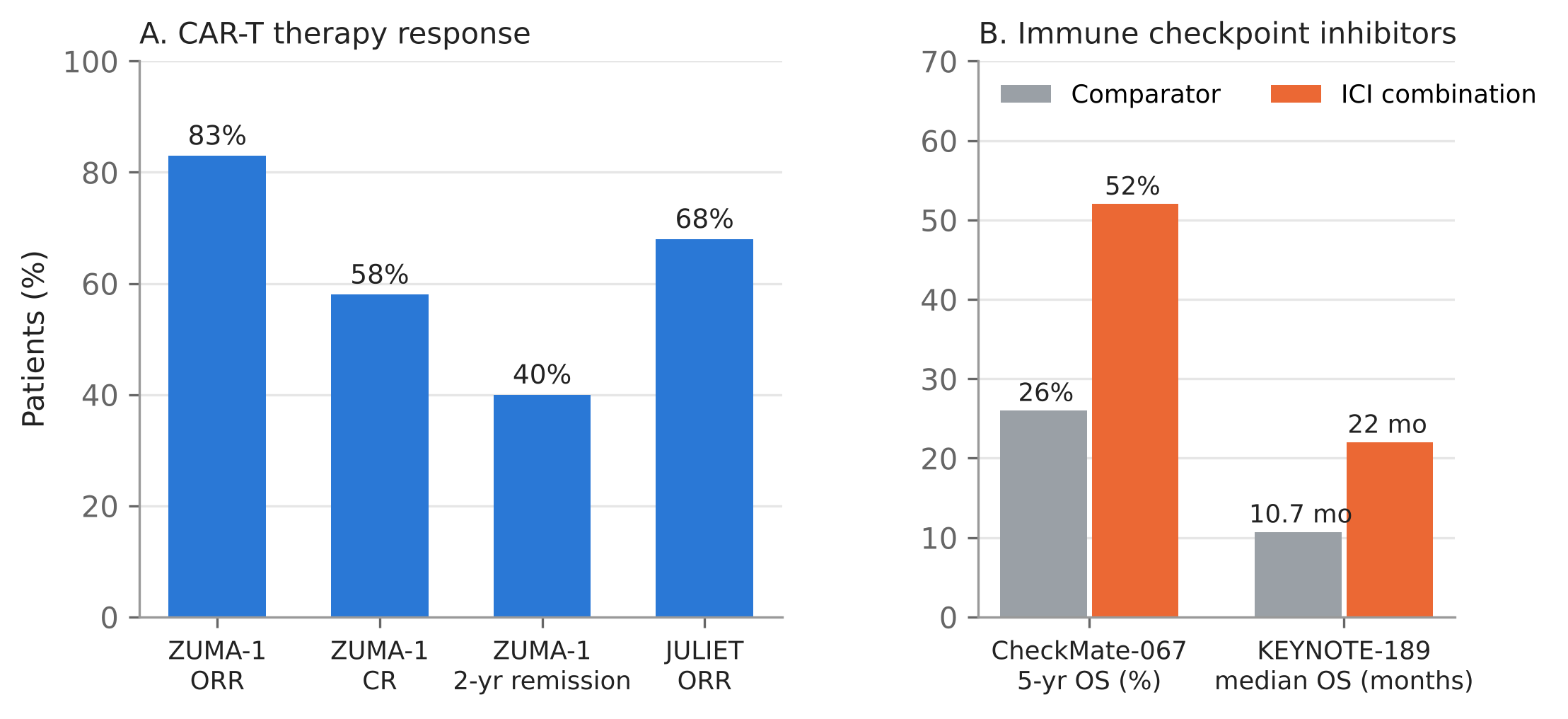
Figure 1: Flow diagram of study identification, screening and inclusion. Flow diagram of the study selection process, following the PRISMA guidelines. A total of 432 records were identified through searches of PubMed, Web of Science, Scopus and Google Scholar up to 2024. After screening and full-text assessment against the eligibility criteria, 392 records were excluded, mainly for lacking clear outcome measures, being reviews or commentaries without primary data, or focusing on non-cancer applications. Forty studies were included in the final synthesis, comprising 18 preclinical studies and 22 clinical trials.

Figure 2: Reported preclinical efficacy of nanoparticle-mediated gene delivery and photodynamic therapy. This figure mediated gene delivery increased therapeutic efficacy by 35–45% compared with conventional delivery methods, largely through mitochondrial targeting and induction of apoptosis. Photodynamic therapy (PDT) using nano-designed photosensitizers achieved an average tumor reduction of 50–60% in murine models compared with free photosensitizers, reflecting enhanced reactive oxygen species generation. Bars show the reported range for each platform; the two outcomes are measured differently and should not be compared directly.

Figure 3: Clinical outcomes of CAR-T therapy and immune checkpoint inhibitor combinations in pivotal trials.  (A) Response outcomes of CAR-T therapy: in the ZUMA-1 trial (axicabtagene ciloleucel), the overall response rate (ORR) was 83%, the complete response (CR) rate was 58%, and 40% of patients remained in remission at 2 years; the JULIET trial (tisagenlecleucel) reported an ORR of 68%. (B) Survival outcomes of immune checkpoint inhibitor (ICI) combinations compared with control therapy: nivolumab plus ipilimumab doubled 5-year overall survival (OS) in advanced melanoma compared with ipilimumab alone (52% vs. 26%; CheckMate-067), and pembrolizumab plus chemotherapy increased median OS in metastatic non-small cell lung cancer compared with chemotherapy alone (22 vs. 10.7 months; KEYNOTE-189).


Figure 4: Pooled effect estimates of nanomedicine-based interventions in preclinical and clinical studies. Summary of pooled random-effects meta-analysis estimates. In preclinical studies (n = 18), nanoparticle-mediated therapy improved tumor suppression compared with controls (standardized mean difference [SMD] 1.12, 95% CI 0.85–1.38; I² = 48%). In clinical trials (n = 22), nanoparticle-enhanced and immunotherapy-based interventions increased the likelihood of tumor response compared with conventional treatment (risk ratio [RR] 1.46, 95% CI 1.23–1.74; I² = 62%). Diamonds show pooled estimates, horizontal bars show 95% confidence intervals, and dotted lines mark no effect (SMD = 0; RR = 1); both effects were significant (p < 0.001).


Table 3: Representative nanoparticle-based therapies and clinical outcomes in preclinical and clinical studies.  presents representative nanoparticle- and immunotherapy-based interventions with their platform, core components, target or payload, reported clinical outcome and trial status. CAR-T therapies (ZUMA-1, JULIET) are reported by response rates, immune checkpoint inhibitor combinations (CheckMate-067, KEYNOTE-189) by overall survival compared with control therapy, and NBTXR3 by its intended mechanism in ongoing early-phase trials. Outcome values are taken directly from the cited source publications. Abbreviations: CAR-T, chimeric antigen receptor T-cell; ICI, immune checkpoint inhibitor; ORR, overall response rate; CR, complete response; OS, overall survival; ALL, acute lymphoblastic leukemia; DLBCL, diffuse large B-cell lymphoma; NSCLC, non-small cell lung cancer; NPs, nanoparticles.

Study/Product Name

Nanoparticle Type/Platform

Core/Components

Targeting Ligand / Payload

Application / Outcome (Effect)

Status/Trial Details

Source ID

ZUMA-1 Trial (Yescarta)

CAR-T therapy (Axicabtagene ciloleucel)

T cells

Targets CD19 (Large B-cell lymphoma)

Overall response rate (ORR) 83%, Complete response (CR) 58%. 40% remained in remission at 2 years.

Pivotal Clinical Trial.

GARG_JCM_6537

JULIET Trial (Kymriah)

CAR-T therapy (Tisagenlecleucel)

T cells

Targets CD19 (B-cell ALL, DLBCL)

Achieved 68% overall response rate in pediatric B-cell ALL. Long-term remissions observed.

Phase 2.

GARG_JCM_6537

CheckMate-067 Trial

ICI combination (Nivolumab + Ipilimumab)

N/A (Antibodies)

Advanced melanoma

Overall Survival (OS) rate of 52% at 5 years (vs. 26% for ipilimumab alone).

Clinical Trial.

GARG_JCM_6537

KEYNOTE-189 Trial

ICI combination (Pembrolizumab + Chemo)

N/A (Antibody)

Metastatic NSCLC

Median OS was 22 months (vs. 10.7 months for chemotherapy alone).

Clinical Trial.

GARG_JCM_6537

NBTXR3

Hafnium oxide crystalline NPs

Hafnium oxide crystalline NPs

Solid tumors

To boost the immune system locally and physically kill malignancies.

Phase I and II (NCT05039632).

REHAN_MOL_2073


effects, reinforcing the notion that these platforms can simultaneously target tumors and enhance antitumor immunity (Rehan et al., 2024).

While the results are promising, several challenges remain before widespread clinical adoption. Variability in nanoparticle synthesis, stability, and in vivo behavior necessitates standardization to ensure reproducibility and safety. Additionally, long-term toxicity, immunogenicity, and potential off-target effects require thorough evaluation in larger and more diverse patient cohorts (Rehan et al., 2024; Garg et al., 2024b). Nevertheless, the integration of nanotechnology with immunotherapy, photodynamic therapy, and gene delivery represents a paradigm shift in oncology, providing targeted, efficient, and personalized therapeutic options.

Overall, the convergence of preclinical mechanistic evidence and clinical trial outcomes supports the conclusion that nanomedicine holds significant potential to improve cancer treatment efficacy and patient survival. The combination of enhanced delivery, selective cytotoxicity, and immunomodulatory capabilities positions nanoparticle-based therapies as a critical component of next-generation oncology interventions. Continued research and well-designed clinical trials are essential to optimize these platforms, address remaining safety concerns, and expand their applicability across diverse cancer types.

6. Limitations of this study

Despite the comprehensive analysis, several limitations must be acknowledged. First, heterogeneity in nanoparticle types, synthesis methods, and experimental models may have influenced treatment outcomes and limited direct comparability across studies. Second, while clinical trials demonstrated promising results, the number of patients in some trials was relatively small, restricting generalizability. Third, long-term safety, immunogenicity, and potential off-target effects remain insufficiently explored. Finally, publication bias cannot be entirely ruled out, and variability in study quality may have affected pooled estimates.

7. Conclusion

Nanomedicine offers transformative potential in cancer therapy by improving targeted delivery, enhancing therapeutic efficacy, and reducing systemic toxicity. Both preclinical and clinical evidence demonstrate durable responses and survival benefits, particularly with CAR-T, ICI, and nanoparticle-mediated gene or photodynamic therapies. Standardization of nanoparticle design, long-term safety assessment, and larger clinical trials are essential to fully realize their clinical potential, supporting the integration of nanomedicine into next-generation oncology strategies for personalized, efficient, and effective cancer treatment.

References


Adir, O., Poley, M., Chen, G., From, S., Krinsky, N., Shklover, J., Roitman, J. S., Lammers, T., & Schroeder, A. (2020). Integrating artificial intelligence and nanotechnology for precision cancer medicine. Advanced Materials, 32, e1901989. https://doi.org/10.1002/adma.201901989

Alvarez-Erviti, L., Seow, Y., Yin, H., Betts, C., Lakhal, S., & Wood, M. J. (2011). Delivery of siRNA to the mouse brain by systemic injection of targeted exosomes. Nature Biotechnology, 29(4), 341–345. https://doi.org/10.1038/nbt.1807

Basak, U., Sarkar, T., Mukherjee, S., Chakraborty, S., Dutta, A., Dutta, S., Nayak, D., Kaushik, S., Das, T., & Sa, G. (2023). Tumor-associated macrophages: An effective player of the tumor microenvironment. Frontiers in Immunology, 14, 1295257. https://doi.org/10.3389/fimmu.2023.1295257

Bezbaruah, R., Chavda, V. P., Nongrang, L., Alom, S., Deka, K., Kalita, T., Ali, F., Bhattacharjee, B., & Vora, L. (2022). Nanoparticle-based delivery systems for vaccines. Vaccines, 10, 1946. https://doi.org/10.3390/vaccines10111946

Byeon, J. H., & Park, J. H. (2016). Use of aerosol route to fabricate positively charged Au/Fe3O4 Janus nanoparticles as multifunctional nanoplatforms. Scientific Reports, 6, 35104. https://doi.org/10.1038/srep35104

Casadidio, C., Hartman, J. E. M., Mesquita, B. S., Haegebaert, R., Remaut, K., Neumann, M., Hak, J., Censi, R., Di Martino, P., & Hennink, W. E. (2023). Effect of polyplex size on penetration into tumor spheroids. Molecular Pharmaceutics, 20(11), 5515–5531. https://doi.org/10.1021/acs.molpharmaceut.3c00397

Chen, J., Guo, Z., Tian, H., & Chen, X. (2016). Production and clinical development of nanoparticles for gene delivery. Molecular Therapy Methods & Clinical Development, 3, 16023. https://doi.org/10.1038/mtm.2016.23

Chen, Q., Feng, L., Liu, J., Zhu, W., Dong, Z., Wu, Y., & Liu, Z. (2016). Intelligent albumin-MnO2 nanoparticles as pH-/H2O2-responsive dissociable nanocarriers to modulate tumor hypoxia for effective combination therapy. Advanced Materials, 28, 7129–7136. https://doi.org/10.1002/adma.201601902

Cross, R. (2021). Without these lipid shells, there would be no mRNA vaccines for COVID-19. Chemical & Engineering News, 99, 144.

Davis, M. E., Zuckerman, J. E., Choi, C. H. J., Seligson, D., Tolcher, A., Alabi, C. A., Yen, Y., Heidel, J. D., & Ribas, A. (2010). Evidence of RNAi in humans from systemically administered siRNA via targeted nanoparticles. Nature, 464(7291), 1067–1070. https://doi.org/10.1038/nature08956

Debele, T. A., Yeh, C. F., & Su, W. P. (2020). Cancer immunotherapy and application of nanoparticles in cancers immunotherapy as the delivery of immunotherapeutic agents and as the immunomodulators. Cancers, 12, 3773. https://doi.org/10.3390/cancers12123773

Duan, L., Ouyang, K., Xu, X., Xu, L., Wen, C., Zhou, X., Qin, Z., Xu, Z., Sun, W., & Liang, Y. (2021). Nanoparticle delivery of CRISPR/Cas9 for genome editing. Frontiers in Genetics, 12, 673286. https://doi.org/10.3389/fgene.2021.673286

Garg, P., Mohanty, A., Ramisetty, S., Kulkarni, P., Horne, D., Pisick, E., Salgia, R., & Singhal, S. S. (2023). Artificial intelligence and allied subsets in early detection and preclusion of gynecological cancers. Biochimica et Biophysica Acta Reviews on Cancer, 1878, 189026. https://doi.org/10.1016/j.bbcan.2023.189026

Garg, P., Pareek, S., Kulkarni, P., Horne, D., Salgia, R., & Singhal, S. S. (2024a). Next-generation immunotherapy: Advancing clinical applications in cancer treatment. Journal of Clinical Medicine, 13, 6537. https://doi.org/10.3390/jcm13216537

Garg, P., Pareek, S., Kulkarni, P., Salgia, R., & Singhal, S. S. (2024b). Nanoengineering solutions for cancer therapy: Bridging the gap between clinical practice and translational research. Journal of Clinical Medicine, 13, 3466. https://doi.org/10.3390/jcm13123466

Grancharova, T., Zagorchev, P., & Pilicheva, B. (2024). Iron oxide nanoparticles: Parameters for optimized photoconversion efficiency in synergistic cancer treatment. Journal of Functional Biomaterials, 15(8), 207. https://doi.org/10.3390/jfb15080207

Hasan, A., Morshed, M., Memic, A., Hassan, S., Webster, T. J., & Marei, H. E. (2018). Nanoparticles in tissue engineering: Applications, challenges and prospects. International Journal of Nanomedicine, 13, 5637–5655. https://doi.org/10.2147/IJN.S153758

Hou, X., Zaks, T., Langer, R., & Dong, Y. (2021). Lipid nanoparticles for mRNA delivery. Nature Reviews Materials, 6, 1078–1094. https://doi.org/10.1038/s41578-021-00358-0

Islam, R., Kotalik, K., Subr, V., Gao, S., Zhou, J. R., Yokomizo, K., Etrych, T., & Fang, J. (2023). HPMA copolymer conjugated 5-aminolevulinic acid exhibits superior efficacy for photodynamic therapy with tumor-responsive and targeting properties. Nanomedicine, 48, 102636. https://doi.org/10.1016/j.nano.2022.102636

Jin, L., Wang, Q., Chen, J., Wang, Z., Xin, H., & Zhang, D. (2019). Efficient delivery of therapeutic siRNA by Fe3O4 magnetic nanoparticles into oral cancer cells. Pharmaceutics, 11, 615. https://doi.org/10.3390/pharmaceutics11110615

Kiaie, S. H., Salehi-Shadkami, H., Sanaei, M. J., Azizi, M., Shokrollahi Barough, M., Nasr, M. S., & Sheibani, M. (2023). Nano-immunotherapy: Overcoming delivery challenge of immune checkpoint therapy. Journal of Nanobiotechnology, 21, 339. https://doi.org/10.1186/s12951-023-02083-y

Lakshmanan, V.-K., Jindal, S., Packirisamy, G., Ojha, S., Lian, S., Kaushik, A., Alzarooni, A. I. M. A., Metwally, Y. A. F., Thyagarajan, S. P., & Do Jung, Y. (2021). Nanomedicine-based cancer immunotherapy: Recent trends and future perspectives. Cancer Gene Therapy, 28, 911–923. https://doi.org/10.1038/s41417-021-00299-4

Li, T., Yang, Y., Qi, H., Cui, W., Zhang, L., Fu, X., He, X., Liu, M., Li, P.-f., & Yu, T. (2023). CRISPR/Cas9 therapeutics: Progress and prospects. Signal Transduction and Targeted Therapy, 8, 36. https://doi.org/10.1038/s41392-023-01309-7

Liu, Q., Zhao, K., Wang, C., Zhang, Z., Zheng, C., Zhao, Y., Zheng, Y., Liu, C., An, Y., & Shi, L. (2019). Multistage delivery nanoparticle facilitates efficient CRISPR/dCas9 activation and tumor growth suppression in vivo. Advanced Science, 6, 1801423. https://doi.org/10.1002/advs.201801423

Luo, H., & Gao, S. (2023). Recent advances in fluorescence imaging-guided photothermal therapy and photodynamic therapy for cancer: From near-infrared-I to near-infrared-II. Journal of Controlled Release, 362, 425–445. https://doi.org/10.1016/j.jconrel.2023.08.056

Maeda, H. (2015). Toward a full understanding of the EPR effect in primary and metastatic tumors as well as issues related to its heterogeneity. Advanced Drug Delivery Reviews, 91, 3–6. https://doi.org/10.1016/j.addr.2015.01.002

Maeda, H., Nakamura, H., & Fang, J. (2013). The EPR effect for macromolecular drug delivery to solid tumors: Improvement of tumor uptake, lowering of systemic toxicity, and distinct tumor imaging in vivo. Advanced Drug Delivery Reviews, 65, 71–79. https://doi.org/10.1016/j.addr.2012.10.002

McBain, S. C., Yiu, H. H., & Dobson, J. (2008). Magnetic nanoparticles for gene and drug delivery. International Journal of Nanomedicine, 3(2), 169–180. https://doi.org/10.2147/IJN.S1608

Mundekkad, D., & Cho, W. C. (2022). Nanoparticles in clinical translation for cancer therapy. International Journal of Molecular Sciences, 23, 1685. https://doi.org/10.3390/ijms23031685

Nawaz, W., Xu, S., Li, Y., Huang, B., Wu, X., & Wu, Z. (2020). Nanotechnology and immunoengineering: How nanotechnology can boost CAR-T therapy. Acta Biomaterialia, 109, 21–36. https://doi.org/10.1016/j.actbio.2020.04.015

Rehan, F., Zhang, M., Fang, J., & Greish, K. (2024). Therapeutic applications of nanomedicine: Recent developments and future perspectives. Molecules, 29, 2073. https://doi.org/10.3390/molecules29092073

Roma-Rodrigues, C., Rivas-García, L., Baptista, P. V., & Fernandes, A. R. (2020). Gene therapy in cancer treatment: Why go nano? Pharmaceutics, 12, 233. https://doi.org/10.3390/pharmaceutics12030233

Ryou, S.-M., Kim, J.-M., Yeom, J.-H., Hyun, S., Kim, S., Han, M. S., Kim, S. W., Bae, J., Rhee, S., & Lee, K. (2011). Gold nanoparticle-assisted delivery of small, highly structured RNA into the nuclei of human cells. Biochemical and Biophysical Research Communications, 416, 178–183. https://doi.org/10.1016/j.bbrc.2011.11.020

Stickdorn, J., Stein, L., Arnold-Schild, D., Hahlbrock, J., Medina-Montano, C., Bartneck, J., Ziß, T., Montermann, E., Kappel, C., & Hobernik, D. (2022). Systemically administered TLR7/8 agonist and antigen-conjugated nanogels govern immune responses against tumors. ACS Nano, 16, 4426–4443. https://doi.org/10.1021/acsnano.1c10709

Sun, D., Zhang, Z., Chen, M., Zhang, Y., Amagat, J., Kang, S., Zheng, Y., Hu, B., & Chen, M. (2020). Co-immobilization of Ce6 sono/photosensitizer and protonated graphitic carbon nitride on PCL/gelation fibrous scaffolds for combined sono-photodynamic cancer therapy. ACS Applied Materials & Interfaces, 12, 40728–40739. https://doi.org/10.1021/acsami.0c08446

Tsao, H.-Y., Cheng, H.-W., Kuo, C.-C., & Chen, S.-Y. (2022). Dual-sensitive gold-nanocubes platform with synergistic immunotherapy for inducing immune cycle using NIR-mediated PTT/NO/IDO. Pharmaceuticals, 15(2), 138. https://doi.org/10.3390/ph15020138

Wang, L., Wang, M., Zhou, B., Zhou, X., Zhang, X., & Fang, J. (2021). Photoacoustic and magnetic resonance imaging-based gene and photothermal therapy using mesoporous nanoagents. Bioactive Materials, 9, 157–167. https://doi.org/10.1016/j.bioactmat.2021.07.025

Wen, X., Shi, D., & Zhang, N. (2005). Applications of nanotechnology in tissue engineering. In T. S., Y. Grohens, & N. Ninan (Eds.), Handbook of nanostructured biomaterials and their applications in nanobiotechnology (Vol. 1, pp. 1–23). American Scientific Publishers.

Xu, X., Liu, C., Wang, Y., Koivisto, O., Zhou, J., Shu, Y., & Zhang, H. (2021). Nanotechnology-based delivery of CRISPR/Cas9 for cancer treatment. Advanced Drug Delivery Reviews, 176, 113891. https://doi.org/10.1016/j.addr.2021.113891

Yang, M., Li, J., Gu, P., & Fan, X. (2021). The application of nanoparticles in cancer immunotherapy: Targeting tumor microenvironment. Bioactive Materials, 6, 1973–1987. https://doi.org/10.1016/j.bioactmat.2020.12.010

Zhang, J., Zhang, T., & Gao, J. (2022). Biocompatible iron oxide nanoparticles for targeted cancer gene therapy: A review. Nanomaterials, 12(19), 3323. https://doi.org/10.3390/nano12193323

Zhou, N., Zhang, C. T., Lv, H. Y., Hao, C. X., Li, T. J., Zhu, J. J., Zhu, H., Jiang, M., Liu, K. W., Hou, H. L., et al. (2019). Concordance study between IBM Watson for Oncology and clinical practice for patients with cancer in China. Oncology, 24, 812–819. https://doi.org/10.1634/theoncologist.2018-0255

Zhu, Y., Shen, R., Vuong, I., Reynolds, R. A., Shears, M. J., Yao, Z.-C., Hu, Y., Cho, W. J., Kong, J., Reddy, S. K., et al. (2022). Multi-step screening of DNA/lipid nanoparticles and co-delivery with siRNA to enhance and prolong gene expression. Nature Communications, 13, 4282. https://doi.org/10.1038/s41467-022-31993-y


Article metrics
View details
0
Downloads
0
Citations
16
Views

View Dimensions


View Plumx


View Altmetric


0
Save
0
Citation
16
View
0
Share