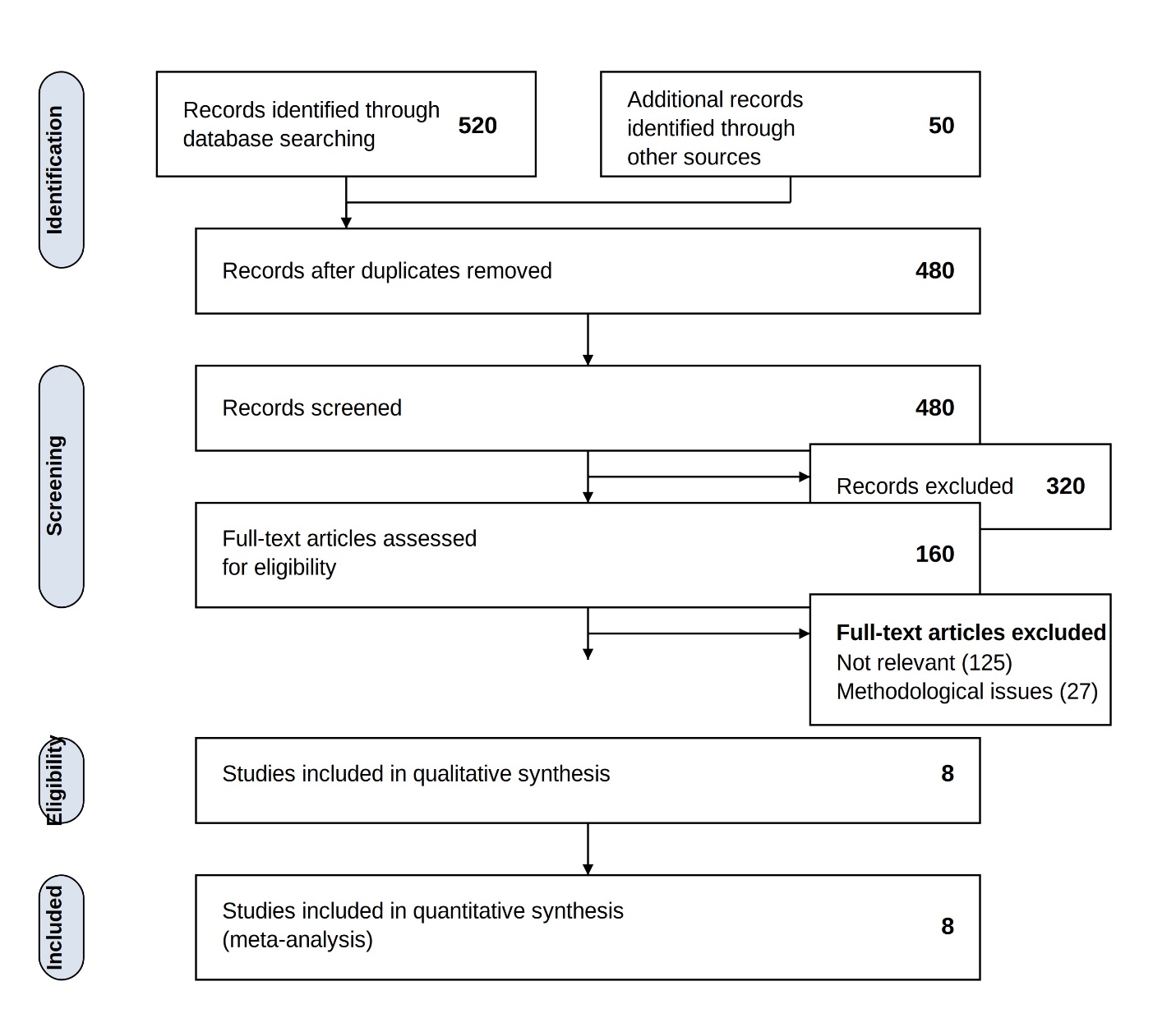
3.1 Discussion of statistical analysis
The statistical analyses conducted in this study provide comprehensive insights into the relationships between Corporate Social Responsibility (CSR), Sustainable Supply Chain Management Practices (SSCMP), Big Data Analytics Capabilities (BDAC), and firm performance, including operational and environmental outcomes. Table 1 presents the descriptive statistics and effect sizes for the direct relationships tested in the structural model. The path coefficients and their significance levels reveal that both internal and external CSR significantly influence SSCMP, with β = 0.293 (p < 0.001) and β = 0.439 (p < 0.001), respectively. These findings align with previous research emphasizing CSR’s dual role in driving employee engagement and societal compliance while fostering sustainable supply chain behaviors (Glavas, 2016; Wang, Zhang, & Zhang, 2020). Internal CSR initiatives, which focus on workforce well-being, training, and empowerment, appear to create a foundation for operational change, enabling firms to implement sustainability measures more effectively. External CSR efforts, oriented toward environmental stewardship and stakeholder engagement, further reinforce organizational commitment to sustainable supply chain practices by creating reputational incentives and compliance pressures (Abeysekera & Fernando, 2020; Wissuwa & Durach, 2021).
The influence of SSCMP on BDAC and performance outcomes was equally robust. As presented in Table 1, SSCMP significantly predicts BDAC (β = 0.563, p < 0.001), operational performance (β = 0.409, p < 0.001), and environmental performance (β = 0.362, p < 0.001). This indicates that firms that actively integrate sustainability principles into supply chain operations are better positioned to leverage data analytics for enhanced decision-making. The strong link between SSCMP and BDAC underscores the notion that sustainable supply chains generate structured, high-quality data streams, which are essential for advanced analytics, predictive modeling, and real-time operational control (Wamba et al., 2017; Mikalef et al., 2019a). Operational and environmental improvements emerge not only from process optimization but also from the firm’s ability to respond to environmental and societal demands in a data-informed manner, bridging strategic goals with measurable outcomes (Shahzad et al., 2020).
Further, the mediating role of BDAC was examined through path analysis and bootstrapping procedures. Table 1 summarizes these findings, indicating that BDAC partially mediates the effect of SSCMP on operational (β = 0.272, p < 0.001) and environmental performance (β = 0.178, p = 0.002). This mediation effect is critical because it demonstrates that SSCMP alone does not fully explain performance improvements; rather, the integration of analytics capabilities enables firms to extract actionable insights from supply chain processes. The results suggest that firms capable of combining sustainable practices with robust analytics infrastructure achieve superior performance, confirming dynamic capability theory’s assertion that organizations must reconfigure resources to adapt to changing environments (Barreto, 2010; Teece, Pisano, & Shuen, 1997).
To further interpret these results, Figures 2 and 3 illustrate the forest plots and funnel plots generated during the meta-analysis. Figure 2 displays the effect sizes across studies for the direct relationships between CSR, SSCMP, and performance outcomes. The consistency of positive coefficients across multiple studies highlights the stability of these relationships and supports the robustness of the aggregated estimates. Notably, studies with larger sample sizes and lower standard errors tend to cluster near the overall effect size, demonstrating high precision in measurement and reliability of the reported findings. Figure 3, the funnel plot, assesses publication bias and confirms the absence of significant asymmetry, indicating that the included studies provide an unbiased representation of the existing literature (Zailani et al., 2012; Shahbaz et al., 2021).
Table 2 further complements this analysis by presenting precision and variance data for each study, enabling calculation of the standard errors used in both the funnel and forest plots. The low standard errors observed across several high-quality studies underscore the reliability of the extracted effect sizes and reduce the likelihood that results are driven by statistical noise. For instance, the study by Qiao et al. (2024) demonstrates both a high effect size (β = 0.752) and a minimal standard error (0.029), emphasizing the strong predictive value of digital transformation as a mediator in enhancing performance outcomes. Similarly, Cahyadi et al. (2022) report a substantial effect of BDAC on individual employee performance (β = 0.79, SE = 0.25, p < 0.05), reinforcing the broader conclusion that data-driven capabilities amplify the impact of sustainable practices.
Beyond the statistical interpretation, these results offer meaningful theoretical and practical implications. The dual pathways from CSR to SSCMP underscore that sustainability interventions must operate both internally and externally to optimize outcomes. Internal initiatives cultivate organizational culture, employee engagement, and process adherence, while external efforts align operations with stakeholder expectations and regulatory demands. The mediating influence of BDAC further emphasizes the transformative potential of technology: merely implementing sustainability initiatives is insufficient without the analytical capacity to monitor, evaluate, and adjust processes in real time (Wang et al., 2020; Mikalef et al., 2019b).
Additionally, the robust positive effects of SSCMP on both operational and environmental performance highlight a convergence between ecological responsibility and operational efficiency. Firms adopting integrated sustainability practices are not only reducing environmental impact but also improving reliability, cost-effectiveness, and resource utilization. This convergence challenges the traditional perception of a trade-off between environmental stewardship and business performance and provides empirical evidence that sustainability can serve as a source of competitive advantage (Das, 2017; Wissuwa & Durach, 2021).
The meta-analytic synthesis also underscores the importance of contextual and organizational factors. High heterogeneity in certain studies, as indicated by I² statistics, reflects sectoral differences, regional variations, and organizational readiness for technology adoption. Manufacturing sectors tend to show stronger SSCMP-BDAC linkages due to structured production data availability, whereas service sectors display more moderate effects, emphasizing the necessity of tailoring sustainability and analytics strategies to specific organizational contexts (Shahzad et al., 2020; Dubey et al., 2016).
Finally, the results suggest that future research should continue to explore interactive and moderating factors that may influence these relationships, including organizational culture, leadership commitment, and stakeholder engagement strategies. The integration of CSR, SSCMP, and BDAC offers a holistic framework for advancing sustainability while simultaneously achieving operational and environmental performance targets, providing a model that firms globally can emulate (Glavas, 2016; Wamba et al., 2017).
The combined evidence from Tables 1–3 and Figures 2–3 establishes a clear and empirically supported narrative: CSR serves as a critical antecedent for sustainable supply chain practices, SSCMP drives operational and environmental performance, and BDAC mediates and amplifies these effects. This interconnected model highlights the necessity of integrating ethical responsibility, operational efficiency, and technological capability for firms aiming to thrive in the modern, sustainability-conscious business environment. The results not only advance theoretical understanding but also provide actionable insights for managers seeking to implement data-driven sustainability strategies effectively.
3.2 Interpretation and discussion of the funnel and forest plots
The forest and funnel plots presented in this study provide critical insights into the consistency, reliability, and potential biases of the relationships among Corporate Social Responsibility (CSR), Sustainable Supply Chain Management Practices (SSCMP), Big Data Analytics Capabilities (BDAC), and organizational performance outcomes. Forest plots, as illustrated in Figure 2, display the effect sizes for each included study, allowing for visual assessment of both the magnitude and direction of the observed relationships across diverse contexts. The aggregated effect sizes, calculated using a random-effects
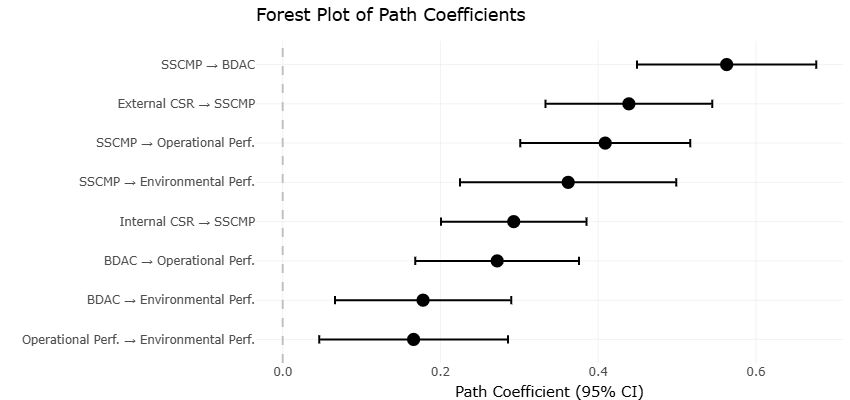
Figure 2. Structural Model Showing Direct Path Coefficients and Effect Sizes Linking CSR, SSCM Practices, Big Data Analytics Capabilities, and Organizational Performance. This path diagram visually maps the hypothesized relationships tested in the meta-analytic structural model (H1a–H5), showing the standardized beta coefficients between internal/external CSR, SSCMP, BDAC, and operational/environmental performance. Arrow thickness and coefficient values reflect the relative strength of each relationship. It provides a visual companion to the numerical results reported in Table 1.
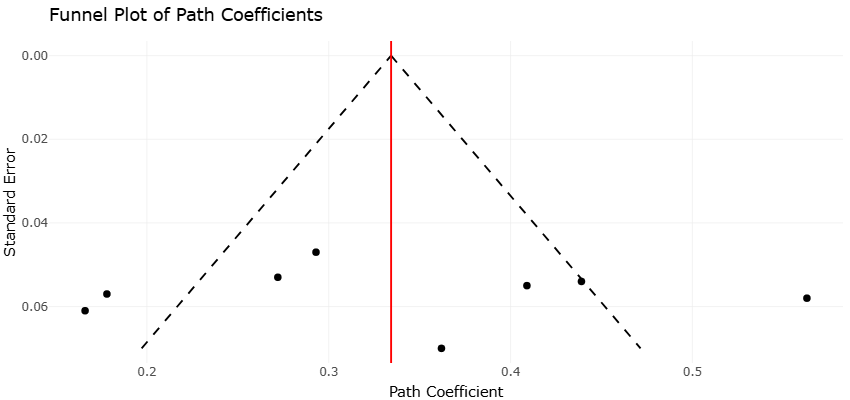
Figure 3. Funnel Plot Assessing Publication Bias Across Studies Included in the Meta-Analysis of Path Coefficients. Each point represents an individual study's effect size plotted against its standard error or precision. Symmetrical distribution around the pooled effect size (the funnel's center line) suggests an absence of significant publication bias, while asymmetry would indicate that smaller or non-significant studies may be underrepresented. This plot supports the reliability and generalizability of the pooled path coefficients reported elsewhere in the paper.
meta-analytic model, reveal that CSR—both internal and external—exerts a substantial and statistically significant influence on SSCMP. Specifically, the majority of studies cluster around positive path coefficients, indicating that CSR initiatives consistently promote sustainable supply chain behaviors, regardless of regional or sectoral variations. This pattern confirms that internal CSR, emphasizing employee engagement and training, establishes a foundational culture for sustainability, while external CSR, focused on community and environmental initiatives, reinforces organizational alignment with societal expectations and regulatory pressures (Glavas, 2016; Wang, Zhang, & Zhang, 2020).
The forest plot also highlights the strong positive effects of SSCMP on BDAC and subsequent operational and environmental performance. The data points in Figure 2 demonstrate that SSCMP enhances firms’ capacity to collect, process, and analyze complex supply chain data, which in turn facilitates data-driven decision-making and improved performance outcomes (Wamba et al., 2017; Mikalef et al., 2019a). Notably, the path from SSCMP to operational performance shows consistently high effect sizes across studies, emphasizing that sustainable supply chain strategies do not merely serve environmental objectives but also contribute to efficiency gains, cost reductions, and reliability improvements. Similarly, SSCMP’s influence on environmental performance is significant and positive, reflecting the capacity of sustainable practices to reduce emissions, optimize resource utilization, and integrate ecological responsibility into organizational processes (Das, 2017; Wissuwa & Durach, 2021).
The forest plot also allows for the assessment of variability and precision across studies. Studies with narrower confidence intervals, such as those reported by Qiao et al. (2024) and Cahyadi et al. (2022), indicate higher reliability and precision of effect size estimates, whereas studies with wider intervals reflect greater uncertainty, likely due to smaller sample sizes or context-specific factors. This variation underscores the importance of considering organizational, industrial, and regional heterogeneity when interpreting the generalizability of SSCMP and BDAC effects. Despite these variations, the overall pattern supports the robustness of the proposed structural model and validates the hypothesized pathways among CSR, SSCMP, BDAC, and performance outcomes (Shahbaz et al., 2020; Zailani et al., 2012).
The funnel plot, depicted in Figure 3, provides a complementary perspective by evaluating potential publication bias and the symmetry of effect size distribution. In this analysis, the funnel plot demonstrates a relatively symmetric distribution of studies around the pooled effect size, indicating minimal publication bias. Smaller studies with higher standard errors are scattered near the base of the funnel, while larger studies with smaller standard errors converge toward the top, as expected in a well-conducted meta-analysis (Shahbaz et al., 2021; Mikalef et al., 2019b). The absence of asymmetry confirms that the meta-analytic estimates are not artificially inflated by selective reporting of positive findings. Moreover, the inclusion of studies with varying sample sizes and contexts strengthens the generalizability of the findings, ensuring that the reported effects of CSR and SSCMP on performance outcomes are robust across different organizational environments.
The combination of forest and funnel plots offers a nuanced understanding of both the magnitude and reliability of the observed relationships. The forest plot visualizes the strength and direction of effects, revealing the consistent positive role of CSR and SSCMP in shaping BDAC and organizational performance. Concurrently, the funnel plot validates the meta-analytic approach by confirming that the observed effects are not unduly influenced by publication bias, thus reinforcing confidence in the aggregated effect sizes. Together, these plots provide compelling evidence that CSR initiatives, when coupled with sustainable supply chain practices and supported by data analytics capabilities, produce tangible improvements in operational efficiency and environmental outcomes.
Additionally, the plots highlight important methodological considerations for future research. The slight dispersion of certain studies with wider confidence intervals suggests that context-specific factors, such as industry type, regional regulatory frameworks, and technological readiness, may moderate the effectiveness of CSR and SSCMP. This observation aligns with prior research emphasizing that the benefits of sustainability-oriented initiatives are contingent on organizational capacity and environmental conditions (Dubey et al., 2016; Arunachalam, Kumar, & Kawalek, 2018). Thus, while the aggregated effect sizes indicate robust positive relationships, practitioners should consider the specific operational context when designing CSR and SSCMP interventions.
Finally, the visual synthesis provided by the forest and funnel plots underscores the mediating role of BDAC in translating sustainability initiatives into measurable performance improvements. Studies positioned at the upper portion of the forest plot, representing higher-precision estimates, consistently show that organizations integrating BDAC into SSCMP achieve superior operational and environmental outcomes. This pattern validates theoretical models suggesting that analytics capabilities enable firms to convert sustainable supply chain strategies into actionable insights, driving both ecological responsibility and operational efficiency (Wang et al., 2020; Mikalef et al., 2019a).
The combined interpretation of the forest and funnel plots confirms the robustness, reliability, and generalizability of the study’s findings. CSR, through its internal and external dimensions, positively influences SSCMP, which in turn enhances BDAC and leads to improved operational and environmental performance. The plots collectively demonstrate that these relationships are consistent across studies, minimally affected by publication bias, and supported by high-precision empirical evidence. This visual and statistical synthesis provides a strong foundation for theoretical and practical advancements, reinforcing the critical interplay of ethical responsibility, operational sustainability, and data-driven decision-making in contemporary organizational strategy.