3.1 Live Body Weight Response to Bromelain Supplementation
The influence of dietary bromelain supplementation on live body weight during the experimental period is presented in (Table 2). During the first and second weeks, no statistically significant differences (P > 0.05) were observed among treatments. At this early stage, the birds across all groups appeared to adapt similarly to the dietary conditions, suggesting that bromelain supplementation may not exert an immediate physiological effect during the initial growth phase. Such findings are not entirely surprising, considering that young chicks often prioritize gastrointestinal adaptation and immune stabilization during the first days of life.
By the third week, however, a clearer pattern began to emerge. Birds receiving higher concentrations of bromelain—particularly T4 and T5—showed significantly greater live body weight compared with birds in T2, while T3 displayed an intermediate response (Table 2). The highest body weight was recorded in T5 (951.00 g), followed closely by T4 (944.00 g), whereas the lowest value appeared in T2 (887.67 g). This gradual divergence among treatments may indicate that bromelain requires a certain inclusion threshold before its proteolytic and metabolic effects become biologically meaningful.
The differences became even more pronounced during the fourth and fifth weeks. Birds supplemented with 1.5, 2.0, and 2.5 g bromelain/kg feed (T3, T4, and T5) consistently achieved significantly higher body weights than the control and lower-dose groups (Table 2). Interestingly, the highest numerical body weight was observed in T5 at the end of the experiment (2285.00 g). Although the increase was progressive rather than abrupt, it nonetheless suggests that bromelain supplementation may enhance nutrient utilization efficiency during later growth stages when feed consumption and metabolic demand intensify.
One possible explanation for this improvement could involve enhanced protein digestion and amino acid availability resulting from bromelain’s proteolytic activity (Shahbaz et al., 2015). Bromelain may also influence endocrine and metabolic pathways associated with growth regulation. Previous studies have shown that thyroid hormones, especially triiodothyronine (T3), can accelerate metabolic activity and promote tissue development (Comte et al., 1990; Mullur et al., 2014). Moreover, thyroid-associated stimulation of insulin-like growth factor-1 (IGF-1) may further support muscle deposition and growth performance (Jannini et al., 1995; Ali et al., 2021).
3.2 Body Weight Gain and Growth Efficiency
The weekly and cumulative body weight gain data are summarized in (Table 3). Similar to the live body weight results, no significant differences were observed during the first and second weeks. Yet beginning in the later growth phases, bromelain supplementation appeared to positively influence growth dynamics.
The greatest total body weight gain was observed in T5 (2241.00 g), followed by T3 and T4, all of which differed significantly from the control treatment (Table 3). Notably, birds supplemented with moderate to high bromelain levels demonstrated more consistent growth progression across the experimental period. This may suggest improved digestion and nutrient assimilation rather than merely increased feed consumption.
The observed enhancement in growth performance could also be associated with bromelain’s antioxidant properties. Oxidative stress, especially in intensive poultry production systems, is known to impair protein synthesis and cellular metabolism. Bromelain-derived antioxidant activity may contribute to preserving cellular integrity and improving physiological efficiency (Manosroi et al., 2014). In addition, antioxidant-related enzymes such as superoxide dismutase may play protective roles against free radical
Table 4. Effect of adding different concentrations of bromelain enzyme to the diet on the feed consumption (g) of broilers (arithmetic mean± standard error). Note: Values are expressed as mean ± standard error (SE). Means within the same column carrying different superscript letters (a, b, c) differ significantly at P ≤ 0.05.
|
Treatments
|
First Week
|
Second Week
|
Third Week
|
Fourth Week
|
Fifth Week
|
Total Feed Consumption
|
|
T1 – Control group
|
143.41 ± 0.82ᵃ
|
341.42 ± 13.69
|
661.10 ± 16.69
|
902.81 ± 21.14
|
1008.14 ± 49.30ᵇ
|
3056.89 ± 88.72
|
|
T2 – Basal diet + 1 g bromelain/kg feed
|
142.66 ± 1.30ᵃᵇ
|
338.83 ± 15.90
|
644.08 ± 11.35
|
911.15 ± 20.07
|
1062.20 ± 38.00ᵃᵇ
|
3098.94 ± 40.25
|
|
T3 – Basal diet + 1.5 g bromelain/kg feed
|
139.41 ± 3.56ᵃᵇᶜ
|
320.91 ± 12.61
|
657.90 ± 16.34
|
943.19 ± 23.04
|
1036.60 ± 65.34ᵃᵇ
|
3098.03 ± 52.09
|
|
T4 – Basal diet + 2 g bromelain/kg feed
|
133.91 ± 2.83ᶜ
|
332.99 ± 11.63
|
674.96 ± 18.70
|
923.00 ± 22.84
|
1115.71 ± 19.64ᵃ
|
3180.57 ± 36.84
|
|
T5 – Basal diet + 2.5 g bromelain/kg feed
|
136.83 ± 2.67ᵇᶜ
|
324.16 ± 10.82
|
660.32 ± 19.26
|
928.61 ± 16.04
|
1089.19 ± 40.90ᵃᵇ
|
3139.11 ± 45.60
|
|
Significance level
|
P ≤ 0.05
|
P > 0.05
|
P > 0.05
|
P > 0.05
|
P ≤ 0.05
|
P > 0.05
|
Table 5. Effect of adding different concentrations of bromelain enzyme to the diet in the feed conversion ratio (g feed/g weight gain/Bird) for broilers (arithmetic mean ± standard error). Note: Values are presented as mean ± standard error (SE). Means within the same column with different superscript letters (a, b) are significantly different at P ≤ 0.05.
|
Treatments
|
First Week
|
Second Week
|
Third Week
|
Fourth Week
|
Fifth Week
|
Cumulative Feed Conversion Ratio
|
|
T1 – Control group
|
1.039 ± 0.045
|
1.304 ± 0.039
|
1.368 ± 0.077
|
1.496 ± 0.055ᵃ
|
1.721 ± 0.093ᵃ
|
1.468 ± 0.017ᵃ
|
|
T2 – Basal diet + 1 g bromelain/kg feed
|
1.033 ± 0.037
|
1.384 ± 0.045
|
1.417 ± 0.105
|
1.456 ± 0.053ᵃᵇ
|
1.713 ± 0.074ᵃ
|
1.480 ± 0.004ᵃ
|
|
T3 – Basal diet + 1.5 g bromelain/kg feed
|
1.041 ± 0.052
|
1.347 ± 0.057
|
1.372 ± 0.050
|
1.383 ± 0.015ᵇ
|
1.599 ± 0.012ᵇ
|
1.417 ± 0.009ᵇ
|
|
T4 – Basal diet + 2 g bromelain/kg feed
|
1.081 ± 0.033
|
1.233 ± 0.068
|
1.353 ± 0.099
|
1.413 ± 0.037ᵃᵇ
|
1.771 ± 0.051ᵃ
|
1.458 ± 0.057ᵃᵇ
|
|
T5 – Basal diet + 2.5 g bromelain/kg feed
|
1.005 ± 0.038
|
1.250 ± 0.060
|
1.310 ± 0.113
|
1.386 ± 0.017ᵇ
|
1.579 ± 0.023ᵇ
|
1.401 ± 0.012ᵇ
|
|
Significance level
|
P > 0.05
|
P > 0.05
|
P > 0.05
|
P ≤ 0.05
|
P ≤ 0.05
|
P ≤ 0.05
|
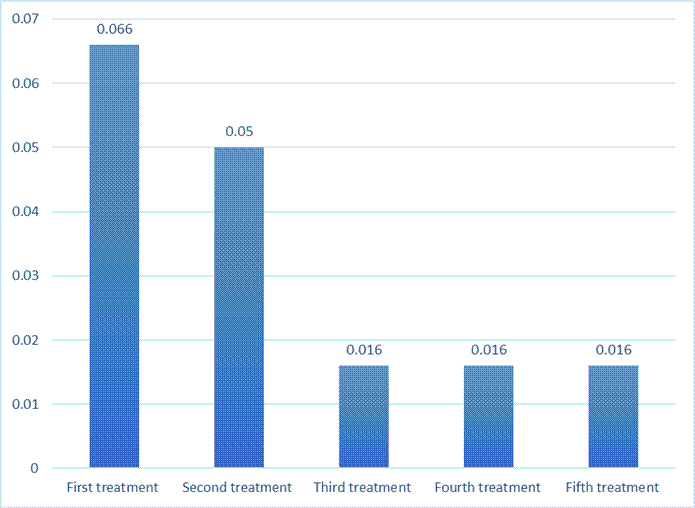
Figure 1. Effect of dietary bromelain supplementation at different concentrations on mortality percentage (%) of Ross 308 broiler chickens during the 35-day experimental period. Values represent treatment means among control and bromelain-supplemented groups.
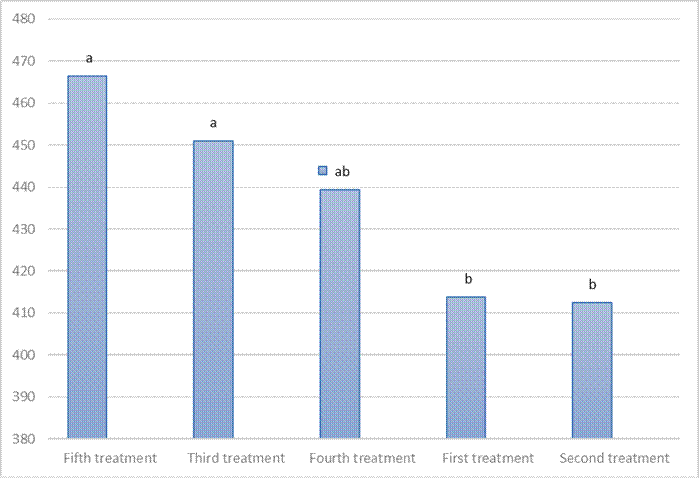
Figure 2. Effect of dietary bromelain supplementation on the production index of Ross 308 broiler chickens throughout the experimental period. Birds supplemented with moderate to higher bromelain concentrations demonstrated improved productive efficiency compared with the control treatment.
accumulation (Shahidi, 2008; Ahl, 2010). Similar improvements in productive performance following supplementation with natural plant-derived additives have also been reported by Abbas et al. (2018) and Merzah and Ali (2022).
3.3 Feed Consumption Pattern
The effect of bromelain supplementation on feed intake is shown in (Table 4). Across most weeks, dietary treatments did not significantly alter feed consumption (P > 0.05). This finding is important because it suggests that the improvements in growth performance were not simply a consequence of greater feed intake.
Nevertheless, during the fifth week, birds in T4 and T5 exhibited numerically higher feed consumption, with T4 recording the highest intake among treatments (1115.71 g). Although these increases were relatively moderate, they may reflect enhanced appetite or improved digestive comfort associated with enzymatic supplementation.
From a physiological perspective, bromelain may facilitate faster protein hydrolysis and digestive turnover, thereby allowing birds to utilize nutrients more effectively without dramatically increasing feed intake. Hale (2004) and Engwerda et al. (2001) similarly suggested that bromelain possesses gastrointestinal and immunomodulatory properties that may indirectly support nutrient absorption and metabolic balance.
3.4 Feed Conversion Ratio (FCR)
Feed conversion ratio remains one of the most economically significant indicators in broiler production. The data presented in (Table 5) revealed significant differences among treatments, particularly during the later stages of growth.
The lowest cumulative FCR values were observed in T5 (1.401) and T3 (1.417), indicating superior feed efficiency compared with the control group (1.468). Although T4 also showed numerical improvement, its values did not differ significantly from some other treatments.
These findings are especially meaningful because improved FCR indicates that birds required less feed to produce equivalent body mass. In commercial production systems, even small reductions in FCR may translate into substantial economic benefits.
The improved feed efficiency may plausibly result from the synergistic interaction between enhanced protein digestion, reduced oxidative stress, and improved metabolic activity. Bromelain’s enzymatic action likely increased nutrient bioavailability, while antioxidant effects may have minimized metabolic inefficiencies associated with cellular stress (Ognik et al., 2016). Comparable responses have been reported with other natural dietary supplements in broiler nutrition studies (Hammod et al., 2018; Jaafar & Abdul, 2022).
3.5 Mortality Rate and Production Index
Mortality percentages among treatments are illustrated in (Figure 1). The supplementation of bromelain did not significantly affect mortality throughout the experiment. This observation is noteworthy because it indicates that bromelain, even at higher inclusion levels, did not produce detectable adverse effects on bird survival or general health status.
In contrast, the production index demonstrated a positive response to bromelain supplementation, particularly in T3 and T5, where significantly higher values were observed compared with the control treatment (Figure 2). Since the production index integrates growth performance, feed efficiency, and survivability, these results collectively reinforce the beneficial influence of bromelain on overall broiler productivity.
The improvements observed in production index may reflect multiple overlapping mechanisms rather than a single isolated effect. Bromelain appears to contribute simultaneously to nutrient digestibility, antioxidant defense, and metabolic regulation. Such multifactorial activity perhaps explains why moderate-to-high supplementation levels produced more consistent responses than lower concentrations.
Overall, the present findings support the growing interest in natural enzymatic feed additives as alternatives to synthetic growth promoters. While the exact biochemical pathways still require deeper clarification, the data suggest that bromelain supplementation—particularly at 1.5 to 2.5 g/kg feed—may improve broiler productive performance under practical production conditions.