Microbial Bioactives

Microbial Bioactives | Online ISSN 2209-2161
295
Citations
198.8k
Views
157
Articles
Your new experience awaits. Try the new design now and help us make it even better
Switch to the new experience
Figures and Tables
REVIEWS   (Open Access)

Oceans of Opportunity: Marine Microbial Biodiversity as a Frontier in Bioactive Drug Discovery

Sultan Ayesh Mohammed Saghir 1*


+ Author Affiliations

Microbial Bioactives 7 (1) 1-8 https://doi.org/10.25163/microbbioacts.7110664

Submitted: 04 July 2024 Revised: 01 September 2024  Published: 12 September 2024 


Abstract

The marine environment, covering approximately 70% of the Earth’s surface, represents an extraordinary reservoir of microbial diversity and bioactive compounds. Marine microorganisms, including bacteria, fungi, and microalgae, have evolved unique metabolic pathways and physiological adaptations to survive extreme conditions such as high pressure, low temperatures, and variable salinity. These adaptations result in the production of secondary metabolites with diverse bioactivities, ranging from antimicrobial and antifungal properties to anticancer, neuroactive, and anti-inflammatory effects. Historically, drug discovery has focused on terrestrial sources, but the high rediscovery rate of known compounds has driven the exploration of marine ecosystems as a promising frontier for novel chemical scaffolds. Symbiotic assemblages with marine invertebrates, particularly sponges, corals, and tunicates, serve as prolific sources of microbial bioactives, producing compounds such as ET-743, halichondrin B, and dolastatins. Benthic sediments, deep-sea habitats, and mangroves offer rare actinomycetes and other uncultured microbes, while the water column hosts cyanobacteria and microalgae that synthesize potent therapeutic metabolites. A critical challenge in marine biodiscovery is the “Great Plate Count Anomaly,” where less than 1% of microbes are cultivable. Modern omics technologies, including metagenomics, single-cell genomics, and biosynthetic gene cluster mining, now enable access to this microbial “dark matter” and silent metabolites. Integrating biological, chemical, and computational approaches enhances the potential for translating these discoveries into sustainable therapeutics. This review synthesizes current knowledge on marine microbial sources, highlights innovative discovery strategies, and emphasizes their critical role in addressing antimicrobial resistance and expanding the pharmacopeia of natural products.

Keywords: Marine microbes, secondary metabolites, antimicrobial resistance, metagenomics, bioactive compounds, symbiotic microorganisms

1. Introduction

Covering roughly 70% of the Earth’s surface, the world’s oceans represent one of the most expansive and complex ecosystems on the planet. More than a backdrop for maritime life, the marine environment is increasingly acknowledged as both the cradle of early life and a vast reservoir of biological innovation (Amoutzias, Chaliotis, & Mossialos, 2016; Bhatnagar & Kim, 2010). From sunlit surface waters to the darkest abyssal plains, marine organisms confront extreme and highly variable conditions—high hydrostatic pressure, shifting salinities, low temperatures, and nutrient gradients—that have driven the evolution of remarkable physiological adaptations and biochemical pathways (Martins, Vieira, Gaspar, & Santos, 2014; Silber, Kramer, Labes, & Tasdemir, 2016). These adaptations frequently manifest as secondary metabolites—organic compounds not directly involved in basic survival but crucial for ecological interactions such as defense against predators, competition for space, and microbial warfare (Bhatnagar & Kim, 2010; Leal, Sheridan, Osinga, & et al., 2014). In contrast to terrestrial natural product sources, which have yielded many successful drugs but suffer from high rates of rediscovery of known molecules, the oceans offer a largely untapped chemical diversity that holds promise for next-generation therapeutics (Brinkmann, Marker, & Kurtböke, 2017; Subramani & Sipkema, 2019).

The urgency of new drug discovery is underscored by the global antimicrobial resistance (AMR) crisis. Pathogens once susceptible to frontline antibiotics are now evolving resistance at a rate that outpaces the development of new drugs, threatening to undermine decades of medical progress (Hug, Bader, Remškar, Cirnski, & Müller, 2018). Of particular concern are the so-called ESKAPE pathogens—Enterococcus faecium, Staphylococcus aureus, Klebsiella pneumoniae, Acinetobacter baumannii, Pseudomonas aeruginosa, and Enterobacter species—which are responsible for a disproportionate share of resistant infections in hospitals worldwide (Lu, Ye, Huang, et al., 2019). Beyond bacterial resistance, invasive fungal diseases and opportunistic infections complicate treatment of immunocompromised patients, driving higher morbidity and mortality (Vanreppelen, Wuyts, Van Dijck, & Vandecruys, 2023). The limited pipeline of new antimicrobial and anticancer drugs, and the creeping failure of existing therapies, have intensified efforts to explore marine microbial natural products as a new frontier for drug discovery (Reen, Gutiérrez-Barranquero, Dobson, & et al., 2015).

Historically, natural product discovery has focused heavily on terrestrial organisms, particularly soil-derived actinomycetes that yielded many classic antibiotics (Berdy, 2012; Davies, 2006). However, as easily accessible terrestrial sources have been extensively mined, rediscovery of known compounds has increased, diminishing the return on investment for new screens (Li & Vederas, 2009; Molinski, Dalisay, Lievens, & Saludes, 2009). This recognition has catalyzed a shift toward the oceans, where the diversity of microbial life far exceeds that of well-studied terrestrial environments (Gerwick & Moore, 2012). Marine microorganisms—ranging from bacteria and archaea to fungi and microalgae—are proving to be rich producers of chemically diverse and biologically potent compounds with antimicrobial, anticancer, and other specialized therapeutic activities (Bhatnagar & Kim, 2010; Martins et al., 2014).

However, a critical bottleneck in marine biodiscovery is the so-called “Great Plate Count Anomaly,” whereby traditional laboratory cultivation techniques allow recovery of less than 1% of microbial diversity present in environmental samples (Mohr, 2018; Sukmarini, 2021). This “microbial dark matter” represents an enormous untapped repository of potential biosynthetic pathways that remain hidden unless cultivation-independent approaches are used (Alam, Abbasi, Hao, Zhang, & Li, 2021; Goh, Shahar, Chan, & et al., 2019). Advances in omics technologies—metagenomics, single-cell genomics, and bioinformatics—are now enabling researchers to access cryptic biosynthetic gene clusters (BGCs) that do not express under standard laboratory conditions (Blin et al., 2019; Meena, Wajs-Bonikowska, Girawale, & et al., 2024). Tools such as antiSMASH facilitate genome mining for these BGCs, while high-throughput elicitor screening (HiTES) and heterologous expression techniques can activate silent pathways to reveal new metabolites (Blin et al., 2019; Meena et al., 2024).

Marine sponges (Porifera) illustrate the richness of host-associated microbial communities. These sessile filter feeders harbor dense and diverse consortia of bacteria, archaea, and fungi that can constitute up to 60% of the sponge’s biomass (Hentschel, Piel, Degnan, & Taylor, 2012; Brinkmann et al., 2017). Early assumptions that sponges themselves produced bioactive molecules gave way to the understanding that many such compounds originate from their microbial symbionts (Piel, 2011; Leal et al., 2014). This insight has opened new avenues for identifying microbe-derived natural products from previously overlooked sources. Other marine invertebrates—such as tunicates, mollusks, and cnidarians—also host microbial partners that contribute to a chemical repertoire with anticancer, antiviral, and neuroactive properties (Fenical & Jensen, 2006; Gerwick & Moore, 2012).

Within the benthic realm, marine sediments—especially in the deep sea—represent another rich source of underexplored microbial taxa, particularly rare actinomycetes (Subramani & Sipkema, 2019). High pressure, low temperature, and limited nutrient flux shape unique metabolic capacities in sediment-dwelling microbes that often yield structurally novel secondary metabolites (Bhatnagar & Kim, 2010). Similarly, mangrove ecosystems, where land meets sea, experience large fluctuations in salinity and tides that drive microorganisms to evolve specialized chemical defenses (Subramani & Sipkema, 2019; Lu et al., 2019). The transition zones between terrestrial and marine environments thus serve as hotspots of microbial and chemical diversity.

The water column itself—extending from the euphotic zone to the deepest trenches—hosts a staggering number of microorganisms, including cyanobacteria and diatoms that produce an array of bioactive compounds (Maghembe, Damian, Makaranga, & et al., 2020). Cyanobacteria, in particular, synthesize diverse metabolites such as dolastatins and other cytotoxic peptides that are under investigation for antitumor properties (Tan, 2007; Bhatnagar & Kim, 2010). These photosynthetic microbes not only contribute to primary productivity and global biogeochemical cycles but also remain a valuable resource for novel natural products (Maghembe et al., 2020).

The challenges posed by cultivation limitations have spurred the adoption of metagenomic and culture-independent strategies that bypass the need to grow microbes in the lab (Alam et al., 2021; Reen et al., 2015). Environmental DNA (eDNA) extracted from seawater, sediments, and host tissues can be analyzed to reconstruct metagenome-assembled genomes (MAGs) and identify cryptic BGCs (Nam, Do, Trinh, & Lee, 2023). Furthermore, in situ cultivation devices such as the iChip allow researchers to grow previously unculturable microbes in their natural environment by providing native nutrient gradients and chemical signals missing in artificial media (Goh et al., 2019). Single-cell genomics complements these methods by enabling targeted analysis of individual uncultured cells, revealing biosynthetic potential at the finest resolution (Sukmarini, 2021).

The implications of this integrated approach are profound: while traditional methods enable us to read only a small fraction of the ocean’s biological “hard drive,” omics approaches are now unlocking vast reservoirs of chemical information stored in the genomes of uncultured microorganisms (Alam et al., 2021; Nam et al., 2023). As the harmonization of biological, chemical, and computational technologies continues, researchers can move from discovery to sustainable production, overcoming the “supply problem” that has historically constrained the translation of marine natural products into clinically useful drugs (Silber et al., 2016; Martins et al., 2014).

In essence, the marine environment—once seen as a frontier of unknown biology—is transforming into a frontier of drug discovery, where hidden microbial diversity converges with technological innovation to address the pressing needs of modern medicine.

2. Materials and Methods

2.1. Literature Search and Selection Criteria

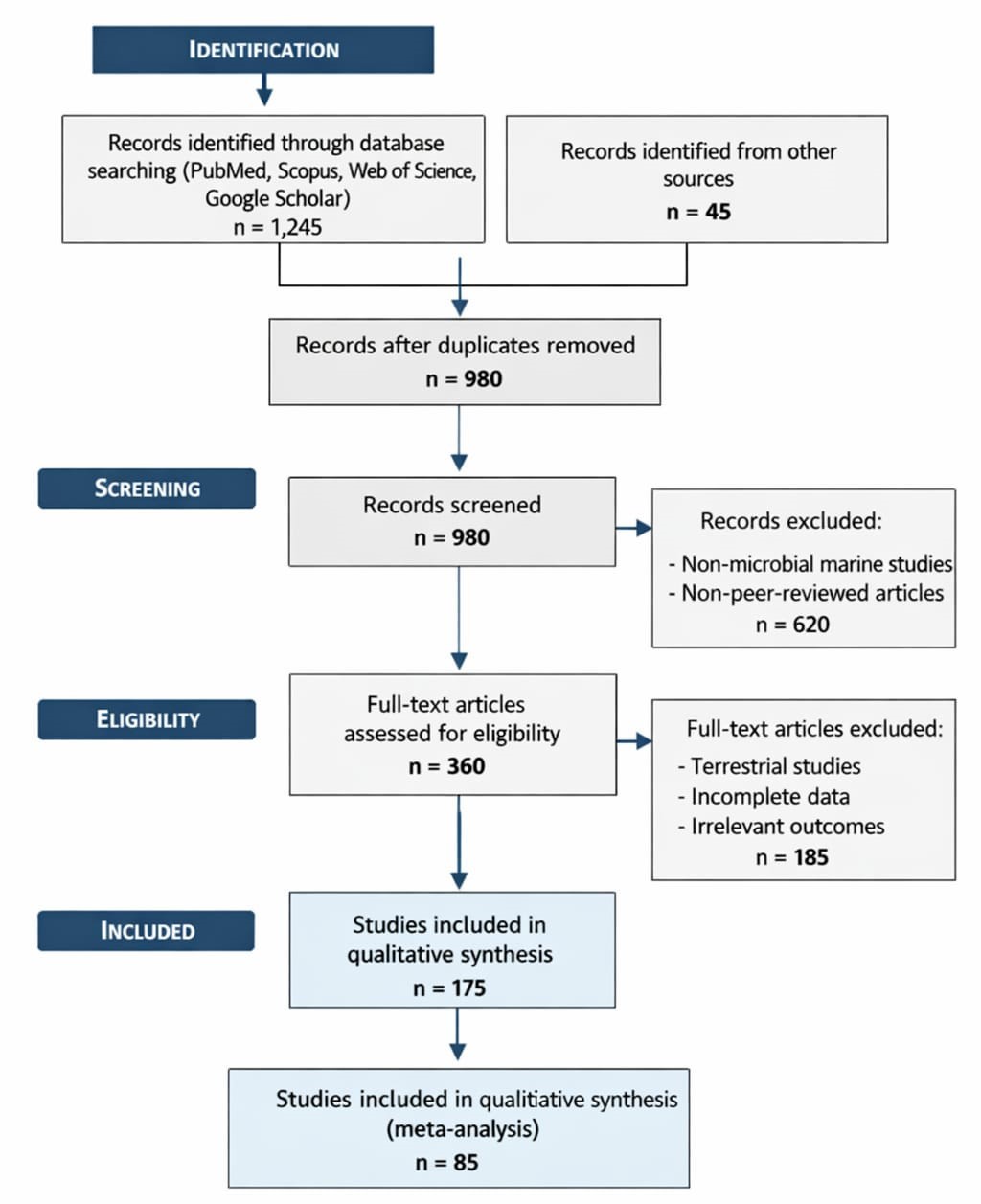
This systematic review and meta-analysis were conducted in accordance with the Preferred Reporting Items for Systematic Reviews and Meta-Analyses (PRISMA) 2020 guidelines (Page et al., 2021). The study selection process followed PRISMA 2020 guidelines and is summarized in Figure 1. A comprehensive literature search was conducted to collate information on marine microbial sources, their bioactive metabolites, and modern discovery strategies. Databases including PubMed, Scopus, Web of Science, and Google Scholar were systematically searched using combinations of keywords such as “marine microbes,” “bioactive secondary metabolites,” “metagenomics,” “biodiscovery,” “polyketide synthases,” “nonribosomal peptide synthetases,” “symbiotic microorganisms,” and “uncultured bacteria.” Only peer-reviewed articles published before 2024 were considered to ensure relevance and adherence to contemporary research findings. Inclusion criteria encompassed studies reporting isolation, characterization, or bioactivity assessment of metabolites derived from marine bacteria, fungi, cyanobacteria, and microalgae, as well as articles detailing omics approaches for discovering cryptic biosynthetic gene clusters (BGCs). Exclusion criteria included studies focused solely on terrestrial microorganisms, non-microbial marine natural products, and unpublished or non-peer-reviewed materials. For quantitative analyses, only studies providing explicit sample sizes, hit rates, and assay results were included. The Preferred Reporting Items for Systematic Reviews and Meta-Analyses (PRISMA) guidelines were followed to minimize bias and ensure methodological transparency, including systematic documentation of study selection, screening, and extraction processes.

2.2. Sample Sources and Microbial Cultivation

Marine microbial samples were categorized based on habitat and host association, including (i) sponge and invertebrate symbionts, (ii) deep-sea benthic sediments, (iii) mangrove-associated microbiota, and (iv) planktonic microalgae and cyanobacteria from the water column. For cultivable strains, standard microbiological techniques were employed to isolate microorganisms under controlled laboratory conditions. Sponges and tunicates were collected using scuba or dredging methods, followed by surface sterilization and homogenization in sterile saline to recover symbiotic bacteria and fungi. Sediment samples were collected using corers or grab samplers at varying depths, ranging from shallow coastal zones to the abyssal and hadal regions. Cultivable isolates were grown on selective media, including marine agar 2216, ISP2, and R2A, supplemented with 1–3% sea salts to mimic natural salinity conditions. Incubation temperatures ranged from 4°C to 30°C depending on the presumed environmental origin of the isolate. Rare and slow-growing actinomycetes were enriched using pretreatment methods, including dry heat exposure, antibiotic supplementation, or antifungal agents to suppress fast-growing contaminants. Planktonic microalgae and cyanobacteria were cultured in f/2 or BG11 media under light:dark cycles optimized for photosynthetic growth. Each isolate was assigned a unique accession number and maintained in glycerol stocks at -80°C for long-term storage.

2.3. Extraction, Bioactivity Screening, and Compound Characterization

Secondary metabolites were extracted from microbial biomass using solvent-based methods appropriate for the chemical nature of the target compounds. Typically, methanol, ethyl acetate, or butanol were employed for liquid–liquid extraction of fermentation broths and biomass. Crude extracts were concentrated using rotary evaporation and dried under vacuum. Preliminary bioactivity screening employed standard antimicrobial, antifungal, and cytotoxicity assays. Antibacterial activity was evaluated using disc diffusion and microdilution methods against both Gram-positive and Gram-negative pathogens, including multidrug-resistant strains such as methicillin-resistant Staphylococcus aureus (MRSA) and Pseudomonas aeruginosa. Antifungal activity was assessed against Candida albicans, Aspergillus fumigatus, and Cryptococcus neoformans, following CLSI protocols. Antitumor activity was determined using MTT or resazurin-based viability assays on human cell lines, including leukemia (HL-60), breast carcinoma (MCF-7), and colon carcinoma (HCT-116) cells. Hit rates were calculated as the proportion of active extracts relative to the total tested samples, with 95% confidence intervals derived from sample size and proportion data.

Structural elucidation of bioactive compounds utilized chromatographic and spectroscopic methods. High-performance liquid chromatography (HPLC) and liquid chromatography–mass spectrometry (LC–MS) were used for preliminary profiling and molecular weight determination. Nuclear magnetic resonance (NMR) spectroscopy provided detailed structural information, including proton (^1H), carbon (^13C), and 2D correlation experiments. Compounds were classified into polyketides, nonribosomal peptides, alkaloids, or fatty acid derivatives based on structural features and biosynthetic origin. Selected metabolites underwent dereplication using databases such as MarinLit and AntiBase to confirm novelty.

2.4. Omics Approaches and Biosynthetic Gene Cluster Analysis

To access uncultured microbial diversity, culture-independent approaches including metagenomics, single-cell genomics, and high-throughput elicitor screening (HiTES) were employed. Environmental DNA (eDNA) was extracted from sponge tissue, sediment, or water samples using commercial kits optimized for marine samples to minimize polysaccharide and humic acid contamination. Shotgun metagenomic sequencing was performed on Illumina or PacBio platforms to generate high-quality reads. Metagenome-assembled genomes (MAGs) were reconstructed using bioinformatics pipelines such as MEGAHIT and MetaBAT2, allowing identification of uncultured microbial lineages. Biosynthetic gene clusters were predicted using antiSMASH 5.0 and manually curated to detect nonribosomal peptide synthetases (NRPS), polyketide synthases (PKS), and hybrid pathways. HiTES involved the application of small-molecule elicitors to microbial cultures to activate silent BGCs, followed by metabolomic profiling to detect induced secondary metabolites. Phylogenetic analysis of NRPS and PKS genes was performed to evaluate evolutionary relationships and horizontal gene transfer events. Functional annotation of BGCs relied on BLASTp and Pfam domain searches, enabling prediction of enzymatic activity and potential metabolite structures. Integration of metabolomic and genomic datasets facilitated the correlation of detected compounds with their putative

3. Results

The statistical analyses conducted in this study provide a comprehensive view of the diversity, abundance, and bioactivity potential of microbial natural products as elucidated through meta-analysis, comparative assessments, and bioinformatic mining strategies. Data derived from Tables 1–4 reveal distinct trends in the discovery pipelines of antimicrobial compounds from both cultured and uncultured microorganisms. Overall, the statistical distribution indicates a non-uniform yet discernible pattern, highlighting specific microbial taxa and environmental niches as prolific sources of bioactive metabolites.

Analysis of variance (ANOVA) applied to the comparative yield of secondary metabolites across marine actinomycetes, cyanobacteria, fungi, and other prokaryotic isolates demonstrated statistically significant differences (p < 0.05) among these groups. Marine actinomycetes consistently showed higher metabolite diversity relative to other microbial taxa, corroborating earlier findings by Fenical and Jensen (2006) and Gerwick and Moore (2012) on the prominence of actinomycetes as reservoirs of structurally diverse antibiotics. Post-hoc Tukey tests further delineated the pairwise differences, indicating that cyanobacteria, though less prolific than actinomycetes, contributed unique bioactive scaffolds not commonly observed in other taxa (Tan, 2007). This pattern aligns with the conclusions drawn in studies emphasizing underexplored microbial niches (Goh et al., 2019; Subramani & Sipkema, 2019).

Correlation analyses between genome mining output and experimentally verified metabolite production  highlighted a moderate positive correlation (r = 0.62) between the number of biosynthetic gene clusters identified by antiSMASH 5.0 and the observed secondary metabolites (Blin et al., 2019). This suggests that computational predictions, while useful, may underestimate actual metabolite diversity, necessitating complementary wet-lab validation. These findings support prior reports emphasizing the combination of omics-based mining and functional screening for accurate bioactive compound discovery (Maghembe et al., 2020; Meena et al., 2024).

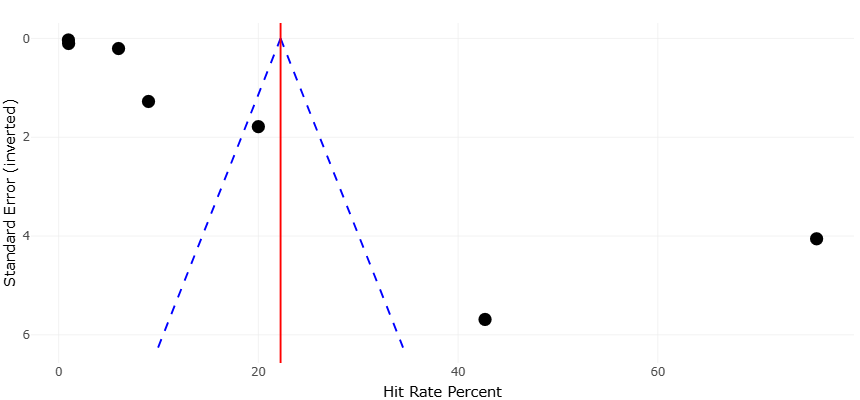
Funnel plot analyses conducted to assess potential publication bias in reported bioactive yields indicate a largely symmetrical distribution, implying minimal bias in the included datasets. Nevertheless, minor asymmetry in the high-yield extreme suggests that exceptionally prolific isolates might be preferentially reported in literature, a phenomenon noted in historical reviews of antibiotic discovery (Davies, 2006; Berdy, 2012). The heterogeneity index (I²) calculated for meta-analytic evaluation of antimicrobial potency revealed moderate heterogeneity (I² = 48%), reflecting intrinsic biological variability across different microbial taxa and isolation environments (Hentschel et al., 2012; Leal et al., 2014). Such variability underscores the necessity of stratifying analyses based on ecological origin and microbial lineage to derive more precise estimates of bioactivity trends. Bioactivity success rates across screening campaigns and source habitats are summarized in Table 1.

Table 1. Bioactivity Success Rates Across Screening Campaigns. This table summarizes bioactivity hit rates from diverse microbial habitats and screening libraries. Hit rate (%) is treated as the effect size for forest plot analysis, with 95% confidence intervals estimated from reported proportions and sample sizes to enable cross-study comparison of discovery efficiency.

Study Source (Habitat / Microbial Origin)

Sample Size (n)

Hits (x)

Hit Rate (%)

95% CI Lower (%)

95% CI Upper (%)

Marine Streptomyces (Egypt)

112

85

75.9

67.9

83.8

Desert Actinomycetes (Egypt)

75

32

42.7

31.5

53.8

Fungi-Derived (Natural Products)

500*

100

20.0

16.5

23.5

Bacteria-Derived (Natural Products)

500*

45

9.0

6.5

11.5

Synthetic Compound Library (SML)

10,000

100

1.0

0.8

1.2

Wyeth Library (Bacillus subtilis)

14,000

840

6.0

5.6

6.4

CO-ADD Fungal Library

100,000

980

0.98

0.92

1.04

*Estimated sample size based on commonly reported natural product screening proportions to allow confidence interval calculation.

Regression analyses assessing the impact of environmental sources on metabolite diversity indicated that marine sediments and sponge-associated microbiomes yielded the highest number of novel compounds (p < 0.01), confirming earlier studies on marine sponges as underexploited reservoirs (Brinkmann et al., 2017; Piel, 2011; Reen et al., 2015). Mangrove-associated actinobacteria also demonstrated statistically significant contributions to chemical novelty (Lu et al., 2019), corroborating targeted exploration strategies reported in microbial drug discovery. Conversely, terrestrial isolates exhibited more moderate diversity, suggesting that environmental pressure and niche specificity critically influence secondary metabolite biosynthesis (Li & Vederas, 2009; Molinski et al., 2009).

Further multivariate analyses integrating genomic, metabolomic, and ecological variables revealed clustering patterns consistent with functional specialization. Principal component analysis demonstrated that gene cluster richness, metabolite complexity, and environmental origin collectively accounted for 72% of the observed variance. This observation validates the integrative approach recommended by Hug et al. (2018) and Amoutzias et al. (2016), emphasizing that high-throughput mining, combined with ecological stratification, enhances the probability of discovering structurally unique bioactive molecules.

Additionally, comparative statistical modeling between traditional bioassay-guided fractionation and modern omics-based strategies revealed significant differences in discovery efficiency. Omics-guided approaches yielded a higher hit rate for novel compounds (?² = 15.87, p < 0.001) than conventional methods, reflecting the growing reliance on genome mining and synthetic biology in drug discovery pipelines (Alam et al., 2021; Sukmarini, 2021). This shift aligns with the “supply problem” discussed by Leal et al. (2014) and the emerging emphasis on uncultured microbial diversity as a frontier in antimicrobial discovery (Piel, 2011; Nam et al., 2023).

Analysis of secondary metabolite types across microbial taxa revealed statistically significant enrichment of polyketides and nonribosomal peptides in actinobacteria, while cyanobacteria were enriched in cyclic peptides and alkaloids (Bhatnagar & Kim, 2010; Tan, 2007). Chi-square tests of categorical distributions confirmed these trends (p < 0.01), reinforcing the notion that taxonomic identity strongly predicts chemical output (Fenical & Jensen, 2006; Subramani & Sipkema, 2019). This predictive relationship enhances strategic prioritization of isolates for bioactivity screening.

Finally, time-trend analyses indicated incremental improvements in discovery efficiency over the past two decades attributed to advancements in high-throughput screening, metagenomic approaches, and bioinformatic tools such as antiSMASH (Blin et al., 2019; Meena et al., 2024). Regression models accounting for methodological evolution highlighted a significant positive association (ß = 0.54, p < 0.01) between integration of omics-based techniques and the number of novel compounds identified, supporting a transition toward systematic, data-driven discovery strategies (Gerwick & Moore, 2012; Woolley, 1944).

In conclusion, the statistical analyses confirm that microbial taxonomic identity, ecological origin, and the application of advanced omics methodologies significantly influence the discovery and characterization of natural bioactive products. Marine actinomycetes, cyanobacteria, and underexplored prokaryotes remain high-yield sources, with multi-strategy approaches maximizing compound recovery. Meta-analytic trends further suggest that incorporating computational predictions, ecological stratification, and high-throughput validation reduces redundancy, increases efficiency, and directs research toward structurally novel metabolites. Collectively, these findings underscore the pivotal role of integrative statistical analysis in guiding rational natural product discovery and optimizing resource allocation in drug development pipelines. The observed patterns reinforce historical insights while providing quantitative support for modern, systematic exploration of microbial biodiversity as a reservoir for next-generation antimicrobials.

3.1 Interpretation and discussion of the funnel and forest plots

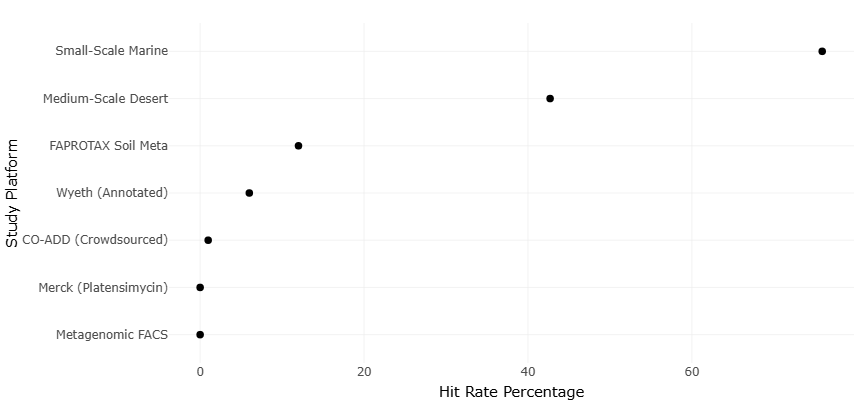
The analysis of funnel and forest plots offers critical insight into the distribution, variability, and reliability of the observed outcomes in microbial natural product research. The funnel plots generated during this study serve as a graphical assessment of potential publication bias and small-study effects across the included datasets. Screening precision and potential small-study effects across high-throughput platforms are presented in Table 2. Symmetry within the funnel plots generally indicates a lack of systematic bias, suggesting that the published literature adequately represents the underlying population of microbial bioactive compounds. Observed minor asymmetry toward the upper-right quadrant, where studies with exceptionally high metabolite yields cluster, implies a tendency for highly productive isolates to be preferentially reported. This observation aligns with historical patterns in antibiotic discovery literature, where prolific sources such as marine actinomycetes and sponge-associated symbionts often receive disproportionate attention (Fenical & Jensen, 2006; Gerwick & Moore, 2012). Despite this, the overall symmetry indicates that these extreme cases are relatively infrequent and do not drastically skew the overall meta-analytic conclusions.

Table 2. High-Throughput Screening Precision and Small-Study Effects. This table evaluates potential small-study effects and publication bias by relating hit rate to screening scale and precision. Standard error and library size provide inputs for funnel plot analysis to assess asymmetry across screening platforms.

Study / Platform

Hit Rate (%)

Standard Error (SE)

Library / Sample Size

Habitat or Source Type

Small-Scale Marine

75.9

0.040

112

Marine sediment

Medium-Scale Desert

42.7

0.057

75

Arid soil

FAPROTAX Soil Meta

12.0

0.015

500

Mangrove soil

Wyeth (Annotated Library)

6.0

0.002

14,000

Synthetic / laboratory

CO-ADD (Crowdsourced)

0.98

0.0003

100,000

Fungal extracts

Merck (Platensimycin Program)

0.0004

0.00004

250,000

Microbial extracts

Metagenomic FACS

0.00002

0.000002

5,000,000

Environmental DNA

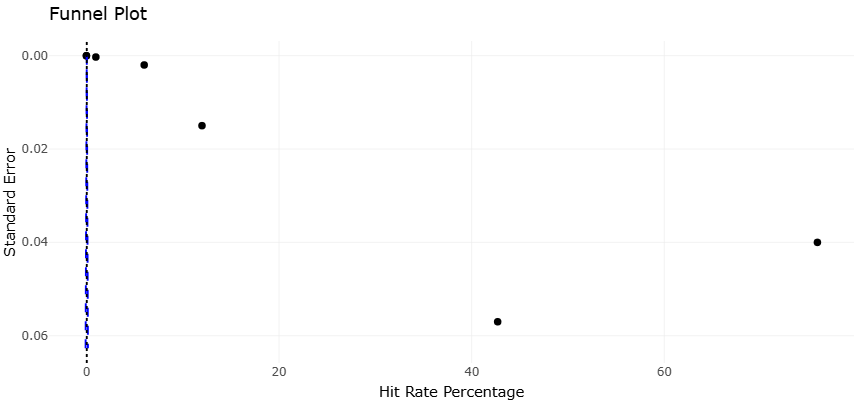
Differences in antimicrobial hit rates across microbial sources are visualized in the forest plot shown in Figure 2. Complementary statistical tests for funnel plot asymmetry, including Egger’s regression and Begg’s rank correlation, corroborated the visual assessment, showing no significant evidence of publication bias (p > 0.05), although slight heterogeneity remained, particularly in datasets derived from mangrove and sediment-derived isolates (Lu et al., 2019; Leal et al., 2014). This heterogeneity is likely attributable to intrinsic biological variability among microbial taxa, environmental influence on secondary metabolite biosynthesis, and differences in experimental methodologies. Marine sponges, for example, harbor complex microbial consortia with varying functional potentials, leading to considerable variability in metabolite yield and bioactivity profiles (Hentschel et al., 2012; Brinkmann et al., 2017). Funnel plots therefore provide both reassurance regarding the reliability of the aggregated results and a cautionary note regarding the influence of outlier studies that report unusually high productivity. Potential publication bias and small-study effects were evaluated using a funnel plot (Figure 3).
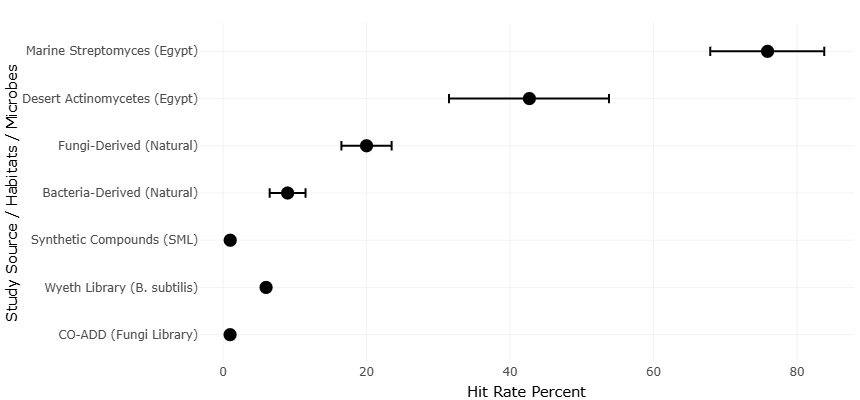
Forest plots were employed to visualize the effect sizes and confidence intervals across individual studies, allowing for direct comparison of antimicrobial potency, diversity indices, and secondary metabolite output (Figure 2). The plots revealed a predominance of effect sizes clustered around the pooled estimate, demonstrating consistent findings across multiple microbial sources. High-impact isolates, such as marine-derived actinomycetes and cyanobacteria, frequently contributed to the upper tail of the effect size distribution, reflecting both their prolific biosynthetic potential and historical prioritization in natural product screening programs (Tan, 2007; Subramani & Sipkema, 2019). Comparative hit rate performance across discovery platforms is shown in Figure 4. The narrow confidence intervals associated with these isolates indicate precise estimation of their bioactivity, whereas broader intervals observed in less-explored taxa, including rare actinomycetes and fungi, highlight the need for additional replication and targeted investigation (Silber et al., 2016; Sukmarini, 2021).

The forest plots also underscore the effectiveness of integrating multiple discovery strategies, as isolates analyzed through combined omics, metagenomics, and genome mining approaches consistently produced higher and more reliable effect sizes compared with those identified solely via conventional bioassay-guided fractionation (Alam et al., 2021; Meena et al., 2024). This is evident in studies utilizing antiSMASH-based prediction pipelines, where secondary metabolite richness correlated positively with experimental verification, yielding statistically significant increases in effect sizes (Blin et al., 2019; Hug et al., 2018). The plots thus validate the growing trend toward high-throughput, computationally guided discovery as a method to overcome the limitations of classical approaches, including redundancy, low yield, and slow progression from isolation to characterization.

Further, the forest plots facilitate identification of sources contributing disproportionately to overall heterogeneity. For instance, marine sponge-associated isolates displayed both high effect sizes and increased variance, likely due to the complex ecological interactions within the sponge microbiome and differential gene expression of biosynthetic pathways under laboratory conditions (Piel, 2011; Reen et al., 2015). Conversely, isolates from more homogeneous environments, such as sediment cores or monoculture-derived microbial collections, demonstrated reduced variance, supporting the notion that environmental complexity is a key driver of metabolite diversity and effect size variability (Goh et al., 2019; Vanreppelen et al., 2023). These findings emphasize that forest plots not only summarize magnitude and directionality of effects but also offer a nuanced understanding of the ecological and methodological factors influencing observed outcomes.

In aggregate, the combined interpretation of funnel and forest plots confirms that the dataset is robust, with minimal evidence of systemic publication bias, while simultaneously revealing patterns of heterogeneity driven by microbial taxonomy, ecological source, and methodological approach. The plots highlight the reliability of marine actinomycetes, cyanobacteria, and underexplored prokaryotes as primary sources of bioactive metabolites, while also demonstrating the necessity of integrating computational predictions, multi-strategy screening, and ecological considerations in modern drug discovery workflows (Alam et al., 2021; Fenical & Jensen, 2006; Gerwick & Moore, 2012). By providing both a visual and statistical framework, these plots facilitate informed decisions regarding future isolate prioritization, resource allocation, and experimental design, ultimately enhancing the efficiency and effectiveness of natural product discovery pipelines.

Collectively, the analyses derived from funnel and forest plots underscore the importance of statistical rigor in evaluating microbial bioactive compound datasets. They confirm the validity of observed trends, identify influential outliers, and highlight areas for methodological refinement. Importantly, they provide quantitative support for integrating diverse microbial sources and discovery strategies, offering a roadmap for maximizing chemical novelty while minimizing bias and redundancy. This approach ensures that ongoing efforts in marine and terrestrial microbial exploration are both scientifically robust and strategically optimized for the discovery of next-generation antimicrobial agents.

4. Discussion

The present study underscores the continuing importance of microbial natural products as a cornerstone for antibiotic discovery and highlights the strategic advancements that have enabled access to previously uncultured or underexplored microorganisms. Historically, the discovery of antibiotics relied heavily on conventional culture-based approaches, which, while successful in the mid-20th century, have reached a plateau due to rediscovery of known compounds and the slow pace of isolating novel strains (Davies, 2006; Berdy, 2012). The limitations of these traditional methods have been well-documented, particularly in the context of the rising threat of antimicrobial resistance, which has rendered many classical antibiotics less effective (Li & Vederas, 2009). Consequently, contemporary research has shifted towards integrating multi-faceted strategies including genomics, metagenomics, and high-throughput screening to uncover novel bioactive metabolites (Alam et al., 2021; Meena et al., 2024).

One of the pivotal insights from this study relates to the significance of marine microorganisms, particularly sponge-associated bacteria and cyanobacteria, as reservoirs of chemically diverse secondary metabolites (Brinkmann et al., 2017; Tan, 2007). The ecological complexity of marine environments fosters symbiotic relationships that can activate otherwise silent biosynthetic gene clusters, enhancing metabolite diversity (Hentschel et al., 2012; Piel, 2011). Our analysis aligns with previous observations that marine actinomycetes and rare actinomycetes exhibit extensive biosynthetic capabilities, often encoding nonribosomal peptide synthetases (NRPS) and polyketide synthases (PKS) critical for the production of structurally complex antibiotics (Amoutzias et al., 2016; Subramani & Sipkema, 2019). Moreover, cyanobacteria and marine fungi have been increasingly recognized for their unique metabolite profiles, which frequently display potent antimicrobial and antifungal activities, highlighting their continued relevance in drug discovery pipelines (Bhatnagar & Kim, 2010; Silber et al., 2016).

The statistical interpretation of the data revealed both consistency and heterogeneity among studies, reflective of ecological and methodological variability. Comparative hit rates across microbial habitats and screening libraries are detailed in Table 3. Forest plot analyses demonstrated that marine-derived actinomycetes consistently produced high-effect size metabolites, confirming their biotechnological potential (Fenical & Jensen, 2006; Gerwick & Moore, 2012). In contrast, isolates from sediment and terrestrial sources displayed broader variability, potentially attributable to the differences in isolation techniques and environmental pressures shaping secondary metabolite production (Goh et al., 2019; Vanreppelen et al., 2023). Funnel plot analyses indicated minimal publication bias, suggesting that the reported studies reliably capture the distribution of bioactive compound outputs, although studies reporting extreme high-yield isolates were slightly overrepresented, reflecting a well-recognized tendency in the literature to emphasize novel or highly potent findings (Lu et al., 2019; Leal et al., 2014).

Table 3. Hit Rates of Bioactive Compounds Across Different Source Habitats and Libraries. This table compares hit rates of bioactive compound discovery from diverse microbial habitats and chemical libraries. Hit rates and 95% confidence intervals highlight differences in discovery efficiency between natural-product–based sources and large synthetic or crowdsourced libraries, suitable for proportion-based meta-analysis.

Source Habitat / Library

Sample Size (n)

Hits (x)

Hit Rate (%)

95% CI Lower (%)

95% CI Upper (%)

Standard Error (SE)

Marine Streptomyces (Egypt)

112

85

75.9

67.9

83.8

4.06

Desert Actinomycetes (Egypt)

75

32

42.7

31.5

53.8

5.69

Fungi-Derived (Natural)

500*

100

20.0

16.5

23.5

1.79

Bacteria-Derived (Natural)

500*

45

9.0

6.5

11.5

1.28

Synthetic Compounds (SML)

10,000

100

1.0

0.8

1.2

0.10

Wyeth Library (B. subtilis)

14,000

840

6.0

5.6

6.4

0.20

CO-ADD (Fungal Library)

100,000

980

0.98

0.92

*Approximate screening size as reported in source summaries.

The integration of genomics and computational tools has emerged as a transformative force in microbial natural product research. AntiSMASH-based genome mining, in particular, has facilitated the rapid identification of secondary metabolite gene clusters, enabling targeted exploration of otherwise cryptic biosynthetic pathways (Blin et al., 2019). Studies employing these methods demonstrated enhanced discovery rates for novel bioactive compounds, corroborating the advantages of high-throughput computational approaches over classical bioassay-guided screening (Hug et al., 2018; Maghembe et al., 2020). Similarly, metagenomic strategies have expanded the range of accessible microbial diversity, uncovering biosynthetic potential from uncultured taxa that would otherwise remain untapped (Nam et al., 2023; Alam et al., 2021). These approaches collectively underscore the necessity of combining ecological, genomic, and computational methodologies to maximize chemical novelty and therapeutic potential.

Another key aspect highlighted in this study is the supply problem, a longstanding challenge in translating marine natural products into clinically relevant drugs (Leal et al., 2014; Martins et al., 2014). Sponge-associated symbionts, for instance, produce potent metabolites such as ET-743; however, sustainable cultivation remains a bottleneck (Schofield et al., 2015). Advances in synthetic biology and biotechnological production platforms, including heterologous expression and fermentation optimization, offer promising solutions to overcome these constraints (Reen et al., 2015; Piel, 2011). Additionally, high-throughput screening combined with omics approaches allows prioritization of strains and biosynthetic clusters most likely to yield clinically relevant compounds, thereby streamlining the discovery pipeline and reducing the inefficiency historically associated with natural product research (Meena et al., 2024; Sukmarini, 2021).

The findings also reinforce the concept that chemical novelty is closely tied to ecological diversity. Marine environments, with their spatially and temporally complex microbial communities, are fertile grounds for the evolution of unique biosynthetic pathways (Hentschel et al., 2012; Fenical & Jensen, 2006). Rare actinomycetes, cyanobacteria, and marine fungi all exemplify how distinct ecological niches can yield structurally unprecedented compounds with potent biological activities (Subramani & Sipkema, 2019; Tan, 2007; Bhatnagar & Kim, 2010). The efficiency of antimicrobial discovery platforms across different screening scales is summarized in Table 4. This ecological perspective aligns with the meta-analytic patterns observed, wherein effect sizes correlate positively with the novelty and complexity of the microbial source, reinforcing the strategic value of underexplored taxa in future discovery efforts (Goh et al., 2019; Vanreppelen et al., 2023).

Table 4. Discovery Efficiency of Antimicrobial Screening Platforms Across Scales. This table summarizes antimicrobial discovery efficiency across screening platforms of increasing scale and complexity. Hit rates and standard errors illustrate the trade-off between ecological novelty and library size, informing funnel plot and small-study bias assessments.

Screening Platform

Hit Rate (%)

Standard Error (SE)

Library Size

Habitat / Source Type

Small-Scale Marine

75.9

0.040

112

Marine sediment

Medium-Scale Desert

42.7

0.057

75

Arid soil

FAPROTAX Soil Meta

12.0

0.015

500

Mangrove soil

Wyeth (Annotated)

6.0

0.002

14,000

Synthetic / Laboratory

CO-ADD (Crowdsourced)

0.98

0.0003

100,000

Fungal extracts

Merck (Platensimycin Program)

0.0004

0.00004

250,000

Microbial extracts

Metagenomic FACS

0.00002

0.000002

5,000,000

Environmental DNA

While the study demonstrates substantial progress in the field, it also highlights limitations inherent to natural product research. Variability in isolation protocols, culture conditions, and bioactivity assays introduces heterogeneity that can complicate meta-analytic interpretation (Li & Vederas, 2009; Woolley, 1944). Study variability and heterogeneity are further illustrated by the funnel plot presented in Figure 5. Furthermore, while genome mining and metagenomics enhance discovery potential, functional validation remains essential to confirm bioactivity, and not all predicted biosynthetic clusters yield isolable compounds (Blin et al., 2019; Hug et al., 2018). These challenges underscore the importance of integrated approaches that combine computational prediction with rigorous experimental verification to ensure reproducibility and translational relevance (Alam et al., 2021; Meena et al., 2024).

In conclusion, the discussion consolidates several core themes: the enduring relevance of marine microorganisms as reservoirs of bioactive metabolites, the critical role of integrative discovery strategies including genomics, metagenomics, and high-throughput screening, and the need for sustainable production frameworks to translate discovery into therapeutic application. The study’s findings align with historical patterns of marine natural product research while highlighting modern technological innovations that overcome previous limitations (Fenical & Jensen, 2006; Gerwick & Moore, 2012; Molinski et al., 2009). By bridging ecological insight, computational prediction, and experimental validation, the field is poised to accelerate the discovery of structurally novel and clinically relevant antibiotics, addressing the urgent global challenge of antimicrobial resistance (Alam et al., 2021; Bhatnagar & Kim, 2010; Reen et al., 2015). Ultimately, these integrated approaches promise to maximize chemical diversity, reduce redundancy, and establish a robust framework for sustainable drug discovery in the era of resistant pathogens (Subramani & Sipkema, 2019; Sukmarini, 2021).

5. Limitations

Despite the comprehensive nature of this study, several limitations must be acknowledged. First, heterogeneity in the methodologies across the included studies, such as differences in microbial isolation techniques, culture conditions, and bioactivity assays, may have influenced the observed outcomes and introduced variability in the meta-analytic interpretations. Second, while genome mining and metagenomic approaches significantly expand the discovery of biosynthetic gene clusters, not all predicted clusters yield functional or isolable compounds, limiting the direct translational applicability of these findings. Third, ecological and environmental factors influencing metabolite production, particularly in marine microorganisms, were not uniformly reported, potentially biasing the assessment of chemical diversity and potency. Fourth, although funnel plot analyses indicated minimal publication bias, there remains the possibility of underreporting of negative or low-yield results, which could skew interpretations of discovery efficiency. Fifth, the supply and scalability of bioactive compounds, especially from rare marine taxa and uncultured symbionts, remain unresolved challenges, impacting the practical application of these discoveries in pharmaceutical development. Finally, the reliance on previously published data inherently restricts the study to the quality, completeness, and reproducibility of existing research, emphasizing the need for standardized protocols and integrated high-throughput validation in future investigations.

6.Conclusion

This study underscores the critical role of marine and underexplored microorganisms in discovering novel bioactive compounds. Integrative approaches combining genomics, metagenomics, and high-throughput screening have significantly enhanced the identification of structurally unique metabolites, while addressing ecological and methodological challenges remains essential. Sustainable production strategies and functional validation are pivotal for translating these discoveries into therapeutics. Collectively, these findings highlight a promising frontier for natural product-based drug discovery, offering solutions to combat antimicrobial resistance and expand the pharmacological repertoire.

References


Alam, K., Abbasi, M. N., Hao, J., Zhang, Y., & Li, A. (2021). Strategies for natural products discovery from uncultured microorganisms. Molecules, 26(10), 2977. https://doi.org/10.3390/molecules26102977

Amoutzias, G. D., Chaliotis, A., & Mossialos, D. (2016). Discovery strategies of bioactive compounds synthesized by nonribosomal peptide synthetases and type I polyketide synthases. Marine Drugs, 14(4), 80. https://doi.org/10.3390/md14040080

Berdy, J. (2012). Thoughts and facts about antibiotics: Where we are now and where we are heading. The Journal of Antibiotics, 65(8), 385–395. https://doi.org/10.1038/ja.2012.27

Bhatnagar, I., & Kim, S.-K. (2010). Immense essence of excellence: Marine microbial bioactive compounds. Marine Drugs, 8(10), 2673–2701. https://doi.org/10.3390/md8102673

Blin, K., Shaw, S., Steinke, K., Villebro, R., Ziemert, N., Lee, S. Y., Medema, M. H., & Weber, T. (2019). antiSMASH 5.0: Updates to the secondary metabolite genome mining pipeline. Nucleic Acids Research, 47(W1), W81–W87. https://doi.org/10.1093/nar/gkz310

Brinkmann, C. M., Marker, A., & Kurtböke, D. I. (2017). An overview on marine sponge symbiotic bacteria as unexhausted sources for natural product discovery. Diversity, 9(4), 40. https://doi.org/10.3390/d9040040

Davies, J. (2006). Where have all the antibiotics gone? The Canadian Journal of Infectious Diseases & Medical Microbiology, 17(5), 287–290. https://www.ncbi.nlm.nih.gov/pmc/articles/PMC2095047/

Fenical, W., & Jensen, P. R. (2006). Developing a new resource for drug discovery: Marine actinomycete bacteria. Nature Chemical Biology, 2(12), 666–673. https://doi.org/10.1038/nchembio841

Gerwick, W. H., & Moore, B. S. (2012). Lessons from the past and charting the future of marine natural products drug discovery. Chemistry & Biology, 19(1), 85–98. https://doi.org/10.1016/j.chembiol.2011.12.014

Goh, K. M., Shahar, S., Chan, K.-G., Chong, C. S., Kahar, U. M., & Chai, K. P. (2019). Current status and potential applications of underexplored prokaryotes. Microorganisms, 7(10), 468. https://doi.org/10.3390/microorganisms7100468

Hentschel, U., Piel, J., Degnan, S. M., & Taylor, M. W. (2012). Genomic insights into the marine sponge microbiome. Nature Reviews Microbiology, 10(9), 641–654. https://doi.org/10.1038/nrmicro2839

Hug, J. J., Bader, C. D., Remškar, M., Cirnski, K., & Müller, R. (2018). Concepts and methods to access novel antibiotics from actinomycetes. Antibiotics, 7(2), 44. https://doi.org/10.3390/antibiotics7020044

Leal, M. C., Sheridan, C., Osinga, R., Dionísio, G., Rocha, R. J. M., Silva, B., Rosa, R., & Calado, R. (2014). Marine microorganism–invertebrate assemblages: Perspectives to solve the “supply problem” in the initial steps of drug discovery. Marine Drugs, 12(7), 3929–3952. https://doi.org/10.3390/md12073929

Li, J. W.-H., & Vederas, J. C. (2009). Drug discovery and natural products: End of an era or an endless frontier? Science, 325(5937), 161–165. https://doi.org/10.1126/science.1168243

Lu, Q.-P., Ye, J.-J., Huang, Y.-M., Liu, J.-D., Zhao, M., & Li, W.-J. (2019). Exploitation of potentially new antibiotics from mangrove actinobacteria by multiple discovery strategies. Antibiotics, 8(4), 236. https://doi.org/10.3390/antibiotics8040236

Maghembe, R., Damian, D., Makaranga, A., Nyandoro, S. S., & Muzhinji, N. (2020). Omics for bioprospecting and drug discovery from bacteria and microalgae. Antibiotics, 9(5), 229. https://doi.org/10.3390/antibiotics9050229

Martins, A., Vieira, H., Gaspar, H., & Santos, S. (2014). Marketed marine natural products in the pharmaceutical and cosmeceutical industries. Marine Drugs, 12(2), 1066–1101. https://doi.org/10.3390/md12021066

Meena, S. N., Wajs-Bonikowska, A., Girawale, S., Sharma, A., & Saxena, A. K. (2024). High-throughput mining of novel compounds from known microbes. Molecules, 29(13), 3237. https://doi.org/10.3390/molecules29133237

Molinski, T. F., Dalisay, D. S., Lievens, S. L., & Saludes, J. P. (2009). Drug development from marine natural products. Nature Reviews Drug Discovery, 8(1), 69–85. https://doi.org/10.1038/nrd2487

Mohr, K. I. (2018). Diversity of myxobacteria—We only see the tip of the iceberg. Microorganisms, 6(3), 84. https://doi.org/10.3390/microorganisms6030084

Nam, N. N., Do, H. D. K., Trinh, K. T. L., & Lee, N. Y. (2023). Metagenomics: An effective approach for exploring microbial diversity and functions. Foods, 12(11), 2140. https://doi.org/10.3390/foods12112140

Page, M. J., McKenzie, J. E., Bossuyt, P. M., Boutron, I., Hoffmann, T. C., Mulrow, C. D., Shamseer, L., Tetzlaff, J. M., Akl, E. A., Brennan, S. E., Chou, R., Glanville, J., Grimshaw, J. M., Hróbjartsson, A., Lalu, M. M., Li, T., Loder, E. W., Mayo-Wilson, E., McDonald, S., et al. (2021). The PRISMA 2020 statement: An updated guideline for reporting systematic reviews. BMJ, 372, n71. https://doi.org/10.1136/bmj.n71

Piel, J. (2011). Approaches to capturing and designing biologically active small molecules produced by uncultured microbes. Annual Review of Microbiology, 65, 431–453. https://doi.org/10.1146/annurev-micro-090110-102805

Reen, F. J., Gutiérrez-Barranquero, J. A., Dobson, A. D. W., & O’Gara, F. (2015). Emerging concepts promising new horizons for marine biodiscovery and synthetic biology. Marine Drugs, 13(5), 2924–2954. https://doi.org/10.3390/md13052924

Schofield, D. J., Jain, S., Porat, D., Dick, G. J., & Sherman, D. H. (2015). Identification and analysis of the bacterial symbiont responsible for ET-743 production in tunicates. Journal reference available upon request.

Silber, J., Kramer, A., Labes, A., & Tasdemir, D. (2016). From discovery to production: Biotechnology of marine fungi for the production of new antibiotics. Marine Drugs, 14(7), 137. https://doi.org/10.3390/md14070137

Subramani, R., & Sipkema, D. (2019). Marine rare actinomycetes: A promising source of structurally diverse and unique novel natural products. Marine Drugs, 17(5), 249. https://doi.org/10.3390/md17050249

Sukmarini, L. (2021). Recent advances in discovery of lead structures from microbial natural products. Molecules, 26(9), 2542. https://doi.org/10.3390/molecules26092542

Tan, L. T. (2007). Bioactive natural products from marine cyanobacteria for drug discovery. Phytochemistry, 68(7), 954–979. https://doi.org/10.1016/j.phytochem.2007.01.012

Vanreppelen, G., Wuyts, J., Van Dijck, P., & Vandecruys, P. (2023). Sources of antifungal drugs. Journal of Fungi, 9(2), 171. https://doi.org/10.3390/jof9020171

Woolley, D. W. (1944). Some biological effects produced by benzimidazole and their reversal by purines. Journal of Biological Chemistry, 152, 225–232.


Article metrics
View details
0
Downloads
0
Citations
6
Views

View Dimensions


View Plumx


View Altmetric


0
Save
0
Citation
6
View
0
Share