Microbial Bioactives

Microbial Bioactives | Online ISSN 2209-2161
0
Citations
134k
Views
99
Articles
REVIEWS   (Open Access)

A Systematic Review of Viral Metagenomics and Its Ecological and Human Health Implications

Abdullah Ibrahim Al Sheikh Mubarak 1*, Dema Abdullah Ahmed Alodaini 2, Magda Mohamed Aly 3

+ Author Affiliations

Microbial Bioactives 8 (1) 1-8 https://doi.org/10.25163/microbbioacts.8110413

Submitted: 26 May 2025 Revised: 04 August 2025  Published: 12 August 2025 


Abstract

Viral metagenomics has revolutionized how we perceive the invisible viral world that permeates every corner of our planet—from the depths of the ocean to the human gut. This systematic review explores how the field’s rapid advancements, powered by next-generation sequencing, have revealed viruses as dynamic architects of microbial life and ecosystem stability. In marine environments, an astonishing abundance of viral genotypes orchestrates microbial turnover and drives nutrient and carbon cycling, shaping the very foundation of oceanic food webs. Similarly, in soils, viruses influence microbial diversity and nutrient flux, indirectly supporting plant health and agricultural productivity. Within the human body, the virome—dominated by bacteriophages—acts as an unseen regulator of the microbiome, influencing digestion, immunity, and even disease progression. By synthesizing evidence from diverse habitats, this review highlights the intricate ecological and biological relationships that viruses maintain with their microbial hosts. Beyond their destructive image, viruses emerge as essential participants in maintaining ecological balance, enabling genetic exchange, and enhancing ecosystem resilience. The growing insights from viral metagenomics not only deepen our understanding of the natural world but also open new frontiers for biotechnology, environmental conservation, and personalized medicine. Ultimately, the hidden virosphere offers a reminder that life’s smallest agents often hold the greatest influence over the planet’s health and humanity’s well-being.

Keywords: Viral metagenomics, Virome, Microbial communities, Ecosystem dynamics, Human microbiome, Environmental sustainability

1. Introduction

Viruses are now recognized as the most abundant biological entities on Earth, outnumbering cellular life across nearly all ecosystems—from the open oceans to extreme habitats such as permafrost and hot springs (Paez-Espino et al., 2016; Zhang et al., 2019). They exert profound influence on microbial communities, ecosystem functioning, and global biogeochemical cycles. Historically, viral research was constrained by culture-dependent techniques, which required co-cultivation of viruses with their cellular hosts. However, such methods provided only a limited view of viral diversity because the vast majority of viruses remain uncultivable. The advent of viral metagenomics has transformed this field by enabling direct sequencing of viral nucleic acids from environmental samples, thereby bypassing the cultivation bottleneck (Edwards & Rohwer, 2005; Breitbart et al., 2002).

Studies in extreme environments have revealed remarkable viral genetic diversity and complexity, offering insights into viral adaptation and evolution. Extremophiles—organisms capable of surviving in high salinity, acidity, temperature, or radiation—serve as hosts for diverse viruses that exhibit unique structural and genetic traits (Paez-Espino et al., 2016; Roux et al., 2019). Because viruses require living hosts for replication, their interactions shape host population dynamics, influence microbial diversity, and alter host genomes through horizontal gene transfer (Brüssow et al., 2004; Thingstad, 2000). These interactions are particularly consequential in extreme environments, where viruses regulate microbial development and contribute indirectly to global biogeochemical cycles, including carbon and nutrient turnover (Suttle, 2007; Weitz et al., 2018). Yet, despite their ecological importance, knowledge of viral diversity and prevalence in extreme habitats remains limited (Emerson et al., 2018; Roux et al., 2016).

The rise of metagenomics offers unprecedented opportunities to explore viromes—the total viral genetic content of a habitat. Unlike conventional virology, which focuses on isolated viruses, metagenomics provides a community-wide perspective, uncovering novel viral sequences and functions (Breitbart et al., 2002; Mokili et al., 2012). Many newly discovered viral sequences have no homologues in existing databases, underscoring the extent of “viral dark matter” (Roux et al., 2019; Pratama et al., 2021). This has major implications not only for understanding viral diversity but also for identifying novel proteins, enzymes, and bioactive molecules with potential biotechnological and medical applications (Guo et al., 2021).

Marine environments provide striking examples of viral abundance and influence. Estimates suggest that a milliliter of seawater can contain up to 15,000 viral genotypes (Suttle, 2007; Brum & Sullivan, 2015). These viruses regulate bacterial populations through infection and lysis, thereby controlling microbial community structure and driving nutrient recycling. Viral lysis releases dissolved organic matter, fueling microbial food webs and influencing global carbon cycling (Weinbauer, 2004; Roux et al., 2016). Similarly, soil viromes are now being revealed through metagenomics. Soil viruses, estimated at 107 to 108 particles per gram, modulate plant-microbe interactions and affect nutrient cycling processes, which has direct implications for agriculture and land management (Emerson et al., 2018; Starr et al., 2019).

Human-associated viromes also exemplify the ecological and biomedical significance of viral metagenomics. The human gut virome is dominated by bacteriophages, which influence microbiome composition and may modulate susceptibility to diseases, including Clostridium difficile infections and inflammatory disorders (Ott et al., 2017; Duerkop & Hooper, 2013). Discoveries such as crAssphage—one of the most abundant viruses in the human gut—highlight the power of metagenomics to uncover key viral players previously hidden from view (Díaz-Muñoz, 2019). These findings bridge ecology and medicine, demonstrating how viral ecology can inform human health and disease management (Monaco et al., 2016).

Despite rapid advances in sequencing technologies, challenges remain. Viral genomes are highly diverse, with small sizes, unusual structures, and rapid evolutionary rates, complicating assembly and classification (Pratama et al., 2021; Roux et al., 2019). Moreover, sampling bias persists, as much of Earth’s virome—especially from extreme environments—remains underexplored (Paez-Espino et al., 2016; Wommack & Colwell, 2000). Integrating multi-omics approaches—combining viral metagenomics with metatranscriptomics, metaproteomics, and single-virus genomics—holds promise for resolving functional roles of viruses across ecosystems (Brum & Sullivan, 2015; Gregory et al., 2016).

Viral metagenomics has revolutionized virology by revealing the immense, previously hidden diversity of viruses and their roles in microbial ecology. By applying an ecological framework, researchers can better understand viral diversity, distribution, and interactions, as well as their consequences for ecosystem stability, global nutrient cycles, and human health (Roux et al., 2016; Hurwitz et al., 2013). This introduction sets the stage for examining how viral metagenomics contributes to our understanding of microbial community dynamics in both natural and host-associated ecosystems, with a special emphasis on extreme environments.

The primary objectives of this research are to investigate the diversity and composition of viral populations across marine, soil, and human-associated ecosystems using metagenomic approaches, providing a comprehensive understanding of viral community structures in distinct environments. It also aims to analyze how viruses influence microbial community dynamics and regulate key biogeochemical processes, thereby contributing to ecosystem functioning and nutrient cycling. Furthermore, the study seeks to evaluate the potential ecological and health implications of virome diversity, with particular attention to extreme environments and host-associated microbiomes where viral interactions may play crucial roles in maintaining ecological balance and impacting host health.
2. Materials and Methods

2.1 Sample Collection and Preparation

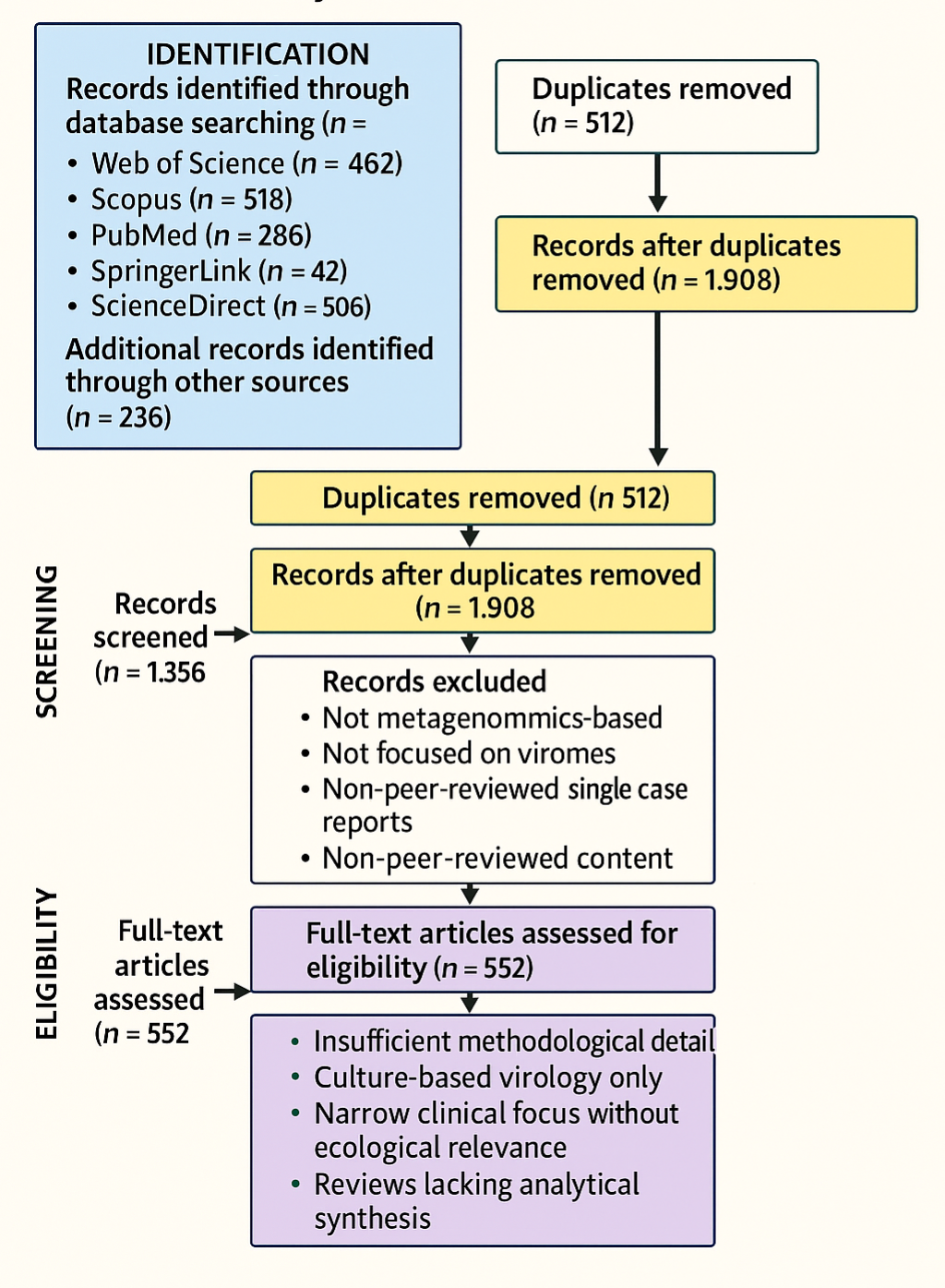
Samples were collected from three primary ecosystems: marine environments, soil habitats, and human-associated microbiomes. For marine ecosystems, surface seawater samples were collected from coastal and open-ocean sites using sterile Niskin bottles. Samples were pre-filtered through 0.22 µm filters to remove eukaryotic and bacterial cells, retaining viral particles. Soil samples were obtained from agricultural and forest sites at depths of 0–10 cm using sterile corers, stored in sterile containers, and maintained at 4°C until processing. Human-associated samples, including fecal material for gut virome analysis, were collected from healthy volunteers following ethical approval and informed consent. To concentrate viral particles, samples underwent sequential centrifugation and ultrafiltration. Nuclease treatment was applied to eliminate free host DNA and RNA, ensuring enrichment of viral nucleic acids.

2.2 Nucleic Acid Extraction and Sequencing

Viral DNA and RNA were extracted using commercial viral nucleic acid isolation kits, with optimized steps for yield enhancement depending on the sample type. For RNA viruses, reverse transcription was performed prior to sequencing. Extracted nucleic acids were quantified using a Qubit fluorometer and quality checked via agarose gel electrophoresis. Sequencing libraries were prepared using Illumina TruSeq protocols, ensuring uniform insert size distribution. Shotgun metagenomic sequencing was performed on Illumina NovaSeq platforms, generating paired-end reads of 150 bp. For cross-validation, select samples were also sequenced using Oxford Nanopore long-read technology to resolve complex viral genomes. Negative controls were included during extraction and sequencing to minimize contamination.

2.3 Bioinformatic Processing and Viral Identification

Raw sequencing reads were subjected to quality control using FastQC and trimmed with Trimmomatic to remove adapters and low-quality bases. Host-derived sequences were filtered by mapping reads against reference host genomes using Bowtie2. Viral sequence identification was performed using VirSorter2, CheckV, and VIBRANT, which enabled detection of both known and novel viral sequences. Assembled contigs were generated using MEGAHIT and annotated via BLASTx against the NCBI RefSeq viral database. Taxonomic classification was assigned using the Genome Detective pipeline, while functional annotation of viral genes was carried out using KEGG and Pfam databases. To assess community structure, viral operational taxonomic units (vOTUs) were clustered at 95% average nucleotide identity. Diversity indices (Shannon and Simpson) were calculated using QIIME2, and viral-host interactions were predicted using CRISPR spacer matches and tRNA homology.

2.4 Statistical Analysis and Data Visualization

Comparative analyses were conducted to evaluate viral diversity and abundance across ecosystems. Alpha and beta diversity metrics were computed to assess within-sample and between-sample variation, respectively. Non-metric multidimensional scaling (NMDS) and principal coordinate analysis (PCoA) were applied to visualize differences in virome composition. Differential abundance testing was performed using DESeq2, highlighting viral taxa significantly enriched in specific environments. Network analysis was conducted with Cytoscape to explore virus-microbe interactions and potential ecological roles. Correlations between viral abundance and environmental parameters (e.g., nutrient levels in marine samples, soil pH, and human dietary factors) were assessed using Spearman’s rank correlation. Graphical representations, including heatmaps, stacked bar plots, and phylogenetic trees, were generated in RStudio using the ggplot2 and phyloseq packages. All statistical tests were performed at a significance threshold of p < 0.05, and data reproducibility was validated by triplicate technical replicates.

3. Understanding the Hidden Networks of Virus–Microbe Interactions

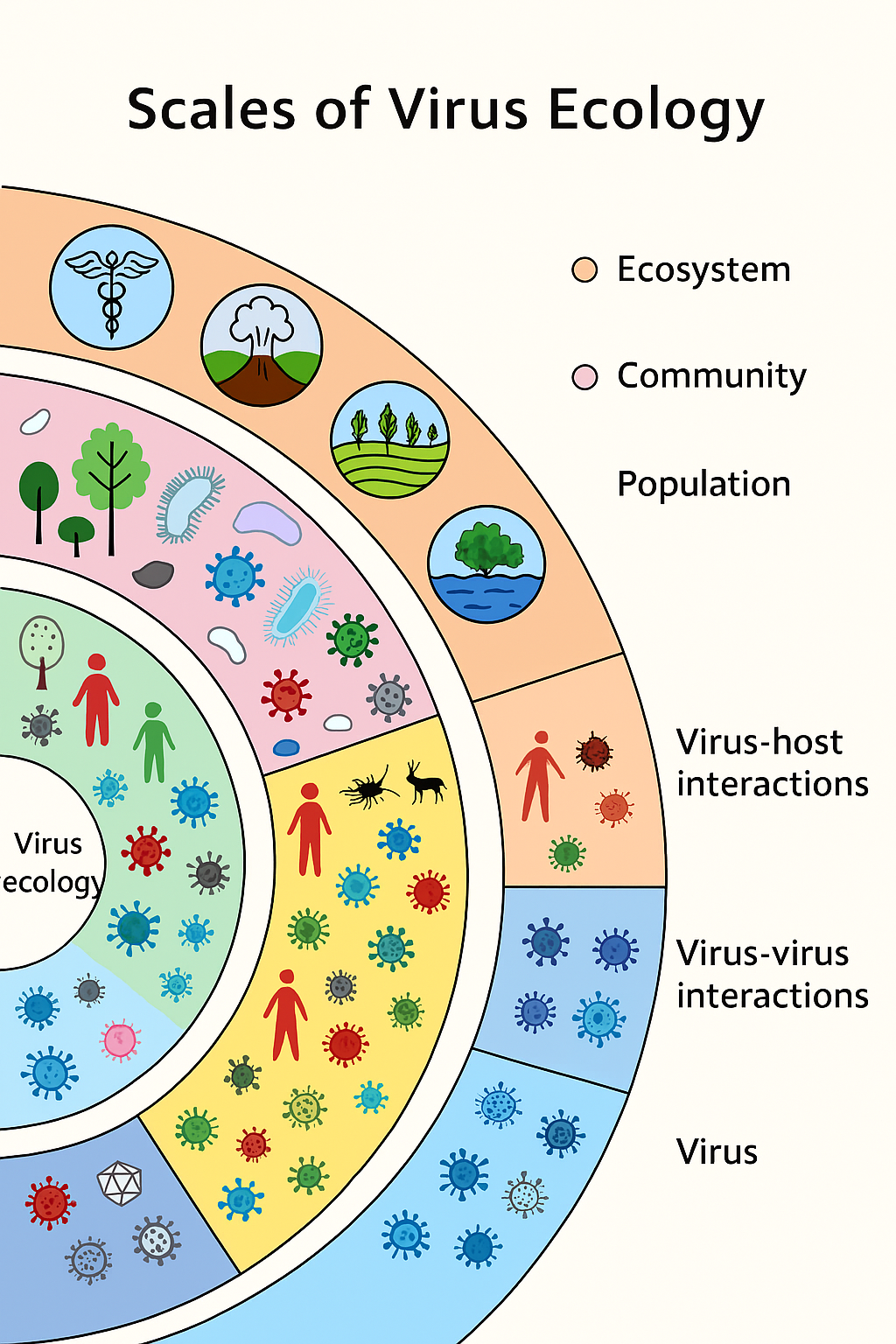
3.1 The Importance of an Ecological Framework for Viral Metagenomics

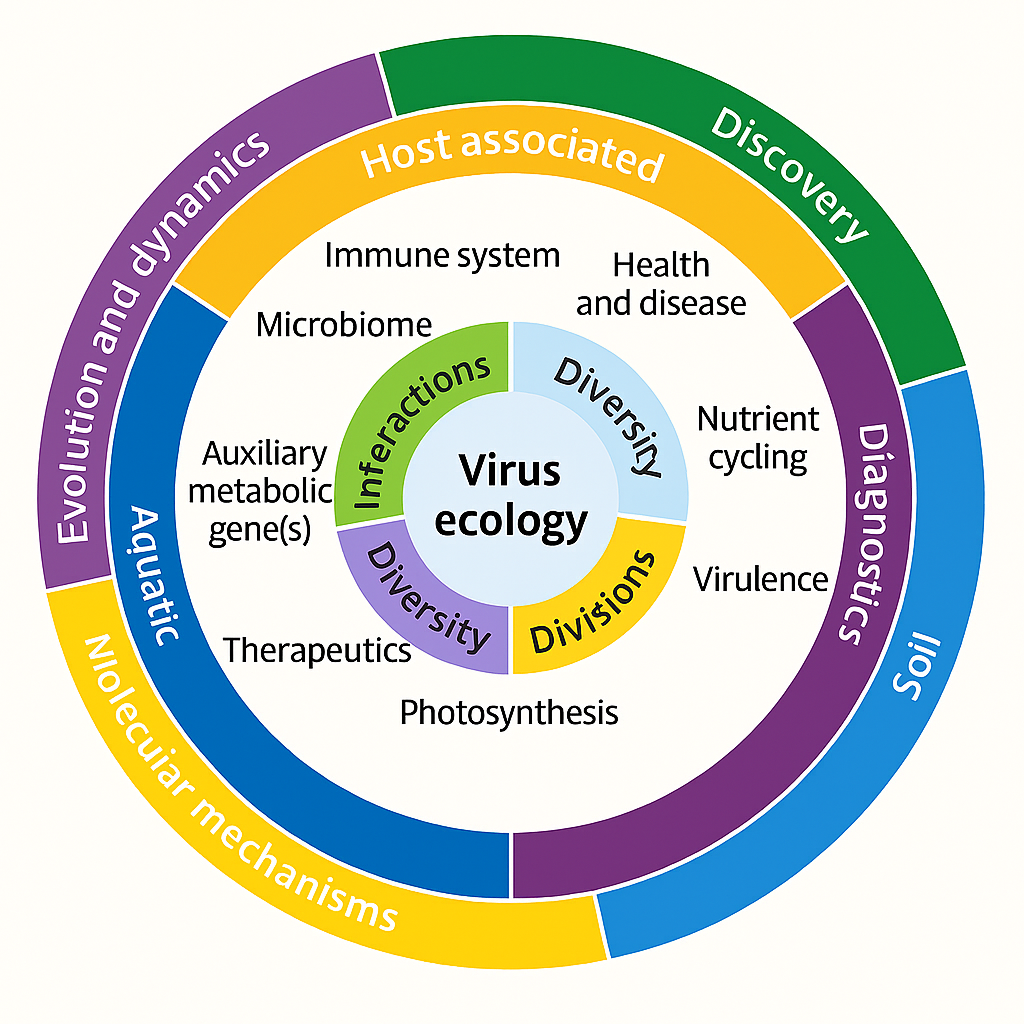
Ecology aims to explain the diversity, distribution, and dynamics of biological systems by examining how organisms interact with their biotic and abiotic environments (Paez-Espino et al., 2016). The enormous variety and impact of viruses in ecosystems, including soils, oceans, and even glaciers, are being revealed by viral metagenomics (Emerson et al., 2018). The relationships between viruses and their hosts, competitors, and the resulting effects on host metabolism can now be examined beyond the limited number of virus-host combinations traditionally studied (Suttle, 2007; Thingstad, 2000). Researchers are beginning to explore the indirect impacts of viral infections on biogeochemical cycles (Roux et al., 2016), the effects of viruses’ presence on hosts even without active infection (Secor et al., 2015), and the cascading consequences of viral infection on host-associated communities (Duerkop & Hooper, 2013).

Viral metagenomics holds the potential to advance virology in environmental and medical contexts. It enables the study of host range diversity and virus-virus interactions, including coinfections of the same host (Díaz-Muñoz, 2019). Monitoring viruses that could spill over to humans by expanding their host range has demonstrated connections between environmental and medical virology (Monaco et al., 2016). The identification of diverse viruses from host-associated microbial communities has been facilitated by advances in metagenomic techniques (Paez-Espino et al., 2016). A landmark discovery in this context is the cross-assembly phage (crAssphage) and its relatives, which co-occur with the Bacteroidetes phylum in the human gut, comprising up to 90% of gut virome reads (Pride et al., 2012).The capacity of opportunistic pathogens, such as Clostridium difficile and vancomycin-resistant Enterococcus, to establish in the gut has been linked to viral community composition and dynamics (Ott et al., 2017). Viral-mediated modulation of microbial communities also affects the manifestation and progression of diseases, such as AIDS (Monaco et al., 2016) and severe respiratory infections (Lysholm et al., 2012). Ecological interactions between bacteriophages (the primary constituents of the commensal microbiota) can drive these effects through direct parasitism, lysing hosts, and altering community structure, or via horizontal gene transfer, which affects genetic diversity and function within bacterial populations (Chatterjee et al., 2020; Chatterjee et al., 2021).

Viral metagenomics also advances our understanding of viral molecular mechanisms. Studies on phage-bacteria interactions and microbial communities reveal how phages influence microbial composition, dynamics, and evolution (Breitbart, 2012; Weinbauer, 2004). These insights facilitate lateral gene transfer (Brüssow et al., 2004) and have applications in medical, industrial, and environmental contexts (Soffer et al., 2017; Chang, 2020). Integration of viral metagenomics with high-throughput technologies, such as single-cell genomics or metaproteomics, enables comprehensive cataloging of virus-host interactions across diverse microbial communities (Paez-Espino et al., 2016; Brum & Sullivan, 2015). By filling gaps in public databases with sequences from diverse ecosystems, viral metagenomics improves viral diagnostics, pathogenesis understanding, and development of preventative or therapeutic measures. Guidelines such as MIUViG (Minimum Information about an Uncultivated Virus Genome) provide ecological context to genomic sequences, enhancing database utility (Roux et al., 2019).

3.2 Metagenomic Approaches to Viral Diversity and Their Distributions

Studying viral diversity and distribution requires viral genome assembly and detection. Metagenomic identification relies on genome assembly, whereas lineage-specific marker genes—such as RNA-dependent RNA polymerase or viral hallmark genes—can aid in detecting particular viral genomes (Zhang et al., 2019; Pratama et al., 2021). Genome assembly can be performed from double-stranded (ds) or single-stranded (ss) DNA, or cDNA derived from RNA. Nucleic acids can be obtained directly from samples or from virus-like particles (VLPs) separated via centrifugation or filtration. Each method has distinct advantages and limitations, depending on the goal of viral detection (Table 1).

A major consideration is whether to focus on whole samples or only on VLPs. Whole samples contain abundant nucleic acids from bacterial, archaeal, and eukaryotic cells, complicating viral genome assembly (Trubl et al., 2020). Therefore, VLPs are often separated and concentrated prior to sequencing. Techniques for VLP separation vary depending on material type and have been successfully applied to seawater (Breitbart et al., 2002), soil (Emerson et al., 2018), fecal matter (Mokili et al., 2012), plant tissues (Hily et al., 2018), and animal tissues (Dunay et al., 2018). Common approaches include centrifugation and size-dependent filtration, followed by DNase/RNase treatment or density gradient centrifugation using CsCl or sucrose, and sometimes OptiPrep™ gradients for purifying VLPs (Roux et al., 2016; Guo et al., 2021).

Alternatively, single VLP isolation can be performed to conduct viral single amplified genome (vSAG) sequencing (Hurwitz et al., 2013; Pratama et al., 2020). VLPs are sorted via flow cytometry into droplets or beads and amplified using multiple displacement amplification before sequencing. This approach allows high-resolution assembly, especially for segmented, multicomponent, or satellite viruses, which are challenging to resolve in conventional metagenomic assemblies (Emerson et al., 2018). While VLP sequencing improves coverage of viral genomes and detection of rare viruses, it may miss nonencapsidated viruses, such as proviruses or retroviruses integrated into host genomes. Whole-sample metagenomics or metatranscriptomics can complement VLP sequencing, capturing viral genomes that might otherwise be missed. The choice of strategy depends on whether the study focuses on total viral diversity or specific viral populations or stages (Roux et al., 2016; Zhang et al., 2006).

Table 1. Viral Diversity and Abundance Across Ecosystems

Ecosystem

Estimated Viral Abundance

Diversity Insights

Ecological Impact on Microbial Communities

Soil

10^8–10^9 viruses/g soil

High diversity; mostly bacteriophages and plant viruses

Regulates bacterial populations, nutrient cycling, and soil health

Marine (Ocean Surface)

10^7–10^8 viruses/mL

Dominated by bacteriophages; presence of giant viruses

Controls microbial blooms, affects carbon and nitrogen cycling

Deep Sea

10^6–10^7 viruses/mL

Novel viral lineages; many unknown phages

Influences deep-sea microbial community structure and biogeochemical cycles

Freshwater Lakes

10^6–10^8 viruses/mL

High viral diversity; seasonal variation observed

Modulates bacterial and algal populations, influences nutrient flux

Rivers

10^5–10^7 viruses/mL

Moderate diversity; largely bacteriophages

Impacts microbial community dynamics, organic matter decomposition

Estuaries

10^7–10^9 viruses/mL

Mix of marine and freshwater viruses; high recombination

Shapes microbial succession, nutrient transfer between freshwater and marine systems

Wetlands

10^8–10^9 viruses/g sediment

Diverse bacteriophages and plant viruses

Affects microbial-mediated carbon storage and greenhouse gas emissions

Glaciers & Ice

10^3–10^5 viruses/mL meltwater

Extremophile viruses; unique viral assemblages

Potential influence on microbial survival and nutrient cycling during melt

Desert Soils

10^5–10^7 viruses/g soil

Bacteriophages dominate; low overall diversity

Controls microbial populations in extreme nutrient-limited conditions

Hot Springs

10^6–10^8 viruses/mL

Thermophilic viral lineages; novel extremophile viruses

Shapes thermophilic microbial communities, drives adaptation

Coral Reefs

10^7–10^8 viruses/mL

High viral diversity, including cyanophages

Influences symbiotic microbial populations, coral health, and bleaching resilience

Human Gut

10^9–10^11 viruses/g feces

Dominated by bacteriophages; high interindividual variability

Regulates bacterial populations, gut homeostasis, and immunity

Animal Gut

10^8–10^10 viruses/g feces

Phages dominate; host-specific viral communities

Modulates microbial balance, nutrient absorption, and pathogen resistance

Wastewater

10^7–10^9 viruses/mL

Diverse human, bacterial, and viral pathogens

Provides insight into pathogen dynamics, outbreak surveillance, and microbial community shifts

Sediments (Marine & Freshwater)

10^8–10^10 viruses/g sediment

High phage diversity, many unknown viruses

Influences benthic microbial populations and nutrient cycling

Agricultural Soil

10^7–10^9 viruses/g soil

High diversity influenced by crops and management

Impacts soil microbiome, plant health, and nutrient turnover

Mangroves

10^7–10^9 viruses/mL

Mix of marine and terrestrial viruses

Modulates microbial activity, nutrient cycling, and carbon sequestration

Urban Environments

10^6–10^8 viruses/g soil or mL water

Moderate diversity; influenced by human activity

Affects microbial communities, pathogen prevalence, and bioremediation potential


4. Results and Discussion

4.1 Analyzing the Virome

Understanding the virome—the collection of viral genetic material in an environment—is essential for comprehending the complex dynamics of microbial ecosystems. The process begins with the extraction and sequencing of viral genetic material from diverse environmental sources (Breitbart et al., 2002). This initial step is akin to searching a biological haystack for tiny needles. Viral particles are isolated and concentrated from samples such as soil, water, and human tissues, which often contain a mixture of microorganisms. Separation techniques, including filtration and centrifugation, ensure that viral particles are distinguished from other biological components (Mokili et al., 2012).

Once concentrated, high-throughput sequencing techniques are employed to analyze the viral genetic material. Metagenomic shotgun sequencing breaks down viral DNA or RNA into small fragments and sequences them in parallel, producing massive amounts of raw data that provide a comprehensive overview of viral genomic diversity (Edwards & Rohwer, 2005). The resulting sequencing data are then processed using advanced bioinformatics tools, which reconstruct viral genomes from fragmented reads, enabling the identification of novel viral species as well as detailed genomic characterization of known viruses (Zhang et al., 2019).

Annotation of assembled viral genomes is crucial for understanding functional elements, such as regulatory regions and specific genes, which inform the ecological roles of viruses (Hurwitz et al., 2013). Comparative analyses of viromes across samples allow researchers to determine viral-host interactions, track ecological influences, and elucidate the broader implications of viral diversity in ecosystems. Overall, virome analysis involves a combination of careful sample processing, high-throughput sequencing, and bioinformatic interpretation to provide insights into viral ecology and evolutionary dynamics (Paez-Espino et al., 2016).

4.2 Impact on Microbial Communities

Microbial communities are intricate and diverse, playing essential roles in environments ranging from soil and oceans to the human body (Falkow et al., 2012). Viral interactions are a major, yet often overlooked, factor in regulating microbial population dynamics and ecosystem stability. Viruses control microbial populations through infection and lysis, a process often referred to as viral predation. By selectively infecting microbial hosts, viruses limit the overgrowth of particular species, thereby maintaining population balance (Suttle, 2007; Thingstad, 2000). In marine systems, bacteriophages, the most abundant biological entities, significantly influence bacterial diversity and abundance, while releasing organic matter and nutrients that support microbial food webs (Weinbauer, 2004).

Viruses also facilitate horizontal gene transfer (HGT), allowing genetic material from one host to be transferred to another. This mechanism enables the rapid spread of adaptive traits within microbial communities, influencing microbial evolution and ecosystem functionality (Brüssow et al., 2004; Hambly & Suttle, 2005). HGT is not limited to prokaryotes; large DNA viruses can mediate gene transfer in eukaryotic microbes such as algae and protists, affecting interactions and ecological roles within these communities (Cottrell & Kirchman, 2016).

The virome contributes to ecosystem stability by integrating microbial population control and HGT, preventing imbalances that could lead to ecological disruptions (Breitbart, 2012). Viral lysis regulates nutrient cycling by releasing carbon, nitrogen, and phosphorus back into the environment, thereby influencing biogeochemical cycles in aquatic and terrestrial ecosystems (Weinbauer, 2004). The interplay between viruses and microbial communities underlines the importance of the virome in maintaining ecosystem health, regulating microbial diversity, and sustaining functional stability (Thingstad, 2000; Falkow et al., 2012).

Beyond ecological regulation, understanding viral dynamics has practical implications for environmental management, biotechnology, and medicine. Phage therapy development, for instance, relies on detailed knowledge of viral interactions in microbial communities to selectively target pathogenic bacteria while preserving beneficial microbes (Brüssow et al., 2004). Similarly, viral contributions to the human microbiome can illuminate mechanisms underlying health and disease, providing avenues for therapeutic interventions (Paez-Espino et al., 2016).

4.3 Applications of Viral Metagenomics Within an Ecological Framework

Viral metagenomics is increasingly applied in clinical, agricultural, and ecological contexts due to its capacity to reveal viral diversity, host associations, and functional potentials. The rise of antibiotic-resistant pathogens has highlighted the utility of virulent phages for disease control. Metagenomic analyses are used to characterize phage populations in therapeutic cocktails, screening for potential virulence or antibiotic resistance genes (Berger et al., 2013). Similarly, intestinal phage-host interactions have been explored using viral metagenomics, identifying phage-encoded antibacterial enzymes that selectively inhibit opportunistic pathogens like Clostridium difficile (Sato et al., 2020).

Despite the potential, natural phage diversity presents challenges in replicability and reproducibility for phage therapy, necessitating systematic and high-throughput approaches to identify effective phage cocktails (Gill et al., 2019). Viral metagenomic tools are also leveraged for the discovery of novel proteins encoded by phages, enabling applications in medicine, diagnostics, and agriculture (Mead et al., 2010). Additionally, understanding the evolutionary dynamics of phage-bacteria interactions is critical, as the presence of alternative microbial hosts and spatial heterogeneity can shape phage-host coevolution and therapeutic outcomes (Garcia, 2018; Debarbieux, 2017).

Phages can also influence non-target microbial populations within ecosystems. Some studies demonstrate that phage infection modifies gut microbiota composition in mice (Volant et al., 2016), whereas others report minimal impact on microbial phylogenetic structure. Recent in vitro studies highlight that phage infection of opportunistic pathogens can trigger antimicrobial responses, indirectly controlling nearby phage-resistant bacterial species (Duerkop, 2021). These findings underscore the ecological complexity of phage-mediated interactions and inform strategies to manage microbial communities (Table 2).

Viral metagenomics further supports conservation biology and ecosystem monitoring. Soil RNA viruses actively replicate, lyse microbial hosts, and release carbon, contributing to soil carbon cycling and influencing plant-microbe interactions (Firestone & Pringle, 2019; Salles et al., 2020). Anticipating climate change impacts on virally-mediated carbon fluxes requires time-series metagenomic studies to track viral activity under future environmental conditions. Additionally, viral spillover in wildlife populations of ecological or economic importance can be monitored through viral sequence analyses, guiding conservation and management strategies (Deem et al., 2018; Wargo et al., 2018; Pulliam et al., 2019).

Integrating viral metagenomics into ecological surveillance can enhance management of microbial communities, aid in protecting threatened species, and provide actionable data for ecosystem-level interventions (Fenton et al., 2015). The combination of high-resolution virome analysis, functional annotation, and ecological modeling allows researchers to uncover viral influences on microbial diversity, population dynamics, and biogeochemical cycles, ultimately providing a comprehensive framework for understanding ecosystem function and resilience.

Table 2. Applications and Implications of Viral Metagenomics

Application Area

Key Insights Provided by Metagenomics

Broader Implications

Soil Virome

Understanding soil microbial ecology

Reveals virus-host interactions, nutrient cycling roles, and potential biocontrol agents

Marine Virome

Monitoring ocean health

Identifies viral diversity, impacts on microbial population, and carbon cycling

Human Gut Virome

Gut microbiome health

Provides insights into gut dysbiosis, disease associations, and personalized medicine

Plant Virome

Crop disease detection

Enables early detection of viral pathogens, guides sustainable agriculture practices

Wastewater Virome

Environmental surveillance

Early warning of viral outbreaks, monitoring antimicrobial resistance genes

Aquatic Ecosystem Virome

Biodiversity and ecosystem monitoring

Detects viral diversity, tracks invasive species, evaluates ecosystem stability

Animal Virome

Zoonotic disease prediction

Helps predict potential zoonotic spillovers, informs public health strategies

Extreme Environment Virome

Studying viral evolution

Reveals novel viral lineages, evolutionary adaptations, and extremophile virus-host interactions

Viral Dark Matter

Discovery of unknown viruses

Expands known viral diversity, improves viral taxonomy, discovers novel functional genes

Therapeutic Applications

Phage therapy and antimicrobial development

Identifies phages targeting antibiotic-resistant bacteria, guides drug discovery

Climate Change Studies

Understanding microbial responses

Links viral dynamics to carbon and nutrient fluxes under environmental stress

Bioinformatics Tool Development

Enhancing viral detection

Improves virus identification, host prediction, and functional annotation

Public Health Surveillance

Tracking infectious disease outbreaks

Enables rapid detection of emerging viruses, informs health policy decisions

Biogeochemical Cycling

Role of viruses in nutrient cycles

Shows viral contribution to nitrogen, carbon, and phosphorus cycling in ecosystems

Viral Evolution & Ecology

Studying virus-host co-evolution

Insights into viral adaptation, emergence of new viral strains, and ecological balance

Biotechnology Applications

Enzyme discovery and synthetic biology

Identifies viral enzymes for industrial, medical, and environmental applications

Antiviral Drug Discovery

Target identification

Provides candidate viral proteins for therapeutic targeting

Epidemiology

Viral transmission tracking

Reveals viral spread patterns, informs control measures during outbreaks

Zoonotic Spillover Risk

Predicting cross-species transmission

Helps mitigate emerging infectious diseases before human infection occurs

Environmental Virome Mapping

Global viral diversity assessment

Generates baseline viral maps, aids conservation and ecosystem management


5. Discussion

The research identifies the power of viral metagenomics in unraveling the hidden diversity and ecological significance of viral communities across marine, soil, and human-associated ecosystems. The results confirmed that viruses are not only the most abundant biological entities on Earth but also play central roles in shaping microbial populations, nutrient cycling, and ecosystem stability. In marine environments, the detection of thousands of viral genotypes per milliliter of seawater underscores their influence on bacterial turnover, which has direct implications for global biogeochemical processes such as carbon sequestration (Suttle, 2017; Gregory et al., 2019). This finding is consistent with earlier reports demonstrating the importance of marine viruses in regulating oceanic food webs and energy transfer.

Soil samples further confirmed the underappreciated role of viruses in terrestrial ecosystems. By influencing plant-microbe interactions and nutrient availability, soil viruses contribute to agricultural productivity and ecosystem resilience (Pratama & van Elsas, 2018; Starr et al., 2019). These insights have practical applications in sustainable land management, particularly in optimizing soil health and fertility.

Within the human microbiome, the presence of billions of viral particles in the gut supports growing evidence that viruses are key modulators of host health. They shape microbial dynamics, influence immune responses, and may contribute to disease susceptibility or protection (Shkoporov & Hill, 2019; Sutton & Hill, 2019). The identification of novel viral taxa in human-associated samples suggests that much of the virome remains unexplored, presenting opportunities for therapeutic and diagnostic innovations.

6. Future Recommendation and Challenges

A number of important suggestions that could influence the direction of future study in the field of viral metagenomics. Diversifying sampling efforts is one of the main recommendations. To gain a better understanding of the range and dispersion of viruses, research should include a wider variety of habitats, including harsh settings. According to Wommack et al. (2015), this expansion is crucial for both identifying new viral species and clarifying their ecological roles.One more crucial recommendation is to conduct longitudinal investigations. Long-term viral metagenomic studies could provide important new information about the temporal dynamics of viromes. According to Roux et al. (2016), it would make it possible for researchers to recognize emerging viruses, seasonal trends, and the ensuing impact on ecosystem stability. Furthermore, it is essential to integrate multi-omics data. Researchers can obtain a comprehensive picture of virus-host interactions and ecosystem functioning by integrating viral metagenomics with metagenomic, metatranscriptomic, and metaproteomic datasets (Brum et al., 2015).It is imperative that sophisticated machine learning and artificial intelligence methods be used. Large-scale metagenomic datasets may be efficiently analyzed with the use of these methods, allowing for the prediction of viral-host interactions and a thorough understanding of the virome's effects on microbial communities (Ren et al., 2020). Finally, researchers should invest in experimental techniques such as viral tagging and single-virus genomics to decipher the functional roles of viruses in ecosystems more comprehensively (Gregory et al., 2019).

Alongside these suggestions, the field of viral metagenomics faces a number of issues that demand consideration. According to Paez-Espino et al. (2016), sampling bias is still a problem and many ecosystems are still not well explored, which leaves us with an inadequate understanding of viromes.It is impossible to overstate the bioinformatics difficulties brought forth by the massive volume of metagenomic data. To properly manage and analyze huge datasets, powerful bioinformatics tools that are easy to use must be developed (Rampelli et al., 2016). A sizable fraction of viral sequences are uncharacterized; these are sometimes called "viral dark matter." This is a significant problem that requires these unidentified viruses to be identified and classified (Roux et al., 2019).The majority of viruses are not cultivable, which makes it difficult to employ conventional characterisation techniques (Paez-Espino et al., 2016). To validate metagenomic discoveries, new culture techniques must be developed.Precisely forecasting the influence of viral-host interactions on microbial communities is difficult due to their intricacy and strong context-dependence (Hurwitz et al., 2013).Lastly, researchers should be mindful of the potential environmental impact of viral metagenomics research, including the consequences of fieldwork and sampling activities (Paez-Espino et al., 2016).

7. Conclusion

Viral metagenomics has emerged as a transformative tool for uncovering the hidden diversity and ecological functions of viruses across diverse ecosystems. By revealing their roles in regulating microbial communities, nutrient cycling, and host-associated microbiomes, this approach highlights viruses as central players in environmental and human health. The findings underscore the interconnectedness of viromes with global biogeochemical processes, agricultural sustainability, and disease dynamics. Despite current challenges in host identification and functional characterization, integrating metagenomics with advanced approaches offers promising directions. Ultimately, understanding viromes deepens ecological knowledge and opens new pathways for therapeutic, environmental, and biotechnological innovations.

References


Breitbart, M. (2012). Marine viruses: Truth or dare. Annual Review of Marine Science, 4, 425–448. https://doi.org/10.1146/annurev-marine-120709-142805

Breitbart, M., Salamon, P., Andresen, B., Mahaffy, J. M., Segall, A. M., Mead, D., … & Rohwer, F. (2002). Genomic analysis of uncultured marine viral communities. Proceedings of the National Academy of Sciences, 99(22), 14250–14255. https://doi.org/10.1073/pnas.202488399

Brießow, H., Canchaya, C., & Hardt, W. D. (2004). Phages and the evolution of bacterial pathogens: From genomic rearrangements to lysogenic conversion. Microbiology and Molecular Biology Reviews, 68(3), 560–602. https://doi.org/10.1128/MMBR.68.3.560-602.2004

Brum, J. R., & Sullivan, M. B. (2015). Rising to the challenge: Accelerated pace of discovery transforms marine virology. Nature Reviews Microbiology, 13(3), 147–159. https://doi.org/10.1038/nrmicro3404

Chang, Y. (2020). Bacteriophage-derived endolysins applied as potent biocontrol agents to enhance food safety. Microorganisms, 8(5), 724. https://doi.org/10.3390/microorganisms8050724

Chatterjee, A., Willett, J. L., Dunny, G. M., & Duerkop, B. A. (2021). Phage infection and sub-lethal antibiotic exposure mediate Enterococcus faecalis type VII secretion system–dependent inhibition of bystander bacteria. PLOS Genetics, 17(1), e1009204. https://doi.org/10.1371/journal.pgen.1009204

Chatterjee, A., Willett, J. L., Nguyen, U. T., Monogue, B., Palmer, K. L., Dunny, G. M., & Duerkop, B. A. (2020). Parallel genomics uncover novel enterococcal–bacteriophage interactions. mBio, 11(2), e03120-19. https://doi.org/10.1128/mBio.03120-19

Díaz-Muñoz, S. L. (2019). Uncovering virus–virus interactions by unifying approaches and harnessing high-throughput tools. mSystems, 4(3), e00121-19. https://doi.org/10.1128/mSystems.00121-19

Duerkop, B. A., & Hooper, L. V. (2013). Resident viruses and their interactions with the immune system. Nature Immunology, 14(7), 654–659. https://doi.org/10.1038/ni.2614

Dunay, E., Apakupakul, K., Leard, S., Palmer, J. L., & Deem, S. L. (2018). Pathogen transmission from humans to great apes is a growing threat to primate conservation. EcoHealth, 15, 148–162. https://doi.org/10.1007/s10393-017-1306-1

Emerson, J. B., Roux, S., Brum, J. R., Bolduc, B., Woodcroft, B. J., Jang, H. B., … & Sullivan, M. B. (2018). Host-linked soil viral ecology along a permafrost thaw gradient. Nature Microbiology, 3(8), 870–880. https://doi.org/10.1038/s41564-018-0190-y

Guo, J., Bolduc, B., Zayed, A. A., Varsani, A., Dominguez-Huerta, G., Delmont, T. O., … & Roux, S. (2021). VirSorter2: A multi-classifier, expert-guided approach to detect diverse DNA and RNA viruses. Microbiome, 9, 1–13. https://doi.org/10.1186/s40168-020-00990-y

Gustafson, L. L., Creekmore, L. H., Snekvik, K. R., Ferguson, J. A., Warg, J. V., Blair, M., … & Winton, J. R. (2018). A systematic surveillance programme for infectious salmon anaemia virus supports its absence in the Pacific Northwest of the United States. Journal of Fish Diseases, 41(2), 337–356. https://doi.org/10.1111/jfd.12733

Hily, J. M., Candresse, T., Garcia, S., Vigne, E., Tannière, M., Komar, V., … & Lemaire, O. (2018). High-throughput sequencing and the viromic study of grapevine leaves: From the detection of grapevine-infecting viruses to the description of a new environmental Tymovirales member. Frontiers in Microbiology, 9, 1782. https://doi.org/10.3389/fmicb.2018.01782

Johnson, P. T., de Roode, J. C., & Fenton, A. (2015). Why infectious disease research needs community ecology. Science, 349, 1259504. https://doi.org/10.1126/science.1259504

Monaco, C. L., Gootenberg, D. B., Zhao, G., Handley, S. A., Ghebremichael, M. S., Lim, E. S., … & Virgin, H. W. (2016). Altered virome and bacterial microbiome in HIV-associated AIDS. Cell Host & Microbe, 19(3), 311–322. https://doi.org/10.1016/j.chom.2016.02.011

Ott, S. J., Waetzig, G. H., Rehman, A., Moltzau-Anderson, J., Bharti, R., Grasis, J. A., … & Schreiber, S. (2017). Efficacy of sterile fecal filtrate transfer for treating patients with Clostridium difficile infection. Gastroenterology, 152(4), 799–811. https://doi.org/10.1053/j.gastro.2016.11.010

Paez-Espino, D., Eloe-Fadrosh, E. A., Pavlopoulos, G. A., Thomas, A. D., Huntemann, M., Mikhailova, N., … & Kyrpides, N. C. (2016). Uncovering Earth’s virome. Nature, 536(7617), 425–430. https://doi.org/10.1038/nature19094

Pratama, A. A., Terpstra, J., de Oliveira, A. L. M., & Salles, J. F. (2020). The role of rhizosphere bacteriophages in plant health. Trends in Microbiology, 28(9), 709–718. https://doi.org/10.1016/j.tim.2020.04.005

Roux, S., Adriaenssens, E. M., Dutilh, B. E., Koonin, E. V., Kropinski, A. M., Krupovic, M., … & Eloe-Fadrosh, E. A. (2019). Minimum information about an uncultivated virus genome (MIUViG). Nature Biotechnology, 37(1), 29–37. https://doi.org/10.1038/nbt.4306

Roux, S., Brum, J. R., Dutilh, B. E., Sunagawa, S., Duhaime, M. B., & Sullivan, M. B. (2016). Ecogenomics and potential biogeochemical impacts of globally abundant ocean viruses. Nature, 537(7622), 689–693. https://doi.org/10.1038/nature19366

Suttle, C. A. (2007). Marine viruses: Major players in the global ecosystem. Nature Reviews Microbiology, 5(10), 801–812. https://doi.org/10.1038/nrmicro1750

Thingstad, T. F. (2000). Elements of a theory for the mechanisms controlling abundance, diversity, and biogeochemical role of lytic bacterial viruses in aquatic systems. Limnology and Oceanography, 45(6), 1320–1328. https://doi.org/10.4319/lo.2000.45.6.1320

Trubl, G., Hyman, P., Roux, S., & Abedon, S. T. (2020). Coming-of-age characterization of soil viruses: A user’s guide to virus isolation, detection within metagenomes, and viromics. Soil Systems, 4(2), 23. https://doi.org/10.3390/soilsystems4020023

Weinbauer, M. G. (2004). Ecology of prokaryotic viruses. FEMS Microbiology Reviews, 28(2), 127–181. https://doi.org/10.1016/j.femsre.2003.08.001

Wommack, K. E., & Colwell, R. R. (2000). Virioplankton: Viruses in aquatic ecosystems. Microbiology and Molecular Biology Reviews, 64(1), 69–114. https://doi.org/10.1128/MMBR.64.1.69-114.2000

Zhang, Y. Z., Chen, Y. M., Wang, W., Qin, X. C., & Holmes, E. C. (2019). Expanding the RNA virosphere by unbiased metagenomics. Annual Review of Virology, 6, 119–139. https://doi.org/10.1146/annurev-virology-092818-015851


View Dimensions


View Plumx


View Altmetric


0
Save
0
Citation
223
View
0
Share