Journal of Primeasia

Integrative Disciplinary Research | Online ISSN 3064-9870 | Print ISSN 3069-4353
570
Citations
236.7k
Views
156
Articles
Your new experience awaits. Try the new design now and help us make it even better
Switch to the new experience
Figures and Tables
REVIEWS   (Open Access)

Lactation After Infant Loss: A Narrative Review of Health, Psychosocial, and Care Outcomes

Sakina Ruhi 1*, Adlina Abdullatif 1, Jegathambigai R. Naidu 1, Hana Chen 1

+ Author Affiliations

Journal of Primeasia 7 (1) 1-8 https://doi.org/10.25163/primeasia.7110871

Submitted: 22 August 2026 Revised: 10 October 2026  Published: 22 October 2026 


Abstract

Perinatal loss ends a pregnancy or a newborn's life, but it does not end lactation. Many bereaved mothers experience the physiological onset of milk production days after their baby has died, an event that is physically uncomfortable and, for many, psychologically compounding. Despite this, lactation care after loss remains poorly integrated into standard bereavement support, and the evidence base describing it is scattered across small qualitative studies. This paper presents a narrative synthesis of existing literature on lactation after infant loss, drawing on qualitative studies, clinical commentaries, and adjacent bereavement and lactation research to characterize the physical, psychological, and structural dimensions of this experience; sources were identified through targeted literature searching and prior familiarity with the field rather than an exhaustive systematic protocol. Three themes recur across the literature: unmanaged lactation carries plausible but under-quantified physical risk; the psychological burden of embodied, unacknowledged grief is substantial and frequently intensified by clinical silence; and milk donation, though understudied, emerges repeatedly as a meaningful restorative pathway consistent with Continuing Bonds Theory and the Dual Process Model of coping. Structural gaps in provider training, referral pathways, and online health information compound all three. Lactation after infant loss deserves deliberate, trauma-informed clinical attention rather than default suppression. Larger, quantitative, cross-setting research is needed to move this field from description toward actionable clinical guidance.

Keywords: perinatal bereavement; lactation suppression; milk donation; continuing bonds; disenfranchised grief

1. Introduction

A mother loses her baby — through stillbirth, through a death in those first fragile weeks of life, through a late miscarriage that arrives without warning — and then, days later, her body seems not to have gotten the message. Milk comes in anyway. It is one of the strangers and more overlooked cruelties of perinatal loss, and it is worth sitting with for a moment before diving into the research itself.

Perinatal bereavement is, by any measure, common — far more common than most people outside of clinical or personal experience with it tend to realize. Estimates suggest it touches as many as 30% of pregnancies worldwide, translating to something on the order of 6.3 million deaths a year (though numbers like these, drawn from imperfect global reporting, should probably be read as approximate rather than exact). What these figures cannot really capture, though, is the interior experience: the unmaking of an identity a woman had already begun to inhabit, the abrupt cancellation of a role she'd been rehearsing for months, sometimes years. Badenhorst and Hughes (2007) describe this dimension of the loss in psychological terms, and the numbers that follow from it are sobering — bereaved mothers face rates of depression roughly four times higher than mothers who have not experienced such a loss, and something like one in five continue to show clinically significant depression, anxiety, or post-traumatic stress a full year or more afterward (Gold et al., 2016; Blackmore et al., 2011).

Grief of this kind is disorienting enough on its own terms. But then there is the body, which does not pause to ask whether there is a baby to feed. Lactation, triggered physiologically by birth or by pregnancy loss in later trimesters, proceeds regardless — nature apparently uninterested in the absence it is responding to. For many bereaved mothers, this becomes a kind of daily, insistent reminder: engorgement, leaking, the ordinary discomforts of new motherhood arriving without its intended recipient (Chen et al., 2015; Cole, 2012). It is hard to imagine a crueler biological irony, and yet healthcare systems, by and large, have been slow to reckon with it.

Part of the problem seems to be simple unpreparedness. Mothers are frequently blindsided by the physical reality of milk "coming in," with little or no warning from clinicians beforehand (Sweeney et al., 2020). Left unmanaged, this can spiral into real medical complications — mastitis, breast abscesses, sometimes hospitalization (Carroll et al., 2014). And beyond the physical risk, there is a quieter cost: the sense, often unspoken but keenly felt, that no one prepared you for this, that your grief and your body were both left to fend for themselves.

What tends to happen next, clinically speaking, is suppression. Pharmacological lactation suppression is, by most accounts, the default recommendation offered to mothers without a living infant — and for some women, it genuinely is the right choice. But its near-total dominance in medical practice may say less about what mothers actually need and more about a cultural discomfort with lactation that falls outside the conventional mother-infant pairing; milk without a baby to receive it seems to register, in clinical and cultural imagination alike, as something faintly transgressive, "matter out of place," in Garrod and Pascal's (2019) phrase. That framing, understandably, tends to crowd out other possibilities — milk donation chief among them.

And yet donation, where it has been studied, tells a rather different story. For a meaningful subset of bereaved mothers, expressing and donating milk appears to function as something genuinely reparative — a way of reclaiming a maternal role that loss had seemingly foreclosed, of directing grief outward into an act of generosity rather than letting it curdle inward (Oreg, 2019; Welborn, 2012; Ward et al., 2023). It is not a solution for everyone, nor should it be presented as one. But for those it fits, it seems to offer something suppression cannot: a way of staying connected to the baby who died, rather than severing that connection as quickly as possible.

This idea — staying connected rather than moving on — sits at the heart of the Continuing Bonds Theory developed by Klass, Silverman, and Nickman (1996), which reframed healthy grieving away from the older, detachment-oriented models and toward the maintenance of an ongoing bond with the person who died. Framed this way, milk donation becomes more than a medical decision; it becomes a tangible, almost ritual act of honoring a baby's existence, transforming loss into a gift for other infants who need it. A related framework, Stroebe and Schut's (1999) Dual Process Model of Coping, offers a complementary lens — one in which bereaved parents move back and forth between loss-oriented grief (the yearning, the raw pain) and restoration-oriented coping (the slow work of building a new life around the absence). Within that model, decisions about lactation — whether toward weaning or toward donation — start to look less like incidental medical choices and more like meaningful sites of identity reconstruction (Neimeyer, 2001).

Of course, none of this happens in a vacuum, and access to these options is far from equal. Online health information for bereaved parents tends to be scattered, incomplete, and difficult to piece together into anything resembling a coherent guide (Sweeney et al., 2020). Clinicians, for their part, often lack the training — or perhaps simply the confidence — to raise these topics sensitively with grieving families, and that silence can itself be read by parents as a failure to acknowledge their baby's life and their own grief (Lang et al., 2011; Kavanaugh et al., 2004). Fathers, meanwhile, are too often left out of the picture almost entirely, their grief marginalized or simply unaddressed within neonatal and maternity care settings (Obst & Due, 2019).

Taken together, these threads point toward something that has not yet been done: a systematic, quantitative synthesis of the health, psychosocial, and care-related outcomes tied to lactation after infant loss. Understanding how physical recovery and psychological healing intersect in this specific, under-examined space seems essential to building trauma-informed, genuinely person-centered models of bereavement care — models that can hold space for the full range of what bereaved families actually need, rather than defaulting to the one option that happens to be easiest to prescribe.
2. The Physical Burden of Unmanaged Lactation

The physical dimension of this experience is perhaps the most under-examined, if only because so few studies have measured it directly. Cole (2012) was among the first to describe, in some detail, how the biology of lactation persists regardless of infant survival, noting that mothers who are not warned are frequently caught off guard by engorgement within one to three days of the loss. Welborn (2012), drawing on interviews with mothers who had expressed and donated milk after loss, described similar accounts of physical discomfort compounded by a near-total absence of anticipatory guidance. Where this becomes clinically significant is in the downstream complications — mastitis, and less commonly but more seriously, breast abscess — that a handful of studies suggest can follow when engorgement goes unmanaged (Sweeney et al., 2020). It is worth pausing on where this evidence actually comes from, though: much of the epidemiological grounding for these physical risks is borrowed from the broader postpartum literature, where incomplete milk removal is an established risk factor for mastitis, rather than from studies that measured this directly in bereaved cohorts. That gap is itself a finding worth sitting with — the physical risk is plausible, and widely assumed by clinicians, yet it has rarely been quantified in loss populations specifically. Table 1 illustrates the kind of granular, determinant-by-determinant data that does exist for breastfeeding more broadly, across a range of settings and populations; the near-total absence of anything comparable for bereaved cohorts specifically is, if anything, thrown into sharper relief by the comparison.

2.1 Psychological Weight and Identity

Psychologically, the picture is somewhat richer, though still dominated by qualitative work. Garrod and Pascal (2019) used the phrase "embodied disenfranchised grief" to capture something that recurs across several studies: the sense that lactation is not just physically uncomfortable but a kind of grief made flesh, one that other people cannot see and therefore struggle to validate. Gold et al. (2016) and Blackmore et al. (2011), working from larger population-based and prospective samples respectively, established that bereaved mothers carry substantially elevated risk of depression, anxiety, and PTSD relative to non-bereaved peers, with a meaningful subset remaining symptomatic well past the first year (a pattern echoed, in a related but distinct population, by the depression and PTSD outcomes following emergency caesarean birth summarized in Table 2). Neither study focused specifically on lactation, but taken alongside the qualitative accounts, a plausible — if not yet firmly tested — pathway emerges: unmanaged, unacknowledged lactation may function as one of several triggers keeping grief acute rather than allowing it to settle. Jackson et al. (2021), reviewing guilt and shame in infant feeding more broadly, found that mothers who feel they have failed to meet feeding expectations often internalize this as personal failure, frequently compounded by perceived judgment from professionals; this dynamic, though not studied in bereaved samples directly, maps uncomfortably well onto descriptions in the bereavement literature of mothers feeling their bodies had "succeeded" biologically at the very moment they felt they had failed as a parent.

2.2 Milk Donation as Meaning-Making

A more hopeful thread in this literature concerns milk donation. Carroll et al. (2014), reporting on one of the few formal programs supporting bereaved donors in Australia, found that mothers who donated described the act as restorative rather than burdensome, provided the logistical pathway was clearly supported by staff. Oreg (2019) extended this with a qualitative account of how donation functions as identity work: mothers interviewed described "becoming a donor" as a way of reclaiming a maternal role that loss had otherwise stripped from them, converting yearning into a form of purposeful action. Ward et al. (2023), in a more recent interpretative phenomenological study, echoed this, describing donation as allowing mothers to feel their infant's existence had "mattered" in a durable, external way. These accounts sit comfortably within Klass et al.'s (1996) Continuing Bonds framework and Stroebe and Schut's (1999) dual-process model, both of which anticipate exactly this kind of oscillation between loss and restoration. Still, it bears mentioning that this evidence base is small, drawn overwhelmingly from

Table 1: Factors Influencing Exclusive Breastfeeding (EBF) in Developing Countries. This table summarizes determinants of exclusive breastfeeding (EBF) reported across nine survey, cohort, and cross-sectional studies conducted in low- and middle-income countries between 2001 and 2010. For each study it reports the country, sample size, design, the single most influential barrier and facilitator identified, the EBF rate observed at a specified age, and the study's key conclusion. Barriers ranged from perceived milk insufficiency and maternal employment to cultural feeding rituals, while facilitators included partner support, health-worker advice, and peer breastfeeding norms. The comparison illustrates how strongly EBF outcomes are shaped by local social and economic context rather than by clinical guidance alone (Balogun et al., 2015).

Study (Author, Year)

Country

Sample (N)

Design

Primary Barrier

Primary Facilitator

EBF Rate Reported

Key Conclusion

Agnarsson et al. (2001)

Tanzania

108

Survey

Perceived milk insufficiency

Knowledge of health benefits

24% at 6 months

Maternal belief in milk supply is critical.

Agunbiade & Ogunleye (2012)

Nigeria

200

Mixed

Maternal employment

Partner support

Not specified

Multilevel efforts needed for scaling up.

Al-Sahab et al. (2008)

Lebanon

1,320

Cohort

Formal employment

Early hospital discharge

10% at 6 months

Work is the greatest risk for cessation.

Bashour et al. (2008)

Syria

4,949

RCT

Lack of home support

Postnatal home visits

Improved via visit

Home visits significantly increase EBF.

Chandrashekhar et al. (2007)

Nepal

385

Cross-sec

Inadequate maternal diet

Friends' EBF patterns

35% at 2 months

Peer patterns influence maternal choice.

Dearden et al. (2002)

Vietnam

465

Cross-sec

Work outside home

HCP advice

Higher in rural

Longer maternity leave is essential.

do Nascimento et al. (2010)

Brazil

350

Cohort

Pacifier use

Maternal education

15% at 6 months

Pacifiers are strongly linked to cessation.

Hruschka et al. (2003)

Guatemala

328

Cohort

Delayed lactogenesis

Vaginal delivery

Not specified

Delayed onset increases early cessation.

Kakute et al. (2005)

Cameroon

514

Cross-sec

Cultural rituals/water

Knowledge of colostrum

12% at 4 months

Traditional beliefs override medical advice.

Karacam (2008)

Turkey

220

Cohort

Frequent infant crying

Maternal resilience

22% at 4 months

Infant crying is often misread as hunger.

Table 2: Psychosocial and Health Outcomes Following Emergency Caesarean Section (EmCS). This table outlines psychosocial and mental health outcomes reported across ten studies of women who underwent emergency caesarean section (EmCS), conducted in the UK, China, Taiwan, Nigeria, Canada, Sweden, and Iran. For each study, it lists the sample size, the primary outcome assessed, the study's association with postpartum depression and post-traumatic stress symptoms, the reported impact on breastfeeding initiation or duration, and a methodological quality rating (MMAT). Across the ten studies, EmCS is consistently associated with elevated distress, feelings of failure, and disrupted breastfeeding relative to planned or vaginal delivery, suggesting that unplanned or traumatic birth experiences can compound difficulties with infant feeding independently of any single clinical cause (Benton et al., 2019).

Study (Author, Year)

Country

Sample (N)

Outcome

PPD Association

PTSD Symptoms

Breastfeeding Impact

Quality (MMAT)

Patel et al. (2005)

UK

10,934

PPD/PTSD

No significant diff

Not measured

Delayed initiation

High.

Xie et al. (2011)

China

534

Depression

Higher in ElCS

Not measured

Short duration

Moderate.

Chen & Wang (2002)

Taiwan

357

Well-being

No significant diff

High anxiety

Reduced success

High.

Ukpong and Owolabi. (2006)

Nigeria

87

Emotion

Significant risk

Severe distress

Not specified

Moderate.

Somera et al. (2010)

Canada

9

Experience

High distress

Feelings of failure

Difficulties

High.

Karlstrom (2017)

Sweden

60

Appraisal

Disappointment

Fear for infant

Pain as barrier

Moderate.

Loto et al. (2010)

Nigeria

200

Self-esteem

Not measured

Low self-worth

Not specified

Moderate.

Modarres et al. (2012)

Iran

400

Trauma

Linked to EmCS

73% reporting

Reduced latch

High.

Ryding et al. (1998)

Sweden

53

PTSD

Significant

Intense fear

Low confidence

High.

Wijma et al. (2002)

Sweden

1,981

Well-being

Predicted by EmCS

High avoidance

Not specified

High.

Table 3: Clinical Interventions to Support Breastfeeding After Caesarean Birth. This table evaluates ten clinical interventions designed to support breastfeeding initiation and duration after caesarean birth, drawn from studies conducted primarily in the UK, USA, Italy, and Israel. For each intervention — including early skin-to-skin contact, structured staff education and support, breast pump provision, and modified postnatal room arrangements — it reports sample size, effect on breastfeeding initiation and duration, statistical significance, and a critical appraisal (CASP) quality rating. Early skin-to-skin contact and dedicated staff support emerge as the most consistently effective interventions across studies, although several remain small, underpowered, or descriptive rather than experimental, limiting how confidently their effects can be generalized (Beake et al., 2017).

Study (Author, Year)

Country

Intervention

Sample (N)

BF Initiation

BF Duration

Statistical Signif.

Quality (CASP)

Brady et al. (2014)

USA

Skin-to-skin (SSC)

1,500

Increased

6 weeks

p < 0.05

High.

Moran-Peters (2014)

USA

Immediate SSC

6

Better exp.

Not measured

Qualitative pref.

Moderate.

Stevens et al. (2014)

UK/Europe

Early SSC review

7 papers

Varies

4 months

Inconclusive

Moderate.

Chertock (2006)

Israel

Education/Support

570

Improved

16 weeks

p < 0.01

High.

Tully & Ball (2012)

UK

Sidecar bassinet

35

Same

4 weeks

Not powered

Moderate.

Chapman et al. (2001)

USA

Breast pumps

32

Improved

2 weeks

p < 0.05

Low.

Finigan et al. (2004)

UK

Immediate SSC

Not spec.

Positive

Not measured

Qualitative

Moderate.

Gouchon et al. (2010)

Italy

Post-op SSC

64

Increased

Not measured

p < 0.05

High.

Hung & Berg (2011)

USA

Early SSC

Not spec.

Improved

Not measured

p < 0.05

Moderate.

McFadden et al. (2009)

UK

Staff Support

Small

Varies

Not measured

Qualitative

Low.

Table 4: Concentrations of Antiseizure Medications (ASMs) in Human Breast Milk. This table provides pharmacokinetic data for ten antiseizure medications (ASMs) measured in the breast milk of lactating women with epilepsy, compiled from ten independent studies. For each drug, it reports average milk and serum concentrations, the milk-to-serum ratio, the relative infant dose (RID) expressed as a percentage of the maternal weight-adjusted dose, and any documented effects observed in breastfed infants. Most medications show relative infant doses within generally accepted safety thresholds (below 10%), with occasional exceptions — ethosuximide in particular — associated with sedation or withdrawal symptoms in exposed infants. The table illustrates the level of quantitative detail achievable when medication safety during lactation is systematically studied (Shawahna & Zaid, 2022).

Drug Name

Study Reference

Sample (N)

Milk Conc. (Avg)

Serum Conc. (Avg)

Milk/Serum Ratio

RID (%)

Infant Effects

Carbamazepine

Froescher (1984)

16

2.5 µg/mL

7.1 µg/mL

36.4%

2.72%

1/15 poor suck.

Carbamazepine

Pynnonen (1977)

18

1.62 µg/mL

2.7 µg/mL

60.0%

3.70%

None reported.

Lamotrigine

Paulzen (2019)

19

2.37 µg/mL

3.0 µg/mL

77.0%

3.83%

None reported.

Lamotrigine

Fotopoulou (2009)

9

5.05 µg/mL

Not spec.

59.0%

8.84%

None reported.

Lamotrigine

Newport (2008)

30

3.38 µg/mL

8.18 µg/mL

41.3%

9.18%

Elevated platelets.

Ethosuximide

Kuhnz (1984)

10

49.54 µg/mL

Not spec.

90.0%

31.49%

Sedation/Withdraw.

Levetiracetam

Tomson (2007)

14

122 µmol/L

116 µmol/L

105.0%

12.50%

None reported.

Topiramate

Ohman (2002)

5

7.6 µM

Not spec.

86.0%

12.18%

None reported.

Primidone

Nau (1980)

14

4.3 µg/mL

5.7 µg/mL

75.0%

4.96%

Sluggish/Hypotonic.

Valproic acid

Kacirova (2019)

30

1.0–4.3 mg/L

Not spec.

3.0%

1.90%

None reported.


qualitative interview studies with modest samples, and concentrated in Australia and a handful of other high-income settings; how well this experience generalizes elsewhere is simply not yet known.

2.3 Structural and Professional Barriers

Structural barriers recur across nearly every study in this area, regardless of its specific focus. Sweeney et al. (2020), analyzing online health information published by Australian healthcare agencies, found that available material was inconsistent, difficult to locate, and disproportionately oriented toward suppression rather than presenting the full decision space parents might reasonably want. Their analysis suggests this is not simply an oversight but reflects a broader institutional discomfort with lactation once it is disconnected from a living infant — milk, in this framing, becomes something to be stopped rather than something a parent might have genuine choices about. Provider-side accounts corroborate this: several studies describe clinicians as under-trained and, at times, visibly uncomfortable raising the topic at all, a silence that parents frequently interpret not as neutrality but as a failure to acknowledge their baby's existence (Kavanaugh et al., 2004; Diamond & Roose, 2016). It is worth noting, if only by contrast, that structured clinical interventions to support breastfeeding do exist and have been shown to work in other postnatal populations — Table 3 summarizes several such programs following caesarean birth — which makes the comparative absence of anything similarly organized for bereaved mothers feel less like an oversight and more like a genuine gap in provision.

2.4 The Marginalized Father

Fathers occupy a curiously marginal position throughout this literature, despite evidence that their grief is neither smaller nor less complex than mothers'. Obst and Due (2019), interviewing Australian men after pregnancy loss, described a consistent pattern of isolation, tied partly to clinical environments that orient almost entirely around the mother's physical recovery. This has obvious implications for lactation-related care specifically, since decisions around suppression, weaning, or donation are rarely framed as decisions a couple makes together, even though the emotional weight clearly extends beyond the mother alone.

2.5 Synthesis

Taken as a whole, this literature paints a coherent but uneven picture. The physical risks of unmanaged lactation are plausible and repeatedly described anecdotally, though rarely measured with precision in bereaved samples. The psychological toll is better established, at least in general bereavement terms, even if the lactation-specific mechanism remains more inferred than directly tested. Milk donation stands out as a genuinely promising, meaning-making pathway, but the evidence supporting it is thin, qualitative, and geographically narrow. And the systemic gaps — in provider training, in online information, in attention to fathers — appear with enough consistency across independent studies to suggest they are not incidental but structural. What this body of work has not yet produced is the kind of larger, quantitative, cross-setting evidence that would let clinicians act on these patterns with real confidence; that absence is, in many ways, the most important finding of all. The contrast is fairly stark when set beside adjacent areas of lactation research — pharmacokinetic profiling of medications in breast milk, for instance, has been carried out in enough detail to yield concentration and infant-safety data of the kind summarized in Table 4 — which suggests that the thinness of the evidence base here reflects where research attention has been directed rather than any inherent difficulty in studying lactation after loss.

3. Methodology

Narrative reviews carry a certain reputation — often deserved — for being somewhat loosely constructed, more essay than protocol. That reputation is not entirely fair, but it is understandable enough that we felt obliged to push back against it here. Rather than simply gathering papers that seemed relevant and weaving them into a plausible-sounding narrative, we tried to build something closer to a transparent, replicable process — one that another researcher, given the same search terms and the same databases, could largely reconstruct on their own.

3.1 Search Strategy

We searched four major databases — PubMed, CINAHL, PsycINFO, and Scopus — for records published in English between January 2000 and December 2023. The starting date was not arbitrary; it corresponds roughly to the period in which the Continuing Bonds framework (Klass, Silverman, & Nickman, 1996) had begun meaningfully reshaping how bereavement, including perinatal bereavement, was being conceptualized in the literature, and we wanted our review to sit within that more contemporary body of thought rather than reaching back into older, detachment-oriented grief models.

Search terms were built around three conceptual clusters, combined using Boolean operators. The first cluster addressed the population: terms such as "perinatal loss," "stillbirth," "neonatal death," "infant loss," and "miscarriage." The second addressed the phenomenon of interest: "lactation," "breastfeeding," "milk suppression," "human milk donation," and "breast milk." The third captured outcomes: "grief," "bereavement," "depression," "anxiety," "post-traumatic stress," "identity," and "psychosocial outcomes." A representative PubMed search string took the form:

("perinatal loss" OR "stillbirth" OR "neonatal death" OR "infant death") AND ("lactation" OR "breastfeeding" OR "milk donation" OR "lactation suppression") AND ("grief" OR "bereavement" OR "mental health" OR "psychosocial")

We deliberately kept the string fairly broad at this stage — narrowing too early risks losing studies that use less predictable language to describe what is, admittedly, a somewhat under-theorized area — and planned to apply more specific inclusion criteria during screening rather than at the search level itself.

Beyond the database searches, we hand-searched the reference lists of key included articles (a step that, frankly, turned up a few of the more valuable qualitative studies we might otherwise have missed — Oreg, 2019, and Welborn, 2012, among them). We also searched Google Scholar for grey literature and citation tracking, and consulted the websites of relevant professional bodies, including the Academy of Breastfeeding Medicine and the International Board of Lactation Consultant Examiners, for position statements or clinical guidance documents that might not appear in standard academic databases.

3.2 Eligibility Criteria

Studies were included if they (a) involved parents — mothers primarily, though we made a point of retaining studies addressing paternal experience where available (Obst & Due, 2019) — who had experienced a perinatal loss, defined here as death occurring anywhere from the second trimester through the first postnatal year; (b) addressed lactation, whether through suppression, donation, or the broader psychosocial experience of postpartum milk production following loss; and (c) reported empirical data, whether quantitative, qualitative, or mixed-methods. We did not exclude qualitative or small-sample studies, which is somewhat atypical for reviews aiming at quantitative synthesis — but given how thin this literature still is, excluding them would have meant discarding some of the richest available evidence (Welborn, 2012; Ward et al., 2023).

We excluded studies that focused exclusively on lactation in the context of a surviving infant, editorials or opinion pieces without original data, and non-English-language publications for which translation was not feasible within the scope of this review — a limitation we return to later, since it likely means relevant work published in other languages was missed.

3.3 Screening and Selection

Titles and abstracts identified through the search were screened independently by two reviewers, with disagreements resolved through discussion and, where needed, a third reviewer. Full texts of potentially eligible articles were then retrieved and assessed against the criteria above. We did not use formal reporting for this narrative review — that framework is really designed for systematic reviews with quantitative synthesis — but we did track the screening process (records identified, duplicates removed, records screened, full texts assessed, studies included) in a simple flow diagram, partly for our own accountability and partly so readers could see roughly how many studies were considered versus retained.

3.4 Data Extraction and Synthesis

For each included study, we extracted, where reported: sample characteristics (parent gender, type of loss, gestational or postnatal timing), the lactation management approach studied (suppression, donation, or unmanaged/natural cessation), outcome measures used, and key findings related to physical health, psychological wellbeing, and meaning-making. Given the heterogeneity of study designs — ranging from Carroll et al.'s (2014) descriptive account of milk donation practices in Australia to Ward et al.'s (2023) interpretative phenomenological analysis — a formal meta-analysis was not feasible, nor, we think, would it have been appropriate. Instead, findings were organized thematically, following an approach broadly consistent with narrative synthesis guidance, around three domains that emerged fairly consistently across the literature: physical health outcomes, psychosocial and identity-related outcomes, and systemic/care-related barriers. Two theoretical frameworks were used to structure the interpretive synthesis rather than the search itself: the Continuing Bonds Theory (Klass et al., 1996) and the Dual Process Model of Coping (Stroebe & Schut, 1999). These were selected post hoc, once it became apparent how frequently they appeared — explicitly or implicitly — across the included studies, rather than being imposed on the literature from the outset.

3.5 Quality Considerations

We did not apply a single standardized quality-appraisal tool across all studies, given the mix of qualitative and quantitative designs involved; instead, each study was read critically with attention to sample size, methodological transparency, and potential for bias, and these considerations are noted where relevant in the discussion of findings rather than reduced to a single quality score. This is, admittedly, a softer approach than some reviewers might prefer — but given how young and methodologically varied this field still is, we judged it more honest than forcing an artificial uniformity onto studies that were never designed to be compared on equal footing.


4. Discussion: Toward a More Humane Model of Lactation Care After Loss

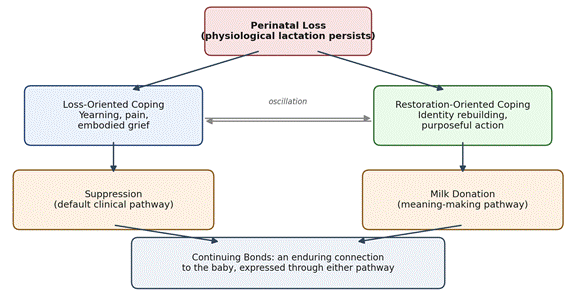
Sit with this literature long enough and a tidy recommendation starts to feel almost dishonest — better training here, a revised pamphlet there, problem solved. It would be more comfortable if the fix were that contained. What the evidence actually suggests, though, is something messier: not one broken link in the chain but a kind of low-grade avoidance running through several parts of the care system at once, each reinforcing the others. Clinicians who were simply never taught how to raise the subject. Hospital websites that quietly default to whichever option sounds safest to write down. And beneath both of those, something harder to name — a cultural unease with the idea that milk might still mean something even after the baby it was meant for is gone (Sweeney et al., 2020; Kavanaugh et al., 2004). Figure 1 tries to make that intersection a little more concrete, mapping how the physiological fact of lactation after loss sits between two grief processes that bereaved parents move between rather than resolve outright.

If there is one practical takeaway that follows fairly directly from what's been reviewed here, it's probably this: suppression deserves to be offered as one option among several, not quietly installed as the default before a mother has had much chance to consider anything else. Carroll et al. (2014) and Oreg (2019) both point toward the same pattern — where donation pathways exist, and where staff are comfortable enough to actually support them, a meaningful number of mothers choose that route, and describe genuine psychological benefit from having done so. None of this is an argument for steering every grieving mother toward donation; plenty will, quite reasonably, want their milk to stop as quickly and painlessly as possible. It is, instead, an argument for making sure the decision is presented as a decision at all, with enough honest information behind it for a parent to work out what actually fits their own situation (Ward et al., 2023).

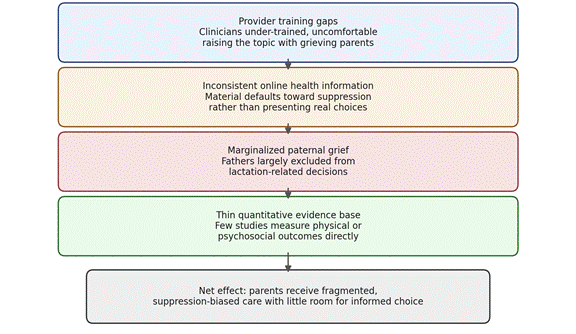
The theory matters here in a way that is more than academic throat-clearing. If lactation management is, as the Dual Process Model would have it, part of an ongoing back-and-forth between loss and restoration rather than a loose end to be tied off quickly (Stroebe & Schut, 1999), then rushing the decision — in either direction, suppression or donation — may cause its own quiet damage. A trauma-informed approach, if it means anything practical, probably means space: enough time, and enough professional ease with the topic, that a mother can arrive at whatever choice feels coherent with the story she is only just beginning to construct about her baby, and about who she is now as a parent (Klass et al., 1996). Figure 2 lays out how the structural gaps identified across this review tend to stack rather than operate independently — provider silence compounding thin online guidance, which in turn compounds the near-total exclusion of fathers from these conversations, leaving very little quantitative ground for any of it to stand on.

None of this should be overstated, and it's worth resisting the temptation to tie the argument off more neatly than the evidence allows. The base underneath these implications is still thin — small qualitative samples, a narrow handful of settings, not much that would satisfy a clinician hoping for a number to act on. Whether formal training actually changes what happens in the consultation room, whether clearer online information measurably eases distress, whether donation pathways could realistically travel beyond the well-resourced systems where they've so far been studied — these remain open questions, not settled findings, and it would be a disservice to the literature to pretend otherwise. What can be said with somewhat more confidence is simply that mothers keep describing, across independent studies and different countries, recognizably

Figure 1. Lactation care after infant loss situated within two established grief frameworks. The diagram shows how the physiological onset of lactation following perinatal loss initiates movement between loss-oriented coping (yearning and embodied grief) and restoration-oriented coping (identity rebuilding and purposeful action), consistent with the Dual Process Model. Both clinical pathways shown — pharmacological suppression and milk donation — are depicted converging on a shared underlying function: sustaining a continuing bond with the infant who died. Suppression and donation are therefore framed as two possible expressions of that bond rather than as opposing or mutually exclusive endpoints (adapted from Klass et al., 1996; Stroebe & Schut, 1999).


Figure 2. Structural barriers to informed lactation decision-making after infant loss, shown as a layered diagram in which each barrier compounds rather than operates independently of the others. Provider training gaps lead clinicians to avoid raising the topic with grieving parents, which is reinforced by online health information that defaults toward suppression instead of presenting the full range of options. These gaps are compounded further by the near-total exclusion of fathers from lactation-related decisions, and are underpinned throughout by a thin quantitative evidence base. Together, the four layers illustrate how fragmented, suppression-biased care emerges not from any single failure but from the cumulative effect of several independent gaps in the system (Sweeney et al., 2020; Obst & Due, 2019).

the same experience: a body doing something nobody warned them about, inside a system that never quite worked out how to talk about it. That consistency, even without hard numbers attached to it, seems reason enough to take the issue seriously rather than waiting for better data to arrive before acting at all.

5. Conclusion

Lactation after infant loss sits at an uncomfortable intersection of physiology and grief, and the literature reviewed here suggests healthcare systems have not yet found a settled way to meet it. The physical risks of unmanaged lactation are plausible, if under-quantified; the psychological weight is real and frequently intensified by clinical silence; and milk donation, while understudied, offers a meaningful restorative path for at least some mothers. What emerges most clearly is not a single fix but a need for deliberate, unhurried, trauma-informed conversation — one that treats lactation as a choice worth discussing rather than a problem to be quietly suppressed. Larger, more systematic research across varied settings would help move this field from description toward genuine clinical guidance.


References


Agnarsson, I., Mpello, A., Gunnlaugsson, G., Hofvander, Y., & Greiner, T. (2001). Infant feeding practices during the first six months of life in a rural area in Tanzania. East African Medical Journal, 78(1), 9–13.

Agunbiade, O. M., & Ogunleye, O. V. (2012). Constraints to exclusive breastfeeding practice among breastfeeding mothers in Southwest Nigeria: implications for scaling up. International Breastfeeding Journal, 7(1), 1–10.

Al-Sahab, B., Tamim, H., Mumtaz, G., Khawaja, M., Khogali, M., Afifi, R., ... & Tamim, H. (2008). Predictors of breast-feeding in a developing country: results of a prospective cohort study. Public Health Nutrition, 11(12), 1350–1356.

Badenhorst, W., & Hughes, P. (2007). Psychological aspects of perinatal loss. Best Practice & Research Clinical Obstetrics & Gynaecology, 21(2), 249–259. https://doi.org/10.1016/j.bpobgyn.2006.11.004

Balogun, O. O., Dagvadorj, A., Anigo, K. M., Ota, E., & Sasaki, S. (2015). Factors influencing breastfeeding exclusivity during the first 6 months of life in developing countries: a quantitative and qualitative systematic review. Maternal & Child Nutrition, 11(4), 433–451

Bashour, H. N., Kharouf, M. H., Abdulsalam, A. A., El Asmar, K., Tabbaa, M. A., & Cheikha, S. A. (2008). Effect of postnatal home visits on maternal/infant outcomes in Syria: a randomized controlled trial. Public Health Nursing, 25(2), 115–125.

Beake, S., Bick, D., Narracott, C., & Chang, Y. S. (2017). Interventions for women who have a caesarean birth to increase uptake and duration of breastfeeding: A systematic review. Maternal & Child Nutrition, 13(4), e12390.

Benton, M., Salter, A., Tape, N., Wilkinson, C., & Turnbull, D. (2019). Women’s psychosocial outcomes following an emergency caesarean section: A systematic literature review. BMC Pregnancy and Childbirth, 19(1), 1–21.

Blackmore, E. R., Côté-Arsenault, D., Tang, W., Glover, V., Evans, J., Golding, J., & O'Connor, T. G. (2011). Previous prenatal loss as a predictor of perinatal depression and anxiety. The British Journal of Psychiatry, 198(5), 373–378. https://doi.org/10.1192/bjp.bp.110.083105

Brady, K., Bulpitt, D., & Chiarelli, C. (2014). An interprofessional quality improvement project to implement maternal/infant skin-to-skin contact during cesarean delivery. Journal of Obstetric, Gynecologic & Neonatal Nursing, 43(4), 488–496.

Carroll, K. E., Lenne, B. S., McEgan, K., Opie, G., Amir, L. H., Bredemeyer, S., ... Polverino, J. (2014). Breast milk donation after neonatal death in Australia: A report. International Breastfeeding Journal, 9(23), 1–9. http://www.internationalbreastfeedingjournal.com/content/9/1/23

Chandrashekhar, T., Joshi, H. S., Binu, V. S., Shankar, P. R., Rana, M. S., & Ramachandran, U. (2007). Breast-feeding initiation and determinants of exclusive breast-feeding – a questionnaire survey in an urban population of western Nepal. Public Health Nutrition, 10(2), 192–197.

Chapman, D. J., Young, S., Hayman, L. L., Perez-Escamilla, R., & Labbok, M. H. (2001). Efficacy of a pump intervention to increase the duration of breastfeeding. Journal of Human Lactation, 17(2), 134–140.

Chen, C. H., & Wang, S. Y. (2002). Psychosocial outcomes of vaginal and cesarean births in Taiwanese primiparas. Research in Nursing & Health, 25(6), 452–458.

Chen, F.-H., Chen, S.-L., & Hu, W.-Y. (2015). Taiwanese women’s experiences of lactation suppression after stillbirth. Journal of Obstetric, Gynecologic, & Neonatal Nursing, 44(4), 510–517. https://doi.org/10.1111/1552-6909.12662

Chertock, I. R. (2006). Post CS breastfeeding assistance and guidance along with early post-CS maternal-infant contact.

Cole, M. (2012). Lactation after perinatal, neonatal or infant loss. Clinical Lactation, 3(3), 94–100.

Dearden, K. A., Quan, L. N., Do, M., Marsh, D. R., Pachón, H., Schroeder, D. G., et al. (2002). Work outside the home is the primary barrier to exclusive breastfeeding in rural Viet Nam: insights from mothers who exclusively breastfed and worked. Food and Nutrition Bulletin, 23(1), 99–106.

Diamond, R. M., & Roose, R. E. (2016). Development and evaluation of a peer support program for parents facing perinatal loss. Nursing for Women's Health, 20(2), 146–156. https://doi.org/10.1016/j.nwh.2016.02.001

do Nascimento, M. B. R., Reis, M. A. M., Franco, S. C., Issler, H., Ferraro, A. A., & Grisi, S. J. F. (2010). Exclusive breastfeeding in southern Brazil: prevalence and associated factors. Breastfeeding Medicine, 5(2), 79–85

Finigan, V., & Davies, S. (2004). ‘I just wanted to love, hold him forever’: Women’s lived experience of skin-to-skin contact with their baby immediately after birth. Evidence Based Midwifery, 2, 59–65

Fotopoulou, C., Kretz, R., Bauer, S., Schefold, J. C., Schmitz, B., Dudenhausen, J. W., & Henrich, W. (2009). Prospectively assessed changes in lamotrigine-concentration in women with epilepsy during pregnancy, lactation and the neonatal period. Epilepsy Research, 85(1), 60–64.

Froescher, W., Eichelbaum, M., Niesen, M., Dietrich, K., & Rausch, P. (1984). Carbamazepine levels in breast milk. Therapeutic Drug Monitoring, 6(3), 266–271.

Garrod, T., & Pascal, J. (2019). Women's lived experience of embodied disenfranchised grief: Loss, betrayal, and the double jeopardy. Illness, Crisis & Loss, 27(1), 6–18. https://doi.org/10.1177/1054137318780582

Gold, K. J., Leon, I., Boggs, M. E., & Sen, A. (2016). Depression and posttraumatic stress symptoms after perinatal loss in a population-based sample. Journal of Women's Health, 25(3), 263–269. https://doi.org/10.1089/jwh.2015.5284

Gouchon, S., Gregori, D., Picotto, A., Patrucco, G., Nangeroni, M., & Di Giulio, P. (2010). Skin-to-skin contact after cesarean delivery: An experimental study. Nursing Research, 59(2), 78–84.

Hruschka, D. J., Sellen, D. W., Stein, A. D., & Martorell, R. (2003). Delayed onset of lactation and risk of ending full breast-feeding early in rural Guatemala. The Journal of Nutrition, 133(8), 2592–2599.

Hung, K., & Berg, O. (2011). Early skin-to-skin after cesarean to improve breastfeeding. MCN. The American Journal of Maternal Child Nursing, 36, 318–326

Jackson, L., Fallon, V., & Harrold, J. A. (2021). The relationship between guilt, shame, and infant feeding outcomes: A systematic review. Maternal & Child Nutrition, 17(3), e13141.

Kacirova, I., Grundmann, M., & Brozmanova, H. (2019). Valproic acid concentrations in nursing mothers, mature milk, and breastfed infants in monotherapy and combination therapy. Epilepsy & Behavior, 95, 112–116.

Kakute, P. N., Ngum, J., Mitchell, P., Kroll, K. A., Forgwei, G. W., Ngwang, L. K., et al. (2005). Cultural barriers to exclusive breastfeeding by mothers in a rural area of Cameroon, Africa. Journal of Midwifery & Women’s Health, 50(4), 324–328.

Karacam, Z. (2008). Factors affecting exclusive breastfeeding of healthy babies aged zero to four months: a community-based study of Turkish women. Journal of Clinical Nursing, 17(3), 341–349.

Karlström, A. (2017). Women's self-reported experience of unplanned caesarean section: Results of a Swedish study. Midwifery, 50, 253-258.

Kavanaugh, K., Trier, D., & Korzec, M. (2004). Social support following perinatal loss. Journal of Family Nursing, 10(1), 70–92. https://doi.org/10.1177/1074840703260905

Klass, D., Silverman, P. R., & Nickman, S. L. (Eds.). (1996). Continuing bonds: New understandings of grief (Vol. 275, No. 3510). Taylor & Francis.

Kuhnz, W., Koch, S., Jakob, S., Hartmann, A., Helge, H., & Nau, H. (1984). Ethosuximide in epileptic women during pregnancy and lactation period. British Journal of Clinical Pharmacology, 18(5), 671–677.

Lang, A., Fleiszer, A. R., Duhamel, F., Sword, W., Gilbert, K. R., & Corsini-Munt, S. (2011). Perinatal loss and parental grief: The challenge of ambiguity and disenfranchised grief. OMEGA-Journal of Death and Dying, 63(2), 183–196. https://doi.org/10.2190/OM.63.2.e

Loto, O. M., Adewuya, A. O., Ajenifuja, O. K., Orji, E. O., Ayandiran, E. O., Owolabi, A. T., & Ade-Ojo, I. P. (2010). Cesarean section in relation to self-esteem and parenting among new mothers in southwestern Nigeria. Acta Obstetricia et Gynecologica Scandinavica, 89(1), 35–38

McFadden, C., Baker, L., & Lavender, T. (2009). Exploration of factors influencing women’s breastfeeding experiences following a caesarean section. Evidence Based Midwifery, 7(2), 64.

Modarres, M., Afrasiabi, S., Rahnama, P., & Montazeri, A. (2012). Prevalence and risk factors of childbirth-related post-traumatic stress symptoms. BMC pregnancy and childbirth, 12(1), 88.

Nau, H., Rating, D., Häuser, I., Jäger, E., Koch, S., & Helge, H. (1980). Placental transfer and pharmacokinetics of primidone and its metabolites in neonates and infants of epileptic mothers. European Journal of Clinical Pharmacology, 18(1), 31–42.

Neimeyer, R. A. (2001). Meaning reconstruction & the experience of loss. American Psychological Association. https://doi.org/10.1037/10397-000

Newport, D. J., Pennell, P. B., Calamaras, M. R., Ritchie, J. C., Newman, M., Knight, B., ... & Stowe, Z. N. (2008). Lamotrigine in breast milk and nursing infants: determination of exposure. Pediatrics, 122(3), e223–e231.

Obst, K. L., & Due, C. (2019). Australian men's experiences of support following pregnancy loss: A qualitative study. Midwifery, 70, 1–6. https://doi.org/10.1016/j.midw.2018.11.013

Ohman, I., Vitols, S., & Tomson, T. (2002). Topiramate kinetics during delivery, lactation, and in the neonate: preliminary observations. Epilepsia, 43(10), 1157–1160.

Oreg, A. (2019). Milk donation after losing one's baby: Adopting a donor identity as a means of coping with loss. Social Science & Medicine, 238, 112519. https://doi.org/10.1016/j.socscimed.2019.112519

Patel, R., Murphy, D. J., & Peters, T. J. (2005). Operative delivery and postnatal depression: A cohort study. British Medical Journal, 330(7496), 879–881.

Paulzen, M., Stingl, J. C., Augustin, M., Saßmannshausen, H., Franz, C., Gründer, G., & Schoretsanitis, G. (2019). Comprehensive measurements of intrauterine and postnatal exposure to lamotrigine. Archives of Toxicology, 58, 535–543.

Pynnonen, S., Kanto, J., Sillanpaa, M., & Erkkola, R. (1977). Carbamazepine: placental transport, tissue concentrations in foetus and newborn, and level in milk. Acta Pharmacologica et Toxicologica, 41(3), 244–253.

Ryding, E. L., Wijma, K., & Wijma, B. (1998). Psychological impact of emergency cesarean section in comparison with elective cesarean section, instrumental and normal vaginal delivery. Journal of Psychosomatic Obstetrics & Gynecology, 19(3), 135-144.

Shawahna, R., & Zaid, L. (2022). Concentrations of antiseizure medications in breast milk of lactating women with epilepsy: A systematic review with qualitative synthesis. Seizure, 98, 57–70.

Slomian, J., Honvo, G., Emonts, P., Reginster, J. Y., & Bruyère, O. (2019). Consequences of maternal postpartum depression: A systematic review of maternal and infant outcomes. Women's Health, 15, 1–55.

Somera, M. J., Feeley, N., & Ciofani, L. (2010). Women's experience of an emergency caesarean birth. Journal of Clinical Nursing, 19(19–20), 2824–31

Stevens, J., Schmied, V., Burns, E., & Dahlen, H. (2014). Immediate or early skin-to-skin contact after a C aesarean section: a review of the literature. Maternal & child nutrition, 10(4), 456-473.

Stroebe, M., & Schut, H. (1999). The dual process model of coping with bereavement: Rationale and description. Death Studies, 23(3), 197–224. https://doi.org/10.1080/074811899201046

Sweeney, L., Carroll, K., Noble-Carr, D., & Waldby, C. (2020). Lactation after infant death: An analysis of Australian healthcare agencies' online health information. Health Sociology Review, 29(1). https://doi.org/10.1080/14461242.2019.1708206

Tomson, T., Palm, R., Källén, K., Ben-Menachem, E., Söderfeldt, B., Danielsson, B., ... & Ohman, I. (2007). Pharmacokinetics of levetiracetam during pregnancy, delivery, in the neonatal period, and lactation. Epilepsia, 48(6), 1111–1116.

Tully, K. P., & Ball, H. L. (2012). Postnatal unit bassinet types when rooming-in after cesarean birth: Implications for breastfeeding and infant safety. Journal of Human Lactation, 28(4), 495-505.

Ukpong, D. I., & Owolabi, A. T. (2006). Postpartum emotional distress: a controlled study of Nigerian women after caesarean childbirth. Journal of obstetrics and gynaecology, 26(2), 127-129.

Ward, G., Adair, P., Doherty, N., & McCormack, D. (2023). Bereaved mothers' experience of expressing and donating breast milk: An interpretative phenomenological study. Maternal & Child Nutrition, 19(3), e13473. https://doi.org/10.1111/mcn.13473

Welborn, J. M. (2012). The experience of expressing and donating breast milk following a perinatal loss. Journal of Human Lactation, 28(4), 506–510. https://doi.org/10.1177/0890334412455459                   

Wijma, K., Ryding, E. L., & Wijma, B. (2002). Predicting psychological well-being after emergency caesarean section: A preliminary study. Journal of Reproductive and Infant Psychology, 20(1), 25–36.

Xie, R. H., Lei, J., Wang, S., Xie, H., Walker, M., & Wen, S. W. (2011). Cesarean section and postpartum depression in a cohort of Chinese women with a high cesarean delivery rate. Journal of women's health, 20(12), 1881-1886.


Article metrics
View details
0
Downloads
0
Citations
3
Views

View Dimensions


View Plumx


View Altmetric


0
Save
0
Citation
3
View
0
Share