
Journal of Primeasia

Integrative Disciplinary Research | Online ISSN 3064-9870 | Print ISSN 3069-4353
570
Citations
232.1k
Views
153
Articles
Your new experience awaits. Try the new design now and help us make it even better
Switch to the new experience
Figures and Tables
REVIEWS   (Open Access)

Flexible Working Arrangements and Employee Experience: A Narrative Review through the Job Demands–Resources Lens

A K M Abu Zafor Shakil1*, Md Mofassel Hossain2

+ Author Affiliations

Journal of Primeasia 7 (1) 1-8 https://doi.org/10.25163/primeasia.7110868

Submitted: 14 July 2026 Revised: 04 September 2026  Published: 18 September 2026 


Abstract

Flexible working arrangements (FWAs) are now woven so deeply into organizational life that it is easy to forget how recently they were considered a perk rather than a baseline expectation. This narrative review asks a fairly simple question that turns out to have a complicated answer: when do FWAs actually help employees, and when do they quietly wear them down? Using the Job Demands–Resources (JD-R) model as an organizing lens, we synthesize theoretical and empirical literature on employee experience (EE) — distinguishing opportunities such as autonomy, growth, and supportive feedback from challenges such as blurred boundaries, cognitive overload, and isolation — and examine how each relates to productivity. A structured, non-exhaustive search of PubMed, Scopus, Web of Science, and PsycINFO (2000–2025) was conducted to identify relevant conceptual and empirical sources, supplemented by an illustrative quantitative case drawn from a New Zealand survey study (Crooney, Tootell, & Scott, 2025), used here descriptively rather than as pooled meta-analytic evidence. Across sources, opportunities consistently function as job resources that enhance motivation and perceived productivity, while unmanaged challenges function as job demands that erode it. Management strategies — check-ins, transparent communication, digital support — repeatedly emerge as the variable that decides which direction the balance tips. We conclude that FWAs are not inherently beneficial or harmful; their value is conditional on how demands and resources are actively managed. The review offers a conceptual map for future empirical work and practical guidance for organizations designing flexible work policies around employee experience rather than policy alone. Keywords: flexible working arrangements; employee experience; Job Demands–Resources model; management strategies; work–life balance

1. Introduction

There was a time, not so long ago, when asking to work from home two days a week felt like asking for a favor. That time has more or less passed. Flexible working arrangements (FWAs) — variation in when, where, and sometimes how work gets done — have moved from the margins of organizational policy to somewhere near its center, driven by a mix of technological change, shifting worker expectations, and, more recently, a pandemic that made remote work a default rather than a request (Almeida, Santos, & Monteiro, 2020; Burchardt & Maisch, 2019; Hunter, 2019). What is interesting, though, is that this shift has not been accompanied by a correspondingly clear answer to a fairly basic question: does flexibility actually make people more productive, or does it just make them feel better while quietly costing them something else?

Part of the difficulty is that flexibility does not act alone. It interacts with something harder to pin down — employee experience (EE) — which is less about satisfaction scores and more about the cumulative, often unspoken sense employees form of whether an organization actually supports them, from the moment they are hired to the moment they leave (Farndale & Kelliher, 2013; Plaskoff, 2017; Panneerselvam & Balaraman, 2022). This lens matters especially in flexible settings, where the usual signals of supervision and presence are weakened or absent altogether, and where an organization's care (or lack of it) has to be communicated through other, subtler means.

The Job Demands–Resources (JD-R) model offers a reasonably tidy way to think through this. Originally developed to explain burnout and engagement, the model treats every feature of a job as falling, more or less, into one of two buckets: a demand, which costs energy, or a resource, which replenishes or channels it (Bakker & Demerouti, 2007, 2017; Demerouti, Bakker, Nachreiner, & Schaufeli, 2001). Cognitive overload and unclear boundaries between work and non-work are demands, and left unaddressed they tend toward exhaustion (Crawford, LePine, & Rich, 2010; Schaufeli & Bakker, 2004). Autonomy, constructive feedback, and social support function as resources — the kind of thing that lets people meet high demands without being ground down by them (Bakker, Demerouti, & Schaufeli, 2003; Bakker, van Veldhoven, & Xanthopoulou, 2010; Caesens, Marique, Hanin, & Stinglhamber, 2016).

What makes FWAs a genuinely interesting case for this framework — rather than just another convenient application of it — is that flexibility seems to intensify both sides at once. Autonomy over one's schedule can deepen a sense of ownership and connection to organizational purpose (Bakker, Hakanen, Demerouti, & Xanthopoulou, 2007; de Leede & Heuver, 2016). But that same loosening of structure can just as easily blur the line between a workday and the rest of a person's life, and the interruptions that follow are not trivial (Evanoff et al., 2020; Majumdar, Biswas, & Sanyal, 2020). It is this duality — flexibility as both gift and burden, sometimes within the same week for the same employee — that makes FWAs worth examining specifically through a demands-and-resources lens rather than treating them as a uniformly positive policy lever.

The empirical record, for what it is worth, reflects this ambivalence rather than resolving it. Broad reviews tend to associate FWAs with higher satisfaction, engagement, and perceived productivity (Allen, Golden, & Shockley, 2015; Bilotta, Cheng, Davenport, & King, 2021), yet closer inspection reveals a persistent undercurrent of strain — difficulty disengaging, a creeping sense of always being available (Hunter, 2019; Messenger, 2017). The COVID-19 period made this especially visible: many workers welcomed the loss of a commute and the gain of autonomy, while others described a workday that no longer had edges (Green, Tappin, & Bentley, 2020; Huws, Spencer, & Syrdal, 2017). Taken together, these findings suggest that flexibility's mere presence guarantees very little; it is the quality of the experience surrounding it — the demands-versus-resources balance — that seems to determine the outcome.

Management strategies (MS) appear, across this literature, as something close to the deciding variable. Structured check-ins, clear communication, and genuine (not performative) feedback can amplify existing resources while dampening the weight of demands (de Leede & Heuver, 2016; Lautsch, Kossek, & Eaton, 2009; Shipman, Swanepoel, & Maynard, 2021); their absence, conversely, tends to breed ambiguity and, eventually, disengagement (Richardson & McKenna, 2014; Mann & Holdsworth, 2003). This is consistent with the JD-R model's broader claim that resources do not just enable performance directly — they also buffer the cost of demands when those demands are high (Bakker & Demerouti, 2017; Demerouti & Bakker, 2011).

This review, then, does not attempt to settle the question of whether FWAs "work." It attempts something more modest and, arguably, more useful: to trace how opportunities and challenges within flexible work map onto the JD-R framework, how management strategies moderate that relationship, and what an illustrative empirical case can tell us about the shape of these effects in practice. In doing so, it aims to move the conversation past the flat question of whether flexibility helps, toward the more productive question of under what conditions, and through what mechanisms, it actually does.
2. Methods

2.1 Review Design and Rationale

This is a narrative review, not a systematic review or meta-analysis, and that distinction is worth stating plainly rather than leaving implicit. The aim was to synthesize conceptual and empirical literature on employee experience (EE), flexible working arrangements (FWAs), and productivity through the organizing lens of the Job Demands–Resources (JD-R) model (Bakker & Demerouti, 2007, 2017) — not to pool effect sizes across a pre-registered set of studies meeting uniform statistical inclusion criteria. Where a systematic review would report a PRISMA flow diagram and quantitative heterogeneity statistics, this review instead reports its search process transparently so the scope of literature consulted is reproducible, while being explicit that the synthesis itself is interpretive and thematic rather than statistical.

2.2 Search Strategy

Literature was identified through structured searches of PubMed, Scopus, Web of Science, PsycINFO, and Google Scholar, covering material published between January 2000 and July 2025. Search terms were combined using Boolean operators (AND/OR) and included: “flexible working arrangements,” “telework,” “remote work,” “employee experience,” “job demands-resources model,” “employee productivity,” “management strategies,” “job autonomy,” “employee engagement,” and “work-life balance.” Reference lists of retrieved reviews were hand-searched for additional relevant sources (citation chaining), and searches were restricted to English-language publications. Because this is a narrative rather than systematic review, no formal PROSPERO registration or PRISMA flow diagram was produced; however, the search terms, databases, and date range above are reported in full so another researcher could reconstruct a comparable literature base.

2.3 Selection Approach

Sources were prioritized for inclusion if they (a) addressed employee experience or related constructs (engagement, well-being, satisfaction) within flexible or remote work contexts, (b) were explicitly or implicitly framed around job demands and/or job resources, and (c) offered either conceptual grounding (theoretical or review pieces) or empirical data relevant to the EE–productivity relationship. Purely descriptive trade or opinion pieces without a scholarly citation base were set aside in favor of peer-reviewed journal articles, though a small number of well-documented organizational and policy reports were retained where they offered empirical detail not otherwise available in the peer-reviewed literature (e.g., Huws, Spencer, & Syrdal, 2017).

2.4 Illustrative Quantitative Case

To ground the conceptual synthesis in concrete numbers, this review draws on one empirical study in particular — a survey-based analysis of New Zealand employees examining employee experience opportunities (EEOPP) and challenges (EECHALL) as predictors of perceived productivity, with management strategies (MS) tested as a moderator (Crooney, Tootell, & Scott, 2025). This study is presented as a single illustrative case, reported with its own sample size, effect sizes, and standard errors; it is not pooled with or generalized from other studies as though it were one input among many in a meta-analytic model. Readers should interpret the effect sizes reported in Section 3 as descriptive of that one dataset (N = 176 respondents, 82% with formal FWA access, 70% female), not as a pooled estimate across the broader literature discussed narratively elsewhere in this review.

2.5 Synthesis Approach

Literature was synthesized thematically around three organizing questions derived from the JD-R model: (1) which features of FWAs function as job resources (opportunities) versus job demands (challenges) for employees; (2) how these opportunities and challenges relate, individually, to productivity and engagement outcomes; and (3) how management strategies moderate these relationships. Two of the authors independently read and coded the retrieved literature against these three questions, meeting periodically to reconcile differences in interpretation and to agree on the thematic structure presented in Section 3. This process is qualitative rather than statistical; no attempt was made to calculate pooled effect sizes, heterogeneity statistics, or publication-bias indices across the broader literature base. Numeric detail in this manuscript is confined to the single illustrative dataset described in Section 2.4, and is reported transparently as such throughout Section 3.

3. Findings and Discussion

3.1 Opportunities as Job Resources

Across the literature reviewed, a fairly consistent pattern emerges: when employees perceive genuine autonomy,

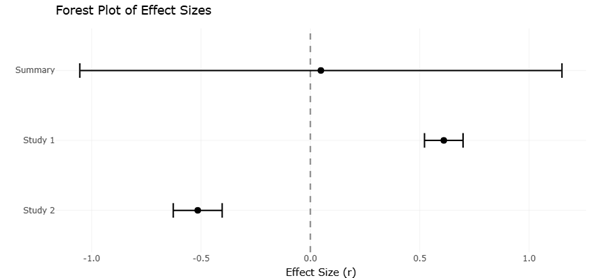
Table 1. Bivariate associations between employee experience and perceived productivity in a single New Zealand survey sample (N = 176). Opportunities (EEOPP; e.g., autonomy, growth, feedback) were positively associated with perceived productivity (r = 0.610), while challenges (EECHALL; e.g., boundary blurring, overload, isolation) were negatively associated with it (r = –0.515); both associations were statistically significant (p < .001). Data are drawn from Crooney, Tootell, and Scott (2025) and are presented descriptively as a single illustrative case, not as a pooled meta-analytic estimate. (Note. Data drawn from a single New Zealand survey study, presented here as an illustrative case rather than a pooled estimate.)

Relationship

Effect Size (r)

N

p-value

SE

Opportunities (EEOPP) → Productivity

0.610

176

< .001

0.045

Challenges (EECHALL) → Productivity

–0.515

176

< .001

0.057

Table 2. Moderated regression models testing whether management strategies (MS — check-ins, transparent communication, digital support) strengthen the relationship between employee experience and perceived productivity, in the same New Zealand sample (N = 176) as Table 1. Adding MS as a moderator explained 41.6% of variance in productivity for the opportunities model (R² = 0.416, F = 60.29, p < .001) and 29.9% for the challenges model (R² = 0.299, F = 35.96, p < .001), indicating that management strategies amplify the benefit of opportunities and buffer the cost of challenges. Data are drawn from the same illustrative dataset as Table 1 (Crooney, Tootell, & Scott, 2025).

Model

Multiple R

F

p-value

EEOPP + MS → Productivity

0.645

0.416

60.29

< .001

EECHALL + MS → Productivity

0.546

0.299

35.96

< .001

room to grow, and feedback that feels constructive rather than performative, these function as job resources in something close to the textbook JD-R sense (Bakker & Demerouti, 2007; Bakker, Demerouti, & Schaufeli, 2003). The illustrative case examined here reflects this pattern numerically — employee opportunities (EEOPP) showed a strong positive association with perceived productivity (r = 0.610, N = 176, p < .001, SE = 0.045) [Table 1; Figure 1]. That is a large effect by conventional standards, and while it comes from a single dataset rather than a pooled estimate, it is broadly consistent with the direction, if not always the magnitude, reported across the wider literature on autonomy and engagement (Bakker, Hakanen, Demerouti, & Xanthopoulou, 2007; de Leede & Heuver, 2016; Plaskoff, 2017).

3.2 Challenges as Job Demands

The other side of the ledger is less comfortable to discuss but no less important. Blurred boundaries, cognitive overload, and the low-grade static of domestic distraction consistently emerge, across the reviewed literature, as job demands capable of eroding both well-being and output when left unmanaged (Crawford, LePine, & Rich, 2010; Demerouti et al., 2001; Richardson & McKenna, 2014). In the illustrative dataset, employee challenges (EECHALL) were negatively associated with productivity (r = –0.515, N = 176, p < .001, SE = 0.057) [Table 1; Figure 1] — a somewhat smaller effect than EEOPP's, though hardly negligible, and one that lines up with the broader observation that unmanaged demands, in flexible settings, tend to compound rather than resolve on their own (Mann & Holdsworth, 2003; Messenger, 2017).

3.3 The Moderating Role of Management Strategies

If there is a single thread running through nearly all of the literature reviewed here, it is this: management strategies do not just sit alongside the demands-resources balance, they actively shape it. In the illustrative dataset, incorporating management strategies (MS) as a moderator increased the variance explained for both dimensions — the EEOPP + MS model yielded R = 0.645, R² = 0.416, F = 60.29, p < .001, while the EECHALL + MS model yielded R = 0.546, R² = 0.299, F = 35.96, p < .001 [Table 2; Figure 2]. Put plainly, structured support — regular check-ins, clear communication, digital tools that actually help rather than surveil — appears to amplify the benefit of opportunities while softening the cost of challenges. This is consistent with, and arguably a fairly clean empirical illustration of, the JD-R model's broader claim that resources buffer the strain of demands rather than simply adding to a separate, unrelated tally (Bakker & Demerouti, 2017; Demerouti & Bakker, 2011; Shipman, Swanepoel, & Maynard, 2021).

It is worth pausing on what this moderation pattern implies practically, because it is easy to read past. The same policy — say, a fully remote arrangement with flexible hours — can land as either liberating or corrosive depending almost entirely on the managerial scaffolding around it. Organizations that pair flexibility with genuine, low-friction support (de Leede & Heuver, 2016; Lautsch, Kossek, & Eaton, 2009) appear to convert autonomy into a resource that compounds; those that simply grant flexibility and step back risk leaving employees, as more than one author has put it, feeling untethered rather than trusted (Richardson & McKenna, 2014).

3.4 Cultural and Organizational Context

None of this happens in a vacuum, of course. The broader literature suggests that the effectiveness of FWAs depends substantially on the surrounding organizational culture — whether outcomes are valued over visibility, and whether leaders model the same boundaries they expect employees to keep (Burchardt & Maisch, 2019; Spreitzer, Cameron, & Garrett, 2017). In cultures that equate presence with productivity, even generous flexibility policies can end up feeling like a trap rather than a benefit (Hunter, 2019). The illustrative dataset used here, drawn from a single national context, cannot speak to this cross-cultural variation directly; it is included as one data point within a broader, more geographically varied narrative rather than as evidence generalizable across settings on its own.

3.5 Synthesis: A Conditional Model of Flexible Work

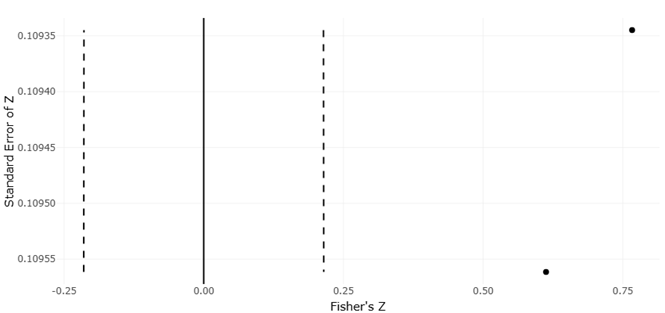
Bringing these threads together, the picture that emerges is neither the unqualified optimism of early FWA advocacy nor the more recent, somewhat fashionable skepticism about remote work's costs. It is something closer to a conditional model: opportunities function as resources and predict productivity gains, challenges function as demands and predict productivity losses, and management strategies determine which of these two forces dominates in practice [Table 1; Table 2; Figure 1; Figure 2]. This is, in essence, the JD-R model applied faithfully to a specific and increasingly consequential domain of work — not a new theory, but perhaps a clearer articulation of an old

Figure 1. Bar chart comparing the bivariate effect sizes from Table 1: opportunities (EEOPP) show a large positive correlation with perceived productivity (r = 0.610), and challenges (EECHALL) show a moderate negative correlation (r = –0.515). Bar height reflects the magnitude of each association; direction (positive/negative) is indicated by [color/hatching — specify legend key]. Source: Crooney, Tootell, and Scott (2025), single-sample illustrative data.


Figure 2: Comparison of variance explained (R²) in perceived productivity before and after adding management strategies (MS) as a moderator, for the opportunities model and the challenges model separately. The increase in R² from the unmoderated to the moderated model illustrates how management strategies strengthen the opportunities–productivity link and weaken the challenges–productivity link. Source: Crooney, Tootell, and Scott (2025), single-sample illustrative data (N = 176).

one in a context where its logic has particular bite.

4. Limitations

This review has several limitations worth stating candidly. First, and most importantly, it is a narrative rather than systematic review: source selection, while guided by a transparent search strategy, was not governed by pre-registered inclusion criteria or independent duplicate screening in the manner PRISMA guidelines require, and readers should weigh its conclusions accordingly — as a structured synthesis of the field's thinking, not as a statistically pooled estimate of effect. Second, the illustrative quantitative case (Crooney et al., 2025) is a single, geographically concentrated dataset; its effect sizes describe that sample and should not be read as generalizable population parameters. Third, cross-sectional designs dominate the broader literature discussed here, which limits causal inference about the direction of the EE–productivity relationship. Future work would benefit from longitudinal, multi-country empirical studies and, ideally, a properly pre-registered systematic review or meta-analysis building on the conceptual map offered here.

5. Conclusion

Flexible working arrangements are neither a guaranteed benefit nor an inevitable burden; this review suggests their impact hinges on the balance between job resources and job demands, and on how actively that balance is managed. Opportunities such as autonomy and growth consistently support productivity, while unmanaged challenges such as boundary blurring erode it. Management strategies — structured support, clear communication — emerge as the pivotal moderating factor, capable of amplifying benefits and buffering costs. Framed through the Job Demands–Resources model, these findings suggest that organizations seeking to make flexible work genuinely productive should focus less on the policy itself and more on the experience surrounding it, treating management support not as an afterthought but as the mechanism that determines whether flexibility functions as a resource or a risk.

References


Allen, T. D., Golden, T. D., & Shockley, K. M. (2015). How effective is telecommuting? Assessing the status of our scientific findings. Psychological Science in the Public Interest, 16(2), 40–68. https://doi.org/10.1177/1529100615593273   

Almeida, F., Santos, J. D., & Monteiro, J. A. (2020). The challenges and opportunities in the digitalization of companies in a post-COVID-19 world. IEEE Engineering Management Review, 48(3), 97–103. https://doi.org/10.1109/EMR.2020.3013206      

Bakker, A. B., & Demerouti, E. (2007). The Job Demands-Resources model: State of the art. Journal of Managerial Psychology, 22(3), 309–328. https://doi.org/10.1108/02683940710733115       

Bakker, A. B., & Demerouti, E. (2017). Job demands–resources theory: Taking stock and looking forward. Journal of Occupational Health Psychology, 22(3), 273–285. https://doi.org/10.1037/ocp0000079        

Bakker, A. B., Demerouti, E., & Schaufeli, W. B. (2003). Dual processes at work in a call centre: An application of the job demands–resources model. European Journal of Work and Organizational Psychology, 12(4), 393–417. https://doi.org/10.1080/13594320344000165         

Bakker, A. B., Hakanen, J. J., Demerouti, E., & Xanthopoulou, D. (2007). Job resources boost work engagement, particularly when job demands are high. Journal of Educational Psychology, 99(2), 274–284. https://doi.org/10.1037/0022-0663.99.2.274               

Bakker, A. B., van Veldhoven, M., & Xanthopoulou, D. (2010). Beyond the demand-control model: Thriving on high job demands and resources. Journal of Personnel Psychology, 9(1), 3–16. https://doi.org/10.1027/1866-5888/a000004      

Bilotta, I., Cheng, S., Davenport, M. K., & King, E. (2021). Using the job demands-resources model to understand and address employee well-being during the COVID-19 pandemic. Industrial and Organizational Psychology, 14(1–2), 267–273. https://doi.org/10.1017/iop.2021.28           

Burchardt, C., & Maisch, B. (2019). Digitalization needs a cultural change: Examples of applying agility and open innovation to drive the digital transformation. Procedia CIRP, 84, 112–117. https://doi.org/10.1016/j.procir.2019.04.183       

Caesens, G., Marique, G., Hanin, D., & Stinglhamber, F. (2016). The relationship between perceived organizational support and proactive behaviour. European Journal of Work and Organizational Psychology, 25(3), 398–411. https://doi.org/10.1080/1359432X.2015.1092960  

Crawford, E. R., LePine, J. A., & Rich, B. L. (2010). Linking job demands and resources to employee engagement and burnout. Journal of Applied Psychology, 95(5), 834–848. https://doi.org/10.1037/a0019364      

Crooney, L., Tootell, B., & Scott, J. (2025). Employee experiences and productivity in flexible work arrangements: A job demands–resources model analysis from New Zealand. Businesses, 5(3), 41. https://doi.org/10.3390/businesses5030041    

de Leede, J., & Heuver, P. (2016). New ways of working and leadership: An empirical study in the service industry. Procedia–Social and Behavioral Sciences, 226, 397–403. https://doi.org/10.1016/j.sbspro.2016.06.092  

Demerouti, E., & Bakker, A. B. (2011). The job demands–resources model: Challenges for future research. SA Journal of Industrial Psychology, 37(2), 1–9. https://doi.org/10.4102/sajip.v37i2.974         

Demerouti, E., Bakker, A. B., Nachreiner, F., & Schaufeli, W. B. (2001). The job demands–resources model of burnout. Journal of Applied Psychology, 86(3), 499–512. https://doi.org/10.1037/0021-9010.86.3.499        

Evanoff, [initials not specified in source manuscript]. (2020). Work-related and personal factors associated with mental well-being during the COVID-19 response. Journal of Medical Internet Research, 22(8), e21366. https://doi.org/10.2196/21366               

Farndale, E., & Kelliher, C. (2013). Implementing performance appraisal: Exploring the employee experience. Human Resource Management, 52(6), 879–897. https://doi.org/10.1002/hrm.21579     

Green, N., Tappin, D., & Bentley, T. (2020). Working from home before, during and after the COVID-19 pandemic. New Zealand Journal of Employment Relations, 45(2), 5–16.

Hunter, P. (2019). The benefits and risks of flexible working. EMBO Reports, 20(1), e47435. https://doi.org/10.15252/embr.201847435               

Huws, U., Spencer, N. H., & Syrdal, D. S. (2017). Work in the European gig economy: Employment in the era of online platforms. Foundation for European Progressive Studies (FEPS).

Lautsch, B. A., Kossek, E. E., & Eaton, S. C. (2009). Supervisory approaches and paradoxes in managing telecommuting implementation. Human Relations, 62(6), 795–827. https://doi.org/10.1177/0018726709104505             

Majumdar, A., Biswas, S., & Sanyal, S. (2020). Work from home in India: A way forward post COVID-19. Journal of Contemporary Issues in Business and Government, 26(2), 34–46.

Mann, S., & Holdsworth, L. (2003). The psychological impact of teleworking: Stress, emotions and health. New Technology, Work and Employment, 18(3), 196–211. https://doi.org/10.1111/1468-005X.00121        

Messenger, [initials not specified in source manuscript]. (2017). Telework in the 21st century: An evolutionary perspective. International Labour Organization. https://doi.org/10.2806/372407   

Panneerselvam, S., & Balaraman, K. (2022). Employee experience in modern workplaces. Strategic HR Review, 21(6), 331–339.

Plaskoff, J. (2017). Rethinking employee experience. Strategic HR Review, 16(4), 187–192.

Richardson, J., & McKenna, S. (2014). Managing remote work boundaries. British Journal of Management, 25(4), 729–744. https://doi.org/10.1111/1467-8551.12017

Schaufeli, W. B., & Bakker, A. B. (2004). Job demands, job resources, and their relationship with burnout and engagement. Journal of Organizational Behavior, 25(3), 293–315. https://doi.org/10.1002/job.248       

Shipman, J., Swanepoel, E., & Maynard, L. (2021). Understanding remote work supervision. Journal of Management & Organization, 27(5), 857–873. https://doi.org/10.1017/jmo.2021.51            

Spreitzer, G., Cameron, L., & Garrett, L. (2017). Alternative work arrangements: Two images of the new world of work. Annual Review of Organizational Psychology and Organizational Behavior, 4, 473–499. https://doi.org/10.1146/annurev-orgpsych-032516-113128  


Article metrics
View details
0
Downloads
0
Citations
2
Views

View Dimensions


View Plumx


View Altmetric


0
Save
0
Citation
2
View
0
Share