1. Introduction
Walk through almost any street, market, or bus stand in South Asia, and you'll find a quieter story running underneath the ordinary noise of daily life — one of women calculating, almost unconsciously, which route is safer, which seat is less exposed, which hour of the evening it's still acceptable to be outside alone. Eve teasing and domestic violence are so woven into everyday experience in many societies that they rarely register as crises in the moment; they register as background conditions, things to be managed rather than confronted. And yet the cumulative effect on women's safety, mental health, and freedom of movement is anything but minor. These are not isolated unpleasant incidents. They are, taken together, one of the more persistent obstacles to women's full participation in public and private life — and addressing them, it seems, requires more than a single lever. Social awareness campaigns matter. So do legal reforms. But increasingly, there is a case to be made that technology — used carefully — can close gaps that policy alone tends to leave open.
The scale of the problem is not really in dispute anymore, even if its texture varies by country and context. Research by Johnson and Dasgupta (2018) and Gupta et al. (2018) has documented how common eve-teasing incidents are, spanning both urban and rural settings — which is worth pausing on, because it means this isn't a phenomenon confined to crowded cities or, alternatively, to isolated rural areas where enforcement is thin. It shows up everywhere. Alongside this, work by Smith et al. (2018) and Kumar and Saraswathi (2017) has traced the widespread nature of domestic violence and the severe physical and psychological trauma it leaves behind. What connects these two forms of harm — one largely public, the other largely private — is that both function, in effect, as violations of a woman's basic rights, and both quietly reinforce the gender inequality that a great many other interventions are trying to dismantle. It's a frustrating kind of feedback loop: harassment restricts mobility, restricted mobility limits opportunity, and limited opportunity, in turn, makes it harder to challenge the norms that permitted the harassment in the first place.
This is the backdrop against which SheShield is proposed — not as a silver bullet, to be clear, but as a dedicated, purpose-built mobile application meant to give women a direct channel for reporting incidents and requesting help when they need it most. Its core ambition is fairly modest in description, even if not in impact: to shorten the distance between a woman experiencing harassment or violence and the law enforcement response that should follow. Bridging that gap — victim on one side, authorities on the other — turns out to be harder than it sounds, and that difficulty is precisely where SheShield tries to insert itself.
Understanding why such a tool is needed, though, requires sitting for a moment with just how deep and how local this problem runs. A survey conducted by the Aachol Foundation ahead of International Women's Day on March 8, 2022 — titled Socio-economic Context of Young Women and Its Impact on Mental Health — surveyed 1,014 young women across Bangladesh, aged between 18 and 30, and found that more than 65 percent had experienced sexual harassment in some form. Break that number down and the picture gets more specific, and frankly more uncomfortable: 35.49 percent reported signs of predatory sexual attention, 29.62 percent had experienced unwanted touching, and 22.26 percent had faced eve-teasing directly. Public transport emerged as a particular flashpoint — 45.27 percent of respondents reported harassment while using it, with bus stands accounting for the largest share at 48.62 percent. And perhaps most tellingly, 75.60 percent of those harassed were alone at the time, a detail that says a great deal about when women feel — and are — most vulnerable. The same survey found that over a third of respondents had experienced sexual abuse in childhood, with lingering effects ranging from generalized distrust to a lasting fear of being alone. None of this is abstract; it is the lived texture of what SheShield is attempting to respond to.
The consequences don't stop at the moment of the incident, either. Victims of eve-teasing frequently carry long-term psychological weight — anxiety, depression, an eroded sense of self-worth — that can quietly reshape their social lives, educational paths, and careers. And there's a broader, more insidious effect too: when harassment goes unpunished often enough, it doesn't just harm individuals, it normalizes itself. Singh et al. (2019) and Mukherjee and Deshmukh (2018) have pointed to gender inequality, entrenched societal norms, and the objectification of women as recurring root causes, which suggests that any serious response needs to work on more than one front simultaneously — cultural, legal, and yes, technological.
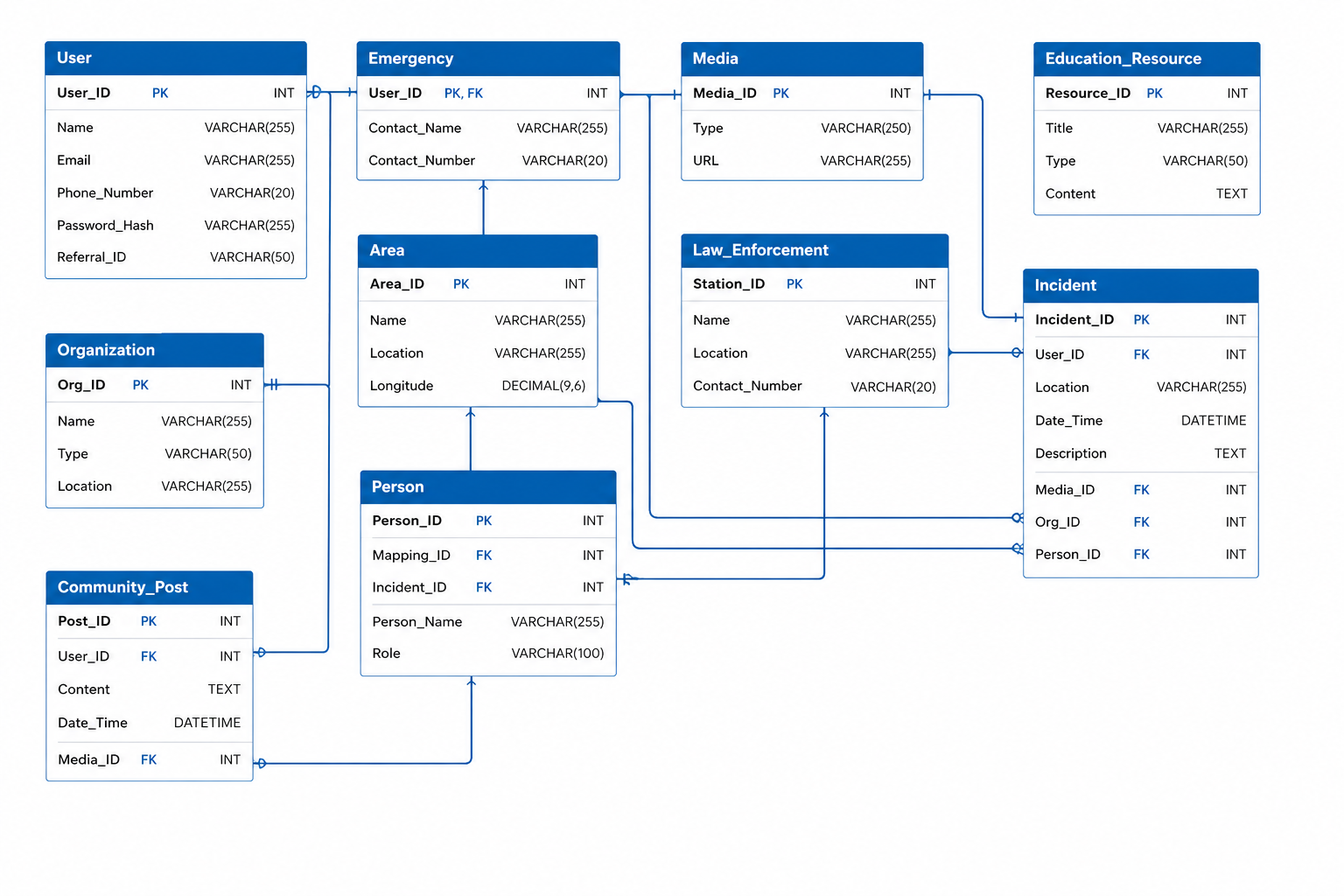
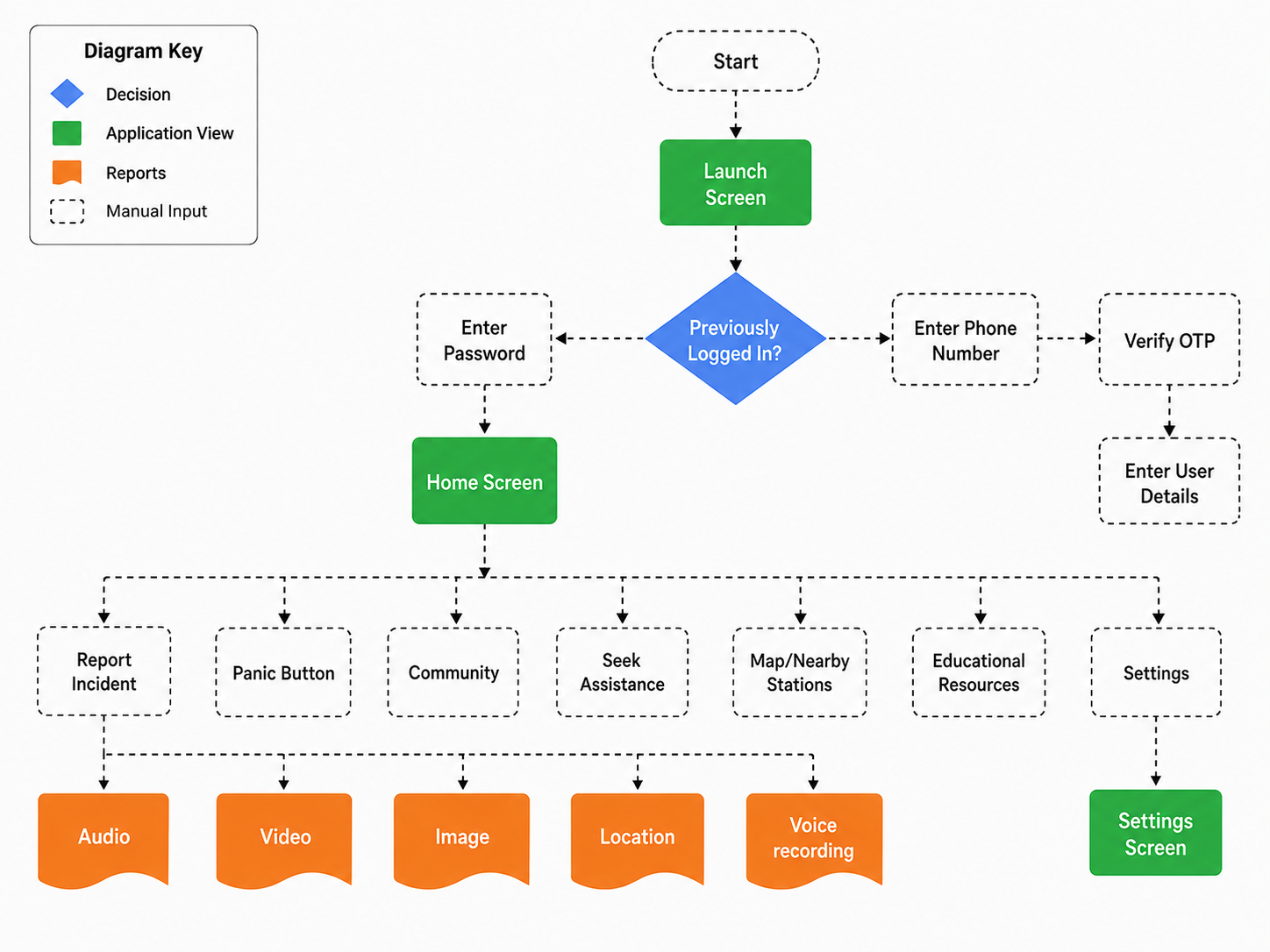
That layered understanding is what shapes the three objectives this paper works through. The first is diagnostic: examining, through the lens of existing scholarship, exactly how eve-teasing and domestic violence damage individuals and ripple outward into society, and why intervention can't be an afterthought. The second is constructive — introducing SheShield itself, a mobile application conceived to let women report incidents and reach law enforcement without the usual friction and delay. Its design draws on earlier efforts in this space; the framework's emphasis on real-time reporting and connectivity, for instance, owes something to the IoT-based crime-prevention model proposed by Sen and Sengupta (2018), while its feature set — incident logging, geolocation tracking, integration with emergency contacts — reflects patterns identified in Kaur and Bhardwaj's (2020) survey of women's safety applications. The third objective turns to the harder engineering questions: architecture, security, and the everyday realities of user experience. Because none of this works if women don't trust the app with sensitive information, privacy and confidentiality aren't treated as afterthoughts here — they're structural. That thinking is informed by Rahman et al.'s (2018) work on data security in mobile health contexts and by Das and Sharma's (2019) research on privacy protections, both of which underline a simple point: a safety tool that itself feels unsafe to use will not be used.
It's worth situating SheShield, too, alongside the ecosystem of similar tools that have already been attempted, with varying degrees of success. MoveFree, developed by Roy, Sharma, and Bhattacharya (2015), explored ubiquitous safety systems for women; MehfoozAurat, from Muteeb et al. (2016), turned ordinary smartphones into harassment-response devices; SafeTipin, examined by Viswanath and Basu (2015), took a data-collection approach to mapping urban safety; and Protibadi, studied by Ahmed et al. (2014), built a reporting platform specifically for the context of urban Bangladesh — geographically and culturally the closest precedent to SheShield's own setting. Commercial apps such as Aspire News (2017), Aurora from Komosion (2017), With U from Techila Solutions (2017), and Women's Security from Zayan Infotech (2017) have each tried a version of the same idea, as have academic prototypes like HearMe (Akash et al., 2016), Stay Safe (Mane et al., 2016), Girls Safety (Thakur et al., 2017), and a voice-recognition-based Android application described by Uma et al. (2015). Taken together, these efforts show both that the demand for such tools is real and long-standing, and that no single design has yet become the obvious standard — which leaves room, arguably, for SheShield to learn from what came before rather than start from nothing.
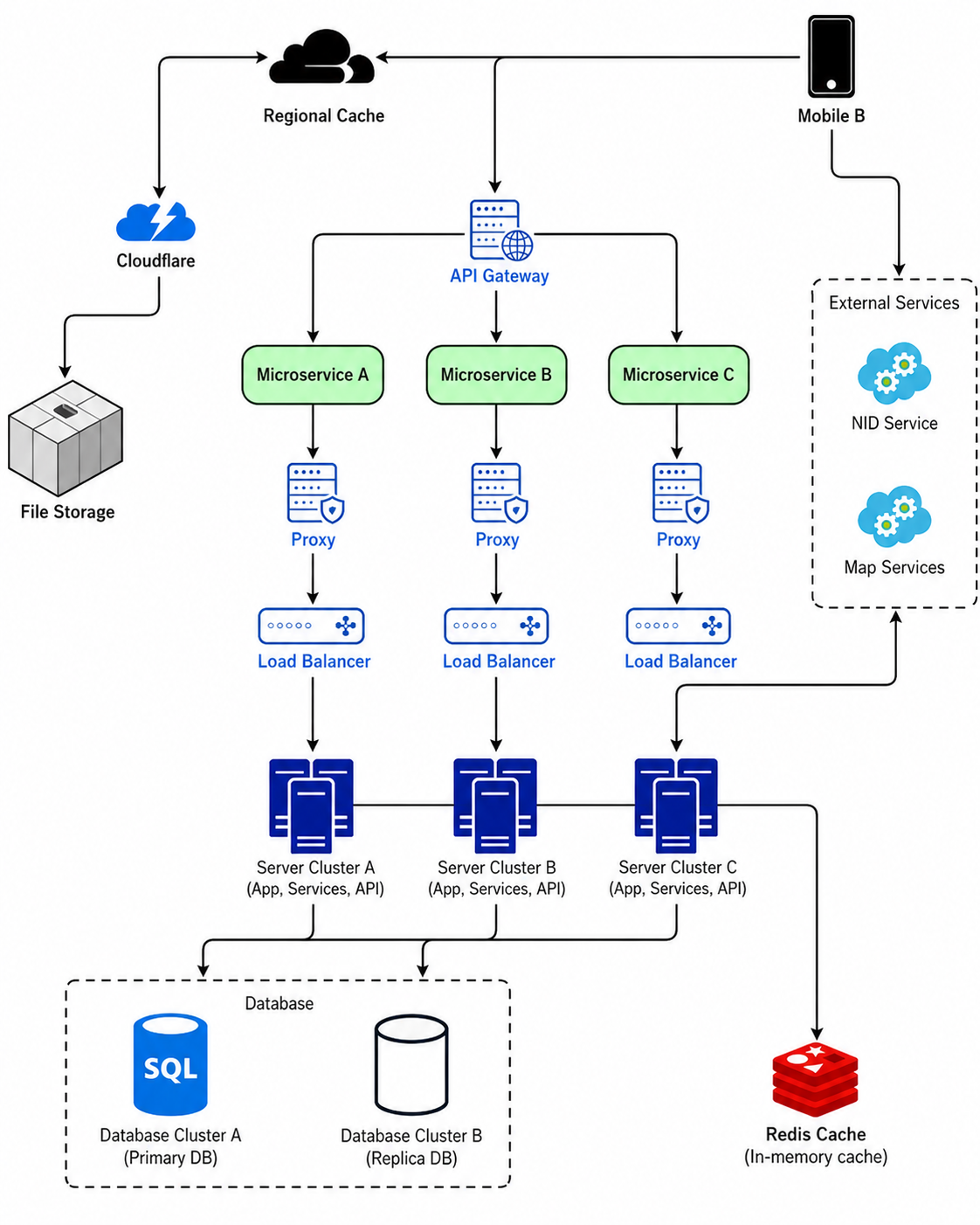
The rest of this paper follows a fairly linear path, though each section builds on what precedes it. Section II lays out the problem of eve-teasing and domestic violence in more depth, tracing its impact on individuals and on society more broadly. Section III explains the methodology behind SheShield's development, centered on a user-centered design process and iterative feedback collection. Section IV details the project's guiding objectives, and Section V walks through the feature set in full. Section VI turns to the technical implementation — architecture, microservices, integration — before Section VII considers interface and user-experience design. Section VIII covers testing and validation, Section IX is candid about the challenges encountered along the way, and Section X looks ahead to possible future enhancements. Section XI describes the stakeholder consultation process that shaped several design decisions, and Section XII closes the paper with a summary of findings and a reflection on what SheShield might realistically achieve — and where its limits are likely to sit.