3.1 Growth Dynamics of Broiler Strains
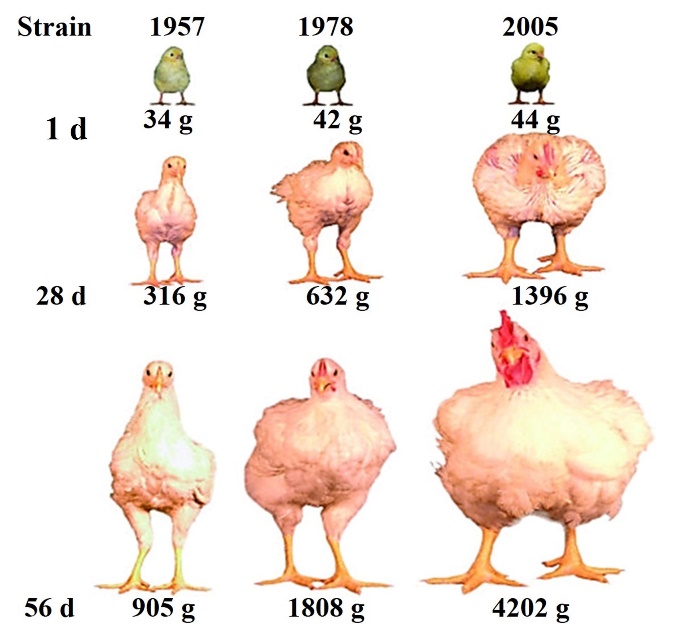
The growth dynamics of modern broiler chickens are primarily dictated by their genetic potential for muscle accretion and the efficiency with which they convert feed into body mass (Leinonen, 2025; Weimer et al., 2020; Zuidhof et al., 2014). The poultry industry distinguishes between genotypes based on their Average Daily Gain (ADG), which has increased exponentially due to intensive selection over the last fifty years (Leinonen, 2025). However, the comparative growth pattern of broiler strains from several decades is presented in Figure 1.
3.1.1 Growth Trajectories and Market Age
Broiler strains are generally classified into three growth categories: fast-growing (FG), with an ADG ≥ 60 g/day; medium-growing (MG), with an ADG between 25 and 50 g/day; and slow-growing (SG), with an ADG below 25 g/day (Nicol et al., 2024; Valenta et al., 2022). Modern FG strains, such as the Ross 308 and Cobb 500, can reach a market weight of approximately 2.0 to 2.5 kg in 35 to 42 days (Afrin et al., 2024; Pandit et al., 2024). In contrast, SG strains require a significantly longer rearing period—often 63 to 81 days or more—to achieve comparable weights (Doğan et al., 2019; van der Eijk et al., 2023).
Research using Gompertz three-parameter growth models reveals that while FG and SG strains may have similar predicted growth rates at their respective points of maximum growth, FG birds reach their inflection point (the age of maximum daily gain) much earlier (Weimer et al., 2020). For example, FG birds reach this peak approximately 2.5 days earlier than SG birds, and their predicted body weight at maturity (asymptote) is significantly higher, often by as much as 1.70 kg (Weimer et al., 2020).
3.1.2 Feed Efficiency and Energy Balance
A critical driver of growth dynamics is the Feed Conversion Ratio (FCR). FG broilers are characterized by superior feed efficiency, with FCR values typically ranging from 1.30 to 1.63 (Pandit et al., 2024; Pontalti et al., 2025). SG genotypes exhibit much higher FCR values, frequently between 2.51 and 3.42, indicating they require substantially more feed per unit of weight gain (Afrin et al., 2024; Pandit et al., 2024).
This disparity is explained by the energy balance of the birds. Because FG birds reach slaughter weight more quickly, they lose significantly less energy as metabolic heat over their lifetime (Leinonen, 2025). It is estimated that each additional day in the production cycle increases the metabolizable energy intake requirement by approximately 0.7 MJ per bird (Leinonen, 2025). Consequently, the extended lifespan of SG birds results in higher cumulative maintenance costs, as more energy is diverted from growth to sustaining physiological functions over time (Leinonen, 2025; van der Eijk et al., 2023) .
3.1.3 Allometric Growth and Conformation
The distribution of weight gain across the body differs significantly between genotypes. Intensive selection in FG broilers has focused on increasing breast muscle yield (pectoralis major), resulting in a stockier body conformation with shorter shanks and a forward-shifted center of gravity (Dixon, 2020; Weimer et al., 2020). Allometric studies show that FG bird breast depth and keel length growth rates are significantly faster than those of SG birds (Weimer et al., 2020).
In contrast, SG birds exhibit a longer and leaner body conformation (Fiorilla et al., 2023). Their growth dynamics involve more proportionate development of the extremities; for instance, SG birds have significantly longer shanks and bodies at market weight compared to FG birds (Weimer et al., 2020). This anatomical divergence is partly attributed to the increased kinetic activity and locomotor behavior of SG birds, which promotes bone and muscle mass accumulation in the legs and wings (Ipek & Sozcu, 2017; Singh et al., 2021).
3.1.4 Nutritional and Environmental Resilience
Growth dynamics are also influenced by how different genotypes respond to their environment and diet. Nutritional studies indicate that the feed intake of FG broilers is highly sensitive to dietary Lysine (Lys) content; a reduction in Lys can cause a decrease in feed intake of over 40% in FG birds, whereas the intake of SG birds remains unaffected (Tran et al., 2021).
Furthermore, FG broilers show significantly lower resilience to heat stress. Under high ambient temperatures, FG birds experience a much steeper decline in ADG and feed intake compared to SG birds (Pontalti et al., 2025). SG genotypes, such as the Naked Neck, demonstrate superior heat tolerance due to their thinner feather covering and lower metabolic heat production, allowing them to maintain relatively stable growth rates in challenging environmental conditions where FG birds suffer severe performance losses (Huerta et al., 2023; Pontalti et al., 2025). Conversely, stocking density has been found to have minimal effects on the growth rate of SG birds, whereas FG birds may show slight improvements in body weight gain when provided with more space (van der Eijk et al., 2023; Weimer et al., 2020).
3.2 Physiological Differences
The physiological divergence between fast-growing (FG) and slow-growing (SG) broiler strains is rooted in decades of intensive genetic selection, which has fundamentally altered their muscle fiber architecture, skeletal integrity, and metabolic robustness (Huo et al., 2022; Nicol et al., 2024). While FG broilers are tailored for maximum muscle deposition within a minimal timeframe, this rapid development often exceeds the birds' physiological support systems, leading to distinctive anatomical and metabolic profiles (Pontalti et al., 2025; Singh et al., 2021).
3.2.1 Muscle Fiber Characteristics and Myopathies
Skeletal muscle in broilers is a highly plastic tissue, and its characteristics are the primary determinants of meat quantity and quality (Weng et al., 2022). Selection for rapid growth has resulted in FG birds having a significantly higher total number of muscle fibers and larger fiber diameters compared to SG strains (Devatkal et al., 2019; Huo et al., 2022). The pectoralis major (breast) muscle is composed entirely of Type IIB glycolytic fibers regardless of the strain; however, the fibers in FG broilers are pushed to their maximum functional size constraints (Huo et al., 2022; Weng et al., 2022).
This extreme muscle hypertrophy in FG strains is directly associated with the emergence of muscle myopathies, such as white striping, wooden breast, and spaghetti meat (Pontalti et al., 2025; Valenta et al., 2022). These conditions are characterized by myodegeneration, necrosis, and fibrosis, which are frequently observed in high-yield FG lines but remain rare or entirely absent in SG genotypes (Pontalti et al., 2025; Valenta et al., 2022). In the leg muscles, SG broilers typically possess a higher percentage of oxidative fibers, which supports their increased kinetic activity and foraging behavior (Ipek & Sozcu, 2017; Weng et al., 2022).
3.2.2 Skeletal Development and Leg Health
One of the most significant physiological challenges for FG broilers is the mismatch between their rapid weight gain and their skeletal maturity (Nicol et al., 2024). The skeleton and joints of FG birds are often still immature when subjected to exceptionally heavy weight loads, leading to a high prevalence of skeletal abnormalities, angular bone deformities, and lameness (Singh et al., 2021; Weimer et al., 2020). FG broilers are reported to have more porous bones and reduced mineralization compared to SG counterparts (Singh et al., 2021).
In contrast, SG birds exhibit superior bone health, characterized by higher tibia ash, greater tibia density, and higher bone breaking strength (Singh et al., 2021; Weimer et al., 2020). These birds demonstrate much better walking ability, as evidenced by lower gait scores and significantly longer latency-to-lie times, which is partially attributed to a more proportionate growth of their body parts and a lower center of gravity (Dixon, 2020; Singh et al., 2021).
3.2.3 Organ Morphology and Visceral Functions
The relative weights of internal organs differ significantly between genotypes as a result of selection pressures. Rapid growth rates in FG broilers are generally associated with reduced relative weights of internal organs such as the heart and gizzard (Singh et al., 2021; Weimer et al., 2020). Conversely, SG birds typically have significantly heavier gizzards, which may be a result of a longer feeding period and a more developed digestive tract (Singh et al., 2021; Valenta et al., 2022).
Studies have also noted that SG birds have heavier and longer caeca and small intestines compared to FG birds, even when reaching similar live body weights (Weimer et al., 2022). These differences in organ yields suggest anatomical divergence in how energy is partitioned between growth and maintenance functions across different strains (Singh et al., 2021).
3.2.4 Metabolic Adaptability and Stress Responses
FG and SG broilers respond differently to environmental stressors, particularly thermal challenges. FG broilers have a narrow optimal temperature range and high metabolic heat production, making them highly susceptible to chronic heat stress (Apalowo et al., 2024; Pontalti et al., 2025). Under heat stress, FG birds exhibit a steeper decline in feed intake and growth compared to SG genotypes, which demonstrate greater resilience and heat tolerance (Huerta et al., 2023; Pontalti et al., 2025).
Exposure to such stressors provokes neuroendocrine responses, specifically increasing serum corticosterone concentrations (Olfati et al., 2018). Elevated corticosterone levels serve as a regulator of metabolism but also have the negative effect of suppressing the immune system and reducing the relative weights of lymphoid organs, such as the bursa and spleen (Olfati et al., 2018). Furthermore, thermal stress can negatively impact the redox balance and increase the production of reactive oxygen species, potentially compromising the integrity of the gut lining (Olfati et al., 2018). Consistent with their higher robustness, SG strains often show lower levels of these stress-related physiological indicators under challenging conditions (Huerta et al., 2023; Olfati et al., 2018).
3.3 Carcass Yield Comparison
The carcass yield and composition of broiler chickens are primary indicators of the genetic divergence between fast-growing (FG) and slow-growing (SG) strains. Modern conventional broilers are the result of many generations of selection for increased body weight and breast meat yield, with genetics estimated to contribute 85% to 90% of the differences in carcass part yields (Havenstein et al., 2003; Weimer et al., 2022). However, the comparative production performance of Fast-Growing and Slow-Growing Broilers is shown in Table 1.
3.3.1 Slaughter and Dressing Yields
Fast-growing commercial strains, such as the Ross 308 or Cobb 500, consistently achieve significantly higher dressing percentages and carcass weights than slow-growing genotypes when compared at standard market ages or weights (Valenta et al., 2022; Weimer et al., 2022). Studies have shown that FG broilers can have approximately 3.4% greater carcass yield (without giblets) than SG broilers (Weimer et al., 2022). This superior dressing yield is largely attributed to the disproportionate accumulation of muscle mass in the breast region, a trait that has been prioritized through intensive selection for decades (Huo et al., 2022; Valenta et al., 2022; Zuidhof et al., 2014).
3.3.2 Divergence in Primal Cut Distribution
The distribution of edible parts across the carcass represents the most striking anatomical difference between the two paradigms
Selection for rapid muscle accretion in the pectoralis major (breast) and pectoralis minor (tenderloin) has resulted in conventional broilers possessing approximately double the breast meat yield of slow-growing strains (Doğan et al., 2019; Weimer et al., 2022.) Research indicates that breast meat percentage follows a distinct hierarchy, decreasing significantly from fast-growing to medium-growing to slow-growing genotypes (Chodová et al., 2021; Valenta et al., 2022). Conversely, slow-growing broilers are characterized by having higher relative proportions of leg quarters, thighs, drumsticks, and wings (Santos et al., 2021; Singh et al., 2021; van der Eijk et al., 2023). SG birds often have significantly heavier thighs and drumsticks, with yields reported at approximately 5.0% higher than those of FG birds (Weimer et al., 2022). This anatomical profile is frequently linked to their increased kinetic activity and locomotor behavior, which promotes bone and muscle mass development in the extremities (Ipek & Sozcu, 2017; Weimer et al., 2022).
3.3.3 Anatomical and Skeletal Divergence
The body conformation of FG birds is significantly stockier, while SG birds exhibit a longer and leaner build (Fiorilla et al., 2023; Weimer et al., 2022). Slow-growing genotypes typically possess longer shanks and bodies, whereas conventional birds have a shifted center of gravity due to the massive breast development (Singh et al., 2021; van der Eijk et al., 2023). Furthermore, SG birds often exhibit larger skeletal frames relative to their total meat yield, which contributes to their superior walking ability and lower incidence of skeletal disorders compared to FG birds (Nicol et al., 2024; Weimer et al., 2022) .
3.3.4 Internal Organ Weights
Genotype also significantly influences the relative weights of internal organs. Fast-growing strains are generally associated with reduced relative weights of internal organs such as the heart and liver in comparison to SG counterparts (Havenstein et al., 2003). In contrast, SG broilers have been found to possess significantly heavier and longer digestive tracts, including the gizzard, ceca, and small intestines (Singh et al., 2021; Weimer et al., 2022). Specifically, the gizzard weight in SG birds is often significantly higher, likely due to a longer feeding period and increased activity (Singh et al., 2021; Valenta et al., 2022).
3.3.5 Abdominal Fat Deposition
Intensive selection for growth efficiency in FG broilers has historically aimed at reducing abdominal fat to maximize edible yield (Valenta et al., 2022). Consequently, conventional birds typically show lower abdominal fat percentages than SG strains, particularly if the latter are fed diets providing energy in excess of their metabolic requirements (Mikulski et al., 2011; Valenta et al., 2022). However, in alternative production systems where SG birds have outdoor access, their abdominal fat levels are often lower than those of indoor birds due to increased exercise and energy expenditure (Fiorilla et al., 2023; Ipek & Sozcu, 2017).
3.3.6 Environmental and Nutritional Interactions
Carcass yield is also modulated by management and environmental factors:
Stocking Density: Lower stocking densities (e.g., 24–30 kg/m²) have been shown to yield higher final carcass weights compared to high-density systems (36–42 kg/m²), although the impact on specific part yields like breast meat is often minor (van der Eijk et al., 2023).
Alternative Systems: In free-range or organic systems, the higher space allowance and opportunity for foraging have been shown to increase thigh yields and gizzard size further, reflecting the birds' active biological response to their environment (Fiorilla et al., 2023).
Crossbreeding: Utilizing F1 crossbreeds between local Italian pure breeds and medium-growing genotypes like the Sasso has been shown to significantly improve growth rates and carcass yields while maintaining the resilience required for low-input production systems (Fiorilla et al., 2023).
3.4 Meat Quality Attributes
Meat quality represents a composite of characteristics that define the degree of consumer acceptability, encompassing appearance, physical properties, and chemical composition (Weimer et al., 2022). While fast-growing (FG) broiler strains have been intensively selected for muscle yield and rapid growth, these advancements have often introduced unwanted changes in sensory and functional meat quality (Doğan et al., 2019). Conversely, slow-growing (SG) genotypes are increasingly valued for specialty or gourmet markets due to their perceived superior product quality (Doğan et al., 2019).
3.4.1 Physical Properties
The physical quality of broiler meat is primarily assessed through pH dynamics, instrumental color indices, water-holding capacity (WHC), and textural properties such as shear force (Özbek et al., 2020; Valenta et al., 2022).
pH Dynamics and Acidification: Post-mortem pH decline is a critical event in the conversion of muscle to meat, as the rate and extent of acidification significantly influence texture, color, and water retention (Huo et al., 2022; Singh et al., 2021). Research consistently indicates that the ultimate pH (pHu or pH24) of the pectoralis major muscle is lower in SG genotypes compared to FG counterparts when slaughtered at their respective market weights (Singh et al., 2021; Valenta et al., 2022). For instance, FG broilers often exhibit higher pH24 values (e.g., 6.12) compared to SG strains (e.g., 5.97) (Weimer et al., 2022). This difference is partially attributed to the diminished post-mortem glycolysis in FG birds selected for rapid growth, resulting in less pyruvic acid release and higher final pH (Berri et al., 2001; Singh et al., 2021). However, some studies involving domestic local chickens observed no significant differences in meat pH compared to commercial broilers (Syed et al., 2025).
Instrumental Color Properties: Color is the primary physical parameter affecting consumer choice at the point of sale(Özbek et al., 2020).
Lightness (L∗): SG broilers often exhibit higher L∗ values (paler meat) in the breast muscle compared to conventional broilers (Valenta et al., 2022; Weimer et al., 2020). However, findings are inconsistent; some research indicates that SG meat is darker and less pale due to increased myoglobin content associated with advanced slaughter age (Doğan et al., 2019; Singh et al., 2021)
Redness (a∗): SG meat, particularly in the thighs, is characterized by a significantly higher redness index compared to FG meat (Weimer et al., 2022; Yamak et al., 2014). This is likely a result of both older age at slaughter and increased blood circulation from prolonged locomotor activity (Doğan et al., 2019; Singh et al., 2021).
Yellowness (b∗): Conventional FG birds frequently show higher yellowness values in breast meat, potentially linked to more efficient feed conversion and faster carotenoid deposition in intramuscular fat (Weimer et al., 2022). Additionally, SG birds with outdoor access tend to produce more yellow skin and meat due to the ingestion of plant pigments while foraging (Fanatico et al., 2007; Özbek et al., 2020).
Water-Holding Capacity and Cooking Loss: The ability of muscle to retain water is a vital functional indicator for fresh and processed products (Valenta et al., 2022).
Cooking Loss: Conventional FG broilers generally exhibit higher cooking losses in breast meat compared to SG genotypes (Afrin et al., 2024; Valenta et al., 2022). Higher losses in FG birds are often associated with larger fillet dimensions and a reduced water-holding capacity in rapidly grown muscle tissues (Fanatico et al., 2007; Grashorn, 2006).
Drip Loss: Slower-growing broilers have been found to have higher drip loss in some instances (Fanatico et al., 2007; Singh et al., 2021). This is hypothesized to be a result of SG fillets being smaller and thinner, providing a larger surface area relative to muscle mass exposed to air (Fanatico et al., 2007; Singh et al., 2021).
Centrifugation WHC: Instrumental analysis shows that WHC percentages are significantly higher in SG local chickens (e.g., Sonali or NDD) than in fast-growing commercial broilers (Afrin et al., 2024).
Instrumental Texture and Shear Force: Texture is considered the most important quality factor for consumer satisfaction (Devatkal et al., 2019).
Firmness and Hardness: SG broilers consistently yield tougher meat with higher shear force values than FG broilers (Valenta et al., 2022; Weimer et al., 2022). For example, the Warner-Bratzler shear force of SG breast meat can be double that of FG chickens (Valenta et al., 2022).
Collagen and Maturity: The increased hardness in SG meat is attributed to the advanced maturity of connective tissue, characterized by higher chemical cross-bonding of collagen that occurs as the bird ages (Valenta et al., 2022; Weimer et al., 2022). Conversely, FG birds are slaughtered while physiologically immature, resulting in a tenderer but less firm texture (Devatkalet al., 2019).
Exception in Tenderness: Interestingly, one study using the Meullenet-Owens razor shear (MORS) method found SG birds to be more tender than FG birds, suggesting that results may vary depending on the specific testing methodology and the degree of muscle fiber hypertrophy in high-yield lines (Fanatico et al., 2007).
3.4.2 Chemical Composition
The chemical composition of broiler meat is a vital determinant of its nutritional value and sensory properties, which is significantly influenced by the interaction between the bird’s genotype and its physiological maturity at slaughter (Fanatico et al., 2007; Valenta et al., 2022).
Dry Matter and Protein Content: Slow-growing (SG) broiler strains generally exhibit higher levels of dry matter (DM) and crude protein (CP) in the breast muscle compared to fast-growing (FG) strains (Chodová et al., 2021; Valenta et al., 2022). For instance, research comparing the pectoralis major across genotypes found that slow-growing ISA Dual chickens possessed significantly higher protein contents (approximately 23.8%) than fast-growing Ross 308 birds (approximately 21.7%) (Valenta et al., 2022). This trend is largely attributed to the advanced physiological age of SG birds at slaughter; as chickens mature, the protein and fat contents in their muscle tissues naturally increase while the moisture content decreases (Fanatico et al., 2007; Valenta et al., 2022). However, results can vary by region; in some studies, conducted in South Asia, commercial broilers showed higher protein levels (25.57%) than local domestic breeds (21.37%), suggesting that local environmental factors and specific selection histories play a role (Syed et al., 2025).
Lipid Profile: Intramuscular Fat and Cholesterol: Intensive selection for rapid growth in FG broilers has fundamentally altered their lipid metabolism, often resulting in higher levels of ether extract (intramuscular fat - IMF) compared to SG birds (Chodová et al., 2021; Valenta et al., 2022). FG chickens may incorporate fat into muscle cells more rapidly, effectively replacing water, which explains the three-fold increase in ether extract observed in some FG lines compared to SG counterparts (Chodová et al., 2021; Valenta et al., 2022). Conversely, the meat of SG birds is frequently marketed as a healthier alternative due to its lower total fat and cholesterol content (Afrin et al., 2024; Valenta et al., 2022). Research has shown that cholesterol levels in the pectoralis major are significantly reduced in SG genotypes like the ISA Dual (297 mg/kg) compared to FG Ross 308 (422 mg/kg) (Valenta et al., 2022).
Fatty Acid Composition and Micronutrients: The rearing system and diet exert a strong influence on the fatty acid profile of the meat. SG birds raised in organic or free-range systems often possess a more favorable fatty acid profile, including higher levels of total omega-3 fatty acids and a more balanced ratio of saturated to monounsaturated fats (Cömert et al., 2016; Fanatico et al., 2007). Specifically, Indbro slow-growing broilers have shown a desirable 1:1 ratio of saturated to monounsaturated fatty acids in the breast meat (Devatkal et al., 2019). Furthermore, SG birds provided with outdoor access have been found to contain higher concentrations of α-tocopherol (Vitamin E) when expressed on a unit of fat basis, likely due to the ingestion of forage rich in natural vitamins (Fanatico et al., 2007).
Metabolic Precursors and Glycolytic Potential: Genotypic differences extend to the metabolic status of the muscle at the time of slaughter. FG broilers generally have a higher glycolytic potential (GP) and higher glycogen reserves in both the breast and leg muscles compared to SG broilers (Huo et al., 2022). This higher GP in conventional birds is a result of selection for maximum muscle accretion, which shifts muscle metabolism towards a more glycolytic state (Dransfield & Sosnicki, 1999; Huo et al., 2022). While this supports rapid growth, it also impacts the post-mortem conversion of muscle to meat, often leading to a lower ultimate pH in SG birds who have less glycogen available for lactic acid production at slaughter (Devatkal et al., 2019; Valenta et al., 2022). Additionally, correlations suggest that different dietary formulations can modify these reserves; for example, alternative diets may encourage higher glycogen and lower fat reserves in certain FG batches (Berger et al., 2021).
3.4.3 Sensory Quality
Sensory quality is a multidimensional attribute encompassing flavor, aroma, texture, and overall palatability, which directly dictates consumer acceptability and the market value of poultry products (Weimer et al., 2022). While fast-growing (FG) broilers have been selected for maximum efficiency, this focus has occasionally impaired the sensory attributes and quality of the final product compared to slow-growing (SG) genotypes (Devatkal et al., 2019; Zaid et al., 2020).
Flavor and Aroma Profiles: The flavor profile of chicken meat is largely determined by the accumulation of nucleotides and flavor precursors that occurs as a bird matures (Mikulski et al., 2011; Poltowicz & Doktor, 2012). Slower-growing chickens, such as the Label Rouge types, are highly valued for their exceptional flavor characteristics and intense chicken aroma, which are associated with their advanced physiological age at slaughter (Fanatico et al., 2007; Singh et al., 2021). Sensory panels have frequently awarded SG meat higher scores for "brothy" and "chickeny/meaty" descriptors (Huerta et al., 2023). Conversely, meat from modern FG hybrids has sometimes been associated with higher incidences of off-flavors, such as "wet feathers," and a generally less intense flavor profile (Huerta et al., 2023). Additionally, the dark meat of SG birds is reported to have a more pronounced "dark meat fat flavor" compared to the saltier taste often noted in FG counterparts (Fanatico et al., 2007).
Textural Attributes and Mouthfeel: Texture is considered the most critical factor for consumer satisfaction (Devatkal et al., 2019). Meat from SG broilers is typically firmer and more cohesive, a result of increased chemical cross-bonding of collagen that occurs with age (Fanatico et al., 2007; Valenta et al., 2022). In contrast, FG broilers often provide a product that is perceived as juicier due to higher levels of intramuscular fat and water content (Huerta et al., 2023). However, the intensive selection for growth in FG lines has led to emergent myopathies like wooden breast and white striping, which deteriorate the textural properties of the meat, making it harder or less able to absorb marinades (Kuttappan et al., 2016). Interestingly, while some consumers prefer the tenderness of young FG birds, others value the firm "desi-like" texture of slow-growing local breeds (Afrin et al., 2024).
Environmental and Dietary Influences: The sensory profile is significantly modulated by the rearing environment, particularly access to pasture. Outdoor access allows birds to perform natural foraging behaviors, leading to the ingestion of grasses and small invertebrates that can alter the aroma and taste of the meat (Ipek & Sozcu, 2017; Zaid et al., 2020). Fast-growing broilers provided with outdoor access from day 21 have shown marked improvements in taste, flavor, and overall acceptability compared to those raised exclusively indoors (Zaid et al., 2020). Furthermore, the use of low-input diets involving local feed ingredients in free-range systems can enhance the pigmentation and fragrance of the meat, further distinguishing it from conventional products (Ipek & Sozcu, 2017).
Consumer Preference and Market Viability: There is a strong consumer belief that meat from alternative, less intensive systems is healthier and tastes better (Afrin et al., 2024; Mikulski et al., 2011). Direct consumer preference tests have shown that a significant majority—up to 67% in some studies—prefer the meat and products prepared from SG genotypes over conventional FG lines (Devatkal et al., 2019). Although SG production involves higher costs and lower efficiency, health-conscious consumers are often willing to pay premium prices for the perceived superior quality, fragrance, and welfare standards associated with these birds (Afrin et al., 2024; Singh et al., 2021). Blind taste tests even indicate a specific willingness to pay more for the specialty dark meat of slow-growing birds, highlighting a robust niche market opportunity (Fanatico et al., 2007).
3.5 Animal Welfare and Sustainability
The rapid expansion and intensification of modern poultry production systems have highlighted an inherent conflict between maximizing productive efficiency and respecting the physiological capacity of broiler chickens. Although fast-growing (FG) strains are widely recognized for their superior feed utilization and growth performance, their accelerated growth patterns have raised growing concerns regarding potential adverse effects on bird welfare. Conversely, slow-growing (SG) strains are championed for their superior health and behavioral profiles, yet they present significant challenges to environmental and economic sustainability (Leinonen, 2025; Nicol et al., 2024; Weimer et al., 2022).
3.5.1 Welfare Implications of Selection for Growth
Modern genetic selection has prioritized rapid muscle accretion and high breast yield, which has fundamentally altered broiler morphology (Nicol et al., 2024; Weimer et al., 2022; Zuidhof et al., 2014). A panel of scientific experts recently concluded that the genetic composition of modern commercial FG strains is associated with more negative welfare consequences than any other production factor (Nicol et al., 2024). The metabolic demands of rapid growth in FG birds often lead to cardiovascular disorders, such as ascites and sudden death syndrome, as well as chronic skeletal issues (Julian, 1998; Weimer et al., 2020). Quantitative analyses indicate that FG strains have a significantly higher risk of mortality, with an estimated incidence rate ratio between 1.69 and 2.16 compared to commercial SG strains housed under similar conditions (Nicol et al., 2024).
3.5.2 Physical Health: Lameness and Contact Dermatitis
Poor leg health is one of the most prominent welfare concerns in fast-growing broilers. FG birds often exhibit immature skeletons and joints when subjected to exceptionally heavy weight loads, resulting in high prevalences of lameness and gait abnormalities (Singh et al., 2021; Webster, 2004). Meta-analyses show that FG strains have an average gait score 0.65 points higher (worse) than SG birds, with walking ability typically showing a steep decline in FG birds during the late-rearing period (Nicol et al., 2024; Santos et al., 2021).
Contact dermatitis, including footpad dermatitis (FPD) and hock burn (HB), is exacerbated by the inactivity of FG birds, who spend more time in prolonged contact with the litter (Bessei, 2006; Nicol et al., 2024). In comparison to SG strains, FG birds have approximately 15% more FPD and 25% more HB per flock (Nicol et al., 2024). Slower growth rates allow for more proportionate skeletal development, and SG birds generally exhibit higher bone mineral density and breaking strength (Singh et al., 2021; Weimer et al., 2020).
3.5.3 Behavioral Repertoire and Positive Welfare
A diminished behavioral repertoire is characteristic of FG broilers, who can spend up to 80% of their day sitting (Dawson et al., 2021). In contrast, SG strains are significantly more active, performing higher levels of standing, locomotion, and foraging (Dixon, 2020; van der Eijk et al., 2023).
Environmental enrichment, such as perches and platforms, is utilized much more effectively by SG strains (Dawson et al., 2021; van der Eijk et al., 2022). While FG birds often stay underneath elevated structures as they age, SG birds continue to use them for elevated resting, satisfying a natural instinct observed in ancestral junglefowl (de Jong et al., 2021; Malchow & Schrader, 2021; Nicol et al., 2024). Furthermore, SG birds, or those at lower stocking densities, exhibit more play behaviors (frolicking and sparring), which are considered indicators of positive welfare (Rayner et al., 2020; van der Eijk et al., 2023).
3.5.4 Environmental and Economic Sustainability
While SG strains offer clear welfare benefits, they present a significant sustainability trade-off. FG broilers are highly efficient, reaching market weight in approximately 35 to 42 days with a low feed conversion ratio (FCR) (Afrin et al., 2024; Pandit et al., 2024). SG strains require 61 to 81 days or more to reach comparable weights, resulting in an FCR that can be 35% to 50% poorer than FG counterparts (Afrin et al., 2024; Leinonen, 2025; Weimer et al., 2020).
The extended growth cycle of SG birds leads to higher Global Warming Potential (GWP). Each additional day in the production cycle increases metabolizable energy intake by approximately 0.7 MJ per bird, largely lost as metabolic heat (Leinonen, 2025). Consequently, the GWP of the slowest-growing genotypes is over 1 kg CO₂ per kg of carcass higher than the fastest-growing strains (Leinonen, 2025). Furthermore, SG production requires more land use and feed resources, which may conflict with global goals for sustainable protein production (Leinonen, 2025; Nicol et al., 2024).
3.5.5 The Welfare-Sustainability Nexus: Trade-offs and Policy
The rise of welfare-oriented standards, such as the European Chicken Commitment (ECC) and the Better Chicken Commitment (BCC), has formalized the demand for SG strains (Nicol et al., 2024; van der Eijk et al., 2023). However, achieving higher welfare without compromising climate goals requires innovative management. For instance, using soy-free diets can reduce the GWP of SG birds by avoiding emissions related to land-use changes in South America, though this may further extend the growth cycle (Leinonen, 2025).
Producers must navigate the higher costs of SG production, which are often offset by premium prices paid by consumers who prioritize "ethical" or "natural" products (Afrin et al., 2024; Dixon, 2020). An alternative strategy to improve welfare in FG birds without a total transition to SG strains involves slaughtering birds at earlier ages/weights before the steep late-rearing decline in leg health occurs, though this would necessitate a higher turnover of birds to meet demand (Nicol et al., 2024). Ultimately, balancing the multidimensional needs of animal welfare, consumer preference, and environmental limits remains the central challenge for the future of the broiler industry (Leinonen, 2025).
3.6 Comparative analysis
The comparative analysis of fast-growing (FG) and slow-growing (SG) broiler strains reveal a profound divergence in biological efficiency, anatomical development, and sensory attributes. This divergence is the direct result of intensive genetic selection primarily focused on maximizing muscle accretion and feed efficiency in conventional lines (Havenstein et al., 2003; Leinonen, 2025; Weimer et al., 2022). The comparative FCR and growth rate of various strains of broilers are shown in Table 2.
3.6.1 Growth Dynamics and Metabolic Efficiency
The most striking difference between the genotypes is their rate of development and resource utilization. Modern FG strains, such as the Ross 308 or Cobb 500, are capable of reaching a market weight of 2.5 kg in approximately 35 to 42 days, whereas SG strains require 63 to 81 days or longer to achieve similar weights (Pandit et al., 2024; Weimer et al., 2022). This rapid growth in FG birds is underpinned by a significantly more efficient feed conversion ratio (FCR), which is often 35% to 56% better than that of SG birds (Berger et al., 2021; Weimer et al., 2020).
Biologically, this efficiency is driven by the energy balance of the birds. Because FG broilers reach slaughter weight so quickly, they lose substantially less energy as metabolic heat compared to SG birds, who must maintain physiological functions over a much longer production cycle (Leinonen, 2025). Each additional day of growth increases a bird's metabolizable energy requirement by approximately 0.7 MJ (Leinonen, 2025). Furthermore, while FG birds are highly sensitive to dietary protein levels—increasing feed intake to compensate for low-protein diets—SG birds appear less metabolically reactive to such nutritional changes (Berger et al., 2021; Tran et al., 2021).
3.6.2 Carcass Conformation and Yield
Genetic selection has fundamentally reshaped the anatomical proportions of the broiler. FG broilers possess a stockier conformation with a massive pectoralis major (breast) yield, which is frequently double that of SG strains (Singh et al., 2021; Weimer et al., 2022). This concentration of mass in the breast shifts the bird’s center of gravity forward, a physical change that contributes to the higher prevalence of skeletal issues and lameness in conventional lines (Dixon, 2020; Singh et al., 2021).
Conversely, SG broilers exhibit a longer, leaner body structure, yielding higher proportions of thighs, drumsticks, and wings (Singh et al., 2021; Valenta et al., 2022). This distribution is a physiological reflection of their increased kinetic activity and locomotor behavior, which promotes muscle and bone strengthening in the extremities (Ipek & Sozcu, 2017; Weimer et al., 2022). Additionally, SG birds often have heavier gizzards and more developed digestive tracts, resulting from their active foraging and longer feeding durations (Singh et al., 2021; Valenta et al., 2022).
3.6.3 Meat Quality and the Myopathy Crisis
A critical concern in modern poultry science is the trade-off between growth speed and meat integrity. FG broilers are susceptible to emergent muscle myopathies, including wooden breast, white striping, and spaghetti meat, which can affect up to 60% of high-yield flocks (Kuttappan et al., 2016; Pontalti et al., 2025; Weimer et al., 2022). These conditions are rare or entirely absent in SG genotypes, which maintain the technological and textural properties of the meat (Doğan et al., 2019; Pontalti et al., 2025).
The physical attributes of the meat also differ significantly: FG meat generally has a higher ultimate pH (pHu) and a paler color, whereas SG meat is often redder and darker due to higher myoglobin levels and the advanced physiological age of the birds at slaughter (Doğan et al., 2019; Singh et al., 2021; Weimer et al., 2022). While FG meat is valued for its tenderness, SG meat is increasingly preferred in gourmet markets for its firmer texture and intense "chickeny" flavor, which results from the long-term accumulation of flavor precursors like nucleotides (Devatkal et al., 2019; Fanatico et al., 2007).
3.6.4 Welfare and the Sustainability Paradox
The research consistently indicates that SG strains enjoy a superior welfare profile. FG strains have a significantly higher risk of mortality and poorer walking ability, spending up to 80% of their day inactive (Dawson et al., 2021; Nicol et al., 2024). In contrast, SG birds engage in more natural behaviors and utilize environmental enrichments, such as perches and platforms, with much greater frequency and success (Dawson et al., 2021; de Jong et al., 2021).
However, the shift toward SG production introduces a major sustainability challenge. Due to their longer lifespan and higher feed consumption, SG birds have a significantly larger environmental footprint. The Global Warming Potential (GWP) of the slowest-growing genotypes is estimated to be over 1 kg CO2 per kg of carcass higher than that of the fastest-growing strains (Leinonen, 2025). This necessitates a complex balancing act for the industry: producers must weigh the clear benefits of improved bird welfare and meat quality against the higher economic costs and increased land requirements inherent in slow-growing systems (Afrin et al., 2024; Leinonen, 2025).