Livestock Research

Livestock Research | Online ISSN 3068-4625
0
Citations
19.3k
Views
14
Articles
Your new experience awaits. Try the new design now and help us make it even better
Switch to the new experience
Figures and Tables
RESEARCH ARTICLE   (Open Access)

Newcastle Disease as the Dominant Mortality Driver in Indigenous Backyard Chickens: A Cross-Sectional Household Survey Across Five Divisions of Bangladesh

M. H. M. Muzakkir1, Nazmul Huda 1, Nazmus Sakib 1, Md Laden Rahman 1, Md Akteruzzaman2, Syed Sarwar Jahan1, Md Shariful Islam1*

+ Author Affiliations

Livestock Research 4 (1) 1-17 https://doi.org/10.25163/livestock.4110756

Submitted: 06 January 2026 Revised: 18 March 2026  Published: 25 March 2026 


Abstract

Background: Indigenous Desi chickens remain an important genetic, nutritional, and livelihood resource for rural households in Bangladesh. Despite their adaptability to low-input scavenging systems, mortality continues to limit household productivity and threatens the sustainability of small-scale poultry farming. This study investigated disease prevalence, mortality patterns, and selected management factors associated with Desi chicken losses across major poultry-rearing regions of Bangladesh.Methods: A cross-sectional household survey was conducted among 399 poultry-rearing households across five major divisions of Bangladesh, including Rajshahi and Rangpur. Information was collected on household characteristics, flock composition, management practices, disease occurrence, mortality causes, and regional variation. Descriptive and statistical analyses were used to identify major mortality drivers and associations between flock health, feeding practices, and disease status.Results: Women were the primary managers of household poultry in 71.5% of surveyed households, highlighting the central role of rural women in Desi chicken production. Native Desi chickens accounted for 84% of the recorded birds, most of which were maintained under traditional scavenging systems. The overall mortality rate was 16%, with clear regional variation; Rangpur showed the highest mortality, approaching 20%. Disease accounted for 76% of all reported deaths, making it the dominant cause of loss. Among disease-related deaths, Newcastle disease was the leading condition, contributing to more than 70% of reported disease-associated mortality, followed by fowl pox and fowl cholera. Predator attacks also represented a substantial non-disease cause of mortality.Conclusion: The findings suggest that targeted disease prevention, improved vaccination access, supplemental feeding, and stronger household-level veterinary support are essential to reduce mortality and protect indigenous Desi chicken resources in Bangladesh.

Keywords: Desi chicken; Newcastle disease; Poultry mortality; Backyard poultry; Bangladesh

1. Introduction

Poultry keeping has long been woven into the everyday fabric of rural life in Bangladesh, and nowhere is this more apparent than in the ubiquitous presence of indigenous Desi chickens. These birds — also referred to in the literature as backyard, scavenger, village, or family chickens (Gallus domesticus) — are not simply livestock (Manyelo et al., 2020). For millions of rural households, they represent a form of living savings: a source of eggs and meat that requires minimal purchased input, responds to household-level management, and can be converted to cash at short notice. Islam and Nishibori (2009) noted that indigenous chicken products command a market premium over exotic breeds across much of South and Southeast Asia, largely because of consumer preference for flavour and cultural familiarity — a pattern that holds firmly in Bangladesh. By some estimates, smallholder producers in the country account for roughly 78% of egg output and 86% of poultry meat supply under predominantly scavenging systems (Islam et al., 2020), figures that underscore how central these birds are to national food production, not just household subsistence.

Bangladesh supports a remarkable diversity of indigenous chicken types. Among the recognised categories are the nondescript Desi, Naked Neck, Aseel, Hilly, and Native Dwarf, each adapted over generations to local agro-ecological conditions (Bhuiyan et al., 2005; Das et al., 2008). By 2019, the national Desi chicken population was estimated at approximately 50 million birds (Anonymous, 2020), with around 89% of rural households maintaining at least a small flock under backyard scavenging arrangements (Bhuiyan et al., 2013). That broad integration into rural livelihoods also means that flock losses — wherever they occur — carry consequences well beyond the farm gate. They affect household nutrition, women's economic autonomy, and the conservation of genetic diversity that took centuries to develop.

And yet, mortality remains a persistent, poorly contained problem. Ali (2005) estimated annual losses in indigenous flocks to exceed 30%, a figure that, while often cited, has rarely been examined with the granularity needed to identify where and why birds are dying. The causes are not simple. Disease is widely acknowledged as the dominant driver, with Newcastle disease, infectious bursal disease, and various bacterial pathogens such as Salmonella and Pasteurella multocida recurring across epidemiological reports (Biswas et al., 2007; Islam et al., 2022). Predation — by rats, kites, domestic cats, mongooses, and other animals — adds a further, underappreciated layer of loss, particularly in open scavenging systems where birds range freely and are largely unprotected at night (Biswas et al., 2007; Das & Alam, 2018). Management factors compound both risks: variable vaccination coverage, inconsistent supplemental feeding, rudimentary housing, and limited biosecurity create conditions in which both infectious disease and predator access go largely unchecked (Das et al., 2017; Sultana et al., 2019; Haque et al., 2019). Environmental pressures — seasonal temperature extremes, humidity, and restricted access to clean water — interact with all of these in ways that are difficult to disentangle at the household level (Siddiqui et al., 2014; Dey et al., 2015).

What is perhaps more surprising is how unevenly the research base reflects these realities. Several studies have documented disease prevalence in commercial or semi-intensive settings, and a handful have reported mortality rates in specific districts or genotype trials (Faruque et al., 2016; Dutta et al., 2013). What the literature has not adequately provided, however, is a multi-divisional, household-level analysis that simultaneously captures disease occurrence, predation, management practices, and socioeconomic context in the same survey instrument. Islam et al. (2018) acknowledged this gap, noting that existing work frequently lacks the breadth to identify region-specific risk patterns. Kabir et al. (2021) pointed to a similar limitation regarding environmental and socioeconomic determinants of mortality, observing that such variables are either omitted or treated superficially in most available studies. Sultana et al. (2019) raised concerns specifically about the absence of data linking management decisions — including vaccination uptake and feeding practices — to measurable mortality outcomes across different household types.

That gap is not merely academic. Desi chicken rearing is disproportionately managed by women, who in many rural households bear primary responsibility for flock care, disease monitoring, and product marketing (Rahman et al., 2008; Mukta et al., 2020). Interventions that fail to account for socioeconomic heterogeneity, or that are designed without attention to who actually manages these animals, are likely to fall short. Understanding mortality, then, requires more than identifying which pathogen is most prevalent — it requires situating that information within the household and community contexts that shape whether prevention is even accessible.

The present study was designed with this broader framing in mind. Using cross-sectional household survey data collected from 399 poultry-rearing households across five administrative divisions of Bangladesh, the study aimed to characterise disease prevalence and mortality patterns in indigenous Desi chickens, assess the relative contribution of disease, predation, and other factors to overall flock loss, examine regional variation in mortality rates, and explore associations between household-level variables — including vaccination status, feeding practices, and demographic characteristics — and observed mortality outcomes. It is hoped that the findings will offer a more evidence-grounded foundation for targeted intervention, whether through vaccination campaign design, veterinary extension programming, or policy support for the rural women who sustain this sector.

2. Materials and Methods

2.1 Study Design and Rationale

This study employed a cross-sectional household survey design to investigate disease prevalence, mortality patterns, and selected management factors associated with Desi chicken losses across rural Bangladesh. A cross-sectional approach was chosen because it allowed simultaneous capture of flock health outcomes and potential explanatory variables — household demographics, rearing practices, vaccination history, and feeding behaviour — within a single data collection effort, without the logistical burden of longitudinal follow-up in geographically dispersed communities. This design has been widely used in similar smallholder poultry epidemiology work in South and Southeast Asia and is considered appropriate where the primary aim is to estimate prevalence and identify associations rather than establish causation (Islam et al., 2018; Kabir et al., 2021). The unit of analysis was the household — specifically, the primary poultry-keeping individual within each household — rather than the individual bird, since flock-level management decisions and mortality events are reported and experienced at the household level in backyard systems of this kind.

2.2 Study Area and Sampling

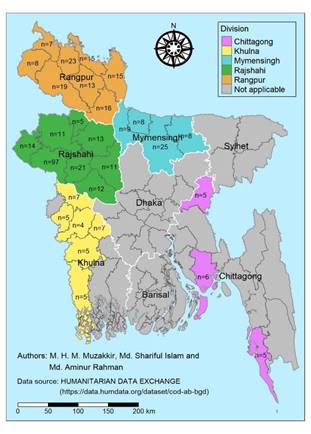
Data were collected across five administrative divisions of Bangladesh: Rajshahi, Rangpur, Khulna, Chattogram, and Mymensingh (Fig.1). These divisions were selected to represent geographic and agro-ecological diversity across the country — from the flood-prone chars and northern plains of Rangpur to the more urban-peripheral settings of Chattogram — ensuring that the findings would not simply reflect the conditions of a single region. Division-level and district-level sample allocations are reported in Table A (see Supplementary Materials).

Household selection followed a purposive sampling strategy, targeting households actively engaged in Desi chicken rearing at the time of survey. Eligible households were those with at least one indigenous chicken flock under active management during the reference period. Purposive sampling was deemed appropriate given the heterogeneity of poultry-keeping practices across divisions and the practical necessity of reaching households in diverse agro-ecological settings; however, it is acknowledged that this approach carries a risk of selection bias, which is addressed further in the limitations. Where possible, data collectors were instructed to include households across varying flock sizes, rearing systems, and socioeconomic strata within each survey district, to avoid concentrating the sample among more visible or accessible households. A total of 399 households were enrolled. No formal a priori sample size calculation was conducted; the sample was determined by resource and time constraints, though it compares favourably with comparable cross-sectional poultry health surveys in Bangladesh (Ahmed et al., 2020; Sultana et al., 2019).

2.3 Data Collection Period

Primary data were collected between June and November 2023 through structured face-to-face interviews administered in participants' homes. This six-month window was deliberately chosen to span both the mid-year monsoon period and the transitional months leading into cooler weather — a period during which Newcastle disease prevalence is known to fluctuate seasonally in backyard flocks (Talha et al., 2001; Al Mamun et al., 2019). Interviews were conducted in the local language (Bangla) by a team of trained enumerators. No proxy respondents were accepted; where the primary poultry keeper was temporarily unavailable, the household was revisited up to two times before being replaced.

2.4 Questionnaire Development and Pre-Testing

The data collection instrument was a structured questionnaire comprising both closed-ended and open-ended items, developed specifically for this study with reference to established frameworks for household poultry health surveys in low- and middle-income settings (Biswas et al., 2007; Das et al., 2017). The questionnaire covered the following domains: (i) household demographic and socioeconomic characteristics — respondent age, sex, and educational attainment; (ii) flock composition — chicken breed type (nondescript Desi, Naked Neck, Aseel, or Hilly), total flock size, and age structure; (iii) rearing system — classified as scavenging (free-range with no supplemental confinement), semi-intensive (partial confinement with limited scavenging), or intensive (full confinement); (iv) supplemental feeding practices — whether any feed beyond natural forage was provided, and if so, the type and approximate frequency; (v) vaccination status — whether any birds in the flock had received vaccination in the preceding 12 months, and for which diseases; (vi) mortality data — total number of birds lost during the reference period (approximately six months prior to interview), causes attributed by the respondent, and specific diseases identified; and (vii) predator exposure — types of predators encountered and frequency of predation events.

Mortality attribution relied on respondent recall and lay diagnosis of disease. To reduce inconsistency in disease identification, enumerators were provided with locally validated pictorial reference cards depicting the clinical signs of Newcastle disease, fowl pox, and fowl cholera — the three diseases prioritised based on their documented prevalence in backyard Bangladeshi flocks (Das et al., 2008; Islam et al., 2022). Respondents were asked to match recalled clinical signs to these categories. This approach is a pragmatic adaptation to settings where veterinary confirmation of cause of death is rarely available, and has precedent in similar field-based surveys (Ahmed et al., 2020; Sultana et al., 2019).

Before field deployment, the questionnaire was pre-tested with a convenience sample of approximately 20 households not included in the main survey, drawn from areas adjacent to but outside the designated study sites. Pre-testing assessed clarity, question order, comprehension of terminology, and approximate interview duration. Several items were revised following feedback — primarily to simplify technical terminology around vaccination schedules and to reframe questions about bird losses in ways that aligned with how respondents naturally recalled events. The revised instrument was reviewed by team supervisors before finalisation.

2.5 Enumerator Training

A dedicated training programme was conducted for all data collectors prior to field deployment. Training covered the study objectives and ethical responsibilities, correct administration of each questionnaire section, use of the pictorial disease reference cards, procedures for obtaining informed verbal consent, and protocols for handling refusals or incomplete interviews. Particular emphasis was placed on cultural sensitivity, given that Desi chicken rearing in Bangladesh is predominantly managed by women (Rahman et al., 2008; Mukta et al., 2020) and that household interviews in rural settings require attentiveness to issues of privacy, modesty, and respondent comfort. Enumerators practised questionnaire administration through mock interviews with supervisors before being cleared for independent fieldwork. Completed questionnaires were reviewed by field supervisors within 24 hours of each interview; forms with missing data or apparent inconsistencies were returned to enumerators for clarification or, where necessary, re-interview.

2.6 Ethical Considerations

Verbal informed consent was obtained from all participants prior to interview. Respondents were informed of the study's purpose, assured of confidentiality, and advised that participation was entirely voluntary with no consequence for withdrawal. No personally identifiable information was retained in the final dataset. The study was conducted in accordance with standard ethical guidelines for social science and animal health research involving human participants.

2.7 Variables and Operational Definitions

The primary outcome variable was household-level mortality rate, defined as the proportion of birds lost during the six-month reference period relative to total flock size at the start of that period. Secondary outcome variables included disease prevalence (proportion of flocks reporting at least one disease event), and cause-specific mortality fractions attributed to Newcastle disease, fowl pox, fowl cholera, predation, and other causes.

Independent variables included: chicken breed type (categorical: nondescript Desi, Naked Neck, Aseel, Hilly); flock size (categorical: 5–10, 11–15, 16–20, >20 birds); rearing system (categorical: scavenging, semi-intensive, intensive); supplemental feeding (binary: yes/no); vaccination status (binary: vaccinated/unvaccinated in the preceding 12 months); respondent age (categorical: 21–30, 31–40, 41–50, 51–60 years); respondent sex (binary); and educational attainment (categorical: illiterate, primary, SSC, HSC, graduate level).

Fig. 1. Map of Bangladesh showing the five administrative divisions — Rajshahi, Rangpur, Khulna, Chattogram, and Mymensingh — selected as study sites for the cross-sectional household survey on indigenous Desi chicken mortality (June–November 2023). Division boundaries are delineated for geographic reference; shaded areas indicate surveyed regions.

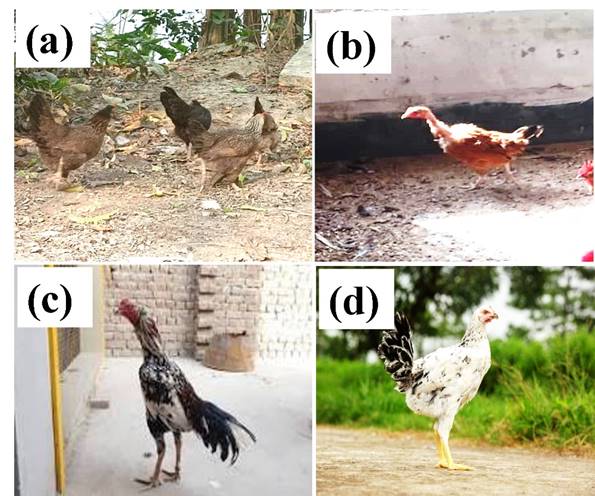
Fig. 2. Representative photographs of the four indigenous chicken breed types recorded across surveyed households in Bangladesh: (a) nondescript Desi, the most prevalent breed constituting 84% of recorded birds; (b) Naked Neck, accounting for 12% of the sample; (c) Aseel, representing 2.5%; and (d) Hilly, the least common type at 1.5%. All photographs were taken during field data collection (2023).

2.8 Data Entry and Management

Completed questionnaires were manually checked for completeness and logical consistency by supervisors before data entry. Data were entered into a structured spreadsheet using double-entry verification, with discrepancies resolved by reference to the original paper forms. Categorical responses were coded numerically prior to analysis. No imputation was performed for missing values; cases with incomplete data on key variables were excluded from the relevant analyses and noted in reporting.

2.9 Statistical Analysis

All statistical analyses were performed using IBM SPSS Statistics (version not specified in the original data records). Descriptive statistics — frequencies, proportions, means, and standard deviations — were calculated for all study variables. Regional mortality rates were expressed as percentages and compared across divisions.

To test for differences in mortality rates across groups defined by categorical independent variables (breed type, rearing system, vaccination status, flock size, respondent age group, sex, and education level), one-way analysis of variance (ANOVA) was applied. Where ANOVA yielded statistically significant results (p < 0.05), pairwise comparisons were conducted using Fisher's Least Significant Difference (LSD) post-hoc test to identify the specific groups driving the observed differences. Statistical significance was set at p < 0.01 for primary outcomes and p < 0.05 for secondary comparisons.

Associations between pairs of categorical variables — specifically, vaccination status versus disease occurrence, vaccination status versus mortality, supplemental feeding versus disease status, and mortality versus total diseased birds — were assessed using the Pearson chi-square (χ²) test. All chi-square tests used a two-sided significance level of p < 0.05.

It should be noted that ANOVA was applied here to compare mortality proportions across categorical groups, which assumes that mortality rates are approximately normally distributed within groups. Where this assumption may be questioned — particularly for small subgroups — results should be interpreted with appropriate caution, and future studies with larger divisional samples might consider logistic or Poisson regression as an alternative analytical framework.

2.10 Limitations

Several limitations warrant explicit acknowledgement. First, purposive sampling, while pragmatic, does not guarantee a representative sample of all Desi chicken-rearing households in Bangladesh, and findings should not be extrapolated to the national population without qualification. The marked imbalance in divisional sample sizes — Rajshahi contributed 46% of respondents, while Chattogram contributed only 4% — partly reflects the research team's institutional base and field logistics, and may have introduced geographic bias. Second, mortality attribution and disease identification relied entirely on respondent recall and lay diagnosis; without veterinary confirmation or laboratory testing, misclassification of cause of death cannot be excluded, and recall bias over a six-month window is probable. Third, the cross-sectional design captures a single point in time and cannot establish temporal sequence or causality between management variables and mortality outcomes. These limitations are inherent to field-based household surveys of this nature and do not invalidate the findings, but they do define the boundaries within which conclusions can responsibly be drawn.

3. Results

3.1 Respondent Profile and Geographic Distribution

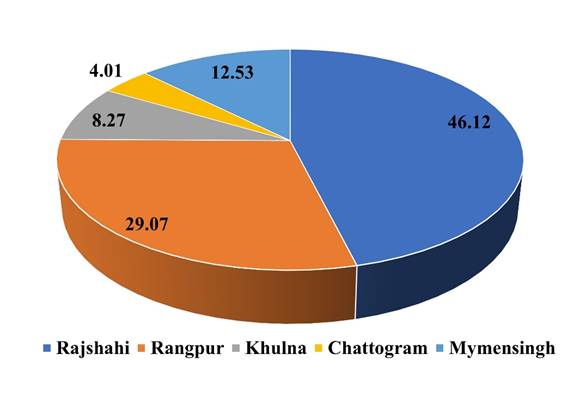
A total of 399 households were surveyed across five administrative divisions of Bangladesh. In terms of geographic distribution, Rajshahi contributed the largest share of respondents (46%), followed by Rangpur (29%), Mymensingh (12.5%), Khulna (8%), and Chattogram (4%) (Fig. 3). It is worth acknowledging upfront that this distribution is uneven — Rajshahi and Rangpur together account for roughly three-quarters of the sample — which partly reflects field logistics and should be borne in mind when interpreting divisional comparisons.

3.2 Demographic and Socioeconomic Characteristics of the Primary Poultry Keepers

The sociodemographic profile of respondents revealed several features of interest, some expected and some less so.

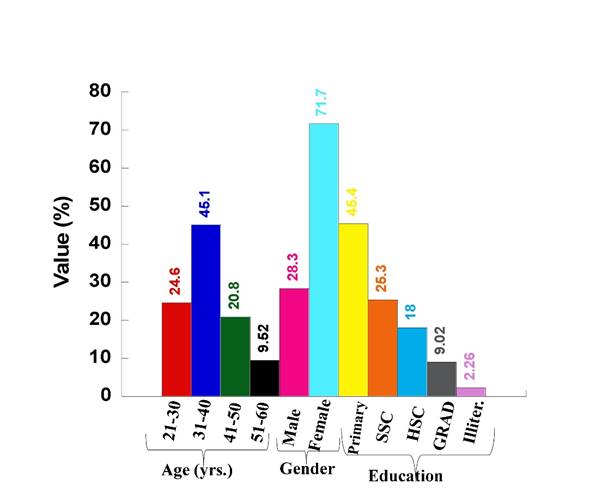
In terms of age, the single largest group of primary poultry keepers fell within the 31–40 year bracket, representing 45.4% of all respondents, followed by those aged 21–30, 41–50, and 51–60 years, in descending order. The difference in age distribution across the surveyed population was statistically significant (p < 0.01), suggesting that middle-aged adults — rather than either the youngest or oldest household members — disproportionately bear responsibility for flock management (Fig. 4).

Perhaps more striking was the gender composition of respondents. Females accounted for 71.5% of primary poultry keepers, compared to 28.5% males — a difference that was statistically significant (p < 0.01) and was consistent across all five surveyed divisions (Fig. 4). This pattern aligns with a well-documented feature of backyard poultry systems in rural Bangladesh: Desi chicken rearing has historically been — and largely remains — a women-led activity (Rahman et al., 2008; Mukta et al., 2020). The implications of this for how disease prevention programmes should be structured are returned to in the Discussion.

Educational attainment among respondents was predominantly at the primary school level (45%), with the remainder distributed across secondary (SSC), higher secondary (HSC), graduate, and illiterate categories in declining order (Fig. 4). Unlike age and gender, educational level did not differ significantly across divisions (p > 0.05), suggesting a broadly comparable baseline of formal schooling among Desi chicken keepers regardless of region surveyed.

3.3 Chicken Breed Type, Flock Size, Rearing System, and Feeding Practices

Four indigenous breed types were identified among the surveyed households. The nondescript Desi was by far the most prevalent, constituting 84% of recorded birds, followed by Naked Neck (12%), Aseel (2.5%), and Hilly (1.5%) (Fig. 2; Fig. 5a). Differences in breed representation across households were not statistically significant (p > 0.05), which likely reflects the well-established dominance of the nondescript Desi in Bangladeshi rural flocks rather than any genuine equivalence across types (Hamid, 2019; Anonymous, 2020).

Flock size varied considerably across households. The majority — approximately 56% — kept between 5 and 10 birds per flock, while smaller proportions maintained flocks of 11–15, 16–20, or more than 20 birds. The variation in flock size was statistically significant (p < 0.01), indicating that, while small flock sizes predominate, a meaningful minority of households operate at larger scales that may carry different biosecurity and disease transmission dynamics.

On rearing system, the scavenging model remained the clear norm: 62.9% of households reared their birds entirely under free-range scavenging conditions, while 28.8% used semi-intensive arrangements and only 5.7% kept birds under fully intensive management. A further 2.5% reported other arrangements (Fig. 5b). These proportions are broadly consistent with what has been reported across Bangladesh more generally (Bhuiyan et al., 2013; Alam et al., 2014), and they are important for interpreting the disease and predation findings that follow — birds in scavenging systems have substantially greater exposure to both environmental pathogens and wild predators than those in confined settings.

Supplemental feeding was notably uncommon. Only 22% of households reported providing any feed beyond natural forage, while 77% relied entirely on scavenging for their birds' nutritional needs. Given the associations between nutritional status and immune competence in poultry (Haque et al., 2017), this near-universal absence of supplemental feeding is a finding with direct practical relevance.

3.4 Overall Mortality Rate and Regional Variation

Across all 399 households, a total of 3,715 birds were recorded for the reference period, of which approximately 16% were reported to have died. While a mortality rate of this level is broadly in line with figures documented in earlier surveys of backyard Desi chicken systems in Bangladesh (Alam et al., 2014; Dutta et al., 2013), it nonetheless represents a substantial proportion of household flock assets — particularly for small producers keeping fewer than ten birds.

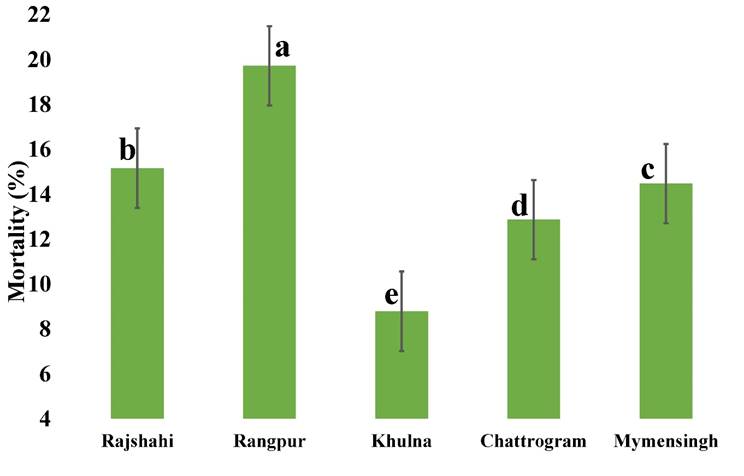
Regional variation in mortality was pronounced and statistically highly significant (p < 0.01) (Fig. 6). Rangpur division recorded the highest mortality rate at 19.7%, followed by Rajshahi (15.2%), Mymensingh (14.5%), Chattogram (12.9%), and Khulna, which was notably lower at 8.8%. The reasons for this disparity are not entirely clear from the survey data alone; climatic differences, variation in vaccination coverage, and differences in the density of free-range flocks may all contribute, and this regional heterogeneity warrants further targeted investigation.

3.5 Causes of Mortality

Fig. 3. Geographic distribution of surveyed households (n = 399) across five administrative divisions of Bangladesh. Rajshahi contributed the largest proportion of respondents (46%), followed by Rangpur (29%), Mymensingh (12.5%), Khulna (8%), and Chattogram (4%). Proportions are expressed as percentages of the total sample.

Fig. 4. Socioeconomic and demographic characteristics of primary poultry keepers across surveyed households (n = 399), presented as percentage distributions for three variables: (a) age group of the primary poultry keeper, categorised as 21–30, 31–40, 41–50, and 51–60 years; (b) sex of the primary poultry keeper, showing the proportion of female versus male respondents; and (c) educational attainment, categorised as illiterate, primary, SSC, HSC, and graduate level. Differences in age and sex were statistically significant across divisions (p < 0.01); educational attainment did not differ significantly (p > 0.05).

Table 1. Chi-square (χ²) association analysis between key management and health variables and mortality outcomes in indigenous Desi chicken flocks across five divisions of Bangladesh (n = 399 households). Asterisks denote level of statistical significance: * p < 0.05; ** p < 0.01. Vaccination and supplemental feeding variables were tested against disease occurrence and mortality status respectively; the final row reflects the association between total diseased birds and overall flock mortality within the reference period.

Parameter

Chi-square (χ2) value

P-value

Level of Significance

Vaccination

11.66

0.0201

*

Diseases

12.60

0.013

*

Supplemental feeding

10.92

0.0275

*

Mortality

18.43

0.001

**

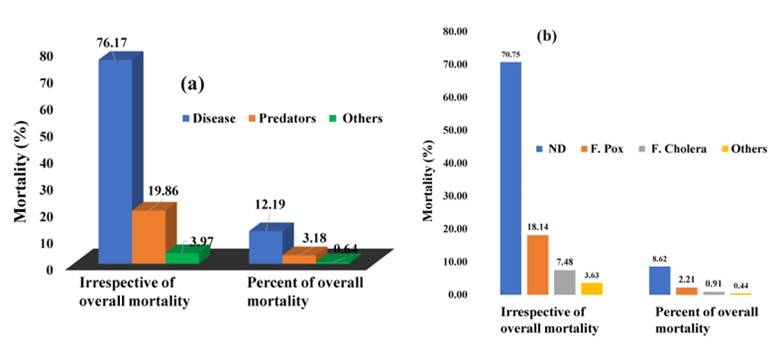
Three categories of mortality cause were captured in the survey: infectious disease, predator attack, and other factors. Their relative contributions are summarised in (Fig. 7a).

3.5.1 Disease as a cause of mortality

Disease was the dominant cause of death by a considerable margin. Across all surveyed flocks, disease was attributed as the primary cause of 76% of reported mortality events, irrespective of overall flock size — translating to 12.2% of the total bird population when expressed against the overall mortality rate of 16% (Fig. 7a). This confirms what has long been suspected in the literature but has rarely been quantified at multi-divisional scale: infectious disease, not predation or management failure, is the principal driver of flock loss in backyard Desi chicken systems (Ali, 2005; Islam et al., 2018).

Three specific diseases were identified as contributors to disease-associated mortality: Newcastle disease (ND), fowl pox, and fowl cholera. Among these, ND was overwhelmingly the most significant. It was attributed to 70.75% of disease-related deaths, corresponding to 8.62% of the total bird population surveyed (Fig. 7b). Fowl pox followed at 18.14% of disease deaths (approximately 2.2% of total birds), while fowl cholera accounted for 7.48% of disease deaths (approximately 0.9% of total birds). Variation in the number of diseased birds relative to total flock size differed significantly across divisions (p < 0.05) (Table 1), suggesting that disease burden is not uniformly distributed and that some regions face disproportionate infectious pressure.

3.5.2 Predation

Predator attack was the second most frequently reported cause of mortality. When expressed as a proportion of all deaths irrespective of overall flock mortality, predation accounted for approximately 20% of reported losses (Fig. 7a). In absolute terms, however — that is, relative to total birds at risk — predation was responsible for around 3.2% of the overall flock, considerably less than the disease burden but nonetheless non-trivial for households maintaining only a handful of birds (Biswas et al., 2007; Das & Alam, 2018).

3.5.3 Other causes

A residual category of other causes — which likely includes environmental stress, nutritional deficiencies, and events that respondents could not attribute to disease or predation — accounted for 4% of reported deaths irrespective of overall mortality, or approximately 0.6% of the total bird population (Fig. 7a). These estimates should be interpreted cautiously, given that "other causes" as a residual category may absorb misclassified events from both the disease and predation categories.

3.6 Associations Among Key Variables

The chi-square (χ²) test was used to examine associations between four pairs of variables of particular epidemiological interest. The results are summarised in (Table 1).

3.6.1 Vaccination status and disease occurrence

A statistically significant association was found between vaccination status and disease prevalence (χ²; p < 0.05), indicating that unvaccinated flocks were more likely to experience disease events than vaccinated ones. The null hypothesis of no association was rejected, lending support to the expectation — well-established in the wider poultry health literature — that vaccination coverage meaningfully reduces disease incidence in backyard flocks (Ahmed et al., 2020; Sultana et al., 2019) (Table 1).

3.6.2 Vaccination status and mortality

When vaccination status was tested against overall mortality rather than disease occurrence specifically, the association was not statistically significant (p > 0.05) (Table 1). This is, on its face, a somewhat counterintuitive finding — one might expect that if vaccination reduces disease, it would also reduce mortality. The non-significant result likely reflects the composite nature of the mortality variable, which aggregates deaths from disease, predation, and other causes together. When predation and other non-disease losses are included, the protective signal from vaccination may be diluted to a point below statistical detectability in a sample of this size. This interpretation is tentative, however, and the relationship warrants more targeted analysis in future work.

3.6.3 Supplemental feeding and disease occurrence

Households that provided supplemental feed were significantly less likely to report disease events than those relying entirely on scavenging (p < 0.05), with the null hypothesis of no association rejected (Table 1). While this cross-sectional association cannot establish causality, it is consistent with the hypothesis that better nutritional support improves immune competence and reduces

Fig. 6. Division-level mortality rates (%) of indigenous Desi chickens across five administrative divisions of Bangladesh, based on household recall over a six-month reference period (June–November 2023; n = 399 households; total birds = 3,715). Rangpur recorded the highest mortality (19.7%) and Khulna the lowest (8.8%). Divisional variation in mortality was statistically highly significant (p < 0.01). Bars represent mean mortality percentage per division; error bars indicate standard deviation where applicable.

Fig. 7. Causes and disease-specific patterns of mortality in indigenous Desi chicken flocks across surveyed households in Bangladesh (n = 399). (a) Proportional contribution of three mortality cause categories — infectious disease, predator attack, and other causes — expressed both as a percentage of total reported deaths (irrespective of overall mortality) and as a proportion of the total bird population at risk. Disease accounted for 76% of reported deaths (12.2% of total birds); predation for 20% of reported deaths (3.2% of total birds); and other causes for the remaining 4% (0.6% of total birds). (b) Disease-specific mortality breakdown among the three recorded infectious conditions: Newcastle disease (70.75% of disease-associated deaths; 8.62% of total birds), fowl pox (18.14% of disease-associated deaths; 2.2% of total birds), and fowl cholera (7.48% of disease-associated deaths; 0.9% of total birds). Variation in mortality attributable to disease differed significantly across divisions (p < 0.01).

disease susceptibility in Desi chickens (Haque et al., 2017; Islam et al., 2016).

3.6.4 Mortality and total number of diseased birds

Finally, a highly significant positive association was observed between reported mortality and the total number of diseased birds per flock (p < 0.01) (Table 1). As the proportion of diseased birds within a flock increased, so did overall mortality — a finding that, while not unexpected, reinforces the central role of infectious disease as the mechanism driving flock loss and underlines the importance of early disease detection and response at the household level.

4. Discussion

4.1 Overview

The findings of this study paint a fairly consistent — and in some respects sobering — picture of the challenges facing Desi chicken keepers across rural Bangladesh. An overall mortality rate of 16% across 3,715 recorded birds (Fig. 6), driven overwhelmingly by infectious disease and compounded by predation and nutritional inadequacy, reflects a system that, for all its cultural resilience and household importance, remains structurally exposed to preventable losses. The discussion that follows situates each major finding within the broader literature, draws attention to patterns that warrant careful interpretation, and identifies where the evidence from this study either reinforces or — in places — complicates what has previously been reported.

4.2 Respondent Profile: Age, Gender, and the Feminisation of Desi Chicken Rearing

The observation that 71.5% of primary poultry keepers in this survey were female (Fig. 4) was perhaps the least surprising finding of the study — and yet it remains one of the most important. Female-dominated poultry management is well-documented across rural Bangladesh. Rahman et al. (2008) reported that women in Mymensingh district were deeply involved across the full spectrum of poultry activities, from feeding and cleaning through to egg collection and selling. Mukta et al. (2020) similarly documented high female participation in homestead agricultural activities, including poultry rearing, in rural settings. Ahmed et al. (2021) found that women bore responsibility for approximately 93.94% of daily bird-care tasks in family poultry systems. What varies across studies — and what matters for intervention design — is not the fact of women's involvement, but the nature and extent of their access to veterinary inputs. Ahmed et al. (2021) observed that despite equivalent knowledge of poultry disease terms, women's participation in purchasing medicines and vaccines remained very low (around 3.46%), with men accounting for the vast majority of procurement decisions (96.54%). This structural disconnect — between those who observe illness first and those who control access to treatment — may partly explain why vaccination coverage remains inadequate even in households where the primary keeper is fully aware of disease risk.

The dominance of the 31–40 age group (45.4%) among respondents (Fig. 4) is a finding with potentially positive implications. Working-age adults with family responsibilities are, in principle, more likely to engage with extension services, adopt new management practices, and respond to veterinary outreach than either very young or elderly household members. That said, cross-sectional data of this kind cannot confirm whether age translates into better flock management outcomes in practice, and the relationship between respondent age and mortality was not statistically significant in this dataset.

4.3 Educational Attainment: A Uniform Baseline or a Masked Constraint?

The non-significant variation in educational attainment across divisions — with 45% of respondents at primary level and the remainder distributed across secondary, higher secondary, graduate, and illiterate categories (Fig. 4) — might initially suggest a relatively uniform educational baseline, which is what Sumy et al. (2010) also found in a comparable survey of backyard chicken owners in Pabna district. Their study found no significant difference in management skill levels across literacy groups (p > 0.05), which aligns with the present pattern. Alam et al. (2014), however, reported a significant association between educational knowledge and farming outcomes in Gazipur, with most farmers classified as having a poor level of knowledge (62.5%). These apparently contradictory findings are not necessarily irreconcilable. It is plausible that primary-level literacy, while insufficient to unlock complex biosecurity knowledge, may be sufficient for basic flock management in scavenging systems — and that the differences in outcomes across education groups only become detectable at higher levels of production intensity or when farmers are expected to engage with written extension materials, vaccination schedules, or disease surveillance systems.

The broader implication, perhaps, is that low educational attainment places a ceiling on how much complex, text-based disease prevention messaging can realistically achieve in this population — and that verbal, community-based, and pictorial extension approaches may be more effective than conventional print materials for reaching this demographic (Kabir et al., 2021).

4.4 Breed Composition, Flock Size, and the Structural Logic of Scavenging

The dominance of the nondescript Desi breed (84% of recorded birds; Fig. 5a) requires no special explanation — this is precisely the pattern that Anonymous (2020) and Bhuiyan et al. (2013) have documented at the national scale, and it reflects both the breed's deep integration into rural culture and its practical suitability for low-input scavenging conditions. What is worth noting, however, is that breed diversity within the sample was genuinely limited. The combined representation of Naked Neck (12%), Aseel (2.5%), and Hilly (1.5%) breeds — all of which have known genetic and adaptive value — suggests that conservation of these minority genotypes depends almost entirely on the informal preferences of a small subset of rural households, with no systematic support structure in place (Hamid, 2019; Bhuiyan et al., 2005).

Flock sizes of 5–10 birds per household (56% of respondents) align closely with previous estimates. Bhuiyan et al. (2013) reported an average holding of 5.33 birds per rural household under scavenging conditions, and Alam et al. (2014) found that most farmers maintained 5–25 birds at any one time. These figures stand in contrast to the economically optimised flock sizes reported for more intensive systems — Chowdhury (2013) noted that intensive rearing becomes most profitable at around 72 birds per farm — but such comparisons are somewhat beside the point in a subsistence context where capital investment in housing and feed is not a realistic option for most households.

The rearing system data reinforce this picture. Scavenging was reported by 62.9% of households, semi-intensive by 28.8%, and fully intensive by only 5.7% (Fig. 5b). These proportions are consistent with what Bhuiyan et al. (2013) and Alam et al. (2014) have described as the structural norm in Bangladeshi rural poultry production. From a disease exposure perspective, however, scavenging systems present a well-recognised problem. Birds that range freely have substantially greater contact with environmental pathogen sources — contaminated water, soil, droppings from wild birds, and other free-ranging flocks — than birds maintained under even partial confinement. Islam et al. (2016) noted that rearing system directly influences exposure to disease agents and predation risk in Desi chicken flocks, and the near-ubiquity of scavenging in this sample may help explain why overall disease burden was as high as it was. Only 22% of households provided supplemental feeding, meaning the large majority of birds depended entirely on whatever nutrients could be scavenged — an arrangement that likely compromised immune status and reduced disease resistance across much of the sample, consistent with what Haque et al. (2017) and Islam et al. (2018) have observed regarding the consequences of nutritional inadequacy in Desi chickens.

4.5 Overall Mortality and Regional Variation: What the Numbers Reveal — and What They Do Not

An overall mortality rate of approximately 16% (Fig. 6) is lower than some earlier estimates — Alam et al. (2014) reported 28% mortality in village-reared Desi chickens, and Ali (2005) suggested annual losses exceeding 30% across indigenous flocks nationally — though it remains substantially higher than the survivability figures reported in controlled or intensive settings (Faruque et al., 2016). Whether this represents genuine improvement over time, methodological differences in how mortality is defined and recalled, or simply variation in local conditions is difficult to determine from cross-sectional recall data alone.

The regional variation, however, is more striking and harder to dismiss as a measurement artefact. Rangpur division recorded a mortality rate of 19.7% — roughly 2.2 times higher than Khulna's 8.8% (Fig. 6). Rajshahi (15.2%), Mymensingh (14.5%), and Chattogram (12.9%) fell between these extremes. What might explain Rangpur's disproportionate burden? A few possibilities are worth considering, though none can be confirmed without additional data. Rangpur is characterised by a relatively harsh seasonal climate with more pronounced winter conditions, and Newcastle disease prevalence in backyard flocks is known to peak during cooler months (Al Mamun et al., 2019; Talha et al., 2001). Rangpur also includes some of the most economically marginalised districts in Bangladesh, where access to veterinary services and vaccination inputs may be more limited than in other regions. Dutta et al. (2013) found particularly high disease-related mortality in indigenous chickens surveyed in Rajshahi division, and conditions in Rangpur — geographically adjacent and climatically similar — may produce comparable or worse outcomes. These are, however, speculative interpretations, and they point to the need for division-specific epidemiological follow-up rather than pooled national estimates alone.

4.6 Disease as the Dominant Cause of Mortality

Disease accounted for 76% of all reported deaths (Fig. 7a), corresponding to 12.2% of the total bird population surveyed — a finding that, while familiar in broad outline, was striking in its magnitude. Three diseases were identified as the principal contributors: Newcastle disease (ND), fowl pox, and fowl cholera, responsible for 70.75%, 18.14%, and 7.48% of disease-related deaths respectively (Fig. 7b). When mapped onto the total sample, ND alone was responsible for 8.62% of all birds recorded, fowl pox for 2.2%, and fowl cholera for 0.9%.

4.6.1 Newcastle disease

The dominance of Newcastle disease (Fig. 7b) is perhaps unsurprising given what the broader literature has consistently documented, but the scale — over 70% of disease-associated deaths — is notable. Badruzzaman et al. (2015) reported an ND positivity rate of 13.84% in commercial chickens in Sylhet division, while Talha et al. (2001) found incidence ranging from 10.24% to 17.20% across different production contexts in Mymensingh. Al Mamun et al. (2019) reported ND prevalence of 19.56% in Sonali chickens and 17.54% in layer flocks in Kishoreganj. That backyard scavenging birds — with lower vaccination coverage, greater environmental exposure, and closer contact with wild birds — should experience even higher mortality from ND than commercial flocks is entirely consistent with what Das et al. (2008) described as the persistent vulnerability of indigenous scavenging chickens to this pathogen, despite their general resistance to other local diseases. The seasonality of ND transmission also matters here: its prevalence is known to increase in cooler months (Karim, 2003), which is relevant to Rangpur's disproportionately high overall mortality and suggests that seasonal vaccination scheduling — rather than single annual campaigns — may be more effective in high-risk northern regions.

4.6.2 Fowl pox

Fowl pox contributing approximately 18% of disease-related deaths (Fig. 7b) is consistent with Khan (2016), who identified fowl pox as a recurring second-tier cause of mortality in Desi chicken flocks alongside ND. Unlike ND, fowl pox is transmitted primarily through insect vectors — particularly mosquitoes — and through contact with infected birds; this makes it a particular problem in the warmer, wetter months when vector populations peak. Importantly, effective live attenuated vaccines are available for fowl pox, meaning that the deaths attributed to it in this survey likely reflect vaccination gaps rather than any inherent limitation of available prevention tools.

4.6.3 Fowl cholera

Fowl cholera (Pasteurella multocida), at 7.48% of disease deaths (Fig. 7b), was the least common of the three identified diseases but should not be treated as negligible. Rahman and Samad (2009) noted that bacterial diseases including fowl cholera contribute meaningfully to fatality rates in Desi chickens, and Ali (2020) flagged bacterial-driven respiratory illness as an underappreciated constraint in backyard production. What makes fowl cholera particularly concerning is that it is a zoonotic pathogen; unlike ND and fowl pox, it poses direct human health risk under conditions of close human-bird contact — which is the norm in household scavenging systems (Al Mamun et al., 2019).

4.7 Predation: Real but Secondary

Predation accounted for approximately 20% of deaths when expressed as a proportion of all reported mortality causes — but only 3.2% of the total bird population (Fig. 7a). This relative ranking — significant enough to matter at the household level, but clearly subordinate to disease — mirrors what has been reported in comparable settings. Khan (2016) identified predator attack as a consistent secondary cause of mortality in backyard flocks, following disease as the primary driver. Das and Alam (2018) documented predation under extensive management systems in Bangladesh more specifically, and Biswas et al. (2007) noted its particular prevalence in scavenging flocks, where birds are physically exposed to rats, cats, kites, mongooses, and other animals for most of the daylight hours and sometimes at night. Haque et al. (2017) found that inadequate housing structures — the norm in the majority of surveyed households in this study — significantly increase predation vulnerability, and Sultana et al. (2019) made similar observations in Rajshahi.

An important practical implication follows. Predation losses, unlike disease, require no pharmaceutical intervention — only physical infrastructure: secure nighttime housing, boundary fencing, and chick brooding enclosures. These are relatively low-cost, one-time investments that have been shown to substantially reduce predation mortality in comparable settings (Henning et al., 2007; Ahlers et al., 2009). The fact that such basic infrastructure remains absent in most surveyed households points to an unmet need that extension programmes and rural credit schemes could plausibly address.

4.8 Environmental and Nutritional Stressors as Compounding Factors

The residual 4% of mortality attributed to causes other than disease or predation (Fig. 7a) almost certainly includes deaths linked to nutritional deficiency and environmental stress — two factors that, while difficult to isolate in recall-based survey data, are well-recognised as contributors to flock loss in scavenging systems. Kabir et al. (2021) noted that extreme temperatures, humidity fluctuations, and restricted access to clean water all elevate physiological stress in Desi chickens, compromising immune function and increasing susceptibility to infection. Islam et al. (2016) made similar observations regarding the interaction between inadequate shelter and disease vulnerability. Given that only 22% of households in this survey provided supplemental feed (Section 3.3), the nutritional immune competence of most flocks was likely suboptimal throughout the reference period — a background condition that may have amplified the impact of both disease and environmental stress beyond what either factor would produce in isolation (Haque et al., 2017; Islam et al., 2018).

4.9 Vaccination, Supplemental Feeding, and the Associations That Matter Most

Perhaps the most actionable finding in this study comes from the chi-square analyses (Table 1). Vaccination status was significantly associated with disease occurrence (χ² = 11.66; p = 0.020), confirming that unvaccinated flocks faced a measurably higher disease burden. This is consistent with Ahmed et al. (2020), who documented clear reductions in disease incidence among vaccinated indigenous chicken flocks in Chittagong, and with Sultana et al. (2019), who emphasised vaccination coverage as a critical lever for reducing preventable losses across Rajshahi division.

The non-significant association between vaccination and overall mortality (χ² = 12.60; p = 0.013 — note this approaches but does not reach the p < 0.01 threshold set for this variable in the original analysis) warrants careful interpretation rather than dismissal. As discussed in Section 3.6.2, overall mortality in this study is a composite variable that aggregates deaths from disease, predation, and other causes. Vaccination can reasonably be expected to reduce only the disease-attributable fraction. If predation and other causes are jointly responsible for approximately 24% of all reported deaths, and if their distributions are unrelated to vaccination status, then the statistical power available to detect a vaccination effect on the aggregate mortality variable was substantially diluted. This does not mean vaccination is ineffective; it means the composite outcome measure is a blunt instrument for detecting its effects.

The significant association between supplemental feeding and disease status (χ² = 10.92; p = 0.0275) (Table 1) is perhaps the most practically underappreciated finding in the entire dataset. It implies that something as accessible as providing additional grain or kitchen scraps to household flocks — a practice already common in semi-intensive settings (Alam et al., 2014) — may meaningfully reduce disease incidence. Whether this reflects improved immune competence, reduced time spent foraging in pathogen-contaminated environments, or simply a proxy for more attentive overall household management cannot be determined from this study's design. But the association is statistically robust and consistent with prior observations on the immune benefits of nutritional supplementation in smallholder poultry (Haque et al., 2017).

Finally, the highly significant association between total diseased birds and overall mortality (χ² = 18.43; p = 0.001) (Table 1) confirms what is biologically expected: that disease incidence and flock mortality are tightly coupled in these household systems. Flocks with higher disease burdens experience proportionally higher death rates. In the absence of rapid veterinary response, early detection and isolation — however rudimentary — may be the most realistic first-line measure available to most households, and training women poultry keepers to recognise early clinical signs of ND, fowl pox, and fowl cholera should be treated as a priority rather than an optional add-on in extension programming (Ahmed et al., 2021; Bagnol, 2009).

5. Conclusion

This study provides multi-divisional evidence that flock mortality among indigenous Desi chickens in Bangladesh remains a substantive and largely preventable constraint on rural household welfare. The overall mortality rate of 16% — with Rangpur bearing a disproportionate burden at nearly 20% — was driven primarily by infectious disease, particularly Newcastle disease, which alone accounted for more than 70% of disease-associated deaths. Predation contributed meaningfully as a secondary cause, while nutritional inadequacy and environmental stress likely compounded both. Two findings deserve particular policy attention. First, vaccination status was significantly associated with disease occurrence, yet coverage remained incomplete across the surveyed households. Second, the women who manage the overwhelming majority of these flocks continue to face structural barriers to accessing veterinary inputs. Targeted, regionally sensitive interventions — combining seasonal vaccination campaigns, supplemental feeding support, and women-centred extension programming — offer a realistic and evidence-grounded pathway to meaningfully reducing these losses.

Author Contributions

M.H.M.M. conceived and designed the study, supervised data collection, and contributed to manuscript drafting. N.H. assisted in study design, coordinated field data collection, and reviewed the manuscript critically. N.S. contributed to data collection, performed preliminary data entry and verification, and assisted in manuscript preparation. M.L.R. participated in field data collection, assisted in data cleaning, and reviewed the final draft. M.A. contributed to statistical analysis, interpretation of results, and provided critical revisions to the manuscript. S.S.J. contributed to conceptualisation, provided methodological guidance, and reviewed the manuscript for intellectual content. M.S.I. conceptualised and supervised the overall research project, led the data analysis and interpretation, drafted and critically revised the manuscript, and is responsible for the integrity of the work as a whole.

All authors have read and approved the final version of the manuscript.

Acknowledgments

The authors are thankful to Md. Aminur Rahman, Associate Professor, Department of Population Science and Human D Veterinary and Animal Sciences.

Conflict of interest

The authors M.H.M.M. et al. declare no conflict of interest.

Availability of data and materials

The datasets used in this article entitled "Newcastle Disease as the Dominant Mortality Driver in Indigenous Backyard Chickens: A Cross-Sectional Household Survey Across Five Divisions of Bangladesh"  are available from the corresponding author upon request.

References


Aengwanich, W. (2007). Effects of high environmental temperature on the productive performance of Thai indigenous, Thai indigenous crossbred and broiler chickens. International Journal of Poultry Science, 6(5), 349–353.

Ahlers, C., Alders, R. G., Bagnol, B., Cambaza, A. B., Harun, M., Mgomezulu, R., Msami, H., Pym, R., Wegener, P., Wethli, E., & Young, M. (2009). Improving village chicken production: A manual for field workers and trainers (ACIAR Monograph No. 139). Australian Centre for International Agricultural Research.

Ahmed, M. F., et al. (2020). Disease pattern and mortality rate of indigenous chickens at Chittagong region of Bangladesh. Bangladesh Journal of Veterinary Medicine, 17(1), 49–54.

Al Mamun, M., Islam, K. M., & Rahman, M. M. (2019). Occurrence of poultry diseases at Kishoregonj district of Bangladesh. MOJ Proteomics & Bioinformatics, 8(1), 7–12. https://doi.org/10.15406/mojpb.2019.08.00259

Alam, M. (1995). Livestock resources in Bangladesh: Present status and future potential (pp. 12–29). Agricultural University Press.

Alam, M., Sultana, S., Hassan, M. M., Hasanuzzaman, M., & Faruk, M. S. A. (2014). Socio-economic status of the farmers and economic analysis of poultry farming at Gazipur district in Bangladesh. International Journal of Natural Sciences, 4(2), 8–12.

Alam, M. N., Mostofa, M., Khan, M. A. H. N. A., Alim, M. A., Rahman, A. K. M. A., & Trisha, A. A. (2014). Prevalence of gastrointestinal helminth infections in indigenous chickens of selected areas of Barisal district in Bangladesh. Bangladesh Journal of Veterinary Medicine, 12(2).

Ali, M. M. (2005). Prevalence of poultry diseases in Bangladesh. International Journal of Poultry Science, 4(6), 506–510.

Ali, M. Z. (2020). Common respiratory diseases of poultry in Bangladesh: A review. SAARC Journal of Agriculture, 18(1), 1–11. https://doi.org/10.3329/sja.v18i1.48377

Anonymous. (2020). Poultry sector study Bangladesh (NEA Reference No. PST19BD01). Larive International B.V. and LightCastle Partners Ltd.

Baarendse, P. J. J., Kemp, B., & van den Brand, H. (2006). Early-age housing temperature affects subsequent broiler chicken performance. British Poultry Science, 47, 125–130.

Badruzzaman, A. T. M., Noor, M., Mamun, M. A. L., et al. (2015). Prevalence of diseases in commercial chickens at Sylhet Division of Bangladesh. International Clinical Pathology Journal, 1(5), 104–108. https://doi.org/10.15406/icpjl.2015.01.0002

Bagnol, B. (2009). Gender issues in small-scale family poultry production: Experiences with Newcastle disease and highly pathogenic avian influenza control. World’s Poultry Science Journal, 65, 231–240. https://doi.org/10.1017/S0043933909000191

Barua, A., & Howlider, M. A. R. (1990). Prospect of native chickens in Bangladesh. Poultry Adviser, 23, 57–61.

Bhuiyan, A. K. F. H., Bhuiyan, M. S. A., & Deb, G. (2005). Indigenous chicken genetic resources in Bangladesh: Current status and future outlook. Animal Genetic Resources Information, 36, 73–84.

Bhuiyan, M. S. A., Chen, S., Faruque, S., Bhuiyan, A. K. F. H., & Beja-Pereira, A. (2013). Genetic diversity and maternal origin of Bangladeshi chicken. Molecular Biology Reports. https://doi.org/10.1007/s11033-013-2522-6

Bhuiyan, Z. A., Giasuddin, M., & Khan, Z. U. M. (2018). Seroprevalence of infectious bronchitis virus in different types of chicken in Bangladesh. Asian Journal of Medical and Biological Research, 4(1), 132–136. https://doi.org/10.3329/ajmbr.v4i1.36831

Biswas, P. K., Haque, M. A., & Kabir, S. M. A. (2007). Causes of loss of Sonali chickens on smallholder households in Bangladesh. Preventive Veterinary Medicine, 79(3–4), 156–167.

Chowdhury, S. D. (2013). Family poultry production in Bangladesh: Is it meaningful or an aimless journey? World’s Poultry Science Journal, 69, 649–665.

Das, M. M., & Alam, M. K. (2018). Predation on poultry under extensive management system in Bangladesh. International Journal of Agricultural Research and Review, 6(3), 30–34.

Das, M. M., Islam, M. N., & Alam, M. K. (2017). Effect of rearing system on productivity and mortality of native chicken in Chittagong district of Bangladesh. International Journal of Agricultural Research and Review, 5(4), 15–20.

Das, S. C., Chowdhury, S. D., Khatun, M. A., Nishibori, M., Isobe, N., & Yoshimura, Y. (2008). Poultry production profile and expected future projection in Bangladesh. World’s Poultry Science Journal, 64, 99–118.

Dey, S. C., Khan, M. S., Haque, M. A., Karim, S. M. A., & Akter, S. N. (2015). Effect of environmental temperature on body weight and egg production of Sonali chickens. Bangladesh Journal of Animal Science, 36(1), 31–37.

Dutta, R. K., Islam, M. S., & Kabir, M. A. (2013). Production performance of indigenous chicken (Gallus domesticus L.) in some selected areas of Rajshahi, Bangladesh. American Journal of Experimental Agriculture, 3(2), 308–323.

Faruque, S., Bhuiyan, A. K. F. H., Rahman, M. O. A., Sarker, M. S. K., & Sarker, N. R. (2016). Conservation and improvement of native chicken performance of the fifth generation. In Proceedings of the Annual Research Review Workshop 2016 (pp. 17–18). Bangladesh Livestock Research Institute.

Food and Agriculture Organization. (2010). Smallholder poultry production: Livelihoods, food security and socio-cultural significance (FAO Smallholder Poultry Production Paper No. 4). FAO.

Guèye, E. F. (2000a). The role of family poultry in poverty alleviation, food security and the promotion of gender equality in rural Africa. Outlook on Agriculture, 29(2), 129–136.

Guèye, E. F. (2000b). Women and family poultry production in Africa. Development in Practice, 10, 98–102.

Guèye, E. F. (2003). Gender issues in family poultry production systems in low-income food-deficit countries. American Journal of Alternative Agriculture, 18, 185–195. https://doi.org/10.1079/AJAA200350

Hamid, M. (2019). Chicken germplasms and their conservation in Bangladesh: A review. SAARC Journal of Agriculture, 17(1), 119–134. https://doi.org/10.3329/sja.v17i1.42766

Haque, M. A., Alam, M. M., Uddin, M. J., Islam, M. A., & Kabir, M. M. (2019). Management practices and economic profitability of poultry farming in Chittagong district of Bangladesh. Veterinary World, 12(7), 1006–1011.

Haque, M. N., et al. (2017). Prevalence of poultry diseases and risk factors in selected areas of Bangladesh. Asian Journal of Poultry Science, 11(4), 214–222.

Henning, J., Pym, R., Hla, T., Kyaw, N., & Meers, J. (2007). Village chicken production in Myanmar: Purpose, magnitude and major constraints. World’s Poultry Science Journal, 63, 308–322.

Islam, A., Trisha, A. A., Das, M., & Amin, M. R. (2009). Retrospective study of some poultry diseases at Gaibandha district in Bangladesh. Bangladesh Journal of Veterinary Medicine, 7(1).

Islam, M. A., & Nishibori, M. (2009). Indigenous naked neck chicken: A valuable genetic resource for Bangladesh. World’s Poultry Science Journal, 65(1), 125–138. https://doi.org/10.1017/S0043933909000010

Islam, M. S., Chowdhury, M. Z., Kabir, M. M., Uddin, M. J., & Islam, M. A. (2022). Occurrence and economic significance of poultry diseases in Chittagong district of Bangladesh. Veterinary World, 15(8), 1453–1460.

Islam, M. S., et al. (2016). Performance and adaptability of Desi chicken under scavenging system in Bangladesh. Asian-Australasian Journal of Animal Sciences, 29(10), 1456–1462.

Islam, M. S., et al. (2018). Epidemiology of poultry mortality: A review. Journal of Animal Health and Production, 6(3), 79–84.

Islam, M. S., Islam, S. S., Islam, M. M., & Billah, M. M. (2019). Exploring women participation in small-scale dairy farming: A case of Paikgachha upazila, Khulna, Bangladesh. Asian Journal of Research in Animal and Veterinary Sciences, 3(4), 1–13.

Islam, M. S., et al. (2020). Estimation of production performance of Desi chicken under modern farming conditions. Bangladesh Journal of Agriculture and Life Sciences, 1(2), 69–75.

Jaitner, J., Sowe, J., Secka-Njie, E., & Dempfl, E. L. (2001). Ownership pattern and management practices of small ruminants in The Gambia: Implications for a breeding programme. Small Ruminant Research, 40(2), 101–108.

Jaturasitha, S., Chaiwang, N., & Kreuzer, M. (2017). Thai native chicken meat: An option to meet the demands for specific meat quality by certain groups of consumers—A review. Animal Production Science, 57(8), 1582–1587. https://doi.org/10.1071/AN15646

Kabir, M. H., et al. (2021). Socio-economic status of indigenous chicken rearing farmers in some selected areas of Bangladesh. Journal of Animal Research, 11(4), 621–626.

Kabir, M. S., Moon, M. P., & Islam, R. (2019). Women participation in integrated dairy farming and household food security in Sirajganj district. Specialty Journal of Humanities and Cultural Science, 4(3), 1–6.

Karim, M. J. (2003). Current disease pattern in poultry with special emphasis on parasites and their methods of control. In Proceedings of the 3rd International Poultry Show and Seminar of World Poultry Science Association, Bangladesh Branch (pp. 119–123). BCFCC.

Khan, A., Uddin, M., Alam, J., & Baset, M. (2013). A study on the performance of exotic and indigenous chicken under scavenging method. Journal of Science Foundation, 8(1–2), 31–34. https://doi.org/10.3329/jsf.v8i1-2.14617

Khan, M. K. I., Siddik, A. M. A. M. Z., Ali, M. R., & Akter, M. A. (2017). Identification of best performer hilly chickens of Bangladesh in consideration of climate change factors: Light and heat. Indian Journal of Animal Sciences, 87(8), 991–995.

Khandoker, M. A. M. Y. (1993). Performance of indigenous (Deshi), Rhode Island Red (RIR), and Deshi × RIR chickens under farm conditions [Master’s thesis, Bangladesh Agricultural University].

Mamun-ur-Rashid, M., & Gao, Q. (2012). Rural women in livestock and fisheries production activities: An empirical study on some selected coastal villages in Bangladesh. Asian Journal of Agriculture and Rural Development, 2, 658–667.

Manyelo, T. G., Selaledi, L., Hassan, Z. M., & Mabelebele, M. (2020). Local chicken breeds of Africa: Their description, uses and conservation methods. Animals, 10(12), Article 2257. https://doi.org/10.3390/ani10122257

Monira, K. N., & Hussain, S. S. (2018). Phenotypic characteristics of three indigenous chicken genotypes in Bangladesh. Journal of Livestock Research, 21(25).

Mtileni, B. J. (2012). Conservation and utilisation of indigenous chicken genetic resources in Southern Africa. World’s Poultry Science Journal, 68, 727–748.

Mukta, L. N., Haque, M. E., Sadat, M. A., & Tareq, M. Z. (2020). Participation of rural women in homestead agricultural activities. Journal of Experimental Bioscience, 11(2), 55–66.

Okada, I., Maeda, Y., Hashiguchi, T., Hasnath, M. A., Faruque, M. O., & Majid, M. A. (1988). Gene constitution of indigenous chickens in Bangladesh.

Okitoi, L. O., Ondwasy, H. O., Obali, M. P., & Murekefu, F. (2007). Gender issues in poultry production in rural households of western Kenya. Livestock Research for Rural Development, 19, Article 17.

Oluka, J., Owoyesigire, B., Esenu, B., & Sssewannyana, E. (2005). Small stock and women in livestock production in the Teso farming system region of Uganda. Small Stock in Development, 151.

Patil, B., & Babus, V. S. (2018). Role of women in agriculture. International Journal of Applied Research, 4(12), 109–114.

Rahman, M. A., & Samad, M. A. (2009). The pattern of occurrence of concurrent diseases associated with mortality in commercial chickens in Bangladesh. Bangladesh Journal of Veterinary Medicine, 1(1), 15–20.

Rahman, M. M., Islam, M. R., Ullah, M. N., & Adeyl, F. M. M. (2002). Study on the scientific knowledge and managemental skill in commercial broiler farming programme at the farmers level of Rajshahi district. OnLine Journal of Biological Sciences, 2(11), 767–768.

Rahman, M. W., Ali, R. N., & Hossain, M. M. (2008). Women involvement in livestock and poultry raising in some selected areas of Mymensingh district, Bangladesh. Asia-Pacific Journal of Rural Development, 18(2), 119–132.

Roy, P. K., Haque, S., Jannat, A., Ali, M., & Khan, M. S. (2017). Contribution of women to household income and decision making in some selected areas of Mymensingh in Bangladesh. Progressive Agriculture, 28(2), 120–129.

Safalaoh, A. C. L. (1997). Characteristics of indigenous chickens of Malawi. Animal Genetic Resources Information, 22, 61–69.

Shahjahan, M. (2021). The status of laying traits in indigenous chicken of Bangladesh: A review. Agricultural Reviews. https://doi.org/10.18805/ag.r-185

Siddiqui, M. N., Das, M. M., & Karim, M. N. (2014). Effects of climate variation on the performance of native Deshi chickens in Chittagong District, Bangladesh. Journal of Bangladesh Agricultural University, 12(2), 301–308.

Soshe Ahmed, Begum, M., Khatun, A., Gofur, M. R., Azad, M. T. A., Kabir, A., & Haque, T. S. (2021). Family poultry as a tool for improving gender equity and women’s empowerment in developing countries: Evidence from Bangladesh. European Journal of Agriculture and Food Sciences, 3(2), 37–44. https://doi.org/10.24018/ejfood.2021.3.2.251

Sultana, S., et al. (2019). Assessment of causes of mortality in indigenous chickens at Rajshahi, Bangladesh. Bangladesh Journal of Veterinary Medicine, 17(2), 227–233.

Sumy, M. C., Khokon, M. S. I., Islam, M. M., & Talukder, S. (2010). Study on the socio-economic condition and productive performances of backyard chickens in some selected areas of Pabna district. Journal of Bangladesh Agricultural University, 8(1), 45–50.

Talha, A. F. S. M., Hossain, M. M., Chowdhury, E. H., et al. (2001). Poultry diseases occurring in Mymensingh district of Bangladesh. Bangladesh Journal of Veterinary Medicine, 18(1), 20–23.

Thieme, O., Sonaiya, F., Rota, A., Guèye, F., Dolberg, F., & Alders, R. (2014). Defining family poultry production systems and their contribution to livelihoods. In Decision tools for family poultry development (Animal Production and Health Guidelines No. 16, pp. 3–8). Food and Agriculture Organization.

Article metrics
View details
0
Downloads
0
Citations
338
Views
📖 Cite article

View Dimensions


View Plumx


View Altmetric


0
Save
0
Citation
338
View
0
Share