Journal of Primeasia

Integrative Disciplinary Research | Online ISSN 3064-9870 | Print ISSN 3069-4353
570
Citations
180.7k
Views
120
Articles
Your new experience awaits. Try the new design now and help us make it even better
Switch to the new experience
Figures and Tables
REVIEWS   (Open Access)

Sustainable Biomaterials for Next-Generation Textile Applications: Emerging Fibers, Biopolymers, and Advanced Fabrication Strategies – A Review

Mahabub Rahman 1*, Md Fojla Rabbe Forhad 1

+ Author Affiliations

Journal of Primeasia 2 (1) 1-10 https://doi.org/10.25163/primeasia.2110698

Submitted: 27 September 2021 Revised: 10 December 2021  Published: 18 December 2021 


Abstract

The increasing environmental impact of conventional textile production has accelerated the demand for sustainable alternatives derived from renewable resources. Biomaterials, particularly biopolymers such as cellulose, chitosan, proteins, and bio-based polyesters, have emerged as promising candidates for next-generation textile applications due to their biodegradability, biocompatibility, and reduced ecological footprint. This review provides a comprehensive overview of sustainable biomaterials with a focus on emerging fibers and their applications in modern textile systems evidence from peer-reviewed studies across. The classification of biomaterials, including polysaccharide-based, protein-based, and bio-based synthetic polymers, is discussed alongside recent advancements in fiber fabrication technologies such as electrospinning and 3D manufacturing. Furthermore, strategies for functionalization, including nanocomposite development and smart textile integration, are highlighted. The review also explores applications in apparel, medical textiles, protective materials, and industrial sectors. Despite significant progress, challenges related to scalability, cost, and performance remain critical barriers to widespread adoption. Future research directions emphasize the development of advanced biomaterials, sustainable processing techniques, and circular economy approaches. Overall, sustainable biomaterials represent a key pathway toward environmentally responsible and high-performance textile innovations.

Keywords: Biomaterials; Biopolymers; Bio-based fibers; Cellulose; Circular economy; Electrospinning; Nanofibers; Sustainable textiles; Smart textiles

1. Introduction

The global textile industry is a major contributor to environmental pollution, driven by its extensive reliance on non-renewable resources, energy-intensive manufacturing processes, and the generation of persistent waste streams. Synthetic fibers, particularly polyester and nylon, dominate global textile production due to their durability and cost-effectiveness; however, their non-biodegradable nature and significant contribution to microplastic pollution raise serious ecological concerns (Shah et al., 2016; Shen et al., 2016). However, their non-biodegradable nature and widespread release of microplastics into aquatic ecosystems have raised significant environmental and ecological concerns (Shah et al., 2016; Shen et al., 2016; Laur, 2017; Browne et al., 2011). These issues highlight the urgent need for more sustainable material alternatives within the textile sector.

As sustainability becomes a central focus in materials science and industrial practices, attention has increased toward developing environmentally responsible, circular-economy-based solutions (Akinsemolu, 2018). Biomaterials derived from renewable biological sources have emerged as viable alternatives to conventional synthetic fibers. These materials, including polysaccharides (e.g., cellulose and chitosan), proteins (e.g., silk and wool), and bio-based polyesters (e.g., polylactic acid), offer key advantages such as biodegradability, renewability, and a reduced environmental footprint (Klemm et al., 2015; Gopinath et al., 2020; Harlin et al., 2014). Furthermore, advances in materials engineering, polymer chemistry, and textile processing technologies have enabled the transformation of these natural polymers into high-performance fibers suitable for a wide range of textile applications (Yang et al., 2019; Xiuzhi, 2013).

Recent research has increasingly focused on the development of advanced bio-based fibers, including regenerated cellulose fibers, polylactic acid (PLA) fibers, and electrospun nanofibers. These materials not only provide environmental benefits but also exhibit enhanced functional properties such as antimicrobial activity, moisture management, and improved mechanical performance (Farah et al., 2016; Edgar & Zhang, 2020). In addition, the integration of nanotechnology and composite engineering has facilitated the development of biomaterial-based textiles with multifunctional capabilities, including self-cleaning, antimicrobial resistance, and improved durability (Rajeshkumar et al., 2021; Provin et al., 2021; Ramakrishna et al., 2012).

Despite these advancements, several critical challenges remain. These include limitations in large-scale production, high processing costs, variability in raw material properties, and difficulties in integrating biomaterials into existing industrial textile systems (Macarthur, 2017). Furthermore, the performance of bio-based fibers often requires optimization to match or exceed that of conventional synthetic materials, particularly in terms of mechanical strength, durability, and long-term stability. Addressing these challenges is essential for the widespread adoption and commercialization of sustainable biomaterials in the textile industry.

This review provides a comprehensive analysis of sustainable biomaterials for next-generation textile applications, with a particular focus on emerging fibers and biopolymers. It examines their classification, processing techniques, functional properties, and applications, and addresses current limitations and future research directions. By synthesizing recent developments and identifying key challenges, this review highlights the potential of biomaterials to drive a sustainable transformation within the global textile industry.

This narrative review synthesizes current literature on sustainable biomaterials for textile applications, drawing from peer-reviewed articles, books, and reports across materials science, textile engineering, and sustainability domains. The review focuses on key developments in biopolymers, fiber fabrication technologies, and functional textile applications, aiming to provide a comprehensive and integrative perspective rather than a systematic quantitative analysis.

2. Classification of Traditional Biomaterials for Textile Applications

Biomaterials used in textile applications can be broadly classified by origin and chemical composition into three major categories: polysaccharide-based biomaterials, protein-based biomaterials, and bio-based synthetic polymers. Each category possesses distinct structural characteristics and functional properties that influence their performance in textile systems (Gopinath et al., 2020; Klemm et al., 2015). Table 1 shows a comparative analysis among the traditional biomaterials used for the textile applications.

2.1 Polysaccharide-Based Biomaterials

Polysaccharides are among the most widely used natural polymers in textile applications due to their abundance, renewability, and biodegradability. The most prominent polysaccharides include cellulose, chitosan, and starch (Klemm et al., 2015; Yang et al., 2019).

Cellulose

Cellulose is the most abundant natural polymer on Earth and serves as the primary raw material for many textile

Table 1: Comparative analysis of the traditional biomaterials for textile applications

Material Type

Example Materials

Mechanical Strength

Biodegradability

Thermal Stability

Moisture Management

Cost

Key Limitations

Polysaccharides

Cellulose, Chitosan, Starch

Moderate–High

Excellent

Moderate

Excellent

Low–Moderate

Moisture sensitivity, low durability (starch)

Protein-Based

Silk, Wool, Collagen

High (silk), Moderate (wool)

Excellent

Moderate

Good

High

Cost, scalability issues

Bio-based Synthetic Polymers

PLA, PHA

Moderate

Good (industrial conditions)

Low–Moderate

Moderate

Moderate–High

Brittleness, low heat resistance

Nanocomposites

Cellulose + nanoparticles, Chitosan composites

High

Variable

High

Tunable

High

Complex processing, cost

Hybrid Materials

PLA + natural fibers

High

Moderate

Moderate–High

Tunable

Moderate

Interfacial compatibility


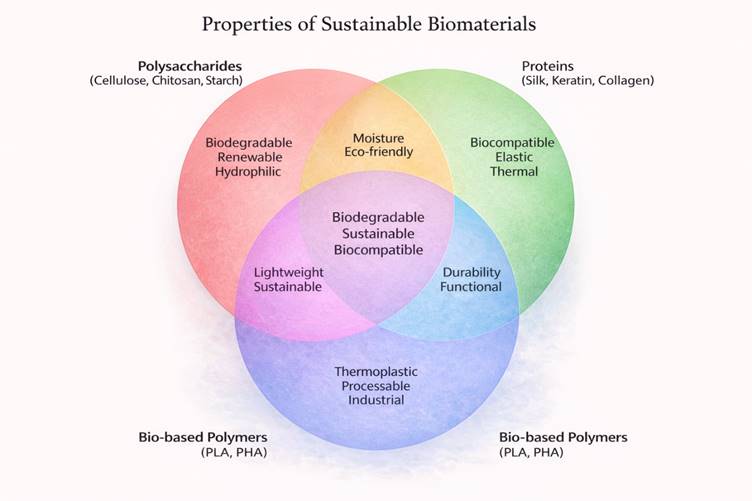
Figure 1. Comparative Venn diagram illustrating the distinct and overlapping properties of traditional biomaterials used in textile applications, including polysaccharides, protein-based materials, and bio-based synthetic polymers.

fibers. It is widely used in both natural (cotton) and regenerated (viscose, lyocell, modal) forms. Regenerated cellulose fibers are produced through chemical processing of natural cellulose, allowing improved control over fiber properties such as strength, uniformity, and moisture absorption (Klemm et al., 2015; Yang et al., 2019).

Lyocell fibers, for example, are produced using environmentally friendly solvent systems and exhibit excellent mechanical properties, high moisture absorbency, and biodegradability. These characteristics make cellulose-based fibers highly suitable for sustainable textile applications (Hummel et al., 2015; Edgar & Zhang, 2020).

Chitosan

Chitosan, derived from chitin found in crustacean shells, is gaining attention due to its antimicrobial, biocompatible, and biodegradable properties. In textiles, chitosan is often used as a functional coating or blended with other fibers to impart antibacterial and antifungal properties. It is particularly valuable in medical textiles, wound dressings, and hygiene products (Gopinath et al., 2020).

Starch

Starch-based biomaterials are used in textile finishing and fiber development due to their biodegradability and low cost. Modified starch can be processed into biodegradable fibers and films, although its mechanical properties often require enhancement through blending or chemical modification (Zhang et al., 2018).

2.2 Protein-Based Biomaterials

Protein-based biomaterials offer unique advantages, including biocompatibility, elasticity, and functional versatility. Common examples include silk, wool, keratin, and collagen (Gopinath et al., 2020).

Silk

Silk is a natural protein fiber known for its mechanical strength, smooth texture, and luster. It exhibits excellent biocompatibility and is widely used in both traditional textiles and advanced biomedical applications. Recent developments include recombinant silk and bioengineered silk fibers, which aim to improve scalability and sustainability (Klemm et al., 2015).

Wool and Keratin

Wool fibers, composed primarily of keratin, are widely used in textiles due to their thermal insulation, elasticity, and moisture management properties. Keratin extracted from waste sources such as feathers and hair is increasingly being utilized to develop sustainable biomaterials, contributing to waste valorization and circular economy practices (Gopinath et al., 2020).

Collagen

Collagen-based fibers are emerging as potential biomaterials for specialized textile applications, particularly in medical and cosmetic textiles. Their biodegradability and compatibility with biological systems make them suitable for advanced functional textiles (Provin et al., 2021).

2.3 Bio-Based Synthetic Polymers

Bio-based synthetic polymers are derived from renewable resources but are processed similarly to conventional synthetic polymers. The most notable example is polylactic acid (PLA) (Farah et al., 2016; Rajeshkumar et al., 2021).

PLA

PLA is produced from fermented plant-based sugars such as corn starch or sugarcane. It is biodegradable, compostable under industrial conditions, and exhibits properties comparable to conventional thermoplastics. PLA fibers are increasingly used in apparel, packaging textiles, and nonwoven applications (Farah et al., 2016; Rajeshkumar et al., 2021).

Other Bio-Based Polymers

Other emerging bio-based polymers include polyhydroxyalkanoates (PHA) and bio-based polyethylene. These materials offer improved biodegradability and reduced environmental impact, although challenges related to cost and large-scale production remain (Shen et al., 2016).

2.4 Hybrid and Composite Biomaterials

To overcome the limitations of individual biomaterials, researchers are increasingly developing hybrid and composite systems. These materials combine natural polymers with synthetic or nano-scale components to enhance mechanical strength, durability, and functionality. Examples include cellulose reinforced with nanoparticles, chitosan-based nanocomposites, and PLA blended with natural fibers (Rajeshkumar et al., 2021; Gopinath et al., 2020). These composites enable the development of high-performance sustainable textiles with tailored properties, bridging the gap between environmental sustainability and industrial performance requirements. A comparative Venn diagram is depicted in Figure 1 illustrating the distinct and overlapping properties of traditional biomaterials used in textile applications, including polysaccharides, protein-based materials, and bio-based synthetic polymers.

2.5 Global Utilization of Traditional Biomaterials in Textile Applications

The global utilization of traditional biomaterials in textile applications varies significantly across continents, largely influenced by the availability of natural resources, climatic conditions, and established industrial infrastructure (Table 2). Asia remains the leading region in the production and utilization of polysaccharide-based biomaterials, particularly cellulose and starch, due to the abundance of cotton, bamboo, and agricultural residues in countries such as China, India, and Bangladesh. These countries also dominate regenerated cellulose fiber production, supported by well-developed textile manufacturing sectors. Protein-based biomaterials, including silk and wool, are prominently produced in regions such as China, India, and Australia, where sericulture and sheep farming are well established. Europe has emerged as a leader in sustainable processing technologies, particularly in the production of lyocell fibers, with countries such as Austria and Germany focusing on environmentally friendly closed-loop systems. Meanwhile, North America and parts of Europe are advancing the development of bio-based synthetic polymers such as polylactic acid, leveraging strong biotechnology and industrial fermentation capabilities in the United States and Canada. South America, particularly Brazil, contributes significantly through biomass resources such as sugarcane, which serve as feedstock for bio-based polymers. Africa, although currently underutilized, holds substantial potential due to its natural fiber resources and expanding agricultural base. Overall, the geographic distribution of these biomaterials highlights a strong correlation between resource availability and regional expertise, emphasizing the importance of global collaboration for sustainable textile innovation (Häemmerle, 2011; Hummel et al., 2015; Provin et al., 2021; Akinsemolu, 2018).

3. Emerging Fibers and Fabrication Technologies

The development of sustainable biomaterials for textile applications has been significantly accelerated by advancements in fiber engineering and fabrication technologies. Emerging bio-based fibers not only replicate the desirable properties of conventional synthetic fibers but also introduce new functionalities that support sustainability and performance enhancement (Gopinath et al., 2020; Rajeshkumar et al., 2021; Thakur et al., 2016).

3.1 Regenerated and Bio-Based Fibers

Regenerated fibers are produced by dissolving natural polymers and reforming them into fibers with controlled structures and properties. Among these, regenerated cellulose fibers such as viscose, modal, and lyocell have gained widespread industrial adoption due to their excellent moisture management, softness, and biodegradability (Klemm et al., 2015; Yang et al., 2019; Kalia et al., 2016). Lyocell, in particular, is considered a benchmark for sustainable fiber production due to its closed-loop solvent system, which minimizes environmental impact. Recent innovations focus on improving fiber strength, reducing chemical usage, and enhancing recyclability (Hummel et al., 2015; Edgar & Zhang, 2020). In addition to cellulose-based fibers, bio-based synthetic fibers such as PLA have emerged as viable alternatives to petroleum-based polymers. PLA fibers exhibit good mechanical properties, thermal processability, and compostability under controlled conditions. However, limitations such as low heat resistance and brittleness require ongoing material optimization (Farah et al., 2016; Auras et al., 2015; Rajeshkumar et al., 2021).

3.2 Electrospinning and Nanofiber Technology

Electrospinning has emerged as a versatile technique for producing ultrafine nanofibers with high surface area-to-volume ratios. This technique enables the fabrication of fibers from a wide range of biopolymers, including cellulose derivatives, chitosan, gelatin, and PLA (Bhardwaj & Kundu, 2015; Li et al., 2015).

Nanofibrous materials offer several advantages:

  • Enhanced filtration efficiency
  • Improved mechanical properties
  • Tunable porosity
  • Functional surface modification


Table 2: Global Distribution of Traditional Biomaterials for Textile Applications

Region

Country

Available Biomaterials

Production Facility / Strength

Industrial Application in Textile Sector

Asia

China

Cellulose, Silk, Chitosan

Large-scale textile manufacturing hubs; dominant global exporter

Apparel, technical textiles, regenerated fibers (viscose, lyocell)

India

Cotton (cellulose), Silk

Strong agricultural base + traditional textile industry

Apparel, home textiles, handloom and industrial fabrics

Bangladesh

Cellulose (cotton-based)

Highly developed garment manufacturing sector

Apparel production, export-oriented textile industry

Europe

Germany

Cellulose (wood-based), Bio-polymers

Advanced processing technologies, sustainable textile engineering

Lyocell production, technical textiles, eco-friendly fibers

Austria

Cellulose (wood pulp)

Closed-loop fiber production systems (e.g., lyocell technology)

Sustainable fashion textiles, regenerated fibers

North America

USA

PLA, Bio-polymers

Strong biotechnology and fermentation industries

Smart textiles, medical textiles, biodegradable fabrics

Canada

Bio-polymers, Cellulose

Advanced research and industrial biotechnology

Technical textiles, eco-friendly materials

South America

Brazil

Biomass (sugarcane), Cellulose

Abundant agricultural resources

Bio-based polymers (PLA), industrial textiles

Australia

Australia

Wool (protein), Keratin

Large-scale sheep farming and wool processing industry

Apparel, insulation textiles, performance fabrics

Africa

Multiple (e.g., Egypt, Ethiopia)

Natural fibers (cotton, plant fibers)

Growing agricultural sector with untapped potential

Emerging textile manufacturing, sustainable fiber sourcing


Table 3: Comparative analysis of advanced technologies for biomaterials for textile applications

Modification Type

Method

Improved Properties

Example

Chemical Modification

Grafting, crosslinking

Strength, water resistance, durability

Modified cellulose

Physical Modification

Plasma treatment, coating

Surface adhesion, wettability

Plasma-treated fibers

Nanocomposites

Nanoparticle incorporation

Mechanical strength, UV resistance, antimicrobial

AgNP–chitosan

Blending

Polymer blending

Flexibility, toughness

PLA + natural fibers

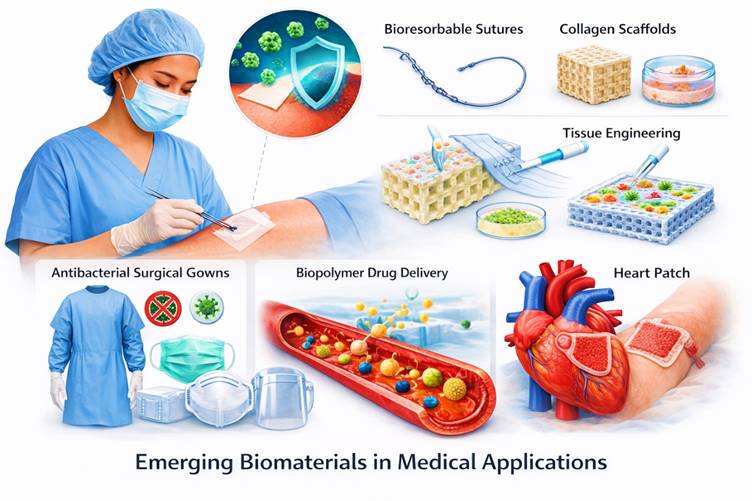
Figure 2. Emerging Biomaterials used for medical applications

These characteristics make electrospun fibers particularly suitable for applications in protective textiles, medical fabrics, and smart textiles. Moreover, the incorporation of nanoparticles into nanofibers has enabled the development of multifunctional textile systems with antimicrobial, UV-protective, and self-cleaning properties (Liu & Kumar, 2015; Siró & Plackett, 2016).

3.3 3D Fiber Assembly and Advanced Manufacturing

Advanced manufacturing techniques such as 3D printing, melt spinning, and wet spinning are increasingly being used to fabricate bio-based fibers with controlled architectures. These techniques allow precise manipulation of fiber morphology, orientation, and mechanical properties (Bhushan, 2016; Thakur et al., 2016). 3D printing of biopolymers is particularly promising for customized textile structures and wearable devices. Additionally, hybrid fabrication approaches combining traditional textile processing with advanced manufacturing techniques are enabling the development of next-generation textile systems with hierarchical structures and enhanced functionality (Rajeshkumar et al., 2021; Mohanty et al., 2015).

4. Functionalization and Advanced Biomaterials

To meet the growing demand for high-performance textiles, biomaterials are often modified or functionalized to enhance their properties. Functionalization strategies focus on improving durability, adding new functionalities, and overcoming inherent limitations of natural polymers (Gopinath et al., 2020; Thakur et al., 2016). These modifications are essential to expand the applicability of biomaterials in advanced textile systems while maintaining sustainability (Table 3).

4.1 Chemical and Physical Modification

Biopolymers can be chemically modified through processes such as grafting, crosslinking, and surface treatment to improve their mechanical strength, water resistance, and thermal stability. For instance, chemical modification of cellulose enhances fiber durability and structural integrity, while functionalized chitosan improves antimicrobial efficiency (Klemm et al., 2015; Gopinath et al., 2020). Blending of polymers, such as PLA with natural fibers, is also widely employed to improve flexibility and reduce brittleness (Farah et al., 2016; Rajeshkumar et al., 2021). Physical modification techniques, including plasma treatment and surface coating, further enhance fiber performance without significantly altering the chemical structure of the materials (Thakur et al., 2016).

4.2 Nanocomposites and Hybrid Materials

The integration of nanomaterials into biopolymers has led to the development of bio-based nanocomposites with superior properties. Common nanofillers include nanocellulose, carbon nanotubes, and metal nanoparticles. These materials significantly enhance mechanical strength, thermal stability, and barrier properties of textile fibers (Siró & Plackett, 2016; Liu & Kumar, 2015). Nanocomposite-based biomaterials also exhibit improved functional characteristics such as antimicrobial activity and UV resistance, making them suitable for advanced textile applications (Gopinath et al., 2020). Additionally, hybrid materials combining natural polymers with synthetic or nano-scale components enable the development of high-performance textiles with tailored properties (Rajeshkumar et al., 2021).

4.3 Smart and Functional Textiles

The incorporation of biomaterials into smart textile systems has opened new possibilities for responsive and adaptive fabrics. Functional properties include antimicrobial activity, UV protection, moisture management, thermal regulation, and electrical conductivity (Gopinath et al., 2020; Edgar & Zhang, 2020). Advancements in nanotechnology and material engineering have enabled the integration of sensors, actuators, and conductive materials into textile structures, leading to the development of wearable electronics and healthcare monitoring systems (Bhushan, 2016). These innovations are driving the evolution of next-generation textiles with multifunctional capabilities.

5. Applications in Next-Generation Textiles

Sustainable biomaterials are increasingly adopted across various textile sectors, driven by the need for environmentally friendly and high-performance materials. Their biodegradability, renewability, and functional versatility make them suitable alternatives to conventional synthetic fibers (Gopinath et al., 2020; Rajeshkumar et al., 2021).

5.1 Apparel and Fashion Textiles

Bio-based fibers such as cellulose and polylactic acid (PLA) are widely used in sustainable fashion due to their biodegradability, comfort, and moisture management properties. Regenerated cellulose fibers, including viscose and lyocell, are particularly valued for their softness and environmental compatibility (Klemm et al., 2015; Yang et al., 2019). PLA-based fibers are increasingly used in apparel and nonwoven textiles as eco-friendly alternatives to petroleum-based polymers, offering acceptable mechanical properties and compostability (Farah et al., 2016; Auras et al., 2015). These materials are gaining popularity in the fashion industry as brands shift toward sustainable production practices.

5.2 Medical and Healthcare Textiles

Biomaterials play a crucial role in medical textiles due to their biocompatibility and functional properties (Figure 2). Natural polymers such as chitosan, cellulose, and collagen are widely used in applications including wound dressings, surgical textiles, and tissue engineering scaffolds (Gopinath et al., 2020; Provin et al., 2021). Electrospun nanofibers have further enhanced the performance of medical textiles by providing high surface area, controlled porosity, and improved cell interaction, making them suitable for advanced biomedical applications (Bhardwaj & Kundu, 2015; Huang et al., 2016).

5.3 Protective and Technical Textiles

Advanced biomaterials are widely used in protective and technical textiles, particularly in filtration, antimicrobial fabrics, and environmental protection systems. Nanofiber-based materials exhibit superior filtration efficiency and barrier properties, making them suitable for air and water purification applications (Li et al., 2015; Liu & Kumar, 2015). The incorporation of nanomaterials and functional coatings enhances textile performance by providing antimicrobial, UV-protective, and self-cleaning properties (Siró & Plackett, 2016; Gopinath et al., 2020). These advancements are critical for the development of high-performance protective clothing.

5.4 Industrial and Environmental Applications

Bio-based textiles are also increasingly used in industrial and environmental applications, including geotextiles, agricultural fabrics, and biodegradable packaging materials. Natural fiber-reinforced composites provide sustainable alternatives for structural and industrial uses (Mohanty et al., 2015; Satyanarayana et al., 2015). Additionally, bio-based polymers derived from renewable resources contribute to waste reduction and environmental sustainability by offering biodegradable alternatives to conventional plastics (Shen et al., 2016; Shah et al., 2016). These materials play a significant role in promoting circular economy principles in textile and industrial sectors.

6. Challenges and Future Perspectives

Despite significant progress, several challenges must be addressed to enable the widespread adoption of sustainable biomaterials in the textile industry. While these materials offer clear environmental benefits, limitations related to cost, scalability, and performance continue to hinder their large-scale implementation (Rajeshkumar et al., 2021; Shen et al., 2016).

6.1 Scalability and Cost

The production of bio-based materials is often constrained by high costs and limited scalability compared to conventional petroleum-based fibers. Factors such as raw material availability, processing complexity, and infrastructure limitations contribute to higher production expenses (Mohanty et al., 2015; Shen et al., 2016). Although advancements in biotechnology and material processing are improving efficiency, achieving cost competitiveness remains a key challenge for industrial adoption (Auras et al., 2015).

6.2 Performance Limitations

While biomaterials offer sustainability advantages, they often exhibit limitations in mechanical strength, thermal stability, and durability compared to synthetic fibers. For instance, PLA-based materials may be brittle and have low heat resistance, limiting their use in high-performance applications (Farah et al., 2016). Similarly, natural fibers may require modification or reinforcement to meet industrial performance standards (Thakur et al., 2016; Satyanarayana et al., 2015).

6.3 Processing and Compatibility

Integrating biomaterials into existing textile manufacturing processes presents significant challenges due to differences in processing behavior and material properties. Conventional textile machinery is often optimized for synthetic fibers, making it difficult to process bio-based alternatives without modification (Gopinath et al., 2020). Furthermore, achieving compatibility between different biomaterials and composite systems requires advanced material design and processing techniques (Kalia et al., 2016).

6.4 Circular Economy and Sustainability

The transition toward a circular economy requires the development of materials that are not only biodegradable but also recyclable and reusable. While many biomaterials are biodegradable, their lifecycle performance and environmental impact must be carefully evaluated through life cycle assessment (LCA) approaches (Akinsemolu, 2018). Additionally, sustainable sourcing of raw materials and efficient waste management strategies are essential to ensure long-term environmental benefits (Shah et al., 2016).

6.5 Future Research Directions

Future research should focus on developing advanced bio-based polymers with enhanced performance, including improved mechanical strength, thermal stability, and durability. The integration of nanotechnology and smart materials is expected to play a critical role in advancing next-generation textile systems (Siró & Plackett, 2016; Bhushan, 2016). Moreover, the development of scalable and cost-effective green processing technologies will be essential for industrial adoption. Emphasis should also be placed on lifecycle optimization, recycling strategies, and circular design principles to ensure sustainability across the entire textile value chain (Rajeshkumar et al., 2021).

7. Conclusion

Sustainable biomaterials have emerged as a transformative solution to address the environmental challenges of conventional textile production. Advances in biopolymer science, fiber engineering, and nanotechnology have enabled the development of high-performance, eco-friendly materials suitable for a wide range of textile applications. Emerging fibers such as regenerated cellulose, PLA, and electrospun nanofibers demonstrate significant potential in replacing traditional synthetic fibers while offering additional functional benefits. Furthermore, the integration of nanocomposites and smart technologies has expanded the capabilities of biomaterial-based textiles, enabling innovative applications in healthcare, protective clothing, and wearable electronics. However, challenges related to scalability, cost, and performance must be addressed to achieve widespread adoption. Continued research and collaboration between academia and industry will be essential in advancing sustainable textile technologies. In conclusion, sustainable biomaterials represent a key pathway toward the development of next-generation textiles, supporting environmental sustainability, resource efficiency, and technological innovation.

Author Contributions

M.R. conceptualized the study, conducted the literature review, organized the manuscript structure, and drafted the original manuscript. M.F.R.F. contributed to literature analysis, data interpretation, and critically revised the manuscript for important intellectual content. All authors read and approved the final version of the manuscript.

References


Akinsemolu, A. A. (2018). The role of microorganisms in achieving the sustainable development goals. Journal of Cleaner Production, 182, 139–155. https://doi.org/10.1016/j.jclepro.2018.02.081

Auras, R., Lim, L. T., Selke, S. E., & Tsuji, H. (2015). Poly(lactic acid): Synthesis, structures, properties, processing, and applications. Wiley. https://doi.org/10.1002/9780470649848

Bhardwaj, N., & Kundu, S. C. (2015). Electrospinning: A fascinating fiber fabrication technique. Biotechnology Advances, 28, 325–347. https://doi.org/10.1016/j.biotechadv.2010.01.004

Bhushan, B. (2016). Biomimetics: Bioinspired hierarchical-structured surfaces for green science and technology. Philosophical Transactions of the Royal Society A, 367, 1445–1486.
https://doi.org/10.1098/rsta.2009.0013

Boucher, J., & Friot, D. (2017). Primary microplastics in the oceans: a global evaluation of sources (Vol. 10, pp. 1-43). Gland, Switzerland: Iucn.

Edgar, K. J., & Zhang, H. (2020). Antibacterial modification of lyocell fiber: A review. Carbohydrate Polymers, 250, 116932. https://doi.org/10.1016/j.carbpol.2020.116932

Farah, S., Anderson, D. G., & Langer, R. (2016). Physical and mechanical properties of PLA, and their functions in widespread applications—A comprehensive review. Advanced Drug Delivery Reviews, 107, 367–392. https://doi.org/10.1016/j.addr.2016.06.012

Gopinath, V., Saravanan, S., Al-Maleki, A. R., Ramesh, M., & Vadivelu, J. (2020). A comprehensive review on chemical properties and applications of biopolymers and their composites. International Journal of Biological Macromolecules, 154, 733–748. https://doi.org/10.1016/j.ijbiomac.2020.03.120

Huang, Z. M., Zhang, Y. Z., Kotaki, M., & Ramakrishna, S. (2016). A review on polymer nanofibers by electrospinning. Composites Science and Technology, 63, 2223–2253. https://doi.org/10.1016/S0266-3538(03)00178-7

Hummel, M., Michud, A., & Sixta, H. (2015). Lyocell—A sustainable fiber for the future. Lenzinger Berichte, 91, 12–21.

Kalia, S., Kaith, B. S., & Kaur, I. (2016). Cellulose fibers: Bio- and nano-polymer composites. Springer. https://doi.org/10.1007/978-3-642-17370-7

Klemm, D., Heublein, B., Fink, H. P., & Bohn, A. (2015). Cellulose: Fascinating biopolymer and sustainable raw material. Angewandte Chemie International Edition, 54(21), 6398–6416. https://doi.org/10.1002/anie.201410316

Laur, A., Li, N., & Pacheco-Fabig, M. (2017). 19. International Union for Conservation of Nature (IUCN). Yearbook of International Environmental Law, 28, 527-539.

Li, Y., Lim, L. T., & Kakuda, Y. (2015). Lectrospinning of nanofibers and their applications for textiles. Journal of Applied Polymer Science, 132(20), 1–14. https://doi.org/10.1002/app.41930

Liu, Y., & Kumar, S. (2014/2015). Polymer/carbon nanotube nano composite fibers—A review. ACS Applied Materials & Interfaces, 6, 6069–6087. https://doi.org/10.1021/am500606u

Macarthur, F. E. (2017). A new textiles economy: Redesingning fashion’s future Ellen Macarthur Foundation.

Mohanty, A. K., Misra, M., & Drzal, L. T. (2015). Sustainable bio-composites from renewable resources. Journal of Polymers and the Environment, 10, 19–26. https://doi.org/10.1023/A:1021013921916

Provin, A. P., Reis, V. O., Hilesheim, S. E., Bianchet, R. T., Dutra, A. R. A., & Cubas, A. L. V. (2021). Use of bacterial cellulose in the textile industry and the wettability challenge—A review. Cellulose, 28, 8255–8274. https://doi.org/10.1007/s10570-021-04059-3

Rajeshkumar, G., Seshadri, S. A., Devnani, G. L., Sanjay, M. R., Siengchin, S., Maran, J. P., Al-Dhabi, N. A., Karuppiah, P., Mariadhas, V. A., & Sivarajasekar, N. (2021). Environment friendly, renewable and sustainable polylactic acid (PLA) based natural fiber reinforced composites—A comprehensive review. Journal of Cleaner Production, 310, 127483. https://doi.org/10.1016/j.jclepro.2021.127483

Satyanarayana, K. G., Arizaga, G. G. C., & Wypych, F. (2015). Biodegradable composites based on lignocellulosic fibers—An overview. Progress in Polymer Science, 34(9), 982–1021. https://doi.org/10.1016/j.progpolymsci.2008.12.002

Shah, A. A., Hasan, F., Hameed, A., & Ahmed, S. (2016). Biological degradation of plastics: A comprehensive review. Biotechnology Advances, 26(3), 246–265. https://doi.org/10.1016/j.biotechadv.2007.12.005

Shen, L., Worrell, E., & Patel, M. K. (2016). Present and future development in plastics from biomass. Biofuels, Bioproducts and Biorefining, 4(1), 25–40. https://doi.org/10.1002/bbb.189

Siró, I., & Plackett, D. (2016). Microfibrillated cellulose and new nanocomposite materials. Cellulose, 17, 459–494. https://doi.org/10.1007/s10570-010-9405-y

Thakur, V. K., Thakur, M. K., & Gupta, R. K. (2016). Review: Raw natural fiber-based polymer composites. International Journal of Polymer Analysis and Characterization, 19, 256–271.https://doi.org/10.1080/1023666X.2014.880016

Xiuzhi Susan Sun, S.(2013). Handbook of biopolymers and biodegradable plastics.

Yang, Q., Wu, S., & Wang, S. (2019). Sustainable cellulose-based materials for textiles: A review. Carbohydrate Polymers, 207, 201–213. https://doi.org/10.1016/j.carbpol.2018.11.091

Zhang, Y., Rempel, C., & Liu, Q. (2018). Thermoplastic starch processing and characteristics—A review. Critical Reviews in Food Science and Nutrition, 54(10), 1353–1370. https://doi.org/10.1080/10408398.2011.636156


Article metrics
View details
0
Downloads
0
Citations
104
Views
📖 Cite article

View Dimensions


View Plumx


View Altmetric


0
Save
0
Citation
104
View
0
Share