Data Modeling

Mathematical and Computational Data Modeling
0
Citations
4.5k
Views
29
Articles
Your new experience awaits. Try the new design now and help us make it even better
Switch to the new experience
Figures and Tables
RESEARCH ARTICLE   (Open Access)

A Technology-Driven Business Model for Affordable Sachet Drinking Water in Bangladesh: Addressing Waterborne Diseases and Water Contamination

Shafia Sultana 1*

+ Author Affiliations

Data Modeling 5 (1) 1-8 https://doi.org/10.25163/data.5110851

Submitted: 21 October 2024 Revised: 14 December 2024  Published: 24 December 2024 


Abstract

Safe drinking water remains, frustratingly, out of reach for millions in Bangladesh, where waterborne diseases like cholera, typhoid, and dysentery continue to claim an estimated 50,000 lives annually (Muhammad et al., 2017). Much of this stems from contaminated water sources and, somewhat counterintuitively, from bottled water itself — plastic storage has been linked to pH degradation (Kumar et al., n.d.) and, more troublingly, microplastic contamination detected in 93% of tested bottles (Mason et al., 2018). This paper set out to examine whether sachet drinking water, already established in markets like Nigeria, Ghana, and the Philippines (Stoler et al., 2012a, 2012b), could offer a more affordable and reliable alternative if paired with full automation — something not yet attempted in Bangladesh. Methodologically, the study combined a narrative synthesis of the epidemiological and market literature with the specification of a two-part automated business model: a Merchant Hub for ordering and tracking, and an Order Management Hub governing production, quality control, and delivery logistics. Results indicated that sachet water compares favorably to existing alternatives on cost, portability, and quality assurance (Islam et al., 2014), while the proposed system architecture demonstrates how automation could reduce human error and improve traceability through instrumented quality control and QR-code verification. The paper concludes that a technology-driven sachet water model holds real, if not yet empirically tested, promise for reducing waterborne disease burden in Bangladesh, provided financing, regulatory, and educational supports are developed alongside it.Keywords: sachet water, waterborne diseases, water contamination, automated business model, public health

1. Introduction

It is easy to say that water is a human right. It is much harder, in a country like Bangladesh, to make that right feel like a reality rather than a slogan. Clean water is not a luxury — it is the baseline condition for health, for a functioning body, for a life that isn't interrupted every few months by illness. And yet millions of people in Bangladesh still cannot count on it. Cholera, dysentery, typhoid, chronic diarrhea — these are old diseases, the kind many high-income countries stopped worrying about generations ago, but here they remain a daily threat, hitting hardest among children and the elderly, the two groups with the least biological margin for error. The scale of the problem is sobering: the World Health Organization estimates that waterborne infections claim more than 50,000 lives in Bangladesh every year (Muhammad et al., 2017), and that figure sits on top of millions more who fall sick without dying — missed school days, missed work, medical bills that push already-stretched families further into debt.

Part of what makes this problem stubborn is that the "solutions" people reach for aren't always solutions at all. Bottled water feels safe because it's sealed and branded, but the plastic itself can betray that trust — prolonged storage shifts the water's pH balance (Kumar et al., n.d.), and worse, bottles have been found to shed microplastics directly into the water people are drinking (Mason et al., 2018). So the irony is a cruel one: people spend money they don't really have on a product marketed as pure, only to find that purity was never guaranteed in the first place.

This is roughly where sachet drinking water enters the picture — not as a perfect fix, but as a pragmatic one. Packaged in small, sealed poly pouches, sachet water has already proven itself in other resource-constrained settings around the world, offering a way to get treated water into people's hands without the cost structure of large bottling operations or piped infrastructure. The idea explored in this paper is not simply "introduce sachet water to Bangladesh," though — it's something a bit more ambitious than that. It's a proposal for an automated, technology-driven business model that governs how that sachet water gets produced, quality-checked, and delivered, from the moment purification begins to the moment a merchant's order arrives at their door. Automation, here, isn't about novelty for its own sake. It's about closing the gaps — human error, inconsistent quality control, logistical bottlenecks — that have historically made scaling clean water access in developing regions so difficult.

This paper's argument unfolds along two connected tracks. The first is diagnostic: it lays out, as clearly as it can, why waterborne disease and water contamination remain such persistent problems in Bangladesh, and why the usual fixes — more clinics, more medicine, more awareness campaigns — tend to run up against the same wall of cost and access. The paper works through the relationship between improved access to safe water and falling rates of waterborne illness, and it makes the case that affordable, well-regulated sachet water could be one of the more realistic near-term levers available. The second track is more constructive: it moves from why this matters to how it might actually work, describing a business model in which technology carries much of the operational weight — production efficiency, packaging standards, supply-chain logistics, cost control — so that quality doesn't have to be sacrificed for scale, and scale doesn't have to be sacrificed for affordability.

Two objectives, then, sit at the center of this paper — though they're less separate goals than two halves of a single one. The first is to examine, with some care, the depth of the problem: how many people are affected, what a lack of access actually costs them in health and money, and why the current landscape of options — bottled water chief among them — falls short of what's needed. The second is to walk through the mechanics of a proposed automated system for producing and distributing sachet water, one that treats production efficiency, rigorous quality control, packaging integrity, and supply-chain management not as separate departments but as parts of a single coordinated pipeline.

Ultimately, this paper's aim is less to declare a final answer than to build a credible, evidence-grounded case that technology-enabled sachet water production deserves serious consideration as part of Bangladesh's public health strategy. If it succeeds in nothing else, it hopes to leave readers — whether they're policymakers, researchers, or people simply trying to solve a hard problem — with a clearer sense of where the leverage points are, and why an automated approach might reach further, more reliably, than the manual, fragmented efforts that have come before it.
2. Materials and Methods

2.1 Study Design and Rationale

Before getting into the mechanics of it, it's worth being upfront about what kind of study this is — and, just as importantly, what kind it is not. There is no clinical trial here, no randomized cohort, no control group waiting in the wings for comparison. What this paper offers instead is a design-and-evaluation study: part evidence synthesis, part technical specification. The first half draws together what is already known — from peer-reviewed research and institutional reporting — about waterborne disease burden and water contamination pathways in Bangladesh. The second half takes that evidence and builds something out of it: a technology-driven business model for sachet water production, described with enough procedural granularity that another team, in another city, could plausibly pick it up and rebuild it themselves. Two halves, then, rather than one — and neither, on its own, would have been sufficient. A model built without grounding in the epidemiological literature risks solving a problem no one properly diagnosed; a diagnosis without a proposed intervention risks stopping short of anything actionable.

2.2 Evidence Synthesis Approach

The contextual foundation of this study — figures on disease prevalence, the mechanics of contamination, precedent from sachet water markets elsewhere — was compiled through a narrative literature review rather than a formal systematic review with a predefined search protocol. That distinction matters, and it's one this paper doesn't want to obscure. Sources were drawn from peer-reviewed journals (e.g., Ashbolt, 2004; Hasan et al., 2019; Shimi et al., 2010), international public health institutions (World Health Organization, 2022; UNICEF, 2008), and sector reports on water markets and economic conditions (CDP Global Water Report, 2023; The Business Standard, 2023). Where the data allowed, figures were checked against more than one source rather than taken at face value — the widely cited estimate that 81.9% of point-of-use water samples in Bangladesh tested positive for E. coli (Shimi et al., 2010), for instance, was considered alongside independent WHO/UNICEF database figures (Bain et al., 2020) precisely so the paper wasn't resting its central claims on a single study.

2.3 Product Specification: Defining the Sachet Water Format

Once the contextual case was established, the next methodological step was to define, operationally, what "sachet drinking water" means within this model — because vague terminology tends to produce vague implementation. Sachet water is specified here as a sealed, flexible poly pouch containing between 200 milliliters and 1 liter of treated water (Jepson et al., 2017), a range chosen not arbitrarily but because it mirrors formats already validated in comparable markets — Nigeria, Ghana, India, the Philippines, and Kenya, among others (Afolabi & Raimi, 2021; Mosi et al., 2018; Stoler et al., 2012a, 2012b). Six design dimensions were treated as binding constraints on the model rather than loose ambitions: affordability and unit cost, portability and packaging integrity, quality-control protocol, hygiene standard, environmental packaging footprint, and market positioning (Gebauer & Saul, 2014). Each of these constraints, in turn, shaped a specific component of the business model described below.

2.4 System Architecture of the Proposed Business Model

The methodological core of this paper — and arguably its main contribution — is the specification of an automated, technology-enabled business model organized around two interoperating subsystems: a Merchant Hub and an Order Management Hub. The reasoning behind splitting these two apart deserves a sentence of its own: doing so decouples the customer-facing ordering experience from the internal production-and-logistics workflow, which means either half can be modified, audited, or scaled without destabilizing the other. It's a small architectural choice, but one that carries most of the model's flexibility.

2.4.1 Merchant Hub Procedure

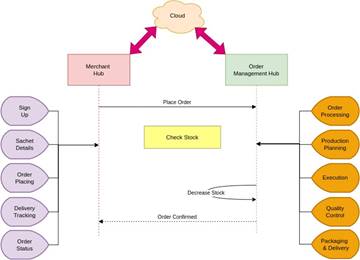
The Merchant Hub is the entry point for retailers, distributors, and institutional buyers, and it proceeds through the following sequence: Registration. A merchant registers through a digital portal, submitting company details, contact information, and business credentials. Product access. Once verified, the merchant can view product variants, pricing tiers, packaging options, and active promotions. Order placement. The merchant selects quantity and variant against a live, transparently displayed inventory. Confirmation. An automated confirmation follows, detailing order specifics, estimated delivery date, and applicable terms. Tracking. Order status is visible in real time through the portal. Support access. A dedicated communication channel connects merchants with customer support for query resolution. Recordkeeping. Order history, invoices, and reports are stored and remain retrievable for accounting and audit purposes.

2.4.2 Order Management Hub Procedure

Once submitted, an order is transmitted instantly to the Order Management Hub, the subsystem responsible for production scheduling and fulfillment: Queue-based processing. Orders are ranked by timestamp and quantity to determine production priority — a fairly simple rule, but one that prevents larger merchants from perpetually crowding out smaller ones. Production planning. The system generates a schedule that accounts for available stock, current production capacity, and any order-specific requirements. Production execution. The production team follows the generated plan while the system continuously monitors adherence to it, flagging deviations as they occur rather than after the fact.

For the sake of reproducibility, the hardware infrastructure underlying production execution is specified in full: (a) a water purification system — treatment tanks, filters, membranes, pumps, valves; (b) mixing and dispensing equipment for blending purified water with any required additives or minerals; (c) automatic or semi-automatic filling and sealing machinery; (d) labeling and coding systems for traceability; (e) environmental monitoring instruments, including temperature, humidity, and air-quality sensors; and (f) personal protective equipment for staff involved in production.

2.5 Quality Control Protocol

Quality assurance in this model is not conceived as a single inspection point but as a continuous, multi-parameter monitoring process — an approach consistent with the broader water-quality literature on contamination risk in low-resource settings (Ashbolt, 2004; Campanale et al., 2020). The minimum instrument battery specified includes: pH meters, conductivity meters, turbidity meters, dissolved oxygen meters, total dissolved solids (TDS) meters, microbiological testing kits (agar plates, culture media, incubators), ultraviolet lamps for fluorescent-contaminant screening, colorimeters for detecting abnormal coloration, and sterilized sampling equipment for controlled sample collection.

2.6 Packaging, Traceability, and Distribution Procedure

The final methodological component addresses what happens after production clears quality control. Each package is assigned a unique tracking identifier, and a QR code is affixed enabling consumers to retrieve manufacturing date, pH level, and quality-control status directly — a transparency measure intended to build consumer trust in a product category still new to the Bangladeshi market. Distribution logistics rely on GPS-equipped delivery vehicles and route optimization (drawing on mapping and directions APIs to minimize travel time and fuel use), with delivery confirmation captured via barcode scanning and electronic proof-of-delivery records. Exception handling — failed deliveries, address errors — is designed to trigger automatic notifications to relevant staff, ensuring discrepancies are resolved without requiring manual oversight of every transaction.

3. Results

3.1 Burden of Waterborne Disease in Bangladesh

Perhaps the clearest starting point for the results is also the least comfortable one: waterborne disease in Bangladesh is not a marginal public health issue, but a persistent and measurable one. Cholera, dysentery, typhoid fever, hepatitis A, and various diarrheal illnesses continue to circulate at rates that would be considered alarming in most other contexts (Ashbolt, 2004), and the annual prevalence figures compiled for this study — summarized in Table I — bear that out plainly (Table 1). Contamination at the point of use appears to be a major driver of this pattern; one widely cited household survey found E. coli present in 81.9% of drinking water samples tested in Bangladesh (Shimi et al., 2010), a figure that aligns closely with independent WHO/UNICEF monitoring data (Bain et al., 2020). Taken together, these numbers suggest something less like an isolated sanitation failure and more like a systemic one — poor water infrastructure compounding with inadequate sanitation to produce, by some estimates, roughly 3.4 million deaths a year globally from the two combined, or one death every ten seconds (UNICEF, 2008). Children bear a disproportionate share of this burden, largely because of their heightened physiological vulnerability to infection (Bhutta & Saeed, 2008).

It would be a mistake, though, to treat bottled water as a clean workaround to this problem — the data don't really support that. Laboratory testing of 259 commercially available bottles found detectable microplastic contamination in 93% of them (Mason et al., 2018), a finding with real downstream health implications: exposure has been linked to liver damage, hormonal disruption, and even DNA mutation in some studies (Campanale et al., 2020). Compounding this, prolonged storage in plastic containers appears to shift the water's pH toward acidity, further degrading its safety over time (Kumar et al., n.d.). So what emerges from this first strand of results is a kind of double bind: the traditional "safe" alternative to contaminated tap or well water is not, itself, reliably safe.

3.2 Comparative Position of Sachet Water Among Available Options

Set against this backdrop, sachet drinking water performs — at least on the dimensions examined in this study — noticeably better than the alternatives currently accessible to most Bangladeshi households. Table 2 presents a comparison of cost, availability, and convenience across sachet water and competing formats (Table 2), and the pattern that emerges is fairly consistent: sachet water occupies a lower price point than bottled alternatives while requiring less storage capacity and offering greater portability, all without sacrificing the more rigorous quality-control processes applied during production (Islam et al., 2014). This is not a novel finding globally — sachet water has already established itself as a functioning, if imperfect, part of the water supply landscape in Nigeria, Ghana, India, the Philippines, and Kenya (Afolabi & Raimi, 2021; Mosi et al., 2018; Stoler et al., 2012a, 2012b) — but its relevance to Bangladesh specifically had not, prior to this study, been systematically laid out. What these comparative results suggest, then, is less an invention than an adaptation: a format proven elsewhere, reframed for a market that has yet to adopt it at scale.

3.3 Structure and Functionality of the Proposed Automated System

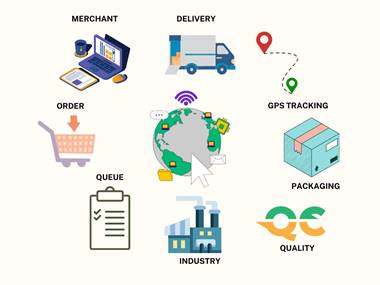
The second major result of this study is not a numeric finding so much as a structural one: a working specification for how an automated sachet water business could actually operate, end to end. Figure 2 depicts the overall system architecture (Figure 2), and Figure 3 breaks that architecture down further into the specific operational levels handled by the Merchant Hub and Order Management Hub respectively.

What the model produces, in practical terms, is a merchant-facing portal capable of handling registration, product browsing, order placement against live inventory, automated order confirmation, real-time tracking, and a retained history of past transactions for accounting purposes. Behind that interface, the Order Management Hub processes incoming orders on a queue basis — prioritizing by timestamp and quantity — before generating a production plan that accounts for current stock and capacity constraints. Production itself, once initiated, is monitored continuously against that plan, with the system flagging deviations rather than leaving them to be discovered downstream.

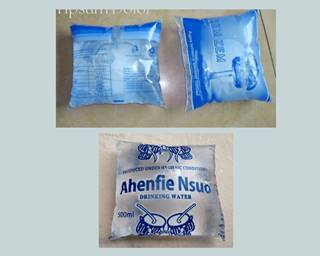
Quality control emerged as a genuinely multi-instrument process rather than a single checkpoint, incorporating pH meters, conductivity meters, turbidity meters, dissolved oxygen meters, TDS meters, microbiological testing kits, UV lamps, and colorimeters — a battery broadly consistent with recommended practice for water-quality assurance in resource-limited production settings (Ashbolt, 2004; Campanale et al., 2020). Figure 1 illustrates the sachet packaging format under consideration, ranging from 200 milliliters to 1 liter (Figure 1), a range chosen deliberately to mirror formats already validated elsewhere (Jepson et al., 2017).

3.4 Traceability and Distribution Outcomes

The final piece of this results section concerns what happens after a sachet leaves the production line — and here, the model's contribution is largely about closing an accountability gap that has historically undermined consumer trust in packaged water. Each unit is assigned a unique identifier and a scannable QR code, giving consumers direct access to manufacturing date, pH level, and quality-control status at the point of purchase. Distribution, meanwhile, relies on GPS-enabled delivery tracking and route optimization, intended to reduce delivery time and fuel consumption while giving merchants real-time visibility into where their order actually is. Whether this level of transparency measurably shifts consumer confidence is, admittedly, a question this study can describe in design but not yet confirm empirically — a limitation taken up more fully in the discussion that follows.

4. Discussion

4.1 Interpreting the Scale of the Problem

It's worth pausing, before getting into what the proposed model might accomplish, to sit with just how entrenched the underlying problem actually is. The disease burden summarized earlier (Table I) isn't simply a matter of unlucky geography — it reflects decades of infrastructure gaps compounding with contamination pathways that are, in many cases, well understood but poorly addressed (Ashbolt, 2004; Shimi et al., 2010). What this study's results suggest, and what perhaps deserves more emphasis than it typically receives, is that the "safe" alternatives many households have turned to — bottled water chief among them — carry risks of their own. The microplastic contamination findings (Mason et al., 2018) and the pH degradation associated with prolonged plastic storage (Kumar et al., n.d.) point to something almost counterintuitive: that switching to a differently packaged product doesn't guarantee a switch to a genuinely safer one. This matters for how sachet water should be understood — not as one more product competing on convenience, but as a format whose real value proposition rests on the rigor of the quality control behind it, not merely the packaging in front of it.

4.2 Why Automation, Specifically, May Matter Here

There's a reasonable question lurking under the surface of

Table 1. Annual Prevalence of Major Waterborne Diseases in Bangladesh. This table summarizes the reported annual incidence of cholera, dysentery, typhoid fever, hepatitis A, and diarrheal disease across Bangladesh, illustrating the sustained public health burden attributable to contaminated water sources and inadequate sanitation infrastructure. Adapted from Shimi et al. (2010) and Hasan et al. (2019).

Waterborne Disease

Causes

Symptoms

Prevalence (Annual Cases)

Cholera

Vibrio cholerae bacteria

Severe diarrhea, vomiting, dehydration

80,000–100,000

Hepatitis A

Hepatitis A virus

Jaundice, fatigue, loss of appetite

10,000–15,000

Typhoid Fever

Salmonella Typhi bacteria

High fever, abdominal pain, weakness

40,000–50,000

Amoebic Dysentery

Entamoeba histolytica

Bloody diarrhea, abdominal cramps

20,000–30,000

Diarrheal Diseases*

Various pathogens

Diarrhea, abdominal pain, dehydration

4.2 million

Table 2. Comparative Cost, Availability, and Convenience of Drinking Water Options in Bangladesh. This table compares sachet drinking water against bottled water and other prevailing water sources on the basis of unit cost, market availability, and consumer convenience, highlighting sachet water's relative affordability and accessibility. Adapted from Islam et al. (2014).

Drinking Water Options

Cost per Litre

Availability

Convenience

Water Quality

Sachet Drinking Water

$0.02–$0.05

Widely available

Portable

Purified

Bottled Water

$0.10–$0.30

Limited

Portable

Purified / Unpurified

Tap Water

$0.001

Widespread

Readily available

Varies

Unsafe Water Sources

Free

Limited

Inconvenient

Contaminated

Figure 1. Representative Sachet Packaging Formats for Drinking Water. This figure depicts sealed, flexible poly pouches of drinking water in varying volumes (200 mL–1 L), illustrating the packaging format proposed for implementation in Bangladesh, consistent with formats already in use in comparable markets (Jepson et al., 2017).

this whole paper: why automation, rather than simply more manual production capacity? The answer, based on precedent from other markets, seems to hinge less on efficiency for its own sake and more on consistency. Countries where sachet water has already taken hold — Nigeria, Ghana, India, the Philippines, Kenya (Afolabi & Raimi, 2021; Mosi et al., 2018; Stoler et al., 2012a, 2012b) — have not uniformly achieved automated production; a fair number of informal, smaller-scale producers still operate without it (Moe & Rheingans, 2006). That inconsistency, arguably, is part of why sachet water's reputation in some of those markets remains mixed. Since Bangladesh has not yet developed an established informal sachet water sector of its own, there's an argument to be made that it has an unusual opportunity here — to introduce the format already automated, rather than retrofitting automation onto an entrenched, harder-to-regulate informal industry later. Whether that opportunity gets taken, of course, depends on factors well beyond the scope of this paper — financing, regulation, political will — but the sequencing argument itself seems worth taking seriously.

4.3 Reading the Merchant Hub and Order Management Hub Together

The two-part system architecture (Figure 2; Figure 3) is, in some sense, the paper's central methodological bet, and it's worth reflecting on what that bet actually buys. Decoupling the merchant-facing ordering process from the internal production-and-logistics pipeline means each half can be adjusted — pricing tiers changed, production capacity scaled, a new region added — without requiring the other half to be rebuilt in tandem. This isn't a particularly novel insight in software architecture broadly, but its application to a water-safety context feels underexplored in the existing literature on water business models (Gebauer & Saul, 2014). The queue-based prioritization logic embedded in the Order Management Hub also deserves a note of caution here: ranking by timestamp and quantity is simple, and simplicity has real virtues, but it may unintentionally favor larger, better-resourced merchants who can place bulk orders early, potentially at the expense of smaller retailers serving lower-income neighborhoods. That tension — between operational simplicity and equitable access — isn't resolved by this paper, and probably shouldn't be glossed over as though it were.

4.4 Quality Control as the Model's Real Foundation

If there's one finding from this study that deserves to be underlined rather than mentioned in passing, it's this: the credibility of the entire business model rests on the quality-control battery described earlier — pH meters, turbidity meters, microbiological testing kits, and the rest. Without consistent, instrumented verification at every stage, sachet water risks becoming just another packaging format layered on top of the same contamination risks already documented for bottled alternatives (Campanale et al., 2020). The QR-code traceability feature is a meaningful complement to this — giving consumers a way to verify, rather than simply trust, what they're drinking — but it functions more as a transparency mechanism than a safety mechanism in itself. Put differently: the QR code tells a consumer what happened during production; it doesn't, on its own, guarantee that what happened was adequate. That guarantee still depends entirely on the rigor of the underlying testing protocol.

4.5 Limitations

A few limitations are worth stating directly, if only because acknowledging them seems more useful than pretending they don't exist. First, this paper's evidence base was assembled through a narrative literature synthesis rather than a systematic review with a predefined search protocol, which means relevant studies may have been missed and publication bias in the underlying sources cannot be ruled out. Second, and perhaps more importantly, the proposed business model has been specified conceptually but not yet piloted; the results presented here describe a designed system, not an operating one, and questions about real-world adoption, consumer trust, and financial viability remain, for now, unanswered empirically. Third, the comparative cost and convenience data in Table II (Islam et al., 2014) reflect conditions in southwest coastal Bangladesh specifically, and may not generalize cleanly to other regions of the country with different infrastructure baselines or income distributions.

4.6 Implications for Policy and Practice

None of this is to suggest the model isn't worth pursuing — quite the opposite. What these findings point toward, taken as a whole, is a fairly clear set of preconditions for success: sustained collaboration between private operators, regulatory bodies, and community organizations (Assefa et al., 2021); financing mechanisms accessible enough that automation doesn't become the

Figure 2. Proposed Automated System Architecture for Sachet Water Production and Distribution. This figure illustrates the overall structure of the technology-driven business model, showing the interoperation between the merchant-facing ordering system and the internal production, quality-control, and logistics workflow.

Figure 3. Operational Workflow of the Merchant Hub and Order Management Hub. This figure details the sequential operational stages handled by each subsystem — from merchant registration and order placement through production planning, quality verification, and delivery tracking — demonstrating how the two hubs coordinate to fulfill an order end to end.

exclusive province of large, well-capitalized firms (CDP Global Water Report, 2023); and public health messaging that treats sachet water not as a novelty product but as a genuine intervention against a documented disease burden (Bublitz & Peracchio, 2015). If those pieces come together, the case made throughout this paper suggests that a technology-driven sachet water model could meaningfully close a gap that bottled water, piped infrastructure, and informal vending have each, in their own ways, failed to close.

5. Conclusion

Taken as a whole, this paper makes a fairly grounded case: waterborne disease in Bangladesh is not a problem lacking solutions so much as one lacking affordable, trustworthy, and scalable ones. Sachet drinking water, when paired with full automation rather than the partially manual processes seen elsewhere, offers a plausible path toward closing that gap — reducing production inconsistency, improving traceability through QR-based verification, and keeping costs low enough to reach the households that need it most. None of this suggests an easy rollout, however. Realizing the model's potential will depend on sustained cooperation between entrepreneurs, regulators, and community stakeholders, alongside financing structures that don't quietly exclude smaller operators. Still, the convergence of technology, quality-controlled production, and genuine public health need described throughout this paper points toward something worth pursuing — not a finished solution, perhaps, but a credible and reasonably well-specified starting point.


References


Afolabi, A. S., & Raimi, M. O. (2021). When water turns deadly: Investigating source identification and quality of drinking water in Piwoyi community of Federal Capital Territory, Abuja Nigeria. Online Journal of Chemistry, 1(1). https://doi.org/10.31586/ojc.2021.010105

Ashbolt, N. J. (2004). Microbial contamination of drinking water and disease outcomes in developing regions. Toxicology, 198(1–3), 229–238. https://doi.org/10.1016/j.tox.2004.01.030

Assefa, G. M., Sherif, S., Sluijs, J., Kuijpers, M., Chaka, T., Solomon, A., Hailu, Y., & Muluneh, M. D. (2021). Gender equality and social inclusion in relation to water, sanitation and hygiene in the Oromia region of Ethiopia. International Journal of Environmental Research and Public Health, 18(8), Article 4281. https://doi.org/10.3390/ijerph18084281

Bain, R., Johnston, R., & Slaymaker, T. (2020). Drinking water quality and the SDGs. npj Clean Water, 3(1), Article 37. https://doi.org/10.1038/s41545-020-00085-z

Bhutta, Z. A., & Saeed, M. A. (2008). Childhood infectious diseases: Overview. International Encyclopedia of Public Health, 620. https://doi.org/10.1016/B978-012373960-5.00568-2

Bublitz, M. G., & Peracchio, L. A. (2015). Applying industry practices to promote healthy foods: An exploration of positive marketing outcomes. Journal of Business Research, 68(12), 2484–2493. https://doi.org/10.1016/j.jbusres.2015.06.035

Campanale, C., Massarelli, C., Savino, I., Locaputo, V., & Uricchio, V. F. (2020). A detailed review study on potential effects of microplastics and additives of concern on human health. International Journal of Environmental Research and Public Health, 17(4), Article 1212. https://doi.org/10.3390/ijerph17041212

CDP Global Water Report. (2023, March). Riding the wave: How the private sector is seizing opportunities to accelerate progress on water security.

Gebauer, H., & Saul, C. J. (2014). Business model innovation in the water sector in developing countries. Science of the Total Environment, 488, 512–520. https://doi.org/10.1016/j.scitotenv.2014.02.046

Global Water Partnership, & United Nations Children's Fund. (2017). WASH climate resilient development.

Hasan, M. K., Shahriar, A., & Jim, K. U. (2019). Water pollution in Bangladesh and its impact on public health. Heliyon, 5(8). https://doi.org/10.1016/j.heliyon.2019.e02145

Islam, M. A., Karim, M. R., Higuchi, T., Sakakibara, H., & Sekine, M. (2014). Comparison of the trace metal concentration of drinking water supply options in southwest coastal areas of Bangladesh. Applied Water Science, 4, 183–191. https://doi.org/10.1007/s13201-013-0140-z

Jepson, W., Budds, J., Eichelberger, L., Harris, L., Norman, E., O'Reilly, K., Pearson, A., Shah, S., Shinn, J., & Staddon, C. (2017). Advancing human capabilities for water security: A relational approach. Water Security, 1, 46–52. https://doi.org/10.1016/j.wasec.2017.07.001

Kumar, P., Garg, V., & Scholar, M. T. (n.d.). Effect of different storage vessels on various types of water in Kota City.

Mason, S. A., Welch, V. G., & Neratko, J. (2018). Synthetic polymer contamination in bottled water. Frontiers in Chemistry, Article 407. https://doi.org/10.3389/fchem.2018.00407

Moe, C. L., & Rheingans, R. D. (2006). Global challenges in water, sanitation and health. Journal of Water and Health, 4(S1), 41–57. https://doi.org/10.2166/wh.2006.0043

Mosi, L., Adadey, S. M., Sowah, S. A., & Yeboah, C. (2018). Microbiological assessment of sachet water "pure water" from five regions in Ghana. AAS Open Research, 1. https://doi.org/10.12688/aasopenres.12837.1

Muhammad, F., Chowdhury, M., Arifuzzaman, M., & Chowdhury, A. A. (2017). Public health problems in Bangladesh: Issues and challenges. South East Asia Journal of Public Health, 6(2), 11–16. https://doi.org/10.3329/seajph.v6i2.31830

Newton, E. (2023, March). 7 advanced technologies to end the clean water crisis.

Pandit, A. B., & Kumar, J. K. (2015). Clean water for developing countries. Annual Review of Chemical and Biomolecular Engineering, 6, 217–246. https://doi.org/10.1146/annurev-chembioeng-061114-123432

Patrick, J. M. (2010). Recommendations for at-risk water supplies in Capiz Province, Philippines: Using water source and community assessments (Doctoral dissertation, Massachusetts Institute of Technology).

Salman, Y., Asim, H., Hashmi, N., Islam, Z., Essar, M. Y., & Haque, M. A. (2022). Typhoid in Bangladesh: Challenges, efforts, and recommendations. Annals of Medicine and Surgery, 80, Article 104261. https://doi.org/10.1016/j.amsu.2022.104261

Sarker, R. D. (2023, June). The heat-wave surge and our health: Unveiling the searing health reality.

Shimi, A. C., Parvin, G. A., Biswas, C., & Shaw, R. (2010). Impact and adaptation to flood: A focus on water supply, sanitation and health problems of rural community in Bangladesh. Disaster Prevention and Management: An International Journal, 19(3), 298–313. https://doi.org/10.1108/09653561011052484

Stoler, J., Fink, G., Weeks, J. R., Otoo, R. A., Ampofo, J. A., & Hill, A. G. (2012a). When urban taps run dry: Sachet water consumption and health effects in low income neighborhoods of Accra, Ghana. Health & Place, 18(2), 250–262. https://doi.org/10.1016/j.healthplace.2011.09.020

Stoler, J., Weeks, J. R., & Fink, G. (2012b). Sachet drinking water in Ghana's Accra-Tema metropolitan area: Past, present, and future. Journal of Water, Sanitation and Hygiene for Development, 2(4), 223–240. https://doi.org/10.2166/washdev.2012.104

The Business Standard. (2023, March). [Report on global inflation impact].

UNICEF. (2008). UNICEF handbook on water quality. United Nations Children's Fund.

United Nations. (2022). Water—At the center of the climate crisis.

Walker, D. B., Baumgartner, D. J., Gerba, C. P., & Fitzsimmons, K. (2019). Surface water pollution. In Environmental and pollution science (pp. 261–292). Elsevier. https://doi.org/10.1016/B978-0-12-814719-1.00016-1

World Health Organization. (2022, March). Drinking-water. https://www.who.int/news-room/fact-sheets/detail/drinking-water