1. Introduction
The thyroid gland, though relatively small in size, plays a remarkably expansive role in maintaining physiological balance across the human body. Situated anterior to the trachea, this highly vascular endocrine organ regulates metabolic processes through the secretion of key hormones—primarily triiodothyronine (T3) and thyroxine (T4)—alongside calcitonin, a peptide involved in calcium homeostasis (Ashman & Molina, 2013; Hammer & McPhee, 2018). These hormones influence a wide array of biological functions, from cellular metabolism and thermoregulation to growth and neurological development. In fact, even subtle disruptions in thyroid hormone levels can cascade into systemic effects, sometimes quietly at first, before manifesting as clinically significant disorders.
Thyroid diseases, broadly categorized into conditions such as hyperthyroidism, hypothyroidism, goiter, nodular abnormalities, and subclinical dysfunctions, remain a persistent challenge in clinical practice (de Morais et al., 2019; Taylor et al., 2018). What complicates matters further—perhaps more than we initially anticipate—is the nonspecific nature of their symptoms. Fatigue, weight fluctuations, mood disturbances, and sleep irregularities often overlap with a range of other conditions, making early and accurate diagnosis particularly elusive. As Boelaert et al. (2020) suggest, even mildly abnormal thyroid test results can present interpretive ambiguity, especially in pediatric and borderline cases. Consequently, delays in diagnosis are not uncommon, and these delays can lead to progressive complications affecting cardiovascular, neurological, and metabolic systems.
Epidemiologically, the burden of thyroid disease is far from negligible. In the United States alone, an estimated 20 million individuals are affected by some form of thyroid disorder, with autoimmune conditions being the most prevalent (Atasayar & Demir, 2019). On a global scale, iodine deficiency continues to drive hypothyroidism and goiter in many regions, highlighting a complex interplay between environmental, nutritional, and genetic factors (Taylor et al., 2018). Given this widespread prevalence, there is an increasing need—not only for accurate diagnostic tools—but for systems that can assist clinicians in navigating the inherent complexity of thyroid function data.
Traditionally, the diagnosis of thyroid disorders relies on biochemical assays, imaging techniques, and clinical examination. While these methods are indispensable, they are not without limitations. Laboratory values, for instance, often exhibit subtle variations within “normal” ranges, and interpreting these variations requires both experience and contextual understanding (Gyuricsko, 2020). Moreover, the growing volume of patient data—spanning laboratory results, demographic variables, and clinical histories—can overwhelm conventional analytical approaches. It is here that computational techniques, particularly those rooted in machine learning, begin to offer a compelling alternative.
Over the past decade, machine learning (ML) has emerged as a promising tool in medical diagnostics, capable of uncovering patterns that may not be immediately apparent through traditional analysis. By leveraging historical patient data, ML models can assist in early detection, risk stratification, and even predictive diagnostics across a variety of diseases (Razia et al., 2020). In the context of thyroid disease, several studies have explored the application of algorithms such as Support Vector Machines (SVM), K-Nearest Neighbors (KNN), Random Forests (RF), and ensemble methods, often reporting high classification accuracies (Pan et al., 2016; Duggal & Shukla, 2020; Asif et al., 2020). Yet, despite these advances, there remains a need for approaches that not only achieve high predictive performance but also effectively handle challenges such as class imbalance, missing data, and feature redundancy—issues that are quite typical in clinical datasets.
In this regard, gradient boosting frameworks, particularly Extreme Gradient Boosting (XGBoost), have gained attention for their robustness and efficiency. XGBoost is designed to optimize predictive accuracy through ensemble learning while incorporating regularization techniques to mitigate overfitting. Its ability to handle missing values and imbalanced datasets—arguably two of the more persistent challenges in healthcare data—makes it especially suitable for thyroid disease classification tasks. Still, the effectiveness of such models depends heavily on thoughtful data preprocessing, feature selection, and careful evaluation.
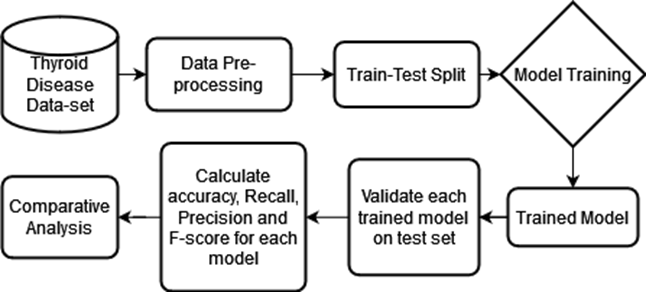
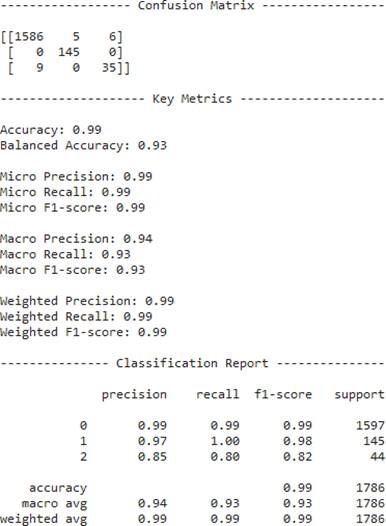
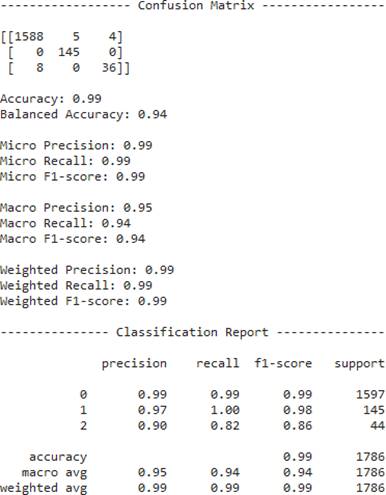
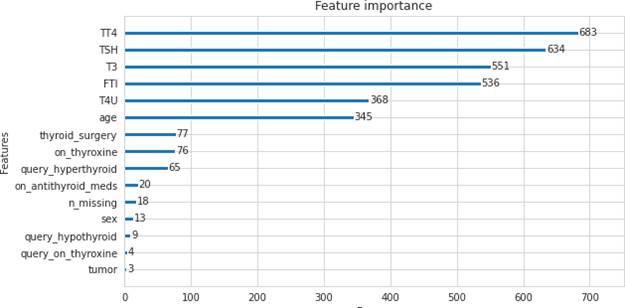
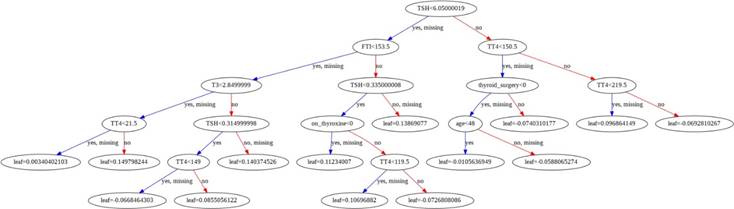
Against this backdrop, the present study seeks to develop a machine learning-based framework for the classification of thyroid disease into three clinically relevant categories: hyperthyroidism, hypothyroidism, and normal function. Using the widely recognized UCI thyroid dataset, this work integrates preprocessing strategies, exploratory data analysis, and an XGBoost-based classification model to assess predictive performance (Fig. 1). While the dataset itself is not new, the study attempts to bring together methodological clarity and practical considerations, particularly in handling data imbalance and feature relevance, in a way that aligns with real-world diagnostic challenges.
Ultimately, this work does not claim to replace clinical judgment—nor should it. Rather, it contributes to a growing body of research that seeks to augment medical decision-making with data-driven insights. If anything, it reflects a broader shift in healthcare: one where computational tools, when carefully applied, may help bridge the gap between complex data and timely, accurate diagnosis.