Livestock Research

Livestock Research | Online ISSN 3068-4625
0
Citations
12.4k
Views
11
Articles
Your new experience awaits. Try the new design now and help us make it even better
Switch to the new experience
Figures and Tables
RESEARCH ARTICLE   (Open Access)

Productive and Reproductive Performance of Crossbred Dairy Cows at Natore Sadar and Guruduspur Upazila at Natore District

Md. Asafuddaula1, Aminun Nahar Akanda2, Syed Sarwar Jahan2, Md. Akhtarul Islam2*

+ Author Affiliations

Livestock Research 3 (1) 1-8 https://doi.org/10.25163/livestock.3110635

Submitted: 28 July 2025 Revised: 14 October 2025  Published: 20 October 2025 


Abstract

The present study was conducted to evaluate the productive and reproductive performance of dairy cows in Natore District. The use of service type was 100% artificial insemination, and all inseminators used 100% frozen semen from different AI organizations. The average milk production for Holstein Friesian (HF) crossbred F1, F2, and Jersey cows was 6.18 ± 1.46, 10.69 ± 1.83, and 7.08 ± 2.38 liters/day, respectively. The average length of the lactation period for HF crossbred F1, F2, and Jersey cows was 256 ± 43.74, 246.60 ± 39.66, and 258.8 ± 34.317 days, respectively. The average postpartum heat period for HF crossbred F1, F2, and Jersey cows was 58.19 ± 19.36, 64.80 ± 22.99, and 59.08 ± 22.41 days, respectively. The average calving interval for F1, F2, and Jersey crossbred cows was 392.15 ± 38.13, 344.84 ± 134.92, and 412.0 ± 42.03 days, respectively. The average age at first calving for HF crossbred and Jersey crossbred cows was 798.71 ± 146.86 and 836.32 ± 159.10 days, respectively. The average dry period of different crossbred cows, HF F1, F2, and Jersey crossbred cows, was 171.83 ± 56.87, 133.62 ± 51.74, and 141.42 ± 55.92 days, respectively. In terms of conception per service in HF crossbred cows, 33% conceived at the first insemination, 52% at the second insemination, 11% at the third insemination, and 4% required more than three inseminations. In Jersey crossbred cows, 40% conceived at the first insemination, 48% at the second, 5% at the third, and 1% required more than three inseminations. The average service per conception for F1 and F2 crossbred cows was 1.73 ± 0.79 and 2 ± 0.73, respectively. The observed parity numbers in the experimental area for HF crossbred cows were 25%, 52%, 19%, and 4% in the 1st, 2nd, 3rd, and 4th calving or above categories, respectively. It is concluded that the productive and reproductive performances of HF F2 crossbred cows were better than those of HF F1 and Jersey crossbred cows under field conditions in Bangladesh.

Keywords: Dairy cows, crossbred, production, performance, insemination, postpartum.

1. Introduction

Bangladesh is a densely populated, agro-based developing country where livestock farming serves as a primary pillar for eradicating poverty and malnutrition (Siddika 2022, Delgado et al., 2009). The livestock sector is one of the fastest-growing segments of the agricultural economy, currently contributing 1.90% to the national Gross Domestic Product (GDP) and accounting for approximately 16.52% of the agricultural GDP (DLS 2022, DLS 2008). Within this sector, dairy cattle play a vital role in the sustenance of rural livelihoods and the national economy through the production of milk and meat, as well as by-products like hides and organic fertilizer. Dairy cattle in Bangladesh play a crucial role in improving human nutrition and increasing national income. Consequently,  priority must be given to the development of the livestock sector at the industrial level to enhance its contribution to GDP. According to FAO (2017), the total cattle population of the country is approximately three crore (30 million), with total milk production of 73 crore metric tons against a national demand of 147 crore metric tons. Similarly, meat production is 62 crore metric tons against a demand of 71 crore metric tons. In Bangladesh, dairying is predominantly part of a mixed farming system (Saadullah, 2001). Agriculture as a whole contributes about 22.83% to the national economy, while the livestock sub-sector alone contributes 3.12% to GDP, providing approximately 25% full-time employment and partially supporting nearly 50% of the total population (Bangladesh Economic Survey, 2004). Despite a substantial cattle population of approximately 24.7 million, Bangladesh faces a significant deficit in milk production; the annual yield of 13.07 million metric tons falls short of the national demand of 15.67 million metric tons (Hossain et al., 2002). The native cattle of Bangladesh are predominantly of the indigenous type (Bos indicus), which are well-adapted to the local tropical climate and possess high disease resistance (Hossain et al., 2002). However, these indigenous breeds are characterized by low milk production, short lactation lengths, late sexual maturity, and long calving intervals (Hossain et al., 2002). To overcome these productivity limitations, the government and various organizations have implemented crossbreeding programs since the 1970s, introducing superior germplasm from exotic breeds (Bos taurus) such as Holstein Friesian, Jersey, Sahiwal, and Red Sindhi through artificial insemination (AI) (Hossain et al., 2002).

The economic viability and profitability of a dairy enterprise depend heavily on the productive and reproductive efficiency of the herd (Siddika 2022). Productive traits, such as daily milk yield and lactation length, directly influence farm revenue, while reproductive traits, including age at first calving, number of services per conception, and calving interval, are essential prerequisites for a sustainable production system (Siddika 2022; Jainudeen and Hafez 2000). Crossbred cows often exhibit superior performance due to heterosis (hybrid vigor) and the recombination of desirable traits from both parent breeds, such as the high yield potentials of exotic breeds and the adaptability of indigenous stock (Syrstad, 1989; Bhuiyan, 2006). Monitoring the success of these crossbreeding programs is essential to ensure they meet the increasing demand for animal protein and improve food security at the household level (Bhuiyan, 2006; Sarder et al., 2001). In the Northern part of Bangladesh, livestock rearing is a primary source of income for many farmers. Identifying the most suitable breed combinations and understanding the impact of different generations (F1, F2, etc.) on performance can help farmers maximize their economic returns and assist policymakers in refining national breeding strategies (Hossain et al., 2002). While crossbreeding has been widely undertaken in Bangladesh for decades, the achievements in some regions remain unsatisfactory or poorly documented (Shamsuddin et al., 2001; Paul et al., 2011). Indiscriminate upgrading and crossbreeding have produced a large number of animals with unknown breed compositions and pedigree information, leading to highly heterogeneous performance levels (Azad et al., 2023; Bhuiyan et al., 2015). Furthermore, there is a lack of consensus on the optimal level of exotic inheritance; for example, while some studies suggest that up to 75% Friesian blood improves performance, others indicate that inheritance above this threshold may lead to a decline in production and fitness traits under local management conditions (Hridoy et al., 2025; Islam et al., 2020; Bhuiyan et al., 2015)

In the Northern part of the country, very little specific research has been conducted on the productive and reproductive performance of these crossbred populations. Most existing data are based on farm-level phenotypes rather than rigorous genetic evaluations across different generations and breed grades (Islam et al., 2020; Bhuiyan et al., 2015). This study addresses these gaps by evaluating how specific breed types and generational progressions influence the performance of dairy cows in the unique environmental and management context of Northern Bangladesh. Therefore, the study aimed to assess the productive and reproductive performance of F1 and F2 Holstein Friesian and Jersey crossbred cows in Bangladesh.

2. Materials and Methods

2.1 Study Area

The present study was conducted in 15 villages across five unions in the Natore and Gurudashpur upazilas of Natore district, specifically Chatni and Tabaria in Natore Sadar, and Najirpur, Khubjipur, and Moshinda in Gurudashpur. The study area was selected due to its high cattle population density, which provided suitable conditions to achieve the objectives of the research. The F1 and F2 generations of Holstein Friesian crossbred and Jersey crossbred cattle were identified based on farmer interviews and breeding records maintained at the PRAN Dairy Hub areas in Gurudashpur and Natore Sadar. Phenotypic characteristics were also used to verify the identification of the crossbred cattle.

Selection of the study area was guided by the following key criteria:

  1. No prior research of a similar nature had been undertaken in this region.
  2. A substantial number of Holstein Friesian crossbred and Jersey crossbred cattle were reared by farmers in the PRAN Dairy Hub area.
  3. The area was well-connected, facilitating efficient data collection.
  4. It was anticipated that respondents would be cooperative, thereby ensuring the retrieval of reliable information.

2.2 Survey Schedule Preparation

A structured survey schedule was developed in accordance with the objectives of the study. The schedule was designed to be simple and clear to minimize repetition and to ensure accurate data collection. Before finalizing the survey instrument, a preliminary draft was prepared and refined. The final survey schedule gathered information on:

  1. Owner demographics, educational status, cattle details, housing, feeding, breeding systems, milk marketing, and health management.
  2. Productive and reproductive parameters of crossbred dairy cows.
  3. Problems encountered and opinions of dairy farm owners regarding dairy cattle management.

2.3 Data Collection Period and Collection Methods

Data collection was carried out by the researcher from July 2018 to November 2018. During this period, frequent visits were made to the study locations in collaboration with extension workers from the PRAN Dairy Hub to ensure that accurate and comprehensive data were obtained. Primary data were collected through direct interviews and personal visits to selected farmers. Before each interview, respondents were briefed on the purpose and nature of the study to ensure informed participation. Questions were posed clearly and simply, and necessary explanations were provided when required. Responses were recorded directly on the survey schedule during the interviews.

2.4 Sample Selection

A total of 150 dairy cows were purposively sampled from 15 villages across the five unions of Natore Sadar and Gurudashpur upazilas. The sample included an equal number of F1 and F2 Holstein Friesian crossbred and Jersey crossbred cows. Pedigree information and breeding records were carefully reviewed to minimize errors in identifying breed generation and to ensure selection accuracy.

2.5 Traits and Parameters Examined

The recorded and evaluated productive and reproductive parameters included farm owner occupation, cattle population, and housing conditions, daily milk yield (L/cow/day), lactation length (days), postpartum heat period (days), services per conception (number), dry period (days), interval from calving to first service (days), age at first calving (months).

2.6 Challenges Faced During Data Collection

Several constraints were encountered during the fieldwork:

  1. It was challenging to convince some farmers of the study’s relevance due to low literacy and limited awareness.
  2. Some respondents, particularly women, were initially hesitant to participate, although this improved due to the researcher’s familiarity with the community.
  3. Most farmers did not maintain detailed records despite being provided with insemination and breeding cards by PRAN Dairy personnel. Therefore, the researcher relied partially on records maintained by PRAN technical staff.
  4. Farmers were occasionally absent at the time of visits, necessitating two or three follow-up visits to complete individual interviews.

2.7 Statistical Analysis

The collected data were subjected to statistical analysis to provide a clear understanding of the observed patterns. Data were organized in tabular form and analyzed using descriptive statistics, including percentages, means, and standard deviations. In some cases, a Completely Randomized Design (CRD) was applied. Least Significant Difference (LSD) was used to determine significant (p < 0.05 and p < 0.01) differences among means.

3. Results and discussion

3. Results and discussion

The productive and reproductive performance of the cows was measured by their milk yield, length of lactation period, age at first calving, service per conception, postpartum heat period, calving interval, calving of first service, and dry period. Major problems identified by dairy farmers in running their businesses successfully, along with their suggestions for addressing these issues, are presented in this section.

3.1 Education and occupation of the dairy cow owners

In this study, 150 dairy cow owners were selected, and information about their educational status and main occupation was collected through direct interviews. The obtained results are presented in Figure 1. It was noticed that the highest responders were in classes six to nine (24.67%), followed by illiterate (20.0%), primary level (18.0%), degree and above (15.33%), H.S.C. level (13.33%), and S.S.C. level (08.76%) (Figure 1a). On the other hand, agriculture was the main occupation of farmers (63.33%), followed by business (23.33%), service holder (10.67%), and others (2.67%) (Figure 1b). The collected information regarding the occupation of farmers agrees with Ali (1998), who conducted an experiment in Gaibandha district and observed that agriculture was the main occupation and business was the second main occupation of dairy cow raisers. Rahman (1996) conducted another study in Dhaka Metropolitan City and found that 19 percent of farmers had taken dairying as a main business and 81 percent had taken it as a side business.
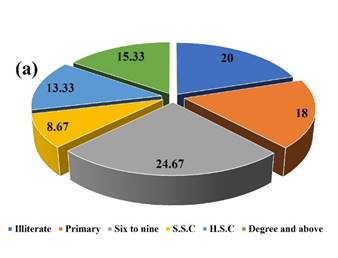
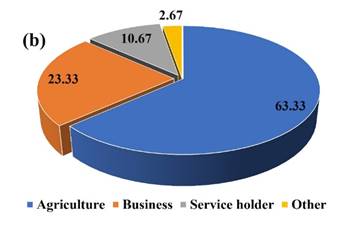
          

Figure 1. The dairy cow owners' educational status (a) and main occupation (b).


Table 1: Milk yield of Holstein Friesian crossbred and Jersey crossbred cows at various stages of lactation. ** = Significant at 1% level of probability,  SD = Standard Deviation

Stage of lactation

Milk Production (L/D) (mean ± SD)

P value

Level of significance

HF

Jersey 

1st lactation (L/Cow)

7.96a ± 2.73

7.08b ± 2.38

0.001

**

2nd lactation (L/Cow)

8.71a ± 4.48

7.42b± 3.3

0.001

**

3rd lactation (L/Cow)

2.75b ± 2.66

1.70b ± 1.64

0.392

**

4th lactation (L/Cow)

0.61 ± 0.6

0.28 ± 0.18

0.444

NS

Average (L/Cow)

4.53 ± 3.77

3.86 ± 3.11

0.001

**


Perkovic et al. (2003) reported that in order to achieve good reproduction and production results in herds of dairy cows, it is necessary to carry out regular clinical examinations of genital organs, apart from the basic conditions concerning housing, care, and nutrition. If such examinations are not carried out regularly in practice, then many reproductive disorders will not be diagnosed on time. As a consequence, bad fertility results in considerably lower milk production, and a high level of culled females from the herd will occur. Furthermore, Rokunuzzaman et al. (2009) conducted a study on the productive and reproductive 

performances of crossbred and indigenous dairy cows under smallholder dairy farming conditions at Sharsha Thana in Jessore and reported that the percentage of the illiterate, primary level, in class six, SSC level, HSC level, degree, and above the farmers was 15, 17, 25, 11, 20, and 12, respectively. Agriculture was the main occupation of farmers (45%), followed by business (38%), service holders (15%), and others are 2%, respectively.

3.2 Milk yield of the Dairy cattle

Table 1 demonstrates that Holstein Friesian (HF) crossbreds consistently outperform Jersey crossbreds in milk yield during the early stages of life. In the first lactation, HF cows produced 7.96 L/D compared to 7.08 L/D for Jersey cows (P=0.001). This gap widened in the second lactation, where HF production reached 8.71 L/D versus 7.42 L/D for Jersey (P=0.001). However, as the cows reached the third and fourth lactations, the production levels for both genotypes dropped significantly, and the differences between them became statistically non-significant. On average, across all stages, the HF crossbreds maintained a higher yield of 4.53 L/D, significantly exceeding the Jersey average of 3.86 L/D.

Ali (1998) found that the average production of milk per day from crossbred and indigenous dairy cows was 4.10 and 2.28 liters, respectively, and this difference was statistically significant (p<.001). Hossain (1998) also reported that the average milk production per cow per day was 5.2 liters and the average lactation period was 8-9 months for different crossbred cattle in 100 private dairy farms of the Rangpur Sadar. However, Rokunuzzaman et al. (2009) reported that the average milk production of Holstein Friesian cross, Sahiwal cross, Shindhi cross, and Indigenous cows was 8.39, 4.63, 4.35, and 2.38 L/D, respectively. Statistical analysis showed that there was a significant difference (P<0.01) in milk yield of different breeds. Among the different cows, highest milk production was recorded in the case of the Holstein-Friesian cross (12.53 L/D), and the lowest was recorded in the case of indigenous cows (1.19 L/D). Milk yield of different types of dairy cows was also analyzed on the basis of stages of lactation, which are presented as birth to three months, three to six months, and six onwards, which were considered as first, second, and third stages of lactation, respectively. Milk yield of Holstein-Friesian cross cows during the first, second, and third stage of lactation was 9.56±2.399, 8.68±2.231, and 4.84±1.795 L/D, respectively.

3.3 Productive and Reproductive Performance

Calving interval,

Table 2 highlights significant genetic and management improvements in the first (F1) and second (F2) generations of HF crossbreds. The key findings revealed from the analysis were that daily milk yield increased dramatically from 6.18 L/D in F1 to 10.69 L/D in F2. Annual production followed this trend, increasing from 1283.23 L/Y to 2979.25 L/Y. Furthermore, the calving interval was reduced from 392.15 days in F1 to 344.84 days in F2. Additionally, the dry period was significantly shortened from 171.83 days to 133.62 days, suggesting F2 cows return to production more quickly. There was a slight but significant reduction in gestation length, from 272.75 days in F1 to 269.98 days in F2. Factors such as postpartum heat showed, and services per conception did not vary significantly between generations. Rokunuzzaman et al. (2009) reported that the average days of calving interval of Holstein Friesian cross, Sahiwal cross, Sindhi cross, and indigenous cows were 396, 385.2, 422.0, and 425.2 days, respectively.  Furthermore, Asfaw et al. (2001) studied the reproductive and productive performance traits of Friesian-Zebu crossbreed cows in three production systems, namely urban in secondary towns, Addis intra-urban, and peri-urban. The mean calving interval in days for the three production systems was 481, 421, and 501 days for urban in secondary towns, Addis intra-urban, and peri-urban, respectively.

Table 2: Productive and reproductive performance of Holstein Friesian Crossbred dairy cow in F1 and in F2.  NS = Not significant (P>0.05), * = Significant at 5% level of probability,  ** = Significant at 1% level of probability

Reproductive and productive performance

Generation

P value

Level of significance


F1 (Mean±SD)

F2 (Mean±SD)


Post-partum heat show (days)

58.19 ± 19.36

64.80±22.99

0.128

NS 


Gestation length (days)

272.75 ± 7.19

269.98±6.36

0.046

 *


Service per conception (times)

1.73 ± 0.79

2.00±0.73

0.081

 NS


Milk production (L/D)

6.18 ± 1.46

10.69±1.83

0.001

 **


Milk production (L/Y)

1283.23 ± 390.27

2979.25±582.56

0.001

 **


Calving interval (Day)

392.15 ± 38.13

344.84±134.92

0.021

 *


Dry period (days)

171.83 ± 56.87

133.62±51.74

0.001

**


Service per conception

The average service per conception of different F1 and F2 crossbreeds is 33% conceived in 1st insemination, 52% conceived in 2nd insemination, 11% conceived in 3rd insemination, and 4 % cows conceived over 3 times after insemination in 100 Holstein crossbred cows. In Jersey crossbred cows, it was observed that 40 % conceived in 1st insemination, 48% conceived in 2nd insemination, 5% conceived in 3rd insemination, and 1 % cows conceived over 3 times after insemination in 50 Jersey crossbred cows. The average service per conception of F1 and F2 crossbreeds is 1.73±0.79 % and 2±0.73 respectively. Statistical analysis revealed significant differences (P < 0.05) within the service per conception of different genetic groups of crossbred cows. Islam et al. (2021) collected data on service per conception of 540 animals of various genetic group and observed that service per conception of local (L) Shahiwal (SL), Shahiwal ´ Friesian (F1), Jersey (J), Local´Jersey (F1), and Local ´ Friesian were 1.63±0.61, 1.67±0.62 for Jersey cross, Sahiwal cross, Sindhi cross, Holstein cross and Red Chittagong cows, respectively. Ali (1998) reported that the service per conception of crossbred and indigenous cows was 3.33 and 1.98, respectively, in Gaibandha district, and this difference was statistically significant (P<0.01).

Hossain (1998) undertook a study to know the present management condition and prospects of the existing private dairy farm of Sadar Thana of Rangpur district and observed that the service per conception was 2.7. Asfaw et al. (2001) studied the reproductive and productive performance traits of Friesian Zebu crossbred cows in three production systems, namely urban in secondary towns, Addis intra-urban, and peri-urban, and reported that services per conception were 1.9±1.3, 2.4±1.7, and 1.6±0.9 in urban in secondary towns, Adis intra-urban, and peri-urban, respectively.

Hossain et al. (2001) conducted an economic analysis of small dairy farms (n=73) where the cows were mostly local Zebus and their crosses with Friesian, Sahiwal, Sindhi, Jersey, and Haryana. In 46 artificial inseminations, the first service conception rate was 51%. The overall conception rate and services per conception were 50% and 2.0, respectively. Rokunuzzaman et al. (2009) reported that the average service per conception of Holstein Friesian cross, Sahiwal cross, Sindhi cross, and indigenous dairy cows were 1.84±0.8, 1.32±0.5, 1.48±0.6, and 1.92±0.9, respectively.

Postpartum Heat Period (PHP)

The average days of postpartum heat period of different crossbred, F1, F2 generation of Holstein Friesian crossbred, and Jersey cross dairy cows are presented in Table 2. The average postpartum heat period of Holstein Friesian cross F1, F2 generation of Holstein Friesian crossbred and Jersey cross was 58.19 ± 19.36, 64.80 ±22.99, and 59.08±22.41 days, respectively. Statistical analysis revealed a significant difference in postpartum heat periods among different types of crossbred dairy cows. In a similar study, Rokunuzzaman et al. (2009) reported that the average days of postpartum heat period of different Holstein Friesian cross, Sahiwal cross, Sindhi cross and indigenous dairy cows were 86.48±23.666, 93.92±38.061, 127.08±43.470 and 121.2±52.9011 days, respectively. The result of the present experiment agrees nearly with the findings of Rokunuzzaman (2009), Majid et al. (1995) studied PHP in nine different types of cattle and reported that the longest average PHP of 223.50±40.14 days was obtained in 1/4L F crossbred, and the lowest 117.24±7.20 days was in 1/2L-1/2F. Postpartum intervals for 

both anoestrus and calving to conception were 110.40±23.5 and 199.80±61.80 days for Zebu and 97.50±25.10 and 157.80±55.50 days for crossbred cow. These values were significantly (P<0.05) affected by nutritional status in both genotypes. Moreover, Rokunuzzaman et al. (2009) reported that the average days of postpartum heat period of different Holstein Friesian cross, Sahiwal cross, Sindhi cross, and indigenous dairy cows were 86.48±23.666, 93.92±38.061, 127.08±43.470, and 121.2±52.9011 days, respectively.

Age at first calving

It was found that the average age of Holstein Friesian crossbred and Jersey crossbred in the first calving date was 798.71±146.86 and 836.32±159.10 days, respectively. Statistical analysis showed that the average age at first calving between HF Crossbred and Jersey Crossbred differs significantly (P>0.05). Non-significant in p>0.005 but significant at the 5% level of probability. Rokunuzzaman et al. (2009) reported that the average ages of Holstein Friesian cross, Sahiwal cross, Sindhi cross, and indigenous cows were 34.1, 35.4, 36.1, and 40.5 months, respectively. Kaya et al. (2003) investigated the age at first calving of 305 days crossbred dairy cows.

Dry Period

The average dry period of different crossbred cows in Natore Sadar and Gurudashpur thana is presented in Table 2. It was observed that the dry period of Holstein Friesian F1 cross, F2 cross, and Jersey cross cows was 171.83±56.87, 133.62± 51.74, and 141.42±55.92 days, respectively. The average dry period for crossbred cows was significantly lower than that of indigenous dairy cows (P<0.05). The present results are nearly similar to Maaraf et al. (1987), who analyzed the data on the dry period of 82 Jenubi dairy cows, cattle in 2 state farms in central Iraq. They found that the average dry period was 159.2±13.6 days. Osieglowski and Strzetelski (2002) reported that proper nutrition of the dairy cow during the dry period involves meeting the required nutrients needed for the physiological changes occurring during this time, especially during the final month of gestation, which includes increased weights of the body, mammary glands, and uterus. In order to meet the cow's requirements, it is necessary to improve the energy balance by increasing the energy concentration of a ration and thus prevent hepatic lipidosis as well as metabolic disturbances and diseases.

Reproductive and productive performance of HF and Jersey crossbreeds is shown in Table 3. It is noticed that there are broader performance metrics between the two genotypes. HF cows maintained a significantly higher daily milk production (8.43 L/D) compared to Jersey cows (7.34 L/D). Furthermore, HF crossbreds have a significantly shorter dry period (111.80 days) than Jersey crossbreds (141.42 days). There were no statistically significant differences in the lactation period length, age at first calving (roughly 798 days for HF and 836 days for Jersey), or the postpartum heat period (approximately 59–61 days).

Parity numbers, service per conception, service type, and semen type used in the insemination of HF and Jersey crossbreds are shown in Table 4. Results of the management and reproductive history of the studied cows revealed that most cows required two services per conception (52% of HF and 48% of Jersey). On the other hand, the majority of cows in the study were in their second parity (2nd calving), accounting for 52% of HF and 66% of Jersey cows. A notable management difference was found in breeding methods: 100% of HF crossbreds (100 cows) and 100% of Jersey crossbreds (50 cows) were bred using artificial insemination and frozen semen. The p-value indicated this was not statistically significant within this specific dataset.

Table 3: Reproductive and productive performance in Holstein Friesian crossbred and Jersey crossbred dairy cows

Reproductive and productive performance

Genotype of the cow

P value

level of significance

HF(Mean±SD)

Jersey (Mean ±SD)

Postpartum heat period (days)

61.88±21.41

59.08±22.41

0.458

NS

Milk production (L/D)

8.43±2.80

7.34±2.35

0.019

*

Dry period (days)

111.80±38.40

141.42v55.92

0.039

*

Lactation period (days)

256.75±43.74

246.60±39.66

0.169

NS

Age at 1st calving (days)

798.71±146.86

836.32±159.10

0.153

NS


Table 4.  Variation in parity numbers, service per conception, service, and semen type of HF and Jersey crossbreds. NS = Not significant (P>0.05)

Parameters

Genotype

P value

Level of significance

Service per conception

HF (%)

Jersey (%)

1 time

33

40


0.802


NS


2 times

52

48

3 times

11

10

Over 3 times

4

2

Parity Number


Parity 1=1st calving

25

20


NS

Parity 2=2nd calving

52

66

0.262

Parity 3=3rd calving

19

14


Parity 4=4th calving and above

4

0


Service Type


Artificial

100

100


NS

Semen type


Frozen

100

100


NS


Recently, crossbreeding in dairy cattle has gained popularity in tropical countries like Bangladesh for improving milk production. A recent study focused on a crossbreeding approach by mating Bangladeshi local cattle with Holstein sires and reported that the resulting crossbred (Holstein × Local cattle) cows exhibited larger body sizes and higher body condition scores and produced significantly higher volumes of milk and 4% fat-corrected milk. This finding supported the current study.


4. Conclusion

In conclusion, the data clearly shows that while both breeds have their place in smallholder dairy farming, the Holstein Friesian (HF) crossbreds are the standout performers when it comes to sheer milk volume and efficiency. What is particularly impressive is the significant leap in productivity from the F1 to the F2 generation of HF cows. The F2 generation didn’t just produce more milk—nearly doubling the daily yield and more than doubling the annual total—they also became more efficient breeders. These cows returned to production faster, with a shorter dry period (133 days) and a much more streamlined calving interval (344 days) compared to their F1 predecessors. While Jersey crossbreds held their own and showed similar reproductive health—matching the HF cows in postpartum heat periods and the number of services needed for conception—they simply couldn't compete with the HF cows' output in the early stages of lactation. It is also worth noting that the consistent use of artificial insemination and frozen semen in the HF group likely played a key role in driving these genetic and productive gains. Ultimately, for the diverse group of farmers involved in this study, the shift toward stabilizing the HF crossbred line (specifically the F2 generation) seems to be a very successful strategy for maximizing both milk yield and the reproductive efficiency of the herd.

References


Asfaw, Y.; Molla, B.; Zessin, K.H.; Tegegne, A. and Baumann, M. 2001. Reprocuctive and productive performance in urban and peri-urban dairy cattle preduction systems in the Addis Ababa Region, Ethiopia. Bulletin of Animal Health and Produetion in Africa. 49(4); 206-2012.

Bangladesh economic survey, 2004, Department of finance, Ministry of Finance and Planning, Government of the People’s Republic of Bangladesh. Dhaka. pp. 71.

Chakravarthi, M.K; Sasidhar, P.V.K. and Reddy, YR. 2002 Productive and reproductive performance of Deoni cattle. Indian Journal of Dairy Science. 55(1): 56-57.

Chenais, F.; Brocard, V.; Le-Gall, A.; Legarto, J.; Durand, J.L. (ed.); Emile, J.C. (ed.); Huyghe, C. (ed.); Lemaire, G. 2002. Animal performances according to the part of grasslands in the forage system. Multi function grasslands: quality forages, animal products and landscapes. Proceedings of the 19th General Meeting of the European Grassland Federation, La Rochelle, France, 27-30-May-2002. 1024-1025.

Czerniawska, Piatkowsks, E.; Durnas, B.; Kamieniecki, H.; Mikula, A.; Wojcik, J. 2002, Productive value of dairy cow herd in relation to milk protein polymorphism. Raczniki Naukowe Zootechniki. No.Supl, z. 15: 63-96.

Demiraj, L.; Sula, F.; Kume, K.; Shegani, K.; Paci, F. and Gorea, R. 2000. Tests of post partum assistance during the dry period and the first phase of lactation as a factor of imprving productive and reproductive performance in dairy cows. journal of Agriculture and Environment for International Development. 94(1): 63-72.

FAO, 2002. FAO Production Year Book. Food and Agricultural Organization of the United Nation. Rome. Italy, V-56pp. 213 and 241.

Garcia. L. R.; Gonzalez, R. and Ponce, R. 2001. Evaluation of a milk production system with Holstein cows under tropical conditions. Cuban Journal of Agricultural Science. 35(2): 115-121.

Goni, M.O.; Miah, A.G.; Khan, M.A.S. and Islam, M.N. 2001. The performance of crossbred cwos available in milk pocket area of Bangladesh. Bangladesh Agricultural University. Mymensingh. Indian Journal of Animal Sciences, 71(12): 1166-1168.

Hossain, M.K.; Hossein M.S.; Bari, F.Y.; Shamuddin, M. Paul, R.K. 2001. Economics of fertility management of small holding dairy farms. Department of Surgery and Obstetrics, Faculty of Veterinary Science, Bangladesh Agricultural University, Mymensingh. Bangladesh Veterinarian. 18(2): 83-88.

Kadarmideen, H.N.; Thompson, R.; Coffey, M.P. and Kossaibati, M.A. 2003 Genetic parameters and evaluations from single and multiple-trait analysis of dairy cow fertility and milk production. Livestock Production Sci. 81(2-3): 183-195.

Kaya. 1.; Uzmay, C.; Kaya A. and Akbas, Y, 2003. Comparatige analysis of milk yield and reproductive traits of Holstein-Friesian cows born in Turkey or imported from Italy and kept on farms under the Turkish-ANAFI project. Italian Journal of Animal Science. 2(2): 141-150.

Leite, T.E.; Moraes, J.C.F and Pimentel, C.A. 2001. Productive and reproductive efficiency in dairy cows. Ciencia Rural. 31(3). 467-472.

Osieglowski, S.; Strzetelski, J. 2002. Current issues in the energy feeding of high yielding cows during the dry period. Roczniki Naukowe Zootechniki. No. Supl, z. 15:113-118.

Patel, A.K.; Mathur, B.K.; Mathur, A.C.; Mittal, J.P. and Kaushish, S.K. 2000. Productive and reproductive performance of Tharparkar cattle in hot arid region. Indian Journal of Animal Science. 70(5): 530-532.

Pellerin, D.; Valiquette, K.; Lefebvre, D.; Vezina, LP-Allard, G.; Durand, J.L. (ed); E mile. J.C. (ed.); Huyghe, C. (ed.); Lemaire, G. 2002. Producing milk from forages in Quebec, the economic alternatiove. Multi-function grasslands: quality forages, animal products and landscapes. Proceedings of the 19th General Meeting of the European Grassland Federation, La Rochelle, France, 27-30-May-2002. 1104-1105.

Perkovic, S.; Vukovic, D.; Petrovic, M.M. 2003. Reproduction parameters and fertility control in herds of dairy cows. Biotechnology in Animal Husbandry. 19(3-4): 9-13.

Robinson, P.H.; Moorby, J.M.; Arana, M. Hinders, R.; Graham, T.; Castelanelli, L. and Barney, N. 2001. Influence of close-up dry period protein supplementation on productive and reproductive performance of Holstein Cows in their subsequent lactation.

Rokunuzzaman et al. (2006).  A study on the productive and reproductive performance of crossbred and indigenous dairy cows under small holder dairy farming condition at Sharsha Thana in Jessore.

Saadullah, M, 2001. Smallholder Dairy Production and Marketing in Bangladesh. Paper presented at South-South workshop on Smallholder Dairy Production and Marketing. NDDB-ILBS, 13-16, March, 2001. Ahmedabad, India.

Srairi, M.T. and Baqasse, M. 2000. Production and reproduction performance of importance of imported Friesian dairy heifers in Marocco. Livestock Research for Rural Development. 12(3): 1-11

Uchida, K.; Mandebvu, P.; Ballard, C.S.; Snifen, C.J. and Carter, M.P. 2001. Effect of feeding a combination of Zinc, manganese and copper amion acid complexes and cobalt glucoheptonate on performance of early lactation high producing dairy cows. Animal Feed Seience and Technology. 93(3-4): 193-203.

Varga, G.A. 2003. Nutrition, management determines dairy cow productivity.Feedstuffs. 75(10): 10-13.

Wojcik, P. 2001. Effect of age at first calving on productivity of Black and white cows. Annals of Animal Science Roczniki Naukowe Zootechniki. 24(28):189-198.


Article metrics
View details
0
Downloads
0
Citations
171
Views
📖 Cite article

View Dimensions


View Plumx


View Altmetric


0
Save
0
Citation
171
View
0
Share