Livestock Research

Livestock Research | Online ISSN 3068-4625
11
Citations
27.7k
Views
18
Articles
Your new experience awaits. Try the new design now and help us make it even better
Switch to the new experience
Figures and Tables
RESEARCH ARTICLE   (Open Access)

Effects of Neem (Azadirechta Indica) and Thankuni (Centella Asiatica) Leaf Extract Supplementation on Growth Performance and Hematological Parameters in Antibiotic-free Broiler Production

Shamima Nasrin1, Md. Mehedi Hasan2, Md. Mazharul Islam2, S.M. Kamruzzaman2, Md. Shariful Islam2*

+ Author Affiliations

Livestock Research 3 (1) 1-9 https://doi.org/10.25163/livestock.3110505

Submitted: 29 June 2025 Revised: 11 September 2025  Published: 15 September 2025 


Abstract

This experiment was conducted to evaluate the efficacy of Neem (Azadirachta indica) and Thankuni (Centella asiatica) leaf extract supplementation in drinking water as a growth promoter in broiler chickens. A total of 120 day-old Cobb-500 broiler chicks were purchased from a local hatchery. After 7 days of acclimatization, chicks were randomly assigned to two treatment groups, T0 and T1, with 6 replicates of 10 birds per replicate. Birds under T0 were kept as an untreated control, and T1 was supplemented with Neem and Thakuruni leaf extract (2%) in water. Weekly observations were recorded for live body weight gain up to the 5th week, and hematological tests were performed at 30 days of age on broilers to search for hematological changes between the T0 and T1 groups. The results revealed that the initial body weight of the T0 and T1 on the 7th day of the experiment was 160±6.40 g and 162±7.80 g, respectively, and after 30 days of the experiment final body weight was 2216.3±23.71 and 2324.3±27.50 g, respectively. The net body weight gain was 2055.97±14.93 g and 2160.63±26.31 g, respectively. The findings revealed that live weight, live weight gain, feed consumption, and FCR were significantly (p<0.01) different in T1 than T0 after being supplemented with leaf extract. Furthermore, it was found that heart weight, gizzard weight, liver weight, spleen weight, and pancreas weight were significantly (p<0.01) higher in T1. The hematological parameters (Hb, ESR, and PCV) values of the T1 showed a significant (p<0.01) difference compared to the control group. From these findings of the present study, it can be concluded that Neem and Thankuni leaves extract play a significant role in the improvement of production performance in antibiotic-free broiler.

Keywords: Supplementation, Extract, Antibiotic-free, Broiler, Performance

1. INTRODUCTION

The main challenge in the current poultry industry is how to maintain performance and health of broilers with low antibiotics utilization (Al-Garadi et al., 2025). Subtherapeutic levels of antibiotics have also been used for long period in animal feed in order to enhance their growth and minimize costs (Wang et al., 2024; Aminullah et al., 2025); nonetheless, it is currently questionable. The long-term use of antibiotics as growth promoters (AGPs) has led to antibiotics in meat and the emergence of multidrug-resistant strains, seriously endangering public health (Wang et al., 2024; Luna et al., 2025; Ahmed et al., 2024).

In response, the European Union implemented a complete ban on AGPs in 2006, followed by similar restrictive policies in other nations, such as China’s 2020 withdrawal of growth-promoting pharmaceutical additives (Luna et al., 2025). Consequently, the poultry industry is under increasing pressure to develop sustainable, antibiotic-free (ABF) production systems that use natural, safe alternatives to maintain flock health and efficiency (Luna et al., 2025; Naeem & Bourassa, 2025; Sujatha et al., 2017).

Phytogenic feed additives (PFAs), also known as botanicals or Phyto biotics, have emerged as promising alternatives to synthetic growth promoters (Oni & Oke, 2025; Hussein et al., 2024). Derived from herbs, spices, and plant extracts, PFAs contain various bioactive compounds, such as polyphenols, flavonoids, and essential oils, that exert antimicrobial, antioxidant, and anti-inflammatory effects. These natural growth promoters enhance productivity by modulating intestinal microbiota, stimulating the secretion of digestive enzymes (e.g., trypsin, amylase, and lipase), and improving gut morphology through increased villus height and surface area (Ampode & Asimpen, 2021; Islam et al., 2024; Nakamura et al., 2022; Mamun et al., 2021; Paul et al., 2020). Furthermore, PFAs improve the oxidative stability of poultry meat, meeting consumer demands for safe, high-quality organic products free from chemical residues (Oni & Oke, 2025; Fu et al., 2023; Nath et al., 2022).

In developing nations, particularly in South Asia, there are distinct social and environmental issues in broiler rearing. Feed constitutes 70–80% of the total cost, making the need for cheap and indigenous supplements a priority (Sihan et al., 2021; Ampode & Asimpen, 2021). Additionally, many South Asian countries are characterized by hot tropical climates, where ambient temperatures frequently exceed the birds' thermoneutral zone (Azzam et al., 2020). This environmental heat stress leads to increased generation of reactive oxygen species (ROS), resulting in lipid peroxidation, impaired intestinal barrier function, and a marked reduction in growth performance and survivability (Khan et al., 2012; Whitehead & Keller, 2003). In such regions, antibiotics are used more frequently because they are available over-the-counter without prescription, further fueling antimicrobial resistance (Haque et al., 2020; Sani et al., 2023). Bangladesh is one such country where the absence of antibiotics in broiler rearing is a priority but not extensively explored. Poultry is a backbone of the economy, accounting for 37% of the country’s meat production (Hamid et al., 2016). However, the industry is frequently affected by disease outbreaks and misuse of antibiotics with lack of compliance to mandatory withdrawal periods (Mamun et al., 2021). Residues of most important antibiotics such as ciprofloxacin and tetracycline in the breast meat and thigh muscles of broilers reared commercially in Bangladesh have been found to be observably high (Hussein et al., 2024; Andreu et al., 2007; Trouchon et al., 2016). Furthermore, the lack of standardized protocols for natural alternatives and the paucity of in vivo trials comparing locally available phytogenic to traditional AGPs limit the adoption of sustainable practices among Bangladeshi farmers (Khan et al., 2014).

Similarly, Thankuni is very high in its vitamin, mineral and bioactive glycosides (including asiaticoside) content which have been reported to enhance immune response, improve nutrient availability and reduce deposition of abdominal fat in chickens Aja yisafu et al. Although the effectiveness of these individual plants is established, little is known about their combined efficacy under an antibiotic free production system. The majority of previous reports have addressed single-plant extracts or used them as an extra-addition to normal diets and not as growth promoters themselves (Durrani et al., 2008). There is a critical need to investigate whether a combination of these local resources can provide synergistic effects that mimic the growth-permitting actions of antibiotics while addressing the specific challenges of tropical environments, such as heat-induced oxidative damage (Aminullah et al., 2025; Hussein et al., 2024; Islam et al., 2024; Mamun et al., 2021; Nakamura et al., 2022).

Therefore, this study aimed to evaluate the efficacy of aqueous leaf extracts of Azadirachta indica and Centella asiatica as novel growth promoters on the growth performance, feed efficiency, carcass yield, and blood parameters of antibiotic-free broiler production in Bangladesh. The novelty lies in using locally available, sustainably sourced botanical extracts to replace synthetic growth stimulants, thereby improving food safety and supporting the national economy by reducing medicinal costs.
2. MATERIALS AND METHODS

2.1 Collection of plant materials (Neem and Thankuni leaves) and preparation of leaves extracts

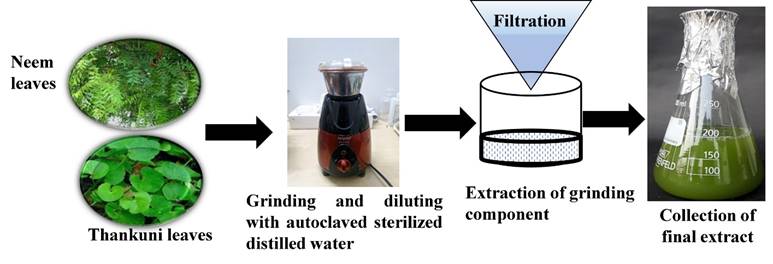
The study was carried out at the Department of Pharmacology, Bangladesh Agricultural University (BAU), Mymensingh. Neem (Azadirachta indica) and Thankuni (Centella asiatica) leaves were selected for searching out the efficacy of this leaves extract in broilers production. Adequate amount of mature and disease-free Neem and Thankuni leaves were collected from the botanical garden of Bangladesh Agricultural University (BAU), Mymensingh. However, the preparation of plant extract is presented in Fig. 1.   At first the collected leaves were washed with distilled water properly. After washing, the leaves were dried in the sun for 10 days and followed by oven at 55-60°c for 2 days. The dried leaves were grinded with Morter and Pestle. After grinding, 20g of Thankuni leaves powder was added to 2 liters of distilled water and properly boiled. By continuous boiling the initial 2L volume was reduced 1L. Then the solution was filtered to make water extract of Neem and Thankuni leaves after cooling. Finally, extract (NTLE) stored in refrigerator at 4°c after adding with 10 gm iodized salt as preservative to maintain the active ingredients for antimicrobial studies and future uses.

2.2 Experimental Design, Management of Experimental Shed and Broilers

A total of 120-day-old mixed sexed Cobb 500 broiler chicks were purchased from a local hatchery (Nourish Poultry & Hatchery Limited) and brooded together for 7 days. After 7thdays all the 120 broiler chicks were randomly divided into 2 groups, T1 (control)and T2(2% NTLE) with 6 replicates and 10 birds per replication. At first the shed for rearing broiler chickens was properly prepared. The experimental units were kept on cage system in separate pens each measuring 3 × 4 square feet. The pens were thoroughly cleaned, white washed and disinfected before putting the experimental chick into these. Day-old broiler chicks were brought in the experimental shed. Then the broiler chicks were managed carefully. All the birds were provided same management conditions like floor space, temperature, relative humidity, ventilation and light. Immediately after unloading from the chick boxes the chicks were given vitamin-C and glucose to prevent the stress occurring during transport. The broiler chicks were kept in the same compartment for 7 days and brooding temperature was correctly maintained. Optimum light was provided daily throughout the experimental period. The chicks were brooded at 35oC during first week and thereafter; the temperature was reduced by 30C every week until the temperature reached to the room temperature i.e., (25±1)0C. All the groups were reared under the similar conditions of temperature, humidity, light, ventilation and floor space. The litter management was also done very carefully. The starter and grower broiler rations were supplied to the broiler chicken appropriately. A weighed amount of the ration was offered to the birds twice a day and the left-over feed were collected to calculate feed consumption of the birds. Chicks of group T1 kept as control and was not treated, whereas, chicks of group T2 treated with NTLE with drinking water for next 28 days.

2.3 Hematological Parameters

Blood samples were collected from wing vein of chicken of both control and treated groups at 30 days to study the effect of NTLE on the following parameters:

(a)                    Hemoglobin estimation (Hb)

(b)                   Packed Cell Volume (PCV)

2.4 Determination of Hemoglobin Concentrations (Hb)

The N/10 hydrochloric acid (HCL) was taken in a graduated tube up to 2 marks with the help of a dropper. Well-homogenized blood sample was then drawn into the Sahli pipette up to 20 cm. mark. The tip of the pipette was wiped with sterile cotton and the blood of the pipette was immediately transferred into the graduated tube containing hydrochloric acid. This blood and acid were thoroughly mixed by stirring with a glass stirrer. There was a formation of acid hematin mixture in the tube by hemolyzing red blood cells by the action of HCL. The tube containing acid hematin mixture was kept standing in the comparator for 5 minutes. After that distilled water was added drop by drop. The solution was mixed well with a glass stirrer until the color of the mixture resembled to the standard color of the comparator. The result was read in daylight by observing the height of the liquid in the tube considering the lower meniscus of the liquid column. The result was then expressed in g%. The above procedure was matched by the Helligehemometer method as described by Lamberg and Rothstein (1977).

2.5 Determination of Packed Cell Volume (PCV)

The citrated well mixed blood sample was drawn into special loading pipette (Win Trobe pipette). The tip of the pipette was inserted up to the bottom of a clean, dry Win Trobe hematocrit tube. Then the Win Trobe tube was filled from the bottom by pressing the rubber bulb of the pipette. As blood came out, the pipette was slowly withdrawn but pressure was continued on the rubber bulb of the pipette so as to exclude air bubbles. The tip of the pipette was tried to keep under the rising column of blood to avoid foaming and the tube was filled exactly to the 10 cm mark. Then the Win Trobe hematocrit tube was placed in the centrifuge machine and was centrifuged for 30 minutes at 3000 rpm. Then, the hematocrit or PCV was recorded by reading the graduation mark; the percent volume occupied by the hematocrit was calculated by using the following formula (1) as described by Lamberg and Rothstein (1977).

PCV (%)=Height of packed RBC`s in CMHeight of Total Blood Column in CM×100…………………(1)

During the 35 days experimental period, growth performance was evaluated. Body weight and feed consumption were recorded weekly and body gain and feed conversion were then calculated. Mortality was recorded throughout the study.

2.6 Feed Consumption

Feed consumption is the amount of feed consumed every week; it was calculated for each treatment at weekly basis. At the end of the week, the residual amount of feed was weight and subtracted from the known weight of feed at the beginning of week. The product was divided by the total number of birds.

2.7 Body Weight Gain

Body weight was measured for all birds at the beginning of the experiment and it was repeated weekly at the beginning of the week at the same time. Live weight gain was calculated by subtraction the live weight at the beginning of the week from the live body weight of the next week.

2.8 Feed Conversion Ratio

Feed conversion ratio (FCR) was calculated every week at the amount of feed consumption per unit of body gain (average weekly feed consumption (g)/average weekly gain (g)

2.9 Carcass Cuts Preparation and Sampling

At the end of each experiment a sample of five randomly selected birds from each group was slaughtered to estimate the dressing percentage. Before slaughtering, each bird was weighed and numbered and after those birds were slaughtered, dressing, carcass, giblets percentages were then measured using the formula (2) and (3).

Dressing %=Carcass weight (kg)Live  weight (kg)×100……………….…..(2)

Giblet %=Liver + Gizzard + Heart + Spleen weight (kg)Live  weight (kg)×100………..(3)


2.10 Postmortem Examination for Side Effects

Five broilers from each group were slaughtered to see if there were any pathological changes present after treatment. There were no significant pathological changes in any internal organs of the broilers of treatment group.

2.11 Statistical Analysis

The collected data on weight gain, feed consumption, feed conversion ratio, dressing percentage, relative weights of heart, gizzard, liver, spleen, pancreas and different hematological parameters of control and treated groups were analyzed one way ANOVA.Analysis was performed using IBM SPSS Statistics (Version 25) and mean data wrer considered statistically significant with p value   0.5 and 0.01.

3. RESULTS

3.1 Effects on Production Performance

 The effects of Neem (Azadirachta indica) and Thankuni (Centella asiatica) leaf extracts on the production performance of broilers are summarized in Table 1. At the start of the experimental period (day 7), there was no significant difference (P = 0.3097) in the initial live weights between the control (160.33 ± 1.53 g) and the treatment group (163.67 ± 4.73 g). However, by the end of the 30-day period, the treatment group exhibited a significantly higher final live weight (2324.3 ± 27.502 g) compared to

Fig. 1: Schematic representation of plant extract preparation.

Table 1. Effect of Neem and Thankuni leaves extracts on the production performance of broilers  

Variable

T0 (mean± SD)

T1 (mean ±SD)

P value

Significance

Initial live weight (g), 7th d

160.33 ± 1.53

163.67 ± 4.73

0.3097

NS

Final live weight (g), 30 d

2216.3 ± 23.71

2324.30 ± 27.50

0.00674

*

Weight gain (g)

2055.97 ± 14.93

2160.63 ± 26.31

0.0047

*

Feed consumption(g)

3446.67 ± 20.21

3311.67 ± 4.75

0.0004

*

FCR

1.57 ± 0.01

1.45 ± 0.01

0.00085

*

Table 2.  Variation in dressing percentage and relative giblet weights of broilers supplemented with Neem and Thankuni leaves extracts

Variable


T0

(Mean ± SD)

T1

(Mean ±SD)

P value

Significance

Dressing Percentage

63.56 ± 0.95

64.03 ± 1.60

0.69

NS

Heart weight (g)

0.43 ± 0.02

0.48 ± 0.01

0.01145

**

Gizzard weight (g)

1.34 ± 0.02

1.55 ± 0.01

0.0001

**

Liver weight (g)

3.42 ± 0.02

3.85 ± 0.03

0.0001

**

Spleen weight (g)

0.26 ± 0.01

0.44 ± 0.01

0.0006

**

Pancreas weight (g)

0.33 ± 0.03

0.44 ± 0.02

0.00431

**

Table 3. Effect of Neem and Thankuni leaves extracts on hematological parameters of broilers.

Variable

T0 (Mean ± SD)

T1 (Mean ±SD)

P value

Significance

Hb (gm%)

7.13 ± 0.04

7.47 ± 0.11

0.01003

*

PCV (%)

22.12 ± 0.03

23.69 ± 0.22

0.0003

*

ESR (mm in 1st hour)

7.51 ± 0.03

5.61 ± 0.04

0.0001

*

the control group (2216.3 ± 23.71 g) (P < 0.01).

The total weight gain was also significantly enhanced in the treated birds (2160.63 ± 26.31 g) compared to the control group (2055.97 ± 14.93 g) (P = 0.0047). Interestingly, feed consumption was significantly lower in the treatment group (3311.67 ± 4.75 g) than in the control group (3446.67 ± 20.21 g) (P = 0.0004). Consequently, the feed conversion ratio (FCR) was markedly improved (lower) in birds receiving the herbal extracts (1.4484 ± 0.0145) compared to the control birds (1.5761 ± 0.0198) (P = 0.00085).

3.2 Effects on Carcass Traits and Giblet Weights

The variation in dressing percentage and relative giblet weights is presented in Table 2. While the dressing percentage was numerically higher in the treatment group (64.03 ± 1.60%) compared to the control (63.56 ± 0.95%), this difference was not statistically significant (P = 0.69). In contrast, the relative weights of internal organs were significantly affected by the supplementation. The heart weight (0.48 ± 0.01 g vs. 0.43 ± 0.02 g), gizzard weight (1.55 ± 0.01 g vs. 1.34 ± 0.02 g), and liver weight (3.85 ± 0.03 g vs. 3.42 ± 0.02 g) were all significantly higher in the treatment group than in the control group (P < 0.05 for heart; P < 0.01 for gizzard and liver).

3.3 Effects on Hematological Parameter

The results for the hematological parameters of broilers supplemented with Neem and Thankuni leaf extracts, as presented in Table 3, show significant improvements in the birds' physiological and health status. The experimental data reveals significant changes (P < 0.05) across all three measured blood parameters. The treatment group showed a significant increase in Hb levels (7.47 ± 0.11 gm%) compared to the control group (7.13 ± 0.04 gm%) (P = 0.01003). Supplementation significantly raised the PCV from 22.12 ± 0.03% in the control group to 23.69 ± 0.22% in the treatment group (P = 0.0003). There was a marked reduction in ESR values, dropping from 7.51 ± 0.03 mm in the control birds to 5.61 ± 0.04 mm in the treated birds (P = 0.0001).

4. DISCUSSIONS

 Phytogenic feed additives (PFAs), including Neem (Azadirachta indica), Thankuni (Centella asiatica), and other herbals, have emerged as a robust strategy for maintaining production efficiency in antibiotic-free broiler systems (Tian et al., 2025; Wang et al., 2024). These natural alternatives function through antimicrobial, antioxidant, and digestive-enhancing properties that mimic some benefits of traditional antibiotic growth promoters (AGPs) (Aleli, 2024; Al-Garadi et al., 2025; Wang et al., 2024).

4.1 Effects on Growth Performance and Body Weight Gain

Phytogenic additives are widely reported to enhance final body weight (BW) and body weight gain (BWG) by modulating intestinal microbiota and improving nutrient utilization (Gobezie, 2022; Oni & Oke, 2025; Wang et al., 2024). Dietary supplementation of Neem leaf extracts (NLE) or powder (NLP) has shown significant growth-promoting effects (Ampode & Asimpen, 2021; Paul et al., 2020a). For instance, inclusion of 0.1% aqueous extract of neem leaves significantly increased final live weight compared to negative control groups. These improvements are attributed to bioactive compounds like azadirachtin and nimbin, which reduce pathogenic loads in the gut, thereby creating a more favorable environment for growth. However, results can be dose-dependent; while low doses (1–2 g/kg) improve weight, excessive neem seed oil (25 g/kg) or high-fiber leaf meal can reduce feed intake due to unpalatability or bitterness (Gobezie, 2022; Mafouo Sonhafouo et al., 2019). Furthermore, active components in neem leaves, including as Nimbin, Nimbidin, and Azadirachtin (Brahmachari, 2004), reduce host pathogen activity (Amandioha, 2000) and can thus be used as an antibacterial in broiler production (Brahmachari, 2004). When compared to broilers fed a basal diet without neem leaf powder, dietary supplementation of neem leaf powder at levels of 0.2 and 0.3 percent in the broiler ration increased body weight and body weight gain.

Also known as Gotu Kola, this herb is rich in carotenoids and vitamins, functioning as an effective growth promoter (Ajayi et al., 2020; Alagbe et al., 2018). Studies indicate that 4% to 6% inclusion of Thankuni leaf meal significantly improves final live weight and BWG. Its effectiveness is linked to its ability to eliminate infectious agents and potentially improve antioxidant status via enzymes like superoxide dismutase (SOD) (Astuti & Irawati, 2022). A variety of other herbs such as Thyme, Cinnamon, and Moringa also contribute to growth performance (Bezabih Yitbarek, 2015; Dardouri et al., 2025; Oni & Oke, 2025). Thyme (5–6 g/kg) is highly effective in promoting live body weight. Cinnamon bark and oil, rich in cinnamaldehyde, stimulate growth by improving digestive function and intestinal villi height (Aminullah et al., 2025; Nath et al., 2023; Wang et al., 2024). Moringa leaves (0.3%) have been shown to improve performance and thermotolerance in tropical environments (Abbas et al., 2016; Oni & Oke, 2025).

4.2 Effects on Feed Conversion Ratio (FCR)

The primary value of PFAs in antibiotic-free production is often the improvement of feed efficiency rather than simple weight gain (Abdelli et al., 2021; Oni et al., 2024). Supplementation with Neem and Thankuni typically results in a lower (better) FCR. For example, 4% NLP has been shown to produce superior FCR compared to control groups. Similarly, a combination of Neem and Cinnamon oil (100 mg/kg) improved FCR more effectively than individual supplements, suggesting a synergistic effect (Ampode & Asimpen, 2021; Nath et al., 2023). These herbs stimulate endogenous digestive enzymes (saliva, bile, and pancreatic secretions), which enhances the breakdown and absorption of nutrients (Oni et al., 2024; Paul et al., 2020a). Herbs like Ginger act as enterokinetics, stimulating gastric secretion and blood circulation (Abdelli et al., 2021; Hussein et al., 2024).

4.3 Carcass and Giblet Characteristics

While PFAs significantly impact growth, their effect on carcass yield is often reported as numerically positive but statistically non-significant in some trials (Hussein et al., 2024; Mafouo Sonhafouo et al., 2019). Many studies on Neem and various herbal mixtures find no significant alteration in overall dressing weight or percentage, suggesting that the additives improve overall bird size without disproportionately changing the carcass-to-live-weight ratio. However, some researchers have observed improved dressing percentages with specific levels of Thankuni (4%) and Ginger (Ahmed, 2024; Ajayi et al., 2020; Hussein et al., 2024; Islam et al., 2024; Paul et al., 2020). Supplementation often leads to significant changes in relative organ weights. Taller and larger gizzards are frequently noted in birds fed herbal diets (e.g., Thankuni or alfalfa/herbal blends), which is beneficial for mechanical digestion and gut motility (Ajayi et al., 2020; Vlaicu et al., 2021). Increased liver weight has been observed with high doses of neem oil, potentially reflecting enhanced metabolic activity. Increased heart weight has also been reported in birds receiving neem leaf infusions, possibly triggered by physiological responses to bioactive plant components (Egbeyale et al., 2021; Mafouo Sonhafouo et al., 2019). High-quality PFAs can increase the weight of lymphoid organs like the spleen and bursa of Fabricius, indicating a more active immune system (Ampode & Asimpen, 2021; Luna et al., 2025; Paul et al., 2020; Sujatha et al., 2017).

4.4 Enhanced Oxygen-Carrying Capacity and Health Status

The significant increase in Hb and PCV indicates an improvement in the birds' erythropoietic activity and general health status. Higher levels of these constituents suggest an improved oxygen-carrying capacity of the blood, which facilitates better nutrient transport and utilization (Sakthi Priya et al., 2017). This aligns with findings that herbal growth promoters, such as Thankuni (Centella asiatica), maintain the integrity of the blood profile while enhancing weight gain. These results are consistent with the "bitter principles" of medicinal plants, which are known to exert a strong positive influence on hematological traits (Alagbe et al., 2018; Sakthi Priya et al., 2017).

4.5 Improved Physiological and Immunomodulatory Response

The significant reduction in ESR in the treated group is a strong indicator of improved health and a potential reduction in chronic stress or subclinical infection. In poultry, a lower ESR is typically associated with better physiological well-being. This improvement can be attributed to the antiviral and immunomodulatory properties of Neem, which help reduce pathogenic loads and immune stress (Abbas et al., 2016; Ampode & Asimpen, 2021; Sakthi Priya et al., 2017). Furthermore, the synergistic effect of Neem and Thankuni may help protect the birds against environmental stressors by enhancing the active immune system (Sakthi Priya et al., 2017).

4.6 Safety and Nutritional Adequacy

While the parameters were significantly altered by the treatment, the values remained within or near recognized physiological ranges for broilers (normal Hb typically ranges between 7.0 and 11.0 g/dL) (Rahayu et al., 2023). This suggests that the dietary supplementation of these extracts at the tested levels is safe and non-toxic. The maintenance of a healthy blood profile indicates that the dietary protein and minerals were nutritionally adequate and efficiently assimilated into the bloodstream (Sakthi Priya et al., 2017).

5. CONCLUSION

This study investigated the potential of aqueous leaf extracts of Neem (Azadirachta indica) and Thankuni (Centella asiatica) as natural growth promoters in antibiotic-free broiler production under Bangladeshi conditions. The findings clearly demonstrate that supplementing 2% Neem and Thankuni leaf extract (NTLE) in drinking water can meaningfully improve the overall performance of broiler chickens without the use of any antibiotic growth promoters. Birds receiving NTLE showed significantly higher final live weight, greater weight gain, and a notably better feed conversion ratio compared to the untreated control group. Interestingly, the treated birds achieved these improvements while actually consuming less feed, which points to better nutrient utilization rather than simply increased appetite. Carcass evaluation further revealed significant increases in the relative weights of key internal organs including the heart, gizzard, liver, spleen, and pancreas reflecting enhanced metabolic and digestive activity. Hematological assessment supported these findings, with treated birds showing higher hemoglobin and packed cell volume alongside a marked reduction in erythrocyte sedimentation rate, collectively indicating better oxygen-carrying capacity and a healthier physiological status. These results are encouraging for smallholder and commercial poultry farmers in Bangladesh, where dependence on antibiotics remains a pressing concern. The two plants used in this study are locally available, affordable, and easy to prepare, making this approach practically viable at the farm level. In conclusion, the combination of Neem and Thankuni leaf extracts holds real promise as a safe, cost-effective, and sustainable alternative to antibiotic growth promoters in broiler production.

References


Abbas, Ghulam, Khwar Hayat, and Muhammad Nouman Yousaf. 2016. “Comparative Effect of Azadirachta Indica, Moringa Oleifera and Cichorium Intybus Leaf Extracts on Growth Performance, Immune Response and Carcass Characteristics of Broilers.” Advances in Animal and Veterinary Sciences 3(2):60–65. http://www.mrscholar.com.

Abd El-Hack, Mohamed E., Ahmed K. Aldhalmi, Elwy A. Ashour, Mahmoud Kamal, Mohammad M. H. Khan, and Ayman A. Swelum. 2025. “The Effects of Formic Acid or Herbal Mixture on Growth Performance, Carcass Quality, Blood Chemistry, and Gut Microbial Load in Broiler Chickens: Formic Acid & Herbal Mixture in Broiler Diets.” Poultry Science 104(6). doi:10.1016/j.psj.2025.105085.

Abdelli, Nedra, David Solà-Oriol, and José Francisco Pérez. 2021. “Phytogenic Feed Additives in Poultry: Achievements, Prospective and Challenges.” Animals 11(12).

Abdullahi Abshir Ahmed, Syed Sarwar Jahan, Abdisamad Hassan Hussein, Md. Mehedi Hasan, Jafor Raihan, Md. Sumon Ali, and Md. Shariful Islam. 2024. “Comparative Evaluation of Feed Forms for LR.” Livestock Research 2((1)):1–9.

Ajayi, O. A., M. D. Olumide, G. O. Chioma, and A. D. Ayodele. 2020. “Efficiency of Centella Asiatica (Gotu Kola) Leaf Meal as Feed Additive in Broiler Chicken Diet.” Nigerian Journal of Animal Production 47(2):123–30. doi:10.51791/njap.v47i2.110.

ALAGBE, J. O, Alagbe, J.O, and Tijani, T. D. 2018. “Effects Of Dried Centella Asiatica Leaf Meal as An Herbal Feed Additive On The Growth Performance, Haematology And Serum Biochemistry Of Broiler Chicken.” Pacific International Journal 1(4):172–80. doi:10.55014/pij.v1i4.52.

Aleli, Abera Teshome. 2024. “A Review on Feed Additives in Poultry.” doi:10.36648/2577-0594.8.3.21.

Al-Garadi, Maged A., Rashed A. Alhotan, Elsayed O. Hussein, Mohammed M. Qaid, Gamaleldin M. Suliman, Mohammed A. Al-Badwi, Esam H. Fazea, and Isiaka O. Olarinre. 2025. “Effects of a Natural Phytogenic Feed Additive on Broiler Performance, Carcass Traits, and Gut Health under Diets with Optimal and Reduced Energy and Amino Acid Density.” Poultry Science 104(10). doi:10.1016/j.psj.2025.105014.

Aminullah, Noor, Allauddin Mostamand, Ahmadullah Zahir, Obaidullah Mahaq, and Mohammad Naeem Azizi. 2025. “Phytogenic Feed Additives as Alternatives to Antibiotics in Poultry Production: A Review.” Veterinary World 18(1):141–54.

Ampode, Keiven Mark B., and Sitinor M. Asimpen. 2021. “Neem (Azadirachta Indica) Leaf Powder as Phytogenic Feed Additives Improves the Production Performance, and Immune Organ Indices of Broiler Chickens.” Journal of Animal Health and Production 9(4):362–70. doi:10.17582/journal.jahp/2021/9.4.362.370.

Astuti, Puji, and Diwi Acita Irawati. 2022. The Effectiveness of Meniran (Phyllanthus Niruri) and Gotu Kola (Centella Asiatica) Herbs on Broiler Chicken Performance. Vol. 4.

Bezabih Yitbarek, Melkamu. 2015. “Phytogenics As Feed Additives In Poultry Production: A Review.” JOuRnal Of Extensive ReseaRch 3:49–60. http://www.journalijer.com.

Dardouri, Maha, Meriem Maher Mtibaa, Sana Azaiez, Ahlem Mahjoub Khachroub, and Wejdene Mansour. 2025. “Herbs Impact on Poultry Health and Antimicrobial Resistance: A Scoping Review with One Health Perspective.” BMC Veterinary Research 21(1). doi:10.1186/s12917-025-04760-6.

Egbeyale, L. T., O. Uza, A. A. Ayoola, R. A. Sobayo, O. O. Adeleye, O. Y. Ayo-Ajasa, F. A. Adewole, O. C. Ojetunji, and I. E. Oguntayo. 2021. “Effect of Neem (Azadirachta Indica) Leaves Infusion on Growth Performance and Carcass Quality of Broiler Chickens.” Nigerian Journal of Animal Production 48(1):142–51. doi:10.51791/njap.v48i1.2906.

Fu, Qinghua, Peng Wang, Yurou Zhang, Tian Wu, Jieping Huang, and Ziyi Song. 2023. “Effects of Dietary Inclusion of Asiaticoside on Growth Performance, Lipid Metabolism, and Gut Microbiota in Yellow-Feathered Chickens.” Animals 13(16). doi:10.3390/ani13162653.

Gobezie, E. 2022. “Effect of Neem (Azadirachta Indica) Leaf Powder on the Growth Performance and Carcass Quality of Broiler Chicken - A Review.” Journal of Livestock Science 13(2):152. doi:10.33259/jlivestsci.2022.152-158.

Hassan Hussein, Abdisamad, Md Zahirul Islam, Jafor Raihan, Md Sumon Ali, Syed Sarwar Jahan, and Md Shariful Islam. 2024. “Evaluation of Herbal Extracts on Performance, Survivability, and Gut Microflora of Broiler Chickens: An Antibiotic-Free Alternative.” LIVESTOCK RESEARCH 1(1):1–10. doi:10.25163/livestock.2110093.

Islam, Zahirul, Jafor Raihan, Sumon Ali, Abdisamad Hassan Hussein, Mehedi Hasan, Abdul Hakim, Lipon Talukdar, Syed Sarwar Jahan, Alam Khan, and Shariful Islam. 2024. “The Efficacy of Prebiotic Supplementation in Mitigating Heat Stress and Improving the Survival of Antibiotic-Free Broilers’ Production in Hot Climates.” Poultry Science and Management 1(1). doi:10.1186/s44364-024-00003-w.

Jachimowicz, Karolina, Anna Winiarska-Mieczan, and Ewa Tomaszewska. 2022. “The Impact of Herbal Additives for Poultry Feed on the Fatty Acid Profile of Meat.” Animals 12(9).

Luna, María Julieta, Maite Corti Isgro, Lorenzo Alejandro Rosales Cavaglieri, María Valeria Coniglio, María Eugenia Ortiz, Lilia René Cavaglieri, Julián Parada, and Alejandra Paola Magnoli. 2025. “Experimental Evaluation of the Effects of Commercial Additive (Plant Extracts) as an Alternative to Growth-Promoting Antibiotics in Broiler Chickens.” Veterinary World 18(3):636–45. doi:10.14202/vetworld.2025.636-645.

Mafouo Sonhafouo, Vanessa, Jean Raphaël Kana, and Kissel Nguepi Dongmo. 2019. “Effects of Graded Levels of Azadirachta Indica Seed Oil on Growth Performance and Biochemical Profiles of Broiler Chickens.” Veterinary Medicine and Science 5(3):442–50. doi:10.1002/vms3.162.

Mamun, A. Al, MZ Islam, J. Islam, MN Haque, J. Raihan, MS Ali, MR Hasan, SS Jahan, and MS Islam. n.d. Effects of Sweet and Sour Yogurt Supplementation in Drinking Water on Antibiotics Free Commercial Broiler Production.

Naeem, Muhammad, and Dianna Bourassa. 2025. “Probiotics in Poultry: Unlocking Productivity Through Microbiome Modulation and Gut Health.” Microorganisms 13(2).

Nakamura, Kiriko, Ayumi Katafuchi, Saki Shimamoto, Goichiro Ogawa, Nikhil Khandelwal, Kenji Tatsugawa, Yoshikazu Fujita, Akira Ohtsuka, and Daichi Ijiri. 2022. “Effects of a Dried Neem Leaf Extract on the Growth Performance, Meat Yield and Meat Quality in Skeletal Muscle of Broiler Chickens Under High-Temperature Conditions.” Frontiers in Animal Science 3. doi:10.3389/fanim.2022.914772.

Nantapo, Carlos W. T., and Upenyu Marume. 2025. “Strategic Technologies to Improve Phytogenic Feed Additive Efficacy in Pigs and Poultry.” Animal Nutrition. doi:10.1016/j.aninu.2024.06.010.

Nath, Sudhanya, Guru Prasad Mandal, Niranjan Panda, and Susanta Kumar Dash. 2023. “Effect of Neem (Azadirachta Indica) Leaves Powder and Cinnamon (Cinnamomum Zeylanicum) Oil on Growth Performance of Broiler Chickens.” Indian Journal of Animal Research 57(3):340–44. doi:10.18805/IJAR.B-5027.

Oni, Aderanti Ifeoluwa, and Oyegunle Emmanuel Oke. 2025. “Gut Health Modulation through Phytogenics in Poultry: Mechanisms, Benefits, and Applications.” Frontiers in Veterinary Science 12.

Oni, Aderanti Ifeoluwa, Oluwagbemiga O. Adeleye, Tolulope Oluwadamilare Adebowale, and Oyegunle Emmanuel Oke. 2024. “The Role of Phytogenic Feed Additives in Stress Mitigation in Broiler Chickens.” Journal of Animal Physiology and Animal Nutrition 108(1):81–98.

Paul, Torun Kumar, Md Mehedi Hasan, Md Anowarul Haque, Sudipta Talukder, Yousuf Ali Sarker, Mahmudul Hasan Sikder, Mohammad Abu Hadi Noor Ali Khan, Mohammed Nazmus Sakib, and Alip Kumar. 2020a. “Dietary Supplementation of Neem (Azadirachta Indica) Leaf Extracts Improved Growth Performance and Reduced Production Cost in Broilers.” Veterinary World 13(6):1050–55. doi:10.14202/vetworld.2020.1050-1055.

Paul, Torun Kumar, Md Mehedi Hasan, Md Anowarul Haque, Sudipta Talukder, Yousuf Ali Sarker, Mahmudul Hasan Sikder, Mohammad Abu Hadi Noor Ali Khan, Mohammed Nazmus Sakib, and Alip Kumar. 2020b. “Dietary Supplementation of Neem (Azadirachta Indica) Leaf Extracts Improved Growth Performance and Reduced Production Cost in Broilers.” Veterinary World 13(6):1050–55. doi:10.14202/vetworld.2020.1050-1055.

Rahayu, Imbang Dwi, Ali Mahmud, Wahyu Wid odo, Adi Sutanto, Apri liana Devi Anggraini, Devi Dwi Siskaward ani, Wisnu Nurcahyo, and Tri Untari. 2023. “The Effects of Herbs as Feed Additives Through Feed and Drinking Water on Broiler Blood Parameters.” Advances in Animal and Veterinary Sciences 11(9):1524–31. doi:10.17582/journal.aavs/2023/11.9.1524.1531.

Rizwan, Hafiz Muhammad, Muhammad Kasib Khan, Muhammad Adnan Sabir Mughal, Zaheer Abbas, Rao Zahid Abbas, Zia ud Din Sindhu, Muhammad Sohail Sajid, Qurat ul Ain, Asghar Abbas, Arsalan Zafar, Muhammad Imran, Amjad Islam Aqib, and Muhammad Nadeem. 2022. “A New Insight in Immunomodulatory Impact of Botanicals in Treating Avian Coccidiosis.” Journal of Parasitic Diseases 46(4):1164–75.

Sakthi Priya, M., Gopala Krishna Murthy, and T. R. Vijayanand. 2017. Effect of Blend Herbal Supplement on Haematology and Serum Biochemistry in Commercial Layer Chicken. Vol. 7.

Sujatha, Tamilvanan, Sivasankar Abhinaya, Jai Sunder, Marudhai Thangapandian, and Anandamoy Kundu. 2017. “Efficacy of Early Chick Nutrition with Aloe Vera and Azadirachta Indica on Gut Health and Histomorphometry in Chicks.” Veterinary World 10(6):569–73. doi:10.14202/vetworld.2017.569-573.

Tian, Bing, Wenjing Zhuang, Yanle Fan, Yun Hu, Xiaoyan Cui, Tingting Li, Liyang Zhang, Xugang Luo, and Shengchen Wang. 2025. “Tea Catechins: Potential Plant-Derived Feed Additives for Improving Chicken Intestinal Health and Productivity.” Animals 15(11). doi:10.3390/ani15111553.

Vlaicu, Petru Alexandru, Tatiana Dumitra Panaite, Arabela Elena Untea, Lavinia Idriceanu, and Gabriela Maria Cornescu. 2021. “Herbal Plants as Feed Additives in Broiler Chicken Diets.” Archiva Zootechnica 24(2):76–95. doi:10.2478/azibna-2021-0015.

Wang, Jing, Lufang Deng, Meixia Chen, Yuyan Che, Lu Li, Longlong Zhu, Guoshun Chen, and Tao Feng. 2024. “Phytogenic Feed Additives as Natural Antibiotic Alternatives in Animal Health and Production: A Review of the Literature of the Last Decade.” Animal Nutrition 17:244–64.


Article metrics
View details
0
Downloads
0
Citations
934
Views
📖 Cite article

View Dimensions


View Plumx


View Altmetric


0
Save
0
Citation
934
View
0
Share