Bioinfo Chem

System biology and Infochemistry
1
Citations
8k
Views
10
Articles
Your new experience awaits. Try the new design now and help us make it even better
Switch to the new experience
Figures and Tables
RESEARCH ARTICLE   (Open Access)

Network Pharmacology and Docking-Based Evaluation of Quercetin as an Inhibitor of PI3K Pathway in Glioblastoma

Shahadat Hossain1*, Samima Nasrin Setu2, Maksudur Rahman Nayem3, Rifat Bin Amin4

+ Author Affiliations

Bioinfo Chem 7 (1) 1-8 https://doi.org/10.25163/bioinformatics.7110538

Submitted: 15 October 2025 Revised: 22 December 2025  Published: 31 December 2025 


Abstract

Background: Glioblastoma multiforme (GBM) is a brain tumor that is the most aggressive and treatment-resistant tumor in adults. It has poor survival outcome. The abnormal activation of the PI3K/AKT/mTOR signaling pathway is one of the major mechanisms driving GBM progression. The limited potential and toxic nature of synthetic inhibitors necessitate safer substitutes. Quercetin, a type of flavonoid obtained from plants, shows anticancer capabilities; however, nothing is known about its multi-target potential in GBM via PI3K inhibition.

Methods: The approach relied on using systems pharmacology and molecular docking. Using network pharmacology, researchers predicted potential targets of quercetin and compared them with GBM associated genes. Functional enrichment analyses were performed using GO and KEGG. Molecular docking study was performed with PI3Kγ (PDB ID: 4OVU) and SwissADME drug-likeness.

Results: Quercetin significantly influences the binding activity associated with receptor tyrosine kinases and regulatory and catalytic activity of PI3K. The docking analysis revealed that quercetin has a stronger binding affinity (-8.6 kcal/mol) with PI3Kγ when compared with idelalisib (-7.6 kcal/mol). Quercetin was found to form hydrogen bonds and electrostatic interactions with amino acids of PI3Kγ like GLU-201, ARG-90, and ARG-209. Quercetin showed good solubility, GI absorption and inhibition profile of CYP.

Conclusion: quercetin is highlighted as a possible multi-target inhibitor of the PI3K/AKT/mTOR pathway in GBM in this study. The features that ensure modifications and stability, can create its potential as a natural and safer therapeutic in future drug development for GBM.

Keywords: Quercetin, Glioblastoma multiforme (GBM), PI3K/AKT/mTOR pathway, Molecular docking, Network pharmacology

Introduction

Glioblastoma multiforme (GBM) is accepted to be the most aggressive and fatal form of primary brain cancer in adults. It is rapidly proliferating with high invasion to surrounding tissue and is resistant to therapy. As indicated by current epidemiological data, GBM patients have a 5-year survival rate of less than 5%, despite advances in diagnostic and therapeutic technologies (Delgado-López & Corrales-García, 2016). The most common treatment is maximal surgical resection, together with radiotherapy and the alkylating agent temozolomide. Despite undergoing initial treatment, glioblastoma multiforme (GBM) tends to recur within months. The recurrent tumors are often more resistant to treatment. This indicates that new treatment strategies are needed to ‘avoid resistance’ and improve the prognosis for patients with GBM (Ezzati et al., 2024).

The PI3K/AKT/mTOR signaling pathway is one of the main molecular factors identified as causing GBM progression and treatment resistance. The pathway is important for cell growth, survival, angiogenesis, and preventing programmed cell death (Barzegar Behrooz et al., 2022). Normally, the pathway is activated through receptor tyrosine kinases (RTKs) like epidermal growth factor receptor (EGFR) and insulin-like growth factor 1 receptor (IGF1R) that act on phosphoinositide 3-kinase (PI3K) which converts PIP2 to PIP3. As a result, it activates downstream signaling molecules, including AKT and mTOR, which constitute a principal axis in oncogenic transformation (Vivanco & Sawyers, 2002). Mutations or deletions in PTEN, a tumor suppressor gene, lead to aberrant PI3K/AKT/mTOR signaling. This makes tumor cells more resistant to conventional therapy, a negative regulator of this pathway (McCubrey et al., 2011).

Because the PI3K pathway is critical for GBM development, several small-molecule inhibitors targeting different parts of the cascade have been developed. Preclinical studies show promise for drugs like Idelalisib and Buparlisib. But the clinical translation has been challenged severely. Many of these compounds are not able to penetrate the blood-brain barrier (BBB) sufficiently, lack tumor tissue selectivity, dose-limiting toxicities and proved insufficiently effective in human trials (Frumento et al., 2024; Huang et al., 2022; Liu et al., 2022). Consequently, more efficacious and safer therapeutic agents, that can achieve adequate drug exposure in the brain and minimize off-target effects, are urgently required.

A lot of attention has been given to natural compounds for cancer treatment in recent years. Molecules of this kind are generally less toxic in nature, more chemically diverse and able to target several sites at once. Among them, quercetin, which is a dietary flavonoid widely found in onions, apples, berries and numerous other fruits and vegetables characterized as a pretty promising candidate. According to a number of studies, quercetin displays various properties. In addition to this, it has been demonstrated to interfere with key oncogenic pathways such as the PI3K/AKT and MAPK pathways as well as EGFR, making it a potential multitargeted cancer therapeutic (Biswas et al., 2022; Somerset & Johannot, 2008; Zaryouh et al., 2022). Furthermore, quercetin has exhibited therapeutic efficacy in various tumors including breast, prostate, colon, and lung cancers by hindering cell cycle progression as well as modulating ROS production (Almatroodi et al., 2021; Asgharian et al., 2022).

Despite the beneficial biological effects of quercetin, it may not work in glioblastoma therapy. In particular, there has not been any systematic study that assesses quercetin for its targeted engagement, mechanism of action and pharmacokinetic suitability in GBM. There are still important questions unanswered, including: how well does quercetin bind to members of the PI3K pathway? Will it offer greater benefits than synthetics within the body?  Would its physicochemical profile allow it to be used in the tumor microenvironment? The present study is aimed at analyzing the molecular interaction and drug-likeness of quercetin using a multi-tiered in silico pharmacology and docking based strategies. It is based on the gaps observed in these findings. In the end, this research seeks to determine whether quercetin has realistic potential as a natural, safe, and poly-pharmacological agent against glioblastoma.

2. Material and Methods

2.1 Study Design

Through a multi-tiered in silico approach, this investigation studied the anti-glioblastoma potential of quercetin as a modulator of PI3K/AKT/mTOR pathway. The use of network pharmacology tools linked with the identification of quercetin-related targets associated with GBM-related genes. Maintaining the fuzziness of the SA system, we first developed MNP with both SUVs and SMUs. Molecular docking of quercetin and idelalisib with PI3K was done through AutoDock Vina. SwissADME was used to predict drug-likeness, ADME (absorption, distribution, metabolism and excretion), and toxicity. Microspecies distribution analysis was performed to study the ionization behavior of quercetin at a pH similar to that of a glioblastoma (GBM) tumor. In sum, an integrative framework was used to conduct a structural-functional-pharmacokinetic assessment of quercetin as a potential multi-target GBM agent.

2.2 Preparation of Selected Protein

The RCSB Protein Data Bank (PDB ID: 4OVU) was used to obtain the crystal structure of human class I PI3K alpha. The structure went into BIOVIA Discovery Studio, and the water molecules, heteroatoms and co-crystalized ligand were removed. The standard preparation module was used to add polar hydrogens and correct missing residues. After energy minimization, steric clashes were relieved and geometry optimized. The refined structure was saved in PDB format. Subsequently the protein was visualized in PyMOL to check the binding pocket and to confirm that the protein was folded correctly with side chains of important residues ASP, ARG and GLU properly oriented. The last step involved the addition of Gasteiger charges and merging of non-polar hydrogens and conversion of the structure into PDBQT format were done with the use of AutoDock Tools. Then using the PDBQT file, docking simulations were performed with the selected ligands.

2.3 Ligand Selection and Preparation for Molecular Docking

Two ligands were chosen for molecular docking, namely quercetin, a plant origin and a flavonoid that is reportedly anticancer in nature, and idelalisib, a clinically approved pi3k inhibitor. Obtained the 2D structure of both ligands in SDF format from the PubChem database (quercetin CID: 5280343; idelalisib CID:11625890). And imported these into BIOVIA Discovery Studio for energy minimization through the MMFF94 force field. Add hydrogen atom optimization and 3D geometry optimization. The minimized structures were made into the PDB file. Theses are employed AutoDock Tools to assign Gasteiger charges, define rotatable bonds, and convert each ligand into PDBQT format for molecular docking simulations.  All ligands were prepared under the same conditions for comparative binding studies.

2.4 Molecular Docking Protocol

Molecular docking simulations using AutoDock Vina (v1.1.2) were performed to confirm the binding affinity of quercetin and idelalisib against PI3Ka (PDB ID: 4OVU). The PDBQT format of protein and ligand structures was used to build and was loaded into AutoDock Tools. The docking grid was defined to cover the active site region with important residues capable of ATP-binding. To ensure catalytic pocket coverage, grid box dimensions were adjusted to the coordinates known for the ligand-binding site.  Exhaustiveness was set to 8 for optimal search depth. The docking analysis was performed using the default parameters, and the binding poses with the lowest binding energy (in kcal/mol) were selected. The given protein-ligand complexes were observed with the help of PyMOL and Discovery Studio paying attention to hydrogen bonding hydrophobic contacts and charge-charge interactions of functional residues in the given ligand.

2.5 Drug-Likeness Profiling Using SwissADME

To assess the drug-likeness and pharmacokinetic suitability of quercetin and idelalisib, SwissADME (www.swissadme.ch) was used as an in silico prediction platform. Both ligands’ canonical SMILES has been retrieved from the PubChem database and was submitted. The evaluation included Lipinski’s Rule of Five, Ghose filter, Veber filter, Egan filter, bioavailability score, TPSA, water solubility consensus and LogP consensus. The analysis included other properties such as the gastrointestinal (GI) absorption, P-glycoprotein (P-gp) substrate status and interactions with the main cytochrome P450 (CYP) isoforms.  Quercetin was compared to idelalisib for oral bioavailability, solubility class and synthetic accessibility to determine their relative strengths. Through overall profiling, it was specially determined how quercetin can be a viable candidate in comparison to a clinically-approved PI3K inhibitor.

2.6 Functional Pathway and Protein Interaction

The SwissTargetPrediction and PharmMapper platforms were used to first retrieve the potential protein targets of quercetin. The intersection of these targets with glioblastoma-related genes from GeneCards helps identify overlapping proteins disease relevant.  To explore interactions among these targets, a protein-protein interaction (PPI) network was constructed using the STRING database (https://string-db.org/) with a confidence score threshold of = 0.7 and organism set to Homo sapiens. The resulting network was imported into Cytoscape (v3.9.1) for visualization and topological analysis with identification of hub proteins based on degree centrality. Using DAVID and ShinyGO, the predictive targets of quercetin were functionally annotated for gene ontology (GO) enrichment and KEGG pathway analysis. This gave an understanding of the salient biological processes and cancer-related signaling processes involved in glioblastoma.

2.7 Software and Tools

All computer analysis were done with open-access tools and academic-grade tools. We used BIOVIA Discovery Studio and PyMOL for visualization and preparation of proteins and ligands. For molecular docking, AutoDock Tools and AutoDock Vina were utilized. SwissADME forecasts physicochemical and pharmacokinetics.  STRING, Cytoscape, DAVID and ShinyGO were utilized for network construction, pathway enrichment and function.

3. Results

3.1 Classification of Predicted Target Proteins

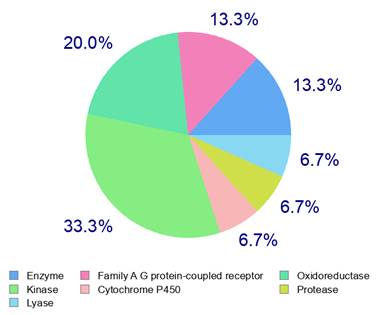
A detailed network pharmacology study was performed to illustrate the pharmacological effectiveness of quercetin against glioblastoma. A target prediction using SwissTargetPrediction database was done to determine the various classes of proteins to which the compound could belong. The results of the target prediction reflect the compound’s diverse biological activities as shown in Figure 1. The most numerous targets predicted were kinases which have 33.3% of the total. Signal transduction is regulated mainly by kinases whose involvement of the PI3K/AKT pathway plays an important role in glioblastoma. This class's dominance suggests that quercetin may have a severe inhibitory effect on kinase-driven signaling.

Of the total targets, roughly 20.0% were oxidoreductases, second in size. These enzymes play a vital role in maintaining a healthy balance of redox and cellular metabolisms which play a critical role in tumor development and survival. Enzymes and GPCRs were found to be evenly distributed among all five of the types of targets.  Though enzymes are widely known to affect different catalytic functions, GPCRs are involved in extracellular signal transduction and are often deregulated in cancer.

The cytochrome P450 enzymes, proteases and lyases were classified by 6.7% of total targets each. Proteins from these families are involved in drug metabolism, proteolysis, and bond cleavage, respectively. According to the results of the study, the molecular structure and different protein classes led to the conclusion that quercetin may polypharmacological in nature.  The predominance of kinase targets further supports the idea that quercetin is a promising PI3K pathway inhibitor for glioblastoma treatment.

3.2 Pathway Mapping of Identified Targets

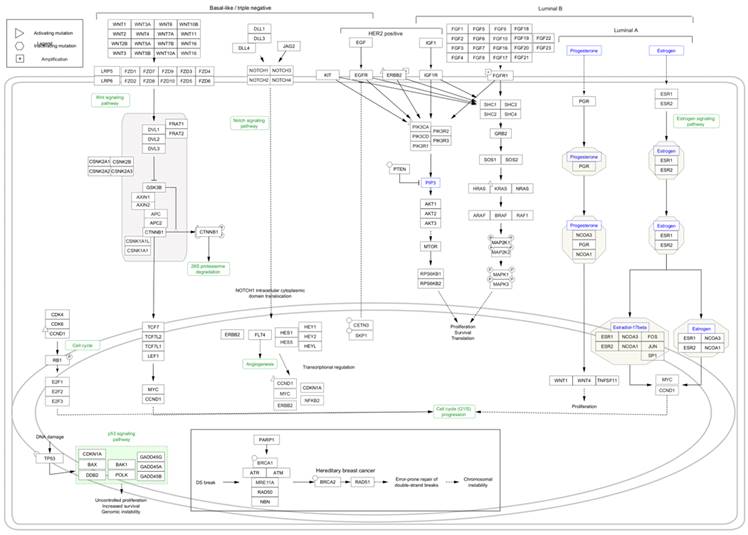
To investigate the molecular effects of quercetin on glioblastoma, its probable molecular targets were superimposed to known cancer signaling pathways. The targets presented in Figure 2 are found mostly in the PI3K/AKT/mTOR pathway which is involved in the signaling of cell survival, proliferation and metabolism. The activation of glioblastoma happens because of malfunctioning of receptors like EGFR, IGF1R and ERBB2. And PI3K/AKT signal is mainly activated by those malfunctioning receptors.

Significantly, PTEN, which inhibits the PI3K pathway, is often mutated or deleted in GBM, resulting in constant activation of this pathway. The fact that there are several targets of quercetin in this dysregulated network suggests that quercetin may help to inhibit aberrant PI3K signaling. Besides, downstream parts RPS6KB1 and EIF4EBP1 further shows quercetin may influence protein synthesis and cellular metabolism which are important for tumor cell growth and survival.

The pathway map also shows crosstalk with MAPK signaling and progression through the cell cycle involving CDK4 and Cyclin D1 (CCND1) on the PI3K axis. These findings emphasize the potential of quercetin to inhibit multiple tumor-promoting signaling pathways. All in all, this pathway-based validation supports the idea that quercetin has the potential to modulate important oncogenic networks, particularly PI3K/AKT. Importantly, this modulation may have a therapeutic impact on glioblastoma.

3.3 Gene Ontology (GO) Functional Enrichment Analysis

A GO enrichment analysis was performed on the Molecular Function to obtain a better understanding of the biological role of the predicted targets of quercetin. The study findings showed a strong presence of terms that were directly related to PI3K activity, which is the main goal of the study (Table 1).

The GO term with highest enrichment was “1-phosphatidylinositol-3-kinase activity” (GO:0016303) that exhibited strength = 2.86 and FDR = 2.58e-07. Thus, many predicted targets may be positively involved in PI3K-related kinase activities. More top-ranking GO terms with significance included activities such as 1-phosphatidylinositol-3-kinase regulator activity and phosphatidylinositol-4,5-bisphosphate 3-kinase activity, phosphatidylinositol-3,4-bisphosphate 5-kinase activity, etc. All these results imply that quercetin-targeted proteins take part in phosphoinositide metabolism which effectively regulate cell survival or proliferation in glioblastoma.

The terms “insulin receptor substrate binding” and “phosphoserine residue binding” were also significantly enriched, suggesting possible interactions with upstream receptor tyrosine kinase (RTK) signaling, such as the hyperactive EGFR and IGF1R pathways in glioblastoma.

Additional enriched terms, such as “kinase regulator activity,” “protein kinase binding” and “receptor tyrosine kinase binding,” further substantiates quercetin’s multi-targeted modulator of kinase-mediated signaling pathways. Combined, these results confirm functional relationships between the predicted targets of quercetin and key regulators of the PI3K/AKT pathway, providing supportive molecular evidence for its specific anti-glioblastoma activity.

3.4 pH-Dependent Microspecies Distribution Analysis

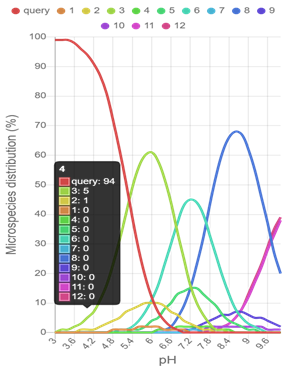
An evaluation of the microspecies distribution of quercetin showed its stability and response to the environment. Quercetin as shown in figure 3 exists in one single neutral form (denoted by “query”) mainly under acidic conditions when the environment is between pH 3.0 and 6.0 with distribution reaching a near 100%. This indicates that quercetin remains mostly non-ionized in an acidic medium, like the gastrointestinal tract and the tumor environment.

With increasing pH, the distribution shifts towards multiple ionized species. As seen between pH 6.0 and 8.5, this is within physiological pH. The increase in abundance of certain microspecies (especially species 3, 5 and 6) indicates that under near-neutral conditions, quercetin has the ability to reach an ionization equilibrium. This indicates that quercetin is likely capable of maintaining its chemical structure in a variety of biological settings, which may facilitate its absorption by cells and interaction with intracellular targets.

Given that glioblastoma tumors often have an acidic microenvironment, and a lower pH favors the non-ionized form, quercetin is expected to easily diffuse into tumor cells.  Upon internalization, the presence of ionizable groups at physiological pH may support its binding versatility with key proteins such as PI3K, AKT and mTOR. To sum up, quercetin was observed to exhibit a specific behavior as a function of pH which can explain its bioavailability and effective functionality in the treatment of glioblastoma. Most importantly, the pH conditions at tumor niches are often variable.

3.5 Comparative Analysis of Drug-like Properties

A comparative study of quercetin, a phytochemical compound, with the known FDA-approved PI3K inhibitor idelalisib was done to evaluate its drug-likeness and pharmacokinetics properties.  We aimed to assess if the drug likeness of quercetin was the same or better. Table 2 shows the information on the chemical characterization, solubility, absorption, metabolism and drug likeness of quercetin.

Quercetin’s molecular weight (302.24 g/mol) is less than that of idelalisib (415.42 g/mol) and can be expected to diffuse passively across membranes. Quercetin has a lower number of heavy atoms and rotatable bonds, meaning it is more rigid and stable. The presence of 7 hydrogen bond acceptors and 5 donors may improve the solubility and protein binding interactions of this entity. Both quercetin with a polar surface area (TPSA: 131.36 Å2) and idelalisib (101.38 Å2) show high gastrointestinal (GI) absorption despite quercetin’s higher TPSA.

Quercetin has a consensus LogP of 1.23 while idelalisib has a LogP of 3.16 regarding lipophilicity. This means that the quercetin is more soluble in water and less fatty tissue accumulation.  Quercetin (0.211 mg/ml) is classified as “soluble” while idelalisib (0.00409 mg/ml) is classified as “moderately to poorly soluble.” This data is supportive of oral absorption and formulation.

From a pharmacokinetic point of view, both substances exhibit a high gastrointestinal absorption and are not blood-brain barrier (BBB) permeable. This is in line with the treatment of glioblastoma outside of central nervous system (CNS) protected zones. Idelalisib, which is a substrate of P-glycoprotein (P-gp), can have drug resistance but quercetin does not have. Quercetin also blocks the activity of a range of cytochrome P450 enzymes, namely CYP1A2, CYP2D6 and CYP3A4. This hints at a wider metabolism interaction which may affect drug-drug interactions or boost therapeutic synergy.

Both quercetin and idelalisib follow rules of Lipinski and other drug-likeness rules (Ghose, Veber, and Egan). However, quercetin satisfies lead-likeness criteria while idelalisib fails due to greater molecular weight and lipophilicity. Quercetin has only one PAINS alert (the catechol group) that is common in nature but should be taken care of. Quercetin is recognized as easier to produce or modify synthetically than luteolin, based on synthetic accessibility score. The synthetic accessibility score of quercetin is 3.23 and that of luteolin is 3.86.

3.6 Molecular Docking and Target Interaction Analysis

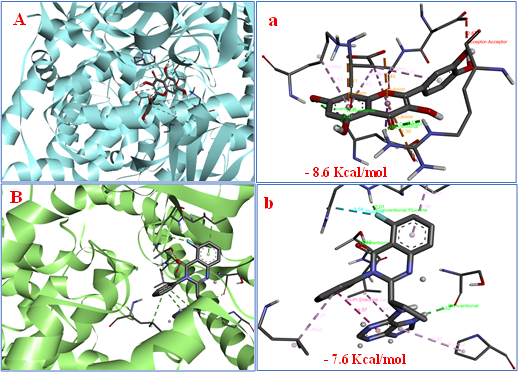
To study the binding potential of quercetin as a PI3K pathway inhibitor, molecular docking studies were performed to compare it with Idelalisib (an approved PI3K inhibitor). The results of docking studies revealed that quercetin had a binding of -8.6 kcal/mol which was higher or stronger than that of idelalisib (-7.6 kcal/mol). As illustrated in Figure 4A/a, Quercetin sinks deep into the active site of the target protein and forms several stabilizing interactions. They involve conventional hydrogen bonds with residue ARG487, ASP951, GLU707, ALA747 and also, pi-anion and electrostatic interactions with negatively charged residue ASP946. The network of interactions gives rise to the anchoring of quercetin inside the catalytic pocket and shows strong structural compatibility and hindering evidence.

Requirement of para 10 words - In contrast, Figure 4B/b shows the docking pose of idelalisib. Although idelalisib binds well in the active site, it has a less extensive interaction profile. It develops hydrogen bonds with SER464, THR462, ASN428, and other residues and pi-alkyl interactions with hydrophobic residues like LEU645 and VAL461. The overall interaction of the compound with sulphathiazole was comparatively weaker than that of quercetin as evidenced by the lower binding energy even with additional stabilizing contacts.

The results show that quercetin fits perfectly in the active binding site of the target kinase and also interacts in more energetically advantageous ways when compared with idelalisib. Quercetin, exhibiting a stronger binding affinity along with a variety of non-covalent interactions, could be considered a natural inhibitor of the PI3K pathway. This makes it worthy of further investigation for possible use as a drug for glioblastoma, especially as it performs similarly to a clinical inhibitor.

4. Discussion

Glioblastoma, or GBM, is among the most aggressive therapeutic resistant tumors in the clinic today.  Even today, we have limited options for effective and specific treatment of GBM, despite new targeted therapies. Through a multi-level in silico approach, this study examines the potential of quercetin, a natural flavonoid as an anti-glioma agent (Wong et al., 2023; Tufael et al., 2024). Our analysis suggests that quercetin is a poly-pharmacological agent, which means that it acts at multiple molecular targets. Notably, quercetin was found to engage the PI3K/AKT/mTOR signaling pathway, which is involved in the regulation of glioblastoma tumor growth, survival and therapy resistance. As a result, these findings indicate that quercetin may represent a promising therapeutic option capable of modulating this key oncogenic pathway in GBM (Vibhavari et al., 2023; Manica et al., 2023).

Based on the network pharmacology analysis, the predicted protein targets of quercetin mainly fall into the kinase and oxidoreductase classes. Because they regulate cancer cell survival, signal transduction and metabolic reprogramming, this protein family has become a hallmark of cancer progression. Targeting a number of similar targets is similar to earlier studies where quercetin has shown multi-targeting in various forms of cancer-like breasts, prostate, and colon cancers (Ponte et al., 2021; Proença et al., 2023; Siddique et al., 2025).

Quercetin is a versatile substance that modifies many ways cancer cells send out signals. Our study takes this idea a step further by mapping the interactions in glioblastoma (GBM) a highly aggressive and neuroinvasive tumor. These studies providing a comprehensive target profiling of quercetin in GBM using an integrated in silico network-based approach thus contributing novel insight into its potential mechanism of action. Similar strategies that are based on systems have previously proved to be effective in discovering multi-target drug candidates for complex diseases (Mansuri et al., 2014; Samec et al., 2021; Tufael et al., 2023).

GO enrichment analysis in this study shows the predicted targets of quercetin closely associated with phosphatidylinositol 3-kinase (PI3K) catalytic activity, PI3K regulatory subunit binding and also receptor tyrosine kinase (RTK) binding molecular functions. The enriched GO terms indicate that quercetin may affect the PI3K/AKT signaling cascade, which has a critical role in glioblastoma growth and therapeutic resistance.

Notably, Zhang et al. (2018) and Islam et al. (2025) previously showed that quercetin inhibits AKT phosphorylation in PTEN-deficient U87 glioblastoma cells, leading to decreased proliferation and increased apoptosis (Zughaibi et al., 2021; Islam et al., 2025). The results strengthen our rationale, showing that PI3K/AKT activation is often due to PTEN loss in GBM. Moreover, Proença et al. (2020) and Manica et al. (2024) indicated that dysregulation of PI3K/AKT signaling greatly contributes to radio resistance in GBM, which indicates that quercetin may also act as a radiosensitizer (Proença et al., 2023; Manica et al., 2024). Phytochemicals that have shown modulation to multiple cancer-associated molecular functions as per other reports from systems pharmacology reports indicate quercetin expected multi-target relevance in GBM (Rana et al., 2021).

The results of the pathway mapping indicate that several of quercetin’s predicted protein targets occupy critical nodes in the EGFR/IGF1R-mediated PI3K/AKT/mTOR signaling pathway, which is the major pathway for cell proliferation, survival and therapy resistance in glioblastoma. The above two upstream targets, namely EGFR and IGF1R, are receptor tyrosine kinases and the two downstream side targets, namely AKT and mTOR, are downstream effectors of both a receptor tyrosine kinase and a signaling pathway (Caban et al., 2019). Hence, the quercetin has several other targets which it regulates negatively to block the tumor-promoting signal. Over the past ten years, many small-molecule inhibitors targeting this pathway have been developed, but most have not progressed to the clinic owing to poor efficacy or unacceptable toxicity (Duan et al., 2023).

In this regard, the multi-target interaction profile and natural origin of quercetin render it a potentially safer and more holistic alternative. Earlier studies have shown that phytochemicals having effects on multiple pathways, such as quercetin, exhibit an excellent safety profile, as well as a synergistic effect with other drugs in combination therapy (Baqer et al., 2024) thus making them a suitable candidate for complex cancers like GBM.

Quercetin was found to be highly soluble, GI-absorbable, and drug-like compound that interacts well with CYP enzymes on the basis of pharmacokinetics profiling. Quercetin's lower lipid fat and greater water solubility make it more bioavailable and stable and may also assist a slower distribution. Quercetin has been shown in earlier studies to possess favorable ADMET property and low toxicity and safe in preclinical and dietary studies (Manica et al., 2024; Rahman et at., 2025; Akter et al., 2025). Further research indicates that quercetin may also be a suitable drug candidate as it is non-mutagenic, non-carcinogenic and stable metabolically (Rufa’i, Abdulganiyyu, et al., 2025). In conclusion, our results offer further strength to the comparative results obtained in this study and thus strongly support quercetin as a possible, natural alternative to synthetic PI3K inhibitors for glioblastoma therapy.

The molecular docking studies specify that quercetin has a binding affinity of -8.6 kcal/mol which is more than the clinically approved PI3K inhibitor idelalisib (-7.6 kcal/mol). This interaction map indicated that quercetin formed numerous hydrogen bonds and also exhibited further electrostatic interactions with amino acid residues (ASP, ARG, and GLU) related to the active site of PI3K. These observations make sense because earlier studies show that ligands that dock to PI3K form similar complexes with flavonoid scaffolds (Chowdhury et al., 2023; Islam et al., 2023; Tufael et al., 2025). Quercetin is a small molecule with a high degree of p-p stacking potential and microspecies distribution that responds to environmental conditions. This confirms that quercetin is a flexible, yet stable, ligand.  The structural advantages together with the strong affinity and binding interactions suggest that quercetin might be a potential PI3K pathway modulator for glioblastoma therapy (Muhammad & Fatima, 2015; Akter et al., 2022).

Further analysis of quercetin distribution showed that quercetin would mostly exist in its neutral form at the acidic pH of 5.8 and 6.5, which resembles the commonly found tumor microenvironment of glioblastoma. This trait is particularly important as substances that remain non-ionized at acidic pH characteristically possess greater membrane penetrability coupled with superior cellular absorption within tumor tissues. As an anti-cancer agent, quercetin’s pH responsive behavior is a valuable property which allows it to accumulate within the tumor niche while sparing the normal, neutral- pH tissues from such effects. Due to the rarity of this behavior among plant-derived phytochemicals, quercetin is unique in its pH-adaptive pharmacological behavior (Ashrafizadeh et al., 2023; Barbarisi et al., 2018; Manica et at., 2022). Accordingly, these findings substantiate the reasoning encompassing the design and application of quercetin in cancer environments such as GBM.

According to our findings, a key strength of our study lies in its validation at the system level. With the aim of understanding the potential of quercetin as a therapeutic agent, functional, structural, and ADME evaluations of quercetin were undertaken rather than use of only docking or target prediction. By merging a range of computational strategies, this study offers a more comprehensive view of how quercetin behaves in a cancer-relevant biological environment. By using multiple dimensions, confidence in a solution is further induced. Similarly, it can be used as a model for future natural products-based drug discovery to tackle complex diseases like glioblastoma using safer multi-target agents.

5. Limitation

As this work is predominantly in silico, no biological validation have been performed for the predicted therapeutic effects of quercetin. Until now, essential experimental evaluations have not been conducted, including in vitro kinase inhibition and apoptosis induction and in vivo tumors growth suppression. Moreover, we still do not have data on the stability and passage through the blood-brain barrier of quercetin. Consequently, further preclinical and clinical studies are required in order to ascertain safety, pharmacodynamics and overall efficacy of interval initiator as a potential therapeutic agent for glioblastoma. 

6. Conclusion

Quercetin may be used as a natural treatment for glioblastoma because it inhibits the PI3K/AKT/mTOR signaling cascade. It is a major takeaway of the study. Analysis through network pharmacology, GO enrichment, and pathway mapping confirmed its targeting of several oncogenic components. According to the docking results, as a drug like, GI absorbable, environment-friendly compound quercetin binds strongly to relevant targets and is a molecule that has good physicochemical and pharmacokinetic properties. In various assessments, quercetin exhibited more favorable or comparable characteristics than the FDA-approved PI3K inhibitor Idelalisib, especially concerning safety and solubility. The research work pegs quercetin as a multi-targeted therapeutic agent whose action is pH responsive and low in toxicity offers an attractive rationale for further development for complex cancers like glioblastoma.

References


Akter, M. F., Manica, A. K., Siddique, M. A. B., Tufael, Islam, M. R., Nusrat, S. (2025). "Structural Insights into TEM-1 β-Lactamase-Mediated Ceftriaxone Resistance in Escherichia coli: A Molecular Docking and Toxicity Analysis", Microbial Bioactives, 8(1), 1-11, 10447 https://doi.org/10.25163/microbbioacts.8110447

Almatroodi, S. A., Alsahli, M. A., Almatroudi, A., Verma, A. K., Aloliqi, A., Allemailem, K. S., Khan, A. A., & Rahmani, A. H. (2021). Potential Therapeutic Targets of Quercetin, a Plant Flavonol, and Its Role in the Therapy of Various Types of Cancer through the Modulation of Various Cell Signaling Pathways. Molecules, 26(5), 1315. https://doi.org/10.3390/molecules26051315

Asgharian, P., Tazekand, A. P., Hosseini, K., Forouhandeh, H., Ghasemnejad, T., Ranjbar, M., Hasan, M., Kumar, M., Beirami, S. M., Tarhriz, V., Soofiyani, S. R., Kozhamzharova, L., Sharifi-Rad, J., Calina, D., & Cho, W. C. (2022). Potential mechanisms of quercetin in cancer prevention: focus on cellular and molecular targets. Cancer Cell International, 22(1), 257. https://doi.org/10.1186/s12935-022-02677-w

Ashrafizadeh, M., Hushmandi, K., Mirzaei, S., Bokaie, S., Bigham, A., Makvandi, P., Rabiee, N., Thakur, V. K., Kumar, A. P., Sharifi, E., Varma, R. S., Aref, A. R., Wojnilowicz, M., Zarrabi, A., Karimi-Maleh, H., Voelcker, N. H., Mostafavi, E., & Orive, G. (2023). Chitosan-based nanoscale systems for doxorubicin delivery: Exploring biomedical application in cancer therapy. Bioengineering & Translational Medicine, 8(1). https://doi.org/10.1002/btm2.10325

Baqer, S. H., Al-Shawi, S. G., & Al-Younis, Z. K. (2024). Quercetin, the Potential Powerful Flavonoid for Human and Food: A Review. Frontiers in Bioscience-Elite, 16(3). https://doi.org/10.31083/j.fbe1603030

Barbarisi, M., Iaffaioli, R. V., Armenia, E., Schiavo, L., De Sena, G., Tafuto, S., Barbarisi, A., & Quagliariello, V. (2018). Novel nanohydrogel of hyaluronic acid loaded with quercetin alone and in combination with temozolomide as new therapeutic tool, CD44 targeted based, of glioblastoma multiforme. Journal of Cellular Physiology, 233(10), 6550–6564. https://doi.org/10.1002/jcp.26238

Barzegar Behrooz, A., Talaie, Z., Jusheghani, F., Los, M. J., Klonisch, T., & Ghavami, S. (2022). Wnt and PI3K/Akt/mTOR Survival Pathways as Therapeutic Targets in Glioblastoma. International Journal of Molecular Sciences, 23(3), 1353. https://doi.org/10.3390/ijms23031353

Biswas, P., Dey, D., Biswas, P. K., Rahaman, T. I., Saha, S., Parvez, A., Khan, D. A., Lily, N. J., Saha, K., Sohel, M., Hasan, M. M., Al Azad, S., Bibi, S., Hasan, Md. N., Rahmatullah, M., Chun, J., Rahman, Md. A., & Kim, B. (2022). A Comprehensive Analysis and Anti-Cancer Activities of Quercetin in ROS-Mediated Cancer and Cancer Stem Cells. International Journal of Molecular Sciences, 23(19), 11746. https://doi.org/10.3390/ijms231911746

Caban, M., Owczarek, K., Chojnacka, K., & Lewandowska, U. (2019). Overview of polyphenols and polyphenol-rich extracts as modulators of IGF-1, IGF-1R, and IGFBP expression in cancer diseases. Journal of Functional Foods, 52, 389–407. https://doi.org/10.1016/j.jff.2018.11.003

Chowdhury, R., Bhuia, Md. S., Rakib, A. I., Hasan, R., Coutinho, H. D. M., Araújo, I. M., de Menezes, I. R. A., & Islam, M. T. (2023). Assessment of Quercetin Antiemetic Properties: In Vivo and In Silico Investigations on Receptor Binding Affinity and Synergistic Effects. Plants, 12(24), 4189. https://doi.org/10.3390/plants12244189

Delgado-López, P. D., & Corrales-García, E. M. (2016). Survival in glioblastoma: a review on the impact of treatment modalities. Clinical and Translational Oncology, 18(11), 1062–1071. https://doi.org/10.1007/s12094-016-1497-x

Duan, N., Hu, X., Zhou, R., Li, Y., Wu, W., & Liu, N. (2023). A Review on Dietary Flavonoids as Modulators of the Tumor Microenvironment. Molecular Nutrition & Food Research, 67(7). https://doi.org/10.1002/mnfr.202200435

Ezzati, S., Salib, S., Balasubramaniam, M., & Aboud, O. (2024). Epidermal Growth Factor Receptor Inhibitors in Glioblastoma: Current Status and Future Possibilities. International Journal of Molecular Sciences, 25(4), 2316. https://doi.org/10.3390/ijms25042316

Frumento, D., Grossi, G., Falesiedi, M., Musumeci, F., Carbone, A., & Schenone, S. (2024). Small Molecule Tyrosine Kinase Inhibitors (TKIs) for Glioblastoma Treatment. International Journal of Molecular Sciences, 25(3), 1398. https://doi.org/10.3390/ijms25031398

Huang, W., Hao, Z., Mao, F., & Guo, D. (2022). Small Molecule Inhibitors in Adult High-Grade Glioma: From the Past to the Future. Frontiers in Oncology, 12. https://doi.org/10.3389/fonc.2022.911876

Islam, M. R., Manica, A. K., Akter, M. F., Siddique, M. A. B., Tufael (2023). "In Silico Drug-Likeness and Safety Profiling of Tinosporaside: A Natural Alternative to Celecoxib for COX-2 Inhibition", Journal of Primeasia, 4(1),1-8,10434. https://doi.org/10.25163/primeasia.4110434

Islam, M. R., Akter, M. F., Siddique, M. A. B., Tufael, Manica, A. K. (2025). "Integrating Clinical Data and Molecular Profiling to Predict Antibiotic-Induced Anaphylaxis: A Comparative Study of Ceftriaxone and Meropenem", Journal of Primeasia, 6(1), 1-11, 10446 https://doi.org/10.25163/primeasia.6110446

Liu, H., Qiu, W., Sun, T., Wang, L., Du, C., Hu, Y., Liu, W., Feng, F., Chen, Y., & Sun, H. (2022). Therapeutic strategies of glioblastoma (GBM): The current advances in the molecular targets and bioactive small molecule compounds. Acta Pharmaceutica Sinica B, 12(4), 1781–1804. https://doi.org/10.1016/j.apsb.2021.12.019

Mansuri, M. L., Parihar, P., Solanki, I., & Parihar, M. S. (2014). Flavonoids in modulation of cell survival signalling pathways. Genes & Nutrition, 9(3), 400. https://doi.org/10.1007/s12263-014-0400-z

McCubrey, J. A., Steelman, L. S., Kempf, C. R., Chappell, W. H., Abrams, S. L., Stivala, F., Malaponte, G., Nicoletti, F., Libra, M., Bäsecke, J., Maksimovic-Ivanic, D., Mijatovic, S., Montalto, G., Cervello, M., Cocco, L., & Martelli, A. M. (2011). Therapeutic resistance resulting from mutations in Raf/MEK/ERK and PI3K/PTEN/Akt/mTOR signaling pathways. Journal of Cellular Physiology, 226(11), 2762–2781. https://doi.org/10.1002/jcp.22647

Manica, A. K., Akter, M. F., Islam, M. R., Tufael, Siddique, M. A. B. (2022). "Computational Exploration of Xanthohumol as a Safer Natural Substitute for Tamoxifen in Estrogen Receptor-Positive Breast Cancer", Journal of Angiotherapy, 6(2),1-8,10431. https://doi.org/10.25163/angiotherapy.6210431

Manica, A. K., Tufael, Siddique, M. A. B., Akter, M. F., Islam, M. R. (2023). "In Silico Repurposing of FDA-approved Drugs Targeting Keap1-NRF2 Axis in Hepatocellular Carcinoma for Precision Therapy", Journal of Precision Biosciences, 5(1),1-8,10436 https://doi.org/10.25163/biosciences.5110436

Manica, A. K., Siddique, M. A. B., Tufael, Akter, M. F., Islam, M. R. (2024). "Targeted Drug Repurposing in Precision Oncology Reveals Celecoxib as a GSK-3β Inhibitor in Hepatocellular Carcinoma", Journal of Precision Biosciences, 6(1),1-8,10440 https://doi.org/10.25163/biosciences.6110440

Manica, A. K., Islam, M. R., Siddique, M. A. B., Akter, M. F., Tufael (2024). "Tanshinone IIA as a Promising Natural Inhibitor of the STING Pathway: A Computational Exploration Toward Neuroinflammatory Therapy", Australian Herbal Insight, 7(1),1-8,10441 https://doi.org/10.25163/herbal.7110441

Muhammad, S., & Fatima, N. (2015). In silico analysis and molecular docking studies of potential angiotensin-converting enzyme inhibitor using quercetin glycosides. Pharmacognosy Magazine, 11(42), 123. https://doi.org/10.4103/0973-1296.157712

Ponte, L. G. S., Pavan, I. C. B., Mancini, M. C. S., da Silva, L. G. S., Morelli, A. P., Severino, M. B., Bezerra, R. M. N., & Simabuco, F. M. (2021). The Hallmarks of Flavonoids in Cancer. Molecules, 26(7), 2029. https://doi.org/10.3390/molecules26072029

Proença, C., Freitas, M., Ribeiro, D., Rufino, A. T., Fernandes, E., & Ferreira de Oliveira, J. M. P. (2023). The role of flavonoids in the regulation of epithelial-mesenchymal transition in cancer: A review on targeting signaling pathways and metastasis. Medicinal Research Reviews, 43(6), 1878–1945. https://doi.org/10.1002/med.21966

Rahman, S. S., Klamrak, A., Mahat, N. C., Rahat, R. H., Nopkuesuk, N., Kamruzzaman, M., ... & Daduang, S. (2025). Thyroid Stimulatory Activity of Houttuynia cordata Thunb. Ethanolic Extract in 6-Propyl-Thiouracil-Induced Hypothyroid and STZ Induced Diabetes Rats: In Vivo and In Silico Studies. Nutrients, 17(3), 594. https://doi.org/10.3390/nu17030594

Rana, P., Shrama, A., & Mandal, C. C. (2021). Molecular insights into phytochemicals-driven break function in tumor microenvironment. Journal of Food Biochemistry, 45(9). https://doi.org/10.1111/jfbc.13824

Rufa’i, M. S., Abdalla, M., Abdulganiyyu, I. A., Ajala, A., Alahmadi, R. M., Awadalla, M. E., Abdulganiyyu, K., Mahe, A., Gwarzo, Y. S., & Kabir, N. (2025). In-silico design of 3-Methyl-3H-naphtho[1,2,3-de]quinoline-2,7-dione Inhibitors against Tuberculosis via Docking and Dynamics Simulation Techniques, and Pharmacokinetic Evaluation. ASPET Discovery, 100007. https://doi.org/10.1016/j.aspetd.2025.100007

Rufa’i, M. S., Abdulganiyyu, I. A., Ajala, A., Abdalla, M., Alahmadi, R. M., Awadalla, M. E., Abdulganiyyu, K., Mahe, A., Gwarzo, Y. S., & Kabir, N. (2025). In-silico design and evaluation of quinoline-dione derivatives as Mycobacterium tuberculosis DprE1 inhibitors. Discover Molecules, 2(1), 21. https://doi.org/10.1007/s44345-025-00027-7

Samec, M., Liskova, A., Koklesova, L., Mersakova, S., Strnadel, J., Kajo, K., Pec, M., Zhai, K., Smejkal, K., Mirzaei, S., Hushmandi, K., Ashrafizadeh, M., Saso, L., Brockmueller, A., Shakibaei, M., Büsselberg, D., & Kubatka, P. (2021). Flavonoids Targeting HIF-1: Implications on Cancer Metabolism. Cancers, 13(1), 130. https://doi.org/10.3390/cancers13010130

Shi, Y., Xia, H., Cheng, X., & Zhang, L. (2021). Genome-wide miRNA analysis and integrated network for flavonoid biosynthesis in Osmanthus fragrans. BMC Genomics, 22(1), 141. https://doi.org/10.1186/s12864-021-07439-y

Siddique, M. A. B., Debnath, A., Ullah, M. S., Amin, M. S., Rahman, A., Mou, M. A., Biswash, M. A. R., Tamim, M. S. B. N., Akter, M. S., Ahmed, B., Numan, A. A., Shabuj, M. M. H. (2025). "Targeting p38 MAPK: Molecular Docking and Therapeutic Insights for Alzheimer’s Disease Management", Journal of Primeasia, 6(1),1-11,10116 https://doi.org/10.25163/primeasia.6110116

Somerset, S. M., & Johannot, L. (2008). Dietary Flavonoid Sources in Australian Adults. Nutrition and Cancer, 60(4), 442–449. https://doi.org/10.1080/01635580802143836

Tufael, Debnath, A., Siddique, M. A. B., Nath, N. D. (2023). "Microbial Therapeutics in Cancer Treatment - Challenges and Opportunities in Breast Cancer Management", Clinical Epidemiology & Public Health, 1(1),1-7,10277 https://doi.org/10.25163/health.1110277

Tufael, Md Mostafizur Rahman et al. (2024). Combined Biomarkers for Early Diagnosis of Hepatocellular Carcinoma, Journal of Angiotherapy, 8(5), 1-12, 9665 https://doi.org/10.25163/angiotherapy.859665

Tufael, Akter, M. F., Islam, M. R., Siddique, M. A. B., Hassan, N., Numan, A. A., Naher, A. A., Shabuj, M. M. H., Manica, A. K., Shaikat, B., Rabbani, T. B. (2025). "Encoded Resistance: Structural Disruption and Signaling Crosstalk Undermine Sorafenib Binding in Mutant VEGFR2-Driven HCC", Paradise, 1(1),1-9,10427 https://doi.org/10.25163/paradise.1110427

Vibhavari, R. J. A., Rao, V., Cheruku, S. P., Kumar, B. H., Maity, S., Nandakumar, K., Kumar, L., Mehta, C. H., Nayak, U., Chamallamudi, M. R., & Kumar, N. (2023). Enhancing temozolomide antiglioma response by inhibiting O6-methylguanine-DNA methyltransferase with selected phytochemicals: in silico and in vitro approach. 3 Biotech, 13(12), 385. https://doi.org/10.1007/s13205-023-03821-7

Vivanco, I., & Sawyers, C. L. (2002). The phosphatidylinositol 3-Kinase–AKT pathway in human cancer. Nature Reviews Cancer, 2(7), 489–501. https://doi.org/10.1038/nrc839

Wong, S. C., Kamarudin, M. N. A., & Naidu, R. (2023). Anticancer Mechanism of Flavonoids on High-Grade Adult-Type Diffuse Gliomas. Nutrients, 15(4), 797. https://doi.org/10.3390/nu15040797

Zaryouh, H., De Pauw, I., Baysal, H., Peeters, M., Vermorken, J. B., Lardon, F., & Wouters, A. (2022). Recent insights in the PI3K/Akt pathway as a promising therapeutic target in combination with EGFR-targeting agents to treat head and neck squamous cell carcinoma. Medicinal Research Reviews, 42(1), 112–155. https://doi.org/10.1002/med.21806

Zughaibi, T. A., Suhail, M., Tarique, M., & Tabrez, S. (2021). Targeting PI3K/Akt/mTOR Pathway by Different Flavonoids: A Cancer Chemopreventive Approach. International Journal of Molecular Sciences, 22(22), 12455. https://doi.org/10.3390/ijms222212455
Article metrics
View details
0
Downloads
0
Citations
30
Views

View Dimensions


View Plumx


View Altmetric


0
Save
0
Citation
30
View
0
Share