Energy Environment and Economy

Energy, Environment and Sustainable Sciences | online ISSN 3069-0935
2
Citations
26.5k
Views
24
Articles
Your new experience awaits. Try the new design now and help us make it even better
Switch to the new experience
Figures and Tables
RESEARCH ARTICLE   (Open Access)

Wireless Power Transfer Adoption in Smart Renewable Energy Networks: A Quantitative Study of Awareness, Perceived Benefits, Technical Barriers, and Renewable Integration

Mohammad Sadik Ullah1*, Md Shahdat Hossain2, S M Emdad Ullah3

+ Author Affiliations

Energy Environment and Economy 3 (1) 1-13 https://doi.org/10.25163/energy.3110770

Submitted: 30 December 2024 Revised: 28 February 2025  Published: 10 March 2025 


Abstract

Background: Wireless power transfer (WPT) is increasingly viewed as a promising contactless energy-delivery technology for smart grids, electric vehicles, distributed sensors, biomedical devices, and renewable-energy-enabled infrastructure. Yet, despite encouraging technical progress, its wider adoption remains uncertain, particularly where cost, efficiency loss, safety concerns, and limited public understanding continue to shape user acceptance. This study examined the perceived drivers and barriers influencing WPT adoption in smart and renewable energy networks.

Methods: A quantitative cross-sectional survey design was used to collect primary data from 275 respondents, including students, engineers, researchers, and academic staff. The questionnaire measured five constructs: Awareness, Perceived Benefits, Technical Challenges, Adoption Intention, and Renewable Integration. Responses were recorded using a five-point Likert scale. Data were processed through coding, screening, normalization, reliability testing, descriptive statistics, barrier ranking, and Pearson correlation analysis. Cronbach’s alpha and composite reliability were used to assess internal consistency.

Results: The measurement model showed acceptable reliability across all constructs, with Cronbach’s alpha values ranging from 0.79 to 0.85. Perceived Benefits emerged as the strongest adoption-related determinant, contributing 26%, followed by Renewable Integration at 23%, Awareness at 22%, Adoption Intention at 20%, and Technical Challenges at 9%. High installation cost was the leading barrier, with a mean score of 3.91, followed by energy efficiency loss at 3.76. Correlation analysis showed that Awareness was positively associated with Adoption Intention (r = 0.65), as were Perceived Benefits (r = 0.61) and Renewable Integration (r = 0.63). Technical Challenges showed a negative association with Adoption Intention (r = −0.52).

Conclusion: The findings suggest that WPT adoption depends on both perceived usefulness and confidence in technical feasibility. Wider implementation may require stronger awareness-building, cost reduction, efficiency improvement, safety assurance, and clearer integration with renewable energy systems.

Keywords: Wireless power transfer; smart grid; renewable energy integration; technology adoption; technical barriers

1. Introduction

The push toward smarter, cleaner energy systems has been gathering pace for more than a decade, and with it has come a quieter but persistent problem: how do we actually move power around in networks that are increasingly decentralized, mobile, and renewable? Conventional wiring, for all its reliability, does not always sit comfortably with the flexibility these systems demand (Di Fazio et al., 2013). It is partly this tension that has drawn renewed attention to Wireless Power Transfer (WPT) — a technology that lets energy cross a gap without a physical connector, and that suddenly looks far more relevant than it did when it was mostly a laboratory curiosity (Mahmood et al., 2014).

The appeal is not hard to understand. WPT has found a foothold across a surprisingly broad set of applications, from electric vehicles and biomedical implants to the sprawling networks of devices we now lump together as the Internet of Things (Mahmood et al., 2014). Laboratory systems have demonstrated power-transfer efficiencies above 80% under controlled conditions, which is enough to suggest the underlying physics is sound, even if real-world performance is another matter entirely. In dense urban settings, where decentralized distribution is becoming less of an aspiration and more of a necessity, the case for contactless power seems especially strong (Joseph & Elangovan, 2018).

And yet adoption has been slow — slower, arguably, than the technical maturity alone would predict. Much of the world, particularly across developing economies, has barely engaged with WPT at scale. Part of the explanation is cost. Part of it is unfamiliarity. But it would be a mistake to treat this purely as an engineering question, because whether a power technology takes hold depends at least as much on what people understand about it and whether they can afford it as on what it can technically do (Buchholz & Styczynski, 2014). When users do embrace these systems, they tend to cite the same handful of reasons: flexibility, low maintenance, and dependable performance (Fadel et al., 2015). Set against those advantages, though, are real obstacles — high installation costs, power losses that can run from roughly 10 to 20 percent, technical complexity, and lingering safety concerns. The honest conclusion is that any serious assessment has to weigh both sides at once, rather than cheerleading for the benefits or dwelling only on the barriers (Gandoman et al., 2017).

There is a further dimension that, in our view, deserves more attention than it usually gets: how WPT fits alongside renewable energy. Solar, wind, and similar sources need distribution systems built to match their distributed, sometimes unpredictable nature (Reddy et al., 2014), and WPT's contactless delivery may be well suited to exactly that — supporting wireless charging for vehicles and devices within a renewable-led grid (Butt et al., 2020). Early pilot work has reported integration efficiency gains of around 15%, a modest but encouraging figure (Wade et al., 2010), and the alignment with low-carbon goals is clear enough (Bayindir et al., 2016). Still, acceptance is fragile where people remain uncertain about how the technology works, whether it is safe, and what it offers over the long term (Clastres, 2011). Education, demonstration projects, and supportive policy all appear to help build the trust that adoption ultimately rests on (Lehtola & Zahedi, 2019; Alotaibi et al., 2020).

This study takes a quantitative approach to untangle these threads. We examine how awareness, perceived benefits, technical challenges, renewable integration, and adoption intention relate to one another, with the aim of identifying which factors most strongly shape — or stall — the wider uptake of WPT in smart and renewable energy networks.

2. Materials and Methods

2.1 Study design and ethical considerations

We adopted a quantitative, cross-sectional survey design, which suited our aim of capturing perceptions across a varied population at a single point in time rather than tracking change longitudinally. The choice was deliberate: adoption attitudes toward an emerging technology tend to be diffuse and context-dependent, and a structured survey lets these be measured consistently and compared across respondents (Di Fazio et al., 2013). The study was approved by the relevant ethics committee, and informed consent was obtained from all participants prior to data collection. Reporting these elements is not a formality — without them the study cannot be assessed against standard human-subject’s criteria.


2.2 Participants and recruitment

A total of 275 individuals took part. The sample was drawn from four broad groups — students (n = 118; 42.9%), practicing engineers (n = 67; 24.4%), researchers (n = 54; 19.6%), and academic staff (n = 36; 13.1%) — a mix we sought intentionally, since we wanted both the hands-on perspective of practitioners and the more conceptual view of those working in research and teaching. Educational attainment skewed toward the postgraduate end: 121 respondents (44.0%) held a Bachelor's degree, 109 (39.6%) a Master's, and 45 (16.4%) a doctorate. The study was conducted in globally using a random sampling technique, where data were collected from 275 participants through both online surveys during February 2024 to November 2024, following defined inclusion criteria (age ≥18 years, willingness to participate, and ability to complete the questionnaire) and exclusion criteria (incomplete responses, duplicate submissions, and refusal to consent). We should be candid that the absence of a formal a priori power calculation is a limitation; if one was not performed, this should be stated plainly rather than glossed over.

2.3 Survey instrument and constructs

The questionnaire opened with demographic items and then turned to five latent constructs central to our research question: Awareness (AW, 5 items), Perceived Benefits (PB, 6 items), Technical Challenges (TC, 5 items), Adoption Intention (AI, 4 items), and Renewable Integration (RI, 4 items). Items were adapted from established technology-adoption instruments and reworded to fit the specific context of wireless power transfer, a tailoring step that, while necessary, does introduce its own measurement assumptions. All items were scored on a five-point Likert scale anchored from 1 (strongly disagree) to 5 (strongly agree) (Avancini et al., 2019; Zhang et al., 2018). For transparency and reproducibility, the complete item wording for all 24 indicators should be provided as an appendix or supplementary file — this is arguably the single most important omission to correct, since no one can replicate the study without seeing the actual items.

2.4 Data processing and normalization

Before analysis, the raw responses were screened for missing or inconsistent entries. Cases with incomplete data were removed listwise rather than imputed; [state how many cases, if any, were excluded and the resulting analytic N]. Composite scores for each construct were then computed by averaging the responses across that construct's indicators — a simple mean-aggregation that reduces dimensionality while retaining most of the variability in the data. We subsequently applied min–max normalization to rescale all variables to a common 0–1 range, which prevents any single construct from dominating purely as an artefact of its measurement scale (Markovic et al., 2013; Zhou et al., 2016). The composite-score and normalization formulas can be retained in the text or moved to supplementary material; either is acceptable.

2.5 Reliability and validity

Internal consistency was assessed using Cronbach's alpha, with composite reliability calculated as a complementary check on construct stability. We used 0.70 as the minimum acceptable threshold, following the conventional criterion suggested by Peterson (1994).

2.6 Statistical analysis

Relationships among the five constructs were examined using Pearson product–moment correlations, alongside descriptive statistics (means and standard deviations) for the perceived-barrier items. We should flag that correlation establishes association, not direction or causation. Statistical analyses were performed using IBM SPSS Statistics (version 26), with a significance level set at α = 0.05. Crucially, the manuscript currently reports correlations as "statistically significant" without any p-values — exact p-values (or at minimum significance flags against a stated α) must be reported for the results to be verifiable.

3. Results

3.1 Demographic Profile of Respondents

The demographic composition of the respondents provides an important context for interpreting perceptions of wireless power transfer (WPT) in smart and renewable energy systems. The study included 275 participants from different academic and professional backgrounds, offering a reasonably diverse knowledge base for assessing awareness, perceived benefits, technical barriers, and adoption intention. Students represented the largest group of respondents, accounting for 42.9% of the sample, followed by engineers at 24.4%, researchers at 19.6%, and academic staff at 13.1% (Table 1). This distribution suggests that the dataset reflects both emerging learners and technically informed professionals, although the relatively high proportion of students should be considered when interpreting adoption readiness.

In terms of educational attainment, Bachelor’s degree holders formed the largest subgroup at 44.0%, followed closely by Master’s degree holders at 39.6%. Respondents with PhD-level qualifications represented 16.4% of the sample (Table 1). Overall, the educational profile indicates that most participants had sufficient academic exposure to understand basic concepts related to smart grids, renewable energy systems, and emerging power technologies. This is particularly relevant because the adoption of advanced energy systems often depends not only on technical feasibility but also on user awareness, perceived usefulness, and trust in system reliability (Alotaibi et al., 2020; Bayindir et al., 2016).

3.2 Reliability of the Measurement Constructs

The internal consistency of the survey constructs was assessed using Cronbach’s alpha and composite reliability. The results showed that all constructs exceeded the generally accepted reliability threshold of 0.70, indicating that the measurement items were internally consistent and suitable for further analysis (Table 2). Among the constructs, Perceived Benefits demonstrated the highest reliability, with a Cronbach’s alpha of 0.85 and composite reliability of 0.87. This suggests that respondents answered the benefit-related items in a relatively consistent manner, reflecting a stable perception of WPT advantages.

Adoption Intention also showed strong reliability, with a Cronbach’s alpha of 0.83 and composite reliability of 0.86, while Awareness produced similarly strong values of 0.81 and 0.84, respectively (Table 2). Renewable Integration achieved a Cronbach’s alpha of 0.80, and Technical Challenges recorded an alpha value of 0.79, which remains within an acceptable range. These findings indicate that the selected constructs were measured with adequate stability. Given that WPT adoption is influenced by multiple technological, economic, and behavioral factors, reliable construct measurement is essential for producing meaningful interpretation of user perceptions and adoption tendencies (Uribe-Pérez et al., 2016; Wang et al., 2011).

3.3 Key Determinants Influencing WPT Adoption

The normalized distribution of adoption-related determinants shows that respondents placed the strongest emphasis on perceived benefits, which accounted for 26% of the overall influence pattern (Figure 1). This finding suggests that participants were most responsive to the practical value of WPT, including convenience, flexibility, reduced dependence on physical cables, and potential compatibility with intelligent energy infrastructure. In this sense, adoption appears to be shaped less by curiosity about the technology itself and more by the extent to which users believe it can solve real operational problems. Similar patterns have been reported in smart-grid and renewable-energy studies, where user acceptance is often shaped by perceived usefulness, system efficiency, and practical applicability (Avancini et al., 2019; Mahmood et al., 2014).

Renewable Integration emerged as the second most influential determinant, contributing 23% of the overall adoption pattern (Figure 1). This result indicates that respondents viewed WPT not as an isolated innovation, but as a potentially valuable component of broader renewable and smart energy networks. The finding is important because modern energy systems increasingly depend on distributed generation, electric vehicle charging infrastructure, IoT-enabled monitoring, and flexible power delivery systems. WPT may therefore become more attractive when it is presented as part of a cleaner and more adaptive energy ecosystem rather than as a stand-alone technology (Butt et al., 2020; Lehtola & Zahedi, 2019; Reddy et al., 2014).

Awareness contributed 22%, suggesting that knowledge and familiarity remain central to adoption readiness (Figure 1). Respondents who understand the basic principles, applications, and potential benefits of WPT may be more willing to accept its use in smart energy environments. This result is consistent with the broader literature on smart energy systems, where public understanding and technical literacy often shape acceptance of new infrastructure (Clastres, 2011; Ourahou et al., 2018). Adoption Intention accounted for 20%, reflecting a moderate but meaningful willingness among respondents to consider WPT implementation. Technical Challenges contributed the smallest share, at 9%, although this should not be interpreted as evidence that technical barriers are unimportant. Rather, it suggests that enabling factors, particularly perceived benefits and renewable integration, were more prominent in respondents’ overall perception structure.

3.4 Perceived Barriers to Wireless Power Transfer Adoption

The barrier analysis provides a more focused view of the challenges that may slow the practical adoption of WPT in smart and renewable energy systems. High installation cost was identified as the most important barrier, with the highest mean score of 3.91 and a standard deviation of 0.81 (Table 3). This finding is not surprising, as the transition from conventional wired systems to wireless power infrastructure may require substantial investment in hardware, system design, installation, maintenance, and safety validation. Cost concerns are especially relevant for developing economies and large-scale public infrastructure projects, where financial feasibility strongly influences technology deployment (Alstone et al., 2015; Colmenar-Santos et al., 2016).

Energy efficiency loss ranked as the second major barrier, with a mean score of 3.76 and a standard deviation of 0.78 (Table 3). Although WPT has shown promising laboratory performance, real-world implementation may be affected by distance, alignment, conversion losses, electromagnetic interference, and system design limitations. Respondents therefore appeared to recognize that efficiency remains a central technical concern, particularly for applications that require stable and continuous power transfer. This aligns with previous discussions on the technical complexity of integrating advanced energy technologies into smart grids and renewable systems (Joseph & Elangovan, 2018; Mwasilu et al., 2014).

Safety and health concerns ranked third, with a mean score of 3.48, followed by technical complexity at 3.39 and regulatory limitations at 3.31 (Table 3). These findings suggest that adoption is not limited by cost and performance alone. Public trust, safety assurance, operational simplicity, and regulatory clarity are also necessary for wider acceptance. While respondents did not rank regulatory limitations as the strongest barrier, the presence of this concern still indicates that future WPT deployment may require clear standards, transparent safety communication, and supportive policy frameworks. Without these elements, even technically promising systems may face hesitation from users, institutions, and investors (Bayindir et al., 2016; El-Hawary, 2014).

3.5 Correlation Among Awareness, Benefits, Challenges, Adoption Intention, and Renewable Integration

Pearson correlation analysis was conducted to examine the direction and strength of relationships among the study constructs. The strongest positive relationship was observed between Awareness and Adoption Intention, with a correlation coefficient of r = 0.65 (Figure 2). This indicates that respondents with greater awareness of WPT were more likely to express willingness to adopt the technology. The finding reinforces the importance of education, demonstration projects, technical communication, and stakeholder engagement in increasing adoption readiness. In practical terms, people may be more open to WPT when they understand how it works, where it can be applied, and what risks or limitations are realistically involved.

Perceived Benefits also showed a strong positive correlation with Adoption Intention, with r = 0.61 (Figure 2). This relationship suggests that respondents were more likely to support WPT adoption when they associated the technology with clear advantages such as convenience, system flexibility, reduced cable dependency, and compatibility with smart energy infrastructure. A similarly positive relationship was observed between Renewable Integration and Adoption Intention, with r = 0.63 (Figure 2). This finding suggests that the perceived role of WPT in supporting renewable-energy-enabled infrastructure may strengthen users’ willingness to adopt it. The relationship is consistent with the wider movement toward smart grids, distributed energy systems, and renewable integration (Di Fazio et al., 2013; Phuangpornpitak & Tia, 2013; Zhang et al., 2018).

In contrast, Technical Challenges showed a negative relationship with Adoption Intention, with r = −0.52 (Figure 2). This indicates that respondents who perceived stronger technical barriers were less likely to support adoption. Technical Challenges also showed negative correlations with Awareness, Perceived Benefits, and Renewable Integration, suggesting that concerns about complexity, efficiency loss, safety, and implementation difficulty may weaken positive perceptions of WPT. Although these correlations do not establish causality, they offer a useful indication of how enabling and limiting factors interact in shaping adoption behavior.

Taken together, the correlation results suggest a coherent pattern: awareness, perceived benefits, and renewable integration are positively associated with adoption intention, while technical challenges are negatively associated with it. This pattern supports the broader argument that WPT adoption will depend not only on engineering progress, but also on how clearly the technology’s benefits are communicated, how effectively

Table 1. Demographic characteristics of respondents included in the wireless power transfer adoption survey. This table summarizes the occupational and educational distribution of the study participants. Respondents included students, engineers, researchers, and academic staff, with educational qualifications ranging from Bachelor’s to PhD level. The demographic profile provides context for interpreting awareness, perceived benefits, technical concerns, and adoption intention toward wireless power transfer in smart and renewable energy systems.

Variable

Category

Frequency

Percentage (%)

Occupation

Student

118

42.9

Engineer

67

24.4

Researcher

54

19.6

Academic Staff

36

13.1

Education

Bachelor

121

44.0

Master

109

39.6

PhD

45

16.4

Table 2. Internal reliability statistics of the measurement constructs used in the study. This table presents Cronbach’s alpha and composite reliability values for the five survey constructs: Awareness, Perceived Benefits, Technical Challenges, Adoption Intention, and Renewable Integration. All constructs exceeded the accepted reliability threshold of 0.70, indicating adequate internal consistency and supporting the suitability of the measurement items for further statistical analysis.

Construct

Items

Cronbach’s α

Composite Reliability

Interpretation

Awareness

5

0.81

0.84

Good

Perceived Benefits

6

0.85

0.87

Good

Technical Challenges

5

0.79

0.82

Acceptable

Adoption Intention

4

0.83

0.86

Good

Renewable Integration

4

0.80

0.83

Good

Table 3. Perceived barriers affecting wireless power transfer adoption in smart energy systems. This table ranks the major perceived barriers to wireless power transfer adoption based on mean scores and standard deviations. High installation cost was identified as the strongest barrier, followed by energy efficiency loss, safety and health concerns, technical complexity, and regulatory limitations. These findings highlight the economic, technical, safety-related, and policy challenges that may slow broader implementation.

Barriers

Mean

Std. Dev.

Rank

High Installation Cost

3.91

0.81

1

Energy Efficiency Loss

3.76

0.78

2

Safety & Health Concerns

3.48

0.83

3

Technical Complexity

3.39

0.76

4

Regulatory Limitations

3.31

0.74

5

technical risks are reduced, and how convincingly WPT is positioned within future smart and renewable energy systems.

4. Discussion

4.1 Principal Interpretation of the Findings

This study examined how awareness, perceived benefits, technical challenges, renewable integration, and adoption intention shape perceptions of wireless power transfer (WPT) in smart and renewable energy networks. Overall, the findings suggest that WPT adoption is not determined by a single technical factor. Rather, it appears to depend on a combination of perceived usefulness, sustainability relevance, user familiarity, and confidence in system reliability. The demographic profile of the respondents indicates that the sample was largely composed of technically or academically informed participants, including students, engineers, researchers, and academic staff (Table 1). This background is useful because WPT is still an emerging energy technology, and informed respondents are more likely to evaluate both its practical promise and its limitations with some degree of technical awareness.

The reliability results further support the internal consistency of the measurement framework. All constructs achieved acceptable Cronbach’s alpha and composite reliability values, suggesting that the survey items captured the intended constructs with reasonable stability (Table 2). This is important because perceptions of smart energy systems are often multidimensional, involving technical expectations, environmental values, cost considerations, and trust in system performance. Similar complexity has been noted in studies of smart grids, renewable integration, and energy management systems, where adoption depends on both infrastructural readiness and user acceptance (Alotaibi et al., 2020; Bayindir et al., 2016; Hashmi et al., 2020).

4.2 Perceived Benefits as the Strongest Adoption Driver

Among the adoption-related determinants, perceived benefits showed the highest contribution, accounting for 26% of the overall influence pattern (Figure 1). This result suggests that respondents were most persuaded by the practical value of WPT rather than by the novelty of the technology alone. In other words, users may be willing to consider WPT when they see clear advantages, such as cable-free energy delivery, flexible charging, reduced physical wear, lower maintenance needs, and compatibility with automated smart infrastructure.

This finding is broadly consistent with the direction of smart-grid development, where technologies are more likely to gain acceptance when they provide visible operational improvements. Smart energy systems are no longer evaluated only by their technical sophistication; they are increasingly judged by their capacity to improve efficiency, reliability, and user convenience (Avancini et al., 2019; El-Hawary, 2014). WPT may therefore gain stronger acceptance if its benefits are communicated in practical terms. For example, in electric vehicle charging, biomedical devices, sensor networks, and IoT-enabled infrastructure, the value of contactless energy transfer becomes easier to understand when it is connected to reduced downtime, automation, safety, and mobility (Joseph & Elangovan, 2018; Mahmood et al., 2014).

At the same time, the finding should be interpreted with some caution. Perceived benefits reflect what users believe the technology can offer; they do not necessarily confirm actual field performance. Therefore, future work should combine perception-based analysis with technical performance data, especially in real-world smart-grid and renewable-energy settings.

4.3 Renewable Integration and the Sustainability Logic of WPT

Renewable Integration emerged as the second most influential determinant, contributing 23% to the overall adoption pattern (Figure 1). This finding indicates that respondents viewed WPT as potentially relevant to the broader transition toward cleaner and more flexible energy systems. Such a perception is reasonable, given that renewable energy systems increasingly depend on distributed generation, storage technologies, electric vehicles, smart meters, and intelligent control systems (Di Fazio et al., 2013; Lehtola & Zahedi, 2019; Reddy et al., 2014).

The result also suggests that WPT may be more persuasive when framed as part of a renewable-energy ecosystem rather than as an isolated engineering innovation. Solar and wind power, for instance, require adaptive distribution and consumption pathways because their generation patterns are variable. In such contexts, WPT could support wireless charging stations, smart sensors, autonomous devices, and localized power
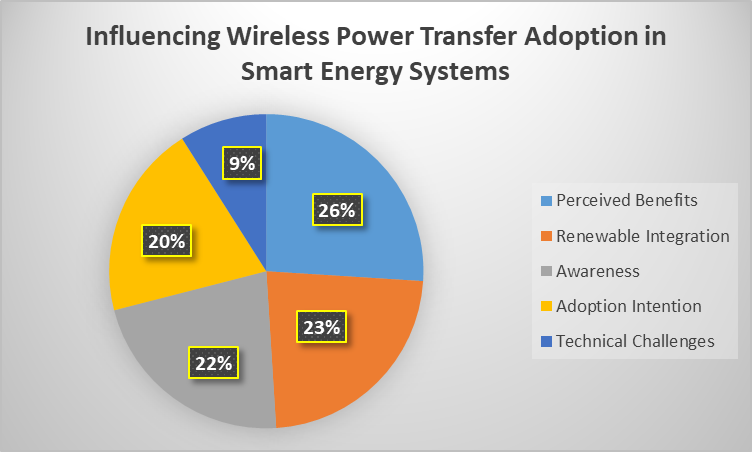
Figure 1. Distribution of key determinants influencing wireless power transfer adoption in smart energy systems. The pie chart illustrates the relative contribution of five adoption-related determinants: Perceived Benefits, Renewable Integration, Awareness, Adoption Intention, and Technical Challenges. Perceived Benefits showed the highest contribution, followed by Renewable Integration and Awareness, suggesting that users are more likely to support wireless power transfer when they recognize its practical value and relevance to sustainable energy infrastructure.
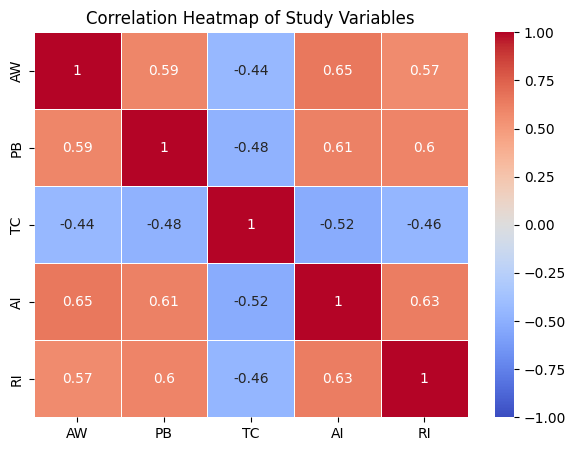
Figure 2. Pearson correlation heatmap among the main study variables. The heatmap shows the strength and direction of correlations among Awareness, Perceived Benefits, Technical Challenges, Adoption Intention, and Renewable Integration. Positive correlations were observed between Adoption Intention and Awareness, Perceived Benefits, and Renewable Integration, while Technical Challenges showed a negative relationship with Adoption Intention. The pattern suggests that adoption readiness is strengthened by awareness and perceived usefulness but weakened by technical concerns.

delivery within microgrids or smart-city infrastructure. Previous studies have emphasized that renewable integration requires not only generation capacity but also communication, control, metering, and flexible distribution systems (Ourahou et al., 2018; Phuangpornpitak & Tia, 2013; Zhang et al., 2018).

However, WPT should not be presented as a complete solution for renewable integration by itself. Its role is likely to be complementary. The technology may support smart and renewable networks where contactless charging, distributed power access, or automated energy transfer provides specific operational advantages. Therefore, the practical value of WPT will depend on system design, cost efficiency, regulatory support, and compatibility with existing grid infrastructure.

4.4 Awareness as a Foundation for Adoption Readiness

Awareness contributed 22% to the determinant structure and showed the strongest positive correlation with Adoption Intention, with r = 0.65 (Figure 1; Figure 2). This relationship suggests that respondents who were more familiar with WPT were also more willing to consider its adoption. The finding is meaningful because emerging energy technologies often face hesitation when users do not clearly understand how they work, whether they are safe, or how they differ from existing alternatives.

In the context of WPT, awareness is especially important because the technology may be unfamiliar to many users outside engineering or specialized energy fields. Misunderstandings about electromagnetic exposure, system efficiency, charging distance, installation requirements, and long-term durability can influence acceptance. Similar issues have been discussed in the broader smart-grid literature, where public understanding, stakeholder engagement, and information transparency are essential for technology acceptance (Clastres, 2011; Uribe-Pérez et al., 2016; Wissner, 2011).

The strong positive correlation between Awareness and Adoption Intention suggests that education and demonstration may be practical tools for improving market readiness. Demonstration projects, academic–industry collaboration, training sessions, and clear safety communication could help reduce uncertainty. Still, awareness alone is not enough. Users also need evidence that WPT performs reliably, remains affordable, and can be integrated safely into existing smart and renewable energy infrastructure.

4.5 Technical Challenges as a Persistent Barrier

Although Technical Challenges contributed the smallest share in the normalized determinant pattern, accounting for 9% (Figure 1), the correlation analysis tells a more serious story. Technical Challenges were negatively associated with Adoption Intention, with r = −0.52 (Figure 2). This indicates that respondents who perceived stronger technical limitations were less likely to support WPT adoption. The negative correlations between Technical Challenges and other enabling constructs also suggest that concerns about complexity, efficiency loss, safety, and implementation difficulty may weaken the perceived attractiveness of WPT.

The barrier analysis provides further detail. High installation cost ranked as the most important obstacle, with a mean score of 3.91, followed by energy efficiency loss with a mean score of 3.76 (Table 3). These findings are understandable because WPT systems can require specialized transmitters, receivers, alignment mechanisms, control systems, safety protections, and infrastructure modifications. In large-scale deployment, such costs may become a serious limitation, especially in developing countries or public energy projects where investment decisions are highly sensitive to cost-benefit calculations (Alstone et al., 2015; Colmenar-Santos et al., 2016).

Energy efficiency loss was also a prominent concern. Although WPT has demonstrated strong potential in laboratory settings, real-world performance may vary depending on distance, alignment, load conditions, electromagnetic interference, and system architecture. This concern aligns with previous discussions on the difficulty of integrating advanced energy technologies into electric vehicle systems, smart grids, and renewable-energy networks (Joseph & Elangovan, 2018; Mwasilu et al., 2014). Therefore, improving transfer efficiency, reducing power loss, and validating long-term performance under field conditions should remain major research priorities.

4.6 Safety, Complexity, and Regulatory Readiness

Safety and health concerns ranked third among perceived barriers, with a mean score of 3.48, while technical complexity and regulatory limitations followed with mean scores of 3.39 and 3.31, respectively (Table 3). These results suggest that respondents were not only concerned with whether WPT works, but also with whether it can be deployed safely, managed easily, and governed through clear standards. This is an important point because public trust can strongly influence the acceptance of smart energy technologies.

Safety concerns may arise from uncertainty about electromagnetic exposure, system stability, interference with nearby devices, or the long-term effects of repeated exposure in public and domestic environments. Although such concerns may be reduced through technical standards and safety testing, they still need to be addressed through transparent communication. Smart grid technologies have faced similar challenges, particularly where consumers are asked to accept new infrastructure that changes how energy is measured, distributed, or managed (Bayindir et al., 2016; Uribe-Pérez et al., 2016).

Regulatory limitations ranked lowest among the listed barriers, but this should not be interpreted as unimportant. In fact, regulation may become more significant as WPT moves from pilot applications to large-scale deployment. Standards for installation, interoperability, electromagnetic compatibility, safety certification, and energy efficiency will be essential. Without clear regulatory frameworks, investors and users may hesitate, even when the technology itself is promising.

4.7 Relationship Between Benefits, Renewable Integration, and Adoption Intention

The correlation matrix shows that Perceived Benefits were positively associated with Adoption Intention, with r = 0.61, while Renewable Integration was also positively associated with Adoption Intention, with r = 0.63 (Figure 2). These relationships suggest that respondents were more likely to support WPT when they believed it offered practical advantages and could contribute to renewable-energy-enabled infrastructure. This pattern is consistent with the idea that adoption depends on both immediate usefulness and broader system relevance.

The positive relationship between Renewable Integration and Adoption Intention is particularly noteworthy. It suggests that respondents may view WPT as more acceptable when it is linked to sustainability, clean energy, and smart-grid modernization. This aligns with current energy-system trends, where renewable power integration requires flexible distribution networks, intelligent monitoring, and improved interaction between generation, storage, and consumption (Butt et al., 2020; Lehtola & Zahedi, 2019; Zahedi, 2011).

Even so, the relationship remains correlational. The findings indicate association, not causation. It cannot be concluded from these results alone that renewable integration directly causes stronger adoption intention. A more advanced statistical model, such as multiple regression or structural equation modeling, would be needed to estimate the relative predictive strength of each factor while controlling for others.

4.8 Practical Implications for Smart and Renewable Energy Systems

The findings have several practical implications. First, WPT developers and energy planners should emphasize concrete benefits rather than abstract technological novelty. Users appear more responsive to practical advantages such as convenience, flexibility, automation, and reduced physical connection requirements (Figure 1). Second, cost reduction should be treated as a central implementation priority, since high installation cost was the strongest perceived barrier (Table 3). Without affordable deployment models, WPT may remain limited to specialized or high-value applications.

Third, awareness-building should be integrated into adoption strategies. The strong relationship between Awareness and Adoption Intention indicates that technical education, public demonstrations, and transparent communication may help reduce uncertainty (Figure 2). Finally, WPT should be positioned within the broader context of renewable energy and smart-grid modernization. Its strongest value may emerge when used in applications where contactless power transfer solves a clear operational problem, such as electric vehicle charging, autonomous sensors, medical devices, or smart-city energy infrastructure.

4.9 Study Limitations and Future Research Direction

This study provides useful insight into WPT adoption perceptions, but several limitations should be acknowledged. First, the research is based on self-reported survey data, which may reflect respondents’ perceptions rather than actual adoption behavior. Second, the sample included a large proportion of students (Table 1), which may limit generalizability to industry decision-makers, policymakers, or large-scale infrastructure investors. Third, the analysis relied mainly on descriptive statistics and Pearson correlation. While these methods are useful for identifying patterns, they do not establish causal relationships.

Future research should consider larger and more diverse samples, including energy-sector professionals, policymakers, technology developers, utility managers, and end users. Additional statistical methods, such as regression analysis, factor analysis, or structural equation modeling, could provide deeper insight into the predictive relationships among awareness, perceived benefits, technical barriers, renewable integration, and adoption intention. Field-based studies would also be valuable, particularly those comparing perception data with actual WPT performance, installation cost, safety compliance, and energy efficiency under real operating conditions.

4.10 Summary of the Discussion

Taken together, the findings suggest that WPT adoption in smart and renewable energy networks is shaped by a balance between promise and caution. Perceived benefits, renewable integration, and awareness appear to encourage adoption, while cost, efficiency loss, safety concerns, and technical complexity may slow implementation (Table 3; Figure 1; Figure 2). The study therefore supports a practical conclusion: WPT may become more acceptable when its real-world benefits are clearly demonstrated, its costs are reduced, and its technical and safety concerns are addressed through evidence-based communication and regulatory clarity. Rather than being adopted simply because it is an emerging technology, WPT is more likely to gain traction when users can see how it improves the reliability, flexibility, and sustainability of future energy systems.

Conclusion

This study indicates that wireless power transfer may become an important enabling technology for future smart and renewable energy networks, but its adoption is likely to depend on more than technical promise alone. The findings show that perceived benefits, renewable integration, and awareness are positively associated with adoption intention, while technical challenges continue to discourage acceptance. High installation cost and energy efficiency loss emerged as the most serious perceived barriers, suggesting that economic feasibility and reliable system performance remain central concerns for future deployment. Although respondents generally recognized the value of WPT in flexible and sustainable energy systems, broader implementation will require stronger public understanding, practical demonstrations, safety validation, and supportive regulatory frameworks. The study offers useful evidence for researchers, engineers, policymakers, and energy planners seeking to position WPT within next-generation smart grids. Future research should include larger samples, advanced predictive modeling, and field-based performance evaluation.

Author Contributions

M.S.U.: Conceptualization, Methodology, Investigation, Writing – Original Draft, Writing – Review & Editing, Supervision, Project Administration. M.S.H.: Data Curation, Formal Analysis, Validation, Writing – Review & Editing. S.M.E.U.: Resources, Software, Visualization, Writing – Review & Editing.

Acknowledgement

The authors sincerely thank all respondents — students, engineers, researchers, and academic staff — who generously contributed their time and insights by participating in the survey. Their valuable input formed the empirical foundation of this study. The authors also acknowledge the institutional support and collegial encouragement received throughout the course of this research. No external funding was received for this work.

Competing financial interests

The authors M.S.U et al. have no conflict of interest.

References


Alotaibi, I., Abido, M. A., Khalid, M., & Savkin, A. V. (2020). A Comprehensive Review of Recent Advances in Smart Grids: A Sustainable Future with Renewable Energy Resources. Energies, 13(23), 6269. https://doi.org/10.3390/en13236269

Alstone, P., Gershenson, D., & Kammen, D. M. (2015). Decentralized energy systems for clean electricity access. Nature Climate Change, 5(4), 305–314. https://doi.org/10.1038/nclimate2512

Avancini, D. B., Rodrigues, J. J., Martins, S. G., Rabêlo, R. A., Al-Muhtadi, J., & Solic, P. (2019). Energy meters’ evolution in smart grids: A review. Journal of Cleaner Production, 217, 702–715. https://doi.org/10.1016/j.jclepro.2019.01.229

Bayindir, R., Colak, I., Fulli, G., & Demirtas, K. (2016). Smart grid technologies and applications. Renewable and Sustainable Energy Reviews, 66, 499–516. https://doi.org/10.1016/j.rser.2016.08.002

Buchholz, B. M., & Styczynski, Z. (2014). Smart Grids – Fundamentals and technologies in electricity networks. https://doi.org/10.1007/978-3-642-45120-1

Butt, O. M., Zulqarnain, M., & Butt, T. M. (2020). Recent advancement in smart grid technology: Future prospects in the electrical power network. Ain Shams Engineering Journal, 12(1), 687–695. https://doi.org/10.1016/j.asej.2020.05.004

Clastres, C. (2011). Smart grids: Another step towards competition, energy security and climate change objectives. Energy Policy, 39(9), 5399–5408. https://doi.org/10.1016/j.enpol.2011.05.024

Colmenar-Santos, A., Reino-Rio, C., Borge-Diez, D., & Collado-Fernández, E. (2016). Distributed generation: A review of factors that can contribute most to achieve a scenario of DG units embedded in the new distribution networks. Renewable and Sustainable Energy Reviews, 59, 1130–1148. https://doi.org/10.1016/j.rser.2016.01.023

Di Fazio, A. R., Erseghe, T., Ghiani, E., Murroni, M., Siano, P., & Silvestro, F. (2013). Integration of renewable energy sources, energy storage systems, and electrical vehicles with smart power distribution networks. Journal of Ambient Intelligence and Humanized Computing, 4(6), 663–671. https://doi.org/10.1007/s12652-013-0182-y

El-Hawary, M. E. (2014). The Smart Grid—State-of-the-art and future trends. Electric Power Components and Systems, 42(3–4), 239–250. https://doi.org/10.1080/15325008.2013.868558

Fadel, E., Gungor, V., Nassef, L., Akkari, N., Malik, M. A., Almasri, S., & Akyildiz, I. F. (2015). A survey on wireless sensor networks for smart grid. Computer Communications, 71, 22–33. https://doi.org/10.1016/j.comcom.2015.09.006

Gandoman, F. H., Ahmadi, A., Sharaf, A. M., Siano, P., Pou, J., Hredzak, B., & Agelidis, V. G. (2017). Review of FACTS technologies and applications for power quality in smart grids with renewable energy systems. Renewable and Sustainable Energy Reviews, 82, 502–514. https://doi.org/10.1016/j.rser.2017.09.062

Hashmi, S. A., Ali, C. F., & Zafar, S. (2020). Internet of things and cloud computing-based energy management system for demand side management in smart grid. International Journal of Energy Research, 45(1), 1007–1022. https://doi.org/10.1002/er.6141

Joseph, P. K., & Elangovan, D. (2018). A review on renewable energy powered wireless power transmission techniques for light electric vehicle charging applications. Journal of Energy Storage, 16, 145–155. https://doi.org/10.1016/j.est.2017.12.019

Kayastha, N., Niyato, D., Hossain, E., & Han, Z. (2012). Smart grid sensor data collection, communication, and networking: a tutorial. Wireless Communications and Mobile Computing, 14(11), 1055–1087. https://doi.org/10.1002/wcm.2258

Lehtola, T., & Zahedi, A. (2019). Solar energy and wind power supply supported by storage technology: A review. Sustainable Energy Technologies and Assessments, 35, 25–31. https://doi.org/10.1016/j.seta.2019.05.013

Mahmood, A., Javaid, N., & Razzaq, S. (2014). A review of wireless communications for smart grid. Renewable and Sustainable Energy Reviews, 41, 248–260. https://doi.org/10.1016/j.rser.2014.08.036

Mariam, L., Basu, M., & Conlon, M. F. (2016). Microgrid: Architecture, policy and future trends. Renewable and Sustainable Energy Reviews, 64, 477–489. https://doi.org/10.1016/j.rser.2016.06.037

Markovic, D. S., Zivkovic, D., Branovic, I., Popovic, R., & Cvetkovic, D. (2013). Smart power grid and cloud computing. Renewable and Sustainable Energy Reviews, 24, 566–577. https://doi.org/10.1016/j.rser.2013.03.068

Motlagh, N. H., Mohammadrezaei, M., Hunt, J., & Zakeri, B. (2020). Internet of things (IoT) and the energy sector. Energies, 13(2), 494. https://doi.org/10.3390/en13020494

Mwasilu, F., Justo, J. J., Kim, E., Duc, T., DO, & Jung, J. (2014). Electric vehicles and smart grid interaction: A review on vehicle to grid and renewable energy sources integration. Renewable and Sustainable Energy Reviews, 34, 501–516. https://doi.org/10.1016/j.rser.2014.03.031

Neffati, O. S., Sengan, S., Thangavelu, K. D., Kumar, S. D., Setiawan, R., Elangovan, M., Mani, D., & Velayutham, P. (2021). Migrating from traditional grid to smart grid in smart cities promoted in developing country. Sustainable Energy Technologies and Assessments, 45, 101125. https://doi.org/10.1016/j.seta.2021.101125

Ourahou, M., Ayrir, W., Hassouni, B. E., & Haddi, A. (2018). Review on smart grid control and reliability in presence of renewable energies: Challenges and prospects. Mathematics and Computers in Simulation, 167, 19–31. https://doi.org/10.1016/j.matcom.2018.11.009

Passey, R., Haghdadi, N., Bruce, A., & MacGill, I. (2017). Designing more cost reflective electricity network tariffs with demand charges. Energy Policy, 109, 642–649. https://doi.org/10.1016/j.enpol.2017.07.045

Phuangpornpitak, N., & Tia, S. (2013). Opportunities and Challenges of integrating renewable energy in smart grid system. Energy Procedia, 34, 282–290. https://doi.org/10.1016/j.egypro.2013.06.756

Reddy, K., Kumar, M., Mallick, T., Sharon, H., & Lokeswaran, S. (2014). A review of Integration, Control, Communication and Metering (ICCM) of renewable energy based smart grid. Renewable and Sustainable Energy Reviews, 38, 180–192. https://doi.org/10.1016/j.rser.2014.05.049

S, S. R., Dragicevic, T., Siano, P., & Prabaharan, S. S. (2019). Future generation 5G wireless networks for Smart Grid: A Comprehensive review. Energies, 12(11), 2140. https://doi.org/10.3390/en12112140

Uribe-Pérez, N., Hernández, L., De La Vega, D., & Angulo, I. (2016). State of the Art and Trends Review of smart metering in electricity grids. Applied Sciences, 6(3), 68. https://doi.org/10.3390/app6030068

Usman, A., & Shami, S. H. (2012). Evolution of Communication Technologies for Smart Grid applications. Renewable and Sustainable Energy Reviews, 19, 191–199. https://doi.org/10.1016/j.rser.2012.11.002

Wade, N., Taylor, P., Lang, P., & Jones, P. (2010). Evaluating the benefits of an electrical energy storage system in a future smart grid. Energy Policy, 38(11), 7180–7188. https://doi.org/10.1016/j.enpol.2010.07.045

Wang, W., Xu, Y., & Khanna, M. (2011). A survey on the communication architectures in smart grid. Computer Networks, 55(15), 3604–3629. https://doi.org/10.1016/j.comnet.2011.07.010

Wissner, M. (2011). The Smart Grid – A saucerful of secrets? Applied Energy, 88(7), 2509–2518. https://doi.org/10.1016/j.apenergy.2011.01.042

Zahedi, A. (2011). A review of drivers, benefits, and challenges in integrating renewable energy sources into electricity grid. Renewable and Sustainable Energy Reviews, 15(9), 4775–4779. https://doi.org/10.1016/j.rser.2011.07.074

Zhang, Y., Huang, T., & Bompard, E. F. (2018). Big data analytics in smart grids: a review. Energy Informatics, 1(1). https://doi.org/10.1186/s42162-018-0007-5

Zhou, K., Fu, C., & Yang, S. (2015). Big data driven smart energy management: From big data to big insights. Renewable and Sustainable Energy Reviews, 56, 215–225. https://doi.org/10.1016/j.rser.2015.11.050

Zhou, K., Yang, S., & Shao, Z. (2016). Energy Internet: The business perspective. Applied Energy, 178, 212–222. https://doi.org/10.1016/j.apenergy.2016.06.052


Article metrics
View details
0
Downloads
0
Citations
234
Views
📖 Cite article

View Dimensions


View Plumx


View Altmetric


0
Save
0
Citation
234
View
0
Share