Microbial Bioactives

Microbial Bioactives | Online ISSN 2209-2161
402
Citations
355.3k
Views
191
Articles
Your new experience awaits. Try the new design now and help us make it even better
Switch to the new experience
Figures and Tables
REVIEWS   (Open Access)

The Ecological Significance of Fungal Networks in Soil: Interactions, Nutrient Cycling, and Agricultural Implications

Siti Balkees 1,2*, Siti Salmah Noordin 3

+ Author Affiliations

Microbial Bioactives 2 (1) 1-9 https://doi.org/10.25163/microbbioacts.21101692

Submitted: 01 May 2019 Revised: 09 July 2019  Published: 16 July 2019 


Abstract

Fungi play a crucial role in the soil ecosystem by forming intricate networks that facilitate nutrient exchange, enhance soil structure, and mediate plant-microbe interactions. These fungal networks, primarily composed of mycorrhizal fungi, decompose organic matter, regulate carbon and nitrogen cycles, and promote plant health by fostering symbiotic associations. Their interactions with bacteria, archaea, and other microorganisms further influence soil fertility and stability. This review explores the complexity of fungal networks, their ecological significance, and how environmental factors shape their functionality. By examining various interactions within the soil microbiome, this paper highlights the importance of fungal networks in maintaining ecosystem balance. Understanding these microbial relationships provides valuable insights for sustainable agriculture, soil remediation, and conservation efforts.

Keywords: Fungal Networks, Soil Microbiome, Mycorrhizal Fungi, Nutrient Cycling, Plant-Fungi Interactions, Soil Ecology

1.Introduction

Microorganisms in the soil environment interact in diverse ways, contributing to nutrient cycling, plant growth, and ecosystem resilience. Among these microorganisms, fungi play a distinctive role through their vast underground networks, which connect plant roots, decompose organic matter, and regulate soil structure. These fungal networks, often referred to as the "Wood Wide Web," act as conduits for nutrient transfer between plants and soil, impacting agricultural productivity and ecosystem stability (Smith & Read, 2008).Fungi establish symbiotic relationships with plants through mycorrhizal associations, wherein the fungi provide essential nutrients like phosphorus and nitrogen in exchange for carbon compounds from plants (Brundrett, 2009). This mutualistic relationship enhances plant growth and resilience, particularly in nutrient-deficient soils. Moreover, saprophytic fungi contribute to organic matter decomposition, releasing nutrients that sustain microbial communities and plant development (Van der Heijden et al., 2015).

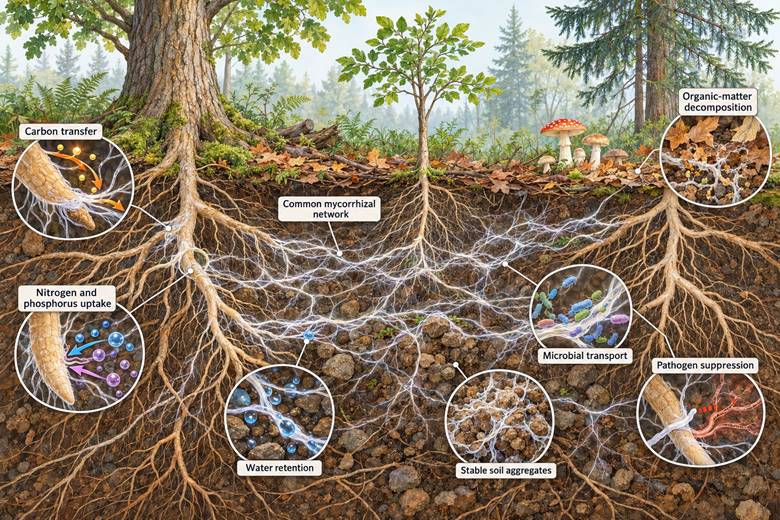
Beyond plant-fungi symbioses, fungal networks influence microbial diversity by interacting with bacteria, archaea, and other soil organisms. These interactions determine soil aggregation, pathogen suppression, and the cycling of essential elements (Tedersoo et al., 2014). However, environmental factors such as soil pH, moisture, and anthropogenic disturbances significantly impact fungal network formation and stability (Bahram et al., 2018).Despite their critical roles, fungal interactions within soil ecosystems remain an area of active research. This review aims to explore how fungal networks interact with their surroundings, focusing on their influence on soil structure, plant health, and microbial diversity. Understanding these interactions is essential for harnessing fungal networks in sustainable agriculture and environmental conservation. The principal ecological functions of soil fungal networks, including nutrient exchange, soil aggregation, water retention, microbial transport, organic-matter decomposition and pathogen suppression, are summarized in Figure 1.

2.Fungal Networks and Soil Structure

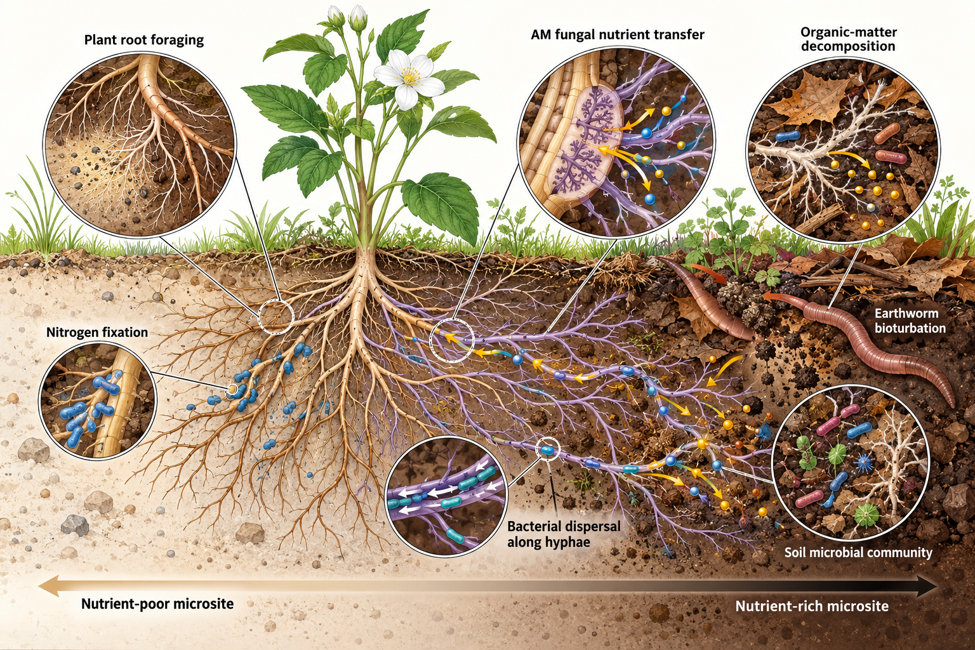
Fungal networks contribute significantly to soil structure by binding soil particles together, forming aggregates that enhance aeration and water retention. Hyphal networks create a stabilizing matrix that prevents soil erosion and promotes microbial colonization (Six et al., 2006). Mycorrhizal fungi, particularly arbuscular mycorrhizal (AM) and ectomycorrhizal fungi, secrete glycoproteins such as glomalin, which act as biological glue, improving soil cohesion (Rillig, 2004).Furthermore, fungal networks interact with plant roots and other microorganisms to modify soil porosity and compaction levels. These structural modifications influence nutrient diffusion, microbial habitat distribution, and overall soil health (Lehmann et al., 2017). Understanding the role of fungal networks in soil structure is crucial for designing soil conservation strategies that mitigate land degradation and enhance agricultural productivity.The extensive hyphal networks of fungi extend through the soil matrix, linking particles together into stable aggregates that improve soil texture and structure. This aggregation process is essential for maintaining soil porosity, which allows the efficient infiltration of water and exchange of gases such as oxygen and carbon dioxide (Tisdall & Oades, 1982). The fungal-induced aggregation of soil particles also reduces compaction, particularly in heavily cultivated soils, thereby enhancing root penetration and water retention capacity (Carpenter et al., 2012). These interactions create a spatially integrated nutrient-acquisition system in which plant-root foraging, mycorrhizal nutrient transfer, microbial mineralization, nitrogen fixation and soil-faunal activity connect nutrient-poor and nutrient-rich microsites (Figure 2).

In addition to physical stabilization, fungi contribute to chemical stabilization through the production of extracellular polymeric substances (EPS), including polysaccharides and proteins, which further bind soil particles (Aspiras et al., 1971). These compounds help retain essential nutrients and prevent them from being washed away during heavy rains, improving soil fertility and supporting plant growth (Jastrow et al., 1998). Moreover, fungal hyphae help in the cycling of organic matter, breaking down complex organic molecules into simpler forms that can be utilized by plants and other microorganisms (Rillig et al., 2002).Soil bioturbation, or the natural mixing of soil layers by biological activity, is another significant process facilitated by fungal networks. By penetrating different soil layers, fungal hyphae promote the redistribution of organic matter and nutrients, making them more accessible to plants and other soil organisms (Miller & Jastrow, 2000). This bioturbation also contributes to the homogenization of soil properties, ensuring more uniform soil fertility and structure (Garbaye, 2013).

The presence of fungal networks also influences the retention and movement of water within the soil. Mycorrhizal fungi, in particular, play a critical role in improving soil moisture dynamics by enhancing the soil's ability to hold water while simultaneously facilitating water uptake by plant roots (Rillig, 2004). The extensive hyphal network creates pathways for water to flow, reducing surface runoff and increasing soil water availability during dry periods (Lehmann et al., 2017). This function is especially vital in arid and semi-arid environments where water scarcity is a major constraint to plant growth (van der Heijden et al., 2008).Fungal networks also interact with other microbial communities, including bacteria, to further enhance soil structure. Many soil bacteria form biofilms that attach to fungal hyphae, contributing to the stabilization of soil aggregates and the retention of organic matter (Tisdall & Oades, 1982). The symbiotic interactions between fungi and bacteria can lead to the formation of microhabitats that support microbial diversity and nutrient cycling (Bahram et al., 2018). These microbial consortia play a crucial role in sustaining soil health and productivity.

Human activities, such as intensive agriculture, deforestation, and pollution, can disrupt fungal networks, leading to soil degradation and reduced fertility. Practices such as excessive tilling and the use of synthetic fertilizers can negatively impact mycorrhizal fungi, reducing their ability to form stable soil aggregates (Jastrow et al., 1998).

Figure 1 | Soil fungi form a web of life that supports trees and protects soil ecosystems. Cross-sectional illustration showing how common mycorrhizal networks connect neighbouring plant roots and mediate reciprocal exchanges of plant-derived carbon and soil-derived nitrogen and phosphorus. Fungal hyphae also enhance water retention, stabilize soil aggregates, facilitate microbial movement, promote organic-matter decomposition and contribute to localized pathogen suppression. Together, these processes support plant nutrition, soil fertility and ecosystem resilience. Conceptual illustration informed by Smith and Read (2008).

Implementing sustainable land management practices, including reduced tillage, cover cropping, and organic amendments, can help maintain fungal diversity and ensure the continued benefits of fungal networks to soil structure (Brundrett, 2009). Fungal networks play a fundamental role in shaping soil structure through their contributions to aggregation, porosity, compaction, nutrient cycling, water retention, and microbial interactions. Their ability to stabilize soil and enhance its fertility underscores the importance of conserving and promoting fungal diversity in soil management practices. Understanding and leveraging these natural processes can lead to improved soil health, agricultural productivity, and ecosystem resilience in the face of environmental challenges.

3.Nutrient Cycling and Fungal Networks

Fungal networks play an integral role in nutrient cycling by decomposing organic material and facilitating nutrient exchange between plants and soil microorganisms. Saprophytic fungi degrade complex organic matter, releasing essential nutrients such as nitrogen, phosphorus, and potassium back into the soil (Lindahl & Tunlid, 2015). Mycorrhizal fungi enhance nutrient uptake by extending hyphal networks beyond root zones, accessing otherwise unavailable nutrient pools (Smith & Read, 2008).The interactions between fungi and bacteria further enhance nutrient cycling efficiency. For instance, mycorrhizal fungi establish relationships with nitrogen-fixing bacteria, promoting nitrogen availability for plant uptake (Philippot et al., 2013). Additionally, fungal-bacterial interactions contribute to phosphorus solubilization, a critical process in phosphorus-limited ecosystems (Richardson et al., 2009). These interactions facilitate the breakdown of organic and inorganic phosphorus compounds, making them more bioavailable to plants (Jakobsen et al., 2005).

Fungi also contribute to carbon cycling by breaking down lignin and cellulose, two of the most recalcitrant organic compounds in plant material (Floudas et al., 2012). White-rot and brown-rot fungi utilize specialized enzymatic pathways to degrade plant biomass, influencing soil organic matter dynamics and carbon sequestration (Eastwood et al., 2011). By regulating organic matter decomposition rates, fungal networks help control carbon fluxes between soil and atmosphere, playing a critical role in climate change mitigation (Crowther et al., 2019).In addition to their direct role in decomposition, mycorrhizal fungi influence nutrient redistribution within ecosystems. Ectomycorrhizal fungi, for example, can transfer nutrients between different plant species through common mycorrhizal networks (CMNs), facilitating cooperative plant interactions and enhancing ecosystem stability (Simard et al., 1997). These networks can act as conduits for carbon, nitrogen, and phosphorus, supporting plant communities in nutrient-deficient environments (Teste et al., 2009).

Fungal networks also influence soil microbial communities by altering rhizosphere chemistry and promoting beneficial microbial interactions. The exudation of organic acids and enzymes by mycorrhizal fungi modifies soil pH and enhances nutrient solubilization (Jones et al., 2009). This process not only benefits plants but also supports the growth of microbial communities involved in nutrient cycling (Bever et al., 2010). For example, fungal exudates can stimulate the activity of phosphate-solubilizing bacteria, further enhancing phosphorus bioavailability (Rodríguez & Fraga, 1999).Another important aspect of fungal-mediated nutrient cycling is their role in nitrogen retention and immobilization. Some fungi, particularly those forming symbiotic relationships with plants, can store excess nitrogen in their biomass, reducing nitrogen leaching from soils (Hodge et al., 2001). This function is particularly significant in agricultural systems, where excessive nitrogen runoff can lead to eutrophication and water pollution (Schimel & Bennett, 2004).

Moreover, fungal networks contribute to soil aggregation, indirectly influencing nutrient retention and availability. Stable soil aggregates protect organic matter from rapid decomposition, creating long-term nutrient reservoirs (Tisdall & Oades, 1982). This protection helps maintain soil fertility and resilience against environmental disturbances such as drought and heavy rainfall (Lehmann et al., 2007).The ability of fungal networks to respond to environmental changes further highlights their significance in nutrient cycling. In nutrient-poor conditions, fungi can shift their metabolic activities to optimize nutrient uptake and redistribution, ensuring ecosystem stability (Treseder & Vitousek, 2001). Additionally, the presence of mycorrhizal fungi in degraded soils can enhance soil restoration by accelerating nutrient cycling and promoting plant establishment (Allen et al., 2003).Fungal networks are essential components of terrestrial ecosystems, driving nutrient cycling through organic matter decomposition, symbiotic interactions, and microbial facilitation. Their role in maintaining soil fertility, supporting

Figure 2 | Soil microorganisms regulate fungal contributions to plant nutrient acquisition. The conceptual framework illustrates how interactions among arbuscular mycorrhizal fungi, bacteria, decomposers and soil fauna influence nutrient mobilization across spatially heterogeneous soil. Plant roots proliferate within accessible nutrient patches, whereas fungal hyphae extend beyond the root-depletion zone to acquire nitrogen and phosphorus from distant organic substrates. Microorganisms mineralize organic matter, fix nitrogen and disperse along fungal hyphae, while earthworm bioturbation redistributes organic material. Together, these processes connect nutrient-poor and nutrient-rich microsites and regulate the transfer of soil-derived nutrients to the host plant. Conceptual illustration adapted from van der Heijden, Bardgett and van Straalen (2008).

plant health, and mitigating nutrient losses underscores the importance of preserving fungal diversity in both natural and managed environments.

4.Interactions Between Fungal Networks and Soil Microbiota

Fungal networks influence microbial diversity and function by providing structural habitats and biochemical signals that regulate microbial community dynamics. Through competition, cooperation, and signaling interactions, fungi shape bacterial and archaeal populations within the soil (Hacquard et al., 2015). The mycelial networks formed by fungi act as conduits for microbial movement and colonization, helping bacteria and archaea to disperse across the soil environment, which in turn affects soil health and nutrient dynamics (Friesen et al., 2011).Fungal exudates, including enzymes and secondary metabolites, impact bacterial growth and biofilm formation. These interactions influence soil nutrient availability, pathogen suppression, and plant health (Bonfante & Anca, 2009). Mycorrhizal fungi, in particular, release organic acids and enzymes that modify the chemical composition of the rhizosphere, facilitating nutrient mobilization and microbial activity (Barea et al., 2005). This biochemical communication fosters mutualistic interactions between fungi and beneficial bacteria, such as nitrogen-fixing bacteria and phosphate-solubilizing microorganisms, enhancing plant nutrition (Philippot et al., 2013).

Additionally, fungal networks serve as conduits for microbial transport, facilitating horizontal gene transfer and microbial colonization of new niches (Friesen et al., 2011). Fungi act as vectors for bacterial movement, allowing beneficial microbes to establish in nutrient-rich microenvironments or areas previously inaccessible due to soil compaction or chemical barriers (Koller et al., 2013). This movement is particularly important in disturbed or degraded soils, where microbial recolonization can restore soil fertility and ecosystem function (De Boer et al., 2005).The interactions between fungi and bacteria can be either cooperative or antagonistic, depending on environmental conditions and microbial species involved. Symbiotic relationships between mycorrhizal fungi and rhizobacteria enhance plant growth through nutrient exchange and pathogen defense mechanisms (Barea et al., 2005). Conversely, competition for resources can lead to antagonistic interactions, where fungi produce antimicrobial compounds to inhibit bacterial growth, reducing competition in nutrient-limited soils (Frey-Klett et al., 2011). These interactions influence soil microbial composition, often favoring beneficial microbes while suppressing harmful pathogens (Raaijmakers et al., 2009).Fungal hyphae also influence bacterial communication through quorum sensing, a process where bacteria coordinate gene expression in response to population density. Some fungi produce molecules that mimic bacterial signaling compounds, altering bacterial behavior and influencing microbial community structure (Khan et al., 2016). This cross-kingdom communication plays a crucial role in microbial interactions, affecting processes such as biofilm formation, antibiotic production, and virulence factor expression (Deveau et al., 2018).

Moreover, fungi contribute to soil organic matter decomposition, which indirectly impacts microbial community structure. Saprotrophic fungi break down complex organic compounds, making simpler nutrients available to other microbes and plants (Lindahl & Tunlid, 2015). In doing so, they create microhabitats rich in organic substrates that attract and sustain diverse microbial populations (Baldrian, 2017). This decomposition process is particularly crucial in forest ecosystems, where lignin-rich plant material requires specialized fungal enzymes for breakdown (van der Wal et al., 2013).In agricultural settings, fungal-bacterial interactions influence soil fertility and crop productivity. The presence of beneficial fungi, such as Trichoderma spp., enhances plant resistance to pathogens and improves soil structure, while also promoting the establishment of beneficial bacterial communities (Harman et al., 2004). The synergistic effects of fungal-bacterial interactions can be harnessed through biocontrol strategies to manage soilborne diseases and reduce reliance on chemical fertilizers and pesticides (Mendes et al., 2011).

The study of fungal-microbial interactions has significant implications for soil management and ecosystem restoration. By understanding how fungal networks regulate microbial communities, researchers can develop strategies to enhance soil resilience against environmental stressors, such as drought, pollution, and climate change (Hacquard et al., 2015). Encouraging fungal biodiversity through organic amendments, reduced tillage, and cover cropping can improve soil health and agricultural sustainability (Verbruggen et al., 2013).Fungal networks play a central role in structuring soil microbiota by providing physical support, biochemical signals, and transport pathways for microbial communities. Their interactions with bacteria and archaea influence soil nutrient cycling, pathogen suppression, and plant health. By leveraging these natural processes, soil management practices can be optimized to promote sustainable agriculture and ecosystem stability.

5.Environmental Influences on Fungal Networks

Environmental factors such as soil pH, moisture, temperature, and anthropogenic activities significantly impact fungal network formation and functionality. Soil acidification and salinity can alter fungal community composition, reducing mycorrhizal colonization and nutrient exchange efficiency (Van der Heijden et al., 2008). Climate change-induced shifts in temperature and precipitation patterns also affect fungal dynamics, influencing ecosystem stability and carbon sequestration potential (Treseder & Turner, 2007).Soil pH plays a crucial role in shaping fungal communities, as different fungal species exhibit varying tolerances to pH fluctuations. Acidic soils often favor certain mycorrhizal fungi, such as ericoid mycorrhizae, while neutral to alkaline soils support a diverse range of arbuscular mycorrhizal fungi (Rousk et al., 2010). Moreover, extreme pH conditions can disrupt enzymatic activity, limiting fungal decomposition processes and nutrient cycling (Anderson et al., 2017). Maintaining balanced soil pH through organic amendments and liming practices can help sustain fungal biodiversity and soil fertility.

Soil moisture and temperature fluctuations further regulate fungal activity, growth, and survival. Water availability directly affects fungal hyphal extension and spore germination, with drought conditions often leading to reduced fungal biomass and functionality (Hawkes et al., 2011). Conversely, excessive moisture can create anaerobic conditions that limit fungal respiration and promote pathogenic fungi detrimental to plant health (Bardgett & Caruso, 2020). Temperature also influences fungal metabolic rates and species composition, with shifts in climate patterns potentially altering fungal-mediated nutrient cycles and soil organic matter decomposition rates (Allison et al., 2010).Anthropogenic activities, including deforestation, pesticide application, and soil compaction, disrupt fungal networks, leading to declines in soil health and agricultural productivity. Deforestation reduces fungal diversity by eliminating host plants essential for mycorrhizal associations, while monoculture practices can create imbalanced fungal communities dominated by pathogenic species (Smith & Read, 2008). Pesticides and fungicides often have unintended consequences on beneficial soil fungi, diminishing their ability to support plant growth and suppress soilborne pathogens (Karpati et al., 2011). Additionally, heavy machinery and intensive tillage practices compact soil, physically restricting fungal hyphal expansion and impairing ecosystem resilience (Garbaye, 2013).

The role of pollution in fungal network dynamics is another critical factor. Heavy metal contamination from industrial and agricultural activities can inhibit fungal growth and mycorrhizal colonization, altering nutrient uptake efficiency and soil microbial interactions (Gadd, 2010). Some fungi, however, exhibit tolerance to metal toxicity and contribute to bioremediation by immobilizing and transforming pollutants into less harmful forms (Chen et al., 2018). Utilizing fungal-based strategies for soil restoration in contaminated environments has gained interest as a sustainable approach to mitigating pollution effects on ecosystem health.Land management practices significantly influence fungal network preservation and enhancement. Implementing conservation strategies such as reduced tillage, organic amendments, and cover cropping can mitigate these negative impacts and promote fungal diversity (Garbaye, 2013). Reduced tillage practices help maintain soil structure, protecting fungal hyphae from mechanical disruption and enabling long-term stability of soil microbial communities (Leifheit et al., 2014). Organic amendments, including compost and biochar, provide essential nutrients and enhance soil microbial diversity, supporting mycorrhizal fungi in improving plant productivity (Bender et al., 2016).

Cover cropping with diverse plant species fosters beneficial fungal associations, promoting soil aggregation and reducing erosion risks. Certain cover crops, such as legumes, enhance nitrogen fixation in conjunction with mycorrhizal fungi, improving overall nutrient availability (Finlay, 2008). Furthermore, integrating agroforestry practices into agricultural landscapes can support fungal diversity by maintaining habitat complexity and minimizing land degradation (Schmidt et al., 2018).Climate change presents emerging challenges and opportunities for fungal network interactions. Rising atmospheric CO₂ levels can enhance mycorrhizal associations in certain ecosystems, potentially increasing carbon sequestration capacity in soils (Terrer et al., 2016). However, altered precipitation patterns and extreme weather events may disrupt fungal symbioses, reducing their efficiency in supporting plant adaptation to environmental stressors (Compant et al., 2010). Enhancing soil resilience through adaptive management strategies, such as diversifying crop rotations and preserving native vegetation, can help mitigate climate change impacts on fungal networks (van der Putten et al., 2013).Environmental factors, including soil chemistry, moisture, temperature, and human-induced disturbances, exert significant influence over fungal networks and their ecological functions. By adopting sustainable land management practices and recognizing the role of fungi in maintaining soil health, ecosystems can be better preserved and restored. Future research should focus on developing innovative fungal-based solutions for enhancing agricultural sustainability and mitigating climate change effects on soil microbial communities.

7.Conclusion

Fungal networks play a fundamental role in soil ecology, influencing soil structure, nutrient cycling, and microbial interactions. Their ability to form symbiotic relationships with plants and other microorganisms highlights their significance in ecosystem stability and agricultural sustainability. By contributing to soil aggregation, enhancing nutrient availability, and supporting microbial diversity, fungal networks help maintain soil health and productivity.One of the most important aspects of fungal networks is their role in soil structure. By binding soil particles together and forming aggregates, fungi enhance soil porosity, aeration, and water retention. These structural improvements not only prevent erosion but also create a favorable environment for plant growth and microbial activity. Furthermore, mycorrhizal fungi contribute to soil stabilization by producing glomalin and other extracellular compounds that reinforce soil cohesion.

In nutrient cycling, fungal networks serve as crucial mediators by decomposing organic matter and mobilizing essential nutrients such as nitrogen, phosphorus, and potassium. Their interactions with bacteria and other microorganisms further optimize nutrient availability, promoting plant uptake and sustaining ecosystem functions. The synergistic relationships between fungi and nitrogen-fixing bacteria enhance soil fertility, while their ability to solubilize phosphorus makes essential nutrients more accessible to plants. These processes are vital in both natural and agricultural ecosystems, where nutrient limitations often pose challenges to plant productivity.Fungal networks also influence microbial interactions by shaping microbial community dynamics and facilitating communication among different soil organisms. Through biochemical signaling, fungi regulate bacterial populations, suppress pathogens, and promote beneficial microbial consortia. Additionally, their extensive hyphal networks act as conduits for microbial transport, allowing for the exchange of genetic material and functional traits. These interactions underscore the interconnected nature of soil ecosystems and highlight the importance of fungi in maintaining microbial balance.

Understanding the complexity of fungal networks and their environmental interactions is essential for developing soil management practices that enhance ecosystem resilience. By integrating fungal-based strategies into land management, such as conservation tillage, organic amendments, and cover cropping, it is possible to sustain soil fertility and mitigate land degradation. The ability of fungi to adapt to environmental stressors also makes them valuable allies in climate change mitigation, as they contribute to carbon sequestration and enhance soil stability under fluctuating climatic conditions.Future research should focus on unraveling the molecular mechanisms underpinning fungal interactions and their responses to environmental stressors. By leveraging advancements in molecular biology and ecological modeling, scientists can develop innovative strategies for soil conservation and ecosystem restoration. Promoting fungal biodiversity and harnessing their ecological functions will be key to ensuring sustainable land use and long-term agricultural productivity.

References


Aspiras, R. B., Allen, O. N., Harris, R. F., & Chesters, G. (1971). Aggregate stabilization by filamentous microorganisms. Soil Science Society of America Journal, 35(3), 379-382.

Bahram, M., et al. (2018). Structure and function of the global topsoil microbiome. Nature, 560(7717), 233-237.

Brundrett, M. (2009). Mycorrhizal associations and other means of nutrition of vascular plants. Mycorrhiza, 19(8), 651-655.

Carpenter, D., Allen, M. F., & Friese, C. F. (2012). Mycorrhizal fungi influence soil structure and water dynamics. Plant and Soil, 359(1-2), 183-196.

Garbaye, J. (2013). Helper bacteria for mycorrhizae: A new dimension to plant-microbe interactions. New Phytologist, 157(1), 1-3.

Jastrow, J. D., Boutton, T. W., & Miller, R. M. (1998). Carbon dynamics of aggregate-associated organic matter estimated by carbon-13 natural abundance. Soil Science Society of America Journal, 62(2), 507-508.

Lehmann, J., et al. (2017). The importance of soil organic matter in maintaining soil functions. Nature, 528(7580), 60-68.

Miller, R. M., & Jastrow, J. D. (2000). Mycorrhizal fungi influence soil structure. Arbuscular Mycorrhizas, 3, 3-18.

Rillig, M. C. (2004). Arbuscular mycorrhizae and soil aggregation. Soil Biology and Biochemistry, 36(1), 1-8.

Six, J., et al. (2006). Stabilization mechanisms of soil organic matter. Biogeochemistry, 79(1), 53-77.

Tisdall, J. M., & Oades, J. M. (1982). Organic matter and water-stable aggregates in soils. Journal of Soil Science, 33(2), 141-163.

Van der Heijden, M. G. A., et al. (2008). The unseen majority: Soil microbes as drivers of plant diversity and productivity in terrestrial ecosystems. Ecology Letters, 11(3), 296-310.

Allen, M. F., Swenson, W., Querejeta, J. I., Egerton-Warburton, L. M., & Treseder, K. K. (2003). Ecology of mycorrhizae: A conceptual framework for complex interactions among plants and fungi. Annual Review of Phytopathology, 41(1), 271-303.


Bever, J. D., Platt, T. G., & Morton, E. R. (2010). Microbial population and community dynamics on plant roots and their feedbacks on plant communities. Annual Review of Microbiology, 64, 321-346.

Crowther, T. W., et al. (2019). The global soil community and its role in carbon cycling. Nature Reviews Microbiology, 17(1), 19-32.

Eastwood, D. C., Floudas, D., Binder, M., Majcherczyk, A., Schneider, P., Aerts, A., & Hibbett, D. S. (2011). The plant cell wall–decomposing machinery underlies the functional diversity of forest fungi. Science, 333(6043), 762-765.

Floudas, D., et al. (2012). The paleoecology of fungal decomposition: New insights into the evolution of lignin decay pathways. Science, 336(6089), 1715-1718.

Hodge, A., Campbell, C. D., & Fitter, A. H. (2001). An arbuscular mycorrhizal fungus accelerates decomposition and acquires nitrogen directly from organic material. Nature, 413(6853), 297-299.

Baldrian, P. (2017). Forest microbiome: Diversity, complexity and dynamics. FEMS Microbiology Reviews, 41(2), 109-130.

Barea, J. M., Pozo, M. J., Azcón, R., & Azcón-Aguilar, C. (2005). Microbial co-operation in the rhizosphere. Journal of Experimental Botany, 56(417), 1761-1778.

Bonfante, P., & Anca, I. A. (2009). Plants, mycorrhizal fungi, and bacteria: A network of interactions. Annual Review of Microbiology, 63, 363-383.

De Boer, W., Folman, L. B., Summerbell, R. C., & Boddy, L. (2005). Living in a fungal world: Impact of fungi on soil bacterial niche development. FEMS Microbiology Reviews, 29(4), 795-811.

Deveau, A., Bonito, G., Uehling, J., et al. (2018). Bacterial-fungal interactions: Ecology, mechanisms and challenges. FEMS Microbiology Reviews, 42(3), 335-352.

Frey-Klett, P., Burlinson, P., & Deveau, A. (2011). Bacterial-fungal interactions: Hyphens between agricultural, clinical, environmental, and food microbiologists. Microbiology and Molecular Biology Reviews, 75(4), 583-609.

Friesen, M. L., Porter, S. S., Stark, S. C., et al. (2011). Microbially mediated plant functional traits. Annual Review of Ecology, Evolution, and Systematics, 42, 23-46.

Hacquard, S., Spaepen, S., Garrido-Oter, R., & Schulze-Lefert, P. (2015). Interplay between innate immunity and the plant microbiota. Annual Review of Phytopathology, 53, 67-87.

Smith, S. E., & Read, D. J. (2008). Mycorrhizal symbiosis (3rd ed.). Academic Press.

van der Heijden, M. G. A., Bardgett, R. D., & van Straalen, N. M. (2008). The unseen majority: Soil microbes as drivers of plant diversity and productivity. Ecology Letters, 11(3), 296-310.

Article metrics
View details
0
Downloads
0
Citations
2213
Views
📖 Cite article

View Dimensions


View Plumx


View Altmetric


0
Save
0
Citation
2213
View
0
Share